SAPIENS: A Podcast for Everything Human
92 episodes — Page 1 of 2
S8 Ep 10Protest and the Public University
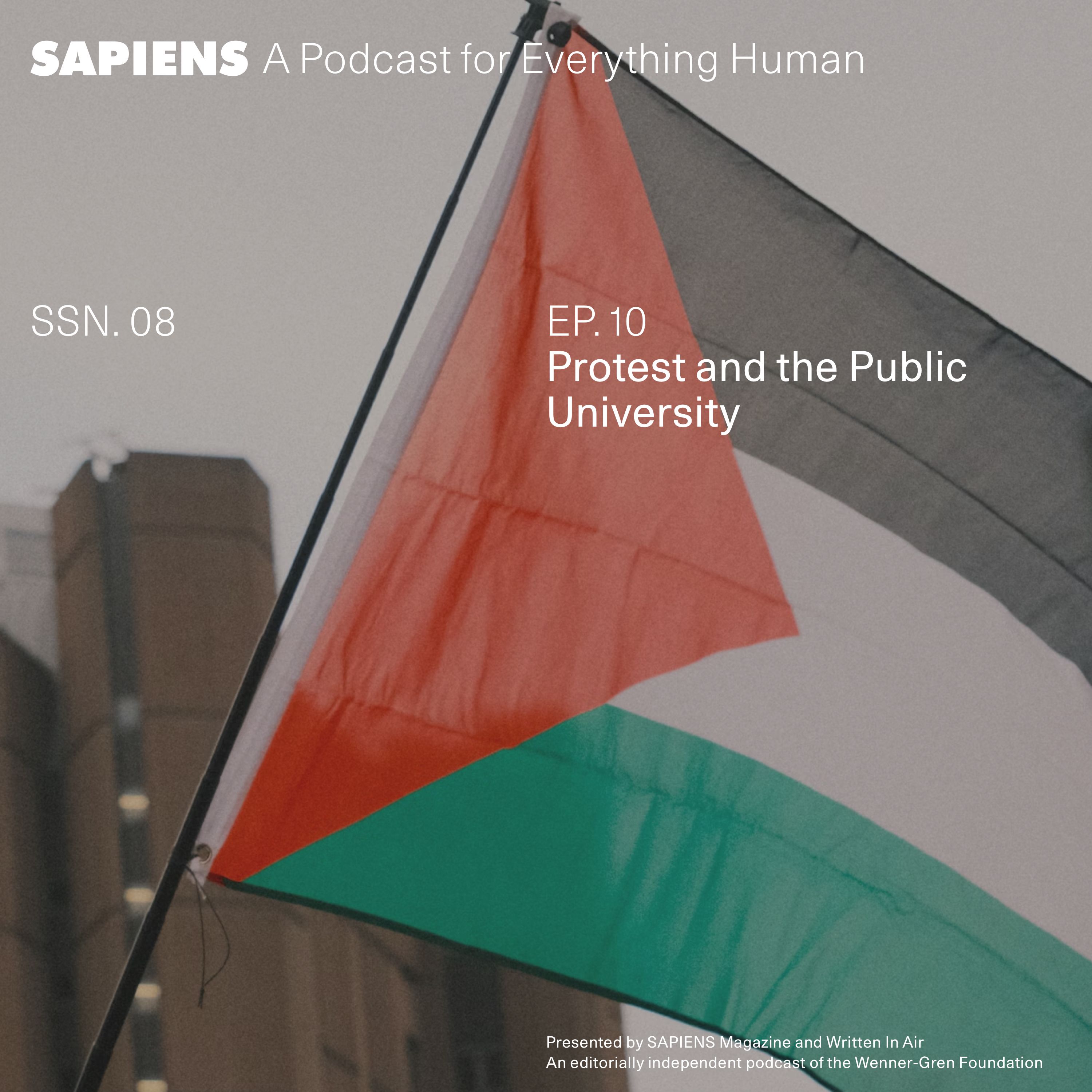
EMembers of an encampment at a public university in New York City are on trial for felony charges. In 2024, students across the world launched encampments to challenge university financial ties to Israel in response to the genocide against Palestinians in Gaza. The City University of New York (CUNY), the largest urban public university system in the United States, celebrates and valorizes its long and storied history of activism. However, the administration reacted differently during the 2024 police raid on the Gaza Solidarity Encampment at its flagship campus in Harlem. Comparing the CUNY student movements of the mid-1990s and 2024, this episode asks: What are the conditions in which institutions like the university choose to repress struggles for social justice? At what point do stories of struggle become institutionally palatable?Thayer Hastings is a Ph.D. candidate in cultural anthropology at the City University of New York Graduate Center in New York City. He is a scholar of political anthropology, the anthropology of colonialism, and Middle East and Palestinian studies. His dissertation focuses on how everyday modes of documentation in contemporary Jerusalem, where Palestinians have to prove their presence to the Israeli state in order to maintain access to their homeland, change the way political belonging is understood.Our thanks go to Prison Radio, which published the speech Mumia Abu-Jamal gave to the CUNY encampment in April 2024. All audio samples used in this episode are from the Gaza Solidarity Encampment of April 2024. These artifacts were collected and preserved by the CUNY Encampment Archive. The CUNY Digital History Archive is a rich resource that provided much crucial background information for the social movement history of CUNY activism. *SAPIENS: A Podcast for Everything Human is produced by Written In Air. The executive producers are Dennis Funk and Chip Colwell. This season’s host is Eshe Lewis, who is also the director of the SAPIENS Public Scholars Training Fellowship program. Production and mix support are provided by Rebecca Nolan. Christine Weeber is the copy editor. SAPIENS is an editorially independent magazine of the Wenner-Gren Foundation and the University of Chicago Press. SAPIENS: A Podcast for Everything Human is part of the American Anthropological Association Podcast Library. This episode is part of the SAPIENS Public Scholars Training Fellowship program, which provides in-depth training for anthropologists in the craft of science communication and public scholarship, funded with the support of a three-year grant from the John Templeton Foundation.
The Purification of Gold—and the Racialization of Miners
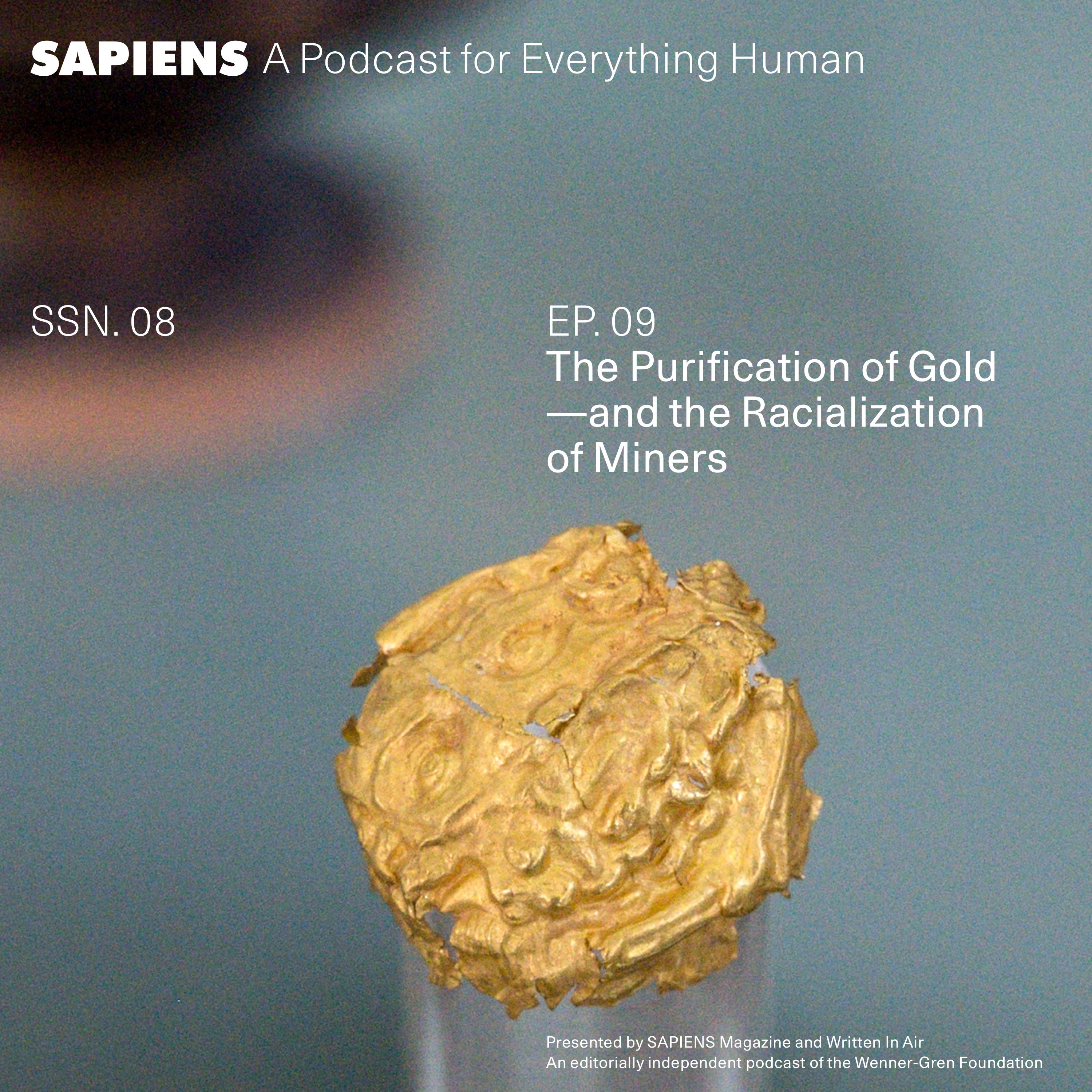
The gold industry, alongside nation-states, has marginalized the artisanal and small-scale mining (ASM) sector for decades, but now things seem to be changing. The industry has realized that engaging with the ASM sector could be more beneficial for their reputation than excluding it. While once ASM was viewed as a risk, now it is seen as an opportunity.Anthropologist Giselle Figueroa de la Ossa spent more than 20 months studying the gold value chain and the actors involved in it. In this episode, she explores this recent shift around ASM and its unintended consequences.Giselle Figueroa de la Ossa is a Colombian anthropologist and a Ph.D. candidate in anthropology at the London School of Economics. Her research explores the labor, ethics, and affects that make gold a valuable substance demanded by the tonnes. She draws from her multifaceted ethnographic research among bureaucrats, technocrats, and entrepreneurs who work on a gold mineral traceability project in Colombia and financiers who work on responsible gold sourcing in London, Switzerland, and Paris. . She is the founding director of the Laboratorio de Antropología Abierta (Open Anthropology Lab), an organization in Colombia that, since 2018, produces audiovisual content for nonacademic audiences to increase the impact of academic research.Check out these related resources: “La codicia detrás del comercio internacional del oro” (“The Greed Behind the International Gold Trade”) OECD Due Diligence Guidance London Bullion Market Association World Gold Council Alliance for Responsible Mining Open Anthropology Lab *SAPIENS: A Podcast for Everything Human is produced by Written In Air. The executive producers are Dennis Funk and Chip Colwell. This season’s host is Eshe Lewis, who is also the director of the SAPIENS Public Scholars Training Fellowship program. Production and mix support are provided by Rebecca Nolan. Christine Weeber is the copy editor. SAPIENS is an editorially independent magazine of the Wenner-Gren Foundation and the University of Chicago Press. SAPIENS: A Podcast for Everything Human is part of the American Anthropological Association Podcast Library. This episode is part of the SAPIENS Public Scholars Training Fellowship program, which provides in-depth training for anthropologists in the craft of science communication and public scholarship, funded with the support of a three-year grant from the John Templeton Foundation.
Milpa for the Future
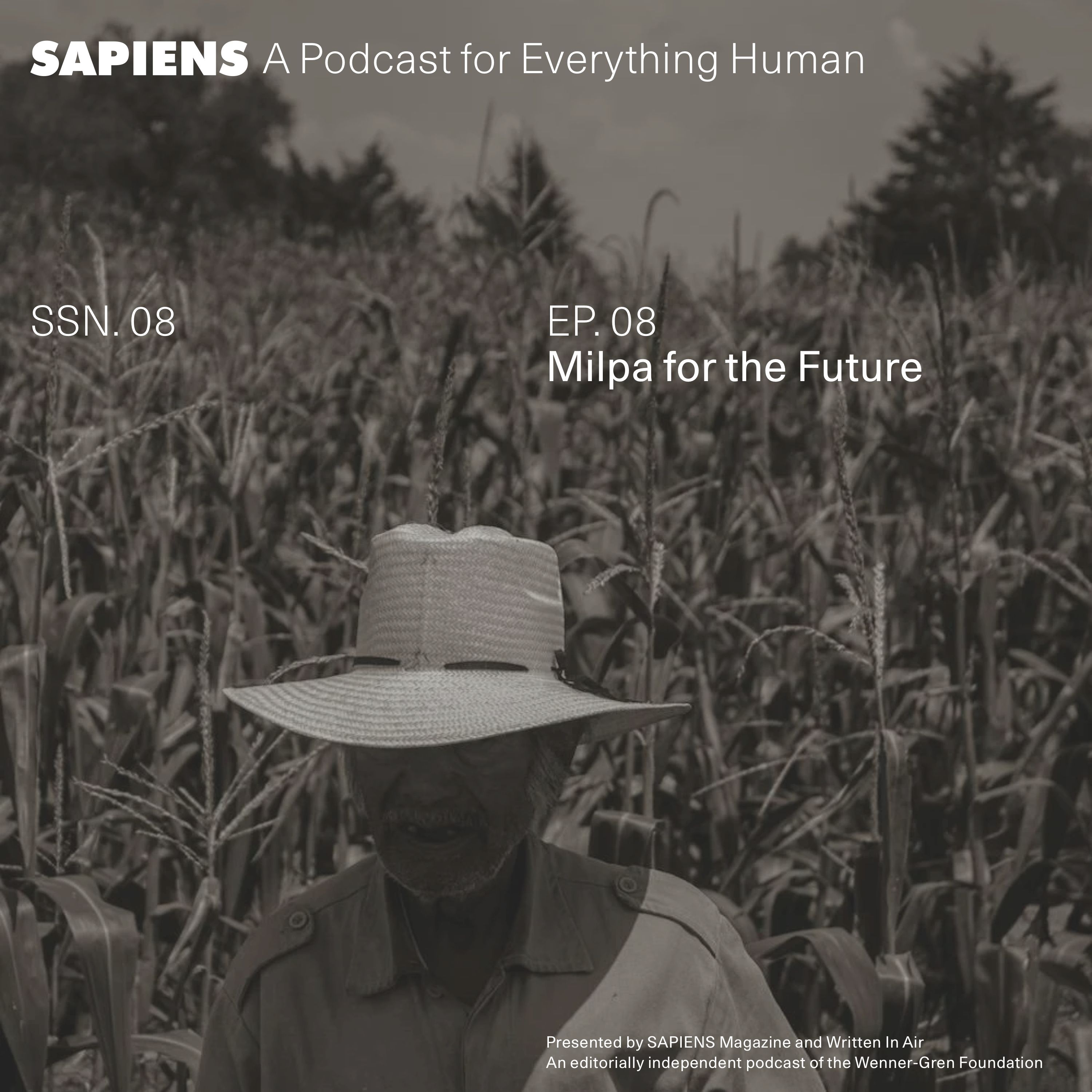
Milpa is an ancestral way of farming in Mexico and other regions of Mesoamerica that involves growing an assortment of different crops in a single area without synthetic pesticides and fertilizers. This provides people in the region with a wide variety of foods and a balance of nutrients. In recent years, with the introduction of farming based on synthetic herbicides, milpa has changed, and land is used to grow just a single crop. This change in agriculture has led to the rise of ultra-processed foods in these rural areas, which is impacting the nutritional health of the people. This change in agriculture, together with the rise of ultra-processed foods in these rural areas, is affecting the nutritional health of the people.In this episode, bioanthropologist Anahí Ruderman shares her experiences working with a milpa growing community in Veracruz, Mexico, that is resisting the food of globalization as it tries to cook up a healthier future.Anahí Ruderman is an Argentinean biological anthropologist with a Ph.D. in biological sciences from the Universidad Nacional de Córdoba, Argentina. She is currently an associate researcher at the Instituto Patagónico de Ciencias Sociales y Humanas of the Consejo Nacional de Investigaciones Científicas y Técnicas of Argentina. Anahí is interested in processes related to the nutritional status and diet of contemporary populations in Latin America in the context of globalization and food transitions. She uses analytical tools from different disciplines that range from human evolutionary biology, population genetics, and human ecology to history and sociopolitics.Check out these related resources: Mano Vuelta Project YouTube Channel La Milpa: Government of Mexico Website “Asociación entre seguridad alimentaria, indicadores de estado nutricional y de salud en poblaciones de Latinoamérica: una revisión de la literatura 2011–2021” (“Association between Food Security, Nutritional Status, and Health Indicators in Latin American Populations: A Literature Review (2011–2021)”) Repository of Scientific Publications of the Project *SAPIENS: A Podcast for Everything Human is produced by Written In Air. The executive producers are Dennis Funk and Chip Colwell. This season’s host is Eshe Lewis, who is also the director of the SAPIENS Public Scholars Training Fellowship program. Production and mix support are provided by Rebecca Nolan. Christine Weeber is the copy editor. SAPIENS is an editorially independent magazine of the Wenner-Gren Foundation and the University of Chicago Press. SAPIENS: A Podcast for Everything Human is part of the American Anthropological Association Podcast Library. This episode is part of the SAPIENS Public Scholars Training Fellowship program, which provides in-depth training for anthropologists in the craft of science communication and public scholarship, funded with the support of a three-year grant from the John Templeton Foundation.
S8 Ep 7Zambia’s Chinese Connection
In the last two decades, an unprecedented wave of Chinese investment and migration to Africa has transformed many economies on the continent. But this has also provoked a storm of controversy, as some criticize the situation as exploitative neocolonialism. Others defend this migration as development assistance and an act of solidarity between regions jointly victimized by European colonialism. In this episode, anthropologist Justin Lee Haruyama takes us to Zambia, where Chinese investment is bringing two cultures together in the country's mines. Justin speaks with local Zambians and researchers on Chinese migration to examine the complicated impacts Chinese activity is having in Africa today.Justin Lee Haruyama is a British Columbia–based writer, researcher, and anthropologist. He is a fellow with the American Council of Learned Societies and incoming assistant professor at the University of British Columbia, Okanagan. He received his Ph.D. from the University of California, Davis, and has received grants and fellowships from the National Science Foundation, U.S. Fulbright Program, and Wenner-Gren Foundation. Justin’s research examines the controversial presence of Chinese migrants and investors in Zambia today. His writing has appeared in The Chicago Tribune, The South China Morning Post, Anthropology News, Somatosphere, Cultural Anthropology, and elsewhere.Check out these related resources: “Jehovah’s Witnesses Are Learning Chinese to Evangelize in Zambia” “Chinese Media Is Obsessed With Portraying China as Africa’s Savior” “Belts, Roads, and Non-Hegemonic Dreams” “Global China in Zambia: Labor, Capital, and Cultural Tensions” Affective Encounters: Everyday Life Among Chinese Migrants in Zambia by Di Wu *SAPIENS: A Podcast for Everything Human is produced by Written In Air. The executive producers are Dennis Funk and Chip Colwell. This season’s host is Eshe Lewis, who is also the director of the SAPIENS Public Scholars Training Fellowship program. Production and mix support are provided by Rebecca Nolan. Christine Weeber is the copy editor. SAPIENS is an editorially independent magazine of the Wenner-Gren Foundation and the University of Chicago Press. SAPIENS: A Podcast for Everything Human is part of the American Anthropological Association Podcast Library. This episode is part of the SAPIENS Public Scholars Training Fellowship program, which provides in-depth training for anthropologists in the craft of science communication and public scholarship, funded with the support of a three-year grant from the John Templeton Foundation.
S8 Ep 6South Africa’s Road Out of Colonialism
While researching the history of parole in South Africa, a lawyer and anthropologist discovers the origins of the N2 road, which she drives everyday. Now interested in this highway’s history, she explores how this and other roads were used to expand territory and exploit people during South Africa’s colonial periods under Dutch and British rule, and how they kept people separate during the country’s apartheid government from 1948 to 1994. In the present, she learns of a new highway project that threatens to repeat this legacy of racist displacement.Nicole van Zyl is a South African lawyer and Ph.D. candidate in anthropology at the University of the Western Cape. Her doctoral research explores connections between the first systemized forms of early release from incarceration and the modern practice of parole. She is interested in how incarceration as punishment communicates belonging and exclusion from society, and how this relates to present-day conflicts around South Africa’s land redistribution as an atonement for colonial and apartheid crimes.Check out these related resources: “Should the Proposed N2 Toll Road Through the Wild Coast Be Moved?” Judgment Against Mining Without Community Consent: South Africa: North Gauteng High Court, Pretoria Xolobeni the Beautiful Pondoland Revolt *SAPIENS: A Podcast for Everything Human is produced by Written In Air. The executive producers are Dennis Funk and Chip Colwell. This season’s host is Eshe Lewis, who is also the director of the SAPIENS Public Scholars Training Fellowship program. Production and mix support are provided by Rebecca Nolan. Christine Weeber is the copy editor. SAPIENS is an editorially independent magazine of the Wenner-Gren Foundation and the University of Chicago Press. SAPIENS: A Podcast for Everything Human is part of the American Anthropological Association Podcast Library. This episode is part of the SAPIENS Public Scholars Training Fellowship program, which provides in-depth training for anthropologists in the craft of science communication and public scholarship, funded with the support of a three-year grant from the John Templeton Foundation.
S8 Ep 5Ceasefire From the Earth and Sky
In existence for more than 70 years, the Korean Demilitarized Zone (DMZ) is the site of the longest ceasefire in the world. What can this region teach us about the long, intended—and unintended—consequences of this form of a truce?In this episode, sociocultural anthropologist T. Yejoo Kim uncovers how residents have been surviving through decades of sonic violence and propaganda, and explores recent developments in such long-lasting psychological warfare. She also details how a former excavationist remembers discovering human remains at the DMZ. Even after more than 70 years, the ceasefire allows war to reverberate through the skies and unsettle the earth below.T. Yejoo Kim is a sociocultural anthropologist researching the political economy of the Korean DMZ. She is a Ph.D. candidate at the University of California, Los Angeles. Her dissertation builds upon the anthropology of borders and the economy, diaspora and transpacific studies, and critical disability frameworks. Her research has been funded by Fulbright and the Korea Foundation.Check out these related resources: “You and the Atom Bomb” “Echolocation” “The Korean War Mixed Graves” *SAPIENS: A Podcast for Everything Human is produced by Written In Air. The executive producers are Dennis Funk and Chip Colwell. This season’s host is Eshe Lewis, who is also the director of the SAPIENS Public Scholars Training Fellowship program. Production and mix support are provided by Rebecca Nolan. Christine Weeber is the copy editor. SAPIENS is an editorially independent magazine of the Wenner-Gren Foundation and the University of Chicago Press. SAPIENS: A Podcast for Everything Human is part of the American Anthropological Association Podcast Library. This episode is part of the SAPIENS Public Scholars Training Fellowship program, which provides in-depth training for anthropologists in the craft of science communication and public scholarship, funded with the support of a three-year grant from the John Templeton Foundation.
S8 Ep 4A Venezuelan Election … in Chile
In this episode, social anthropologist Luis Alfredo Briceño González talks about his experiences as a foreign researcher in Chile. During his fieldwork, he met Marta, a Venezuelan woman residing in an informal settlement on the outskirts of Santiago. Marta and her family held a mock election to protest not being able to vote in their home country during the presidential elections in 2024. Through her story, Luis discusses the enduring emotional and political ties that migrants often have with their home countries.Luis Alfredo Briceño González is a doctoral candidate at the Potificia Universidad Católica de Chile. His research focuses on migration and auto-constructed settlements in contexts of informality. He conducted fieldwork in Santiago de Chile, a city that has become an important host to migrants in South America. Before his Ph.D., he worked as a research assistant on the Latin American Anti-Racism in a “Post-Racial” Age project.Check out these related resources: "Venezuela Blackout: What Caused It and What Happens Next?” “Is One Third of Venezuela’s Population About to Flee?” “A Multinational, Multiethnic Alternative in Chile's Migrant Settlements” “221 Politicians, 23 Journalists, and Six Human Rights Activists Detained Since the Presidential Elections” *SAPIENS: A Podcast for Everything Human is produced by Written In Air. The executive producers are Dennis Funk and Chip Colwell. This season’s host is Eshe Lewis, who is also the director of the SAPIENS Public Scholars Training Fellowship program. Production and mix support are provided by Rebecca Nolan. Christine Weeber is the copy editor. SAPIENS is an editorially independent magazine of the Wenner-Gren Foundation and the University of Chicago Press. SAPIENS: A Podcast for Everything Human is part of the American Anthropological Association Podcast Library. This episode is part of the SAPIENS Public Scholars Training Fellowship program, which provides in-depth training for anthropologists in the craft of science communication and public scholarship, funded with the support of a three-year grant from the John Templeton Foundation.
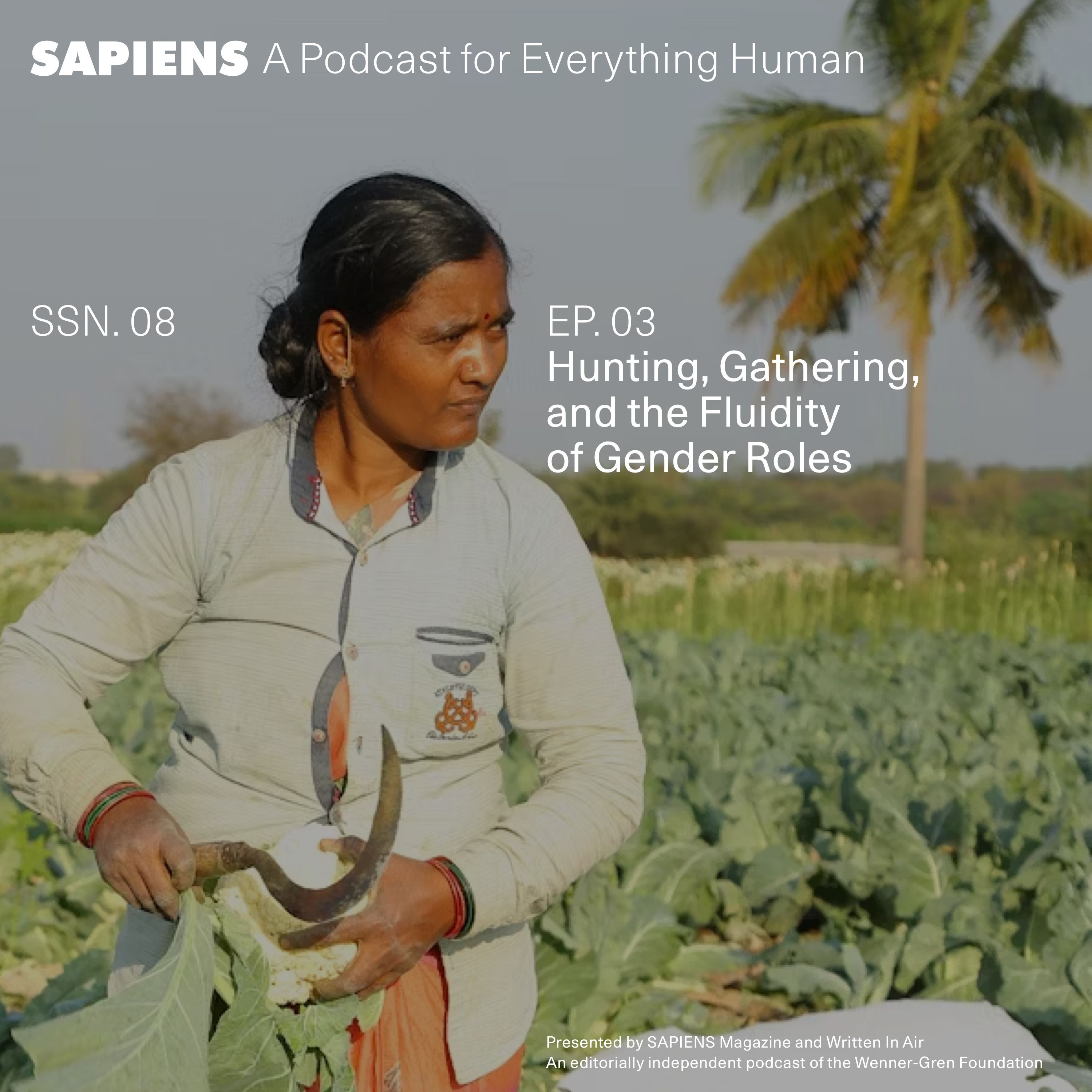
S8 Ep 3Hunting, Gathering, and the Fluidity of Gender Roles
When it comes to the division of labor in hunter-gather societies, the stereotype is generally that men hunt and women gather. But when a recent study claimed that women in hunter-gather societies hunt just as much as their male counterparts, the finding made news around the world. But why does gender equality in the past matter so much today?This episode focuses on the complexities of work, gender, and power throughout human evolution. Evolutionary anthropologist Cecilia Padilla-Iglesias guides us through what these can tell us about gender roles in humanity’s past and the origins of uneven power dynamics.Cecilia Padilla-Iglesias is a postdoctoral researcher in evolutionary anthropology at the University of Cambridge. Her research aims to reconstruct the past of contemporary hunting and gathering people from different places in Africa to better understand the processes that shaped the enormous genetic and cultural diversity on the continent today. Her work is interdisciplinary, combining genetic, ecological, and archaeological analyses with ethnographic fieldwork among hunter-gatherer populations in the Republic of Congo. Previously, she worked in the Yucatán Peninsula, studying the drivers of linguistic diversity.Check out these related resources: “The Myth of Man the Hunter: Women’s Contribution to the Hunt Across Ethnographic Contexts” “Female Foragers Sometimes Hunt, yet Gendered Divisions of Labor Are Real: A Comment on Anderson et al. (2023) ‘The Myth of Man the Hunter’” “Man the Hunter Nearing 60: An Interview With Richard B. Lee” “Hunting and Gathering: The Human Sexual Division of Foraging Labor” “Is 'Man the Hunter' Dead?” “The Theory That Men Evolved to Hunt and Women Evolved to Gather Is Wrong” *SAPIENS: A Podcast for Everything Human is produced by Written In Air. The executive producers are Dennis Funk and Chip Colwell. This season’s host is Eshe Lewis, who is also the director of the SAPIENS Public Scholars Training Fellowship program. Production and mix support are provided by Rebecca Nolan. Christine Weeber is the copy editor. SAPIENS is an editorially independent magazine of the Wenner-Gren Foundation and the University of Chicago Press. SAPIENS: A Podcast for Everything Human is part of the American Anthropological Association Podcast Library. This episode is part of the SAPIENS Public Scholars Training Fellowship program, which provides in-depth training for anthropologists in the craft of science communication and public scholarship, funded with the support of a three-year grant from the John Templeton Foundation.
S8 Ep 2A Linguist’s Night at the Ball
ESince its emergence in 1960s Harlem, the LGBTQ+ “ballroom scene” has expanded into a transnational subculture. For outsiders, understanding how a ball functions can take time. Join linguistic anthropologist Dozandri Mendoza as they “walk” us through a night at a kiki ball in Puerto Rico. They introduce us to DJs, commentators, performers, and the Boricua Ballroom children who are refashioning the techniques of their trans-cestors. Dozandri guides us through both the expectations of those on the sidelines of the ballroom runway and the anticolonial political meanings behind the Puerto Rican ballroom scene. Dozandri Mendoza is a Ph.D. candidate in linguistics at the University of California, Santa Barbara (UCSB). Their doctoral research focuses on trans forms of creative expression in the Puerto Rican ballroom scene. Dozandri explores the representation of Puerto Rican linguistic practices in the archive of ballroom history. They also examine what verbal and embodied art forms such as reading, throwing shade, commentation, and walking a category teach us about diasporic memory, decolonial critique, and trans survival. Their work centers around a multimodal and performance-based ethnographic installation called the “Kiki Ball del Palabreo” held in Puerto Rico in 2023. Dozandri’s research has been supported by a Society for Visual Anthropology/Lemelson Foundation Fellowship, the Duberman-Zal Fellowship from the Center for LGBTQ+ Studies, and grants from the Interdisciplinary Humanities Center at UCSB. Check out these related resources: Laborivogue (Host of the ball and ballroom performance collective in Puerto Rico) Afroponka Fest (Festival of which the Black is Ponka Kiki Ball was a part) *SAPIENS: A Podcast for Everything Human is produced by Written In Air. The executive producers are Dennis Funk and Chip Colwell. This season’s host is Eshe Lewis, who is also the director of the SAPIENS Public Scholars Training Fellowship program. Production and mix support are provided by Rebecca Nolan. Christine Weeber is the copy editor. SAPIENS is an editorially independent magazine of the Wenner-Gren Foundation and the University of Chicago Press. SAPIENS: A Podcast for Everything Human is part of the American Anthropological Association Podcast Library. This episode is part of the SAPIENS Public Scholars Training Fellowship program, which provides in-depth training for anthropologists in the craft of science communication and public scholarship, funded with the support of a three-year grant from the John Templeton Foundation.
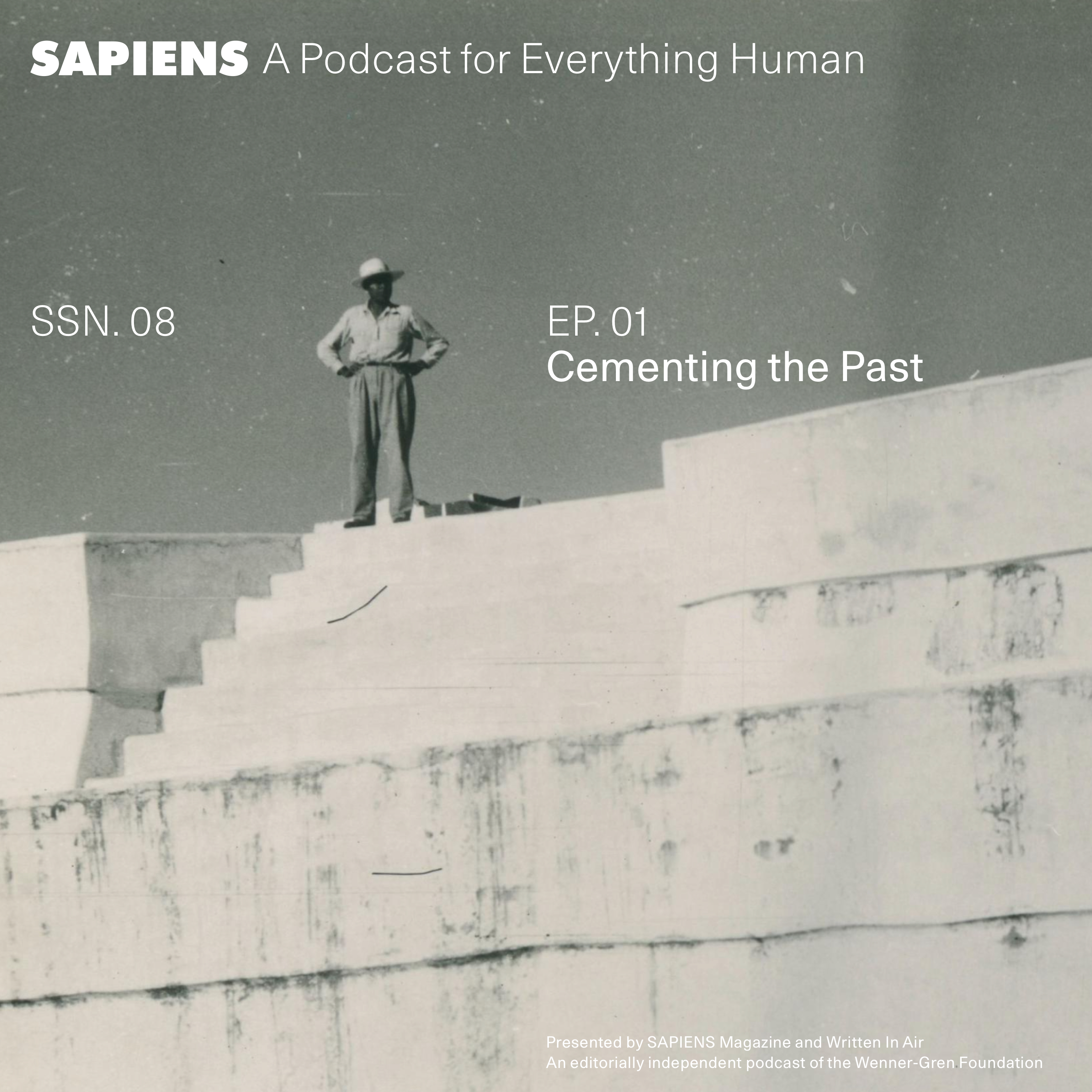
S8 Ep 1Cementing the Past
The United Fruit Company was a U.S. multinational corporation and at one time, the largest landholder in Central America. To maintain authority in this part of the world, the company stamped out labor reform, collaborated with U.S.-backed coups, and, oddly enough, invested in archaeology. Why?In this episode, anthropologist Charlotte Williams explores the company’s role in preserving the past. She discusses United Fruit's botched conservation project at the Maya site of Zaculeu and the ongoing impacts of that program. Charlotte Williams is a Mellon Democracy and Landscapes Initiative fellow at Dumbarton Oaks, Harvard University (2024–2025), and a Ph.D. candidate in anthropology at the University of Pennsylvania. Her research explores how archaeology as a discipline has been used in U.S. imperial projects, with a focus on how the United Fruit Company used archaeology to grow territorial power in Central America. Charlotte has worked on community museum projects, coordinated decolonizing museum programs, and co-curated an independent art exhibition.Check out these related resources: “The Fruits of Extraction” “Zaculeu, Guatemala: reflexiones y propuestas para un retorno local” Zaculeu, fortaleza mam Facebook page “Conquest and Revival at Chiantla Viejo: The Transition of a Highland Maya Community to Spanish Colonial Rule” *SAPIENS: A Podcast for Everything Human is produced by Written In Air. The executive producers are Dennis Funk and Chip Colwell. This season’s host is Eshe Lewis, who is also the director of the SAPIENS Public Scholars Training Fellowship program. Production and mix support are provided by Rebecca Nolan. Christine Weeber is the copy editor. SAPIENS is an editorially independent magazine of the Wenner-Gren Foundation and the University of Chicago Press. SAPIENS: A Podcast for Everything Human is part of the American Anthropological Association Podcast Library. This episode is part of the SAPIENS Public Scholars Training Fellowship program, which provides in-depth training for anthropologists in the craft of science communication and public scholarship, funded with the support of a three-year grant from the John Templeton Foundation.
S8 Ep 1Where Cultures Collide: Season 8 Trailer
trailerCulture is a force that makes us who we are. It drives social interactions and relationships, shapes beliefs and politics, ignites imaginations, and molds identities. Cultural conflicts are at the heart of many crises facing the world—increasing inequality, persistent bigotry, ecological collapse.In this season of the podcast, we’re investigating these intersections of culture: how past flashpoints echo into today, how present flashpoints are forging our futures. Through the lens of anthropology, we will examine what happens when human cultures meet, merge, and clash—and what these encounters reveal about humanity’s shared fate.Join Season 8 host Eshe Lewis and the latest cohort of SAPIENS public scholars fellows as we journey across continents to uncover where cultures collide.*SAPIENS: A Podcast for Everything Human is produced by Written In Air. The executive producers are Dennis Funk and Chip Colwell. This season’s host is Eshe Lewis, who is also the director of the SAPIENS Public Scholars Training Fellowship program. Production and mix support are provided by Rebecca Nolan. Christine Weeber is the copy editor. SAPIENS is an editorially independent magazine of the Wenner-Gren Foundation and the University of Chicago Press. SAPIENS: A Podcast for Everything Human is part of the American Anthropological Association Podcast Library. This episode is part of the SAPIENS Public Scholars Training Fellowship program, which provides in-depth training for anthropologists in the craft of science communication and public scholarship, funded with the support of a three-year grant from the John Templeton Foundation.
S7 Ep 14Introducing: Homegoings
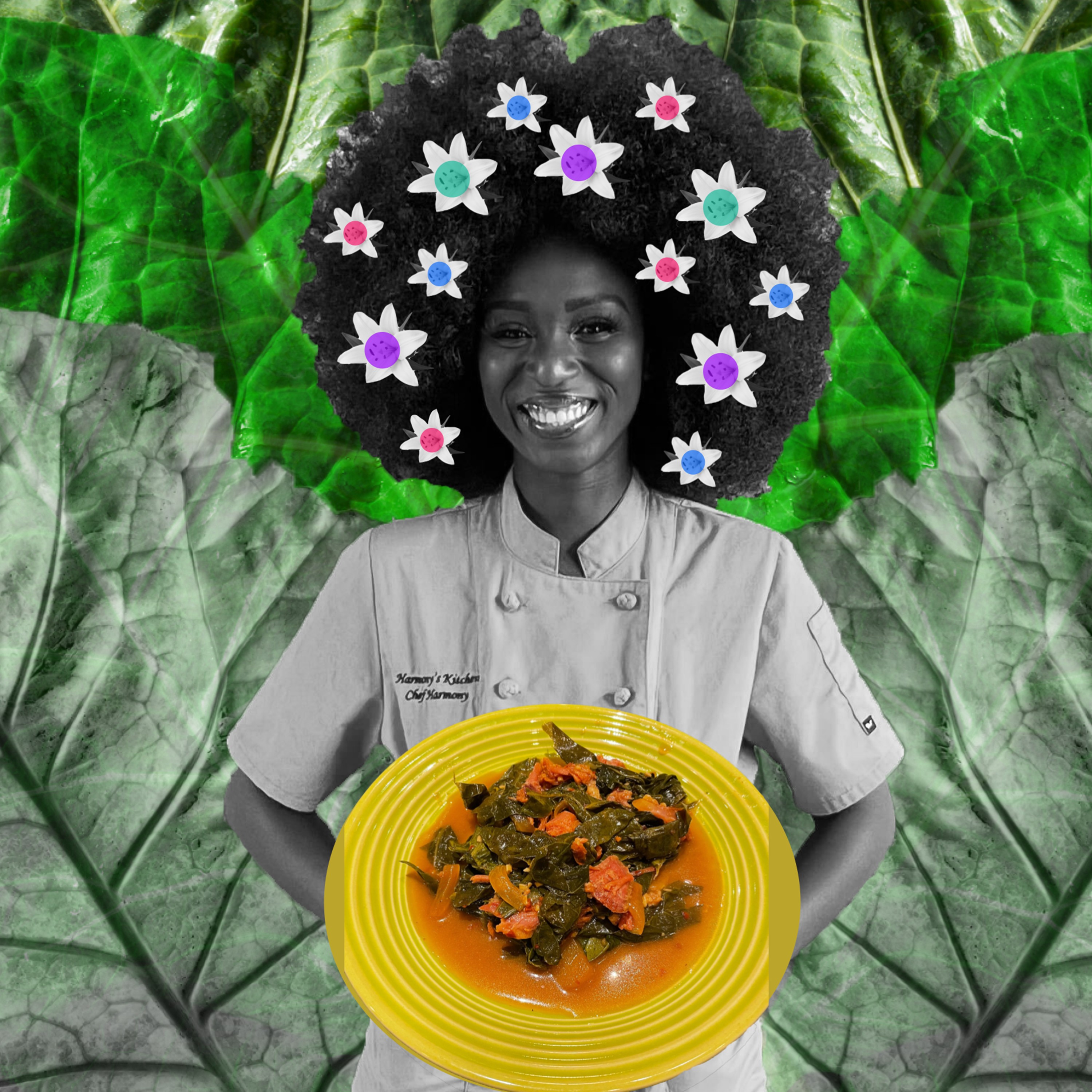
Host Myra Flynn unpacks one soul food recipe: collard greens, with local and world-renowned chefs, and even her own mother. Together they explore how the history of a once undesirable food mimics the resilience, innovation, and perseverance of a once considered undesirable people.*Homegoings is a: Podcast, TV show, and event-series where no topic is off the table, and there’s no such thing as going too deep. Host and musician Myra Flynn brings you candid conversations about race with artists, experts and regular folks all over the country about their literal skin in the game—of everyday life.
S7 Ep 13The Ancient Child Who's Changing Archaeology
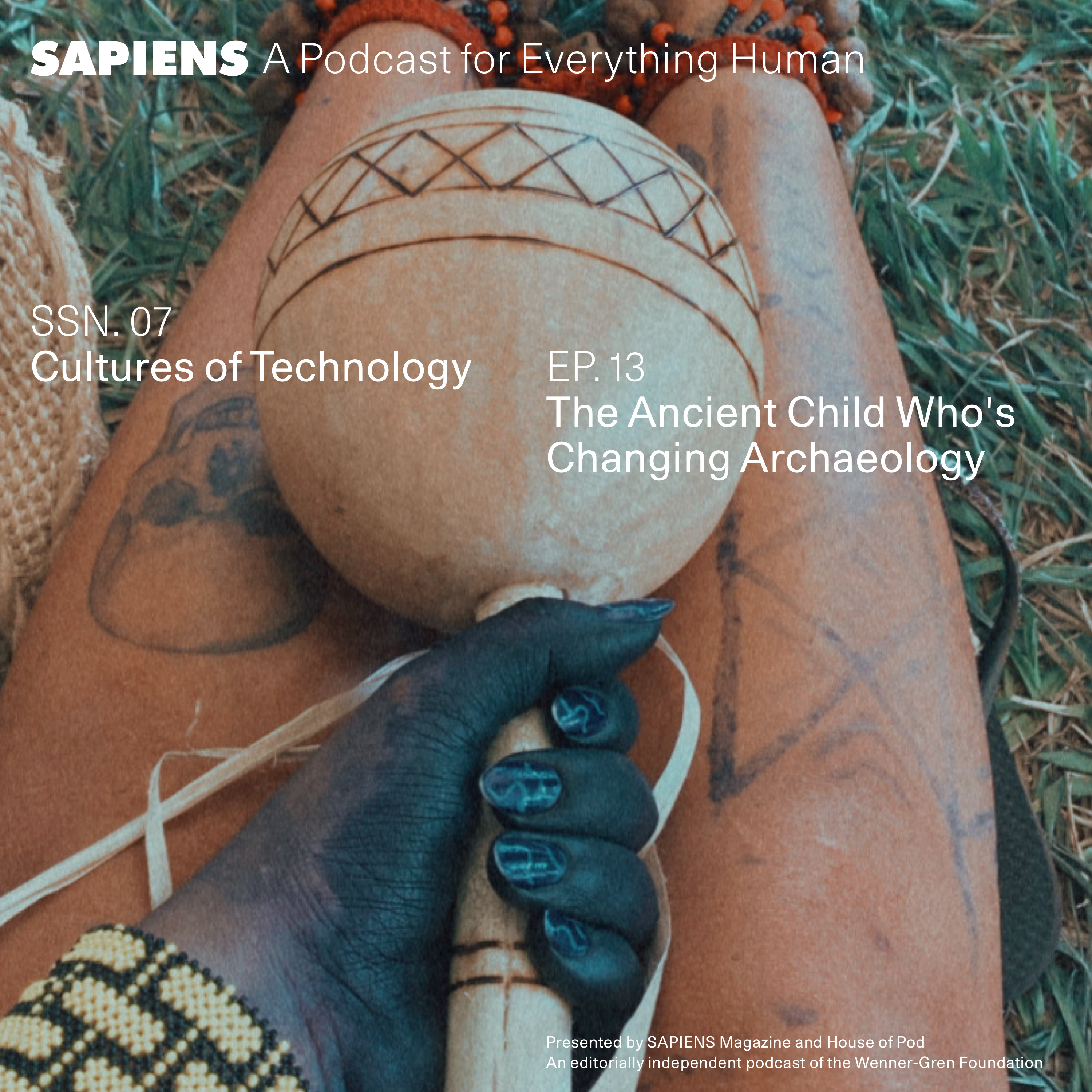
Can museums and archaeology harm the dead?An Indigenous archaeologist from Brazil challenges traditional approaches to studying human bones. Her work reveals how standard practices—such as assigning catalog numbers to ancient bodies—are violent and biased. As she encounters the remains of a 700-year-old child in a university museum, their stories intertwine, highlighting issues of ethics, coloniality, and ethnic erasure. This encounter prompts a discussion on how archaeology and museums can address historical wounds and counter the silencing of Indigenous histories.Mariana Petry Cabral is a Brazilian archaeologist whose research interests focus on Indigenous archaeologies, collaborative practices, and how people produce and use historical knowledge to understand who they are. She received her Ph.D. from Universidade Federal do Pará (Brazil) and is a permanent professor of the department of anthropology and archaeology at the Universidade Federal de Minas Gerais (Brazil). She was a visiting scholar at Brown University in 2023 and is working on a project about the relevance of archaeological narratives about the past to imagine more inclusive and diverse futures.Check out these related resources: "Finding Footprints Laid at the Dawn of Time” "Indigenous Cultures Have Archaeology Too” Museum of Natural History and Botanical Garden, UFMG "From Structures to Bodies and Beings: The Perishable Vestiges of Lapa do Caboclo, Diamantina, Minas Gerais” Follow the Indigenous archaeologist Bibi Nhatarâmiak on Instagram
S7 Ep 12Comics As a Medium for Women’s Rights
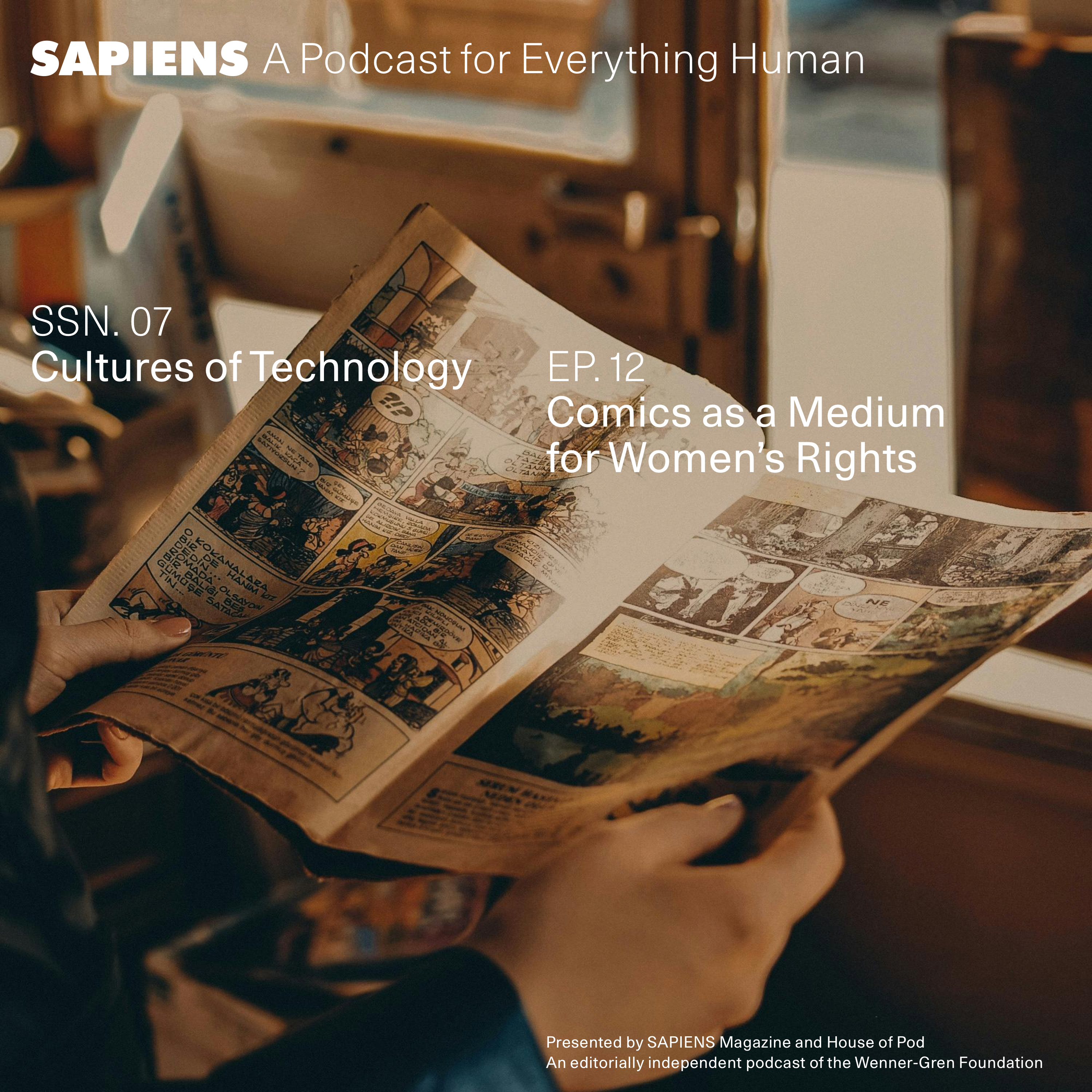
As a form of popular culture, comics have provided humor, action, and entertainment to readers of all ages and across generations. But comics also intertwine art and humor to creatively make political statements, challenge media censorship, and address controversial issues of the times.This podcast episode focuses on how comics can be tools for social action and transformation by highlighting the life history of the first woman Pakistani comic artist Nigar Nazar and her character Gogi, whom she created in the 1970s. Gogi comics shed light on important themes of education, health, rights, and other critical women’s issues in Pakistan and the broader Muslim world and how they are transforming over time.Join cultural anthropologist Sana Malik and host Eshe Lewis as they talk about Gogi, the transgressive potential of comics and art, and how comics are relevant in Pakistan today amid new social movements and the social media boom.Sana Malik is a cultural anthropologist who studies women’s political agency in urban Pakistan. She is a Ph.D. candidate at Emory University. Her research has been funded by the Wenner-Gren Foundation and the Social Science Research Council. Sana’s dissertation draws on the anthropology of rights and social movements, social generations studies, and feminist ethnography to explore how activists and ordinary women engage in movements for social justice and rights in urban Pakistan.Check out these related resources: Gogi Studios “Aurat March: Pakistani Women Face Violent Threats Ahead of Rally” “Gogi, the Heroine Created by Pakistan's First Female Cartoonist” “Confronting Xenophobia Through Food—and Comics” “When Anthropology Meets the Graphic Novel in Thailand”
S7 Ep 11Smartphones Are Bicycles For Our Minds
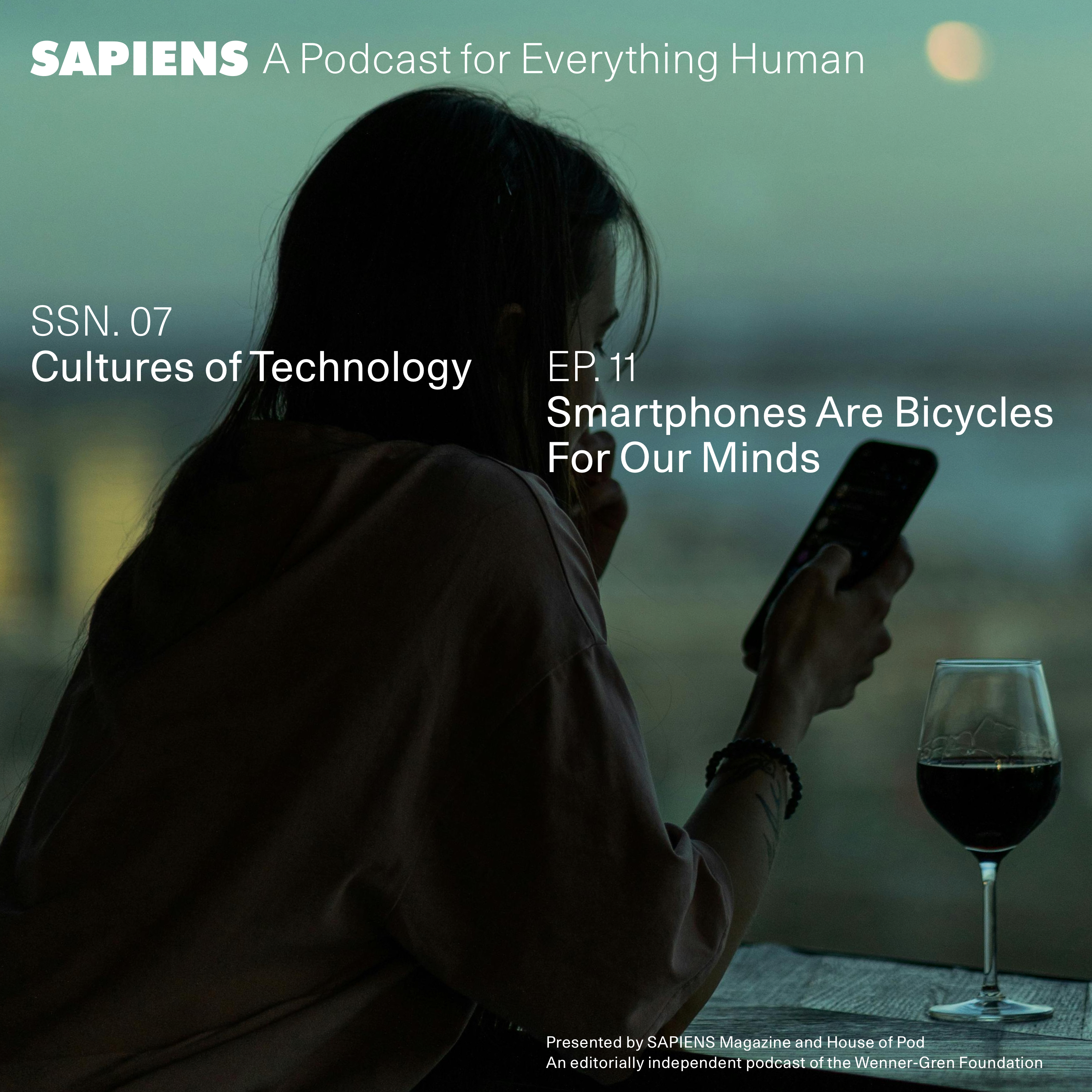
Where is your smartphone right now?If you’re like most smartphone users in the United States, it’s probably within a few feet of your reach, if not sitting in your hand. In the last 15 years, smartphones have quickly, seamlessly, and profoundly been embedded in the daily lives of most Americans. There are now few, if any, domains of modern life that are unaffected by smartphone use.This episode explores our interactions and relationships with these pocket-sized computers we call smartphones through the research of Alberto Navarro, a doctoral student at Stanford University. Drawing from inventor Steve Jobs’ view that the computer represents “the equivalent of a bicycle for our minds,” Navarro explores what computers represent for humans in evolutionary and energetic terms.Alberto Navarro is a Ph.D. candidate in anthropology at Stanford University. He is interested in how tools allow humans to flexibly modify the structure and functions of their bodies and minds. Following in the anthropological tradition of making the familiar strange, his dissertation explores ways in which smartphone use in the United States is transforming many of the most basic features of human existence and experience. He believes improving our relationship with smartphones is one of the most impactful things we can do to enhance our everyday performance and well-being.Check out these related resources: Steve Jobs Interview, “Bicycle for Our Minds” “How People Actually Use Their Smartphones” “Do Mobile Phones Set Citizens Free?” “How Cellphones Make and Break Human Connections”
S7 Ep 10When Scientists Take to the Streets
María Pía Tavella is an Argentine biological anthropologist and science writer. In conversation with host Eshe Lewis, María shares a snapshot of the multiple hurdles the scientific community is facing in Argentina and reflects on the role of science communication. How is scientific research related to our daily lives? In what ways are science contributions so valuable to our societies that we shouldn't cut spending on them, even in times of economic crisis?María Pía Tavella received a Ph.D in anthropology from the Universidad Nacional de Córdoba (Argentina) and is an assistant professor in human evolution in the same institution. María Pía’s dissertation sheds light on pre-Hispanic population dynamics in central Argentina through the study of ancient DNA. She works for the National Scientific and Technological Research Council of Argentina as a science communication and outreach officer. María Pía is also interested in bioethics and the social implications of genetic research.Check out these related resources: “‘Despair’: Argentinian Researchers Protest as President Begins Dismantling Science” “Argentinians Stage Nationwide Strike Against Javier Milei’s Far-Right Agenda” “‘The State’ Is a Story We Tell Ourselves” “Can Protestors Humanize the Police?” “A Radical Recentering of Dignity”
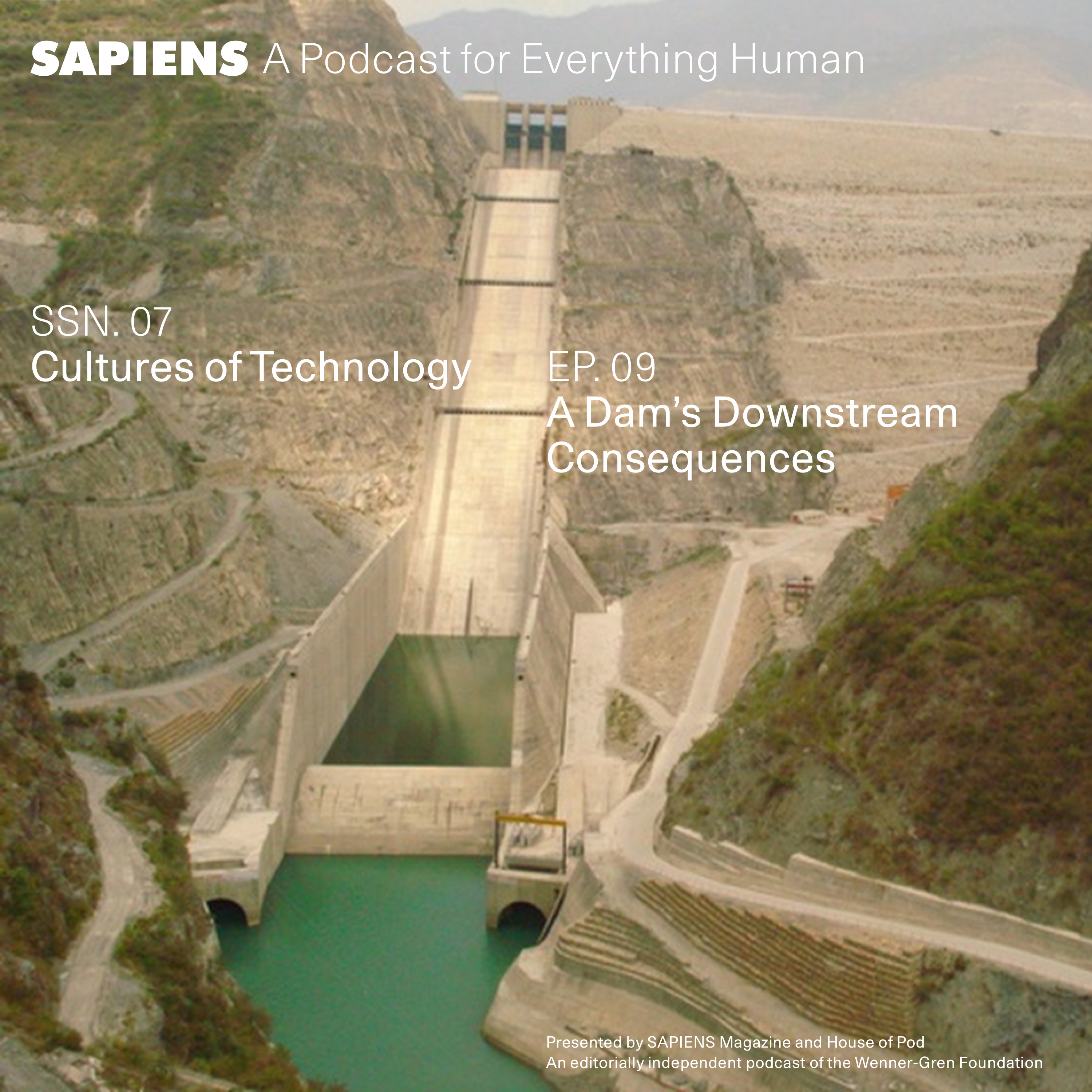
S7 Ep 9A Dam’s Downstream Consequences
Discussions about the impacts of dams around the world are often focused on the displacement of communities due to the creation of reservoirs and the submergence of towns and cities. What happens when a dam affects more people downstream than it displaces upstream? How does a dam impact humans living downstream?In this episode, Parag Jyoti Saikia shares how the Subansiri Lower Hydroelectric Project, one of India’s largest dams under construction, will impact the lifeways of Indigenous communities living downstream of the dam. The dam will not displace them. Instead, it will change the ways in which the river currently flows. Delving into people's relationship with the river and their understanding of its flows, Parag describes the dam’s environmental, sociocultural, and political consequences for communities living downstream.Parag Jyoti Saikia is studying the construction of a hydropower dam in India to understand how infrastructures in the making shape everyday life, the environment, and geopolitics. He is a Ph.D. candidate in anthropology at the University of North Carolina, Chapel Hill. His research is supported by the Wenner-Gren Foundation’s Dissertation Fieldwork Grant and the Social Science Research Council’s International Dissertation Research Fellowship. For nearly a decade, Parag has been associated with grassroots organizations working on dams, rivers, and the environment. He has been writing about these issues in English and Assamese, his mother tongue.Check out these related resources: “Writing Indigenous Oral Tradition to Fight a Dam” “The UNESCO Site That Never Was” “Damming the Northeast” “Arunachal’s Unfinished Lower Subansiri Dam Could Be Tomb for India’s Giant Hydropower Projects” “Bhupen Hazarika Setu and the Politics of Infrastructure”
S7 Ep 8Why Do We Eat at Funerals?
Funeral traditions around the world involve a range of rituals. From singing to burying to … eating. Why is food such a common practice in putting our loved ones to rest?In this episode, Leyla Jafarova, a doctoral student at Boston University, examines the role of funeral foods in different cultural contexts—from the solemn Islamic funeral rites of the former Soviet Union to the symbolic importance of rice in West Africa. Food rituals help with bereavement because they carry cultural symbols, foster social cohesion, provide psychological comfort, and contribute to the expression of collective grief and remembrance within communities. Through food, human societies navigate the universal experience of death and mourning.Leyla Jafarova is a Ph.D. candidate in sociocultural anthropology at Boston University. Her doctoral research focuses on the emergence and development of humanitarian ethics of care for the unidentified dead in post-war Azerbaijan and the production of knowledge in this regard. Leyla also explores how families of missing persons in post-war Azerbaijan construct their personal truths and navigate their experiences of loss and healing. She is examining how their alternative truths often exist alongside and are sidelined by dominant humanitarian regimes of truth that exclusively rely on forensic scientific evidence. This research has been supported through a Wenner-Gren Dissertation Fieldwork Grant and by a Graduate Research Abroad Fellowship through Boston University.Check out these related resources: Dying to Eat: Cross-Cultural Perspectives on Food, Death, and the Afterlife, edited by Candi K. Cann Ways of Eating: Exploring Food Through History and Culture by Benjamin Aldes Wurgaft and Merry White “Who First Buried the Dead?”
S7 Ep 7Chatter That Matters
What role does gossip play in human societies? In this episode, Bridget Alex and Emily Sekine, editors at SAPIENS magazine, chat with host Eshe Lewis to explore gossip as a fundamental human activity.They discuss gossip’s evolutionary roots, suggesting it may have developed as a form of "vocal grooming" to maintain social bonds in groups. It also helps enforce social norms, they argue, offering a way to share information about people’s reputations and control free riders. Their conversation also touches on how gossip can aid in navigating uncertainties and expressing care.Bridget Alex earned her Ph.D. in archaeology and human evolutionary biology from Harvard University. Supported by the National Science Foundation, the Fulbright Program, and other awards, her research focused on the spread of Homo sapiens and extinction of other humans, such as Neanderthals, over the past 200,000 years. Prior to joining SAPIENS, Bridget taught anthropology and science communication at the California Institute of Technology, Pasadena City College, and Harvard University. Her pop-science stories have appeared in outlets such as Discover, Science, Archaeology, Atlas Obscura, and Smithsonian Magazine. Follow her on Twitter @bannelia.Emily Sekine is an editor and a writer with a Ph.D. in anthropology from The New School for Social Research. Prior to joining the team at SAPIENS, she worked with academic authors to craft journal articles and book manuscripts as the founder of Bird’s-Eye View Scholarly Editing. Her anthropological research and writing explore the relationships between people and nature, especially in the context of the seismic and volcanic landscapes of Japan. Emily’s work has been supported by the Wenner-Gren Foundation, the National Science Foundation, and the Society of Environmental Journalists, among others, and her essays have appeared in publications such as Orion magazine, the Anthropocene Curriculum, and Anthropology News.Eshe Lewis is the project director for the SAPIENS Public Scholars Training Program. She holds a Ph.D. in cultural anthropology from the University of Florida and has spent the past 10 years working with Afro-descendant peoples in Peru on issues of social movements, women’s issues, Black feminism, and gender violence. Eshe is based in Toronto, Canada.Check out these related resources: "What Is Linguistic Anthropology?" "Why Envy Might Be Good for Us" "Why Do We Gossip"
S7 Ep 6The Problems of Digital Evidence in Terrorism Trials
Today most people around the world are using digital gadgets. These enable us to communicate instantaneously, pursue our daily work, and entertain ourselves through streaming videos and songs. But what happens when our past digital activities become evidence in criminal investigations? How are the data that mediate our lives turned into legal arguments?An anthropologist searches for answers.Onur Arslan is a Ph.D. candidate in anthropology at the University of California, Davis, who works at the intersections of science and technology studies, visual anthropology, law, and social studies. He graduated from Istanbul University with a B.A. in political science and international relations, and from Bilgi University with an M.A. in philosophy and social thought. For his Ph.D. research, he is investigating how digital technologies reshape the production of legal knowledge in terrorism trials. Through focusing on Turkish counterterrorism, he examines cultural, political, and technoscientific implications of evidence-making practices. His field research is supported by the National Science Foundation, Social Science Research Council, and American Research Institute in Turkey.Check out these related resources: “The Power of Criminal Prosecutors” “How Bureaucracy Conceals Obligations to Afghan Refugees” “How Rumors Tap and Fuel Anxieties in the Internet Age”
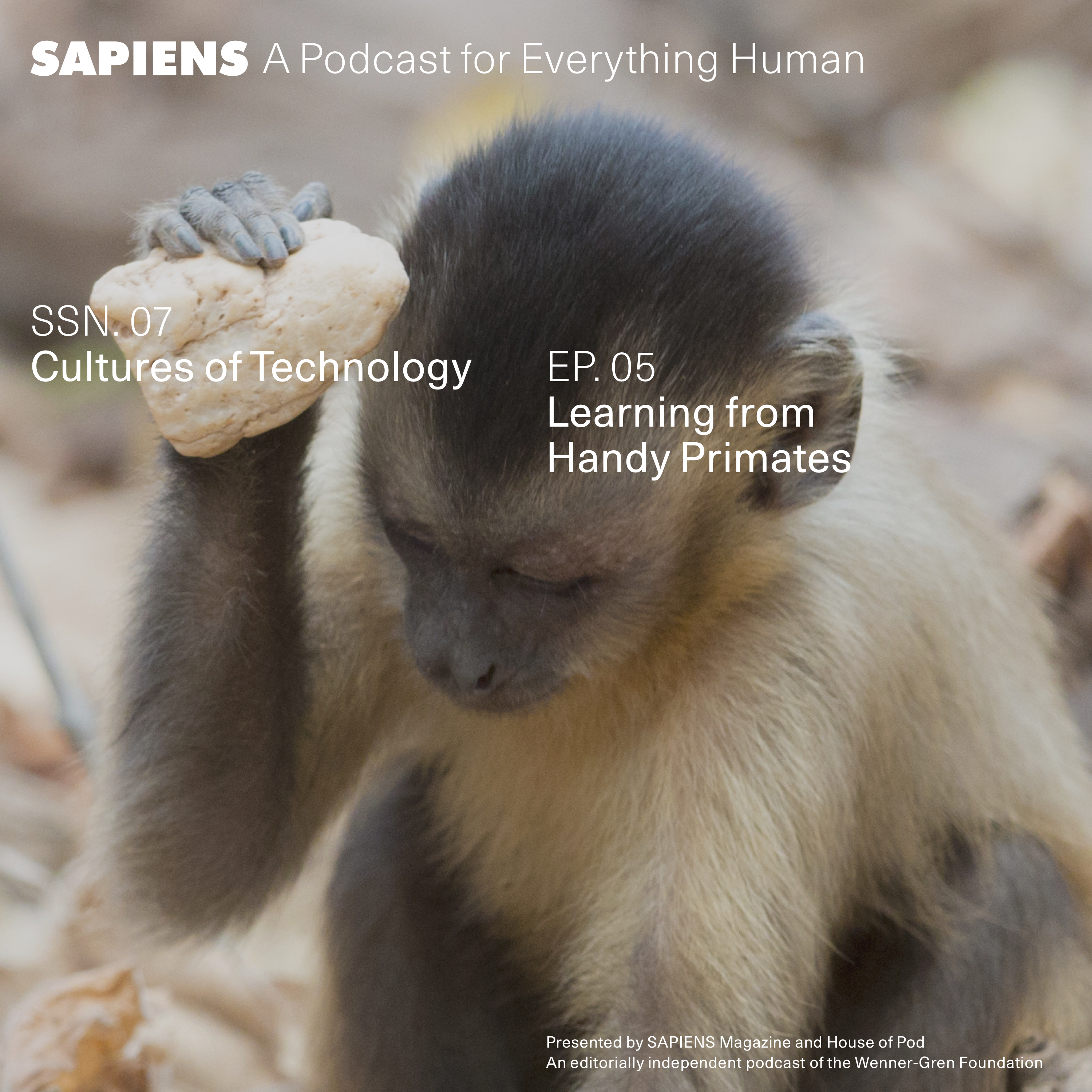
S7 Ep 5Learning from Handy Primates
Many of our primate relatives use tools. How do they use them? And why?And what do these skills mean for understanding tools across the animal kingdom, including for us humans?In this episode, host Eshe Lewis delves into a conversation with Kirsty Graham, an animal behavior researcher. Kirsty explains how primates such as chimpanzees use tools to forage. Such innovative methods to access food reflect the basic yet profound necessities that drive tool innovation. Contrasting these findings with tool use in Homo sapiens highlights a vast range of purposes tools serve in human life.Kirsty Graham is a postdoctoral researcher at the University of St Andrews in the U.K. Their research focuses on the gestural communication of wild bonobos. They conducted fieldwork in Indonesia, Uganda, and the Democratic Republic of Congo. Before their Ph.D., they worked as a field assistant at Wamba, Democratic Republic of Congo, for the Max Planck Institute and studied at Quest University Canada, specializing in research at the Caño Palma Biological Station in Costa Rica.Check out these related resources: "Tools of the Wild: Unveiling the Crafty Side of Nature" "How Apes Reveal Human History" "Meet the Ancient Technologists Who Changed Everything" "The First Butchers"
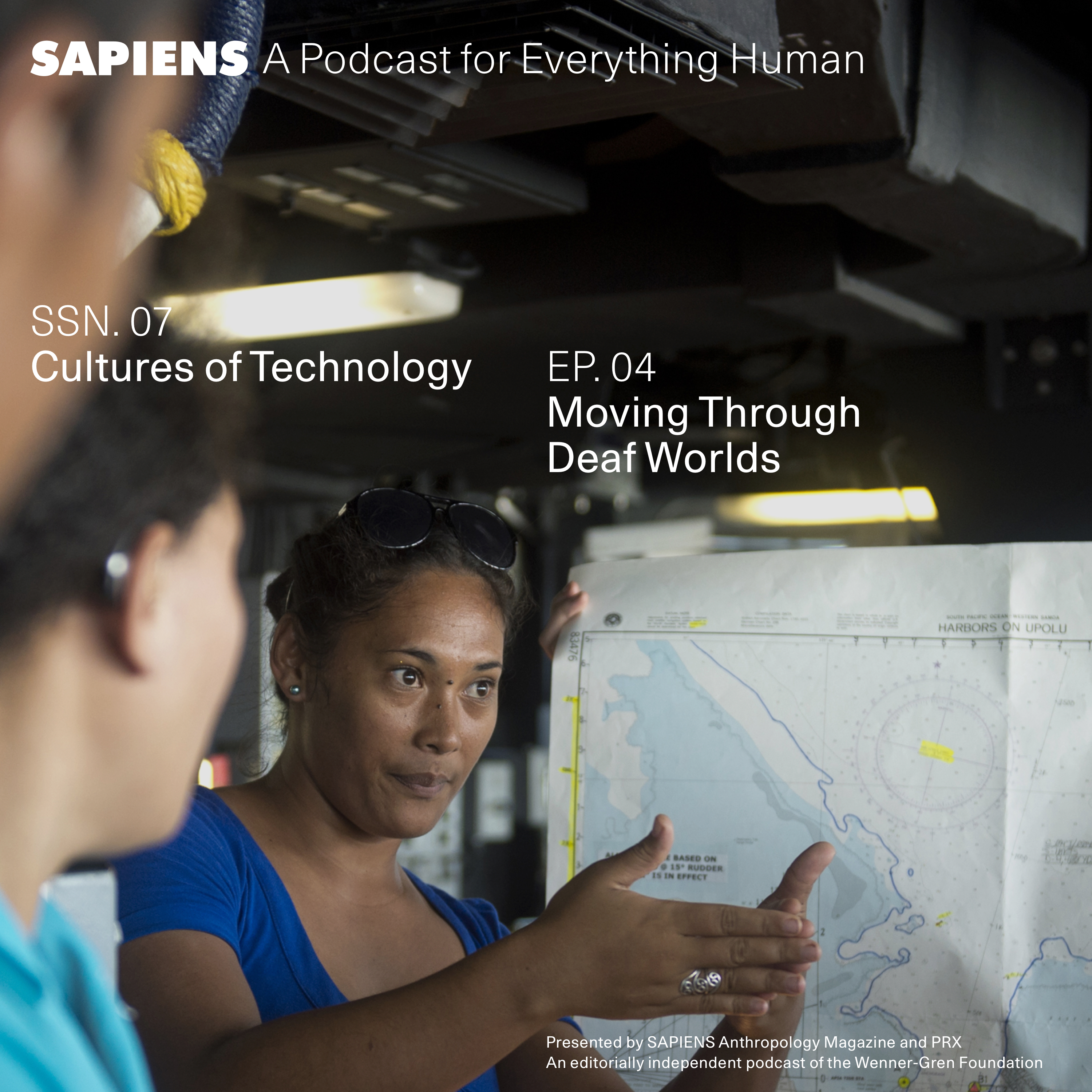
S7 Ep 4Moving Through Deaf Worlds
Why do people migrate from one country to another, leaving behind friends, family, and familiarity in search of another life elsewhere? And how might their experiences look different if they are deaf? Ala’ Al-Husni is a deaf Jordanian who moved to Japan five years ago, where he still lives with his deaf Japanese wife and their family just outside of Tokyo.Reported by Timothy Y. Loh, a hearing anthropologist who researches deaf communities in the Arabic-speaking Middle East, this episode explores the joys, pains, and unexpected gains of Ala's journey and the meaning of deaf migration in a globalizing world.Timothy Y. Loh is an anthropologist of science and technology, and a Ph.D. candidate in history, anthropology, and science, technology, and society at the Massachusetts Institute of Technology in Cambridge. His ethnographic research examines sociality, language, and religion in deaf and signing worlds spanning Jordan, Singapore, and the United States. His research has been published in Medical Anthropology, SAPIENS Anthropology Magazine, and Somatosphere, and he has received support from the Social Science Research Council, the Royal Anthropological Institute, and the National Academy of Education and Spencer Foundation, among others.We thank Annelies Kusters, Laura Mauldin, and Kate McAuliff for advice on accessibility for this episode.Check out these related resources: The MobileDeaf Project, Heriot-Watt University “Building the Tower of Babel” and “Deaf cosmopolitanism” Valuing Deaf Worlds in Urban India by Michele Friedner "How Deaf and Hearing Friends Co-Navigate the World" Deaf Gain: Raising the Stakes for Human Diversity edited by H-Dirksen L. Bauman and Joseph J. Murray
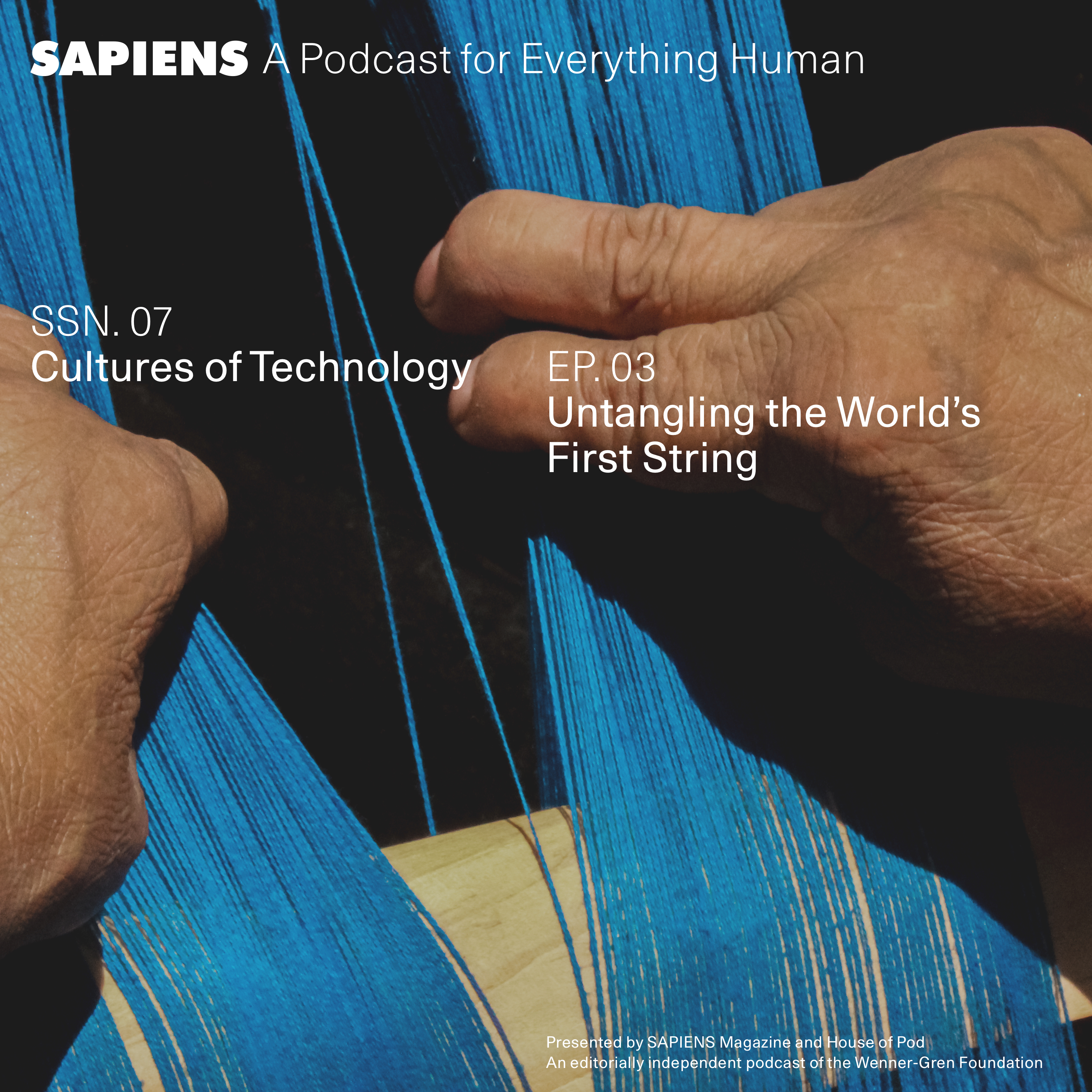
S7 Ep 3Untangling the World’s First-Known String
At the Abri du Maras site in southern France, archaeologists recovered twisted plant fibers dating back 50,000 years, suggesting Neanderthals had knowledge of plant materials and the seasonal cycles necessary for making durable string. This finding challenges a view of Neanderthals as simplistic and inferior to modern humans, highlighting their sophisticated use of technology and deep environmental knowledge. In this episode, Bruce Hardy discusses with host Eshe Lewis the oldest piece of string on record and how it reshapes our understanding of Neanderthals.This story not only delves into the technical aspects of making ancient string but also underscores the broader implications for appreciating Neanderthal ingenuity.
S7 Ep 2In Search for the First Cyborg
These days, a mention of cyborgs often conjures images from a science fiction future: robot arms and legs, infrared eyes, and other modified humans. However, we don’t need to look into the future to find cyborgs. In many ways, people today are already cyborgs. We are deeply intertwined with technology—from the clothes we wear to the structures we live in. But when did our relationship with technology start? Who was the first cyborg? These questions take us from the present to the deep past, with host Eshe Lewis joining Cindy Hsin-yee Huang, a Paleolithic archaeologist, on a journey to ponder cyborg anthropology, tool use, and the relationship between our ancient hominin ancestors and their technologies. Cindy Hsin-yee Huang is a doctoral candidate in the School of Human Evolution and Social Change at Arizona State University and affiliated with the Institute of Human Origins. Cindy is a Paleolithic archeologist, with a focus on stone tools and cultural evolution. Her research, supported by the Social Sciences and Humanities Research Council of Canada, uses stone tools in the archeological record to investigate large-scale patterns of innovation and cultural diffusion during the ancient past. This work helps us understand how technology impacted, facilitated, and reflected human evolution, migration, and social interactions. Check out these related resources: Natural-Born Cyborgs: Minds, Technologies, and the Future of Human Intelligence by Andy Clark A Cyborg Manifesto: Science, Technology, and Socialist-Feminism in the Late 20th Century by Donna Haraway “Tools of the Wild: Unveiling the Crafty Side of Nature” Amber Case: We're Already Cyborgs A Different Kind of Animal: How Culture Transformed Our Species by Robert Boyd
S7 Ep 1Black Influencers Beyond the Screens
Anuli Akanegbu is the host of BLK IRL, an audio docuseries. She is also a Ph.D. candidate in cultural anthropology at New York University, conducting research on Black creatives who are contract workers in Atlanta, Georgia. In conversation with SAPIENS’ podcast host, Dr. Eshe Lewis, Anuli delves into the historical and current successes and struggles of Black influencers, content creators, and artists for labor rights and recognition. Through in-depth ethnographic interviews, Akanegbu’s work emphasizes the importance of acknowledging people’s humanity behind their digital personas. It reveals the complex realities of Black professionals in creative industries. And as a result, her research challenges us to rethink our assumptions about the online/offline dichotomy—and the possibility of a joyous and unified “life ecosystem.” This episode is part of the SAPIENS Public Scholars Training Fellowship program, which provides in-depth training for anthropologists in the craft of science communication and public scholarship, funded with the support of a three-year grant from the John Templeton Foundation.
S7 Ep 1Cultures of Technology: Season 7 Trailer
trailerSince the dawn of our species, the ability to make things has made us who we are. Human-made objects, large and small, have enabled and molded evolutionary forces, sparked and expressed our imagination, guided and structured social relations, transformed and destroyed the environment–and much more. This season of the podcast looks at how a wide range of technologies—from smartphones to comic books to cooking to hydroelectric dams—are intertwined with our lives. Anthropologists’ stories from around the globe reveal fascinating insights into human evolution, social organization, communication, historical trajectories, and the interface between the living and the dead. Join Season 7’s host, Dr. Eshe Lewis, on our latest journey to tackle big questions about cultures of technology and the purpose, limits, and possibilities of such material culture. ✽ SAPIENS: A Podcast for Everything Human is produced by House of Pod. The executive producers are Cat Jaffee and Chip Colwell. This season’s host is Eshe Lewis, who is the director of the SAPIENS Public Scholars Training Fellowship program. Dennis Funk is the audio editor and sound designer. Christine Weeber is the copy editor. SAPIENS is an editorially independent magazine of the Wenner-Gren Foundation and the University of Chicago Press. SAPIENS: A Podcast for Everything Human is part of the American Anthropological Association Podcast Library. This episode is part of the SAPIENS Public Scholars Training Fellowship program, which provides in-depth training for anthropologists in the craft of science communication and public scholarship, funded with the support of a three-year grant from the John Templeton Foundation.
S6 Ep 8Can We Understand One Another?
Hosts Kate Ellis and Doris Tulifau explore the perils and possibilities of the kind of fieldwork that defined Margaret Mead as an anthropologist. They provide answers to the Mead-Freeman controversy but also ask the questions that remain. In this season finale, we circle back to the problems with coming of age … in Samoa and everywhere. Season 6 of the SAPIENS podcast was co-produced by PRX and SAPIENS, and made possible by a grant from the National Endowment for the Humanities.
S6 Ep 7Weaving Stories: Two Women Speak
We turn from Margaret Mead’s and Derek Freeman’s conflicting accounts of adolescence and sexuality in Samoa to more stories from Samoans themselves. Author and poet Sia Figiel and activist and anthropologist Doris Tulifau are two Samoan women from different generations. Yet they share a bond and have a similar experience of terrible violence and survival. They bravely give us a glimpse into the dynamics of power within sexuality and their heartfelt journey of reclaiming it. Season 6 of the SAPIENS podcast was co-produced by PRX and SAPIENS, and made possible by a grant from the National Endowment for the Humanities.
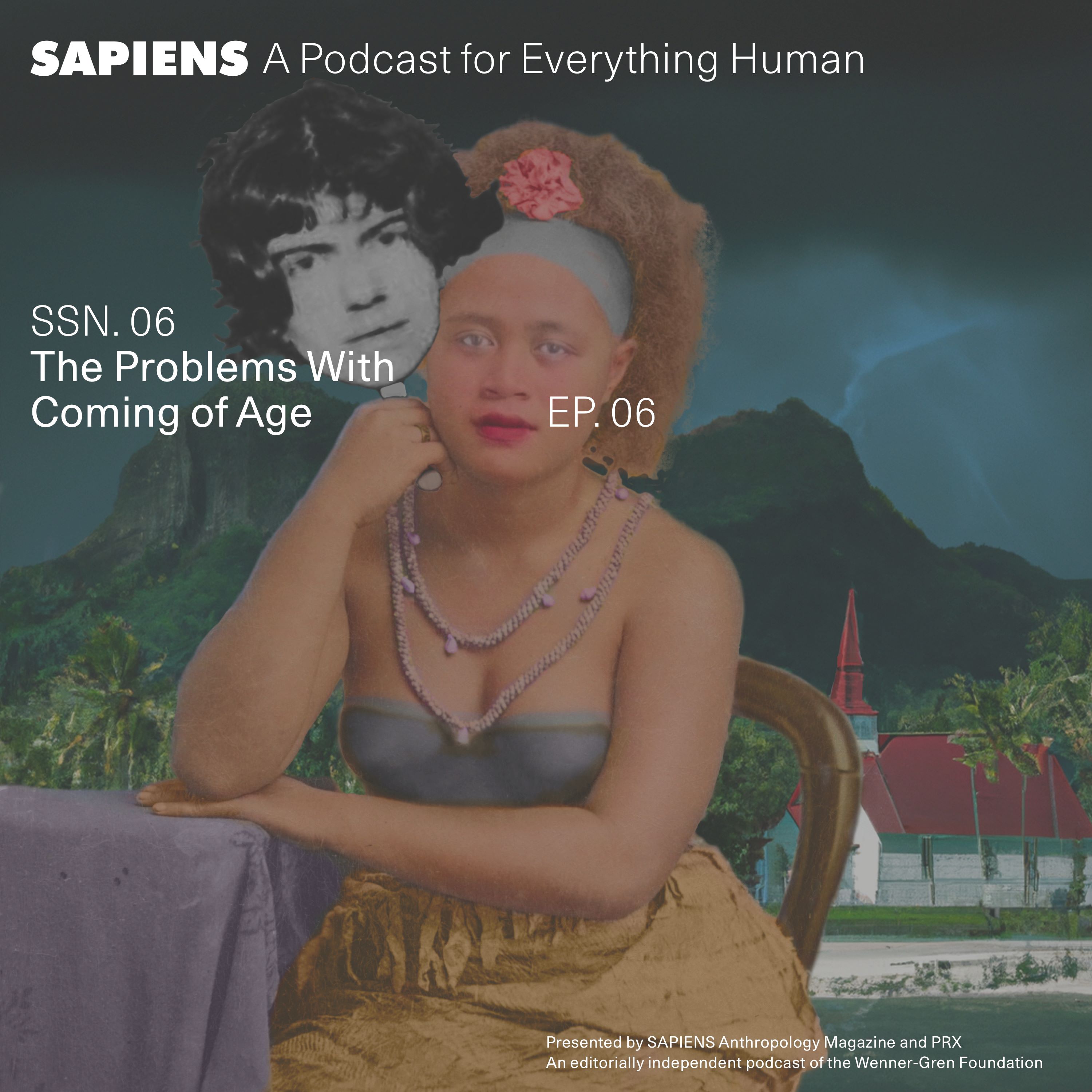
S6 Ep 6Sex, Lies, and Science Wars
After Derek Freeman publishes Margaret Mead and Samoa: The Making and Unmaking of an Anthropological Myth, the controversy heats up. Op-eds, documentaries, censure by a leading anthropological organization, and even a debate on the Phil Donahue Show all follow. Was Margaret Mead, “the grandmother of the world,” wrong? Or was Freeman? At stake was the heart of an academic discipline and the nature of being human. Mead’s own daughter, Mary Catherine Bateson, launches a defense, and other anthropologists weigh in too. Season 6 of the SAPIENS podcast was co-produced by PRX and SAPIENS, and made possible by a grant from the National Endowment for the Humanities.
S6 Ep 5Bonus: Flemmie Kittrell and the Preschool Experiment
bonusSAPIENS is happy to present this bonus episode from Lost Women of Science about another path-breaking thinker. In the 1960s, a Black home economist at Howard University recruited kids for an experimental preschool program. All were Black and lived in poor neighborhoods around campus. Flemmie Kittrell had grown up poor herself, just two generations removed from slavery, and she’d seen firsthand the effects of poverty. While Flemmie earned a PhD from Cornell, most of her siblings didn’t make it to college. One of her sisters died at just 22 years old of malnutrition. And it was the combination of these experiences that drove Flemmie to apply her academic training to help improve the lives of people in her community. In the early 1960s, Flemmie decided to see what would happen if you gave poor kids a boost early in life, in the form of a really great preschool. Every day for two years, parents would get free childcare, and their kids would get comprehensive care for body and mind—with plenty of nutritious food, fun activities, and hugs. What kind of difference would that make? And would it matter later on?
S6 Ep 5Into the Light
The first missionary arrived in Samoa in 1832, almost a century before Margaret Mead set out to study the culture of the islands. By the time she arrived, the church had been a central part of Samoan life for generations. In this episode, Doris Tulifau explores how Christianity and colonization complicate Mead’s—and her critic Derek Freeman’s—conclusions and continue to shape Samoan identity today. Season 6 of the SAPIENS podcast was co-produced by PRX and SAPIENS, and made possible by a grant from the National Endowment for the Humanities.
S6 Ep 4Trashing an American Icon
In January 1983, the front page of The New York Times read: “New Samoa Book Challenges Margaret Mead’s Conclusions.” Anthropologist Derek Freeman had been building his critique of Mead for years, sending her letters and even confronting her in person. Freeman’s resulting book, Margaret Mead and Samoa: The Making and Unmaking of an Anthropological Myth, was published five years after Mead died. Who was Freeman and why did he take such issue with Mead’s work in American Samoa? Season 6 of the SAPIENS podcast was co-produced by PRX and SAPIENS, and made possible by a grant from the National Endowment for the Humanities.
S6 Ep 3We Need to Tell Our Own Stories
Sparked by a provocative encounter in American Samoa, Doris Tulifau explores modern-day Samoan attitudes toward Margaret Mead. With a mix of voices and opinions, we encounter three loud ideas around Mead’s work, ultimately dropping us at the doorstep of Derek Freeman’s central critique about Samoan culture and society. Season 6 of the SAPIENS podcast was co-produced by PRX and SAPIENS, and made possible by a grant from the National Endowment for the Humanities.
S6 Ep 2Flapper of the South Seas
In 1925, Margaret Mead set sail for American Samoa. What she claimed she found there—teenagers free to explore and express their sexuality—instantly captivated her audience in the U.S. Her book became a bestseller, and Mead skyrocketed to fame. But what were her actual methods and motivations? We trace Mead’s legendary nine-month journey in the South Pacific. Season 6 of the SAPIENS podcast was co-produced by PRX and SAPIENS, and made possible by a grant from the National Endowment for the Humanities.
S6 Ep 1Coming of Age … Today
Being a teenager can be hard. Very hard. Our hosts Kate Ellis and Doris Tulifau recount the tough parts from their adolescence to ask whether being a teen is difficult in every culture. It’s the question that inspired Margaret Mead, one of the most influential figures in American anthropology, to begin her research in American Samoa in 1925. And it’s the question that has sparked years of debate about human sexuality, nature versus nurture, and whether we can ever really understand each other. Season 6 of the SAPIENS podcast was co-produced by PRX and SAPIENS, and made possible by a grant from the National Endowment for the Humanities.
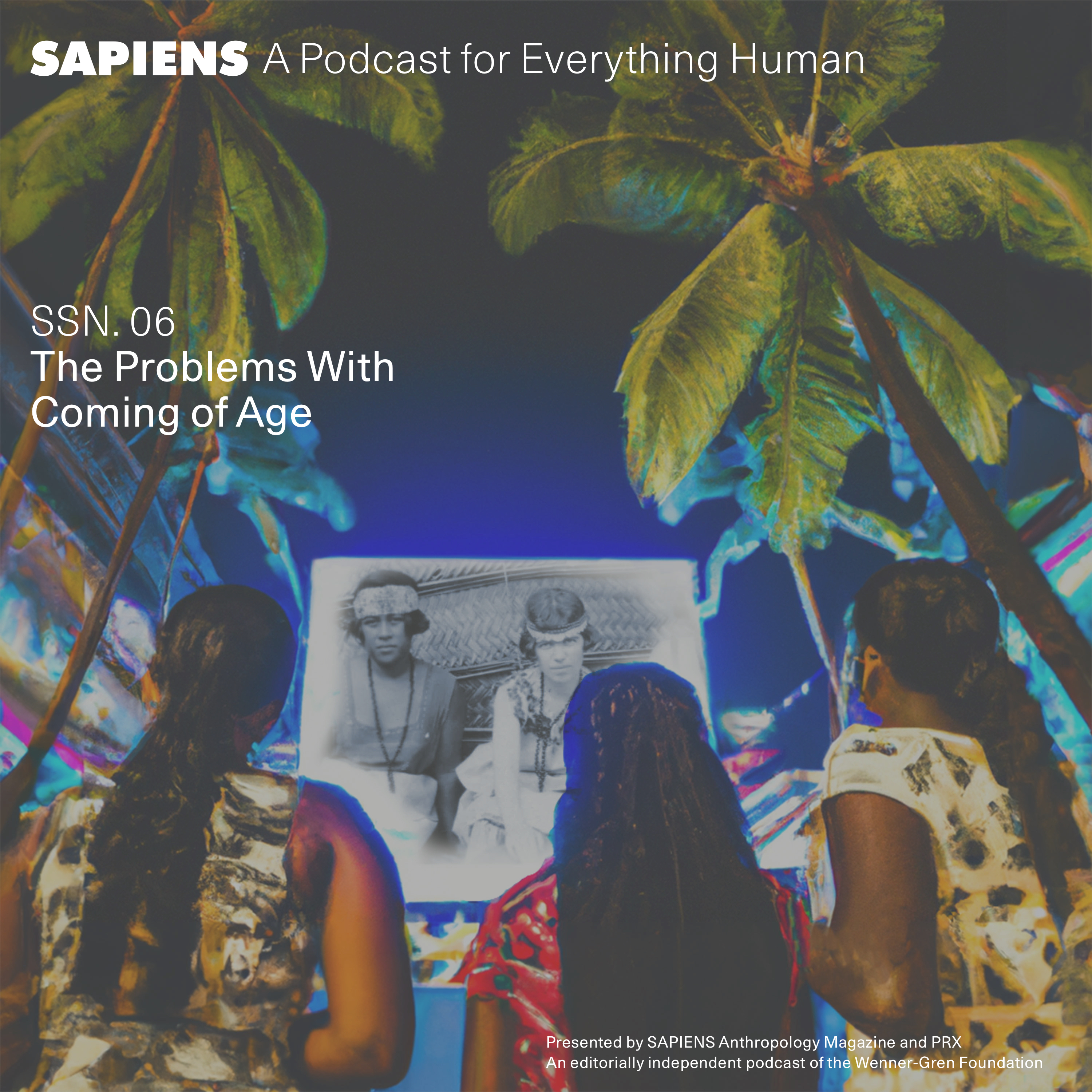
S6 Ep 1The Problems With Coming of Age: Season 6 Trailer
trailerThis special SAPIENS podcast season tells the story of famed anthropologist Margaret Mead’s epic life and controversial research to explore key quandaries about the human experience: sex and adolescence, nature versus nurture, and the question of whether it’s ever possible to fully understand cultures different from your own. In addition, we hear from Samoans themselves about their views on the matter and their lives today. In 1928, when she was just 27 years old, Mead published Coming of Age in Samoa: A Psychological Study of Primitive Youth for Western Civilization, which investigated the sexual lives of young women on the Pacific Islands. The book was an instant bestseller, challenging people in the U.S. to rethink much of what they had assumed to be true about sex, human biology, and growing up. Mead became the most influential anthropologist in history and one of TIME magazine’s most powerful 25 women of the 20th century. She received a U.S. presidential medal of freedom, and a U.S. postal stamp was made with her picture on it. But what if Mead’s findings about Samoans were wrong? Five years after Mead’s death, anthropologist Derek Freeman rebutted the central claims Mead made in her career-launching work, sparking a media sensation and challenging the field of anthropology. The controversy that followed sparked questions about the science of intercultural understanding and why Samoans weren’t empowered to speak for themselves. SAPIENS is an editorially independent podcast funded by the Wenner-Gren Foundation and is part of the American Anthropological Association Podcast Library. Season 6 of the SAPIENS podcast was co-produced by PRX and SAPIENS, and made possible by a grant from the National Endowment for the Humanities.
S5 Ep 7Introducing: Going Wild
The chart-topping and Signal Award-winning podcast “Going Wild with Dr. Rae Wynn-Grant” has returned for a brand new season. Produced by Nature on PBS, “Going Wild” is a sound-rich podcast about the human drama behind saving animals. This season, host and acclaimed wildlife ecologist Dr. Rae Wynn-Grant takes you on a journey through the entire ecological web—from the tiniest of life forms to apex predators. The new season is guided by one central question: “How can we, humans, look at our relationship to nature differently?” Dr. Wynn-Grant speaks to scientists, activists, and adventurers as they uncover all the different ways the natural world is interconnected. Explore the hidden world of extreme microbes thriving in the Boiling River in Peru with Dr. Rosa Espinoza, the “Amazon Jungle Scientist.” Listen to Christian Cooper, the man behind the infamous Central Park “Black birder” incident, on how growing up gay in the 80’s has led to his lifelong love of birds and nature. Listen to the third season of “Going Wild with Dr. Rae Wynn-Grant” here: https://link.chtbl.com/LTZFSlMP?sid=Sapiens
S5 Ep 7Introducing: The Disappearing Spoon
bonusArchaeologists around the world have long unearthed skulls with holes in them. But they were usually dismissed as natural accidents—the result of infections, birth defects, or animal bites. But in 1864 an archaeologist named Ephraim George Squier found a skull in Cuzco, Peru with a hole that was clearly not natural—it was square-shaped. The hole also showed signs of new bone growth around its edge, which meant the person couldn’t have been dead when the hole was cut. This skull was the first unquestionable evidence of something that scientists had long dismissed as impossible—ancient neurosurgery. Host: Sam Kean Senior Producer: Mariel Carr Producer: Rigoberto Hernandez Audio Engineer: Jonathan Pfeffer Music: “Trois Gnossiennes 3,” “Stately Shadows,” “Darklit Carpet,” “Vernouillet,” and “Tossed” by Blue Dot Sessions “Conjunto Sol del Peru,” by Pockra (Vol. 2: Musica de los Andes Peruanos) “Conjunto Sol del Peru,” by Wuaylias Tusy (Vol. 2: Musica de los Andes Peruanos) “Conjunto Sol del Peru,” by Ckashampa (Vol. 2: Musica de los Andes Peruanos)
S5 Ep 7Introducing: The Bioneers – Revolution from the Heart of Nature
bonusThe Bioneers: Revolution From the Heart of Nature is an award-winning, international radio and podcast series. Free to everyone, this series offers listeners and radio stations the opportunity to experience the conference year-round, and allows access to in-depth interviews with leading social and scientific innovators. It highlights diverse voices of grassroots leaders and voices that are often marginalized or excluded by corporate media. The programs cover a wide range of topics, including intelligence in nature, climate justice, food and farming, gender equity, Indigenous knowledge, reigning in corporate power, and youth activism. Learn more: https://bioneers.org/podcast-mobile-sign-up/
S5 Ep 7Introducing: Outside/In
bonusOutside/In from New Hampshire Public Radio is a show about the natural world and how we use it. The show combines solid reporting and long-form narrative storytelling to bring the outdoors to you wherever you are. The program casts a wide net across the environmental spectrum. They do fun explorations of nature, with lots of sound design and immersive scenes; they cover climate change and sustainability, but try to keep solutions to environmental problems in the spotlight; and they do pieces that are more philosophical, reflecting on ways in which society thinks about and depicts nature. Learn more: http://outsideinradio.org/
S5 Ep 7Introducing: Blind Plea
bonusDeven Grey, a young, isolated mother in Alabama, reached a point of no return on December 12, 2017. She shot and killed her boyfriend, John Vance. Rather than face a jury, Deven accepted a “blind plea” deal. This is Deven’s story, reclaimed. From Lemonada Media, this is Blind Plea. You can listen to Blind Plea at https://link.chtbl.com/BlindPleaPodcast Show notes: This series is created with Evoke Media, a woman-founded company devoted to harnessing the power of storytelling to drive social change. This series is presented by the Marguerite Casey Foundation. MCF supports leaders who work to shift the balance of power in their communities toward working people and families, and who have the vision and capacity for building a truly representative economy. Learn more at caseygrants.org or visit on social media @caseygrants.
S5 Ep 7Finding Mrs. Jackson
When archaeologists excavate, they have some idea of what they will find in the ground. But in 2016, a team of archaeologists from the University of Massachusetts, Boston, was genuinely surprised when they uncovered a Victorian-era cache. In the process, they forged an uncommonly deep connection with an individual from the past. Narrated by Anya Gruber, this story shows how archaeology can humanize the past and how loss can bring us closer. SAPIENS: A Podcast for Everything Human is produced by House of Pod. Cat Jaffee was the editor for this piece, with help from producer Ann Marie Awad. Seth Samuel was the audio editor and sound designer. The executive producers were Cat Jaffee and Chip Colwell. Anya Gruber is a doctoral candidate in anthropology at the University of Texas, Austin, specializing in paleoethnobotany. She previously worked in New Mexico and currently works in coastal Massachusetts. Anya writes about a range of topics, including ancient diets, medicinal plants, mourning practices, and infectious diseases. Follow her on Instagram @anyagruber. SAPIENS is an editorially independent podcast funded by the Wenner-Gren Foundation. SAPIENS is part of the American Anthropological Association Podcast Library. Check out these related resources: · Cole’s Hill Memorial Cache: An Introduction at The Fiske Center Blog · From Dustpan to Daguerreotype Episode sponsor: · This episode is included in season 5 of the SAPIENS podcast, which is part of the SAPIENS Public Scholars Training Fellowship funded with the support of a three-year grant from the John Templeton Foundation.
S5 Ep 6Aneho’s Disappearing Coast
Aneho is a little historic West African town that is disappearing due to coastal erosion. But locals defy the sea and continue to live on the water’s edge. In this episode, we hear how their decision to stay in the face of an ever-approaching shoreline affects life along the coast and beyond. As reported by Koffi Nomedji, a doctoral candidate in cultural anthropology from Lomé, Togo, we learn how as humans we variously face climate change–induced disaster. SAPIENS: A Podcast for Everything Human is produced by House of Pod. Cat Jaffee was the editor for this piece, with help from producer Ann Marie Awad. Seth Samuel was the audio editor and sound designer. The executive producers were Cat Jaffee and Chip Colwell. Koffi Nomedji is a Ph.D. candidate in cultural anthropology at Duke University. He is currently working on questions related to climate change, policymaking, and development in Africa. His dissertation explores communities’ adaptation to coastal erosion in Togo, which is what he will be podcasting and writing about during his time in the SAPIENS fellowship program. Koffi has a rich professional background in international development. Prior to his doctoral journey, he served for eight years as a community organizer committed to local development and climate response in Togo. SAPIENS is an editorially independent podcast funded by the Wenner-Gren Foundation. SAPIENS is part of the American Anthropological Association Podcast Library. Episode sponsor: · This episode is included in season 5 of the SAPIENS podcast, which is part of the SAPIENS Public Scholars Training Fellowship funded with the support of a three-year grant from the John Templeton Foundation.
S5 Ep 5The Conversion of Julio Tiwiram
Julio Tiwiram is a famous shaman in southeast Amazonian Ecuador. He is also a leading political figure among the Shuar people of Bomboiza. Growing up at the crossroads of social change and colonial conflict, his path to shamanism was anything but straightforward. As reported by Sebastián Vacas-Oleas, a social anthropologist working with the Shuar people of Bomboiza, we learn how a mysterious shamanic gathering helped Shuar people mobilize their traditional knowledge to fight for their land against settler occupation. SAPIENS: A Podcast for Everything Human is produced by House of Pod. Cat Jaffee was the editor for this piece, with help from producer Ann Marie Awad. Seth Samuel was the audio editor and sound designer. The executive producers were Cat Jaffee and Chip Colwell. Sebastián Vacas-Oleas is a postdoctoral affiliate at the School of Anthropology and Museum Ethnography at the University of Oxford. He is also a lecturer and a visiting researcher at the Latin American Faculty of Social Sciences in Ecuador. He is currently working as an editor on a Shuar-authored book of collected life histories, which includes the story of Julio Tiwiram and the events heard in this episode. Sebastián also helps coordinate a project with the Bomboiza Shuar Research Group, funded by the Wenner-Gren Foundation, to study Shuar ancestral locations, migratory movements, women’s gardening practices, and change in Indigenous relations with their land. SAPIENS is an editorially independent podcast funded by the Wenner-Gren Foundation. SAPIENS is part of the American Anthropological Association Podcast Library. Check out this related resource: · You can visit Julio Tiwiram in Kupiamais, his home community, in the Bomboiza land reserve, where he sees patients in his home. You can read more about Bomboiza, its shamans, our forthcoming book, and other shared ongoing projects on www.bomboiza.org. Episode sponsor: · This episode is included in season 5 of the SAPIENS podcast, which is part of the SAPIENS Public Scholars Training Fellowship funded with the support of a three-year grant from the John Templeton Foundation.
S5 Ep 4People of the Peppers
The world over people live with plants. Whether it’s in apartment bedrooms or backyards, it’s hard to find a human who doesn’t have some relationship with a plant. Enter paleoethnobotany, a field of archeology that examines plant remains to understand the historic alliance between humans and their vegetation. In this episode, host Eshe Lewis interviews archaeologist Katie Chiou to explore the spiciest human-plant affair: chili peppers. Katherine L. Chiou is an anthropological archaeologist and paleoethnobotanist whose research interests include foodways in the past and present, Andean archaeology, household archaeology, plant domestication, food sovereignty, agrobiodiversity, sustainability, GIS and data visualization, and responsible conduct of research. Katherine received her M.A. and Ph.D. from the University of California, Berkeley, and is currently an assistant professor in anthropology at the University of Alabama, where she oversees the Ancient People and Plants Laboratory. She is currently working on a project, funded by the National Science Foundation, to study and promote ethical cultures in the field of archaeology. Her writing and podcasting as a SAPIENS fellow will revolve around the subject of food, particularly the enigmatic relationship between people and chiles, past and present. SAPIENS: A Podcast for Everything Human is produced by House of Pod. Cat Jaffee was the editor for this piece, with help from producer Ann Marie Awad. Seth Samuel was the audio editor and sound designer. The executive producers were Cat Jaffee and Chip Colwell. SAPIENS is an editorially independent podcast funded by the Wenner-Gren Foundation. SAPIENS is part of the American Anthropological Association Podcast Library. Episode sponsor: · This episode is included in season 5 of the SAPIENS podcast, which is part of the SAPIENS Public Scholars Training Fellowship funded with the support of a three-year grant from the John Templeton Foundation.
S1 Ep 3The Power of Criminal Prosecutors
Anyone who is in prison has been charged for a crime by a prosecutor. The charges are important because they determine someone’s punishment. How do prosecutors make their charging decisions? And what are the long-term impacts of those decisions? Reported by Esteban Salmón, an anthropologist born and raised in Mexico City, we learn just how powerful a charging decision can be in the Mexican criminal justice system. SAPIENS: A Podcast for Everything Human is produced by House of Pod. Cat Jaffee was the editor for this piece, with help from producer Ann Marie Awad. Seth Samuel was the audio editor and sound designer. The executive producers were Cat Jaffee and Chip Colwell. Esteban Salmón is an anthropologist who studies the ethics of criminal prosecution in Mexico City. He is currently a doctoral candidate in anthropology at Stanford University. His first book explores how immigration enforcement at the U.S.-Mexico border affects the relations between a community of undocumented migrants in New York and their hometown in central Mexico. Before attending graduate school, Esteban worked as a community organizer and policy advocate for access to justice initiatives in Mexico City. His research has been funded by the Fulbright Program, the National Science Foundation, and the Social Science Research Council. Follow him on Twitter @EsteSalmon. SAPIENS is an editorially independent podcast funded by the Wenner-Gren Foundation. SAPIENS is part of the American Anthropological Association Podcast Library. Episode sponsor: · This episode is included in season 5 of the SAPIENS podcast, which is part of the SAPIENS Public Scholars Training Fellowship funded with the support of a three-year grant from the John Templeton Foundation.
S5 Ep 2I Do This for You, Mom
Jeri Hutton Green is a mother, daughter, and advocate for survivors of domestic violence and homicide in Baltimore, Maryland. Her journey as an advocate began when her mother went missing in April 2020. A text message launched a 2-year battle for justice for her mother and other missing Black women. Reported by Brendane A. Tynes, a doctoral candidate in anthropology and an interpersonal violence survivor advocate, this episode explores what it means to survive domestic violence and police violence as a Black woman. SAPIENS: A Podcast for Everything Human is produced by House of Pod. Cat Jaffee was the editor for this piece, with help from producer Ann Marie Awad. Seth Samuel was the audio editor and sound designer. The executive producers were Cat Jaffee and Chip Colwell. Brendane A. Tynes is a Black queer feminist scholar and storyteller from Columbia, South Carolina. As a doctoral candidate in anthropology at Columbia University, she studies the affective responses of Black women and girls to multiple forms of violence within grassroots Black political movements. Her scholarship has received generous support from the CAETR, Ford Foundation, and Wenner-Gren Foundation. She works with the Say Her Name Coalition and In Our Names Network to address sexual violence against Black women, femmes, girls, and gender-expansive people. Brendane also co-hosts the Zora’s Daughters Podcast, a Black feminist anthropological intervention on popular culture and issues that concern Black women and queer and trans people. Follow her on Twitter @brendanetynes. SAPIENS is an editorially independent podcast funded by the Wenner-Gren Foundation. SAPIENS is part of the American Anthropological Association Podcast Library. Check out these related resources: · “How Do We Listen to the Living?” in Anthropology News · “72-Year-Old Woman’s Ex-Boyfriend Begins Murder Trial for Her 2020 Death” · U.S. Department of Justice Investigation of the Baltimore City Police Department Report (2016) · Black Women and Police Violence: A Primer from the University of Illinois Episode sponsor: · This episode is included in season 5 of the SAPIENS podcast, which is part of the SAPIENS Public Scholars Training Fellowship funded with the support of a three-year grant from the John Templeton Foundation.
S5 Ep 1A Story of Icelandic Skulls
“Prime harvest”—that’s how one early 20th-century explorer described his collection of Icelandic human skulls. But why did he “harvest” those skulls in the first place? And what should happen to them now more than a century after they were collected? This case of the Icelandic skulls reveals an interconnected story of eugenics, international law, and the limits of current repatriation efforts. As reported by Adam Netzer Zimmer, an Iceland-based anthropologist, we hear how a community once targeted by anthropologists is now expanding our ideas of how to ethically handle human remains. SAPIENS: A Podcast for Everything Human is produced by House of Pod. Cat Jaffee was the editor for this piece, with help from producer Ann Marie Awad. Seth Samuel was the audio editor and sound designer. The executive producers were Cat Jaffee and Chip Colwell. Adam Netzer Zimmer is a doctoral candidate in anthropology at the University of Massachusetts (UMass), Amherst, specializing in biocultural anthropology. His research focuses on the rise of race-based anatomical science in 19th- and early 20th-century Iceland and the U.S. He is also interested in queer and feminist perspectives in bioarchaeology and forensic anthropology, particularly in the history of science. Adam’s work has been supported by a Fulbright/National Science Foundation Arctic Research Grant, an NSF Graduate Research Fellowship, and a Leifur Eiríksson Foundation Fellowship. Previously, he was the laboratory manager for the UMass Taphonomic Research Facility and is currently a co–primary director of the Rivulus Dominarum Transylvanian Bioarchaeology project in Baia Mare, Romania. SAPIENS is an editorially independent podcast funded by the Wenner-Gren Foundation. SAPIENS is part of the American Anthropological Association Podcast Library. Check out these related resources: · “Harvard’s Eugenics Era” in Harvard Magazine · Museums: Last Week Tonight With John Oliver (HBO) · Discovery: The Autobiography of Vilhjálmur Stefánsson · Traveling Passions: The Hidden Life of Vilhjálmur Stefánsson by Gísli Pálsson Episode sponsor: · This episode is included in season 5 of the SAPIENS podcast, which is part of the SAPIENS Public Scholars Training Fellowship funded with the support of a three-year grant from the John Templeton Foundation.
S5 Ep 1SAPIENS Podcast Season 5 Trailer
trailerBeing human is complicated. We require food and shelter. We have histories to contend with. We create rituals to control fate. We steal. We fight. We kill. We love. We shape the environment to suit our needs—sometimes with terrifying results. This season of the SAPIENS podcast embraces the diversity of human experience, digging deep into our human past and how we live today. The throughline of this season is the way in which humans use cultural beliefs and practices not only to explain the past but also to imagine the present and future. These stories aspire to understand how cultures can guide knowledge of human truths and help all of us to become seekers of wisdom. Join season 5’s host, Eshe Lewis, on our latest journey to explore what it means to be human. Season 5 of the SAPIENS podcast was part of the SAPIENS Public Scholars Training Fellowship funded with the support of a three-year grant from the John Templeton Foundation.
S4 Ep 7Introducing: Whetstone Radio Collective
bonusToday, we're sharing a teaser from our friends at Whetstone Magazine. They've started something called the Whetstone Radio Collective (WRC). The WRC is a collection of podcasts telling narrative stories through the lens of food anthropology. To learn more, visit: https://www.whetstonemagazine.com/radio