
Samurai Archives Japanese History Podcast
173 episodes — Page 4 of 4
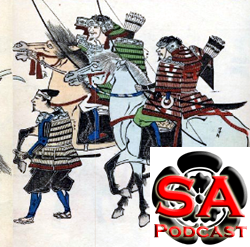
Ep 18EP18 Intro to Japanese History P9 - The Mongol Invasions in Brief
Part nine of our Introduction to Japanese History series gives a brief overview of the two attempted Mongol Invasions of Japan during the 13th century, and the effect it had on the country in general, and the Hojo regents and Bakufu specifically. Mentioned in this podcast: Conlan, Thomas. In Little Need of Divine Intervention: Takezaki Suenaga's Scrolls of the Mongol Invasions of Japan Cornell Univ East Asia Program (August 2002) http://astore.amazon.com/samurai-20/detail/188544513X Sansom, George. A History of Japan to 1334 Stanford University Press; 1 edition (June 1, 1958) http://astore.amazon.com/samurai-20/detail/0804705232 Scrolls of the Mongol Invasions of Japan, from Bowdoin College: http://www.bowdoin.edu/mongol-scrolls/ Support this podcast: Shop Amazon.com, suport the podcast: http://amzn.to/wnDX2j Samurai Archives Bookstore: http://astore.amazon.com/samurai-20 Samurai Archives Shop (T-Shirts, etc) http://www.cafepress.com/samuraiarchives Contact Us: Twitter @SamuraiArchives https://twitter.com/#!/samuraiarchives Facebook: http://www.facebook.com/pages/Samurai-Archives/104533213984 Samurai Archives podcast blog: http://www.samuraipodcast.com Samurai Archives Forum: http://www.japanhistoryforum.com
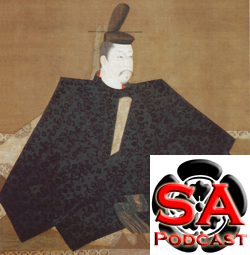
Ep 17EP17 Intro to Japanese History P8 - The Kamakura Period
In part 8 of our Introduction to Japanese History podcast, we examine the early Kamakura period. Once Minamoto Yoritomo became Shogun, he began using the authority given to him by the emperor to solidify his power. Over the course of the next 20 years the Minamoto would usurp much of the power of the imperial court, only to be replaced completely by a line of puppet shoguns controlled by the Hojo Regents. Mentioned in this podcast: Brownlee, John. Crisis as Reinforcement of the Imperial Institution. The Case of the Jokyu Incident, 1221 Monumenta Nipponica, Vol. 30, No. 2 (Summer, 1975), pp. 193-201 http://www.jstor.org/pss/2383842 Mass, Jeffrey (Ed). Court and Bakufu in Japan: Essays in Kamakura History Stanford University Press (January 1, 1995) http://astore.amazon.com/samurai-20/detail/0804724733 Mass, Jeffrey. Yoritomo and the Founding of the First Bakufu: The Origins of Dual Government in Japan Stanford University Press; 1 edition (January 1, 2000) http://astore.amazon.com/samurai-20/detail/0804735913 Mass, Jeffrey. Lordship and Inheritance in Early Medieval Japan: A Study of the Kamakura Soryo System ACLS Humanities E-Book (August 1, 2008) http://astore.amazon.com/samurai-20/detail/1597405981 Thomas D. Conlan, Karl F. Friday. Currents in Medieval Japanese History: Essays in Honor of Jeffrey P. Mass Figueroa Press (September 1, 2009) http://astore.amazon.com/samurai-20/detail/1932800522 Support this podcast: Shop Amazon.com, suport the podcast: http://amzn.to/wnDX2j Samurai Archives Bookstore: http://astore.amazon.com/samurai-20 Samurai Archives Shop (T-Shirts, etc) http://www.cafepress.com/samuraiarchives Contact Us: Twitter @SamuraiArchives https://twitter.com/#!/samuraiarchives Facebook: http://www.facebook.com/pages/Samurai-Archives/104533213984 Samurai Archives podcast blog: http://www.samuraipodcast.com Samurai Archives Forum: http://www.japanhistoryforum.com
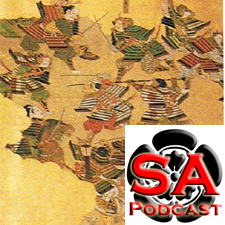
Ep 16EP16 Intro to Japanese History P7 - The Minamoto and Taira
An important development in the history of Japan and the Heian period, was the rise of the warrior class, which would eventually bring about a true feudal system run by warriors. As more and more military responsibility was delegated to provincial warlords who were out of the sphere of influence of the capital, these warrior houses grew in power. The transition from a central government run by the Heian court to the rise of the warrior class as the controlling group began with the Taira clan, led by Taira Kiyomori, who usurped the power of the Fujiwara clan. Eventually, the only alternative for people who were at odds with the Taira clan, was to throw in their lot with the Minamoto clan of Eastern warriors, which would eventually lead to civil war. Mentioned in this podcast: Friday, Karl. Samurai, Warfare and the State in Early Medieval Japan (Warfare and History) Routledge; New edition edition (December 29, 2003) http://astore.amazon.com/samurai-20/detail/0415329639 Hall, John W. Government and Local Power in Japan 500-1700: A Study Based on Bizen Province ACLS Humanities E-Book, August 1, 2008 http://astore.amazon.com/samurai-20/detail/1597405957 McCullough, Helen. The Tale of the Heike Stanford University Press; 1st edition (March 1, 1990) http://astore.amazon.com/samurai-20/detail/0804718032 Sansom, George. A History of Japan to 1334 Stanford University Press, 1958 http://astore.amazon.com/samurai-20/detail/0804705232 Support this podcast: Shop Amazon.com, suport the podcast: http://amzn.to/wnDX2j Samurai Archives Bookstore: http://astore.amazon.com/samurai-20 Samurai Archives Shop (T-Shirts, etc) http://www.cafepress.com/samuraiarchives Contact Us: Twitter @SamuraiArchives https://twitter.com/#!/samuraiarchives Facebook: http://www.facebook.com/pages/Samurai-Archives/104533213984 Samurai Archives podcast blog: http://www.samuraipodcast.com Samurai Archives Forum: http://www.japanhistoryforum.com
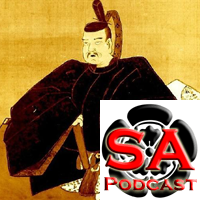
Ep 15EP15 Intro to Japanese History P6 - The Rise of the Warrior
In this episode of our Introduction to Japanese history series, we examine the rise of the warrior class during the Heian period. As the Heian period began, there was not a distinct warrior class, but armies were raised on an ad hoc basis when needed by the court to put down rebellions, bandits, and pirates. As the Heian period went on, provincial lords began to maintain professional warrior bands to protect their lands and legitimacy, and to go to war on behalf of the court. The court would continue to give these provincial lords legitimacy through bestowing titles and lands. But, as the Heian period went on, court control of these provincial lords and their armies began to weaken. Support the podcast on Patreon: https://www.patreon.com/samuraiarchives Mentioned in this podcast: Friday, Karl. Hired Swords: The Rise of Private Warrior Power in Early Japan Stanford University Press, March 1, 1996 http://astore.amazon.com/samurai-20/detail/0804726965 Friday, Karl. Samurai, Warfare and the State in Early Medieval Japan (Warfare and History) Routledge; New edition edition (December 29, 2003) http://astore.amazon.com/samurai-20/detail/0415329639 Friday, Karl. Teeth and Claws. Provincial Warriors and the Heian Court Monumenta Nipponica Vol. 43, No. 2 (Summer, 1988), pp. 153-185 http://www.jstor.org/pss/2384742 Hall, John W. Government and Local Power in Japan 500-1700: A Study Based on Bizen Province ACLS Humanities E-Book, August 1, 2008 http://astore.amazon.com/samurai-20/detail/1597405957 McCullough, Helen. The Tale of the Heike Stanford University Press; 1st edition (March 1, 1990) http://astore.amazon.com/samurai-20/detail/0804718032 Sansom, George. A History of Japan to 1334 Stanford University Press, 1958 http://astore.amazon.com/samurai-20/detail/0804705232 Support this podcast: Shop Amazon.com, suport the podcast: http://amzn.to/wnDX2j Samurai Archives Bookstore: http://astore.amazon.com/samurai-20 Samurai Archives Shop (T-Shirts, etc) http://www.cafepress.com/samuraiarchives Contact Us: Twitter @SamuraiArchives https://twitter.com/#!/samuraiarchives Facebook: http://www.facebook.com/pages/Samurai-Archives/104533213984 Samurai Archives podcast blog: http://www.samuraipodcast.com Samurai Archives Forum: http://www.japanhistoryforum.com
Ep 14EP14 Intro to Japanese History P5 - The Heian Period
Part five of our Introduction to Japanese History series covers the Heian period. The Heian period (794AD-1185AD) is named after Heian-kyo (present day Kyoto). The Heian period is known for it's art, literature, and poetry, as well as the spread of Tendai and Shingon Buddhism. Support the podcast on Patreon: https://www.patreon.com/samuraiarchives Mentioned in this podcast: Mason, Penelope. History of Japanese Art Published jointly by Prentice Hall and Harry N. Abrams, Inc. October 4, 2004 http://astore.amazon.com/samurai-20/detail/0131176013 Ooms, Herman. Imperial Politics and Symbolics in Ancient Japan: The Tenmu Dynasty, 650-800 Univ of Hawaii Press, October 2008 http://astore.amazon.com/samurai-20/detail/0824832353 Support this podcast: Shop Amazon.com, suport the podcast: http://amzn.to/wnDX2j Samurai Archives Bookstore: http://astore.amazon.com/samurai-20 Samurai Archives Shop (T-Shirts, etc) http://www.cafepress.com/samuraiarchives Contact Us: Twitter @SamuraiArchives https://twitter.com/#!/samuraiarchives Facebook: http://www.facebook.com/pages/Samurai-Archives/104533213984 Samurai Archives podcast blog: http://www.samuraipodcast.com Samurai Archives Forum: http://www.japanhistoryforum.com
Ep 13EP13 Intro to Japanese History P4 - Asuka-Nara Part 2
Continuing our Introduction to Japanese History series is part 2 of our Asuka-Nara podcast. The Asuka-Nara period (538AD-794AD) is known for it's classic art and architecture, the introduction of Buddhism, and the Taika reforms and Ritsuryo system. Japan adopted many Chinese style institutions, began to form a national government, and started to assert itself internationally in East Asia. Support the podcast on Patreon: https://www.patreon.com/samuraiarchives Mentioned in this podcast: Brown, Delmer (Editor). The Cambridge History of Japan, Vol. 1: Ancient Japan Cambridge University Press, July 30, 1993 http://astore.amazon.com/samurai-20/detail/0521223520 Farris, William Wayne. Heavenly Warriors: The Evolution of Japan's Military, 500-1300 Harvard University Asia Center, April 15, 1996 http://astore.amazon.com/samurai-20/detail/067438704X Friday, Karl. Hired Swords: The Rise of Private Warrior Power in Early Japan Stanford University Press, March 1, 1996 http://astore.amazon.com/samurai-20/detail/0804726965 Hall, John W. Government and Local Power in Japan 500-1700: A Study Based on Bizen Province ACLS Humanities E-Book, August 1, 2008 http://astore.amazon.com/samurai-20/detail/1597405957 Ooms, Herman. Imperial Politics and Symbolics in Ancient Japan: The Tenmu Dynasty, 650-800 Univ of Hawaii Press, October 2008 http://astore.amazon.com/samurai-20/detail/0824832353 Sansom, George. A History of Japan to 1334 Stanford University Press, 1958 http://astore.amazon.com/samurai-20/detail/0804705232 Support this podcast: Shop Amazon.com, suport the podcast: http://amzn.to/wnDX2j Samurai Archives Bookstore: http://astore.amazon.com/samurai-20 Samurai Archives Shop (T-Shirts, etc) http://www.cafepress.com/samuraiarchives Contact Us: Twitter @SamuraiArchives https://twitter.com/#!/samuraiarchives Facebook: http://www.facebook.com/pages/Samurai-Archives/104533213984 Samurai Archives podcast blog: http://www.samuraipodcast.com Samurai Archives Forum: http://www.japanhistoryforum.com
Ep 12EP12 Intro to Japanese History P3 - Asuka-Nara Part 1
Continuing our Introduction to Japanese History podcast series, we will examine the Asuka-Nara period over two episodes. The Asuka-Nara period (538AD-794AD) is known for it's classic art and architecture, the introduction of Buddhism, and the Taika reforms and Ritsuryo system. Japan adopted many Chinese style institutions, began to form a national government, and started to assert itself internationally in East Asia. Support the podcast on Patreon: https://www.patreon.com/samuraiarchives Mentioned in this Podcast: Hall, John W. Government and Local Power in Japan 500-1700: A Study Based on Bizen Province ACLS Humanities E-Book, August 1, 2008 http://astore.amazon.com/samurai-20/detail/1597405957 Support this podcast: Shop Amazon.com, suport the podcast: http://amzn.to/wnDX2j Samurai Archives Bookstore: http://astore.amazon.com/samurai-20 Samurai Archives Shop (T-Shirts, etc) http://www.cafepress.com/samuraiarchives Contact Us: Twitter @SamuraiArchives https://twitter.com/#!/samuraiarchives Facebook: http://www.facebook.com/pages/Samurai-Archives/104533213984 Samurai Archives podcast blog: http://www.samuraipodcast.com Samurai Archives Forum: http://www.japanhistoryforum.com
Ep 11EP11 Intro to Japanese History P2 - Yayoi and Kofun Periods
For part two of our Introduction to Japanese History series, we'll be covering the Yayoi period which was a sharp change from the culture of the Jomon period, where there was a massive influx of NE Asians into the Japanese archipelago. This was followed by the Kofun period, where Japan began to slowly consolidate and unify into a confederacy. The name of the Kofun period comes from the huge keyhole shaped burial mounds known as "Kofun". Support the podcast on Patreon: https://www.patreon.com/samuraiarchives Mentioned in this podcast: Edwards, Walter. Event and Process in the Founding of Japan: The Horserider Theory in Archeological Perspective Journal of Japanese Studies, Vol. 9, No. 2 (Summer, 1983), pp. 265-295 http://www.jstor.org/pss/132294 Farris, William Wayne. Heavenly Warriors: The Evolution of Japan's Military, 500-1300 Harvard University Asia Center, April 15, 1996 http://astore.amazon.com/samurai-20/detail/067438704X Hudson, Mark. Ruins of Identity: Ethnogenesis in the Japanese Islands Univ of Hawaii Press, March 2006 http://astore.amazon.com/samurai-20/detail/0824821564 Ikegami, Eiko. Bonds of Civility: Aesthetic Networks and the Political Origins of Japanese Culture Cambridge University Press, February 28, 2005 http://astore.amazon.com/samurai-20/detail/0521601150 Imamura, Keiji. Prehistoric Japan: New Perspectives On Insular East Asia Routledge, October 24, 1996 http://astore.amazon.com/samurai-20/detail/1857286170 Support this podcast: Shop Amazon.com, suport the podcast: http://amzn.to/wnDX2j Samurai Archives Bookstore: http://astore.amazon.com/samurai-20 Samurai Archives Shop (T-Shirts, etc) http://www.cafepress.com/samuraiarchives Contact Us: Twitter @SamuraiArchives https://twitter.com/#!/samuraiarchives Facebook: http://www.facebook.com/pages/Samurai-Archives/104533213984 Samurai Archives podcast blog: http://www.samuraipodcast.com Samurai Archives Forum: http://www.japanhistoryforum.com
Ep 10EP10 Intro to Japanese History P1 - Prehistory
For part one of our Introduction to Japanese History series, we’ll be starting at the beginning of the earliest history of the Japanese archipelago and the changes that took place in culture and technology from the Paleolithic period to the Jomon period, which takes us from prehistory to approximately 300BC. Support the podcast on Patreon: https://www.patreon.com/samuraiarchives Mentioned in this podcast: http://japanesearchaeology.com/ Aikens, C. Prehistory of Japan (Studies in Archaeology) Academic Pr, September 1982 http://astore.amazon.com/samurai-20/detail/0120452804 Barnes, Gina. The Rise of Civilization in East Asia Thames & Hudson, July 1, 1999 http://astore.amazon.com/samurai-20/detail/0500279748 Batten, Bruce. Gateway to Japan: Hakata in War And Peace, 500-1300 Univ of Hawaii Press, March 2006 http://astore.amazon.com/samurai-20/detail/0824830296 Hudson, Mark. Ruins of Identity: Ethnogenesis in the Japanese Islands Univ of Hawaii Press, March 2006 http://astore.amazon.com/samurai-20/detail/0824821564 Imamura, Keiji. Prehistoric Japan: New Perspectives On Insular East Asia Routledge, October 24, 1996 http://astore.amazon.com/samurai-20/detail/1857286170 Support this podcast: Shop Amazon.com, suport the podcast: http://amzn.to/wnDX2j Samurai Archives Bookstore: http://astore.amazon.com/samurai-20 Samurai Archives Shop (T-Shirts, etc) http://www.cafepress.com/samuraiarchives Contact Us: Twitter @SamuraiArchives https://twitter.com/#!/samuraiarchives Facebook: http://www.facebook.com/pages/Samurai-Archives/104533213984 Samurai Archives podcast blog: http://www.samuraipodcast.com Samurai Archives Forum: http://www.japanhistoryforum.com
Ep 9EP09 Maritime Defense of Nagasaki During the Edo Period
After Japan closed its borders and kicked the Christian missionaries out of Japan, it was forced to undertake a national maritime defense to protect against any potential foreign threats. In this podcast, we examine the defense of the port of Nagasaki, from the political and military structure to the actual defenses constructed at the port. We also examine the successes and failures that occurred in Nagasaki, starting with the torching of a Portuguese ship and execution of most of its sailors in 1640, to the drastic failure to defend the port against the British Navy ship Phaeton in 1808. Support the podcast on Patreon: https://www.patreon.com/samuraiarchives Mentioned in this podcast: Arima, Seiho. The Western Influence on Japanese Military Science, Shipbuilding, and Navigation Monumenta Nipponica, Vol. 19 No. 3/4 Sophia University, 1964 http://www.jstor.org/stable/2383177 Wilson, Noell. Tokugawa Defense Redux: Organizational Failure in the Phaeton Incident of 1808 Journal of Japanese Studies, Vol. 36 No. 1, Society for Japanese Studies, 2010 http://muse.jhu.edu/journals/journal_of_japanese_studies/summary/v036/36.1.wilson.html Support this podcast: Shop Amazon.com, suport the podcast: http://amzn.to/wnDX2j Samurai Archives Bookstore: http://astore.amazon.com/samurai-20 Samurai Archives Shop (T-Shirts, etc) http://www.cafepress.com/samuraiarchives Contact Us: Twitter @SamuraiArchives https://twitter.com/#!/samuraiarchives Facebook: http://www.facebook.com/pages/Samurai-Archives/104533213984 Samurai Archives podcast blog: http://www.samuraipodcast.com Samurai Archives Forum: http://www.japanhistoryforum.com
Ep 8EP08 Samurai Behaving Badly - Deceit and Deception
In the third and final of our Samurai Behaving Badly series, we examine Samurai deceit, deception, and betrayal - illustrated by a virtual rogues gallery of treacherous Samurai, including Yamato Takeru, Minamoto Yoshinaka, Akamatsu Mitsusuke, Hojo Soun, Oda Nobuhide, Toyotomi Hideyoshi, Mori Motonari, the 47 Ronin, the Shinsengumi, and others. Support the podcast on Patreon: https://www.patreon.com/samuraiarchives Mentioned in this podcast: Shogun-ki Blog The 47 Ronin: Feudal Drive-By Of Yore http://shogun-yashiki.blogspot.com/2011/05/47-ronin-feudal-drive-by-of-yore.html Miura, Ayako. Lady Gracia - A Samurai Wife's Love, Strife, and Faith IBC Publishing, Tokyo, 2004 (Translated by Susan Tsumura) http://astore.amazon.com/samurai-20/detail/4925080822 Support this podcast: Shop Amazon.com, suport the podcast: http://amzn.to/wnDX2j Samurai Archives Bookstore: http://astore.amazon.com/samurai-20 Samurai Archives Shop (T-Shirts, etc) http://www.cafepress.com/samuraiarchives Contact Us: Twitter @SamuraiArchives https://twitter.com/#!/samuraiarchives Facebook: http://www.facebook.com/pages/Samurai-Archives/104533213984 Samurai Archives podcast blog: http://www.samuraipodcast.com Samurai Archives Forum: http://www.japanhistoryforum.com
Ep 7EP07 Samurai Behaving Badly - Surrender
Everyone is familiar with the classic image of the honorable Samurai, fearless in the face of death and ardently adhering to the tenets of Bushido, so we've decided give a counterpoint to this image with examples of Samurai deceit, deception, betrayal, and generally dishonorable mayhem. In the second of our Samurai Behaving Badly series, we examine the belief that Samurai would rather die than surrender - illustrated by examples from Ogasawara Nagatada, Yamanaka Shikanosuke, and Matsunaga Hisahide. Support the podcast on Patreon: https://www.patreon.com/samuraiarchives Mentioned in this podcast: Berry, Mary E. Hideyoshi (Harvard East Asian Monographs) Council on East Asian Studies, Harvard University (January 1, 1989)http://astore.amazon.com/samurai-20/detail/0674390261 Support this podcast: Shop Amazon.com, suport the podcast: http://amzn.to/wnDX2j Samurai Archives Bookstore: http://astore.amazon.com/samurai-20 Samurai Archives Shop (T-Shirts, etc) http://www.cafepress.com/samuraiarchives Contact Us: Twitter @SamuraiArchives https://twitter.com/#!/samuraiarchives Facebook: http://www.facebook.com/pages/Samurai-Archives/104533213984 Samurai Archives podcast blog: http://www.samuraipodcast.com Samurai Archives Forum: http://www.japanhistoryforum.com
Ep 6EP06 Samurai Behaving Badly - Disloyalty
Everyone is familiar with the classic image of the honorable Samurai, fearless in the face of death and ardently adhering to the tenets of Bushido, so we've decided give a counterpoint to this image with examples of Samurai deceit, deception, betrayal, and generally dishonorable mayhem. In the first of our Samurai Behaving Badly series, we examine concepts of loyalty - loyalty to clan, lord, and family, with examples of grievous disloyalty from the likes of Akechi Mitsuhide, Araki Murashige, Kobayakawa Hideaki, Mori Motonari, Sue Harukata, and the vassals of the unfortunate Besho Yoshichika. Support the podcast on Patreon: https://www.patreon.com/samuraiarchives Mentioned in this podcast: Neilson, David Society at War: Eyewitness Accounts of Sixteenth Century Japan PhD Dissertation University of Oregon, 2007 http://gradworks.umi.com/32/85/3285619.html Berry, Mary Samurai Trouble: Thoughts on War and Loyalty. The Journal of Asian Studies, Vol 64, No. 4, 2005 http://www.jstor.org/pss/25075901 Friday, Karl Bushido or Bull? A Medieval Historian's Perspective on the Imperial Army and the Japanese Warrior Tradition. The History Teacher, Vol 27, No. 3, 1994 http://www.jstor.org/pss/494774 Support this podcast: Shop Amazon.com, suport the podcast: http://amzn.to/wnDX2j Samurai Archives Bookstore: http://astore.amazon.com/samurai-20 Samurai Archives Shop (T-Shirts, etc) http://www.cafepress.com/samuraiarchives Contact Us: Twitter @SamuraiArchives https://twitter.com/#!/samuraiarchives Facebook: http://www.facebook.com/pages/Samurai-Archives/104533213984 Samurai Archives podcast blog: http://www.samuraipodcast.com Samurai Archives Forum: http://www.japanhistoryforum.com
Ep 5EP05 The Myth of Samurai Giving Up the Gun
In this podcast we examine the myth of Japan's Samurai giving up the gun during the Edo period (1603-1868). In 1979, Professor Noel Perrin wrote a book called Giving Up the Gun, Japan's Reversion to the Sword, 1543-1879, and in this book he claims that Japan gave up the gun, or "put the genie back in the bottle" as it were, and pushes his theory to show that the contemporary nuclear arms race happening as he wrote the book could be reversed. A great thought, unfortunately in academic circles in the West and Japan, his work is not taken seriously, and the Japanese language version explicitly states that the book is not based on historical fact. Despite this, writers and scholars who do not generally focus on Japan have liberally cited his work, which has kept the myth alive. Add to that the pop-culture image of Samurai as honor-bound righteous warriors who would never do something so dishonorable as shoot an enemy from a distance, and it's easy to see why the myth has endured. Japan in fact didn't "give up the gun" at all. Guns were being produced and used throughout the Edo period. It was more of an issue of guns not being necessary during this time of peace, and Samurai already being armed with swords as a matter of course anyway - why bring a bulky, long-barreled muzzle-loading single-shot arquebus to a sword duel? Support the podcast on Patreon: https://www.patreon.com/samuraiarchives Mentioned in this podcast: Etheridge, Charles, Reinventing the Sword: A Cultural Comparison of the Development of the Sword in Response to the Advent of Firearms in Spain and Japan. (Thesis) LA State University, 2007 http://etd.lsu.edu/docs/available/etd-11122007-003804/unrestricted/Ethridge_thesis.pdf Arima, Seiho, The Western Influence on Japanese Military Science, Shipbuilding, and Navigation Monumenta Nipponica, Vol. 19 No. 3/4 Sophia University, 1964 http://www.jstor.org/stable/2383177 Perrin, Noel, Giving Up the Gun, Japan's Reversion to the Sword, 1543-1879 D. R. Godine; First Edition edition 1979 http://astore.amazon.com/samurai-20/detail/0879237732 Support this podcast: Shop Amazon.com, suport the podcast: http://amzn.to/wnDX2j Samurai Archives Bookstore: http://astore.amazon.com/samurai-20 Samurai Archives Shop (T-Shirts, etc) http://www.cafepress.com/samuraiarchives Contact Us: Twitter @SamuraiArchives https://twitter.com/#!/samuraiarchives Facebook: http://www.facebook.com/pages/Samurai-Archives/104533213984 Samurai Archives podcast blog: http://www.samuraipodcast.com Samurai Archives Forum: http://www.japanhistoryforum.com
Ep 4EP04 Guns During the Sengoku Period
From the 1540's through the battle of Nagashino and on until the end of the Sengoku period (Approx. 1477-1615) , Western guns in Japan played a bigger and bigger role in war and revolutionized warfare during the 16th century. In this podcast, your hosts examine the use and distribution of Western guns during this time with records of the numbers of guns held by Daimyo armies and deployed in battle, and how warfare changed during this period. Support the podcast on Patreon: https://www.patreon.com/samuraiarchives Mentioned in this podcast: Baxter, James C. and Joshua A. Fogel, ed. Paul Varley Oda Nobunaga, Guns, and Early Modern Warfare Writing Histories In Japan. International Research Center for Japanese Studies Kyoto 2007 http://bit.ly/mLNUtu The Impact of Firearms on Japanese Warfare, 1543-98 By Delmer M. Brown, The Far Eastern Quarterly, Vol. 7, No. 3 (May, 1948), pp. 236-253 http://bit.ly/kJ3v7N Neilson, David Society at War: Eyewitness Accounts of Sixteenth Century Japan PhD Dissertation University of Oregon, 2007 http://bit.ly/gglZnb Oda Nobunaga Rekishi Gunzo Series #1 GAKKEN, 1996 Uezato, Takashi, Ryûkyû no kaki ni tsuite (On Ryukyu's Firearms) Okinawa Bunka, No. 36, pp73-92, July 2000 Weapons & Fighting Techniques of the Samurai Warrior 1200-1877 AD By Thomas, D Conlan, Amber Books Ltd, 2008 http://bit.ly/iTAroK Support this podcast: Shop Amazon.com, suport the podcast: http://amzn.to/wnDX2j Samurai Archives Bookstore: http://astore.amazon.com/samurai-20 Samurai Archives Shop (T-Shirts, etc) http://www.cafepress.com/samuraiarchives Contact Us: Twitter @SamuraiArchives https://twitter.com/#!/samuraiarchives Facebook: http://www.facebook.com/pages/Samurai-Archives/104533213984 Samurai Archives podcast blog: http://www.samuraipodcast.com Samurai Archives Forum: http://www.japanhistoryforum.com
Ep 3EP03 The History of Guns in Medieval Japan
In the 3rd episode of the Samurai Archives Podcast, your hosts tackle the history of the gun in Japan prior to and including the introduction of firearms by the Portuguese in the 1540's. Contrary to popular belief, and often overlooked by historians, guns did in fact make their way into Japan as early as the 1450's, mainly through Ryukyu or to mainland Japan via China and Korea. Although they remained more of an oddity or curio until they were mass produced beginning in the 1540's, there are accounts of them in Japan long before the introduction by Western traders, which we present to you in this episode. And, for anyone who has ever wondered what the difference is between a musket, matchlock, and arquebus, we'll give you a concise explanation of the types of firearms in question. Support the podcast on Patreon: https://www.patreon.com/samuraiarchives Mentioned in this podcast: Weapons & Fighting Techniques of the Samurai Warrior 1200-1877 AD By Thomas, D Conlan, Amber Books Ltd, 2008 http://bit.ly/iTAroK Uezato, Takashi, Ryûkyû no kaki ni tsuite (On Ryukyu's Firearms) Okinawa Bunka, No. 36, pp73-92, July 2000 Oda Nobunaga Rekishi Gunzo Series #1 GAKKEN, 1996 Etheridge, Charles, Reinventing the Sword: A Cultural Comparison of the Development of the Sword in Response to the Advent of Firearms in Spain and Japan. (Thesis) LA State University, 2007 http://bit.ly/lksqzU Support this podcast: Shop Amazon.com, suport the podcast: http://amzn.to/wnDX2j Samurai Archives Bookstore: http://astore.amazon.com/samurai-20 Samurai Archives Shop (T-Shirts, etc) http://www.cafepress.com/samuraiarchives Contact Us: Twitter @SamuraiArchives https://twitter.com/#!/samuraiarchives Facebook: http://www.facebook.com/pages/Samurai-Archives/104533213984 Samurai Archives podcast blog: http://www.samuraipodcast.com Samurai Archives Forum: http://www.japanhistoryforum.com
Ep 2EP02 The Battle of Nagashino and Its Context in the Military Revolution P2
This is part 2 of 2 of our Battle of Nagashino podcast. Few battles in Japanese history are as hyped or misunderstood as the Battle of Nagashino. For over 400 years, an iconic image of the modern forces of Oda Nobunaga, using Western guns to destroy the traditional Takeda cavalry, held sway over interpretations by both Japanese and Western historians. The Battle of Nagashino took place on 29 June, 1575. The campaign occurred in Mikawa province, in the vicinity of Nagashino Castle, hence the name. However, the main engagement that came to be known as the Battle of Nagashino took place at Shitaragahara, approximately three kilometers from Nagashino Castle. We continue our discussion of the battle of Nagashino and the "Military Revolution" theory adopted by many Western historians including Delmer Brown and Geoffrey Parker. We also look at the primary and secondary sources for the battle of Nagashino, and look into the history of guns in Japan, and their importance in Japanese warfare of the time. Support the podcast on Patreon: https://www.patreon.com/samuraiarchives Mentioned in this podcast: The Impact of Firearms on Japanese Warfare, 1543-98 By Delmer M. Brown, The Far Eastern Quarterly, Vol. 7, No. 3 (May, 1948), pp. 236-253 Guns and Government: A Comparative Study of Europe and Japan By Stephen Morillo, Journal of World History, Vol. 6, No. 1 (Spring, 1995), pp. 75-106 The Military Revolution: Military Innovation and the Rise of the West, 1500-1800 By Geoffrey Parker, Cambridge University Press Baxter, James C. and Joshua A. Fogel, ed. Paul Varley Oda Nobunaga, Guns, and Early Modern Warfare Writing Histories In Japan. International Research Center for Japanese Studies Kyoto 2007 Support this podcast: Shop Amazon.com, suport the podcast: http://amzn.to/wnDX2j Samurai Archives Bookstore: http://astore.amazon.com/samurai-20 Samurai Archives Shop (T-Shirts, etc) http://www.cafepress.com/samuraiarchives Contact Us: Twitter @SamuraiArchives https://twitter.com/#!/samuraiarchives Facebook: http://www.facebook.com/pages/Samurai-Archives/104533213984 Samurai Archives podcast blog: http://www.samuraipodcast.com Samurai Archives Forum: http://www.japanhistoryforum.com
Ep 1EP01 The Battle of Nagashino and Its Context in the Military Revolution
Few battles in Japanese history are as hyped or misunderstood as the Battle of Nagashino. For over 400 years, an iconic image of the modern forces of Oda Nobunaga, using Western guns to destroy the traditional Takeda cavalry, held sway over interpretations by both Japanese and Western historians. The Battle of Nagashino took place on 29 June, 1575. The campaign occurred in Mikawa province, in the vicinity of Nagashino Castle, hence the name. However, the main engagement that came to be known as the Battle of Nagashino took place at Shitaragahara, approximately three kilometers from Nagashino Castle. The main forces were the Takeda, led by Takeda Katsuyori, on one side, and a partnership between Oda Nobunaga and Tokugawa Ieyasu on the other. The Takeda were centered in Kai province, and controlled parts of Shinano, Totomi, and Suruga provinces. The Tokugawa directly bordered them in Mikawa and Totomi provinces to the south and west; they were the junior partner in an alliance with the Oda, who controlled most of central Japan from his headquarters in Mino at Gifu Castle. This included control of the Imperial capital, Kyōto. The Takeda besieged the Tokugawa castle of Nagashino. A relief force composed of the combined armies of the Tokugawa clan and the Oda clan arrived and deployed on the Shitaragahara field. Despite being heavily outnumbered, Takeda Katsuyori decided to attack. This decision proved disastrous, as the Takeda charges were repulsed by the combined Oda and Tokugawa forces making significant use of arquebus fire from behind loosely constructed palisades. The Takeda retreated, and lost two-thirds of their force in the battle. The Takeda ceased to be a player on the national stage, and were eventually destroyed by Nobunaga and Ieyasu in 1582. The removal of the Takeda threat enabled Oda Nobunaga to concentrate on other threats to his consolidation of power around the Imperial capital of Kyoto. This sequence of events is universally accepted as fact, and is used by Western historians to support the "Military Revolution" theory - that gunpowder was the driving force of change and modernization in the world. This podcast is part one of two on the battle of Nagashino. Your hosts are Chris, Travis and Nate. Nate is currently researching the battle for graduate school, and is the facilitator of the podcast. We'll take you through the biases in the sources, the "accepted" history of the battle of Nagashino, and where this all fits in the context of the Military Revolution theory. Support the podcast on Patreon: https://www.patreon.com/samuraiarchives Mentioned in this podcast: The Military Revolution: Military Innovation and the Rise of the West, 1500-1800 By Geoffrey Parker, Cambridge University Press http://amzn.to/lmlBxU Baxter, James C. and Joshua A. Fogel, ed. Paul Varley Oda Nobunaga, Guns, and Early Modern Warfare Writing Histories In Japan. International Research Center for Japanese Studies Kyoto 2007 http://bit.ly/mLNUtu Support this podcast: Shop Amazon.com, suport the podcast: http://amzn.to/wnDX2j Samurai Archives Bookstore: http://astore.amazon.com/samurai-20 Samurai Archives Shop (T-Shirts, etc) http://www.cafepress.com/samuraiarchives Contact Us: Twitter @SamuraiArchives https://twitter.com/#!/samuraiarchives Facebook: http://www.facebook.com/pages/Samurai-Archives/104533213984 Samurai Archives podcast blog: http://www.samuraipodcast.com Samurai Archives Forum: http://www.japanhistoryforum.com
Seals of Red and Letters of Gold - An Interview With Travis Seifman
In this podcast, originally recorded in April 2010, Joseph (Author of the Ancient Japan Blog: http://japanesearchaeology.com) and Chris interview Travis Seifman about his recently published article Seals of Red and Letters of Gold: Japanese Relations with Southeast Asia in the 17th Century, which can be found here: http://scholarspace.manoa.hawaii.edu/handle/10125/18229. The paper is a version of his M.A. dissertation in Japanese Studies at the School of Oriental and African Studies, University of London, and it concerns Japan's diplomacy and trade with Southeast Asia during the 17th century. Support this podcast: Support the podcast on Patreon: https://www.patreon.com/samuraiarchives Shop Amazon.com, suport the podcast: http://amzn.to/wnDX2j Samurai Archives Bookstore: http://astore.amazon.com/samurai-20 Samurai Archives Shop (T-Shirts, etc) http://www.cafepress.com/samuraiarchives Contact Us: Twitter @SamuraiArchives https://twitter.com/#!/samuraiarchives Facebook: http://www.facebook.com/pages/Samurai-Archives/104533213984 Samurai Archives podcast blog: http://www.samuraipodcast.com Samurai Archives Forum: http://www.japanhistoryforum.com
AAS/ICAS Conference Wrap-up Part 2
Your intrepid hosts Chris, Nate, and Travis are back for part 2 of the AAS/ICAS (The Association for Asian Studies and the International Convention of Asia Scholars) Conference wrap-up. This time they examine the themes and concepts presented in the seminar entitled Negotiating One's Place in Japan's Long Sixteenth Century. The presentations in this Sengoku-specific seminar included: An Individual Paradigm for Merchant Success at the Close of the Long Sixteenth Century, Suzanne Gay So Many Choices (And So Few Options) For Local Warriors, David Spafford This Land is My Land: Masuda Motonaga and the Politics of Territorial Redistribution in Choshu Domain, David A. Eason Warrior Conflicts With Their Daimyo in Early Seventeenth Century Japan, Luke S. Roberts Books, articles, and links mentioned in this podcast: The Moneylenders of Late Medieval Kyoto by Suzanne Marie Gay, University of Hawaii Press, 2001 http://astore.amazon.com/samurai-20/detail/082482461X An Apology of Betrayal: Political and Narrative Strategies in a Late Medieval Memoir by David Spafford, The Journal of Japanese Studies Volume 35, Number 2, Summer 2009 http://muse.jhu.edu/journals/jjs/summary/v035/35.2.spafford.html Mercantilism in a Japanese Domain: The Merchant Origins of Economic Nationalism in 18th-Century Tosa By Luke S. Roberts, Cambridge University Press, 2002 http://astore.amazon.com/samurai-20/detail/0521621313 The Teeth and Claws of the Buddha: Monastic Warriors and Sohei in Japanese History By Mikael S. Adolphson University of Hawaii Press, 2007 http://astore.amazon.com/samurai-20/detail/0824831233 A Dragon's Head and a Serpent's Tail: Ming China and the First Great East Asian War, 1592-1598 By Kenneth M. Swope University of Oklahoma Press 2009 http://astore.amazon.com/samurai-20/detail/0806140569 Union Catalogue of Early Japanese Books: http://bit.ly/fshWk7 Support this podcast: Support the podcast on Patreon: https://www.patreon.com/samuraiarchives Shop Amazon.com, suport the podcast: http://amzn.to/wnDX2j Samurai Archives Bookstore: http://astore.amazon.com/samurai-20 Samurai Archives Shop (T-Shirts, etc) http://www.cafepress.com/samuraiarchives Contact Us: Twitter @SamuraiArchives https://twitter.com/#!/samuraiarchives Facebook: http://www.facebook.com/pages/Samurai-Archives/104533213984 Samurai Archives podcast blog: http://www.samuraipodcast.com Samurai Archives Forum: http://www.japanhistoryforum.com
AAS/ICAS Conference Wrap-up
Travis Seifman, author of the recently published article Seals of Red and Letters of Gold - Japanese Relations with Southeast Asia in the 17th Century, and conference attendee joins Chris and Nate with part one of the AAS/ICAS (The Association for Asian Studies and the International Convention of Asia Scholars) Conference wrap-up. They go over a few more seminars that they had attended, as well as comments and reactions to the lectures, speakers, and the conference itself. The seminars and lectures mentioned in this podcast include: Okinawa, Furusato, and the Creation of a Postwar Vision of Japaneseness, Thomas O’Leary Celebrations of the Heart – Romantic Lit by Yuikawa Kei, Eileen B. Mikals-Adachi Portraits of Modern Japanese Working Women – the Literature of Hayashi Mariko, Hiromi Tsuchiya Dollase To Be Beautiful, Or Not To Be Beautiful, That Is The Question—Himeno Kaoruko’s Seikei Bijo, Satoko Kan Who is Aiko? ~ The Absent ‘Father’ in Natsuo Kirino’s I’m Sorry, Mama., Kayo Takeuchi “Food Imagery and Parody in 16th Century Japan: About the Shuhanron Emaki (The Illustrated Scroll of the Sake and Rice Debate)”, Claire-Akiko Brisset “From Warming Stone to Memorial Stone: Rethinking the History of Japanese Tea Cuisine”, Eric C Rath Wine and Eau-de-Cologne: From the Introduction of Western Food to the Birth of Yoshoku, Shoko Higashiyotsuyanagi Support this podcast: Support the podcast on Patreon: https://www.patreon.com/samuraiarchives Shop Amazon.com, suport the podcast: http://amzn.to/wnDX2j Samurai Archives Bookstore: http://astore.amazon.com/samurai-20 Samurai Archives Shop (T-Shirts, etc) http://www.cafepress.com/samuraiarchives Contact Us: Twitter @SamuraiArchives https://twitter.com/#!/samuraiarchives Facebook: http://www.facebook.com/pages/Samurai-Archives/104533213984 Samurai Archives podcast blog: http://www.samuraipodcast.com Samurai Archives Forum: http://www.japanhistoryforum.com
AAS/ICAS Conference, Day 1, Part 2
For the next podcast in our conference series, your hosts Nate and Chris come to you again live from the AAS/ICAS (The Association for Asian Studies and the International Convention of Asia Scholars) Conference held in Honolulu. They finish up the rundown of the Zen Buddhism and the Muromachi Shogunate seminar, and then give their comments and reactions to a Linguistics seminar and seminar on the digital archives of the Japan Center for Asian Historical Records. Support the podcast on Patreon: https://www.patreon.com/samuraiarchives Links mentioned in this podcast: Japan Center for Asian Historical Records: http://www.jacar.go.jp/ The Pritzker Military Library: http://www.pritzkermilitarylibrary.org/events/2009/06-11-ron-werneth.jsp
AAS/ICAS Conference, Day 1
For the first podcast in our conference series, your hosts Nate and Chris come to you live from the AAS/ICAS (The Association for Asian Studies and the International Convention of Asia Scholars) Conference held in Honolulu, Hawaii, from March 31st to April 3rd, 2011. You'll hear reactions and comments on the first few seminars of the first day, including lectures covering Japan's current security issues, religion and manga, and Zen Buddhism and the Muromachi Shogunate. Recorded on site at a table at the conference, sound quality is pretty much as expected - hopefully the background noise will enhance the overall experience with that "on the ground, in the trenches" feel. Consider it overall a work in progress, and enjoy! Support the podcast on Patreon: https://www.patreon.com/samuraiarchives