
Show overview
SalesTV Live Podcast has been publishing since 2024, and across the 2 years since has built a catalogue of 113 episodes. That works out to roughly 55 hours of audio in total. Releases follow a weekly cadence.
Episodes typically run twenty to thirty-five minutes — most land between 26 min and 30 min — and the run-time is fairly consistent across the catalogue. None of the episodes are flagged explicit by the publisher. It is catalogued as a EN-language Business show.
The show is actively publishing — the most recent episode landed 3 months ago, with 11 episodes already out so far this year. The busiest year was 2024, with 74 episodes published. Published by SalesTV.live.
From the publisher
SalesTV.live is a weekly talk show created by salespeople, for salespeople. Each episode features insightful conversations with sales leaders, practitioners, and educators who are shaping the future of the profession of sales. Our discussions explore the skills, behaviors, and mindsets that define modern selling: leadership, enablement, ethics, professionalism, communication, social selling, and customer value. Every episode delivers one clear takeaway viewers can apply immediately to elevate their performance and professional credibility. SalesTV produces multiple series, including Mid-Day and Early Editions, plus special Spotlight features and co-produced episodes with the Institute of Sales Professionals. Together, these programs connect a global community of sales professionals, students, and business leaders committed to excellence and Elevating the Profession of Sales. #Sales #Professionalism #SalesLeadership #LinkedInLive #Podcast salestv.substack.com
Latest Episodes
View all 113 episodesWhy Discovery Calls Fail Before They Begin
Why Good Salespeople Keep Losing

Most Sales Leaders Confuse Coaching and Mentoring
In this episode of SalesTV, we’re joined by James Barton, Chief Solutions Officer at Mentor Group and co-author of Infinite Selling, to explore why sales leaders often confuse coaching, mentoring, and directing. The conversation breaks down the practical differences between these approaches and why most leaders default to sharing experience or giving direction rather than true coaching. We also examine how over-reliance on a single leadership style limits seller development and contributes to inconsistent performance. The discussion emphasizes the importance of adapting leadership style based on the seller’s experience and the situation at hand, rather than treating coaching as a one-size-fits-all solution. It also explores how technology and AI can support sales coaching, while reinforcing that leadership judgment remains critical in knowing when to coach, mentor, or direct. Chapters 00:00 Intro – What do we mean by Coaching vs Mentoring? 03:06 The Biggest Coaching Mistake 06:12 Directing vs Mentoring vs Coaching 06:42 Why Sales Leaders Default to Directing 10:04 When to Coach vs Direct 12:18 Coaching vs Training 13:27 Skills of Effective Sales Coaches 16:09 From Sales Leader to Leader of Leaders 18:11 Technology in Sales Coaching 20:09 Where Technology Falls Short 22:24 The ONE Thing – Know When to Use Each In this episode, we asked… * What’s the difference between coaching and mentoring in sales, and why do so many sales leaders confuse the two? * What’s the biggest mistake sales managers make when trying to coach their teams? * Why do sales leaders often default to a directing or dictating style? * When is direct instruction better than sales coaching or mentoring? * What skills do frontline sales leaders need to become better sales coaches? * How can technology help sales leaders become better sales coaches? Key Takeaways * Most sales leaders aren’t coaching - they’re mentoring or directing without realizing it. * Coaching is about asking questions, not giving answers. * The best sales leaders know when to coach, mentor, or direct based on the situation. * Relying on a single leadership style limits seller development and performance. * Great sales leaders listen first instead of jumping in to solve the problem. * Technology can support sales coaching, but it cannot replace leadership judgment. The ONE Thing James Barton wants you to take away - Know when to coach, mentor, or direct—because it’s never just one approach. Sales coaching, mentoring, and directing are often used interchangeably, but they represent distinct leadership approaches that impact sales performance in different ways. Effective sales coaching focuses on asking questions to help sellers think critically, while mentoring draws on experience to guide behavior, and directing provides clear instruction when immediate action is required. Many sales leaders default to mentoring or directing without recognizing it, limiting their ability to develop independent, high-performing sales teams. The ability to shift between these approaches based on the seller’s experience and the situation is a critical sales leadership skill. As organizations invest in sales enablement and leadership development, understanding how to apply coaching effectively becomes essential for improving consistency and results. Technology and AI can support sales coaching by providing data and insights, but leadership judgment remains central to turning those insights into action. @SalesTVlive @InstituteofSalesProfessionals #SalesCoaching #InfiniteSales #SalesMentoring #SalesManagement #SalesEnablement #Sales #SalesLeadership #LinkedInLive #Podcast ________________________________________About SalesTV SalesTV.live is a weekly talk show created by salespeople, for salespeople. Each episode explores sales, sales training, networking, and social selling, bringing together sales leaders, enablement professionals, and practitioners from across the globe. About the Institute of Sales Professionals The Institute of Sales Professionals (ISP) is the world’s only body dedicated to raising standards in sales. Through its Sales Capability Framework, certifications, and global member community, the ISP works to elevate sales to the level of a recognized profession. This is a public episode. If you would like to discuss this with other subscribers or get access to bonus episodes, visit salestv.substack.com

Why Great Salespeople Walk Away from Deals
In this episode of SalesTV, we’re joined by Matt Webb, CEO of Mentor Group, to discuss why so many sales deals stall in the pipeline and how stronger sales qualification improves outcomes. The conversation explores how weak discovery and unclear buyer intent lead to low-probability opportunities entering the sales process. Matt shares how top-performing salespeople identify warning signs early, ask better qualification questions, and understand why customers are really looking to change. The discussion also examines when to walk away from a deal and how disciplined qualification leads to a healthier pipeline and more predictable revenue. Chapters 00:00 Intro - Why Great Salespeople Walk Away from Deals 00:52 Why Sales Deals Stall in the Pipeline 02:31 The Problem with Poor Sales Qualification 03:04 How to Know if a Deal is Qualified 05:36 When Should You Walk Away from a Deal 07:02 Sales Qualification Questions That Matter 09:56 Warning Signs of a Bad Deal 13:43 The Sales Manager’s Role in Qualification 16:26 Habits of Great Sales Qualifiers 20:50 The ONE Thing - Be Brave In this episode, we asked… * Why do so many sales deals stall in the middle of the pipeline? * How do you know if a sales deal is really qualified? * When should a salesperson walk away from a deal? * What questions should salespeople ask to truly qualify a deal? * What are the warning signs that a deal is not truly qualified? * What are the warning signs a sales manager should be aware of and act on? * What habits separate great qualifiers from average sellers? * Is there one habit in particular we should start with? Key Takeaways * Lack of closing skill is not the primary reason deals stall in the pipeline; it’s weak sales qualification. * Most low-probability opportunities enter the pipeline because sellers fail to fully understand buyer intent and the motivation to change. * Strong discovery is about uncovering why a customer is looking to change now, not just gathering surface-level information. * Warning signs appear early in the sales process, but are often ignored in favor of keeping pipeline volume high. * Great salespeople protect their time and pipeline by identifying weak opportunities early and choosing not to pursue them. * The best salespeople don’t just qualify deals - they qualify bad ones out. The ONE Thing Matt Webb wants you to take away – Look at your deals and ditch the ones that are going nowhere. Sales pipeline health is directly tied to the quality of sales qualification, yet many teams continue to prioritize volume over discipline, allowing poorly qualified opportunities to enter and remain in the pipeline. When salespeople fail to understand buyer intent, the urgency to change, and the real drivers behind a decision, deals often stall in the middle of the sales process with no clear path forward. Strong sales qualification requires more than surface-level discovery; it depends on asking the right questions, identifying early warning signs, and accurately assessing whether an opportunity is real. By focusing on qualification early and consistently, sales teams can avoid low-probability deals, improve pipeline accuracy, and create a more effective and predictable sales process. @SalesTVlive @InstituteofSalesProfessionals #SalesQualification #InfiniteSales #QualifyOut #SalesPipeline #SalesStrategy #B2BSales #SalesProcess #Sales #SalesLeadership #LinkedInLive #Podcast ________________________________________ About SalesTV SalesTV.live is a weekly talk show created by salespeople, for salespeople. Each episode explores sales, sales training, networking, and social selling, bringing together sales leaders, enablement professionals, and practitioners from across the globe. About the Institute of Sales Professionals The Institute of Sales Professionals (ISP) is the world’s only body dedicated to raising standards in sales. Through its Sales Capability Framework, certifications, and global member community, the ISP works to elevate sales to the level of a recognized profession. This is a public episode. If you would like to discuss this with other subscribers or get access to bonus episodes, visit salestv.substack.com

How To Communicate With Confidence In Sales Conversations
In this episode of SalesTV, Joe Pelissier, a communications advisor and tutor at the University of Oxford’s Department for Continuing Education, explores what it really means to communicate with confidence in sales conversations. The discussion challenges the idea that confidence comes from talking, emphasizing instead the role of listening, curiosity, and asking the right questions. It explores how sales professionals can build trust, establish rapport, and adapt their communication style across different personalities, industries, and cultures. The conversation also examines how effective communication shapes business relationships and influences how value is perceived in both traditional sales environments and experience-driven industries like luxury. Chapters 00:00 Intro - Communicating with confidence in sales 01:45 How great communicators simplify ideas 04:45 How to recover from the wrong question 06:20 Saying “I don’t know” in Sales 07:42 Communication habits that build trust 09:34 Communicating across cultures and industries 11:57 Adapting to personality styles 13:29 What makes a business conversation effective 15:31 Handling resistance in training and communication 19:29 How luxury brands communicate value 21:48 The ONE Thing - Curiosity builds trust In this episode, we asked… * How can I communicate with confidence in a sales conversation? * How do great communicators make complex ideas easy to understand? * When should I use open versus closed questions in a sales conversation? * What communication habits help professionals build trust quickly? * What communication skills matter most when working across cultures or industries? * What can sales professionals learn from how luxury brands communicate value? Key Takeaways * Confidence in sales comes from listening, not talking. * Asking the right mix of open and closed questions drives better conversations. * Paraphrasing helps confirm understanding and keeps discussions on track. * Saying I don’t know builds trust when paired with honesty and follow-up. * Adapting to personality and cultural differences improves communication. * Curiosity leads to rapport, and rapport leads to trust and better outcomes. The ONE Thing Joe Pelissier wants you to take away - Curiosity is the foundation of effective sales communication, because it drives better questions, builds rapport, and ultimately earns trust. Sales communication skills are rooted in the ability to listen, ask effective questions, and adapt to different personalities, cultures, and business contexts. In sales conversations, confidence is not driven by talking more, but by understanding the other person through active listening, paraphrasing, and a balanced use of open and closed questions. Strong business communication skills help sales professionals build trust, establish rapport, and navigate high-pressure discussions without relying on scripted responses or overconfidence. Effective communication in sales also requires adapting tone, language, and approach based on whether the audience is more analytical or more emotionally driven, as seen in differences across industries such as technology and luxury. Ultimately, successful sales conversations depend on curiosity, as it enables better questioning, deeper understanding, and more meaningful connections that lead to stronger relationships and better outcomes. About SalesTV SalesTV.live is a weekly talk show created by salespeople, for salespeople. Each episode explores sales, sales training, networking, and social selling, bringing together sales leaders, enablement professionals, and practitioners from across the globe. About the Institute of Sales Professionals The Institute of Sales Professionals (ISP) is the world’s only body dedicated to raising standards in sales. Through its Sales Capability Framework, certifications, and global member community, the ISP works to elevate sales to the level of a recognized profession. @SalesTVlive @InstituteofSalesProfessionals #SalesCommunication #SalesSkills #SalesConversations #SalesTips #CommunicationSkills #Sales #SalesLeadership #LinkedInLive #Podcast This is a public episode. If you would like to discuss this with other subscribers or get access to bonus episodes, visit salestv.substack.com

What Happens When Sales Defines Its Standards
In this episode of SalesTV, ISP leaders Helga Saraiva, Matthew Nicolle, and Dr. Ram Ramraghvan explore what changes when Sales begins to define and adopt shared standards. The conversation examines how clearer expectations impact training, hiring, and performance management, while also addressing the role of ethics, accountability, and global consistency in shaping the profession. It also considers how standards influence the way Sales is perceived both outside and inside the organization, and what that means for credibility, development, and long-term performance. Across these perspectives, the discussion surfaces the practical implications of moving from individual interpretation of what “good” looks like to a more consistent, shared understanding of Sales best practices. Chapters 00:00 – Intro - Why Sales Has Never Had Shared Standards 02:24 - When a Profession Begins Defining “Good” 04:28 - What Problems Sales Standards Actually Solve 06:53 - How Standards Build Trust Inside Sales Organizations 10:08 - Do Salespeople Care About Standards or Just Results 14:18 - Is Sales Ultimately About Money or Something More 18:52 - Culture Leadership and the Reality of Sales Behavior 24:10 - How Standards Impact Hiring Training and Retention 28:24 - The Future of Sales 10 Years After Standards In this episode, we asked… * How does a profession know when it’s time to start defining its standards? * What problems do shared standards solve for sales organizations? * How do professional standards influence trust? * Do sales professionals actually care about shared standards, or are results all that matter? * Is it all about the money in sales? * How do shared standards influence sales hiring and training? * Ten years from now, when global standards are widely adopted, what does the sales profession look like? Key Takeaways * Sales and standards are not at odds - higher standards are what drive better outcomes. * As buyers gain more access to information, the salesperson’s role shifts from provider to guide. * Professional standards shape not just customer interactions, but internal trust and culture. * Without shared standards, sales performance becomes inconsistent and difficult to scale. * When standards are adopted, sales becomes a profession of choice, not a fallback. Sales standards are becoming increasingly important as organizations look to improve sales performance, strengthen sales training, and create more consistent customer outcomes. Without clearly defined standards, sales teams often struggle with inconsistent coaching, uneven execution, and unpredictable revenue results. As the sales profession continues to evolve, companies are placing greater emphasis on structured onboarding, ongoing development, and ethical selling practices to better align with modern buyer expectations. Establishing shared standards helps organizations improve hiring, develop talent more effectively, and build scalable sales performance across teams. The Leaders of the ISP look forward to the day where Sales is no longer a job people fall into. Instead, Sales is pursued as a lifelong, valued career. About SalesTV SalesTV.live is a weekly talk show created by salespeople, for salespeople. Each episode explores sales, sales training, networking, and social selling, bringing together sales leaders, enablement professionals, and practitioners from across the globe. About the Institute of Sales Professionals The Institute of Sales Professionals (ISP) is the world’s only body dedicated to raising standards in sales. Through its Sales Capability Framework, certifications, and global member community, the ISP works to elevate sales to the level of a recognized profession. @SalesTVlive @InstituteofSalesProfessionals #SalesStandards #SalesTraining #SalesEnablement #B2BSales #RevenueGrowth #Sales #SalesLeadership #LinkedInLive #Podcast This is a public episode. If you would like to discuss this with other subscribers or get access to bonus episodes, visit salestv.substack.com

How to Negotiate in a Transparent Sales Era
In this episode of SalesTV, multi-time Chief Revenue Officer and award-winning author Todd Caponi explores how B2B sales negotiation must evolve in a transparent sales environment where buyers compare pricing and trust is easily lost. The conversation examines modern negotiation strategy, including how to present pricing with confidence, handle price objections without defaulting to discounting, and apply value-based tradeoffs to create a consistent, defensible pricing model. Grounded in both sales history and current buyer behavior, it outlines a practical approach to protecting margin while strengthening long-term customer relationships. Chapters 00:00 Intro - Why Traditional Sales Negotiation Breaks Trust 01:08 Why B2B Negotiation Hasn’t Kept Up with Modern Sales 02:47 How Transparency and Buyer Behavior Changed Negotiation 04:55 What Changed in Sales Negotiation After 1975 06:19 What Negotiation Looks Like in a Transparent Sales Era 08:03 How to Negotiate Without Discounting Using Four Levers 10:41 How to Create a Consistent Pricing Strategy in B2B Sales 13:05 How to Present Price with Confidence in Enterprise Sales 16:47 How to Handle Competitors Who Are Cheaper 19:26 Why Discounting Slows Deals and Erodes Margin 23:18 The ONE Thing About Truth and Service in Sales In this episode, we asked… * Why is traditional sales negotiation outdated in modern B2B sales? * What does negotiation look like in a transparent sales environment? * How do I negotiate without defaulting to discounting? * How do I present pricing with confidence in enterprise sales? * How should I respond when a competitor is cheaper? * Why does discounting slow deals and damage long-term revenue? * How do I create a consistent, defensible pricing strategy in B2B sales? Key Takeaways * In modern B2B sales, negotiation must extend the sales conversation, not contradict it. * In a transparent market, inconsistent pricing erodes credibility in sales negotiation. * Discounting slows deals down and trains buyers to wait for concessions. * Buyers compare pricing more than ever - assume information is shared. * Confidence in pricing comes from clarity, not pressure. * Value-based tradeoffs replace arbitrary concessions; every discount must be tied to measurable value in return. Sales negotiation in a transparent B2B environment requires a shift away from discount-driven tactics toward a structured, value-based approach to pricing. As buyers increasingly compare pricing, share information, and rely on AI to evaluate options, inconsistent pricing models become harder to defend and erode trust at the most critical stage of the sales process. A modern negotiation strategy centers on establishing a clear “sound basis” for pricing, where value-based tradeoffs - such as volume, timing of cash, length of commitment, and deal predictability - replace arbitrary concessions. This approach not only strengthens credibility and protects margin, but also reduces negotiation anxiety, improves deal velocity, and supports long-term customer relationships built on transparency and consistency. The ONE Thing Todd Caponi wants you to take away – Your role is not to convince. It’s to help buyers see what’s possible and help them get there. About SalesTV SalesTV.live is a weekly talk show created by salespeople, for salespeople. Each episode explores sales, sales training, networking, and social selling, bringing together sales leaders, enablement professionals, and practitioners from across the globe. About the Institute of Sales Professionals The Institute of Sales Professionals (ISP) is the world’s only body dedicated to raising standards in sales. Through its Sales Capability Framework, certifications, and global member community, the ISP works to elevate sales to the level of a recognized profession. @SalesTVlive @InstituteofSalesProfessionals #FourLevers #SalesNegotiation #B2BSales #PricingStrategy #Sales #SalesLeadership #LinkedInLive #Podcast This is a public episode. If you would like to discuss this with other subscribers or get access to bonus episodes, visit salestv.substack.com

Are We Hiring the Wrong Salespeople for the AI Era?
In this episode of SalesTV, Dr. Peter Kerr, Chair of Applied Research in Sales at the University of New Brunswick, shares research drawn from LinkedIn hiring data and quantitative performance studies to examine how salesperson analytical skills directly influence sales performance and strengthen the effort-to-results relationship. The conversation explores whether sales leaders should optimize for both soft interpersonal skills and hard analytical skills, why working smarter often outperforms working harder, and how job design, hiring strategy, and training must align when navigating trade-offs in the AI-driven sales environment. Chapters 00:00 – Are We Hiring the Wrong Salespeople for the AI Era02:01 – What Skills Actually Drive Sales Performance07:24 – LinkedIn Data Reveals Analytical Skills Surge08:58 – Direct and Moderating Effects on Performance09:54 – Two Dimensions of Analytical Skill12:03 – Will AI Replace Analytical Skills13:21 – Should We Hire for Both Soft and Hard Skills15:48 – The Compromise Candidate Problem18:09 – Analytics Dashboards vs Analytical Thinking19:26 – Working Harder vs Working Smarter20:16 – The One Thing Sales Leaders Must Decide In this episode, we asked… * What job are buyers actually hiring salespeople to do? * Why does pressure-based selling make decisions less safe? * Why do so many deals end in no decision instead of lost? * Where does buyer risk really live inside organizations? * What happens after the meeting, in the “second room”? * Why do internal incentives sabotage trust and judgement? * How do sellers unknowingly increase buyer anxiety? * Why does supplier selection matter less than people think? Key Takeaways * Why analytical skills are now one of the top skills appearing in sales hiring data * The direct relationship between analytical skills and sales performance * How analytical ability strengthens the effort–performance link * Why working harder is not the same as working smarter * The risk of hiring “the compromise candidate” * Why sales leaders must consciously choose which dimension to optimize * Why analytical skills are trainable - and why that matters The ONE Thing Dr. Peter Kerr wants you to take away – Sales leaders must decide whether to prioritize soft skills or analytical strength - and then design the job, training, and systems to support that choice. Trying to maximize both when hiring often results in average on both. About SalesTV SalesTV.live is a weekly talk show created by salespeople, for salespeople. Each episode explores sales, sales training, networking, and social selling, bringing together sales leaders, enablement professionals, and practitioners from across the globe. About the Institute of Sales Professionals The Institute of Sales Professionals (ISP) is the world’s only body dedicated to raising standards in sales. Through its Sales Capability Framework, certifications, and global member community, the ISP works to elevate sales to the level of a recognized profession. @SalesTVlive @InstituteofSalesProfessionals #SalesAnalytics #AnalyticalSkills #SalesPerformance #AISales #Sales #SalesLeadership #LinkedInLive #Podcast This is a public episode. If you would like to discuss this with other subscribers or get access to bonus episodes, visit salestv.substack.com

Buyers Hire Sellers to Reduce the Risk of Choosing Wrong
In this episode of SalesTV, Marcus Cauchi, founder of Principled Selling and creator of The Ally Method, joins us as we examine how buyers make decisions in complex B2B sales environments and why sellers are often hired not to persuade or pitch, but to reduce buyer risk and decision uncertainty. The conversation breaks down how pressure-based selling increases buyer anxiety, triggers self-protection, and contributes to stalled deals and no-decision outcomes. We explore where buying decisions actually break down - inside internal politics, reputational exposure, approval committees, and post-meeting conversations - and why traditional sales processes overlook these realities. The episode also unpacks how incentives, speed, and quota pressure cause sales teams to unintentionally undermine trust, distort judgement, and make decisions feel unsafe for buyers long before supplier selection ever occurs. Chapters 00:00 – Introduction – Buyers HIRE Sellers 02:10 – Why trust is misunderstood in modern sales 04:07 – What buyers actually hire sellers to do 05:45 – Why most deals end in no decision 06:45 – How pressure triggers buyer self-protection 08:20 – How incentives distort sales behavior 10:35 – The second room and internal buyer politics 12:40 – When good deals die in allocation committees 15:45 – How sellers create anticipatory buyer’s remorse 18:10 – Why speed turns into haste in sales teams 21:05 – The buyer journey before sales ever shows up 24:30 – Why traditional sales methods fail buyers 27:55 – What decision safety really means 30:45 – The ONE Thing - Buyers hire sellers to reduce risk In this episode, we asked… * What job are buyers actually hiring salespeople to do? * Why does pressure-based selling make decisions less safe? * Why do so many deals end in no decision instead of lost? * Where does buyer risk really live inside organizations? * What happens after the meeting, in the “second room”? * Why do internal incentives sabotage trust and judgement? * How do sellers unknowingly increase buyer anxiety? * Why does supplier selection matter less than people think? Key Takeaways * Buyers are managing personal, political, and reputational risk, not just evaluating solutions. * Pressure-based selling increases anxiety and slows decisions rather than accelerating them. * Most sales failures happen after the meeting, inside internal buyer conversations. * No-decision outcomes are usually a signal of unmanaged buyer risk, not buyer apathy. * Trust is created by making decisions safer, not by persuading harder. The ONE Thing Marcus Cauchi wants you to take away – Buyers hire sellers to help them make decisions they can live with, and when sellers focus on reducing risk instead of applying pressure, decisions move forward with clarity rather than regret. About SalesTV SalesTV.live is a weekly talk show created by salespeople, for salespeople. Each episode explores sales, sales training, networking, and social selling, bringing together sales leaders, enablement professionals, and practitioners from across the globe. About the Institute of Sales Professionals The Institute of Sales Professionals (ISP) is the world’s only body dedicated to raising standards in sales. Through its Sales Capability Framework, certifications, and global member community, the ISP works to elevate sales to the level of a recognized profession. @SalesTVlive @InstituteofSalesProfessionals#BuyerRisk #WhyDealsStall #NoDecisionDeals #B2BBuyingProcess #TrustInSales #Sales #SalesLeadership #LinkedInLive #Podcast This is a public episode. If you would like to discuss this with other subscribers or get access to bonus episodes, visit salestv.substack.com

The Business Case for Trust in Sales Negotiations
In this episode of SalesTV, we talk with Dr. Keld Jensen to examine how trust impacts transaction costs, value creation, and negotiation outcomes - and why low-trust approaches quietly destroy deal value over time. He shares decades of research demonstrating that high-trust negotiations consistently outperform win-lose tactics, capturing significantly more value and reducing friction. We explore why outdated negotiation behaviors persist, how trust can be discussed explicitly at the negotiating table, and what sales professionals must rethink about negotiation itself. The conversation also touches on new research showing how AI-supported preparation can unexpectedly increase transparency, honesty, and collaboration - not replace human judgment, but reinforce it. Chapters 00:00 Introduction – How trust impacts negotiation results 01:10 Why trust has declined globally 02:12 How trust affects transaction costs and profit 03:39 Pricing trust in real negotiations 05:57 What trust-based negotiation really means 08:38 Why win-lose tactics persist 12:00 Building trust without losing leverage 17:24 How AI changes trust and transparency 20:58 The ONE THING – Trust has a measurable economic impact In this episode, we asked… * If ethical negotiation outperforms win-lose tactics, why are those tactics still so widely used? * How trust actually shows up in real sales negotiations, beyond intent or personality? * What behaviors quietly erode trust without sellers realizing it? * How early trust is formed in the sales process, and whether it can be rebuilt later? * Why low trust consistently destroys deal value, even when agreements are reached? * How sales leaders should coach trust-based negotiation skills without weakening commercial discipline? * What research tells us about the relationship between trust, transparency, and negotiation outcomes? * How might AI be influencing trust and transparency in negotiations? Key Takeaways * Trust is not a soft or secondary factor in negotiation; it has measurable implications for outcomes, efficiency, and value creation. * Low-trust negotiations often succeed in reaching agreement, but they quietly destroy value through higher transaction costs and reduced collaboration. * Win-lose negotiation tactics persist largely due to habit, inheritance, and lack of formal negotiation training - not because they perform better. * Trust is formed earlier in the sales process than many sellers realize, and behaviors prior to formal negotiation often shape the eventual outcome. * Trust-based negotiation does not require giving up leverage; preparation, transparency, and clarity can strengthen both trust and commercial discipline. * Sales leaders play a critical role in modeling and coaching trust-based negotiation behaviors, especially under pressure. * Emerging research suggests that tools such as AI can increase transparency and preparation in negotiations, which may unintentionally reinforce trust rather than undermine it. The ONE Thing Dr. Keld Jensen wants you to take away – Trust is not a soft skill in negotiation; it is a measurable economic driver that directly shapes value, efficiency, and outcomes long before terms are finalized. About SalesTV SalesTV.live is a weekly talk show created by salespeople, for salespeople. Each episode explores sales, sales training, networking, and social selling, bringing together sales leaders, enablement professionals, and practitioners from across the globe. About the Institute of Sales Professionals The Institute of Sales Professionals (ISP) is the world’s only body dedicated to raising standards in sales. Through its Sales Capability Framework, certifications, and global member community, the ISP works to elevate sales to the level of a recognized profession. @SalesTVlive @InstituteofSalesProfessionals#SmartNegotiator #SalesNegotiation #NegotiationSkills #NegotiationSkills #Sales #SalesLeadership #LinkedInLive #Podcast This is a public episode. If you would like to discuss this with other subscribers or get access to bonus episodes, visit salestv.substack.com

Why Sales Performance Is Often Set Before the First Call
In this episode of SalesTV, Paul King, a senior sales operations leader at Salesforce, joins us to unpack how sales leaders can distinguish between poor rep performance and flawed territory or quota design. We explore how real-time CRM data has changed behavior, why KPIs often get chased instead of outcomes, and how misused metrics can quietly distort results. Also discussed is how AI is reshaping sales performance measurement - where it genuinely helps, where it creates risk, and why human judgment and leadership context still matter more than dashboards alone. This episode is essential viewing for sales leaders, managers, and operations professionals who want fairer performance evaluation, better planning, and more effective use of data in 2026 and beyond. Chapters00:00 Intro –How Sales Performance Is Set BEFORE the Rep is Hired 02:30 Real-time data and the accountability paradox 04:00 Why constant inspection changes sales behavior 07:00 When KPIs stop reflecting business health 09:00 Rep performance vs territory design 12:00 Planning cycles and fair quota setting 15:30 Accountability without over-coaching 18:00 CRM truth vs fiction 21:00 Rethinking performance measurement 24:00 AI in Sales and the risk of shortcuts 27:00 Why people still buy from people 28:30 The ONE Thing – Sales performance problems should be diagnosed in the system first In this episode, we asked… * How do sales leaders tell the difference between poor rep performance and poor territory or system design? * Why do so many performance problems get misdiagnosed once teams are already mid-quarter? * How has real-time CRM data changed sales leadership behavior - and not always for the better? * When do KPIs stop being indicators and start actively distorting outcomes? * Why do sales leaders end up chasing metrics instead of managing results? * What needs to happen upfront in planning and quota design to make performance evaluation fair? * How can leaders hold reps accountable without over-coaching or micromanaging? * Where does AI genuinely help sales performance measurement - and where does it create false confidence? * Why will human judgment still matter even as AI becomes more embedded in sales operations? * How should sales leaders rethink performance management as they head into 2026? Key Takeaways * Sales performance problems are often system problems first. * You can’t fairly judge performance mid-quarter if planning was flawed. * Real-time data changes behavior — not always for the better. * KPIs lose their value when they become targets. * Accountability works best when it’s simple and consistent. * AI should amplify judgment, not replace it. * People still buy from people. The ONE Thing Paul King wants you to take away – Sales performance problems should be diagnosed in the system first - through territory design, planning, and measurement - before they’re treated as rep performance issues. About SalesTV SalesTV.live is a weekly talk show created by salespeople, for salespeople. Each episode explores sales, sales training, networking, and social selling, bringing together sales leaders, enablement professionals, and practitioners from across the globe. About the Institute of Sales Professionals The Institute of Sales Professionals (ISP) is the world’s only body dedicated to raising standards in sales. Through its Sales Capability Framework, certifications, and global member community, the ISP works to elevate sales to the level of a recognized profession. @SalesTVlive @InstituteofSalesProfessionals#PerformanceManagement #SalesPerformance #TerritoryPlanning #SalesOperations #RevOps #Sales #SalesLeadership #LinkedInLive #Podcast This is a public episode. If you would like to discuss this with other subscribers or get access to bonus episodes, visit salestv.substack.com

Why Over Reliance on Sales Scripts and Automation Erodes Judgment
In this episode of SalesTV, we examine how over-reliance on sales scripts, automation, and quota-driven thinking can quietly erode judgment, trust, and effectiveness. Rather than rejecting structure or technology, the conversation explores where systems help - and where they begin to replace human thinking instead of supporting it. Deepak draws on decades of experience across enterprise sales, sales operations, and leadership to explain why scripts feel safe but fail at critical moments, how automation can scale broken behavior, and why numbers often distort decision-making when they become the primary focus. He challenges sales leaders to rethink how quotas are framed, how tools are used, and how judgment is developed over time. The discussion goes deep into why experienced sales professionals are especially vulnerable to mechanical thinking, how tools create false confidence, and why structure, rhythm, and behavior - not more activity - drive sustainable performance. Deepak also reframes AI as augmented intelligence, arguing that sales leaders must keep humans at the center while using technology to sharpen thinking rather than outsource it. This episode is for sales leaders and experienced professionals who want to plan what’s next without surrendering judgment to scripts, dashboards, or automation - and who believe the future of sales depends on thinking better, not just moving faster. Chapters 00:00 Intro – Why Scripts and Automation Erode Judgment 01:04 Why Scripts Feel Helpful but Fail in Real Sales Moments 02:23 Judgment Rhythm vs Scripted Selling 03:12 When Automation Starts Scaling Broken Behavior 04:45 Why Process Problems Come Before Automation 05:35 Why Top Salespeople Don’t Start With Numbers 06:46 Selling the Future vs Selling the Moment 07:52 How Quotas Encourage Bad Behavior 09:32 Pressure Fear and the Loss of Sales Judgment 11:43 What to Ask Before Planning Next Year 12:03 Structure Rhythm and Scalable Performance 14:46 Why Quota Math and Forecast Models Fail 16:14 Methodologies Tools and Human Judgment 18:46 Tools Data and the Illusion of Control 21:06 Context Switching and Cognitive Burn 22:41 The Inverted U of CRM Productivity 24:54 AI Tools Team Effectiveness and Data Leakage 25:06 The ONE Thing – Not anti-automation. Pro judgment! In this episode, we asked… * Why do scripts feel helpful at first but make experienced salespeople worse over time? * At what point does automation stop helping and start replacing judgment? * Why don’t top salespeople start with quota numbers? * How does selling the future change behavior and discipline? * Why does quota pressure encourage poor sales behavior? * What should sales professionals evaluate before planning next year? * How can leaders tell when tools are supporting performance versus undermining it? * Why does more data often reduce clarity instead of improving it? * How should sales leaders think about AI without losing human judgment? Key Takeaways * Scripts create comfort but fail when judgment and context are required. * Automation scales broken behavior if fundamentals are not fixed first. * Top salespeople plan around behavior and rhythm, not quota math. * Quotas motivate but also distort behavior under pressure. * Tools often create the illusion of control without improving outcomes. * Data encourages pattern-seeking even when patterns don’t exist. * CRM productivity drops after a certain point of usage. * Sales effectiveness depends on structure that supports thinking. * AI should augment judgment, not replace it. * Human decision-making remains the core advantage in sales. The ONE Thing Deepak Bhootra wants you to take away –Sales leaders should treat AI and automation as augmented intelligence, keeping humans at the center and ensuring technology supports judgment rather than automating broken thinking. About SalesTVSalesTV.live is a weekly talk show created by salespeople, for salespeople. Each episode explores sales, sales training, networking, and social selling, bringing together sales leaders, enablement professionals, and practitioners from across the globe. About the Institute of Sales ProfessionalsThe Institute of Sales Professionals (ISP) is the world’s only body dedicated to raising standards in sales. Through its Sales Capability Framework, certifications, and global member community, the ISP works to elevate sales to the level of a recognized profession. @SalesTVlive @InstituteofSalesProfessionals #Riseup #ModernSelling #SalesEffectiveness #FutureOfSales #Sales #SalesLeadership #LinkedInLive #Podcast This is a public episode. If you would like to discuss this with other subscribers or get access to bonus episodes, visit salestv.substack.com
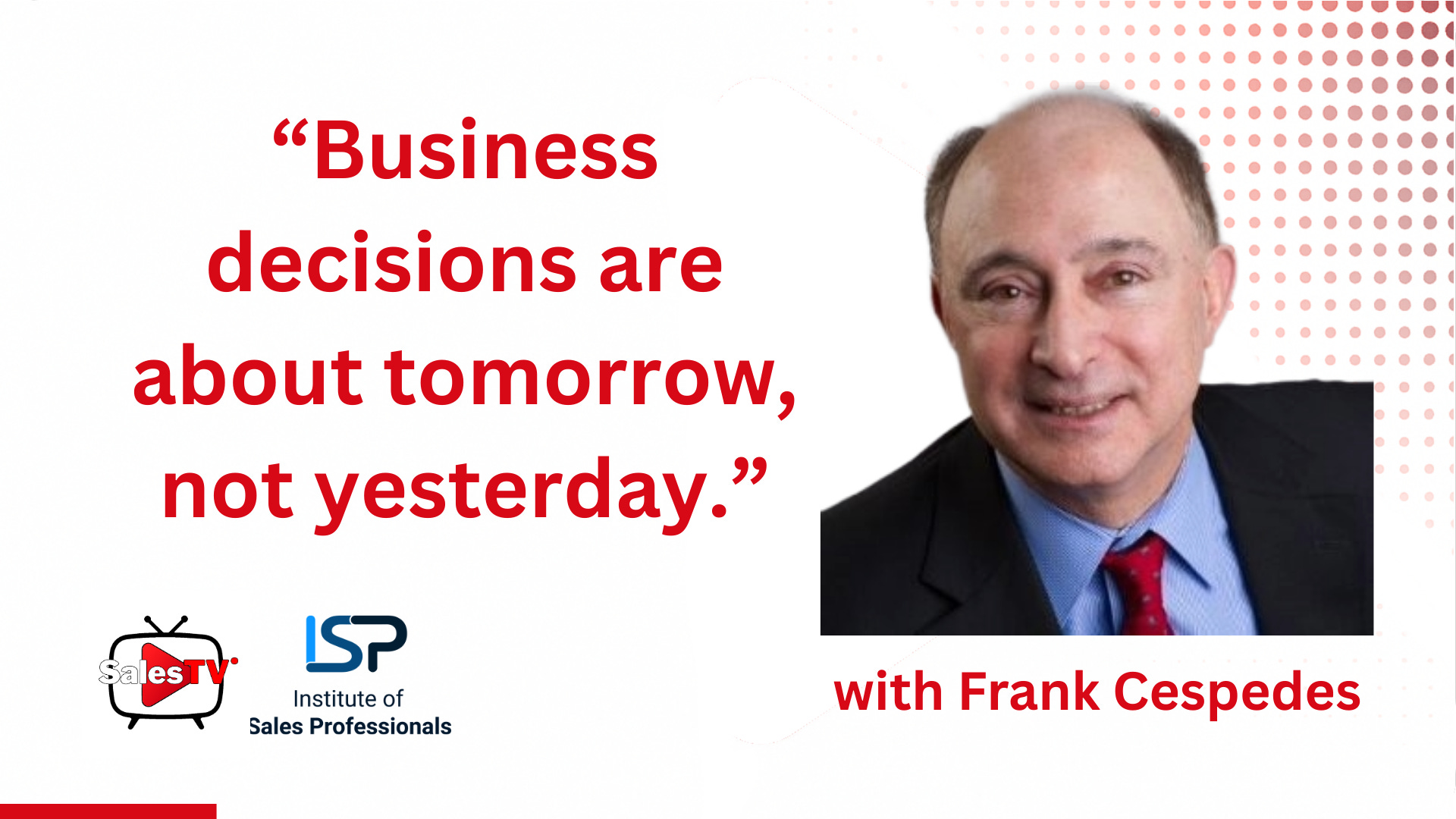
The Future of Sales Leadership Is More Human Than You Think
In this episode of SalesTV, Harvard Business School Senior Lecturer Frank Cespedes explores what changes - and what does not - as selling evolves. He explains why leadership clarity, performance management, and alignment between strategy and frontline behavior matter more as technology advances. Rather than outsourcing judgment to dashboards or AI tools, effective sales leaders must understand the sales strategy, develop people through feedback and coaching, and ensure that daily activity reflects strategic priorities. Sales leaders are operating in an environment defined by uncertainty, automation, and pressure for profitable growth. As AI absorbs more administrative and transactional sales work, the role of leadership is not diminishing - it is becoming more important. The future of sales is not about replacing people with technology, but about refocusing leaders on the human work that drives performance. Chapters 00:00 Intro - Why business decisions are about tomorrow not yesterday 01:05 Using judgment when metrics only show past performance 02:48 Aligning strategy with frontline sales behavior 06:41 Why the basics matter more as technology advances 07:48 How sales leaders should prepare for AI and automation 10:38 Increasing customer contact time to drive productivity 11:46 Why performance feedback cannot be outsourced to AI 13:04 What performance reviews really reveal about buying 17:20 The skills sales leaders need as selling evolves 18:10 Why the bar keeps rising in sales performance 19:41 Leading sales teams through uncertainty and change 22:26 The ONE Thing - Sales managers must manage In this episode, we asked… * How do Sales Leaders prepare their teams for a future where AI automates more of the selling process? * When uncertainty becomes permanent, how do Sales Leaders strengthen judgment and decision-making? * How should Sales Leaders align strategy with frontline behavior to improve execution? * What leadership skills matter most as administrative sales work disappears? * Why does performance feedback become more important as automation expands? *What happens when leaders try to outsource management responsibilities to technology? Key Takeaways * AI changes how sales work gets done, not who is responsible for results * Automation raises the importance of human judgment, not its relevance * Strategy fails without alignment to frontline behavior * Performance management is a leadership skill, not an HR process * Coaching and feedback cannot be outsourced to dashboards or tools * Leaders who focus only on past results struggle to prepare teams for the future The ONE Thing Frank Cespedes Wants You to Take Away Sales managers must manage. As AI removes routine work, leadership responsibility increases especially for performance feedback, coaching, and judgment. The essentials of leadership matter more, not less. About SalesTV SalesTV.live is a weekly talk show created by salespeople, for salespeople. Each episode explores sales, sales training, networking, and social selling, bringing together sales leaders, enablement professionals, and practitioners from across the globe. About the Institute of Sales Professionals The Institute of Sales Professionals (ISP) is the world’s only body dedicated to raising standards in sales. Through its Sales Capability Framework, certifications, and global member community, the ISP works to elevate sales to the level of a recognized profession. @SalesTVlive @InstituteofSalesProfessionals #MoreHuman #FutureOfSales #PerformanceManagement #AISales #Sales #SalesLeadership #LinkedInLive #Podcast This is a public episode. If you would like to discuss this with other subscribers or get access to bonus episodes, visit salestv.substack.com
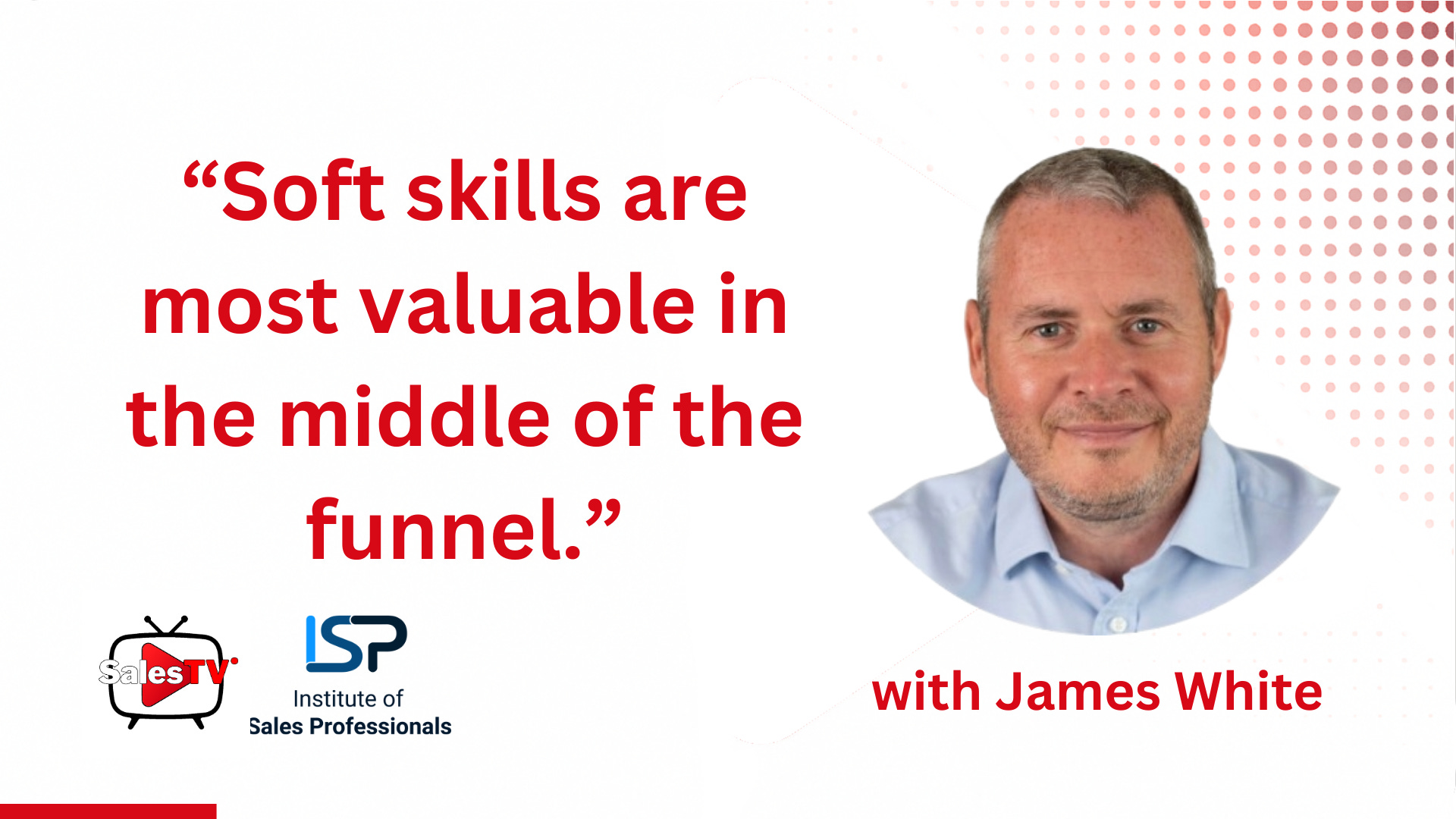
Why Human Skills Will Define the Future of Sales
Why Human Skills Will Define the Future of Sales In this episode of SalesTV, sales veteran and coach James White joins us to explore why human skills have become the defining capability for modern sellers and why Sales Leaders must rethink how they prepare their teams for an AI-enabled sales environment. While AI tools increasingly support outreach, research, and operational tasks, James explains that the most decisive moments in selling still depend on the ability of a human seller to read tone, recognize buyer signals, show authentic curiosity, and adapt in real time during a live conversation. Drawing from decades of experience leading sales teams, building outbound programs, and coaching B2B sellers across software, IT, and service-based industries, James breaks down the practical skills sellers must master in the middle of the funnel - where interest turns into opportunity, where buyers share their real concerns, and where emotional intelligence matters more than any tool or script. He explains why sellers who rely too heavily on automation or templated messaging weaken their own capability, and why Sales Leaders must develop conversational discipline, reflective practice, and stronger coaching rhythms to help their teams perform where it matters most. Chapters 00:00 Intro – Why Human Skills Matter More Than Ever 01:12 What AI Can and Cannot Do in Real Sales Work 03:18 The Limits of Scripted Outreach 04:52 Why Sellers Must Learn to Read Buyer Signals 06:41 The Moments Where Deals Are Really Won 08:16 Why the Middle of the Funnel Is the New Differentiator 10:04 Teaching Sellers to Listen Instead of Perform 12:22 How AI Changes the Seller’s Role 14:19 Building Soft Skills That Drive Commercial Outcomes 16:03 Helping Sellers Ask Better Questions 17:44 The Risk of Over-relying on Technology 19:26 What Modern Buyers Expect in Conversations 21:14 Coaching Sellers to Adapt in Real Time 23:32 Developing Human Capability as a Leadership Priority 25:41 The ONE Thing - Build emotional sales intelligence In this episode, we asked… * How can Sales Leaders prepare sellers for the parts of selling that AI cannot do? * How can sellers read tone, emotion, and buyer signals more effectively? * What makes the middle of the funnel the most human and high-impact stage of selling? * How can leaders coach sellers to listen, adapt, and probe more effectively? * How should Sales Leaders rethink capability development in an AI-enabled environment? * What causes sellers to sound scripted or robotic, and how can they avoid it? * How can leaders strengthen the soft skills that drive real commercial outcomes? Key Takeaways * The middle of the funnel is becoming the defining moment for sales differentiation. * AI can assist outreach, but human skills determine whether opportunities advance. * Sellers must learn to read tone, recognize signals, and respond adaptively. * Generic outreach and scripted messaging weaken seller capability. * Emotional intelligence has become a core commercial skill, not a nice-to-have. * Sales Leaders must coach listening, questioning, and signal interpretation more intentionally. * Future-ready teams focus on conversation quality, not volume of activity. The ONE Thing James White wants you to take away – Sellers must build emotional sales intelligence — the ability to understand tone, emotion, and buyer signals — because these human skills decide the outcome of real sales conversations. About SalesTV SalesTV.live is a weekly talk show created by salespeople, for salespeople. Each episode explores sales, sales training, networking, and social selling, bringing together sales leaders, enablement professionals, and practitioners from across the globe. About the Institute of Sales Professionals The Institute of Sales Professionals (ISP) is the world’s only body dedicated to raising standards in sales. Through its Sales Capability Framework, certifications, and global member community, the ISP works to elevate sales to the level of a recognized profession. @SalesTVlive @InstituteofSalesProfessionals #SoftSkills #FutureOfSales #SalesCapability #HumanSelling #AIinSales #ModernSelling #Sales #SalesLeadership #LinkedInLive #Podcast This is a public episode. If you would like to discuss this with other subscribers or get access to bonus episodes, visit salestv.substack.com

How AI Is Transforming Sales and Commercial Excellence in 2026
In this episode of SalesTV, Mikhail Belov, Global Sales & Commercial Learning and Competency Manager at SLB, shares two years of hands-on experience deploying AI across a global commercial training function delivering 200–300 classes per year to thousands of learners. Mikhail reveals the AI capabilities that deliver immediate value and the ones that still feel too mechanical. He explains why AI role plays have become the most mature and impactful AI use case in sales training, earning a 100% Net Promoter Score in SLB’s internal pilot - while uncovering surprising behavioral differences between new and experienced sellers. He also breaks down how AI reduced curriculum design effort by roughly 30%, accelerated content development from months to hours, and lowered cost per learner by 30% through better scheduling and delivery planning. We explore how SLB uses AI to analyze thousands of lines of learner feedback, identify skill gaps, and improve the relevance of every program. Mikhail explains why AI’s value is highest in high-volume, structured tasks, and why human expertise remains irreplaceable for judgment, nuance, and customer context. He also details the mindset shift leaders must model to foster experimentation, reduce fear, and build a culture where innovation can take root. Chapters 00:00 Intro – How AI Is Transforming Sales 01:12 Where AI Is Making a Real Impact 02:22 Turning Learner Feedback into Insights 03:20 Cutting Curriculum Design Time with AI 04:26 From Months to Hours – AI for Content Creation 06:07 Reducing Cost per Learner with AI Planning 07:35 Why AI Role Plays Are the Most Mature Use Case 09:49 From Training to Sales Operations – Role Plays in Action 12:00 Where AI Still Falls Short Today 14:00 What Remains Human in Sales 15:24 Risks, Misconceptions, and Evaluating AI Tools 16:56 Measuring Impact in Simple vs Complex Sales 20:06 Leadership, Innovation Culture, and KPO 22:28 The ONE Thing – Rethink Everything You Do In this episode, we asked… * How is AI reshaping sales training, content development, and commercial excellence today? * What AI use cases deliver the most immediate and measurable value? * Where does AI still feel too mechanical in a sales context? * How does AI reduce cost, streamline operations, and improve program scheduling? * Why are AI role plays outperforming traditional role plays? * What remains uniquely human in sales, even as AI expands? * How should leaders evaluate AI tools without getting lost in the noise? * What risks and misconceptions should organizations avoid when adopting AI? * How can leaders build a culture that encourages experimentation and innovation? Key Takeaways * AI creates the most value in repeatable, high-volume processes such as curriculum design, content creation, and scheduling. * Role plays are the most mature AI use case - earning unanimous learner approval in SLB’s pilots. * AI can accelerate content development cycles from months to hours with the right review workflow. * Cost per learner can drop by 30% when AI supports scheduling, delivery planning, and resource allocation. * Human judgment, customer nuance, and trust-building cannot be automated - AI enhances, but doesn’t replace, expertise. * Leaders must model innovation, reduce fear, and make space for experimentation to foster adoption. * AI’s weakest areas remain emotional nuance, coaching quality, and complex consultative interactions. * Adoption varies across experience levels - new sellers often adapt fastest to AI-driven practice environments. * AI tool evaluation should focus on real business outcomes, not feature lists or vendor hype. * Organizational pressure (“KPO”) alone doesn’t drive innovation - culture and leadership behavior do. The ONE Thing Mikhail Belov wants you to take away – Rethink everything. Start experimenting. Explore AI role plays. Look for the small, practical steps that create value - and build from there. About SalesTV SalesTV.live is a weekly talk show created by salespeople, for salespeople. Each episode explores sales, sales training, networking, and social selling, bringing together sales leaders, enablement professionals, and practitioners from across the globe. About the Institute of Sales Professionals The Institute of Sales Professionals (ISP) is the world’s only body dedicated to raising standards in sales. Through its Sales Capability Framework, certifications, and global member community, the ISP works to elevate sales to the level of a recognized profession. @SalesTVlive @InstituteofSalesProfessionals #CommercialExcellence #SalesEnablement #AIinSales #SalesTransformation #SalesPlanning2026 #Sales #SalesLeadership #LinkedInLive #Podcast This is a public episode. If you would like to discuss this with other subscribers or get access to bonus episodes, visit salestv.substack.com
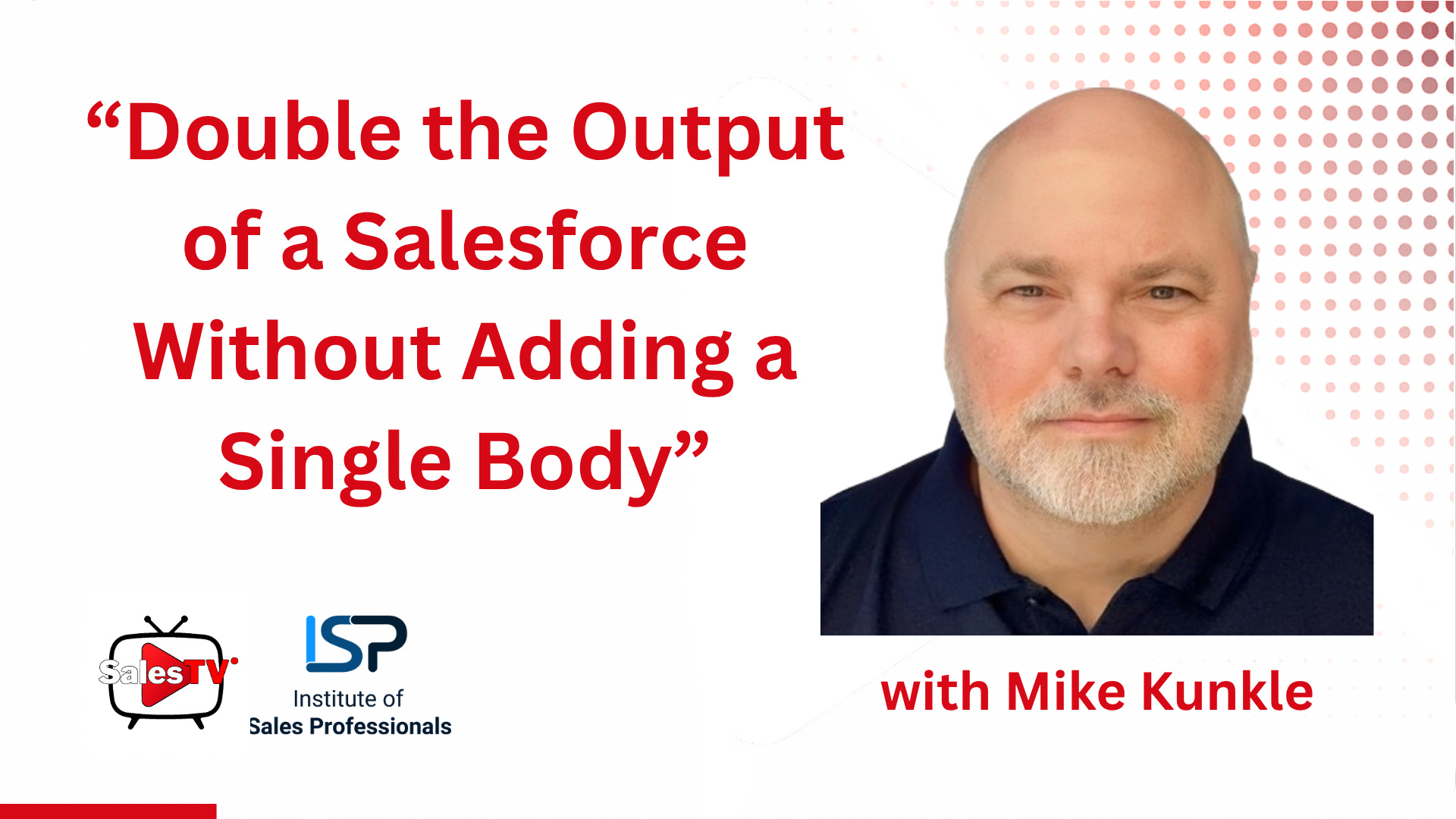
What Sales Leaders Must Rethink
In this episode of SalesTV, sales enablement industry stalwart Mike Kunkle returns to break down the performance levers, leadership behaviors, and enablement disciplines that truly drive seller effectiveness. Rather than focusing on “more activity,” “more pipeline pressure,” or “more tools,” Mike uncovers the deeper structural issues that create friction inside revenue organizations. He explains why so many sales systems unintentionally work against sellers, why most methodologies never take hold, and why frontline managers - not dashboards - are the real force multipliers. Chapters 00:00 Intro – What Sales Leaders Must Rethink Today 01:25 The Harder–Faster–Louder Problem 03:14 The Building Blocks of Sales Enablement 04:46 Efficiency vs. Effectiveness 06:08 Systems, Managers, and the Real Performance Levers 07:16 Sales as a Complex System 08:47 Buyer Acumen & COIN-OP Model 12:02 Personalizing Targeting & Account-Based Execution 14:18 Why Without Buyer Understanding GTM Fails 15:32 What to Retire - Tech Stacking & “Do More” Management 18:08 Studying True Top Performers 19:35 Methodology Chaos & Why It Fails Organizations 23:54 Is Sales Art or Science? 27:06 The ONE Thing - Buyer Centricity In this episode, we asked… *How can leaders diagnose the real constraints limiting sales performance? * What does true buyer acumen look like, and how can teams develop it? * Why do sales methodologies fail, and what actually drives adoption? * How can leaders move beyond activity-based efficiency to true sales effectiveness? * What capabilities and rhythms make frontline managers the biggest performance multiplier? * How can enablement evolve from “content delivery” to “behavior change”? * What does a buyer-aligned sales system look like in practice? Key Takeaways * Buyer acumen is the most underdeveloped and high-impact skill in sales. * Systems, not sellers, cause most inconsistent performance. * Methodology without adoption is meaningless - coaching and workflow matter more. * Frontline managers drive the majority of sales outcomes. * Enablement maturity is measured by behavior change, not content volume. * Activity metrics often create false confidence. * Buyer-aligned systems outperform seller-centric systems every time. The ONE THING Mike Kunkle wants you to take away - Be Buyer centric. As Zig Ziglar taught us, “We can get everything we want in life if only we’ll help enough others get what they want.” About SalesTV SalesTV.live is a weekly talk show created by salespeople, for salespeople. Each episode explores sales, sales training, networking, and social selling, bringing together sales leaders, enablement professionals, and practitioners from across the globe. About the Institute of Sales Professionals The Institute of Sales Professionals (ISP) is the world’s only body dedicated to raising standards in sales. Through its Sales Capability Framework, certifications, and global member community, the ISP works to elevate sales to the level of a recognized profession. @SalesTVlive @InstituteofSalesProfessionals #ModernSalesLeadership #RevenueLeadership #GoToMarket #SalesStrategy #SalesEnablement #2026Planning #Sales #SalesLeadership #LinkedInLive #Podcast This is a public episode. If you would like to discuss this with other subscribers or get access to bonus episodes, visit salestv.substack.com

You Call It Coaching, But It's Just Managing Deals
You Call It Coaching, But It’s Just Managing Deals In this episode of SalesTV, we speak with Steve Radford, Founder of the Greater Sales Company and author of How to Sell. Steve brings 25+ years of experience training frontline salespeople and developing the managers who lead them. Through his Four Hats Model - Instructor, Teacher, Mentor, Coach - he explains why most leaders wear the wrong hat at the wrong time, and how to choose the hat that truly develops performance. Sales coaching is among the most misunderstood skills in sales leadership. Many managers believe they’re coaching when they are actually performing sales management, deal review, or problem solving. In this conversation, we explore the connection between mindsets, knowledge, skills, behaviors, and KPIs, and how leaders can develop stronger, more self-sufficient salespeople. If you’re searching for guidance on coaching vs managing, developing sales capability, how to coach a sales team, or how to create a coaching culture, this episode provides the frameworks and examples sales leaders need to elevate team performance. Chapters 00:00 – Intro - You Call It Coaching… 00:47 – What looks like coaching but isn’t 02:07 – The Four Hats Framework 03:47 – Instructor: tell + nurture 04:52 – Teacher: interactive tell 05:40 – Mentor: ask + guide 05:55 – Coach: ask + challenge 06:40 – How to know when you’re wearing the wrong hat 07:35 – Turning one-on-ones into coaching conversations 08:34 – When to coach vs teach vs mentor vs instruct 11:19 – Balancing targets with development 17:47 – Creating a coaching culture 18:54 – The ONE Thing – Take a beat In this episode, we asked… * What’s happening in conversations that makes them feel like coaching but actually isn’t? * What is the Four Hats Model - and how does it help sales managers develop people? * How do I know when I’m wearing the wrong hat? * How do I turn my one-on-ones from pipeline updates into real coaching conversations? * When should a sales leader coach, and when should they teach, mentor, or instruct? * How do I measure whether coaching is actually improving performance? * What’s the right balance between hitting a target and developing people? * What does a genuine coaching conversation sound like? * How do I know when my team is ready for more challenge - or still needs support? * How do you create a coaching culture across a sales organization? * What’s the first small change I can make tomorrow to start coaching better? Key Takeaways * Most “coaching” is really managing deals, not developing capability. * True coaching is ask-focused and challenge-focused, not tell-focused. * The Four Hats Model helps leaders choose the right development approach. * Capability building follows a pathway: Instruct → Teach → Mentor → Coach. * You can’t coach someone out of a skill gap - you must teach first. * Coaching conversations mirror great sales conversations: explore before advising. * Leaders must balance short-term numbers with long-term capability. * A coaching culture starts with a shared model and consistent language. The ONE THING Steve Wants You to Take Away Take a beat before every coaching conversation. Diagnose where the rep is, decide which hat to wear, and approach the conversation intentionally - not reactively. About SalesTV SalesTV.live is a weekly talk show created by salespeople, for salespeople. Each episode explores sales, sales training, networking, and social selling, bringing together sales leaders, enablement professionals, and practitioners from across the globe. About the Institute of Sales Professionals The Institute of Sales Professionals (ISP) is the world’s only body dedicated to raising standards in sales. Through its Sales Capability Framework, certifications, and global member community, the ISP works to elevate sales to the level of a recognized profession. @SalesTVlive @InstituteofSalesProfessionals #SalesStrategy #SalesCoaching #SalesManagement #SalesCapability #SalesEnablement #Sales #SalesLeadership #LinkedInLive #Podcast This is a public episode. If you would like to discuss this with other subscribers or get access to bonus episodes, visit salestv.substack.com
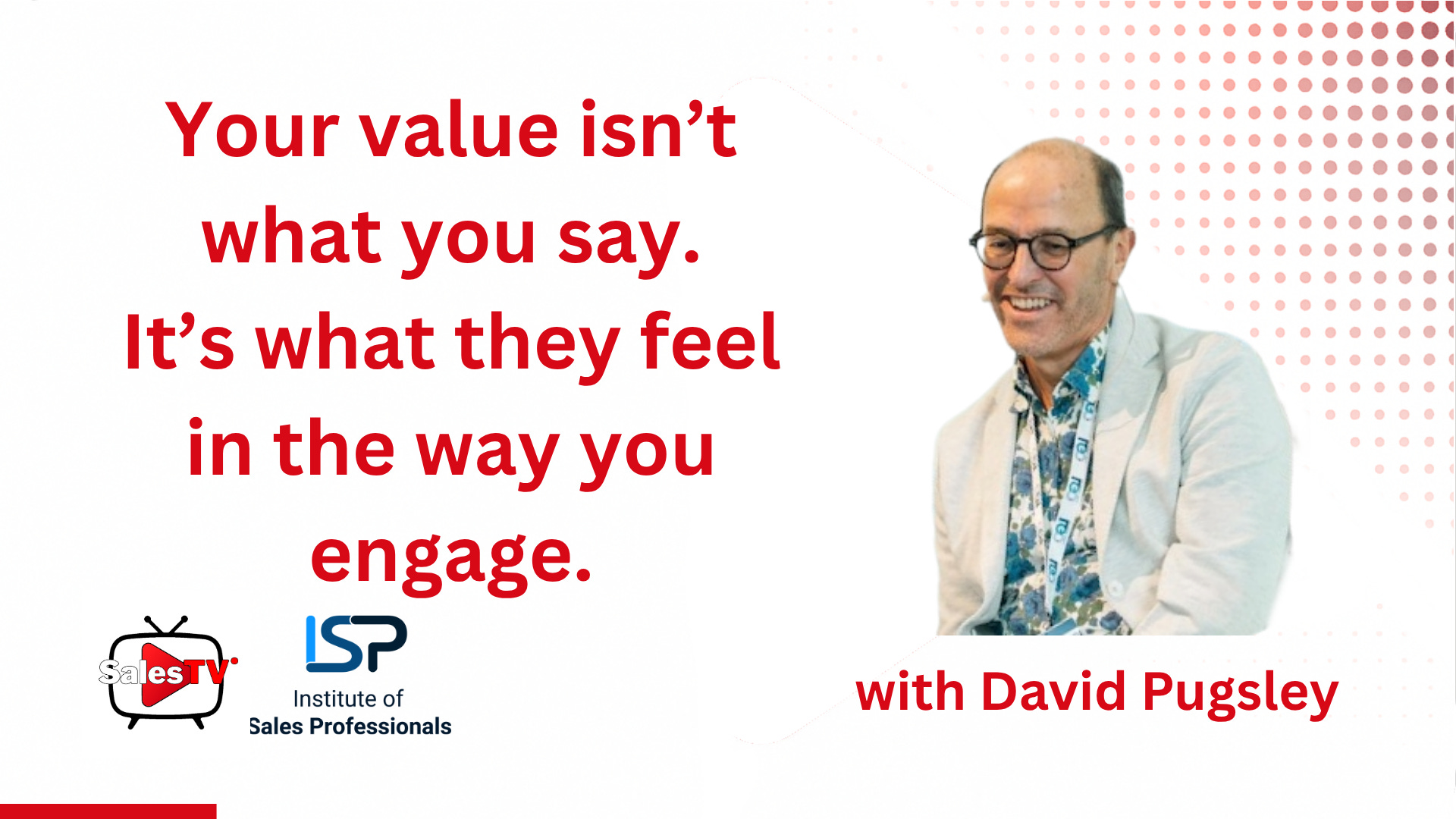
Buyers Don’t Want Volume - They Want Value
Buyers Don’t Want Volume They Want Value In this episode of SalesTV, Salesforce’s David Pugsley shares how authenticity, consistency, and genuine curiosity turn outreach into opportunity. Sales leaders keep pushing for more - more calls, more emails, more automation. But buyers aren’t counting your touchpoints. They’re judging your relevance. Value-based selling doesn’t start with a pitch. It starts with being real. We explore what it really means to sell on value in 2025, and why this shift matters more now than ever. It’s not about discounts or following a new script - it’s about changing the mindset behind every sales interaction. The focus moves from chasing transactions to creating trust. From reciting product information to delivering personal relevance. From counting outreach to earning outcomes. Chapters 00:00 – Intro - Why “doing more” isn’t working 02:45 – The human side of sales outreach 06:00 – What authenticity looks like in professional selling 10:45 – Social presence that builds trust, not vanity metrics 13:40 – Multichannel vs meaningful connection 17:00 – Authenticity as the foundation of credibility 21:00 – How being yourself becomes your superpower 23:30 – The false promise of sales efficiency 27:00 – The new definition of value in sales 29:00 – The ONE THING - Authenticity is the foundation of value. In this episode, we asked… * How do you create value in a conversation - not just in your proposal? * Why do buyers stop responding when sellers focus on volume? * What does “value-based selling” actually look like in practice today? * How can you demonstrate relevance without relying on discounts or deals? * What makes buyers trust one salesperson over another? * How do you shift from cold outreach to conversations that earn attention? * What role does authenticity play in building credibility with modern buyers? * How can you measure success by alignment, not activity? * How do you humanize the sales process in a world full of automation? * What’s the mindset difference between sellers who win and sellers who burn out? Key Takeaways * Build credibility by leading with insight, not product information * Translate buyer priorities into value outcomes they can feel * Shift from cold outreach to meaningful engagement that earns trust * Balance professionalism with humanity and authenticity in your approach * Protect margins by reducing the need to discount through perceived value * Redefine success metrics around alignment, not activity * Use social presence to open doors without being “salesy” The ONE THING David Pugsley wants you to take away –Authenticity is the foundation of value. You can’t sell value unless buyers believe you’re being real with them. About SalesTV SalesTV.live is a weekly talk show created by salespeople, for salespeople. Each episode explores sales, sales training, networking, and social selling, bringing together sales leaders, enablement professionals, and practitioners from across the globe. About the Institute of Sales Professionals The Institute of Sales Professionals (ISP) is the world’s only body dedicated to raising standards in sales. Through its Sales Capability Framework, certifications, and global member community, the ISP works to elevate sales to the level of a recognized profession. @SalesTVlive @InstituteofSalesProfessionals #TalkValue #ValueSelling #ModernSelling #SalesConversation #Sales #SalesLeadership #LinkedInLive #Podcast This is a public episode. If you would like to discuss this with other subscribers or get access to bonus episodes, visit salestv.substack.com

Why Price Doesn’t Equal Value
In this episode of SalesTV, Todd Snelgrove - author of “Value First Then Price” - explains why sellers who compete on price lose margin, while those who quantify value win trust and profit. Drawing on decades leading global value-selling programs for major industrial and technology companies, Todd shows how to prove the measurable impact of your solutions in financial terms buyers respect. Together we explore how to equip champions with business cases that resonate with procurement, what makes ROI stories believable, and why the most profitable companies buy and sell based on the best value, not the lowest price. Chapters 00:00 – Introduction - Price doesn’t equal Cost doesn’t equal Value 04:30 – From Total Cost of Ownership to Total Profit Added™ 05:00 – Showing measurable value to procurement 07:00 – Mistakes sellers make with ROI 10:30 – Aligning sales and marketing to prove value 13:00 – Quantifying non-financial value drivers 15:10 – Teaching teams to defend margin confidently 19:00 – When to walk away from price-driven buyers 21:40 – Tools to calculate Total Profit Added™ 22:52 – The ONE THING - Know your value In this episode we asked… * What do you mean when you say price doesn’t equal cost doesn’t equal value? * How can sellers prove value to procurement, not just users? * What are the biggest mistakes salespeople make when talking about ROI? * How do you teach a team to defend margin with confidence? * When should you walk away from a price-driven buyer? * What metrics and tools help calculate Total Profit Added™? Key Takeaways * Price doesn’t equal Cost which doesn’t equal Value. Understand the difference and communicate it clearly. * Quantify your value in the buyer’s language using financial outcomes. * Equip champions with a credible, concise business case they can defend. * Defend margin with belief - your confidence in value drives buyer confidence. * Value-based companies are 36% more profitable than price-driven competitors. Todd Snelgrove breaks down how value selling helps organizations reduce discounting and build credibility with procurement. He introduces the concept of Total Profit Added™ (TPA) - an evolution of Total Cost of Ownership - to help sellers connect their offering to measurable business impact. Todd shares proven frameworks for quantifying value, building ROI models, and aligning sales and marketing to document outcomes. Learn how to navigate sales negotiations by trading value, not margin, and how to create case studies that reinforce your story long after the sale. The ONE THING Todd Snelgrove wants you to take away… Know your value. Then prove the difference to your buyer. About SalesTV SalesTV.live is a weekly talk show created by salespeople, for salespeople. Each episode explores sales, sales training, networking, and social selling, bringing together sales leaders, enablement professionals, and practitioners from across the globe. About the Institute of Sales Professionals The Institute of Sales Professionals (ISP) is the world’s only body dedicated to raising standards in sales. Through its Sales Capability Framework, certifications, and global member community, the ISP works to elevate sales to the level of a recognized profession. @SalesTVlive @InstituteofSalesProfessionals #ValueFirst #ValueSelling #SalesNegotiation #SalesStrategy #SalesEnablement#Sales #SalesLeadership #LinkedInLive #Podcast This is a public episode. If you would like to discuss this with other subscribers or get access to bonus episodes, visit salestv.substack.com
Unlocking the Hidden Value of Sales
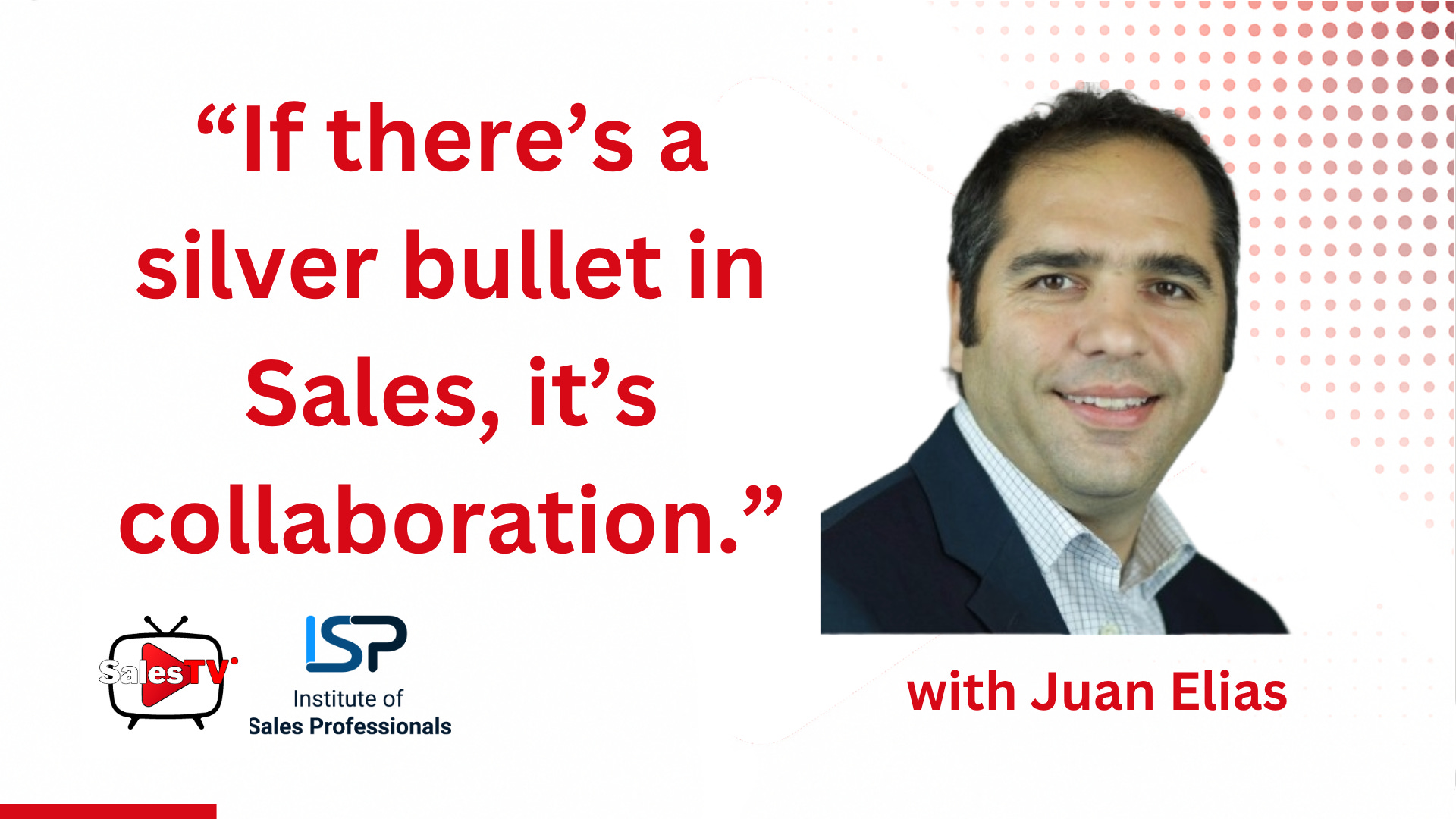
In this episode of SalesTV, Juan Elias, author of “From Strategy to Revenue: Turning GTM Planning, Sales Execution, and Enablement into Measurable Growth”, shares with us how collaboration transforms sales from a numbers game into a business-driving function. Together, they examine what happens when strategy, enablement, and execution finally align - and why sales leaders who master collaboration see stronger teams, better customer partnerships, and long-term measurable growth. Chapters 00:00 – Intro - Unlocking the Hidden Value of Sales 00:51 – Collaboration Is the Silver Bullet in Sales 02:24 – The Hidden Value of Sales Beyond Revenue 04:04 – Why Sales Teams Fail to Capture Full Impact 06:21 – Cross-Functional Collaboration in Sales Performance 08:34 – Proving the Strategic Value of Sales Leadership 12:37 – Reframing Revenue: How Sales Leaders Measure Value 14:54 – Sales Enablement and Measurable Growth 17:41 – Building Collaboration Across Sales, Marketing, and Product 20:07 – Embedding Collaboration Without Slowing Sales Down 24:19 – The ONE THING - Collaboration is the Engine of Growth In this episode, we asked… * What is the hidden value of sales beyond revenue? * How does cross-functional collaboration increase sales performance? * How can sales leaders prove the strategic value of their function? * What’s the link between sales enablement and measurable growth? * Why do sales teams fail to capture their full business impact? * How do I reframe my sales team’s metric from revenue to value? * How do I build collaboration between sales, product, marketing, and customer success? * What are examples of sales relationships delivering business impact beyond the initial deal? * Why does chasing only revenue undermine long-term growth? * How do I embed collaboration into my sales process without slowing it down? Key Takeaways * Revenue is a lagging indicator; collaboration is the multiplier that drives it. * Cross-functional clarity creates consistent sales execution and customer trust. * Sales enablement connects strategy to measurable outcomes — not just content. * The hidden value of sales lies in orchestrating alignment across teams and buyers. Modern selling demands more than hitting targets - it demands alignment. This conversation breaks down the connection between sales collaboration, enablement, and measurable growth. Learn why the most effective sales organizations measure value, not just revenue, and how cross-functional clarity drives better outcomes for customers and the business. Featuring real examples from enterprise environments, this episode uncovers what it takes to transform sales into a strategic engine for growth and credibility. The ONE THING Juan Elias wants you to take away - “If there’s a silver bullet in sales, it’s collaboration.” About SalesTV SalesTV.live is a weekly talk show created by salespeople, for salespeople. Each episode explores sales, sales training, networking, and social selling, bringing together sales leaders, enablement professionals, and practitioners from across the globe. About the Institute of Sales Professionals The Institute of Sales Professionals (ISP) is the world’s only body dedicated to raising standards in sales. Through its Sales Capability Framework, certifications, and global member community, the ISP works to elevate sales to the level of a recognized profession. @SalesTVlive @InstituteofSalesProfessionals #MeasurableGrowth #SalesCollaboration #SalesEnablement #RevenueGrowth #Sales #SalesLeadership #LinkedInLive #Podcast This is a public episode. If you would like to discuss this with other subscribers or get access to bonus episodes, visit salestv.substack.com