
Run to the Top Podcast | The Ultimate Guide to Running
768 episodes — Page 14 of 16

Jeff Galloway- Go Slow To Go Fast
Wait... What?? That's correct. 1972 Olympian, Jeff Galloway, who was self-coached and absorbed as much as he could from other runners has proven that to go fast, you should go slow. Hundreds of thousands of runners have trained with his method and the results he shares in this episode are nothing short of amazing. Since starting his retail store, Phidippides, in Atlanta, Georgia in 1975, Jeff has listened to runners who were looking for better and better training strategies. He has developed training methods, retreats at multiple locations around the globe, written several books, trained runners directly and remotely, written for Runner's World, partnered with Disney… well, you get the idea. We are so very lucky to have Jeff join us to tell us about his personal experiences with running and how his unique training philosophy has helped runners at all levels achieve great results while avoiding injury. This is likely to be one of those episodes that you listen to over and over because there is just so much good information. Be sure to check out the links below for even more tools and resources! Here are some of the topics we'll discuss today: Jeff's personal experiences running in college and his Olympic trials. Jeff counterintuitive training methods including full distance training and Run Walk Run. The benefits of group training. How The Magic Mile accurately predicts a runner's future race times. How to leverage our human brain to keep our 'Monkey Brain' under control. Questions Jeff is asked: 2:50 What are some of your favorite moments as a runner? 11:55 Do you think professional / elite runners today would give up a spot in a race to help a teammate advance? 13:30 How was it having a group working together in the early 1970's? 15:06 What's your theory on why there aren't more big groups of people who want to train together? 17:12 Should recreational runners train in groups? 19:26 How can people get involved in your training groups? 22:20 You have runners do a 26 - 29 mile run 3 weeks before their marathon at a slower pace for 6-7 hours? 24:38 So the only you're adding on race day is running faster? 24:55 What exactly is the Magic Mile? 26:29 How do runners get their individual Magic Mile times? 26:59 Is it just running that mile as fast as you can? 27:51 What is the Run Walk Run method? 31:14 What would you like to say to runners who have a social stigma against walking? 33:51 Does the amount of walking differ for each person? 35:24 What is the 'Monkey Brain'? 38:13 How long should the walk-breaks be? 40:00 How does it feel to have a training method named after you? 42:29 How does it feel to have a whole event series named after you? 45:07 What is involved in your retreats? 48:02 Do you have a favorite race you recommend all runners do at least once? 53:54 The Final Kick Round Quotes by Jeff: Even on the days when I was physically destroyed, which was most of the days during the first month, I felt better in my head and in my spirit than I had ever felt in my life. I helped my father get into running when he was 52. I never heard any of my Florida Track Club teammates brag unless they were being funny about something. There is no doubt that when you have a stable of good runners you can get some really good workouts if the coach is monitoring the effort level and making sure the athletes aren't running over their heads in workouts. The reason our Group Retreats have expanded is because there is so much interest in getting individual help with running and learning hands-on: 'How do you do these drills', 'What is my form like', 'Am I doing something wrong?'. We found that people tend to hit the wall within about a mile of the that they ran on long runs within the last 3 weeks. And so, by going the (full race) distance, not only do people feel strong and have more belief that they CAN do it, but they actually run FASTER. (The Run Walk Run) is a method that conserves resources that reduces injuries down to practically NOTHING and allows runners to run faster in long distances. You are the captain of your ship. You are the one who determines how you're going to run.
Mary Wittenberg & Virgin Sport -A Social Movement
Mary Wittenberg & Virgin Sport - Social Movement As CEO of the New York Road Runners from 2005 to 2015, and having been involved with them since 1998, Mary Wittenberg helped the NY Marathon grow to include 400,000 participants, including 120,000 school children across multiple events and helped found the World Marathon Majors which connected the marathons in Boston, Berlin, London, Chicago and New York. Since stepping down from NYRR, Mary is now Global CEO of Virgin Sport and together with Richard Branson, she is re-inventing group athleticism to encourage as many people as possible to experience social running. Virgin Sport has four weekend multi-events on the calendar with more to follow. And you know if Richard Branson is involved, these fitness festivals will truly be special. In this episode Mary tells us about the philosophy behind Virgin Sport and how they are engaging athletes of all levels. She also goes into detail about the events currently on the calendar as well as what the future of Virgin Sport looks like. She shares her experiences of running, both as an athlete and as a race organizer and group leader. Her passion for running and fitness shine through in this conversation. She is an inspiration and we are all very lucky to have her join us on Run To The Top. Here are some of the topics we'll discuss today: How Mary's rowing team led to her becoming a runner What Mary did as CEO of NYRR and how the youth program grew under her leadership What it was like to run the NYM after being the CEO. Why she believes running is for just about everyone, especially kids The current and future vision of Virgin Sport Questions Mary is asked: 3:14 What is your background as a runner? 4:40 How much has competitive running changed since you were a more serious athlete? 6:13 Had it been an available option would you have continued post-collegiate running? 6:57 Do you still run now? 8:22 What was it like to run the New York Marathon after having been the director for so long? 11:53 What did being the CEO of New York Road Runners entail? 15:33 Why did you feel it was so important to build it at a youth level vs. focusing on adults? 17:20 Of the 50+ NYRR events, which is your favorite? 18:10 What about being the first female marathon race director? 19:29 Why do you think it's important to have other events outside of traditional marathons for people to choose from and do you think other cities will adopt these, too 21:31 What about your current job as CEO of Virgin Sport? 23:33 What can you tell us about these initial four festivals you have scheduled? 26:08 Can people pick and choose which events they want to do, can they do all of them? 27:18 How do potential future events look for Virgin Sport beyond these first four cities? 28:43 How could someone get involved in these events? 30:03 What is it about running that makes you want to share it with as many people as possible? 31:56 Where you would like Virgin Sport to be in 10 years? 33:07 What can more recreational runners do in their own world to inspire others? 34:57 What do you think about Park Run? 38:09 The Final Kick Round Quotes by Mary: I think there's many more opportunities today for young runners and athletes in other sports that switch to running to find a post-collegiate running group and run pretty seriously. You realize as time goes on that there are still roadblocks to women in leadership. If you fit running and some high intensity running into your life, it may be the best way for you to get healthy and fit. It's not just about the marathon. I have always had this burning desire to take the model of community based running and fitness on the road. We're in the experience business. Our Proposition is based on bringing people together. For us, the challenger in the industry is not other people putting on events, because from a mission of purpose that's awesome they're doing that. Our challenge is the things that stop people; the comfortable bed, the super-busy workday. Just by getting out the door every day, you inspire people. When people see people running, other people realize: 'Oh. maybe I can do that, too.' Mentioned in this podcast: Virgin Sport Homepage NY Road Runners The New York City Marathon Park Run Book: A Race Like No Other; Liz Robbins Book: Once a Runner; John L. Parker, Jr. Book: Running With the Buffaloes; Chris Lear FloTrack Runner's World Ask Lauren Fleshman Garmin watches and wearables Strava Homepage Runkeeper Homepage We really hope you've enjoyed this episode of Run to the Top. The best way you can show your support of the show is to share this podcast with your family and friends and share it on your Facebook, Twitter, or any other social media channel you use. If more people who know about the podcast and download the episodes, it means I can reach out to and get through to the top running influencers, to bring them on and share their advice, which hopefully makes the show even more enjoyable for you! -- Thank you to our s

Now is the Time to Set Your Own Narrative- Michael Hammond
Collegiate, post-collegiate & non-collegiate running with Michael Hammond Michael Hammond is a graduate of Virginia Tech where he competed in cross country and track, earning two ACC titles and four NCAA All-American honors. His individual efforts led his team to four ACC team championships: one in cross country, two in indoor track, and one in outdoor track. So, how could a runner with such an impressive collegiate resume struggle with running after college? On this episode, Michael shares his experiences of running in, and after, college. He speaks openly and honestly about his challenges and his observations from working with both competitive and non-competitive runners. He relates how he has gained a massive amount of respect for runners who are not just trying to hit their personal goals, whatever they may be, but to do it while juggling everyday, real-world responsibilities of life, work and / or families. In his role as Director of Coaching for RunnersConnect, Michael has gotten to know every member, their motivations and exactly what support they need to get from the coaches as well as from each other. And as you'll hear, this community-based, member-to-member support is one of the benefits members appreciate the most. Here are some of the topics we'll discuss today: Michael's collegiate / post-collegiate running experiences How and why Michael took a self-imposed hiatus from running How similar recreational and collegiate runners are Michael's role with RunnersConnect How RunnersConnect coaches help different types of runners How RunnersConnect members support each other to reach their personal goals Questions Michael is asked: 3:59 What is your background with running? 8:36 Now that you are on a 'long hiatus' from running, what have you filled that gap with? 10:30 What is it about collegiate running that is so intense? 15:04 Did your injury make it easier for you to transition out of competitive running? 18:16 Looking back, what advice would you give for someone either in a collegiate program or post-collegiate who is questioning their passion for running? 21:04 What did it feel like to break 4:00 in the mile? 25:05 What differences do you see between how collegiate runners and recreational runners approach running? 28:41 What appreciation have you gained for recreational runners who aren't necessarily competing, but are just trying to better themselves? 33:09 What does your job as Director of Coaching for RunnersConnect entail? 36:13 What do you think makes RunnersConnect stand out from other training sites? 40:23 How do you plan to keep the community feel while the membership continues to grow? 43:58 How can RunnersConnect help shorter distance runners? 45:54 What impresses you most about the power of the running community to help each other out? 50:46 The Final Kick Round Quotes by Michael: "No one gets started in just running." "A harsh reality for me about post-collegiate running… is that most people just DON'T care about your running anymore unless you are absolutely at the top." "Be real with yourself. Be real with what you want. Be real with your goals." "If you can have any control over this, try to get in a race you have a chance of winning to break 4:00." "In college, you always have (goals) to chase. If you don't have stuff to chase, you're gonna get cut from the team because you have to have stuff to chase. You don't even have to decide it; your coach decides it for you.". "(As a recreational runner) you totally get to set your own narrative in a way. And I actually think there's something really cool about that. And you can make it as huge of a deal or as small of a deal as you want. I've definitely grown to really respect that." "Ultimately, how can you put together a team of coaches that truly knows EVERYONE? You can't; it's impossible. Anyone who tells you that they are is lying. It's just not possible."

Train Your Brain for Success- Evie Serventi
Running can be tough, not just on our bodies, but on our emotions and psyche. This is especially true whenever we experience any perceived setback; injuries, a rough workout or a less than desired performance in a race. We all talk to ourselves, whether we're aware of it or not, but many people don't realize that this self-talk actually affects our performance. This is both good and bad, depending on the type of self-talk in which we engage ourselves. If we habitually beat ourselves up after a setback, this can become detrimental to our running. On the other hand, if we use more positive self-talk, even after a setback, we can recover from it that much better. Evie Serventi, a competitive runner and swimmer, is the Deputy Editor of Running Fitness magazine in the UK and is also a Sports Psychologist. In this episode, she talks to us about the importance of Mental Training and shares with us techniques that she recommends for training our brains to help us run better and to not sabotage the effort we put into our physical conditioning. As you will hear, Evie and I have a wonderfully close relationship. She has been a tremendous resource for me and I think you will come away with actionable steps that will get your brain and body working more effectively together. Here are some of the topics we'll discuss today: How running is helping refugees cope in England How Evie has helped Tina PR How to be aware of our self-talk and use it to perform even better Self-encouragement vs. Excuses How to use 'Check-ins" to become aware of our mental states and adjust accordingly. How could a running diary help? What is 'Reframing' and how can we use it to improve our performance? Questions Evie is asked: 4:40 Tina's Big Announcement 7:05 Evie's Big Announcement 10:10 Will running be a part of it? 12:08 How did you become Deputy Editor for Running Fitness Magazine? 16:33 How did you get into sports psychology? 19:47 What advice would you give to someone who, later in life, is considering making a big career change or going back to school for something new? 22:00 What about the refugee group you're working with? 28:57 Why be kind to yourself vs. being tough on yourself? 34:26 What does 'Be Kind To Yourself" actually mean? 35:26 Should someone work on this prior to a race or can someone start doing it once they are racing? 38:11 How can people start putting these "Mental Bottles" into practice? 42:14 How do you avoid letting 'being kind to yourself' turn into just making excuses? 45:04 What's a good exercise for people to start with? 48:32 What other mental strategies would you suggest for those thinking that they are struggling in various ways. 52:27 What are your future plans, website, other info? 55:05 Are you still taking on new clients? 59:13 The Final Kick Round Quotes by Evie: "Run your own race; control what you can control." "Get comfortable with being uncomfortable." "If you want to do something, you find a way." "The risk, though with (motivating yourself via) negative emotions, or feeling angry, even if you feel that they're positive at the time, is that they're generally not sustainable." "Self-talk is part of your mental training." "There IS a lot you can control about your own performance and your own actions. You can't control the weather, you can't control the amount of runners, the speed of the other runners. But what you CAN control is your attitude and the way you approach the run." "Keeping a diary of what you're thinking, during a run, after a run / post-run thoughts, can often be quite revealing and help you in terms of "Where do I start? I'm not confident and I don't feel like I've got the mental toughness to do this race." "Ask other people; observe what other people who you think have mental toughness do. How do they train? What do they wear? What sort of statements do they say? What sort of language are they using?" Take a Listen on Your Next Run Want more awesome interviews and advice? Subscribe to our iTunes channel [bctt tweet="Learn tips from @tinamuir sports psychologist on this weeks podcast" username="Runners_Connect"] Mentioned in this podcast: Follow Tina on Facebook Fast Feet Forward Fast Feet Forward (FFF) is a pilot research study lead by Dr Ana Draper for Sussex Partnership Foundation Trust in collaboration with Virtual Schools Kent and a small local charity, Kent Kindness. The study involves a sport-based early intervention trauma group protocol for unaccompanied asylum seeking children (UASC) who now live in Kent. The idea behind the intervention is to coach a group of young (male) asylum seekers through a series of running drills and fast feet movements to help them process trauma - trauma which they may have experienced back in their country of origin, on their journey to the UK, and ongoing trauma as a result of the stressful immigration process taking place. RTTT Podcast: Katy Sherratt - The Power of Running to Overcome Homelessness Email Tina for daily check in questions tina@runn

Decoding Sleep: How to Clean up Your Sleep Hygiene- Luke Gupta
Sleep Illiteracy? Sleep Education? Sleep Management? Is it really a big deal? We've all been sleeping our entire lives, but do we even think about sleep correctly? Luke Gupta graduated from the University of Bath with a B.Sc in Sport and Exercise Science and completed an M.Sc in Exercise Physiology at Loughborough University. Currently, Luke is conducting a part-time PhD Studentship into Sleep and Athletic Performance in collaboration with the English Institute of Sport. He worked with some of the Rio Olympians across many different sports on their sleep habits. In this episode, Luke shares with us what his research and experience has shown him about how the function and significance of sleep in an athlete's life. The way Luke talks about 'sleep', it sounds like an actual entity with it's own set of rules. For those of us who have spent many nights waiting anxiously for sleep to overtake our racing minds, he may not be far off. How can people who have difficulty falling asleep learn these rules and thus manipulate them to our advantage? Listen as Luke decodes the inner workings of sleep, confronts myths that have permeated our 'understanding' of sleep and gives us all practical methods for getting all the sleep we'll ever need. Here are some of the topics we'll discuss today: The roles our genetic and early adolescent personality traits play in determining the sports we excel in. Is 8 hours a night really the magic number for sleep for everyone? Does going to bed early equate to more rest? How Circadian Rhythms affect our sleep habits. Why your bed should not be a multitasker. Internal vs. External sleep aids Performance vs. well-being Is it possible to front-load sleep before a race? Questions Luke is asked: 3:30 How did you get into your current field and position? 6:05 Has your experience reaffirmed that this is the area you want to focus on? 6:51 What does your job look like? What are some of your favorite parts of working with athletes regarding sleep and performance? 9:05 How did you help the Rio Olympians optimize their sleep for their competitions? 11:12 What differences did you see between the different types of sports / athletes? 15:01 Does all this apply to recreational athletes as well as Elite Athletes? 17:05 What are some common myths about sleep and can you debunk them? 18:40 How does anyone know what their optimal amount of sleep is? 22:45 What if someone gets up unusually early, say for a 4:00 a.m. flight; what should they do to catch back up on their sleep? 24:45 Other myths you'd like to bust? 26:46 What has your researched uncovered about how sleep affects changes to performance, motivation and physiology? 31:12 What are some of the things that you've found help people fall asleep? 34:17 If someone's mind won't shut down when they're trying to fall asleep, what should they do? 38:13 What are the pros and cons of using sleep aids? 43:18 Other suggested sleep aids or behavioral sleep aids? 45:04 How can we avoid psyching ourselves out while waiting to fall asleep? 47:17 Based on your research, how close is the correlation to sleep and performance? 50:53 What should someone do to manage anxiety the night before a race? 54:03 Do you have any planned research we can keep up to date with? 58:40 The Final Kick Round Quotes by Luke: "My research recently found that there's big differences between sports and how the athletes sleep and perceive sleep." "Listen to your body." "Sleep is quite an automated process in that if you've had a bad night's sleep one night, the next night's sleep will, more likely than not, be that much better given the opportunity. That's just how sleep works." "You can't just say if you've had a bad night's sleep you're going to perform poorly." "The way sleep works is: the longer you stay awake, the sleepier you feel." "When you try to do anything with sleep, that's when it tends to go wrong." Mentioned in this podcast: Dr. James Maas on Run To The Top podcast Dr. James Maas Pillow - Bed Bath & Beyond English Institute of Sport Consumer Reports - Blue Blocking Glasses Luke's research published in Sports Medicine journal Follow Luke On Twitter Book: Ultramarathon Man Polar RC3 GPS Watch http://tinamuir.com/sleep-therapist/ RunnersConnect Extra Kick Daily Podcast We really hope you've enjoyed this episode of Run to the Top. The best way you can show your support of the show is to share this podcast with your family and friends and share it on your Facebook, Twitter, or any other social media channel you use. If more people who know about the podcast and download the episodes, it means I can reach out to and get through to the top running influencers, to bring them on and share their advice, which hopefully makes the show even more enjoyable for you! -- Thank you to our sponsors for supporting Run to the Top Enter to win a FREE 6-Pack of Perfect Amino from BodyHealth Use coupon code TINA for 10% off at Saucony.com

Jay Dicharry- If You are Serious About Your Running, Time to Get in the Weight Room
Jay Dicharry may or may not have taken Gretchen Rubin's Four Tendencies quiz, but it's safe to say that he's probably a Questioner. Jay is not afraid to question beliefs that many of us have blindly accepted for years and study if, in fact, there is actually any truth in them or if there are better ways to train to avoid injuries. He has a passion for this 'Pre-Habbing' which goes back to his injury-prone youth. Jay is a renowned expert in biomechanics and physical therapy and is also the author of Anatomy for Runners. In this episode, he challenges us to reevaluate parts of our accepted, conventional training and running wisdom. He does a great job of deconstructing clinically complex concepts into easily understandable ideas and examples. He breaks down things like Strength Training versus Power Training and the differences between joint limitation or blockage, shortened tissues, stiffness / sticky tissues, and dynamic mobility. Our conversation covered a lot of ground and included many additional resources as noted by the links below. This may very well be an episode that you will want to listen to multiple times to explore these and evaluate what changes you may want to integrate into your own personal program. Here are some of the topics we'll discuss today: How biomechanic training can help Pre-Hab or prevent injuries. Biomechanics fact vs. fiction and the ongoing critical evaluation of prior assumptions. How to leverage strength training to improve your running while reducing your volume. How to evaluate a potential strength coach or options if you don't have access to one. Risk / Reward balance of using different types of shoes for training / racing. Jay's Mobility / soft-tissue work philosophy. The difference between 'stretching' and 'dynamic mobility' and which you should do before a run. Questions Jay is asked: 3:50 When did you determine that biomechanics was your passion? 6:37 Is there still a lot of misinformation portrayed within the PT / sporting world? 8:07 Do you still get frustrated when people repeat 'facts' they haven't verified or is it getting better with more readily available information? 10:30 What is it that drives you to keep exploring? 12:33 Is there anything surprising that you've learned about Pre-Hab along the way? 14:42 Who else can people reference for up-to-date information 16:17 Is the UVA Running Medicine Conference open to the public? 17:14 (Listener Question) If you could go back and rewrite Anatomy For Runners, is there anything you would change? 18:58 Is there another book in the works? 19:25 What is your philosophy on strength training and plyometrics? 20:52 Exactly what type of training are you referring to by 'Strength Training'? 27:07 When selecting a Strength Coach, how important is it that they have a running background? 29:45 What can you tell us about the Saucony Stride Lab for those who may not have access to a running lab? 34:20 Why did you choose to work with Saucony? 35:18 Were you part of the design team for the Saucony Freedoms? 35:41 (Listener Question) If you're running in a heavier / bulkier shoe, is there an injury risk to doing the workouts or races in a lighter shoe if you train in the heavier shoe? 39:34 Can we trust our GPS / wearable tech with our biomechanics or are they inaccurate? 40:29 When it comes to imbalances or weaknesses, is it an issue if one part, or side, of your body is stronger than the other? 43:25 If you do all the form trainings we discussed, you're prolonging the amount of time your body is able to hold good form when running? 44:21 Should people who sit all day at work and run after work stretch between working and running? 49:25 How often do you recommend that runners should perform foam rolling / mobility / soft-tissue work? Every Day? 55:00 The Final Kick Round Quotes by Jay: "There's still the folks out there saying 'Running is going to kill you and you need to stop'." "I don't like being the person paving the way; I like being the person helping people." " 'What's the ONE thing to do?" and the reality is that life isn't that simple, right? If it was, then nobody would have problems." "There is very good research out there to show that running does NOT make you strong. Running efficiency DOES improve when you improve the way that you carry yourself." "At the end of the day, the runners who are serious find a way to get in the weight room. The runners I work with, the people I've introduced to this, I don't know any of them who have STOPPED doing this at all even from a novice up to an elite level." "The goal is to build a running-specific plan to RUN better, not just to lift more weight in the gym." "If it's not improving running economy and making your body more robust in terms of injury reduction, then you shouldn't be doing it." "If you're a soccer player and you're more accurate in shooting goal with your right foot, that's fine, right? But, when you run both legs have to show up." "I'm not looking to train a muscle;
You're Stronger Than You Think- Hannah Smith
For someone in their late 20's to feel lucky that they were diagnosed with a rare form of cancer, they would have to be a very special individual. Hannah Smith is just that: very special, indeed. Her story isn't just one of survival; it's an inspirational journey of using what many of us might consider a nightmarish situation to then fully live life and recognize the beauty and wonder that exists all around us. In this episode, Hannah shares her incredible journey and outlook with us. From her life before her diagnosis, through the treatment and recovery, having to adjust to a new 'normal', and ultimately achieving goal after goal, not just in regards to competing in races and triathlons, but in all areas of her life. Her experience, attitude and advice are not helpful only to those with significant health challenges, but also to any of us who may get so caught up in our busy lives that we lose sight of what is truly important. She shows us all that living isn't just about surviving, but it is really about Sur-Thriving. Here are some of the topics we'll discuss today: What is it like to not know when you're hungry so that you remember to eat? How absolutely important attitude is in order to live a full life. Who was Hannah's inspiration? How she managed the emotional cycles of difficult chemo rounds. Her experience with managing self-expectations. How she fends off external negativity. Questions Hannah is asked: 4:52 How did fitness initially fit into your life? 6:57 What happened? 10:36 How did that make you feel to be diagnosed at such a young age? 14:15 At what point after the diagnosis did you refocus on health and fitness? 15:23 What are some examples of cancer fighting foods you now focus on eating? 16:07 How and when did you approach building fitness back into your life? 19:07 Post-surgery, what are some of the funny things that happened and what do you miss? 24:20 How has your sense of humor helped your state of mind? 27:20 Did people try to coddle you as you worked towards your fitness goals, and if so, how did you handle that? 30:17 How would you advise families of patients regarding getting medical clearance to train? 34:35 To what do you credit your improved running times when you started competing again? 39:53 Have you embraced challenges your whole life or only since your diagnosis? 43:05 Do you live a more fulfilling life because you focus more on things you want to do vs. things you feel purely obligated to do? 46:00 Is there a reason for you that running and triathlons mean so much to you? 49:02 What would you like to say to someone who may be going through a similar situation? 54:01 The Final Kick Round Quotes by Hannah: "You can either be bitter and twisted and angry at the situation or you can make the best of whatever time you've got left, because at the end of the day, you're gonna die anyway." "I did come, eventually, to the understanding with my family that (my training) wasn't anything that I wasn't allowed to do and that my surgeon (had cleared it)." "I carry a donor card, but I do feel like when I am gone and they cut me open, there's just going to be an IOU." "Ultimately the biggest goal for me is to be as fit and healthy and the best person I can be." "Dream big. And if you hit somewhere in the middle, that'll be alright." "Strangely enough, my experience with cancer was probably one of the best experiences of my life. My life is infinitely better after my diagnosis than before, simply because I now look at things and think, 'Do I really want to do this?' " "Your brain is the only intelligent part of your body. If you give up mentally, what chance does any other part of your body have?" "You're stronger than you know." "Find what you LOVE to do and build your life around that." Mentioned in this podcast: Do Today Well - Blog Chrissie Wellington: A Life Without Limits The Brownlee Brothers - Swim, Bike, Run: Our Triathlon Story 80/20 Running by Matt Fitzgerald 3 Simple Ways to Determine if You are Running Easy Enough: Matt Fitzgerald Garmin Fenix STOP Looking at Your GPS Watch to Run Faster (& enjoy it more too!) Follow Hannah: Follow Hannah on Instagram GutlessIrongirl Website We really hope you've enjoyed this episode of Run to the Top. The best way you can show your support of the show is to share this podcast with your family and friends and share it on your Facebook, Twitter, or any other social media channel you use. If more people who know about the podcast and download the episodes, it means I can reach out to and get through to the top running influencers, to bring them on and share their advice, which hopefully makes the show even more enjoyable for you!
Gretchen Rubin-There is No Finish Line to your Goals: You Deserve More
Haven't we all, at one time or another, struggled with getting new activities to become more permanent? Gretchen Rubin, author of The Happiness Project and fellow Podcaster, shares her research with us on how to create lasting habits. And because no single strategy works for everyone, she dove deeper into different personality types and how they can use their inherent predispositions to their advantage. She also discussed the challenges different personalities traits have so we can be aware of avoiding potential roadblocks. In her studies, she identified 4 general personality types: Upholders, Questioners, Obligers and Rebels. A link to her quiz is included below so you can learn how you may be able to make long-term positive changes in your own life. She also touches on simple strategies we can all add into our daily routines to be happier people, how to avoid getting off track once the rush of completing a major goal wears off, and shares examples she has come across with other runners that are extremely helpful. Many of us are still in a New Year, New You mindset and this episode provides powerful ideas to make sure that we stay on track with the goals we have set for ourselves, not just in the near-term, but for as long as we really want. Here are some of the topics we'll discuss today: How our different personality traits determine how they form habits. Why we should use 'milestones' vs. 'finish lines' to maintain habits indefinitely. Why it's important to protect key activities in our schedules and how to do it. Why and how we should use self-reflection of our prior experiences to realize what worked well, or didn't, in our past. How we can proactively stave off 'Runner's Blues' after accomplishing a big goal or avoid Seasonal Affective Disorder. Questions Gretchen is asked: 4:19 Why should people focus on personal improvement? 5:36 What are some examples of easy, significant changes someone can make? 8:34 What are the 4 Tendencies you refer to in your books? 11:33 Besides Upholders, how can runners who fall into the other Tendencies work with their strengths to achieve their running goals? 18:08 Are there any dangers with being an Upholder that they should look out for? 20:30 How does social media play into these different Tendencies? 24:31 What is the Danger Of A Finish Line? 27:25 What would you suggest to help people avoid Finish Line Dangers? 30:00 Could you swap related activities for specific activities during a recovery period? 31:26 How do you stay mentally engaged when your fastest running days are behind you? 33:47 Do people need to take a temporary clean break without a goal or does it vary by Tendency? 36:24 What if people still feel something is missing after achieving a goal, even if they have replaced the key activities related to that goal? 37:55 What advice do you have to help people avoid Seasonal Affective Disorder? 41:38 The Final Kick Round Quotes by Gretchen: If there's something that you could do pretty easily that's going to give you a big happiness boost, wouldn't you want to do that? (Regarding Questioners): They tend to love data and reporting, so things like monitoring how far they're going or what their time is, keeping records. Really figure it out, whatever it would take to make that decision because while you're not sure it's going to block your way because you're going to be sort of stuck... but once you decide then you can do it. (Regarding Obligers): If you're an obliger you need 'Outer Accountability', you could work out with a trainer, you could join a running group where people are going to be annoyed if you don't show up. (Regarding Rebels): They can do anything the WANT to do. The idea of a structured schedule, something that is very appealing to an Upholder, it's a big turn-off for a Rebel. (Regarding Upholders): Upholders sometimes suffer from 'tightening' and this is when the 'rules' get tighter and tighter… Sometimes it can feel choking. If you feel like it's sort of over-mastering you, you want to be aware that this is a phenomenon that Upholders can experience and you want to stay in control of it. Hitting a goal is a great way to hit a goal; it's not a great way to keep a habit, because habits are usually things that we want to do indefinitely. It's more helpful to think of a milestone. It's a 30-day Yoga Challenge, but what are you doing on Day 34? To be happy you have to think about feeling good, feeling bad, feeling right in an atmosphere of growth.
You Need to Build Your Ability to Train Before You Can Train- Rob Wilby
What if triathlons (or 70.3's) weren't as intimidating as they may appear? What if, as a successful long distance runner, you already possessed a unique advantage over athletes in the other disciplines? And what if, you could become a successful triathlete, or even just improve your running, without a significant increase in training hours by training more efficiently? Rob Wilby is a professional triathlon coach based in England, where he is head coach at both Team Oxygenaddict and Knutsford Triathlon Club. He specialises in helping age group triathletes rapidly improve, by focussing on maximising the effectiveness of training time and addressing their biggest performance limiters. Over the last 20 years, he has helped hundreds of athletes exceed their expectations, from completing their first triathlon through to qualifying for the World Championships. Rob provides great insight on the world of triathlons and 70.3's and breaks down some perceived resistances that may prevent runners from entering these events. He's a fellow podcaster and has wonderful tips on training, coaching and having a successful mindset to enjoy what may be a new experience for runners. If you've ever wanted to pursue a triathlon, but felt intimidated, Rob has great advice to help you get started. If you have never even considered triathlons, Rob's training perspective can help you increase your running performance by leveraging cross-discipline training. Here are some of the topics we'll discuss today: Why runners have a unique advantage over swimmers and cyclists in triathlons. How inclusive triathlons are for newcomers. Maintaining Training / Life balance. Equipment recommendations. Benefits of training in multiple disciplines. Swim form analysis and tips. Questions Rob is asked: 3:55 What is team Oxygenaddict? 5:55 How did you end up giving yourself a year to get ready for your first triathlon as opposed to waiting until the last minute? 8:19 Where did the name "Oxygenaddict" come from? 9:30 What are the brand advertising limitations for triathlon kits? 11:30 What's your backstory? 17:59 What's the percentage of people transitioning to triathlons are runners and what would you say to someone considering a transition to let them know they have support from the rest of the triathlon community? 22:48 What would you say about the difference between just running vs. running right after cycling? 25:20 Do you see triathletes of all levels (especially novices) competing? 28:11 What would you say to people who are 4-5 hour marathoners; is there an opportunity for them in the world of triathlon? 29:53 Do you have to like all 3 disciplines? 33:23 Do triathletes typically have 3 separate coaches for each discipline? 35:31 How does one train for a triathlon without it completely taking over their life? 40:57 As a coach, do you worry about recreational / mid-pack athletes burning out from overtraining? 43:36 What is your swim analysis? 48:21 Is there a general best swim form or are there a variety of good forms? 49:57 Do you breathe one side or both? 51:42 Any additional swim-form tips? 53:15 Is it more likely that a fit runner who thinks they're not a good swimmer has bad form than that they're not fit enough? 54:48 What about open-water swimming vs. indoor pool? 57:05 Good brands of entry-level bikes and wetsuits? 58:46 What is your podcast about? 1:02:52 Final Kick Round Quotes by Rob: "I've never come across anybody who's elitist or snobbish at all at any of the events that I've been to." "Without a doubt, the people who make the strongest athletes in triathlon come from a running background." "You'll see a massive variety of people at these events." "(By training for a triathlon) ...you've consistently run for 12 weeks without getting injured, you've done all this hard work on the bike without getting injured, your body's had a different stimulus without getting injured, and all of a sudden the result of that is, it turns out, you've got out of your own way and you've developed a different way of training that's going to allow you to get even faster on the run." "You can let the sport take up as much of your life or as little of your life as you like." "I'm probably doing about half the training I was before, and I'm still getting 99% of the benefit of it. So, almost I wondered how little training I could do and still be fit for racing." "You need to build your ability to train before you can train." "(Runners are) already aerobically very fit, and the reason they can't swim quickly is because of a skill-based problem not because of a fitness based problem." "The key to swimming better is to improve your technique. Practice good technique and get fit as a byproduct of simply practicing good technique rather than trying to get fit and thinking that your technique will improve."
Lanni Marchant-Your Body is Your Equipment: You Need to Fuel Your Engine
EWhat makes elite runners so good at running? Are they superhuman, and just have the talent to be able to leave us all in their dust? Actually, no! Even though most elite runners struggle with revealing their weaknesses in fear of losing sponsors or upsetting the selection committees, today we are talking to a runner who does not mind sharing her struggles and does not mind speaking the truth, even if it makes some waves in the process. Lanni Marchant is the Canadian record holder in the half marathon and marathon with her 1:10:47 and 2:28:00 PRs. She competed in both the 10,000m and marathon in the Rio Olympics, which you will hear about the drama involved in that scenario during this interview. However, despite Lanni's success as a runner, she wants her legacy to be more than just her running. Lanni is doing all she can to help women rights, including speaking in front of Parliament on the topic, and showing the world once and for all, that there is no one best body type and weight for a runner. Lanni spent most of her college career on crutches because she felt she needed to be skinny to run fast, but now she has a message for runners everywhere to get your head on straight, or you are throwing away your running! Lanni is refreshingly honest, and I am sure you are going to enjoy this episode for her relatability and what she is doing for our sport. Questions Lanni is Asked 4:00 You decided to go to University in the US, what was it that pulled you away from Canada? 5:10 What lessons were you taught about going to school in the US when you were still in high school in Canada 7:35 You struggled your way through your freshman year, why do you think so many runners struggle in that first year? 10:00 There were some remarks made to other people about being healthy, was it that about being leaner or heavier? 10:45 How did those remarks affect you? 12:30 What do you think, now that you have a good relationship with food, can be done to change the perspective? 20:00 How do you stop yourself from comparing when you are standing on the start line? 23:45 You mentioned your weight fluctuates throughout the year, what would you like to say to anyone who looks at pictures of you from Rio, and thinks WOW! I am never going to look like that. 27:20 A lot of words (such as muscular), women see as negative, do you have any thoughts on how we can change the thinking? 32:30 What made you decide to go in front of parliament to take a stand for women rights? 35:30 What would be your suggestion to men and women listening of how we can be good role models and stop the sexist comments? 39:00 Do you see women doing it to ourselves by putting each other down instead of working together? 44:00 Tell us about the double double debacle, and how is it different to qualifying for the Olympics in Canada and Great Britain 48:30 Did that affect you mentally, knowing that you did not know what you were doing. How did that affect your Olympic experience? 53:00 Where do you go from here? Running wise and career wise? 55:10 When you said you like to indulge after a big race, what do the first few days after New York look like for you? 1:00:00 Final Kick Round Quotes from Lanni I spent my entire college career doing what most NCAA females do, trying not to eat, eat very little, trying to cross training and overtrain, and offset what I did eat. You name the eating disorder trick, I did it. I eat chocolate everyday… In my off season, I might have a beer most nights, during season, I might limit it to weekends. We need to embrace the builds and the bodies that we have, understand that you can train it and tweak it to fit within your sport and within the goals you want. If we change that conversation for women in sport, then there's not going to be the same insecurities for girls and there'll be less pressure for girls to look a certain way and do stupid things to look that way. I am not restrictive, but I have to recognize that I need to be making sure every calorie, piece of food and beverage I put into my body is servicing my body, so when I get to Rio, I am able to compete and be my best Lanni. ...A part of me regrets not getting my head on straight sooner, because who knows what I could have been doing in my 20's had I not been just wasting away and wasting my time and wasting my talents trying to fit into other people's definitions of what a runner should look like or what a runner should be. And those are years I'll never get back. If you look at any picture of an elite athlete in any sport, its not sustainable for us to look like that. You try to dial it in for maybe 4-6 weeks, where it is really important. ...both (genders) could benefit from the conversation being about our 'machines' and what we're doing with them. I wanted my words to carry more weight and to have more meaning than any title or PB or anything beside my name. Women are harder on each other and ourselves than any man ever will be and I don't know why that is. You're a girl;
There is No Finish Line: Commit to Continuous Growth- Josh Trent
The journey of losing weight is not easy. Anyone who has tried to lose weight in the past knows that all too well, but our guest today not only shares his struggles with using food as comfort to process his emotions, but how he finally broke free of using food as a form of self medication. Josh Trent, of Wellness Force Radio has fantastic advice for us all on how to grow to love our bodies from a place of abundance and trust, rather than a place of anger (like so many of us do). Every human being goes through stages, and although therapy has been shunned in the past, Josh has some great insights on why it is so important, and can help us upgrade our old software to deal with our issues once and for all/. Josh talks about having a why, the reason you are willing to put in all the hours for your training, and that why should be bigger than you. Having a why that makes you cry will give you energy to pull from when life stacks roadblocks in front of you. We only have control over our experiences, and we need to make sure that our behaviors are in alignment with our goals. Josh challenges us all to set a new fear PR, something that is terrifying, but will help us to feel more alive than ever before. If you are ready to make 2017 your best year ever, this is an episode to inspire you to do just that. Here are some of the topics we'll discuss today: Why Josh felt like he wasn't running towards pleasure, but instead, away from pain The difference between YouStress and Distress Why the first 5 minutes of your day are the most important, are you eating mental junk food? Why voicing the thoughts that are going through your head will take the power out of them How to use habit formation to reach your goals Why having a community will help you to replace the negative thoughts in your mind Questions Josh is asked: 4:15 Where did your journey start? 8:15 What was it about the moment with the red cup that made something switch in your mind? 9:25 We often think of drugs as pills, but tell us how food or exercise can be that addiction or way of coping with our feelings 12:30 You lost 75lbs, but we are in a world of perfection, so we struggle to find peace with ourselves, how did you learn to do this while you were going through this journey? 15:00 What can people recognize within themselves, where they can realize they are in a place of anger, and how can they move to a place of love? 16:00 Tell us about some of strategies to get out of a negative mindset 20:00 How long did it take you to spin your mental perspective to where you were confident in who you were? 22:20 How did you get to a place to where you did not see vulnerability as a weakness or something to be embarrassed about? 25:15 Why do you encourage people to face their frustrations and be vulnerable? 26:25 How can we make sure we make a behavior change rather than a New Years Resolution? 32:20 Let's use an example of a runner, and how they can make good choices to be ready for their big race coming up 36:20 What about people with families who believe it is not realistic to put themselves first, what would you like to say to them? 39:30 Describe just how much our negative thoughts affect us during races, and how can we take the steps to overcome those negative thoughts in a race? 41:30 How do you practice going against the negative thoughts in the moment? 48:00 You always ask your guests for what their definition of wellness is, what is yours? 49:30 Is it possible to fill up all three cups to have balance in our lives? 51:30 What themes come up over and over on your podcast interviews, that you would like to tell people today? 53:00 What are examples of some "why's" that will help people achieve their goals? 56:35 The Final Kick Round!
Jared Ward- We Are All Just Trying to Be the Best We Can Be
My guest today is statistics professor and humble Olympian Jared Ward. He's one of the best pacers in the world, and on today's podcast we're going to find out how we can start training to pace our races as perfectly as he does. Jared wrote his Master's thesis on pacing, and he's sharing some of his insider information, tips, and tricks for how we can start managing our perfect pace. One of his biggest pieces of advice is how he uses each running season to improve and learn new techniques. As runners, we know that with every race we are testing our limits and learning something new about ourselves, and Jared's got this learning down to a science. So get excited! Here are some of the topics we'll discuss today: The rewards of marathon training Jared's trick for getting into the zone Jared's thesis on how to have successful pacing What it's like to qualify for an Olympic team How to run well in hotter temperatures Questions Jared is asked: 3:15 What excites you about marathons? 4:10 Tell us about your success and your background as a runner 5:14 What's your experience with running marathons? 8:23 What made you to decide to keep teaching instead of running full-time? 9:46 Can you handle the idea of just being a runner? 11:52 How has life changed for you as a running celebrity? 15:20 What inspired you to write your Master's thesis on pacing? 18:08 What did you find out about successful pacing? 23:40 Do you have any pacing tips for runners? 27:35 Do you use a watch when running? 29:22 Do you ever have moments of doubt while running? 33:20 What do you tell yourself when you're hurting while running? 36:35 How epic it did feel to cross the finish line at the Olympic qualifiers? 37:31 What was the Rio Marathon like? 40:09 Does your Olympic experience influence how you feel about your race abilities? 41:00 How did you train for your Olympic qualifier? 43:10 How can you run so well in the heat? 46:06 What's your advice for high temperature runners? 48:30 What shoes do you train and race in? 51:00 Are you more or less sore after your races? 52:05 How do you manage to keep your family a priority? 55:05 What it's like having a massage therapist for a wife? 55:42 What do you have planned for the future? 58:27 The Final Kick Round! Quotes by Jared: "I've mostly been blessed to never have a season in running that hasn't been better than the season before." "I fell in love with the marathon before I raced it. I loved the training." "Trying to harness the trick of getting into the zone and racing so something magical can happen." "A marathon is more a race of me vs. me more than me vs. the people around me." "It's more about maintaining a consistent metabolic rate than it is about maintaining a consistent pace." "Your body is always going to be your best gauge." "It's just so critical to get in as much hydration as possible." "Never cash out long-term success for short-term success." Take a Listen on Your Next Run Want more awesome interviews and advice? Subscribe to our iTunes channel Links: Jared Ward Running Co Runners Connect Temperature and Pace Calculator Saucony Type A (Jared's racing shoe) women's version (Use coupon code TINA for 10% off at Saucony.com) Saucony Kinvara (Jared's training shoe) women's version Saucony Zealot (Jared's training shoe) women's version Saucony Triumph (Jared's shoe for tired/sore days) women's version Saucony Life on the Run Men's clothing and Women's clothing Jared on Twitter Running with the Buffaloes by Chris Lear We really hope you've enjoyed this episode of Run to the Top. The best way you can show your support of the show is to share this podcast with your family and friends and share it on your Facebook, Twitter, or any other social media channel you use. If more people who know about the podcast and download the episodes, it means I can reach out to and get through to the top running influencers, to bring them on and share their advice, which hopefully makes the show even more enjoyable for you! -- Thank you to our sponsors for supporting Run to the Top Enter to win a FREE 6-Pack of Perfect Amino from BodyHealth Use coupon code TINA for 10% off at Saucony.com
Run to the Top Special- Interview with Tina Muir
Today's episode is a special treat. I've brought on my good friend and fellow marathoner Sarah Crouch to play hostess with the mostess and ask me the hard questions on today's special podcast. I just finished the California International Marathon with a brand new personal record, and Sarah asks me all about how it feels to be both proud and disappointed in my finishing time. I've been lucky enough to have run each of my marathons faster than the one before, but my perfectionist lifestyle always expects more. I know a lot of you can relate to the fact that we runners hold ourselves to such high standards. I'm guilty of not giving myself enough credit where it's due, but that doesn't mean I'm always beating myself up either. I'm going to share how I stay motivated, how I train, and what I do to keep myself positive and healthy when my perfectionist attitude tries to come out. Here are some of the topics we'll discuss today: Tina's record-making experience at CIM How celebrity can change your running career What motivates Tina to stay positive Which boy band is (and always has been) Tina's favorite Tina's favorite episode of Run to the Top Tina answers fan questions! Questions Tina is asked: 1:35 Can you recap your California International Marathon? 4:05 Will you be able to settle for small successes? 4:50 Was this marathon your personal best so far? 6:00 Who is your motivation? 6:50 What was the hardest thing at CIM? 9:07 How did your pace feel at CIM? 10:30 How do you keep your confidence up? 12:00 How do you feel a week and/or a day before a big race? 14:37 How do you shape your identity outside of your race times? 16:06 What thing sticks out for you most about race time? 19:55 Who are you outside of running? 22:50 What's Tina's Backstreet Boys story? 24:28 How has celebrity affected your running and your life? 26:20 How do you maintain your positivity? 29:20 Would your running performance be different if you didn't have this podcast? 30:50 What has been your favorite interview on the podcast? 31:41 Have you made it yet in your running career? 35:20 What were your teenage running exploits? 36:26 What moment changed your mind about running? 36:50 Why are British youths pushed so hard to run so young? 37:50 What was your partying lifestyle like? 40:00 What's it like to train with Sarah? 44:26 When is your next marathon? 46:11 How do you approach personal goal setting? 48:15 How do you keep your confidence up during a race? 49:18 How did you feel when you saw your new personal record time? 53:10 What do you eat the day before a marathon? 54:54 What is your first craving after a marathon? 57:20 Rapid-fire round! 59:57 The Final Kick Round! Quotes by Tina: "I'm learning…that a PR is still a PR." "Why can't I be a normal person who just sits and watches Netflix?" "I like to think I'm a good person who puts others first." "I try and share my true feelings even it makes me look a bit stupid." "I'll stop drinking, but instead I'm gonna drink Red Bull." "That is my next big goal - to run for England in the Commonwealth Games." "I was angry at myself for not giving my very best." Take a Listen on Your Next Run Want more awesome interviews and advice? Subscribe to our iTunes channel Links: Tina's Blog Sarah Crouch Cranberry Bliss Bars Tina's Freakshake Phoebe Wright Phoebe Wright Podcast Episode Tina's favorite running shoe: Saucony Ride (use coupon code TINA for 10% off) Matt Fitzgerald Sarah Crouch Instagram Tina Instagram We really hope you've enjoyed this episode of Run to the Top. The best way you can show your support of the show is to share this podcast with your family and friends and share it on your Facebook, Twitter, or any other social media channel you use. If more people who know about the podcast and download the episodes, it means I can reach out to and get through to the top running influencers, to bring them on and share their advice, which hopefully makes the show even more enjoyable for you!
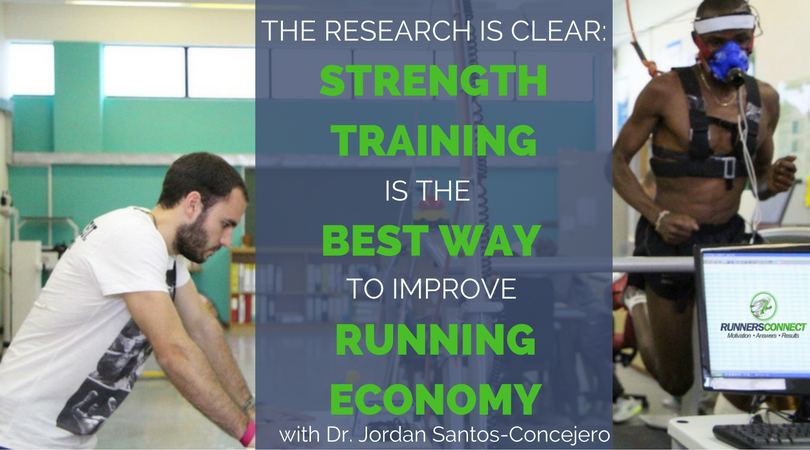
Dr. Jordan Santos-Concejero- The Research is Clear: Strength Training is the Best Way to Improve Running Economy
If you love the science behind running, this is the episode for you! I've brought Jordan Santos-Concejero on the podcast today to discuss a little bit of his research on the physiology and the biomechanics behind the art of running. Dr. Santos started out as a professional runner, but trying to keep up with competitive running and work on his PhD at the same time became a bit much. Besides, he was much more interested in the research behind what makes a good runner truly great. He's spent a majority of his research career studying Kenyan runners and their successes. He breaks down genetics and human evolution and then combines them with modern training in order to uncover what makes professional runners so successful. If you've ever had any questions about your stride, your strike, or even your genetic disposition for physical fitness, tune in now! Here are some of the topics we'll discuss today: Finding the balance between diet, rest, and training hard Why strength training is so important for runners Dr. Santos' research on ground contact time, cadence, and striking All of the different factors that influence running economy The touchy subject of genetic doping Questions Jordan is asked: 3:45 What was your international running career like? 5:05 How did your dad inspire you to run? 5:26 Do you have any advice for new runners? 6:20 What was the highlight of your running career? 7:06 How long did it take you to balance training hard with resting right? 7:52 Why did you decide to retire from running? 8:48 Do you still run for fun? 9:55 Did you always know you wanted to study running academically? 12:20 When did running economy come into your research? 13:18 Are you an economical runner? 14:07 Why should runners focus on strength training? 15:15 What kind of strength training should runners do? 16:06 How often should we go to the gym? 18:03 Why did you focus your research on Kenyan runners? 19:40 Can you share some of your findings with us? 21:30 What is the ground contact time you study? 23:16 What are your theories on efficient ground contact times? 25:07 Do you see people moving to Kenya for training? 26:43 How can European runners imitate Kenyan training? 27:31 Do you see people messing with genetics in the future to be better runners? 29:55 How is your research working against genetic doping? 32:11 What is your research on running cadence and stride? 35:40 Did you find any differences in running cadence with different types of runners? 36:50 Should we just stick with the stride that is comfortable for us? 37:53 What is your research on striking? 39:45 Can we change heel striking to forefoot striking? 40:40 The pros and cons of barefoot running 42:30 How does it feel to be a researcher? 43:50 Where do you see your research going in the future? 47:12 The Final Kick Round! Quotes by Jordan: "Training hard is important, but actually it's more important to get enough rest." "I can't run for fun, I can only run for performance." "Strength training is a key training to improve your performance…and reduce risk of injury." "Short ground contact time will improve running performance. You can improve your ground contact time by improving your stiffness with strength training." "If you don't do physical activity when you are a kid, some of the physical adaption that [Kenyans] have, you will never get." "If you try to change your running cadence consciously, your running economy will be worse." "The most economical runners strike on their forefoot."
Alicia Shay- Emotional Stress is Powerfully Destructive in Your Body
Katy Sherratt is the CEO of Back On My Feet, a non-profit organization that helps homeless and those down on their luck get – you guessed it! – back on their feet. But they do it with running! Members of Back On My Feet meet three times a week for morning runs on top of interview training, health and wellness education, and other services that help them find jobs and get their lives running again. As CEO, Katy brings her philanthropic eye and economics experience to an already thriving business. We discuss the ways she's increased donations, increased programmatic impact, and improved the ways the company measures the success of its members. There are waiting lists of people waiting to participate in Back On My feet, and Katy shares the way we can all help out. Here are some of the topics we'll discuss today: Everything Katy's accomplished with Back On My Feet How health and success work together to create social wellness The ways running builds self-esteem and empowers individuals How individuals and the corporate world work together for social wellness What we can all do to be more socially aware How we can donate our time and money to Back On My Feet Questions Katy is asked: 3:34 When did Katy move over to the United States? 4:30 Why is running so special? 5:33 Do you run in the mornings? 7:02 What has Katy accomplished with Back On My Feet? 9:00 What is Back On My Feet and how does it work? 11:28 Everyone with Back On My Feet gets a free pair of running shoes 12:08 What's it like being a Back On My Feet alumni? 13:13 How did you convince your sponsors to get involved? 15:05 How many members join marathons? 16:10 Which cities participate in Back On My Feet? 17:06 How can we get in touch with Back On My Feet? 18:10 How big can Back On My Feet get? 19:24 How do the sponsors help members find jobs and get back on their feet? 21:20 Does Back On My Feet offer interview training for members? 22:32 How do donations work with Back On My Feet? 24:45 What attracted Katy to Back On My Feet? 25:53 What attracts Katy to social wellness? 26:40 What social differences do you see between the UK and the USA? 28:22 Are things moving in the right direction? 29:35 How many different ways can corporations work with Back On My Feet? 31:11 Why is running so empowering? 33:43 What moment brought it home for Katy? 36:29 How Katy's mom inspires her 38:07 How is the running community like a family? 39:20 How does recruitment work? 41:15 Why do you start running so early in the morning? 43:27 The story that impacted Katy the most 46:28 What happens at the beginning and the end of each run? 49:18 The Final Kick Round! Quotes by Katy: "I run a mile a minute in how I act in daily life, and for me when I go running it's a moment of clarity." "Back On My Feet starts with running." "Companies and corporations want to work with non-profits in a unique way. They want a variety of ways." "The reason we use running is because anyone can do it. We are born to run." Links: Back On My Feet To get involved: [email protected] How to get your business involved: [email protected] November Project Born to Run Chris McDougall Cytomax Clif Bar We really hope you've enjoyed this episode of Run to the Top. The best way you can show your support of the show is to share this podcast with your family and friends and share it on your Facebook, Twitter, or any other social media channel you use. If more people who know about the podcast and download the episodes, it means I can reach out to and get through to the top running influencers, to bring them on and share their advice, which hopefully makes the show even more enjoyable for you!
Back on My Feet- The Power of Running to Overcome Homelessness
Katy Sherratt is the CEO of Back On My Feet, a non-profit organization that helps homeless and those down on their luck get – you guessed it! – back on their feet. But they do it with running! Members of Back On My Feet meet three times a week for morning runs on top of interview training, health and wellness education, and other services that help them find jobs and get their lives running again. As CEO, Katy brings her philanthropic eye and economics experience to an already thriving business. We discuss the ways she's increased donations, increased programmatic impact, and improved the ways the company measures the success of its members. There are waiting lists of people waiting to participate in Back On My feet, and Katy shares the way we can all help out. Here are some of the topics we'll discuss today: Everything Katy's accomplished with Back On My Feet How health and success work together to create social wellness The ways running builds self-esteem and empowers individuals How individuals and the corporate world work together for social wellness What we can all do to be more socially aware How we can donate our time and money to Back On My Feet Questions Katy is asked: 3:34 When did Katy move over to the United States? 4:30 Why is running so special? 5:33 Do you run in the mornings? 7:02 What has Katy accomplished with Back On My Feet? 9:00 What is Back On My Feet and how does it work? 11:28 Everyone with Back On My Feet gets a free pair of running shoes 12:08 What's it like being a Back On My Feet alumni? 13:13 How did you convince your sponsors to get involved? 15:05 How many members join marathons? 16:10 Which cities participate in Back On My Feet? 17:06 How can we get in touch with Back On My Feet? 18:10 How big can Back On My Feet get? 19:24 How do the sponsors help members find jobs and get back on their feet? 21:20 Does Back On My Feet offer interview training for members? 22:32 How do donations work with Back On My Feet? 24:45 What attracted Katy to Back On My Feet? 25:53 What attracts Katy to social wellness? 26:40 What social differences do you see between the UK and the USA? 28:22 Are things moving in the right direction? 29:35 How many different ways can corporations work with Back On My Feet? 31:11 Why is running so empowering? 33:43 What moment brought it home for Katy? 36:29 How Katy's mom inspires her 38:07 How is the running community like a family? 39:20 How does recruitment work? 41:15 Why do you start running so early in the morning? 43:27 The story that impacted Katy the most 46:28 What happens at the beginning and the end of each run? 49:18 The Final Kick Round! Quotes by Katy: "I run a mile a minute in how I act in daily life, and for me when I go running it's a moment of clarity." "Back On My Feet starts with running." "Companies and corporations want to work with non-profits in a unique way. They want a variety of ways." "The reason we use running is because anyone can do it. We are born to run." Links: Back On My Feet To get involved: [email protected] How to get your business involved: [email protected] November Project Born to Run Chris McDougall Cytomax Clif Bar We really hope you've enjoyed this episode of Run to the Top. The best way you can show your support of the show is to share this podcast with your family and friends and share it on your Facebook, Twitter, or any other social media channel you use. If more people who know about the podcast and download the episodes, it means I can reach out to and get through to the top running influencers, to bring them on and share their advice, which hopefully makes the show even more enjoyable for you!
The Gait Guys- Runners Need Risk Management, Not Crisis Management
Today's episode is going to completely change the way you look at running form. I'm sure we're all guilty of saying we have "bad form" while running. I know my own peroneal arthritis effects my form and the way I think about it, and that's why I brought the Gait Guys on the podcast. It's time to get a new perspective! Durability is what Dr. Shawn Allen and Dr. Ivo Waerlop are all about. Your running form isn't really what matters. It's how durable and economical that form is and what it's doing to and for your body. Injuries, surgery, and simple ignorance are all responsible for our running forms, regardless of whether they're good or bad, but it's easier than you think to re-train your body to overcome discomfort and pain. You may not even need to change your running form at all. Rather, we are going to discuss permanent moving patterns and how to make up for what your patterns might be lacking in order for you to have the [...]
Find What You Love and Work for it- Chiara Gandolfi
Will you help me give a wedding present today? My guest didn't start out as a runner, in fact, she did not start running until one year ago. Chiara was a springboard diver who was inspired to run by the most powerful force of all: love! As new runners, we all know how magical that first run can be, but today's episode is truly for the romantic runner. Chiara shares one of the most romantic relationship stories I have ever heard about how her fiancé Francesco inspired her to become a better runner and a better woman. She's discovered a whole new world of health and fitness that would not have been possible if she and Francesco had never met, and she shares with us how a new perspective on running can inspire change in your whole life. Here are some of the topics we'll discuss today: How running compares to other niche sports How feelings for a significant other can inspire your perspectives on health and exercise Tr [...]
How Running Shapes us into the People we Want to Be- Chris Heuisler
If you've ever run a marathon, you know how hectic race day can be. You're out of your element, you're in a new area, and everything about your routine is falling apart. This is where Chris Heuisler comes in! I brought Chris on the podcast today to talk about what he does as the RunWestin Concierge. As concierge, he's on-call to every single marathoner running the Rock 'n Roll marathon.
Molly Huddle-Why New York Was the Marathon for Molly
Today my guest is one of the best distance runners in the country. Molly Huddle finished 6th in the 10k at the 2016 Rio Olympics and is about to try her legs out on her first marathon in New York. Molly is already a superstar – and has been since college – but that doesn't stop her from learning new things. She's going to s [...]
Nick Symmonds- Our Filthy, Dirty Sport: It's Time to Make a Change
EI've been wanting to talk to our guest today for a long time! He's got a lot of experience, a lot of opinions, and he's not afraid to share them. Nick Symmonds is an elite runner who's won Olympic medals and competed in his fair share of world track and field championships. He's seen a lot of things in his time running professionally, and he's on the podcast today to share a few of these experiences. [...]
The Ginger Runner- You May Never Win a Race, But You Can Have a Blast Doing it
Everyone has a body image issues, and overcoming them is a huge challenge. My guest today is no stranger to that. Ethan is from Los Angeles, so he knows better than anyone how detrimental body image issues can be to our confidence and our health. That's part of what inspired him to create The Ginger Runner, a website and vlog dedicated not only to running but how to overcome all the hardest and ugliest parts of runn [...]
How to Distract Your Mind When it Tells You to Quit- Perry Newburn
If you think it's impossible to run 50+ miles day for weeks on end, our guest today is here to prove you wrong! After overcoming a 16 year battle with heroin addiction, Perry Newburn is lucky to be alive. He realizes what running brings to our lives, and wanted to give back to the running community in the same way that he had been given a second chance. Perry became the king of long-distance running and he's run numerous marathons, ultra races, and challenges like running around the outside of both islands of New Zealand and running for 72 hours straight wit [...]
Are You Guilty of the Biggest Mistake Runners Make?- Nancy Clark
If you have some burning questions about your running diet, tune in now and listen to this interview with legendary nutritionist Nancy Clark. She's a registered dietician with years of experience in the field of Sports Nutrition. She knows how important it is to develop a personalized nutrition plan based on your dietary needs and unique training plan, and we talk about how you can still treat yourself with dessert without blowing your calorie intake for the day. The trick is knowing how many calories you burn per hour and what foods you like to eat that help [...]
How to Overcome the Obstacles You Didn't Think You Could Do- Matt Davis, Terry McMahon, John Sheryak
Have you run a Warrior Dash? The Warrior Dash is a part of this fantastic trend of obstacle races, a running race that combines all sorts of physical feats to spice up your run. They will show you that no matter what you look like or how fast you are, you CAN succeed and accomplish things you never thought you could. These obstacles mean a diverse group of people can tackle one goal together at a fun, challenging event that gets you out of your comfort zone.
How to Become the Runner You Were Meant to Be- Pete Magill
If you've ever given up on running once, or twice, or maybe twenty times, then this is the episode for you. Pete Magill is my guest today and we're talking about why it's so easy to quit running, and how it's just as easy to start back up again. Pete is the author of the transformative book "The Born Again Runner", and he breaks down key training techniques that will change the way you put together your runner's body. For Pete, running became his anchor, and he's developed a strong and smart training regimen steeped in personal experience and gr [...]
Why You Need to Do The Workouts You Hate- Steve Picucci
Not many runners are able to have their spouses as their coaches, but as you may know, my husband and I are an exception to that rule. Today we're talking to Steve Picucci, who is the head cross-country and track and field coach at Moorehead State University in Kentucky. He also happens to be my husband, and he coaches me as well. Steve has an innate ability to understand what each individual runner needs when it matters. This is part of what makes him such a great coach. Here are some of the topics we'll discuss today:
Do You Know What to Do if Your Life is in Danger When You are on a Run? with Todd Williams
Running has been in the spotlight a lot in the past few weeks, and not for a positive reason. Because there have been some recent physical attacks on runners, it's important to understand how to stay safe while running. Do you know what to do if your life is in danger? This information is important for men and women alike. Todd Williams, two-time Olympian and black-belt in Brazilian jiu jitsu, is the founder of RunSaf [...]
How to Use Power Meters to Improve Your Performance- Jim Vance
We all know about power meters for cycling, but now there are power meters for running too. Today, Jim Vance the author of "Run with Power," will explain what power meters are and how they can be used in training. Or, if you are new to running and are interested in how to obtain goals, Jim will speak about how a power meter can help you. Some of the topics that you'll hear about include: Jim's background as a [...]
85 Years-Young Ed Whitlock: You Are Never Too Old To Run a Record (or 40!)
Today we are talking to Ed Whitlock, who is 85 and still breaking running records. Ed began his running career when he was 14. He continued running when he went to University, but took a break from running after he injured his achilles. Ed started running again when he was 40, breaking all sorts of running records up until today. Some of the topics that you'll hear about include:
What Can You Do Today, To Achieve Your Goals Tomorrow- Dirk Friel
Hiring a coach to help train can get expensive, but today we are going to hear from Dirk Friel, the Founder and CEO of TrainingPeaks about why it's a good idea to consider a coach. Or, If you are an experienced runner and thinking about becoming a coach, Dirk has some great advice for you. Some of the topics that you'll hear about include: Dirk's background growing up with fitness. Dirks journey from chasing his d [...]
Steph and Ben Bruce- How to Accept Who You Are and Where You Are, Right Now
Today we are talking to a couple who have grown up together in their running careers. They met in college, dated long-distance, got married, and are now the parents of two young children. This is in addition to having thriving running careers and keeping up with their coaching and their blog. Stephanie and Ben Bruce are the guests today, and this is a fantastic show for parents and non-parents alike, as they give a lot of great advice. They're both down-to-earth and able to accept criticism, which they have had their fair share of, so we'll talk about that. [...]
Matt Long: Surviving When There is Have No Hope to Becoming a Marathon Runner
Matt Long is the author of The Long Run. Some of you may already know his story: In short, he was hit by a bus, spent six weeks in a medically induced coma in the ICU, and was told that he would be lucky to walk with a cane. Matt was extremely determined and never gave up when it came to getting back on his feet and back into his regular life. [...]
How to Make Sure You Condition Your Mind the Way You Condition Your Body- Scott Welle
Do you ever feel like you are holding yourself back? If so, you're not alone! No matter how good a runner you are, it's likely that you spend a lot of time convincing yourself that you're not as good as you actually are. This is part of human nature. Today's guest gives us some pointers on overcoming mental obstacles and getting ourselves to where we want and need to be in our running and in other areas of our lives. That guest is Scott Welle, a best-selling author, peak performance strategist, marathon runner, and founder of Outperform the Norm. He has a d [...]
Finding the Best Fuel to Power Your Fitness- Matt Kadey
Do you know how to properly fuel your body before, during and after a workout? As an athlete, you are probably aware of the importance of eating well, but do you know what that entails? Maybe you have trouble because you don't like to cook, but at the same time, you don't like to rely too heavily on packaged foods. Since your health is tied to what you eat, this is something that you need to know about. Today's guest is Matt Kadey. Matt is a dietitian, cyclist, nutrition and travel writer, and professional recipe developer. He is also the author of
Running While Pregnant: How Sarah Brown Trained for the Olympic Trials During Pregnancy
There's one topic that many female runners will need to consider at some point during their running careers, and that is pregnancy. Whether planned or unplanned, pregnancy can absolutely have a huge effect on your training and workouts. Many doctors will support a woman who is planning to run throughout her pregnancy (as long as it is safe for her in particular, of course!), so taking a nine-month hiatus is not often necessary.
From Mediocre to Magnificent with Professional Runner Phoebe Wright
On the Run to the Top podcast, I try to vary the types ofguests that we have. Today, I'm excited to be interviewing a professionalrunner. Phoebe Wright has a lot of accolades, but first and foremost, she'sdown to earth and simply wonderful to talk (and to listen) to. You're sure toenjoy today's episode. Phoebe is a Nike athlete and a five-time NCAA champion. Sheis currently training for the Olympic trials. She has a blog and hasparticipated in a great interview. Some of the topics you'll hear about include: ● How Phoebe went from a mediocre high school runner toan NCAA champion. ●
Chris Kelly: How Exhaustion is Slowly Killing Your Performance
Do you ever struggle with exhaustion? Whether you're running or just going through the activities of daily life, there might be some issues that you're dealing with that can make you feel "not quite right".
Dr. Jason Karp- Running Gives us the Chance to Narrow the Gap Between Where we are and Where we Want to Be.
You already know the physical benefits of running, and if you run, you also know that there are countless emotional and mental benefits. From boosting creativity and productivity, to fostering a sense of organization, taking up running, particularly distance running, can impact your life profoundly. Today's guest, Dr. Jason Karp, holds many running accolades, including having been the youngest collegiate coach at the age of 24. In addition, he holds three degrees in exercise physiology. Today he talks to us about his book, The Inner Runner. Some of the topics that you'll hear discussed include: ● Why Jason wrote his book, and what the process was like.
Run for Life, Not Just for Today- Strava Founder Michael Horvath
Although running is an individual sport, do you sometimes wish you had the camaraderie of a team? Michael Horvath, today's guest, founded Strava, an online community for runners and other athletes. Through tracking, Strava is able to help you connect to other athletes and also compiles some interesting data, such as what time of day people tend to run and which cities have the most active or fastest residents. Michael got his start with rowing, then moved onto triathlon and running after he got out of college. He founded Strava (which, by the way, means "strive" in Swedish) in 2009 and now it is an international success. Some of the topics we'll explore with Michael today include: ● Michael's journey to w [...]
Chris McDougall: Why Should Runners Care About Parkour?
After a career in international journalism, Chris, who is fascinated by the human body, wrote Born to Run, an international bestseller that is being made into a movie starring Matthew McConaughey. His most recent book, Natural Born Heroes, is a national bestseller. Chris is a fascinating speaker, and I'm sure you will love every minute of today's episode. Some of the topics that we cover include: ● What Chris has been up to since the last time we talked, about a year ago. ● Lessons Chris has learne [...]
When Opportunity Knocks, Will You be Ready?- Ted Jaleta
We are talking to Ted Jaleta, aworld-class masters runner and former Ethiopian refugee who is now a citizen ofCanada. Ted is now a motivational speaker, a Hall of Fame athlete, and a formerwinner of the Queen's Jubilee Medal. He has carried the Olympic torch and hasreceived an honorary Doctor of Laws degree. In short, his story of how heovercame leaving a war-torn country on his own is inspirational. Today Ted talks to us about how it was to leave Ethiopia andsettle in a new country. He also shares his advice for people who are havingtrouble seeing positivity in their own lives. Some of the topics discussed include: ● Ted's background in Ethiopia, Sudan, Kenya, and finallyCanada ●
Are You a Strength Training Baby?- Drew Watts
Drew has been so helpful to me in the course of my journey as an elite, and he has some great insight on topics such as running form and strength training. Drew started training in 1999, and he helps people from athletes to "weekend warriors" move more efficiently and feel their best. He creates individualized training plans based on client needs. In today's podcast, you'll hear about topics such as: How Drew [...]
How to Level Up in the Game of Life- Nerd Fitness
On today's podcast, I'm speaking with Steve Kamb, founder of Nerd Fitness and author of Level Up Your Life. Steve helps people change their lifestyles by making and sticking to small changes over a period of time. Steve is one of the most brilliant and creative minds in the fitness industry. Rather than focusing on people who are highly motivated to work out, Steve tends to appeal to those for whom fitness was never a top priority. His goal is to make exercise and fitness fun, approachable and doable by anyone, even for those who would much rather play video games or attend a Star Wars convention than hit the gym.
How to Use Your Setbacks to Reach Unexpected Highs- Ellie Greenwood
Today's episode features Ellie Greenwood, one of the best ultrarunners in the world. Her crowning achievement has been to win theComrades Marathon in 2014, and she had a long and winding road up to that point. Ellie is not a stranger to setbacks, as she spent much of 2013 recuperating from a string of injuries, but she's been able to take it one step at a time to achieve her goals and extend her running distance little by little. As you listen today, you'll hear topics such as: ● How Ellie got started with running. ●
Why Running is Saving Your Life and Carbs are NOT Evil -Dr. Iñigo San Millán
On today's episode of Runner's Connect, I'm speaking with Dr. Inigo San Millan, the Director of Exercise Physiology at the University of Colorado and a professional speaker on the topics of sports medicine, metabolic disorders and other types of health and performance issues. Today, weare discussing exercise and carbohydrates. Nowadays, so many of our health, weight and performance issues are blamed on carbs. Dr. San Millan assures us, however, that carbohydrates are not to blame for all of our woes. As a former athlete, having played for six years with Real Madrid soccer and having been a cyclist for two years, Dr. San Millan has the perspective of both a sports medicine expert and an athlete. Some of the topics that you'll [...]
Do You have One More Life Changing Challenge Left in You? David Alley
David Alley was the first person to both cycle and run around the edge of Australia. I know listeners will appreciate hearing about David's multi-year journey to train and re-train his body for cycling and running great distances. They will also have the opportunity to hear David's reasons for raising money for Depression awareness and why that may be such an important issue for runners, in particular. What makes David Alley so inspirational are not just his athletic achievements, but also his passion and compassion for the human spirit and other people. Listen [...]
How to Change Your Perspective: Pain is Your Ally; Not Your Enemy- Brad Beer
All your injury related questions answered. From how to know which injuries to run through to how to handle the emotional frustration of missing out, today's episode features a return guest who you all seemed to enjoy in his previous appearance. Physical Therapist, Brad Beer, returns to discuss injuries, rehab, and listening to your pain. This was a great opportunity to sit down with Brad and chat about such an important topic for all runners. Listeners will get some great information on how to assess your pain; when it's time to take a break and structure an off-season; and pacing yourself on the road to recovery. Being a runner himself, Brad understands not only thephysiological aspect of injury, but the emotional and psychological effects ofhaving to sit out races. As such, he has become one of the most sought afterpractitioners in his field. Join us as we have a fun, [...]
Secrets from Meb's Coach: What are the Best Workouts for YOU as a Runner? Bob Larsen
If you've been listening for a while, then you know there's someone very specific I've been working on bringing to the show: Meb Keflezighi. I love hearing his stories, and it seems like everyone always has something positive to say about him. Today was no exception — I had the pleasure of speaking with his longtime coach and mentor, Bob Larsen. He has coached at almost every level of the sport, all the way from high school students to olympians. He is also the founder of the Mammoth Track Club, where both Meb and Deena Kastor led the way.
How to Be Intuitive as a Runner: Your Body will Thank You- Stephanie Howe
We're joined by Stephanie Marie Howe, thanks to the recommendation of our friend (and previous guest), Lauren Fleshman. Stephanie has a PhD in Nutrition and has used running as her focus of her research along the years. She has many published papers, and has presented many times over the years about nutrition and how to fuel for runners. As for her athletic achievements, he won Western States in 2014, was the Lake Sonoma runner-up and is of course a record holder in multiple Ultra events, which is pretty impressive in itself.