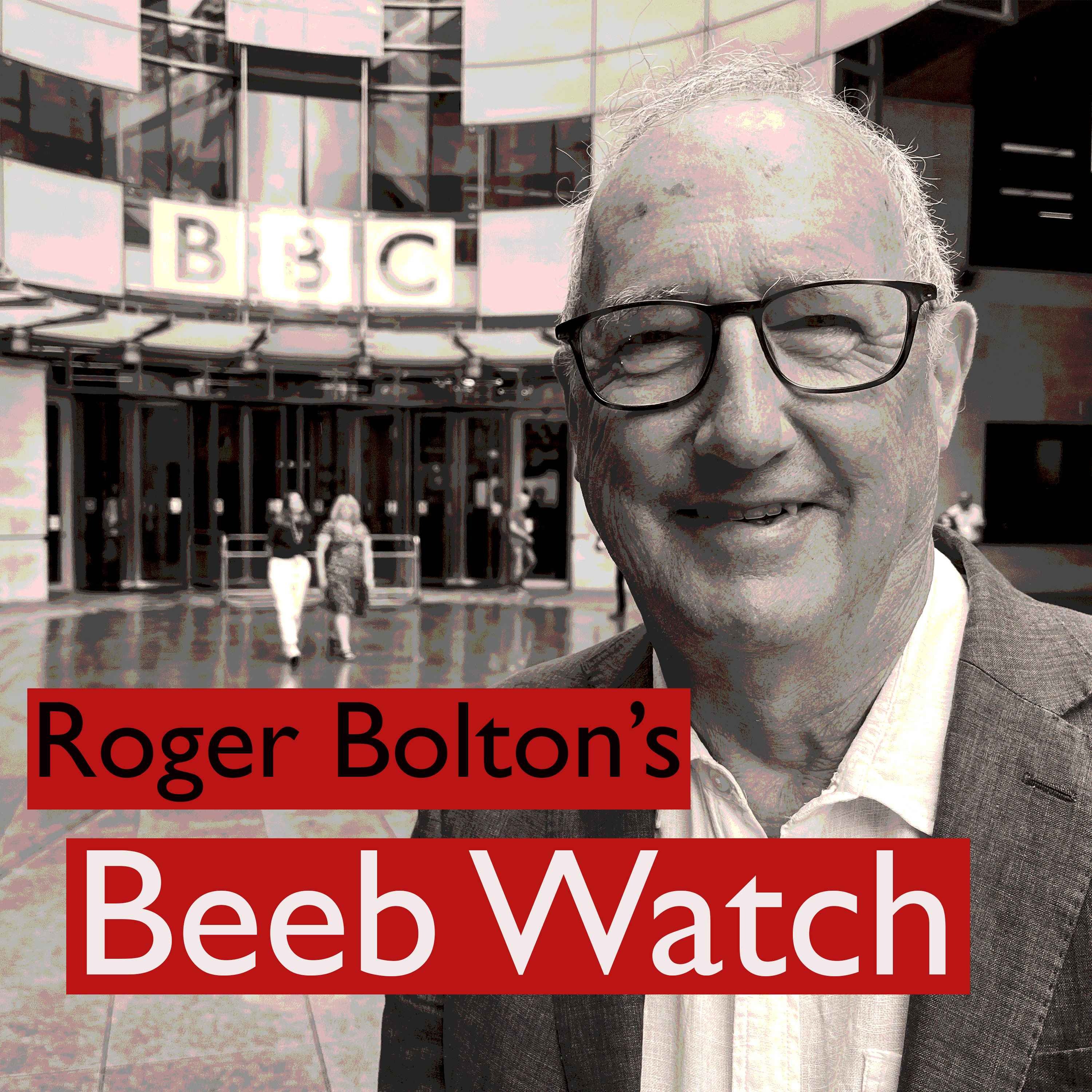
Roger Bolton's Beeb Watch
187 episodes — Page 4 of 4
S3 Ep 7Tim Suter, former BBC managing editor and a founding partner at Ofcom on the new Media Bill, quotas and accountability
Tim Suter, is a former managing editor of current affairs at the BBC, who later became a specialist adviser at the Department of Culture, Media and Sport which brought in the last media bill in 2003. That’s the one which which set up Ofcom, the UK’s media and communications regulator, of which Tim became a founding partner. He now runs his own consultancy, Perspective Associates. We discuss what the new Media Bill means, the dismantling of quotas for public services broadcasters, the remit of Channel 4 and accountability."This piece of legislation leaves an accountability shaped hole that the public media institutions urgently need to fill."Support the podcast by signing up here Find all our podcasts here @BeebRoger@[email protected]: [email protected] Hosted on Acast. See acast.com/privacy for more information.
S3 Ep 6Stewart Purvis, former Ofcom regulator on GB News and the BBC's relationship with government
Stewart Purvis is probably the pre-eminent broadcast news journalist of his time. A former editor of Channel 4 news, he went on to become ITN’s Chief Executive – and then the poacher turned gamekeeper. The now Professor Purvis served as one of the content regulators at Ofcom and oversaw standards cases involving the BBC between 2007 and 2010. In 2015 he was a member of the BBC Charter Review Advisory Group and has been a non executive director of Channel 4 among many, many other things. We discuss GB News, the BBC's role and cuts, the merger of the BBC news channels, the Charter Review in 2015 and the BBC's relationship with government.“My concern about their decisions on GB News is…that looks like a policy decision. That we, the British government and Ofcom are going to change the approach on British television to impartiality.”“I would hope that with the departure of Richard Sharp as the chairman of the BBC Tim Davie will be free with the next chair, whoever it may be, to work out their agenda for debate. To take account quite properly of the government's view, but not to be on their knee to the government’s agenda of the day, which I think is close to what the BBC has been in recent months, at least in policy terms, if not in on the air terms, in what they perceive to be what the government wanted them to do about impartiality.”Support the podcast by signing up here Find all our podcasts here @BeebRoger@[email protected]: [email protected] Hosted on Acast. See acast.com/privacy for more information.
S3 Ep 5Rob Burley, former BBC editor of Live Political Programmes discusses his new book and the art of the political interview
Before leaving the BBC in 2021 Rob Burley had worked with all the big political beasts at the Beeb - Andrew Neil, Jeremy Paxman, Emily Maitlis and Jon Sopel - and as editor of Live Political Programmes oversaw 'The Andrew Marr Show', 'Politics Live' and 'Westminster Hour'. We discuss his recently published book called - 'Why Is This Lying Bastard Lying To Me' – which details everything from the art of the political interview, to revelations about the BBC's relationship with government and coverage of the EU referendum."Where I think you're right is we didn't get into properly or maybe it’s very hard to, a discussion about the world as it will be in the future if you if you take a particular choice".Support the podcast by signing up here Find all our podcasts here @BeebRoger@[email protected]: [email protected] Hosted on Acast. See acast.com/privacy for more information.
S3 Ep 4Tom Mangold, former BBC investigative journalist discusses his craft and his past
Tom Mangold is one of Britain's top investigative journalists. From Fleet Street he moved to the BBC in 1964 and became a war correspondent covering numerous conflicts including Vietnam, Northern Ireland and Afghanistan. He then found himself at Panorama for 26 years making over 100 documentaries. He looks back on a career where he cultivated the Krays, became friends with Stephen Ward who was at the heart of the Profumo scandal and dissects the challenges that investigative journalism is under."The extent to which the use of libel actions against organisations doing investigative journalism, the way in which the libel courts are now being used makes it less and less easy to do good investigative journalism."Support the podcast by signing up here Find all our podcasts here @BeebRoger@[email protected]: [email protected] Hosted on Acast. See acast.com/privacy for more information.
S3 Ep 3John Bridcut, highly acclaimed documentary maker on the royal family, impartiality and classical music
John Bridcut has produced highly regarded documentaries throughout his career on a range of subjects including ‘How the BBC began’, the British monarchy - encompassing the Queen's coronation, Prince Philip, and King Charles - as well as documentaries on classical composers such as Elgar, Delius, and Britten. His latest documentary, focusing on British composer Sir Michael Tippett, is set to air in June on BBC 2. John also authored a report in 2007 for the BBC on the safeguarding of impartiality in the 21st century. In our discussion, we delve into the BBC's coverage of the monarchy, impartiality, and coverage of classical music.“There's a sort of ivory tower mentality, where everything happens in Broadcasting House and is parcelled out in sort of diktats. I think it's a really dangerous course.”Support the podcast by signing up here Find all our podcasts here @BeebRoger@[email protected]:[email protected] Hosted on Acast. See acast.com/privacy for more information.
S3 Ep 2Simon McCoy, former BBC presenter on the merger of the news channels, impartiality and GB News
Simon McCoy was known as a regular presenter on BBC Breakfast, News 24 and latterly the BBC News at One. Before joining the BBC he was also royal correspondent at Sky in the early nineties covering the break down of Diana and Charles' marriage. After 17 years at the corporation Simon joined GB news for just under a year in 2021. We discuss royal coverage, impartiality, GB News, Richard Sharp's position as BBC chair and the merger of the BBC's two news channels."When the BBC is under such pressure, when you're talking about an institution which people in their hearts do care about, but see daily a lowering of standards, and then you're watching a domestic news channel, and it is a domestic news channel overnight coming from Singapore from Washington - and I'll be pilloried for this - but with no British accents on it. You’ve got BBC licence fee payers paying for that. I think there is going to be a problem with that."Support the podcast by signing up hereFind all our podcasts here @BeebRoger@[email protected]: [email protected] Hosted on Acast. See acast.com/privacy for more information.
S3 Ep 1Marcus Ryder from the Sir Lenny Henry Centre for Media Diversity calls for tighter regulations for public service broadcasters
The draft Media bill was finally published at the end of March - what does it mean for diversity and the public service broadcasters? We discuss language, data and the loosening of regulations with Marcus Ryder, previously head of BBC Scotland Current Affairs Programmes who is now the head of External Consultancies at the Sir Lenny Henry Centre for Media Diversity.“I think that it is in BBC, Channel 4’s and other public service broadcasters’ interests for them to tighten regulation, because if they don't tighten regulation, then the publics service broadcasters quickly become like any other channel." "It's funny when Channel 4 was under threat and thought it was about to be privatised, all of sudden it went back to its roots so you had some very courageous programmes."Support the podcast by signing up hereFind all our podcasts hereListen to the interview on how our podcast came about on Podpod here @BeebRoger@[email protected]: [email protected] Hosted on Acast. See acast.com/privacy for more information.
S2 Ep 15Peter Taylor, part 2. The veteran BBC journalist reveals his personal experience of covering Ireland for over 50 years
On the run up to the 25th anniversary of the Good Friday Agreement, Peter Taylor veteran BBC journalist reveals his own personal story as a journalist covering Ireland for over 50 years and voices his concerns for the future of journalism."Sadly, when I look at the people, my colleagues who've left the BBC, the BBC is in danger of losing that critical level of experience which we pass on, we veterans want to pass on, are eager to pass on, to the next generation and the next generation but one.”Support the podcast by signing up hereFind all our podcasts here @BeebRoger@[email protected]: [email protected] Hosted on Acast. See acast.com/privacy for more information.
S2 Ep 14Peter Taylor, veteran BBC journalist discusses his latest book on the intelligence services and the peace process in Ireland.
One of Britain’s finest reporters Peter Taylor, with numerous books, documentaries and awards spanning a career of over 50 years, discusses his latest BBC 2 documentary based on his book published this week; 'Operation chiffon: The Secret Story of MI5 and MI6 and the Road to Peace in Ireland'. "We spent a couple of weeks just living inside the Maze prison. We were locked up with prisoners and in talking to them, it was quite clear that they were thinking beyond the so-called armed struggle."Support the podcast by subscribing hereFind all our podcasts here @BeebRoger@[email protected]@rogerboltonsbeebwatch.com Hosted on Acast. See acast.com/privacy for more information.
S2 Ep 13Jamie Angus, former director of BBC World Service and 'Today' editor on consequences of the loss of BBC Arabic radio, impartiality, Lineker fall out and future funding
Jamie Angus left the BBC last July after a stellar career involving editing the Today programme and Newsnight. He later became director of the World Service, running the teams which produce news in 42 languages to a weekly audience of 500 million around the world. Now he's chief operating officer at Al Arabiya news channel in the United Arab Emirates and is moving into the space left by the axing of BBC Arabic radio. We discuss cuts in the World Service and news, impartiality, the future funding of the BBC and the Gary Lineker affair. "If you look at some of the things he's tweeted even since this row - they seem pretty close to the line, if not over the line to me - and I'm not quite sure how this is going to get resolved in the longer term." Support the podcast by subscribing hereFind all our podcasts here @grvlx001@BeebRoger@[email protected] Hosted on Acast. See acast.com/privacy for more information.
S2 Ep 12Margaret Hodge, Labour MP speaks out against the new Israeli government's reforms
Protests in Israel continued over the weekend against the government's plans which would give Israel’s parliament, the Knesset, the power to overrule Supreme Court decisions with a simple majority and the power to nominate judges. Israel has no second chamber and no written constitution, so if this measure goes through there can be no appeal. Dame Margaret Hodge, who is the parliamentary chair of the Jewish Labour Movement discusses what needs to be done after her trip to the regions.“I do think it’s probably the Americans have got to try and muscle their way in to trying to calm it down and get negotiations going between Israelis and then between Israel and Palestinians.”Support the podcast by subscribing hereFind all our podcasts here @margarethodge@BeebRoger@[email protected]@rogerboltonsbeebwatch.com Hosted on Acast. See acast.com/privacy for more information.
S2 Ep 11Roger Mosey, former BBC editorial director on the Lineker fallout, Downing St emails, Fiona Bruce and appointing a new chairman
Roger Mosey, former editorial director of the BBC, head of TV news and director of sport discusses the handling of the Gary Lineker and Fiona Bruce controversies, the BBC board and its vision and the leaked emails and WhatsApp messages showing BBC editors asking their journalists to avoid using the word “lockdown” in reporting at the start of the pandemic and to be more critical of Labour after pressure from Downing Street.“I was worried too. And I talked to some quite senior people in the BBC on the broadcasting side and they were also worried."Support the podcast by subscribing here Find all our podcasts here @rogermosey@BeebRoger@[email protected]@rogerboltonsbeebwatch.com Hosted on Acast. See acast.com/privacy for more information.
S2 Ep 10Paul Hughes, former BBC Director of the BBC Symphony Orchestra and Chorus and BBC Singers criticises announced cuts
On Tuesday the BBC announced cuts to its orchestras and choirs. Its in-house chamber choir, the BBC Singers will come to an end and there will be a 20% reduction of roles in the BBC's English orchestras - Symphony, Concert and Philharmonic. Paul Hughes, the former BBC Director of the BBC Symphony Orchestra and Chorus and of the BBC Singers left his post last July after 23 years. He gives his reaction to the decision making process, the impact on the choral and orchestral landscape, the value the BBC places on classical music and whether the corporation is living up to its public service remit.“I don’t know what public service means in the BBC context now. If the BBC is not to do that which others can’t do, what are they for?" Roger also gives his reaction to Gary Lineker's tweet on the Government's refugee policy. You can read Roger's Guardian opinion piece hereSubscribe and support the podcast here.Find all our podcasts here@BeebRoger@[email protected]@rogerboltonsbeebwatch.com Hosted on Acast. See acast.com/privacy for more information.
S2 Ep 9Simon Mayo, former BBC radio presenter discusses Ken Bruce's departure from Radio 2
Ken Bruce is the most popular presenter in the UK with over 8 million listeners on Radio 2 and he's about to join former colleague Simon Mayo at Greatest Hits Radio. Simon discusses Ken's departure from the BBC."The situation has been handled badly."Subscribe and support the podcast here.Find all our podcasts here@simonmayo@BeebRoger@[email protected]@rogerboltonsbeebwatch.com Hosted on Acast. See acast.com/privacy for more information.
S2 Ep 8Colin Browne, chair of the VLV (Voice of the Listener and Viewer) discusses the lack of consultation and engagement with the licence fee payers
“In 2015 at the time of the Charter Review, more than 40,000 people responded to the BBC Trust on its consultation. The latest BBC consultation there was something like 25 responses because people didn’t know about it.”Colin Browne, chair of the Voice of the Listener and Viewer argues that there is now the absurd position that the BBC’s competitors have more power to influence the BBC’s ability to make changes, rather than those who fund it.Subscribe and support the podcast here.Find all our podcasts here@vlvuk@BeebRoger@[email protected]@rogerboltonsbeebwatch.com Hosted on Acast. See acast.com/privacy for more information.
S2 Ep 7Dr Tom Mills, author of 'The BBC: Myth of a Public Service', on the Richard Sharp controversy, the hierarchy of the BBC and its organisational and reporting culture
Dr Tom Mills, a sociologist at Aston University, has written a book called 'The BBC: Myth of a Public Service'. It claims to set aside both liberal and conservative fantasies about the institution, and says that far from being a sanctuary for independent journalism, the BBC is intimately connected to the power it is supposed to hold to account. We discuss issues raised in the book on organisational culture, reform, accountability as well as the ongoing controversy surrounding the appointment of the BBC chairman Richard Sharp. "I've never read any serious defence of the way the BBC is currently arranged."Subscribe and support the podcast here.Find all our podcasts here@ta_mills@BeebRoger@[email protected]@rogerboltonsbeebwatch.com Hosted on Acast. See acast.com/privacy for more information.
S2 Ep 6Richard Ayre, former BBC Trustee discusses BBC chairman Richard Sharp's appearance in front of the DCMS select committee
On Tuesday Richard Sharp the BBC chairman faced questions from the Department of culture, media and sport select committee. They were examining the process of the appointment of the BBC chairman, and as the committee which approved his appointment were they given the relevant information it could and should have known about. Richard Ayre, a former controller of editorial policy and deputy chief executive of BBC news and a former member of the OFCOM content board discusses with Roger Bolton the chairman's appearance. “After the performance today, I think within the BBC, there will be very, very considerable disquiet among the staff, and among many licence fee payers. And I think they'll be right to be disquieted. And I think it may well be that Sharp feels the right thing to do is to step down in the fullness of time.” Support the podcast by subscribing here. Find all our podcasts here [email protected]@BeebRoger Hosted on Acast. See acast.com/privacy for more information.
S2 Ep 5Paul Mason, former BBC Newsnight and Channel 4 economics editor discusses economic coverage and impartiality
As part of its impartiality plan, this week the BBC published its report looking at the broadcaster's coverage of taxation, public spending, governmentborrowing and debt. The authors found no evidence of bias towards one particular political position, but there were things "that put impartiality at risk". Paul Mason discusses the report's findings and reflects on his own experiences working at the BBC and Channel 4."Newsnight had famously missed the AOL /Time Warner merger, the biggest merger in history - didn't think it was a story." Support the podcast by subscribing here.Find all our podcasts here Hosted on Acast. See acast.com/privacy for more information.
S2 Ep 4Richard Ayre, former senior BBC Executive and BBC Trustee on the controversy surrounding BBC chairman Richard Sharp's appointment
Controversy is currently surrounding BBC chairman Richard Sharp amidst allegations that he helped Boris Johnson when the then Prime Minister found himself in personal financial difficulties, and while Mr Sharp’s application to become BBC chairman was approaching the final stages. He did not declare the alleged conflict of interest to those involved. Richard Ayre, a former controller of editorial policy and deputy chief executive of BBC news and a former member of the OFCOM content board discusses Richard Sharp's position and the need to reform the appointment process."Was there a conflict of interest at that time when he approached the Cabinet Secretary? You bet there was."Support the podcast by subscribing here.Find all our podcasts hereRoger Bolton's Guardian Opinion article here. Hosted on Acast. See acast.com/privacy for more information.
S2 Ep 3Baroness Tina Stowell, chair of the House of Lords Communications and Digital select committee on the departure of Ken Bruce, impartiality and the BBC's strategic purpose
Conservative peer Baroness Tina Stowell has had an extraordinary career since she left school with 5 O Levels. Leader of the House of Lords under David Cameron, following a period as Head of Corporate Affairs at the BBC, and now chair of the House of Lords Communications and Digital Select committee – a committee that is vital to the future of broadcasting. Baroness Stowell tells us her views on funding, impartiality, whether the BBC is serving the whole of the country, the impact of Ken Bruce's departure and the BBC's strategic purpose. "People need to know now, why it should remain part of our future."Support the podcast by subscribing here.Find all our podcasts hereRoger Bolton's Guardian Opinion article here. @BeebRoger@[email protected]@rogerboltonsbeebwatch.com Hosted on Acast. See acast.com/privacy for more information.
S2 Ep 2Dorothy Byrne, former head of news and current affairs at Channel 4, on privatisation, sympathy with Conservative plans for reform and the need for radical ideas in broadcasting
Dorothy Byrne was until recently Editor at Large at Channel 4, having been its head of news and current affairs for many years. We discuss the government's decision not to privatise Channel 4 and its plans for reform. Should the channel start making its own content and should more right wing voices be heard? And is there a need for radical ideas in broadcasting.“I think it is interesting to me, that I'm so in sympathy with much of what the Conservatives are saying they now want to do for Channel 4.”Support the podcast by subscribing here.Find all our podcasts hereRoger Bolton's Guardian Opinion article here. @BeebRoger@[email protected]@rogerboltonsbeebwatch.com Hosted on Acast. See acast.com/privacy for more information.
S2 Ep 1Sir Peter Bazalgette, former chair of ITV, on ITV ceasing to be a PSB and a case for privatising Channel 4
“The public service broadcasting system is undoubtedly facing an existential threat,” so says Sir Peter Bazalgette. He has been responsible for shows such as Big Brother, Changing Rooms and Ready Steady Cook and in September he stepped down as chair of ITV. We discuss the importance of the Media Bill and the existential threat to broadcasters, privatisation of Channel 4, the BBC's vision and the need for a proper debate about what we want from the BBC. “ITV has a number of options. I know it wants to remain a public service broadcaster or a public service media company [PSM], and it treasures the regional and national news and all the other things it does, but it is one of its options. It’s a healthy company, it's got a very strong international production company, it's got strong cash flows, low debt, and so it has a number of options. And one of those options could be not being a PSM.”Support the podcast by subscribing here.Find all our podcasts hereRoger Bolton's Guardian Opinion article here. @BeebRoger@[email protected] Hosted on Acast. See acast.com/privacy for more information.
S1 Ep 15Roger Bolton interview, part two. Roger discusses why he is a Christian and answers questions on Brexit coverage, diversity and BBC cuts
In the second part of his interview with Richard Ayre, a former member of the BBC trust board, Roger discusses why he is a Christian and answers questions on Brexit coverage, diversity and BBC cuts and coverage. Support the podcast by subscribing here. @BeebRoger@[email protected]@rogerboltonsbeebwatch.com Hosted on Acast. See acast.com/privacy for more information.
S1 Ep 14Roger Bolton interviewed on his broadcasting career: his departure from BBC Radio 4's Feedback, editing Panorama and Nationwide, 'Death on the Rock' and much more
After over 50 years in broadcasting, and being fired twice by the BBC, Roger Bolton is interviewed on his career by Richard Ayre, a former member of the BBC trust. Roger talks about his departure from BBC Radio 4's Feedback, editing Panorama and Nationwide and discusses the controversy surrounding his 'Death on the Rock' programme in 1988 which examined the deaths of three IRA members in Gibraltar by the British Special Air Service.Support the podcast by subscribing here. @BeebRoger@[email protected]@rogerboltonsbeebwatch.com Hosted on Acast. See acast.com/privacy for more information.
S1 Ep 13Nick Jones, former BBC industrial and political correspondent on strike coverage, ‘that’ Mick Lynch and Mishal Husain interview and comparisons with the last winter of discontent
As we experience a wave of strikes in the coming weeks from nurses, train, postal, bus, ambulance and highway workers amongst others, how well is the BBC reporting on this myriad of industrial conflicts we are now faced with, and how does it compare to yesteryear? Nick Jones, who spent thirty years as a BBC industrial and political correspondent until 2002 gives us his views and reaction to ‘that’ interview between Mick Lynch, head of the RMT trade union and presenter Mishal Husain on the Today programme earlier this week . “I think that with these Punch and Judy interviews where everybody's going at one another, we just don't really get that insight which we should get. So, I feel the broadcasters of today, it's a disservice, we're not providing the level of background and information which we could provide, we know we could provide. And if only we had the resources, I think we still could provide.”Support the podcast by subscribing here. @BeebRoger@[email protected]@rogerboltonsbeebwatch.com Hosted on Acast. See acast.com/privacy for more information.
S1 Ep 12Roger Mosey, former BBC editorial director on Harry and Meghan coverage, sports rights, BBC funding and the future of public service broadcasting
On Thursday the first three of six Netflix documentaries about Harry and Meghan were released and BBC News led with the story. Did BBC News fall for the PR and were its correspondents impartial in their coverage? And in the same week the BBC hierarchy began a coordinated campaign to secure its future. The Chairman, the former hedge fund boss and Conservative donor, Richard Sharp gave his first interview as chairman to the Sunday Times, and a few days later his Director General,Tim Davie, made his pitch to the Royal Television Society. Roger Mosey is now Master of Selwyn College, Cambridge, but while at the BBC he was Head of television News, Editor of the Today programme and Director of the Beijing 2008 and 2012 Olympic Games coverage. We discuss Royal coverage, sports rights, BBC funding and the future of public service broadcasting. "I think Richard Sharp is saying some interesting and good things. But I worry about the fact he is a major Tory donor. Chairmen of the BBC, have always come from a political background, so it's nothing new in that. But I think it does compromise their ability to articulate a genuine public service case for the BBC."Support the podcast by subscribing here on Patreon. @BeebRoger@[email protected]@rogerboltonsbeebwatch.com Hosted on Acast. See acast.com/privacy for more information.
S1 Ep 11Ernie Rea, the BBC’s ex-Head of Religious Broadcasting casts a critical eye over religious coverage
In a week when the 2021 census revealed a 5.5 million fall in the number of people who described themselves as Christian and that 22.2 million people declared they had “no religion” at all, the BBC’s ex-Head of Religious Broadcasting, Ernie Rea, casts a critical eye over the BBC’s coverage of religion and ethics. “When you think that about 82% of the population of the world cling to a faith tradition, and what an important part that faith tradition plays in the politics, the culture, the society all over the world - it’s absolutely plain the BBC should be covering it, should be exploring it, should be criticising it…It should be part of the of the asking questions to power, but it's not doing it.”Ernie and Roger discusses whether broadcasters underestimate the interest of ordinary people in matters of faith, belief and spirituality, the divide between radio and television coverage, the commissioning strategy and whether OFCOM should be considering relaxing quotas for religious programming. Stephen Fry, the renowned atheist, also addresses the question of how well broadcasters cover ethics and religion.Subscribe and support the podcast here.@[email protected] Hosted on Acast. See acast.com/privacy for more information.
S1 Ep 10Peter York, social commentator, co-author of 'The War Against the BBC', busts BBC myths, discusses astroturfing and urges the BBC to defend itself
Peter York, best known for co-authoring 'The Official Sloane Ranger Handbook' back in the 80’s has written another book ‘The War Against the BBC’ with Professor Patrick Barwise. On this week’s programme he bursts some BBC myths, discusses astroturfing and urges the BBC to defend itself more robustly and report on the threat to the corporation for the sake of democracy.“The war against the BBC has been fought for decades. What’s happening now is that those convergent interests are more insistent. It’s what I call the ‘one more shove comrades and we’ll kill them’ situation”. “The BBC is part of the national picture and if it doesn’t report on a crucial part of the national picture, namely our broadcasting ecology, then there is a democratic deficit”.Subscribe and support the podcast here.@PeterPeteryork@BeebRoger@[email protected]@rogerboltonsbeebwatch.com Hosted on Acast. See acast.com/privacy for more information.
S1 Ep 9Stephen Fry discusses JK Rowling, cancel culture, the BBC and the future of public service broadcasting
If anyone deserves to be called a Renaissance man then one of the leading contenders must surely be Stephen Fry, actor, novelist, comedian, campaigner, Norwich City Football fanatic, long time host of QI, gay icon and the list goes on.Having just closed his twitter account after Elon Musk’s takeover, transferring his loyalties to Mastodon, we talked to him about the BBC, the future of public service broadcasting, JK Rowling and cancel culture, and much else.“I would...wish them both to retreat, and to consider that it is possible for trans people to live full, accepted lives, according to their terms, in society, and for women to have all the rights and dignities that they demand. But it isn't possible if each side looks on the other as an enemy."Support the podcast by subscribing here on Patreon. @BeebRoger@[email protected]@rogerboltonsbeebwatch.com Hosted on Acast. See acast.com/privacy for more information.
S1 Ep 8Alice Enders of Enders Analysts, one of the shrewdest analysts of BBC finance and strategy gives us her insights into the corporation's financial situation in the light of the recently announced cuts to local radio.
The most recent evidence of the BBC’s financial strait jacket are the cuts to local radio, and the difficulties of deciding what to cut is evident in the continuing outcry at the announcement made last week. Not least in parliament. Alice Enders the director of research at Enders Analysis, one of the foremost media research analysts, spells out the financial challenges that the BBC faces. “We estimate three million households have already abandoned the licence fee and that is a trend which will increase in the course of the coming months as people have to make really hard decisions”. As the licence fee comes under scrutiny could subscriptions be an answer or a household levy? How successful is the BBC in attracting the younger audience and grabbing the attention of the public? What is the role of the regulator OFCOM when these cuts to our public service broadcasting are announced? Is the BBC scoring an own goal by alienating the front row of their audience - local radio listeners? Support the podcast by subscribing here @[email protected] Hosted on Acast. See acast.com/privacy for more information.
S1 Ep 7David Shukman, BBC's former science editor discusses whether COPs are worthwhile and responds to critics of climate change coverage. We'll unpick the impact of the devastating cuts announced in BBC local radio .
Ahead of COP27 and free of BBC constraints, former BBC science editor, David Shukman tells us whether he thinks COPS are worthwhile, reflects on his reporting during his 38 year career at the BBC and responds to the charges made by Charles Moore on last week's programme on climate change coverage. “Looking back, I don’t think we were robust enough about just saying absolutely bluntly, this is what the very best science is saying.” And in the week when major cuts have been announced in BBC local radio, Paul Siegert, the national broadcasting organiser for the NUJ (National Union of Journalists) questions the case for such far reaching changes to the detriment of the 5.7m local radio listeners. “This isn’t about saving money, this is about moving money from A to B…. I think the BBC has underestimated the love that people have for local radio, it’s the jewel in the broadcasting crown…… They are chasing this mythical younger audience and they don’t seem to be that bothered about losing the loyal older audience.” Support the podcast by subscribing here. Contact us: @[email protected] Hosted on Acast. See acast.com/privacy for more information.
S1 Ep 6Charles Moore, former editor of The Daily Telegraph is asked what he would have done if he had become chairman of the BBC and also discusses impartiality and is the BBC worth saving.
What would Charles Moore, former editor of The Daily Telegraph, The Sunday Telegraph and The Spectator have done if he had become chairman of the BBC? These are one of the many questions put to one of the BBC's most outspoken critics on 'Roger Bolton's Beeb Watch' this week.We discuss impartiality, group think, climate change coverage and whether the BBC is worth saving and is capable of being saved.Please support this podcast by subscribing here.@[email protected] Hosted on Acast. See acast.com/privacy for more information.
S1 Ep 5Melvyn Bragg talks about arts programming and the future of the BBC.
The BBC has been celebrating its 100th anniversary – if you hadn’t noticed - and on ‘Beeb Watch’ this week Roger Bolton talks to one of it's greatest broadcasters – Melvyn Bragg. They discuss arts programming, BBC World Service cuts and the future of the BBC.“I think we should start panicking now. There is an encroaching mass, not dependent or related to each other, but it’s out there in force who would benefit if there were no BBC.” “I’ve talked directly to all of the people at the top of the BBC saying why don’t you make a stronger case?” “Why do they want to throw it away for? Why don’t they go and knock down St Paul’s whilst they’re at it?”@[email protected] please do support this podcast by subscribing now:https://patreon.com/user?u=81446035&utm_medium=clipboard_copy&utm_source=copyLink&utm_campaign=creatorshare_creator Hosted on Acast. See acast.com/privacy for more information.
S1 Ep 4David Dimbleby looks back on his decades in broadcasting: on slipping standards in BBC political coverage, fighting back against lazy attacks, the monarchy and retirement.
In the run up to the BBC’s centenary, the Dimbleby broadcasting dynasty has nearly spanned its 100 years. David Dimbleby, Panorama presenter, editor of Question Time for 25 years, the anchor of numerous general election and referendum programmes talks to former colleague Roger Bolton. Looking back over his years in broadcasting, David discusses the rigour of news gathering and political interviewing slipping, fighting to extol the virtues of the BBC, the reluctance to examine the monarchy, being offered an honour, retirement and much more from his decades of broadcasting. “I would have fought tooth and nail for, first of all the rigour of news gathering and political interviewing, which I think has slid over the years. And I would have fought tooth and nail to extol the virtues of the BBC and the public support for it against the rather lazy attacks on it from both newspapers like the Daily Mail and politicians.” “There’s so much we actually don’t know about the way the monarchy works. I don’t think it would diminish us at all to know, I think you need to know. If you know and then you can agree, you can acquiesce in it or if you think things need changing, you change it. And that seems to be the Queen’s view but not the BBC’s.” “For me broadcasting is my life, so I don't want to relinquish it. Why should I give it up? I like doing it, and my lodestar is David Attenborough who’s 96. And I'm only 83. So why shouldn't I go on?” @[email protected] Hosted on Acast. See acast.com/privacy for more information.
S1 Ep 3Joan Bakewell on faking phone-ins and the evolution of broadcasting.
Dame Joan Bakewell is synonymous with our arts broadcasting landscape: former BBC television art correspondent in the 1980’s, columnist for most of the major broadsheets at one time or other and presenter of numerous radio and televisions series. Former colleagues, Roger and Joan discuss how broadcasting has evolved, ageism, ethics and fake phone-ins. “There was an immediacy about it, which was very enjoyable, people liked that it was real, it was live. People could phone in, we sometimes faked that and phoned in our own messages. Various people used to do that, Barry Humphries being one because he could do multitude of voices, and would pretend to ring up and say, ‘I'm absolutely shocked and disgusted by what's on BBC television at the moment”.@BeebRogerroger@rogerboltonsbeebwatch Hosted on Acast. See acast.com/privacy for more information.
S1 Ep 2Mark Mardell former BBC presenter discusses BBC cuts, impartiality and his Parkinson's diagnosis.
Mark Mardell, the former BBC presenter joins Roger to discuss the ongoing financial squeeze at the BBC after the Corporation announced this week that the World Service will lose 382 jobs in order to make a saving of £28.5m. In his 30-year career Mark was Europe Editor, North America Editor and, before he left the corporation nearly two years ago the presenter of Radio 4’s The World At One and The World This Weekend. As well as delving into the challenges the BBC faces, Mark also reveals his Parkinson's disease diagnosis.“I'm feeling fine and dandy, but I have to share with you that I have been diagnosed with Parkinson's disease, which means my voice is rather strange and weak…I've lost a bit of my boom. And I'm getting used to being the quietest person in the room rather than the loudest. But generally it’s in the stage of just being annoying rather than anything terrible.” Hosted on Acast. See acast.com/privacy for more information.
S1 Ep 1Roger Bolton's first podcast. Did the BBC get the coverage of the Queen's death right?
After over 50 years in broadcasting, and being fired twice by the BBC, Roger Bolton will cast a very independent eye on the public service broadcaster. No views will be censored, no question go unasked. Whether you care about, or are frustrated by, the BBC, this is the podcast for you. Whether you love or loathe the BBC this is the podcast for you. Roger Bolton, formerly presenter of BBC Radio 4's 'Feedback' launches his very first podcast. Free from the constraints of broadcasting on the BBC, with a few more opinions and casting his net a little bit wider to encompass the whole of the BBC, Roger examines the issues that are facing the corporation. As the BBC receives complaints about the lack of a republican point of view during the coverage of the Queen’s death, Roger has tea with a group of neighbours to gauge their reactions to the BBC's coverage and talks to Richard Ayre a former BBC Trust board member who was put in charge of planning the coverage for a Royal death 40 years ago. Did they already have any plans in place? Richard Ayre also talks about the challenges the BBC faces and the impact the financial squeeze has on its services. "The BBC has been saying ever since I was a kid that it was strapped for cash. It’s now visible. It’s visible what’s happening on screen, on radio and online". Hosted on Acast. See acast.com/privacy for more information.