Riedman Report: Risk, AI, Education, & Security
School shootings, mass shootings, extremism, terrorism, and systemic gun violence are not separate domains. They all sit at the intersection of risk, security, education, and technology/artificial intelligence (AI).
David Riedman, PhD
Show overview
Riedman Report: Risk, AI, Education, & Security has been publishing since 2024, and across the 2 years since has built a catalogue of 101 episodes. That works out to roughly 80 hours of audio in total. Releases follow a fortnightly cadence.
Episodes typically run thirty-five to sixty minutes — most land between 38 min and 57 min — though episode length varies meaningfully from one episode to the next. None of the episodes are flagged explicit by the publisher. It is catalogued as a EN-language Education show.
The show is actively publishing — the most recent episode landed 2 months ago, with 13 episodes already out so far this year. Published by David Riedman, PhD.
From the publisher
School shootings, mass shootings, extremism, terrorism, and systemic gun violence are not separate domains. They all sit at the intersection of risk, security, education, and technology/artificial intelligence (AI). riedmanreport.substack.com
Latest Episodes
View all 101 episodesEp 75. Cultural geography of gun violence
Help bring 'The Relentless School Nurse' home (Ep 2 rewind)
Ep 74. Mom saves radicalized son from ending his life
Ep 73. Why students cancelled an AI surveillance contract
Ep 72. Secretary of Education on preventing school shootings
Guest: Dr. Daniel Hamlin is the Oklahoma Secretary of Education, a Presidential Professor in education policy, and Faculty Director of the Oklahoma Center for Education Policy (OCEP)Paper: Stopping Violence Before It Starts: An Analysis of How Potential School Gun Attacks Are ExposedPlain language summary: Four ways school shootings are averted Abstract: Gun violence in U.S. schools continues to be a persistent concern. A promising line of scholarship focuses on potential school gun attacks that were stopped before they could occur, but this work is limited to a small number of studies. * This study investigates how potential school gun attacks were exposed by analyzing 124 publicly reported cases from 2018 to 2023. For the analysis, we generated descriptive data on the school contexts, individuals, and processes associated with exposing potential school gun attacks both on and off school grounds. * Findings indicated that in most cases, suspects communicated their intentions, which created opportunities for exposing potential attacks. Students were the most common source for exposure, reporting 42% of cases, while teachers, parents, and community members played smaller but important roles. * To illustrate the interacting factors behind exposing a potential attack, we further describe four recurring scenarios: (1) public signaling of intent, (2) private disclosures to confidants, (3) discovery of written plans or private communications, and (4) detection through safety measures. These pathways to exposing a threat suggest that positive relationships in schools, open lines of communication, and high expectations for reporting serious threats may be central to averting school gun attacks.Prior episode: Ep 24. Understanding Different Forms of Gun Violence in American SchoolsDavid Riedman, PhD is the creator of the K-12 School Shooting Database, Chief Data Officer at a global risk management firm, and a tenure-track professor. Listen to my podcast—Riedman Report: Risk, AI, Education & Security—or my interviews on Freakonomics Radio and the New England Journal of Medicine.Riedman Report: Risk, AI, Education, & Security is a reader-supported publication. To receive new posts and support my work, consider becoming a free or paid subscriber. Get full access to Riedman Report: Risk, AI, Education, & Security at riedmanreport.substack.com/subscribe
Ep 71. Terrorist attacks at schools and future of the war in Iran with Bruce Hoffman
Background: Terrorists attack 2 US schools on the same dayGuest: Dr. Bruce Hoffman, Georgetown University, author of Inside TerrorismProfessor Bruce Hoffman has been studying terrorism and insurgency for nearly five decades. He is a tenured professor in Georgetown University’s Edmund A. Walsh School of Foreign Service where from 2010 to 2017 he was the Director of both the Center for Security Studies and of the Security Studies Program and from 2020-2023 the director of the Center for Jewish Civilization. In addition, Professor Hoffman is Professor Emeritus of Terrorism Studies at St Andrews University, Scotland. He previously held the Corporate Chair in Counterterrorism and Counterinsurgency at the RAND Corporation and was also Director of RAND’s Washington, D.C. Office. Professor Hoffman also served as RAND’s Vice President for External Affairs and as Acting Director of RAND’s Center for Middle East Public Policy.Appointed by the U.S. Congress to serve as a commissioner on the Independent Commission to Review the FBI’s Post-9/11 Response to Terrorism and Radicalization, Professor Hoffman was a lead author of the commission’s final report. He was Scholar-in-Residence for Counterterrorism at the Central Intelligence Agency between 2004 and 2006; an adviser on counterterrorism to the Office of National Security Affairs, Coalition Provisional Authority, Baghdad, Iraq in 2004, and from 2004-2005 an adviser on counterinsurgency to the Strategy, Plans, and Analysis Office at Multi-National Forces-Iraq Headquarters, Baghdad. Professor Hoffman was also an adviser to the Iraq Study Group.Professor Hoffman was the founding Director of the Centre for the Study of Terrorism and Political Violence at the University of St Andrews in Scotland, where he was also Reader in International Relations and Chairman of the Department of International Relations. Professor Hoffman is Editor-in-Chief of Studies in Conflict and Terrorism, the leading scholarly journal in the field. and a member of the advisory board of Terrorism and Political Violence. He is also editor of the Columbia University Press Series on Terrorism and Irregular Warfare.He has been a Distinguished Scholar, a Public Policy Scholar, a Senior Scholar, and a Global Fellow at the Woodrow Wilson International Center for Scholars, Washington, D.C.; a Senior Fellow at the Combating Terrorism Center, U.S. Military Academy, West Point, N.Y.; a Visiting Professor at the Institute for Counter-Terrorism, Interdisciplinary Center, Herzliya, Israel; and, a Visiting Professor at the S. Rajaratnam School of International Studies, Nanyang Technological University, Singapore. He is also a contributing editor to The National Interest and a member of the Jamestown Foundation’s Board of Directors; a member of the board of advisers to the FBI Intelligence Analysts Association; and, serves on the advisory boards to the Arms Sales Monitoring Project at the Federation of American Scientists and of Our Voices Together: September 11 Friends and Families to Help Build a Safer, More Compassionate World.David Riedman, PhD is the creator of the K-12 School Shooting Database, Chief Data Officer at a global risk management firm, and a tenure-track professor. Listen to my podcast—Riedman Report: Risk, AI, Education & Security—or my interviews on Freakonomics Radio and the New England Journal of Medicine.Riedman Report: Risk, AI, Education, & Security is a reader-supported publication. To receive new posts and support my work, consider becoming a free or paid subscriber. Get full access to Riedman Report: Risk, AI, Education, & Security at riedmanreport.substack.com/subscribe
Ep 70. School shooting increases congressional campaign funding by 2820%
Guests: Eric A. Baldwin is a Postdoctoral Research Fellow in the Donohue Lab at Stanford University and Takuma Iwasaki is a doctoral candidate at Stanford Law School and a graduate researcher at Stanford Data Science. Paper: School shootings and the strategic contributions of gun policy PACs in US House electionsAbstract: The American public consistently supports stricter gun laws. We show that the gun lobby is most concerned that this support will translate into federal legislative action when fatal school shootings occur. Leveraging a dataset of political action committee (PAC) contributions and school shootings, we implement a staggered difference-in-differences design to estimate the causal effect of fatal school shootings on contributions to House candidates. * Political Action Committees increase contributions by 31% to candidates in districts with fatal school shootings, and 20% for gun safety PACs. Neither show any significant response to nonfatal school shootings or mass shootings. * For both progun and gun safety PACs, contribution spikes emerge in the wake of fatal school shootings, with effects dramatically amplified as Election Day approaches* When a shooting occurs within two months of Election Day, contributions from progun PACs increase by 2,820% while gun safety PAC contributions increase by 917%. These effects are concentrated in competitive districts (5% margins) where the two-sided surge in contributions offsets any measurable electoral impact. These results provide robust evidence that PACs strategically deploy contributions after school shootings, with the magnitude and timing suggesting a deliberate mobilization to advance its agenda. Our findings underscore a gap in democratic accountability: While public opinion should drive policy change, campaign contributions are wielded to blunt electoral responsiveness, providing insight into the inability of Congress to adopt broadly supported gun safety measures.David Riedman, PhD is the creator of the K-12 School Shooting Database, Chief Data Officer at a global risk management firm, and a tenure-track professor. Listen to my podcast—Riedman Report: Risk, AI, Education & Security—or my interviews on Freakonomics Radio and the New England Journal of Medicine.Riedman Report: Risk, AI, Education, & Security is a reader-supported publication. To receive new posts and support my work, consider becoming a free or paid subscriber. Get full access to Riedman Report: Risk, AI, Education, & Security at riedmanreport.substack.com/subscribe
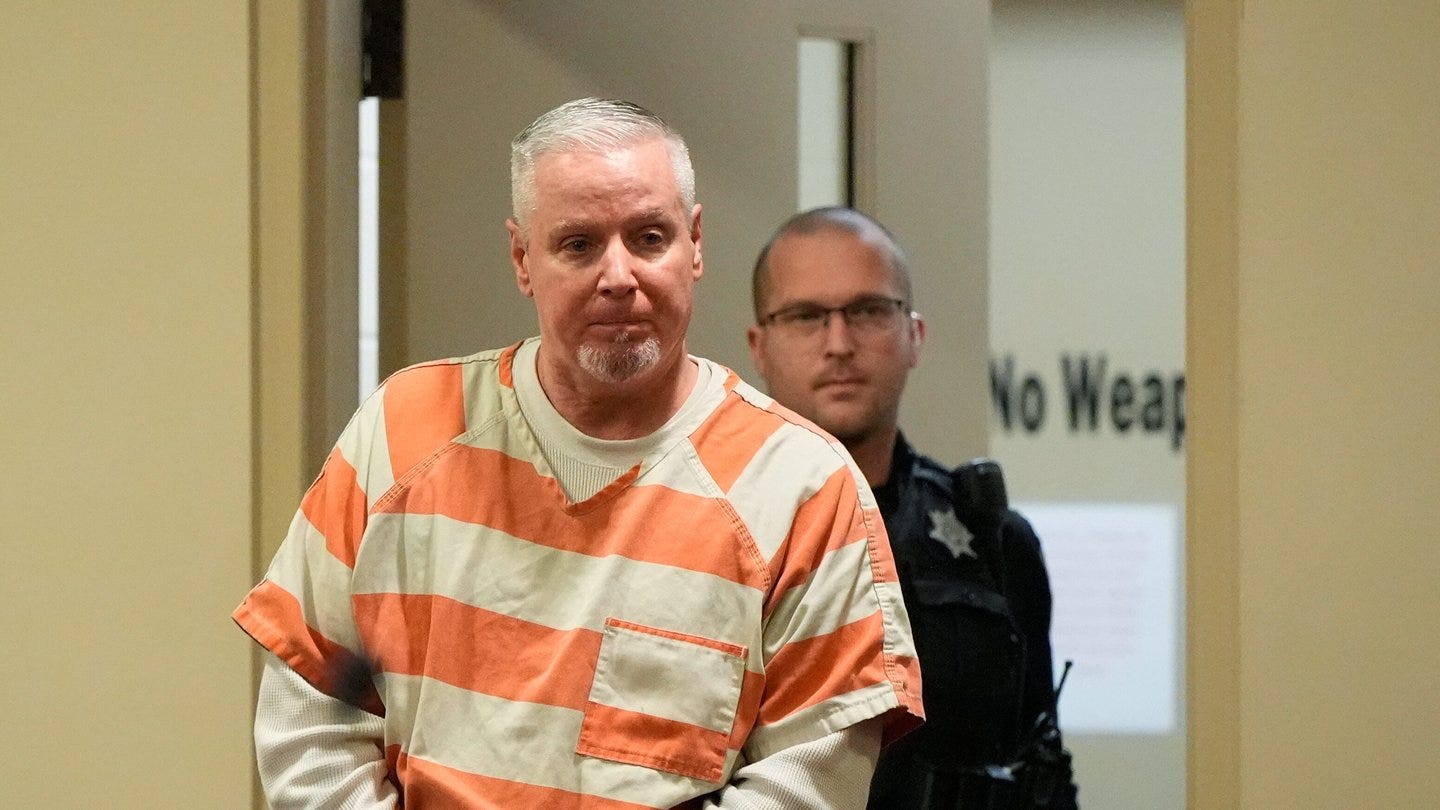
Parent of school shooter convicted of 2nd degree murder (WGN Legal Face-Off)
Last week, Colin Gray was found guilty on 27 felony charges including four counts of second-degree murder and cruelty to children. Gray purchased an AR-15 rifle for his 14-year-old son who had extensive contact with child services and multiple police agencies, had a shrine to the Parkland shooter in his bedroom, and was involved in social media groups that promote mass violence.While parents have faced involuntary manslaughter charges after a school shooting, this was the first murder conviction for a parent. Georgia has a legal framework that made this possible. Under state law in Georgia, second-degree murder can occur when an adult causes a child’s death through second-degree child cruelty (either criminal negligence or reckless actions). Georgia law does not require intent to kill but rather reckless behavior causing a child’s death, such as unsecured firearms or abandonment.Legal Face-Off is a fast paced, high energy legal program dealing with the hottest issues of the day. Rich Lenkov and Christina Martini provide a legal point vs. counterpoint perspective on breaking legal news.Rich Lenkov is a partner at Bryce Downey & Lenkov, handling entertainment law, general liability and worker’s compensation. Christina Martini is a partner at McDermott Will & Emery, focusing her practice on domestic and international trademark and copyright law. David Riedman, PhD is the creator of the K-12 School Shooting Database, Chief Data Officer at a global risk management firm, and a tenure-track professor. Listen to my podcast—Riedman Report: Risk, AI, Education & Security—or my interviews on Freakonomics Radio and the New England Journal of Medicine.Riedman Report: Risk, AI, Education, & Security is a reader-supported publication. To receive new posts and support my work, consider becoming a free or paid subscriber. Get full access to Riedman Report: Risk, AI, Education, & Security at riedmanreport.substack.com/subscribe
Discord, Roblox, & the pipeline to school shootings (Fighting Matters podcast)
The goal of Fighting Matters Podcast is to combat extremism in martial arts like BJJ & MMA featuring hosts Steve Kwan & Jesse Walker (both Brazilian Jiu Jitsu black belts).Topics discussed on this episode (each link is an article I’ve written):* The Tumbler Ridge shooting and the pattern behind it* How the True Crime Community (TCC) radicalizes teens online* Roblox as a grooming and recruitment platform* The Discord pipeline from mainstream social media to extremism* Trans shooters and what the data actually says* Nihilism vs. ideological terrorism* Why expelling a troubled kid can make things worse* How BJJ gyms provide the belonging that prevents violenceDavid Riedman, PhD is the creator of the K-12 School Shooting Database, Chief Data Officer at a global risk management firm, and a tenure-track professor. Listen to my podcast—Riedman Report: Risk, AI, Education & Security—or my interviews on Freakonomics Radio and the New England Journal of Medicine.Riedman Report: Risk, AI, Education, & Security is a reader-supported publication. To receive new posts and support my work, consider becoming a free or paid subscriber. Get full access to Riedman Report: Risk, AI, Education, & Security at riedmanreport.substack.com/subscribe
Ep 69. Going viral in extremist communities
Guest: Allizandra Herberhold, LMSW, works with radicalized, at-risk, and violent teens and young adults to prevent mass shootings and counter violent extremism.Website: Parents4Peace. We center our work on those most affected by extremism—families and targeted communities—while equipping frontline professionals to intervene early and stop hate before it escalates. We address hate at its source, across every ideology.* Ep 60. Inside the True Crime Community (TCC) that grooms teens into school shooters. The last 7 school shooters were all connected with the same online group that shares violent gore content, fan art idolizing prior school shooters, and encourages members to commit real-world violence* Ep 57. TCC, gore videos, groypers, and online radicalization* 112 TCC-radicalized students identified by police in Jakarta, Indonesia* Kids are watching a 2002 indie film about school shootersDavid Riedman, PhD is the creator of the K-12 School Shooting Database, Chief Data Officer at a global risk management firm, and a tenure-track professor. Listen to my podcast—Riedman Report: Risk, AI, Education & Security—or my interviews on Freakonomics Radio and the New England Journal of Medicine.Riedman Report: Risk, AI, Education, & Security is a reader-supported publication. To receive new posts and support my work, consider becoming a free or paid subscriber. Get full access to Riedman Report: Risk, AI, Education, & Security at riedmanreport.substack.com/subscribe
Ep 68. Death isn't a manageable risk because we all die someday
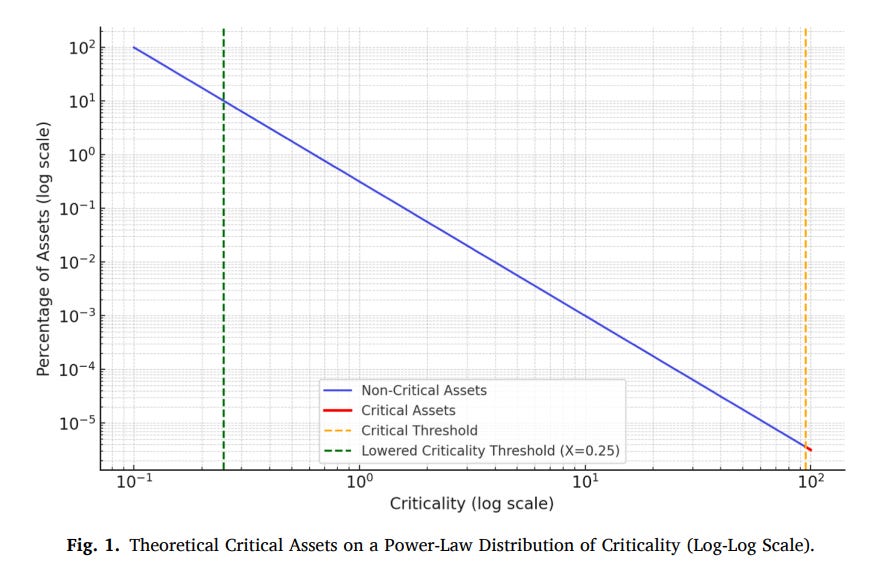
Risk: exposure of someone or something valued to danger, harm, or loss.New Paper: Critical thinking: exploring the expansion of critical infrastructureGuest: Dr. Russell Lundberg, Sam Houston State UniversityAbstract: The concept of critical infrastructure (CI) has evolved significantly across developed nations since the early 2000s, with the United States providing a particularly illustrative example of this global trend. Initially focused on assets whose incapacitation would cause debilitating national impacts, the U.S. framework expanded after September 11th, 2001 to encompass a broader array of sectors and assets, diluting the meaning of criticality. Even among the most vital lifeline sectors— energy, communications, water, and transportation—analysis reveals that the resilience of these systems often precludes national-level consequences from isolated failures. To address these issues, CI policy should transition from viewing assets as inherently critical to evaluating their criticality in relation to systemic risks posed by specific threats. This shift would enable more effective prioritization, focusing resources on protecting assets most vulnerable to realistic, high-impact scenarios while reducing the inefficiencies of over-inclusiveness. By re-centering the concept of criticality, CI policy can better align with its original intent of safeguarding national security and resilience.Papers Referenced:* Questioning the Criticality of Critical Infrastructure: A Case Study Analysis* The Cold War on Terrorism: Reevaluating Critical Infrastructure Facilities as Targets for Terrorist Attacks* Ep 22: The Fortress Problem is a paradox because defenses create vulnerabilitiesDavid Riedman, PhD is the creator of the K-12 School Shooting Database, Chief Data Officer at a global risk management firm, and a tenure-track professor. Listen to my podcast—Riedman Report: Risk, AI, Education & Security—or my recent interviews on Freakonomics Radio and the New England Journal of Medicine.Riedman Report: Risk, AI, Education, & Security is a reader-supported publication. To receive new posts and support my work, consider becoming a free or paid subscriber. Get full access to Riedman Report: Risk, AI, Education, & Security at riedmanreport.substack.com/subscribe
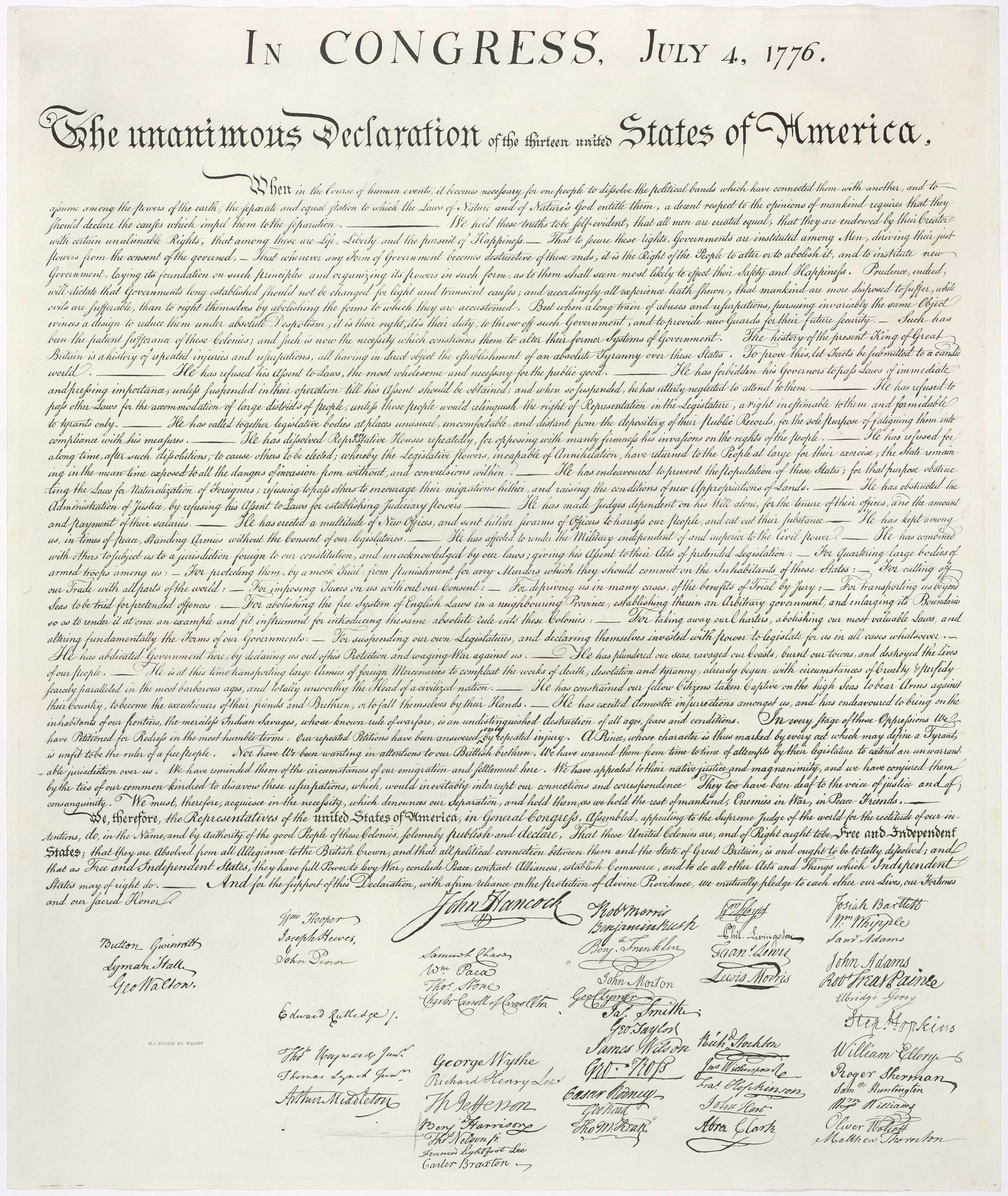
A letter from July 4, 1776
July 4, 1776 - The unanimous Declaration of the thirteen united States of America.When in the Course of human events, it becomes necessary for one people to dissolve the political bands which have connected them with another, and to assume among the powers of the earth, the separate and equal station to which the Laws of Nature and of Nature’s God entitle them, a decent respect to the opinions of mankind requires that they should declare the causes which impel them to the separation.We hold these truths to be self-evident, that all men are created equal, that they are endowed by their Creator with certain unalienable Rights, that among these are Life, Liberty and the pursuit of Happiness.--That to secure these rights, Governments are instituted among Men, deriving their just powers from the consent of the governed, --That whenever any Form of Government becomes destructive of these ends, it is the Right of the People to alter or to abolish it, and to institute new Government, laying its foundation on such principles and organizing its powers in such form, as to them shall seem most likely to effect their Safety and Happiness. Prudence, indeed, will dictate that Governments long established should not be changed for light and transient causes; and accordingly all experience hath shewn, that mankind are more disposed to suffer, while evils are sufferable, than to right themselves by abolishing the forms to which they are accustomed. But when a long train of abuses and usurpations, pursuing invariably the same Object evinces a design to reduce them under absolute Despotism, it is their right, it is their duty, to throw off such Government, and to provide new Guards for their future security.--Such has been the patient sufferance of these Colonies; and such is now the necessity which constrains them to alter their former Systems of Government. The history of the present King of Great Britain is a history of repeated injuries and usurpations, all having in direct object the establishment of an absolute Tyranny over these States. To prove this, let Facts be submitted to a candid world.He has refused his Assent to Laws, the most wholesome and necessary for the public good.He has forbidden his Governors to pass Laws of immediate and pressing importance, unless suspended in their operation till his Assent should be obtained; and when so suspended, he has utterly neglected to attend to them.He has refused to pass other Laws for the accommodation of large districts of people, unless those people would relinquish the right of Representation in the Legislature, a right inestimable to them and formidable to tyrants only.He has called together legislative bodies at places unusual, uncomfortable, and distant from the depository of their public Records, for the sole purpose of fatiguing them into compliance with his measures.He has dissolved Representative Houses repeatedly, for opposing with manly firmness his invasions on the rights of the people.He has refused for a long time, after such dissolutions, to cause others to be elected; whereby the Legislative powers, incapable of Annihilation, have returned to the People at large for their exercise; the State remaining in the mean time exposed to all the dangers of invasion from without, and convulsions within.He has endeavoured to prevent the population of these States; for that purpose obstructing the Laws for Naturalization of Foreigners; refusing to pass others to encourage their migrations hither, and raising the conditions of new Appropriations of Lands.He has obstructed the Administration of Justice, by refusing his Assent to Laws for establishing Judiciary powers.He has made Judges dependent on his Will alone, for the tenure of their offices, and the amount and payment of their salaries.He has erected a multitude of New Offices, and sent hither swarms of Officers to harrass our people, and eat out their substance.He has kept among us, in times of peace, Standing Armies without the Consent of our legislatures.He has affected to render the Military independent of and superior to the Civil power.He has combined with others to subject us to a jurisdiction foreign to our constitution, and unacknowledged by our laws; giving his Assent to their Acts of pretended Legislation:For Quartering large bodies of armed troops among us:For protecting them, by a mock Trial, from punishment for any Murders which they should commit on the Inhabitants of these States:For cutting off our Trade with all parts of the world:For imposing Taxes on us without our Consent:For depriving us in many cases, of the benefits of Trial by Jury:For transporting us beyond Seas to be tried for pretended offences:For abolishing the free System of English Laws in a neighbouring Province, establishing therein an Arbitrary government, and enlarging its Boundaries so as to render it at once an example and fit instrument for introducing the same absolute rule into these Colonies:For taking away our Charters, abo
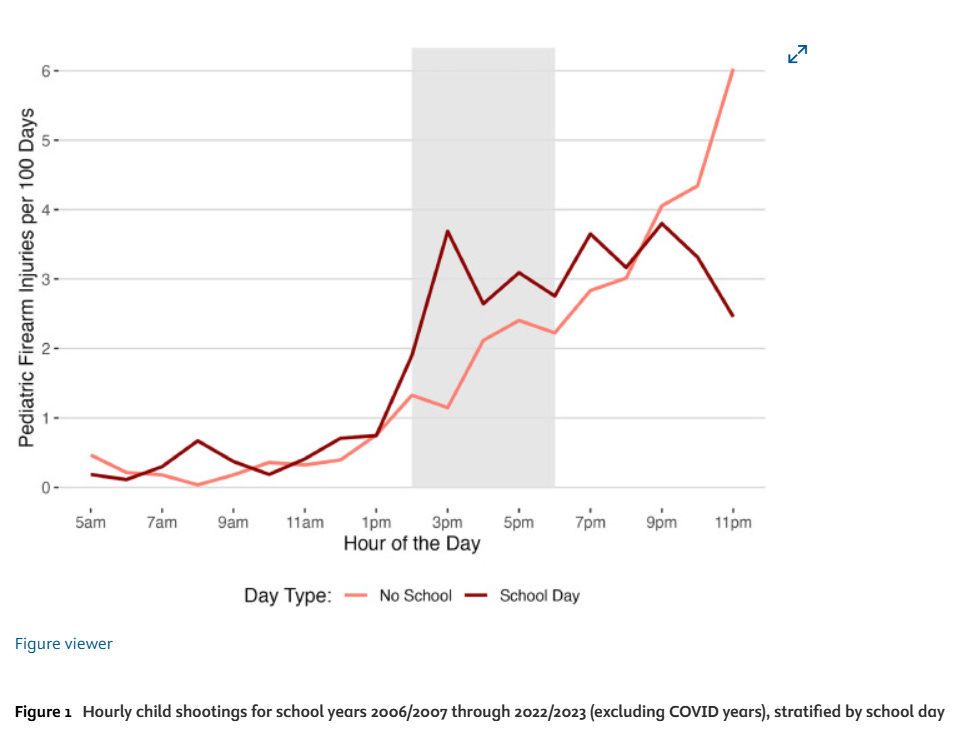
Ep 67. Why school dismissal is the highest risk time for a shooting
Article: Afterschool Child Firearm Assaults: A Quasi-Experimental AnalysisGuests: Emma L. Gause, MS, MA & Jonathan Jay, DrPH, JDAbstract:Objective: Firearms are the leading cause of death among children in the United States with resources primarily dedicated to the prevention of school shootings. However, child firearm assault risk may surge during afterschool hours when children leave school and enter unsupervised and unstructured community spaces. We investigated child firearm injury risk at the afterschool transition in New York City (NYC).Methods: Firearm assaults from the NYC Police Department and school calendars from NYC Public Schools were obtained for 2006-2023, excluding COVID years. We fit a difference-in-difference (DiD) analysis to investigate whether firearm injuries increased into the afterschool hours more on school days compared to non-school days. We subsequently fit a regression discontinuity design (RDD) model to assess whether firearm injuries increased abruptly at the transition to afterschool. We used the conventional 2pm threshold for defining the afterschool transition based on prior literature and used the 25th percentile of enrollment-weighted school dismissal times as a sensitivity analysis.Results: 359 of 613 child firearm assault injuries recorded between 10am-6pm occurred on school days across the 2006-2023 study period (excluding COVID school-years). The DiD results fount that the risk of child firearm injury increased by 45% (RR:1.45, 95%CI: 0.95-2.20) after the 2pm afterschool transition on school days compared to non-school days, though the result was not statistically significant. The RDD model revealed there was also significant increase of 2.5 (0.49, 4.41) additional child firearm injuries at the 2pm threshold, an approximately 280% increase compared to the school-day average. Results using the dismissal threshold were positive but insignificant.Other episodes discussed:* Ep 29. Gun violence exposure on walkable routes to and from school* Ep 38. Dr. Jens Ludwig explains his new book ‘Unforgiving Places’David Riedman, PhD is the creator of the K-12 School Shooting Database, Chief Data Officer at a global risk management firm, and a tenure-track professor. Listen to my podcast—Riedman Report: Risk, AI, Education & Security—or my recent interviews on Freakonomics Radio and the New England Journal of Medicine.This is a reader-supported publication. To receive new posts and support my work, consider becoming a free or paid subscriber. Get full access to Riedman Report: Risk, AI, Education, & Security at riedmanreport.substack.com/subscribe
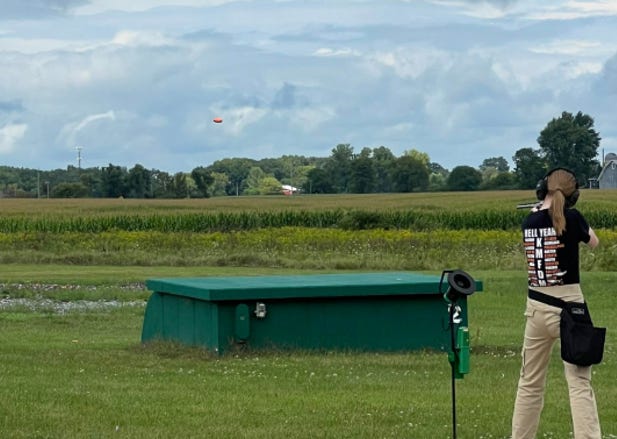
How a teen girl became a school shooting icon
The Tragic Repetition of School Shootings (aired 12/17/2025) by A Public Affair on WORT in Madison, WI.This week marks the 1-year anniversary of the shooting at the Abundant Life Christian School in Madison. Meanwhile the search for the Brown University shooter is ongoing. To talk about these events and the ongoing crisis of school shootings across the US, host Ali Muldrow is joined by Dr. David Riedman who tracks these shootings and the online communities that foster gun violence.Dr. Riedman takes an evidence-driven approach to the study of school shootings. He’s tracked 3,400 shootings back to the 1960s, including 226 of which were deliberately planned. He says there are some common denominators when it comes to shootings: the vast majority are committed by a current or recently former student who has likely experienced abuse in their home, has easy access to a gun, and has shown signs of distress, like leaving weapons out, leaving out maps of their schools, and making shrines to previous school shooters. These realities may run counter to the desire to view school shooters as deranged, lone-wolf outsiders. Instead, Dr. Riedman calls the majority of school shootings “violent public suicides.”They also talk about the stereotype that public and urban schools are more dangerous than private, rural, or suburban schools, even though the majority of school shootings occur in small suburban communities and rural schools. Dr. Riedman advises that parents be educated about past school shootings in order to spot signs that kids are becoming radicalized by online communities like the True Crime Community (TCC) and Groyper movement, led by white nationalist influencer, Nick Fuentes. Meanwhile young people in Wisconsin have been calling for better mental health resources and better gun storage laws.David Riedman, PhD is the creator of the K-12 School Shooting Database, Chief Data Officer at a global risk management firm, and a tenure-track professor. Listen to my weekly podcast—Back to School Shootings—or my recent interviews on Freakonomics Radio and the New England Journal of Medicine.School Shooting Data Analysis and Reports is a reader-supported publication. To receive new posts and support my work, consider becoming a free or paid subscriber. Get full access to Riedman Report: Risk, AI, Education, & Security at riedmanreport.substack.com/subscribe
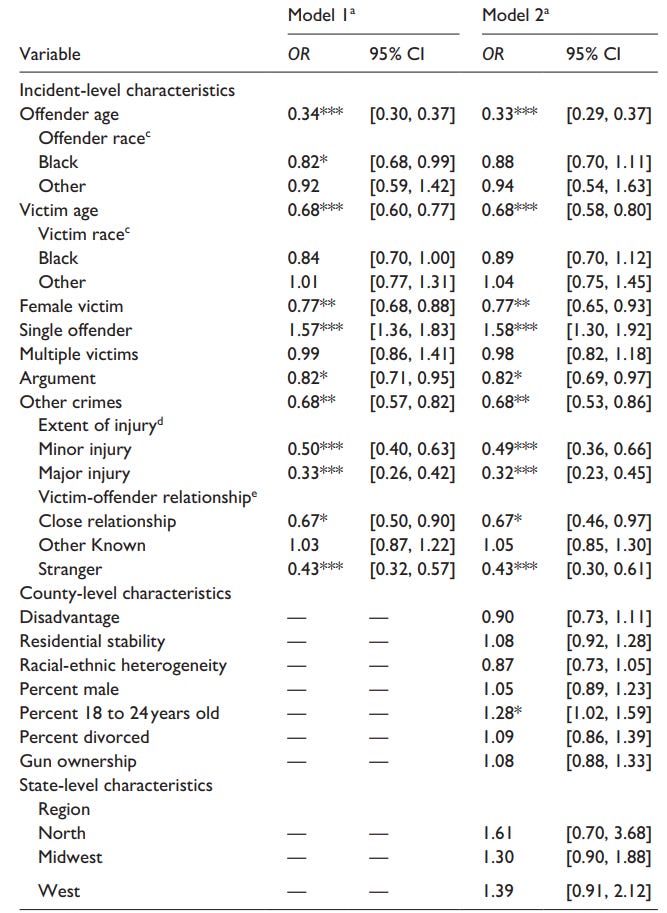
Ep 66. Are School Shootings a Unique Form of Violence?
Paper: Are School Shootings a Unique Form of Violence? A Comparison of the Individual and Contextual Correlates of Nonfatal School Shootings and Youth Gun ViolenceAbstract:School shootings have been traditionally viewed as a unique form of violence in which disgruntled suburban White boys indiscriminately target their peers and cause mass injury; however, a series of recent studies that employ broader definitions of school shootings suggest they more closely resemble community-based gun violence. This study tests the fundamental assumption that school shootings are a unique form of violence using multi-level logistic regression models to compare the individual and contextual correlates of 752 nonfatal school shootings to 28,109 nonfatal public shootings across 1,098 counties and 45 U.S. states from 2015 to 2019. Results indicate minimal differences between school shootings and public shootings, which are likely shaped by the school context. The analysis suggests that school gun violence is not a unique phenomenon from community gun violence and may share a similar etiology.Authors:* Kyle G. Knapp is a doctoral candidate in the College of Criminology and Criminal Justice at Florida State University. His research interests include mass violence, gun violence, intimate partner violence, gender, and communities and crime.* Emma E. Fridel, PhD, is an assistant professor in the College of Criminology and Criminal Justice at Florida State University. She received her PhD in Criminology and Justice Policy from Northeastern University. She primarily studies violence and aggression with a focus on homicide, including gun violence, school violence, homicide–suicide, serial and mass murder, and fatal officer-citizen encounters.David Riedman, PhD is the creator of the K-12 School Shooting Database, Chief Data Officer at a global risk management firm, and a tenure-track professor. Listen to my weekly podcast—Back to School Shootings—or my recent interviews on Freakonomics Radio and the New England Journal of Medicine.School Shooting Data Analysis and Reports is a reader-supported publication. To receive new posts and support my work, consider becoming a free or paid subscriber. Get full access to Riedman Report: Risk, AI, Education, & Security at riedmanreport.substack.com/subscribe
Police chief explains Brown University shooting investigation
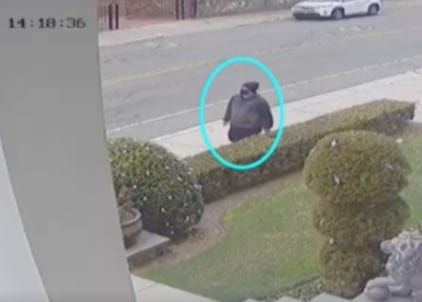
Guest: Retired police chief Patrick Flannelly served 27 years with Lafayette Police Department which borders Purdue University in Indiana. He served 10 years as chief of the department and now hosts of the Coptimizer Podcast.Brown University has 235 buildings (most built between 1770-1926) on its 143-acre urban campus in downtown Providence, RI. The school has 20,000 students in a community of 200,000 people.Latest photos of suspect (white male around 5’8”):Locations of the doorbell cameras where photos of the suspect were recorded:Background on Brown University shooting:* Why hasn’t the Brown University shooter been arrested yet?* Brown University school shooting and brief history of higher ed attacks* Prior episode with Patrick: Systematic Failures: Why Predictable Problems Repeat at SchoolsDavid Riedman, PhD is the creator of the K-12 School Shooting Database, Chief Data Officer at a global risk management firm, and a tenure-track professor. Listen to my weekly podcast—Back to School Shootings—or my recent interviews on Freakonomics Radio and the New England Journal of Medicine.School Shooting Data Analysis and Reports is a reader-supported publication. To receive new posts and support my work, consider becoming a free or paid subscriber. Get full access to Riedman Report: Risk, AI, Education, & Security at riedmanreport.substack.com/subscribe
Ep 65. When a school shooting happens, will you Run, Hide, or Freeze?
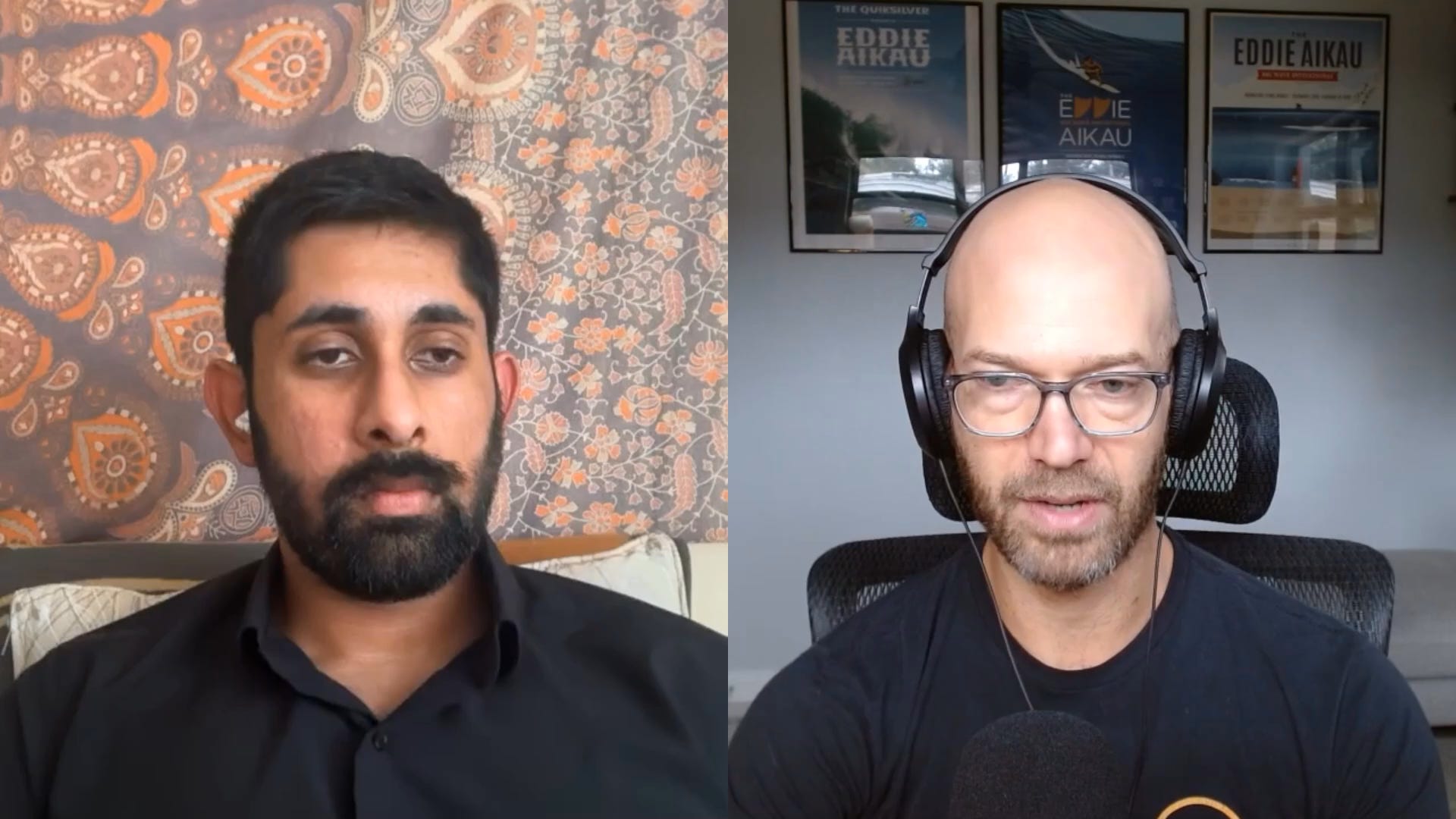
New Paper: Run, Hide, or Freeze: Social and Emotional Influence on Behavior in an Immersive School Shooting SimulationAbstract: As school shootings rise in frequency across the United States, understanding how individuals respond during such crises is critical for developing effective safety protocols. This study used an immersive, computer-based simulation to investigate how social influence and emotion level from non-player characters (NPCs) affect behavior during an active shooter event. A total of 285 participants were randomly assigned to one of six experimental conditions varying NPC behavior (run, hide, or mixed) and emotional intensity (high vs. low). Participants were more likely to run when surrounded by NPCs who ran and more likely to hide when NPCs hid, showing that social influence significantly shaped behavior. Emotional evocative imagery and sounds, however, did not significantly affect decision-making. Increases in negative affect after the simulation and male gender were also associated with a greater likelihood of running. These findings suggest that visible social behavior, rather than emotion, drives emergency responses and highlights the value of social modeling in safety training.Guest (primary author): Kevin Kapadia, PhD candidate in Quantitative Psychology at University of Southern CaliforniaFirst Paper (part 1 of the simulation series): The Impact of Social Influence and Threat Uncertainty on Behavior in a School Shooting SimulationDavid Riedman, PhD is the creator of the K-12 School Shooting Database, Chief Data Officer at a global risk management firm, and a tenure-track professor. Listen to my weekly podcast—Back to School Shootings—or my recent interviews on Freakonomics Radio and the New England Journal of Medicine.School Shooting Data Analysis and Reports is a reader-supported publication. To receive new posts and support my work, consider becoming a free or paid subscriber. Get full access to Riedman Report: Risk, AI, Education, & Security at riedmanreport.substack.com/subscribe
Ep 64. Treatable victims die during school shootings and 3 ER doctors have solutions
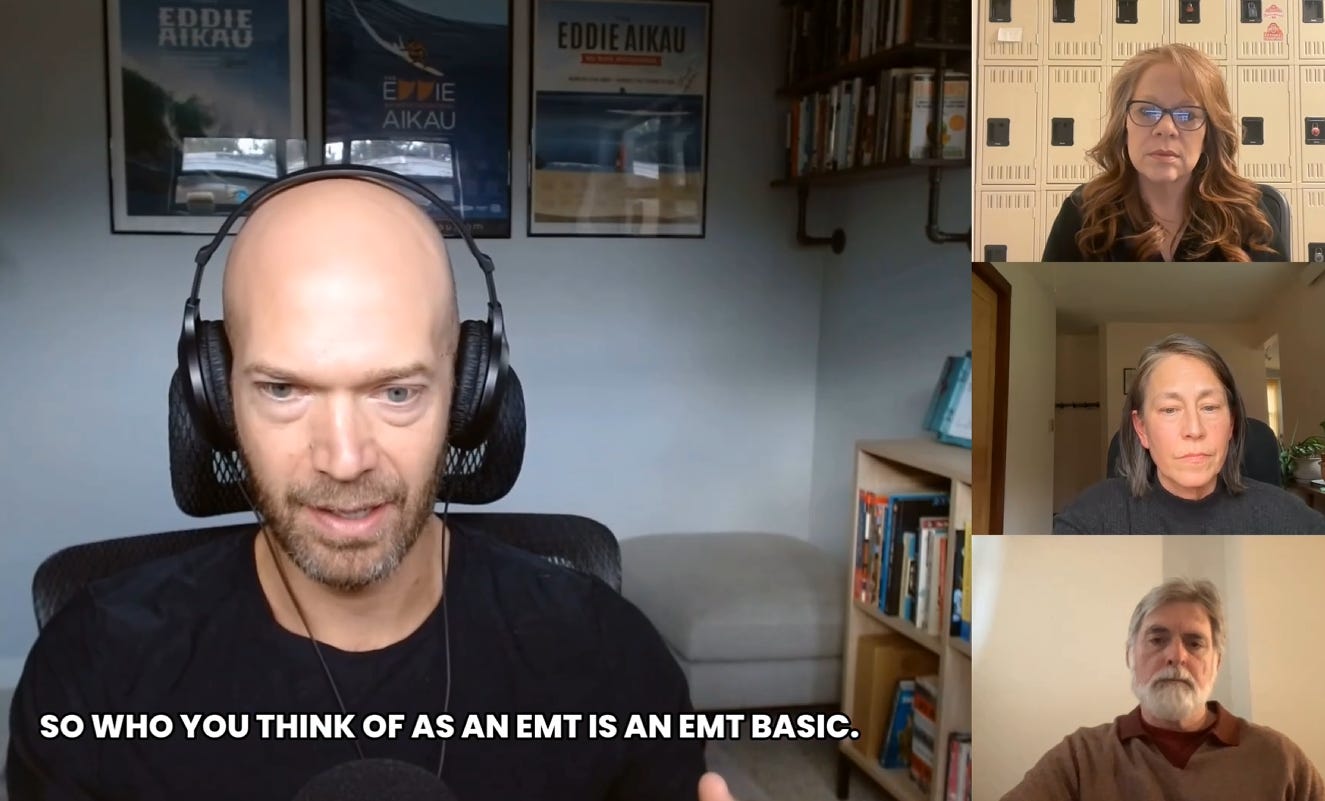
Article (pre-submission/pre-publication): Early Medical Response in Active-Shooter Incidents. A Systematic Review of After-Action ReportsGuests:* Dr. Dominique Wong is an attending physician the Cabell Huntington Hospital Emergency Department and chair of the hospital’s Medical Readiness Committee. She also serves as a tactical physician and medical director for police SWAT and Tactical EMS teams, trains law enforcement officers and the US military, and serves in leadership roles with the American College of Emergency Physicians, Tactical and Law Enforcement Medicine Section.* Dr. Clay Young is a board certified emergency physician with over 25 years of clinical experience. As a former director of a flight service he has demonstrated leadership in pre-hospital emergency medicine. Dr. Young is committed to advancing public safety through the education and training of law enforcement personnel in life saving interventions and active shooter medical response. He is a graduate of the University of Kentucky college of medicine, a father of four, and an active hiker and fly fisherman.* Dr. Beth Toppins is an emergency medicine physician practicing in her hometown of Huntington, West Virginia. A graduate of Marshall University School of Medicine, she has served as an Emergency Department physician at Cabell Huntington Hospital since 2003 and currently serves as the Emergency Department Medical Director. She previously held leadership roles in regional EMS and has worked alongside Drs. Wong and Young to provide medical training to law enforcement across West Virginia. Outside the hospital, Beth is a proud mother of four and wife to Eric, and the children’s pastor at Christ Temple Church in Huntington, where she is an active member.Abstract: * Background: Timely medical response can improve survivability in active shooter incidents (ASI). This systematic review evaluates law enforcement, emergency medical services (EMS), rescue task force (RTF) and tactical emergency medical support (TEMS) medical response in ASI.* Methods: After-action reports (AARs) from U.S. ASI (1999–2022) were retrospectively reviewed. Point of injury (POI) medical response time for police, EMS, RTF, and TEMS was reviewed. Medical response type provided by law enforcement was also examined* Results: Thirty-one AARs representing 19 ASI were analyzed. Police provided medical response in every case, most commonly (84%) casualty extrication. In 21% of incidents, law enforcement provided the full spectrum of response: direct care, extrication and transportation to a hospital. RTF victim access was frequently delayed and in 43% of incidents, RTF providers never reached casualties at the POI. TEMS medical response times varied. Barricade hostage situations delayed all medical responders.* Conclusion: Police consistently provided early medical care in ASIs, while EMS, RTF and TEMS faced challenges accessing ASI casualties in a timely manner. These findings suggest law enforcement officers play a critical role in early medical response and may help reduce preventable deaths in AS incidents.My additional points on this topic:School shooting victims who could be saved with rapid transport to a hospital have died inside their schools because EMS crews are directed to wait outside until police issue an ‘all clear’ order. To address this long-standing problem, many agencies created combined EMS/police ‘rescue task force’ units or tactical EMS units with body armor to go inside and find victims…but these units take ~30 minutes to arrive and assemble. At this point, critically wounded students and teachers are already dead.In October 2022, a teacher and student were shot with an AR-15 rifle inside CVPA High in St. Louis. They were still alive when police killed the shooter, yet EMS waited outside for 20 minutes until police gave the all clear. Teacher Jean Kuczka and 15-year-old student Alexzandria Bell both died waiting for help inside. With military-style rifles being used by most school shooters, a school campus is like a battlefield where “the majority of combat casualties die within ten minutes of the trauma” (PubMed: Wounded in action: The platinum ten minutes and the golden hour). Instead of unnecessarily cautious policies that protect adult EMS providers against theoretical (and often imagined) dangers, we need to shift the status quo to accepting managed risks to save the lives of innocent children with critical gunshot injuries.Here are two of my articles about this problem:* When ‘Eddie Would Go’ so should police, fire, and EMS* Wounded victims can die when plans are based on the ‘second shooter’ fallacyDavid Riedman, PhD is the creator of the K-12 School Shooting Database, Chief Data Officer at a global risk management firm, and a tenure-track professor. Listen to my weekly podcast—Back to School Shootings—or my recent interviews on Freakonomics Radio and the New England Journal of Medicine.School Shooting Data Analysis and Reports is a reader-supp
Ep 63. Directors of HBO's 'Thoughts and Prayers' documentary
Interview with the directors of HBO’s new documentary Thoughts & Prayers. Their film premiers this Tuesday night at the DOC NYC film festival and is available streaming the same night. (note: I set up this interview, HBO didn’t ask me to promote this film or provide any financial incentive).This 90-minute documentary traces the $3 billion active shooter preparedness industry in the United States and its effect on students and educators.Here is the iPhone note that I wrote right after watching it:This documentary is a postmodern 90-minute examination of the insanity of modern America. It shows the worst parts of fear and gore culture combined with capitalism. Nothing is more telling than the smirks and chuckles from the security product vendors as they boast about how each school shooting increases their profits. When people offer ‘thoughts and prayers’ after every attack, their words are as empty as the industry this film brutally portrays.Zack Canepari is the award-winning director of ‘Fire in Paradise’ about the wildfire that destroyed the entire town and Jessica Dimmock directed an award-winning series ‘Flint Town’ about the water crisis and economic conditions in Flint, MI. They team up to present an absolutely gut-wrenching look into the school security industry. The format, presentation, and content is unlike anything I’ve seen before.David Riedman, PhD is the creator of the K-12 School Shooting Database, Chief Data Officer at a global risk management firm, and a tenure-track professor. Listen to my weekly podcast—Back to School Shootings—or my recent interviews on Freakonomics Radio and the New England Journal of Medicine.School Shooting Data Analysis and Reports is a reader-supported publication. To receive new posts and support my work, consider becoming a free or paid subscriber. Get full access to Riedman Report: Risk, AI, Education, & Security at riedmanreport.substack.com/subscribe
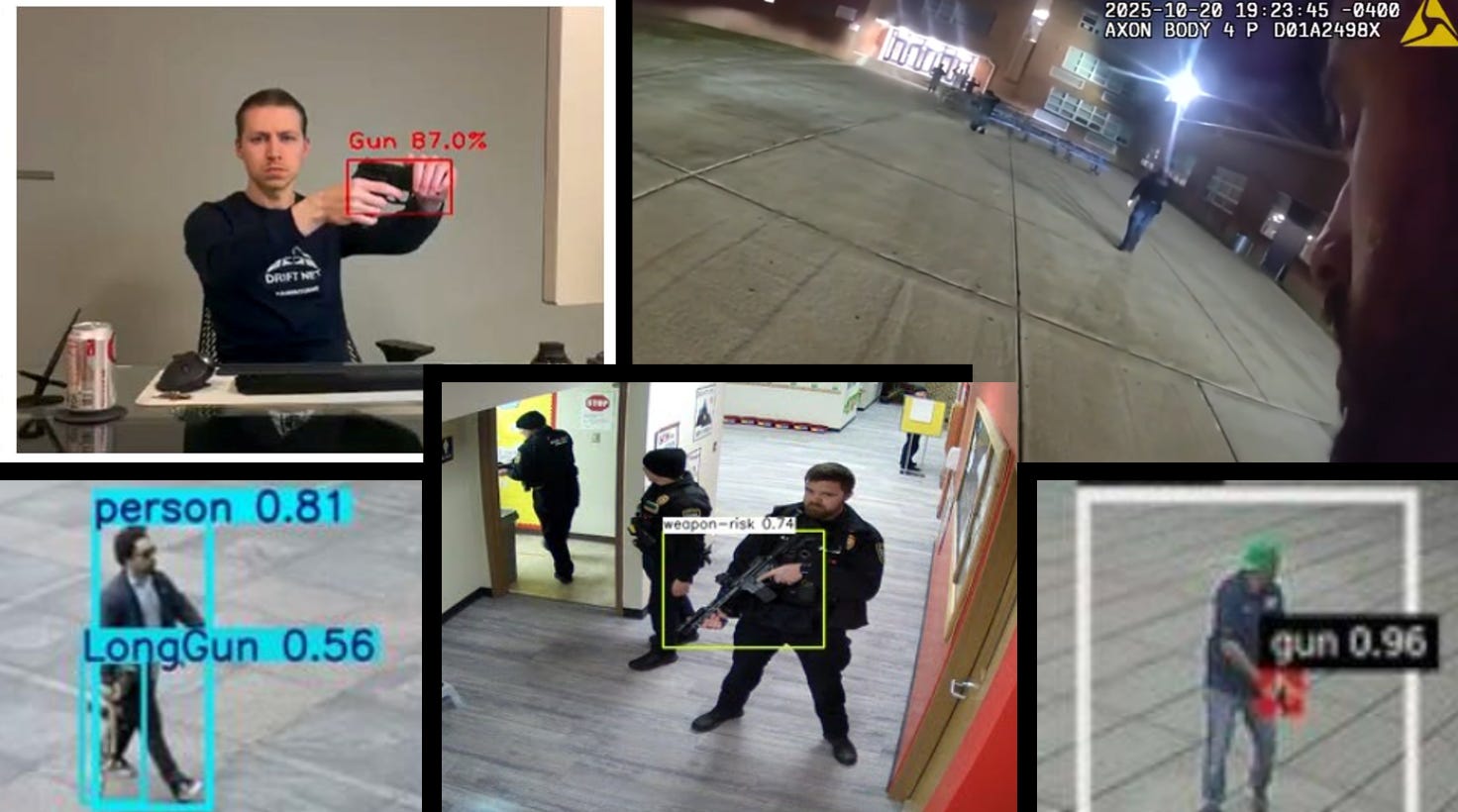
Ep 62. AI creates a threat disguised as a school security solution
Police to students: “The way you guys were eating chips, it picked it up as a gun. AI’s not the best. Can’t trust stuff like this at a school man. Good thing you guys didn’t run [laughs]...that would have made a major problem.” Bodycam footage shows Baltimore County, MD police handcuffing 4 students who were waiting to be picked up after football practice when they got an alert from AI software that detected a gun on the school’s CCTV system.What happened in Baltimore County is more than a minor technical glitch because four teens were forced to the ground at gunpoint because faulty software misinterpreted a bag of Doritos as a gun. The school district spent the equivalent of twenty-five teachers’ salaries on an AI system that can’t tell the difference between a snack and a threat. The outcome is students are even less safe when police with guns drawn show up on campus looking for a shooter who doesn’t exist.Until AI can truly comprehend context rather than just pixel clusters—and using the most advanced models becomes financially feasible for video analysis—basing student safety on image classification probabilities will continue to cause avoidable disasters like this. When outdated 2010s machine learning software can’t tell the difference between a bag of chips versus a gun, it doesn’t belong on a school campus.Read more: * AI classified Doritos chips as a gun and then police pointed real guns at students* CNN: I study school shootings. Here’s what AI can — and can’t — do to stop them* How do AI security products being sold to schools really work?* FTC takes action on school security tech vendor after investigation* What happens when a school security startup fails?David Riedman, PhD is the creator of the K-12 School Shooting Database, Chief Data Officer at a global risk management firm, and a tenure-track professor. Listen to my weekly podcast—Back to School Shootings—or my recent interviews on Freakonomics Radio and the New England Journal of Medicine.School Shooting Data Analysis and Reports is a reader-supported publication. To receive new posts and support my work, consider becoming a free or paid subscriber. Get full access to Riedman Report: Risk, AI, Education, & Security at riedmanreport.substack.com/subscribe