
Return the Key: Jewish Questions for Everyone
38 episodes
Episode 38: “Light desires to Overflow”: Elliot R. Wolfson on Kabbalah
Episode 37: How Loss Refuses Itself: Voice at the Limit with Ben Meyerson
Episode 36: My Country is the Page: Moudi Sbeity on the generative power of language
Episode 35: “What exactly are we doing here”?: Nishant Upadhyay on settler colonialism and its complexities
Episode 34: Beat Down the Barriers: Jennifer Scappettone on “Poetry After Barbarism”
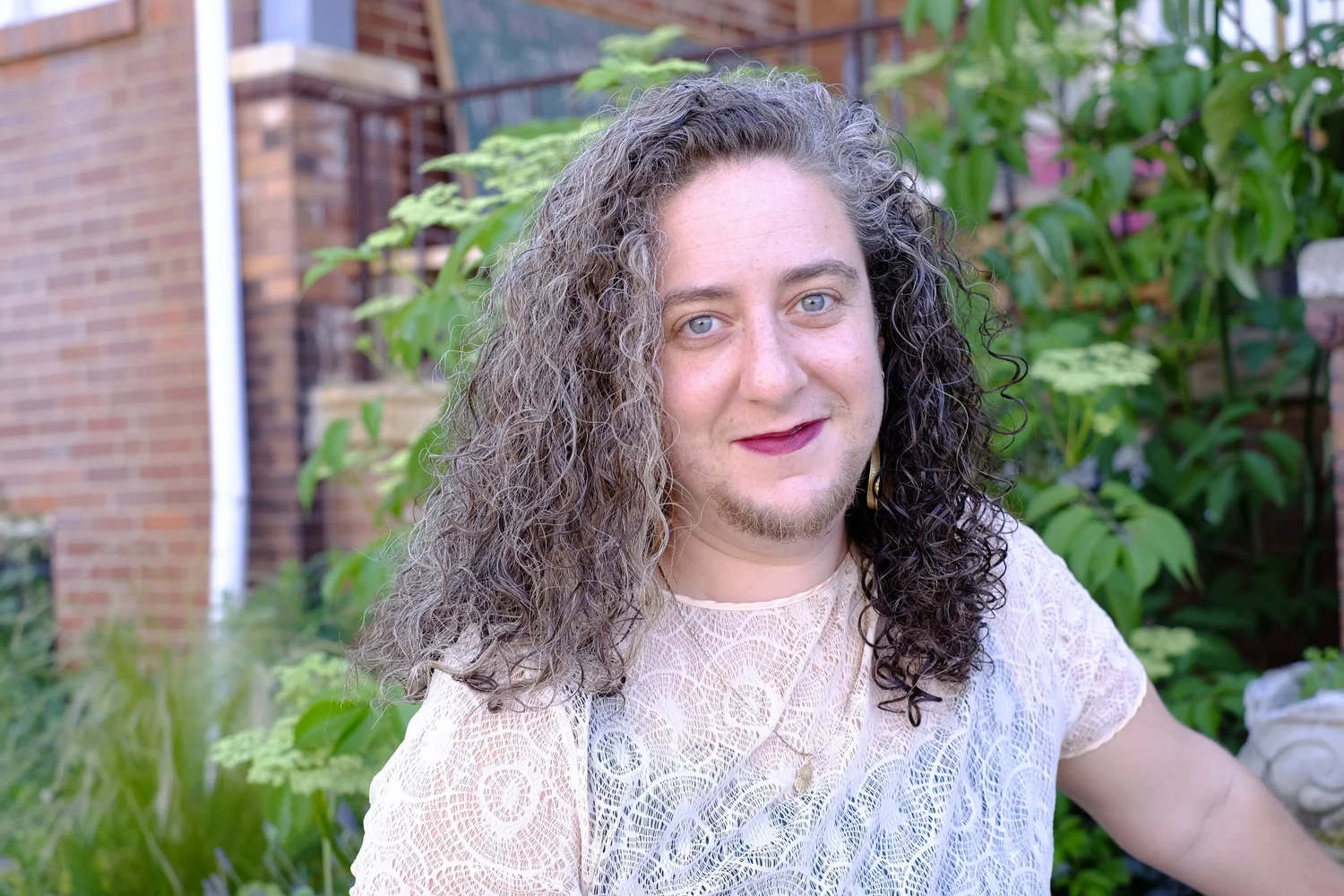
S3 Ep 15Episode 33: Neighbor: Rabbi Jessica Rosenberg on Collapse, Entanglement, Spiral Time & Minneapolis 2026
In episode #33 I talk with Rabbi Jessica Rosenberg about two terms that have been central to her lately: “collapse” and “entanglement.” We read from and discuss Anna Tsing’s The Mushroom at the End of the World, a book that helps think through these themes. Rabbi Jessica talks about what it’s been like on the ground in Minneapolis this winter, how confronting state violence and authoritarianism in real-time by caring for her neighbors has been both terrifying and profound in how it’s changed her sense of what “entanglement” really means. We discuss how accepting that we are in a time of collapse (of institutions, structures, and climate) might paradoxically help us get out of bed in the morning, rather than paralyzing us with fear. I bring up my obsession with “Longtermism” (not a fan), and Rabbi Jessica shares her thinking around “spiral time” in the context of the Jewish calendar, insisting that we can think long term while “holding the collective liberation of all people on the planet right now in our minds and hearts.” We end by talking about what both personal and collective grief can teach us, awakening us to the now. Texts and people discussed:Ross Gay, Inciting Joy: Essayspoupeh missaghi, “When Bombs Fall: Saying Yes to Life”Aurora Levins MoralesSusan Raffo with Kelly Hayes, “‘Minneapolis Community Defense Is “Riding on the Learning Edge of a Whirlwind’” (Interview)Rabbi Jessica Rosenberg, For Times Such as These: A Radical’s Guide to the Jewish YearRabbi Jessica Rosenberg, “Spiral Time in Collapse: Dvar for Erev Rosh Hashana 5786”Émile P Torres, “Against Longermism” (Note: I mistakenly credited this essay to Sam Dresser. Dresser edited it, but It was authored by Torres in 2021.)Anna Tsing, The Mushroom at the End of the World: On the Possibility of Life in Capitalist RuinsMusic by Ben Roberts : [email protected] and ideas to [email protected]
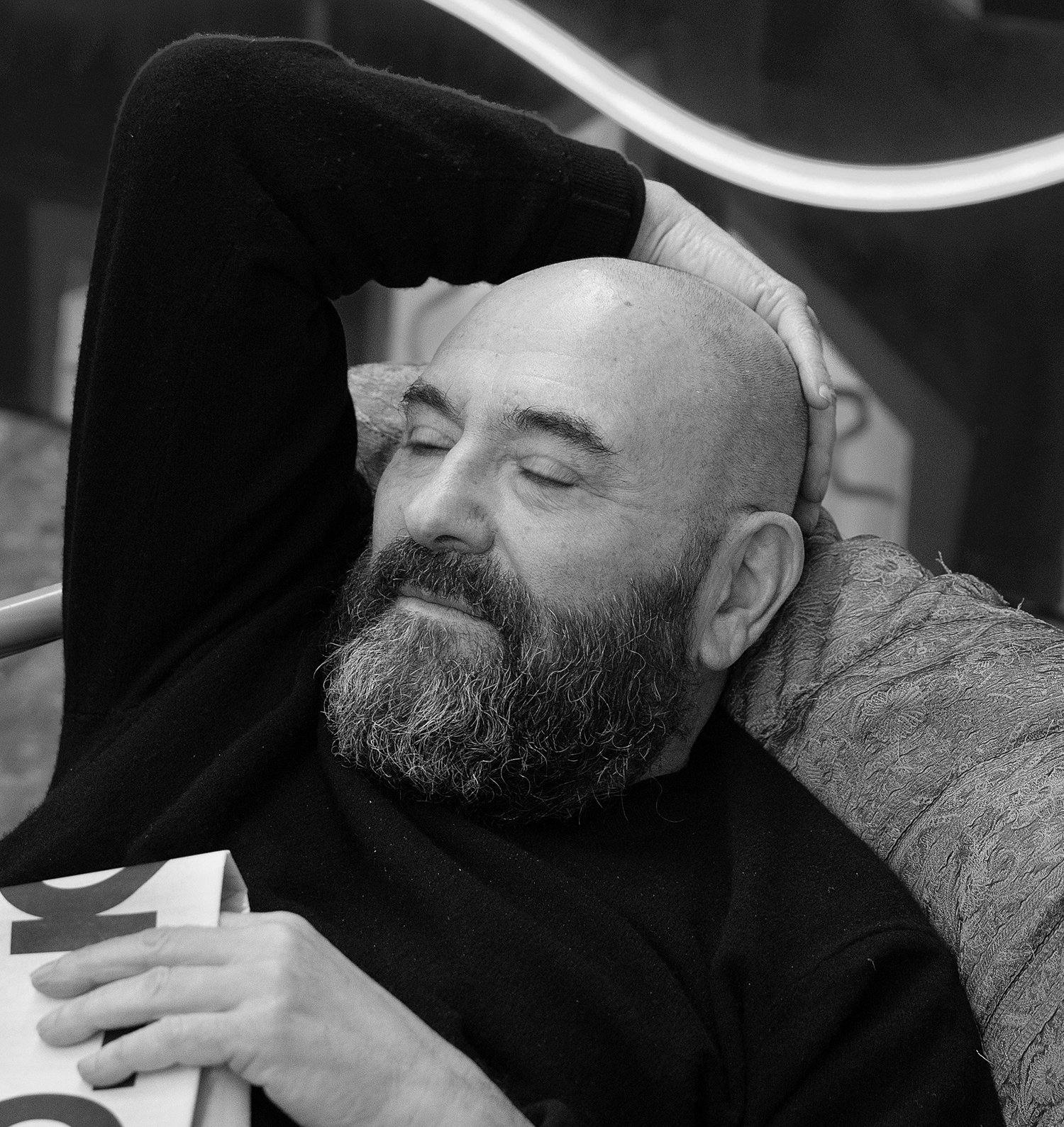
S3 Ep 15Episode 32: A Passenger on the Bus: Rob Fitterman
In episode #32 poet Rob Fitterman reads from and talks about two of his books: Holocaust Museum (Counterpath 2013), made entirely of captions from the US Holocaust Memorial Museum’s photo archive, and Creve Coeur (Winter Editions 2024), a “translation” of William Carlos Williams’ epic poem Paterson. Following Williams’ form line-by-line, Rob exposes the deep history of anti-Black racism in St. Louis, especially in regards to housing policy. Along the way we discuss his experiences growing up in a lower middle-class Jewish family in suburban St. Louis and his youthful (and continued) fascination with the poetry of “coterie” or group. We revisit the heated conversation around appropriation in poetry and art and consider the “empire-impulse” of some US conceptual poetry. How does “failure hallucinate repair” (Paul Chan’s line)? Why does some art about atrocities elicit a feeling of responsibility and not just empathy? And how might the “I” in a poem be just another “passenger on the bus” and not its driver? Texts, films, videos and people mentioned and discussed:Paul ChanRob Fitterman reading from Holocaust Museum, Counterpath Denver, 2013 (video)Walter Johnson, The Broken Heart of America: St. Louis and the Violent History of the United StatesJacques Ranciere The Emancipated SpectatorCharles Reznikoff, HolocaustRichard Rothstein, The Color of LawAndrzej Wajda, Katyn (film)Frederick Wiseman filmsWilliam Carlos Williams, Paterson1917 East St. Louis Massacre (video)Music by Ben Roberts : [email protected] and ideas to [email protected] Fitterman is the author of 16 books of poetry. His most recent book, Creve Coeur, is a long poem published with Winter Editions (2024). Other titles include: This Window Makes Me Feel (Ugly Duckling Presse), No, Wait. Yep. Definitely Still Hate Myself. (UDP), Nevermind (Wonder Books) and Rob the Plagiarist (Roof Books). His long poem, Metropolis, was published in 4 volumes between 2000-2010: Sprawl: Metropolis 30A (Make Now Press, 2009), Metropolis 30: The Decline and Fall of the Roman Empire (Edge Books, 2004), Metropolis 16-29 (Coach House, 2002), Metropolis 1-15 (Sun & Moon Press, 2000), He has collaborated with several visual artists, including Serkan Ozkaya, Nayland Blake, Sabine Herrmann, Natalie Czech, Tim Davis, and Klaus Killisch. He is the founding member of the artists-poets collective, Collective Taskwww.collectivetask.org. Fitterman's poetry has been described as reaching for a new lyricism by composing with found language reconstructed to articulate a subjective, “personal” relationship to social themes. His books are often single book-length poems with broad critiques of institutions: e.g., social media, online forums, museums, reviews, etc. He lives in New York City and teaches writing at New York University.
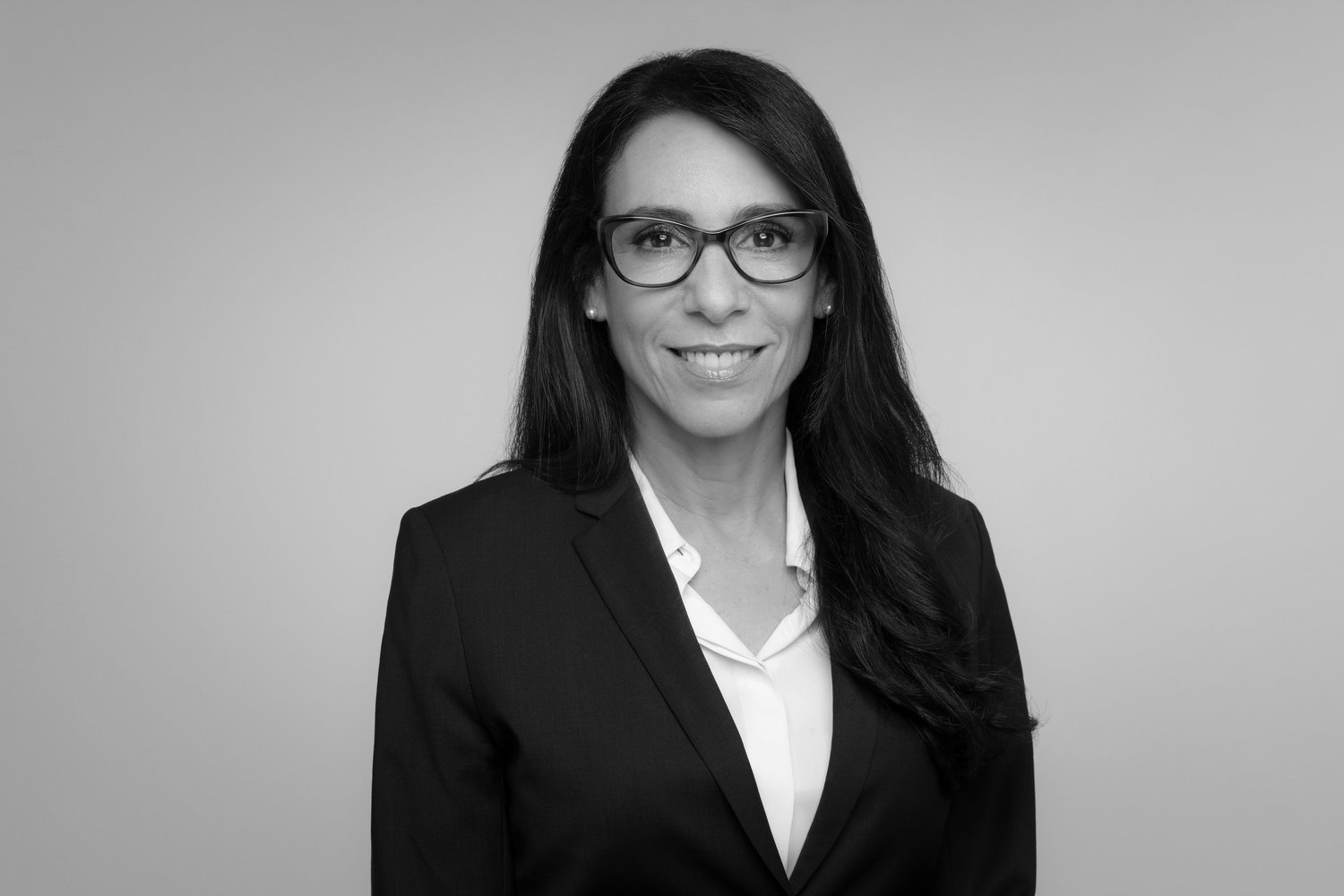
S3 Ep 15Episode 31: On Money, Lies, and God with Katherine Stewart
In episode #31 I speak with author and investigative journalist Katherine Stewart about her new book, Money Lies and God: Inside the Movement to Destroy American Democracy. What is Christian Nationalism (and what is it not)? What are the true anti-democratic goals of the “new right” and what are their strategies? How do misogyny and anti-trans rhetoric/policy serve these goals? And are they really trying to take away women’s right to vote? Katherine delineates five categories of actors in the nihilistic war against democracy: the funders, the thinkers, the sergeants, the power-players, and the foot soldiers. She exposes how “the thinkers” frequently rely on the ideas of Nazi political theorist Carl Schmitt, and Julie dips into “the thinkers” who have worked towards these goals on her own campus (remember John Eastman?). A note: This conversation is shorter than many. Because of time constraints we were not able to talk about all of the major topics in this book. I highly recommend listeners read the book to learn more. Texts, institutes, and people mentioned and discussed:Katherine Stewart, Money Lies and God: Inside the Movement to Destroy American DemocracyKatherine Stewart, The Power Worshippers: Inside the Dangerous Rise of Religious NationalismKatherine Stewart, The Good News Club: The Religious Right's Stealth Assault on America's ChildrenGod and Country (film), directed by Dan Partland, written by Katherine StewartThe April InstituteAndrew Perez, Andy Kroll and Justin Elliott, “How a Secretive Billionaire Handed His Fortune to the Architect of the Right-Wing Takeover of the Courts” (article on Barre Seid, Leonard Leo and the Marble Freedom Trust)Carl SchmittThe Claremont InstituteThe Benson Center for the Study of Western Civilization, University of Colorado BoulderThe National Organization for Marriage (editorial note: they are still going after Disney)Doug Wilson, Christian Nationalist pastor (Wall Street Journal video)Abby Johnson, anti-abortion activist on head-of-household voting (tweet)Joseph Porter and Adam Gibbons, “Existential Risk and Equal Political Liberty” Music by Ben Roberts : [email protected] and ideas to [email protected] Stewart’s latest book, Money, Lies, and God: Inside the Movement to Destroy American Democracy, is one of Foreign Affairs magazine’s Best Books of 2025. Her previous, award-winning title, The Power Worshippers: Inside the Movement to Destroy American Democracy, formed the basis of the documentary feature God & Country, produced by Rob Reiner. She has covered the intersection of faith and politics for over 17 years; her work appears in The New York Times, Religion News Service, New Republic and others. Find her at @katherinestewart.bsky.social, @kathsstewart, substack.com/@katherinestewartbooks, and katherinestewart.me.

S3 Ep 15Episode 30: “Memory of a Larger Mind” with Daniela Naomi Molnar
In episode #30 with Daniela Naomi Molnar, we begin our wide-ranging conversation by discussing Daniela’s work with the media of “color, water, language, and place,” which is focused around both human and earth-based memory. We talk about and read from her book Protocols: an Erasure, an erasure of Protocols of the Elders of Zion. We discuss this source-text and its ongoing place in the history of antisemitism, and what it meant to engage it so deeply. We then move into the multi-modal project, “Memory of a Larger Mind.” Daniela speaks about her four grandparents, all of whom survived Nazi concentration camps, and how her very close relationship with her grandmother, Rosalie, pressed her to work directly with the land of former camps where she makes pigments from what is now found there— flowers, weeds, rocks, and bones. In recent projects, Daniela works with glaciers and former glaciers as material for pigments, poems and other artworks. Along the way we talk about two kinds of power, that which feeds on fear and leads to violence, and that which resides in the unknowable, the invisible, and the nothing (the ein sof) that is in and all around us. This leads to a conversation about mysticism and “justice” and how they might be entangled. Music by Ben Roberts : [email protected] and ideas to [email protected] Lawrence Kushner: “Kabbalah and Everyday Mysticism.” On Being podcast, May 15, 2014.Tilke ElkinsDany S. Adams, PhD “The Face of a Frog” (video)Daniela Naomi Molnar is a poet and artist who creates with color, water, language, and place. Her art centers on memory — planetary, cultural, familial, and personal. She works with pigments she makes from plants, bones, stones, and specific waters such as rainwater and glacial melt. Poems and essays are created alongside the visual art; the practices overlap and influence each other. Her debut bookCHORUS won the 2024 Oregon Book Award for Poetry, followed by PROTOCOLS: An Erasure, currently shortlisted for the National Jewish Book Award. Forthcoming books include Memory of a Larger Mind, a book written with glaciers (Omnidawn, 2026), Light / Remains, a book of visual art, poems, and essays, and The World is Full, a book considering love as a political, relational, and internal force. Her work has been published and shown widely, is in public and private collections internationally, and is featured in theLos Angeles Times,PBS Oregon Art Beat,Oregon Encyclopedia,The Creative Independent, andPoetry Daily. She founded the Art + Ecology program at the Pacific Northwest College of Art in 2016 and helped start and run the backcountry artist residency Signal Fire from 2008-2023. Her work leads her to far-flung places but she loves orbiting back to her studio where the forest meets the city in Portland, Oregon. www.danielamolnar.com / Instagram: @daniela_naomi_molnarA note: In this episode I mention the murder of Renee Nicole Good, which had just occurred, though I fail to name her. May her memory be a blessing.
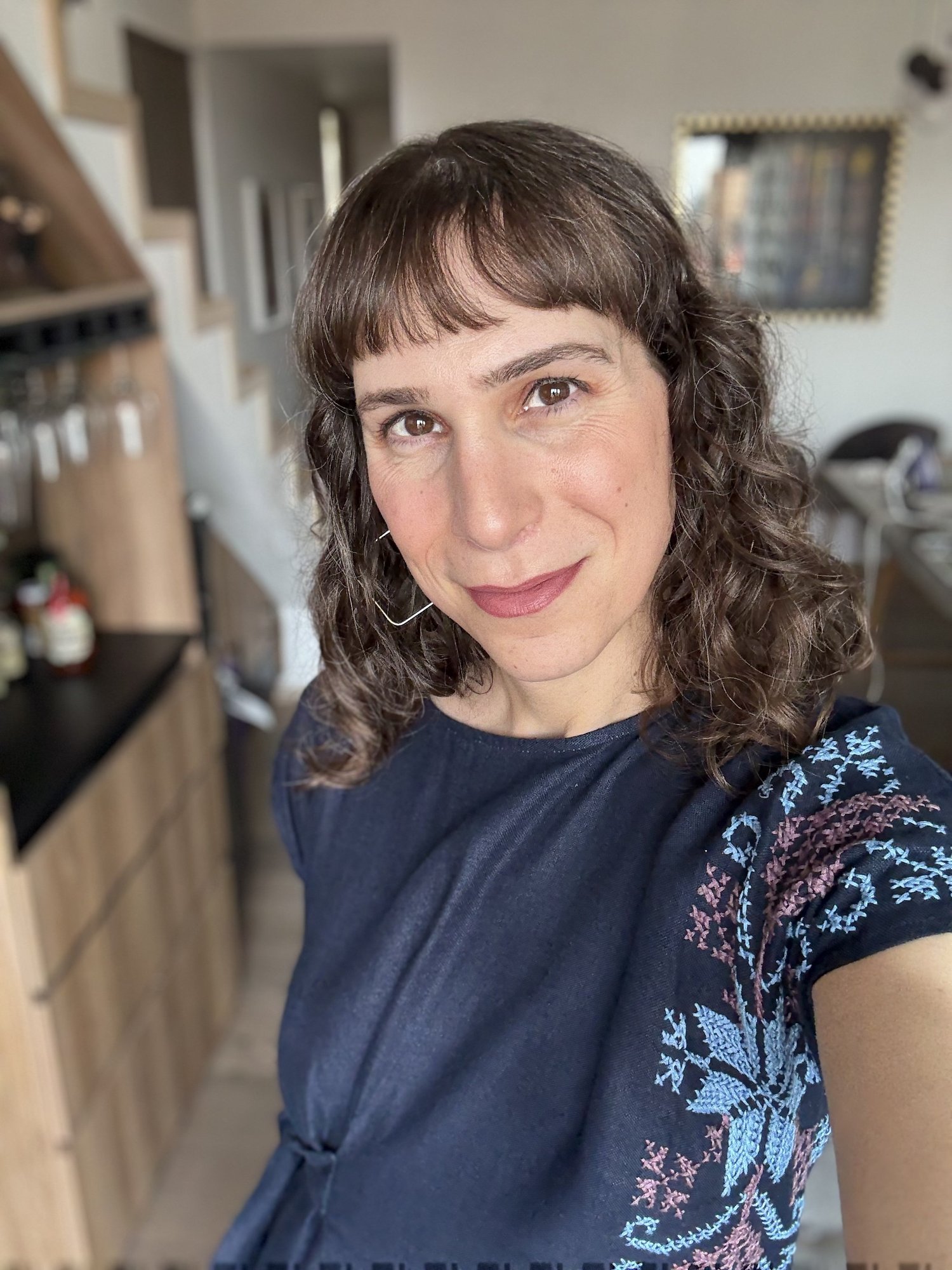
S3 Ep 15Episode 29: Thresholds: Ava Aviva Avnisan
In episode #29 I speak with multidisciplinary artist Ava Aviva Avnisan about their film, installation, music and performance work. We begin by talking about Aviva’s young childhood in Jerusalem as the descendant of Iraqi, Iranian and Eastern European Jews, and she traces the influence of her father, a professional photographer, on her own development as an artist. We discuss a collaboration we did with the poet Amaranth Borsuk many years ago, even without knowing each other (Real Life: An Installation). We get into the technology Aviva uses in much of her work, lidar scanning, and how it helps her create “a visual vocabulary of haunting.” Digging into two of Aviva’s recent projects, “Among Relatives: Indigenous Voices in the Cuyahoga Valley” (with Leila Khoury), an immersive audio visual installation, and “Specters of Home: Prologue” (with Doug Rosman) a ten-minute film, we discuss the legacy of settler-colonialism in Israel-Palestine and North America, the gender binary, and the very painful ways in which contemporary politics tear families apart. Aviva talks about her own struggles with members of her family who are unable to accept her gender transition or her anti-Zionism. She speaks throughout about her spiritual development and her gender transition, and how these transformations have changed her work and its motivations, opening and softening toward greater compassion and receptivity. We end with a short dip into the collaborative project Nobo’s Muse, a two-person art-pop band with Judd Morrissey, and we listen to one of their (fantastic) songs, as we disappear into the divine/work. Other artists, writers and projects mentioned:Karen River Barad, Meeting the Universe Halfway: Quantum Physics and the Entanglement of Matter and MeaningTransMaterialities: Trans*/Matter/Realities and Queer Political ImaginingsWhat Flashes Up: Theological-Political-Scientific FragmentsWalter Benjamin, “On the Concept of History” (Theses on History)Jacques Derrida, Specters of Marx: The State of the Debt, the Work of Mourning and the New InternationalChris Marker, Sans SoleilKelly Reichardt, Certain WomenAva Aviva Avnisan (she/they) is a multidisciplinary, research-based artist whose work integrates installation, performance, film, writing, sound, and emerging technologies to create embodied, time-based encounters. Working with tools such as 3D scanning, augmented and virtual reality, and generative AI, Ava’s practice explores how language, technology, and lived experience shape meaning and memory.Recent highlights include the international festival circulation of Specters of Home—Prologue, a short film selected for the 10th Beyond Borders | Kastellorizo International Documentary Festival in Greece and screened at the 8th Independent Film Festival of Mexico City as part of the CINE X MUJERES program. In 2025, Ava also presented new work created in collaboration with Judd Morrissey at SAIC Galleries in Chicago, debuting a large-scale, site-specific installation that expanded her practice into recorded music alongside photography, poetry, and 3D imaging.Ava is an Assistant Professor of Art and Design at San Diego State University, with a co-appointment in the School of Journalism and Media Studies.

S3 Ep 15Episode 28: And everything else just melts away: Ben Roberts and the music for Return the Key
Episode #28 brings a special New Year’s treat: music! We peek behind the scenes as I talk with musician Ben Roberts, who happens to be my son, about the music for Return the Key. Ben talks about his passion for Irish folk music, what goes on in an Irish session, and what he learned playing Bach for people on their porches during the pandemic. We get into the relationship between emotions and music and the mystery of melody as we listen to and discuss four of our favorite RTK pieces. What is the difference between “fixing” and “exploring”? What happens when we orient toward the good? And what does it mean to feel “at home” in a music from another culture far away? At the end of the hour, Ben performs a Ukrainian folk tune on his cello, with a nod to our Jewish Ukrainian ancestors. Ben Roberts is a multi-instrumentalist and composer living in New York City. He has performed or recorded with Jon Battiste, MGK, Zoe Loyd, Esperanza Spalding, Flamenco dancer Tara Laraway and many others, and has led nearly every mainstay Irish session in New York and Boston. You can hear him on Tuesdays from 8-11 at Putnam’s Pub, 419 Myrtle Avenue, Brooklyn NY. https://www.instagram.com/benroberts447/
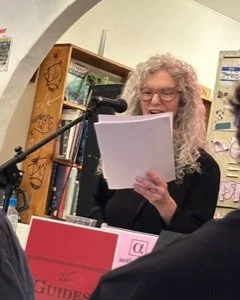
S3 Ep 15Episode 27: The Desire for an Origin is the Origin: Susan Gevirtz on The Guide School
In episode 27, I talk with poet Susan Gevirtz about her childhood growing up in Los Angeles, within the two “religions” of Hollywood and Freudian psychoanalysis. We talk about her early experiences in the world of Hollywood films through her grandfather’s work as the musical director for Universal, and her sense, even as a young person, that the world that was presented to her was a made place, invented and therefore radically open to inquiry. We dig into her ongoing project, Guide School, a multi-faceted blended-genre manuscript that interrogates the longing for a “homeland,” and the unsatisfiable and therefore motivating desire for “origins” of all kinds - epistemological, historical, textual, and spiritual. Susan talks about her travels in Eastern Europe, the phenomenon of “the guide schools” in which tour guides are trained to present particular versions of history, and her encounters with the YIVO archive for Jewish Research of both Vilnius Lithuania and New York City. We end by discussing our somewhat vexed curiosity about Kabbalah, and mystical traditions in general, thinking together about how reading/writing as a practice of unknowing and infinite encounter might itself be a mystical tradition. Books and institutions mentionedMoses Maimonides: The Guide to the Perplexed: a New Translation, Translated and with Commentary by Lenn E. Goodman and Phillip I. LiebermanMarc-Alain Ouaknin, The Burnt Book: Reading the TalmudJeffrey Veidlinger, In the Midst of Civilzed Europe: The 1918-1921 Pogroms in Ukraine and the Onset of the HolocaustYIVO Institute for Jewish ResearchMusic by Ben Roberts: [email protected] and ideas to [email protected]

S3 Ep 15Episode 26: One Day We Will be What We Want: Anas Qutob and Dave Snyder on Friendship and Transformational Praxis
In episode 26, I talk with Anas Qutob and Dave Snyder of Minneapolis about their friendship and their work as leaders in the Minnesota chapter of Friends of Standing Together—a grassroots progressive organization of Israeli Jews and Palestinians dedicated to peace, justice, and social transformation. Anas speaks of his childhood growing up during the Israeli invasion of his home city, Nablus, in the West Bank, and about working his way through law school before becoming a labor organizer in Minneapolis. Dave, the grandson of Holocaust survivors, and a longtime social justice organizer, speaks of his journey toward deep commitment to the Palestine justice movement. We talk what Standing Together means to us and about the sacred work of friendship grounded in listening, in mutual recognition of suffering, and in working relentlessly for change. We end by reading a section of one of Mahmoud Darwish’s final poems, “Mural,” in both Arabic and English. “One day I will be what I want” is a line from “Mural” in John Berger and Rema Hammami’s translation. Standing Together’s Theory of ChangeMahmoud Darwish, Mural, trans. John Berger and Rema Hammami Music by Ben Roberts: [email protected] and ideas to [email protected] J. Qutob was born and raised in Nablus (Shechem), Palestine. The son of a repatriated refugee born in exile in 1969, his family returned from Jordan to the Old City of Nablus in 1974, where they lived until 2007. His father, a tailor, supported the family through years of political and social upheaval. Anas earned his law degree in 2017 and joined the Palestinian Bar Association in 2020, practicing civil and criminal law in the West Bank until moving to the United States in 2023. He now works as an Organizer with SEIU Healthcare Minnesota & Iowa’s Member Action Center and is a Co-founder of Minnesota Friends of Standing Together (FoST–Israel/Palestine). He currently lives in Minneapolis with his turtle shell cat. Dave Snyder grew up in Minneapolis, the grandson of Holocaust survivors who fled Austria in 1939. He has spent the last 30 years as a campus living wage activist, labor organizer with the Hotel Employees and Restaurant Employees Union local 7, housing justice organizer and then deputy director of Jewish Community Action (JCA), convenor of the Minnesota Asset Building Coalition (MABC), then statewide program director for “Family Assets for Independence in Minnesota” (FAIM). Dave has served on the Board of Directors of the National Community Reinvestment Coalition (NCRC), and currently serves on the Board of Directors of Unidos MN, and as co-founder of the MN chapter of Friends Of Standing Together (FOST) - Israel/Palestine. Dave lives in Richfield with his wife Kristy, plus two massive teens, two obnoxious puppies, and two persnickity cats.
S3 Ep 15Episode 25: Citizens of the Whole World: Benjamin Balthaser on the history of diasporism and anti-Zionism in the American Jewish left
In episode 25, I speak with Benjamin Balthaser about his new book, Citizens of the Whole World: Anti-Zionism and the Cultures of the American Jewish Left, just published by Verso. Benjamin tells me about his beloved communist grandparents and his own background as a labor activist and longtime member of Jewish Voice for Peace. We discuss the historical precedents to the current eruption of anti-Zionism among U.S. Jews on the left as we dig into the history, especially from the 1970s, of Jewish diasporism as a political identity. Benjamin shows us how diasporism grew out of the practical politics of the 1970s in response to the collapse of the New Left, the Jewish institutional turn towards Zionism, and the emergence of “identity politics.” We end by talking about the challenges of intersectional solidarity then and now, asking what we can learn from these earlier generations about maintaining our commitments to the liberation of all people, even when contradictions arise.This episode was recorded in two sections; you will notice a shift in sound quality after the musical break. We reference a future episode on the history of the red scare and its effects on Jewish institutions. Stay tuned! Books, movements and groups mentioned or discussed:Peter Beinart, Being Jewish After the Destruction of Gaza: A ReckoningPeter Beinart and Angela Davis, “What a Lifetime of Struggle Taught Angela Davis” on The Beinart Notebook podcastDaniel Boyarin, The No State Solution: A Jewish ManifestoJudith Butler, Parting Ways: Jewishness and the Critique of ZionismAbraham Cahan, The Rise of David LevinskyMarjorie N. Feld, The Threshold of Dissent: A History of American Jewish Critics of ZionismMichael Gold, Jews Without MoneyGeoffrey Levin, Our Palestine Question: Israel and American Jewish Dissent, 1948-1978Shaul Magid, The Necessity of Exile: Essays from a DistancePhilip Roth, Portnoy’s ComplaintMyron Perlman and The Chutzpah CollectiveStudents for a Democratic Society (SDS)Student Nonviolent Coordinating Committee (SNCC)Black Power movement Music by Ben Roberts: [email protected] and ideas to [email protected]
S3 Ep 15Episode 24: Freedom from and Freedom to: Judith Levine on Abolition Feminism and the Value of Every Living Thing
In episode 24, I speak with Judith Levine, journalist activist, and author of five books. Judith and I (who go way back!) discuss our shared experience of losing parents to Alzheimer’s, asking what makes a self if not language, if not the mind, asking how we can value one another, even when the “self” seems to be gone. We then discuss Judith’s co-authored book (with Erica L. Meiners), The Feminist and the Sex Offender: Confronting Sexual Harm, Ending State Violence. Judith talks about the intense backlash to her earlier book, Harmful to Minors: The Perils of Protecting Children from Sex, and about her sustained and ethical critique of the sex offender registry and of the carceral/surveillance/police state writ large. We reflect on #MeToo and various kinds of liberation, noting together that liberation is a central Jewish value (one that I’d oddly neglected to include in this podcast’s list of Jewish themes). We end with a nod to Orwell’s roses and Rebecca Solnit’s book of that title, affirming that we must continue to live and find moments of joy even now, especially now. A note: in this episode, we discuss sexual violence. Books, essays, movements and ideas discussed:Margaret Atwood, “We are double-plus unfree”Elizabeth Bernstein on “Carceral Feminism”Tarana Burke and #MeTooadrienne maree brown, Pleasure Activism: The Politics of Feeling GoodAngela Davis, Abolition. Feminism. Now.Mariame Kaba and Andrea J. Ritchie, No More Police: A Case for AbolitionPaul Lafargue, The Right to be LazyJudith Levine, Do You Remember Me: A Father, a Daughter and the Search for the SelfJudith Levine, Harmful to Minors: The Perils of Protecting Children from SexJudith Levine, “Remy Charlip’s Postmodernism for Kids”Judith Levine, Today in Fascism (substack)Judith Levine and Erica Meiners, The Feminist and the Sex Offender: Confronting Sexual Harm, Ending State ViolenceGeorge Orwell, 1984Stephen Post, The Moral Challenge of Alzheimer’s Disease: Ethical Issues from Diagnosis to DyingWilhelm Reich, The Mass Psychology of Fascism (1933).Rebecca Solnit, Orwell’s RosesJudith Levine is an award-winning journalist, essayist, and author, whose work resides in the territory where the body meets the body politic and intimate relations meet public life. She explores the intersections of sex, gender, race, reproduction, and dis/ability; the law, the economy, and consumer desire; social movements and public emotion. Levine is an anti-racist feminist activist and restorative justice volunteer, a forever intermediate cross-country skier, forever amateur pianist, and a lover of French and cats.
S3 Ep 15Episode 23: Ensoulment: Lee Medovoi on the Security State and the Inner Life of Race
In episode 23, I speak with Lee Medovoi about his astounding new book, The Inner Life of Race: Souls, Bodies, and The History of Racial Power (Duke UP, 2024). Lee traces the histories of racialization, surveillance, policing, and carcerality from late Medieval Spain, through the development of racial-liberalism and capitalism to the present, asking how these deep histories help us to think of color-line racism, antisemitism, and Islamophobia as operating with similar logics, the logic of security/threat or friend/enemy. After a brief foray into Trump’s deployment of the “snake story” and the role of white womanhood in racist fear mongering, we dive into Lee’s main arguments. We discuss the racialized figure of the “converso,” (forcibly converted Jews) and how mistrust and surveillance of the conversos, and also the “mariscos” (forcibly converted Muslims) in the Iberian Peninsula in the 1400s was connected to the rise of the Ottoman Empire and a prelude to the colonization of the Americas. We unpack Lee’s use of the term “ensoulment” as a way to describe how power projects enmity and threat onto certain populations, justifying increased uses of violent policing and political control, such as we saw in the War or Terror and see now under Trumpian fascism. Finally, we turn to nonviolence and abolitionism as the necessary answer to these entrenched systems that target and deeply harm vulnerable populations and our collective hopes for living-with and belonging together. Books mentioned and recommended:Michel Foucault, Discipline and Punish: The Birth of the PrisonJoshua Cohen, The Netanyahus: An Account of a Minor and Ultimately Even Negligible Episode in the History of a Very Famous FamilyTo access Lee’s work, go HERE.Music by Ben Roberts: [email protected] and ideas to [email protected] Medovoiis a Professor in the Department of English at the University of Arizona and Founding Chair of the Graduate Interdisciplinary Program in Social, Cultural and Critical Theory. Lee is the author of Rebels: Youth and the Cold War Origins of Identity (Duke 2005) and of The Inner Life of Race: Bodies, Souls and the History of Racial Power (Duke 2024). He has published widely on global American studies, biopolitical theory, critical race studies, and the environmental humanities. He has also co-edited a special issue of the journal Social Text with Keith Feldman (UC Berkeley) on the topic of “Race/Religion/War.”Between 2013 and 2016 he was the Principal Investigator for a three-year international Mellon Grant that explored the changing vectors of religion and secularism’s imbrications in political life across the globe. This project resulted in a collection co-edited with Elizabeth Bentley titled Religion, Secularism and Political Belonging (Duke, 2021). In 2020, Lee was also the Principal Investigator for a Mellon-funded Sawyer Seminar titled Neoliberalism at the Neopopulist Crossroads that explored the social, economic and cultural underpinnings of the rise of far-right populist movements around the world. In 2021-22, he was a Visiting Scholar at the Department of Ethnic Studies at UC Berkeley. He is currently developing plans for a new book on the environmental unconscious of far-right politics of populist racism. He is also actively involved in the University of Arizona’s Environmental Humanities Consortium.
S3 Ep 15Episode 22: What if? What now?: Aaron Landsman on theater, cities, loneliness and communion
In episode 22, I speak with New York-based multidisciplinary artist Aaron Landsman about his 20-year project, Perfect City, a working group at the intersection of art, organizing, popular education and urban design. We discuss how our relationship to our Jewishness has been affected by the ongoing violence in Gaza, and we think together about the tension between utopian imagining—the “what if”—and the present-time demand to take care of one another within systemic challenges—the “what now.” We swirl around the topic of “communion,” both as a gathering together and as an imbibing of the holy through joyous embodied practice. We then turn to Aaron’s multi-platform theater piece, “Night Keeper,” which takes up loneliness and insomnia’s horrors. Finally, we talk about the suicides of friends and about embracing unruly faith practices: where is the way when there is no way? Books, texts, and spaces mentioned or discussedAaron Landsman, “This is a Rehearsal”Aaron Landsman, Norman Westberg, and Jehan Young, “Night Keeper” (album)Emmanuel Lévinas, Existence and Existents, trans. Alphonso LingisEmmanuel Lévinas, “Reflections on the Philosophy of Hitlerism,” trans. Sean HandHenry Street SettlementMusic by Ben Roberts: [email protected] and ideas to [email protected] Landsmanis a multidisciplinary artist. Born in Minnesota, living in New York City, he is obsessed with cities, shadows, anonymity and how we perform power. His parents are a Jewish teacher and legal scholar and a non-Jewish teacher and writer. Aaron's recent work Night Keeper premiered at The Chocolate Factory Theater in 2023, and is now out as an album on Hallow Ground Records, created in collaboration with composer Norman Westberg (ex-SWANS) and performer Jehan Young. He is working on a game that is a performance score about algorithms. His prior work has been commissioned and presented in the US, Netherlands, UK, Australia, Norway, Serbia and Belarus. Aaron is the founder of Perfect City, a working group at the intersection of art, organizing, popular education and design. His awards include a Creative Capital Grant, a Guggenheim Fellowship, and a Princeton Arts Fellowship. He is the instigator of Perfect City, a 20-year working group dedicated to uplifting local knowledge in cities and changing power dynamics in communities. He co-authored The City We Make Together with Mallory Catlett, published by The University of Iowa Press. Additional pieces of writing have appeared recently, or will soon, in Urban Omnibus, Longleaf Review, The Iowa Review, Spoon River Poetry and Theater Magazine. He is a Lecturer at Princeton University’s Lewis Center for the Arts.
S3 Ep 15Episode 21: dena harry saleh on queer Palestine studies, decolonial imagining, and oneness
In episode 21, I speak with writer, musician, and PhD student dena harry saleh. We discuss their father’s childhood experience in the Nakba, their own childhood growing up queer and Palestinian in Denver, and their young-adulthood in New York City. We then turn to two books that take up queer Palestine studies, Decolonial Queering in Palestine, by Walaa Alqaisiya, and Queer Palestine and the Empire of Critique, by Sa’ed Atshan, and dena talks about their own research goals surrounding queer and trans decolonial praxis in Palestine and in the Palestinian diaspora. We think together about the challenges surrounding decolonial imagining in this time of horrific unspeakable violence in Gaza. dena reads two of their poems as our conversation turns toward both grief and radical hope. We end on the beauty and difficulty of the idea of “utopia” (now and always) and on the concept of “oneness”—how it ties into both Judaism and Islam for us, and how it might offer us a way to think about complicity, responsibility, solidarity, repair and above all, mercy.—Books and other media mentioned or discussedWalaa Alqaisiya, Decolonial Queering in PalestineSa’ed Atshan, Queer Palestine and the Empire of CritiqueSa’ed Atshan and Katharina Galor, The Moral Triangle: Germans, Israelis, PalestiniansPeter Beinart, The Beinart Notebook (substack)José Esteban Muñoz, Cruising Utopia: The Then and There of Queer Futuritydena harry saleh, “The Intersection of Disability and Genocide”Robert Yerachmiel Sniderman and Julie Carr “The First Principle is the Principle of Lostness” (RTK podcast)
S3 Ep 15Episode 20: “How do we carry that”? Janet Jacobs on the ethics and politics of Holocaust memory
In episode 20, I speak with esteemed feminist holocaust scholar, Janet Jacobs, about her work on holocaust memorialization and intergenerational trauma. We discuss Janet’s work on women in cults and on the crypto-Jews. We then dig into her books on the holocaust, one of which was recently banned from the US Naval Academy library by the Trump administration, and we get into the larger issue of weaponizing “antisemitism” in this moment. Janet explores the ethical and psychological challenges of writing about and representing atrocities. How do we avoid re-objectifying victims when we represent or study them? What does it do to us individually and collectivity to engage these histories? How do future generations carry the fear, trauma, and even hate that stem from genocide? What does Frantz Fanon teach us and about how victim-groups can become perpetrators, such as in Israel/Palestine now? We end with both the value and complexity of holocaust memorialization in our moment, and we affirm the necessity of continuing to teach genocide in our classrooms—Books and other texts mentioned or discussed Janet Jacobs, Hidden Heritage: The Legacy of the Crypto-JewsJanet Jacobs, Victimized Daughters: Incest and the Development of the Female SelfJanet Jacobs, Memorializing the Holocaust: Gender, Genocide, and Collective MemoryJanet Jacobs, The Holocaust Across Generations: Trauma and its Inheritance Among Descendants of SurvivorsTaffy Brodesser-Akner, “The Holocaust Story I Said I Wouldn’t Write” NYT, April 6, 2025Marianne Hirsch, The Generation of Postmemory: Writing and Visual Culture After the HolocaustSaidiya Hartman, Scenes of Subjection: Terror, Slavery, and Self-Making in Nineteenth-Century AmericaFrantz Fanon, Black Skin, White MasksMusic by Ben Roberts: [email protected] and ideas to [email protected]
S3 Ep 15Episode 19: “Words Open the Infinite”: Leslie Kaplan and the unfinished revolutions
In episode 19, Jennifer Pap and I talk with American-French poet, novelist, and playwright, Leslie Kaplan (born in 1943), whose revolutionary writing we have been translating. As a student, Kaplan participated in the occupation of French factories in ‘68 and the May uprising and general strike that followed. Several years later she resided and worked at La Borde, a radical non-hierarchical psychiatric clinic directed by Jean Oury. Oury was a leading figure in the psychothérapie institutionnelle movement. La Borde attracted major thinkers such as Gilles Deleuze and Frantz Fanon who were forging meeting places between anti-fascism, revolutionary politics, and psychoanalysis. We read from and talk with Leslie about her first book, Excess-The Factory, about her experience working in the factories, and her third, The Criminal, set at La Borde, both of which we translated into English. Along the way we discuss Leslie’s close relationship with an Auschwitz survivor, the entwining of justice and love, the relationship between the “limit” and the “infinite,” Leslie’s interest in theater and “play,” and the multiple and necessarily unfinished revolutions demanded by our time.We want to acknowledge the very sad passing of writer and revolutionary thinker Joshua Clover (1965-2025), whose press Commune Editions (with Juliana Spahr and Jasper Bernes) published Excess-The Factory in 2018. We remember Joshua with great respect and gratitude.Books and other texts mentioned or discussedLeslie Kaplan, Excess—The Factory, translated by Julie Carr and Jennifer PapLeslie Kaplan, The Book of Skies, translated by Julie Carr and Jennifer papLeslie Kaplan, Ms. Nobody Knows, translated by Jennifer PapLeslie Kaplan, Mathias et la RévolutionJean Oury, “The Hospital is Ill” (interview in Radical Philosophy 143 (May /June 2007)More on Jean Oury and La Borde“Jean Oury and Clinique de La Borde: A Conversation with Camille Robcis”La clinique psychiatrique de La Borde (1971) (Film)—Music by Ben Roberts: [email protected] and ideas to [email protected]

S3 Ep 15Episode 18: And yet, not yet: a trans-poetics: Syd Zolf
In episode 18, I talk with poet and theorist Syd Zolf about two of their recent projects, No One’s Witness: A Monstrous Poetics, a critical book that draws from Black studies as it engages the problem of witnessing atrocity, and NEUTRØIS, a forthcoming book of poems. We talk about grief and loss, intergenerational trauma, the notion of the unanswerable question as a foundational Jewish practice, and the idea of witnessing from the position of the “no one.” We explore citational writing, procedural writing, and finding language outside of language. How can we respond to other people’s pain? What is the difference (is there one?) between “living” and “thinking”? How might we find our way to a secular messianic hope? And how can we recognize and remember that we are “already here, already connected, already dancing”? Texts, interviews, and authors mentioned or discussed Walter Benjamin, On the Concept of HistoryMaurice Blanchot, The Infinite ConversationAlmút Shulamit Bruckstein Çoruh, Robert Yerachmiel Sniderman and Julie Carr, “To Begin (again) with Justice: Prof. Almút Shulamit Bruckstein Çoruh & House of Taswir” on Return the Key Paul Celan, “Ashglory” translated by Pierre JorisDenise Ferreira da Silva, "On Difference Without Separability"Jacques Derrida, Specters of MarxLaura Harris, “What Happened to the Motley Crew?: C. L. R. James, Hélio Oiticica, and the Aesthetic Sociality of Blackness”Edmond Jabès, The Book of Questions, translated by Rosemary WaldropBhanu Kapil, Schizophrene, The Vertical Interrogation of Strangers, Ban En Banlieue Robert Majzels, Apikoros SleuthFred Moten and Stefano Harney, The Undercommons: Fugitive Planning and Black StudyM. NourbeSe Philip, Zong!Jalal Toufic, The Withdrawal of Tradition Past a Surpassing DisasterNancy Stark SmithRosemary Waldrop, Lavish Absence: Recalling and Rereading Edmond JabèsAlexander G. Weheliye, Habeas Viscus: Racializing Assemblages, Biopolitics, and Black Feminist Theories of the HumanLarry Zolf vs. Germaine GreerSyd Zolf, Her absence, this wanderer; Masque; Neighbour Procedure; No One’s Witness: a Monstrous Poetics; Janey's ArcadiaMusic composed and performed by Ben Roberts: [email protected] and ideas to: [email protected]

S3 Ep 15Episode 17: The Stranger Inside of Us: David Naimon
In episode 17, I talk with writer and podcast host David Naimon about his vexed relationship with listening, his childhood experiences of antisemitism, and his decision to leave medical practice behind. Digging into three episodes of his acclaimed literary podcast, Between the Covers, that have deeply affected me—his conversations with Isabella Hammad, Anne de Marcken, and Daniel Mendelsohn—we talk about the ethics of encounter, the stranger within the self, the “others” at the heart of Judaism, and language itself as an other that makes us and is not ours. Along the way we wind ourselves through many writers and topics, from Derrida to Pádraig Ó Tuama, from Edward Said to Judith Butler, from Hélène Cixous to Lyn Hejinian. What Jewish stories might guide us toward an ethical response to Palestine now? What is it to face our own wrongness? Is there such thing as a radical humanism? How are our wounds also our genius? And how might we find ourselves less alone?Texts, interviews and events mentioned and discussedMartin Buber, I and ThouJudith Butler, “Violence, Mourning, Politics,” in Precarious Life: The Powers of Mourning and ViolenceJulie Carr, Real Life: An InstallationHélène Cixous and David Naimon, “Rêvoir” in Between the Covers podcastAnne de Marcken, It Last Forever and then it’s OverJacques Derrida, The Ear of the Other: Otobiography, Transference, Translation and “Tympan” in Margins of PhilosophySigmund Freud, Moses and MonotheismNatasha Gill, “The Original “No”: Why the Arabs Rejected Zionism and Why it Matters”Isabella Hammad, Recognizing the Stranger: On Palestine and NarrativeIsabella Hammad and David Naimon, “Recognizing the Stranger” on Between the Covers podcastEdmond Jabès, in Rosemary Waldrop’s Lavish Absence: Recalling and Rereading Edmond JabèsNaomi Klein and David Naimon, “Doppelganger: Part Two” on Between the Covers podcastUrsula K. Le Guin, “Telling is Listening”Emmanuel Levinas, “Ethics and Politics” in The Levinas Reader, edited by Sean HandDaniel Mendelsohn, Three Rings: A Tale of Exile, Narrative, and FateDavid Naimon, “Let’s Feel the Pain Together”Pádraig Ó Tuama and Glenn Jordan, Border and Belonging: The Book of Ruth: A Story for Our TimesPádraig Ó Tuama and David Naimon, “In the Shelter * Borders and Belonging” on Between the Covers podcastEdward Said, Freud and the Non-European—“A Middle East Mediator’s Murder in Palestine 1948” video from UN StoryOperation Cast Thy Bread (Wikipedia)“Israel Poisoned Palestinian Land To Build West Bank Settlement in 1970s” in HaaretzMartin Buber’s cultural Zionism—Music composed and performed by Ben Roberts: [email protected] and ideas to: [email protected]
S3 Ep 15Episode 16: Towards Another: Na’ama Rokem on Hannah Arendt and Paul Celan
In episode 16, I talk with literary scholar Na’ama Rokem about her work-in-progress, Dispatches in Translation: A German-Hebrew Epistolary Network, which studies the correspondences between mid-century Jewish intellectuals writing in and between German and Hebrew. The project focuses on ambivalences and debates surrounding Zionism from the 1930s through the early 70’s. We discuss and read from Hannah Arendt’s correspondences with Gershom Scholem and James Baldwin, and Paul Celan’s exchange with Yehuda Amichai. We get into two of Celan’s poems, “Discus” and “Mandorla,” as we think about the ethics of orienting “towards another,” of dwelling in the dynamic between presence and absence, or between something-ness and nothingness.Discus,starred with premonitions,throw yourselfout of yourself.- Paul Celan, trans. Washburn & GuilleminTexts and events mentioned and discussedThe Correspondence of Hannah Arendt and Gershom Scholem, edited by Marie Luise Knott, translated by Anthony DavidHannah Arendt, The Origins of Totalitarianism, The Human Condition, On RevolutionAriella Aïsha Azoulay, Potential History: Unlearning ImperialismJames Baldwin, Letter from a Region in my MindPaul Celan, “Mandorla” and “Discus” in Breathturn Into Timestead: The Collected Later Poetry: A Bilingual Edition, translated by Pierre JorisPaul Celan, “Discus” in Last Poems: A Bilingual Edition, translated by Katharine Washburn and Margret GuilleminFranz Kafka, Letters to Milena, translated by Philip BoehmDavid D. Kim: Arendt’s Solidarity: Antisemitism and Racism in the Atlantic WorldEmmanuel Levinas, Difficult Freedom: Essays on Judaism, translated by Sean HandAudre Lorde, “The Master’s Tools will Never Dismantle the Master’s House”Stanford Conference on Hannah Arendt’s Jewish Questions
S3 Ep 15Episode #15: “My Warsaw”: Magdalena Zurawski on the Warsaw Uprising
In episode #15 I talk with writer Magdalena Zurawski about her research into her great-grandfather, Czeslaw Kowalczyk’s, story. Arrested by the Nazi’s during the Warsaw Uprising, he was taken to a concentration camp. Magdalena spent 2022-23 on a Fulbright Scholarship in Warsaw, tracking what happened next and growing obsessed with twentieth-century avant-garde Polish writer Miron Białoszewski. We discuss the uprising, which led to the Nazi destruction of Warsaw and the killing of 250,000 Polish people in just two months. We also discuss the earlier Warsaw Ghetto uprising and the burning of the ghetto that followed. Where do history and the imagination meet? What is the nature of truth? And how can you get older Polish women to talk to you on buses? Maggie reads from her powerful (and very funny) work-in-progress.People and histories mentioned and discussedMiron Białoszewski, Poems and SongMiron Bialoszewski, A Memoir of the Warsaw UprisingThe Warsaw Ghetto UprisingThe Warsaw UprisingCzeslaw Milosz, Campo dei FioriIlya Kaminsky, We Lived Happily During the War—Original music by Benjamin Roberts: [email protected]

S2 Ep 8Episode #14: The Open Tent: Sondra Loring on Dance Making, Stewarding Land, and Prison Abolitionism
In this first episode of the spring 2025 season, I talk with dance-artist Sondra Loring about our work together in the ‘90s initiating and running the New York Improvisation Festival, and about Sondra’s work now as a dance maker, a teacher, a prison abolitionist, and a steward of land in the Hudson Valley. We talk about “knowledge” vs. practice in Jewish traditions, the intimacy of knowing a person through movement, Fred Moten’s language, Yoshiko Chuma’s Living Room Projects, prison abolitionists Dean Spade and Ruthie Wilson Gilmore, the anarchist Peter Kropotikin, Sondra’s new dances and her work teaching dance in prisons. What does it mean to be “on the land” in the context of settler colonialism? What is the mutual in mutual aid? How do we find ourselves “at home”?People, orgs. and texts and videos mentioned and discussed The New York Improvisation Festival (now Movement Research Festival)Yoshiko ChumaFred Moten, “Refuge, Refuse, Refrain” in The Universal Machine (Duke UP, 2018)Moving Potential Dean Spade, Mutual Aid: Building Solidarity During the Crisis (and the Next), (Verso. 2020)Dean Space and Reina Gossett (video) “Prison Abolition”Ruth Wilson Gilmore in Geographies of Racial Capitalism, by Kenton Card
S2 Ep 8Episode #13: To Begin (again) with Justice: Prof. Almút Shulamit Bruckstein Çoruh & House of Taswir
In this final episode of the season, Robert Yerachmiel Sniderman and I talk with Professor Almút Shulamit Bruckstein Çoruh, beginning with her years in the Neo-Hasidic movement studying with Rabbi Zalman Schachter-Shalomi (the founder of Jewish Renewal) and her decades of study in Jerusalem with Talmudic scholar Rabbi HaRav Zev (Walter) Gotthold. We discuss the power and importance of names, the founding of psychoanalysis, and Shulamit’s English translation of, and commentary on, Hermann Cohen’s Ethics of Maimonides (1908). Cohen finds in Maimonides a “non-foundational, anarchic thinking of origin,” in which justice, lovingkindness, and goodness are demanded of us, in which ethics precedes being. Can we still stand-in for this diasporic Jewish humanist tradition, given the relentlessness of genocidal violence in Gaza (and beyond) now? Can Israel (the people) ever divest themselves of Israel (the state)? Is it still possible to “anticipate” human goodness, when humanity is so defiled? We come finally to an extreme hopefulness, turning to art, community, action, and study as pathways toward a re-occupied non-foundational, non-territorial tradition. Again (and again), says Shulamit, we must find the courage to “switch beginnings.”Individuals and texts mentioned and discussed:Almút Sh. Bruckstein Çoruh, “Talmudic War Machine & a Shadow’s Dream”Prof. Almút Sh. Bruckstein Çoruh, “The Talmudic Bride and her Shadow’s Dream, A Letter to the Psychoanalyst of my Beloved” (2022)Walter Benjamin, Berlin Childood around 1900, Translated by Howard EilandRabbi Zalman Schachter-ShalomiRabbi HaRav Zev (Walter) GottholdThe complete correspondence of Sigmund Freud and Karl Abraham (1907-1925). Translated by Caroline SchwarzacherHermann Cohen, Ethics of Maimonides (1908). Translated with commentary by Almut Sh. Bruckstein, (2004)Joseph Sassoon SemahJalal Toufic, The Withdrawal of Tradition Past a Surpassing Disaster (2009)Susan Buck-Morss, Revolution Today, (2019)Emily Jacir & Susan Buck-Morss: 100 Notes, 100 Thoughts: Documenta Series (13), (2011)Prof. Almút Sh. Bruckstein ÇoruhTheory artist, writer, founding artistic director of House of Taswir, curator of international exhibitions and artistic research; various professorships in (Jewish) philosophy, visual theory, Taswir studies in Jerusalem, Berlin, Basel, Frankfurt a. M. Founder of the TISCH University (2020) in Berlin and Istanbul (2022). Artistic director of the art and think space Meine Kleine Mnemosyne. Author and editor of numerous publications. Most recent books and exhibitions: Freud. Talmud. Taswir (2019), Wednesday Society. The Couch of Meret O. (Istanbul Biennial/Art Unlimited Istanbul, 2019/2023), Lady Dada Kalam (2017), Fragments From our Beautiful Future (2017), The Red Gaze (2016), House of Taswir. Doing and Undoing Things, Munich: W. Fink, 2014, Taswir. Islamische Bildwelten und Moderne (Gropius Bau Berlin, 2009-2010) among many.Robert Yerachmiel Sniderman (b. Philadelphia 1986) helps make interventions, essays, performances, poems, films, and installations with/in overwritten and denied places and materials, tracing local experience to and from entangled catastrophes. His contributions establish difficult situations for durational contemplation and vernacular rites, manifesting a quiet language of intense proximity over time by tending accidents, anxieties, and memory. Works include Lost in Jüdischer Friedhof Weißensee (2016-19); Night Herons (2018-21), recipient of the 2024 ING Polish Art Foundation Main Prize, created with Joanna Rajkowska; Wierzba Estery / Esther's Willow (2018- ) created with Katarzyna and Marta Sala; and يان الصعود الى السماء Flight Manifesto (2019-2024) created with Dirar Kalash. Listen to Return the Key with Robert here.
S2 Ep 8Episode #12: Are Atheists Allowed to Pray?: Daniel Borzutzky
In the most poetry-rich episode to date, Julie talks with poet and translator Daniel Borzutzky about Daniel’s Chilean and Jewish family, about his close relationship with the Tree of Life synagogue and how he wrote about the 2018 massacre, about writing violence in a time of ongoing mass violence and war—after, before, during after, before, and during Israel’s ongoing massacres in Gaza and beyond—and about the tension between our sense of responsibility for and connection to those we share identities with and a more universalist sense of care, grief, and solidarity. Daniel talks about what reading and translating Raúl Zurita has meant to him and asks whether atheists are allowed to pray.Texts and authors mentioned and discussed:This interview was conducted over zoom.Texts and authors mentioned and discussed:Emily DickinsonRaúl Zurita, PurgatoryC.D. WrightDaniel Borzutzky is a poet and Spanish-language translator from Chicago. His most recent books are The Murmuring Grief of the Americas (2024), and Written After a Massacre in the Year 2018 (2021). His 2016 collection, The Performance of Becoming Human, received the National Book Award. Lake Michigan (2018) was a finalist for the Griffin International Poetry Prize. His most recent translations are Cecilia Vicuña’s The Deer Book (2024); and Paula Ilabaca Nuñez’s The Loose Pearl (2022), winner of the PEN Award for Poetry in Translation. His translation of Galo Ghigliotto's Valdivia received the American Literary Translator’s Association’s 2017 National Translation Award, and he has also translated collections by Raúl Zurita, and Jaime Luis Huenún.He teaches English and Latin American and Latino Studies at the University of Illinois at Chicago. This episode was conducted over zoom.
S2 Ep 8Episode #11: “There where the heart has its inception”: Rabbi Caryn Aviv on unlearning anxiety and learning to forgive
Julie talks with Rabbi Caryn Aviv of Denver’s Judaism Your Way. We read and discuss Nelly Sach’s poem “When Day Grows Empty,” talk about how our ancestors leave a “soul-trail” for us to follow, about Jewish Mysticism and Process Theology, about the philosophy of Judaism Your Way, and about Caryn’s book-in-progress Unlearning Jewish Anxiety. Caryn roots American Ashkenazi Jewish anxiety in the early 20th-century when many Jewish immigrants strived to assimilate to whiteness in a violently white-supremacist society, citing works by Jud Brewer, Eric Goldstein, Avery Gordon, and Resmaa Menakem. Caryn offers alternatives to the “persecuted-yet striving” “virtue narrative” in embodied Jewish practices. In a final question we talk about the difficulty of the High Holidays in this year of terrible violence and pain. Caryn emphasizes the need to take responsibility for harm and repair and the imperative that we learn how to forgive.Because Caryn had to run off to officiate a wedding, we conducted our final question over zoom. The closing music is Kol Nidre by Max Bruch, performed by Benjamin Roberts.Texts and authors mentioned and discussed:Jud Brewer Unwinding Anxiety, 2022Eric L. Goldstein, The Price of Whiteness: Jews, Race, and American Identity, 2008Avery Gordon, Ghostly Matters: Haunting and the Sociological Imagination, 1997, 2008Resmaa Menakem, My Grandmother’s Hands: Racialized Trauma and the Pathway to Mending our Hearts and Bodies, 2017Rabbi Sheila Peltz WeinbergWhen day grows emptyWhen day grows emptyat dusk,when the imageless time begins, the lonely voices combine—the animals are hunters only or hunted—the flowers mere fragrance—when everything becomes nameless as at the beginning—then you go beneath the catacombs of timethat open for those nearing the end—there where the heart has its inception—down into dark inwardnessyou sink—already past deaththat is only a windy passage—and freezing with exityou open your eyesin which a new staralready has left its reflection—- Nelly Sachs, 1949Rabbi Caryn Aviv (she/her/hers) serves as Rabbinic and Program Director at Judaism Your Way. Caryn loves to create and facilitate transformative Jewish experiences that spark joy and meaning for Jews and loved ones. Prior to becoming a rabbi, Caryn earned a PhD in sociology from Loyola University Chicago in 2002. She taught, mentored students, and published research in Jewish Studies and sociology at University of Colorado at Boulder and the University of Denver from 2003-2013 before entering the ALEPH Ordination Program.
S2 Ep 8Episode #10: A Plurality of Intensities: Selah Saterstrom
Novelist and diviner Selah Saterstrom talks about growing up in a small town in Mississippi within a family of Christian mystics and diviners and the multi-ethnic multi-racial “spiritual church movement” of the Deep South. We discuss “knowing/unknowing,” dig into “divinatory poetics” and how it shares space with New Narrative, Affect Theory, Feminist hermeneutics, and Queer Theory. What does it mean to work on the edge of the knowable? What does a good divination session really look like? What is prayer and what is it for? How do we “respond in kind” in our writing when facing traumas, such as sexual assault and rape? How is writing a eucharistic event? And what is the relationship between beauty and the "the dump"? Selah reads from her book Rancher and from her novel-in-progress!Texts and authors mentioned and discussed:Kathleen Stewart, Ordinary Affects, 2007Bob Glück, “Long Note on New Narrative”, 2004Maurice Blanchot, The Writing of the Disaster, 1995C.D. WrightCA ConradStephen D. MooreSelah Saterstrom is the author of three novels—Slab, The Meat and Spirit Plan, and The Pink Institution—as well as two collections of nonfiction, Rancher and Ideal Suggestions: Essays in Divinatory Poetics. She teaches and lectures both in the U.S. and internationally, and she co-founded Four Queens Divination, a platform focused on mentorship in Divinatory Poetics and writing. She lives on Vashon Island with her wife and daughter.This episode was conducted over zoom.

S1 Ep 7Episode #9: What are you going through?: Scott Ritner on Simone Weil’s Political Philosophy
Julie and Scott talk about Simone Weil’s astounding biography, including her experiences volunteering for the Spanish Civil War and participating in the French Resistance. We discuss her essays “The Iliad, or, The Poem of Force,”“The Need for Roots,” and “Reflections on the Right Use of School Studies with a View to the Love of God.” And we ask, how does war turn us into objects? What is the relationship between openness to God and openness to the neighbor? What might a society of “attention” look like? What are some of the complexities of pacifism and anti-statism? What might mean to create a society of attention? And finally, how does Scott read Weil as a Jewish thinker, necessary for us today?Note: For our use of the term “thingification” see Aimé Césaire’s Discourse on Colonialism.Other texts and authors discussed:George Herbert, “Love III”Kathryn Lawson, Ecological Ethics and the Philosophy of Simone Weil: Decreation for the Anthropocene. Routledge, 2024.Emmanuel Levinas, “Simone Weil and the Bible” in Levinas, Difficult Freedom: Essays on Judaism, Trans. Sean Hand. Johns Hopkins University Press, 1990.Kenneth Novis.Scott B. Ritner joined the Political Science department at the University of Colorado Boulder in 2022 following appointments at SUNY Potsdam (2021-2022) and Temple University (2018-2021). He earned his PhD from The New School for Social Research in 2018. Scott's research focuses on 20th and 21st Century Critical Social Theory, Race & Ethnic Politics, and Popular Culture including literature and music. His manuscript in progress is titled Revolutionary Pessimism: The Antifascist Politics of Simone Weil. He is currently President of the American Weil Society (http://www.americanweilsociety.org). He teaches courses in Political Theory, American Politics, and Comparative Politics. When not researching or teaching, you can [try to] find him in the mountains. His work on Simone Weil can be found in Theory & Event, in various edited volumes, and at H-Net France.
S2 Ep 8Episode #8: “You are Welcome Here”: Hilary Falb Kalisman on Teaching the History of Israel-Palestine
Julie and Hilary talk about the effect of 911 on Hilary’s education; Hilary’s scholarship on state education in the early twentieth- century Middle East; nationalism and the classroom; the difference between a victim and a martyr in Israeli and Palestinian literature; what we can learn from the writings of Palestinian novelist Jabra Ibrahim Jabra and Israeli novelist Amos Oz; contested language in the classroom; students’ fears and desires to learn; and how to create an inclusive and open college classroom when teaching the histories of Israel /Palestine.Texts and authors discussed:Hilary Falb Kalisman, Teachers as State-Builders: Education in the Modern Middle East. Princeton University Press, 2022.Hilary Falb Kalisman, “`A World of Tomorrow’: Diaspora Intellectuals and Liberal Thought in the 1950s”Jabra Ibrahim Jabra, "The Palestinian Exile as Writer,” 1979Amos Oz, A Tale of Love and Darkness, 2004.Textbooks mentioned:Rashid Khalidi, The Hundred Years' War on Palestine: A History of Settler Colonialism and Resistance, 1917–2017Anita Shapira, Israel: A HistoryMark Tessler, A History of the Israeli-Palestinian ConflictJames L. Gelvin, The Israel-Palestine Conflict: A HistoryHilary Falb Kalisman is an Assistant Professor of History and the Endowed Professor of Israel/Palestine Studies in the Program in Jewish Studies at the University of Colorado Boulder. She holds a B.A. from Brown University and a Ph.D. from the University of California Berkeley. Her research interests include education, colonialism, standardization, state and nation building in Israel/Palestine as well as in the broader Middle East. Her first book, Teachers as State-Builders: Education and the Making of the Modern Middle East won the History of Education Society Outstanding Book award in 2023. This book uses a collective biography of thousands of public school teachers across Israel/Palestine, Iraq and Transjordan/Jordan to trace how the arc of teachers’ professionalization correlated with their political activity, while rearranging correspondence between nations, nationalism, and governments across the region.Her research has been supported by the American Council of Learned Societies, the National Academy of Education, the American Academic Institute in Iraq as well as the International Institute of Education, among other organizations. She has begun a new project analyzing the history of standardized testing in Israel, Palestine, Jordan, and Iraq. During the 2019-2020 academic year, she was a non-resident fellow at the Middle East Initiative, part of the Belfer Center for Science and International Affairs at Harvard Kennedy School.
S1 Ep 7Episode #7: What if the border itself began to talk?: Yanara Friedland
Julie and Yanara talk about Yanara's childhood in a Jewish-American and German family in Germany, the question of Jewish identity when there is no real practice, walking as a writing practice, the value and problem of silence in the face of rupture, fractured and buried archives, Midrash as methodology, and Walter Benjamin's messianism. We ask whether borders are always a violence, why we cry when walls come down, and who witnesses the monster we are when we do not sleep. Texts and authors discussed:Walter Benjamin: On the Concept of HistoryThe Oneg Shabbat ArchiveBruno ShulzYanara Friedland is a writer born in Berlin. She is the author of Uncountry: A Mythology (2016) and Groundswell (2021). Both books have appeared in German translation with Matthes und Seitz Berlin. Her current writing on sleeplessness investigates the relationship between political violence and nocturnal imagination, the aftermath of traumatic events as wakeful presence permeating language. She teaches at Fairhaven College of Interdisciplinary Studies.
S1 Ep 6Episode #6: An Insurrection of Imaginaries: Nabil Echchaibi
Julie and Nabil talk about the challenge and honor of being part of a Jewish-Israeli-Arab-Palestinian faculty discussion group. Nabil describes his childhood in Morocco, the beautiful handwriting of a beloved father who died too young, the weight and detritus of colonization, and the power of multilingualism. In what ways might writing and conversation be sacred? What do we learn from Edouard Glissant’s Poetics of Relation? How might nomadism function in opposition to the violence of borders? Nabil also discusses the tension between “movement and belonging,” and the desire for opacity in the face of Islamophobia’s demand for revelation. Texts discussed:Edouard Glissant, Poetics of RelationNabil’s essays at Al-JazeeraNabil Echchaibi is Associate Professor of Media Studies and Director of the Center for Media, Religion and Culture at the University of Colorado Boulder. His research and teaching focus on media, religion, and the politics and poetics of Muslim visibility. His work on Muslim media cultures, diasporic media, and decoloniality has appeared in various journals and in many book publications. He is the author of Voicing Diasporas: Ethnic Radio in Paris and Berlin Between Culture and Renewal and co-editor of International Blogging: Identity, Politics and Networked Publics; Media and Religion: The Global View; and The Thirdspaces of Digital Religion. He’s currently writing his book: Unmosquing Islam: Media and Muslim Fugitivity. Drawing on a vast literature in Black and Africana studies, Islamic studies, decolonial theory, cultural studies, and media studies, this book develops a theory of Muslim fugitivity as a practice of imagining a world of possibility that has not been visibilized and documented yet but has existed all along. Is there more to Muslimness, he asks, beyond the tussle of geopolitics, terror talk, and religious orthodoxy? Dr. Echchaibi writes opinion columns in the popular press, including the Guardian, Al Jazeera, Forbes Magazine, Salon, the Huffington Post, Religion Dispatches, and Open Democracy. He is also co-editor of the journal Cultural Studies and Associate Dean of Research and Creative Work in the College of Media, Communication and Information at the University of Colorado Boulder. A native of Morocco, he earned his BA from Mohammed V University in Rabat and his MA in Journalism and PhD in Media Studies from Indiana University-Bloomington.
S1 Ep 5Episode #5: The Technology of Grieving: Candace Nunag Tardío
Julie interviews novelist Candace Nunag Tardío about her forthcoming debut novel, Solar Flare. We talk about infinite time, the afterlife of media, and various technologies of memorialization. We discuss Walter Benjamin and Vilém Flusser, suicide and trauma, and the value of movement for movement’s sake. We discuss presence as a way to trouble "homogenous time," and wonder what efforts toward happiness we might owe to our dead.Candace Nunag Tardío is the author of the forthcoming book A Solar Flare (FC2, 2025). She holds an MFA in Creative Writing from the University of Colorado Boulder and is currently working on a PhD in Literary Arts & Creative Writing at the University of Denver. Candace is also the founder and director of Last Writes, a project centered around eulogy and obituary writing advocacy for people with no prior writing or public speaking experience.
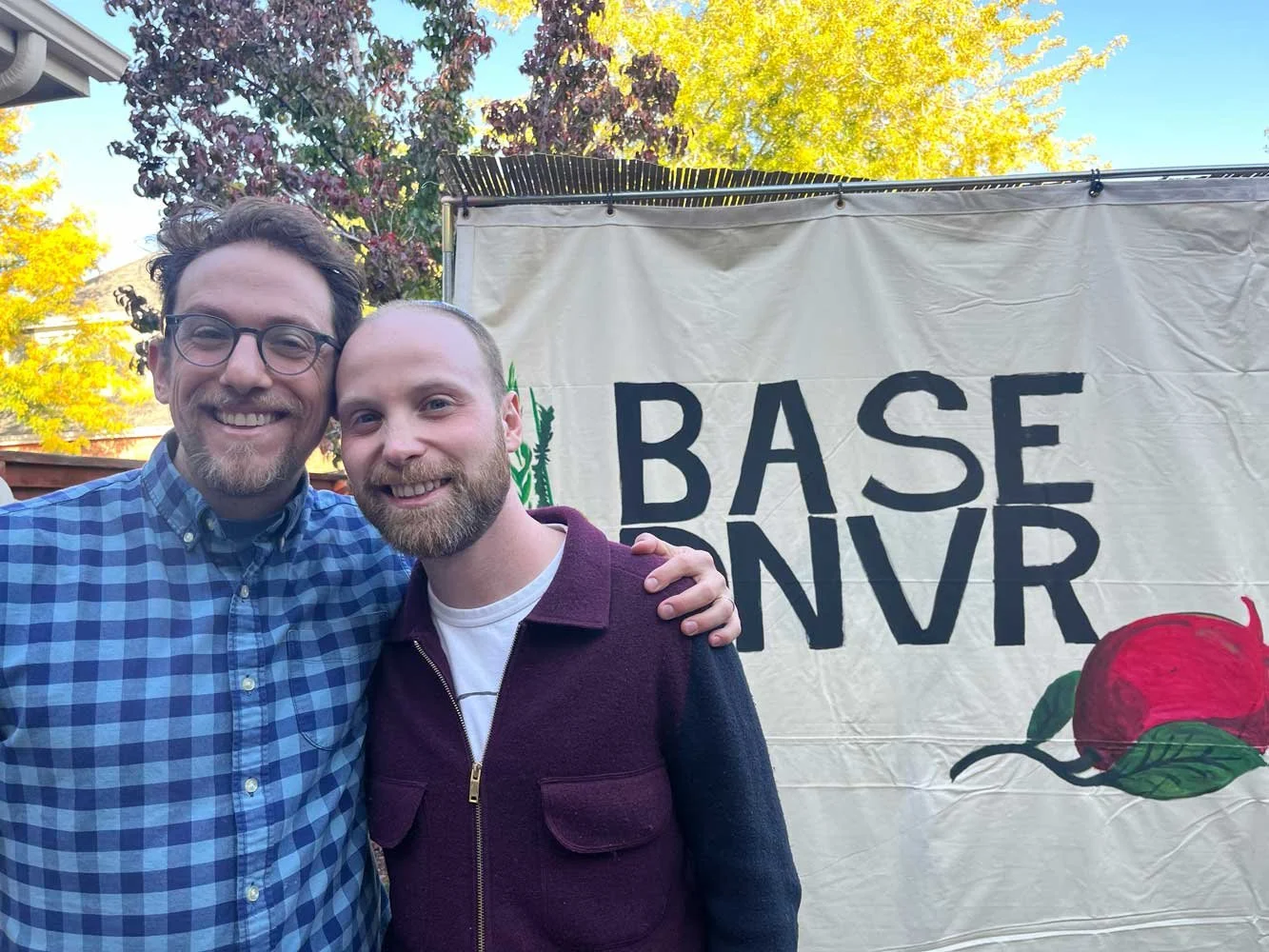
S1 Ep 4Episode #4: Queer Judaism: Coming out again and again and again: Daniel Eisenberg and Rabbi Dave Yedid
Julie and Jason interview Daniel Eisenberg and Rabbi Dave Yedid. Daniel and Dave talk about establishing Base Denver in their home, the intersection between queer and Jewish identities, Passover as a “coming out” narrative (coming out again and again and again), and the erotic eco-poetics of The Song of Songs. We discuss crying on airplanes and at weddings, the necessary conjoining of sorrow and love, queer-time, Jewish-time, and the pleasure and power of submitting and surrendering to the divine feminine, the shekinah. Daniel Eisenberg is a somatic therapist & Jewish educator. He is originally from London, UK and had been living in Denver since 2022 where he runs Base Denver with his husband Rabbi Dave Yedid. He is passionate about opening space for multiple identities to coexist. Rabbi Dave Yedid is the founding rabbi and leader of Base Denver. Originally from New York state, he received his MA in Gender Studies and rabbinic ordination from Jewish Theological Seminary of America. Prior to rabbinical studies, Dave worked as a wilderness guide in therapeutic and camp settings. He is passionate about reclaiming the wild, witchy elements of Judaism.

S1 Ep 3Episode 3: The first principle is the principle of Lostness: Robert Yerachmiel Sniderman
Julie talks with poet-artist Robert Yerachmiel Sniderman about his project Wierzba Estery / Esther’s Willow, a collaboration with artists Katarzyna and Marta Sala in Chrzanów (PL), a half-Jewish city until the Nazi genocide and postwar processes that continued a long century of ethnic cleansing. The project gestures into the city’s traumatic recent past to reach an old and intimate space of transcultural ancestral experience and horizontal implication, where Jewish and Slavic communities in Poland mutually, collaboratively, and differently depended on willow trees to treat viruses, diseases, infertility, and bodily pain, exchanging knowledge, treatments, practitioners, and patients at a site of nonhuman mourning that continues, even nominally (“weeping willow”), to mediate between the living and the dead. We also discuss Robert’s earlier piece, Lost in Jüdischer Friedhof Weißensee. This project came into its most public manifestation in response to the 2018 Great March of Return massacres in Gaza. Robert enacted what he calls a “Counter-Ruin,” in which “Gaza” is written across his back in three languages as he walks through Berlin carrying stones to deposit in Jüdischer Friedhof Weißensee, the largest Jewish cemetery in Berlin.We discuss the urgent need for a “new universalism” or a “critical universalism,” and the seemingly intractable problem of, and violence inherent within, the nation-state. “Instead of space we have time and text: that’s Judaism,” says Robert, as we seek a principle of the unfinished and unsettled. Projects discussed: Esther’s WillowThe Hopkins Review: A Willow (Grave) That Knows a Felled Willow (Mourner) That Knew an Eradicated Square (Woman)Dream Text: Gaza Walks

S1 Ep 2Episode 2: Humming with: Dr. Sarah Pessin
Julie and Jason interview philosopher Sarah Pessin about her work on Moses Maimonides and Emmanuel Levinas. What does it mean to know God while not-knowing God? What happens when language fails? How do we “hum with”? How many spheres are there, and how does each have its own intellect? What does Emmanuel Levinas have to tell us about thinking and being with others? How does Levinas imagine a structure of self that helps us to face the world? We also discuss Neoplatonism, phenomenology, the pulse, interfaith work, and Sarah’s Jewish childhood in Brooklyn. Sarah Pessin is Professor of Philosophy and Jewish Thought at the University of Denver. She holds an Interfaith Chair, and works in areas of phenomenology, existentialism, Neoplatonism, interfaith civics, philosophy of religion, ethics, and social justice. She has won a teaching award from the graduate student council of the DU-Iliff Joint Doctoral Program in the Study of Religion, has served as a Fellow with the American Council on Education, and is the new Director of Spiritual Life for DU's Student Affairs and Inclusive Excellence. She is the author of Ibn Gabirol’s Theology of Desire: Matter and Method in Jewish Medieval Neoplatonism (Cambridge University Press, 2013).
S1 Ep 1Episode 1: Getting to Know Us: Julie Carr and Jason Lipeles
In this pilot episode of Return the Key, Jason and Julie interview each other about our friendship, the origins of the podcast, and our Jewish upbringings. We list our “Jewish themes,” read a bit from our recent writing, and ask each other to talk about the vexing ideas of “oneness” and “the chosen.”