Retirement Answer Man
670 episodes — Page 6 of 14

Ep 415Is Cryptocurrency a Good Investment for My Retirement?
Do you own any cryptocurrency? First introduced in 2009, Bitcoin and other cryptocurrencies have exploded in popularity over the past few years. On this episode of Retirement Answer Man, we’ll discuss what cryptocurrency is, how it is revolutionizing the banking system and the drawbacks of this new type of currency. Listen in to learn whether you should add a bit of crypto to your retirement portfolio and you’ll also hear the answers to listener questions about IRA contributions and IRMAA surcharges. What is cryptocurrency? Nan is curious about whether Bitcoin or other cryptocurrencies would be good investments to add to her retirement portfolio to hedge against inflation. Before we get into the answer to that question, we need to understand exactly what cryptocurrency is. Stemming from the word cryptography, the word cryptocurrency means it is a currency that is encoded. This digital currency is secured by cryptography technology which prevents it from getting hacked. Why is cryptocurrency such a big deal? Cryptocurrency is separated into denominations called coins or tokens which are actually cryptographically protected codes. These new currencies are atypical in that they are issued by non-centralized networks or entities and not issued by any government. The value of a cryptocurrency coin or token is stored digitally and managed by a blockchain network that facilitates transactions. Blockchain is basically a digital bank replacement that is virtually frictionless. Transactions are instantaneous and can be confirmed quickly. The promise of cryptocurrency could revolutionize currency transfers and remove the need for a banking system. With encrypted digital currency there is no need for a bank. Transactions bypass the third-party gatekeepers that are typical of traditional banking transactions, so there is no need for any extra fees. How could cryptocurrency help combat inflation? Inflation occurs when a currency loses value over time. We have seen the inflation rate spike over the past year and the more money that comes into the system the less value the dollar will have. Since the US government is printing currency faster than ever, many people are worried that the dollar will continue to lose its value.New crypto coins or tokens can only be released by mining, so the value of the currency is based on a degree of scarcity. The finite supply of the currency’s structure is designed to retain its value over time. What are some concerns over cryptocurrencies? With all the benefits that come with this revolutionary financial technology come some drawbacks. Since it is so new, cryptocurrency has become a craze with new currencies being released each day. Much like the internet craze of the early 2000s, no one knows which currencies will come out on top. The novelty of this new trend has also created volatility in the values of different cryptocurrencies. Currency values can spike up or down 10%-20% in one day.Investing in cryptocurrency is a bit like heading out to the wild west to pan for gold. Since it is so new, there is little to no government regulation which, paired with the anonymity that these currencies provide, can attract bad actors and lead to money laundering and tax evasion.Listen in to hear whether I recommend adding cryptocurrency to a retirement portfolio to hedge against inflation. OUTLINE OF THIS EPISODE OF THE RETIREMENT ANSWER MAN LISTENER QUESTIONS [5:05] Is investing in cryptocurrency a good way to combat inflation in retirement?[11:51] Why is cryptocurrency such a big deal?[17:01] What are some concerns over cryptocurrencies?[22:10] Contribution limitations in the year that you retire[24:41] Appealing the IRMAA surcharge[26:27] What counts as income when calculating ACA credits?TODAY’S SMART SPRINT SEGMENT [28:16] Finalize your 2021 net worth statementResources Mentioned In This Episode Episode 300 - Medicare and IRMAAForm SSA-44 - Medicare Income-Related Monthly Adjustment Amount - Life-Changing EventRock Retirement ClubRoger’s YouTube Channel - Roger ThatBOOK - Rock Retirement by Roger WhitneyWork with RogerRoger’s Retirement Learning Center
Ep 414How Will I Estimate What My RMD Will Be at Age 72?
Do you have a system for estimating what your future RMDs will be? Should you keep a mortgage or pay off the balance of your house in retirement? What should you do with the money that you withdraw to fill up your tax bracket? These are just a few of the questions that will be answered on this episode of Retirement Answer Man. Press play to check it out! My word of the year The end of the year is always a good time to think about beginning anew in the next year. I’m not big on celebrating New Year, but I enjoy the renewal process that comes with the start of the new year. If you have listened to the show in the past, you have heard me discuss my word of the year. I choose a word each year as part of my own process of renewal. I try to use my word of the year as my guiding light to help me stay focused on my goals for the year ahead. Have you ever chosen a word of the year to help you focus on your goals? Listen to this episode to hear what my word is this year. How do you calculate what your future RMDs will be? You know RMDs are coming at age 72, but how can you estimate what they will be? To calculate your RMDs you can create your own spreadsheet to get an estimation. Once you have a feasible retirement plan in place and you know how you will fund your retirement you can use this fantastic exercise to help you optimize your retirement plan. To estimate future RMDs, I set up a simple spreadsheet with these columns: your age, the year, the RMD ratio, the end of the year account value for the prior year, estimated withdrawals, and the year-end value. Once you have these values in place you can take the total and divide it by the value provided by the IRS uniform lifetime table to estimate your future RMD. How estimating your RMDs could benefit your retirement plan One way that this exercise can benefit you is by allowing you to project the risks that you might encounter in retirement. You may realize that you won’t need this much money to live on and decide that it is a good idea to fill up your tax bracket by withdrawing from your IRA sooner so that you can lower your RMD in the future. What to do with the money that you withdraw from your IRA to fill up your tax bracket If you do decide to withdraw from your IRA or 401K to fill up your tax bracket you will have the benefit that you know what your tax rate will be, but what should you do with the money? The way I see it you have 5 options. You can spend it, save it, give it away, invest it in after-tax vehicles, or convert it to a Roth IRA. The most important thing to do when making these arrangements is to think through your process in an organized way. What would you do if you decided to fill up your tax bracket? OUTLINE OF THIS EPISODE OF THE RETIREMENT ANSWER MAN WHAT DOES THAT MEAN? [1:30] My word of the yearLISTENER QUESTIONS [6:55] How do you calculate what your future RMDs will be?[15:33] Is it a good idea to keep a mortgage in retirement?[21:34] What do you do with the money that you withdraw from your 401K?[26:20] A suggestion from Mike[28:21] The efficacy of using balanced fundsTODAY’S SMART SPRINT SEGMENT [36:18] What will be your word of the year next year?Resources Mentioned In This Episode LTCI Partners Rock Retirement ClubRoger’s YouTube Channel - Roger ThatBOOK - Rock Retirement by Roger WhitneyWork with RogerRoger’s Retirement Learning Center

Ep 413Are I-Bonds a Smart Investment for My Retirement Portfolio?
Do you have a net worth statement that you update regularly? Whether or not you do, you’ll want to learn about the psychological benefits that this exercise can create. In this episode of The Retirement Answer Man show, we’ll discuss what a net worth statement is and how you can gain from creating one regularly. You’ll also hear several listener questions that range from inherited IRAs to I-bonds, to SPIA annuities. If you are interested in rocking retirement, you’ll need to arm yourself with the knowledge to help you navigate this change in life. Listen in to get started on your retirement education journey. A Rock Retirement Club announcement If you are looking to join the Rock Retirement Club you can sign up for the waiting list until we open enrollment again in late January. We closed enrollment in early December to restructure the club a bit and introduce periodic enrollment so that new members can be a part of a cohort. This will help freshmen members to take full advantage of their membership as they work their way through all the benefits that the club provides. If you are interested in checking out the Rock Retirement Club, head on over to the website and join the waiting list to receive the latest email updates. What is a net worth statement? If you have listened to the Retirement Answer Man show in the past, then you already know that a net worth statement is a statement of the resources you have accumulated with your wealth. Your net worth statement lists all of your assets and their values and your debts and their values. Assets like your retirement accounts, investment accounts, or property are listed on the left side of the net worth statement. These assets can be categorized by whether they are tax-deferred, after-tax, or tax-free accounts. On the right side is the debt column. Total each column up to see the value of each. Once you do that you’ll subtract the debts from your assets and have your net worth. Creating this valuable financial tool is a way to understand the cumulative impact of the financial decisions you have earned. Do you have a net worth statement that you update regularly? The 5 ways you can use your income Since there are only 5 things that you can do with your income, your net worth statement reflects those financial decisions that you have made. These are the 5 ways that you can use your money:Spend it. Pay down debtGive it away.Save it as cash in an emergency fund.Invest for the future.For every dollar you have earned you have made a decision (whether consciously or unconsciously) to do one of these 5 things, so your net worth statement is a reflection of these choices. Creating a net worth statement provides a psychological impact By updating your net worth statement periodically you’ll be able to compare how your finances reflect your values and whether you are using your finances to stay in line with your goals. If you identify any incongruencies then you can address the behavior before it gets out of hand. Have you ever put together a net worth statement? When was the last time you updated it? As a rule of thumb try revisiting it every 6 months.Make sure to listen to the next episode to hear my word of the year! OUTLINE OF THIS EPISODE OF THE RETIREMENT ANSWER MAN PRACTICAL PLANNING SEGMENT [1:56] What is a net worth statement?[4:50] Creating a net worth statement provides a psychological impactLISTENER QUESTIONS [11:21] You can work with LTCI Partners directly[14:45] Mike asks if I-bonds are a no-brainer[20:12] Examples of how people have blended retirement with meaningful work[24:28] A comment about SPIA annuities[32:25] Alternatives for the fixed income portion of assets in retirement [35:27] Navigating the changes to the inherited IRA RMD rulesTODAY’S SMART SPRINT SEGMENT [37:51] Consider creating experiences rather than giving gifts for the holidaysResources Mentioned In This Episode BOOK - Retirement Planning Guidebook by Wade PfauWade Pfau - Retirement ResearcherTreasuryDirect.govLTCI PartnersRock Retirement ClubRoger’s YouTube Channel - Roger ThatBOOK - Rock Retirement by Roger WhitneyWork with RogerRoger’s Retirement Learning Center
Ep 412What Is a Retirement Plan of Record?
You have probably heard me refer to a retirement plan of record in the past few episodes, but you may be wondering what exactly this is. I have had several listeners reach out and ask me to define this term, so in addition to hearing listener questions, today you’ll learn exactly what a retirement plan of record is and how it can help you plan your retirement. Press play to check it out. What is a plan of record? The retirement plan of record is something that I work on with my clients and I am in the process of developing a template that will be available in the Rock Retirement Club masterclass. This plan of record will help you create a current representation of your decision-making framework so that you can walk through a decision-making process in an organized way. Why is it important to have a plan of record There is so much to consider in retirement planning--asset allocations, withdrawal rates, Roth conversions, IRMAA, taxes, not to mention who your friends will be and what you’re going to do all day. With all of these considerations, it is easy to become overwhelmed by the choices if you don’t have an organized way to make decisions. Without a clear direction, your decision-making process could have you bouncing around like crazy. The 3 pillars of the agile process When creating a retirement plan of record, it is important to organize your financial goals into 3 pillars so that your plan can remain agile. First, develop a feasible plan, then, make it resilient, and lastly, optimize your plan. If you can arrange your decisions under these 3 pillars, then you can think through the process in an organized way. A retirement plan of record can ensure that your decisions reflect your values and goals. You’ll be able to create feasible spending goals based on your resources. Your plan needs to be resilient so that you can manage risks. Once you have your plan of record in place then you can work through each decision while referring to your plan. You’ll be able to see the changes you are considering within your organized process and create a what-if scenario by making a copy of your plan of record and adjust accordingly. This way you’ll be able to flush out the implications of this new variable so that you can examine the decision in a thoughtful way. The plan of record is a useful tool to accomplish organized thinking that you can execute in a consistent rhythm so that you can stay agile and make the most of your life regardless of what happens. Your plan of record allows you to focus on what you can control. OUTLINE OF THIS EPISODE OF THE RETIREMENT ANSWER MAN WHAT DOES THAT MEAN? [3:50] What is a plan of record?OUR SPONSOR [12:22] Check out LTCI Partners for your long-term care insurance needsLISTENER QUESTIONS [13:31] Lee is worried about inflation--should she work longer?[22:05] Thinking about Social Security claiming strategies[28:18] How IRMAA surcharges work each year[33:26] How to deal with switching from an HSA to Medicare[35:32] Filling up tax bracket bucketsTODAY’S SMART SPRINT SEGMENT [39:03] Review your retirement contributions to make sure you are hitting the numbers you wantResources Mentioned In This Episode Episode 385 - The 4% RuleEpisode 395 - Retirement Risk BasicsCheck out LTCI Partners for your long-term care insurance needsRock Retirement ClubRoger’s YouTube Channel - Roger ThatBOOK - Rock Retirement by Roger WhitneyWork with RogerRoger’s Retirement Learning Center
Ep 411Overcoming Frugality
Rocking retirement doesn’t mean getting your Roth conversions right, it means minimizing your regrets. At the end of your life, you don’t want to think “yay, I paid fewer taxes!” you want to think “wow, my life was awesome!” Overcoming the frugality that stems from a lifetime of saving is one way to live a life free of regret in retirement.To ensure that you can live life to the fullest, create a retirement plan that can iterate as life unfolds. When you have a feasible, resilient retirement plan that utilizes the resources you have you’ll be able to build the life you want. You’re already well on your way to rocking retirement by listening to the Retirement Answer Man show. On dialing back Recently I committed publicly to publishing 2 episodes per week in an effort to improve the show. However, very shortly after making this change, I realized that it wasn’t a good change for me. For this reason, I decided to pivot back to one episode per week. I realized that it is important to live my life true to myself rather than base my choices on the expectations of others. Have you ever made a decision that you quickly had to undo? Should Gene pay off his house from a pretax retirement account? Gene is considering paying off his house from his 401K account. He owes $200,000 at 2.5% on a 25-year loan. He would like to know what the best course of action would be in his situation. As with any major retirement planning question, my recommendation is to refer to your retirement plan of record. (To get a more detailed understanding of the retirement plan of record, make sure to listen to the next episode!) After walking through that plan with the mortgage in place, then you can create a what-if scenario in which you pay off the mortgage. This way you can compare each choice side by side to see which one would best serve your overall goals.Listen in to hear why I wouldn’t take the funds from my 401K to pay off my house and hear what I would do instead. How to move from accumulation to distribution phase of life You have saved for decades, so when the time comes to start spending that savings it can be a challenge to loosen the purse strings. Retirement is not simply about spending money: it’s about living your life to the fullest. Think about why you chose to save your money and act frugally for so many years. Chances are, you did so to achieve financial security and to pay for the best retirement lifestyle that you could afford. Achieving financial security means that you feel comfortable with your retirement plan. If you don’t have faith in your plan, consider having a professional look over your plan to bolster your confidence so that you can rock retirement. How to improve your life and overcome frugality If you are a naturally frugal person, you may think that you have everything you need at this point in life, so there is no reason to spend more than you do. However, there are many ways that you can improve your life by spending money. Consider whether these activities would enhance your life.Eating out with friends more frequentlyAttending physical therapyGetting regular massagesHiring a personal trainer to improve fitnessHiring a nutritionist to help you plan mealsOvercoming frugality can help you live your life to the fullest and rock retirement. Think about how you could increase your spending to maximize your life. OUTLINE OF THIS EPISODE OF THE RETIREMENT ANSWER MAN LISTENER QUESTIONS [4:00] A correction on QLACs[5:05] Social Security and Cola[9:25] An urgent inherited IRA question[12:30] On dialing back[15:08] Whether or not to pay off the house from a 401K[20:48] One listener appreciated learning about Roth conversions COACH’S CORNER WITH KEVIN LYLES [26:18] On overcoming frugality[29:42] Spending guaranteed income is much easier[31:26] How you can improve your life by spending[34:25] 3 tips to incorporate to spend your moneyTODAY’S SMART SPRINT SEGMENT [42:55] Look for ways to enhance your life todayResources Mentioned In This Episode Start here to listen to the Retirement Tax Management series with Andy PankoBrian Johnson’s Optimize.meRock Retirement ClubRoger’s YouTube Channel - Roger ThatBOOK - Rock Retirement by Roger WhitneyWork with RogerRoger’s Retirement Learning Center
Ep 410The Mechanics of Decumulation
How do you pivot from a moderately aggressive portfolio in the accumulation stage of retirement planning to the decumulation stage? In today’s episode, we tackle two listener questions about the mechanics of decumulation in retirement planning. You’ll also hear a question about using QLACs to reduce RMDs. If you are wondering about the details on how exactly you are going to make this retirement thing work then be sure to press play. Retirement plan live is coming soon to a podcast near you! In January we’ll be hosting the next edition of Retirement Plan Live. Retirement Plan Live is an extremely popular series that we run each year where I walk out the logistics of creating a retirement plan over the course of 4 episodes with a listener. At the end of the series, we host a live webinar where we analyze whether that particular plan is feasible. Our last Retirement Plan Live series dealt with Trish and her unexpected retirement. If you would like to be the next subject of RPL, make sure you are signed up for the 6-Shot Saturday newsletter so that you can access the link to the application form. We’ll choose one listener from the dozens of applications we receive. We will make sure to change the name and details of your situation while at the same time keeping the generalities in check. Listen in to hear the details. How to get the most bang for your buck in your retirement portfolio Steve has invested moderately aggressively, but as he turns 65 and enters retirement he is looking to become more conservative while at the same time getting the most bang for his buck. He is trying to figure out how to structure his portfolio conservatively while providing a bit of growth and income through dividends.The best way to approach this or any retirement planning question is to take a top-down approach. If you start at the bottom and work your way up you miss out on how your question fits into the big picture. Retirement planning starts with your overall goals for retirement. Then you need to understand how this particular question fits into your retirement plan. Once you have a feasible plan, then you can build a cash flow model which plans out your spending over the next 5 years and beyond. Once you have this cash flow model in place then you can make that model resilient. This is where your question comes in. How would you make your plan resilient? Do you want to optimize your portfolio for more money and higher returns or do you prefer to have a high level of confidence in your spending no matter the market? Rather than getting the most bang for your buck, consider what kind of outcome you would prefer to secure. How to simplify retirement accounts without taking a huge tax hit Karen is planning on retiring at age 61, but before she does she would like to simplify her retirement accounts. Currently, she has over 50 different investments. She wants to simplify the accounts into as few funds as possible and rebalance them without taking a huge tax hit. Once again, we must approach this problem in an organized way. When you consider what you are trying to accomplish by simplifying your accounts then you can see how this exercise will fit into your overall retirement plan. How would you approach this question? OUTLINE OF THIS EPISODE OF THE RETIREMENT ANSWER MAN PRACTICAL PLANNING SEGMENT [1:30] News on the showLISTENER QUESTIONS [6:25] Using QLACs in retirement planning to reduce RMDs[11:35] Rita is interested in another series on long term care[12:46] Steve’s question getting the most bang for his buck during decumulation[30:20] Karen’s question about simplifying her portfolioTODAY’S SMART SPRINT SEGMENT [40:14] Go beyond the normal thankful things--think about the things that warm your spiritResources Mentioned In This Episode Retirement Plan Live 2021 - start hereDecumulation series - start hereRock Retirement ClubRoger’s YouTube Channel - Roger ThatBOOK - Rock Retirement by Roger WhitneyWork with RogerRoger’s Retirement Learning Center
Ep 409Reflections on the Retirement Scene
We often have monthly themes to guide the topics of this show, but this month on Retirement Answer Man we are doing a bit of a mishmash. Today I want to share some thoughts I had on retirement in general and answer a few retirement questions. As you listen, think about which topics apply to you and your situation and see if you can come up with actions that can get you closer to your retirement goals. Overcoming frugality can be a challenge After decades of saving your money and delaying gratification, suddenly letting loose to spend money on the things that make you happy may not come easy. If you have been a diligent saver over the years, you may find it challenging to shift from a saving mindset to a spending mindset especially when that mindset shift is timed with the loss of income from your human capital. The good news is that shifting to a spending mindset doesn’t need to happen like flipping on a light switch. This is a gradual change that can occur slowly. One way to help yourself become more open to spending is to construct a framework to help you make decisions.Becoming a new version of yourself takes time. Give yourself grace and time to make change happen. Retirement planning is complicated If anyone ever tells you that they have all the answers to retirement planning, run in the other direction. This is because no one can ever have all the answers to something so complicated as retirement planning. The way I like to go about planning is by organizing decisions under 3 separate categories. Are your dreams feasible? Consider the life you want and whether it is feasible given your resources. This means that you need to consider your values and what you really want. Next, you’ll want to discuss it with your spouse if you are married and run the numbers to see if your dreams are truly feasible.Is your plan resilient? The winds of change will come and they could take many forms. They could come in the form of inflation, uncooperative markets, death, or healthcare bills. Having a resilient plan will help you stay the course that you set. Ways that you could make your retirement plan resilient could be through cash flow planning, matching your assets, and managing your risks in an organized way. Can your plan be optimized? Optimization is a way to enhance your journey. Tax planning, asset allocation, Roth conversions, ACA credits, and Medicare decisions all fall under the category of optimization. These are ways that you can enhance your plan to improve it. However, it is important to remember that these are the extras, not the plan itself. Organize your retirement planning to stay on track By organizing your retirement planning under these 3 pillars you can ensure that you aren’t letting the tail wag the dog. Having an organized way to deal with your retirement plan will ensure that you aren’t missing out on an aspect of retirement that could have a major impact on your life. Make sure to stick around for the listener questions segment of the show. You’ll hear me answer questions on how to calculate modified adjusted gross income to include capital gains and I’ll even respond to a recent critique that I had from one listener. OUTLINE OF THIS EPISODE OF THE RETIREMENT ANSWER MAN REFLECTIONS ON RETIREMENT [4:35] Overcoming frugality is a challenging thing for many recent retirees[6:50] Retirement planning is complicatedLISTENER QUESTIONS [13:07] Modified Adjusted Gross Income [16:33] My response to Janet’s critique[18:57] Otto’s comments on a recent question I answeredTODAY’S SMART SPRINT SEGMENT [22:28] Think about something that you need to undoResources Mentioned In This Episode Rock Retirement ClubRoger’s YouTube Channel - Roger ThatBOOK - Rock Retirement by Roger WhitneyWork with RogerRoger’s Retirement Learning Center
Ep 408Listener Questions: Which Account Should I Withdraw from to Fill Up My Tax Bracket?
Ever since listeners enjoyed our Retirement Tax Management series with Andy Panko we have received an influx of questions surrounding taxes. I’ll answer several questions today about filling up your tax buckets. I’ll also respond to queries about planning when to take Social Security when you will have excess RMDs and how to incorporate balanced funds into your asset allocation. Don’t miss this episode if you still have burning tax questions left over from last month’s series on retirement tax management. The Rock Retirement Club has so much to offer The Rock Retirement Club recently hosted the Retirement Rodeo Round-Up in Fort Worth, Texas. I was so impressed by the levels of motivation and excitement that I saw from the participants. Everyone who attended was excited to share their knowledge and learn from each others’ journeys so that they could make the most out of their retirement. Have you considered joining the Rock Retirement Club? If so, or even if you just want to learn more about it, check out the virtual open house that we’re having on November 16. At the open house, you’ll get a sneak peek of the Club’s Retirement Master Class and preview member tools like Everplans and the New Retirement Planner Plus calculator. The open house will be a great way to decide whether the RRC is right for you. Register for this event at LiveWithRoger.com. Are you having trouble overcoming frugality? One common concern from the participants at the Retirement Rodeo Round-Up conference was the challenge of overcoming frugality. Like many Retirement Answer Man listeners, RRC members are amazing savers, but after saving and delaying gratification for so many years it is hard to break the habit. There is a mental shift that must take place to switch from saving to spending and shifting your mindset can be difficult. Instead of watching your accounts grow, you now see them stay stagnant or decrease over time and this can set off alarm bells in your mind. Have you experienced difficulty navigating this change? What did you do to shift your mindset from saving to spending? When should Jenny claim Social Security? Jenny has been a diligent saver and will end up having excess RMDs. This issue has caused her to think about the most beneficial time to claim Social Security. She is considering taking Social Security at age 62 to lower her income, but I have another strategy for her to consider. Listen in to hear my thoughts on what you should do if you have substantial projected RMDs. How to fill up your tax bracket bucket in retirement One of the strategies that Andy Panko and I talked about last month in the Retirement Tax Management series was filling up your tax bracket. When filling up your tax bracket you'll want to take funds from your IRAs or other tax-deferred accounts and either spend that money, invest it in after-tax assets, or convert it to a Roth IRA. Work out the best situation for you by creating a retirement plan of record and then test different outcomes. Have you created a retirement plan of record yet? OUTLINE OF THIS EPISODE OF THE RETIREMENT ANSWER MAN LISTENER QUESTIONS [2:40] It takes a big mental shift to stop saving and start spending[4:01] How much to allocate to asset allocation if you have balanced funds in your portfolio?[7:05] How Social Security works with RMDs[13:10] How to fill up the tax bracket bucket[15:15] What to do with the money that you fill up your tax bracket with[16:26] Scott really enjoyed the episodes with Tanya NicholsTODAY’S SMART SPRINT SEGMENT [17:10] Calculate your projected income for 2021Resources Mentioned In This Episode Register for the Rock Retirement Club’s virtual open house at LiveWithRoger.comTanya Nichols with Align FinancialCheck out Tanya Nichols in the Women in Retirement series - Start HereRock Retirement ClubRoger’s YouTube Channel - Roger ThatBOOK - Rock Retirement by Roger WhitneyWork with RogerRoger’s Retirement Learning Center
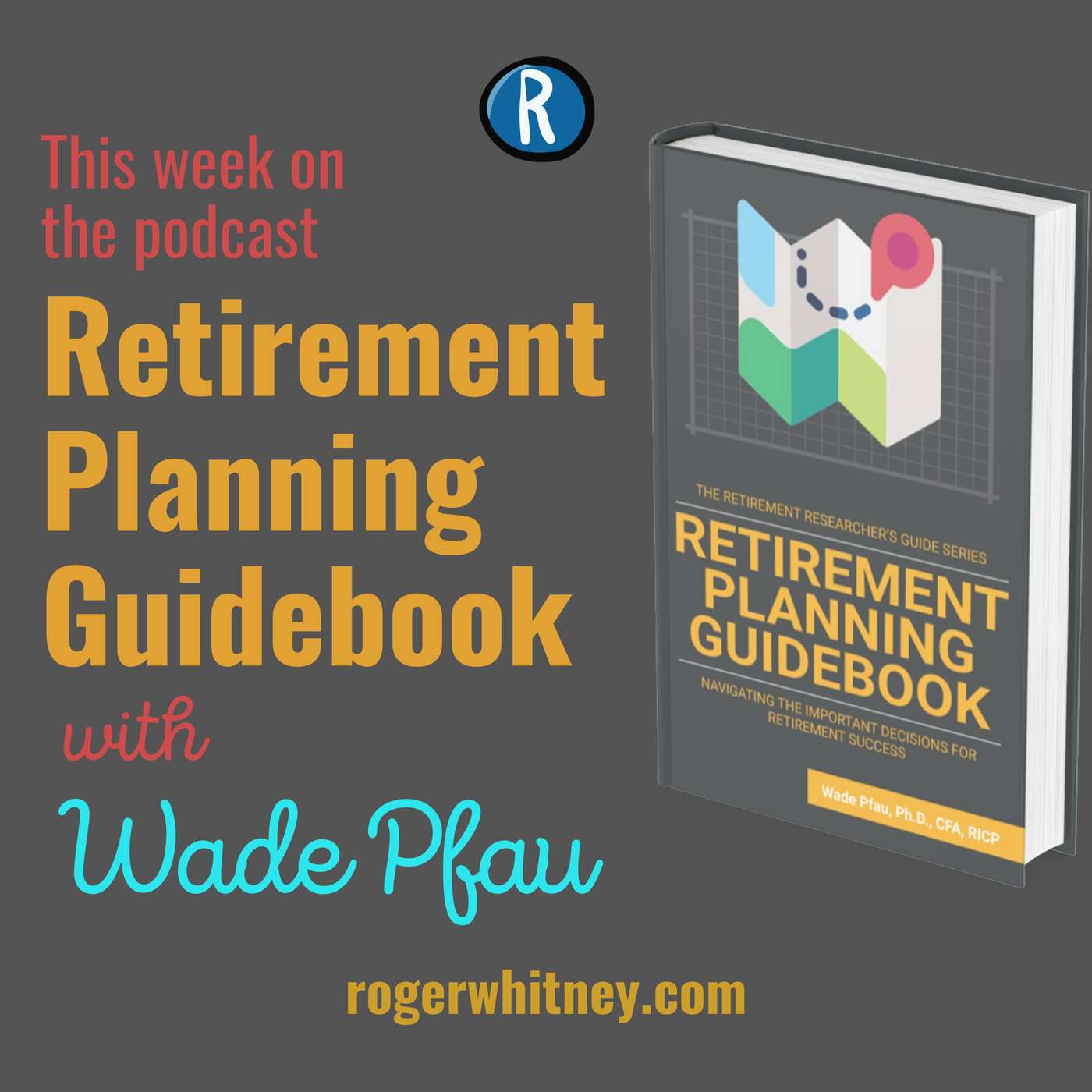
Ep 407Retirement Planning Guidebook with Wade Pfau
Do you wish you could find a comprehensive guidebook to help you plan your retirement? If so, you won’t want to miss this interview with Dr. Wade Pfau. Wade is the founder of the Retirement Researcher website and a retirement income professor at the American College. He is also the author of several books and his newest, the Retirement Planning Guidebook, was recently published. This book is the most detailed retirement guide that you will find, so don’t miss out on this interview to hear what to expect from Wade’s guidebook. There is no one way to plan for retirement Unfortunately, there isn’t a simple answer to how to plan your retirement. The way that works for you may not be ideal for your next-door neighbor. This is why it's important to come up with a strategy first. That way you can build your retirement plan according to your strategy. If you can come up with a flexible solution then you can make iterations based on changes in the world around you. Retirement planning is all about preparing for uncertainty. With the right strategy, you can make educated decisions to carry you through those uncertain times. Retirement choices cause a ripple effect throughout other areas The choices you make in retirement have a ripple effect in many areas and one decision can create unexpected consequences in another part of your retirement plan. This makes it challenging to make any choices and can lead to analysis paralysis. Let’s see how one decision could lead to a domino effect. Say that you are trying to diversify your portfolio. If you sell a major position that you hold then you could end up with capital gains which could push you into another tax bracket which could eliminate the possibility of using ACA credits and so on. Rather than be paralyzed by the fear of making the wrong decision, you need to think in an organized way about what problem you would like to solve. If you are trying to lessen your market risk you will need to sell to diversify your portfolio. However, if you are trying to focus on getting ACA credits the decision to diversify all at once may not be the best strategy. How much should we consider tax policy in retirement planning Taxes are one of the great unknowns in retirement planning. No one can say for certain how tax policy may change in the future. So how much should you try to predict tax policy changes when planning for retirement?It is always good to start with a basis and then test different outcomes. The current tax rates are a good starting point for building your retirement plan of record. Once you build this foundation, you can tease out different outcomes as you learn more information. Retirement tax planning isn’t made on a yearly basis, rather you should plan to try and reduce your overall lifetime tax bill.Learn how to utilize Social Security, plan for the unknown, and lower your lifetime tax bill on this episode of Retirement Answer Man with Wade Pfau. OUTLINE OF THIS EPISODE OF THE RETIREMENT ANSWER MAN WADE PFAU INTERVIEW [3:30] One decision you make in retirement affects others[10:21] There is no one way to plan for retirement[13:31] How much should we consider tax policy in retirement planning?[16:45] Social Security considerations[25:53] Consider the premium cliffs that are out there[31:31] How to factor in a cognitive decline[34:58] How to navigate the lump sum vs. lifetime income decisionResources Mentioned In This Episode BOOK - Retirement Planning Guidebook by Dr. Wade PfauRetirement Researcher websiteThe American CollegeBOOK - How to Decide by Annie DukeBOOK - Because a Little Bug Went Ka-Choo by Rosetta StoneRock Retirement ClubRoger’s YouTube Channel - Roger ThatBOOK - Rock Retirement by Roger WhitneyWork with RogerRoger’s Retirement Learning Center
Ep 406What the Happiest Retirees Know with Wes Moss
Do you understand what you need to do to build a happy retirement? My guest today has studied the data to tell the story of happy retirees in his new book, What the Happiest Retirees Know. Wes Moss is not only an author of multiple books, he is the host of the live radio show, Money Matters, and the Retire Sooner podcast. Learn the habits to develop now to create a happy retirement by listening to this interview with Wes Moss. Are you retiring to something or away from something? The real-world data shows that 70% of people don’t like their job and 20% of people actively hate their job so much that they want to hurt the company they work for.These sad statistics lead to people thinking that retirement is the answer to their unhappiness. However, it isn’t enough to retire away from something. We must retire towards something to find happiness in retirement. Is your objective to retire away from your job or towards happiness? Think about what you would like to retire towards. Do pre-retirees have misconceptions about what a happy retirement really is? Most people have a preconceived notion about retirement. They believe that once you reach a certain level of financial security, you’ll stop working and then the skies will open up and the world will become a happy place. They feel like retirement will be some version of heaven.However, the reality is much different. There is a period of transition and not an instant magical change. Preparing well in advance will help to create a happy retirement and avoid disappointment. It only takes $75,000 per year to be happy One of the biggest worries in retirement is having enough money, but research shows that it only takes between $70,000 and $80,000 per year to create a happy life. Having more money won’t increase levels of happiness. It doesn’t take as much as you think to avoid an unhappy retirement. Even though many people feel the loss of a sense of purpose and increased loneliness once they retire, with a bit of preparation, anyone can create a happy retirement. Habits to develop to create a happy retirement Wes describes ten categories in his book that contribute to happiness in retirement. These habits include: Money habitsCuriosity habitsFamily habitsLove habitsFaith habitsSocial habitsHome habitsHealth habitsInvesting habitsWithin these categories, only a few areas actually have to do with money. If you can build up a solid foundation of healthy habits before you retire, you will have a greater chance of creating a happy retirement. What the Happiest Retirees Know can even be used as a workbook. As you read through, find the habits that you want to improve and see how you can stack them to work on 3 or 4 together at the same time. Listen in to hear how golfing is a way that I habit stack areas that I am actively working on in my own life. What are you working on to ensure that you create a happy retirement? OUTLINE OF THIS EPISODE OF THE RETIREMENT ANSWER MAN WES MOSS INTERVIEW [2:30] The data tells the story[3:55] Do pre-retirees have misconceptions about what a happy retirement really is?[11:54] It only takes $75,000 per year to be happy[15:14] If your base is in place then you don’t need to worry so much about money[21:45] How to use Wes’s book as a workbookResources Mentioned In This Episode BOOK - What the Happiest Retirees Know by Wes MossBOOK - You Can Retire Sooner Than You Think by Wes MossRetire Sooner podcastMoney MattersBOOK - The Top Five Regrets of the Dying by Bronnie WareRock Retirement ClubRoger’s YouTube Channel - Roger ThatBOOK - Rock Retirement by Roger WhitneyWork with RogerRoger’s Retirement Learning Center

Ep 405Listener Questions: Don’t Let Perfect Be the Enemy of Good
Do you let perfection get in the way of progress? Trying to reach perfection could prevent you from reaching your goals. Retirement coach, BW joins me to discuss forward movement and setting realistic goals. In this episode, you’ll also hear listener questions about claiming spousal Social Security, preparing for retirement after divorce, and annoying financial surprises. You won’t want to miss the differing points of view on benefit protections, so make sure to listen until the end. What can Hazel do to prepare for retirement? Hazel is 51 and going through a divorce. She doesn’t plan to retire until she is age 65 even though she is eligible for a pension at age 55. She is looking ahead to what she should be doing to prepare for her retirement in the midst of her divorce. The first thing that she needs to do is to get through this divorce. Divorces can be messy or they can be amicable. While no one wants to create a messy divorce, it is important to make sure to take care of yourself first. Don’t mistake being nice with sacrificing your own interests. The next thing to do is to continue to save in a 401K. Even though Social Security and the pension will be Hazel’s main income streams in retirement, it is important to continue to build her retirement savings. The last thing that Hazel and you can do to prepare for retirement is to head over to DoRetirementRight.com and download this guide that will walk you through the steps to take in the years leading up to retirement. How to time the spousal Social Security benefit Mike has a question about the timing of his wife’s spousal Social Security benefit. He is considering taking his benefit early at age 62, but his wife is 3 years younger than him. If he takes his benefit at 62, his wife will still not be eligible for her benefit until she turns 62. However, if he waits until full retirement age at 66 then she could take her benefit at age 62. A great way to begin to plan this out is to create a retirement plan of record using the full retirement age as the basis and then to create different what-if scenarios. You can use the Spousal Social Security calculator to help calculate the percentage that your spouse would receive. Check out this recent interview I had with Wade Pfau to hear just how important Social Security is to retirement plans. An annoying financial surprise or spousal protection? Rhonda doesn’t have a question but rather a comment on annoying surprises that she has discovered in her finances. She has a pension and has to decide how she wants to take it. Recently, she discovered that if she decides to take the maximum benefit that only covers her own lifespan then her husband has to sign off on the form to approve this benefit selection. This isn’t the only thing that she has noticed that she needs her husband’s notarized signature for. If she chooses to change her beneficiaries on her retirement accounts she must also get approval from her husband. Rhonda feels like this is one more obstacle for women to overcome to live life in a man’s world, but I have another perspective. These rules (which vary state by state) were actually created to help protect women when men were the main breadwinners. How do you see these rules? Do they protect women or make it more challenging for them to keep their hard-earned money? Don’t let perfect be the enemy of the good As we finish off the month-long series on retirement tax management it can be easy to get caught up in the details of optimizing your situation. However, trying to get something perfect can lead to analysis paralysis. Sometimes we just have to point ourselves in the right direction and move ahead. It is important to be realistic about what is possible. There are so many unknowns when it comes to future tax planning that it is hard to be precise. The most important thing to do is to get the big things right and let the small things take care of themselves. OUTLINE OF THIS EPISODE OF THE RETIREMENT ANSWER MAN WHAT DOES THAT MEAN? [2:30] What can Hazel do to prepare for retirement?[8:30] Mike’s Social Security question[12:36] You don’t need to feel dumb[15:12] Rhonda discovered annoying surprises to deal with as a womanCOACHES CORNER WITH BW [21:07] Don’t let perfect be the enemy of the goodTODAY’S SMART SPRINT SEGMENT [29:18] Have a safe HalloweenResources Mentioned In This Episode Start listening to the Women in Retirement series hereSpousal Social Security calculatorWade Pfau interviewDoRetirementRight.comRock Retirement ClubRoger’s YouTube Channel - Roger ThatBOOK - Rock Retirement by Roger WhitneyWork with RogerRoger’s Retirement Learning Center
Ep 404Retirement Tax Management: How to Incorporate into Your Retirement Plan
Over the past several episodes you have learned so much about tax planning in retirement. You learned why tax planning is important, all about the hidden tax bombs, and tools that you can use to defuse those tax bombs. Now it’s time to incorporate all of this newfound knowledge into your retirement plan.Andy Panko from Tenon Financial joins me once again to discuss how to incorporate tax planning into your retirement plan. Press play to hear how you can create a retirement plan that incorporates tax planning. How to become comfortable with uncertainty Oftentimes people are looking for a hard and fast rule to follow to make their retirement plan foolproof; however, there is no magical number or rule to create an iron-clad retirement plan. We can’t predict the unknowable, so we have to become comfortable with the uncertainty that retirement brings. To help you conquer that uncertainty, it is important to build a process that will help you make better decisions. The way that you can do this is by creating a retirement plan of record and testing projections and what-if scenarios. By setting up a decision-making framework, you will be able to manage your retirement finances in an uncertain world. Tax planning is a way to optimize your retirement plan Before you can start tax planning you need to ensure that you have the basics in place. As long as you can first map out the fundamentals of retirement planning like your expenses, your retirement paycheck, and your asset allocation you will then be able to optimize your retirement journey with tax planning. Remember that tax planning isn’t the main part of retirement planning, it is simply a way to enhance your retirement experience and financial plan in retirement. Choose a retirement planning tool and stick with it There are plenty of tools on the market that can help you create your retirement plan and projections. In the Rock Retirement Club we use the paid version of the New Retirement Calculator, but there is also a free version that you can use. You may be happy by creating a simple spreadsheet to help guide you.Just like there is no perfect retirement plan, there is also no perfect retirement planning tool. Whatever you decide to use, stick with that tool the way that you stick with the same scale to check your weight. You don’t want to flip flop back and forth between different calculators since the numbers may not look the same. Make an educated guess Even though you can’t predict what will happen in the future with tax legislation, you can make educated guesses about what would work best for you based on your own situation. Educated guesses are not just guesses. By using your retirement plan of record and modeling what-if scenarios you know that you are doing your best to make the best decisions for your retirement. Your decisions won’t always be the ‘right’ decisions, but that doesn’t mean that you shouldn’t plan in the first place. By creating a retirement plan of record and making projections you will be able to create a model that you can work from. Staying agile is the most important way to establish a successful plan so that you can rock retirement. OUTLINE OF THIS EPISODE OF THE RETIREMENT ANSWER MAN PRACTICAL PLANNING SEGMENT [4:30] Build a process to make better retirement decisions[7:52] Create a resilient plan[11:11] What if scenarios are important to creating a retirement plan[17:35] Educated guessing is a big part of retirement planning[24:24] Action items[30:05] How to choose a financial advisor or tool to help you planTODAY’S SMART SPRINT SEGMENT [31:40] Start the process of getting a plan of record in placeResources Mentioned In This Episode Tenon FinancialBOOK - Thinking in Bets by Annie DukeBOOK - How to Decide by Annie DukeThe New Retirement CalculatorRock Retirement ClubRoger’s YouTube Channel - Roger ThatBOOK - Rock Retirement by Roger WhitneyWork with RogerRoger’s Retirement Learning Center
Ep 403Listener Questions: I have Roth Conversion Questions!
Roth conversions, HSAs, pension choices, risk management: these are the topics of today’s listener questions. Susan, Gina, IM, and Daniel all submitted their questions to me via RogerWhitney.com/AskRoger and you can too! If you have any retirement questions, or even if you simply want to leave a comment about the show, click on the link to present your question. Whether you are looking to learn more about HSAs, Roth conversions, or evaluate your pension choices, listening to other listeners’ questions can help you learn how to frame your own questions and consider your options by always keeping your goals in mind. How to evaluate the best way to take a pension? Susan recently asked her financial advisor how she should take her pension and wasn’t satisfied with his answer. There are several options to choose from when deciding how to take a pension. One choice is to take the pension for a larger monthly sum for the duration of the pensioner’s life. Another option is to take a smaller amount over the course of the lives of both the pension holder and their spouse. A third option is to opt for a lump sum payment and forgo the monthly payments altogether.When making this decision there are a few ways to evaluate your choices. Create a what-if scenario to help you compare all the options. Then evaluate them next to your retirement plan of record. Listen in to hear how I perform this exercise with my clients. HSAs after age 65 HSAs are amazing tools that can help you reach your retirement goals. Gina’s question is about HSAs after age 65. She is still employed and plans to continue working for a few more years. She would like to continue to stay enrolled in her high deductible insurance plan so that she can continue to contribute to her HSA, but she isn’t sure how that would affect her Medicare choices. This is a great idea but navigating these waters is tricky since the rules surrounding Medicare are so complicated. Making a mistake could lead to a gap in coverage or even a lifetime penalty on parts B and D premiums. You’ll first want to check the rules surrounding your Medicare eligibility with your employee health insurance provider. Next, you should contact a Medicare navigator like Boomer Benefits. Should IM roll over her 401K to a Roth if she is worried about financial protections? IM writes in with a question about rolling over a 401K to a Roth IRA. She is worried about losing ERISA coverage when transitioning this money. ERISA stands for the Employee Retirement Security Income Act which was put in place to protect workers’ retirement plans. 401Ks are covered under this federal law; however, the protections for IRAs vary wildly from state to state. The first thing to do when considering this question is to check on the rules governing Roth IRA protections in your state. Next, you’ll want to evaluate your personal financial risk and how important this kind of coverage is to you. Make sure to scroll down to the bottom of the show notes to check out all the links to the resources mentioned in this episode. OUTLINE OF THIS EPISODE OF THE RETIREMENT ANSWER MAN LISTENER QUESTIONS [4:41] Which pension choice best suits Susan’s needs?[13:40] A question about HSAs after age 65[17:23] Do the risks associated with Roth IRAs outweigh the benefits?[22:12] Daniel has a few Roth conversion questions[30:22] Daniel has a few HSA questionsResources Mentioned In This Episode YouTube episode with Andy Panko on retirement tax bombsBoomer BenefitsBOOK - Retirement Planning Guidebook by Wade PfauInterview with Wade PfauThe Retirement and IRA ShowNeuYear.netRock Retirement ClubRoger’s YouTube Channel - Roger ThatBOOK - Rock Retirement by Roger WhitneyWork with RogerRoger’s Retirement Learning Center
Ep 402Retirement Tax Management: The Tax Toolbox
Are you worried that you won’t be able to live the life of your dreams in retirement? This is one of the main issues facing many people on the cusp of retirement. That’s why I created the Retirement Answer Man Show. I want to help you find the confidence to truly rock retirement.One way that you can become more confident in your retirement plan is by utilizing the tax planning tools that are available to you. Andy Panko from Tenon Financial is here to help you identify all the tools available in your tax toolbox. Press play to open up your tax toolbox and see what is inside. Opening your tax toolbox Before you can pick up a tool from the tax toolbox you must start with a broad understanding of your tax situation both now and in the future. This means that you’ll have to do some educated guessing to figure out what your future tax situation will be.Projecting your tax situation out 10 or 20 years down the road won’t be an exact science, so don’t try to make it so. More accuracy doesn’t mean more precision in future tax planning; there are too many factors at play.Simply because your tax situation won’t be exactly the way that you estimate it to be doesn’t mean that you shouldn’t take the time to map it out. You must take this step to get the framework you need to make educated decisions. This framework will be your basis for making practical decisions. 4 useful tools in your tax planning toolbox Fill up your tax brackets. If you retire before you start taking Social Security you may find yourself in an unusual situation. You may not have any income and therefore you won’t have a tax bill! Rather than marveling at this newfound freedom from the taxman, you may actually want to realize enough income to stay within the 12% tax bracket. By paying a bit in taxes now you could be utilizing an opportunity to lower your lifetime tax bill. Remember that those tax-deferred accounts are sitting there waiting for you to pay taxes on them when you reach age 72. Do Roth conversions. While you’re filling up the lower tax brackets you can convert your tax-deferred assets to Roth. The money will continue to grow, but you’ll be able to rest easy knowing that the taxes have already been paid. By performing Roth conversions you'll ensure that you won’t have all of your assets in tax-deferred accounts waiting for your RMDs. By converting some of your assets into Roth you’ll provide yourself with more flexibility, control, and optionality. Tax-loss and gains harvesting. Tax-loss and gain harvesting is a little-utilized tool that applies to brokerage accounts when you sell a position and realize a gain or a loss. You can use these gains and losses strategically to optimize your tax situation. Listen in to hear how this tool could work for you. Qualified charitable donation. If you are charitably minded QCDs are a great way to give to your favorite charity and save money on taxes at the same time. The trick with QCDs is that they must transfer directly from the IRA custodian to the charity. In retirement, tax planning isn’t the same as in your working years. You need to plan ahead so that you can optimize your lifetime tax bill.Next week you’ll learn how to incorporate all of these tools into your retirement plan so that you can avoid those tax bombs. Don’t miss that episode so that you can build a retirement plan that will give you the confidence to rock retirement. OUTLINE OF THIS EPISODE OF THE RETIREMENT ANSWER MAN PRACTICAL PLANNING SEGMENT [1:30] Financial planning should be a collaborative process[7:25] Opening your tax toolbox [13:29] Filling up your tax brackets should be your first tool[21:44] Roth conversions[29:39] Tax-loss and gains harvesting[39:36] Qualified charitable donationTODAY’S SMART SPRINT SEGMENT [42:03] Map out your future income and build a net worth statementResources Mentioned In This Episode Tenon FinancialJordan PetersonRock Retirement ClubRoger’s YouTube Channel - Roger ThatBOOK - Rock Retirement by Roger WhitneyWork with RogerRoger’s Retirement Learning Center
Ep 401Listener Questions: Is an Immediate Annuity a Good Option for Me?
Do you feel like you are late to the ball game in saving for retirement? Have you ever wondered if an annuity could take some of the stress out of writing your own retirement paycheck? Are you trying to figure out the best way to self-fund long-term care for you or your spouse? All of these questions come directly from listeners like you. If you have questions about retirement, Fridays are a great time to tune in. We are now releasing 2 episodes a week: one focused on the monthly theme and the other focused on listener questions. If you have a query of your own question head on over to RogerWhitney.com/AskRoger to submit your retirement questions. How to maximize retirement savings after getting a late start Catherine writes that this podcast has helped her get over the shame and frustration of not prioritizing her retirement savings earlier. Now that she has worked her way through those feelings she wonders what the best way to increase her retirement savings would be after getting a late start.Catherine is maxing out her 401K, and her husband has a simple IRA and no access to a 401K. However, if he could convince his partners to switch to a 401K he could max out the contributions and begin to expand their savings. Another way to get plenty of bang for your buck is to use an HSA. Many people don’t consider the HSA as a retirement account, but it can be a great way to help play catch up. You can contribute up to $7200 per year to your health savings account if you are enrolled in a high deductible insurance plan. Not only do you get to use pre-tax assets, but you can invest those assets to use in retirement. If you invest your HSA aggressively, it can become like a supercharged Roth IRA. Would an immediate annuity be a good idea for Mary? Mary is considering purchasing an immediate annuity with the proceeds from the sale of her house. She would like to receive between $1000-2000 per month from the $300,000 profit.A single premium immediate annuity (SPIA) could provide this kind of stable return, but before she jumps into such an arrangement she should consider the pros and cons of this type of annuity. The pros and cons of purchasing a SPIA One of the main reasons that people consider purchasing an annuity is their ease. With the SPIA Mary won’t have to manage her investments or worry about the markets. She’ll be receiving a guaranteed income for the rest of her life. There is definitely an advantage to this kind of simplicity. On the other hand, if she passes away shortly after purchasing the annuity then the money will not be hers to pass on to her heirs. By giving up her $300,000 and committing to an annuity she loses out on optionality. One way to combat this would be to make sure to have liquid assets on hand in case of an unforeseen event.Press play to hear my thoughts on purchasing an annuity and to learn how to self-fund for long-term care. OUTLINE OF THIS EPISODE OF THE RETIREMENT ANSWER MAN LISTENER QUESTIONS [2:57] Getting over the regret of not saving better sooner[10:06] Tom wonders if there will ever be an audiobook version of Rock Retirement[11:46] Would an immediate annuity be a good idea?[17:34] How to best self-fund for long-term careResources Mentioned In This Episode Rock Retirement ClubRoger’s YouTube Channel - Roger ThatBOOK - Rock Retirement by Roger WhitneyWork with RogerRoger’s Retirement Learning Center
Ep 400Retirement Tax Management: Hidden Tax Bombs
Have you been incorporating tax management into your retirement plan? If you have, you won’t want to miss this series, and if you haven’t, you definitely won’t want to miss this series. Last week we set the stage for this retirement tax planning series when we discussed how planning for taxes can work within your retirement plan. This week we’ll make you aware of the hidden tax bombs that could wreck your retirement plan. In next week’s episode, we’ll learn which tools you can use to defuse those tax bombs, and then in the last week of this series, we’ll learn how to integrate those tax tools into your retirement plan.My goal is to give you an organized way to incorporate tax planning into your overall retirement plan which is why I have invited retirement tax expert Andy Panko from Tenon Financial to join me to discuss the nuances of retirement tax planning. If you are ready to learn about the hidden tax bombs that are awaiting you in retirement then press play now. Required minimum distributions, the tax bomb that begets other tax bombs When you contribute your taxable income into a 401K, 403B, or other tax-deferred accounts your taxable income is reduced in the year that you make that contribution. However, many people forget that they are simply deferring that taxable income until later. Remember that taxes are never a question of if you will pay them, it's always a matter of when. Required minimum distributions (RMDs) are the government’s way of insisting that you pay the piper. RMDs begin at age 72 and at that time you must take 3.9% out of your tax-deferred accounts at this time. The percentage that you must take from these tax-deferred accounts grows each year.The best way to defuse this bomb is to project the total that your tax-deferred accounts will grow to so that you can get a feeling of how much you will need to withdraw when the time comes. Yes, Social Security can be taxed! Did you know that Social Security is taxable? It has been since 1984 and up to 85% of your Social Security benefit can be taxed. Just how much is taxable depends on your other sources of income. The more gross income you have, the bigger percentage of your Social Security benefit will be taxed. If you are curious about the percentage of your Social Security income that could be taxed then make sure that you are signed up for the 6-Shot Saturday newsletter. Do ACA subsidies fit into your retirement plan? If you are in need of health care before the age of 65 you may want to use Healthcare.gov. The way the marketplace works is by using a tax subsidy system. If a person makes between 1-4 times the poverty level ($17,000) then they can qualify for tax subsidies on a sliding scale.If you can keep your income below the threshold, then you could qualify for the ACA tax credits. Keeping your income low needs to be balanced with the rest of your retirement goals which is why it is important to have a retirement plan of record. There are several more tax bombs out there ticking away. To learn what they are you’ll have to press play to listen.If your interest in retirement tax planning has been piqued by this series and you want to learn more, check out Andy’s Taxes in Retirement Facebook group. With over 16,000 members, this group is a great way to exchange ideas with others who are on the same journey. OUTLINE OF THIS EPISODE OF THE RETIREMENT ANSWER MAN PRACTICAL PLANNING SEGMENT [2:50] RMDs are the first tax bombs[11:30] Social Security is the next tax bomb[15:46] Will Social Security go broke?[21:41] Taking advantage of the ACA subsidies[31:00] When you need to watch out for IRMAA[37:50] Do you need to be careful of NIIT?[38:55] A change in marital status could surprise youTODAY’S SMART SPRINT SEGMENT [44:29] Understand the important numbers sheet in the 6-Shot Saturday emailResources Mentioned In This Episode Tenon FinancialAndy’s Taxes in Retirement Facebook groupRock Retirement ClubRoger’s YouTube Channel - Roger ThatBOOK - Rock Retirement by Roger WhitneyWork with RogerRoger’s Retirement Learning Center
Ep 399Listener Questions: How Do I Go from Zero to Retired?
Are you a bit behind on your retirement savings and wondering how you’ll ever be able to retire? One of our listeners feels the same way. In this Listener Questions episode, I’ll answer his question as well as how to handle net unrealized appreciation (NUA), how to shift retirement savings after a job loss, and we’ll wrap it up by discussing the ramifications of taking Social Security early.We’re trying a new format this month and releasing 2 episodes a week. On Tuesdays, we’ll release the main segment which focuses on the theme of the month, and on Fridays, you’ll hear listener the questions. Make sure to check out all the episodes and let us know if you like the new structure. Change is hard! October has been a month full of change for me and change doesn’t always go smoothly. Not only am I publishing 2 episodes per week, but I’ve stopped drinking alcohol and started exercising in the mornings rather than in the afternoons. Any time you bring about changes to the rhythm of your life it can be a challenge. This is why the transition into retirement can bring such trepidation. Even if something new seems daunting, with practice over time the situation will improve. The more you practice the bigger your muscles will get.With a bit of research, planning, and action, you can learn how to create a paycheck for yourself in retirement, how to tackle your taxes, and how to navigate the healthcare system. Listening to retirement podcasts like this one is a great way to get started. How to go from zero to retired Not everyone has a 7 figure retirement portfolio, in fact the majority of the population finds themselves wondering how they’ll ever be able to stop working. One listener asks how he’s supposed to be able to catch up on retirement savings at age 50. The first thing you need to do if you feel behind in your retirement savings is to acknowledge and accept where you are. The next thing you need to understand is that there is only so much catching up that you can do at this point. Social Security will be a large part of your retirement equation After you realize that there is only so much you can do it is time to figure out how to maximize your Social Security benefit. There are a couple of ways that you can do this. The first one is to work longer so that you can increase your benefit. The next idea is to navigate when would be the best time for you to file for your Social Security benefit. If you take it early at age 62 you may see your benefit decreased by 30%. Waiting until the full retirement age at 66 or 67 will ensure that you get your full benefit amount, and each year that you wait to file your benefit will increase by 8%. The beauty of Social Security is that it is adjusted each year for inflation and it lasts for the rest of your life. Retirement is about living out the best version of yourself To create a retirement plan you can live with, you’ll want to increase your income and decrease your monthly obligations as soon as possible. Identify which bills you can pay off and try using the debt snowball method to pay down your debts. The less you can live on the more prepared for retirement you will be. Try to create a living environment that doesn’t require a lot of money. Remember that rocking retirement isn’t about spending loads of money, it’s about creating an environment where you can live the best version of yourself. If you have a question to ask head on over to RogerWhitney.com/AskRoger to send a written question or leave a voice message. OUTLINE OF THIS EPISODE OF THE RETIREMENT ANSWER MAN [5:00] How to go from zero to retired in 10 years[12:08] How to handle net unrealized appreciation (NUA)[20:23] How to shift retirement savings after a job loss[25:25] The ramifications of taking Social Security earlyResources Mentioned In This Episode Rock Retirement ClubRoger’s YouTube Channel - Roger ThatBOOK - Rock Retirement by Roger WhitneyWork with RogerRoger’s Retirement Learning Center
Ep 398Retirement Tax Management: Why It’s Important
Tax planning in retirement isn’t the same as in your working years. This is why we are dedicating an entire series to helping you understand how to manage your taxes in retirement. To help me navigate this complicated topic, I’ve invited retirement tax expert Andy Panko to join me for the whole month-long program. Over the course of this series, you’ll learn why tax planning is important in retirement, which tax land mines to look out for, what tools to include in your tax toolbox, and how to integrate tax planning into your retirement plan. Are you ready to dive deep into retirement tax planning? Press play now to learn why tax planning in retirement is so important. How does tax planning change in retirement? In your working years, tax planning isn’t that complicated. Since your income is based on your wages, you don’t have much control over your tax bracket. However, in retirement, you can control your tax bracket from year to year.Chances are, you have been contributing to tax-deferred accounts like 401K, 403B, or IRAs for much of your life. These have been wonderful vehicles for retirement savings that has allowed you to defer a bit of your taxable income. Now that you are coming to retirement age, it is time to pay the tax man. These retirement distributions will be taxed, but when you decide to take them is up to you--up to a certain point. Use long-term tax planning to save money in retirement In retirement, there are multiple tax planning opportunities that you can take if you plan for the long term. Since you have more control over your sources of income, you have a tax advantage that you didn’t have in your working years. This can make planning complicated and challenging; however, with a bit of research and practice you could end up saving thousands of dollars over the course of your retirement. Taxes aren’t the only thing to consider in retirement Don’t let the tax tail wag the dog. Even though it is important to consider your taxes in retirement it is also important to remember that taxes are not the end all be all of retirement planning. What Andy and I are trying to do is to help you build a framework so that you can consider your tax planning in an organized way. When you come up with a strategy to guide your decisions it will help make the complicated world of tax planning a bit easier to digest. Check out this episode on YouTube Did you know that we are now recording the Retirement Answer Man as a biweekly show? Make sure to check back in on Friday mornings to hear the Q&A part of the show. You can also watch this episode in a video format on YouTube so that you can see the charts and tables that we share. When you are done listening head on over to RogerWhitney.com and scroll down to the bottom of the homepage to sign up for the 6-Shot Saturday newsletter so that you can receive the worksheets mentioned in this episode OUTLINE OF THIS EPISODE OF THE RETIREMENT ANSWER MAN PRACTICAL PLANNING SEGMENT [2:33] What are the changes in taxes in retirement?[7:00] Think long-term when tax planning in retirement[11:36] Taxes are important but not the end all be all[17:17] Trying to understand the tax systemTODAY’S SMART SPRINT SEGMENT [28:26] Pull out your tax return to find your AGIResources Mentioned In This Episode Tenon Financial Andy’s Taxes in Retirement Facebook GroupRock Retirement ClubRoger’s YouTube Channel - Roger ThatBOOK - Rock Retirement by Roger WhitneyWork with RogerRoger’s Retirement Learning Center
Ep 397Retirement Planning for Non-Planners: 5 Things to Track During Retirement
If you are the non-planning type, it can be easy to worry about whether your retirement plan is on track. How are you supposed to know what is going on and whether you should have the confidence to know if your plan is working?On this episode of Retirement Answer Man, you’ll learn 5 things that you can check periodically to give you an idea if your retirement plan is on the right track. If you are wondering how to investigate whether or not your retirement plan is on track, then make sure to listen to this episode to learn what you need to know. Where does confidence come from? The whole point of retirement planning is to give you the confidence to live life in your retirement without worry. Before you create your retirement plan you need to understand what it is that will give you confidence in that plan. Confidence comes from understanding. To understand your plan you need to first set your goals. What is your vision? Once you have a vision of your ideal retirement then you can deconstruct that vision to map out your journey. That journey will take you from the current version of yourself to the future you. To map your journey you need to have clear action items to lead you along each step of the way. There is no need to look around at others on their journey since each one is personal. Your retirement journey is yours alone. 5 things you should track to feel confident in your retirement plan Have your goals changed? Assess your goals with your significant other or advisor to make sure they still reflect what you really want. Are you still aiming for the same target? Is this still the life you want to build or has anything changed? Check in with your spending. How is your current spending relevant to your overall plan? Track your spending goals to see if they are still relevant. At the end of each year look back at what you actually spent your money on. You’ll want to make sure to track how you did relative to your plan. Sometimes you may deviate from the plan a bit, but by tracking you can identify trends over the long term. Tracking can help you to tease out opportunities and risksIs your plan still feasible? Should you make a change? Big expenditures can pop up, the market could go down, expenses could go up: all of these things could change your plan’s feasibility. One way to check to see if your plan is still feasible is to track your withdrawal ratio. This is the percentage of your assets that you take out of your portfolio each year. Tracking your withdrawal ratio can help you recognize whether your retirement plan is sustainable. Listen in to learn what else you should consider to ensure that your plan will actually work.Make sure your retirement plan is sustainable. Is it resilient? Do you have enough financial nutrients in the near term, midterm, and long term? Check out last week’s episode to hear more about how to plan for the short-term, mid-term, and long-term in retirement. Focus on the WHAAM. Think about what you should do next. Then figure out how to do it, get accountability, take action, and finally, achieve momentum. In your retirement planning, think about how you can shift your focus to best serve yourself.If you want to ensure that you will rock retirement, then continually check in with these 5 areas. Are you ready for more Retirement Answer Man? For the past 7 years without fail, we have brought the Retirement Answer Man to your earbuds on a weekly basis. That is about to change.Starting in October we will be splitting the podcast into two separate parts released on two different days. Coming on Tuesdays you’ll hear the Q&A part of the show. On Fridays, we’ll focus on the monthly theme. This split will allow us to dive a bit deeper into our monthly topics and answer more of your questions. It will also allow you to decide to listen to what you want to hear. We value your feedback, so please let us know what you think of this new setup. OUTLINE OF THIS EPISODE OF THE RETIREMENT ANSWER MAN PRACTICAL PLANNING SEGMENT [6:25] A triathlon story to illustrate how humans overcomplicate things[14:40] Where does confidence come from?[16:13] 5 things you should track to feel confident in your retirement planLISTENER QUESTIONS [27:00] How does Josh designate pretax and post-tax contributions when they are commingled[33:26] How to understand the options to deal with precious metalsCOACHES CORNER WITH BW [37:31] What do people need to know about retirement planning the non-financial side of retirement?[39:26] How will you spend your days in retirement?TODAY’S SMART SPRINT SEGMENT [43:34] Get answers to the 5 things we coveredResources Mentioned In This Episode Rock Retirement ClubRoger’s YouTube Channel - Roger ThatBOOK - Rock Retirement by Roger WhitneyWork with RogerRoger’s Retirement Learning Center
Ep 396Retirement Planning for Non-Planners: Investment Basics
As the non-planner of your family, you may not be interested in all the nitty-gritty details of retirement investments, but it is important to know the basics. That’s why today we will cover the main concepts about investing your assets. Hopefully, my nutrition analogy will help make these financial concepts more understandable. Press play to hear what you need to know about investment basics for the non-planner. Investing in retirement is all about solving for risk Last week you learned how inflation and market volatility are the two risks to overcome when investing in retirement. Solving for these risks are the most important part of creating a retirement portfolio. To explain retirement investing, I like to think of nutrition. When you eat you solve the problem of being hungry now, but you also solve the problem of getting nutrients to your body to help ensure that you stay healthy in the future. Investing also serves to help you in the short and long-term. How are you nourishing your investments in the short-term and the long-term? With every meal you eat you are investing in your short-term energy. The vitamins and minerals that you may take help you invest in your long-term health. We keep enough cash and bonds on hand to sustain ourselves for the next 1-5 years and protect from market risk. Stocks and real estate investments can have ups and downs which can be scary in the short term but in the long-term they help to hedge against inflation. Ask your financial planning partner how you are nourishing your investments in the short-term and the long-term. The building blocks of investment It is important to learn the building blocks of retirement investing. Building a retirement portfolio is much like building a meal. There is the salad, the main course, and the dessert. Short-term investments are the funds that you plan to use within 1-5 years, mid-term investments will be used within 5-10 years, and long-term investments are funds that you don’t plan to use for more than ten years. Listen in to learn how these different investments are like building a meal. Be sure to join us in October for the Taxes in Retirement series Make sure to join us next month as we dive into taxes in retirement. We have certainly covered this topic before, but a lot has changed since the last time we discussed taxes. We’ll explore proposed tax law changes and discuss how that could affect you and your retirement. Andy Panko from the Taxes in Retirement Facebook Group will join me over the course of the entire series. If you are really looking to nerd out on taxes, then don’t miss the episode with Wade Pfau who joins me to discuss his tax management academic research. If you are a part of the RRC you’ll get the added benefit of having both of these guests in the Clubhouse for meetups. OUTLINE OF THIS EPISODE OF THE RETIREMENT ANSWER MAN PRACTICAL PLANNING SEGMENT [3:30] An investment analogy[10:04] How to invest for the short and long-term[18:25] The building blocks of investmentQ&A WITH NICHOLE [22:51] What are some solutions to the Social Security funding problem[29:19] The Rock Retirement book has been helpful to Steven[33:32] Why I haven’t covered the sale of a business to fund retirement[35:25] Will Jim’s retirement strategy work?TODAY’S SMART SPRINT SEGMENT [40:24] Think about how you will pay for life in the short-term, mid-term, and long-termResources Mentioned In This Episode Rock Retirement ClubRoger’s YouTube Channel - Roger ThatBOOK - Rock Retirement by Roger WhitneyWork with RogerRoger’s Retirement Learning Center
Ep 395Retirement Planning for Non-Planners: Retirement Risk Basics
Are you the person in your family that stays away from financial planning? Do numbers and financial jargon put you to sleep? If so, this is the right retirement planning series for you. This episode is the third in the Retirement Planning for Non-Planners series. In this series, I explain what you need to know without all the financial lingo so that you can understand the most important aspects of retirement planning. In this episode, Fritz Gilbert from The Retirement Manifesto blog joins me to discuss the basics of retirement planning risks. Listen in so that you can understand what to look out for in retirement planning. This is a financial jargon-free series If you aren’t interested in finance it can be difficult to discuss retirement planning with someone who is. They start throwing terms like RMD, sequence of returns risk, and the 4% rule. When people start using these terms it can be easy to become overwhelmed. The purpose of this series is to empower you so that you can have an understanding of what is happening with your money to help make better choices. My goal is to explain retirement planning in a non-geeky way that anyone can understand. What are the financial risks in retirement? Retirement brings different types of risks for your money. Essentially there are two types of risks to be aware of: short-term and long-term risks.Think about a teeter-totter. On either side of the teeter-totter, you have your short-term risk and your long-term risk. The short-term risk is losing money today and the long-term risk is losing money in the future. You need to come up with a solution that balances both of these risks without tilting too much to one side. We lose money in the short term through market risk. If the market takes a tumble, you could lose a significant portion of your savings. The solution to that is to take all of your money out of investments and have it sit in cash. Unfortunately, this solution to the short-term risk doesn’t work in the long term. The long-term financial risk is inflation. You may have noticed gas prices or food prices increasing over time. This means that your dollar today won’t be worth the same as your future dollar. As prices increase the value of your money decreases. We combat long-term inflation risk with investing, however, this solution puts us at risk in the short term. How to balance retirement risk To balance both sides of the risk spectrum it is important to think about how much money you will need to support your lifestyle in the near future. You’ll want to consider how much cash you should have on hand if the market drops. This will help you mitigate the short-term risk while at the same time leaving the rest of your savings to grow in the long term. The goal of balancing these risks is to have the confidence to have money to spend next year and also to spend when you are 80. OUTLINE OF THIS EPISODE OF THE RETIREMENT ANSWER MAN PRACTICAL PLANNING SEGMENT WITH FRITZ GILBERT [2:30] Financial lingo can be intimidating[6:37] Short term risks[10:47] Inflation is a long term risk[18:37] How to deal with spending shocks[25:55] Understand what types of questions to ask[28:39] Catching up with Fritz in retirementLISTENER QUESTIONS WITH NICHOLE [38:24] 6-Shot Saturday drama[42:15] Should Shari take the lump sum or an annuity?[48:20] How do I feel about LIRPs?[54:36] What are the non-financial boundaries of a fiduciary?[1:00:24] A question about my pronunciation of words[1:02:47] A proposal for changing the GAA acronymTODAY’S SMART SPRINT SEGMENT [1:04:34] Organize the strategy that best works for youResources Mentioned In This Episode Retirement Manifesto Retirement Planning for Non-Planners - start with this first episodeRock Retirement ClubRoger’s YouTube Channel - Roger ThatBOOK - Rock Retirement by Roger WhitneyWork with RogerRoger’s Retirement Learning Center
Ep 394Retirement Planning for Non-Planners: How to Pay for Retirement
When you hear financial lingo do you immediately begin to tune out? Does retirement planning make you nervous? If so, this is the right series for you. You’re listening to a 5-part series on retirement planning specifically designed for non-planners. The goal of this series is to educate you on retirement planning without all of the confusing lingo. We’re going to keep it simple and focus on teaching you the most important aspects of retirement planning. If you haven’t listened to episode 393, go back and check it out so that you can understand how to begin planning for retirement. You only need to focus on the important aspects of retirement planning There are many retirement planning geeks out there that love to focus on the economy, markets, and business cycles. They relish mapping out different Roth conversion scenarios to reduce their RMDs. But if you aren’t a planning geek, talking to those people can make retirement planning seem overwhelming. You’ll be happy to learn that to successfully plan for retirement you don’t need to have a degree in economics, you just need to make sure that you focus on the most important things. That is what we are doing here today. I’m here to help you understand what the most important aspects of retirement planning are. Can your retirement dreams come true? During the previous episode, you created a vision of your ideal retirement. Now it’s time to see if you can make your retirement dreams a reality. The biggest question everyone has in retirement planning is will I run out of money? The answer is, no one knows. The economy, life’s surprises, and people’s perpetual habit of changing their minds make it impossible to be sure. There are too many unknowns to be certain about the future. However, it is okay to have that uncertainty. If you can get a good approximation of a retirement plan then you can make adaptations to your plan as life unfolds. I use agile retirement management to help my clients make adjustments to their retirement plan when life shocks or bad markets disrupt their plan. Where will your retirement income come from? When planning your retirement you’ll want to consider the income you will receive from Social Security, pensions, or even part-time work. The rest of your retirement income will need to be covered by your retirement savings. There are many software tools that can help you plan your retirement. It is important to use a retirement calculator to estimate how much money you will need to live out your retirement dreams. In the Rock Retirement Club, we use the New Retirement Plus Calculator. A retirement calculator can give you a long-term projection of your retirement income needs. Have your first 5 years of retirement income readily available While retirement planning software can help you plan out the long-term, you’ll want to understand where your money is coming from in the near term. You should have the next 5 years of spending readily available in accounts that aren’t exposed to the winds of the economy like money market accounts or CDs. Listen in to learn what the most important aspects of retirement planning are so that you don’t get worried about getting caught up in the small details that don’t matter as much. OUTLINE OF THIS EPISODE OF THE RETIREMENT ANSWER MAN PRACTICAL PLANNING SEGMENT [3:51] Can you safely pay for your dream retirement?[6:55] Where will your retirement income come from?[13:45] Recheck your retirement compass periodicallyLISTENER QUESTIONS [19:31] Does it make sense to make after-tax 401K contributions?[23:14] How to estimate MAGI for an IRMAA appeal?[28:12] Can you start Social Security benefits from one spouse early and then wait for the other spouse’s benefit?[29:35] Should I open a non-retirement account?TODAY’S SMART SPRINT SEGMENT [33:45] Understand the resources you have available to use in retirementResources Mentioned In This Episode NewRetirement.comRock Retirement ClubRoger’s YouTube Channel - Roger ThatBOOK - Rock Retirement by Roger WhitneyWork with RogerRoger’s Retirement Learning Center
Ep 393Retirement Planning for Non-Planners: Setting Goals for Your Retirement
Do your eyes glaze over when your significant other starts talking about money? Or maybe you are single and you know that retirement is coming soon, but you simply can’t get motivated to plan it out? Or perhaps you are the planner of the family and you would like your partner to take an interest in what lies ahead in retirement? If so, then this is the series for you!Those of us who are into retirement planning can quickly overcomplicate things, but to someone that is new to all this or not really into this planning stuff, retirement planning can be overwhelming. In this Retirement Planning for Non-Planners series, I will introduce you to retirement planning in a lingo-free way that won’t put you to sleep. The objective of the Retirement Planning for Non-Planners series My goal for this series is to give you the power to participate in the retirement planning process. If you are planning your retirement on your own I want you to understand what you need to take care of and understand the basics without becoming overwhelmed. You’ll learn the fundamentals and be able to discuss retirement planning in an educated way. Are you ready to get started? Press play now! What do you envision yourself doing after your working life? What do you want for your life after work? Have you thought about this question? This is actually one of the most difficult questions to answer, but it is also the basis for retirement planning.It can be challenging to consider your life after work. There are so many options to consider and you are starting with a clean slate. Many of us treat this question the way we chose a major in college or our first job. But you don’t have to take this so seriously. Your life will not be ruined if you don’t get this question right. Since we use an agile approach to retirement planning, if you want to switch gears you can. Consider your future life after your working years. What can you imagine? The retirement fundamentals Once you know what you want to do in retirement, the next question is can you afford it?After you discover whether you can afford your dream life then you need to learn how to pay for it. You’ll want to find out how you actually create a retirement paycheck. The last question we’ll consider is how to gain the confidence to make it all work. You must have confidence in your plan to rock retirement. Over the course of this series, we’ll be taking a look at these questions so that you can build a retirement plan that works for you. Set your retirement goals To prepare for your retirement you’ll need to forecast your spending. To do so, can create different levels of spending. Your must-haves are things like housing, electricity, water, gas, and food. These barebones expenses are nonnegotiables.In the next category, put the things you would like to do in retirement. Maybe you would like to play golf once a week, travel once a year, or eat out a few times a month.The last level is your unspoken dreams that you like to think about but you may have never written down. This is your opportunity to think big.You’ll want to group these different types of spending so that you can have an idea of how much money each type of retirement would need. Listen in to hear why this type of exercise is so important in your retirement planning. You won’t want to live a life of regret thinking about what you might have been able to do had you thought bigger when planning your retirement. OUTLINE OF THIS EPISODE OF THE RETIREMENT ANSWER MAN WHAT DOES THAT MEAN? [2:55] What are the fundamentals of retirement planning?PRACTICAL PLANNING SEGMENT [5:49] What do you want?[8:34] Setting retirement goals[13:45] Don’t let someone else dictate your life[18:51] What will you do every day in retirement?LISTENER QUESTIONS [22:29] When to apply for Social Security[23:32] How to reduce the effect of inflation in your 5-year income floor[27:48] How to get started early in retirement planning and saving[34:30] My own plans for retirementTODAY’S SMART SPRINT SEGMENT [39:48] Think about your must-haves, like-to-haves, and cool-to-havesResources Mentioned In This Episode Rock Retirement ClubRoger’s YouTube Channel - Roger ThatBOOK - Rock Retirement by Roger WhitneyWork with RogerRoger’s Retirement Learning Center
Special Episode: Retirement Wisdom from Women Planners
You may notice that this is an extra episode this month. I wanted to make sure that we mark a special ending to the August Women, Money, and Retirement series, so at the beginning of the month I reached out to some amazing female financial professionals. I asked them all for a piece of financial wisdom to share with other women. You can hear their fantastic insight by pressing play now. Cristina Guglielmetti’s words of wisdom Cristina Guglielmettti from Future Perfect Planning offers suggestions about making 401K contributions. She recommends that you update your contributions regularly, especially if your salary has increased. Set a goal for yourself. How much would you like to save each year? Are you reaching that goal?If your goal contribution is more than your current contribution then changing it immediately could eat into your take-home pay and disrupt your budget. Instead of trying to achieve your goal contribution all at once, try increasing your contribution rate a little at a time. Then set a reminder for yourself to increase your contribution quarterly until you reach your target percentage. This way you won’t feel the decrease in take-home pay all at once. Small, repeatable changes are easier to keep up with which makes it easier to maintain your financial plan. Listen in to hear what else you can do to increase your retirement savings. Jane Mepham shares financial advice passed down from her mother Jane Mepham from Elgon Financial Planning grew up in a different country in a male-dominated society which meant that she had to learn a lot to get ahead in life. When she was young, her mother shared financial advice that she uses even to this day. She knows that attitude is the key to mastering money and it will determine the strategies and tactics that you will use to plan your retirement. Enjoy these words of wisdom from her mother. Make sure you can support yourself financially. You don’t ever want to have to rely on someone else to support you. Don’t eat your future today, however enticing it is. Regardless of how tight your budget is, prioritize saving for the future. If something affects you on a daily basis it is important. You need to know enough about it to make independent, smart decisions. The way you spend your money should align with your values Stephanie Sammons from Sammons Financial and Stephanie McCullough from Sofia Financial have similar advice. They want you to identify what is most important to you. They both stress that you need to define your values so that you can align your spending to reflect what you value the most. All your money decisions should be in alignment with your values and your life. Many people often separate their financial decisions from the rest of their life, however, money is connected to everything we do. By aligning your financial life with the rest of your life you will give meaning to your money. OUTLINE OF THIS EPISODE OF THE RETIREMENT ANSWER MAN WORDS OF FINANCIAL WISDOM FROM THE EXPERTS [1:20] Cristina’s recommendation[3:13] Jane Mepham’s words of advice[6:25] Stephanie Sammon’s proactive step to improve your financial life[9:26] Stephanie McCullough Resources Mentioned In This Episode BOOK - How to Be Here by Rob Bell Retirement Money Gal podcastTake Back Retirement podcastSofia Financial - Stephanie McCulloughSammons Financial - Stephanie SammonsElgon Financial Planning - Jane MephamFuture Perfect Planning - Cristina GuglielmettiRock Retirement Club
Ep 392Women, Money, and Retirement: How Do I Put the I in Retirement?
We have given the entire month of August to the ladies! Since this is the last Wednesday in August, it is the last episode that we are dedicating to the theme of Women, Money, and Retirement. However, that doesn’t mean we’re going to stop taking questions from women. This is simply the last episode to focus solely on women’s questions. We want to ensure that no matter who you are, you have the confidence to rock retirement. Make sure to come back next month for the series, Retirement Planning for Non-Planners. This series will speak to those who have little interest in retirement. That means we’ll take out all the jargon and focus on the basics of what you need to know. Even if you don’t want to dive into the day-to-day details, it’s important to have an understanding of how to build a retirement plan. If you have any questions related to this theme please ask them at RogerWhitney.com/AskRoger. What does it mean to put the “I” in retirement? We’re closing out this month with an episode titled, How Do I Put the I in Retirement? But what does the I in retirement really mean? Over the course of the retirement planning process, most people focus on their financial situation, but it is more important to understand what you want to do in retirement. When planning your retirement, you are planning the next stage of your life and you have the opportunity to remake yourself to be anything you want. This is a fantastic time to uncover your deepest desires and make your voice heard. Live a life true to yourself The most common regret that people have at the end of their lives is that they wish they had lived a life true to themselves. Many people simply do what is expected of them without ever thinking about what they want for themselves. Retirement is a fantastic time to set aside what others expect of you and explore what you genuinely want to do. Since the human condition tends to work in moderation, sometimes you have to peel away the layers to get to the bottom of what you want. Don’t stuff down your needs, dig deep to discover your true self. Have you lived a life true to yourself or do you have a hard time voicing your desires? How to define what you really want Peeling back the layers can be a challenge, but to live a life true to yourself you’ll have to define what you want out of life. If you don’t voice your desires you’ll never be able to achieve your dreams. Think about what you have always wanted to do that you haven’t had the time or space to think about. If you don’t have a clear vision yet, that’s okay, take the time to consider this question with wide-eyed curiosity. Retirement is a time of experimentation, so if you haven't completely defined what you want you’ll soon have an opportunity to further explore your desires. If you have a partner, explore this question with them in little conversations over time. Those little conversations can lead to big ideas and create the space to open up a world that you might not have dreamed of before. Once you have dreamed up your ideal retirement then you can see how your financial situation fits. You don’t want to go at this from a different perspective. First dream big, then work your retirement plan around your dreams. Why join the Rock Retirement Club? The Rock Retirement Club has everything you need to create your retirement plan. When you join the club, you’ll gain access to education and tools to help you build your own plan. Not only that, the club gives you access to a team of professionals that are dedicated to helping you rock retirement. Last, but certainly not least, you’ll become part of an amazing community. The RRC is filled with a community of like-minded people who all want to rock retirement. When walking through a huge life change it helps to connect with those who are a bit ahead of you on the same journey. Come check out what the Rock Retirement Club is all about. OUTLINE OF THIS EPISODE OF THE RETIREMENT ANSWER MAN WHAT DOES THAT MEAN? [5:40] What does the I in retirement mean? [13:15] You have to speak up and voice what you want LISTENER QUESTIONS WITH TANYA [19:20] What should you be doing within 6 months of retirement? [20:55] Making decisions immediately after the loss of a spouse [22:52] How to balance the load of caregiving [28:14] How to divvy up parental support between siblings [33:22] How to bring up retirement planning without the jargon [35:13] How to deal with an unexpected divorce in retirement TODAY’S SMART SPRINT SEGMENT [43:35] How will you put the “I” in retirement? Resources Mentioned In This Episode Thinking Ahead Roadmap BOOK - Moving Forward on Your Own by Kathleen Rehl BOOKS - Suddenly Single Rock Retirement Club Roger’s YouTube Channel - Roger That BOOK - Rock Retirement by Roger Whitney Work with Roger Roger’s Retirement Learning Center
Ep 391Women, Money, and Retirement: How Do I Plan for Retiring Alone?
Women ask many types of questions that men don't, which is why we’re dedicating this entire month to a series on women, money, and retirement. This series gives you the space to dig in, have your voice heard, and your questions answered. You’re listening to the 3rd episode in this series and today we’ll be answering so many of your questions. Tanya Nichols from Align Financial joins me once again to add her womanly input and expertise. There are a lot of women out there with similar concerns. Are you one of them? Find out if your burning questions about retirement have been answered on this episode of Retirement Answer Man. The Rock Retirement Club can help you build confidence in your retirement plan Are you looking for a way to build your confidence in your retirement plan, or maybe you're just looking for ways to create a retirement plan. If so, the Rock Retirement Club is the right place for you. The RRC provides you with everything you need to educate yourself to build your retirement plan, allowing you to rest easy. By joining the RRC you’ll have access to on-demand courses, education, and tools so that you can learn what you need to know to rock retirement. Join now to gain access to this information and our knowledgeable team of experts. In the clubhouse, you can ask questions from our experts and enjoy conversations with hundreds of more people who are riding the same retirement wave. The Rock Retirement Club is a great place to share inspiration and get ideas to create the retirement of your dreams. Should single women with no children consider long-term care insurance? Several women have asked about long-term care insurance. Navigating long-term care is a major concern for women that have no close family or children. They see long-term care insurance as a way to help pay for their care when they may no longer have the capacity to represent themselves. When looking for a long-term care insurance plan, be sure to specifically look for a plan that features a care navigator. Another possibility is to hire a care navigator out of pocket who only works for your interests. This representative can help you navigate the system so that you know that you will be cared for. Long-term care navigators are an emerging field, so it can be hard to find someone that specializes in this industry. One way to find this type of representative is to talk to long-term care providers or even your state health department. Have you ever considered hiring a care navigator for your declining years? What kind of questions do you have about retirement? In this episode, we answer many of your listener questions like what is the difference between a trust and an estate, how to prepare to deal with financial issues during cognitive decline, where to get cash from during the go-go years, the best way to navigate healthcare before Medicare, and many more. Listen in to hear if your pressing questions have been answered. If you have any more questions that weren’t answered in this episode, make sure to join the live meet-up on August 26 at 7 pm CDT. This live webinar will be about an hour long and I’ll be joined, once again, by the lovely Tanya Nichols. We’ll answer your questions live in real-time. These webinars provide a relaxed atmosphere where you can learn the answers to your questions and maybe even hear answers to questions that you haven’t even thought of yet. OUTLINE OF THIS EPISODE OF THE RETIREMENT ANSWER MAN LISTENER QUESTIONS WITH TANYA NICHOLS [5:30] Don’t miss the live meet up on August 26 at 7 pm CDT [6:37] Long term care insurance for those with no close family [11:00] Trust vs. estates [11:50] How to deal with financial issues during cognitive decline [16:11] Where to take cash from in the go-go years [19:02] How to navigate healthcare before Medicare [26:35] How do you calculate the 4% rule? [30:28] Spend less money than you make [32:07] What to look for in a bond TODAY’S SMART SPRINT SEGMENT [37:22] An update on my smart sprint from last week [41:13] Look at your net worth statement history Resources Mentioned In This Episode Align Financial Don’t miss the live meetup on August 26 at 7 pm sign up here Rock Retirement Club Roger’s YouTube Channel - Roger That BOOK - Rock Retirement by Roger Whitney Work with Roger Roger’s Retirement Learning Center
Ep 390Women, Money, & Retirement: How Can I Feel Confident Enough in My Plan?
Welcome back to the 2nd episode of the Women, Money, and Retirement series. All month long we will be discussing issues specific to women in retirement. Since I am not a woman, I have invited Tanya Nichols from Aligned Financial to co-host the show with me throughout this series. Tanya is here to provide a woman’s perspective and to help me answer your questions. If you are a woman you won’t want to miss this series that is created especially for you What does it mean to rock retirement? If you have listened to the show before, you know that I frequently use the phrase rock retirement. I even wrote a book called Rock Retirement and I created the Rock Retirement Club, but what do I mean by rocking retirement? When you are rocking retirement that means you are using your resources to live your best-imagined life. I want you to use the assets you have to design your ideal life in retirement. There are so many decisions to make in retirement. Many people mistakenly think that their financial decisions are separate from their life decisions, but life and money are never separate. Your money should be helping you to create the best life that you can imagine. How do women excel in retirement planning? Men and women have different strengths and weaknesses in just about every area of their lives. This is no different in financial planning. As financial advisors, Tanya and I see the differences between the sexes every day. These differences are generalizations, but we have noticed that women excel in several areas of financial planning. Women are more comfortable with vulnerability; they don’t try to control the uncontrollable. Women look ahead toward the outcome. Women realize the value of collaboration. Women are more thorough and take more time to make decisions. Women don’t mind speaking openly about their worries. Think about yourself. How do you excel in financial planning? Is it in one of these areas or in another way? How to confidently plan for retirement when you don’t have much to start with Debbie is worried about retirement. As a single woman without a huge retirement portfolio, she feels overwhelmed and doesn’t know where to start. She feels that financial advisors are only for the wealthy, but she knows that she must start learning about her finances somewhere. The good news is that Debbie is listening to a financial podcast! That means that she has already started educating herself. Unfortunately, the financial planning industry hasn’t done a good enough job of successfully reaching average income earners. However, this doesn’t mean that financial planning is only for the wealthy. In addition to listening to retirement and financial podcasts, there are other ways that people can educate themselves in these matters. Garrett Planning Network and XY Planning Network are 2 networks of more affordable financial planners that work on a monthly subscription basis. Listen in to hear more resources that can help you gain the confidence to truly rock retirement. OUTLINE OF THIS EPISODE OF THE RETIREMENT ANSWER MAN WHAT DOES THAT MEAN? [1:10] What does rocking retirement mean? PRACTICAL PLANNING SEGMENT [3:34] What do women excel at in retirement planning? Q&A SEGMENT [11:04] Women are less prepared for retirement than men [17:12] How to tackle the feeling you aren’t good enough [19:15] How to generate an income stream in retirement [22:20] Are there common pitfalls for women in transition periods? [27:27] A Social Security planning question [33:14] Who gets to keep a death certificate? [36:28] Make sure spouses communicate regularly about finances TODAY’S SMART SPRINT SEGMENT [38:43] Chat with your spouse about your net worth statement and financial plan Resources Mentioned In This Episode Episode 310 - The Pie Cake Social Security Calculators Aligned Financial Garrett Planning Network XY Planning Network BOOK - The Power of Habit by Charles Duhigg Rock Retirement Club Roger’s YouTube Channel - Roger That BOOK - Rock Retirement by Roger Whitney Work with Roger Roger’s Retirement Learning Center
Ep 389Women, Money, and Retirement: What’s Different About Us?
With the financial industry being dominated by men, it makes sense to dedicate time to focus solely on financial issues related to women. Since I am not a woman and can’t speak personally about these issues, I have invited my good friend, Tanya Nichols from Align Financial, to help me tackle this month-long series on Women, Money, and Retirement. Tanya is one of Investopedia’s Top 100 financial advisors and she and her firm work mainly with women. I’m excited to have Tanya help me explore this area further. We can tackle your questions and you can gain the confidence you need to live the life you want in retirement. With a bit of education, anyone can learn how to manage their finances in retirement. 3 financial power moves women can take now Women often have their own set of issues surrounding money due to traditional gender roles and a misogynistic financial services industry. But once women face these issues head-on they can trample these hurdles and take control of their own financial situation. Learning these 3 power moves can help you take charge of your financial life. Anyone can learn about money. In years past, finances were often left to the husband to control, so the financial industry has typically been dominated by men. The financial services industry likes to make money sound much more complicated than it is, but financial planning is actually a lot like project management. Learning about money is just like learning about anything else and you can learn about money just as well as you can learn about fitness, nutrition, or child-rearing. You can learn to plan your finances regardless of your background. So if you have an interest in your money, then dig in and start learning. Think of yourself first. Do you often put your family’s needs ahead of your own? Women often sacrifice their entire lives for the ones they love. If you can acknowledge that you should consider yourself first when it comes to finances then you can begin to plan a life that is true to yourself. Before making financial decisions think to yourself: is this at the expense of something that is important to me? You have a rightful seat at the financial advisor’s table and an equal seat at the financial table of your marriage. It is no secret that the finance industry is dominated by men and even has a history of misogyny. You should never have to earn your seat at the table to talk about your money. That seat is already yours. Don’t put up with anyone diminishing you or dismissing your concerns. What to do if someone diminishes your questions or concerns Unfortunately, women’s questions and concerns are often dismissed in financial settings. If this happens to you make sure to address the situation immediately and clearly state how and why you feel diminished or dismissed. If the professional you’re working with doesn’t respond in a satisfactory manner then go somewhere else. It is important to find a financial professional that you can trust. They need to be able to listen to you and hear what your priorities are. Have you ever felt slighted by a financial professional? If you can’t find the right person to work with, don't be afraid to DIY your finances. With a bit of education, managing your own finances is totally doable. Own your awesomeness. You can plan your retirement just as well as the next person. OUTLINE OF THIS EPISODE OF THE RETIREMENT ANSWER MAN PRACTICAL PLANNING SEGMENT [3:30] A disclaimer [6:33] 3 power moves for women [14:50] A 3 step process if someone diminishes your role LISTENER QUESTIONS [19:45] How do bond funds work? [23:22] What to do if almost all your cash is in a 401K [29:30] Should she consider putting her dad in a nursing home? [32:47] Decisions that couples make in their 50s and 60s will affect the women later [35:37] How will I be cared for if my husband dies first? TODAY’S SMART SPRINT SEGMENT [39:11] Plan your seat at the table Resources Mentioned In This Episode Align Financial My Fitness Pal Rock Retirement Club Roger’s YouTube Channel - Roger That BOOK - Rock Retirement by Roger Whitney Work with Roger Roger’s Retirement Learning Center
Ep 388Retirement Withdrawal Strategies: Selecting the Right Strategy for YOU
Choosing the right withdrawal strategy is a big part of rocking retirement. Knowing how you will withdraw your money each month will ease the pressure that comes with leaping into retirement and boost your confidence. The right retirement withdrawal strategy for you may not be the same as the one your friend uses, the one you just read about, or even the one your advisor recommends. On this episode of Retirement Answer Man, we are wrapping up our 4 part series on retirement withdrawal strategies by learning how to build a framework to find the strategy that fits your individual needs. Press play to hear how to piece together the information you have learned in the past 3 episodes to create your own income distribution plan so that you can gain the confidence to really rock retirement. Changing the language you use could change your mindset about retirement Planning retirement can be like planning to have kids. You don’t often think of the sticker shock that comes with it. Learning that a comfortable retirement might cost you $5 million might give you heart palpitations. But just like with having kids, you don’t have to pay that amount all at once. This amount is spread out over the years and you have control over how much you may spend. This is why it is important to get into the right mindset. One way you can change your money mindset about retirement is to reframe the way you word things. Yes, you are choosing a retirement withdrawal strategy, but the word withdraw means to take away. That isn’t the most attractive thought. A better way to think about your financial capital is to realize that it is simply deferred income. You have been deferring this income for decades and the time has finally come to access the income that you have already earned. A simple change in wording can completely change your mindset and help you rock retirement. To choose the right withdrawal strategy, first, consider your financial situation The first step to take to build your retirement withdrawal strategy is to consider your retirement situation. Think about whether your retirement is overfunded, constrained, or underfunded. To do this, compare your retirement liabilities to your resources. Consider all of your sources of income including your social capital, human capital, and financial capital. Next, you’ll want to consider the different withdrawal strategies that you have learned about over the past 3 episodes. If you consider each of those retirement withdrawal strategies as being on a dial from 0-10 you can then place your financial situation on that dial. Chances are you land somewhere in the middle of the dial rather than on either extreme. This means that you may want to take a moderate approach to income distribution. Listen in to hear where each withdrawal strategy lands on the dial and how that could affect your personal income distribution plan. Don’t ignore the qualitative aspects of retirement Not everything in life is about numbers and this is true for retirement as well. This means that you’ll need to consider more than just your finances to create your retirement withdrawal strategy. You’ll want to consider your age, life expectancy, and health. Do you need to fit as much living as you possibly can in the next few years? Or do you need to make your money last on the chance that you live to be 100? In addition, you’ll need to consider your family situation. Are you single or married? Do you have children? These external factors will also play a role in your income distribution plan. One last consideration is your personality profile. You may need more security even if you are overfunded. Every person has their own risk tolerance threshold. Whichever way you choose to distribute your income in retirement, you need to feel comfortable and confident so that you can rock retirement. Press play now so that you can learn what you need to know to develop your retirement withdrawal strategy. OUTLINE OF THIS EPISODE OF THE RETIREMENT ANSWER MAN PRACTICAL PLANNING SEGMENT [4:00] How do you find the strategy that fits for you [7:31] The language you use to describe things really matters [10:00] Think about this in an organized way [17:55] What to take into account to help you evaluate all the aspects [24:01] How does your social capital fit into the equation? ANDY PANKO INTERVIEW [30:21] Why do people have so many questions about this? [34:20] How does Andy approach this question with his own clients? [36:54] How does Andy deal with tax planning in retirement? [44:46] Don’t let the internet scare you into doing something you don’t need COACHES CORNER WITH BW [48:38] Choosing the right strategy can give you the permission to spend [52:08] How BW chose his withdrawal strategy TODAY’S SMART SPRINT SEGMENT [59:35] Map out how you think about your quantitative and qualitative aspects of retirement Resources Mentioned In This Episode Check out the Facebook Live in Andy’s Taxes in Retirement group Rock Retirement Club Roger’s
Ep 387Retirement Withdrawal Strategies: Matching Your Assets to Your Spending
When it comes to creating your retirement withdrawal strategy there is no one-size-fits-all solution. You have to determine what is right for you. That’s why we have been exploring different withdrawal strategies this month on the Retirement Answer Man show. If you missed the last couple of episodes go back and listen to learn about the safety-first strategy and safe withdrawal rates. On this episode, we are digging into asset-liability matching. Press play to learn more about this hybrid approach to withdrawing your assets in retirement. What is asset-liability matching? Asset liability matching is a term that is used in the pension planning world, but you can use it to describe your own assets and liabilities. Your liabilities are your spending or the debts that you need to cover. Your assets are your financial capital. If you prefer, you can also think of your 401K as deferred income rather than as your investment assets if that helps you come to terms with spending it. Basically, asset-liability matching is when you match up your deferred assets with your consumption to make sure that you have your spending covered in retirement. Where does this strategy fall among the retirement withdrawal strategies? On one end of the spectrum, the safe withdrawal rate strategy skims along the top of your investments. It only dips into them as needed. On the other side of the coin, the safety-first approach prefunds all or the majority of your retirement journey. Asset liability matching falls somewhere in between these two extremes. I may be biased towards this approach since I use this structure coupled with agile retirement management with my own clients. Since I value flexibility in retirement, this withdrawal strategy fits my ideology. Start thinking about which way you lean on this spectrum, so you can begin to build your retirement withdrawal strategy framework in the next episode. What's your baseline? To execute the asset-liability matching strategy, you’ll first need to establish a contingency fund or a standard emergency fund as a buffer. The next step is to plan your spending over the first 5 years of retirement including your tax estimates. Once you isolate how much you’ll need from your financial capital, then you can build an income floor. The rest of your assets can then go into a core, growth-based investment portfolio. With this strategy, you’ll get a mix of protection against sequence of return risks in the near term and a hedge against inflation in the long term. What are the benefits of asset-liability matching? This is a good strategy to use if you value optionality. Since retirement is such a big life change it is nice to have a lot of liquidity early on. Retirement does not simply mean that you stop working. Your entire life changes and it can be difficult to understand how it will change when you are in the planning stage. Having this liquidity in the income floor can give you confidence and flexibility as you navigate this momentous life change. Another benefit of asset-liability matching is that you mitigate the sequence of return risk. Having an income floor in place can give you many options if the world falls apart early on in retirement. You may want to pivot to a safety-first approach or safe withdrawal rate as you age, but asset-liability matching gives you plenty of room to adjust while you are figuring this whole retirement thing out. I am naturally biased towards matching assets to spending since this is the strategy that I use with my clients, but there is no single best withdrawal strategy to use in retirement. You’ll need to consider what is right for you. Make sure to listen to all 3 Retirement Withdrawal Strategies episodes to consider which strategy fits your needs and come back next week so that you can learn how to create a framework to navigate this crucial piece of retirement planning. OUTLINE OF THIS EPISODE OF THE RETIREMENT ANSWER MAN WHAT DOES THAT MEAN? [2:30] What is asset-liability matching? PRACTICAL PLANNING SEGMENT [6:39] Where does asset-liability matching fall in line with the other withdrawal strategies? [9:20] What is a baseline? [12:50] How will you find adjustments along the way? [13:43] What are the benefits of this strategy? LISTENER QUESTIONS WITH NICHOLE [19:15] How to calm the worry about retirement [25:21] Do I take the pension or the lump sum? [29:55] What happens if your money management platform gets hacked? TODAY’S SMART SPRINT SEGMENT [35:42] Do you know of a void in your first year of retirement? Resources Mentioned In This Episode Rock Retirement Club Roger’s YouTube Channel - Roger That BOOK - Rock Retirement by Roger Whitney Work with Roger Roger’s Retirement Learning Center
Ep 386Retirement Withdrawal Strategies: The Safety First Approach
One of the biggest questions of retirement is how to withdraw your money. You can’t have a successful retirement without first planning how to withdraw your money. That is why we are discussing different retirement withdrawal strategies this month. Last week we covered the infamous 4% rule and today you’ll learn about the safety-first approach. In our next episode, you’ll hear about a hybrid approach and in the last episode of this series, you’ll discover how to build a framework for your own retirement withdrawal strategy. Are you ready to educate yourself on the various ways that you can withdraw your money in retirement? Press play to get started. What is the safety-first strategy? In the previous episode, you learned about a safe withdrawal strategy using the 4% rule. Whereas the 4% rule is a portfolio-based strategy, the safety-first strategy takes the opposite approach. Safety first ignores safe withdrawal rates and asset allocation. Instead, it focuses on creating income sources via various guaranteed income vehicles. The idea behind the safety-first approach is that retirement is too important to have variables like sequence of return risk that could ruin your retirement. How to implement the safety-first approach Since you only get one shot at retirement, the safety-first method secures a base income by using the assets you have. Prioritization is a key component to safety first. The first thing one must do to utilize the safety-first approach is to calculate your base needs over the span of your lifetime. Once you have this number, then you’ll subtract the income from your social capital so that you can see what’s left. With safety-first, you will secure your base needs by utilizing bond ladders or income annuities. After creating your income floor, then you can focus on building your contingency fund to help with life shocks. Once both of these bases are met then you can focus on any other retirement goals you may have. What are the advantages to safety-first? The first advantage that comes to mind with safety-first is peace of mind. By using the safety-first approach you won’t have to worry about the markets because you know that no matter what happens your base needs will be met. Another advantage is that this approach is easy to manage. There is not much to do after you have the plan in place but collect your monthly paycheck which makes this plan ideal for later in life. One more advantage is that since your needs are met you can focus on being more growth-oriented with the rest of your portfolio. The disadvantages of this approach The main disadvantage that I see with this approach is the lack of flexibility. If you have listened to the show before, you know that my methodology is all about staying agile. People change their minds a lot and life can completely change after retirement, so tying up your assets in an annuity can take away the power to change your mind. Another downfall to safety first is increased inflation risk. Most annuities do not adjust for inflation, so if there are any spikes in inflation you could be at risk. Listen in to discover if the safety-first approach is the right one for you. OUTLINE OF THIS EPISODE OF THE RETIREMENT ANSWER MAN PRACTICAL PLANNING SEGMENT [1:30] What is the safety-first strategy? [4:35] What are secure assets? [8:06] When to implement the safety-first strategy [10:20] Advantages and disadvantages to the safety-first strategy LISTENER QUESTIONS [17:55] How should I incorporate an inherited IRA into my retirement plan? [20:10] Taxes and Roth conversions [23:45] Does the 4% rule take into account social capital? [24:54] How do bonds work? [28:38] A pro-rata question TODAY’S SMART SPRINT SEGMENT [30:40] Do a basic calculation to figure how much of your base needs will be covered by guaranteed income sources THE FEEDBACK BOOTH [32:43] Women run the finances too [34:35] My 3rd attempt to discuss financial planning fees Resources Mentioned In This Episode Wade Pfau BOOK - Safety First Retirement Planning by Wade Pfau Michael Kitces Rock Retirement Club Roger’s YouTube Channel - Roger That BOOK - Rock Retirement by Roger Whitney Work with Roger Roger’s Retirement Learning Center
Ep 385Retirement Withdrawal Strategies: The 4% Rule
Have you considered what kind of withdrawal strategy you plan to use in retirement? There are more to choose from than you may realize. Over the next 4 episodes, we will focus on different withdrawal strategies and how to choose one that fits your needs. On this episode of Retirement Answer Man, we’ll cover the most notorious retirement withdrawal strategy: the 4% rule. In week 2 of this series, we’ll discuss the safety-first strategy. In the 3rd episode of the Retirement Withdrawal Strategies series, we’ll learn how to utilize matching liabilities to spending, and finally, in the last week of July, you will learn how to create a framework to help you decide which retirement withdrawal strategy will work best for you. This episode is packed with information and even includes an interview with Jamie Hopkins, author of Rewirement. Get ready to buckle down and learn what you need to start the decumulation phase of life. There are 3 big rocks in retirement planning It can be easy to get sidetracked when planning for retirement. There are so many different areas that you need to consider. You don’t want to focus on the wrong thing, but how are you supposed to know what the right thing is when there is so much information out there. I believe that you need to focus on the 3 rocks of retirement planning. Feasibility - This means what is possible given your resources. You’ll want to figure out how to squeeze the most life out of the assets that you have to create the best life that you can. Resiliency - You don’t want to get thrown off course by inflation, bad markets, or life. This is where choosing the best withdrawal strategy comes into play. Optionality - This covers the tools you can use to enhance the journey - tax planning asset allocation etc What is the 4% rule? The 4% rule was created by William Bengen in 1994 in a landmark academic article. Mr. Bengen wanted to know if there was a fixed amount of money that you could pull from your assets safely each year and never run out of money. To investigate, Bengen looked at historical data and ran models to search for a percentage rate that one could withdraw safely over a typical lifetime. He learned that 4% is the amount that you could withdraw from a portfolio to stay ahead of inflation yet never run out of money. Over the years the paper has gained momentum until it eventually became a rule of thumb. What are the advantages and disadvantages of the 4% rule? As with any withdrawal strategy or general rule, there will be advantages and disadvantages. One advantage of the 4% rule is that it provides you with a safe withdrawal rate. You can be confident that your portfolio is secure and you won’t run out of money. Another advantage is that this rule is simple. Simplicity is nice because it is easy to follow, however, everyone is different and what works for everyone may not work for you. The 4% rule may be too simplistic and too unbending. The 4% rule also doesn't account for changing market conditions, inflation, and life surprises. Another disadvantage is that you are likely to die with more money than you would like to. This could lead to regret. Please leave a review! If you have been enjoying the show, make sure to leave an honest review on your favorite podcast app. Reviews help to ensure that those who are walking the same path of life can find this podcast easily. If you’d like the resources that go along with this episode and future episodes, make sure to sign up for the 6 Shot Saturday newsletter. OUTLINE OF THIS EPISODE OF THE RETIREMENT ANSWER MAN WHAT DOES THAT MEAN? [2:40] There are 3 big rocks in retirement planning INTERVIEW WITH JAMIE HOPKINS [7:40] Going from accumulation to decumulation can be a challenge [13:30] How to get in the right mind frame to spend in retirement [19:53] Set boundaries at work to create balance [22:45] What can you do to feel better about a decreasing balance sheet PRACTICAL PLANNING SEGMENT [29:48] The 4% rule is a safe withdrawal rate [32:31] Advantages of a safe withdrawal rate LISTENER QUESTIONS [38:15] Mountain bike questions [42:22] Assumed portfolio investment returns [51:24] Can you do Roth conversions if you plan to retire early? [54:44] Does home equity help when considering net worth? TODAY’S SMART SPRINT SEGMENT [58:37] Watch this domino chain reaction video Resources Mentioned In This Episode BOOK - Rewirement by Jamie Hopkins Rock Retirement Club Roger’s YouTube Channel - Roger That BOOK - Rock Retirement by Roger Whitney Work with Roger Roger’s Retirement Learning Center
Ep 384Listener Questions: How Should I Incorporate an Inherited IRA into my Retirement Plan?
Welcome back to the last episode in this Listener Questions series. From time to time I step away from our usual monthly themes and dedicate an entire month to answering your questions. This week I have requested help from friends to answer your burning retirement questions. Press play to learn more about the rule of 55, Social Security, using HSAs before Medicare, and more. Will I regret not paying off my mortgage? Mark and his wife are planners. Most of their life has gone according to the plans they made; including their timeline for retirement. However, recently their retirement plans changed. Instead of paying off their house in preparation for retirement, they decided to buy a new home by the beach with a mortgage. After careful assessment, they realized that they have enough money to live comfortably on their pensions with this mortgage payment, but Mark wonders if he will eventually regret the decision to keep the mortgage and not pay off the house. Have you grappled with the decision of whether to pay off your mortgage or not in retirement? Listen in to hear Chad Smith from the Financial Symmetry podcast answer this question. He may provide some insight that you hadn’t considered. Should you use a 3-4% increase in Social Security benefits when planning your retirement? You may have noticed that many financial planning tools default to increasing Social Security benefits 3-4% per year in their projections. While a 3-4% increase is the average cost of living adjustment for the program, it does not increase at the same rate each year. As a matter of fact, There have been many years in recent history when Social Security hasn’t risen at all. Taylor Schulte from the Stay Wealthy podcast prefers to be more conservative in his predictions. He uses a 1% average increase in projected Social Security benefits when helping his clients create their retirement plans. He has found that it is better to be conservative when making assumptions so that his clients are prepared for extreme, unpredictable situations. In retirement, you don’t want to be caught off guard. Meaning and purpose in retirement To have a successful retirement, you must have meaning and purpose in your life. You may agree with this statement, but have you ever defined these terms? Meaning is an internal concept that is important to you and gives you pleasure. Meaning allows you to use your unique gifts and talents to feel useful. Since meaning is internal, it doesn’t matter whether society thinks something is meaningful, meaning can only be defined by you. Purpose is an external concept that involves looking outside yourself to make a difference in the world. It doesn’t matter if that difference is earth-shattering or whether it is as simple as bringing joy to your grandkids. The key to a successful retirement is to find activities that provide both meaning and purpose. Decide which activities are meaningful to you. Look around to see how you can make a difference in your world so that you can attain a sense of fulfillment. What will you do to find meaning and purpose in your retirement? OUTLINE OF THIS EPISODE OF THE RETIREMENT ANSWER MAN LISTENER QUESTIONS [1:30] A rule of 55 question [4:10] The ramifications of the decision to not pay off the mortgage [8:38] A Social Security question [11:27] Using health savings accounts vs. health reimbursement accounts before age 65 COACHES CORNER WITH BW [14:04] Defining meaning and purpose in retirement Resources Mentioned In This Episode Andy Panko, Tenon Financial Group Andy Panko’s Taxes in Retirement Facebook group Chad Smith from Financial Symmetry Taylor Schulte Stay Wealthy podcast Tanya Nichols, Align Financial Rock Retirement Club Roger’s YouTube Channel - Roger That BOOK - Rock Retirement by Roger Whitney Work with Roger Roger’s Retirement Learning Center
Ep 383Listener Questions: Should I Pay Off the Mortgage or Keep the Cash if I’m About to Retire?
Welcome back to the Retirement Answer Man show. This month we have stepped away from our typical monthly themes, and instead, we are tackling your listener questions regarding retirement. Make sure to listen in July as we discuss retirement withdrawal strategies and join Tanya Nichols and me in August to discuss women in retirement. Check out this episode to hear how you can create your retirement lifestyle framework, how to source your retirement paycheck, and whether it is best to keep the cash or pay down the mortgage. Finding a retirement lifestyle framework A big part of beginning your retirement planning is finding a retirement lifestyle framework that you agree with. Many are drawn to the simplicity of the 4% withdrawal rule, but it doesn’t take into account your retirement lifestyle. One member of the RRC explained that he was looking to maximize his lifestyle given his assets. This is what we are all looking to do, but it’s not as easy as you think. Many people think that you can simply come up with a base number that you can spend each year, but this is based on the assumption that your lifestyle will not change over time. How to design your retirement lifestyle framework Without a framework in place, people tend to grab onto any random retirement planning strategy and that will drive all of their retirement decision-making. Instead of asking yourself, how much do I need? A better way to design your retirement framework is to ask yourself how much do I need for this lifestyle? To define this you’ll need to ask yourself more questions. Where do you want to live? Define the location where you will be the happiest. What activities do you want to do in retirement? Asking yourself these questions will help you to create a plan of record. This is a more organized way of considering your life after work. You won’t get it perfect, but it will put you in a much better position to be able to iterate and change your course as needed. How to source your retirement paycheck One listener wants to know how to source her retirement paycheck. Traditional retirement planning dictates that you drain your after-tax assets first, then move to Roth, and lastly, tax-deferred assets. I don’t think this is a very efficient way to source your paycheck. First, determine how much you need from your financial assets over the next 5-10 years. Then, estimate what your required minimum distributions will be. (Check out the 6-Shot Saturday newsletter for a handy RMD calculator. Next, look at your 5-year income estimate. What kind of income will you have each year? You’ll always want to consider multi-year tax planning in retirement. Keep the cash or pay down the mortgage? Another listener wonders whether he should keep the $100,000 in cash that he has or should he pay down his mortgage. It is common to think of these decisions by themselves, however, you should build your retirement framework first. This will help you create a feasible plan for retirement. After creating your retirement framework, then you can create a what-if scenario. Creating the process first will allow you to be able to see the question from a big picture perspective. Listen in to hear why you may not want to zap all of your liquidity. OUTLINE OF THIS EPISODE OF THE RETIREMENT ANSWER MAN RANDOM THOUGHTS [2:30] Find a retirement lifestyle framework that you agree with [8:02] Questions to ask yourself LISTENER QUESTIONS [12:33] Sourcing your retirement paycheck [16:27] Keep the cash or pay down the mortgage? [21:22] Is 3% average return on investment a good conservative average? TODAY’S SMART SPRINT SEGMENT [23:45] Go take a purposeful walk to think about what you want out of life over the next 3-5 years Resources Mentioned In This Episode Cal Newport Rock Retirement Club Roger’s YouTube Channel - Roger That BOOK - Rock Retirement by Roger Whitney Work with Roger Roger’s Retirement Learning Center
Ep 382Listener Questions: How Do I Account for My Pension on a Net Worth Statement?
You’ve got retirement questions; I’ve got answers. This month I’m tackling your listener questions. I’m also taking time to reflect on random thoughts I have about the retirement scene. Join me for this laid-back month with no set theme to learn the answers to questions from listeners like you. Random thoughts on the retirement scene Retirement planning is not about optimizing returns. It is about securing outcomes so that you can feel confident that you can live the life you truly want. You can accomplish anything if you can just get over yourself. Life happens in the inefficient moments. Building long-lasting relationships requires making deposits along the way. “If you don’t change direction you may end up where you are heading.” -- Lao Tzu There are quality, highly competent, and collaborative financial advisors out there. The industry is changing away from a salesy, male-centric attitude to becoming a true profession. Life changes, so it is important to stay agile. Make sure to adjust your plan accordingly so that you can adapt. Should you get more conservative with your portfolio as you enter retirement? Conventional wisdom dictates that as you approach retirement you should become more conservative with your investments. In investment speak, this means having a bigger portion of your asset allocation in bonds or fixed income than in equities. However, not every person needs to follow traditional wisdom. Rather than consider your retirement portfolio from an asset allocation standpoint, consider the time frame. In retirement planning, your time frame matters. Think about how to match your assets to your retirement liabilities or yearly expenditures. You’ll want to be more conservative with the money you need in the short term but you can let your long-term assets run wild. Listen in to hear how a bucket or pie-cake strategy can help you plan your asset allocation in retirement. How to calculate pension on a net worth statement in retirement Getting a good overall idea of your financial assets is an important part of the retirement planning process. To help you do so, you’ll want to create a net worth statement so that you can better understand where you stand financially. One recent listener asked where his pension should go on his net worth statement. The answer is nowhere. Since your net worth statement is a list of your assets and liabilities, a pension would not belong. A pension is neither an asset nor a liability, instead, it can be described as social capital. The 3 sources of income in retirement are social capital, human capital, and financial capital. A net worth statement only takes into account financial capital. Rather than include your social capital on a net worth statement, you can instead put it on a household balance sheet where it can be classified as the net present value of cash flow. You can download a household balance sheet by clicking on the resources tab at RogerWhitney.com. While you’re there check out the other resources we have available to help you get started on your retirement plan. OUTLINE OF THIS EPISODE OF THE RETIREMENT ANSWER MAN RANDOM THOUGHTS [2:46] Retirement planning is about securing outcomes [6:22] Have you had a bad experience with a financial advisor? [9:07] If you don’t change direction you may end up where you are heading Q&A SEGMENT [10:26] A withdrawal rates and returns question [21:20] Should you get more conservative with investments in retirement? [27:22] How to calculate pension on a net worth statement in retirement TODAY’S SMART SPRINT SEGMENT [32:50] Go do something fun! Resources Mentioned In This Episode Tanya Nichols Andy Panko Taylor Schulte Benjamin Brandt PODCAST - Wild at Heart, Summer Recovery Plan episode Rock Retirement Club Roger’s YouTube Channel - Roger That BOOK - Rock Retirement by Roger Whitney Work with Roger Roger’s Retirement Learning Center
Ep 381Listener Questions: How Do Rental Properties Fit into My Retirement Plan?
This month on the Retirement Answer Man show, we are tackling your listener questions. Although we don't have a monthly theme like we usually do, I am also sharing my random thoughts from the retirement scene. If you miss the monthly theme, you can look forward to July and August. In July we’ll be discussing your withdrawal strategy for retirement and August will be a month dedicated to women in retirement. Since I can’t speak to being a woman, Tanya Nichols will join me then to share her wisdom. Make sure to join us for those month-long topics. If you have been enjoying the show, please head over to your favorite podcast app and leave a review! Random thoughts on retirement Real financial planning takes time and isn’t scalable. Should is a dangerous word. Be careful how you use it. Generating income to live off of is not a good retirement strategy. Rather than thinking about generating income in retirement, think about total return instead. In retirement, taxes are all about timing. Limit your taxes by choosing whether to pay them sooner or later. You can't actually control your emotions, desires, fears. However, you have the choice of whether to nurture them or let them drift by. What about rental properties in retirement? Where do rental properties fit into a retirement plan? Rental properties can be fantastic for generating income, but they can also be a lot of work. Of the many people that have rental properties, some choose to continue renting their properties well into retirement. Whether or not you choose to continue as a landlord in retirement should be based on whether you enjoy the work. If you opt to continue having rentals in retirement, they will have their place in your retirement plan just like any other business. Keep the books in order Just like any business, rentals have revenues and expenses. Make sure to keep a separate set of books on your rentals to understand their cash flow. Keeping the books in order will help you understand the income they generate and how the rental properties fit into your net worth statement. This practice will help you explore how lucrative the properties are and whether you would like to keep them as a way to generate income in retirement. When you understand where you stand with your rental properties you can be more strategic in building your retirement plan. Incorporating rental properties into your retirement plan With the books and net worth statement in order, you can start building your retirement plan. Consider how your retirement plan would look with the rental properties in place and also what it would look like if you sold them. When creating your retirement plan, you’ll want to consider your social capital, human capital, and financial capital. Since the retirement properties are a business that generates income they are considered human capital. This type of planning will give you a framework to consider whether to sell the properties or keep them. You should also consider your experience. Do you enjoy keeping rentals or is it work that you dread? What kind of experience have you had with rental properties? Do you plan on keeping your rental properties in retirement? OUTLINE OF THIS EPISODE OF THE RETIREMENT ANSWER MAN RANDOM THOUGHTS [2:20] Real financial planning isn’t scalable LISTENER QUESTIONS [6:52] What about rental properties in retirement? [12:39] Is it better to buy slower growth dividend stocks now or in retirement? [16:05] What to do with RMDs that are more than you need? [21:05] If you have twice the assets, why pay an advisor twice as much? TODAY’S SMART SPRINT SEGMENT [33:30] Estimate what your RMDs will be with our RMD calculator included in the 6-Shot Saturday newsletter Resources Mentioned In This Episode Rock Retirement Club Roger’s YouTube Channel - Roger That BOOK - Rock Retirement by Roger Whitney Work with Roger Roger’s Retirement Learning Center
Ep 380Listener Questions
Over the next several episodes I’ll be answering your questions. Rather than having a central topic for the month, I am dedicating each episode to tackling your burning retirement queries. You can head on over to RogerWhitney.com/AskRoger to leave a voicemail or you can send an email. Enjoy hearing my response to questions like where do I start and how do I max out an HSA in the same year that I retire? Press play to discover the answers. 5 tips from the retirement scene Consistency is key. Do you feel like you jump around from one process to another in your retirement planning? Whether you are changing your financial planning or investment management process, if there is no consistency in your decision making it’s like you have no process at all. It’s one thing to tweak your process a bit to adapt and stay agile, but don’t change the process completely. Trying to estimate future market returns is a fool’s game. It’s impossible to tell what future returns will bring. There is no reason to try and guess what they might be. Instead of trying to predict the market, focus your time and energy on the things you can control. Retirement planning shouldn’t revolve around your investments. Instead, your life should be at the center of your retirement planning. Learn to say no. It’s okay to say that doesn’t work for me. Don’t allow many different things to put demands on your time. Don’t depend on the 4% rule. People tend to focus on the 4% rule since it estimates a sustainable withdrawal rate, but if you base your retirement planning on this rule you’ll likely end up with way more money than you had expected. Not only that, but you’ll miss out on life experiences in the process. Where to start? One listener recently started listening to the show and was wondering where she should start first. It’s hard to say since that all depends on what you’re looking for. One way to begin is to listen to the Retirement Plan Live series. These case studies can help get you thinking about what you should do first in your retirement planning. Do you have any suggestions on where she should begin? Send me an email so I can let everyone know where they should begin listening. Learn from my cautionary tale I have shared the tale of the RV that I purchased with my brother-in-law several years ago on past episodes and now I can finally bring that anecdote to a conclusion. I share my experience with you as a cautionary tale of keeping something around simply because I wasn’t in urgent need to sell it. For 7 years I have been paying to store this RV and not once has it been used. Listen to my story to learn how to recognize the changing seasons of life so that you don’t end up spending $6300 to store something you’ll never use again. OUTLINE OF THIS EPISODE OF THE RETIREMENT ANSWER MAN RANDOM THOUGHTS [3:20] Random thoughts on the retirement scene [9:04] Learn to say no LISTENER QUESTIONS [12:34] What do I do first? [16:10] Steve is excited and scared at the same time [17:17] HSA plans in the year of retirement LESSONS LEARNED [22:20] I just got rid of the RV that I bought 7 years ago [28:25] Lessons learned from my cautionary tale TODAY’S SMART SPRINT SEGMENT [32:37] Identify one thing to clean out this week Resources Mentioned In This Episode Episode 259 - How to Live Without a Paycheck January’s Retirement Plan Live episodes start here BOOK - Basic Economics by Thomas Sowell Rock Retirement Club Roger’s YouTube Channel - Roger That BOOK - Rock Retirement by Roger Whitney Work with Roger Roger’s Retirement Learning Center
Ep 379Your Non-Financial Retirement Plan: Creating Your New Rhythm of Life
Life is like a river that flows and changes over time. There are gradual twists and turns that we make in life and retirement is one of those. To ensure that your retirement flows in the right direction it is important to plan ahead. In this episode, we explore how to create the direction of the new flow of your life in retirement. You won’t want to miss hearing BW from the Rock Retirement Club as he defines the 6 arenas of life that require our time and energy. Listen in to check it out. What does it mean to rock retirement? I am always talking about rocking retirement here and in the Rock Retirement Club, but I haven’t ever defined what that actually means. On a recent live meet-up with 600 of you, we were able to piece it together and create a working definition of what rocking retirement means. Rocking retirement is a verb--an action word that describes a way of being. Rocking retirement is a state in which you work towards aligning your resources to create your best-imagined life. Money is important to rocking retirement, but decisions about money and life are always intertwined, so It’s important to create a retirement plan that helps you create a rocking retirement! What you need to ask yourself to get into the right groove Your life has created a well-defined groove that you have followed for decades and work has been essential to helping create that groove. Now that your working years are slowing down or coming to an end, it’s time to create a new groove that is different from the old one. Think about the direction you want your new life to take. What will your lifestyle look like? What can you afford? When can you start this new journey? What can you afford to do? Defining the answers to these questions is integral to creating the rhythm of your new life in retirement. The phases of retirement There are several stages to retirement and right now you are probably in the planning stage. This is the time when you are trying to get it all figured out. You are trying to envision your retirement journey. The second step of retirement is the honeymoon phase. This stage is a celebration of your new life. Everything you do in this stage is exciting and you will probably be actively enjoying your life. After the honeymoon phase, many retirees reach stage 3 which is a point of inflection. They start to question their choices. They may atrophy a bit and wonder if life will be like this forever. However, this is when it is time to rock retirement! Listen in to learn how you can really rock this sometimes challenging stage of retirement Design your life energy To get intentional about retirement planning you need to consider the 6 life arenas. The first one is labeled career, but this doesn’t have to be a traditional career. It can be whatever gives your life purpose or meaning. Think about what you are trying to accomplish. The next stages are family, relationships, self, spiritual, and leisure. Think about where you are spending your life energy. Is it in line with your priorities? Sit down and think about the direction of your life. Listen to this chat with the RRC head retirement coach, BW to learn how you can get your retirement moving in the right direction. OUTLINE OF THIS EPISODE OF THE RETIREMENT ANSWER MAN WHAT DOES THAT MEAN? [5:03] What is rocking retirement? PRACTICAL PLANNING SEGMENT [6:55] The steps to creating your new journey in life COACHES CORNER WITH BW [11:35] The 6 life arenas [18:35] Think about how you are spending your life energy Q&A SEGMENT [21:22] A question on the Rule of 55 [24:25] How dividend aristocrats can be integrated into your retirement plan [30:10] Share your retirement wisdom TODAY’S SMART SPRINT [31:31] Pick one area of your non-financial life to improve Resources Mentioned In This Episode Rock Retirement Club Roger’s YouTube Channel - Roger That BOOK - Rock Retirement by Roger Whitney Work with Roger Roger’s Retirement Learning Center
Ep 378Your Non-Financial Retirement Plan: People and Play
Our theme this month is your non-financial retirement plan and in this episode, we’ll explore how relationships and play fit into that plan. These are two key components to a happy, fulfilled life. You guys know how important this subject is which is why we had more than 500 people join the webinar last week. If you missed out on that webinar you can watch the recording at RogerWhitney.com/resources. Press play to hear how important people and play are to your non-financial retirement plan. Have your relationships suffered over the last year? Covid has tested many of our relationships over the past year. If you are like me, your family relationships have thrived, yet your friendships have suffered from the lack of in-person connection. With grey divorce at all-time highs, the spousal relationship is essential to remain happy, but friendships matter too. Hopefully, the change in lifestyle that we have all experienced this past year has given you time to reflect on the relationships that matter the most to you. Loneliness disproportionately affects the elderly Loneliness is a major contributor to depression and it disproportionately affects the elderly. As people age, they tend to spend more and more time alone. A recent study showed that time spent alone increases as people get older. People in their 20s and 30s generally spend 4 hours a day alone whereas those in their 60s spend 6 hours a day alone. People in their 80s tend to spend 8 hours a day by themselves and may only spend 1 hour with friends. Cultivate relationships with a younger crowd One way to pursue new friendships is by forging relationships with those that are younger. Not only do younger people tend to be more active, but a younger crowd will likely not leave you as the last man standing as you age. If you don’t have younger friends it is easier to do less and less each day. It can become harder to leave the house and stay active without the motivation of others to help you stay engaged. This can lead to atrophy--mentally, physically, and emotionally. Retirement isn’t a time to just sit around waiting for what is to come. You’ll likely have 30+ years ahead of you. The more you get out and play now the better quality of life you’ll have in the years ahead. Retirement isn’t an event, it’s a transition Our relationships evolve over time, and retirement can change the friendships that you have. Some friendships may fall away as the season of your life changes. However, it’s important to recognize the relationships that are worth preserving. Some friendships should be fostered through the changes in life. Retirement isn’t a single event, it’s a transition. This is a time in life when you can cultivate new relationships. Think about who you choose to associate with foster friendships that will challenge you to be your best self. OUTLINE OF THIS EPISODE OF THE RETIREMENT ANSWER MAN PRACTICAL PLANNING SEGMENT [2:30] As we age our network of people decreases over time [9:40] It’s harder to get out of the house as you age COACHES CORNER WITH BW [12:35] 6 essential characteristics of a healthy relationship [26:02] Grey divorce is more and more common Q&A SEGMENT [30:15] Should Richard take Social Security [31:56] Navigating Medicare after moving to a different state [34:03] Security surrounding online money management platforms [39:07] A word of wisdom from Cynthia TODAY’S SMART SPRINT SEGMENT [42:40] Let what you learned about relationships and play marinate this week Resources Mentioned In This Episode Ted Lasso Boomer Benefits Rock Retirement Club Roger’s YouTube Channel - Roger That BOOK - Rock Retirement by Roger Whitney Work with Roger Roger’s Retirement Learning Center
Ep 377Your Non-Financial Retirement Plan: Identity, Purpose, and Growth
How do you introduce yourself at parties? Do you use your job title or do you define yourself in other ways? Oftentimes, our work becomes part of our identity and we begin to think that our job is who we are. This can lead to an identity crisis in retirement which is why it is important for you to define your identity and purpose outside of your career. In this episode of Retirement Answer Man, we continue to focus on the non-financial retirement plan while homing in on your identity and purpose. Are you ready for some self-exploration? Hit the play button to learn how to define your identity and purpose outside of your career. Does your business card reveal your identity? Do you remember when you got your first business card? That card with your job title let the world know your role in the company and in society. Your business card along with the degrees and certifications that you may have hanging on your office wall can say a lot about what you do for a living, but do those items really reflect your identity? In the work world, titles are important to understanding people's roles that we often never think beyond the traditional symbols of identity. However, when you retire, you’ll leave that work world behind and need to find other ways to express who you really are. How do you define yourself? When you retire you no longer have your career tied to your identity. Your career is no longer the focal point of who you are. If you define your worth by your job title, that can leave you feeling lost when your position changes or disappears. Have you ever thought about who you really are? Think about how you can separate your identity from your job title. Dig deeper to really discover who you are. How do you define yourself? You don’t want to lose yourself when you lose your business card. What is your purpose? One way to begin to identify yourself outside of your career is to define your purpose. Think about what is your purpose now. How will your purpose change once you leave your career behind? To define your purpose, think about what is important to you. Your purpose doesn’t have to be momentous or world, rather, it should be something that is significant to you. Do you want to be an amazing grandparent, an explorer, a creator? Identifying your purpose is a fantastic way to ensure that you don’t get distracted by all the things that can pull you away from your goals. Express your identity to have lifetime growth Retirement can be whatever you want to make of it. If you want this transitional time to be one of growth then think about your identity and purpose. Who do you want to be in this new stage in life? What role will you now play in the world? As humans, we continue to grow and change over time, but to ensure that you are changing in the direction that you want you’ll need to understand your true identity and define your purpose. Once you do, you will be ready to rock retirement. OUTLINE OF THIS EPISODE OF THE RETIREMENT ANSWER MAN PRACTICAL PLANNING SEGMENT [2:00] Separate your identity from your title [9:32] How do you define your purpose? Q&A WITH NICHOLE [17:25] An after-tax catch-up contribution question [24:22] How to save for a child’s upcoming education [29:34] Tips on TIPS TODAY’S SMART SPRINT SEGMENT [32:44] How do you identify yourself? Resources Mentioned In This Episode BOOK - Effortless by Greg McKeown BOOK - Essentialism by Greg McKeown Rock Retirement Club Roger’s YouTube Channel - Roger That BOOK - Rock Retirement by Roger Whitney Work with Roger Roger’s Retirement Learning Center
Ep 376Your Non-Financial Plan: A Great Life Is About More than Money
Retirement is about much more than finances. Money is important to mastering retirement, however, it isn’t everything. To have a successful retirement you must start with a strong financial plan and then begin to consider everything else. Over the next 4 episodes, we will discuss your non-financial plan. You must have a strong understanding of what is important to you before you begin retirement because someone or something is sure to fill your time when you retire. Make your retirement count by identifying your purpose to help you determine your new rhythm of life. This 4 part series will help you realize the importance of your non-financial plan in retirement. Start by getting your money right The key to beginning any non-financial plan is by first ensuring that your finances are in order. You can’t begin to focus on the rest of your retirement without having your financial plan in place. The first step to any financial plan is by separating your desires into needs, wants, and wishes. Think about what a fulfilling life would look like to you and then consider how you will pay for it. There are 3 ways to pay for life in retirement: social capital, human capital, and financial capital. After identifying how much money you will have from those first 2 areas you can then understand how much of your savings--your financial capital--you’ll need each month. The key to creating a financial plan in retirement is by staying agile. What do you lose when you leave full-time work? When you leave your full-time job to retire you lose more than just a paycheck. Many people don’t consider this, but a lot of the anxiety over planning for retirement is about the void that is created by stepping away from the professional world. You will need to learn how to create a paycheck in retirement but you’ll also need to learn how to create structure, social connections, and how to establish an intentional rhythm to your life. Have you considered how you will fill the void that your work life will leave behind? What are the elements of life that will help you rock retirement? What do you need to live a good life? I’m not referring to the material things that surround you, I mean the non-tangible elements in life. Relationships, congruency, self-growth, gratitude, and agency are all examples of these intangible elements that are so important to living a fulfilling life. You’ll need to consider these intangibles if you want to create an amazing life in retirement. Listen in to discover why the intangibles are so important to your non-financial plan. Join me for the live webinar! If you found this episode helpful, be sure to check out next week’s webinar. On May 13 at 7 pm CDT I’ll be hosting a live webinar where you will learn what it takes to build your own non-financial retirement plan. Not only will you learn all about how to use the pie cake retirement investment plan, but you’ll also learn the elements to consider on the non-financial side of retirement. Additionally, you’ll get a sneak peek into the RRC. Click here to register now! OUTLINE OF THIS EPISODE OF THE RETIREMENT ANSWER MAN PRACTICAL PLANNING SEGMENT [6:02] What are the elements of life that will help you rock retirement? [8:45] What do you lose when you leave full-time work? [13:20] Start by getting your money right Q&A SEGMENT [16:58] A question about a 457 plan [18:31] What are the pros and cons of listing your estate as a beneficiary? [21:30] The pro-rata rule TODAY’S SMART SPRINT SEGMENT [23:43] What non-financial elements of your life will change in retirement? Resources Mentioned In This Episode LiveWithRoger.com Rock Retirement Club Roger’s YouTube Channel - Roger That BOOK - Rock Retirement by Roger Whitney Work with Roger Roger’s Retirement Learning Center
Ep 375Asset Allocation Ingredients: What Are UITs and Structured Notes?
As you start retirement planning you’ll want to think about using various types of retirement vehicles. This is why we are exploring different asset allocation ingredients in this series. I want you to understand the basics of these investment vehicles so that you can make an educated decision on what to include in your retirement portfolio. Today you’ll learn about closed-end mutual funds, UITs, and structured notes. Listen in and learn why it’s important to keep your investments simple. Don’t need to overcomplicate your investments. What is a closed-end mutual fund? The biggest difference between a closed-end mutual fund and an ETF or open-ended fund is they issue a fixed number of shares. Because of this, closed-end mutual funds act more like individual stocks. They even have an initial public offering just like a stock does. Sometimes they will even roll out a secondary offering. Since there are a limited number of shares, that means there is no more money coming in or out of the fund. Closed-end funds also use leverage as a way to improve returns. What are the advantages of closed-end mutual funds? Open-ended funds and ETFs always trade at net asset value, however, closed-ended funds can trade at a premium or at a discount. They aren’t typically purchased at the net asset value. Closed-ended funds don’t experience cashflow issues since they have a fixed amount they are investing. They don’t have to sell securities just because someone needs the money. People usually buy closed-end funds because of the distribution yields they payout. But it is important to remember that the high yield is usually due to the leverage they use. Discover the disadvantages of closed-end funds by pressing play. What is a unit investment trust (UIT)? A unit investment trust (UIT) is a fixed portfolio. You’ll get a basket of securities in certain percentages that stays consistent over time. At a predetermined date, this trust matures like a bond and you’ll receive the cash value. The benefits of UITs are the costs and the lack of yearly capital gains. Since the trust matures at a certain time you will only need to worry about capital gains taxes at that time. They are also low in cost due to less management. Discover why I haven’t used UITs and why I really don’t like structured funds by listening. Check out the Rock Retirement Club The Rock Retirement Club is our online university that will empower you to rock retirement. The online courses will teach you how to build your retirement plan step by step. You’ll learn how much is enough and when you can retire. In addition to being part of the amazing community of like-minded people walking the same journey, you’ll also gain access to retirement calculators, spreadsheets, and other tools to help you rock retirement. OUTLINE OF THIS EPISODE OF THE RETIREMENT ANSWER MAN PRACTICAL PLANNING SEGMENT [4:38] What is a closed-end mutual fund? [8:31] What are the advantages and disadvantages of closed-end mutual funds? [12:57] What is a unit investment trust (UIT)? Q&A SEGMENT [19:17] How much is too much for a 5-year plan? [25:03] A healthcare before Medicare question [30:34] Self-funding long term care insurance using your home TODAY’S SMART SPRINT SEGMENT [37:13] Think about what you can accomplish between now and the end of the year Resources Mentioned In This Episode Check out the long term care insurance series by starting here Rock Retirement Club Roger’s YouTube Channel - Roger That BOOK - Rock Retirement by Roger Whitney Work with Roger
Ep 374Asset Allocation Ingredients: What Is a Separately Managed Account (SMA)?
Retirement planning takes many different forms, but to effectively manage your money in retirement it is important to know the types of investment accounts that are available. This is why I am hosting the Asset Allocation Ingredients series. Over the course of this series, we explore what goes into your investment mix. This episode focuses on separately managed accounts. You’ll learn what they are and their advantages and disadvantages. Make sure to stick around for the listener questions segment to hear answers to questions from listeners like you. What is transformation? Transformation means a dramatic change in form or appearance. However, there are many transformations we can make in life that aren’t physical. Common life transformations occur when we leave school and enter the professional world, go from single to married life, and of course, from working to retired. A transformation can be triggered by a few different things. It could be triggered by a life event, or it could be a gradual change over time, or simply by you looking for a change in your life. Are you working towards any transformations in your life? What is a separately managed account? A separately managed account is a portfolio managed by a third party. Essentially, you are assigning the management of funds to a money manager who is implementing the portfolio that you have hired them for. A separately managed account is different from an ETF or mutual fund in that you open an investment account at a firm and the account manager will build the portfolio based on the strategy you choose. It’s like a mutual fund that is completely unwrapped. You own each individual position in that account rather than in a bundle. What are the advantages and disadvantages of separately managed accounts? Some advantages to SMAs are: You have access to institutional managers that don’t manage mutual funds. You can customize your account by setting restrictions on what is allowed. You maintain better control of the realization of gains and losses. There are a few disadvantages: There are fewer options to choose from. The baseline to open an account is higher. Fees are generally higher than other types of accounts. They add more complexity to your portfolio. Are separately managed accounts a part of your portfolio? What do you like about them? What’s coming up next on Retirement Answer Man Make sure to check out the next episode where we will explore UITs and structured notes. After this deep dive into the financial aspect of retirement, next month our focus will shift to the non-financial side of things. You won’t want to miss out on building your non-financial retirement plan. OUTLINE OF THIS EPISODE OF THE RETIREMENT ANSWER MAN WHAT DOES THAT MEAN? [2:10] What is transformation? PRACTICAL PLANNING SEGMENT [5:49] The basics of a separately managed account [10:08] Disadvantages to this kind of structure for investments Q&A SEGMENT [14:24] A thank you from Dennis [18:21] How to choose mutual funds [21:38] The tax deductibility of long-term care [23:52] How did I calculate the discount rate in the Retirement Plan Live webinar [31:11] What do you do with tax liability on a net worth statement? TODAY’S SMART SPRINT SEGMENT [34:05] Think about a transformation that you are working toward Resources Mentioned In This Episode Rock Retirement Club Roger’s YouTube Channel - Roger That BOOK - Rock Retirement by Roger Whitney Work with Roger Roger’s Retirement Learning Center
Ep 373Asset Allocation Ingredients - What is a Mutual Fund?
This month we are discussing the ingredients that make up your retirement portfolio--your pie cake. In the previous episode, we took a deeper look at ETFs, and in this episode, we explore mutual funds. You probably have mutual funds somewhere in your portfolio, but you may not know exactly what they are. On this episode of Retirement Answer Man, we will take a look at what a mutual fund is so that you can determine if you should have one in your retirement toolbox. Is the Rock Retirement Club right for you? To truly rock retirement you need to do 3 things. Build a solid retirement plan that will act as your decision-making framework to help you implement an agile process throughout your retirement. Find a safe place where you can get unstuck whenever you get stuck building your retirement plan. You need a place where you can keep your momentum going and you can get answers to the questions you have. Surround yourself with people who are intentional about living this part of their life. Get inspired by others and inspire others so that you can all rock retirement together. You can find all 3 of these things in the Rock Retirement Club. If this sounds like it could help you plan the next chapter of your life check out RockRetirementClub.com. Have you collected investments and accounts? As you approach retirement, you may notice that you have a lot of financial clutter. You have probably worked a few different jobs and over time, you may have collected retirement investment accounts in various places. You may also have several types of investments in different accounts. When you are approaching retirement this can be a problem. These investments can be a financial mess. The complexity can be confusing and overwhelming. When building a retirement investment portfolio take the time to make it simple. Determine what kind of portfolio you want to build to support your retirement. What are open-ended mutual funds? Mutual funds are similar to ETFs which we discussed in the previous episode. However, in a mutual fund investors pool their money together into an existing portfolio. Mutual funds are priced only once per day based on the net asset value and they are traded only once per day based on that price. What are the advantages and disadvantages of open-ended mutual funds? Just like any other investment, mutual funds are neither good nor bad. They are simply a tool to add to your investment toolkit. One advantage of mutual funds is that there is no tracking error since it is priced on the net asset value. They are easy to invest and there is a huge menu of investment options. Open-ended mutual funds are extremely liquid so you can get in and out of them easily. Listen in to hear what the disadvantages of mutual funds are. You’ll also hear me answer several listener questions with Nichole. Press play now. OUTLINE OF THIS EPISODE OF THE RETIREMENT ANSWER MAN PRACTICAL PLANNING SEGMENT [4:38] Have you collected investments and accounts? [7:25] What are open-ended mutual funds? [9:51] What are the advantages and disadvantages of open-ended mutual funds? [19:07] Open-ended funds are neither good nor bad Q&A WITH NICHOLE [21:52] How to use a set portfolio to build your pie cake? [26:41] Should your withdrawal strategy change if you don’t have kids? [30:37] What to do with a 457B plan? TODAY’S SMART SPRINT SEGMENT [34:36] Question what you are doing--what else could you be doing? Resources Mentioned In This Episode Episode 370 - The recent episode with Fritz Gilbert Episode 372 - Start here if you want to learn more about building your pie cake Episode 363 - The beginning of the Let’s Get Physical health series BOOK - Atomic Habits by James Clear Rock Retirement Club Roger’s YouTube Channel - Roger That BOOK - Rock Retirement by Roger Whitney Work with Roger Roger’s Retirement Learning Center
Ep 372Asset Allocation Ingredients: What is an Exchange Traded Fund (ETF)?
If you have listened to this show for a while you know that I like to create a retirement withdrawal strategy based on the pie cake. However, we haven’t discussed what goes into the mix. Over the next several episodes, we’ll dive into the details of asset allocation. You’ll learn a bit about ETFs, mutual funds, separately managed accounts, and UITs. On this episode, in addition to answering listener questions with Andy Panko from Retirement Planning Demystified, you’ll learn about ETFs and their pros and cons. Building your pie cake In retirement, your portfolios need to reflect when you plan on spending those funds. I separate these portfolios into what I call the pie cake. The basis of the pie cake, is of course, the plate. Your plate will contain your contingency fund and emergency fund. The first layer of your pie cake contains the money that you will use to fund your life over the next 4-5 years. The next layer will contain funds that have a different asset allocation. It may contain funds that are more of a mix of stocks and bonds. In your last layer, you have your long-term assets which will consist mainly of stocks. What are the ingredients of the pie? Now that you have the cake set up you’ll need to consider what you’re going to put into each pie. Each layer of the pie cake is different and must be made separately. You’ll want to consider what ingredients you want to add. How many ingredients do you want to have in your mix? I like to have as few ingredients as possible. Try adding complexity to your ingredients by diversification rather than simply adding more ingredients. What would you prefer in your pie--simple ingredients or complex ones with names you can’t pronounce? What is an exchange-traded fund? An exchange-traded fund (ETF) is an instant portfolio. It is different from traditional mutual funds in that an ETF trades like a stock--you can buy call options or put options. They can be highly managed or not depending on what you buy, so pay careful attention to the fees attached. One unique mechanism ETFs have is that the managers buy stocks that represent the portfolio you are trying to match. They track very closely to the net asset value. Learn more about ETFs by listening to this episode of Retirement Answer Man--make sure to stick around for the listener questions with Andy Panko. What are some advantages and disadvantages to ETFs? ETFs aren’t all good or all bad. They have their pros and cons. One advantage to an ETF is that you have an instant portfolio. Another advantage is the clarity. You know what is inside the fund at all times. They are also transferable between different brokerage houses and are quite tax efficient. On the flip side, if you buy an ETF that is focused on an index you may get less diversification than you think. So make sure to dig under the hood a bit to understand what it is that you are buying. ETFs can also be more expensive if it is more actively managed. Press play to hear the difference between an organic and manufactured ETF. OUTLINE OF THIS EPISODE OF THE RETIREMENT ANSWER MAN PRACTICAL PLANNING SEGMENT [1:50] How to build your pie cake [3:23] What ingredients do you need to create your pie? [7:48] What is an exchange-traded fund? [11:28] What are some advantages and disadvantages to ETFs? [15:31] There are organic and manufactured ETFs Q&A SEGMENT WITH ANDY PANKO [19:23] Tax planning in retirement [23:40] Can you use one spouse's HSA to pay for the other spouse’s medical expenses? [26:55] How to balance retiring with college expenses ahead of you [31:30] Roth conversions and the pro-rata rule [38:32] Andy gives me some tax advice [42:28] Can I recommend a First Pen? TODAY’S SMART SPRINT SEGMENT [43:45] Take a look at your portfolios and ask yourself if they are too complex Resources Mentioned In This Episode Taxes in Retirement Facebook group Retirement Planning Demystified on YouTube BOOK - Thinking in Bets by Annie Duke Rock Retirement Club Roger’s YouTube Channel - Roger That BOOK - Rock Retirement by Roger Whitney Work with Roger Roger’s Retirement Learning Center
Ep 371What to Do in the 5 Years Before Retirement: Wisdom from Current Retirees
Do you know what you should be doing in the 5 years leading up to retirement? Are you doing everything you can to get yourself retirement-ready? This is the last episode in a 5 part series that expands upon what you need to do in the final push before retirement. If you’d like to start at the beginning of the series click here. Today we’ll hear from the audience. I have asked those that have already retired to share what they wish they would have known before retirement. Listen in to hear their words of wisdom so that you can make sure to rock your retirement. Your mental model can determine your success How do you envision your retirement? Are you stressed about the logistics? Can you visualize yourself living out your retirement dream? Many of us get caught up in the numbers side of retirement planning. And although it is important to have a good financial plan in place, what can be even more important is your model of what is achievable. If you don’t think your goal is achievable you’ll never be able to realize it. One way to adjust your mental model is to hang out with and learn from people that are already there living the way you want to live. Learning from them can help you evolve your own mental model. Listen in to expand your vision of what is possible in retirement. Words of wisdom from current retirees Over the past month, I have been asking listeners who are recent retirees to chime in with pieces of advice that they wish they had known before they retired. I got some fantastic responses via email and voicemail. Chase wishes he had talked with others about their Medicare plans before choosing his own. Even after all his time researching, he felt like he made a poor choice of plans. During his next enrollment period, he’ll go with a different plan that a friend uses. Kyle wishes he had paid more attention to tax brackets. He was a fantastic saver over the years, but didn’t focus on the different types of accounts he was saving in. This won’t be helpful when it comes to tax planning in retirement. On the flip side, Doug is very pleased that he laid out an income strategy in his retirement plan. Tax planning was a big part of the way he planned. Glen recommends paying off the mortgage in the years leading up to retirement. Not only did it feel great to pay off, but this also allowed him to test drive his retirement budget. Listen in to hear how Glen did that. Create your retirement plan and stay agile Looking at the big picture and creating your retirement model will help you envision the life you want. Engage with your spouse if you are married and discuss what life could be like. Knowing where you want to go helps create the mindset you need to move forward with confidence and to live life without regrets. Organization is power, so have a game plan and be ready to execute it. You can always make adjustments as the retirement game unfolds. If you stay agile then you can adjust your plan as needed. Don’t miss out on all the words of wisdom from our listeners. They have some fantastic advice to get you moving on your retirement journey. OUTLINE OF THIS EPISODE OF THE RETIREMENT ANSWER MAN PRACTICAL PLANNING SEGMENT [3:30] Your mental model of what is achievable is just as important as everything else [4:42] Ask others about their Medicare plans [6:36] Building out a retirement helps to picture what could be [8:31] knowing where you want to go creates the proper mindset to move forward with confidence [10:02] Kyle wishes they had paid more attention to tax brackets [11:53] It’s important to have nonwork friends [16:09] You will lose your life insurance if it is through work [18:44] Wishes he put more 401K into Roth [22:02] Allow yourself to relax Q&A SEGMENT [24:29] A long-term care buyout question [30:35] A MYGA fixed annuity question TODAY’S SMART SPRINT SEGMENT [33:11] Think about your mental model -- is it holding you back? Resources Mentioned In This Episode Long-term care series - Start at episode 311 Breaking the 4 Minute Mile from Harvard Business Review Rock Retirement Club Roger’s YouTube Channel - Roger That BOOK - Rock Retirement by Roger Whitney Work with Roger Roger’s Retirement Learning Center
Ep 370On Your Mark Get Set Go: How to Gracefully Cross the Finish Line into Retirement
Are you within 5 years of retirement? If so, it’s time to start training. Retirement is like a marathon, and you need to be ready to run it. This episode is part 4 of a 5 part series on what to do in the 5 years leading up to retirement. Today you’ll learn how to properly train for the marathon that is retirement so that you can enjoy the run when you get there. Are you signed up for the 6-Shot Saturday newsletter? Make sure to get on the email list so that you can receive a comprehensive guide that lays out what you need to focus on in the 5 years leading up to retirement. Next week you’ll hear tips from current retirees who are a few steps ahead of you on this journey, so don’t miss it! Expert advice from those who have walked the walk Many of you have wondered how our Retirement Plan Live case study participants have fared in retirement. A few years ago, our first participant, Carl, came out of the closet to let everyone know that he is actually Fritz Gilbert from The Retirement Manifesto. Fritz joins me today to share his experience in writing his blog and what he learned from planning his retirement. Now that he has a few years of retirement under his belt he can reflect on what worked, what didn’t, and what were the integral parts of his retirement planning. Come listen to those who have already walked this walk. Let’s see what we can learn from them. Listen in to hear Fritz’s story. Fritz’s takeaways from his retirement planning So, what did Fritz learn from his retirement planning? He did so much to plan for retirement, but certain things that he did proved more helpful than others. During his one phase of planning for retirement, Fritz created a pre-retirement checklist. He had never made a budget before but knew he had to have an understanding of how much he and his wife spent each month. They successfully tracked their spending by category for 11 months so that they could break those expenditures down into necessities and discretionary spending. After having a better understanding of his spending he was able to lay everything out in a cash flow timeline. Fritz projected his cash flow for the first 5 years of retirement which helped him understand how and where he needed to put his money. What was the biggest adjustment for Fritz in retirement? One thing that people don’t plan for is how they will move from the accumulation phase of investing to the withdrawal phase. This stage of investing requires a completely different approach to managing a portfolio. Your new investment plan must be in place from day 1 of retirement, so it will need to be planned out a few years prior to retiring. Have you considered hiring a financial planner as a consultant to check your retirement plan? The non-financial aspects of retirement are just as important as the financials When people talk about the changes of retirement they are referring to the non-financial aspects of this stage of life, yet most people focus solely on planning the financial part of the puzzle. Your best chance for a great retirement is finding out what gets you excited about life. What will give you purpose when you retire? When you retire you’ll leave your network of friends, the structure, routine, challenges, and rewards of your work life behind. This freedom can be liberating or paralyzing. Think about ways that you can give back and focus on others. Listen in to find out how Fritz’s 10 commandments of retirement helped him stay focused on rocking retirement. OUTLINE OF THIS EPISODE OF THE RETIREMENT ANSWER MAN WHAT DOES THAT MEAN? [1:56] What is a marathon? [4:25] Retirement is like a marathon [12:03] Your marathon should be enjoyable PRACTICAL PLANNING SEGMENT [15:10] Fritz Gilbert aka Carl reflects on his retirement planning [18:12] Fritz was never a budgeter [21:15] Were there any spending surprises? [27:50] Get your investing plan in place [32:14] The non-financial aspects of retirement can be a source of anxiety as well [46:07] Define your values Q&A SEGMENT [49:09] Are there any tax consequences to consolidating your retirement accounts? [51:19] How will Social Security work with a disabled child? [54:30] What are you trying to optimize for in your planning? TODAY’S SMART SPRINT SEGMENT [58:22] Start to put your plan together Resources Mentioned In This Episode Retirement Manifesto Rock Retirement Club Roger’s YouTube Channel - Roger That BOOK - Rock Retirement by Roger Whitney Work with Roger Roger’s Retirement Learning Center
Ep 369What to Do in the 5 Years Before Retirement: On Your Mark, Get Set, Go - Your Non-Financial Pit Strategy
Have you ever tried Googling your specific retirement questions? Chances are, those Google searches gave you more confusion than clarity. We all want to rock retirement, but there is a long road from where you are today to the retirement of your dreams. My goal with the 5 episode What to Do in the 5 Years Before Retirement series is to teach you what you need to focus on in those years leading up to retirement. I want you to have the knowledge and power you need to truly rock retirement. If you want to learn what it takes to fulfill your retirement dreams then press play now. Identify your values Many people think that they are most worried about the financial aspect of their retirement but they don’t want to acknowledge the fact that they are worried about other areas of retirement as well. Instead of recognizing these worries, they redirect their worries to the financial areas. One way to begin to get started planning the non-financial side of retirement is by identifying your values. Think about who you want to be. What do you want your life to represent? You can create a new identity for yourself in retirement that reflects your true self. Once you identify your values you can then create your mission statement. Take some time to reflect on what you really want as you work through these exercises. Get off the career treadmill In your career, you have been focused on achievement for decades, but in the last 5 years of retirement, you need to mentally separate yourself from your career. Work has always come first, but it won’t be that way for long. Since you are no longer trying to get that next promotion it’s time to start setting boundaries. Try taking a retirement rehearsal. Think about where you want to live and what you want to do in retirement and take a month off of work to go there and do what you would be doing. Expert advice from those who have walked the walk Listen in to this episode to hear this interview with the Rock Retirement Club’s very own retirement coach, Kevin (Beachwalker) Lyle. He’ll share his experience from his own retirement as well as the wisdom he has learned from others in his time coaching with the RRC. OUTLINE OF THIS EPISODE OF THE RETIREMENT ANSWER MAN PRACTICAL PLANNING SEGMENT [6:39] Acknowledge the stress you feel [8:02] Identify your values [13:22] You need to get off the career treadmill [19:05] Book recommendations Q&A SEGMENT [22:34] Why don’t more planners use a fee-only structure? [33:30] Annuities are now offered in 401K and 403B plans, are there any plans with lower fees? [35:47] Stop looking for a deeper meaning to everything [37:05] Can you use an HSA plan for healthcare premiums? TODAY’S SMART SPRINT SEGMENT [40:23] Think about the non-financial changes that will happen in retirement Resources Mentioned In This Episode BOOK - Halftime by Bob Buford BOOK - Boundaries by Henry Cloud BOOK - The New Retirementality by Mitch Anthony Annuity series Rock Retirement Club
Ep 368On Your Mark, Get Set, Go! What to Do in the 5 Years Before Retirement - Your Financial Pit Strategy
Are you trying to gain the confidence you need to rock retirement? If so, you’re in the right place. Welcome to the Retirement Answer Man show, you’ve joined the second episode in a 5-week series geared toward those who are within 5 years of retirement. If you’d like to listen to the first episode of this series head on over to episode 367. The purpose of this series is to get you to start thinking about the things in the financial realm to prepare yourself for this monumental life transition. Most blogs, podcasts, and other retirement resources focus on the retirement sizzle -- this series will serve you the steak. Press play if you are ready to build a strong foundation to rock retirement. How to build your foundation so that you can rock retirement When you are within 5 years of retirement it's time to start thinking about your retirement plan. This is not the time to get fancy, instead, it’s time to start building your foundation. You can do this by creating your initial plan of record. This is the plan that balances all the cool things you want to do in retirement with all the resources you have available to make it happen. Your initial plan of record will help you start to make decisions. You can use fancy charts and tables to help you build your success ratios, but what is missing is what you can do to make it so. You want to know exactly how your plan is going to work. Where are you going to get your paycheck? Your plan of record is the chart that helps you get into the specifics of how to make retirement work. Is your plan feasible? Once you get it all laid out in your plan of record, then you’ll want to map out your first 5 years of retirement to help you make decisions on where to allocate your resources. It is important to stay agile. You may have to change your plan based on external factors like the markets, your dreams, your health, or whatever obstacles pop up. To check the feasibility of your plan you’ll need to dial in your needs, wants, and wishes and your 3 sources of capital. Once you have determined these things then you’ll begin to build your process to determine the feasibility of your plan. Listen in to hear how. Use the right tools You probably know about many of the retirement planning spreadsheets and calculators that are out there. It can be tempting to jump around and use different sources, but once you find one you’ll want to stick with it. Find a scale that you can use to dial in your information that you use consistently over time in an agile way to make decisions. Map out the first 5 yrs of retirement Now it’s time to think about your income sources and projected spending for the first 5 years of your retirement. Look back at your 3 sources of capital: social capital, human capital, and financial capital. Will you use social capital like a pension or Social Security? Will you work part-time or start a small business? If so, what is your projected income from those sources? Will it cover your spending? If not, the deficit that remains will be covered by your financial capital. Listen to this episode to really dig in and discover how you can build your retirement plan for those first 5 years. OUTLINE OF THIS EPISODE OF THE RETIREMENT ANSWER MAN PRACTICAL PLANNING SEGMENT [3:31] If you are already retired please share your wisdom at RogerWhitney.com/askroger [4:37] Create an initial plan of record [9:12] Is your plan feasible? [12:44] Map it out [16:36] Now is the time to check on your Social Security benefit [22:33] Where do you put your excess cash flow? [25:41] What is liquidity? Q&A SEGMENT [29:57] Isn’t there an exception to the 5-year rule of Roth conversions? [30:35] Are real estate syndications good or bad? [36:14] Pay off the house or make a Roth conversion? [41:00] Are there examples of Retirement Plan Lives with people who have fewer resources for retirement? TODAY’S SMART SPRINT SEGMENT [41:44] Create a simple spreadsheet that maps out the first 5 years of your retirement Resources Mentioned In This Episode SSA.gov If you are already retired please share your wisdom at RogerWhitney.com/askroger Rock Retirement Club Roger’s YouTube Channel - Roger That BOOK - Rock Retirement by Roger Whitney Work with Roger Roger’s Retirement Learning Center
Ep 367On Your Mark, Get Set, Go! What to Do in the 5 Years Before Retirement - Start Your Engines
Do you want to have the confidence to truly rock retirement? Are you within 5 years of retirement? If so, this is the series for you. Over the next 5 episodes, we’ll explore what you should be focused on in the years leading up to retirement. Today we’ll explore the opportunities and risks that come within this time frame. Next week, we’ll start setting the stage to prepare you for retirement. After that, we’ll explore the financial and non-financial aspects of preparing for retirement. In the 4th episode of this series, you’ll learn how to put it all into a plan. And lastly, you’ll hear an episode full of wisdom from people who are a bit ahead of you in this retirement journey. Are you ready to get started? Press play now! Preparing for retirement is much like prepping for an adventure In the 5 years leading up to retirement, you need to get ready. It’s as though you are preparing for an adventure. I liken it to a backpacking trip I took a few years back. First, my partner and I had to decide where we wanted to go. Then we had to arrange the logistics. Next, we had to assess whether we had the right equipment for our journey. Then we had to consider both our physical and mental readiness. After that, we had to acquire the things we needed. Once we finally got to our destination we had to assess the trail ahead. We even had to add extra supplies based on those trail conditions. We had to remain agile throughout the course of our journey. The opportunities and barriers to preparing for retirement At this point in your career, you are probably making more money than you ever have before. You have a reputation and a vast professional network. You may even be at the tail end of the various financial engagements that come with raising a family. Now is a good time to evaluate your life. There are some barriers that you may need to overcome as you prepare for retirement. I often refer to the 50s as your not-so-thrifty 50s. It’s easy to save more and spend less now that you are earning more. It’s also easy to create a financial cage for yourself. Be careful of financial obligations like 2nd mortgages, RV or boat payments, or even that adult child that you continue to subsidize. These obligations could force you to work longer than you would like. Listen in to hear about more barriers you might face as you prepare for life in retirement. What can you do now to set yourself up for retirement? There are several steps you can take to begin to set yourself up for retirement. Start to assess your risks and opportunities by dialing in your income, expenses, and savings. Think about your expenses. What does it really cost to live your life? Separate your discretionary and non-discretionary spending to realize what it takes to live a good baseline life. Create your net worth statement listing your assets and liabilities. Assess your boundaries at work. You have worked hard to build your career, but have you built up boundaries between work and home life? Assess your social life. Who would you call to have coffee with tomorrow? Do you need to broaden your social network? Assess your purpose. If you had 2 weeks to not think or talk about work what would you do each day? It’s a great time to join the Rock Retirement Club! Are you signed up for the 6-Shot Saturday newsletter? You’ll want to make sure that you are so that you can get our free net worth and expense worksheets. Have you been on the fence about joining the Rock Retirement Club? Now is a great time to join because on March 16 we are starting a 3-week sprint to assess your needs, wants, and wishes. You can try it out for 30 days with a money-back guarantee. Go ahead and join now to see whether it is right for you. OUTLINE OF THIS EPISODE OF THE RETIREMENT ANSWER MAN PRACTICAL PLANNING SEGMENT [3:30] A Rock Retirement Club update [4:04] The five years leading up to retirement is much like prepping for an adventure [7:27] You have opportunities that you don’t want to miss in the 5 years [11:37] What can you do now to set yourself up for retirement? Q&A SEGMENT [21:51] Using a Roth IRA to fund long term care [27:11] Roth IRAs and the 5-year rule [30:04] Roth IRAs and Game Stop TODAY’S SMART SPRINT SEGMENT [31:57] Start to dial in your expenses and update your net worth statement Resources Mentioned In This Episode Share your wisdom with future retirees! RogerWhitney.com/askroger Rock Retirement Club Roger’s YouTube Channel - Roger That BOOK - Rock Retirement by Roger Whitney Work with Roger Roger’s Retirement Learning Center