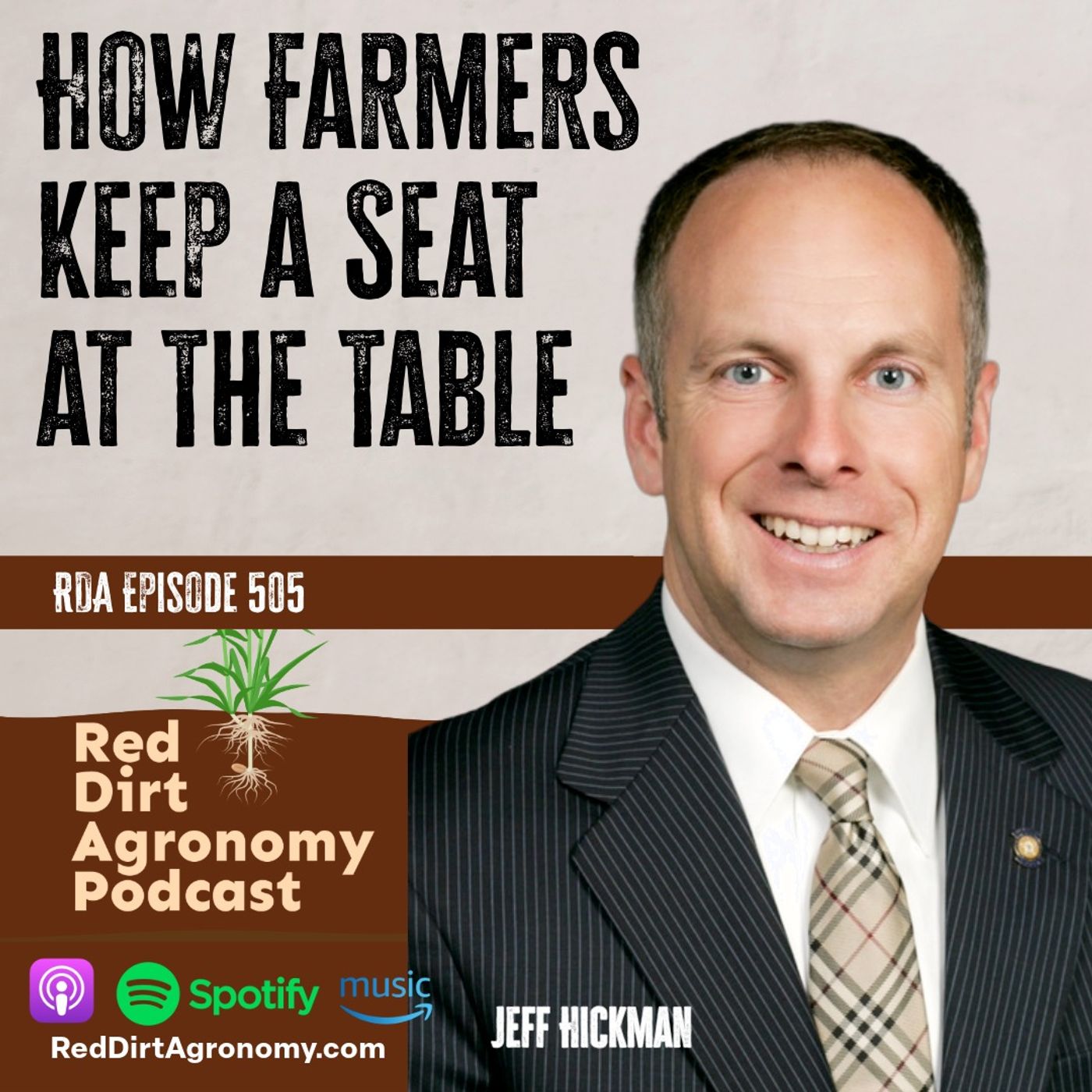
How Farmers Keep A Seat At The Table - RDA 505
Recorded in the Oklahoma Wheat Commission booth at KNID AgriFest in Enid, the Red Dirt Agronomy crew welcomes Jeff Hickman—producer and ag association leader with deep experience in state and national policy—to talk about what’s next for rural Oklahoma agriculture. Jeff explains why commodity and industry groups matter more than ever, how they keep small organizations viable, and why regulations can shape agriculture just as much as legislation. The conversation covers trade, farm policy, consumer perceptions, and why grower engagement—sometimes as simple as joining an association—helps protect your operation while you’re busy running it. RedDirtAgronomy.com
Red Dirt Agronomy Podcast · Jeff Hickman, Josh Lofton Ph.D., Dave Deken, Brian Arnall Ph.D.
Audio is streamed directly from the publisher (dts.podtrac.com) as published in their RSS feed. Play Podcasts does not host this file. Rights-holders can request removal through the copyright & takedown page.
Show Notes
Recorded live from the Oklahoma Wheat Commission booth at the 2026 KNID AgriFest in Enid, the crew sits down with Jeff Hickman—farmer, longtime ag association leader, Oklahoma higher-education regent, and former Oklahoma House Speaker—for a grounded conversation on where agriculture is headed and why local involvement still matters.
Jeff breaks down how ag organizations stay viable in an era of consolidation, why multiple commodity groups working together amplify agriculture’s voice, and how public policy and regulation increasingly shape day-to-day farm decisions. The discussion also hits consumer trust, social media misinformation (and how AI can muddy the waters), and why agriculture has to keep educating an audience that forgets fast.
They close with what Jeff sees coming next—trade uncertainty, the need for a dependable farm policy, and the importance of building relationships with candidates before they’re elected. Practical, candid, and very Oklahoma.
Ten Takeaways
- Ag organizations are stronger together—shared support can keep smaller groups viable and influential.
- Regulation is often the real battlefield, sometimes more than legislation.
- Fewer rural/ag lawmakers means ag has to work harder to be understood in policy rooms.
- Producer involvement doesn’t have to be huge—membership alone helps fund representation and benefits.
- Markets can disappear even after great yields, driving tough planting decisions (sorghum example).
- Wheat is in a strategy moment: “What’s our thing?” like corn has ethanol—new uses/value streams matter.
- Consumer curiosity is a double-edged sword—interest is good, misinformation is rampant.
- AI can accelerate fake “credible” ag narratives, raising the stakes for trusted education.
- Rural issues resonate when you connect the dots (health care access, metro revenue, statewide economy).
- Election years are relationship years—don’t wait until after someone wins to introduce agriculture.
Detailed Timestamped Rundown
00:00–01:44 — Episode open, setting: Oklahoma Wheat Commission booth at KNID AgriFest (Enid); introductions.
01:45–03:35 — Jeff Hickman joins; “many hats” across OK ag organizations and higher ed.
03:36–04:44 — Why shared management/back-office support keeps smaller ag groups viable and strengthens ag’s voice.
04:45–06:53 — Policy reality: more dependence on public policy + regulations; increased focus on agencies/administration.
07:03–08:52 — Jeff’s background: journalism/OU roles, media work, farm roots; “planting and harvest were my vacations.”
09:12–12:44 — Political pendulum swings; how DC trends show up in statehouses; fewer rural/ag-connected legislators.
12:45–15:54 — Consumer interest: good and hard; difficulty finding truth; misinformation and AI concerns; supply chain lessons.
15:55–18:29 — Global factors hitting ag (tariffs, shipping routes, even piracy) through a real-world retail/cotton example.
18:30–20:55 — Benefits/challenges of representing many groups; why having a strong government affairs team matters.
21:14–23:59 — What growers are facing: crop choice risk, markets disappearing, wheat’s future “what’s our thing?”; value of membership (and CFAP example).
24:00–27:33 — How to get more producers involved in leadership/politics; timing, family/team approach, candidate mentorship.
28:13–32:50 — Translating rural needs for urban lawmakers (rural hospitals example); rural dollars fueling metro projects.33:26–36:31 — Next 6–9 months: trade unresolved, farm bill/farm policy stability, election-year urgency—build relationships now.
36:32–38:11 — Wrap-up, thanks, and where to find resources.
RedDirtAgronomy.com