Record Review Podcast
688 episodes — Page 3 of 14

Schumann's Cello Concerto
Laura Tunbridge chooses her favourite recording of Schumann's Cello Concerto

Bach's Orchestral Suites
Nicholas Kenyon chooses his favourite recording of Bach's four Orchestral Suites

Haydn's The Creation
Jeremy Summerly chooses his favourite recording of Haydn's The Creation.

Schubert’s Winterreise
Pianist Allyson Devenish picks the ultimate version of Schubert’s song cycle Winterreise.

Tchaikovsky's Sleeping Beauty
Sarah Lenton chooses her favourite version of Tchaikovsky's ballet The Sleeping Beauty.

Stravinsky's The Fairy's Kiss with Jeremy Sams
Jeremy Sams chooses his favourite recording of Stravinsky's ballet The Fairy's Kiss

Bruckner's Symphony No 8 in C minor
Tom Service chooses his favourite recording of Anton Bruckner's Symphony No. 8 in C minor

Bartók's The Miraculous Mandarin
Kate Molleson chooses her favourite recording of Béla Bartók's The Miraculous Mandarin

Ravel’s Le tombeau de Couperin
Flora Willson chooses her favourite recording of the piano version of Ravel’s Le tombeau de Couperin

Tchaikovsky’s Violin Concerto in D major, Op. 35
William Mival chooses his favourite recording of Tchaikovsky’s Violin Concerto

Dvořák's Symphony No 9 in E minor
Katy Hamilton chooses her favourite recording of Dvořák's 'New World' Symphony

JS Bach's Violin Concerto in A minor, BWV 1041
Simon Heighes chooses his favourite recording of JS Bach's Violin Concerto in A minor.

Schubert’s Four Impromptus, D935
Pianist Iain Burnside chooses the ultimate recording of Schubert’s Impromptus, D935

Brahms's Clarinet Trio in A minor
Natasha Loges chooses her favourite version of Brahms's Clarinet Trio

Beethoven's Symphony No. 8 in F major
Richard Wigmore chooses his favourite recording of Beethoven's Symphony No 8 in F.

Rimsky-Korsakov's Scheherazade
Nigel Simeone discusses his favourite recordings of Rimsky-Korsakov's Scheherazade

Schumann's Piano Quartet in E flat, Op.47
Marina Frolova-Walker chooses her favourite version of Schumann's Piano Quartet, Op.47

Mahler's Symphony no. 8 in E-flat Major
Gillian Moore's personal recommendation for Mahler's epic 'Symphony of a Thousand'

Mozart's Symphony No 35 in D, 'Haffner'
Roger Parker chooses his favourite recording of Mozart's Symphony No. 35 in D major

Stravinsky's Petrushka
Jonathan Cross with a personal recommendation for Stravinsky's second ballet Petrushka,

The essential works by English composer William Byrd.
A survey of William Byrd with Kirsten Gibson and Andrew McGregor.

Poulenc’s Piano Concerto in C sharp minor
Jeremy Sams chooses his favourite recording of Poulenc's Piano Concerto.

Puccini's Tosca
Roger Parker's recommendation for the ultimate recording of Puccini's opera Tosca.

Prokofiev's Peter and the Wolf
Kate Molleson chooses her favourite recording of Prokofiev's Peter and the Wolf.

Brahms's A German Requiem
Composer John Rutter's recommendation of a recording of Brahms's A German Requiem

Smetana's The Bartered Bride
Nigel Simeone chooses his favourite recording of Smetana's The Bartered Bride

Mahler's Rückert-Lieder
Flora Willson chooses her favourite recording of Mahler's Rückert-Lieder

Sibelius's Symphony No. 6
Mark Lowther nominates the best recording of Sibelius's sixth symphony

Handel's Coronation Anthems
Simon Heighes chooses his favourite recording of Handel's Coronation Anthems

Schubert's Symphony No. 5 in B flat major, D. 485
Sarah Devonald chooses her favourite recording of Schubert Symphony No. 5 in B flat major, D. 485.When he wrote his fifth symphony at the age of 19, Schubert was working unhappily as an assistant teacher in his father's school. But he was nevertheless on a compositional roll with songs, chamber music and four other symphonies to his name, all of which were performed by amateur and professional musicians made up from family and friends.This genial, small-scale group gave the 1816 premiere of the symphony in the home of Otto Hatwig, violinist in Vienna's Burgtheater orchestra. And the jolly music seems to echo that cheerful ensemble, Schubert picking up from the classical models of 25 years earlier, seemingly oblivious to Beethoven's decade-plus of ground-breaking musical developments that were soon to become so influential.

Janáček's String Quartet No 1, 'Kreutzer Sonata'
Erik Levi chooses his favourite recording of Leoš Janáček's String Quartet No 1 'Kreutzer Sonata'Composed in only nine days in 1923, Janáček's compact, emotionally supercharged String Quartet No 1 takes its title from Leo Tolstoy’s 1889 novella where a wife and her violinist lover play Beethoven’s 'Kreutzer' Sonata together before the jealous husband murders his adulterous wife. Janáček's music roils with the conflicted passions of tormented love, desire and jealously of Tolstoy's story. But there was emotional turmoil in Janáček's life, too. Long-fed up with his wife, in 1915 Janáček had fallen deeply in love with Kamila Stösslová who, happily married and 40 years his junior, made sure that Janáček's love remained unrequited. And if that was unfortunate for Janáček, it was surely lucky for us as he poured his feelings for Stösslová into music which blazes with a truly exceptional emotional intensity.

Britten's Peter Grimes
Kate Kennedy chooses her favourite recording of Britten's Peter GrimesThe opera Peter Grimes is set in a fictional small town that bears some resemblance to Britten's home of Aldeburgh, Suffolk, on England's east coast. It is a drama about outsiders and oppression. As Britten himself said, it was "a subject very close to my heart – the struggle of the individual against the masses. The more vicious the society, the more vicious the individual". The score is full of great orchestral descriptions of the Suffolk coast and highly dramatic confrontations.

Handel's Water Music
Hannah French has been listening to recordings - old and new - of Handel's Water Music, whittling them down until she can herald the ultimate version to buy, download or stream.
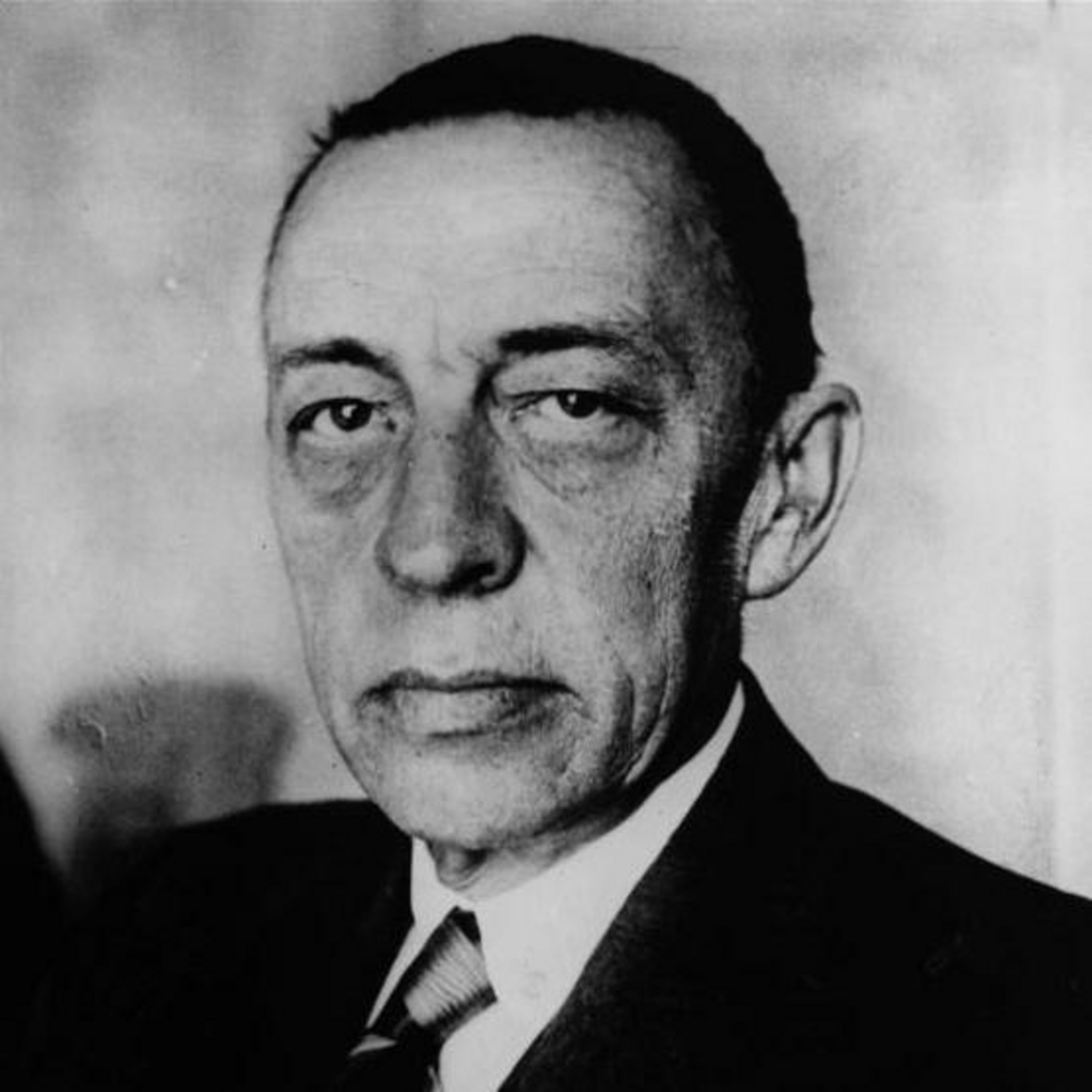
Rachmaninov's Symphonic Dances
Marina Frolova-Walker chooses her favourite recording of Rachmaninov's Symphonic Dances.

Chopin's Piano Concerto No 2 in F minor
Building a Library: Kenneth Hamilton chooses his favourite recording of Chopin's Piano Concerto No 2 in F minor.Frédéric Chopin composed this glorious concerto in 1829 when he was 20 and before he had finished his formal education. It was first performed in Warsaw, with the composer as soloist. It was actually the first of his two piano concertos to be written. Like all Chopin's works, it is full of haunting melodies and thrilling piano writing. The nocturnal middle movement in particular is a golden moment, inspired by Chopin's romantic idolization of Konstancja Gładkowska.

Walton's Viola Concerto
David Owen Norris chooses his favourite recording of William Walton's Viola Concerto.It was conductor Sir Thomas Beecham's suggestion that Walton should write a viola concerto for the virtuoso Lionel Tertis. But things did not go according to plan when Tertis sent back the music by return of post saying it was 'too modern'. So the 1929 premiere was given by Paul Hindemith (who had been sent the concerto by the BBC's Edward Clark) at the Queen's Hall, just around the corner from Broadcasting House. It was a success and Tertis, in the audience, relented. But although he subsequently played the concerto, Tertis continued to disparage it and was heard to say that Walton had 'murdered' the viola.Despite its inauspicious beginning, Walton's Viola Concerto has long been recognised as one of his most important early works and is well established a cornerstone of an albeit limited repertoire. Perhaps the root of its appeal is to be found in its dedication 'to Christabel', the lyrical melancholy and poetic longing at the concerto's heart reflecting Walton's unrequited passion for Christabel, Lady Aberconway.

Messiaen's Turangalila Symphony
Messiaen's Turangalîla Symphony with Gillian MooreOlivier Messiaen's only symphony was written for an orchestra of enormous forces. The title comes from two Sanskrit words. "Lîla" means play in the sense of the divine action upon the cosmos. It also means love. "Turanga" is the time that runs, like a galloping horse and that flows, like sand in an hourglass; it's both movement and rhythm. The meaning of "Turangalîla" was best summed up by Messian himself as "a love song; a hymn to joy." He described the joy of Turangalîla as "superhuman, overflowing, blinding, unlimited".

Record Review
Mozart's 'Dissonance' Quartet is the last of a set of six famously dedicated by Mozart to his 'very dear friend' Joseph Haydn. Soon after he arrived in Vienna in 1781, Mozart came to know Haydn's recently published Op. 33 set of innovatory string quartets which, said Haydn, had been composed in ‘a new and special way'. It was no idle boast. Not only more concentrated and sophisticated than any previous string quartet, the Op. 33s also employed all four instruments in a more equal, conversational style than ever before.For Mozart, responding to the Op. 33s with his own set of quartets became a longer and more arduous compositional challenge than any other he ever undertook. The 'Dissonance' got its nickname in the 19th-century, well after Mozart's death, on account of its mysterious slow introduction, with its complex and unsettling harmonies. It caps the set of six which impressed its dedicatee so much that, shortly after the 1785 premiere, Haydn declared to Leopold Mozart that 'Before God and as an honest man, I tell you that your son is the greatest composer known to me either in person or by name.'

Beethoven's Piano Sonata No 23 ' Appassionata
Beethoven's 23rd piano sonata is stormy and intense, so earned the nickname "Appassionata" or "Passionate". Pianist Iain Burnside has been listening to a wide range of recordings, old and new, to pick the ultimate version to buy, download or stream.

Purcell's Fairy Queen
Purcell's magnum opus was written as a series of masques to be performed at the end of the acts of a special version of Shakespeare's A Midsummer Night's Dream. Arguably the greatest British composer before the 20th century, Purcell left us a tantalizing array of music for use in theatrical productions, which shows what an unsurpassed gift he had for matchings words and mood with music. Apart from the small-scale masterpiece, Dido and Aeneas, none of these pieces quite hangs together as a satisfying work of music theatre. The Fairy Queen is the closest we have to that. Written in a hybrid form of spoken drama and masque, it is notoriously difficult to bring off on the stage. But it is ideal for home listening. Nicholas Kenyon sifts through a strong field of some of the greatest names in baroque performance.

Debussy's Images for orchestra
Yshani Perinpanayagam chooses her favourite recording of Debussy's Images for Orchestra.Composed between 1906 and 1912, Images is Debussy’s final concert work for orchestra. Over its three sections it abundantly displays his customary sophistication and flair for orchestral sonorities and for painting pictures in sound. The first and last parts of the triptych are folk-inflected: the enigmatic Gigues quotes 'The Keel Row' from Northumberland and two French folk tunes feature in Rondes de printemps. The middle (and most often performed) section, Ibéria, is itself a triptych. Even though Debussy famously spent no more than an afternoon in Spain, Ibéria's three movements conjure up the sights, sounds and smells of Spain so evocatively that even his Spanish contemporaries were impressed.

Shostakovich's String Quartet No 8 in C minor
Emily MacGregor chooses her favourite recording of Shostakovich's String Quartet No 8 in C minor. Written at white heat in just three days, Shostakovich's Eighth String Quartet is also his most personal - indeed, it opens with a form of the composer's own initials. Emily has been listening to recordings from throughout the quartet's life - from its first performers to young ensembles of the present day.

Prokofiev's Violin Concerto No 2 in G minor
Ben Gernon chooses his favourite recording of Prokofiev's Violin Concerto No 2.This concerto is full of glorious melodies and deserves a place in everyone's collection. Prokofiev was on a concert tour when he wrote the piece and later wrote, "the number of places in which I wrote the Concerto shows the kind of nomadic concert tour life I led then. The main theme of the 1st movement was written in Paris, the first theme of the 2nd movement at Voronezh, the orchestration was finished in Baku and the premiere was given in Madrid." The concerto is more conventional than Prokofiev's early experimental works and its romantic heart has made it a perennial favourite.

Mahler's Symphony No 6 in A minor
Edward Seckerson chooses his favourite recording of Mahler's Symphony No. 6 in A minor.More often than not, Mahler's symphonies end positively, whether in triumph, exaltation, joyful exuberance, quiet bliss, or resignation and acceptance. But the Sixth is unique in its tragic, minor-key conclusion and this Symphony as a whole is among his darkest music. Intriguingly, he wrote it during one of the happiest periods of his life, the summers of 1903 and 1904. Mahler was convinced that, in his music, he had the ability to foresee and even predict events and, painful though it might be, as an artist he could not avoid doing so. And in 1907, when he looked back on the Sixth Symphony's finale with its 'three hammer blows of fate' he could point to the death of his daughter Maria, the diagnosis of the severe heart disease which would kill him, and the bitter end of his decade as director of the Vienna Opera. Closer to our own times, some have suggested that, as well as tragic autobiography, Mahler was predicting the tragedies of a whole century.

Rachmaninov's 24 Preludes
Lucy Parham chooses her favourite recording of Rachmaninov's 24 piano preludes.Rachmaninov's 24 piano preludes in all the 24 major and minor keys are a glorious treasure trove of different pianistic styles from lyrical to barn-storming. He wrote and published them at different times, and didn't regard them as a unified set. Unlike the keyboard preludes of Bach and Chopin they are not organized according to their keys either. But for a feast of piano playing, they are an essential thing for your library. And some of the titans of the keyboard have recorded their interpretations, including the composer himself how recorded a selection of them.

Beethoven's Symphony No 9 in D minor
Tom Service chooses his favourite recording of Beethoven's Symphony No 9 in D minor.Beethoven's final complete symphony is one of the summits of classical music. The famous final movement features four vocal soloists and a chorus in a setting of the "Ode to Joy" by Friedrich Schiller. Many of the world's greatest conductors and orchestras have tackled this musical Everest including Furtwangler, Toscanini and Karajan alongside conductors of later generations like Mackerras and Harnoncourt and it still inspires new recordings from today's performers.

Ravel's Piano Trio in A minor
Jeremy Sams chooses his favourite recording of Maurice Ravel's Piano Trio in A minor.Ravel was living in the Basque country not far from the town where he was born when completed his Piano Trio in 1914, just after the outbreak of World War I, far away from the front line. But there are no grim premonitions in this music and its lush harmonic sound world, full of Basque dance patterns and playful rhythmic sleights of hand, is characterised by the sort of lavish instrumental textures so typical of this master orchestrator. And based on Classical structures (Ravel joked "I’ve written my trio. Now all I need are the themes."), including a haunting passacaglia as its emotional centre of gravity, the Trio is a deeply satisfying musical journey which needs outstanding musicians to meet its exacting demands.

Mozart Piano Concerto No 21 in C
Natasha Loges chooses her favourite recording of Mozart's Piano Concerto No. 21 in C major, K. 467 ('Elvira Madigan').Perhaps the only piece of music to be named after a Swedish slack line dancer, Mozart's Piano Concerto No. 21 gained its soubriquet after its remarkable slow movement was used as part of the soundtrack to the 1967 film Elvira Madigan. But circus acts or no, this concerto from 1785 is Mozart at the absolute height of his powers, the foremost pianist-composer of his day, breaking new ground with a series of concertos whose musical depth, virtuosity, inventiveness, woodwind writing and symphonic scale were all unprecedented.There are literally hundreds of recordings of this great work, many made by the giants of 20th- and 21st-century piano-playing on modern pianos. But intriguingly, there is a much smaller, if growing number made by musicians who use instruments of the period, allowing us to hear the extraordinary range of colours and textures conjured up by Mozart and which he himself would have heard.

Richard Strauss's Don Juan
William Mival chooses his favourite recording of Richard Strauss's symphonic poem Don Juan.In Strauss's Don Juan, the infamous libertine bursts onto the stage with a dazzling flourish. The following 16 minutes are no less compelling, the irresistible, swaggering Don superbly evoked through sumptuous and virtuosic orchestration, including tender violin and oboe solos and heroic, triumphant horn calls. Strauss, in his mid-20s, could already do it all! It's music that, even after 130 years, still keeps orchestras and conductors on very much on their mettle.

Grieg's Violin Sonata No 3 in C minor
Katy Hamilton with her pick of recordings of the last and greatest of Edvard Grieg's three violin sonatas, written when the composer was living in Troldhaugen in 1886-7.