
Real Estate Development: Land to Legacy
70 episodes — Page 1 of 2
Your Land Just Became a Fuel Stop
Why Architects Cost So Much
Will This ADU Pencil?
Protect What You Build
Building Wealth at Your Pace
Land Use Traps
One Deal Changes Everything
The Cash Flow Trap
The Hidden Housing Edge
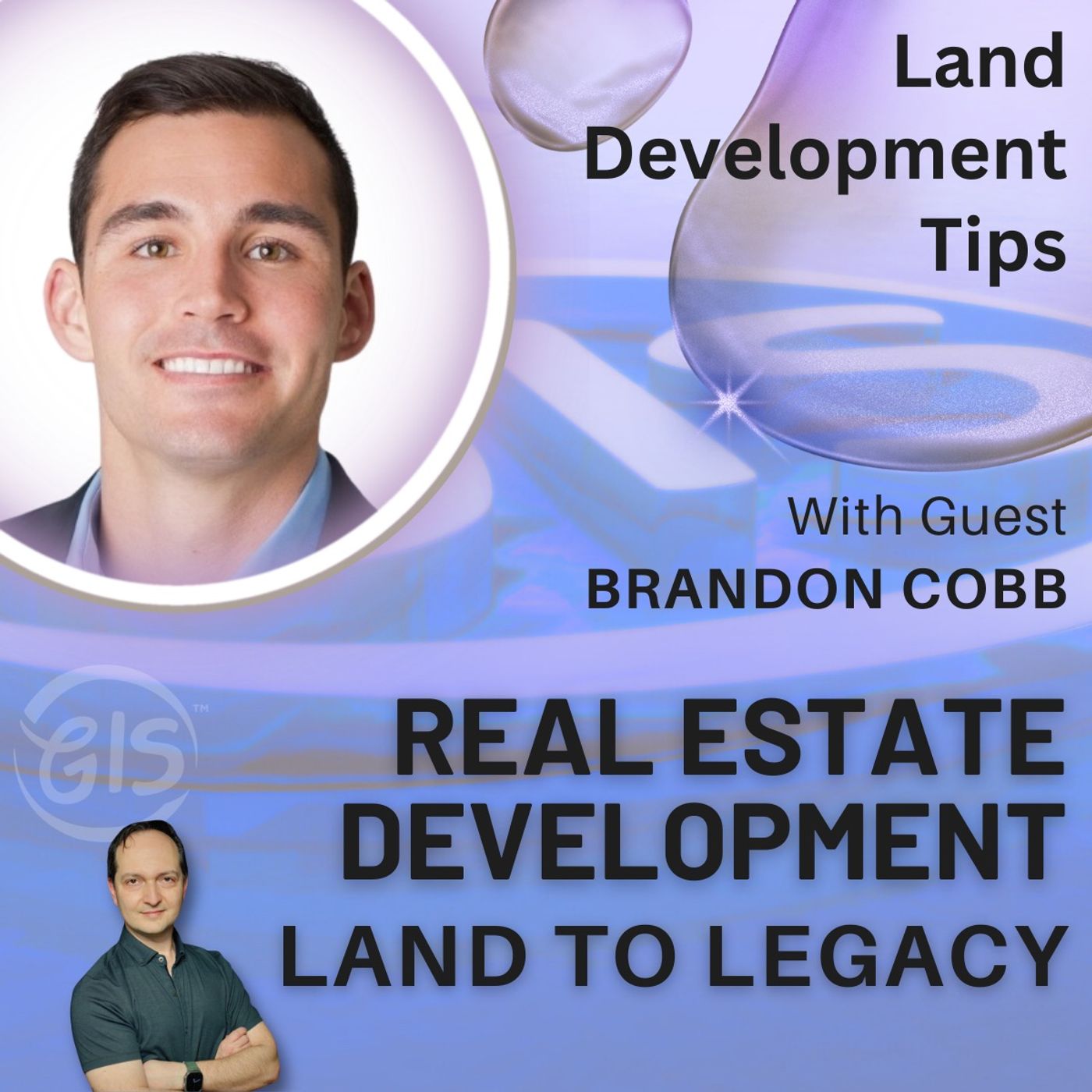
Ep 60Land Development Tips
A failed motivational blog, a risky early move with retirement money, and a career setback all became part of the path that led Brandon Cobb into one of real estate’s most overlooked value-creation plays: land entitlement. In this conversation with Eugene Gershman, Brandon breaks down how raw land can be taken from a simple parcel to a 50-, 100-, or 200-home community, why builders often prefer buying finished lots instead of taking on development risk themselves, and what landowners should understand before selling too early and leaving serious money on the table. Guest Bio Brandon Cobb is a real estate entrepreneur focused on land development, paper development, affordable housing, and selling individual lots to builders. Eugene introduces him as someone who has completed more than 180 transactions. In the episode, Brandon shares how he moved from a successful career in medical device sales into entrepreneurship, then into flipping houses, building homes, and eventually developing land after national homebuilders began approaching him to buy projects he was working on. Episode Highlights and Chapters 01:29 Eugene sets up the conversation around how value is actually created in land development, with a focus on paper development, affordable housing, and the real leverage behind entitlement work. 02:50 Brandon shares how losing his medical device sales job became the turning point that pushed him toward entrepreneurship and real estate. 05:44 After getting inspired by a Shark Tank pitch, Brandon experiments with several failed business ideas before discovering real estate, flipping his first house, and learning through costly mistakes. 21:33 Brandon explains the layered value creation in land deals, from entitlement to infrastructure to vertical construction, and why multiple exit strategies make the model so attractive. 24:16 The conversation turns to why national builders often prefer entitled or finished lots over raw land, especially when speed, timing, and return on capital matter more than taking development risk themselves. 26:31 Brandon breaks down what builders typically want in a project, why around 50 lots can be a meaningful threshold in his market, and how smaller communities can still work when they fit a builder’s pipeline. 28:25 One of Brandon’s biggest lessons for landowners is to understand what their land could be worth after entitlement, instead of selling as-is and potentially leaving major upside behind. 29:42 Eugene adds the owner’s perspective, explaining the tradeoff between certainty and upside, since developers often take on the work and risk but also delay the seller’s payoff until approvals are complete. 32:08 Brandon shares the two main ways people can work with him: education and coaching for people who want to learn land development, and passive investment opportunities for those who want exposure to the strategy without operating deals themselves. Contact Information Brandon Cobbhttps://learnlanddevelopment.com Investment opportunities:https://hbgcapital.net/waitlist Interested in being a guest on our podcast? Contact us at:https://giscompanies.co/podcast/ Download the Feasibility Study Checklist to assess your project’s potentialhttps://giscompanies.co/development/feasibility-study/ Hosted by Simplecast, an AdsWizz company. See pcm.adswizz.com for information about our collection and use of personal data for advertising.
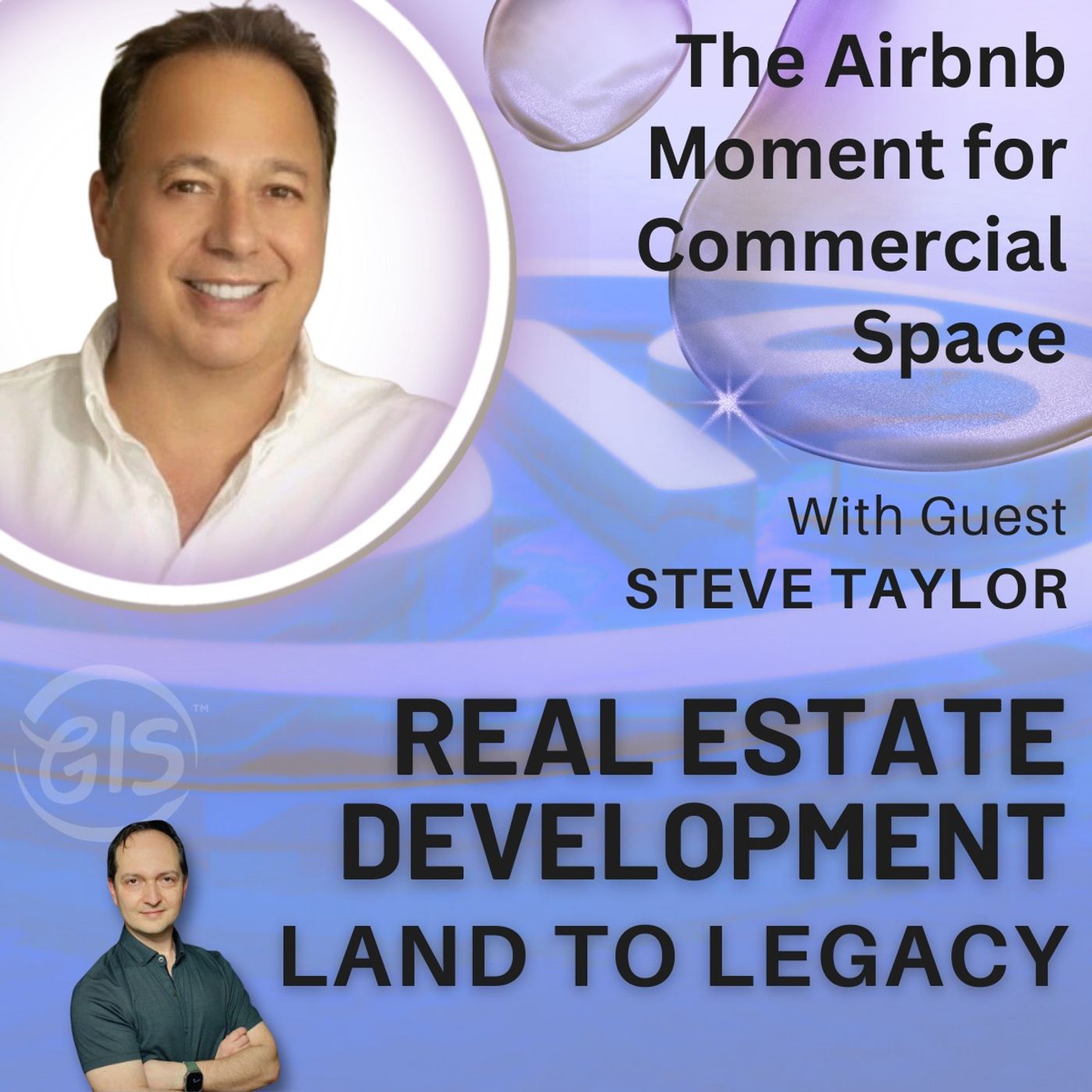
Ep 59The Airbnb Moment for Commercial Space
A five-year lease signed right before lockdown turns into an 1,800-square-foot “soccer field” of emptiness and a million-dollar headache. That pain sparks an idea with a big question behind it: if Airbnb unlocked the value of spare bedrooms, what’s the value of all the unused nooks and slices of commercial space hiding in plain sight? The conversation explores a “Craigslist-style” approach to commercial listings, designed to make fractional and unconventional spaces feel approachable, searchable, and actually monetizable. Guest Bio Steve Taylor is the founder of SoCommercial, a platform built to help owners list and monetize commercial spaces of any type or size, especially the odd, fractional, or overlooked ones that don’t fit neatly on traditional listing sites. Episode Highlights and Chapters 00:03 The origin story of a pandemic-timed lease and an 1,800-square-foot empty office 05:50 Why traditional commercial listing sites felt clunky and overpriced, and what a better experience looks like 06:28 The Airbnb comparison and the bigger question about “unmonetized” commercial space 07:43 Real-world use cases from warehouse racks to spare chairs, basements, display space, and collaboration concepts 09:57 The brutal reality of building a marketplace and why traction matters more than perfect tech 14:31 If everything is free to list, how does the business eventually make money 16:04 How developers can use flexible leasing and “artisan mix” thinking to enhance retail and office projects 18:21 The problem with small ground-floor retail in residential buildings and why brokers often ignore it 21:13 Why the platform stays focused on listings instead of consulting, and when to use AI for ideas 22:37 Not a broker, not a competitor, just another option for visibility and exposure 25:12 Launch timing, bootstrapping, and why this kind of startup is a long marathon 28:23 The ask to listeners, plus the tease of a jingle you have to hear on the site Contact Information SoCommercial website: https://socommercial.com Contact Eugene Gershman for real estate development advice and guidance. Download the free feasibility study checklist at https://giscompanies.co/development/feasibility-study/ If you’d like to be a guest on the show, visit https://giscompanies.co/podcast/. Hosted by Simplecast, an AdsWizz company. See pcm.adswizz.com for information about our collection and use of personal data for advertising.
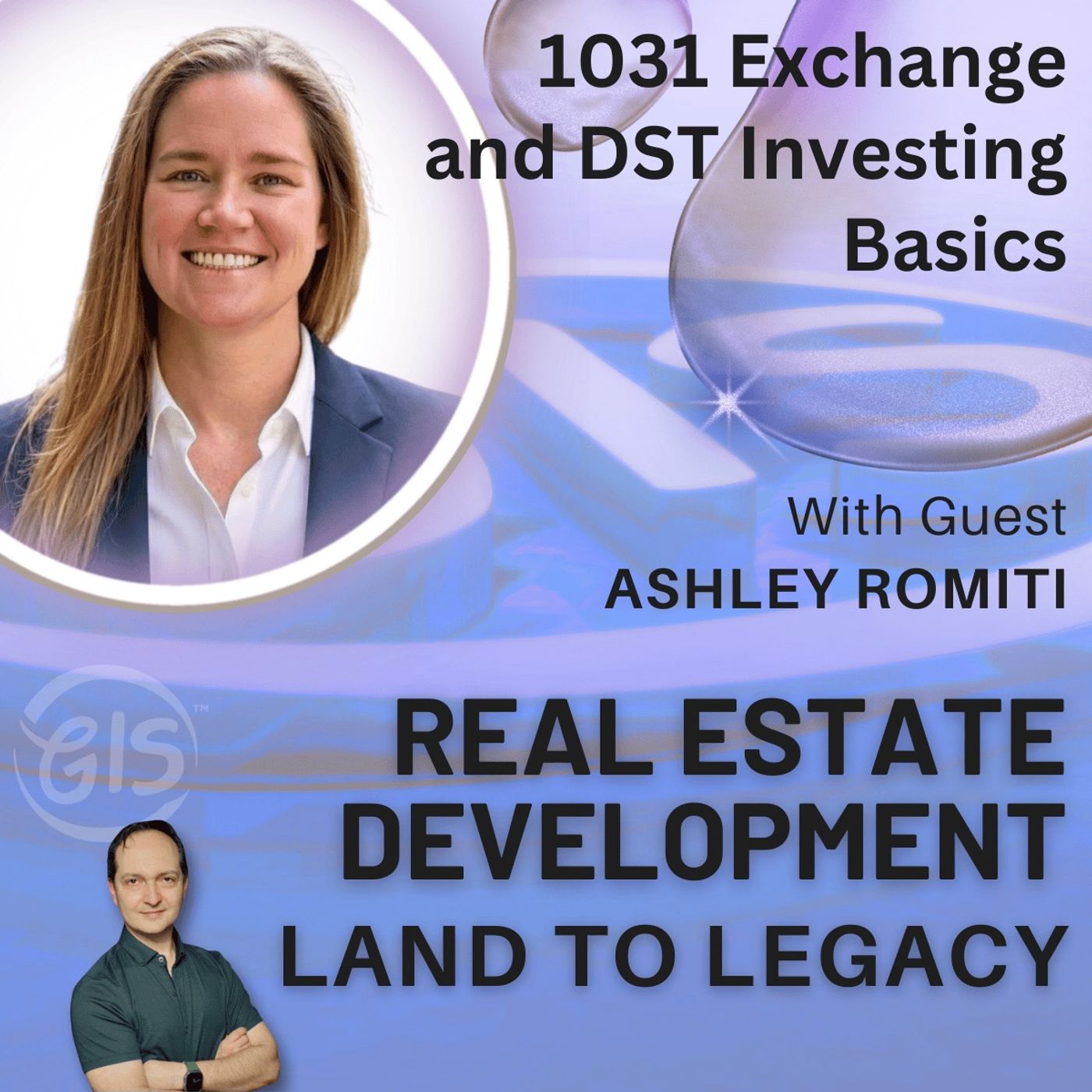
Ep 581031 Exchange and DST Investing Basics
A big real estate sale can create an even bigger tax bill, and that’s where Ashley Romiti steps in. She walks through how investors use a 1031 exchange to defer capital gains and depreciation recapture, what the “45 days to identify and 180 days to close” timeline really feels like in practice, and why many long-time owners eventually trade hands-on management for passive ownership through Delaware Statutory Trusts (DSTs). Eugene and Ashley also explore the gray areas developers run into, why investor intent matters, how DST restrictions shape risk and return, and what due diligence looks like when picking sponsors and properties. Guest BioAshley Romiti is the founder of GCA 1031 and works with real estate investors who want to transition from active ownership into passive real estate investments using tax-deferred 1031 exchange strategies. She frequently uses DSTs as a fractional-ownership structure that can help investors pursue capital preservation and income while deferring capital gains and depreciation recapture. Ashley is a registered representative affiliated with a broker-dealer relationship through which these offerings are made. Episode Highlights and Chapters00:00 Ashley’s niche: helping investors move from active ownership to passive investments using 1031 exchanges and DSTs 02:54 A plain-English definition of the 1031 exchange and why taxes can be so painful on a sale 06:01 The core timeline: 45 days to identify replacement property and 180 days to close 06:27 What happens at death and how step-up in basis affects long-term strategy 07:09 Development and 1031 exchanges: where the gray areas appear and why CPA guidance matters 10:50 What a DST is, how fractional ownership works, and why “Delaware” is about the trust structure 12:49 Why DST properties often concentrate in landlord- and tax-friendly states 14:32 DSTs versus syndications, including how ownership and economics differ 19:11 SEC framework and disclosures, including how offerings are presented and documented 21:05 Sponsor incentives, exit decisions, hold periods, and DST rules that shape operational flexibility 24:03 Where DSTs can fit for developers, including “takeout” concepts and solving for leftover exchange boot 26:17 How Ashley screens deals: sponsor track record, fundamentals, structure, and investor goals 30:20 Common DST asset classes today and why office remains challenging 32:07 Typical minimums, accredited investor requirements, and diversification across multiple DSTs 35:51 How to reach Ashley and where to download her 1031/DST ebook Contact InformationAshley Romiti / GCA 1031 https://gca1031.comFree ebook available.949-235-5606 HostEugene Gershman / GIS Companieshttps://giscompanies.co/If you’re a developer or investor evaluating a deal, download Eugene’s free Feasibility Study Checklist to pressure-test assumptions, costs, timelines, and returns before you commit capital. If you’re interested in being a guest on the show, visit the podcast page to connect and apply.https://giscompanies.co/podcast/ Ashley Romiti offers securities through Concorde Investment Services, LLC (CIS), member FINRA/SIPC. GCA 1031 is independent of CIS. Concorde is headquartered at 3909 Research Park Drive, Suite 200, Ann Arbor, MI 48108. This podcast is for informational purposes only, does not constitute as investment advice, and is not legal or tax advice. Please consult the appropriate professional regarding your individual circumstance. Hosted by Simplecast, an AdsWizz company. See pcm.adswizz.com for information about our collection and use of personal data for advertising.

Ep 57Digital Nomads are Coming: How to Develop Overseas
Digital nomads aren’t just a trend—they’re a demand shift that’s changing what “success” looks like for overseas real estate. Michael K. Cobb shares how his team thinks about building the right product for renters who stay three to six months at a time, why “clusters” create momentum for entire markets, and what it really takes to develop across borders without getting “skinned alive.” Along the way, he breaks down the mindset that keeps projects (and reputations) intact: treat mistakes as tuition, lead with humility, and build local trust the hard way—without bribes.   Guest BioMichael K. Cobb has been building communities and working on real estate development across Latin America for over 25 years, with experience in places like Belize, Nicaragua, and Panama.  He also consults with investors and developers on overseas due diligence and execution, and he’s the author of “How to Buy Your Home Overseas.”   Earlier in his international career, he helped start a mortgage company in Belize that later became a bank, giving foreign buyers access to financing in-market and adding liquidity for developers after sales close. Episode Highlights and Chapters00:00 Humility as the “biggest asset” when you leave your home turf 01:16 The real question: how to avoid getting destroyed building overseas 01:47 Horror stories, getting ripped off, and reframing mistakes as “tuition” 03:47 How to enter a new country: test every assumption, and use multiple lawyers (including a hyper-local one) 06:44 “We’ve never paid a bribe” and the CSR strategy that builds local advocates 08:59 Timelines and entitlements: a Panama “horror story,” and what “a long time” can mean 10:27 Project size and phasing: the Panama plan (110 acres, smaller phase one) and an anchor continuing-care concept 13:53 The demand shift: digital nomad visas, renters (not buyers), and why this wave is “exploding” 16:44 Build-and-sell vs. hold-and-rent, and how “easy button” services change long-term demand 19:10 Financing overseas: why it’s mostly private equity/private lending, plus buyer financing as liquidity 21:14 Pre-sales: how projects get stranded half-built, and when pre-sales can make sense 40:32 Belize as an “easy button,” and a 1,600-acre project looking for development partners 44:52 Mike’s book offer: email to get a free Amazon coupon 45:53 Where to find Mike and ECI Development online Contact InformationMichael K. Cobb / ECI [email protected] (email to request the free Amazon coupon for “How to Buy Your Home Overseas”) www.ecidevelopment.comHost: Eugene Gershmanhttps://www.linkedin.com/in/eugenegershman/To learn more about GIS and our real estate development services, explore our website and see what we’re building.www.giscompanies.coInterested in being a guest on the show? Visit our podcast page for details and how to connect: https://giscompanies.co/podcast/ Hosted by Simplecast, an AdsWizz company. See pcm.adswizz.com for information about our collection and use of personal data for advertising.
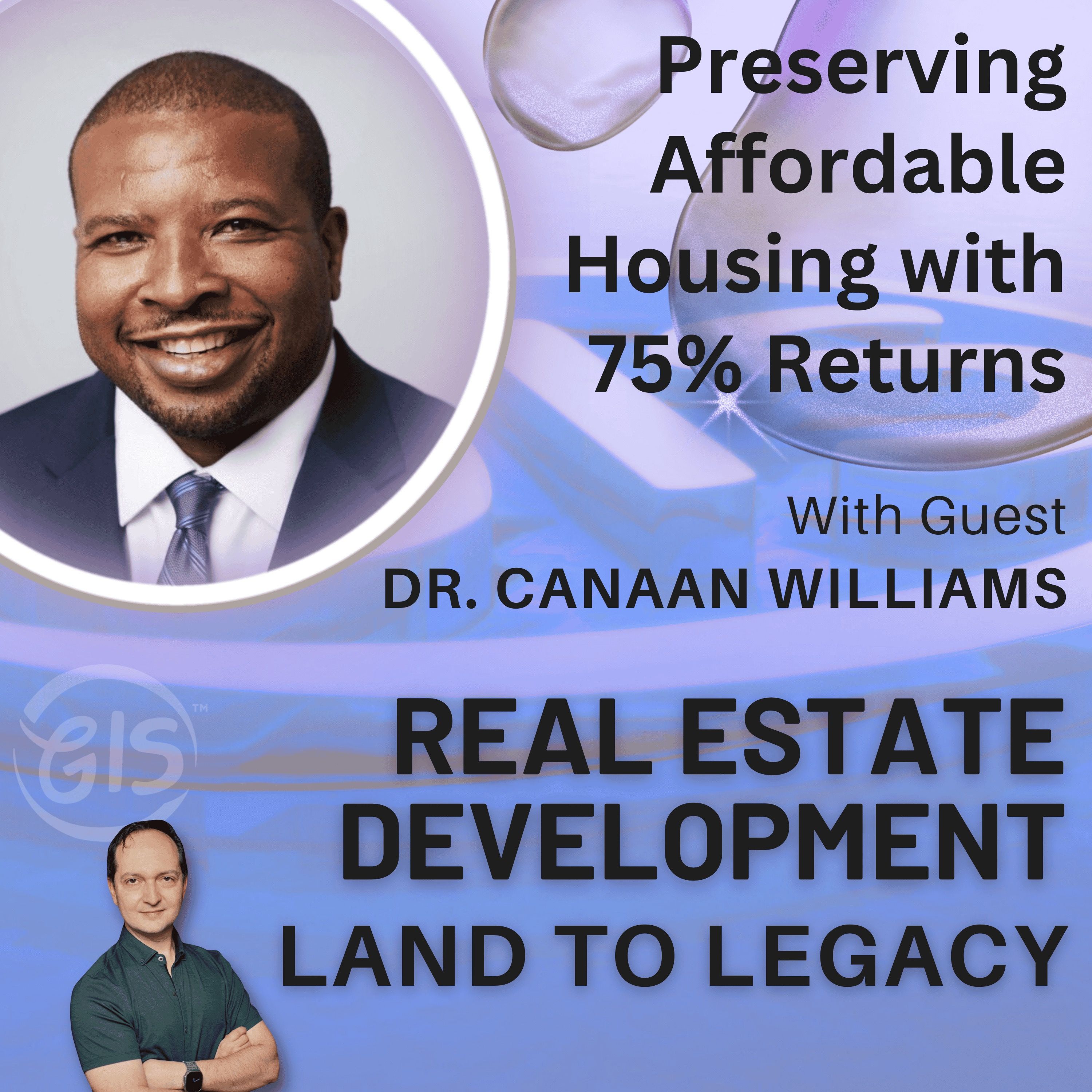
Ep 56Preserving Affordable Housing with 75% Returns
Preserving affordable housing doesn’t have to mean sacrificing investor returns. Dr. Canaan Van Williams breaks down how his firm targets naturally occurring affordable housing properties—older, often overlooked apartments, manufactured home communities, and SRO motels—and keeps rents 20–30% below market while still structuring “sustainable bonds” that (at the top tier) advertise a 75% total return profile over 36 months. The conversation gets into how these private, unlisted debt securities work, who they’re for (accredited investors), why the strategy focuses on preservation instead of new construction, and how factory-built homes can be deployed quickly to bring more units online without the waste of traditional site-built development. Guest BioDr. Canaan Van Williams is the managing founder of Proactive Sustainable Bonds and describes his organization as a Reg D 506C fund issuing sustainable bonds through the Proactive Realty Income Fund II to LLC. He works in the affordable housing and social impact housing space, focusing on low-income and workforce residents across multiple states, and notes third-party impact verification efforts including Morningstar Sustainalytics, UNPRI, BlueMark, and an Impact Evaluation Lab assessment. Episode Highlights and Chapters00:00 – The episode’s focus: affordable housing, manufactured homes, and raising capital. 01:55 – Dr. Van introduces Proactive Sustainable Bonds and the Reg D 506C structure. 02:28 – What the “sustainable bonds” are: private, unrated debt securities for accredited investors tied to affordable housing outcomes. 04:12 – How the bonds are secured: real estate hard assets and property insurance (not a public rating or guarantee). 05:22 – How capital is used, bridge debt takeout, and Dr. Van’s personal investment in the fund. 06:39 – Hybrid approach: mostly funding their own strategy, with some allocation possible to aligned projects/managers under the PPM. 07:26 – UN Sustainable Development Goals discussed and how the strategy aligns with specific SDGs. 08:24 – Why a bond structure instead of a typical private debt fund: proving a profitable-and-impactful model. 08:43 – Liquidity and duration: private, unlisted, illiquid; commonly 2–3 year terms with longer options. 09:23 – Target assets: manufactured housing communities, multifamily, SRO motels; prioritizing “impact rate of return.” 11:36 – Defining NOAH (naturally occurring affordable housing) and why it matters. 13:38 – Why new construction rarely replaces NOAH and why preservation is a key strategy. 14:46 – For-profit vs nonprofit: how a for-profit social impact mandate intentionally preserves affordability. 16:46 – The nonprofit support layer: housing essentials, transportation support, and behavioral workbooks for second-chance populations. 18:59 – Manufactured homes in the model: sourcing factory-direct homes, rapid deployment, and passing savings to residents. 20:05 – “We don’t build anything”: focusing on distressed properties and infrastructure upgrades in existing parks. 21:02 – Investor programs and tiers: accredited-only, minimums, current income approach, and the headline 75% return tier details as described. 24:10 – Closing thoughts: execution, claimed investor repayments to date, where to learn more, and Dr. Van’s book. Contact InformationProactive Sustainable Bonds website: www.sustainablebonds.com Email: [email protected]: 1-800-626-2089 Direct: 803-989-8264 LinkedIn: https://www.linkedin.com/in/dr-canaan-williams-aa3924b/Host: Eugene Gershman – https://giscompanies.co/podcast/Interested in real estate investing frameworks, underwriting insights, and episodes like this one? Head to https://giscompanies.co/podcast/ to get resources and connect with GIS. Hosted by Simplecast, an AdsWizz company. See pcm.adswizz.com for information about our collection and use of personal data for advertising.

Ep 55The Safe Play: Debt and Mobile Homes
What does a dry cleaning business have in common with mobile home parks and private debt funds? According to Ian Noble, everything. In this candid conversation, Ian shares his journey from running a family dry cleaning business in Austin to becoming a thoughtful and selective real estate investor. He talks about selling his company in 2023, the mindset shift it took to move into passive investing, and how he now vets operators not just on returns, but on character. Ian opens up about the psychology of trust-building with investors, why he values stability over flashy returns, and what makes mobile home parks an overlooked but compelling asset class. Whether you’re looking to raise capital, allocate capital, or simply understand what separates a good deal from a great partner, this episode is packed with timeless lessons.Guest BioIan Noble is a Texas-based investor and founder of RunSteady. After selling his family’s dry cleaning business in 2023, Ian transitioned into real estate full-time, focusing on mobile home parks and private lending. His investing philosophy centers around capital preservation, character-driven partnerships, and accessible passive income strategies.Episode Highlights and Chapters01:00 – Why capital preservation trumps high returns in Ian’s investment philosophy02:00 – From dry cleaning to real estate: Ian’s journey into passive investing04:20 – The challenge of trusting others with your capital05:45 – How Ian vets character in potential partners07:45 – Switching roles: From investor to capital raiser09:00 – Why trust takes time and urgency kills relationships10:10 – Referrals and long-term relationships as the core of Ian’s investor network12:30 – Real estate is a full-time job: The appeal of passive investing13:30 – Marketing and capital raising: Why last-minute outreach doesn’t work15:30 – Ian’s two key focus areas: private lending funds and mobile home parks17:30 – How Ian’s debt fund works and what makes it low risk21:30 – Managing defaults and borrower relationships in a volatile market23:50 – Why Ian emphasizes risk over upside in private lending27:30 – Investor psychology: logic brings them in, emotion seals the deal30:00 – Tips for analyzing underwriting assumptions and red flags31:30 – What mobile home parks are (and what they’re not)33:20 – Manufactured homes, zoning, and why foundations matter for taxes36:00 – Touring a factory: the surprising quality of manufactured homes38:00 – Why Ian chose mobile home parks over apartments40:30 – Value creation by infilling lots in mobile home parks42:00 – Why cities resist approving new parks and how that creates opportunity43:30 – ADUs, zoning laws, and development trends in Seattle45:00 – Gentrification, real estate change, and why Ian says “Play the game”Contact InformationYou can learn more about Ian Noble and his investment firm at https://runsteadycapital.comFree Passive Investing in Real Estate Cheat Sheet: https://go.runsteadyinvestments.com/land-to-legacy-podcastJoin Ian's Passive Investor Mailing List: runsteadyinvestments.com/investor-clubLinkedIn: www.linkedin.com/in/iannoble1/Instagram: @ian_invests For more episodes, visit Eugene Gershman’s podcast page at https://giscompanies.co/podcast/Download our free feasibility study checklist: https://giscompanies.co/development/feasibility-study/ Find out if your project is ready to be financed here: https://giscompanies.co/development/feasibility-study/ Hosted by Simplecast, an AdsWizz company. See pcm.adswizz.com for information about our collection and use of personal data for advertising.

Ep 54No Money? No Problem in Real Estate
David Webb once powered his home by running extension cords from his car. Today, he owns over 100 doors in his real estate portfolio, all acquired without using his own money. In this gripping episode, David shares the raw truth of his journey from evictions and utility shutoffs to structuring multimillion-dollar real estate deals using creative financing. He explains how growing up in Detroit with no examples of financial independence shaped his early limiting beliefs — and how shifting his mindset was the key to changing his life. Whether you’re an investor, a developer, or just someone starting from zero, this conversation offers a compelling breakdown of how deals can be built without traditional financing.Guest BioDavid Webb, known as the “No Money Millionaire,” is a real estate investor and educator who built a multimillion-dollar portfolio using creative financing strategies — all without investing his own capital. Raised by a single mother in Detroit and evicted more than 15 times before making it, David’s success came through a mix of grit, relentless sales experience, and out-of-the-box deal-making. Today, he mentors others through his platform No Money Millionaire and recently published a book by the same name, aiming to help aspiring investors overcome limiting beliefs and get into real estate regardless of their financial standing.Episode Highlights and Chapters00:35 – David’s backstory: from Detroit struggles to his first break in sales03:40 – Surviving 15+ evictions and powering his home with a car inverter06:46 – The mindset shift that made real estate investing possible10:38 – The underrated power of reading and taking action13:46 – David’s first seller-financed home and early creative deal structures17:46 – How David funded a 9-home deal using bank and private money22:43 – Top three no money strategies for real estate investing26:20 – Understanding ARV (After Repair Value) and securing 100% financing27:14 – Overcoming fear of rejection: sending “those 3 texts”28:26 – Why sellers agree to finance deals themselves29:36 – Where to find seller-financed deals (Craigslist, Zillow, Crexi, more)31:05 – David’s son’s path from Detroit to USC and real estate in California33:22 – Real-world parallels between creative investing and development34:50 – David’s first passive deal and learning from the sidelines36:05 – How to connect with David and get his free bookContact InformationDavid WebbFree book download and resources: https://nomoneymillionaire.comSearch “No Money Millionaire” to find him on Facebook and all major social media platforms. Eugene GershmanIf you’re interested in being a guest on the Land to Legacy podcast, submit your application at: https://giscompanies.co/podcast/Explore more free tools and resources at the GIS Companies website. Download the Feasibility Study Checklist to assess your project’s potential: https://giscompanies.co/development/feasibility-study/If you’re preparing to finance a development, visit https://giscompanies.co/development/financing/ and take the Financing Readiness Score Card to see where you stand. Hosted by Simplecast, an AdsWizz company. See pcm.adswizz.com for information about our collection and use of personal data for advertising.

Ep 53Mobile Home Money And Mayhem
A potato farmer who quietly bought an entire town, a septic system that failed almost the moment after closing, and a self-storage facility where thieves cut through every door just days before the sale—this episode goes deep into the real, unfiltered side of mobile home parks, RV parks, and self storage. Eugene talks with investor and podcast host Gabriel Petersen about how he transitioned from a corporate role at Microsoft into niche commercial real estate, why he loves sticky pad-rent income over single-family rentals, and how he structures creative seller-financed deals (including a 20-year interest-only note). They walk through underwriting mobile home and RV parks, differentiating business models, dealing with crime risk in self storage, navigating municipalities that don’t want new mobile home parks, and deciding when it’s finally time to sell and roll capital into the next opportunity. Guest BioGabriel Petersen is a real estate investor focused on mobile home parks, RV parks, and self storage facilities. After starting his career in the corporate world at Microsoft, he flipped houses and wholesaled single-family properties before realizing it would take too long to reach his goals with small rentals. That pushed him into commercial assets, beginning with a mobile home/RV park acquisition in Washington State that he bought with seller financing and then expanded from there. Gabriel now owns multiple parks and storage facilities across markets including Washington and Arkansas, and he is the host of The Real Estate Investing Club podcast, where he interviews active investors across a wide range of strategies and asset classes.Chapters00:00 Introduction to Mobile Home Investments01:47 Gabe's Journey into Real Estate03:32 First Deal: Underwriting and Financing Insights08:06 Understanding Mobile Home and RV Parks10:09 Business Models: Tenant-Owned vs. Park-Owned Homes10:48 Lessons Learned from Early Acquisitions13:18 Property Crime and Self Storage Facilities18:54 Cold Calling vs. Brokerage: Finding Deals19:11 The Benefits of Off-Market Deals20:07 Negotiating Directly with Sellers22:22 Understanding Cap Rates in Real Estate23:19 Challenges in Developing Mobile Home Parks25:01 The State of Self Storage Development26:35 Utilizing Seller Financing29:14 Finding New Properties in the Market30:48 Deciding When to Sell Properties33:26 The Role of Podcasting in Real Estate Networking Contact InformationTo connect with today’s guest, Gabriel Petersen, visit The Real Estate Investing Club at therealestateinvestingclub.com or email him at [email protected]. To learn more about host Eugene Gershman, his projects, and the Real Estate Development: Land To Legacy podcast, visit https://giscompanies.co/podcast/. Hosted by Simplecast, an AdsWizz company. See pcm.adswizz.com for information about our collection and use of personal data for advertising.
Ep 52Real Estate Cycles and Capital Raising
Real Estate Cycles, Cross-Border Capital, and Why Raising Money Is Its Own Business — with August BiniazWhy is now potentially the best time in years to enter real estate — and yet one of the most complex? August Biniaz, co-founder of CPI Capital, breaks down the current state of the real estate cycle, likening it to a clock that’s nearing “six o’clock” — the bottom of the market — and explains how this timing could spell opportunity for investors who know how to underwrite deals and raise capital effectively. He also dives into the challenges of development, the nuances of cross-border investing between the U.S. and Canada, and why treating capital raising as a full-fledged department in your business is critical to long-term success. August shares hard-won advice for new investors, the biggest mistakes developers make when seeking funding, and the real reason a “fund” is not always what it seems.Guest BioAugust Biniaz is the co-founder of CPI Capital, a real estate investment firm that enables Canadian investors to participate in U.S. multifamily projects. With a career launched just before the COVID pandemic, August has successfully navigated CPI Capital through economic turmoil, shifting markets, and the complexities of cross-border syndications. A frequent speaker and educator on real estate private equity, he is also a LinkedIn Top Voice and known for his insights into capital raising and deal structuring.Episode Highlights and Chapters00:00 – Why 9% inflation nearly approached hyperinflation territory01:06 – The real estate cycle: where we are now and why it matters02:14 – Launching CPI Capital right before the pandemic05:23 – Are we in a recession, and how does that affect investing strategy?09:09 – Bid-ask spreads, why deals don’t pencil, and what investors need to understand14:22 – How to forecast rent growth and capital appreciation20:17 – Adjusting expense forecasts and why underwriting must be market-specific23:41 – Capital raising as a dedicated vertical: building infrastructure and relationships30:40 – Why retail investors are a hidden goldmine for capital33:01 – Canadian-to-U.S. investing: tax, structure, and the right way to do it39:22 – Why most U.S. CPAs give the wrong advice for international structuring42:16 – Syndication vs. funds: the real difference46:49 – The spectrum from joint ventures to REITs47:39 – How August nurtures investor relationships before deals go liveContact InformationAugust Biniaz invites listeners to connect directly with him on LinkedIn, where he is a LinkedIn Top Voice: August Biniaz on LinkedInWebsite: www.cpicapital.caFor investor calls or to connect about raising capital or upcoming deals, book a time via the CPI Capital website.Eugene Gershman’s podcast hub: https://giscompanies.co/podcast/ Hosted by Simplecast, an AdsWizz company. See pcm.adswizz.com for information about our collection and use of personal data for advertising.
Ep 51From House Hacking to Neighborhood Revitalization
From House Hacking to Neighborhood Revitalization: Cameron Philgreen’s Journey to 35 Real Estate Units in Waco, Texas Cameron Philgreen did not begin his real estate career with a blueprint or a mentor—he started with a broken-down house in Waco, Texas, and a desire to offset his mortgage. By renting out his garage and basement, he turned his primary residence into a cash-flowing asset. That first step eventually led him to build a portfolio of thirty-five real estate units and purchase two city blocks of mixed-use properties for revitalization. In this conversation, Cameron shares his exact renovation numbers, his honest mistakes (including a six-figure financial misstep), and his larger vision to transform neighborhoods—not just for profit, but as a calling. From learning how to wire a house with YouTube and getting red-tagged by the city multiple times, to creating strong relationships with private lenders and contractors, Cameron’s story is filled with detailed strategies and deep purpose. Whether you are just beginning in real estate investing or ready to scale, this episode offers clear insights grounded in real experience. Guest Bio Cameron Philgreen is a real estate investor, business owner, husband, father, and follower of Jesus based in Waco, Texas. Over the past five years, he has built a portfolio of thirty-five investment properties using strategies like “Buy, Rehab, Rent, Refinance, Repeat” and by leveraging other people’s capital. Cameron also owns For Keeps Coffee and Bakery in Waco, where he applies the same operational excellence and team-building that guide his real estate ventures. Through coaching, his podcast, and YouTube channel, Cameron helps others take action in business and life—without sacrificing family, faith, or purpose. Episode Highlights and Chapters 00:02 – Starting fresh in Waco, Texas, without a network and buying a home with a unique layout03:20 – Designing his home as a three-unit rental: garage apartment, main house, and basement suite05:20 – Earning $1,500/month from rent—more than enough to cover a $1,444 mortgage07:15 – Dealing with city red tags for unpermitted work and the importance of knowing local regulations09:30 – Teaching himself how to wire a house via YouTube and the lessons learned through DIY efforts13:00 – The turning point: deciding to step away from manual labor and build a professional team16:10 – A pivotal conversation with his wife that changed how he viewed his time and leadership role17:45 – Real estate as a mission: building community spaces that reflect the “kingdom of heaven on earth”21:05 – Acquiring and envisioning two full city blocks of mixed-use property for redevelopment23:10 – Detailed investment math: $90K purchase + $60K rehab = $200K appraised value25:40 – Costly lessons: How an SBA loan structure ended up being $50,000 more than planned27:30 – Cameron’s contractor playbook: balancing speed, quality, and clarity of agreements30:05 – Eugene shares his contractor vetting system using spreadsheets and line-item comparisons33:00 – Cameron breaks down his financing: long-term loans with banks, short-term with private lenders35:40 – How content and transparency help build trust with private capital partners37:20 – Encouragement to new investors: your funding network may be closer than you thinkContact Information Cameron Philgreen Instagram: @cameronphilgreen Podcast: The Legacy Investor with Cameron Philgreen Phone number: (913) 832-9919 Available offerings: personalized real estate coaching, “Buy, Rehab, Rent, Refinance, Repeat” training course, and free educational eBook Host: Eugene Gershman Podcast and resources: https://giscompanies.co/podcast/ Hosted by Simplecast, an AdsWizz company. See pcm.adswizz.com for information about our collection and use of personal data for advertising.
Ep 5090 Days to Stop Being the Bottleneck
From Chaos to Control: Building a Self-Sustaining Contracting Business with Liz Chism Working 100-hour weeks, brewing beer, and managing international shipments while raising a toddler might sound like a recipe for burnout—but for Liz Chism, it was a wake-up call. In this powerful conversation, Liz shares how she transitioned from running a multi-million-dollar craft brewery to helping contractors escape the hamster wheel of long hours, missed deadlines, and constant stress. She opens up about the mindset shifts and systems that enabled her to reclaim 30+ hours per week, and now teaches others to do the same—without sacrificing quality, profit, or control. If you've ever felt buried by your construction business, struggling to scale, or trapped in a cycle of doing everything yourself, this episode is your blueprint out. Guest Bio Liz Chism helps contractors build profitable, self-sustaining businesses. Growing up working alongside her father, a third-generation contractor, Liz learned the grit and challenges of construction early on. Later, she co-founded a successful brewery, where she juggled operations, family life, and international distribution—all while refining the systems that allowed her to escape burnout. Now, through her Contractor’s Roundtable Program and 90-Day Contractor Operating System, Liz guides contractors in streamlining operations, increasing profit margins, and reclaiming their time. Her book, SOPs SUCK, challenges the traditional approach to standard operating procedures and offers practical methods for building a business that runs without constant supervision. Episode Highlights and Chapters 00:01 — The contractor's hamster wheel: late-night estimates and working weekends 02:53 — From homeschooling job sites to head brewer: Liz’s journey through construction and beer 05:43 — Why she shut down the brewery and began coaching contractors 07:00 — How her construction roots gave her an edge in coaching tradespeople 08:38 — The real reason contractors are buried in work: communication breakdowns and lack of delegation 10:25 — The “Jingle Bells” problem: why verbal instructions fail and what to do instead 13:20 — Contractor case study: boosting margins from 25% to 40% through estimating accuracy 15:25 — The power of pricing for profit and paying for roles before hiring 17:00 — Why small jobs burn time and kill margins 20:00 — Understanding costs as percentages and spotting hidden inefficiencies 22:00 — The trust recession: how to win clients without lowering your prices 23:51 — Building trust through content: why most contractor marketing fails 25:56 — The real reason SOPs don’t work—and what to do instead 28:58 — How to create SOPs that your team actually follows 30:37 — AI as a contractor's superpower and the mindset shift to think like a $10M business 32:11 — Project audits, time audits, and the first steps toward freedom 34:00 — Discovering your “Working Genius” and delegating your weaknesses 35:28 — Why the best carpenters make terrible CEOs—and what to do about it Contact Information Liz Chism Website: https://lizchism.com Instagram: @liz_chism LinkedIn: Liz Chism Coaching For more episodes and insights from Eugene Gershman, visit https://giscompanies.co/podcast/ Hosted by Simplecast, an AdsWizz company. See pcm.adswizz.com for information about our collection and use of personal data for advertising.
Ep 49How to Survive Your First Development
A 27-Year Maui Project, Septic Setbacks, and Real Estate Wisdom from Both Sides of the BorderWhat do you do when a condo development takes nearly three decades to complete? If you're Dr. Jennifer Salisbury—real estate investor, educator, and ex-Navy Nuclear Propulsion Engineer—you grit your teeth, pivot with purpose, and document every lesson along the way. From her multi-year condo build in South Maui to launching a 48-pad tiny home development in Canada, Dr. Jen shares unfiltered insights into the real costs of development, the assumptions that kill deals, and the mindset needed to survive—and thrive—in the world of real estate. Whether it's negotiating with contractors, walking into City Hall, or learning to “be comfortable being uncomfortable,” this episode offers practical gold for developers at any level.Guest BioDr. Jennifer Salisbury, known as Dr. Jen, is a former U.S. Navy Nuclear Propulsion Engineer turned international real estate investor and educator. With a Doctorate in Education, her passion lies in teaching through her podcast My Life As A Landlord. She leads real estate projects across the U.S. and Canada, where she applies her skills as an efficiency expert and small business champion to create housing-focused communities. Her recent Maui multifamily development tested every facet of her experience—especially when it wrapped just before the devastating wildfires. Today, she continues her mission of helping people understand real estate while leading with transparency, resilience, and hard-earned wisdom.Episode Highlights and Chapters00:00 Align with mentors and watch your assumptions00:31 Focus your energy—don't be a jack-of-all-trades01:00 Development always comes with a cost—hire experts01:14 Education is key: learn a little every day01:36 The true currency is time01:52 Eugene introduces Dr. Jen and her 27-year Maui journey02:08 The burn-it-all-down moments—and why she didn’t03:06 Building eight fourplexes in South Maui during COVID04:33 Why tracking progress was more important than IRR05:14 Managing 60+ partners via weekly update emails06:08 Weather, delays, and realities of building in Hawaii07:27 Financing her latest affordable housing project in Canada08:11 The septic tank dilemma and being 10 feet too close09:00 How bad assumptions sabotage development11:00 Oversupply and checking your pro forma projections12:30 Why you can't model deals based on future appreciation14:00 Developers pay either way—choose your pain16:00 Who pays when something goes wrong?18:00 Real example: Survey creep and septic tank relocation19:35 The cost of catching mistakes late in the process21:00 When an inspector finds a problem at final inspection22:11 Why Eugene stopped running his own construction company23:16 The value of a strong team and why motivation matters24:16 Navigating regulatory layers in Canada and the U.S.27:00 How Dr. Jen got a green light without a permit28:14 14 tiny homes ready to deploy—but no land30:00 How to start: city hall, insurance, and then the bank31:30 Municipalities rarely reject—they just delay32:00 Insider tip: meet your planner during counter hours33:00 Free advice vs. paid consultation34:00 Educate yourself—every single day35:07 Dr. Jen's personal definition of success35:56 Where to find and connect with Dr. JenContact InformationDr. Jen can be found at her website mylifeasalandlord.com and on all major podcast platforms and social media channels under the name My Life As A Landlord. She also shares content about her real estate ventures and life on her boat via YouTube.Connect with the host, Eugene Gershman, at https://giscompanies.co/podcast/ Hosted by Simplecast, an AdsWizz company. See pcm.adswizz.com for information about our collection and use of personal data for advertising.
Ep 48Nature Always Outbuild Developers
From planting his first seeds at age six to advising large-scale developments today, Belgian landscape architect Matthieu Mehuys has built a career around one mission — proving that working with nature is not only good for the planet, but also good for business. In this episode, Matthieu shares the journey from his family’s farm to studying in Munich, traveling the globe to learn from regenerative projects, and ultimately developing strategies that help real estate developers create beautiful, low-maintenance landscapes that increase property value. We discuss why stripping topsoil can be a costly mistake, how irrigation systems can create “lazy plants,” and why smart, nature-based design can outperform conventional methods in the long run. Matthieu also talks about his award-winning book 12 Universal Laws of Nature: How to Get the Most Potential Out of Your Land and how it distills his core principles for working in harmony with the environment. Guest Bio Matthieu Mehuys is a Belgian landscape architect, regenerative garden designer, and lifelong nature enthusiast. Raised on a farm, he fell in love with plants early, amazed that a tiny seed could grow into food, shelter, or a thriving ecosystem. That fascination became his calling. Driven to understand ecological systems more deeply, he earned a Bachelor’s degree in Landscape Architecture, followed by a Master’s in Landscape Architecture in Munich, Germany, where he honed the rigor and precision that define his work. Through his landscape design studio Paulownia and his online course Garden of Your Dreams, Matthieu helps people create beautiful, low-maintenance gardens that work with nature. His approach blends aesthetics, biodiversity, and practical regenerative principles to bring outdoor spaces to life, no matter the size. Believing gardens are more than just pretty spaces, Matthieu’s mission is to inspire and guide people to reconnect with nature, regenerate the land, and create thriving outdoor environments rooted in natural balance — leaving the Earth better for future generations. Episode Highlights and Chapters [00:01:06] Childhood fascination with plants and the seed that started it all [00:03:53] From corporate landscape architecture to global eco-projects [00:04:15] The Amazon rainforest’s impact and a turning point after illness [00:06:48] Regenerative design vs. sustainability — moving beyond “less harm” [00:08:00] The 12 Universal Laws of Nature and applying them to land use [00:09:05] Applying regenerative design to large-scale developments [00:11:27] Addressing the “profit first” developer mindset with real numbers [00:14:45] Case study: higher property values through quality landscaping [00:17:00] The hidden costs of stripping and replacing topsoil [00:19:52] Maintenance myths — how conventional landscaping inflates costs [00:21:30] Irrigation pitfalls and growing deep-rooted, resilient plants [00:23:33] Building in floodplains and wetlands — design strategies for resilience [00:27:10] Biggest professional mistake: ignoring gut instinct with a client [00:29:04] Key takeaways: profitability, patience, and designing with nature Contact Information Matthieu Mehuys LinkedIn: https://www.linkedin.com/in/matthieu-mehuys-64b0b5111/ Book: 12 Universal Laws of Nature: How to Get the Most Potential Out of Your Land Podcast: The Regenerative Design Podcast Host Contact: Eugene Gershman – https://giscompanies.co/podcast/ Hosted by Simplecast, an AdsWizz company. See pcm.adswizz.com for information about our collection and use of personal data for advertising.

Ep 47Secrets of a $3 Billion Portfolio
From $3B in Transactions to Building Smart: How Michael Kron Strategically Scaled a 13,000-Unit Real Estate Empire Decades before net lease funds became hot topics and Texas and Arizona dominated multifamily headlines, Michael Kron was already ahead of the curve—swapping out California C-class properties for A-class opportunities in emerging Sunbelt markets. In this wide-ranging conversation, Michael pulls back the curtain on how he built and operates a 13,000-unit portfolio, shares hard-won lessons from the trenches of development, and explains why controlling your own construction timeline might be the ultimate inflation hedge. One particularly unforgettable moment: the time an architect’s plans didn’t mathematically add up to four walls—an early but formative lesson in choosing the right partners. Guest Bio Michael Kron is the Chief Operating Officer of a family-owned real estate firm with a portfolio of over 13,000 multifamily units in Arizona and Texas. He is also Chairman of Guardian Net Lease Fund. With more than $3 billion in real estate transactions under his belt, Kron has led the acquisition, development, and disposition of thousands of apartment units, always with a sharp eye on market cycles and portfolio strategy. A California-licensed attorney and real estate broker, Kron holds a B.B.A. in Finance and a J.D./M.B.A. from the University of Michigan. He began his career practicing land use and real estate law in Los Angeles before transitioning to full-time development and operations leadership. Episode Highlights and Chapters 00:00 Michael’s real estate roots and early landlord lessons in Ann Arbor 01:25 Trading California C-class for Texas and Arizona A-class assets 03:00 First Phoenix deal: from “crazy investor” headline to record-setting sale 04:00 The leap from landlord to developer—out of necessity and opportunity 05:00 Hiring lessons: When the architect's plans don't add up 06:30 Switching architects midstream: liability, copyrights, and control 08:00 Why they insist on owning all design and engineering plans 11:00 From acquisition to ground-up: building for long-term value 12:30 The case for development over acquisition in a volatile interest rate climate 14:00 How Michael underwrites and manages development risk 17:00 The strategic advantage of being your own end buyer 22:00 Managing refinance risk and construction debt in high-rate environments 24:30 Conservative leverage: Why 50–65% LTV works better for long-term operators 28:00 Inside Guardian’s net lease fund: credit tenants, bonus depreciation, and why Walgreens is out 32:00 Fundraising lessons: mistakes made and what to ask capital partners before you hire them 36:00 The Fed, interest rates, and the housing supply paradox 38:00 Predicting the unpredictable and positioning for long-term success Contact Information Michael Kron Email: [email protected] LinkedIn: https://www.linkedin.com/in/michael-kron-296428a Guardian Net Lease: https://guardiannetlease.com/ For more episodes and insights, visit Eugene Gershman’s podcast page: https://giscompanies.co/podcast/ Hosted by Simplecast, an AdsWizz company. See pcm.adswizz.com for information about our collection and use of personal data for advertising.

Ep 46Seller Financing Secrets No One Teaches
Fuquan Bilal on Financial Friends, Flexibility over Freedom, and Building Trust in Real Estate Fuquan Bilal remembers the moment clearly: stuck at a toll booth without 35 cents, just months after earning a $40,000 check on his first real estate deal. That jarring contrast fueled a new chapter in financial discipline and long-term vision. In this episode, Fuquan shares how he turned early struggles and hard-won lessons into a portfolio spanning luxury homes and multifamily deals, all while raising over $50 million in capital. He breaks down how to win investor trust, structure creative seller-financed deals, and why operational efficiency and investor education are his core priorities today. His story underscores that in real estate, it's not about freedom—it's about flexibility. Guest Bio Fuquan Bilal is the CEO and founder of NNG Capital Fund, established in 2012 to capitalize on the growing supply of alternative real estate assets in the interbank marketplace. With 26 years of experience in residential and commercial real estate, Fuquan has a track record of identifying undervalued properties and repositioning them for strong returns. His proprietary investment criteria and strategic leverage allow him to build high-performing, risk-diversified portfolios. NNG Capital’s mission is rooted in community-minded investing, providing financial solutions and quality housing in distressed environments. Learn more at nngcapitalfund.com. Episode Highlights and Chapters 00:00 Fuquan’s leap of faith: from corporate life to a toll booth wake-up call 01:18 Why people invest in trust, not transactions 02:00 The 4-hour-sleep entrepreneur and the myth of freedom in real estate 03:00 Sales skills learned at flea markets and the first big check that changed it all 06:10 Blowing through $40,000 and learning financial discipline the hard way 08:30 From partnering with distressed property owners to flipping 40 homes 10:30 How a misdirected closing packet led to a million-dollar hard money relationship 12:00 The role of transparency, especially when deals go sideways 14:30 Lessons from the Global Financial Crisis and keeping investors whole 16:30 Managing investor expectations when things don’t go to plan 18:00 Real-world challenges: insurance hikes, rising interest rates, and yield compression 19:30 Teaching sellers to become lenders and structuring win-win carryback deals 21:30 How Fuquan illustrates delayed gratification and tax advantages to sellers 23:08 Operational efficiency, team building, and buy-mode outlook for NNG 24:26 Building new investor relationships—why it can take years, not weeks Contact Information Learn more and schedule a discovery call: nngcapitalfund.com Follow Fuquan Bilal on LinkedIn: linkedin.com/in/fuquanbilal Connect with Fuquan on Facebook: facebook.com/fubilal Visit the host, Eugene Gershman: giscompanies.co/podcast Hosted by Simplecast, an AdsWizz company. See pcm.adswizz.com for information about our collection and use of personal data for advertising.

Ep 45AI Is Replacing Financial Advisors
What do NASA, AI, and real estate investing have in common? According to Alexander Harmsen, quite a lot. In this episode, Alexander—a seasoned entrepreneur and the mind behind PortfolioPilot—shares how his background in aerospace and autonomous navigation systems led him to rethink financial advice entirely. After selling his previous company and navigating his own wealth management challenges, he saw firsthand the emotional pitfalls that plague investors and the outdated systems that serve them. His solution: an AI-powered financial advisor that eliminates bias, surfaces smarter insights, and levels the playing field for everyone—from beginner real estate developers to sophisticated investors. Alexander and Eugene dig into how AI is not just cutting through noise but also helping both investors and sponsors tell better, more credible stories. Guest Bio Alexander Harmsen is the CEO and Founder of Global Predictions, the company behind PortfolioPilot, an AI-powered financial advisor designed to help individuals track, plan, and optimize their full financial picture. He previously founded Iris Automation, a company that developed AI software for autonomous navigation, and contributed to the development of NASA’s Mars Helicopter project. Alexander also advises companies like VeriSIM Life, which uses AI to model the human body for pharmaceutical research. A graduate of the University of British Columbia with degrees in Engineering Physics and Economics, he’s been recognized by both Forbes and Inc. in their 30 Under 30 lists. He’s a Y-Combinator alum, Loran Scholar, and a licensed pilot. Episode Highlights and Chapters 00:00 Alexander shares his aversion to traditional financial advisors and the motivation behind PortfolioPilot 02:00 His journey from building Mars AI systems to launching a fintech company 04:00 Why emotional bias undermines investment decisions—and how AI eliminates it 07:00 The 1% fee problem: why many financial advisors aren’t aligned with investor interests 10:00 How beginners can use AI to generate trust, legitimacy, and investor interest 13:00 The importance of detailed, emotionally resonant investment packets 15:00 Can AI validate AI? A breakdown of how sponsors and investors are both using AI tools 20:00 Biases beginner investors often fall into and how to safeguard against them 24:00 The value of optionality and not panic-buying or panic-selling 28:00 Learning from bad trades, failing forward, and iterating toward better investing 30:00 How sponsors can use PortfolioPilot to model and showcase investment opportunities 32:00 Pricing tiers and the scope of AI-driven financial planning services 33:30 How to connect with Alexander and the PortfolioPilot team for further guidance Contact Information Alexander Harmsen: LinkedIn: https://www.linkedin.com/in/alexanderharmsen Website: https://portfoliopilot.com For more from the host, Eugene Gershman, visit https://giscompanies.co/podcast/ Hosted by Simplecast, an AdsWizz company. See pcm.adswizz.com for information about our collection and use of personal data for advertising.
Ep 44Fixing Real Estate's Data Problem
From Town Planning to Tech Pioneer: How Jonny Britton is Digitizing Land Development What do a brick-sized cell phone, early Twitter, and a derelict lot in East London have in common? For Jonny Britton, they were part of the catalyst that pushed him from an uninspired town planning career into founding LandTech—a platform redefining how developers find, assess, and act on land opportunities. In this conversation, Jonny shares how a tweet turned into a co-founder relationship, how LandTech is unlocking opaque land data, and why the future of real estate development lies in radical transparency and digital reinvention. Guest Bio Jonny Britton began his career as a town planner after earning a master’s degree in planning from Manchester University. Frustrated by the bureaucracy and inefficiencies of the traditional planning process, he taught himself to code and eventually co-founded LandTech. The platform is now used across the UK and North America to help developers of all sizes access hidden land data and streamline site acquisition. Episode Highlights and Chapters 00:01 Jonny’s early career and the emergence of technology 03:15 Why the land market is so opaque—and how that hurts development 06:30 Realization of inefficiencies in town planning: Doncaster case study 08:00 Founding LandTech: from a tweet to a startup 10:00 Early funding struggles and the accelerator breakthrough 12:30 Why zoning laws are still stuck in the past 15:00 Vision for digitizing and reforming planning systems 17:00 LandTech’s practical tools for developers and site sourcing 20:00 Example: Using LandTech to filter vacant, multi-family zoned sites in Miami-Dade 22:00 Skip tracing and sending personalized outreach letters through the platform 24:00 Challenges of scaling from the UK to the US market 27:00 Real-world impact: 3-hour tasks reduced to 15 minutes 28:00 A costly data error and what it taught the team about transparency 30:00 Jonny’s cheat code for new developers: good site + good market = success Contact Information Learn more about Jonny Britton’s work and explore LandTech at: https://land.tech/ Connect with Jonny on LinkedIn: https://www.linkedin.com/in/jonnybritton/ To stay connected with host Eugene Gershman and explore more insights on real estate development, visit: https://giscompanies.co/podcast/ Hosted by Simplecast, an AdsWizz company. See pcm.adswizz.com for information about our collection and use of personal data for advertising.
Ep 43The Future of Property Investing
Legacy Meets Blockchain: Making Real Estate Truly Global with Ricardo Johnson What happens when you combine the timeless appeal of real estate with the revolutionary mechanics of crypto? Ricardo Johnson, Founder & CEO of Oasis, joins Eugene to break down how tokenization is making real estate investing accessible, liquid, and global. Drawing from his own journey—from launching a clothing brand and coffee business to building Oasis—Ricardo unpacks the promise and pitfalls of real estate investing and why tokenized property is poised to reshape the future of wealth-building. From demystifying blockchain mechanics to outlining practical steps for developers and investors, this episode offers a front-row seat to the next big evolution in real estate. Guest Bio Ricardo Johnson is a seasoned innovator at the intersection of property and technology, bringing a wealth of experience in navigating the complexities of property investment and management, mobile app development, and Web3 advancements. Throughout his career, Ricardo has been committed to leveraging cutting-edge technologies to revolutionize traditional industries, particularly in the realm of real estate. Currently, Ricardo is the Founder & CEO of Oases, a groundbreaking platform that democratizes access to luxury real estate ownership through fractional ownership and blockchain integration. His leadership in this venture reflects a deep understanding of how to align technological advancements with market demands, ensuring Oases remains at the forefront of industry trends and regulatory developments in the rapidly evolving Web3 landscape. Ricardo’s passion lies in fostering a collaborative and entrepreneurial culture, leading cross-functional teams to bring bold, innovative ideas to life. His dedication to continuous learning and adaptability keeps him at the cutting edge of technological developments, making him a key player in the ongoing transformation of the real estate industry. Episode Highlights and Chapters 00:01 Building legacy through real estate and the idea behind “Land to Legacy” 01:14 From fashion and coffee to real estate: Ricardo’s entrepreneurial pivot 02:00 The early days of Airbnb and launching a property management company 03:00 Discovering structural barriers in traditional real estate investing 04:34 Making real estate accessible for the next generation through Oasis 06:47 The impact of economic shifts on property affordability 07:54 How Oases works: marketplace, SPVs, and fractional investment 09:58 Tokenization vs traditional syndication: ownership, liquidity, and transparency 11:57 Governance and investor rights through tokens 13:00 How real estate developers can tokenize projects on Oasis 14:45 Ethereum-based tokens and built-in regulatory compliance 16:17 Clarifying real ownership and addressing misconceptions 17:21 Tokenization as a faster path to raising capital 18:45 How liquidity enhances value and changes pricing dynamics 20:02 Cost and process to list on tokenization platforms 21:15 Minimum project size and grouping assets for viability 22:00 Navigating global regulatory landscapes 23:54 Accepting crypto as capital and enabling loans against Bitcoin 25:04 How secondary markets determine token value 27:00 The future: tokenized assets potentially priced above acquisition value 28:20 Getting started as an investor or developer 29:55 Oasis’ focus on luxury, multifamily, and affordable housing projects Contact Information Website: https://www.oasesglobal.io/ To explore investment opportunities or list your property, visit the website and take the readiness scorecard. YouTube onboarding and tutorials are available for those new to tokenized real estate. Connect with host Eugene Gershman: https://giscompanies.co/podcast/ Hosted by Simplecast, an AdsWizz company. See pcm.adswizz.com for information about our collection and use of personal data for advertising.
Ep 42The 200K Mistake That Made Him Stronger
From Soccer Dreams to Real Estate Empires: Jacopo Iasiello’s Blueprint for Holistic Success A devastating injury at 17 ended Jacopo Iasiello’s dream of becoming a professional soccer player. But instead of succumbing to defeat, he pivoted—launching a jewelry business by 18 and eventually building a real estate empire that now spans the U.S., Italy, and Dubai. In this riveting conversation, Jacopo shares how a mindset shaped by meditation, morning routines, prayer, biohacking, and exercise—his M.P.B.E. method—fueled not only over 350 real estate transactions but also a life of purpose and balance. From flipping properties and investing in land ahead of market trends to cultivating relationships with billionaires, Jacopo offers a wealth of insight for aspiring investors and entrepreneurs alike. Guest Bio Dr. Jacopo Iasiello is the CEO of the Luxury Wealth Group and a seasoned real estate investor with over 350 successful transactions. Originally from Naples, Italy, he began his entrepreneurial journey in the jewelry business before shifting to real estate at age 22. A PhD in International Business Management, Jacopo combines global business acumen with personal development principles learned from mentors like Tony Robbins and Robert Kiyosaki. He developed the M.P.B.E. method (Meditate, Morning, Pray, Biohacking, Exercise) to harmonize wealth-building with holistic well-being. His upcoming book, Healthy, Rich, and Happy, is a guide to achieving success from the inside out. Episode Highlights and Chapters 00:01 From Napoli to Multifamily Real Estate: Jacopo's early journey and first business at 18 03:00 Losing a soccer career and finding purpose in entrepreneurship 08:00 Real estate strategies: flipping, cash flow, and land positioning 11:40 A costly $200K mistake and the importance of choosing the right contractor 14:00 Lessons from a 15-unit multifamily rehab project 20:00 Prefabricated construction: benefits and drawbacks 22:00 Building elite relationships: give first, ask later 28:00 How to approach billionaires and cultivate high-caliber networks 31:00 The M.P.B.E. Method: aligning energy with purpose and wealth 34:00 Defining success and building real estate that rejuvenates 36:00 Final advice to his 17-year-old self and why this book matters Contact Information You can connect with Dr. Jacopo Iasiello and explore his work through several platforms. His book, Healthy, Rich, and Happy, is available on Amazon in both print and audio formats, offering a deep dive into his M.P.B.E. method and strategies for aligning wealth with well-being. For additional insights and updates, visit his official website at www.healthyrichandhappy.com. Instagram: https://www.instagram.com/jacopoiasielloinvestorbroker/ Facebook: https://www.facebook.com/jacopoiasiellorealestate LinkedIn: https://www.linkedin.com/in/jacopo-iasiello-50936244/ YouTube: https://www.youtube.com/@jacopoiasiellobroker2735 For more inspiring conversations and to explore past episodes, visit host Eugene Gershman's podcast page at https://giscompanies.co/podcast/. Hosted by Simplecast, an AdsWizz company. See pcm.adswizz.com for information about our collection and use of personal data for advertising.

Ep 41The Discipline That Prints Wealth
From Ranger to Real Estate: How Justin Martinez Turned Discipline Into a Million-Dollar Mindset What drives someone to complete a 100-mile ultramarathon, flip multiple Airbnbs for six-figure profits, and still wake up each day ready to push harder? For Justin Martinez, it’s a mindset he calls "The Compounder’s Way"—where every disciplined choice compounds into a life of freedom and fulfillment. In this powerful episode, Justin shares how his journey from U.S. Army Ranger to real estate investor and performance coach shaped his outlook on success. From finding your breaking point to writing five-figure renovation checks without flinching, Justin delivers a masterclass in resilience, long-term thinking, and building wealth that lasts. Guest Bio Justin Martinez is a former U.S. Army Ranger, real estate investor, entrepreneur, author, and fitness coach with over 12 years of experience in personal development and transformation. He holds a Bachelor's in Business Entrepreneurship and a Master’s in Real Estate Development from Arizona State University. His ventures span from building a vending machine business in college to flipping high-performing Airbnbs in Tennessee. He is the founder of CE Coaching and the author of The Compounder’s Guide to Developing the Ranger Mindset, a blueprint for developing elite habits and mental resilience. Justin is also a dedicated athlete, having completed multiple Ironman events and a 100-mile ultramarathon—all part of his ongoing pursuit to push limits and inspire others to do the same. Episode Highlights and Chapters 00:01 What It Means to Be a Compounder 01:30 Why Most People Quit Before the Breakthrough 03:40 The Drive Behind 100-Mile Runs and Business Scaling 06:00 Real Estate Beginnings and a $78K Profit on His First House 08:30 How a Cabin in the Smoky Mountains Became a Goldmine 10:10 Turning COVID Into an Airbnb Boom 13:00 Innovating with Game Rooms and Mini Golf to Flip Rentals 15:00 Financing Smart: Cash Deals and DSCR-Style Lending 16:30 Lessons From a Full-Gut Rehab Gone Wrong 18:00 How to Run Conservative Numbers That Still Win 20:00 Tactics for Scoring Off-Market Deals 22:00 Minimum Profit Thresholds and Walking From Small Gains 24:00 Why You Must Be Willing to Spend to Build 25:30 Advice to His Younger Self: Buy and Hold for the Long Game Contact Information Connect with Justin Martinez and learn more about his mindset and coaching programs through the following links: Facebook: https://www.facebook.com/justin.jones.3152 Website: https://www.cecoaching.coach/ Book: The Compounder’s Guide to Developing the Ranger Mindset – available now For more episodes and resources from host Eugene Gershman, visit https://giscompanies.co/podcast/ Hosted by Simplecast, an AdsWizz company. See pcm.adswizz.com for information about our collection and use of personal data for advertising.
Ep 40How a $265K Deal Turned into $1.5M
Maximizing Value in Real Estate Development with Matin Haghkar How do you spot a winning deal that others overlook? For Matin Haghkar, it’s about knowing your numbers, trusting your team, and recognizing hidden potential—like the property he found sitting unsold for a year on the MLS, which he transformed into a lucrative mixed-use success. In this episode, Matin shares how he built a diversified real estate enterprise from scratch, including a brokerage, construction company, property management arm, and more. He also offers a candid look at the lessons learned from unexpected structural challenges, managing costs amid tariffs and market shifts, and the importance of holding long-term for generational wealth. Whether you're an experienced developer or just entering the industry, Matin’s philosophy of calculated growth and relentless team building is one you’ll want to absorb. Guest Bio With over 30 years of combined team experience, Matin Haghkar leads RE/MAX Plus, a full-service brokerage operating across Philadelphia, Montgomery, Delaware, and Chester counties, as well as South Jersey. Matin brings more than two decades of personal experience in the industry, beginning his career at just 18 years old. Under his leadership, RE/MAX Plus has grown to over 50 agents and expanded into property management (with over 1,000 units managed), mortgage services, development, and construction. Matin is known for his client-first approach and commitment to full-service excellence across the real estate lifecycle. Episode Highlights and Chapters 00:01 Matin’s background and the evolution of his real estate business 02:00 How Matin divides his time across brokerage, management, and development 03:30 Building a trusted team and why it’s essential for scaling 05:00 The mindset shift from short-term commissions to long-term client relationships 07:00 Creating alignment between employee security and client quality 08:30 What defines a “good deal” in today’s challenging market conditions 10:00 Design development costs and the true investment in getting shovel-ready 12:00 Why Matin bakes 15–25% profit into every project—and how site development surprises can wipe it out 14:30 A favorite recent deal: turning a neglected commercial lot into a valuable asset 16:00 The unexpected costs of building on top of an existing structure 21:00 Lessons from design missteps and dealing with structural surprises 24:00 When and why Matin started his own construction company 26:30 The risk of taking on too many ventures at once in real estate 28:00 Navigating tariffs and why Matin stockpiled appliances early 30:00 Planning development in uncertain economic conditions 32:00 How local market dynamics influence national trends 34:00 Matin’s view on tariffs, recession, and long-term positioning 37:00 The importance of persistence and realism in real estate success Contact Information To learn more about Matin Haghkar and his team, visit their real estate brokerage at https://plusrealtors.com. For property management services, go to https://plusmanagers.com, and for mortgage solutions, check out https://wisemortgage.com. You can also find Matin and his businesses on social media platforms including Facebook, Instagram, YouTube, and X (formerly Twitter). To explore more podcast episodes, visit Eugene Gershman’s official site at https://giscompanies.co/podcast. Hosted by Simplecast, an AdsWizz company. See pcm.adswizz.com for information about our collection and use of personal data for advertising.

Ep 39How Blue-Collar Investors Build Wealth
Land to Legacy: Building Real Estate Success One Connection at a Time with Elijah Iung What happens when a former waste management entrepreneur transforms his network of blue-collar millionaires into a multifamily investment powerhouse? In this episode, Elijah Iung shares his journey from buying farmland solo to raising capital for value-add multifamily syndications tailored to a working-class investor base. He and Eugene discuss why “killing the deal” is often the first step to success, how Elijah evaluates operators by investing his own capital first, and why he believes time in the market—and a clear vision—are the best allies for young developers. Elijah also shares insights into development pitfalls, including why a 20-unit Michigan project didn’t pencil out despite promising incentives. Their conversation spans construction costs from Seattle to Detroit, strategies for weathering market volatility, and the underappreciated power of buying with cash in today’s climate. Guest Bio Elijah Iung is the founder of Legacy Way Holdings and a long-time entrepreneur with a strong track record of success. He built and operated a service business for 11 years, which he exited with a multiple seven-figure sale. Leveraging the proceeds and experience from that venture, Elijah began investing in real estate across a diverse range of asset classes over the past eight years—from vacant farmland and a service station to multifamily syndications in markets spanning Texas to South Carolina. Today, Elijah specializes in raising capital for value-add multifamily projects, focusing on serving a unique network of blue-collar millionaires. He is committed to helping hardworking business owners grow wealth and build generational legacies through thoughtful, passive investment strategies. His approach is rooted in transparency, trust, and deep relationship-building. Episode Highlights and Chapters 00:01 Elijah shares his background and transition from farmland and waste management to real estate investing 02:00 Building an investor base: “blue-collar millionaires” and tailoring syndications to their needs 03:00 Why a 20-unit development deal in Michigan didn’t pencil out despite incentives 06:00 EG on deal analysis strategy—“killing the deal” as a first step 08:00 How Elijah vets operators with his own money before bringing in LPs 09:30 Red flags in proformas: unrealistic rent growth and operating expense assumptions 11:00 Seattle vs. Michigan: construction cost comparisons and development challenges 13:00 Market timing: why now may be the best time to entitle and prepare new developments 15:00 Elijah on “affordable” housing and the inefficiencies of subsidized models 16:30 How early-career developers can find capital: importance of meetups, vision, and relationship-building 18:00 From cold calls to partnerships—Elijah’s story of building trust with a broker 21:00 Investing during COVID dips and testing the short-term rental market 22:00 Elijah’s preferred asset class: value-add, garden-style multifamily 23:00 Geographic focus: Michigan roots, Sunbelt investments, and testing partnerships in Louisville 24:00 Horror story from a past business: losing money speculating on heavy equipment 25:00 Exploring cash-only acquisitions in today’s high-interest environment 26:00 Shared vision: EG and Elijah on acquiring distressed assets and structuring refinance-driven returns Contact Information Learn more about Elijah Iung and Legacy Way Holdings at https://legacywayholdings.com. Fill out the contact form on the site to join the newsletter and discover more about their multifamily investment strategies. Connect with Elijah on LinkedIn: https://www.linkedin.com/in/elijahiung/ For more episodes and insights, visit Eugene Gershman at https://giscompanies.co/podcast/ Hosted by Simplecast, an AdsWizz company. See pcm.adswizz.com for information about our collection and use of personal data for advertising.

Ep 38What They Don’t Teach You About Land Use
From Land to Legacy: Navigating Coastal Development with Douglas Moreland How does a luxury community rise from concept to coastal landmark while preserving the environment and satisfying municipalities? Douglas Moreland, developer and founder of Moreland Capital Partners, takes us behind the scenes of Marre, his latest project—a 67-home, design-coordinated community in Rockport, Texas. With thoughtful architectural controls and a pair of marinas, the development stands as a case study in balancing creativity, compliance, and coastal constraints. In this episode, Douglas shares invaluable insights on working with regulatory agencies, the importance of building local trust before deals begin, and the power of great consultants. You'll also hear why a man-made drainage ditch was once nearly mistaken for a protected salmonoid stream—and what it taught both host and guest about environmental review surprises. Guest Bio Douglas Moreland is the founder and principal of Moreland Capital Partners, a Texas-based real estate investment and development firm focused on thoughtful land planning and community-building across the southern United States. With decades of experience in land use, permitting, and master-planned community development, Douglas brings a measured and deeply informed perspective to the challenges of modern real estate. Prior to founding Moreland Capital Partners, he held leadership roles in real estate investment and development and has advised on a wide range of asset classes and geographies. Episode Highlights and Chapters 00:01 - Introduction and the unique dynamics of the Texas second-home market 03:45 - Comparing Texas land use regulations with other states 07:15 - Site evaluation, early engagement with planning commissions, and feasibility strategies 11:00 - Wetlands, environmental reviews, and permitting surprises 14:10 - Working with the Army Corps of Engineers and successful project navigation 16:00 - When to walk away: navigating shifting municipal support 18:00 - Inside the Marre project: 67-lot luxury coastal community with architectural controls 21:00 - Community design inspirations and the role of the town architect 23:30 - Working with vetted builders and supporting homeowners beyond the sale 25:00 - Developer responsibilities and infrastructure investment 26:30 - Capital stack breakdown: equity, debt, and permitting contingencies 28:00 - Structuring land deals and seller relationships 30:00 - Advice for aspiring developers and reflections on the developer's role Contact Information You can learn more about Douglas Moreland and his work by visiting https://morelandcapitalpartners.com or connecting with him on https://www.linkedin.com/in/douglas-moreland-5901934/ . For more episodes and to reach host Eugene Gershman, visit https://giscompanies.co/podcast/. Hosted by Simplecast, an AdsWizz company. See pcm.adswizz.com for information about our collection and use of personal data for advertising.
Ep 37The Hidden Power of Thoughtful Design
Clean Lines, Smart Design: Why White Shaker Cabinets Still Work with Amy Barrickman White shaker cabinets might seem overdone—but not in Amy Barrickman’s world. In this insightful conversation, Amy, a seasoned interior designer, breaks down why design standards endure and how to innovate within them. She shares actionable strategies for developers to infuse warmth and uniqueness into homes without risking market appeal. From mixing wood tones thoughtfully to maximizing mudroom storage for sports gear, Amy covers the details that matter. The episode also dives into the reality of AI-generated renderings, the balance between beauty and function, and how developers can avoid costly mistakes with early collaboration. If you’re building or designing spaces that need to sell or rent quickly—and beautifully—this episode is full of practical gold. Guest Bio Amy Barrickman is the founder and principal designer of Barrickman Design, a Seattle-based interior design firm known for thoughtful, livable, and elegant spaces. With over 15 years of experience, Amy blends creativity with practicality to deliver interiors that feel both timeless and uniquely personal. She is the author of The Living Room Design Formula: Style Your Home Like a Pro, One Room at a Time, a guide that helps homeowners and developers alike design with intention and clarity. Amy’s work spans from high-end custom homes to investment properties, and she’s particularly passionate about the emotional impact design can have on everyday life. Episode Highlights and Chapters 00:01:00 — Why white shaker cabinets still have value for investors and buyers 00:02:30 — How to modernize a classic kitchen with warm accents and mixed materials 00:04:00 — “Do the thing that works, but make it feel different” – Amy’s design philosophy 00:05:30 — Building design avatars and why narrowing your audience works 00:07:30 — The value of functional design, especially in overlooked spaces like mudrooms 00:09:00 — Sorting inspiration from AI, Pinterest, and Instagram without getting overwhelmed 00:11:00 — How to dissect what clients actually like in an image 00:13:00 — Amy’s book, Living Room Design Formula, and the process it offers 00:15:00 — Eugene shares the chaos of designing his own home without a professional 00:16:30 — Navigating dynamics between architects, designers, and contractors 00:19:30 — Budgeting smartly with design intent vs. expensive specifications 00:20:00 — The tile trick: large format porcelain instead of real marble 00:22:30 — Designing for the future by focusing on how a space should feel 00:25:00 — When to bring in a designer for maximum impact with minimal cost 00:26:30 — Trusting the process and your professionals 00:28:00 — AI tools in design: use for inspiration, not execution 00:30:00 — Why real-world site visits still matter in construction and design 00:32:30 — The value of fully coordinated construction sets and cross-discipline meetings 00:35:30 — Ego and communication in the field between contractors and designers 00:36:00 — Amy’s biggest tip: add sconces and gallery walls to elevate any space 00:38:00 — Where to find Amy’s resource: gallerywalltips.com 00:39:00 — The emotional payoff of great design and why it matters Contact Information To learn more about Amy Barrickman and her work, visit her website at gallerywalltips.com or connect with her on LinkedIn at linkedin.com/in/amybarrickman. For more episodes and insights from host Eugene Gershman, visit giscompanies.co/podcast. Hosted by Simplecast, an AdsWizz company. See pcm.adswizz.com for information about our collection and use of personal data for advertising.
Ep 36Why Most Investors Miss Out on Industrial Deals
What do Amazon warehouses, mom-and-pop tenants, and crab processing plants have in common? Gregg Gruehl reveals the unseen forces driving America’s industrial real estate boom. In this episode, Gregg shares why the world of industrial investments remains a mystery to many retail investors, how co-sponsorship accelerates development, and why due diligence in this space demands more than spreadsheets. Plus, you’ll hear his firsthand stories of navigating unpredictable deals and the surprising challenges behind triple-net leases.Guest BioGregg Gruehl is an industrial real estate entrepreneur specializing in value-add and ground-up developments. His experience spans major players like Link Logistics (Blackstone’s platform) and Stag Industrial. Today, he co-sponsors projects across the Midwest, leveraging his deep operational background and extensive brokerage network to source opportunities, raise capital, and manage assets. Gregg focuses on opening up industrial real estate investments to a wider network of investors who traditionally had little access to the sector.Episode Highlights and Chapters00:00 - Partnering with specialists and the importance of shared expertise01:34 - From institutional acquisitions to launching his own firm04:43 - What it means to be a co-sponsor on industrial deals06:15 - Why Gregg moved from multifamily and retail into industrial real estate08:00 - Inside Link Logistics and the explosion of industrial assets09:53 - Building projects on spec vs. build-to-suit in today’s market12:23 - How to evaluate industrial opportunities in new markets14:05 - Why information is gatekept and how to access it16:18 - Risks of relying on poor brokerage networks17:58 - Industrial vs. Multifamily: Risk, leases, and rent growth20:17 - How corporate leases differ from residential leases21:05 - The risks and benefits of leasing to massive tenants like Amazon22:27 - Challenges of GSA (government) leases in industrial properties24:06 - The evolution of lease structures in industrial real estate25:00 - Why Gregg prefers being on the sponsor side over being an LP25:47 - His most shocking real estate experience (hint: imitation crab meat)28:09 - Dealing with flaky sellers and institutional skepticism28:18 - The #1 mistake real estate investors make29:24 - Trust, relationships, and lessons from early setbacks30:54 - How Gregg essentially restarted from scratch and built his firm31:34 - Building deal flow and partnering with growth-minded sponsors33:17 - Advice Gregg would give his younger self about perseverance34:06 - Where to find and connect with GreggContact InformationConnect with Gregg Gruehl on LinkedIn: https://www.linkedin.com/in/gregggruehl/For more episodes and to connect with the host Eugene Gershman, visit: https://giscompanies.co/podcast/ Hosted by Simplecast, an AdsWizz company. See pcm.adswizz.com for information about our collection and use of personal data for advertising.

Ep 35How a $20M Portfolio Nearly Broke Me
When your net worth is in the millions but your bank account is nearly empty, what do you do? Wyatt Simon opens up about the raw moment in early 2024 when he found himself in tears, contemplating getting a job—despite owning 185 units and a $20 million portfolio. In this episode, Wyatt walks us through his evolution from taking a $200K line of credit to building (and pivoting) a real estate empire, moving from multifamily operations to flipping, hard money lending, and mentoring investors. Eugene and Wyatt compare war stories from development and property management trenches, explore financing strategies, and discuss the systems and mindsets needed to succeed. If you’ve ever thought about jumping into real estate—or stepping back to rethink your path—this episode is full of cautionary tales, practical strategies, and inspiration. Guest BioWyatt Simon is a seasoned real estate investor, operator, and coach who began his journey with a $200,000 line of credit and grew it into a $20 million portfolio. Known for his “get rich slow” philosophy rooted in real estate, Wyatt has experience spanning single-family rentals, multifamily properties, property management, and hard money lending. He’s also the author of 100 Units: The Real Estate Investor’s Playbook to Scaling a Rental Portfolio, and is passionate about teaching others how to systemize and scale their real estate businesses. Wyatt shares his knowledge widely through social media, YouTube, and coaching programs. Episode Highlights and Chapters00:00 - Wyatt’s early real estate journey: from failing at his first job to buying his first duplex02:00 - Jumping into multifamily in 2021 without formal coaching03:00 - Lessons from property management and losing $33K to bad bookkeeping04:00 - A candid 2024 turning point: “I thought I’d have to get a job”05:30 - Pivoting from multifamily to flipping and wholesaling single-family homes06:45 - Using a family line of credit to buy his first property and the BRRRR strategy08:00 - Eugene breaks down risk and funding in new development11:00 - Wyatt’s early mistakes, including losing $68K on a flip13:00 - Why cash flow and overhead planning are critical for real estate entrepreneurs14:30 - Property management nightmares: what made Wyatt take it in-house17:00 - Lessons from Michael Gerber’s The E-Myth and becoming a business builder19:00 - Implementing EOS and scaling with systems21:00 - Wyatt’s only syndication deal: a win, but not worth the time22:30 - Ethical dilemmas and overpaying in today’s multifamily market24:00 - How Wyatt structures his hard money lending and sources investor capital27:00 - Eugene’s creative strategies for financing development without outside LPs30:00 - Why Eugene launched multiple retail funds for development and distressed assets32:00 - Wyatt on content marketing and building investor trust through social media33:00 - Writing 100 Units to answer the questions people kept asking35:00 - Final advice: “Most successful people are just dumb enough to take the risk” Contact InformationInstagram: @wyattbuysbuildings — https://www.instagram.com/wyattbuysbuildingsYouTube: Wyatt Buys Buildings — https://www.youtube.com/@WyattBuysBuildingsWebsite: https://www.wyattsimon.comLinkedIn: https://www.linkedin.com/in/wyatt-simon/Free Deal Analyzer Tool: Available on his website Learn more about the host, Eugene Gershman, and access more episodes:https://giscompanies.co/podcast/ Hosted by Simplecast, an AdsWizz company. See pcm.adswizz.com for information about our collection and use of personal data for advertising.

Ep 34Why Self Storage Beats Apartments
When your rental property loses $30,000 and attracts squatters, it’s time to pivot—and Sean Graham did just that. In this episode, Sean returns for part two of his conversation with Eugene Gershman to dive deep into self storage, one of the most resilient and underappreciated asset classes in real estate. From analyzing market demand to dealing with REIT competition, Sean breaks down exactly how and why self storage has become his investment vehicle of choice. You’ll hear how he leverages his CPA background to bridge tax strategy with real estate execution, and why choosing quality over cash flow on paper saved him time, stress, and money.Guest BioSean Graham is a CPA and founder of Maven Cost Segregation, specializing in helping real estate investors legally reduce their taxable income through advanced depreciation strategies. With a background in tax and a passion for real estate, Sean has transitioned from the corporate world to become a full-time investor and entrepreneur. He now focuses heavily on self storage developments and acquisitions, combining financial expertise with on-the-ground investing experience.Episode Highlights and Chapters00:00 The appeal of self storage: simplicity, tech-enabled management, and fewer headaches02:00 Sean’s journey from tax world to real estate syndication04:00 Why self storage qualifies for SBA loans and how that changes the financing game05:30 REITs vs. mom-and-pop operators: who wins and where?07:50 Market analysis tools and why saturation levels matter09:45 It’s an art, not a science: secret shopping and demand testing10:50 Ideal facility size and what attracts REIT buyers12:00 Development timelines and inspector nightmares13:00 What investors care about: IRRs, equity multiples, and yield thresholds14:30 Rent per square foot comparisons with multifamily17:20 The suburban sweet spot: where Sean operates and why18:30 Lessons learned: why high quality assets attract better tenants and reduce stress21:00 Sean’s offer for podcast listeners and how to connect with himContact InformationSean GrahamWebsite: https://mavencostseg.com/EGEmail: [email protected] To learn more about the show and Eugene Gershman, visit https://giscompanies.co/podcast/ Hosted by Simplecast, an AdsWizz company. See pcm.adswizz.com for information about our collection and use of personal data for advertising.

Ep 33How to Pay Less in Taxes Without Breaking the Rules
Did you know you could front-load your property depreciation to potentially wipe out your real estate income—legally? Sean Graham, CPA and founder of Maven Cost Segregation, unpacks how savvy investors leverage cost segregation to minimize taxes and maximize cash flow. In this episode, he breaks down complex tax strategies like bonus depreciation, passive vs. active income treatment, and even how building materials can influence depreciation schedules. Whether you’re buying a single-family rental or developing a multi-million-dollar commercial project, understanding these strategies could make a huge difference in your returns.Guest BioSean Graham is a CPA and the founder of Maven Cost Segregation. With a background in tax and accounting, Sean transitioned full-time into real estate as a self-storage investor. He now combines his tax expertise with his real estate experience to help investors reduce their taxable income through cost segregation strategies. His firm serves clients ranging from single-family rental owners to large commercial developers.Episode Highlights and Chapters00:01 – The “boring accountant” who helps you pay fewer taxes01:28 – Sean’s path from CPA to self-storage investor and cost segregation expert03:33 – What is depreciation and why it matters in real estate04:51 – Accelerating depreciation: front-loading expenses for upfront tax benefit05:30 – Residential vs. commercial depreciation schedules06:00 – How bonus depreciation turbocharges cost segregation07:39 – Offsetting passive and active income: real estate professional status and loopholes09:30 – Real-world example: Sean’s Chicago triplex and depreciation in action10:39 – Depreciation recapture and avoiding taxes through 1031 exchanges12:22 – Using depreciation from new properties to offset gains from sold ones13:06 – Depreciating new developments: when it starts and how it works14:58 – Why timing your certificate of occupancy can impact your taxes16:30 – How your building materials can affect depreciation classification18:16 – Wrapping up: two episodes coming, one on cost segregation and one on self-storage Contact InformationTo connect with Sean Graham or explore cost segregation for your property, visit:https://mavencostseg.com/EG – Exclusive discount for listeners of the showEmail: [email protected]: https://www.linkedin.com/in/sean-graham-cpa/ To learn more about the podcast or reach out to host Eugene Gershman, visit:https://giscompanies.co/podcast/ Hosted by Simplecast, an AdsWizz company. See pcm.adswizz.com for information about our collection and use of personal data for advertising.
Ep 32Mastering Real Estate Marketing with Digital Strategies
Developers and investors often focus so much on building that they forget one crucial step—marketing. By the time they’re ready to sell or lease, it’s almost too late. In this episode, marketing expert Alex Thoric breaks down the essential strategies real estate professionals need to start marketing early and effectively. From “5-a-day” ad campaigns to leveraging AI-driven engagement strategies, Alex shares how to make sure your properties and investment opportunities reach the right audience at the right time. If you’ve ever wondered how to optimize digital advertising for real estate, this is the episode for you. Guest BioAlex Thoric is a marketing strategist with over seven years of experience helping businesses build powerful marketing systems. Specializing in digital advertising, lead generation, and sales funnels, he has worked with a variety of industries, including real estate professionals looking to attract buyers and investors. Through his company, Building Income on Demand, Alex provides consulting and educational programs to teach entrepreneurs how to build and execute effective marketing campaigns. Episode Highlights and Chapters[00:01:11] Introduction to Alex Thoric and his marketing background[00:02:37] Why early marketing is key in real estate[00:04:16] The “thumb stopper” strategy—grabbing attention in under 3 seconds[00:06:00] Best platforms for real estate marketing (Facebook, Instagram, YouTube)[00:07:45] The role of awareness campaigns and pre-construction marketing[00:10:37] Engagement-first advertising: Retargeting for lower-cost leads[00:14:08] Is LinkedIn advertising worth the cost?[00:16:45] Budgeting for real estate marketing campaigns[00:17:21] Raising capital through social media marketing strategies[00:19:55] A marketing success story: Growing a gym business during COVID[00:21:56] Lessons learned: The importance of focus in business[00:26:00] How AI is transforming digital marketing[00:30:41] Automation tools for marketing: AI-driven workflows[00:32:00] Alex’s programs for business owners Contact InformationAlex ThoricWebsite: Building Income on DemandSocial Media: @alexthoric on all platformsEmail: [email protected] For more episodes, visit Eugene Gershman’s Podcast. Hosted by Simplecast, an AdsWizz company. See pcm.adswizz.com for information about our collection and use of personal data for advertising.
Ep 31Raising Capital and Surviving Market Crashes
Mathew Owens learned the hard way that real estate isn’t always a straight path to success. From losing everything in the 2008 crash to building a thriving real estate investment business with over $150 million raised, Mathew shares the critical lessons that shaped his career. In this episode, we dive deep into how he bounced back, strategies for raising capital, and why taking a hit in business can be the best thing that ever happens to you—if you handle it right.Guest BioMathew Owens is a CPA turned real estate investor, fund manager, and capital-raising expert. Since leaving his accounting career in 2006, he has flipped over 1,000 houses, managed $35 million in loans to flippers, and raised more than $150 million for real estate and private business investments. His expertise spans fix-and-flips, multifamily investments, private lending, and capital structuring. Mathew also teaches investors how to create financial freedom through passive income strategies.Episode Highlights and Chapters[00:01:03] Mathew’s background: From CPA to full-time real estate investor[00:03:07] How Mathew’s first house flip led him to quit his job[00:04:12] Surviving the 2008 market crash and repaying investors out of pocket[00:06:24] Learning to read the market and anticipate financial downturns[00:09:57] Lessons from losing $500,000 to a bad contractor[00:12:26] Why an investor’s track record should include failures[00:14:15] The first steps to successfully raising capital[00:16:05] The importance of networking and nurturing investor relationships[00:18:44] Structuring deals to attract investors[00:21:47] Biggest business mistakes: Delegation, hiring, and trusting too easily[00:25:33] The myth of part-time real estate investing[00:27:20] Expected returns across different asset classes[00:29:22] Why Mathew invests in real estate, private lending, and commodities[00:31:43] Favorite tools: Monday.com, ActiveCampaign, QuickBooks, SyndicationPro[00:33:00] Understanding economic risks in today’s real estate market[00:36:38] Eugene’s distressed asset fund and the opportunity ahead[00:37:27] Where to find Mathew and access his free resources Contact InformationTo connect with Mathew Owens, visit MathewOwens.com (with one ‘T’ in Mathew). His website offers a free 200-point due diligence checklist, masterclasses on raising capital, and resources for deal analysis.LinkedIn: https://www.linkedin.com/in/mathewowens/For more episodes, visit Land to Legacy Podcast Page. Hosted by Simplecast, an AdsWizz company. See pcm.adswizz.com for information about our collection and use of personal data for advertising.

Ep 30The Truth About HOAs Every Developer Must Know
HOAs – love them or hate them, they’re here to stay. But what if your HOA actually worked for you instead of against you? In this episode, we talk with Brandon Barnum, CEO of HOA.com, about how his company is transforming homeowner associations across the country. From increasing transparency and communication to reducing frustrating fines, Brandon shares how technology, AI, and good old-fashioned community-building can turn HOAs into something homeowners actually appreciate. Plus, he reveals how developers can save thousands in legal fees by using best-practice HOA documents, why real estate agents should become Certified HOA Specialists, and how an AI-powered concierge service is making life easier for HOA board members. Guest BioBrandon Barnum is the CEO of HOA.com, a company dedicated to revolutionizing homeowner associations by enhancing transparency, communication, and community engagement. With a rich background in real estate and business development, Brandon has been instrumental in building multiple successful ventures, including his role as CEO of Refer.com, which grew to over 5 million members. He is also the author of Raving Referrals, a guide aimed at helping professionals generate consistent referral business. Passionate about fostering connected communities, Brandon’s mission with HOA.com is to transform HOAs into organizations that homeowners value and trust. Episode Highlights and Chapters00:00 - Introduction to Brandon Barnum and HOA.com01:20 - The biggest complaints homeowners have about HOAs02:54 - How HOA.com is working to improve transparency and communication06:00 - The challenge of creating fair and effective HOA rules08:48 - Best practices for developers when setting up an HOA10:59 - How AI is transforming HOA management and reducing board stress13:24 - Cost-effective HOA management solutions for smaller communities15:22 - The problem of lawsuits against developers and how to mitigate risks18:36 - How HOA.com helps real estate agents, developers, and homeowners22:00 - The business model of HOA.com and how it benefits communities24:09 - How Brandon acquired HOA.com and turned it into a major platform27:15 - The Certified HOA Specialist program for real estate agents28:50 - The future of community-building and hyper-local engagement30:33 - Final thoughts and how to get involved with HOA.com Contact InformationFor more information about HOA.com, visit: www.hoa.comCheck out Brandon Barnum’s book Raving Referrals: www.ravingreferrals.comConnect with Brandon Barnum on LinkedIn: https://www.linkedin.com/in/brandonbarnum/For Eugene Gershman’s podcast and business insights, visit: giscompanies.co/podcast Hosted by Simplecast, an AdsWizz company. See pcm.adswizz.com for information about our collection and use of personal data for advertising.

Ep 29Scaling Development, Risk Management, Builder Selection, and Coaching
Flipping houses is one thing, but shifting to real estate development is a whole different game. Frank Iglesias shares his journey from being an investor and flipper to becoming a builder and developer—sometimes by accident. He dives into the lessons learned from building 20 homes at once, navigating historic remodels, and dealing with the risks that come with both construction and development. Whether you’re a small-scale investor or looking to scale up, this episode is packed with insights on making the right choices, working with the right builders, and why having a coach can make all the difference. Guest Bio Frank Iglesias is a real estate investor, builder, and coach based in Atlanta. With a background in IT and music, he transitioned into full-time real estate investing, starting with flipping and eventually moving into new construction and land development. Over the years, he has worked on a range of projects, from modern homes to historic remodels. Today, Frank helps investors navigate the complexities of development, guiding them on risk management, contractor selection, and business fundamentals. Episode Highlights and Chapters [00:02:00] – Frank’s background: From music and IT to real estate investing [00:02:55] – The unexpected transition from flipping to development [00:04:23] – Running a construction company vs. being an investor [00:06:34] – Development vs. construction: Different risks and rewards [00:08:25] – Managing risk in real estate projects [00:10:56] – Working with contractors and aligning incentives [00:15:56] – Historic remodels vs. new construction: Lessons learned [00:20:33] – Scaling up: Why 20 spec homes at once was a challenge [00:22:43] – The difference between production builders, spec builders, and custom builders [00:28:12] – How to find the right builder for your project [00:31:07] – Why every real estate investor needs a coach Contact Information Connect with Frank Iglesias: • Website: frankiglesias.com • LinkedIn: Frank Iglesias • Facebook: Frank Iglesias • Instagram: @frank.iglesias • Phone: 678-408-2228 For more episodes and insights, visit Real Estate Development: Land to Legacy Podcast Page Hosted by Simplecast, an AdsWizz company. See pcm.adswizz.com for information about our collection and use of personal data for advertising.
Ep 28The Secrets to Securing Loans and Managing Risk
Navigating today’s real estate financing landscape is tougher than ever, with rising interest rates and tighter lending environments. Jake Clopton, founder of Clopton Capital, explains how to overcome these challenges by leveraging strategic capital sources, understanding the trade-offs between equity and debt, and effectively presenting loan packages to lenders. From creative uses of debt funds to risks in pre-development financing, Jake shares practical advice and insider tips to help developers and investors secure funding and manage risk in a volatile market. Guest Bio Jake Clopton is the founder and president of Clopton Capital, a leading commercial real estate financing firm specializing in debt origination, equity placement, and structured capital solutions. With over 16 years of experience, Jake has facilitated transactions across multifamily, retail, industrial, hospitality, self-storage, and other asset classes. Known for his expertise in creative financing strategies and his deep network of capital sources, Jake helps clients navigate complex financing challenges and achieve their investment goals. Episode Highlights and Chapters [00:01:00] Jake’s Background and Expertise Jake shares how he founded Clopton Capital and the broad scope of his work, from fixed-rate loans to innovative financing solutions for specialty projects. [00:03:00] Deciding Between Debt and Equity A breakdown of how ownership structures influence the choice between equity and debt, with considerations for risk, cost, and recourse. [00:05:25] What Are Debt Funds? Jake explains how debt funds fill the gap left by banks, offering flexible, entrepreneurial lending options while carrying higher costs. [00:07:47] Pre-Development Financing Risks The pros and cons of leveraging debt for pre-development costs, and why timing and planning are critical to avoid costly delays. [00:10:31] Securing Construction Loans Jake reveals how the lending environment has shifted, requiring more equity and extensive outreach to secure competitive construction financing. [00:13:00] Alternative Financing Tools: A Practical View An honest look at the pros and limitations of PACE loans, including where they can add value and why they’re not always the best solution. [00:15:08] Packaging a Deal for Success Key advice for presenting loan requests: organization, transparency, and understanding the underwriter’s perspective. [00:21:00] Market Momentum After the Election Jake discusses the significant uptick in investor activity and deal flow, driven by renewed confidence in the market. Contact Information To connect with Jake Clopton, visit: • Website: cloptoncapital.com • LinkedIn: Jake Clopton on LinkedIn For more episodes and resources, visit the host, Eugene Gershman, at giscompanies.co/podcast. Hosted by Simplecast, an AdsWizz company. See pcm.adswizz.com for information about our collection and use of personal data for advertising.
Ep 27Zoning, Financing, and Real Estate Growth
Wayne Courreges III, Managing Principal at CREI Partners, shares a wealth of knowledge on mastering risk and maximizing returns in commercial real estate development. From leveraging seller financing to building relationships with municipalities, Wayne reveals how to navigate zoning challenges, evaluate investment risks, and structure deals that attract and retain investors. With $50 million in assets under management and a portfolio spanning multifamily, self-storage, and build-to-rent communities, Wayne’s insights offer a roadmap for success in real estate development. Guest Bio Wayne Courreges III is the Managing Principal of CREI Partners, a firm dedicated to helping investors diversify into commercial real estate. Specializing in multifamily, self-storage, and build-to-rent developments, Wayne brings over 16 years of experience at CBRE to his leadership role. Based in Bryan-College Station, Texas, Wayne is known for his strategic approach to real estate investment, with $50 million in assets under management and a hands-on commitment to every project. Episode Highlights and Chapters [00:02:00] From CBRE to CREI Partners Wayne discusses his career journey, including his transition from 16 years at CBRE to managing CREI Partners and overseeing $50 million in assets. [00:04:00] Understanding Risk and Investor Profiles Wayne delves into the risk factors of new developments versus existing properties and how he aligns opportunities with investor preferences for cash flow or equity growth. [00:09:00] Deal Structures and Target Returns Explore CREI’s approach to structuring investments, offering 7–10% cash-on-cash returns and targeting 15% IRR for existing properties and 20–25% IRR for developments. [00:14:00] Reducing Risk Through Zoning Expertise Wayne explains how he mitigates risk by handling zoning and entitlement work before raising equity, leveraging seller financing, and focusing on local markets like Bryan-College Station. [00:23:00] The Power of Relationships From working with city councils to engaging with HOAs and community members, Wayne highlights the importance of building trust and addressing concerns to ensure project success. [00:27:00] Leadership in Development Wayne emphasizes the role of developers as leaders, balancing delegation with hands-on involvement in critical aspects of a project, such as stakeholder engagement and team coordination. [00:30:00] Advice for Investors and Developers Wayne offers actionable advice for passive investors and active developers, stressing the value of education, showing up, and fostering meaningful connections. Contact Information To learn more about Wayne Courreges III and CREI Partners: • Visit CREI Partners • Connect with Wayne on LinkedIn: Wayne Courreges III • Explore free educational resources at Passive Investor Coaching For more expert insights into real estate development, visit https://giscompanies.co/podcast/. Hosted by Simplecast, an AdsWizz company. See pcm.adswizz.com for information about our collection and use of personal data for advertising.
Ep 26Feasibility Studies and Team Building for Developers
Real estate development offers incredible opportunities but demands careful planning and preparation to avoid costly mistakes. Sonny Moyers explains why building the right team and conducting a thorough feasibility study are essential for success. He shares insights on navigating hidden costs, creating strong contracts, and avoiding common pitfalls that derail projects. Whether you’re an aspiring developer or an experienced investor, Sonny’s practical advice will help you build wealth and legacy in real estate. Guest Bio Sonny Moyers is a highly accomplished real estate professional with more than 50 years of experience. He holds a Bachelor of Science in Management and Communications and a Master of Science in Psychology from Abilene Christian University. As President of The Renaissance Group, Sonny has led one of the most successful real estate teams in the Dallas-Fort Worth area. His achievements include being named REALTOR® of the Year by the Dallas Builders Association and earning recognition as a top producer for over a decade. Known for his engaging speaking style and actionable strategies, Sonny is committed to helping others succeed in real estate. Episode Highlights and Chapters [00:01:00] The Two Paths to Development EG outlines the two primary ways individuals enter real estate development: institutional training and independent projects. [00:05:00] The Role of Feasibility Studies A comprehensive feasibility study is crucial for any project. Sonny discusses how to evaluate costs, timelines, and risks to ensure a successful outcome. [00:10:00] Building Your Support Team Learn how to assemble a team of professionals—including architects, appraisers, and attorneys—to guide your project from start to finish. [00:15:00] Identifying Hidden Costs Sonny explains often-overlooked costs like holding expenses, insurance requirements, and unexpected contractor fees, and how to plan for them. [00:22:00] The Power of Detailed Contracts Protecting yourself starts with the right contracts. Sonny shares real-world examples of how clauses like liquidated damages can prevent project delays and financial loss. [00:26:00] Lessons for Developers Sonny wraps up with a call to action: start with a solid plan, work with knowledgeable professionals, and approach development with patience and diligence. Contact Information To learn more about Sonny Moyers and his work, visit his website: https://www.thearchitectureoftherealestatepractice.com/ YouTube: @AREP2023 LinkedIn: https://www.linkedin.com/in/theodeamoyersgroup/ For more episodes of Real Estate Development: Land to Legacy, visit Eugene Gershman’s podcast page: https://giscompanies.co/podcast/. Hosted by Simplecast, an AdsWizz company. See pcm.adswizz.com for information about our collection and use of personal data for advertising.

Ep 25The Real Talk on Multifamily Development
Eugene Gershman of GIS Companies took the stage at the Bisnow Multifamily Conference in Seattle to deliver a sharp and humorous take on innovation in multifamily real estate development. From his candid thoughts on sustainable building practices and technological amenities to a critique of the often impractical allure of luxury finishes and rooftop decks, Eugene's insights brought laughter and valuable lessons to the crowd. This episode captures his dynamic session, offering a fresh perspective on what really matters in real estate development. My BioEugene Gershman is the CEO of GIS Companies, a family-run real estate development firm with over 20 years of experience. GIS Companies specializes in partnering with property owners to develop projects that meet market demands while navigating complex zoning and regulatory landscapes. Eugene is a passionate advocate for pragmatic innovation in real estate, blending technology, sustainability, and market-driven decisions to create viable, future-ready developments. Episode Highlights and Chapters [00:00:00] Introduction to Bisnow PanelEugene introduces the episode, recorded live at the Bisnow Multifamily Conference, explaining his excitement for the event and the opportunity to share unfiltered industry insights. [00:01:00] The Evolution of Tenant PreferencesDiscussion of changing demands for home offices, shared spaces, and amenities post-pandemic, highlighting the fickle nature of tenant desires. [00:02:00] Practical Innovations: Smart Access and Parcel LockersEugene talks about the growing prevalence of technological features like smart access control and parcel lockers, emphasizing their convenience and market viability. [00:04:00] Sustainable Building: Pragmatism vs. PassionA candid look at sustainability certifications, cost-driven decisions like choosing Built Green over LEED, and why tenants rarely pay more for green features. [00:05:00] Amenities and the Perception of LuxuryFrom rooftop decks to luxury vinyl plank flooring, Eugene critiques the industry’s obsession with luxury finishes and amenities, advocating for a more realistic approach. [00:07:00] Future of Multifamily DevelopmentEugene shares his vision for modular construction, streamlined permitting, and adopting off-the-shelf designs to reduce costs and speed up project timelines. [00:09:00] Value of Technological AmenitiesExamining the financial practicality of features like fiber internet, smart devices, and shared Wi-Fi, with a focus on balancing tenant expectations and developer budgets. Contact InformationFor more on Eugene Gershman and GIS Companies, visit https://giscompanies.co/podcast/. Let us know your thoughts on this episode via Spotify, YouTube comments, or by leaving a review! Hosted by Simplecast, an AdsWizz company. See pcm.adswizz.com for information about our collection and use of personal data for advertising.
Ep 24The Art of Raising Capital
Jay Conner shares insights on raising private money for real estate projects, emphasizing the importance of not relying on banks and instead creating a network of private lenders. He details his journey from begging banks for money to raising millions privately, explaining the strategies he employed, such as educating potential investors and leveraging relationships. Conner also discusses the benefits of using self-directed IRAs for real estate investments and how to offer attractive terms to private lenders. He invites listeners to join his Private Money Challenge and learn more through his podcast. About Jay Conner Jay Conner is a nationally acclaimed real estate investor whose early frustrations with traditional bank financing led him to explore alternative investment strategies. When his funding was abruptly cut during a market downturn, Jay devised a system to access private funding, securing $250,000 from his first prospect and over $2 million in just a few months. His system, “Where To Get The Money Now,” has since enabled him to generate substantial annual profits, making him a sought-after mentor and thought leader in the real estate space. Episode Highlights and Chapters [00:02:15] Overcoming Challenges in Real Estate Jay recounts how restrictive bank terms and a market crash forced him to rethink his approach to funding. [00:10:30] Creative Real Estate Strategies Exploring Subject-To deals, Lease/Options, and their role in expanding investment portfolios. [00:17:45] The Birth of the Private Funding System Jay explains how he developed “Where To Get The Money Now” and secured his first $250,000 in private capital. [00:26:50] Scaling with Private Money The keys to accessing over $2 million in private funding and how it transformed his career. [00:35:20] Tips for New Investors Actionable advice on getting started in real estate and finding funding without relying on banks. [00:44:00] Living in Abundance in a Small Market How Jay has built a thriving business in a small-town environment while generating massive returns. [00:52:15] Mentorship and Legacy The importance of teaching others and creating a long-lasting impact in the real estate community. Connect with Jay Conner Website: https://www.jayconner.com/ LinkedIn: https://www.linkedin.com/in/privatemoneyauthority/ To connect with the host, Eugene Gershman, visit https://giscompanies.co/podcast. Hosted by Simplecast, an AdsWizz company. See pcm.adswizz.com for information about our collection and use of personal data for advertising.
Ep 23Developing Profitable Short-Term Rentals
The discussion explores the evolving dynamics of profitable short-term rentals, where hospitality meets real estate investment. George Salas provides insights into creating experiential properties that cater to families, business travelers, and vacation groups, emphasizing design, regulation navigation, and strategic market positioning. He shares how his portfolio leverages lifestyle-driven amenities, diverse target audiences, and strategic exit planning to deliver high returns. This episode unpacks everything from recession-resistant strategies to niche market insights, offering a blueprint for developers and investors aiming to tap into this lucrative industry. About George Salas George Salas is a visionary entrepreneur specializing in short-term rental investments and experiential real estate. With a background in hospitality and over 130 deals since 2018, George has mastered the art of creating high-cash-flow lifestyle properties that cater to diverse audiences. His expertise extends to designing niche strategies for recession-resistant markets and maximizing investor returns through thoughtful portfolio management. As the founder of Empress Capital Group, George is a leader in the short-term rental industry, offering innovative solutions for real estate investors seeking sustainable and profitable ventures. Chapters/Highlights [00:01:00] Introducing Lifestyle Assets: George Salas introduces his unique approach to short-term rentals, emphasizing experiential properties designed for families and larger groups. [00:02:00] What Are Short-Term Rentals?: Breaking down the concept of short-term rentals and their unique advantages over traditional lodging. [00:04:00] Catering to Diverse Audiences: How families, business travelers, and special occasion groups form the core customer base for lifestyle-focused rentals. [00:06:50] Developers and the Short-Term Market: Insights into creating short-term rental properties, including the balance between equity and cash flow. [00:09:30] Designing for Experience: Why amenities like rooftop hot tubs, designer walls, and experiential spaces matter in short-term rental design. [00:15:00] Strategic Exit Planning: Reverse-engineering exit strategies for maximum portfolio value and appealing to institutional buyers. [00:19:00] Investment Returns and Risks: Realistic returns in the vacation rental market and strategies to mitigate risks in fluctuating economic climates. [00:22:00] Recession-Resistant Market Strategies: George’s methods for selecting markets that thrive during economic downturns, focusing on regional and secondary markets. [00:28:00] Regulations and Market Research: A comprehensive look at navigating local regulations, HOA rules, and market analysis for short-term rentals. [00:33:00] Creating Micro Resorts: Exploring the concept of mini-resorts with a focus on high-yield properties and lifestyle driven design. Contact Information For more information about George Salas, visit: http://empresscapitalgroup.com Connect with George directly at: http://georgesalas360.com LinkedIn: https://www.linkedin.com/in/georgesalas360/ To reach host Eugene Gershman, visit: https://giscompanies.co/podcast/ Hosted by Simplecast, an AdsWizz company. See pcm.adswizz.com for information about our collection and use of personal data for advertising.
Ep 22Developing Built-to-Rent Projects
Real estate developer Andy McMullen discusses the growing trend of “build-to-rent” communities, explaining their appeal, economic advantages, and the challenges of development. He highlights strategic market selection, streamlined entitlement processes, and the increasing demand for single-family rentals. Andy also shares personal anecdotes from his career, offering valuable lessons on navigating financial hurdles, creating community impact, and delivering strong investor returns. Guest Bio Andy McMullen, a UCLA economics graduate, has built a 20-year career orchestrating nearly $1 billion in commercial real estate transactions. As Managing Partner at Legacy Acquisitions, he focuses on collaborating with world-class operators and providing premium service to investors. Outside of work, Andy dedicates his time to community service and family life with his wife and three children in San Diego, California. Chapters [00:00:00] Introduction to Build-to-Rent Development Andy breaks down the concept of build-to-rent communities and their appeal to younger families and seniors. [00:04:33] The Market Opportunity in the Southeast Examining why the Southeast is a hotspot for build-to-rent developments, with advantages like lower costs and favorable municipal processes. [00:12:30] Overcoming Development Challenges Navigating zoning, entitlement, and financing hurdles in real estate development. [00:18:00] Lessons from the Great Financial Crisis Andy reflects on the 2008 financial crisis and its impact on his approach to risk and resilience. [00:22:00] Raising Capital Under Pressure A compelling story of adapting to unexpected financing changes and the importance of strong partnerships. [00:25:15] Measuring Success in Real Estate Development Balancing community impact with investor returns as key indicators of project success. [00:28:00] Investor Returns and Time Horizons Comparing returns for early versus late-stage investors and the shifting financial landscape. [00:29:45] Advice for Aspiring Developers Andy offers practical guidance, resources, and inspiration for newcomers to the real estate development field. Contact Information Learn more about Andy McMullen and Legacy Acquisitions at https://legacyacquisitions.com/ LinkedIn: https://www.linkedin.com/in/andymcmullen Contact Eugene Gershman at https://giscompanies.co/podcast Hosted by Simplecast, an AdsWizz company. See pcm.adswizz.com for information about our collection and use of personal data for advertising.

Ep 21The Future of Real Estate Lending with AI
Let’s talk about the intersection of AI and mortgage lending with Michael Vandi, the 24-year-old CEO of Addy AI. Michael shares insights into how his company is revolutionizing the mortgage process for real estate lenders by using AI to automate document review, compliance checks, and borrower follow-ups, speeding up what traditionally takes weeks down to mere days. He explains how Addy AI’s technology integrates seamlessly with lenders, helping them manage everything from initial credit checks to complex income and document verifications, making it faster and more efficient for loan officers to close deals. Michael also discusses the challenges of building a specialized AI solution for a heavily regulated industry, tackling issues like AI “hallucination,” and the future possibilities of integrating broader financial data to improve deal analysis and investment decision-making. Guest Bio: Michael Vandi is a visionary tech entrepreneur with a unique global perspective on the mortgage industry. Originally from West Africa, where homeownership practices are traditionally informal, Michael moved to the U.S. and was struck by the outdated technology in American mortgage processes. After earning a Master’s degree in Software Engineering and AI from Carnegie Mellon University, he co-founded Addy AI, a cutting-edge platform that leverages AI to streamline mortgage operations for lenders. Before founding Addy AI, Michael gained significant experience in enterprise AI at Amazon Web Services. His company is already recognized by Carnegie Mellon, GitHub, and the Silicon Valley Leadership Group, and Addy AI has been instrumental in saving top lenders hundreds of hours in loan processing. Chapters: [00:01:05] Introduction to Addy AI and the Mortgage Lending Space Michael explains how Addy AI uses AI-driven automation to streamline the loan application process for lenders. [00:02:22] Who Uses Addy AI? Clarification on the platform’s primary users—loan officers and lenders—and how they benefit from AI integration. [00:03:18] How Addy AI’s AI Automates Loan Scenarios Detailed breakdown of how Addy AI evaluates loan applications and credit policies using specialized AI models. [00:06:00] Analyzing Residential vs. Commercial Loans Differences in Addy AI’s approach to residential and commercial loan underwriting. [00:08:32] Tackling AI Hallucination and Model Training Michael discusses challenges with AI accuracy and how Addy AI trains models to avoid errors in mortgage processing. [00:13:03] Leveraging Custom AI Models Insights into training specialized models for consistent and reliable outputs in real estate lending. [00:14:46] Benefits for Real Estate Professionals How real estate investors and developers can use Addy AI’s free directory tool to connect with lenders and secure financing. [00:17:33] Future of Addy AI and Expansion Plans Michael’s thoughts on potential expansions of Addy AI’s capabilities beyond mortgage lending to serve wider real estate needs. [00:18:24] Navigating the Lending Market Challenges Discussion on the challenges in the real estate lending landscape, particularly with rising interest rates and the role of AI. [00:20:26] AI in Real Estate: Long-Term Vision and Impact Michael’s long-term vision for AI in the real estate industry, predicting an influx of investment and competition. [00:22:31] Preparing for Market Shifts How real estate developers can prepare for the anticipated market boom as interest rates stabilize. Contact Information: To learn more about Addy AI or connect with Michael Vandi, visit Addy AI’s website. You can also connect with Michael directly on LinkedIn: https://www.linkedin.com/in/michael-vandi/ To connect with Eugene Gershman, please visit https://giscompanies.co/podcast/ Hosted by Simplecast, an AdsWizz company. See pcm.adswizz.com for information about our collection and use of personal data for advertising.
Ep 20Real Estate Investing and Fundraising Synergies
Eric Burns, founder of Flowers Capital, dives into his journey from a finance major and firefighter to a real estate entrepreneur and capital raiser. Eric shares how his background in finance and real estate helped shape his approach to investing, managing projects, and raising capital. He discusses the transition from residential to commercial real estate, emphasizing the importance of community, mentorship, and continuous learning. Eric also offers insights on evaluating investments, risk management, and the essentials of cultivating trustworthy business relationships. Guest Bio Eric Burns is the founder of Flowers Capital, a private equity firm specializing in real estate investment. Raised in Cincinnati, Ohio, Eric’s path was shaped by the values instilled by his family and mentors. After majoring in finance at Miami University, Eric joined the Cincinnati Fire Department, where he spent 17 years, rising to the rank of lieutenant. While firefighting, he ventured into real estate, initially investing in residential properties before pivoting to commercial real estate. His experiences inspired him to focus on helping others achieve financial freedom through strategic investments. Today, Eric dedicates himself to connecting investors with top-tier operators through Flowers Capital, a company named in honor of his grandfather. Chapters: [00:00:00] - Introduction to Eric Burns and Flowers Capital [00:01:19] - Eric’s Background and Career Evolution [00:04:33] - From Finance Major to Firefighter: Eric’s Career Pivot [00:08:00] - Economic Outlook and Real Estate Market Dynamics [00:12:00] - Role as a Capital Raiser and Partnering with Operators [00:16:00] - Building Trust and Relationships in Capital Raising [00:23:00] - Evaluating Risks and Returns in Real Estate Investments [00:30:00] - Key Investment Benchmarks and Time Horizons [00:34:26] - Horror Stories: Lessons from a Bad Contractor Experience [00:37:30] - Importance of Vetting and Building Contractor Relationships [00:39:35] - Final Thoughts and Contact Information Contact Information: Visit Flowers Capital, where you can download Eric’s free eBook on real estate syndication basics. LinkedIn for further networking and insights. To contact Eugene Gershman, visit https://giscompanies.co/podcast Hosted by Simplecast, an AdsWizz company. See pcm.adswizz.com for information about our collection and use of personal data for advertising.