Voice As a Vital Sign: Caitlyn Brooksby, Vice President of Marketing and Strategic Partnership at Canary Speech
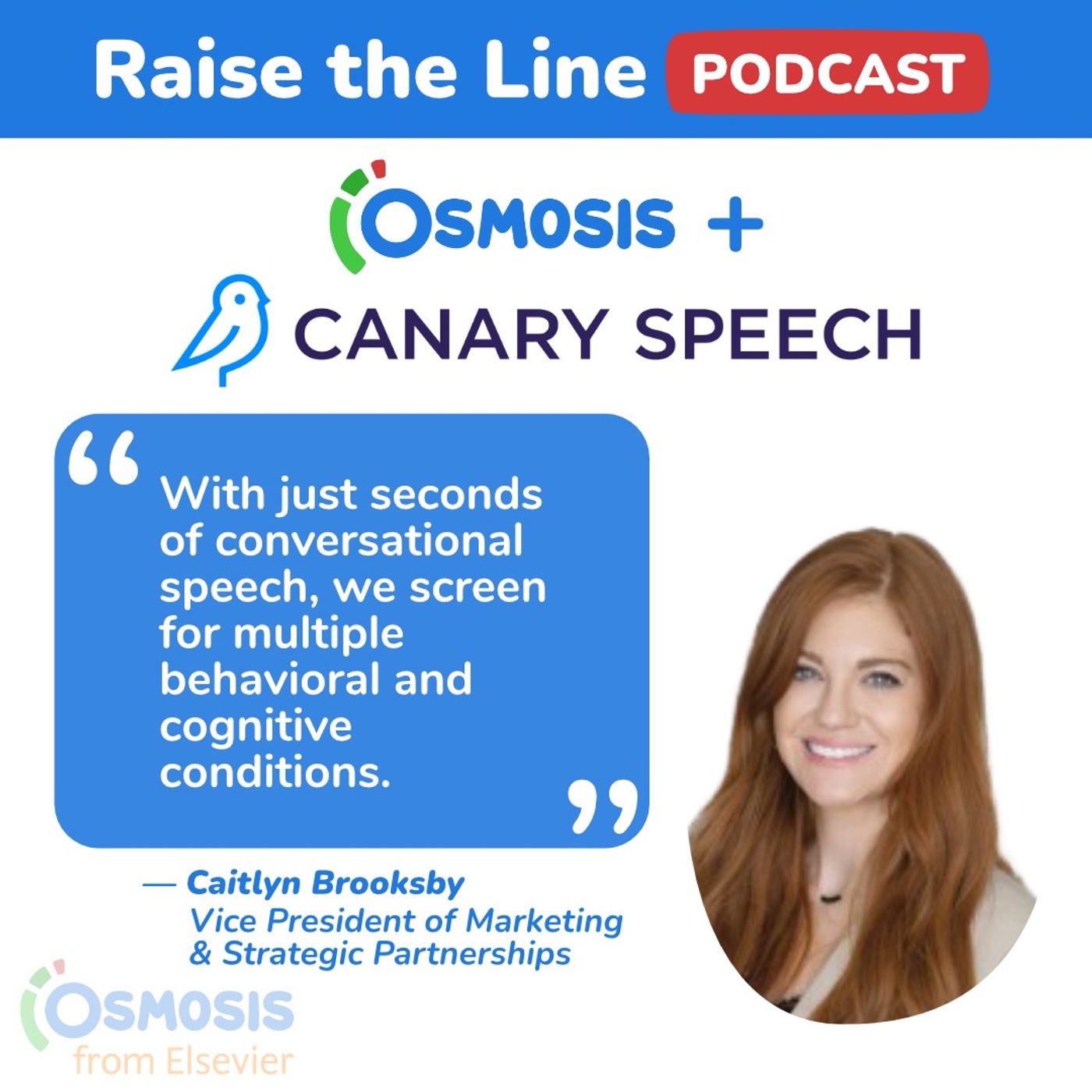
We continue our Year of the Zebra focus on rare diseases today by exploring the ability of AI technology to aid in the diagnosis of rare and other conditions by analyzing the voice and speech of the patient. This approach is promising enough that the National Institutes of Health has invested in research projects to test its effectiveness, and the private sector is pursuing it as well, including the company Canary Speech whose technology can be trained to detect conditions that are traditionally difficult to identify, or those where early identification is crucial to treatment. “With just seconds of conversational speech, we can screen for multiple behavioral and cognitive conditions,” says Caitlyn Brooksby, Canary's vice president of Marketing and Strategic Partnership. One prime example she offers is a study on Huntington’s disease done in collaboration with Beth Israel Deaconess Medical Center in which more than a thousand features of speech were identified differentiating healthy patients from those with the disease. “Every ten seconds, we're looking at millions of data points, but we don't look at the words you say. We're looking at biomarkers within speech such as duration per word, word-per-second, bandwidth and contrast. It's really incredible what we can gather from speech alone,” she explains. Canary is in the second iteration of its Huntington’s model which is showing accuracy rates of 90% and above, and it recently added mild cognitive impairment, Alzheimer's, and Parkinson's disease to its offerings. Join host Lindsey Smith on this episode of Raise the Line to learn more about this promising approach to diagnosis. Mentioned in this episode: Canary Speech (https://canaryspeech.com/)
Raise the Line · Caitlyn Brooksby, Lindsey Smith
Audio is streamed directly from the publisher (cdn.simplecast.com) as published in their RSS feed. Play Podcasts does not host this file. Rights-holders can request removal through the copyright & takedown page.
Show Notes
We continue our Year of the Zebra focus on rare diseases today by exploring the ability of AI technology to aid in the diagnosis of rare and other conditions by analyzing the voice and speech of the patient. This approach is promising enough that the National Institutes of Health has invested in research projects to test its effectiveness, and the private sector is pursuing it as well, including the company Canary Speech whose technology can be trained to detect conditions that are traditionally difficult to identify, or those where early identification is crucial to treatment. “With just seconds of conversational speech, we can screen for multiple behavioral and cognitive conditions,” says Caitlyn Brooksby, Canary's vice president of Marketing and Strategic Partnership. One prime example she offers is a study on Huntington’s disease done in collaboration with Beth Israel Deaconess Medical Center in which more than a thousand features of speech were identified differentiating healthy patients from those with the disease. “Every ten seconds, we're looking at millions of data points, but we don't look at the words you say. We're looking at biomarkers within speech such as duration per word, word-per-second, bandwidth and contrast. It's really incredible what we can gather from speech alone,” she explains. Canary is in the second iteration of its Huntington’s model which is showing accuracy rates of 90% and above, and it recently added mild cognitive impairment, Alzheimer's, and Parkinson's disease to its offerings. Join host Lindsey Smith on this episode of Raise the Line to learn more about this promising approach to diagnosis.
Mentioned in this episode:
Canary Speech
If you like this podcast, please share it on your social channels. You can also subscribe to the series and check out all of our episodes at www.osmosis.org/podcast