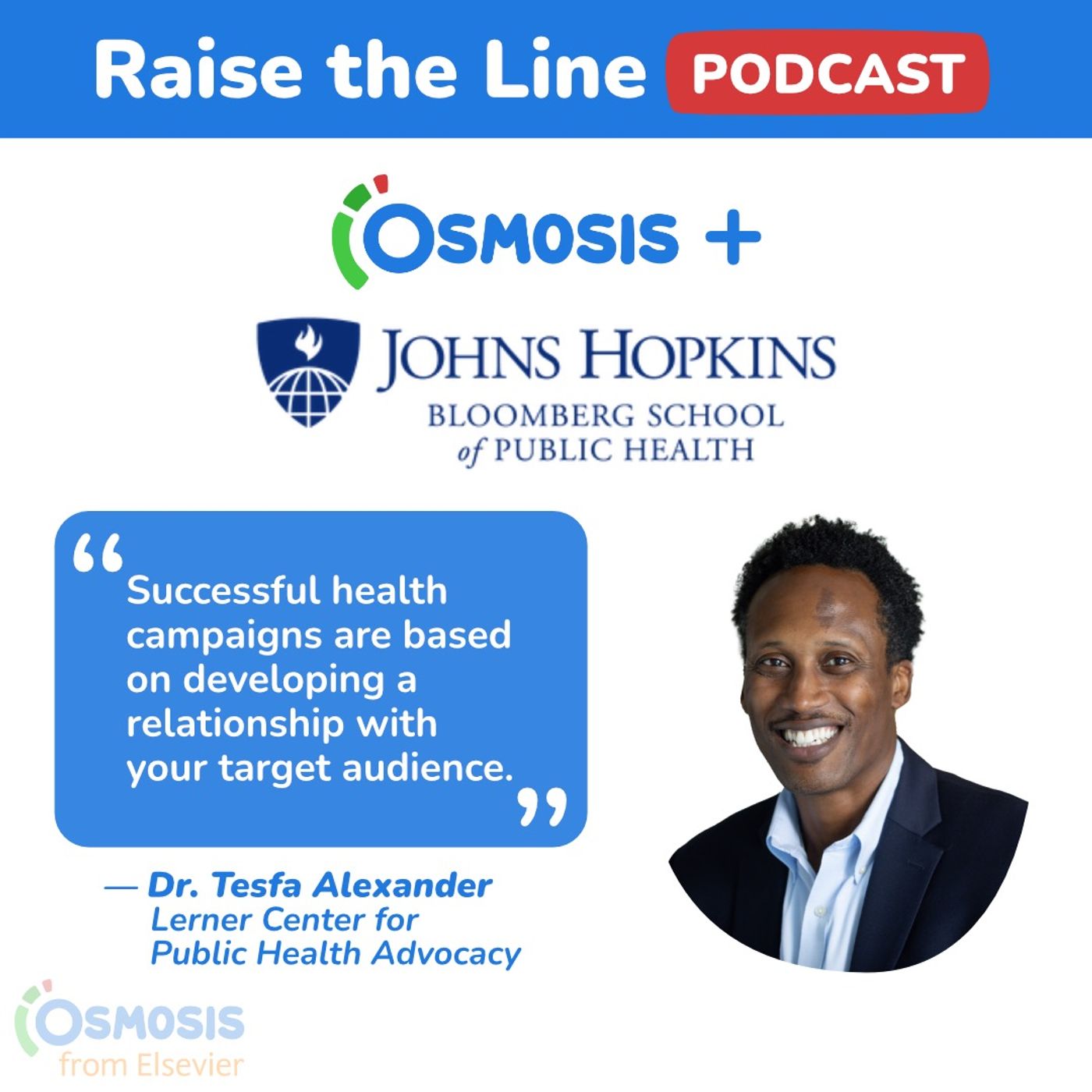
The Science Behind Effective Health Communication: Dr. Tesfa Alexander, Lerner Center for Public Health Advocacy at the Johns Hopkins Bloomberg School of Public Health
As health officials across the globe struggle to get their messages through to a public overloaded with information, much of it inaccurate, about important health issues, we turn to communications expert Dr. Tesfa Alexander of the Johns Hopkins Bloomberg School of Public Health to understand the science and strategy behind effective campaigns. Join Raise the Line host Lindsey Smith for a fascinating look at how the right approach to communications can drive behavior change.
Raise the Line · Dr. Tesfa Alexander, Lindsey Smith
Audio is streamed directly from the publisher (cdn.simplecast.com) as published in their RSS feed. Play Podcasts does not host this file. Rights-holders can request removal through the copyright & takedown page.
Show Notes
We've had many conversations on Raise the Line about the challenges of health communication in today's world of information overload, but none of our guests have the kind of expertise Dr. Tesfa Alexander has acquired in a career that has taken him from Madison Avenue to the halls of government and academia. From guiding tobacco education research at the FDA to leading public health initiatives at MITRE, Dr. Alexander has developed a deep understanding of the science and strategy behind effective health communication. “Successful campaigns keep the long game in mind where you want to develop a lasting relationship with your target audience,” he tells host Lindsey Smith. That relationship needs to be built on understanding culture, beliefs, priorities and daily realities, and only then can you develop messaging that will resonate, he explains. Dr. Alexander also believes these relationships can be leveraged to help people sort out facts from misleading or inaccurate claims. “I strongly recommend shifting our focus from combating misinformation head on, and instead working with the communities who we are seeking to serve.”
This fascinating look at communication science also covers:
- How stories drive belief;
- The importance of working with community partners who are trusted messengers;
- The power of audience segmentation.
Tune in as Dr. Alexander unpacks what it takes to influence beliefs, and ultimately behaviors, in an era defined by misinformation and institutional mistrust.
Mentioned in this episode:
Lerner Center for Public Health Advocacy
If you like this podcast, please share it on your social channels. You can also subscribe to the series and check out all of our episodes at www.osmosis.org/podcast