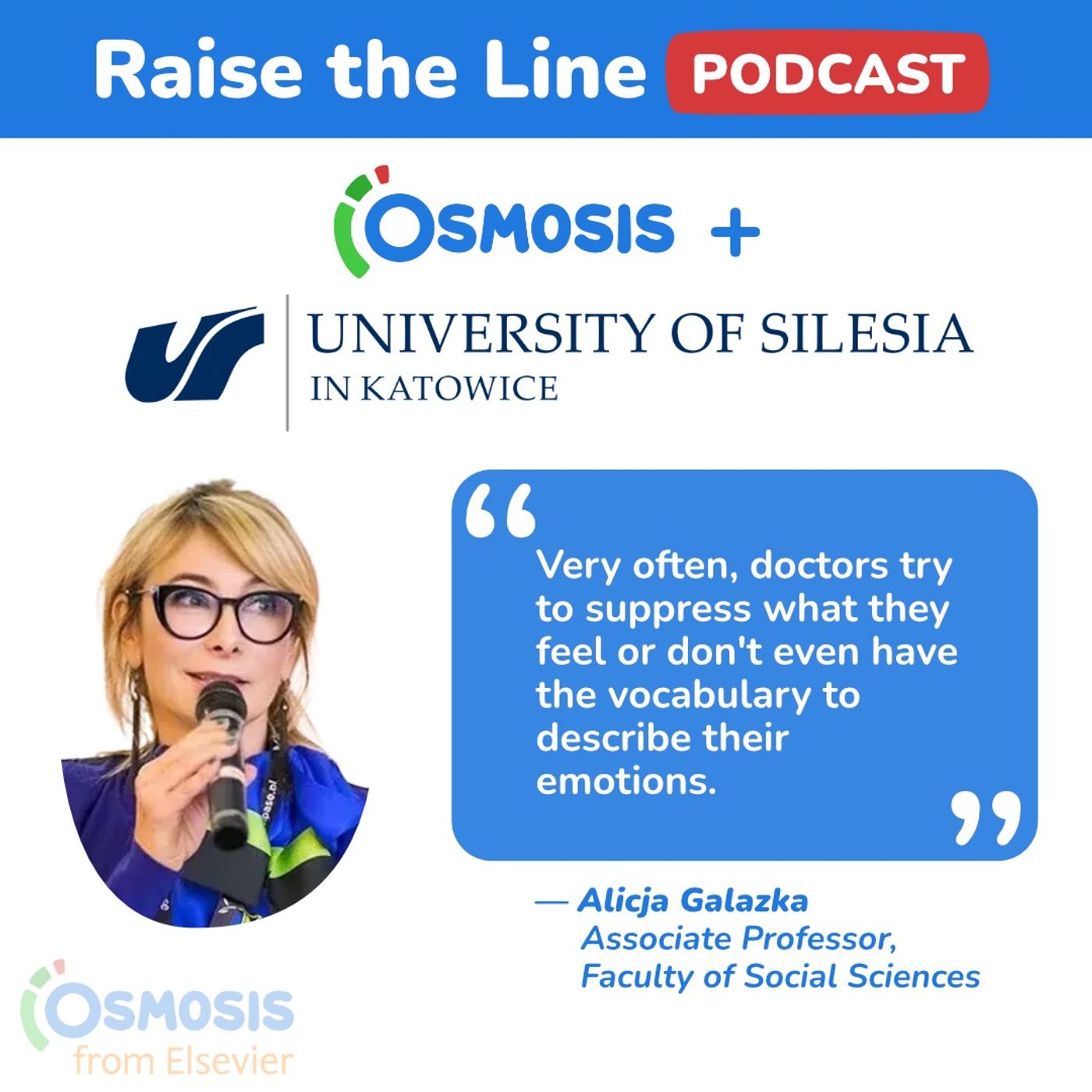
How Emotional Skills Can Elevate Medical Practice and Patient Care: Professor Alicja Galazka, University of Silesia
On this episode of Raise the Line, Professor Alicja Galazka of the University of Silesia shares insights with host Michael Carrese on boosting the emotional intelligence and resilience of medical students and practicing doctors using simulations, emotional agility training and other modalities and explains why these attributes result in better patient care and increased wellbeing for providers.
Raise the Line · Alicja Galazka, Michael Carrese
Audio is streamed directly from the publisher (cdn.simplecast.com) as published in their RSS feed. Play Podcasts does not host this file. Rights-holders can request removal through the copyright & takedown page.
Show Notes
“Very often, doctors try to suppress what they feel or don't even have the vocabulary to describe their emotions,” says Professor Alicja Galazka of the University of Silesia, an observation based on decades of work with physicians to enhance their emotional intelligence and resilience. Galazka, a psychotherapist, psychologist, lecturer and coach, believes this deficit is rooted in part in a lack of instruction in the internal and external psychological dimensions of being a medical provider. “There is not enough space created in medical school for teaching and training students about how to deal with their own stress and all of the skills connected to building relationships with patients,” she tells host Michael Carrese. Those same skills are also critical to working effectively as a member of a care team, which is an increasingly common arrangement in hospitals and clinics. Galazka employs simulations, dramatic role-playing, mindfulness, Acceptance and Commitment Therapy and other methods in her work with an eye on increasing the emotional agility and sensitivity of her trainees and clients. Tune in to this thoughtful episode of Raise the Line to hear Galazka’s ideas on how to reshape medical training, why she is a proponent of narrative medicine, and the merits of embedding psychologists on care teams as a resource for both patients and providers.
Mentioned in this episode:
University of Silesia
International Association of Coaching Institutes
If you like this podcast, please share it on your social channels. You can also subscribe to the series and check out all of our episodes at www.osmosis.org/podcast