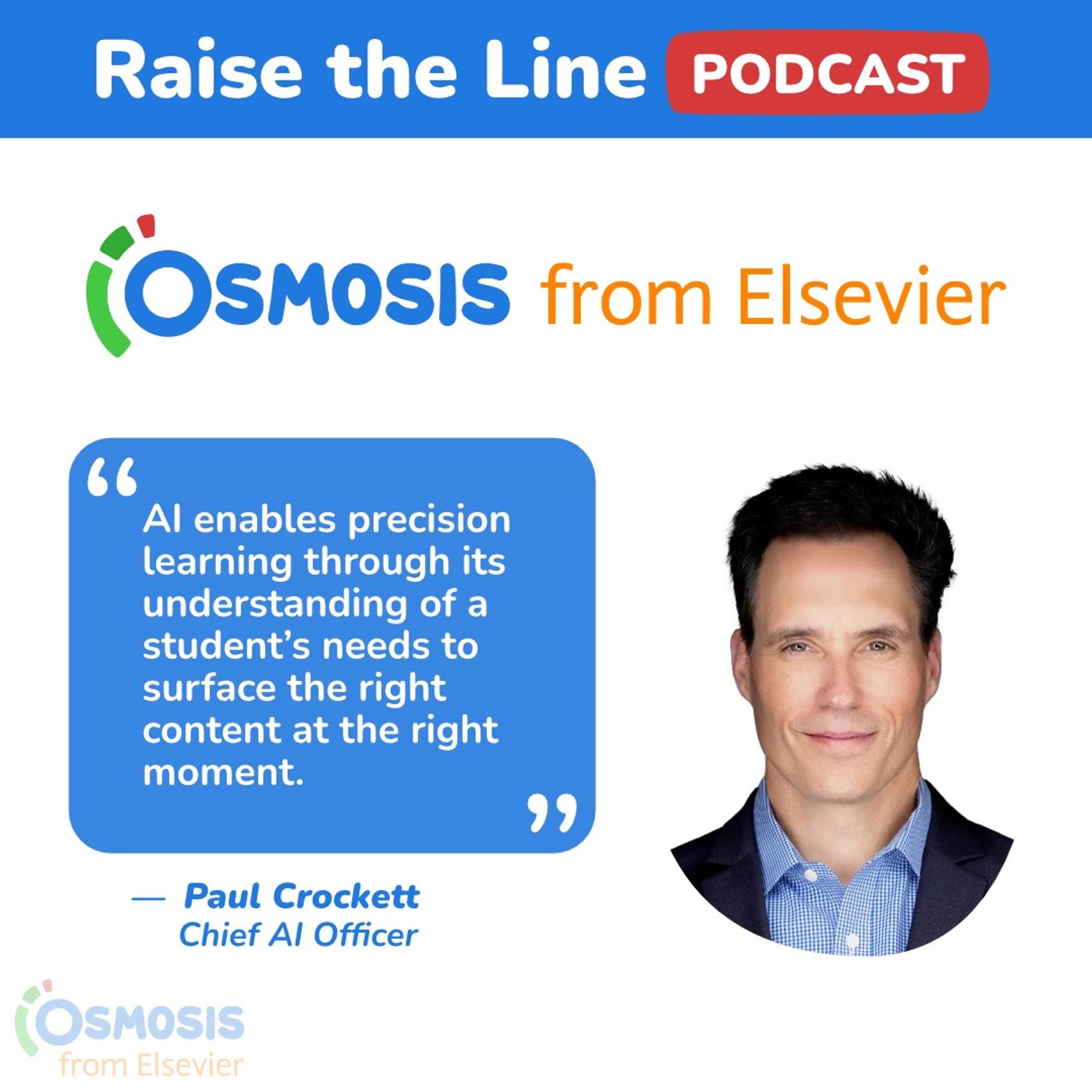
How AI Is Transforming Education By Making “Precision Learning” Possible: Paul Crockett, Chief AI Officer at Elsevier
Raise the Line host Lindsey Smith is joined by Elsevier Chief AI Officer Paul Crockett to explore how Osmosis AI is transforming static delivery of content to medical students into dynamic, personalized learning experiences sourced with evidence-based, verifiable information.
Raise the Line · Paul Crockett, Lindsey Smith
Audio is streamed directly from the publisher (cdn.simplecast.com) as published in their RSS feed. Play Podcasts does not host this file. Rights-holders can request removal through the copyright & takedown page.
Show Notes
Imagine you had a tutor who was with you every time you were studying and, because they knew your learning style, strengths and weaknesses, could hand you the right content at the moment you needed it to deepen your understanding of a topic. That’s the pedagogically powerful experience students are having with AI-enhanced learning systems such as Osmosis AI, making possible what our guest, Elsevier’s Chief AI Officer Paul Crockett, describes as a new era of precision learning. “We now have signal from how students actually engage with content – such as where they get stuck and how they learn – and that behavioral data can tell you more about what a learner needs than any sort of static assessment. That's a profound transformation,” he says. In this fascinating conversation with Raise the Line host Lindsey Smith, Crockett also highlights how AI enables tutoring-like interactions with students which supports deeper reasoning rather than rote memorization. That in turn, helps Elsevier achieve the goal of getting students ready to practice medicine, not just ready to take tests. In addition, limiting the AI’s sources to the evidence-based material in the Osmosis and Elsevier content libraries provides both students and faculty with the level of trust and verifiability they desire. Tune in to learn how this meaningful shift from static content delivery to dynamic, data-informed learning experiences is changing healthcare education.
Mentioned in this episode:
If you like this podcast, please share it on your social channels. You can also subscribe to the series and check out all of our episodes at www.osmosis.org/podcast