Raise the Line
593 episodes — Page 10 of 12
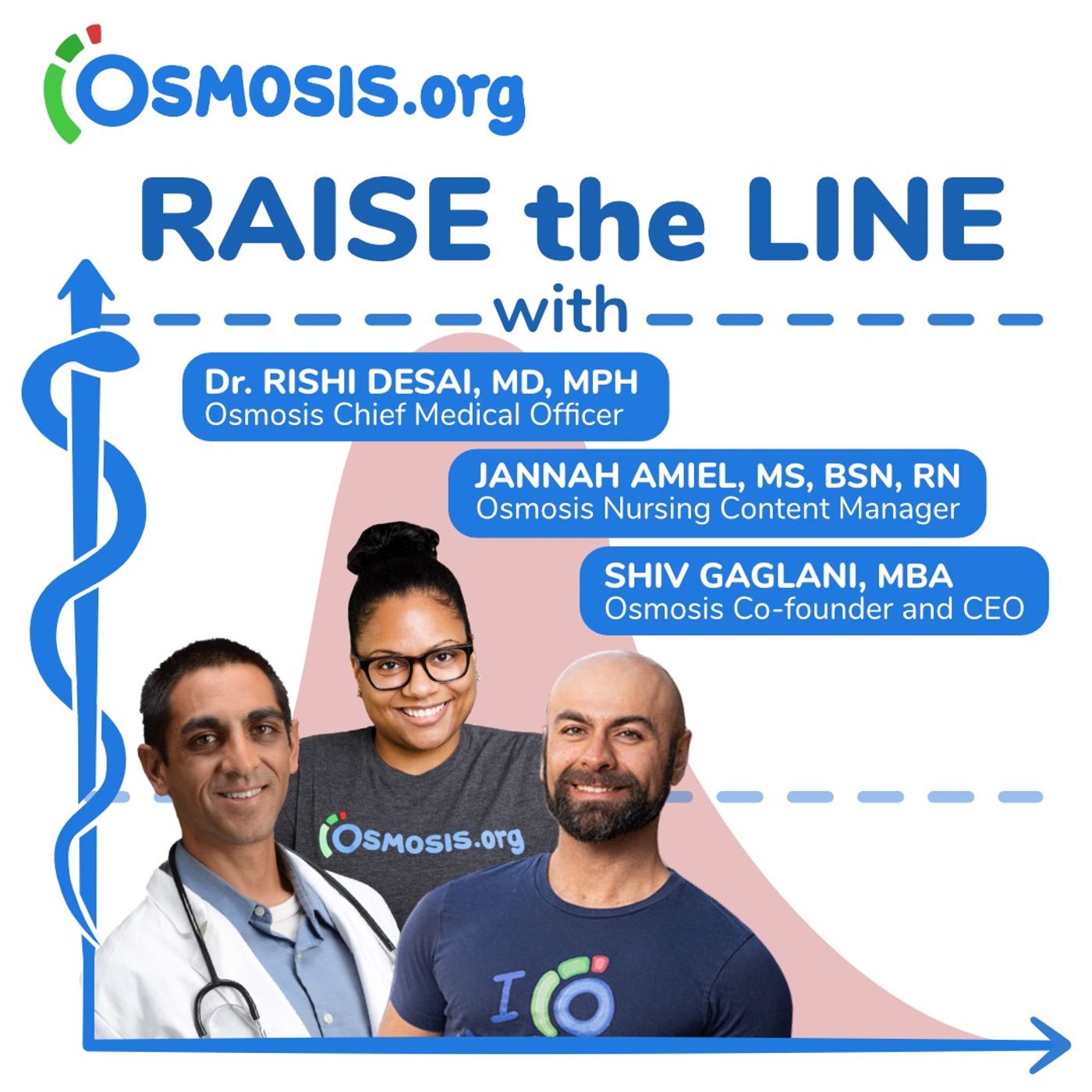
Ep 143Making the Educational Experience More Human - John Baker, President and CEO of D2L
If you like this podcast, please share it on your social channels. You can also subscribe to the series and check out all of our episodes at www.osmosis.org/podcast
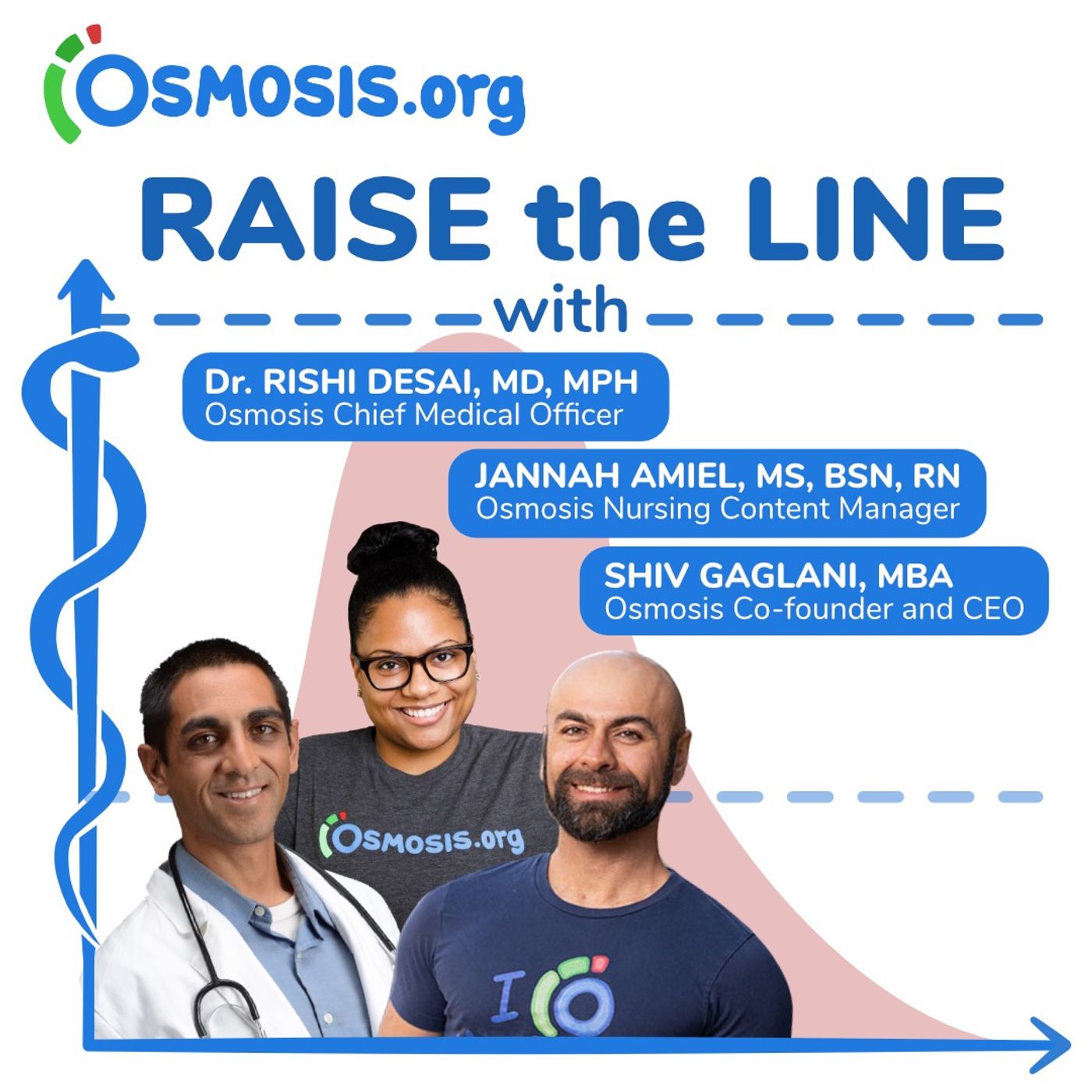
Ep 142Surgical Training in Virtual Reality - Dr. Justin Barad, CEO of Osso VR
If you like this podcast, please share it on your social channels. You can also subscribe to the series and check out all of our episodes at www.osmosis.org/podcast
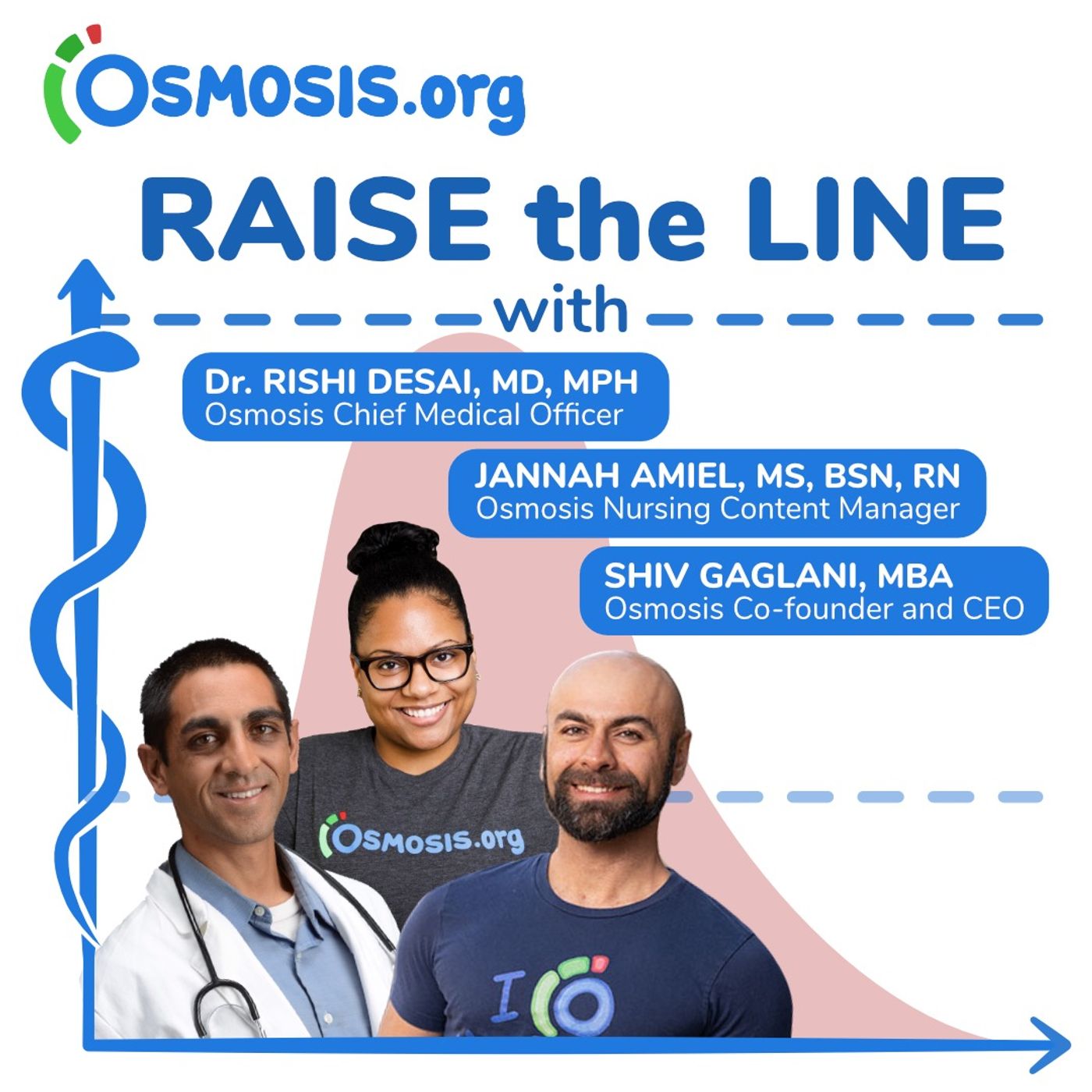
Ep 141Allowing Workers to Blossom - Gary Johnson, Partner and Consultant at Monarch Pathways
If you like this podcast, please share it on your social channels. You can also subscribe to the series and check out all of our episodes at www.osmosis.org/podcast
Ep 140Rewarding Good Results - Dr. Christopher Chen, CEO of ChenMed
If you like this podcast, please share it on your social channels. You can also subscribe to the series and check out all of our episodes at www.osmosis.org/podcast
Ep 139Healthcare Data in the Cloud - Luke Bonney, CEO of Redox
If you like this podcast, please share it on your social channels. You can also subscribe to the series and check out all of our episodes at www.osmosis.org/podcast
Ep 138Managing the Incredible Complexity of the COVID Vaccine Campaign - Dr. Suman De and Dr. Amy Osmond-Cook, Infosys
If you like this podcast, please share it on your social channels. You can also subscribe to the series and check out all of our episodes at www.osmosis.org/podcast
Ep 137Targeting the Scar Tissue of Distrust - Dr. Ali Khan, Executive Medical Director, Oak Street Health
For more information visit https://www.oakstreethealth.com) If you like this podcast, please share it on your social channels. You can also subscribe to the series and check out all of our episodes at www.osmosis.org/podcast
Ep 136An Accelerator for Knowledge - Greg Sebasky, CEO, Ascend Learning
If you like this podcast, please share it on your social channels. You can also subscribe to the series and check out all of our episodes at www.osmosis.org/podcast
Ep 135The Power of Supporting Patients Between Visits - Geri Baumblatt, Co-Founder of The Difference Collaborative
Finding herself overwhelmed and confused while navigating the health system during a long recovery from a bad car accident, Geri Baumblatt quickly recognized the lack of communication and understanding there was for patients simply trying to get better. She works to help deliver effective education to patients both before and after visits through her work with the free, social good Docola platform (www.doco.la). And as care increasingly falls to family members, the majority of whom are also trying to hold down a job, Baumblatt is tackling that problem through an organization she co-founded called The Difference Collaborative (https://differencecollaborative.com) which supports people as they try to manage the steep challenges of working and providing care. In this episode, she also shares with host Shiv Gaglani why she believes that by normalizing the questions most patients have, you will gain a better understanding of what their goals of care might be and be able to provide them with the care they’re searching for. “I think what we learn from patients is often really simple, but really surprising at the same time.” If you like this podcast, please share it on your social channels. You can also subscribe to the series and check out all of our episodes at www.osmosis.org/podcast
Ep 134Innovating Until the End – Dr. Dan Durand, Chief Innovation Officer, LifeBridge Health
If you like this podcast, please share it on your social channels. You can also subscribe to the series and check out all of our episodes at www.osmosis.org/podcast
Ep 133Educating the Next Generation of Emergency Medicine Specialists - Dr. Mary Nan Mallory, President of the American Board of Emergency Medicine
If you like this podcast, please share it on your social channels. You can also subscribe to the series and check out all of our episodes at www.osmosis.org/podcast
Ep 132Boosting Patient Understanding and Follow Through - Dr. Shiv Rao, Co-Founder & CEO of Abridge
Mentioned in this episode: https://www.abridge.com If you like this podcast, please share it on your social channels. You can also subscribe to the series and check out all of our episodes at www.osmosis.org/podcast
Ep 131Healthcare Has a Bright Future - Dr. Jay Feldstein & Dean Miller, Philadelphia College of Osteopathic Medicine
If you like this podcast, please share it on your social channels. You can also subscribe to the series and check out all of our episodes at www.osmosis.org/podcast
Ep 130A Healthcare System that Heals - Dr. Toyin Ajayi, Chief Health Officer of Cityblock Health
Put down the stethoscope and look patients in the eye, urges Dr. Toyin Ajayi. To really improve health outcomes, you've got to seek a fuller understanding than just organ systems and diseases. Dr. Ajayi grew up in Kenya, where she learned early the large role that income plays in health and social outcomes. The social justice and service ideals rooted in her childhood accompanied her through and post-medical school, when, working as a physician and hospitalist, she felt a calling to try to fix what she experienced as a broken system. Three years ago, she co-founded Cityblock Health, a New-York-based health and social services company that serves low-income Medicaid populations. In this fascinating interview, Dr. Ajayi shares Cityblock's innovative trust-based, value-based care model, which features full integration of behavioral health, an actively anti-racist company culture, technology tools that seek out the full 360-degree view of a patient and their risk factors, and omnichannel access that meets people where they are, be that in their homes, a cafe, or elsewhere in their community. If you like this podcast, please share it on your social channels. You can also subscribe to the series and check out all of our episodes at www.osmosis.org/podcast
Ep 129Understanding Anterior Knee Pain - Dr. John Fulkerson of the Patellofemoral Foundation and Yale University
Early in his career as an orthopedic surgeon, Dr. John Fulkerson was attracted to focusing on a small part of the knee called the patellofemoral joint because he felt it was overlooked and little understood. Decades later, there is still much to be learned and he’s leading a new program at Yale to advance the understanding of anterior knee pain and how to treat it. It’s actually a common problem in the general population and is responsible for more than 30% of complaints at sports medicine clinics. Despite this, many people never get relief. Check out today’s episode to learn more about this issue, the role of technology in orthopedic surgery, and the importance of perseverance, integrity and honesty in medicine. If you like this podcast, please share it on your social channels. You can also subscribe to the series and check out all of our episodes at www.osmosis.org/podcast
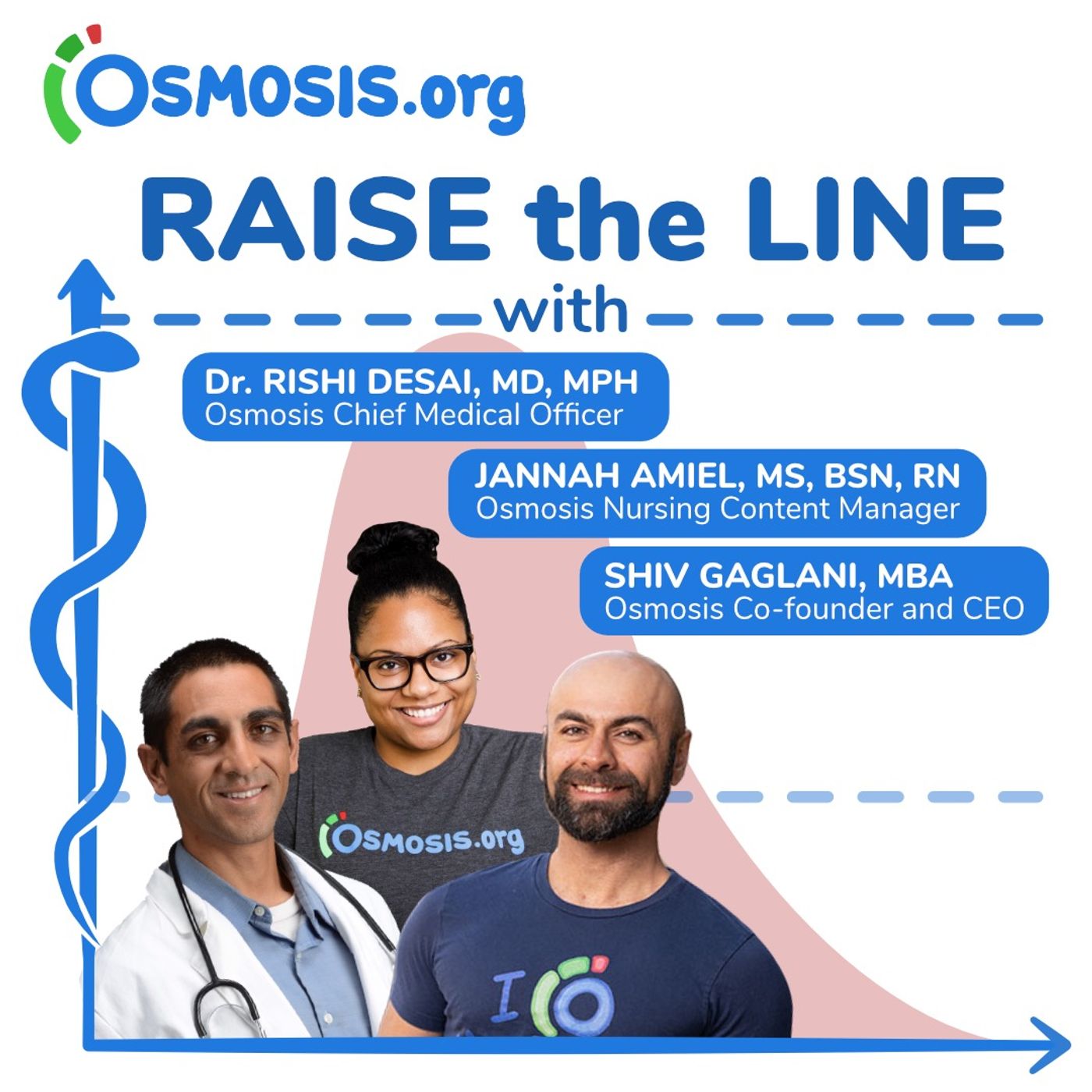
Ep 128A New Age of Connected Health - Dr. Daniel Kraft, Founder of Exponential Medicine
If you like this podcast, please share it on your social channels. You can also subscribe to the series and check out all of our episodes at www.osmosis.org/podcast
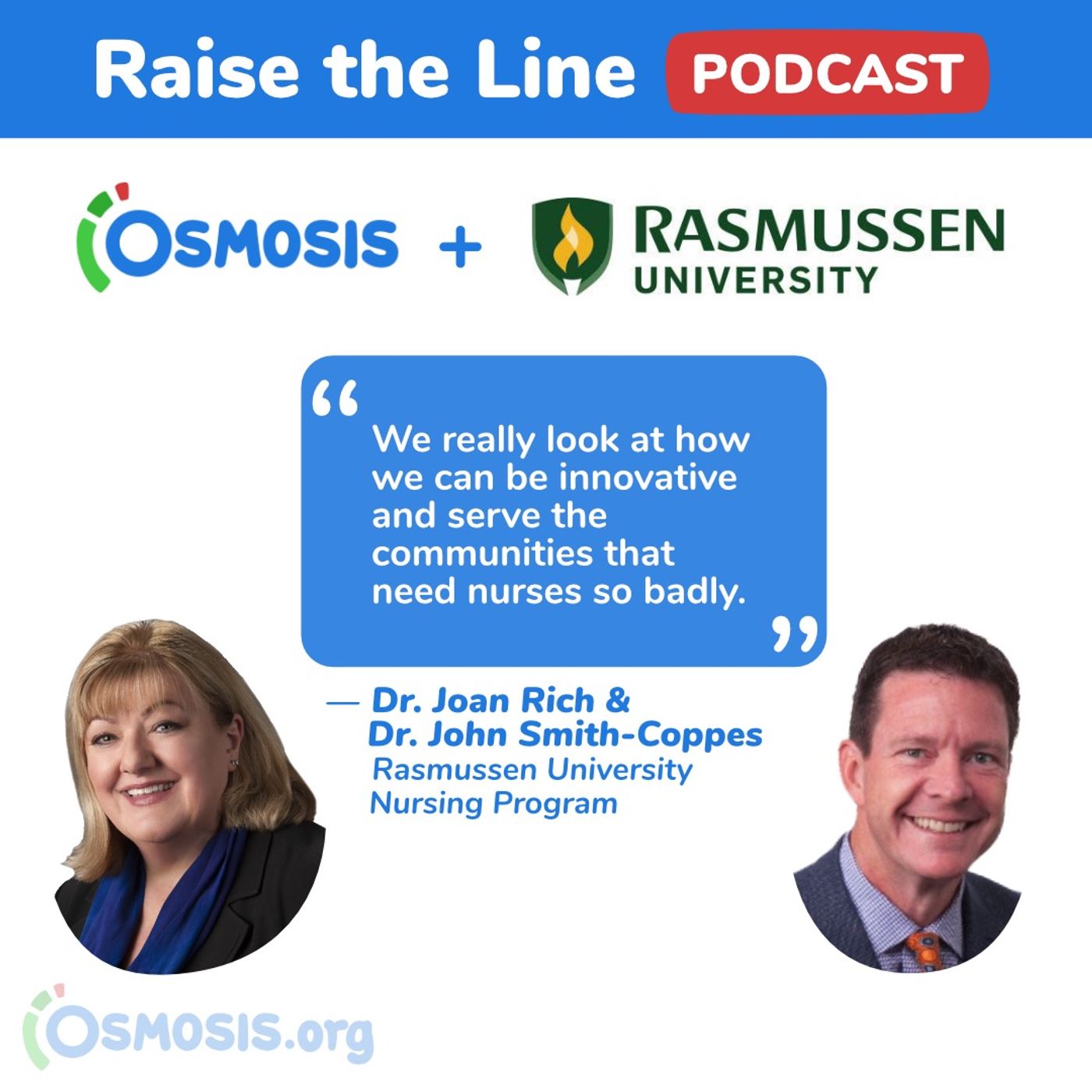
Ep 127Innovation in Nursing Education - Dr. Joan Rich & Dr. John Smith-Coppes, Rasmussen University
There's a reason why nursing is typically the most trusted profession in the world, says Dr. John Smith-Coppes, Vice President and Executive Director of Nursing at Rasmussen University It has to do with a genuine desire to serve others. Smith-Coppes and his colleague Dr. Joan Rich, Vice President of Nursing, are doing everything they can to sustain that trust. The goal of their nursing program at Rasmussen University is to turn out the very best, most competent nurses, no matter what the circumstances. In this episode of Raise the Line, Rich and Smith-Coppes share how they embrace innovation and find solutions in face of the challenges posed by COVID-19. Tune in to learn more about the broad range of programs that Rasmussen offers, with paths of all kinds for people with different needs and seeking different degrees and certifications, from LPN through DNP. Jannah Amiel, RN, facilitates as Rich provides a public health perspective and Smith-Coppes an operations perspective on the state of the healthcare system today, a unique time when there is at once a nursing shortage as well as renewed interest in the field. If you like this podcast, please share it on your social channels. You can also subscribe to the series and check out all of our episodes at www.osmosis.org/podcast
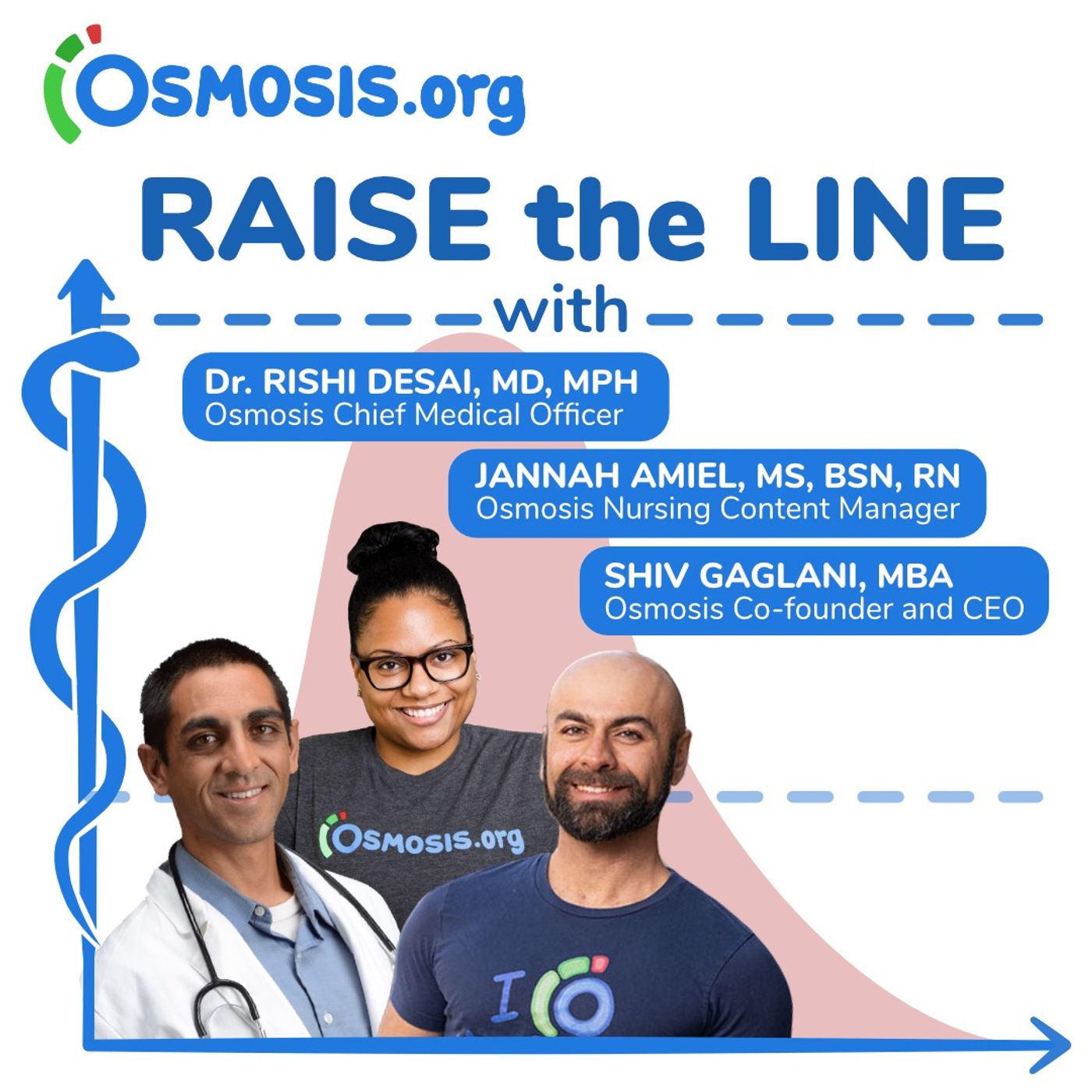
Ep 126Enhancing Access To Expertise - Carlos Reines & Gil Addo of RubiconMD
If you like this podcast, please share it on your social channels. You can also subscribe to the series and check out all of our episodes at www.osmosis.org/podcast
Ep 125Improving Healthcare Through Innovative Devices and Digital Health - Dr. John Dayton, Founder of Medforums.com
If you like this podcast, please share it on your social channels. You can also subscribe to the series and check out all of our episodes at www.osmosis.org/podcast
Ep 124Helping People Change When Change is Hard - Dr. Sandra Scheinbaum, CEO of the Functional Medicine Coaching Academy
If you like this podcast, please share it on your social channels. You can also subscribe to the series and check out all of our episodes at www.osmosis.org/podcast
Ep 123Making Cancer Look Like Something Else - Christopher Bradley, Co-Founder and CEO of Loki Therapeutics
If you like this podcast, please share it on your social channels. You can also subscribe to the series and check out all of our episodes at www.osmosis.org/podcast
Ep 122The Trust Factor in Health Communications - Dr. John Whyte, Chief Medical Officer of WebMD
If you like this podcast, please share it on your social channels. You can also subscribe to the series and check out all of our episodes at www.osmosis.org/podcast
Ep 121Expanding Access to Fertility Care - Tammy Sun, CEO of Carrot Fertility
If you like this podcast, please share it on your social channels. You can also subscribe to the series and check out all of our episodes at www.osmosis.org/podcast
Ep 120Leveraging Facebook's Reach to Improve Health – Kang-Xing Jin, Head of Health at Facebook
To create behavior change, like getting people to wear masks, it's not enough just to give people information, you also need to communicate that information effectively. Facebook's Kang-Xing Jin -- who espouses an interdisciplinary approach across public health, communication, behavioral science, and technology -- believes that Facebook is uniquely positioned to have positive social impact, including in the sphere of public health. In this episode of Raise the Line, he speaks with Shiv Gaglani about his work and career, including how Facebook Health has helped spur blood and organ donations, and how his team has shifted priorities in response to the COVID-19 crisis. Tune in to learn about the data tools such as large-scale surveys that Facebook has been providing to health experts, policymakers, and researchers to help them understand symptom trends and make better decisions. Jin also shares his belief that the crisis has brought about more cross-sector collaboration and sharing of perspectives, something he hopes will continue after the COVID threat has subsided. If you like this podcast, please share it on your social channels. You can also subscribe to the series and check out all of our episodes at www.osmosis.org/podcast
Ep 119What's Your Legacy Going to Be? - Dr. Henri Ford, Dean of the University of Miami Leonard M. Miller School of Medicine
If you like this podcast, please share it on your social channels. You can also subscribe to the series and check out all of our episodes at www.osmosis.org/podcast
Ep 118Reconsidering Menstruation - Dr. Sophia Yen, CEO of Pandia Health
“For anyone with a uterus out there, we're about to blow your mind.” With that, Dr. Sophia Yen set the stage for an interview as fascinating and lively as any of the 100+ we’ve done. For instance, Yen asks why women should endure 350-400 menstruations in their lifetime when, on average, they only have two babies. Ever thought of that? Yen, a Stanford professor and pediatrician, believes “periods should be optional” as a way to reduce health risks and what can be a significant disadvantage for women in their personal and professional lives. “I want my daughters to be on equal playing ground with everyone next to them. I don't want them randomly hit with menstruation 1 week out of 4 for 20 years.” While #PeriodsOptional is a passion, the main business of the company she co-founded is making it easier for women to get birth control prescriptions. Pandia Health (www.pandiahealth.com) customers can order online and have it delivered, eliminating the need for a medical appointment or trip to the drug store. Yen says COVID has made that model very attractive. Tune in to learn more about those business tailwinds, her cautions about telemedicine and much more in this memorable episode with host Shiv Gaglani. If you like this podcast, please share it on your social channels. You can also subscribe to the series and check out all of our episodes at www.osmosis.org/podcast
Ep 117Improving your “Webside” Manner – Dr. Mia Finkelston, Medical Director of Amwell
If you like this podcast, please share it on your social channels. You can also subscribe to the series and check out all of our episodes at www.osmosis.org/podcast
Ep 116Empowering Providers and Patients to Get Political - Dr. Alister Martin, Founder of VotER
If you like this podcast, please share it on your social channels. You can also subscribe to the series and check out all of our episodes at www.osmosis.org/podcast
Ep 115We Will Emerge Stronger - Dr. Peter Buckley, Dean, Virginia Commonwealth University School of Medicine
“I always think about careers as some mixture of careful career planning and then leaving tremendous amounts of space for serendipity,” says Dr. Peter Buckley, whose career as a researcher, a physician, academic leader, and health system leader includes membership on the Board of Directors of the Association of American Medical Colleges. In this episode of Raise the Line, Dr. Buckley shares with Shiv Gaglani how he became drawn to psychiatry, academic leadership, and the issue of schizophrenia, specifically, and discusses the increased importance of mental healthcare now as a result of COVID. What are the changes that VCU School of Medicine has had to make due to the pandemic, and which of those are here to stay? What is behind the increase in medical school enrollments and med school philanthropic giving? Tune in to discover answers to these questions, Dr. Buckley's advice to students, and his optimistic take on the ongoing transformation of the healthcare industry in America. If you like this podcast, please share it on your social channels. You can also subscribe to the series and check out all of our episodes at www.osmosis.org/podcast
Ep 114Making Healthcare About Human Care - Taylor Justice, Co-Founder and President, Unite Us
How can a barbershop be an access point to care? It's a question that Taylor Justice and his company, Unite Us, are figuring out on the ground in certain communities in North Carolina, and a model they are looking to expand, collaborating with various kinds of community organizations to build infrastructure by meeting patients where they're comfortable. Recognizing that so much of a person's overall wellbeing happens in their home community, Justice founded the technology platform Unite Us in 2013 to extend the traditional clinical care coordination network by connecting health, human, and social service organizations to securely exchange data around a shared patient. Initially focused on the veteran and military population, Unite Us now serves all citizens and is active in over 42 states across the country. In Justice's estimation, COVID has highlighted the lack of appropriately collaborative public health infrastructure. “I think that's one of the big learnings that we've seen from the pandemic,” he says. “No one can do this alone.” Tune in to this episode of Raise the Line to learn why Justice believes some of our nation's massive healthcare spending should be reallocated to human and social services, and why he predicts that these services will become bigger parts of the healthcare ecosystem going forward. If you like this podcast, please share it on your social channels. You can also subscribe to the series and check out all of our episodes at www.osmosis.org/podcast
Ep 113Compassion, Passion, and Commitment - Dr. Mark Schuster, Founding Dean and CEO, Kaiser Permanente Bernard J. Tyson School of Medicine
Dr. Mark Schuster has asked students in the entering class at the Kaiser Permanente Bernard J. Tyson School of Medicine to write a letter to themselves about their passions and goals that will be returned to them at graduation. After an extremely competitive, yet holistic admissions process to a program that has waived students' tuition with no strings attached, the admitted applicants “are the kinds of students who want to save the world,” Dr. Schuster boasts. He doesn't want the med school journey to burn out any of their spark. In addition to his role as Founding Dean and CEO of the Bernard J. Tyson School of Medicine, Dr. Schuster is recognized as an international leader in research on child, adolescent and family health and is also a member of the prestigious National Academy of Medicine. In this episode of Raise the Line, he speaks with Shiv Gaglani about his journey into pediatrics and leadership roles, how Kaiser Permanente has met the challenge of opening a medical school during a pandemic, and how COVID-19 has been an opportunity to teach about health disparities. Tune in for an inside glimpse of the school's unique admissions process and hear Dr. Schuster's advice on serving patients by viewing them as whole people in the full context of their lives. If you like this podcast, please share it on your social channels. You can also subscribe to the series and check out all of our episodes at www.osmosis.org/podcast
Ep 112Understand Every Person’s Role – Dr. Vivian Lee, President of Health Platforms at Verily Life Sciences
“Why can't we get better health when we're spending two to three times as much money as any other high-income nation?” asks Dr. Vivian Lee, as so many other Americans have asked for so many years. But not many have developed answers as compelling as hers, making Lee one of the leading voices on healthcare reform in the country. Lee’s perspective, shaped by a rich set of experiences as a clinician, leader and academic, is strengthening a movement to make healthcare more centred on helping patients be as healthy as possible instead of being geared to just treat them when they are sick. Her influential book “The Long Fix” lays out an action plan to create a less costly system and a healthier population. As she explains to host Shiv Gaglani, positive change will depend in part on clinicians knowing as much as possible about the business of healthcare, and also about what other providers do. “You need to understand what every person's role is on the care team. Until you can make the most of every person, how can you drive value?” After running a highly-respected academic health system, Lee is now making an impact in the private sector at Verily Life Sciences, part of the Google family of companies. Listen in to learn how Verily is using digital health and data analytics to support schools, employers and patients during COVID, and the impact it is hoping to make long-term. If you like this podcast, please share it on your social channels. You can also subscribe to the series and check out all of our episodes at www.osmosis.org/podcast
Ep 111A Welcome Change of Course – Dr. Chelsea Clinton, Vice Chair of the Clinton Foundation
Mentioned in this episode:https://www.clintonfoundation.orghttps://www.clintonfoundation.org/our-work/too-small-fail If you like this podcast, please share it on your social channels. You can also subscribe to the series and check out all of our episodes at www.osmosis.org/podcast
Ep 110"Chasing Interesting, Disruptive Movements" - Fred Singer, CEO of Echo360
Fred Singer has a message for those in higher ed grappling with the imperative to deliver education online: offering “Zoom University” isn’t enough. “Simply repurposing a classroom doesn't make any more sense going forward than it did in the 1990’s for the newspapers to dump content online and assume the world's going to change. It didn't work that way.” And Singer knows what he’s talking about because he was there when the Washington Post first went online. He’s built a fascinating career “chasing interesting, disruptive movements” as an internet pioneer and entrepreneur. As CEO of Echo360, he now sits at the intersection of innovation and education. His company, which is the first video platform designed to foster active, engaged, and personalized video-based learning, has been boosted by COVID as schools of all types have been forced to offer and improve distance learning. In this episode with host Shiv Gaglani, Singer highlights the parallels he sees between the relatively slow adoption of learning technologies in both education and healthcare, and predicts that major change is going to happen faster than people might realize. “All the technology and tools exist to deliver much cheaper education, much more convenient education. I think there will be huge opportunities for people that know how to embrace the change and not try to block it.” If you like this podcast, please share it on your social channels. You can also subscribe to the series and check out all of our episodes at www.osmosis.org/podcast
Ep 109Nurses Are The Trusted Profession - Dr. Jennifer Billingsley, Dean of the College of Nursing and Health Sciences at United States University
If you like this podcast, please share it on your social channels. You can also subscribe to the series and check out all of our episodes at www.osmosis.org/podcast
Ep 108Question Everything While You’re Learning – Peter Frishauf, Founder of Medscape
@pfrishauf linkedin.com/in/peterfrishaufMentioned in this episode: Medscape - First Five Years:https://www.medscape.com/viewarticle/504736Medscape - 25th Anniversary:https://www.medscape.com/viewarticle/930939Trial of the Chicago 7:https://www.youtube.com/watch?v=FVb6EdKDBfU If you like this podcast, please share it on your social channels. You can also subscribe to the series and check out all of our episodes at www.osmosis.org/podcast
Ep 107Being Proactive About Risk - Marlene Icenhower, Senior Risk Specialist at Coverys
Risk management is a critically important part of providing healthcare and, you might be surprised to learn, goes far beyond dealing with medical errors. In fact, modern risk management encompasses most aspects of healthcare operations, including HR and finances. When Marlene Icenhower, who has degrees in nursing and law, first got into risk management decades ago, it was largely reactive in nature. “It had to do with the process that occurred after a medical mishap, and it was pretty much confined to just the clinical arena and the legal mop-up that took place after that event.” Over the past several decades, however, it's evolved into a function that's more proactive. “The idea now is to look for trends, issues, or lapses and then implement measures to fix them before they result in injury to a patient.” Icenhower is a senior risk specialist at Coverys, one of the largest medical malpractice insurance companies in the country, and spends a good deal of her time answering questions and brainstorming with providers around the country about everything from telehealth regulations to what should be done when a patient leaves against medical advice. In this conversation with host Shiv Gaglani, Icenhower talks about finding the “why” behind education, how COVID is changing healthcare, and what she wishes medical and nursing schools would spend more time teaching. If you like this podcast, please share it on your social channels. You can also subscribe to the series and check out all of our episodes at www.osmosis.org/podcast
Ep 106Building A Pharmacy That Works For Everyone - Eric Kinariwala, Founder and CEO of Capsule
After a negative experience at a chaotic pharmacy while battling a sinus infection, Eric Kinariwala identified the need for an easier way to get prescription medications. That was the spark for creating Capsule, a New York based digital pharmacy startup that has expanded to Chicago, Boston, and Minneapolis. “We built the entire experience around the idea that if your mom was a pharmacist and you were the only customer in the world, what would that experience look like?” Capsule is considered a leading disruptor in the pharmacy industry by offering fast delivery and having pharmacists on call 24/7 to help customers among other benefits, but Kinariwala thinks the reasons for the company’s success goes beyond that. “What we've learned is that it's really not about the speed of the delivery. It's about all of the other things around the experience that the technology platform enables that makes it really, really frictionless and easy to do something that has historically been really complicated.” Check out this episode of Raise the Line to learn how the patient-pharmacy relationship is changing, how Capsule is meeting the needs of physicians, health systems, payers and other stakeholders, and how COVID has fueled the company’s growth. If you like this podcast, please share it on your social channels. You can also subscribe to the series and check out all of our episodes at www.osmosis.org/podcast
Ep 105Tie Your Work to Improving People’s Lives - Omar Ishrak, Former CEO of Medtronic
A strong, sustained sense of purpose is the bedrock of a successful company, with everything else flowing from that. So says Omar Ishrak, one of the most influential figures in medical technology and healthcare in the U.S. and globally. He earned that role in part by being Chairman and CEO of Medtronic, the world's leading medical technology company, from 2011 to 2020, but he was also president and CEO of GE Healthcare Systems earlier in his career. When it comes to having a durable purpose, Medtronic is hard to beat. Founded in the late 1940’s, the company has kept the same mission for more than 60 years – to apply biomedical engineering to alleviate pain, restore health, and extend life. Ishrak considers a major part of his legacy at Medtronic to be successfully stewarding that mission and making it possible for his successors to carry it forward for decades to come. Of course, there were other accomplishments in his tenure including the acquisition of Covidien, a $10 billion global manufacturer of surgical products and supplies, marking the largest medical technology acquisition in the history of the industry. In this thoughtful discussion with host Shiv Gaglani, Ishrak talks about drawing encouragement from how quickly different parts of the healthcare industry came together in response to COVID, and what he hopes the lasting improvements will be from this crisis. He also makes the case for shifting the focus of healthcare at both the industry and individual worker level to successful patient outcomes. “No matter what you do in healthcare, having a line of sight to improving outcomes is important. Tie your work to how people's lives get better.” If you like this podcast, please share it on your social channels. You can also subscribe to the series and check out all of our episodes at www.osmosis.org/podcast
Ep 104The Benefits of Blended Learning - Scott Shaw, CEO of Lincoln Tech
“While the switch to distance learning was traumatic at first, I think we're going to end up in a much better place when it's all said and done,” says Scott Shaw, president and CEO of Lincoln Tech which has always taken a hands-on learning approach. That’s because the blended in-person and online learning model emerging from COVID gives the school’s adult students more flexibility to manage their jobs and childcare now that they don’t always have to be on campus to take classes. Lincoln Tech started 75 years ago to educate WWII veterans in auto mechanics and HVAC. Now, it has 22 campuses and nearly two dozen programs, including nine in the health professions. In fact, they produce 50% of the LPNs in New Jersey and are hoping to start offering an RN program in the Garden State as well, which has one of the biggest shortages of nurses in the country. In this episode with host Shiv Gaglani, Shaw also discusses the increased interest in health professions due to the pandemic, student debt, and the key traits today’s employers are looking for in their staff. If you like this podcast, please share it on your social channels. You can also subscribe to the series and check out all of our episodes at www.osmosis.org/podcast
Ep 103Learning How To Sell Yourself - Dr. Sahil Mehta, Founder of MedSchoolCoach
If you are thinking about applying to medical school, or are already in the process, this episode of Raise the Line is a must-listen. Host Shiv Gaglani is joined by Dr. Sahil Mehta, widely regarded as one of the top experts in the country on medical school admissions. As the founder of MedSchoolCoach, he’s guided thousands of successful medical school applicants. It’s a business that started with the simple realization that most people are not good at selling themselves. Helping some friends improve their applications led to a “basement” business that has grown over the years to become a major player in the field. Listen in as Mehta shares his insights on what you can do to increase your appeal to medical schools and the importance of being certain it is the profession you want to pursue. If you like this podcast, please share it on your social channels. You can also subscribe to the series and check out all of our episodes at www.osmosis.org/podcast
Ep 102Expert Guidance for Getting Into Medical School - Laura Turner, Executive Director of the Student Doctor Network
If you like this podcast, please share it on your social channels. You can also subscribe to the series and check out all of our episodes at www.osmosis.org/podcast
Ep 101Lessons Learned in a COVID Epicenter - Dr. Brian Radbill, Chief Medical Officer at Mount Sinai Morningside
“In less than a month we went from zero COVID patients to 285, and we’re only a 300-bed hospital,” says Dr. Brian Radbill, recalling the early weeks in March and April when coronavirus stormed New York City. As chief medical officer, Radbill oversaw the Manhattan hospital’s transformation into a COVID care facility, which required a lot of on-the-fly innovation. “It was a real team effort. I have to say, every single person stepped up in the hospital and we met every challenge.” For example, they had to get creative to maintain line of sight to critically-ill patients in spaces that were not built for it -- which initially included the use of baby monitors and iPads – and also had to figure out ways to create more negative pressure space, all while reacting to daily changes in their understanding of the disease. Listen as Radbill brings host Shiv Gaglani inside the early days of the COVID struggle and reflects on what lasting impact he thinks this experience will have on his hospital and the healthcare system at large. He also discusses ongoing work to improve the quality of care and patient flow and shares his perspective on the role of hospitals in the changing healthcare landscape. If you like this podcast, please share it on your social channels. You can also subscribe to the series and check out all of our episodes at www.osmosis.org/podcast
Ep 100The Answer Is At the Bedside - Dr. Thomas Rebbecchi, Medical Advisor, National Board of Medical Examiners
“Often, the real answer is at the bedside,” says Dr. Thomas Rebbecchi, who has worked as an ER doctor at Cooper Hospital in Camden, New Jersey for 23 years. “If you ask the right questions to people, they're going to tell you directly or indirectly what's going on with them.” Dr. Rebbecchi's educational mission is to teach students to focus less exclusively on technology and take the extra time for compassionate interaction with patients. In addition to his role on the National Board of Medical Examiners, Dr. Rebbecchi is also a scientific advisory board member at the Glut1 Deficiency Foundation. In this episode of Raise the Line, he speaks with Dr. Rishi Desai about his family's journey to discover their son’s diagnosis through genetic testing, improved COVID outcomes, and the need for better mental healthcare, especially as a result of the mounting psychological effects of pandemic life. If you like this podcast, please share it on your social channels. You can also subscribe to the series and check out all of our episodes at www.osmosis.org/podcast
Ep 99How COVID is Changing Dentistry - Eve Cuny, Director of Environmental Health and Safety, University of the Pacific Arthur A. Dugoni School of Dentistry
COVID-19 has had a tremendous impact on dentistry, says Eve Cuny, who has worked in the area of dental infection prevention and patient safety for the past 30 years. Many dental procedures create fine mists and sprays, including respiratory secretions, that can travel long distances, so dental professionals have had to go to great lengths to adapt. Throughout the pandemic, Cuny has been a guiding voice in dentistry, counseling a number of professional organizations, including the American Dental Association. In this episode of Raise the Line, she speaks with Jannah Amiel about the airborne precautions dentists have had to adopt, and the permanent changes to dentistry that she envisions with regard to ventilation, PPE, and sick worker protocol. Tune in to hear Cuny's take on the pandemic-driven renewal of interest in the crossover between medicine and dentistry, as dentists are increasingly performing oral diagnostics and even administering vaccines. Plus, learn what drew Cuny to dentistry and hear her advice to those new to the field. If you like this podcast, please share it on your social channels. You can also subscribe to the series and check out all of our episodes at www.osmosis.org/podcast
Ep 98"Alexa, Can You Improve Healthcare?" – Rachel Jiang, Head of Alexa Health & Wellness
If you’re one of the millions of Americans who just received a smart speaker as a holiday gift, you’re joining an enormous group. Earlier this year it was estimated that 90 million people in the U.S. own one, and that number is growing fast. They offer an easy way to get news, weather, listen to music and control functions in your home, but there are many other uses for these devices and health care is one area where they may play a major role, according to our Raise the Line guest Rachel Jiang who is Head of Alexa Health & Wellness at Amazon. COVID has only underscored this potential. “More than ever it's really important to help people remotely manage their health care needs, and we think Alexa is in a great position to do that,” she says. In fact, Jiang and her team have been working closely with health care providers to develop “skills” (the equivalent of an app on your smartphone) to facilitate safe care both in clinical settings and at home. As Jiang shares with host Jannah Amiel, RN, the video capability of the Echo Show adds power to the instructional value of these interactive devices. For instance, imagine videos showing post-op patients how to change a dressing or do physical therapy while at home. Check out this fascinating discussion to learn more about how this technology might help both patients and providers, how privacy concerns are being addressed and the role software developers will play in tapping what Jiang sees as the endless possibilities ahead. If you like this podcast, please share it on your social channels. You can also subscribe to the series and check out all of our episodes at www.osmosis.org/podcast
Ep 97Don't Go Back to Business as Usual - Sara Miller, Senior Director of the Quality Improvement Institute at Med-IQ
Sara Miller’s advice for those in training to be healthcare professionals is fairly simple. “This is your opportunity to learn to be nimble and develop a spirit of innovation.” Miller believes taking this approach early leads to embracing lifelong learning, the benefits of which can be implemented in a provider’s job everyday. As Senior Director of the Quality Improvement Institute at Med-IQ, a leading healthcare improvement company, Miller's work centers around helping healthcare systems identify areas for improvement and to develop and evaluate programs addressing those needs. She has obviously had her hands full helping providers rapidly adjust to the challenges of COVID-19, and believes healthcare professionals and consumers should demand that things not return to business as usual after the pandemic. COVID has revealed too many inadequacies in the old “normal” with regard to emergency preparedness, structural racism, senior care services, and approaches to mental health and substance abuse, she says. In this episode of Raise the Line, Miller also tells host Shiv Gaglani about her work and career, including programs that helped organizations shift Hepatitis C care from specialized settings to primary care, and a popular question/answer series that Med-IQ ran in response to COVID. If you like this podcast, please share it on your social channels. You can also subscribe to the series and check out all of our episodes at www.osmosis.org/podcast
Ep 96Aspire to Be A Disruptor - Alex Frommeyer, CEO of Beam Dental
Although the dental industry is not usually the first thing that comes to mind when you think of tech entrepreneurs, this is precisely where Alex Frommeyer has found himself. Frommeyer is the CEO and co-founder of Beam Dental, one of the country’s fastest-growing dental benefit providers offering employers a unique approach to coverage by incorporating dental hygiene behavior into policy pricing. This behavior is determined using artificial intelligence to interpret data gathered from the smart toothbrushes used by members. In this episode, Frommeyer describes to host Shiv Gaglani how Beam is trying to make dental hygiene more enjoyable, how their business has adjusted to the pandemic, and why you should aspire to be a disruptor in your field. If you like this podcast, please share it on your social channels. You can also subscribe to the series and check out all of our episodes at www.osmosis.org/podcast
Ep 95Building Mental Fitness and Resiliency Worldwide - Dr. Omar Dawood, Chief Medical Officer at Calm
Battling stage 4 Hodgkin’s lymphoma as a teenager exposed Dr. Omar Dawood to many flaws in the healthcare system and sparked a desire to find ways to improve them. Although his early experience in medicine was in the public health realm, he eventually saw how he could blend his clinical expertise and strategic mindset to make an impact in the business world, thereby expanding the positive difference he could make in people’s lives. He had opportunities to do just that in leadership positions at Ginger IO and AliveCor -- two of the leading companies in digital health – and has brought that experience plus decades of work as a clinician and researcher to his post as Chief Medical Officer and Head of Sales at Calm. It’s not exactly surprising that this hugely popular app has seen usage grow due to pandemic-related stress. In this episode, he joins host Shiv Gaglani to talk about Calm’s commitment to addressing clinician burnout, its growing work with employers to offer Calm to employees, the launch of Calm Coaching and the wisdom in building mental fitness and resiliency to handle whatever life throws at you. If you like this podcast, please share it on your social channels. You can also subscribe to the series and check out all of our episodes at www.osmosis.org/podcast
Ep 94Lessons from a Career Fighting HIV - Dr. Benjamin Young, Head of Global Medical Directors at ViiV Healthcare
Dr. Benjamin Young knows what it’s like to confront a pandemic early in one’s medical career but in his case, we’re talking about AIDS, not COVID-19. Trained as an enzymologist, Young was studying drug resistance in cancer cells, but he quickly pivoted to become an HIV specialist when AIDS surfaced in the U.S. “You would have to have a heart made of a lump of coal not to understand the human spectrum and burden of what it meant to live and die of AIDS,” says Young, who is now the Head of Global Medical Directors for ViiV Healthcare, a pharmaceutical company focused on advancements in research and development of new medicines for people living with HIV. After decades of work in science, medicine, policy development and human rights, Young sees all of these fields as being very closely connected. “The distance between discovery in the basic science lab, what happens in the clinic, what happens in therapeutics, what happens at the governmental level and what happens in a social, racial, or judicial justice environment is very short.” Join Young and host Jannah Amiel to learn about the current state of the global AIDS fight, and lessons from the long HIV journey that can apply to today’s struggle with COVID and pandemic battles yet to come. If you like this podcast, please share it on your social channels. You can also subscribe to the series and check out all of our episodes at www.osmosis.org/podcast