
Radio Motherboard
133 episodes — Page 2 of 3
Donald Trump's Dystopia and Black Mirror
We couldn't ignore the fact that an impending Trump presidency feels like a Black Mirror episode. We discuss his campaign and the election through the lens of Black Mirror, and discuss 'San Junipero,' 'Men Against Fire,' and 'Hated in the Nation.' Hosted on Acast. See acast.com/privacy for more information.

'Black Mirror' Season 3 Episodes 1-3
We’ve always sort of called Charlie Brooker’s “Black Mirror” the Motherboard show, because while we love tech, we’re probably a bit more wary of its ability to lean dystopian than your average tech publication. So this week and next, we’re going to be talking about the new season of Black Mirror on Netflix. Today, we’re going to be talking about what the first three episodes—Nosedive, Playtest, and Shut Up and Dance say about our culture. Next week, we’ll be back talking about the end of the season—San Junipero, Men Against Fire, and Hated in the Nation. This week’s episode has spoilers for the first three episodes and some light discussion of the first season episode “Fifteen Million Merits.” Hosted on Acast. See acast.com/privacy for more information.
Werner Herzog On Science, Language, Mars, and His Volcano Fever Dreams
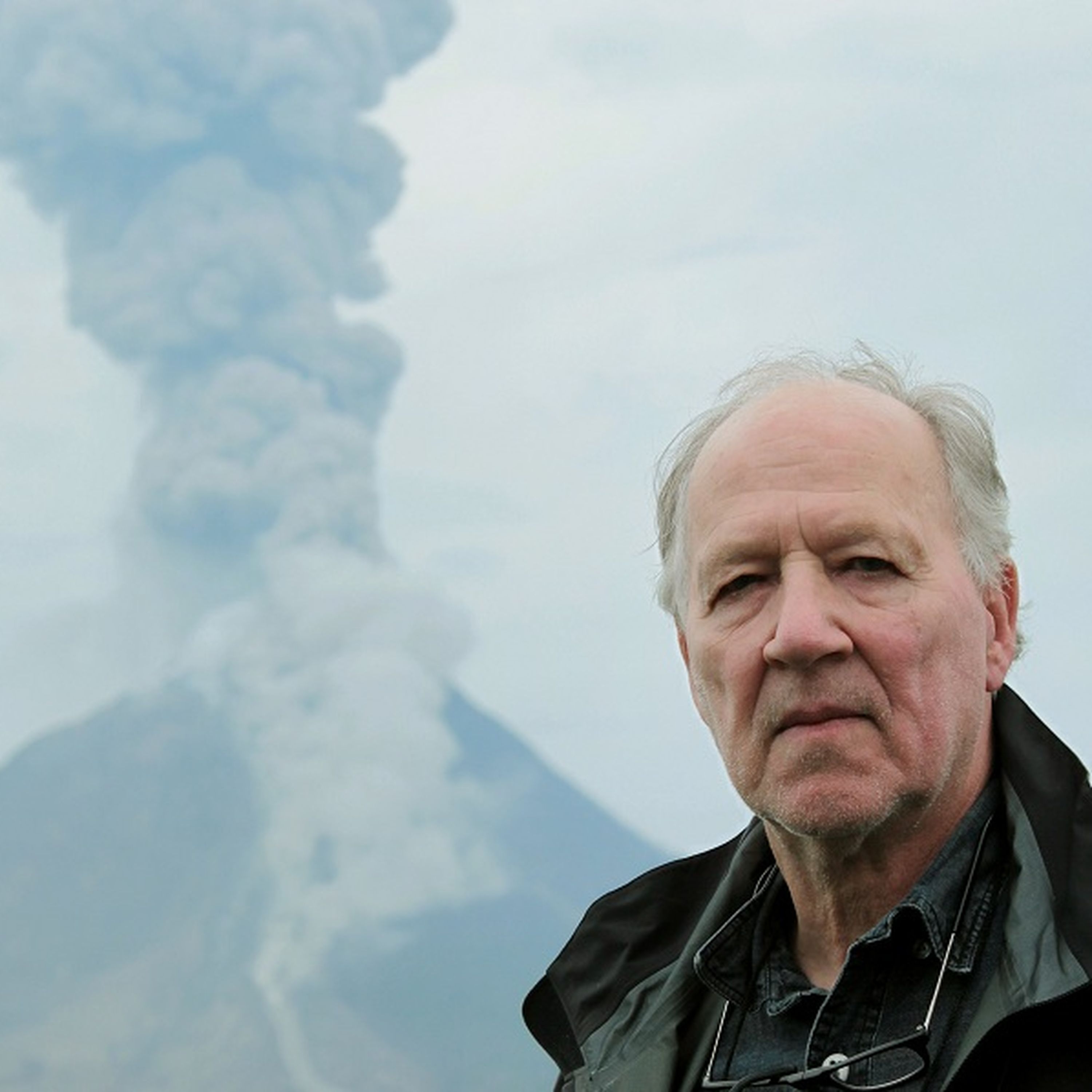
Werner Herzog doesn’t care what you think about him, about his mythos. He does care about myth, the stories people tell and why. His newest movie, "Into The Inferno," in which he tours six active volcanoes around the world, is as much about the culture and beliefs that surround volcanoes as it is about the science. Editor Alex Pasternack speaks with Herzog about his filmmaking, science and scientists, distributing his film through Netflix, and police body cameras. Read more at Motherboard: http://motherboard.vice.com/read/into-the-herzog-radio-motherboard-podcast Hosted on Acast. See acast.com/privacy for more information.

'Berlin Station' and 'Americatown’
'Berlin Station' is a new spy drama/thriller from the cable network EPIX, which focuses on a leak of classified information at the titular CIA office, and the agents tracking it down. Motherboard spoke to series writers Brad Winters and Larry Cohen, who also worked together on a separate project: a graphic novel series called 'Americatown' about a near-future dystopia where Americans are the immigrants. Hosted on Acast. See acast.com/privacy for more information.
iPhone Touch Disease
Tens of thousands of iPhone 6 Plus phones have been spontaneously losing their touchscreen capability because of an engineering flaw, but Apple still won't admit there's a problem. Motherboard spoke to Kyle Wiens, CEO of iFixit, about what's causing the issue and what Apple should do about it. We also talk with an Apple Genius about your options if you have a phone with the problem. Hosted on Acast. See acast.com/privacy for more information.
Luxury Week
Motherboard reflects on a week exploring time, money and how we decide what to value. Hosted on Acast. See acast.com/privacy for more information.
The Future of Periods
Periods are having a moment in mainstream consciousness. We talk to Kiran Gandhi, a drummer and activist about how the technology and ideas are menstruation are changing, and what it was like to run a marathon “free bleeding.” Hosted on Acast. See acast.com/privacy for more information.
Why Facts Don't Matter in the 2016 Presidential Election
Between the hours of 3 AM and 5 AM Friday morning, Republican presidential nominee Donald Trump went on a tweetstorm in which he was, you know, just saying that Hillary Clinton helped former Miss Universe (and a target of Trump’s misogyny) Alicia Machado become a US citizen “so she could use her in the debate.” Is that true? Like, almost certainly not—but in this election season, truth and facts hardly seem to matter. Trump's attacks on Machado are just the latest data point in an election cycle that has seen wild speculation, rampant exaggeration, and outright lies become accepted as fact by huge swaths of the electorate on both sides of the aisle. If we’re living in a post-factual era, how did we get here? Vincent F. Hendricks set up the Center for Information and Bubble Studies at the University of Copenhagen to study how individual and media behavior online has created a reality where virality, social spread, and repetition is all that’s required for people to believe something is true. While “facts” haven’t gone totally by the wayside, the way we cherry pick facts to make alternate realities has created a political system (and a culture) where we can’t have rational arguments because we can’t even agree on a baseline of truth. Radio Motherboard spoke to Hendricks about this week’s debate and about his new book, Infostorms, which explores how our likes, upvotes, retweets, coupled with social media algorithms and brash politicians with a disregard for the truth are redefining rational society. Hosted on Acast. See acast.com/privacy for more information.
Can 'Snowden' the Movie Save Snowden the Man?
At times, Oliver Stone’s ‘Snowden’ feels like a remake of ‘Citizenfour,’ Laura Poitras’s Oscar-winning documentary. Citizenfour is the superior film, but Stone’s spy thriller is still a fun look into this generation’s most important whistleblower. The most interesting thing about ‘Snowden’ the film, however, doesn’t even happen onscreen. The film’s success won’t be viewed in terms of box office numbers, but in whether it has the ability to culturally and politically move the needle for its protagonist. Just days before ‘Snowden’ was released, the ACLU, Human Rights Watch, and Amnesty International launched the most serious bid to secure a presidential pardon for Edward Snowden. So, is the movie good enough to change the hearts and minds of those who still view him as a traitor? Hosted on Acast. See acast.com/privacy for more information.

Rocko's Modern Life Predicted Our Lame Future
On this episode of Radio Motherboard, we speak with Joe Murray, creator of Rocko's Modern Life, about the show's upcoming hour-long special and how a show about a 90s vision of modern living has stayed relevant today. We also chat with Sean Yeaton, formerly of Motherboard and now of Parquet Courts, about his vision for our technofuture and how cartoon like Rocko will influence our kids. Hosted on Acast. See acast.com/privacy for more information.
Inside the Tesla Gigafactory
Elon Musk’s new temple of energy is open for business in the middle of the desert outside Reno, Nevada. A few weeks ago, I went to the opening of the Tesla Gigagfactory, where Musk proposes to ramp up production of car batteries to the point where Tesla can begin to sell an affordable, mass-market electric cars. Musk’s ideas and Tesla’s futuristic cars get a lot of attention, but the company has still only sold just over 150,000 cars. The good news for Tesla is that many of those 150,000 customers are rabid fans who are happy to evangelize for the company. I went to the Gigafactory’s opening party to meet the people who not only owned a Tesla, but also convinced five of their friends to buy one. This podcast is meant to be a quick primer on the world of Tesla—what’s it like to own one? Who are these superfans and why do they love the company so much? What’s it like to drive a Model S in “Ludicrous Mode?” What’s inside the Gigafactory? And what is Elon Musk’s long-term vision for the future of transportation and energy? Hosted on Acast. See acast.com/privacy for more information.
The Real Impact Your Phone Has on the World
Your phone uses the equivalent of two refrigerators’ worth of electricity every year. If you add in all of the electricity required to store and move data across high-speed cable and wireless networks and climate-controlled server farms to deliver an hour of video to your phone each week, in the space of a year it adds up to more power than two new Energy Star refrigerators consume in the same time. This week, Douglas Rushkoff takes over Radio Motherboard in partnership with his brand new podcast,, Team Human. You can find future episodes of Team Human at teamhuman.fm. Hosted on Acast. See acast.com/privacy for more information.
Leslie Jones and the Ethics of Amplifying Online Harassment
Soon after news broke that Ghostbusters star Leslie Jones’s website had been hacked and replaced with stolen nude photos and racist memes, I got an urgent email from Whitney Phillips, one of the world’s foremost experts on online trolling and harassment (Phillips quite literally has a doctorate in 4chan). Phillips wanted to know if Motherboard was going to cover the hack, and how we were going to do it. “I have some thoughts on the ethics of amplification—how, we can't not comment on stories like this, but commenting perpetuates the disgusting narrative and associated imagery. The question being, what's the ethical way not just for journalists and academics to respond, but for individuals, as well?” she said. “Is more harm than good done when the association of Jones with Harambe is given longer life? I'm honestly not sure,” she added. “BUT I WANT TO HAVE THAT CONVERSATION.” In her book This Is Why We Can’t Have Nice Things, Phillips explores how early trolls from 4chan’s /b/ board manipulated the media into spreading their message. Though “trolling” is now an outdated, imprecise term, the Twitter harassment and illegal hacking of Jones’s website are amplified the more journalists write about it, the more people retweet it, the more we allow it to stay in our collective consciousness. Phillips emailed me as I was also considering whether there’s an ethical way to cover abhorrent behavior on the internet—decisions about how and whether to write about racially, sexually, or xenophobically motivated hacks and harassment is a question the Motherboard staff considers all the time, but it’s rarely a conversation that ever makes it to the public. And so I decided to have that conversation with Phillips and the roles we all play in amplifying questionable or grotesque online behavior. Hosted on Acast. See acast.com/privacy for more information.
The Future of Hacking
As our lives become ever more digitized, the security of our data will become ever more important to protect. So far, judging by the daily routine of data breaches and large scale hacks, it seems like we're failing to secure our most precious digital belongings. As some in the world of information security say, everything will get hacked. But is that really true? As part of The Hacks We Can't See, Motherboard's theme week exploring the future of hacking, we asked real hackers what they think the future holds. We also spoke to Morgan Marquis-Boire, a well-known security researcher who's spent the last few years hunting malware and helping human rights activists and journalists protect themselves. What's the craziest thing that'll get hacked in the future? And what can you do to protect yourself? Listen to this week's episode of Radio Motherboard to find out. Hosted on Acast. See acast.com/privacy for more information.
#fsociety Episode 1: How a Motherboarder Became a Writer for Mr. Robot
Hello, friend. If you’ve been a Radio Motherboard listener, you know that we’re big fans of Mr. Robot, USA’s moody, disorienting hacker drama. In fact, Motherboard and Mr. Robot’s respective moods align so closely that Amy Teitel, a former Motherboard freelancer, is now a staff writer for the show’s second season. We talk to Amy about how she made the shift from security journalism to tv writing, why she thinks Mr. Robot hasn’t gotten hacked, and her brand new play debuting soon off Broadway. This is the first episode of a brand new podcast series being launched by Radio Motherboard. On #fsociety, staff writers Jason Koebler and Lorenzo Franceschi-Bicchierai will discuss the parallels between the hacks on each episode of this season of Mr. Robot and the ones we see in real life. Apologies for the delay on this first episode—we’ll try to catch up to the series by next week, and will continue to post episodes each week. Search #fsociety on iTunes or your favorite podcast app to subscribe. Hosted on Acast. See acast.com/privacy for more information.
Hello World
Radio Motherboard's Jason Koebler and Lorenzo Franceschi-Bicchierai are going to talk about the real-life hacks that we see in Mr. Robot season two. This is #fsociety, coming your way all summer. Hosted on Acast. See acast.com/privacy for more information.
Reflecting on 'Independence Day,' the Greatest Hacking Movie Ever
EThis podcast contains spoilers for Independence Day and Independence Day 2: Resurgence. We had 20 years to prepare. That's the tagline for Independence Day 2. It refers to Earth, and how long we had to get ready for a second alien invasion. But it also applies to Roland Emmerich and the team behind the sequel. In this podcast, Radio Motherboard interviews Emmerich, goes to see ID4-2, and talks about what made the first film such a hit and the second one, not so much. Hosted on Acast. See acast.com/privacy for more information.
Inside the Dark World of Online 'Competitive Tickling'
David Farrier is used to uncovering bizarre information. But his latest project investigating the online world of competitive tickling was a lesson in the strange side of life, even for him. We talked to the journalist and filmmaker about his new movie, Tickled, and what it reveals about online harassment, internet tribes, and hacking. Hosted on Acast. See acast.com/privacy for more information.
I Skipped Showering for Two Weeks and Bathed in Bacteria Instead
For two weeks, Motherboard writer Kate Lunau skipped her soap and deodorant—spritzing herself with a “live bacteria spray” instead. Her goal was to colonize her skin with ammonia-eating bacteria, which are supposed to neutralize the smell of sweat. There are a growing number of believers out there: Chemist David Whitlock, who came up with this, hasn’t showered in 13 years. But are live bacteria products really the future of skincare? And, maybe more importantly, how bad did Kate smell by the end of it? Hosted on Acast. See acast.com/privacy for more information.
The Case for Giving Everyone Free Money
Sometime in the last few weeks, or months, or years, you may have heard about this idea called “universal basic income.” It’s the idea that maybe governments should give a monthly stipend—no questions asked—to everyone who lives there. It’s an idea we’ve covered quite a bit over the years, and it’s one that’s increasingly gaining steam among people on both sides of the political spectrum. Conservatives and libertarians say that it can simplify the bureaucracy associated with things like welfare and food stamps, and liberals like it because it would strengthen the social safety net. Why do we need a basic income now? Well maybe you’ve noticed, but automation is slowly but surely replacing a lot of jobs that humans used to do with ones that robots, drones, software, and artificial intelligence can do. We’re looking at a future where it’s possible that there simply won’t be enough jobs for everyone. Maybe that’s a good thing—in a post scarcity society, do humans really need to do menial jobs? And so basic income has been floated as both a cure to automation and potentially a better way to redistribute wealth. The movement is gaining steam around the world: Switzerland voted this last weekend on whether the country should “guarantee the introduction of an unconditional basic income.” The measure failed, but the fact that it was even on the ballot speaks to its increasing relevancy. In the United States, the startup incubator Y Combinator is doing an experiment that will give 100 people in Oakland between $1,000 and $2,000 per month to see how the “mechanics” of a basic income would work and to see what people do with the money. That project is controversial for reasons we get into the podcast. I called up Matt Krisiloff, who is head of the basic income project at Y Combinator, and Elizabeth Rhodes, the research lead of the project, to talk about how it’ll work and why a Silicon Valley startup accelerator is interested in this idea. Then, we talk to Natalie Foster, who is a cofounder of the Universal Income Project, about why she finds the idea so compelling. Finally, we look at the history of basic income around the world and deconstruct the policy itself. Could it ever work? Hosted on Acast. See acast.com/privacy for more information.
When Uber Left Austin
Remember when Uber came to your city? It was probably exciting—you could hail a car without talking to anyone or standing on a cold, rainy corner. It’s so easy, maybe you thought. Maybe the taxi commission or some local politicians expressed worry about this new interloper from San Francisco. But Uber has this game down. It comes to town, becomes incredibly popular, worries about regulations later and usually wins because the general public likes the service. Soon, you forget about there ever being a time before Uber existed. When did it come to town, anyway? There were just suddenly hundreds, maybe thousands of regular people happy to drive you and your friends around town. Maybe your coworker drives an Uber in his or her free time. Remember when you used to have to beg your friend for a ride to the airport? Me either. As fast as Uber came to your city, it can leave. It might leave. With no physical infrastructure and no real employees, it’s trivial for Uber to expand to a new city, and just as easy for it to depart. Those thousands of contract drivers? Some of them lease or buy cars specifically to drive for Uber. Some of them drive Uber to support their new baby. When Uber leaves, overnight, hopefully those drivers have a backup plan. Uber is an app, after all. It’s a platform. It’s a business. It can leave. It just left Austin. “There’s something unique about Uber because unlike a telecom company or other businesses that operate in a city—what the company requires as far as infrastructure is very minimal,” Rick Claypool, author of a new report about how Uber does politics, told me. “They can credibly threaten, ‘it’s my way or the highway and we’re going to go.’ It’s an app versus something that has brick and mortar buildings. They have no employees, they have no cars, so really what their investment is in the actual place is minimal. They have an extraordinary amount of leverage in that sense.” Uber (and Lyft, for that matter) followed its basic gameplan in Austin, Texas. It came to town in early 2014. Local lawmakers and the taxi lobby wondered whether ridesharing companies were following commercial driver regulations about driver insurance, licensing, and driver background checks. By the time they got around to enforcing any sort of regulations, the services were too popular, and Uber and Lyft were given temporary permission to operate in the city. But Austin still wanted regulations. The city council proposed that Uber and Lyft require its drivers to get a fingerprint background check administered by the city. Uber and Lyft said that would discourage people from driving and would impose an undue burden on their companies and their drivers. Uber and Lyft got signatures from community members to put a ballot initiative at the poll called “Proposition 1.” A vote for Prop 1 would preserve the status quo, allowing Uber and Lyft to operate as it does in most of the country. A vote against would be a vote for regulation. Uber and Lyft started a political action committee called Rideshare Works for Austin to lobby for Prop 1. Rideshare Works for Austin hired former Austin mayor Lee Leffingwell to support Prop 1. It plastered Austin with billboards, radio ads, flyers and leaflets, and television ads. It advertised on Hulu. Rideshare Works for Austin spent $9.1 million trying to pass Prop 1, which was roughly six times more than had ever been spent on any local election in Austin for any reason. "It looked... Hosted on Acast. See acast.com/privacy for more information.
The Moon Walking, Alien-Hunting, Psychic Astronaut Who Got Sued By NASA
EEdgar Mitchell, who passed away in February at the age of 85, was exceptional, even among astronauts. Like an archetypal moon man, he was a Boy Scout and a military test pilot with a protestant upbringing and an impressive command of engineering and aeronautics. In February 1971, on Apollo 14, he became the sixth man on the moon. But more so than other astronauts, Mitchell’s brief exploration of outer space led to a deep exploration of inner space and the entire universe of phenomena explained and not. After conducting an ESP experiment in space, he became a connoisseur of parapsychology; later, he sought to show that aliens had visited Earth and that governments around the world had tried to cover up the truth. But he remained grounded on Earth too, and worried that civilization's narrow perspectives were exceedingly dangerous for the future of the planet and humanity. (Read more at http://motherboard.vice.com/read/astronaut-edgar-mitchell-outer-space-inner-space-and-aliens) Hosted on Acast. See acast.com/privacy for more information.
The Battle for Klingon
Even if you’re not a Trekkie, you’ve got to feel for the Klingons of Earth. Their language is under threat of being taken back by the very company that commissioned its creation, raising the very important question: Can a language even be copyrighted? News that Paramount is suing the creators of a Star Trek fan film for copyright infringement quickly spread across the galaxy last week. More traditional copyright issues such as the likenesses of characters came into play, but the company also said it owned the Klingon language, a claim that could have far-reaching implications. When I first heard about the lawsuit, I kind of rolled my eyes. I’m not a Trekkie, how could this possibly matter? It quickly became clear that if companies can copyright languages, they can copyright the means of creating culture. Paramount invented the language, but should it own Klingon translations of Hamlet? Should it own a novel completely unrelated to Star Trek that a passionate Klingon writes? Could it require licenses for people to recite their wedding vows in Klingon? What about other constructed languages like Dothraki from Game of Thrones? And what about software and programming languages? And so I decided to look at the issue from a few different angles. I called up Sai, founder of the Language Creation Society, to talk about why his organization is defending the Klingons. I called up qurgh lungqIj, a Klingon from the distant planet of Cincinnati, to talk about the rich Klingon culture that has evolved since it was first invented for the Star Trek movies. And then I called up Motherboard contributing editor and copyright expert Sarah Jeong to talk about whether the Klingons stand a chance. Hosted on Acast. See acast.com/privacy for more information.
The DeLonge Con
EFormer Blink 182 guitarist Tom DeLonge has a newproject: telling the world the truth about UFOs. DeLonge has alwaysbeen interested in the supernatural, and he’s been researching andreporting the topic as part of a multimedia project called SekretMachines that involves books, movies, music, and other movingparts. His first book, co-written by bestselling author AJ Hartley,is a pageturner novel called Chasing Shadows about a skepticaljournalist who runs a UFO debunking website, a Holocaust survivor,an heiress whose father mysteriously dies, and a Marine pilot whogets recruited into a secret government technology project at Area51. Somehow, their stories all intersect.Motherboard talked to DeLonge about this project and whether hereally believes all this stuff about aliens. We also dive into theweird and wonderful world of conspiracy theorists in the longestRadio Motherboard episode to date. Hosted on Acast. See acast.com/privacy for more information.
The Silicon Divide
We often talk about the gender gap in Silicon Valley—there are far too few female computer engineers and startup founders—but there’s one field where women do dominate Silicon Valley: public relations. Most research suggests that about 70 percent of all public relations professionals are women, and that number seems to hold up when you look specifically at the breakdown in tech PR. Anecdotally, when I deal with press people at tech companies, they are overwhelmingly women. In the vast majority of cases, these women are pitching startups founded by and dominated by men.After a spirited discussion with the Motherboard staff, it turns out I’m not the only one who noticed this. I decided to do a little experiment. I went to the SXSW Interactive festival in early March—a Super Bowl for tech startups and for the PR people who represent them. I checked all of the emails I got from PR people for the first 10 days of March, which were the first few days before I got to the festival and the first few days after I left. I got emails from 127 different women PR people, and just 48 men. I deal with public relations professionals on a daily basis, but I rarely think about what their job actually entails behind the scenes. After I started thinking about it, I wondered if it was weird for women in the so-called “pink collar” PR profession to primarily represent male clients and work in-house at companies that are primarily men. And so, I called some women who are in the profession and talked to them about their jobs. It’s impossible to generalize the experience of an entire profession, but I quickly learned that, for a lot of women, working in tech PR is a way to get into tech—if you work at a small startup, you’re often wearing lots of different hats and, at companies with smart founders, they’ll be involved in major decisions at the company and will have the opportunity to climb the ladder. There are, of course, lots of challenges as well, which the women I spoke to can articulate much better than I can. As always, thanks for listening to Radio Motherboard. Hosted on Acast. See acast.com/privacy for more information.
Fronterizas (en español)
En esta edición muy especial de Radio Motherboard, viajamos a la zona fronteriza entre los Estados Unidos y México para evaluar la viabilidad de "control remoto," una nueva táctica de contrabando en que los migrantes guía de contrabando a través de la frontera por teléfono celulares. Hosted on Acast. See acast.com/privacy for more information.
Border Lines
In this very special edition of Radio Motherboard we travel to the US-Mexico borderlands to gauge the viability of "remote control," a new smuggling tactic in which smugglers guide migrants across the border by phone. Hosted on Acast. See acast.com/privacy for more information.
Song Exploder, Exploded
Ever notice that the piano part from “Dancing Queen” is tucked into the end of MGMT’s song “No Time To Pretend”? Or that The Album Leaf kept the squeaking of an old piano pedal in the final recording of their song “The Outer Banks?”These are just a taste of the sonic details most listeners would miss before they’re revealed by Song Exploder, a podcast by Hrishikesh Hirway that has musicians like Bjork, Wilco, Ghostface Killah, and Iggy Pop peel back the layers of their songs and talk about how they’re made.The process is obviously appealing to aspiring musicians or fans of the artists, but that’s not why we’re devoting this week’s episode of Radio Motherboard to talking with Song Exploder's Hirway. What’s really interesting is why the show is compelling if you don’t know anything about music or haven’t even heard of the bands.By stripping away anything but the isolated sounds, it’s bringing awareness to our sense of hearing, which is often overshadowed by the visual world. It basically opens up your ears, and the end result is you hear music in a richer, more enjoyable way, which is pretty awesome if you think about it. Hosted on Acast. See acast.com/privacy for more information.
To Block or Not to Block, Featuring Talib Kweli
ETwitter is a place where anyone can say anything, to anyone, at any time. But what happens when you don’t want to hear what someone else has to say? What if someone is attacking you personally, or getting all their friends to attack you? On this week’s Radio Motherboard, we talk about when to block, when to mute, and we consult with the master of the Twitter debate, rapper Talib Kweli. Hosted on Acast. See acast.com/privacy for more information.
How 'The X-Files' Got Its Creepy Theme Music
EHollywood, 1992. Mark Snow was already a pro at TV scores—dramas, procedurals, comedies—when a producer recommended him to Chris Carter, a veteran of Disney TV movies who needed music for a new TV pilot, The X Files, an unlikely supernatural procedural inspired partly by Kolchak, The Twilight Zone, and Twin Peaks. As he sat in his garage home studio one day, stumped in his search for the right sound for the show’s theme music, Mark accidentally put his elbow on the keyboard. A delay echo blurted out of the monitors. “That’s kinda cool,” he thought.Neither he nor Carter could imagine that that creepy, repeating sound would form the basis for one of TV’s most unforgettable bits of music, one that would eventually implant itself like an alien virus across the culture and in the brains of a generation of viewers. (I offer no apologies for my first web page, in 1997, an X Files tribute that auto-played a MIDI version of the theme song, on repeat.) A few minutes after 10pm every... Hosted on Acast. See acast.com/privacy for more information.
Double Episode! Cortana Abuse/Why Humans Should Be More Like AI
ESometimes, it can be hard to know how to act around artificial intelligence. In the first half of Radio Motherboard this week, staff writer Jason Koebler explores how people treat Microsoft’s digital assistant Cortana when no one’s listening. (A small spoiler: Apparently, people like to harass it. One new challenge in AI programming is learning how to gently smack down haters.)In the second half, editorial fellow Louise Matsakis looks at a group that runs a “rationality” workshop that teaches humans that in some cases, it makes more sense to think more like computers. Hosted on Acast. See acast.com/privacy for more information.
How to Think About the Biggest Earthquake Ever
ESo scientists are saying an earthquake—a quake that is so big and so powerful you probably can’t even properly comprehend it—is probably going to hit your city, hard. It could be five years out, ten years, fifty years, or it could be tomorrow. But it’s going to come. How do we go about organizing that kind of information in we brains? How do we understand it on a rational, sensible level? Then, what do we do about it? We can write science fiction stories about it, for one thing. That’s what the archivist, researcher, and writer Adam Rothstein has done. Rothstein spent many months poring over every available emergency document, seismic evaluation, and scientific study carried out on the Cascadia Subduction Zone Earthquake that he could get his hands on. That quake, scientists say, will be of a magnitude up to 9.3 Mw—perhaps the biggest to hit the continental US in our nation’s history. Last year, Kathryn Shulz published “The Really Big One” in the New Yorker. The story... Hosted on Acast. See acast.com/privacy for more information.
Why You Should Own Your Cable Box
EThe tyranny of the set-top box may soon be over. The way it works now, you’re forced to rent a cable box from the likes of Time Warner Cable and Comcast to the tune of about $230 per year. The very idea that in 2016 you need a dedicated piece of hardware, whether it’s Comcast’s X1 or Time Warner Cable’s latest “whole home” DVR, just to tune into Guy’s Grocery Games on Food Network is crazy on its own, but the fact that you have to rent these boxes in perpetuity is even worse. The Federal Communications Commission on February 18 issued a Notice of Proposed Rulemaking that would make it so that consumers wouldn’t have to rent a set-top box from their cable company. Although this is just the first step in a lengthy process, the prospect of being able to own your own cable box, just as you’re able to own your own cable modem or smartphone, already has supporters of the measure giddy with excitement. And that’s great, of course, but I wanted to lean more about the possible implications of... Hosted on Acast. See acast.com/privacy for more information.
Apple vs the FBI
Earlier this week, a federal judge in California ordered Apple to help the FBI brute force hack into the encrypted iPhone belonging to one of the San Bernardino shooters, setting up a legal showdown that could have far-reaching ramifications for the future of encryption and privacy in the United States. Here's what you need to know. Hosted on Acast. See acast.com/privacy for more information.
Video Games Are Missing Black Voices (Literally)
EThere aren’t many black characters in video games with speaking roles, which is why it’s controversial when some of them are voiced by white actors. The most recent example is Nadine Ross, the strong, black, female antagonist in the upcoming Uncharted 4: A Thief's End, who is played by a white voice actress. To some black players, the fact that major black characters—few and far between as they are—are often voiced by white actors is a reflection of a systemic problem. It’s not the same as a black actor playing a white character, they say, because white actors and white players don’t have a problem with discrimination and exclusion—white people are well represented, if not overrepresented, throughout the industry. This week’s Radio Motherboard features freelance journalist Shonte Daniels, who wrote the original piece for Motherboard; Kotaku writer Evan Narcisse; and voice actor Dave Fennoy, talking about the practice of casting white actors as black characters and the way black people are... Hosted on Acast. See acast.com/privacy for more information.

The Hyperloop
The hyperloop, Elon Musk’s futuristic, tube-based “fifth mode of transportation” has stoked imaginations unlike any recent transportation technology except for maybe self driving cars.Lots has been said about it—Musk called it a “cross between a Concord, a railgun, and an air hockey table,” while the media has latched on to the promised speeds of more than 700 mph and travel times between San Francisco and Los Angeles of 35 minutes.But much of the promise of the hyperloop still remains theoretical. That changed in a small way last weekend, when SpaceX hosted the first part of its “Hyperloop Pod Design Challenge,” a contest that asks 180 university teams to design the capsules that will actually go inside the hyperloop. In June, 22 of the teams will test their pods in a track being built by SpaceX. I traveled to Texas A&M University to meet the teams, meet the companies actually building the hyperloop, and to separate out the hype from what’s actually happening. Hosted on Acast. See acast.com/privacy for more information.
Kickstarter - Failure to Launch
The Zano drone raised £2.3 million in one of the most successful Kickstarter crowdfunding campaigns of all time. A year later all the money is gone, Zano’s creator is having a nervous breakdown, and its 13,000 backers are livid. Hosted on Acast. See acast.com/privacy for more information.
A Practical Guide to Sleep Hacking Your Room
EWhat does it take to get a good night’s sleep? In this episode of Radio Motherboard, managing editor Adrianne Jeffries talks to the greatest sleep hacker she knows: her little brother William. We cover blackout curtains, smart light bulbs, sleep headphones, the best white noise mixes, and sleeping in the office. Hosted on Acast. See acast.com/privacy for more information.
Free Basics
EIf you live in India, or happen to have visited in the past month, you probably noticed the seemingly-ubiquitous advertising for something called Free Basics. It's what you might call a full-court press: full-page ads in newspapers, billboards, and movie theater trailers. Also, if you were to log into Facebook, you'd be presented with an ad (and possibly if you were in the US, too).The first thing to understand is that Free Basics is Facebook, and Facebook is Free Basics, and they're both basically Internet.org. Perhaps more accurately, if expressed in matryoshka dolls, Free Basics is inside Internet.org which is inside Facebook. First, Facebook launched the Internet.org initiative, which covers various projects aimed at spreading internet access to... Hosted on Acast. See acast.com/privacy for more information.
The Community-Owned ISPs Building an Alternative to Big Telecom in New York City
EIf you want high speed internet in most any spot in New York City, you’re stuck with Time Warner Cable. Or at least, that’s how it usually works. But increasingly around the city, citizens and small community groups are setting up their own locally owned and operated free wifi networks.This week on Radio Motherboard, we take a trip to a meetup where two nascent but potentially disruptive groups were discussing how to collaborate in order to provide new connection options to people around the city.Since 2012, the nonprofit Red Hook Wifi network has been providing totally free internet to people in the small Brooklyn neighborhood. For weeks after Hurricane Sandy struck the neighborhood, the Red Hook Wifi network was the only way many in the community could get on the internet or make phone calls. On any given day, Red Hook Wifi has about 500 users.Meanwhile, NYC Mesh is little more than a meetup group at the moment, but its organizers have big plans. Its network currently has... Hosted on Acast. See acast.com/privacy for more information.
2015 - The Year in Science Fiction
E2015 was a banner year for science fiction; Motherboard's resident sci-fi editors, Claire Evans and Brian Merchant, review the year of Mad Max, Ex Machina, and, yes, Star Wars. These are the top stories about the future of 2015. Hosted on Acast. See acast.com/privacy for more information.
Transhumanists in Their Own Words
ETranshumanism, the idea that humans should use science and technology to extend our natural abilities, is the religion of the 21st century. It's a concept that has been around since the 70s, but seems to be resonating with a growing number of people. Whether it's because of the rise of smartphones, the idea of the quantified self, disillusionment with the world, or something else, transhumanist ideas have been gaining traction in the last 10 years with no signs of stopping. Hosted on Acast. See acast.com/privacy for more information.
Everything You Wanted to Know About the New York City Subway
The New York City subway is sprawling system, with more than 5 million people per day (and sometimes many more, on special occasions) passing through more than 460 stations. There is probably someone who knows more about the intricacies of the system than Max Diamond, but whoever it is, I don't know him or her.Diamond is a transportation engineering student at the City College of New York and a "rail fan"—he studies budgets and plans, delves into contracts and historical minutia, and, of course, pays close attention whenever he's riding the subway. Every time he rides it, he brings a camera on the off chance he spots something that's not quite right.Diamond runs the DJ Hammers YouTube channel, which features roughly 1,500 videos shot on the subway. These videos feature trains entering and leaving stations, new and rare subway announcements, subway rails catching fire, and lots of other sorts... Hosted on Acast. See acast.com/privacy for more information.
Cryptoparty in Harlem
EEver heard of a cryptoparty? It’s a gathering of people interested in privacy and encryption. You’ll often hear of cryptoparties in association with other techy, geeky spaces or organizations, and they’re usually dominated by computer-savvy nerds who are often male or white or both. But recently, Motherboard attended a cryptoparty in a less obvious place: Harlem, the predominantly black neighborhood in New York City. Wait. Maybe Harlem is the perfect place to find a cryptoparty. The New York City Police Department is increasingly monitoring and targeting young people of color on social media in what critics say amounts to racial profiling. “Is the online surveillance of black teenagers the new stop-and-frisk?” asked a headline in Hosted on Acast. See acast.com/privacy for more information.
NASA's Long-Lost Lunar Rover
EEarlier this fall, we brought you the curious story of a long lost lunar rover prototypetested by NASA in the 1960s. At the time, we decided to keep some of the details off the record, but for this week's podcast, we delve deep into the rover's history and it's journey from NASA's Marshall Space Flight Center to a scrap yard in Alabama.This episode of Radio Motherboard unfolds as it moves along, so in the interest of not spoiling it, we'll just get right to it. Thanks for listening! Hosted on Acast. See acast.com/privacy for more information.
eSports, Adderall, and Nootropics
EIt's Lit Up week at Motherboard, which means we're talking about drugs. And what's more fun than that?Weekend/gaming editor Emanuel Maiberg and managing editor Adrianne Jeffries pop some Alpha BRAIN and OptiMind to try and perk up the podcast. We drag in Steve Cronin, a self-taught nootropics expert, to talk about the smart drug craze. We also speak to Rod Breslau, an eSports journalist, to find out whether all this hand-wringing over doping at tournaments is really justified.Show notes:1:12 - Steve, tell us who you... Hosted on Acast. See acast.com/privacy for more information.
When Big Guns Go Down
Earlier this week, Motherboard published a year-long investigation that revealed the Pentagon has been sending defective gun parts to soldiers in Iraq and Afghanistan. In more than 60 cases, the barrels of guns have literally exploded and, in at least one case, a soldier was seriously injured.Radio Motherboard talks with reporter Damien Spleeters about how he was able to make sense of thousands of pages of documents from the Defense Logistics Agencyand with features editor Brian Anderson about the implications of Spleeters's findings. We also talk about the DLA, which spends $40 billion a year but is little known outside of defense circles. Hosted on Acast. See acast.com/privacy for more information.
Why 'Fallout 4' Is a Niche Video Game
Did you hear? Fallout 4, the video game for people who are serious about video games, is finally out. Do you care? If you're reading this rather than obsessively exploring a post nuclear disaster Boston, maybe not. Or maybe you're just taking a break.The game is the latest "AAA" release from Bethesda Softworks, a studio that's scored a devoted fan base thanks to its extremely deep, extremely long, and extremely customizable open world games. But the truth is, most gamers will never play it. Conversely, do you know anyone with even a passing interest in movies or sci fi who's going to skip the new Star Wars?"Somebody spent a lot of money making a lot of money, a game on the same register as a Hollywood motion... Hosted on Acast. See acast.com/privacy for more information.
Why Putting Your Water Damaged Phone in Rice Is Dumb and Doesn't Work
EOne time, I misjudged the depth of a creek, stepped in, and was literally in over my head. Not that much of a problem, except I had various electronics in my backpack. As thousands (millions?) of people have done, I stuck my phone and camera in a bowl of rice and waited. A few days later, I pulled them out. Neither worked.Of course they didn’t. Rice is not a magical phone saving device, as Trent Dennison, a nurse turned iPhone repairman will tell you. Dennison is one of the very few people in the United States who actually knows how to repair water damaged phones. For the last year, he’s been on a personal mission to stop people from ruining perfectly good rice with waterlogged phones. As Dennison explains, corrosion starts immediately after water touches an electronic device’s internal components; the only way you can reliably repair the phone is by getting rid of that corrosion. In fact, Dennison says, you’d be better off sticking your phone in rubbing alcohol, for reasons he explains in the... Hosted on Acast. See acast.com/privacy for more information.
Mr. Robot
EIt's been an astoundingly good couple years for television shows and movies that fit into the Motherboard orb of interest. Whenever people ask me what Motherboard is, I tell them we write about stories that are like Black Mirror, but real. Now, I've got to add Mr. Robot to my short list of major series that perfectly fit the Motherboard aesthetic. We were slightly late to binge watching our way through USA's harrowing hacker series, but now that (some) of us have watched it all the way through, we've got plenty of thoughts. My first one: How the hell did a show like this even get made? That's not a criticism by any stretch—it's just that Mr. Robot is so unlike anything else on TV that it's surprising a network took a risk on it. From there, we talk about Mr. Robot's realism, its character development, and our thoughts on where the show might go from here.If you haven't seen the show, you can still listen to part of this episode: The first half is more-or-less spoiler free, and the... Hosted on Acast. See acast.com/privacy for more information.