Radio Davos
327 episodes — Page 5 of 7
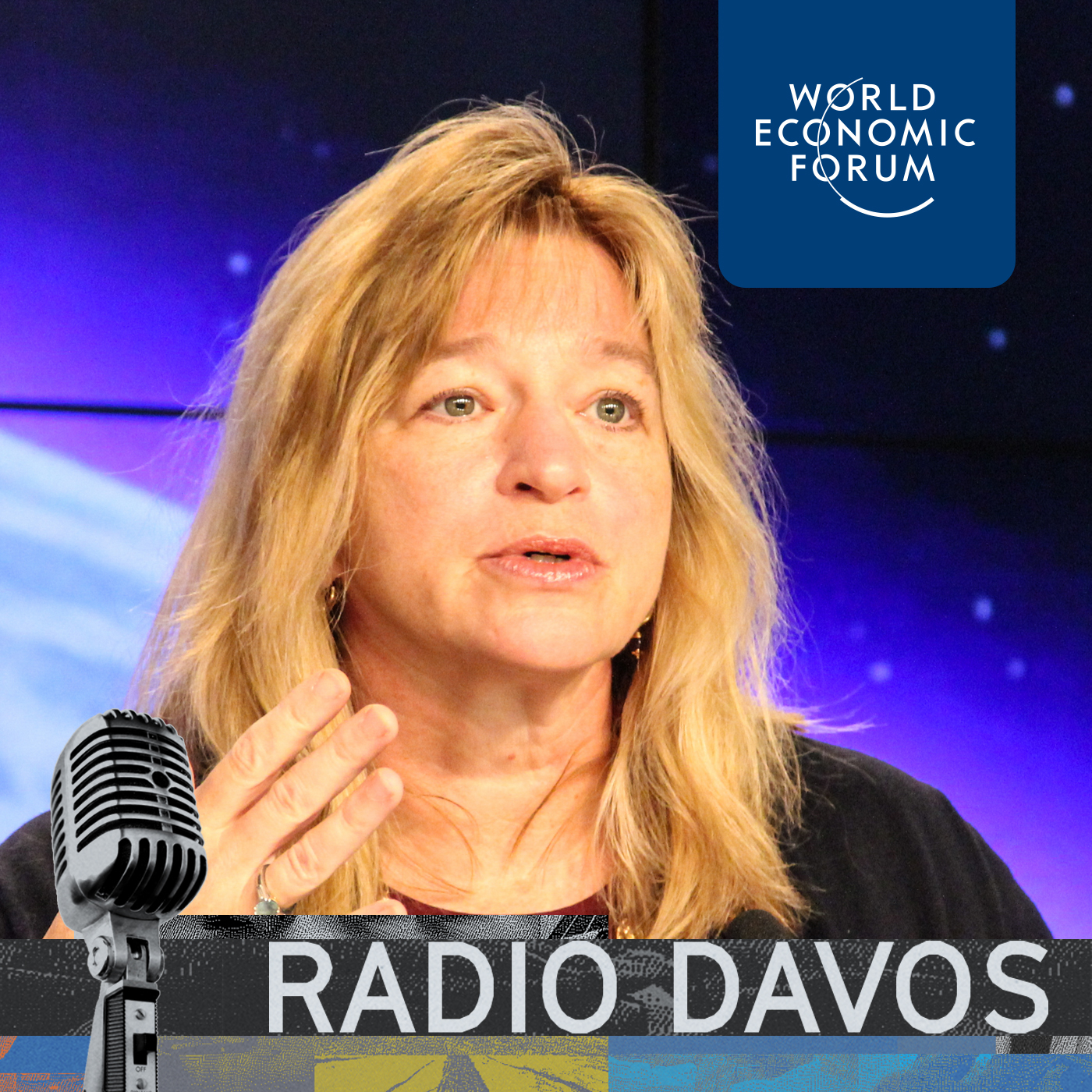
S1 Ep 89Life on Mars and the birth of the universe: why space exploration is vital to humanity
Humans are about to return to the Moon, and are working on a mission to Mars. Former NASA chief scientist Ellen Stofan explains why space exploration is so important for humanity. And why it can help us protect our 'pale blue dot' of a planet.] Guest: Dr. Ellen Stofan, Under Secretary for Science and Research at The Smithsonian Interview by: Nikolai Khlystov, Lead, Future of Space, Shaping the Future of Mobility, World Economic Forum. More space from the Forum: https://www.weforum.org/communities/gfc-on-space https://www.weforum.org/platforms/shaping-the-future-of-mobility Other Radio Davos episodes on space: https://www.weforum.org/agenda/2022/07/space-podcast-moon-mars-base https://www.weforum.org/agenda/2022/01/live-from-space-radio-davos Check out all our podcasts on wef.ch/podcasts: Meet the Leader WEF Book Club Podcast Agenda Dialogues Join the World Economic Forum Podcast Club Episode transcript: https://www.weforum.org/agenda/2022/10/space-exploration-mars-moon-nasa-smithsonian
Gene therapy - how can poorer countries benefit from the most expensive drugs in the world?
Gene therapy is one of the fastest growing areas of healthcare with over 2,000 therapies in development globally. The new techniques could challenge some of the world's most feared diseases, including HIV and cancer, But the enormous cost means poorer countries could miss out, and the fact that R&D is concentrated in richer countries means the therapies developed there might not always be suitable for use in other parts of the world. This episode of the Radio Davos podcast hears from a senior healthcare figure in Uganda on what needs to be done. Speakers: Cissy Kityo, Executive Director of the Joint Clinical Research Centre in Uganda Kevin Doxzen, Hoffmann Fellow, Precision Medicine and Emerging Biotechnologies, World Economic Forum Useful links: Joint Clinical Research Centre Facebook: https://www.facebook.com/profile.php?id=100064558791099 CRISPRpedia Website: https://innovativegenomics.org/crisprpedia/ WEF white paper https://www.weforum.org/whitepapers/accelerating-global-access-to-gene-therapies-case-studies-from-low-and-middle-income-countries Check out all our podcasts on wef.ch/podcasts: Meet the Leader WEF Book Club Podcast Agenda Dialogues Join the World Economic Forum Podcast Club Episode transcript: https://www.weforum.org/agenda/2022/10/gene-therapies-hiv-cancer-uganda

What in the world is a Chief eXploration Officer? Tencent's David Wallerstein says why the world needs CXOs
Every big company has a Chief Executive Officer - a CEO - many have CFOs and COOs but how many have a CXO, a chief exploration officer? Davis Wallerstein is an American at a big Chinese tech firm, Tencent. He explains what he does as CXO and how sustainability is at the heart of what he is exploring around the world. A version of this interview was published as an episode of our sister podcast Meet the Leader. Check out all our podcasts on wef.ch/podcasts: Radio Davos Meet the Leader WEF Book Club Podcast Agenda Dialogues Join the World Economic Forum Podcast Club Episode transcript: https://www.weforum.org/agenda/2022/10/chief-exploration-officer-tencent-wallerstein-radio-davos
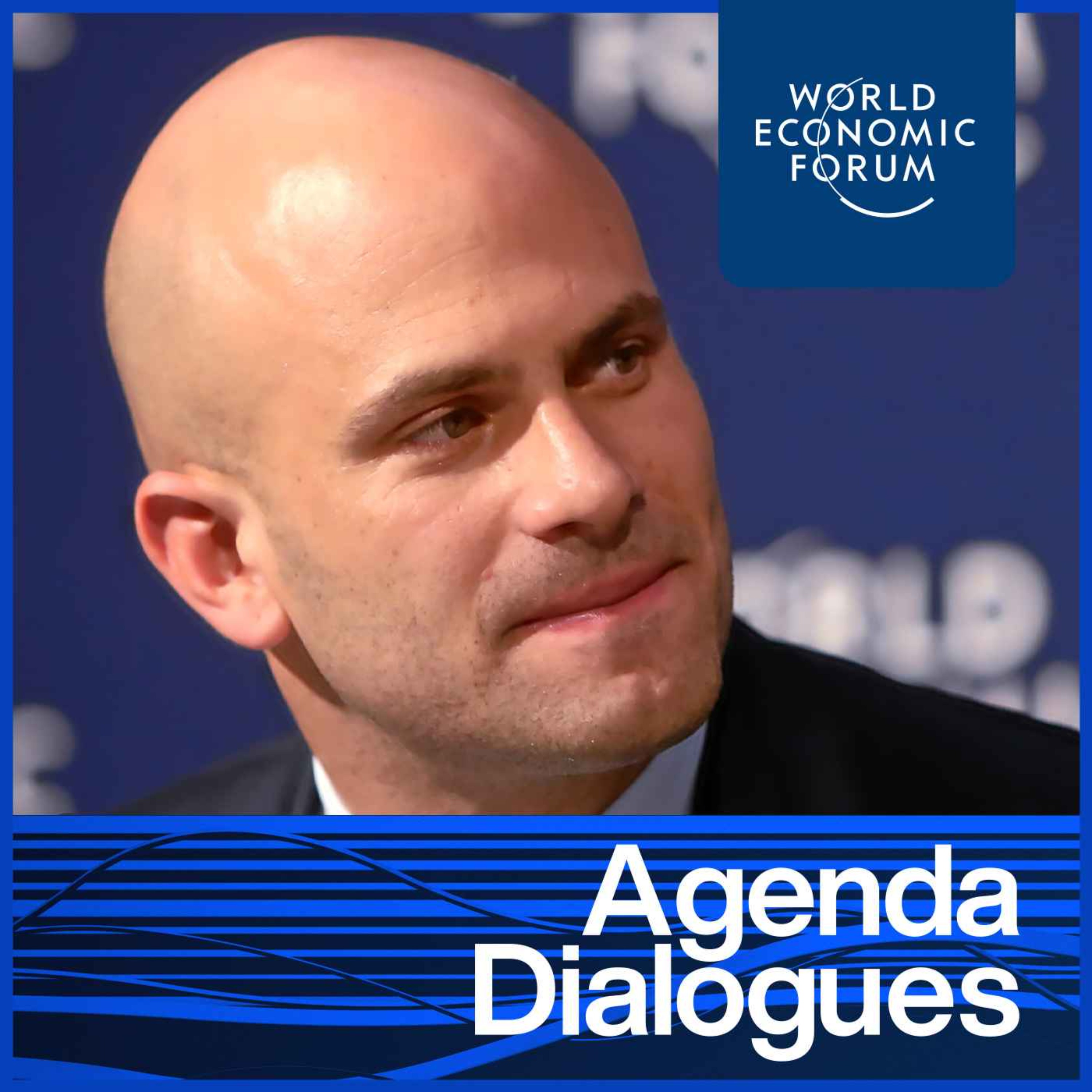
S1 Ep 17Food and climate change - the vital, but often overlooked links between the two
Food production has a huge impact on climate change. And climate change has a huge impact on our ability to produce the food we need. As the war in Ukraine creates additional challenges to the global food and energy markets, a panel of experts looks at ways food production and consumption can adapt to address some of these huge issues, This podcast is the audio from a session at the World Economic Forum's Sustainable Development Impact Meetings 2022. Participants: Adrian Monck, Managing Director, World Economic Forum Geneva (moderator) Jason Bordoff, Co-Dean, Columbia Climate School; Founding Director, Center on Global Energy Policy, Columbia University Geraldine Matchett, Co-Chief Executive Officer and Chief Financial Officer, Royal DSM NV Sam Kass, Partner, Acre Venture Partners Máximo Torero. Chief Economist, Food and Agriculture Organization of the United Nations (FAO) Watch the session here: https://www.weforum.org/events/sustainable-development-impact-meetings-2022/sessions/food-and-energy-tackling-a-global-resource-crisis Transcript: https://www.weforum.org/agenda/2022/10/food-climate-energy-agenda-dialogues Check out all our podcasts on wef.ch/podcasts: Radio Davos Meet the Leader WEF Book Club Podcast Agenda Dialogues Join the World Economic Forum Podcast Club Catch up on all the action from the World Economic Forum's Sustainable Development Impact Meeting 2022 at https://www.weforum.org/events/sustainable-development-impact-meetings-2022 and across social media, using the hashtag #SDIM22. Hosted on Acast. See acast.com/privacy for more information.
S1 Ep 85Inflation, recession? What next for the global economy? Three experts dig into the latest Chief Economists Outlook
What's going on in the global economy? It is a question that the World Economic Forum's Community of Chief Economists seeks to answer every three months with its Chief Economists Outlook.For large parts of the world inflation is high and rising, cutting deep into people's real incomes - and posing dilemmas for policymakers in governments and central banks who want to stop prices spiraling but also want to avoid a deep, lengthy economic recession. So what will happen? In this episode we get the views of three experts: Rima Bhatia, Economic Adviser at Gulf International Bank in Bahrain Guy Miller, Chief Market Strategist at Zurich Insurance Santi Sathirathai, Chief Economist at the Singapore-based internet company Sea The audio was recorded at the launch of the Chief Economists Outlook which was hosted by the World Economic Forum's Adrian Monck and Saadia Zahidi. Check out all our podcasts on wef.ch/podcasts: Radio Davos Meet the Leader WEF Book Club Podcast Agenda Dialogues Join the World Economic Forum Podcast Club Episode transcript: https://www.weforum.org/agenda/2022/09/chief-economists-outlook-inflation-recession-sept-2022
S1 Ep 16Tackling disinformation - how can we combat the lies that go viral?
Disinformation is not new. Examples of disinformation and so-called fake news campaigns are plentiful. But with increasing fears about the cost of living – exacerbated by the pandemic and the energy crisis – it is now more critical than ever to tackle disinformation head-on.This podcast contains the audio from an Agenda Dialogue discussion at the Sustainable Development Impact Meetings 2022 on how the public, regulators and social media companies can collaborate to increase online safety. Participants: Adrian Monck, Managing Director, World Economic Forum Geneva (moderator) Melissa Fleming, Under-Secretary-General for Global Communications, United Nations Rachel Smolkin, Senior Vice-President, Global News, CNN Digital Worldwide Claire Wardle, Professor, Brown University School of Public Health Transcript: https://www.weforum.org/agenda/2022/09/tackling-disinformation-agenda-dialogues Watch the session: https://www.weforum.org/events/sustainable-development-impact-meetings-2022/sessions/tackling-disinformation Check out all our podcasts on wef.ch/podcasts: Radio Davos Meet the Leader WEF Book Club Podcast Agenda Dialogues Join the World Economic Forum Podcast Club Catch up on all the action from the World Economic Forum's Sustainable Development Impact Meeting 2022 at https://www.weforum.org/events/sustainable-development-impact-meetings-2022 and across social media, using the hashtag #SDIM22. Hosted on Acast. See acast.com/privacy for more information.
S1 Ep 90Inflation: how can we tame it?
Inflation is a major concern around the world - for economic policymakers, for companies and for all of us who are seeing prices rise faster than our incomes.We've covered the issue on several previous episodes of Radio Davos - see links below. On this episode we hear from two experts who appeared on a video show hosted by Abhinav Chugh who works in the World Economic Forum's Strategic Intelligence platform, which joins the dots between the multitude of causes and effects that impact our world.The audio you are about to hear is from the video series called Our World in Transformation that Strategic Intelligence puts out to the World Economic Forum's digital members every two weeks, and, as you'll hear, some of the questions he puts to the guests are from those members. You can sign up at the website www.weforum.org/join-us/home On this episode, Abhinav speaks to Sandra Phlippen, Chief Economist at ABN AMRO bank, and Erik Peterson, partner and managing director at the consultancy Kearney. He starts with a look at the 2 percent inflation target that many central banks try to achieve -- with inflation in the US and Europe around 8 or 9% at present, he asks Sandra Phlippen if she thinks inflation can be wrestled down to that 2% level by next year. Previous episodes on related topics: What is inflation, and should we worry? An economist explains (with UBS Chief Economist Paul Donovan) https://www.weforum.org/agenda/2022/02/what-is-inflation-radio-davos Ukraine, inflation and pandemics: the big issues in a changed world, according to historian Adam Tooze https://www.weforum.org/agenda/2022/04/top-global-issues-davos-2022-economist-adam-tooze What's next for the global economy? Experts talk inflation, stagnation and (de-)globalisation at Davos 2022 https://www.weforum.org/agenda/2022/06/davos-2022-global-economic-outlook Check out all our podcasts on wef.ch/podcasts: Meet the Leader WEF Book Club Podcast Agenda DialoguesJoin the World Economic Forum Podcast Club Episode transcript: https://www.weforum.org/agenda/2022/09/inflation-central-banks-abnamro-kearny-radio-davos
S1 Ep 15As COP27 approaches, where does a fractured world stand on climate change?
In the run-up to the next climate summit, COP27 in Sharm El-Sheikh, Egypt, World Economic Forum President Børge Brende convened a panel of experts at the Sustainable Development Impact Meeting 2022 to take stock of global efforts to tackle the crisis.This Agenda Dialogues episode is the full audio of that session. Participants: Rania Al-Mashat, Minister of International Cooperation of Egypt Svein Tore Holsether, President and Chief Executive Officer, Yara International ASA Ville Skinnari, Minister for Development Cooperation and Foreign Trade of Finland Andrew Steer, President and Chief Executive Officer, Bezos Earth Fund Watch the session here:https://www.weforum.org/events/sustainable-development-impact-meetings-2022/sessions/the-geo-economics-of-climate-change Transcript: https://www.weforum.org/agenda/2022/09/cop27-climate-change-sdim-agenda-dialogues Check out all our podcasts on wef.ch/podcasts: Radio Davos Meet the Leader WEF Book Club Podcast Agenda Dialogues Join the World Economic Forum Podcast ClubCatch up on all the action from the World Economic Forum's Sustainable Development Impact Meeting 2022 at https://www.weforum.org/events/sustainable-development-impact-meetings-2022 and across social media, using the hashtag #SDIM22. Hosted on Acast. See acast.com/privacy for more information.

S1 Ep 79What are Young Global Leaders, and how are they tackling the world's biggest challenges?
What's the connection between Jimmy Wales, Amal Clooney, Emmanuel Macron, Jacinda Ardern and will.i.am? Answer? They're all Young Global Leaders. So what are 'YGLs' and how does being part of that group help people - with diverse backgrounds and world views - work for the greater public good? On this episode of Radio Davos we talk to the person who leads the Forum of Young Global Leaders at the World Economic Forum, and to three alumni who each work in very different sectors and parts of the world. Host: Robin Pomeroy Guests: Wadia Ait Hamza, Head of the Forum of Young Global Leaders Fatoumata Ba, Founder & Executive Chair of Janngo Capital Omar Sultan Al Olama, Minister of State for Artificial Intelligence, Digital Economy and Remote Work Applications at Government of the United Arab Emirates Lara Setrakian, Journalist and Entrepreneur Reporting by Greta Ruffino More information: https://www.younggloballeaders.org/ Transcript: https://www.weforum.org/agenda/2022/09/young-global-leaders-ygl-radio-davos
S1 Ep 78Financial inclusion - how increased access to banking is lifting people out of poverty
1.4 billion adults have no access to banking - that means it's harder for them to save, to borrow, to send money or to start a business - than for those of us that do.Our guest on Radio Davos is an expert on the global state of people's access to financial services, who helped create the Global Findex database, a huge survey on financial inclusion Leora Klapper, a Lead Economist in the Finance and Private Sector Research Team of the Development Research Group at the World Bank, has a truly global view of this issue. She tells Radio Davos why financial inclusion - which is, fortunately, on the rise - can be crucial in eliminating poverty and improving lives. Also mentioned on this podcast: The Global Covid-19 Fintech Market Impact and Industry Resilience Study from the World Economic Forum, with data from 1,448 fintech firms from 192 countries. Host: Robin Pomeroy Editing: Jere Johannson Studio production: Gareth Nolan Transcript: https://www.weforum.org/agenda/2022/09/financial-inclusion-findex-radio-davos-world-bank-economist

S1 Ep 76Carbon offsets - how do they work, and who sets the rules?
Carbon offsets are when a polluting company buys a carbon credit to make up for the greenhouse gas it has emitted. The money should be used to fund action somewhere in the world that removes the same amount of carbon out of the air, or to prevent carbon emissions. Detractors say that offsetting is 'greenwash', allowing companies to avoid cutting their emissions while still being able to claim they are, or will be, carbon neutral. Proponents say offsetting, if done properly, can help channel funds to conservation and sustainable development projects that will reduce emissions, giving companies time to work towards zero emissions. On this podcast, we speak to Rachel Kyte, co-chair of the Voluntary Carbon Markets Integrity Initiative which is building a rulebook that aims to ensure offsetting does what it claims to do. And we hear from Dharsono Hartono, CEO of Rimba Makmur Utama, an Indonesian company that manages the Katingan Mentaya Project, a forest in Borneo, Indonesia, that generates carbon credits. Written and presented by Robin Pomeroy Editing: Jere Johansson Studio production: Gareth Nolan Transcript: https://www.weforum.org/agenda/2022/09/carbon-offsets-radio-davos Forests for Climate report due out in second half of September 2022: www.weforum.org/forests-for-climate Links: https://vcmintegrity.org/ https://katinganproject.com/who-we-are

S1 Ep 75Space, cyberspace and climate change: the best of Radio Davos over the last year
Radio Davos is the weekly podcast from the World Economic Forum that looks at the world's biggest challenges and how we might solve them. This episode looks at some of our best stories from the last 12 months, and we hear from our sister podcasts, Meet the Leader, Agenda Dialogues, and the new World Economic Forum Book Club Podcast. Guests include: Samantha Cristoforetti, astronaut Nick Clegg, President for Global Affairs at Meta Gregory Daco, Chief Economist at EY-Parthenon Gita Gopinath, First Deputy Managing Director, International Monetary Fund Vicki Hollub, CEO of Occidental Petroleum John Kerry, US climate envoy Adam McKay, film maker Lewis Pugh, endurance swimmer Stuart Russell, Professor of Computer Science a Elif Shafak, author Peter Schwartz, Peter Schwartz, Futurist & SVP of Strategic Planning, Salesforce Adam Tooze, Director, European Institute, Columbia University Saadia Zahidi, head of the World Economic Forum's Centre for the New Economy and Society Volodymyr Zelenskyy, President of Ukraine Transcript: https://www.weforum.org/agenda/2022/07/radio-davos-best-of-world-economic-forum-podcasts
S1 Ep 82Ukraine's history, and why it matters
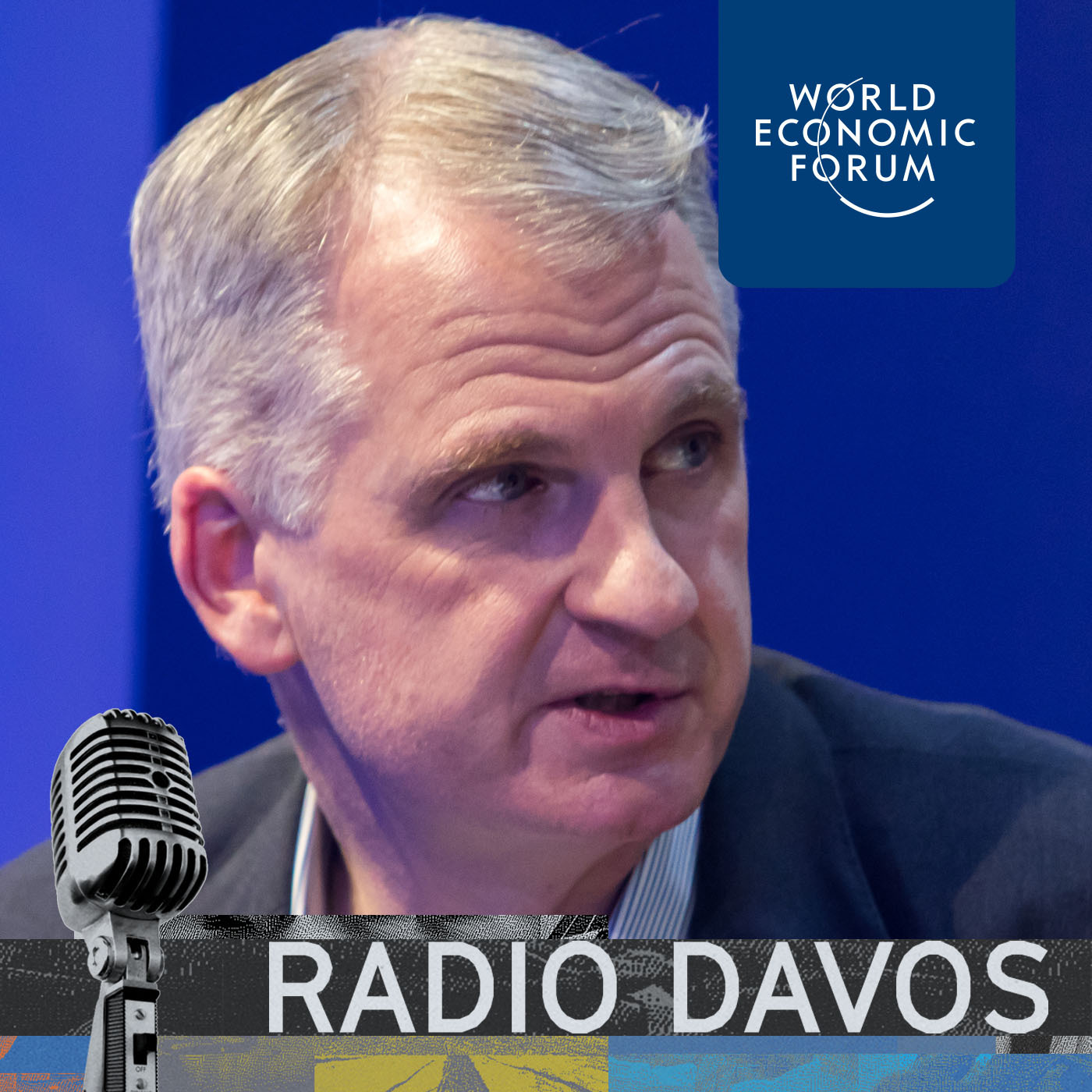
If we want to understand the war in Ukraine, and why it matters to the world, we need to know its history, says Yale Professor Timothy Snyder. The American historian, whose books include 'Bloodlands: Europe Between Hitler and Stalin' and 'On Tyranny: Twenty Lessons from the Twentieth Century', is interviewed by World Economic Forum Social Video Producer Kateryna Gordiychuk. Transcript: https://www.weforum.org/agenda/2022/07/timothy-snyder-ukraine-history lmWILMFMueFLGnNA6OhU Find all our podcasts at wef.ch/podcasts And join the World Economic Forum Podcast Club at https://www.facebook.com/groups/wefpodcastclub
S1 Ep 73'BookTok': how social media changed how we read books
Laura Battle, Deputy Books Editor at the Financial Times, tells us how social media, especially #BookTok, has changed the global publishing industry and gives her own recommendations for summer reading. And Ella Berthoud, a 'bibliotherapist' who uses the power of books to help people through tough times and who wrote 'The Novel Cure: An A to Z of Literary Remedies' lists her favourite escapist fiction. The interviews in this episode were previously published on the World Economic Forum Bookclub Podcast. Transcript: https://www.weforum.org/agenda/2022/07/book-club-summer-books-2022 Join the Book Club: https://www.facebook.com/groups/worldeconomicforumbookclub And the Podcast Club: https://www.facebook.com/groups/wefpodcastclub wef.ch/podcasts
S1 Ep 72How we can close the global gender gap - and why we should
The World Economic Forum's Global Gender Gap report collates data on gender equality from 146 countries looking at the opportunities and obstacles for women, in the workplace, in education, business and politics. The Forum's Saadia Zahidi talks us through the highlights and explains why we will all win if societies can close the gender gap.Read the World Economic Forum's Global Gender Gap Report 2022: https://www.weforum.org/reports/global-gender-gap-report-2022 Interview by Gayle Markowitz
S1 Ep 72How we can close the global gender gap - and why we should
The World Economic Forum's Global Gender Gap report collates data on gender equality from 146 countries looking at the opportunities and obstacles for women, in the workplace, in education, business and politics. The Forum's Saadia Zahidi talks us through the highlights and explains why we will all win if societies can close the gender gap.Read the World Economic Forum's Global Gender Gap Report 2022: https://www.weforum.org/reports/global-gender-gap-report-2022 Interview by Gayle Markowitz
S1 Ep 68Space - how advances up there can help life down here
What are humans doing in space and why are we talking about bases on the Moon or missions to Mars when there is so much here on Earth that requires our immediate attention? We hear from two people involved in the business of space - one of whom visited space last year, the other who is convinced there will be a city of 1 million humans on Mars. And we link up with the International Space Station to speak to astronaut Samantha Cristoforetti.
S1 Ep 14Global Cybersecurity Outlook
The World Economic Forum's Global Cybersecurity Outlook report indicates that cyberattacks increased 125% globally in 2021, with evidence suggesting a continued uptick through 2022. In this fast-changing landscape it is vital for leaders to take a strategic approach to cyber risks.How can leaders better prepare for future cyber shocks? What individual and collective actions will foster a more secure and resilient digital ecosystem?This is the full audio from a panel discussion at the World Economic Forum's Annual Meeting 2022 in Davos Moderator: Karen Tso, CNBC InternationalSpeakers: Jürgen Stock, Secretary-General, International Criminal Police Organization (INTERPOL) Josephine Teo, Minister for Communications and Information of Singapore Chander Prakash Gurnani, Chief Executive Officer, Tech Mahindra Limited Robert M. Lee, Chief Executive Officer and Co-Founder, Dragos Read the Global Cybersecurity Outlook 2022 here: https://www.weforum.org/reports/global-cybersecurity-outlook-2022/ MQfQRlLoEAblkg1xPDBC Transcript: https://www.weforum.org/agenda/2022/07/global-cybersecurity-outlook-davos-2022 Hosted on Acast. See acast.com/privacy for more information.
S1 Ep 13The Four-Day Week: Necessity or Luxury?
Why do we work five days a week? Could we be just as productive, and healthier and happier working four days? Experts from government, academia and industry debate the issue at Davos 2022. Speakers: Adam Grant, Saul P. Steinberg Professor of Management and Psychology, The Wharton School, University of Pennsylvania Ohood Bint Khalfan Al Roumi, Minister of State for Government Development and the Future, United Arab Emirates Government Jonas Prising, Chairman and Chief Executive Officer, ManpowerGroup Inc. Hilary Cottam, Social Entrepreneur, Centre for the Fifth Social Revolution Anne-Marie Slaughter, Chief Executive Officer, New America Transcript: https://www.weforum.org/agenda/2022/06/four-day-work-week-davos-2022 Join the World Economic Forum Podcast Club Hosted on Acast. See acast.com/privacy for more information.
S1 Ep 64Can the world avoid stagflation?
Greg Daco, chief economist at EY-Parthenon, talks about the multiple challenges facing the global economy and gives his view on, among other things, whether the global slowdown and rising inflation will combine to create the dreaded 'stagflation'. Transcript: https://www.weforum.org/agenda/2022/06/gregory-daco-ey-parthenon-chief-economist-stagflation Join us on the World Economic Forum Podcast Club: https://www.facebook.com/groups/wefpodcastclub
S1 Ep 63'We are in a geopolitical recession' - Ian Bremmer on globalization, populism and the power of crisis
Ian Bremmer, author and founder of the research and consulting firm Eurasia Group, says while many of the global bodies created after the Second World War are no longer fit to cope with today's crises, the size of those crises themselves, might compel them to reform and renew.

S1 Ep 12Davos 2022: How to finance net zero
Can banks and investors shift to climate-friendly business in a way that will have a global impact on slashing greenhouse gases? This panel discussion at Davos 2022 goes into the details of this complex but crucial part of the fight against climate catastrophe. Speakers: Mark Carney, UN Special Envoy for Climate Action and Finance Anne Richards, Chief Executive Officer, Fidelity International Makhtar Diop, Managing Director, International Finance Corporation (IFC) Celine Herweijer, Group Chief Sustainability Officer, HSBC David Schwimmer, Chief Executive Officer, London Stock Exchange Group Moderator: Martin Wolf, Associate Editor and Chief Economics Commentator, The Financial Times Hosted on Acast. See acast.com/privacy for more information.

S1 Ep 60Dance or die: the ballet dancer who faced down Al Qaeda to become the voice of stateless refugees
Ahmad Joudeh, a dancer with the Dutch National Ballet, performed at Davos 2022. We hear how he fended off violent opposition to his dancing from his own father and Islamist militants, and how he is using his platform to speak up for million of people who, like him, grow up as stateless refugees.
S1 Ep 11What's next for the global economy? Experts talk inflation, stagnation and (de-)globalisation at Davos 2022
On this panel at Davos 2022: Kristalina Georgieva, Managing Director, International Monetary Fund Jane Fraser, Chief Executive Officer, Citi François Villeroy de Galhau, Governor, Central Bank of France David M. Rubenstein, Co-Founder and Co-Chairman, The Carlyle Group Moderator: Geoff Cutmore, Anchor, CNBC Hosted on Acast. See acast.com/privacy for more information.
S1 Ep 10Is globalization dead? Author and columnist Thomas Friedman in conversation at Davos 2022
With every crisis people declare the end of globalization, but Thomas Friedman argues that, despite war, economic uncertainty and unrest, there are many reasons to believe globalization is stronger than ever. This is the audio of a conversation he had with World Economic Forum Managing Director Adrian Monck at the Forum's Annual Meeting 2022 in Davos. Hosted on Acast. See acast.com/privacy for more information.
S1 Ep 50So just what is the metaverse? Meta's Nick Clegg at Davos 2022
Nick Clegg, president for global affairs at Meta, came into the Radio Davos booth to explain his new role at the parent company of Facebook, and to set out his vision of the metaverse and why we need to ensure now that it will be a place people can move around freely and not be locked in to any one company's version of what he says is the inevitable, 'logical evolution' of the internet.

Day 4 at Davos 2022, with Gita Gopinath of the IMF
On the final day of the Meeting, Peter Prengaman, climate and environmental news director at the Associated Press, gives us his impressions of his first Davos. We hear the IMF's Gita Gopinath and others on the prospects for global growth; we find out what schoolgirls in a refugee camp in Kenya want to hear from leaders at Davos; and hear acclaimed musicians Yo-Yo Ma and Emanuel Ax at the Davos concert 'Our Shared Humanity'.
S1 Ep 9What next for global growth?
The recovery from the COVID-19 crisis has been deeply uneven within and between countries, depending on their access to fiscal resources and vaccines. Food, fuel and resource crises now risk further derailing an equitable recovery. How can a broader set of foundations for growth ensure long-term economic prosperity and a return to international convergence? This is the full audio from a panel discussion at Davos 2022 with Tom Keene, Managing Editor, Bloomberg Television & Radio; Jim Hagemann Snabe, Chairman, Siemens AG; Mariana Mazzucato, Professor, University College London (UCL); Gita Gopinath, First Deputy Managing Director, International Monetary Fund. Hosted on Acast. See acast.com/privacy for more information.
Day 3 at Davos 2022, with EU chief Ursula von der Leyen and artist Harry Yeff
Shereen Bhan, managing editor of Indian business news channel CNBC-TV18, joins us to look ahead to Day 3 when climate change is a major topic. We also get the latest on COVID-19 and the risk of future pandemics. Plus artist Harry Yeff on the emotional impact of turning a voice into a work of digital art.

Day 2 at Davos 2022, with Ukrainian President Volodymyr Zelenskyy
Enrique Acevedo. news anchor at CBS news, joins us in the Radio Davos booth to look ahead to the highlights on Day 2 of the World Economic Forum's Annual Meeting 2022. We also hear some of Ukrainian President Volodymyr Zelenskyy's address, get an advance glimpse of the Forum's Travel & Tourism Development Index, hear political scientist Ian Bremmer on why the world is in a 'geopolitical recession', and chat to YouTuber Nuseir Yassin who plans to encapsulate the whole week in Davos in a one-minute video for his 8 million subscribers.

Day 1 at Davos 2022, with Nick Clegg of Meta and Kristalina Georgieva of the IMF
What's happening on Day 1 of Davos 2022? South African TV anchor Nzinga Qunta joins us in the booth at the heart of the conference centre to look ahead to some of the highlights to expect. The episode includes contributions from: Saadia Zahidi, head of the World Economic Forum's Centre for the New Economy and Society talking about the Chief Economists Outlook that will be launched today. Nick Clegg, President for Global Affairs at Meta. International Monetary Fund Managing Director Kristalina Georgieva.

Davos 2022 - what to expect from this meeting like no other
The World Economic Forum's Annual Meeting, bringing leaders and experts together from around the world, traditionally happens in January. But for the first time, thanks to COVID-19, the Davos meeting is being held in May. But as Forum President Borge Brende says in this preview podcast, the absence of snow is not the main reason this Davos will be like no other.
What's going on with the global economy? A chief economist's view
As the world began to emerge from the pandemic, we were expecting some turbulence, but Russia's invasion of Ukraine has upset all predictions. Global Chief Economist at HSBC Janet Henry gives her assessment of where we are and where we're headed.
Energy transition - have global crises stalled progress on climate goals?
The World Economic Forum has been tracking global progress on the 'energy transition' for a decade and has just released a special report, Fostering Effective Energy Transition 2022, looking at where things stand at this extraordinary moment in history. The transition is the move away from fossil fuels that cause the climate crisis, while ensuring people around the world can get access to reliable, affordable energy. In this podcast, we listen in on a discussion of the issues, with Roberto Bocca, head of the Platform for Shaping the Future of Energy, Materials, and Infrastructure at the World Economic Forum. The other panelists are Muqsit Ashraf, Senior Managing Director and Global Energy Lead, Accenture; Dev Sanyal, Chief Executive Officer, VARO Energy, and Jesse Scott, International Director, Agora Energiewende and Adjunct Professor, Hertie School. The moderator is journalist John Defterios.

Podcasts from #WEF22 in Davos - an audio tour
trailerRadio Davos and its sister podcast Meet the Leader are podcasting from the World Economic Forum's Annual Meeting in Davos, Switzerland 22—26 May 2022. Here's a three-minute tour of the Forum's podcasts, including out other titles, Book Club and Agenda Dialogues.
Ukraine, inflation and pandemics: the big issues in a changed world, according to historian Adam Tooze
Adam Tooze, history professor at Columbia University, looks forward to the World Economic Forum's Annual Meeting to be held in Davos in May 2022. The podcaster and author sets out the big issues that will dominate Davos and the global agenda in the months that follow. Adam Tooze is interviewed by Jim Landale and Abhinav Chugh of the World Economic Forum's Strategic Intelligence platform - find out more at intelligence.weforum.org.
S1 Ep 80ESG - how can we measure how 'good' companies are?
ESG is an acronym that's on everyone's lips in the business world. But just what do we mean by the 'environmental, social and governance' performance of a company, and how can we measure that in a meaningful way? Nadja Picard, Global Reporting Leader, PwC, Germany, talks us through what ESG is and how close we are to having clear ways of measuring it around the world.
S1 Ep 60Antimicrobial resistance - how to stop a quiet pandemic
Bacterial resistance to antibiotics kills between 1.25-5 million people every year. So why is antimicrobial resistance (AMR) not given the priority or funding that some other health problems receive? We hear from Christopher Murray, director of the Institute for Health Metrics and Evaluation which has done the first global assessment of the impact of AMR, and UK AMR envoy Sally Davies, who says AMR needs to be treated as a pandemic.
S1 Ep 57What are sanctions, and what will be the impact of sanctions on Russia?
As opponents to Russia's invasion of Ukraine seek to isolate Moscow, we ask an expert: what are sanctions, do they work, and how will the sanctions and Russia's counter measures change the geopolitical landscape? Mikael Wigell, Research Director at the Finnish Institute of International Affairs and the author of, among many other publications, Geo-economics and Power Politics in the 21st Century, has plenty to say about the efficacy - or otherwise - of sanctions and gives his view on what we should look out for now - not least what China does - and what might be the unexpected consequences of what he calls a new cold war.

S1 Ep 53Ransomware and ransom-war: why we all need to be ready for cyber attacks
It's boomtime for cyber criminals trying to make easy money by taking computer data hostage and demanding ransom. As online working durged during the pandemic, so did cybercrime - ransomware attacks rose 151% in 2021. The World Economic Forum's Global Cybersecurity Outlook found there were on average 270 cyberattacks per organization that year, with each successful cyber breach costing a company $3.6m. We speak to Jim Guinn, Senior Managing Director - Security, Strategy and Consulting Lead, Accenture - a company that had its own, well publicized ransomware attack last year, and to Algirde Pipikaite, Cybersecurity Strategy Lead at the World Economic Forum. And to talk about how ransomware can often be considered 'ransom-war', we speak to Alex Klimburg, head of the World Economic Forum's Centre for Cybersecurity. Read the Forum's Global Cybersecurity Outlook 2022 here: https://www.weforum.org/reports/global-cybersecurity-outlook-2022

S1 Ep 8COP26 President Alok Sharma on the future of climate action in a fractured world
The climate summit COP26 was seen as a qualified success. As COP27, due to be held in Egypt by the end of the year, draws closer, and in the light of the Russian invasion of Ukraine, COP26 President Alok Sharma spoke with the head of the World Economic Forum's Centre for Nature and Climate, Gim Huay Neo, to discuss the significance of public-private collaboration in delivering more radical climate action. Hosted on Acast. See acast.com/privacy for more information.
S1 Ep 62How the Ukraine war is driving up food and energy prices for the world
Russia's invasion of Ukraine is having big, and potentially long-lasting impacts on the global supplies of food and energy. Saad Rahim, Chief Economist at Trafigura, talks about the oil and gas markets, and David Laborde Debucquet of the International Food Policy Research Institute assesses the impact on food supplies and prices, and what policymakers need to do. We also hear from David Beasley, head of the United Nations World Food Programme, on how the crisis has immediate repercussions for hungry people all over the world. Thumbnail photo by by Darla Hueske on Unsplash

S1 Ep 7The humanitarian crisis in Ukraine and its global impacts
As war rages in Ukraine, leaders from global humanitarian agencies join a World Economic Forum Agenda Dialogue to say what they need from governments and business to tackle the crisis, and explain what the knock-on impacts will be around the world. Moderated by: Børge Brende, President, World Economic Forum, Adrian Monck, Managing Director, World Economic Forum Panelists: David Beasley, Executive Director, United Nations World Food Programme (WFP); Kelly Clements, United Nations Deputy High Commissioner for Refugees (UNHCR); Catherine Russell, Executive Director, United Nations Children's Fund (UNICEF); Inger Ashing, Chief Executive Officer, Save the Children International Hosted on Acast. See acast.com/privacy for more information.

S1 Ep 55Ukraine: war, refugees and an energy system under attack
How is Ukraine managing to keep electricity and heating supplies during the war? Government and industry chiefs address a World Economic Forum online event to explain the challenges and ask for help. As well as the supply of energy, they discussed the threat to Ukraine's many nuclear power plants and called for ever tougher sanctions on Russian energy exports. Plus: UNICEF spokesperson James Elder, just back from Lviv, updates us on the humanitarian situation and 'the biggest refugee crisis we've seen since World War Two'.

S1 Ep 52Al Gore on the decade of climate action
The former US vice president has been pushing for climate action for decades. In this interview he says we are at a 'political tipping point' after which polluters will no longer hold sway, but admits that greenhouse gas emissions are still growing faster than any action to cut them back to zero. This is an edited version of an interview first published on the World Economic Forum's Meet the Leader podcast. Interview by Linda Lacina.
S1 Ep 51Don't Look Up
Oscar-winning filmmaker Adam McKay tells us how angst about climate change compelled him to make Don't Look Up, an epic comedy disaster movie about humanity's failure to tackle an existential threat. Featuring clips from the film with Leonardo DiCaprio, Jennifer Lawrence, Jonah Hill, Meryl Streep, Cate Blanchett and Tyler Perry.

Inflation - is it back to stay?
As the world emerges from COVID, economies are revving back to life - but so is something that many parts of the world have not seen much of for decades - inflation. So what is inflation and why has it suddenly reared up around the world? UBS Chief Economist Paul Donovan, author of The Truth About Inflation, speaks to Radio Davos.
S1 Ep 49A Paris Agreement for plastics
Do we need a global treaty to tackle plastics pollution, similar to the one on climate change. Campaigners and a growing number of governments and businesses say we do. Ahead of a United Nations Environment Assembly which could launch talks on a plastics pact, the World Economic Forum heard from a range of experts on why we need a treaty and what it might contain. Speakers: Kristin Hughes, Director, Global Plastic Action Partnership, World Economic Forum; Espen Barth Eide, Minister of climate and environment of Norway and President of the UN Environment Assembly (UNEA); Marco Lambertini, Director-General, WWF International; Rebecca Marmot, Chief Sustainability Officer, Unilever; Luis Vayas Valdivieso, Vice-Minister, Ministry of Foreign Affairs of Ecuador; Sheila Aggarwal-Khan, Director, Economy Division, United Nations Environment Programme (UNEP); Inés Yábar, Communications Coordinator, Co-Founder, Life Out Of Plastic - L.O.O.P.; Gim Huay Neo, Managing Director, Centre for Nature and Climate, World Economic Forum.

S1 Ep 45COVID and cancer: how the pandemic created another health time bomb
COVID-19 paralysed healthcare services around the world and meant many routine procedures were cancelled or delayed. That has taken a heavy toll on cancer patients. How big is the problem, what needs to be done to solve it, and what lessons can we draw from the pandemic to help the fight against cancer? Guests: David Fredrickson - Executive Vice-President, Oncology Business Unit, AstraZeneca; Dr Jagannath Palepu, Chairman, Dept. of Surgical Oncology, Lilavati Hospital & Research Centre, Mumbai

S1 Ep 41What to expect from 2022 - what we learned at the Davos Agenda
While COVID prevented the annual Davos meeting in the Alps for a second year, leaders from governments, business, academia and civil society met online at the Davos Agenda to discuss the world's biggest issues. The episode has some of the highlights.