Radically Christian
309 episodes — Page 1 of 7
What Does “Rightly Dividing the Word of Truth” Mean?
Is Isaiah 41:10 (“Fear Not”) Actually About You?
Does the Bible Teach the Earth is Flat?
Disagree without Dividing
Digital Disciples: Is Online Church Working?
Should Christians Fast?
Are Church Buildings Wrong?
Lessons American Christians Can Learn
What is Biblical Worship
What We Love About the Church of Christ
Who is the Holy Spirit?
What Does the Bible Say About Entertainment?
How Can You Count it All Joy?
The Death of Death
Is Anxiety A Sin
The Gospel of Being Human
God Is Our Refuge: Ancient Wisdom for Modern Anxiety
You Were Made to Win
What does it truly mean to win? In this episode, Wes and Marcus sit down with Chip Pugh, chaplain and director of team development for the Tennessee Titans, to explore his new book, Made to Win: Six Practices of Jesus for a Life on Mission. Chip brings a unique blend of NFL chaplaincy, college coaching, and decades of disciple-making to challenge our culture's distorted scoreboard of success. Together, they unpack how identity rooted in Christ —not performance, religion, or titles — unlocks the life God designed you to live. Chip walks through his SKILLS framework: six practices modeled on Jesus' own life that help believers hear God's voice, invest in others, and share their faith naturally and authentically. If you've ever wondered whether discipleship and disciple-making is really for "regular" people, this conversation will encourage and equip you.Links and Resources:Made to Win: Six Practices of Jesus for a Life on MissionNote: As an Amazon Associate, Radically Christian earns from qualifying purchases. If you click a link and make a purchase, we may receive a small commission at no additional cost to you. We only recommend resources we genuinely believe will benefit you in your walk with Jesus. Thank you for supporting Radically Christian! This is a public episode. If you would like to discuss this with other subscribers or get access to bonus episodes, visit www.radicallychristian.com
Is Medicine a Sin?
Has someone told you that the Bible condemns medicine because of the Greek word pharmakeia? Wes McAdams and Marcus Stenson dig into this popular claim making the rounds on social media and YouTube — and carefully examine what pharmakeia actually means in its original context. They explain why a word’s etymology doesn’t determine its modern meaning, what sorcery truly looked like in the ancient world, and why this passage has nothing to do with your local pharmacy. Along the way, they tackle how to read the book of Revelation responsibly, why psychedelic drug use is a legitimate modern application of the warning, and how Christians can wisely navigate questions about medicine, mental health treatment, and reliance on God. If you’ve seen these videos online and wondered whether to take them seriously, this episode will help you think clearly, biblically, and without unnecessary fear or guilt.Links and Resources:* Sponsor: Freed-Hardeman University (https://fhu.edu/gradtheology)* Loyal to the Lamb (Revelation Sermon Series)Note: This podcast description may contain affiliate links. If you click on a link and make a purchase, Radically Christian may earn a small commission at no additional cost to you. We only recommend resources we genuinely find helpful. Thank you for supporting Radically Christian! This is a public episode. If you would like to discuss this with other subscribers or get access to bonus episodes, visit www.radicallychristian.com
Contentment in a Materialistic World
Are you caught in the endless pursuit of more — more money, more status, more stuff — without ever feeling like you’ve arrived? In this episode, Wes McAdams and Marcus Stenson tackle one of the most countercultural teachings of the New Testament: biblical contentment. Drawing from Hebrews 13:5, 1 Timothy 6:6–8, Philippians 4:11–13, and Matthew 13:22, they expose how Western consumerism and “hustle culture” quietly shape our identity and fuel anxiety, comparison, and spiritual emptiness. Marcus shares a powerful personal story from his trips to Kenya that radically reframed his understanding of work, worth, and worship. Wes and Marcus also unpack the critical difference between contentment and complacency — and offer practical steps, including praying the Lord’s Prayer as a daily reset, to help you stop chasing the world and start resting in what God has already given you.Links and Resources* Logos Bible Study Software (Free Trial)* VidAngel (Free Trial) — Filter your streaming movies and television shows.* “Are Thoughts and Prayers Sufficient?” (Radically Christian Podcast) — Referenced in this episode for the discussion on patience vs. passivity. * “What is Ecclesiastes All About?” (Radically Christian Podcast) — Closely related episode on contentment, meaning, and the “chasing after the wind” theme.* Chariots of Fire (1981 Film) — Mentioned for the contrast between Harold Abrahams’ identity-driven running and Eric Liddell’s worship-fueled running: “I believe God made me for a purpose. God made me fast, and when I run, I feel His pleasure.”* The Pursuit of Happyness (2006 Film) — Referenced as a cultural example of the “success at all costs” narrative and the true cost of the American Dream.Note: Some links in our show notes may be affiliate links. This means if you choose to make a purchase through those links, we may receive a small commission at no extra cost to you. We only recommend resources we genuinely find helpful. Thank you for supporting the Radically Christian Podcast! This is a public episode. If you would like to discuss this with other subscribers or get access to bonus episodes, visit www.radicallychristian.com
Rest for the Weary
"Come to me, all who labor and are heavy laden, and I will give you rest." We love quoting Matthew 11:28-30, but what did Jesus actually mean? In this episode, Wes McAdams and Marcus Stenson dig into the explosive context most people skip — Jesus's sharp rebuke of hard-hearted religious cities and the crushing yoke the Pharisees placed on everyday people. They explore how "yoke" referred to the Torah and how Jesus's invitation was a radical claim to deity, echoing Exodus 33, Numbers 12, and Jeremiah 6. They also unpack why Jesus's yoke is "easy" even though the way is hard, how burnout stems from serving the wrong masters, and why the gospel transforms duty into choice. If you're exhausted from carrying the wrong yoke, this episode is for you!Links and Resources:* The BEMA Podcast by Marty Solomon — https://bemadiscipleship.com* Virtual Jewish Library (Referenced for rabbinic theology on the yoke metaphor) — https://jewishvirtuallibrary.org* Pirkei Avot 3:5 (Mishnah) — "Whoever takes upon himself the yoke of the Torah, they remove from him the yoke of government and the yoke of worldly concerns.”* "Love Constraining to Obedience" — Hymn by William Cowper (Olney Hymns, No. 55) — "Changes a slave into a child, and duty into choice"* Camp Blue Haven — https://campbluehaven.com This is a public episode. If you would like to discuss this with other subscribers or get access to bonus episodes, visit www.radicallychristian.com
Are Thoughts and Prayers Sufficient?
Are "thoughts and prayers" just empty words, or are they more powerful than we realize? In this episode, Wes and Marcus dive into Romans 12:12 to explore the crucial difference between patience and passivity when we face the brokenness of the world. They discuss why social media and algorithm-driven news leave us feeling overwhelmed and powerless, and how virtue signaling can become a substitute for genuine prayer and action. You'll discover why biblical patience requires agency—not abdication—and how earnest, faithful prayer actually changes things on the ground. Marcus also shares a powerful four-question framework for grounding yourself when life feels out of control. If you've ever wondered whether your prayers really matter, this conversation will challenge and encourage you.Links and Resources:* Freed Hardeman University — Doctor of Education (EdD): fhu.edu/edd This is a public episode. If you would like to discuss this with other subscribers or get access to bonus episodes, visit www.radicallychristian.com
Friendship with the World
What if "friendship with the world" in James 4:4 isn't about your music playlist or your movie choices? In this episode, Wes McAdams and Marcus Stenson reexamine one of the most misunderstood phrases in the New Testament. Drawing on the Greco-Roman patronage system—where wealthy benefactors offered "gifts" in exchange for loyalty and allegiance—they argue that James is confronting something far deeper than a moral checklist. He's warning an oppressed church community against selling their allegiance to rich and powerful patrons instead of trusting Jesus as their sole protector and provider. From Old Testament parallels with Israel's political alliances to modern applications in the workplace, online tribalism, and partisan politics, this conversation will challenge you to ask: Can my loyalty be bought? Links and Resources* Beyond the Verse: What I Discovered Reading the Bible One Book at a Time by Wes McAdams* How Partisan Politics Are Harming Christians This is a public episode. If you would like to discuss this with other subscribers or get access to bonus episodes, visit www.radicallychristian.com
Do Not Be Conformed to This World
What does it actually mean to “not be conformed to this world”? And what if modern neuroscience confirms what the apostle Paul wrote 2,000 years ago? In this episode of the Radically Christian Podcast, Wes McAdams and Marcus Stenson explore the biblical concept of “the world” as a lens, framework, and normalized pattern of rebellion against God. Drawing from Romans 12, the Epistle to Diognetus, and the latest brain science research, they unpack how our thoughts physically reshape our brains—and why that matters for spiritual formation. Discover how the early Christians lived as radical nonconformists, learn to identify the lies that keep you stuck, and find out how speaking the truth of the gospel back to those lies can literally transform your mind. Your playlist matters more than you think.Links and ResourcesLive No Lies: Recognize and Resist the Three Enemies That Sabotage Your Peace by John Mark ComerThe Life-Changing Art of Self-Brain Surgery: Connecting Neuroscience and Faith to Radically Transform Your Life by Dr. W. Lee WarrenTalking Back: A Monastic Handbook for Combating Demons by Evagrius of PontusThe Epistle to Diognetus (Full Text)Dr. Lee Warren on Theology in the Raw with Preston SprinkleLogos Bible Software – Extended Free TrialNote: Some links are affiliate links. This means if you choose to make a purchase through these links, we may receive a small commission at no extra cost to you. Thank you for supporting the Radically Christian Podcast! This is a public episode. If you would like to discuss this with other subscribers or get access to bonus episodes, visit www.radicallychristian.com
Spiritual Imposter Syndrome
What if Jesus says “I never knew you” on judgment day—even after a lifetime of ministry? Wes McAdams and Marcus Stenson tackle one of Scripture’s most terrifying passages: Matthew 7:21-23, where Jesus warns that some who prophesy and cast out demons in his name will still hear “depart from me.” This honest conversation explores the difference between religious performance and genuine discipleship, why self-righteousness is so dangerous, and what it means to truly know Christ. Discover why spiritual “imposter syndrome” might actually be a healthy sign, how the Sermon on the Mount reveals God’s heart, and why our confidence must rest in “I know a Guy” rather than “look what I did.” If you’ve ever feared you’re not good enough for God—or worried you might be too confident—this episode offers profound clarity and encouragement.Links and Resources* Ephesians for Teens by Wes McAdamsAffiliate Link Disclaimer: This podcast may contain affiliate links to products and resources mentioned in the episode. If you make a purchase through these links, we may receive a small commission at no additional cost to you. These commissions help support the production of this podcast and allow us to continue creating content. We only recommend products and resources we genuinely believe will benefit our listeners. Thank you for your support! This is a public episode. If you would like to discuss this with other subscribers or get access to bonus episodes, visit www.radicallychristian.com
Is Debt a Sin?
Is debt a sin? Wes McAdams and Marcus Stenson explore Proverbs 22:7—”the borrower is slave to the lender”—to unpack the biblical wisdom around debt, lending, and financial stewardship. This episode examines how Proverbs offers general truths rather than absolute promises, distinguishing between wise financial decisions and sinful behavior. They discuss Old Testament laws against charging interest, the Year of Jubilee, and how consumer debt differs from predatory lending. Discover why the Bible focuses more on lenders than borrowers, how perpetual debt stifles spiritual fruit, and what sacrificial generosity looks like in Christian community. Whether you’re wrestling with credit cards, student loans, or mortgage decisions, this conversation challenges Western assumptions about debt and calls believers to cruciform living that prioritizes relationships over financial gain. Learn to navigate our economic system with biblical wisdom.Links and Resources:* Mere Christianity by C.S. Lewis* Ecclesiastes episode with Michael Whitworth* Freed-Hardeman University Certificate in Counseling for Church Leaders: fhu.edu/gradtheologyDisclaimer: This post may contain affiliate links. If you make a purchase through these links, we may earn a small commission at no additional cost to you. This is a public episode. If you would like to discuss this with other subscribers or get access to bonus episodes, visit www.radicallychristian.com
Are We Living in the Last Days?
Are we living in the last days? Join Wes McAdams and Marcus Stenson in this thought-provoking exploration of 2 Timothy 3:1-9, where Paul warns Timothy about “lovers of self” and the difficult times ahead. Discover why this ancient letter is shockingly relevant to our self-obsessed culture—and why that’s not a reason to despair. Through careful biblical exegesis and cultural analysis, Wes and Marcus unpack what Paul really meant by “the last days,” challenge the modern obsession with self-love, and reveal the paradox of the Christian life: losing ourselves to truly find life. This encouraging conversation will equip you to navigate our cultural moment with hope, wisdom, and confidence in Christ’s ultimate victory.Links and ResourcesBooks Mentioned:* The Rise and Triumph of the Modern Self by Carl Truman* Why Liberalism Failed by Patrick Deneen* Dominion: How the Christian Revolution Remade the World by Tom HollandBible Software:* Logos Bible Software - Try free at https://logos.com/radicallychristianAffiliate Link Disclaimer: This podcast may contain affiliate links, which means we may receive a small commission if you make a purchase through these links at no additional cost to you. We only recommend products and services we genuinely use and believe will benefit our listeners. Your support through these links helps make this podcast possible. This is a public episode. If you would like to discuss this with other subscribers or get access to bonus episodes, visit www.radicallychristian.com
What is Ecclesiastes All About?
Ecclesiastes might be more important and relevant to your life than you think. Does life feel like a relentless grind, work, dishes, routines, repeat? Discover how the ancient book of Ecclesiastes speaks directly to modern anxieties about meaning, success, and fulfillment. Join Wes McAdams and author Michael Whitworth as they explore how this misunderstood biblical book offers surprising wisdom on joy, contentment, and gratitude in everyday life. Learn why it’s better to go to a funeral than a party, how Ecclesiastes corrects prosperity-gospel thinking, and why this honest, sometimes uncomfortable, book ultimately points us to Jesus. Whether you’re battling existential angst or chasing the next achievement, this conversation will help you stop expecting life to bear more weight than it was meant to carry.Links and Resources* The Weight of Breath: A Guide to Ecclesiastes by Michael Whitworth* What is Ecclesiastes? by Michael Whitworth (ages 10-14)* Start2Finish.org - More Books by Michael Whitworth* VidAngel - Free Trial OfferNote: This episode may contain affiliate links or promotional codes. If you purchase products or services using the links or codes provided, we may receive a small commission at no additional cost to you. We only recommend products and services that we genuinely believe will benefit our listeners. Thank you for supporting the Radically Christian Podcast. This is a public episode. If you would like to discuss this with other subscribers or get access to bonus episodes, visit www.radicallychristian.com
Being Wise with A.I.
In this thought-provoking conversation, Wes McAdams and Marcus Stenson explore the promises and perils of artificial intelligence from a Christian perspective. They discuss the biggest dangers of AI, including misinformation, relationship replacement, and outsourcing our God-given ability to think deeply. But they also share practical wisdom for using AI as a "coach, not a crutch." Learn how tools like ChatGPT can either help us flourish or participate in our own "self-erasure." Discover why authentic human relationships become a precious commodity in a world filled with artificial intelligence, and get specific guardrails for using AI wisely in your faith, family, and work. Whether you're a tech enthusiast or skeptic, this episode will help you think critically about how AI fits into a life devoted to loving like Jesus.Links and Resources:Logos Bible Study SoftwareTechnopoly by Neil PostmanAffiliate Link Disclaimer:Some links in these show notes may be affiliate links, which means we may earn a small commission at no additional cost to you if you make a purchase through these links. We only recommend products and services we genuinely use and believe will benefit our listeners. This is a public episode. If you would like to discuss this with other subscribers or get access to bonus episodes, visit www.radicallychristian.com
Should Christians Make New Year's Resolutions
On this episode of the Radically Christian Podcast, Wes McAdams introduces the show’s new co-host for 2026. Together, Wes and the new host explore what it means to pursue spiritual convictions over mere New Year’s resolutions, emphasizing that transformation comes from becoming who God created us to be rather than just modifying behavior. They discuss the myth of the fresh start, the importance of slowing down to hear the Holy Spirit, and why God’s mercies are new every morning, not just every January. Both hosts share their upcoming writing projects and vision for the year ahead. This conversation offers practical wisdom for anyone seeking deeper spiritual growth and authentic discipleship in the new year.Links and Resources:* The Four Loves by C.S. Lewis* The Ruthless Elimination of Hurry by John Mark ComerAffiliate Link Disclaimer:This post may contain affiliate links. If you make a purchase through these links, we may earn a small commission at no additional cost to you. We only recommend resources we genuinely believe will benefit our listeners. Thank you for supporting Radically Christian. This is a public episode. If you would like to discuss this with other subscribers or get access to bonus episodes, visit www.radicallychristian.com
Is it Wrong to Celebrate Christmas?
Should Christians celebrate Christmas? In this candid episode, Wes McAdams challenges the idea that celebrating Jesus’ birth violates biblical principles. Drawing from Romans 14-15 and Colossians 3:17, he unpacks why compartmentalizing life into “religious” and “secular” categories misses the point. Wes encourages believers to see Christmas as an opportunity to welcome those weak in faith—people curious about the manger, hungry for hope, and longing for peace. Rather than pushing seekers away with debates, he invites Christians to make everything about Jesus and use this season to strengthen faith, not squash it. Plus: An exciting announcement about 2026!Scripture References:* Romans 14-15* Colossians 3:17* 1 Corinthians 10:31* Galatians 5 (works of the flesh and fruit of the Spirit)* James 3:17-18 This is a public episode. If you would like to discuss this with other subscribers or get access to bonus episodes, visit www.radicallychristian.com
How to Write a Sermon
How to write sermons with Logos Bible Software just got easier! In this episode of the Radically Christian Podcast, Wes McAdams walks you step‑by‑step through his personal sermon preparation process using Logos’ new AI Study Assistant to unlock the full potential of your digital Bible library.Whether you’re a preacher, Bible teacher, or small‑group leader, this tutorial will help you:• Organize sermon layouts and templates for weekly prep• Research Scripture quickly with commentaries and original language tools• Use Logos’ AI Study Assistant to access your library more effectively• Build slides and preach directly from the Logos iPad appYou’ll also learn how Wes integrates Proclaim for seamless sermon slides on Sunday morning.If you’ve been thinking about trying Logos, this video will show you how it can transform your Bible study and sermon writing.Links & Resources:* Extended Free Trial of Logos: Logos.com/radicallychristian* Communicating for a Change by Andy Stanley* Freed‑Hardeman University Counseling Program: fhu.edu/counselingNote: Some links on this site may be affiliate links. If you make a purchase through these links, we may receive a small commission at no additional cost to you. This is a public episode. If you would like to discuss this with other subscribers or get access to bonus episodes, visit www.radicallychristian.com
What You Can Learn in the Bible Lands
What happens when you walk in the footsteps of Moses or hold an ancient artifact that validates Scripture? Dr. Jonathan Moore and Dr. Rick Brumback, from Freed-Hardeman University, reveal how biblical archaeology helps transform faith and ministry.Discover the unique graduate program that takes students to places like Israel, Egypt, and Greece for hands-on archaeological work—excavating at sites like Shiloh, learning stratigraphy and pottery identification—and experiencing the places where biblical events actually occurred. Dr. Moore shares how recent discoveries, including an Assyrian cuneiform fragment from Hezekiah’s time, continue to validate biblical accounts.Learn why geography gives the biblical narrative its shape and archaeology gives it texture. Whether you’ve dreamed of visiting the Bible lands or want to understand how archaeology illuminates Scripture, this episode will strengthen your confidence in the Bible’s historical reliability and inspire you to see Christianity as real events involving real people in real places.Links and Resources* Sponsor: Freed-Hardeman University Graduate School of Theology (https://fhu.edu/academics/graduate/graduate-school-of-theology/) This is a public episode. If you would like to discuss this with other subscribers or get access to bonus episodes, visit www.radicallychristian.com

How to Make Disciples Who Make Disciples
In this episode of the Radically Christian Podcast, Wes McAdams interviews Dr. Carl Williamson, a church planter and disciple-maker who teaches at Harding University. The conversation explores how disciple-making can move beyond programs into a reproducible, Spirit-led way of life modeled after Jesus. Williamson explains that a disciple is someone “following Jesus, being changed by Jesus, and committed to the mission of Jesus,” and that the goal of his ministry is to help ordinary believers live that out in community.Williamson describes how he trains students at Harding to form “disciple-making groups”—small, four-person communities patterned after Jesus’ relationships with Peter, James, and John. These groups meet for about a year to a year and a half, following a rhythm of studying Scripture, eating, serving, resting, and praying together. Dr. Carl Williamson is first and foremost a follower of Jesus. He has spent his life sharing the gospel with non-believers and training disciple makers in central New Jersey. He has been instrumental in establishing 2 new churches and working with 2 different church planting teams. He received a Doctorate of Ministry degree from Harding School of Theology in 2018. He is the Distinguished Andy T. Ritchie Chair for discipleship and church planting at Harding University. Links and Resources* Trust and Follow Jesus by Carl and Alicia Williamson & Bobby Harrington* Dr. Carl Williamson Harding University Faculty Page* Logos Bible Software — Free trial at logos.com/radicallychristianAffiliate notice: Some links may be affiliate links. If you choose to buy something through these links, we receive a small commission at no extra cost to you. This is a public episode. If you would like to discuss this with other subscribers or get access to bonus episodes, visit www.radicallychristian.com

Baptism, What Does the Bible Actually Teach?
Baptism according to Scripture is more than a ritual—it is an expression of faith in Jesus for the forgiveness of sins. In this episode of the Radically Christian Podcast, Wes McAdams talks with Dr. Bobby Harrington, founder of Discipleship.org and Renew.org, about what the Bible truly teaches about baptism and why Christians must understand its connection to the gospel. Dr. Harrington, author of Baptism According to Scripture: A Clear, Short, and Unfiltered Guide, explains why immersion in the name of Jesus Christ is the New Testament pattern (Acts 2:38), how baptism expresses loyalty and allegiance to King Jesus, and why it is wrong to separate baptism from faith in Christ. Together, Wes and Bobby explore the restoration movement perspective, early church history, and common misunderstandings in evangelical circles. This conversation will help you: * Understand baptism as an expression of saving faith * See why passages like Acts 2:38 and 1 Peter 3:21 are central to this teaching * Learn how the early church viewed baptism* Grasp what it means for baptism to be “normative”If this episode encourages you, like, subscribe, and share your thoughts in the comments. Let’s continue to help others understand Scripture and love like Jesus!Links and Resources:* Baptism According to Scripture: A Clear, Short, and Unfiltered Guide by Bobby Harrington* DiscipleShift by Jim Putman and Bobby Harrington* Baptism in the Early Church by Everett Ferguson* Gospel Allegiance by Matthew Bates* Renew.org and Discipleship.org websites for further study and resourcesSome links may be affiliate links. This means if you choose to purchase through these links, we may receive a small commission at no additional cost to you. This is a public episode. If you would like to discuss this with other subscribers or get access to bonus episodes, visit www.radicallychristian.com
When the Perfect Comes: Understanding 1 Corinthians 13:10 and Spiritual Gifts
In this episode of the Radically Christian Podcast, Wes McAdams joins Austin McCrickard and Nate Miller on their show The Thinking Kingdom Podcast to discuss 1 Corinthians 13 (often called the “love chapter”). They focus particularly on verse 10, where Paul says, “When the perfect comes, the partial will pass away.” The conversation explores what Paul meant by “the perfect,” how the passage fits within the larger context of 1 Corinthians 12–14, and how Christians today should understand spiritual gifts in light of love being the ultimate goal.Wes explains that the Corinthian church had been divided and worldly, using their spiritual gifts—such as prophecy and tongues—for self-promotion rather than for the common good. Paul’s corrective was to teach a “cruciform way of thinking,” where love, not power or eloquence, defines spiritual maturity. Extraordinary gifts were temporary, serving a purpose in the early church, but love, faith, and hope endure. Paul’s message, Wes argues, is not about when or how gifts will cease, but about how Christians must use their gifts in love and unity.Wes concludes that regardless of how someone interprets, “the perfect,” Paul’s point remains: love is the measure of Christian maturity. He cautions against forcing passages to say what we want merely to guard against theological extremes, noting that the Spirit equips each generation according to its needs, and the permanence of love outlasts all temporary gifts.Links and Resources* The Thinking Kingdom Podcast (hosted by Austin McCrickard and Nate Miller)* Logos Bible Software — extended free trial at logos.com/radicallychristian* What is the “Perfect” in 1 Corinthians 13:10?Some links may be affiliate links. If you choose to purchase through them, we may receive a small commission at no extra cost to you. This is a public episode. If you would like to discuss this with other subscribers or get access to bonus episodes, visit www.radicallychristian.com
Life Lessons From a Stand-Up Comedian
In this episode of the Radically Christian Podcast, Wes McAdams sits down with stand-up comedian Brian Bates, co-host of The Nate Land Podcast. They talk about faith, humor, and the surprising ways clean comedy is making a comeback. Brian shares insights from his career in comedy and reflects on how laughter can bring people together in a divided world.Throughout the conversation, Wes and Brian discuss what it means to be both faithful and funny, where to draw the line between humor and harm, and how authenticity and kindness shape good communication. They explore how comedians and preachers can both learn from each other about connecting with audiences, telling stories well, and being real about life’s imperfections.Brian also opens up about his journey as a Christian in the entertainment industry, his self-deprecating style of comedy, and the importance of being honest and relatable, on and off stage. He reminds listeners that bringing joy, laughter, and light into people’s lives can be a meaningful form of ministry.Links and Resources* Brian Bates Comedy* The Nate Land Podcast* VidAngel — Use promo code “radically” for an extended free trialSome links may be affiliate links. If you choose to purchase through them, we may receive a small commission at no additional cost to you. This is a public episode. If you would like to discuss this with other subscribers or get access to bonus episodes, visit www.radicallychristian.com
The Fruit of the Spirit is Self-Control
In this episode of The Radically Christian Podcast, Wes McAdams concludes the Fruit of the Spirit series with a conversation about self-control. Guest, Guy Hammond, founder of Strength in Weakness Ministries, shares how the Holy Spirit empowers believers to live disciplined, faithful lives in a culture that celebrates self-indulgence. Guy describes his own journey of transformation—from living as a gay man for fourteen years to following Jesus faithfully for nearly forty. He emphasizes that the Spirit’s work in us is gradual, not instant, and that sanctification involves humility, accountability, and perseverance. He offers practical examples of living “on purpose,” setting healthy boundaries, and surrounding oneself with trusted Christians who provide encouragement and light when temptation arises.The conversation closes with a reminder that self-control is not repression but true freedom—freedom to live joyfully and peaceably under the Lordship of Christ. Both Wes and Guy stress that while the cost of following Jesus is high, the cost of not following Him is far greater. The fruit of the Spirit produces not perfection, but faithfulness, as believers learn to walk by the Spirit each day.Links and Resources* Strength in Weakness Ministries – Guy Hammond’s organization providing biblical help and support for Christians with same-sex attraction.* Following Jesus in an LGBTQ+ World: A Guide for Embracing Hard Teachings & Embracing Hurt People by Guy HammondNote: Some links may be affiliate links. If you choose to purchase through them, we may receive a small commission at no additional cost to you. This is a public episode. If you would like to discuss this with other subscribers or get access to bonus episodes, visit www.radicallychristian.com
The Fruit of the Spirit is Gentleness
This episode of the Radically Christian Podcast continues the series on the fruit of the Spirit, focusing on gentleness with guest Tim Pyles. Wes and Tim explore how the Spirit produces fruit in believers’ lives—not through mere willpower but through partnership with God, where He provides the strength for transformation. Tim stresses that gentleness isn’t weakness but “strength under control,” a Spirit-enabled response that looks radically different from the works of the flesh. Tim describes gentleness as “sweet reasonableness” and connects it to Jesus’ own life—how He was filled with the Spirit and exhibited humility, restraint, and compassion even when confronting sin. They address common objections, such as whether gentleness always applies or whether Jesus’ cleansing of the temple justifies harshness. Tim Pyles grew up in a minister’s family, spent part of his childhood in Liberia, and served in ministry in places like Australia, Hawaii, and Dallas, including as the first preaching minister at McDermott Road. He has been with the Broken Arrow Church of Christ for over sixteen years. Links and Resources Freed-Hardeman University - https://www.fhu.edu/gradtheology This is a public episode. If you would like to discuss this with other subscribers or get access to bonus episodes, visit www.radicallychristian.com
The Fruit of the Spirit is Faithfulness
This episode of the Radically Christian Podcast continues the series on the fruit of the Spirit, focusing on faithfulness with guest Bobby Wheat. The conversation begins with the reminder that spiritual growth isn’t automatic—God produces fruit through the Spirit, but believers must also intentionally cooperate, making daily choices that reflect the Spirit’s work. Bobby describes the process as an “upward-moving spiral,” where small, intentional steps, empowered by the Spirit, build into greater maturity over time.Bobby and Wes both talk about how faithfulness is relational, rooted not in mere church attendance or perfection, but in steadfast loyalty, presence, and allegiance to God. They connect the Greek word pistis (faith/faithfulness) to trust, reliability, and allegiance, underscoring that true faith cannot be separated from faithfulness lived out in action. Marriage becomes a helpful metaphor: faithfulness isn’t occasional or flawless, but a daily, ongoing pursuit of loyalty and presence.Bobby Wheat grew up in Texas and studied at Abilene Christian University, where he met his wife, Nancy Mitchell. The couple served several years on the mission field in Zimbabwe; Bobby later completed a master’s in biblical studies at ACU and spent decades sharing the Gospel in Texas, Oklahoma, Kansas, and briefly Tennessee. He preached for ten years at Lakeshore Drive Church of Christ in Waco. He stepped away from full-time ministry in early 2022, now lives in Hewitt, TX (where his son Chris preaches), runs a small woodworking business, and enjoys family life with three grown children and eight grandchildren.Links and Resources* Logos Bible Study Software (Extended Free Trial)* Matthew Bates, Salvation by Allegiance AloneNote: Some links may be affiliate links. Meaning, if you choose to buy something through these links, we receive a small commission at no extra cost to you. This is a public episode. If you would like to discuss this with other subscribers or get access to bonus episodes, visit www.radicallychristian.com
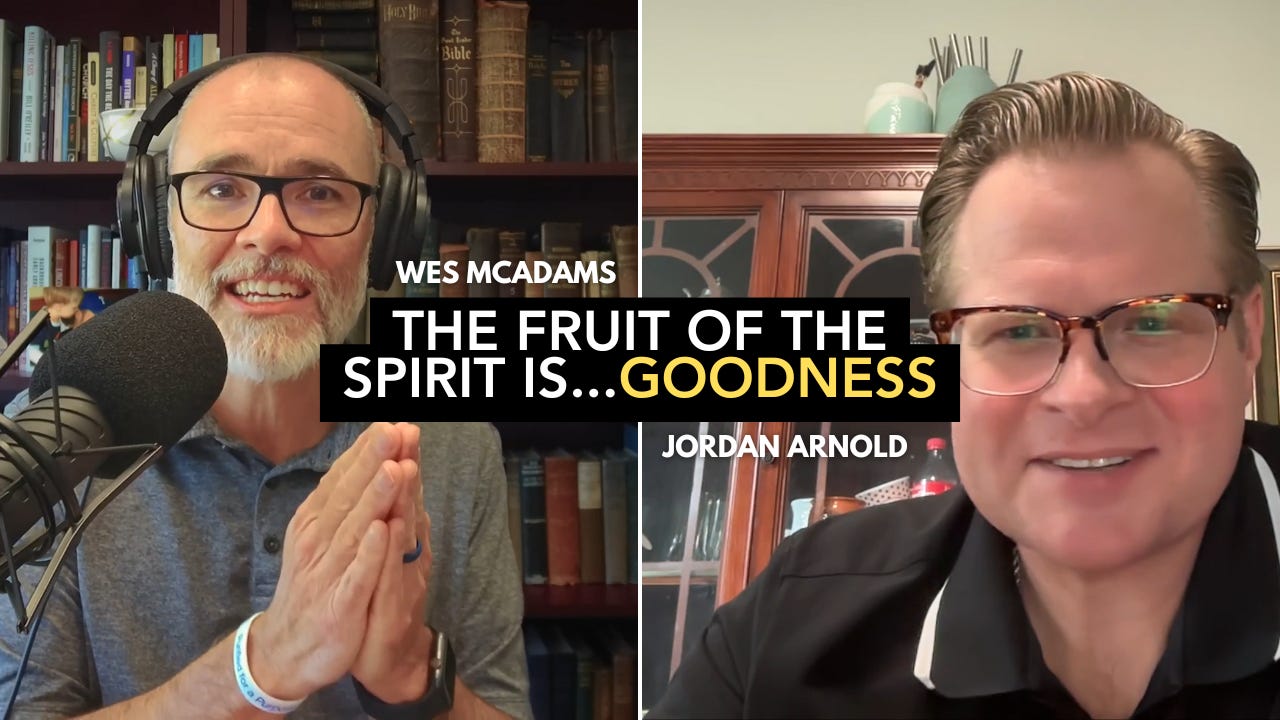
The Fruit of the Spirit is Goodness
This episode of the Radically Christian Podcast continues the series on the fruit of the Spirit, focusing on goodness with guest Jordan Arnold, minister at the Church of Christ in Falls Church, Virginia.Arnold defines biblical “goodness” as more than simply avoiding evil; it is active, courageous, and transformative. It’s goodness “with an edge,” the kind that rolls up its sleeves, risks reputation, and changes lives. They stress that such goodness isn’t meant to draw attention to the individual but to point people toward God. Good works serve as witness, drawing others to glorify the Father. They also highlight the communal aspect: the Spirit cultivates fruit not just in individuals but in the whole church, making love, joy, peace, patience, kindness, goodness, faithfulness, gentleness, and self-control the marks of Spirit-filled community.The conversation closes with encouragement for believers to pray for goodness, to pursue it in fellowship with others, and to allow God’s Spirit to keep forming it within them. Goodness, they emphasize, is underrated in our culture but essential in reflecting Christ’s character to the world.Links and Resources* VidAngel (use code radically at signup)Note: Some links may be affiliate links. If you choose to buy something through these links, we receive a small commission at no extra cost to you. This is a public episode. If you would like to discuss this with other subscribers or get access to bonus episodes, visit www.radicallychristian.com
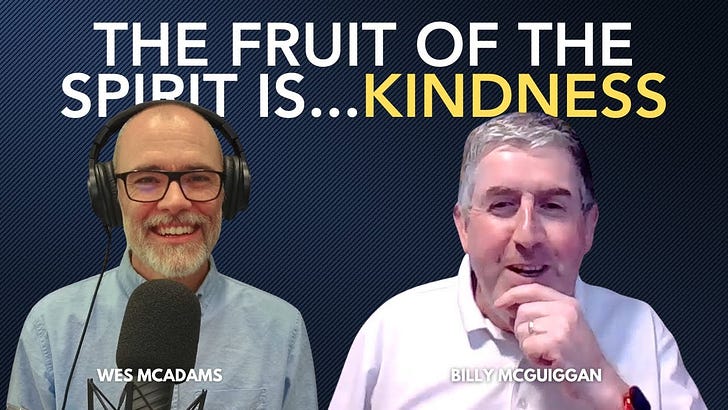
The Fruit of the Spirit is Kindness
In this episode of the Radically Christian Podcast, Wes McAdams continues his series on the fruit of the Spirit with a conversation about kindness, joined by guest Billy McGuiggan. They begin by reflecting on Galatians 5, emphasizing that the fruit of the Spirit is a single unified work of God, not separate traits we manufacture ourselves. Billy explains that walking in step with the Spirit means surrendering daily to God’s will over our own, nurturing a genuine relationship with Him that empowers kindness and other Spirit-produced qualities.The discussion explores how kindness differs from mere niceness. They stress that kindness isn’t just about what we say or do, but how we say and do it—whether people can truly sense God’s love in us. Billy notes that non-Christians may display kindness through God’s common grace, but Spirit-empowered kindness is distinct because it endures even when we are tired, angry, or worn thin.Throughout the conversation, Billy shares personal experiences of being treated unkindly by fellow Christians and how those moments shaped his commitment to always respond with kindness, especially toward sinners and the hurting. He stresses that kindness should disarm rather than provoke defensiveness, pointing people toward God rather than pushing them away. The two men agree that living in step with the Spirit creates a better world—one marked by kindness instead of division—and Christians are called to start building that Spirit-shaped world here and now, as a foretaste of what’s coming in the new creation.Links and Resources:* Freed-Hardeman University: https://fhu.edu/mba* Logos Free Trial: Logos.com/radicallychristianNote: Some links may be affiliate links. If you choose to buy something through these links, we receive a small commission at no extra cost to you. This is a public episode. If you would like to discuss this with other subscribers or get access to bonus episodes, visit www.radicallychristian.com
The Fruit of the Spirit is Patience
In this episode of the Radically Christian Bible Study Podcast, Wes McAdams continues his series on the Fruit of the Spirit with guest Bill Watkins, focusing on patience. They begin by reflecting on the Spirit’s role in forming believers’ character, emphasizing that while people without the Spirit may show love or joy, the Spirit empowers Christians to embody these qualities to a higher degree. The conversation underscores that the Spirit’s fruit is not just for personal holiness but for building relationships within the church and the world. Living selfishly leads to destruction, but living by the Spirit creates life and community.They dive into patience specifically, distinguishing between two Greek words: hupomonē (endurance through circumstances) and makrothumia (long-suffering with people). Paul uses the latter in Galatians 5, highlighting that patience is mainly about how we treat others, especially when they are difficult. They point out that patience is most clearly demonstrated in God’s dealings with humanity—his restraint and mercy despite our sin. Christians are called to mirror that same patience, recognizing that God desires all people to be saved.Bill Watkins is the Pulpit Minister for the Crieve Hall Church of Christ in Nashville, TN. He shares practical ministry and personal stories about cultivating patience, from handling criticism as a preacher to seeing daily annoyances as opportunities to show God’s love. He encourages listeners not to take offenses personally but to see difficult people as souls God wants to redeem. Links and Resources* Logos Bible Software (Free Trial): logos.com/radicallychristianNote: Some links may be affiliate links. Meaning, if you choose to buy something through these links, we receive a small commission at no extra cost to you. This is a public episode. If you would like to discuss this with other subscribers or get access to bonus episodes, visit www.radicallychristian.com
The Fruit of the Spirit is Peace
This episode of the Radically Christian Podcast features a conversation between Wes McAdams and Bert Ritchie, a minister from Northern Ireland who has spent decades working toward peace and reconciliation. The discussion begins with Bert recounting his upbringing, his ministry journey, and the backdrop of sectarian conflict in Northern Ireland. He describes how religious and political divisions fueled hostility for generations and how the peace accord reduced violence, though tensions remain unresolved. The heart of the conversation focuses on what it means to pursue peace as a follower of Jesus. Bert emphasizes that peace is not just a theological concept but an embodied practice that requires courage, humility, and trust-building. Using the metaphor of bridge-building, he explains that it’s not enough to construct bridges between divided groups—someone has to be willing to cross them. He shares his own experiences speaking in Catholic churches, sitting with priests, and engaging even with former terrorists, highlighting how reconciliation involves risks, patience, and a willingness to leave one’s comfort zone. Bert Ritchie is a longtime minister in Ireland with over 40 years of service. Married to his wife Doreen, with four children and ten grandchildren, he has worked extensively in contexts of division, seeking to live as a peacemaker across denominational, political, and cultural lines. His life and ministry reflect a commitment to grace, reconciliation, and practical, lived-out peace. Links and Resources: * 2013 Christian Chronicle article about Ritchie's work* VidAngel Free TrialNote: Some links may be affiliate links. Meaning, if you choose to buy something through these links, we receive a small commission at no extra cost to you. This is a public episode. If you would like to discuss this with other subscribers or get access to bonus episodes, visit www.radicallychristian.com
The Fruit of the Sprit is Joy
In this episode, Wes McAdams and Marcus Stenson wrestle with the meaning of the fruit of the Spirit, especially the aspect of joy. They explore the difference between trying to produce fruit by sheer willpower versus recognizing that fruit naturally flows from the Spirit living within. Using vivid metaphors, they contrast the Spirit’s genuine work with the artificial substitutes our culture often accepts. A major focus is the distinction between biblical joy and worldly happiness. Marcus and Wes discuss how non-Christians may show echoes of love, joy, or kindness, but without the Spirit, these expressions are often misdirected or hollow. Marcus insists that the fruit of the Spirit is diagnostic, not prescriptive—it reveals whether we are truly living by the Spirit rather than being another “to-do list” for Christians. The conversation emphasizes that joy prepares believers for inevitable seasons of pain and loss, teaching us to lament honestly while still trusting God’s promises. Marcus Stenson serves as the preaching minister at the Leander Church of Christ in Texas. He also coaches churches transitioning from consumer-driven to disciple-making models and partners in Kenya to help with discipleship and humanitarian projects. A self-proclaimed foodie and long-suffering Minnesota Vikings fan, Marcus brings both insight and practical analogies to the discussion.Links and Resources* Logos.com/radicallychristian* The Screwtape Letters by C.S. Lewis* Harvard Adult Development Study (often called the “Harvard Happiness Study”)Note: Some links may be affiliate links. Meaning, if you choose to buy something through these links, we receive a small commission at no extra cost to you. This is a public episode. If you would like to discuss this with other subscribers or get access to bonus episodes, visit www.radicallychristian.com
The Fruit of the Spirit is Love
In this episode, Wes McAdams begins a new series on the fruit of the Spirit, focusing first on love with guest Boo Scott, minister at National Park Church of Christ. They discuss how the fruit of the Spirit is not a checklist of virtues to achieve by sheer willpower but the supernatural result of the Spirit’s presence in a Christian’s life. Using metaphors like a single fruit with many flavors, they emphasize that producing love, joy, peace, and other traits is active but Spirit-powered—requiring intentional submission, alignment, and cooperation without taking credit for the transformation. They also explore the distinction between Spirit-produced love and the limited, self-serving love possible apart from Christ. Biblical love is defined as patient, kind, humble, truthful, enduring, and self-sacrificial, modeled perfectly in Jesus. The Spirit empowers believers to love in a way that aligns with God’s original intent for humanity: bringing order out of chaos, blessing the nations, and helping others realize they were created for him.Boo and Wes remind listeners that genuine love is eternal and transformational, impacting the unseen spiritual realm and reflecting God’s glory whether shown in public ministry or small acts of kindness. Links and Resources* Logos Bible Software — Extended Free Trial* National Park Church of ChristNote: Some links may be affiliate links. Meaning, if you choose to buy something through these links, we receive a small commission at no extra cost to you. This is a public episode. If you would like to discuss this with other subscribers or get access to bonus episodes, visit www.radicallychristian.com

What is the Kingdom of God
This episode of the Radically Christian Podcast features a conversation Wes McAdams had with Nate Miller and Austin McCrickard on the Thinking Kingdom podcast. Together, they explore a biblical vision of the kingdom of God that goes beyond traditional assumptions. The discussion reflects on how Jesus' mission and message invite believers to live in a way that anticipates God’s full and final reign.The episode touches on key biblical texts and images that reshape our understanding of what it means to be a kingdom person in a world where God's rule is still contested. Themes like enemy love, allegiance to Jesus, and the upside-down nature of the gospel are all woven into the conversation without pretending that living this way is easy or without cost.Nate Miller and Austin McCrickard co-host the Thinking Kingdom podcast, which is part of the Excel Still More Network. If you haven’t done so already, I would encourage you to subscribe to their podcast as well. Links and Resources:* Thinking Kingdom Podcast (featuring Nate Miller and Austin McCrickard)* Salvation by Allegiance Alone by Matthew Bates* Freed Hardeman University - https://www.fhu.edu/gradtheologySome links may be affiliate links. Meaning, if you choose to buy something through these links, we receive a small commission at no extra cost to you. This is a public episode. If you would like to discuss this with other subscribers or get access to bonus episodes, visit www.radicallychristian.com
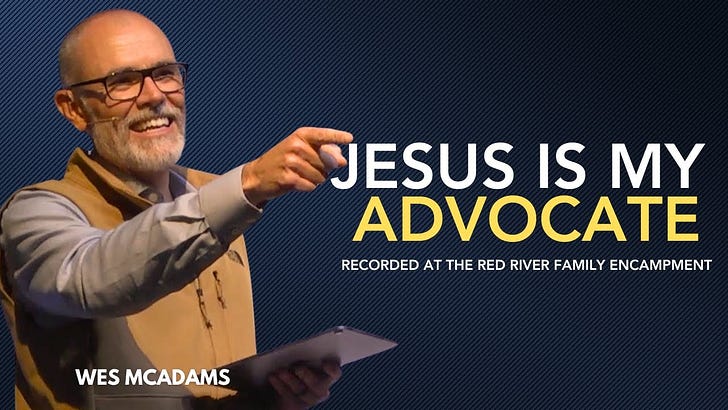
Jesus is My Advocate
Many Christians wrestle with feelings of unworthiness and insecurity when it comes to their relationship with God. In this episode, Wes McAdams addresses that struggle. He explores the profound truth of 1 John 1–2, encouraging listeners to ask: How do I know that I know Jesus? Wes challenges listeners to move beyond shame and into confidence—not because of their perfection, but because of their Advocate, Jesus Christ.The sermon unpacks the concept of fellowship with God—a deep, intimate partnership—and how it’s not built on our performance but on walking in the light. Walking in the light doesn’t mean being sinlessly perfect; it means being honest, confessing sin, and trusting in God's mercy. Wes emphasizes that Jesus is not just a distant Savior, but an active Advocate who continually intercedes for his people. And because we are represented by Jesus in heaven, we must represent Him on earth—especially through our love for others, including our enemies.This lesson was preached at the 2025 Red River Family Encampment in the beautiful mountains of Red River, New Mexico.Links and Resources:* Red River Family Encampment* Logos Bible Software (Extended Free Trial) This is a public episode. If you would like to discuss this with other subscribers or get access to bonus episodes, visit www.radicallychristian.com

Cultural Influence on Young Women
In this episode of the Radically Christian Bible Study Podcast, Wes McAdams speaks with Jennifer Lewis about how culture has shaped young women—particularly within the church—and how the gospel can bring healing, identity, and purpose. Jennifer shares insights from her experience with E.WE.S. Camp (Equipping Women for Exceptional Service), which mentors and equips young Christian women to serve with confidence and biblical knowledge.The conversation dives deep into the impact of purity culture. Jennifer discusses the unintended harm done to young women when modesty and purity were overemphasized in ways that led them to feel ashamed of their bodies and responsible for others’ sins. She challenges the cultural and religious messaging that reduced girls to stumbling blocks and boys to uncontrollable beings, highlighting how this kind of thinking strays far from biblical teaching. Jennifer passionately advocates for teaching grace, continual cleansing (1 John 1), and identity in Christ—not shame and fear.Jennifer also emphasizes the need for women to be students of Scripture and active participants in the work of the church. She encourages women to think, study, and engage their faith directly. Rather than merely emphasizing what women “cannot do,” she highlights the rich, essential, and often overlooked roles women can and should fill in the church—from teaching, visiting, and mentoring to being spiritual mothers and bearers of God’s Word in everyday life.Jennifer is a speaker, teacher, and leader of E.W.E.S. Camp, a training camp designed to mentor, educate, and equip young women for meaningful service in the church. She is the daughter, wife, and mother of preachers and has spent much of her life supporting leadership and ministry, especially among women.Links and Resources: * Logos Bible Study Software* E.W.E.S. (Equipping Women for Exceptional Service) Camp* The Toxic War on Masculinity by Nancy Pearcey This is a public episode. If you would like to discuss this with other subscribers or get access to bonus episodes, visit www.radicallychristian.com
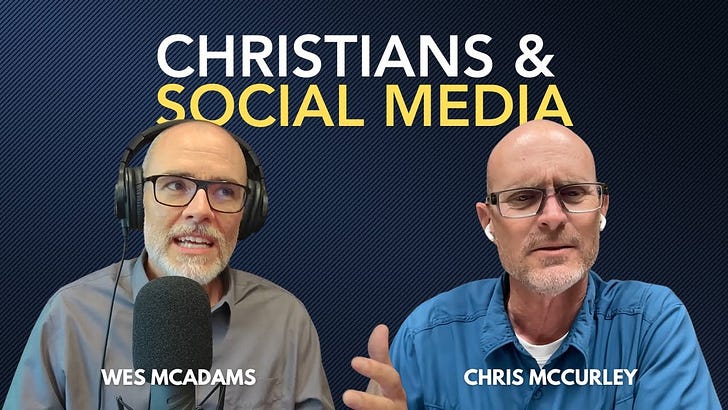
Christians and Social Media
Many Christians are wrestling with how to navigate the digital world in a way that honors Jesus. In this episode, Chris McCurley and Wes McAdams tackle the complex relationship between social media and spiritual formation. They explore questions like: Should Christians even be on social media? How can we be present in digital spaces without being shaped by them? What does faithful presence look like online? These aren’t easy questions—but they’re worth asking. The conversation highlights how social media often thrives on anger, fear, and comparison—things that are fundamentally at odds with the Spirit of Christ. They reflect on how our online habits can either form us into more loving disciples or deform us into reactive, self-centered people. They also offer practical suggestions for discerning when to speak, when to stay silent, and how to be salt and light even in toxic digital environments. Chris McCurley preaches for the Walnut Street Church of Christ in Dickson, Tennessee. Chris also hosts the Dear Church Podcast. Links and Resources: * Logos Bible Study Software * Dear Church Podcast This is a public episode. If you would like to discuss this with other subscribers or get access to bonus episodes, visit www.radicallychristian.com