
Radical Candor: Communication at Work
227 episodes — Page 2 of 5

S7 Ep 15How NDAs Protect Power Instead of People 7 | 15
When contracts hide misconduct, it’s not policy—it’s a cover-up. What do NDAs, forced arbitration, and emotionally manipulating teenagers have in common? Sadly, more than you'd hope. Kim, Jason and Amy rip the lid off the corporate culture of hush-hush harm, legal gymnastics and why emotional manipulation is a feature—not a bug—in some marketing strategies. They dig into the story behind Careless People by Sara Wynn-Williams, the book someone definitely doesn’t want you to read, and expose how companies use contracts to silence the truth and protect power—not people. From creepy ad targeting to leaders who dodge accountability like it’s dodgeball, the crew gets real about why “just business” is a lazy excuse for bad behavior. Kim even owns up to the time she played the NDA game—and why she’ll never do it again. Because real leadership doesn’t mean covering your ass—it means doing the damn right thing, even when it costs you. Get all of the show notes at RadicalCandor.com/podcast. Episode Links: Transcript Watch the episode Meta Tries To Stop Sarah Wynn-Williams From Further Selling Scathing Memoir | The New York Times Meta Tries To Bury A Tell-All Book | Wired Radical Respect Newsletter Ex-Meta Executive: ‘People Deserve To Know What This Company Is Really Like’ | CNN Business Careless People: A Cautionary Tale Of Power, Greed, And Lost Idealism | Sarah Wynn-Williams Lift Our Voices Lessons From A Whistleblower: Susan Rigetti | Radical Candor Podcast 6 | 44 She Said | Jodi Kantor and Megan Twohey Catch And Kill | Ronan Farrow Ellen Pao: Tech’s Meritocracy Is Broken | Radical Candor Podcast 7 | 3 The Facebook Whistleblower Book Mark Zuckerberg Doesn’t Want You To Read | Vox How Mandatory Arbitration Weakens Workplace Laws And Lets Employers Off The Hook | Nelp Facebook’s Secrets, By The Insider Zuckerberg Tried To Silence | The Times Speaking Truth To Power: The Cost-Benefit Analysis | Radical Respect Jennifer Joy Freyd, PhD. The Best Bookstore In Palm Springs Website Instagram TikTok LinkedIn YouTube Chapters:(00:00:00) IntroductionKim, Jason, and Amy introduce the topic of NDAs and forced arbitration.(00:02:11) Why Careless People MattersThe impact of NDAs and the importance of supporting the author.(00:03:17) Understanding Forced ArbitrationA breakdown of arbitration and its role in silencing workplace harm.(00:06:20) Emotional Targeting at FacebookA disturbing passage about targeting vulnerable teens.(00:09:43) Harm, Silence, and ScapegoatsThe role of toxic cultures and fear play in keeping employees silent.(00:17:40) The Measurement ProblemHow profit-driven metrics ignore the human harm they cause.(00:22:14) Loyalty vs IntegrityBalancing between professional loyalty and moral responsibility.(00:26:29) Kim’s NDA RegretA candid story of using an NDA to silence an employee.(00:32:40) Building Better SystemsStrategies for leaders to design accountability into workplace culture.(00:34:42) A Better Way ForwardWhy transparency and early action are more effective than silence.(00:38:02) Culture Is DesignHow treating culture like a product helps fix systemic issues.(00:39:49) Radical Candor TipsTips for eliminating NDAs, ending forced arbitration, and building trust(00:41:30) Conclusion Learn more about your ad choices. Visit megaphone.fm/adchoices

S7 Ep 14Surviving Assholes and Building Better Organizations with Bob Sutton 7 | 14
Being the boss isn’t about power trips—it’s about leaving your jerk card at the door. Turns out, surviving the workplace often comes down to one simple rule: don’t be an asshole. Kim Scott and Amy Sandler sit down with Stanford’s Bob Sutton, author of The No Asshole Rule and The Friction Project, to talk about how real leadership means treating people like people, not just cogs in a machine. Bob gets straight to the point about why toxic behavior kills productivity, how organizational “friction” can be both helpful and harmful, and what it takes to build teams that fight fair and thrive together. They also tackle why efficient isn’t always effective, how to spot—and stop—assholes before they do lasting damage, and why the best bosses aren’t afraid to show up with both candor and care. As Kim puts it, sometimes it’s better to have a hole than an asshole. Whether you're leading a team or just trying to survive one, this conversation is your reminder that treating people with decency is never optional—and if you're stuck choosing between keeping an asshole or leaving a hole, always go with the hole. Get all of the show notes at RadicalCandor.com/podcast. Episode Links: Transcript Radical Friction: The Editor/Author Relationship Books | Bob Sutton Work Matters | Bob Sutton How To Get A Radically Candid Boss | Radical Candor Podcast 3 | 12 Don't Let A Bad Boss Derail You | Radical Candor Podcast 6 | 18 Are Assholes More Effective? Bob Sutton Weighs In Website Instagram TikTok LinkedIn Facebook YouTube Chapters:(00:00:00) IntroductionKim and Amy introduce Stanford Professor Emeritus Bob Sutton.(00:01:35) The No Asshole Rule Origin StoryHow Bob’s research into organizational decline led to a focus on workplace jerks.(00:07:02) Layoffs Done Right (And Wrong)Kim and Bob trade stories on compassionate vs. catastrophic layoffs.(00:11:16) Good Friction vs. Bad FrictionThe Friction Project and why not all efficiency is actually efficient(00:16:23) Building Emotional TrustHow emotional trust grows and fuels creative partnerships.(00:24:58) The Asshole Survival Guide: 4 Ways to DealStrategies for handling difficult people and navigating toxic environments.(00:29:50) Certified vs. Clueless AssholesRecognizing the moments when you might actually be the asshole.(00:33:47) It Happens at the Listener’s EarHow context shapes whether something feels candid or cruel.(00:38:59) Decision-Making, Simplicity & ReversibilityQuestions friction-fixers ask to decide when to slow down or speed up.(00:46:15) Gossip as a Strategic ToolThe ways gossip can help you avoid toxic work environments.(00:52:03) Fixing Friction at StanfordBob shares his current work helping Stanford reduce internal friction.(00:55:54) Where to Find Bob SuttonWhere to find Bob and his books — plus a final note on long emails.(00:56:50) Conclusion Learn more about your ad choices. Visit megaphone.fm/adchoices

S7 Ep 13The Wild Courage to Get What You Want, With Jenny Wood 7 | 13
Stop playing it safe—embrace the bold, unexpected traits that actually get you ahead. Success doesn’t come to those who wait—it comes to those who take it. For years, you’ve been told to be humble, play nice, and wait your turn. Jenny Wood says that’s exactly why so many talented people stay stuck. As a former Google executive turned author of Wild Courage: Go After What You Want and Get It, she’s here to expose the real traits that drive success—ones that might make you uncomfortable. Forget the polite career playbook, being selfish, obsessed, even a little manipulative (the right way) can actually be your biggest advantage. Jenny gets radically candid with Kim and Amy on why risk-taking beats waiting for permission, why saying “no” is a career superpower, and how to self-promote without sounding like a jerk. If you’re sick of playing it safe and watching others pass you by, this episode is your permission slip to take bigger swings and get what you want. Get all of the show notes at RadicalCandor.com/podcast. Episode Links: Transcript Wild Courage by Jenny Wood The Story of “How About Never” | The New Yorker Newsletter | Jenny Wood Watch on YouTube Website Instagram TikTok LinkedIn Facebook YouTube Chapters:(00:00:00) IntroductionKim and Amy welcome Jenny Wood, author of Wild Courage: Go After What You Want and Get It.(00:1:02) The Nine Traits That Will Get You AheadNine controversial traits that are actually career superpowers.(00:4:26) The Subway Story That Changed EverythingJenny shares a story on ignoring self-doubt and taking action.(00:10:16) Calculated Risks vs. Playing It SafeWhy taking smart risks is essential for personal and professional success.(00:13:04) The Google Factor: How It Shaped Wild CourageHow Google built confidence, encouraged risks, and sparked creativity.(00:17:09) Owning Your WeirdAdvice for staying authentic in workplaces that don’t naturally foster it.(00:21:38) Identifying Your Power AssetsIdentifying your power assets to make self-promotion feel natural.(00:25:22) Managing Up, Higher, and DiagonallyA tactical guide to workplace influence through strategic senior connections.(00:31:54) Overcoming Bias in the WorkplaceStrategies to counter workplace biases in recognition and self-promotion.(00:36:56) Why Saying No is a SuperpowerHow learning to say no without guilt protects your time and energy. (00:42:40) Get in Front of the Right PeopleThe importance of standing out and getting noticed by leadership.(00:44:57) Pull It and Bullet ItThe “Pull It and Bullet It” method for impactful, time-saving emails.(00:48:05) Where to Find Jenny WoodWhere to get Wild Courage and find Jenny for keynotes and workshops.(00:49:41) Conclusion Learn more about your ad choices. Visit megaphone.fm/adchoices

S7 Ep 12How to TALK So People Actually Listen with Dr. Alison Wood Brooks 7 | 12
Ditch the awkwardness and start owning every conversation. Talking to people shouldn’t feel like a struggle—but let’s be honest, it often does. Maybe you’re stuck in small talk hell, getting ignored in meetings, or watching conversations die mid-sentence. Why is this so hard? Amy sits down with Dr. Alison Wood Brooks, Harvard Business School professor and author of Talk: The Science of Conversation and the Art of Being Ourselves, to expose the hidden science behind great conversations—and why most of us are getting it wrong. They break down the TALK framework (Topics, Asking, Levity, and Kindness) and unpack the subtle mistakes that make people tune out, disengage, or just not like talking to you. Whether you want to command the room, sound sharper in meetings or just stop replaying every interaction in your head, Alison delivers straight-shooting, science-backed strategies to help you talk better, connect faster, and stress less. Get all of the show notes at RadicalCandor.com/podcast. Episode Links: Transcript Alison Wood Brooks Talk: The Science Of Conversation and the Art Of Being Ourselves Alison Wood Brooks | LinkedIn Connect: Website Instagram TikTok LinkedIn Facebook YouTube Chapters:(00:00:00) IntroductionAmy Sandler welcomes Dr. Alison Wood Brooks, Harvard Business School professor and author of Talk: The Science of Conversation.(00:01:44) The Power of Connection in ConversationHow small, personal connections can create deeper conversations.(00:02:53) What Inspired Talk?Dr. Wood Brooks shares how she became fascinated with conversation science.(00:07:25) Giving Conversation FeedbackWhy most people receive little feedback on their conversational skills.(00:13:17) The Hidden Coordination GameHow small, unconscious decisions shape every conversation.(00:18:54) The TALK FrameworkTopics, Asking, Levity, and Kindness—the four keys to better conversations.(00:20:24) Practicing ListeningGuided exercises and listening techniques from the Talk course.(00:21:39) The Science Behind Mind-WanderingWhy we tune out during conversations and how to stay present.(00:29:06) The Challenges of Group ConversationsWhy group conversations are harder to manage than one-on-one talks.(00:34:05) Digital vs. In-Person TalkHow virtual communication changes conversations.(00:36:51) Designing Better MeetingsStrategies for leaders to create inclusive and effective meetings.(00:39:37) Boomer AskingThe conversational habit that makes people disengage.(00:44:28) Where to Find Dr. Wood BrooksDr. Wood Brooks shares where to find her work and book tour details.(00:45:32) Conclusion Learn more about your ad choices. Visit megaphone.fm/adchoices
S7 Ep 11When the PIP Feels Disingenuous: The Ethics of Managing Out 7 | 11
When a PIP feels like a setup, how do you handle it without compromising your integrity? Trapped between an HR-driven process that feels like a sham and a direct report who’s not meeting expectations? That’s a management nightmare. When a boss hands you a struggling employee with the unspoken expectation that you’ll “manage them out,” how do you stay honest, maintain trust, and avoid turning into the workplace grim reaper? Kim, Jason, and Amy break down the emotional and ethical toll of Performance Improvement Plans (PIPs), how to navigate them without feeling like a pawn, and why Radical Candor is the only way through. This isn’t about sugarcoating or corporate theater—it’s about handling tough conversations with clarity, fairness, and a whole lot less BS. Get all of the show notes at RadicalCandor.com/podcast. Episode Links: Transcript The Radical Candor Order of Operations | Radical Candor Managing Challenging Conversations At Work | Radical Candor What Does Managing Out Mean? | Radical Candor Podcast 6 | 6 Performance Improvement Plans | Radical Candor Podcast 5 | 20 The Measurement Problem | Radical Candor Podcast 3 | 7 How To Gauge Your Feedback | Radical Candor Are You 'Helping' or Micromanaging? | Radical Candor Podcast 5 | 2 Is Your Employee In The Wrong Job? Don't Let Ruinous Empathy Ruin Your Team Absentee Management vs. Quiet Firing | Radical Candor Podcast 5 | 3 Website Instagram TikTok LinkedIn Facebook YouTube Chapters:(00:00:00) IntroductionKim, Jason, and Amy introduce a listener’s question on handling a PIP with integrity.(00:02:28) Leadership FailuresHow bad management decisions created this unfair situation.(00:06:15) Is This Process Disingenuous?Struggling with feeling inauthentic when following HR's PIP process.(00:09:19) The Emotional Toll of Performance ManagementThe frustrations of the process for both the manager and the direct report.(00:13:51) Communicating Radical Candor During a PIPFraming tough conversations without misleading employees.(00:18:51) Why Informal PIPs ExistThe value of informal PIPs in ensuring fairness.(00:22:17) Responding to Employee PushbackHandling direct reports who challenge the PIP process.(00:28:28) What Can a Manager Legally and Ethically Say?Making difficult conversations feel more human and constructive.(00:32:59) Radical Candor TipsLessons for managing performance issues with Radical Candor.(00:36:05) Pushing Back to the Boss Having a candid conversation about being put in this situation.(00:37:25) Conclusion Learn more about your ad choices. Visit megaphone.fm/adchoices

S7 Ep 10Scaling Smart: Leading Effectively When You Have 50+ Direct Reports 7 | 10
Too many direct reports and not enough time? Fix that without losing your sanity. Drowning in direct reports and barely keeping your head above water? When you’re responsible for 30 to 50 people, the idea of meaningful one-on-ones is a joke—but so is pretending you can manage that many people without a meltdown. On this episode, Kim and Amy rip apart the myth that “just working harder” will fix the problem and get real about why traditional leadership approaches fail at scale. From no-nonsense strategies like idea teams (so you’re not drowning in suggestions), walking the floor like a pro, and knowing when to listen without turning into everyone’s personal complaint department, they share simple strategies to build trust and keep things running smoothly. Reality check: You cannot have deep, weekly 1:1s with 40+ people. But you can create a system where your team still feels seen and heard. Tune in to learn: ✔ How to set up an Ideas Team so great feedback doesn’t overwhelm you✔ Why walking the floor is more powerful than endless meetings✔ How to make the most of the few 1:1s you do have Leadership doesn’t have to be all-or-nothing. Let’s do it smarter, not harder. Get all of the show notes at RadicalCandor.com/podcast. Episode Links: Transcript 7 Ways To Improve One-on-One Meetings | Radical Candor Effective 1:1s - Tips For One-on-One Meetings With Your Team Have More Effective 1:1 Meetings | Radical Candor Podcast 2 | 9 How To Get Shit Done | Radical Candor Podcast 4 | 2 Radical Candor – Boost Leadership Capability | Joyous You Have Too Many Managers | Kieran Snyder Website Instagram TikTok LinkedIn Facebook YouTube Chapters:(00:00:00) IntroductionKim and Amy introduce a listener’s question on managing one-on-ones with large teams.(00:01:27) The Limits of Scaling RelationshipsThe importance of creating an environment where employees feel heard.(00:02:47) Using an Ideas TeamWhy managers should set up an ideas team to filter and prioritize suggestions.(00:06:15) Purpose of One-on-OnesCreating structured feedback systems to improve efficiency and innovation.(00:07:29) Small Fixes, Big ImpactHow small operational changes can have a massive effect.(00:11:47) Management by Walking AroundObserving employees, asking how they’re doing, and being present.(00:14:15) Overcoming Employee HesitancyHow to introduce walking around without making employees anxious.(00:16:51) Small Talk & Active ListeningTips for managers who struggle with casual check-ins.(00:18:46) Structuring One-on-Ones for Large TeamsAvoiding emotional whiplash by spacing out conversations.(00:22:46) Managers Shouldn’t Solve EverythingHow to balance problem-solving with empowering employees.(00:27:42) Listening Versus FixingThe value of asking: "Do you want me to listen or help?"(00:30:37) Practicing Active Listening Amy leads an exercise on listening and discusses its impact.(00:38:39) Scaling Management StructureGiving high-performing employees leadership opportunities.(00:39:47) Radical Candor Tips Tips on fostering a culture of feedback with large teams.(00:42:07) Conclusion Learn more about your ad choices. Visit megaphone.fm/adchoices

S7 Ep 9From Change Agent to Change Enabler: Aman Kochar On Leadership & Growth 7 | 9
Avoiding tough conversations? Lean in, speak up, and make them count. Ever find yourself avoiding a tough conversation at work because, well…it’s just easier? We get it. But what if leaning into discomfort could actually make things better—for you, your team, and your company? In this episode, Kim and Amy sit down with Amandeep (Aman) Kochar, CEO of Baker & Taylor, to talk about how he uses Radical Candor to break down barriers, build trust, and create a culture where feedback fuels growth instead of fear. Aman gets real about his own struggles—navigating leadership as an underrepresented executive, learning to lead with vulnerability, and shifting from pushing change to making space for it. From leading a 200-year-old company through transformation to rethinking power dynamics in leadership, he lays out why transparency matters, how to handle resistance without backing down, and why the best leaders don’t just give feedback—they ask for it. The bottom line? Real change starts with real conversations. Ready to ditch the fear and lead with candor? Let’s go. Get all of the show notes at RadicalCandor.com/podcast. Episode Links: Transcript Amandeep Kochar - Baker & Taylor | LinkedIn Baker & Taylor | About Our Leadership Jeet and Fudge Two Years After Buying Baker & Taylor, Aman Kochar Considers Its Mission Connect: Website Instagram TikTok LinkedIn YouTube Chapters: (00:00:00) IntroductionKim and Amy welcome guest Amandeep (Aman) Kochar, CEO of Baker & Taylor.(00:00:58) The Meaning of a NameAman shares how his name reflects identity and leadership.(00:07:23) Leading a 200-Year-Old CompanyThe challenges of driving change in a legacy organization.(00:11:34) From Change Agent to Change EnablerGaining trust, embracing vulnerability, and leading with impact.(00:18:27) Overcoming ResistanceTackling workplace culture shifts and rebuilding trust.(00:24:18) Creating Open CommunicationImplementing town halls and fostering transparency.(00:30:00) Empowering EmployeesStrategies for shifting decision-making power to frontline employees.(00:34:28) Rethinking FeedbackTurning feedback into a tool for growth, not fear.(00:44:16) Repairing RelationshipsOvercoming negative perceptions and fostering collaboration.(00:47:15) Leadership & Self-ReflectionUnlearning cultural conditioning and using self awareness to grow.(00:52:51) Filtering FeedbackSeparating identity from work-related feedback to focus on growth.(00:53:58) Radical Candor TipsLessons on trust, feedback, and fostering change.(01:01:19) Conclusion Learn more about your ad choices. Visit megaphone.fm/adchoices

S7 Ep 8Resetting Expectations With Resistant Direct Reports 7 | 8
Undermining, defiant and disengaged direct report—coach them or cut them loose? Dealing with a direct report who questions everything, isolates their team, and actively undermines leadership? YIKES. That’s not just frustrating—it’s a full-blown leadership headache. When radical candor turns into outright defiance, how do you respond without losing your mind (or your team’s trust)? In this episode, Kim and Amy tackle the tricky reality of managing someone who refuses to engage, blames leadership for team turnover, and resists every attempt at coaching. From figuring out whether this is a communication breakdown or a serious performance issue, to deciding if a PIP is the right move, they walk through strategies to reset expectations, shut down toxicity, and lead with confidence. Because at the end of the day, if you’ve ever thought, I literally don’t know what to do with this person, keeping a toxic presence around does more damage than having a tough talk. Get all of the show notes at RadicalCandor.com/podcast. Episode Links: Transcript Creating Consequences For Bullying At Work | Radical Candor Podcast 5 | Bonus Performance Improvement Plans | Radical Candor Podcast 5 | 20 How To Gauge Your Feedback | Radical Candor 4 Things To Do When Firing Someone | Radical Candor What Does Managing Out Mean? | Radical Candor Podcast 6 | 6 The Go-To Question | Radical Candor Podcast 2 | 8 Listen, Challenge, Commit | Radical Candor Podcast 6 | 17 How To Care Personally When You Don't Care | Radical Candor Podcast 6 | 48 Connect: Website Instagram TikTok LinkedIn YouTube Chapters: (00:00:00) IntroductionKim and Amy introduce a manager’s challenge: a disengaged, undermining direct report.(00:04:46) Generational Gap or Performance Problem?Whether this is a workplace culture clash or a deeper issue.(00:06:28) Red Flags: Undermining & ResistanceSigns of bad-faith questioning, team isolation, and leadership defiance.(00:14:18) The Tough Feedback ConversationRole-playing a direct, no-nonsense conversation to reset expectations.(00:23:49) Handling Pushback & DefianceWhen a direct report resists leadership—what’s your next move?(00:26:38) PIP or Part Ways?How to decide if coaching, a PIP, or letting them go is the right call.(00:34:03) Emotions in LeadershipHandling a direct report who dismisses the emotional impact of their behavior.(00:38:06) Accountability Without MicromanagingCreating clear expectations and consequences without constant oversight.(00:42:53) Next Steps: Coach, Challenge, or Cut Ties?How to assess whether a direct report can grow—or if it’s time to move on.(00:53:22) Radical Candor TipsBalancing Caring Personally with Challenging Directly to lead effectively.(00:55:43) Conclusion Learn more about your ad choices. Visit megaphone.fm/adchoices

S7 Ep 7Temple Grandin On Why Clarity is the Key to Candor 7 | 7
Vague feedback is a fail—neurodivergent minds need clear, direct guidance to thrive. Is vague feedback just bad management, or are we failing neurodivergent employees by not giving them what they actually need? Kim sits down with the legendary Dr. Temple Grandin to challenge common misconceptions about feedback and explore why clarity is key—especially for those who think and process the world differently. They break down the myth that all employees should “just know” how to adjust their behavior and highlight how direct, actionable guidance can be a game-changer. From a welding mishap that turned into a major learning moment to the unexpected impact of a blunt deodorant comment (yes, really), Temple shares firsthand experiences that prove why specific, actionable feedback is a game-changer and how neurodivergent thinkers bring immense value when given the right support. Spoiler: generic platitudes and abstract advice won’t cut it. The bottom line? Guesswork isn’t leadership. Be clear, be kind, and stop making people read between the lines. Get all of the show notes at RadicalCandor.com/podcast. Episode Links: Transcript Temple Grandin Temple Grandin: The world needs all kinds of minds | TED Talk 7 Leadership Communication Skills For Managing A Remote Team | Radical Candor Connect: Website Instagram TikTok LinkedIn YouTube Chapters: (00:00:00) IntroductionAmy and Kim introduce Dr. Temple Gradin, an autism activist, author, and expert on animal welfare and behavior.(00:02:04) Giving Feedback to Neurodivergent EmployeesTemple shares a story on how clear, direct feedback works best.(00:08:32) The Concept of Project LoyaltyPrioritizing team needs and focusing on the bigger picture to get work done.(00:13:51) How Visual Thinkers Process InformationTemple explains her way of thinking through mental imagery and memories.(00:19:10) Three Types of ThinkersThe different cognitive styles and why diverse teams need all types.(00:23:20) The Importance of Hands-On LearningWhy real-world exposure matters for education.(00:30:57) Managing Autistic EmployeesThe importance of setting clear goals and specific expectations.(00:35:13) Transforming the Livestock IndustryGaining credibility and transforming animal welfare through writing and advocacy.(00:38:57) Workplace Accommodations for Autistic EmployeesStrategies for supporting autistic employees in the workplace.(00:42:18) Improving Animal Welfare StandardsTemple’s five key metrics for humane treatment in the meat industry.(00:49:34) Why Verbal and Visual Thinkers Must CollaborateThe importance of collaboration between different cognitive styles.(00:51:10) Conclusion Learn more about your ad choices. Visit megaphone.fm/adchoices
S7 Ep 6Russ Laraway’s “Gravity Assist” Approach to Career Conversations 7 | 6
Why most career conversations fail—and how to make them actually matter. Are career conversations a game-changer, or just another corporate mirage? In part two of this two-part episode, Kim, Amy, and Russ Laraway cut through the fluff and expose why most career talks fail before they even start. Managers love to preach growth, but when it comes to actually helping their people build meaningful careers, too many fall flat. Russ brings the fire with his “gravity assist slingshot” method—forget the outdated career ladder, it’s time to propel people toward their real ambitions. Why do leaders dodge these conversations? Why does “career development” feel like an HR buzzword instead of a real priority? And what happens when you actually invest in your team’s future? No sugarcoating here—if you’re ready to stop playing it safe and start leading with impact, this episode is your wake-up call. Get all of the show notes at RadicalCandor.com/podcast. Episode Links: Transcript When They Win, You Win Russ Laraway On How To Be A Great Manager | Radical Candor Podcast 4 | 7 How To Win At Managing - 3 Core Principles Stop Overcomplicating It: The Simple Guidebook To Upping Your Management Game “When They Win, You Win”: Russ Laraway Unpacks His New Guide For The Modern Manager Eagles' Sirianni Is A Players' Coach, No Matter What You Think Of Him | ESPN Connect: Website Instagram TikTok LinkedIn Facebook YouTube Chapters: (00:00:00) IntroductionKim and Amy welcome back Russ Laraway to discuss career conversations.(00:00:52) The Gravity Assist SlingshotRuss’s framework for career growth and thinking beyond promotions.(00:04:51) Why Managers Should Invest in CareersHow helping employees grow improves retention and engagement.(00:09:35) The Three Career ConversationsA step-by-step guide to drive meaningful career development.(00:14:20) Life Story ConversationHow past career pivots reveal deep-rooted motivations.(00:20:52) Avoiding Pitfalls and GotchasWhere leaders go wrong in the career development framework.(00:25:25) Framing Career ConversationsFraming the life story conversation to build trust and respect boundaries.(00:30:51) Finding True Career VisionAn outline of helping employees set bold, authentic goals.(00:34:26) Supporting Unconventional GoalsHow managers can turn unconventional career goals into actionable steps.(00:43:43) Career Action PlanTurning career aspirations into progress with a clear, strategic approach.(00:46:27) Radical Candor TipsWhere managers should start in Russ’s career conversations framework.(00:48:14) Conclusion Learn more about your ad choices. Visit megaphone.fm/adchoices
S7 Ep 5Russ Laraway Shares Why “The Big 3” Are the Secret to Being a Successful Leader 7 | 5
Russ Laraway breaks down why your leadership isn’t working—and how to fix it. Stuck in a cycle of vague goals, half-hearted feedback, and meaningless career talks? Let’s call it what it is—bad leadership. In part one of this two part episode, Kim, Amy, and Russ Laraway rip into the mistakes that are killing your team’s engagement and results. Russ brings the heat with his “Big Three” leadership essentials—direction, coaching, and career—and doesn’t hold back on why so many managers fail to deliver. Why are leaders so scared to prioritize? Why do career conversations feel like an empty HR theater? And why does feedback either go ignored or turn into a dreaded confrontation? If you’re ready to ditch the excuses, face the hard truths, and lead with real purpose and impact, this episode is your wake-up call. It’s time to step up, get clear, and transform the way you lead—before it’s too late. Get all of the show notes at RadicalCandor.com/podcast. Episode Links: Transcript When They Win, You Win Russ Laraway On How To Be A Great Manager | Radical Candor Podcast 4 | 7 How To Win At Managing - 3 Core Principles Stop Overcomplicating It: The Simple Guidebook To Upping Your Management Game “When They Win, You Win”: Russ Laraway Unpacks His New Guide For The Modern Manager Eagles' Sirianni Is A Players' Coach, No Matter What You Think Of Him | ESPN Connect: Website Instagram TikTok LinkedIn Facebook YouTube Chapters: (00:00:00) IntroductionKim and Amy introduce Russ Laraway and the "Big Three" of leadership.(00:03:00) What Are the Big Three?Russ explains the framework of direction, coaching, and career.(00:07:24) The Flintstones HouseKim and Russ share stories about the unique office space of Candor Inc.(00:10:31) Defining Direction in LeadershipThe importance of clarity in expectations and ruthless prioritization.(00:15:11) Long-Term Leadership ToolsHow managers can collaboratively define purpose and vision.(00:17:24) Crafting Team Goals and PrioritiesSetting measurable goals and the role of weekly prioritization.(00:26:12) Purpose and Vision StatementsExamples of vision statements and their impact on team alignment.(00:31:43) Coaching for EngagementCoaching elements that drive employee engagement.(00:33:29) The Book and Specific PraiseUsing praise to motivate teams and reinforce standards.(00:38:59) Soliciting Feedback from TeamsThe importance of creating a culture where feedback flows both ways.(00:43:53) Leadership and Power DynamicsStrategies to balance authority and empower team collaboration.(00:45:25) Radical Candor TipsPractical tips for applying direction, coaching, and career insights.(00:47:29) Conclusion Learn more about your ad choices. Visit megaphone.fm/adchoices

S7 Ep 4Middle Managers: Dinosaurs or Essential Glue? 7 | 4
What happens when you gut the glue holding your team together? Is middle management really dead weight, or are we cutting off the wrong limb? In this episode, Amy and Jason take on the hype around “The Great Flattening” and call out the risks of gutting the layer that keeps organizations running smoothly. Sure, middle managers have their flaws—what role doesn’t? But eliminating them entirely isn’t the brilliant shortcut some leaders think it is. They dig into how this trend often creates chaos, undermines team engagement, and leaves critical gaps in communication and strategy. Spoiler: quick fixes and vague promises of efficiency don’t replace the value of solid leadership and strong relationships. With sharp insights and actionable advice, this conversation is a wake-up call for anyone buying into the flattening trend without a second thought. Skeptical? Maybe. But sometimes you need a little tough love to see what’s really at stake. Get all of the show notes at RadicalCandor.com/podcast. Episode Links: Transcript What Do Managers Of Managers Do? | Radical Candor Podcast S4, Ep.16 Who Wants To Be A Manager? | Radical Candor Podcast S6, Ep.14 Should I Be A Manager? | Radical Candor Podcast S5, Ep.25 Middle Manager Hiring Has Plunged, And Those Jobs May Never Come Back | Business Insider Don’t Eliminate Your Middle Managers | HBR Amazon's Great Un-bossing: Why Eliminating Middle Managers Could Hurt Employee Engagement 😮 It’s Time To Rethink The Role Of The Middle Manager | Mckinsey The Resurrection Of The Middle Manager | Achurch Heroes Or Villains? Recasting Middle Management Roles, Processes, And Behaviours | Tarakci The Hidden Risks Of Eliminating Middle Managers: A Critical Insight Mass Layoffs Often Hit Middle Managers. The Cuts Are Largely Short-Sighted | BBC Who Wants To Be A Manager? | Radical Candor Podcast S6, Ep.14 The Measurement Problem | Radical Candor Podcast S3, Ep.7 How To Get Shit Done | Radical Candor Podcast S4, Ep.2 Connect: Website Instagram TikTok LinkedIn YouTube Chapters:(00:00:00) IntroductionJason and Amy introduce the topic of eliminating middle management.(00:02:17) The Great Flattening ExplainedThe trend of eliminating middle management roles in organizations.(00:05:37) Blaming Middle ManagersWhy middle managers are often seen as costly and ineffective.(00:10:00) The Role of Middle ManagersThe role middle managers play in strategy, coaching, and alignment. (00:15:21) Risks of Flattening OrganizationsThe unintended consequences of cutting middle management.(00:20:10) Case for Middle ManagementTips for demonstrating the value of middle managers to leadership.(00:25:29) Redefining Middle ManagementHow organizations can reshape the role to meet modern demands.(00:33:11) Radical Candor TipsPractical tips for navigating The Great Flattening.(00:35:07) Conclusion Learn more about your ad choices. Visit megaphone.fm/adchoices

S7 Ep 3Ellen Pao On Breaking Tech’s Toxic Status Quo 7 | 3
Tech’s “meritocracy” is broken—Ellen Pao unpacks how to fix it. Alright, let’s get real—tech’s so-called “meritocracy” is doing more harm than good, and it’s time to face it head-on. This week we’re bringing you an episode of the Radical Respect podcast. Kim and Wesley sit down with Ellen Pao, founder of Project Include, to dig into how the industry’s obsession with merit often masks deep-seated bias, exclusion, and outright harassment. Ellen doesn’t hold back as she breaks down why quick fixes (we see you, generic unconscious bias training) just don’t cut it, how unchecked bias erodes trust and psychological safety across teams, and the way Project Include is leading the charge with real strategies for change. From CEOs stepping up to own their role in DEI to addressing the messy realities of AI in the workplace, this conversation is all about building environments where everyone has a shot. Ellen’s story is packed with takeaways for anyone who’s struggled to balance compassion with calling out the tough stuff, and is ready to challenge the status quo and build workplaces where it’s better to have a hole than an asshole. Get all of the show notes at RadicalCandor.com/podcast. Episode Links: Project Include Data & Society — Ellen Pao @ekp.bsky.social on Bluesky Reset: My Fight for Inclusion and Lasting Change Connect: Website Instagram TikTok LinkedIn YouTube Chapters: (00:00:00) IntroductionKim and Wesley introduce Ellen Pao, founder of Project Include.(00:01:37) The Genesis of Project IncludeHow Project Include started and its impact on improving workplace inclusivity.(00:05:25) Challenges of Virtual WorkspacesThe increase in bias and harassment in virtual work environments. (00:06:38) Meritocracy and the Tech IndustryThe role of meritocracy in shaping tech’s culture and DEI challenges.(00:09:24) Overcoming Resistance to DEIData-backed methods for fostering DEI support among skeptics.(00:13:46) DEI as a Business ImperativeThe importance of CEO involvement in creating and sustaining DEI initiatives.(00:19:50) Balancing Morality and Market PressureHow leaders can make ethical decisions that align with DEI principles.(00:25:31) Governing AI in the WorkplaceKey considerations for ethical and inclusive AI adoption in workplaces.(00:28:33) Social Media’s Role in Amplifying HarmThe need for accountability in curbing online hate and misinformation.(00:37:26) Impactful Investments in DEI-Focused VenturesStories of innovative ventures improving equity in healthcare and workplaces.(00:41:27) Conclusion Learn more about your ad choices. Visit megaphone.fm/adchoices

S7 Ep 2Heather McGowan On Rebuilding Connection and Collaboration 7 | 2
Ditch the drama and rebuild connection where it counts. Feeling overwhelmed by workplace polarization, the loneliness epidemic, and the constant whirl of change? You’re not alone—and neither are your teams. On this episode of Radical Candor, Kim and Amy bring in Heather McGowan, future-of-work strategist, to dig into why we’re so divided and distracted at work—and what leaders can actually do about it. Heather gets real about the deeper roots of these challenges, from shifting demographics to technology’s relentless pace, and shares her signature brand of practical, no-nonsense advice for fostering respect, empathy, and collaboration. It’s not about ignoring differences or plastering on a quick fix—it’s about creating the kind of human connections that help teams thrive. Learn how to lead with intention, listen to what’s not being said, and ditch the divide in favor of working better together. Get all of the show notes at RadicalCandor.com/podcast. Episode Links: Transcript Heather E. McGowan - ImpactEleven | LinkedIn Heather McGowan Navigating the once a century shifts: cultural, social, demographic, technical, and economic Loneliness Epidemic is Leaving Us Distracted and Divided Managing Post-Election 2024 Tension At Work 6 | 43 I Never Thought of It That Way: How to Have Fearlessly Curious Conversations in Dangerously Divided Times Bowling Alone: Revised and Updated: The Collapse and Revival of American Community The Adaptation Advantage: Let Go, Learn Fast, and Thrive in the Future of Work The Empathy Advantage: Leading the Empowered Workforce Loonshots: How to Nurture the Crazy Ideas That Win Wars, Cure Diseases, and Transform Industries Braver Angels The No Asshole Rule Connect: Website Instagram TikTok LinkedIn YouTube Chapters:(00:00:00) IntroductionKim and Amy introduce the episode’s focus on workplace polarization with guest Heather McGowan.(00:02:12) Why We’re DividedThe societal and workplace factors fueling polarization.(00:06:42) Balancing Rights and Income InequalityThe interplay between workplace equity and broader societal trends.(00:09:02) Short-Term Thinking in LeadershipHow short-term decisions undermine long-term organizational health.(00:12:03) Intentional Conversations Across DividesPractical tips for engaging with diverse perspectives meaningfully.(00:16:21) Finding Common Ground at WorkBuilding relationships through shared experiences and lighthearted topics.(00:22:12) Drawing Ethical BoundariesKnowing when to disengage while maintaining openness elsewhere.(00:26:32) The Future of Work and LearningWhy adaptability and continuous learning matter more than ever.(00:33:46) Loneliness in the WorkplaceCombating workplace isolation with intentional connection and empathy.(00:41:27) Embracing Discomfort and CuriosityWhy great leaders lean into questions, not answers.(00:45:53) Radical Candor TipsStart conversations, focus on humanity, and take small steps to connect.(00:49:10) Conclusion Learn more about your ad choices. Visit megaphone.fm/adchoices
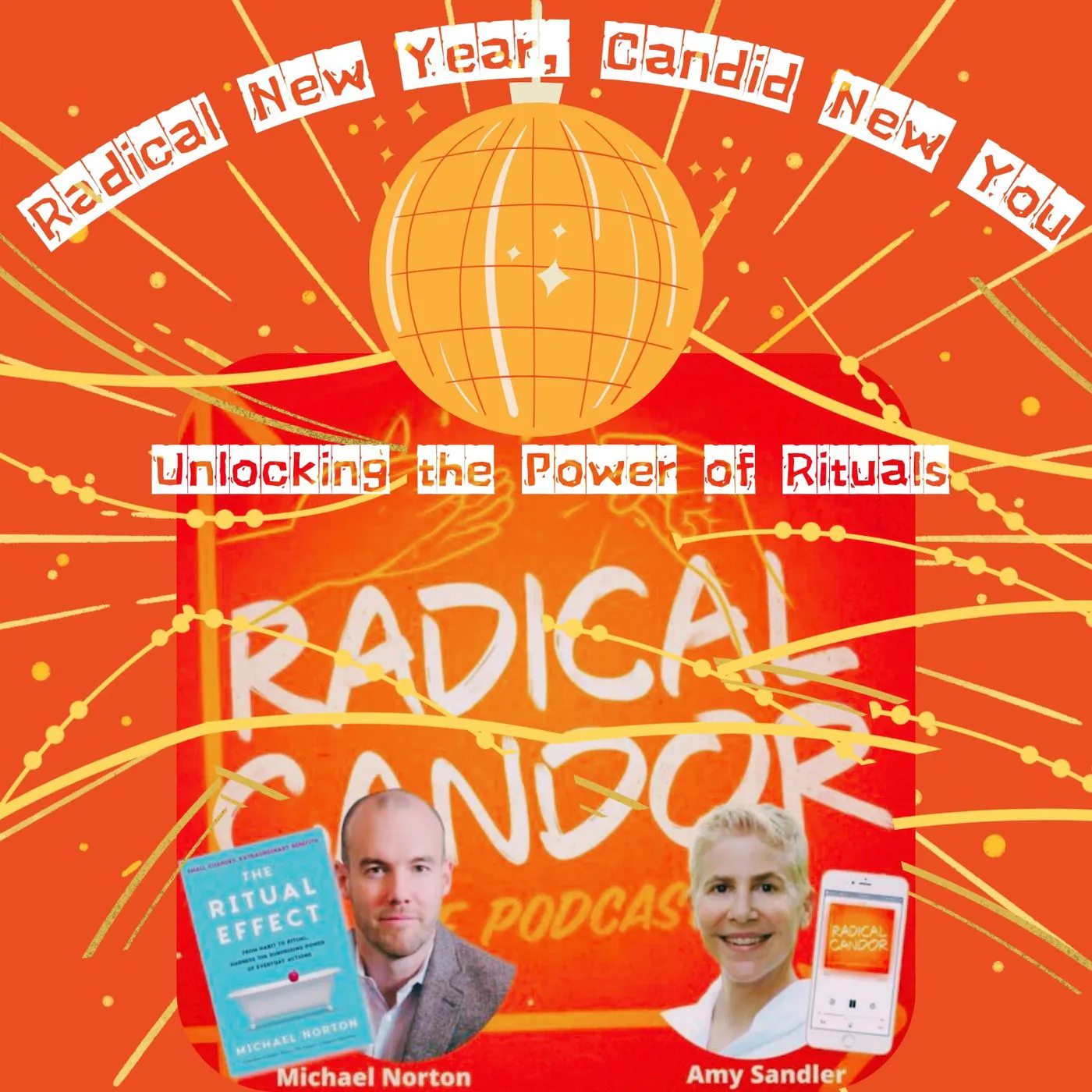
S7 Ep 1Best of: Unlock the Power of Rituals to Transform Your Work and Life 7 | 1
Everyday actions, when turned into rituals, can manage emotions and create a sense of meaning. Amy Sandler is joined by Harvard Business School Professor Michael Norton to discuss his latest book, The Ritual Effect. Norton explores the significance of rituals in reducing stress and enhancing productivity, both at work and in personal life. He shares compelling research and personal anecdotes that illustrate how everyday actions, when turned into rituals, can manage emotions and create a sense of control and purpose. The conversation covers the practical application of rituals in business settings, their emotional significance, and how they can foster team cohesion and workplace wellness. Whether you're a skeptic or a believer in the power of rituals, this episode offers valuable insights into how structured routines can lead to greater emotional health and professional effectiveness. Get all of the show notes at RadicalCandor.com/podcast. Episode Links: Transcript Michael Norton Michael Norton’s Books Harvard Business School Profile Michael's Paper on Humblebragging Michael's Paper on Matchmaking Rituals Quiz | What Are Your Rituals? | Michael Norton Connect: Website Instagram TikTok LinkedIn YouTube Chapters:(00:00:00) IntroductionAmy Sandler introduces guest Michael Norton and his book The Ritual Effect.(00:02:16) A Quick Ritual ExerciseA fun and engaging ritual exercise to explore emotional connections.(00:04:18) From Skeptic to AdvocateMichael’s journey from being a ritual skeptic to writing The Ritual Effect.(00:07:40) The Meaning of RitualsHow rituals naturally emerge to provide structure and meaning.(00:10:04) Rituals vs. HabitsThe emotional difference between habits and rituals.(00:12:13) Rituals as Emotion GeneratorsThe dual role of rituals in generating and managing emotions.(00:15:05) The Power of Collective RitualsHow shared rituals strengthen bonds and create collective experiences.(00:16:30) Rituals at WorkExamples of team rituals that foster bonding and purpose.(00:20:46) Fostering Meaning in TeamsBalancing team pride and inclusivity when designing rituals to reflect shared values.(00:23:38) Creating Work RitualsAdvice for leaders to cocreate rituals for new work teams.(00:26:24) Adapting Rituals for Remote WorkHow teams have developed virtual rituals to maintain connection online.(00:29:05) Meaningful Rituals in the WorkplaceThe significance of rituals in the workplace for individuals and leaders.(00:32:54) Evaluating the Benefits of RitualsHow rituals contribute positively to mental health and well-being.(00:36:49) Leaders Supporting Organic RitualsTips for leaders to encourage authentic rituals without imposing corporate mandates.(00:39:59) Aligning Rituals with Team ValuesUsing rituals to express and reinforce organizational values creatively and authentically.(00:41:50) Discovering Your RitualsExploring the rituals in your life through Michael’s Ritual Quiz.(00:45:21) Conclusion Learn more about your ad choices. Visit megaphone.fm/adchoices

S6 Ep 50Best of: How to Communicate With Your Family During the Holidays 6 | 50
Practicing Radical Candor with your family members this holiday season. Holiday communication with your family can be rife with stress. And while you love your family, let’s be frank, family togetherness during the holidays often goes sideways. So much so that it’s become a trope that’s spawned dozens of holiday movies. But you can survive it by practicing Radical Candor with your nearest and dearest this holiday season to avoid defaulting to Obnoxious Aggression, Manipulative Insincerity or Ruinous Empathy. Get all of the show notes at RadicalCandor.com/podcast. Episode Links: Transcript Applying Radical Candor To Dysfunctional Family Dynamics 7 Ways Radical Candor Transforms Relationships, According To ChatGPT A Happy Marriage Of Growth And Stability | Radical Candor Radical Candor – Speaking Directly and Caring Personally – The Veterinary Idealist The Overton Window – Mackinac Center How to Use Radical Candor to Communicate Clearly With Your Family During the Holidays Connect: Website Instagram TikTok LinkedIn YouTube Chapters:(00:00:00) IntroductionKim, Jason, and Amy introduce the topic of navigating difficult family dynamics during the holidays.(00:02:53) Radical Candor and the HolidaysThe struggle with practicing Radical Candor with families during the holidays.(00:04:36) Generational and Cultural DifferencesHow cultural and generational gaps complicate family communication.(00:07:12) Family Role Expectations and Childhood PatternsReverting to childhood behaviors and role expectations during family visits.(00:9:18) Taking the Bait: Avoiding EscalationStrategies for turning down conversational "volume" and avoiding conflict bait.(00:20:20) Overreacting to AdviceHow understanding intent can improve family dynamics.(00:24:37) Why Gifts Sometimes BackfireThe alternate perspectives on gifts dependant on the giver or receiver.(00:27:42) Gifts Gone WrongPersonal anecdotes of gift-giving mishaps and lessons learned.(00:33:33) The Strain of Gift GivingHow gift giving can be especially hard in strained family dynamics.(00:35:59) Setting Boundaries with FamilyAsserting personal boundaries when saying yes takes its toll.(00:39:22) Gifting with IntentReleasing the obligation of the perfect gift for the giver and receiver.(00:43:51) Radical Candor at Family GatheringsGuidance on when to lean into Radical Candor and when to let things slide.(00:50:12) Appreciating Moments TogetherThe finite nature of time with loved ones and making the most of family gatherings.(00:54:51) Radical Candor TipsTips on setting boundaries, practicing care, and avoiding unnecessary conflict.(01:00:01) Conclusion Learn more about your ad choices. Visit megaphone.fm/adchoices

S6 Ep 49How to Navigate the Messy Middle Between Ruinous Empathy & Obnoxious Aggression 6 | 49
How the CORE method can help you thrive in the messy middle. Caught in the middle of a boss who’s all care but no action and a team lead who’s full steam ahead with no brakes? That’s a workplace tightrope no one wants to walk. Your ability to Care Personally and Challenge Directly can seriously be affected when communication falls apart on both ends of the spectrum, and it’s not just frustrating—it’s debilitating. How do you stay productive and keep your sanity when you’re managing up and down with people who either dodge conflict entirely or bulldoze through it? In this episode, Jason and Amy tackle the messy middle, breaking down how to use the CORE method (Context, Observation, Result, Expected Next Steps) to navigate these tricky situations. It’s not about pointing fingers or playing favorites—it’s about finding a way to ditch the drama and focus on what really matters: working better together. Get all of the show notes at RadicalCandor.com/podcast. Episode Links: Transcript Give Candid Feedback With the CORE Method | Radical Candor Feedback from Your Boss | Radical Candor Asking for Feedback | Radical Candor The Radical Candor Order of Operations | Radical Candor Make Work Less Like Jr. High: Radical Candor Podcast 5 | 10 Managing Challenging Conversations At Work | Radical Candor Navigating Workplace Tensions: Stuck Between Ruinous Empathy and Obnoxious Aggression Connect: Website Instagram TikTok LinkedIn YouTube Chapters: (00:00:00) IntroductionAmy and Jason introduce a listener dilemma about a ruinously empathetic boss and an obnoxiously aggressive team lead.(00:02:15) Defining Ruinous Empathy and Obnoxious AggressionWhat it means to care without challenging and to challenge without caring.(00:04:44) It’s the Boss’s Job: Accountability MattersWhy the manager has ultimate responsibility and how to provide feedback.(00:07:53) Raising the Issue with Your BossHow to approach a ruinously empathetic boss with care and directness.(00:11:46) Involving Your Boss EffectivelyHow to engage your boss in resolving team tensions without blame or shame.(00:17:55) Using the CORE MethodA step-by-step approach to delivering clear and constructive feedback.(00:20:55) Role-Play: Navigating a Clean Escalation ConversationHow to handle a tough conversation between a team member and an aggressive lead.(00:31:11) Building Common GroundTips for fostering mutual understanding and creating actionable steps.(00:34:02) Radical Candor TipsKey takeaways and practical tips for addressing conflict.(00:36:35) Conclusion Learn more about your ad choices. Visit megaphone.fm/adchoices

S6 Ep 48How to Care Personally When You Don’t Personally Care 6 | 48
Showing respect when you just don’t connect. Ever feel like caring about a coworker is just...not in the cards? Same. Here’s the thing though – you don’t have to be besties to show respect and keep things productive. In this episode, Kim, Amy, and Jason tackle the tough question of how to Care Personally when someone’s driving you up the wall. With relatable stories (yes, even a deodorant conversation makes an appearance) and practical tips, they break down how to stay curious, address frustrations head-on, and avoid letting those "ugh" feelings spiral into toxicity. The key takeaway? Stop writing mental soap operas about your colleagues and start having real conversations. Awkward? Sure. Worth it? Absolutely. Get all of the show notes at RadicalCandor.com/podcast. Episode Links: Transcript What It Means to Care Personally About Your Team What's the Ideal Manager-Employee Relationship? What does it mean to Care Personally? How to Develop Empathy for Someone Who Annoys You What Is Radical Respect? Learn Why It's Crucial for a Healthy Workplace Culture Beware The Fundamental Attribution Error: Radical Candor Podcast 5 | 8 How to Give Difficult Feedback While Still Caring Personally Adam Grant | Instagram How to Care Personally About Someone You Don’t Like How to Care Personally When You Don’t Like Someone Connect: Website Instagram TikTok LinkedIn YouTube Chapters:(00:00:00) IntroductionKim, Jason and Amy introduce a listener’s question about caring personally for someone you don’t like.(00:02:09) Radical RespectHow respect forms the core of caring personally, even when someone annoys you.(00:03:48) Reframing PerspectivesReframing narratives to foster empathy in difficult workplace interactions.(00:05:05) Addressing Irritating BehaviorsTwo stories from differing perspectives on personal irritations at work.(00:08:17) Curiosity as a BridgeThe power of curiosity in understanding and seeing humanity in others.(00:11:02) Unspoken DisagreementsHow assumptions and unspoken disagreements corrode relationships.(00:14:16) Repairing Relationships at WorkThe journey from conflict to rebuilding a strained relationship with a peer.(00:22:17) Different Work StylesRespecting differing approaches to work and optimizing collaboration.(00:24:14) The Role Self-AwarenessSelf-awareness and transitioning from internal frustration to constructive dialogue.(00:33:08) Indifference vs. Engagement at WorkThe inefficiencies of emotional detachment from colleagues.(00:34:29) Balancing Connection and BoundariesMaintaining professional relationships while respecting personal boundaries.(00:37:38) Radical Candor TipsKey tips from the episode, including respect, curiosity, and addressing biases.(00:40:24) Conclusion Learn more about your ad choices. Visit megaphone.fm/adchoices
Introducing: The Radical Candor Podcast
trailerTune in to the Radical Candor podcast to learn to love your job and kick ass at work without losing your humanity by practicing the principles of Radical Candor. Host and Lead Radical Candor Coach Amy Sandler leads discussions with Radical Candor Author and Co-founder Kim Scott and CEO and Co-founder Jason Rosoff about what it means to be Radically Candid, why it’s simple but not easy to Care Personally and Challenge Directly on the daily, and why it’s worth it. Learn more about your ad choices. Visit megaphone.fm/adchoices

S6 Ep 47Money Talks: Why Salary Secrets Are Hurting Your Team 6 | 47
Uncovering the messy reality of salary secrecy. Pay transparency—yikes, it’s one of those topics that makes everyone squirm, but avoiding it does more harm than good. Let’s be real: when salaries are shrouded in secrecy, it doesn’t just make things awkward—it allows inequity and mistrust to thrive. And here’s the kicker: people are already talking about pay, just in whispers instead of open, productive conversations. In this episode, Kim and Jason take a no-nonsense approach to tackling the discomfort. From real stories of pay gaps to the tangled emotions and messy realities behind compensation conversations, they discuss how a lack of transparency impacts trust and fairness, and share practical tips for making compensation more equitable. Whether you’re trying to influence change at your organization or navigate these conversations as an employee, this is your guide to addressing one of the workplace’s biggest taboos—without losing your humanity. Get all of the show notes at RadicalCandor.com/podcast. Episode Links: Transcript 7 Steps for Radical Pay Transparency to Narrow Disparities New Laws Force Honesty About Pay. Companies Are Catching Up. Designing Fair Compensation Systems Pay Transparency: What It Is and How to Do It Right | Built In Your Right to Discuss Wages | National Labor Relations Board Payscale Connect: Website Instagram TikTok LinkedIn YouTube Chapters: (00:00:00) IntroductionKim and Jason introduce the episode and the listener's question about pay transparency.(00:03:09) Legality of Pay DiscussionsThe legal landscape of discussing salaries in the workplace.(00:06:32) Real Stories of Pay InequityA personal experience of discovering and addressing pay gaps. (00:10:18) Building a Compensation PhilosophyThe importance of having a framework for determining salaries.(00:12:09) Why Pay Disparities HappenExamples of pay disparities in the workplace and the reasons behind them.(00:16:09) Theory of CompensationThe process of setting a fair salary band based on market data.(00:21:38) Efficiency of Salary FormulasHow setting a compensation framework saves time and prevents inequality.(00:28:06) Transparency in RecruitingThe benefits of sharing salary ranges in job postings and clarifying compensation processes.(00:33:13) Fixing Pay Disparities with CandorStrategies to proactively identify and address inequities in compensation.(00:42:12) Radical Candor TipsPractical tips for creating transparent compensation systems.(00:43:33) Conclusion Learn more about your ad choices. Visit megaphone.fm/adchoices

S6 Ep 46Promotions Gone Wrong? Why False Promises Wreck Trust at Work 6 | 46
Missed promotions, broken promises, and the fallout that follows. Promotions gone wrong? Yeah, it’s a thing. On this episode, Kim and former Twitter CEO Dick Costolo tackle a listener’s tale of missed opportunities, broken promises, and a management team that just can’t get it together. From the cringe-worthy red flags to the frustrating aftermath, they explore how leadership missteps can wreak havoc on trust and motivation. Tune in for sharp insights, practical advice, and a whole lot of “what NOT to do” when navigating messy workplace dynamics. If you’ve ever felt stuck in a system that doesn’t seem to work, this episode will help you find your way forward. Get all of the show notes at RadicalCandor.com/podcast. Episode Links: Transcript Managerial Musings With Kim Scott & Dick Costolo 5 | 26 Dick Costolo | LinkedIn Kim Scott & Dick Costolo Unpack the Messy Truth About Management Dilemmas What Happens When Promotions Go Sideways? Connect: Website Instagram TikTok LinkedIn YouTube Chapters: (00:00:00) IntroductionKim Scott introduces Dick Costolo, former Twitter CEO and stand-up comedian.(00:01:45) The Promotion PredicamentA listener's dilemma about missing out on a promotion.(00:05:00) Missteps by the First ManagerThe mistakes of the listener's first manager, focusing on false promises.(00:08:20) The Boss’s Boss BlundersThe dismissive and damaging responses from the listener's boss’s boss.(00:09:36) Advice for EmployeesStrategies for employees to clarify expectations with management.(00:12:29) Addressing Subjectivity in PromotionsThe challenge of fairness and transparency in dynamic organizations.(00:14:54) Navigating Difficult ConversationsThe value of candid, constructive dialogue over avoidance in leadership.(00:18:20) A Call for Transparent ProcessesHow structured processes can prevent workplace dissatisfaction.(00:20:30) Conclusion Learn more about your ad choices. Visit megaphone.fm/adchoices

S6 Ep 45Oversharing at Work: When TMI Tanks Trust 6 | 45
The fine line between transparency and TMI. Let’s get into it: oversharing at work — we’ve all done it, and we’ve all cringed after. But here’s the tea: when we spill sensitive info without thinking, we’re not just breaking trust, we’re tanking our ability to Care Personally and Challenge Directly. In this episode, Kim, Jason, and Amy dig into a listener's story about sharing too much too soon and just how quickly oversharing can derail trust and create chaos. They unpack why these missteps happen, how different company cultures play into it, and what it really takes to find that sweet spot between transparency and discretion. If you’ve ever found yourself in the awkward aftermath of an overshare, this one’s for you. Let’s learn how to slow down, think it through, and keep our Radical Candor intact! Get all of the show notes at RadicalCandor.com/podcast. Episode Links: Use the GSD Wheel So No One Feels Sad, Bad or Left Out 4 | 2 Connect: Website Instagram TikTok LinkedIn YouTube Chapters: (00:00:00) IntroductionAmy, Kim and Jason introduce the episode around a listener’s question on oversharing at work.(00:01:26) Listener's Question on OversharingA listener seeks advice on managing sensitive information more effectively.(00:03:58) Communication and Cultural AssumptionsHow organizational secrecy and biases affect information sharing.(00:06:30) Pause and Reflect The importance of pausing before sharing any potentially sensitive information.(00:08:42) Organizational Communication StructureInsights into structured vs. open communication styles and their impact.(00:12:09) Developing Effective Information ChannelsStrategies for ensuring efficient communication and reducing redundancy.(00:17:12) Soliciting Feedback and Building TrustSoliciting feedback from team leads after communication missteps.(00:22:16) Framework for Information SensitivityThe “Category” framework to clarify communication roles and boundaries.(00:24:56) Initiative and Respecting BoundariesThe balance of taking initiative versus respecting organizational boundaries.(00:28:55) Communication and Problem PreferenceBeing clear on workplace communication styles to tackle preferred challenges.(00:33:43) Personalizing Communication StylesInsights on managing communication impulsivity and biases.(00:38:47) Radical Candor TipsChecklist for managing sensitive information and improving communication.(00:41:05) Conclusion Learn more about your ad choices. Visit megaphone.fm/adchoices

S6 Ep 44Lessons from a Whistleblower: The Cost of Staying Silent with Susan Fowler Rigetti 6 | 44
Susan Rigetti on speaking up, keeping receipts, and why silence is never the answer. We’re shaking up the workplace and diving deep into the raw reality of whistleblowing and the courage it takes to speak up with this special episode from the Radical Respect podcast. Kim, Wesley, and special guest Susan Rigetti, author of Whistleblower, break down the challenges of calling out toxic systems while being real with yourself. When harmful practices go unchecked, they don’t just derail careers—they damage the core of psychological safety that we all need to do our best work. So how do you find the strength to raise your voice when the stakes feel impossibly high? Susan shares her own powerful story of calling out the broken culture at Uber, laying out what happens when you decide you’ve had enough and choose to act. If you’ve ever struggled to raise your voice in the face of workplace dysfunction, learn why silence is never the answer and how respect and courage can transform even the most challenging environments. Get all of the show notes at RadicalCandor.com/podcast. Episode Links: Transcript How Susan Fowler Rigetti Inspired Me to Step Up and Speak Out Susan Fowler Rigetti Reflecting on One Very, Very Strange Year at Uber Whistleblower: My Unlikely Journey to Silicon Valley and Speaking Out Against Injustice Connect: Website Instagram TikTok LinkedIn YouTube Chapters: (00:00:00) IntroductionAmy introduces the Radical Respect podcast with Kim, Wesley and guest Susan Rigetti, author of Whistleblower.(00:03:24) Whistleblower and Lessons from UberSusan discusses her book, Whistleblower, and her challenges at Uber.(00:07:13) Advice to Younger SelfThe hard lesson of recognizing when a system can’t be fixed from the inside.(00:10:33) The Cost of Staying SilentThe psychological and financial struggles many face when they stay silent.(00:14:25) Staying True to Your ValuesHow keeping a list of values helped navigate a toxic work culture.(00:16:20) Writing WhistleblowerAddressing misconceptions and setting the record straight with Whistleblower.(00:21:18) Understanding Systemic BarriersThe systemic barriers that individuals face in the workplace.(00:23:55) Reporting to HRDocumenting and reporting issues to hold organizations accountable. (00:26:20) Keeping the ReceiptsAdvice on documenting conversations and emails to protect oneself.(00:29:07) Conclusion Learn more about your ad choices. Visit megaphone.fm/adchoices

S6 Ep 43Talking to Flat Earthers: Managing Post-Election Tension at Work With Denise Hamilton 6 | 43
Brace yourself—this episode is all about navigating workplace tension with Radical Candor. Kim and Amy team up with Denise Hamilton, author of Indivisible: How to Forge Our Differences Into a Stronger Future, to tackle the complicated landscape of workplace polarization and the radical power of respect. Denise, known for her "irrational optimism," sheds light on how we can bridge deep divides, even when it feels impossible and that respect isn’t something earned through understanding—it’s the baseline that makes understanding possible. They explore why caring personally means building trust, even when opinions clash, and how we can create workplaces that honor both individual voices and collective purpose. With Denise’s wisdom and Kim’s Radical Candor principles, this episode digs into the tough conversations leaders often avoid but desperately need. If you’ve ever felt the strain of differing views at work, this conversation is for you—because staying connected is the only way forward. Get all of the show notes at RadicalCandor.com/podcast. Episode Links: Transcript Navigating Political Discussions At Work | Radical Candor Podcast S6, Ep. 34Radical Respect — Indivisible Indivisible Book — Denise Hamilton WatchHerWork Denise Hamilton Radical Candor Community Connect: Website Instagram TikTok LinkedIn YouTube Chapters: (00:00:00) IntroductionKim and Amy introduce Denise Hamilton, author of Indivisible.(00:03:32) Discussing Politics at WorkInsights into the discomfort around political conversations in professional settings.(00:05:01) Contradictory MessagesThe conflicting messages people face around authenticity at work.(00:07:22) Building a Respectful Work CultureHow workplace culture influences political discussions.(00:10:59) Personal and Workplace BoundariesBalancing personal beliefs and professionalism at work.(00:12:59) The Role of Respect in UnderstandingRespect as the foundation for understanding others.(00:16:42) Holding Space for Emotions Post-ElectionThe importance of allowing emotional expression at work after tense events.(00:21:36) Leaders Counteracting NegativityThe role leaders play in intentionally fostering positivity.(00:24:03) Common Ground in Heated TimesFinding common ground with people who hold different views.(00:27:05) Approaching Sensitive Topics MindfullyDenise shares her “four-question rubric” for starting difficult conversations.(00:31:52) Navigating Information CurationThe pitfalls of curated news and incomplete information.(00:35:43) Misinformation and a Leader’s ResponsibilityHow leaders should address misinformation in their organizations.(00:39:23) Owning vs. Renting: Social ResponsibilityAdopting a long-term, invested mindset for societal change.(00:44:06) The Vision for a Relationship-Centered FutureHope for a future rooted in personal connections and humanity.(00:46:05) Conclusion Learn more about your ad choices. Visit megaphone.fm/adchoices

S6 Ep 42How to Navigate a Nepo Baby Bully at Work 6 | 42
Handling workplace bullying when family dynamics are involved. We need to talk about nepotism and workplace bullying, because WHEW, does it ever mess with our ability to Care Personally and Challenge Directly! Here's the real deal — when family ties eclipse talent, we're not just hurting individual careers. We're poisoning the well of psychological safety that teams need to thrive. How can you tell someone to "bring their whole self to work" when the rules aren't the same for everyone? KIm, Amy, and Jason explain why avoiding these conversations doesn't help anyone. Whether you're dealing with the CEO's daughter who's actually crushing it, or the founder's cousin who's... not so much, you've got to stay rooted in those two key principles: Care Personally AND Challenge Directly. Get all of the show notes at RadicalCandor.com/podcast. Episode Links: Transcript Injustice At Work: 4 Effective Ways To Respond | Radical Candor Right To Be Upstanders Vs. Bystanders: A Story Every Manager Needs To ReadWhen The A**Holes Begin To Win, The Culture Begins To Lose It’s Better To Have A Hole Than An A**Hole Shirts When Your Worst Co-Worker Is The Boss' Kid Ceo's Son Harassing Me At Work | Reddit How To Survive A Job You Hate (But Can't Leave – Yet) | Careershifters Hrm’s Response To Workplace Bullying: Complacent, Complicit And Compounding | Journal Of Business Ethics Workplace Harassment | Radical Candor Podcast 6 | 30 Don't Let A Bad Boss Derail You | Radical Candor Podcast 6 | 18 Reflecting On One Very, Very Strange Year At Uber — Susan Fowler What Are Skip-Level Meetings & How To Conduct Them | Radical CandorUnpacking False Apologies & Embracing The 'aaaaac' Method The Asshole Survival Guide: How To Deal With People Who Treat You Like Dirt | Bob Sutton What Is An Employee Assistance Program (EAP)? Connect: Website Instagram TikTok LinkedIn YouTube Chapters:(00:00:00) IntroductionKim, Jason, and Amy introduce the episode’s topic on a listener’s question about workplace nepotism.(00:02:52) Listener Question: Nepotistic BullyA listener’s challenging situation involving a CEO's son who is bullying employees.(00:03:48) Strategies for Workplace BullyingDocumenting incidents and preparing for a conversation with higher-ups.(00:11:43) Building Solidarity and Seeking SupportStrategies for finding allies to support you and sharing experiences with others.(00:15:44) Challenges of Confronting NepotismThe difficulty of escalating issues involving family ties at work.(00:19:25) Exit Strategies and Self-ProtectionKnowing your exit options and protecting your well-being.(00:31:17) Direct Conversations and EscalationPreparing for a direct conversation with the bully and their higher-ups.(00:38:52) The Role and Limitations of HRWhen HR should be involved in addressing workplace bullying.(00:49:06) Seeking External Legal SupportGuidance on consulting a lawyer for severe or unresolved bullying cases.(00:52:43) Radical Candor TipsTips for handling bullying, documenting, building solidarity, and escalating issues.(00:54:44) Conclusion Learn more about your ad choices. Visit megaphone.fm/adchoices

S6 Ep 41Say What? How to Measure Feedback Responses 6 | 41
With feedback, how do you measure what matters? Kim, Jason, and Amy dive into the art of measuring feedback, emphasizing that it's not just about what you say, but how it's heard. It's crucial to pay attention to how your feedback lands and be ready to adjust your approach, especially when you notice defensiveness or indifference. Tune in to explore practical strategies for handling emotional reactions while keeping your communication clear and compassionate. Learn how to stay present in tough conversations and create a space where open dialogue leads to growth and stronger relationships, both at work and in life. We'll also cover how to effectively solicit feedback and navigate defensiveness, ensuring that your interactions are not only productive but also supportive and understanding. Get all of the show notes at RadicalCandor.com/podcast. Episode Links: Transcript How to Gauge Feedback You’re Giving & Getting 3 | 4 How To Gauge Your Feedback | Radical Candor When Someone You Love Is Upset, Ask This One Question | NY Times The Motivational Value Of Listening During Intimate And Difficult Conversations What is Radical Candor? Radical Candor 6-Minute Crash Course 3 | Mini 1 Closing the Loop: Radical Candor FAQ Finale 6 | 29 How To Give Fast, Meaningful Feedback | Radical Candor The Guest House by Mewlana Jalaluddin Rumi | All Poetry How to Deal with Strong Emotions | Thich Nhat Hanh (short teaching video) How to Measure Feedback: It's Not What You Say, But How They Hear It Connect: Website Instagram TikTok LinkedIn YouTube Chapters: (00:00:00) IntroductionKim, Jason, and Amy introduce the episode’s focus on feedback gauging and emotional awareness.(00:01:25) Gauging Feedback The importance of understanding how feedback is received.(00:05:30) Reactions to FeedbackThe different reactions people may have to feedback and how to adapt.(00:09:14) Staying Present in Emotional ConversationsStrategies for staying present when emotions rise during difficult conversations.(00:15:59) Brushing Off FeedbackSituations where people brush off feedback and how to address it.(00:26:21) Tailoring FeedbackHow people with different sensitivities and personalities respond to feedback.(00:34:47) Pushing Further on Challenge Directly Gauging whether you should increase directness in feedback or focus on empathy.(00:43:09) Role-Play: Defensive FeedbackA scenario to illustrate how to handle a defensive response in real time.(00:50:59) Role-Play: Emotional FeedbackA scenario to illustrate how to handle an emotional response in real time.(01:00:08) Radical Candor TipsFrom checking in on feedback delivery to fostering a supportive environment.(01:03:36) Conclusion Learn more about your ad choices. Visit megaphone.fm/adchoices

S6 Ep 40Navigating Disagreements: How to Challenge Feedback Effectively 6 | 40
Effectively manage feedback you disagree with. On this episode of the Radical Candor podcast, we tackle a challenge that's at the heart of Radical Candor: what to do when you receive feedback you don't agree with. It's a question we get all the time, and it's crucial because how we handle these moments can make or break our relationships at work. The team gets into the get into the nitty-gritty of how to respond to tough feedback and suggests specific phrases you can use to show you're listening, even if you're not fully on board. Get all of the show notes at RadicalCandor.com/podcast. Episode Links: Transcript How to Respond to Negative Feedback at Work That You Disagree With | Radical Candor Listen, Challenge, Commit | Radical Candor Podcast 6 | 17 Radical Candor Community 6 Tips For How To Receive Feedback Well | Radical Candor Follow These 4 Steps to Create Psychological Safety in Your Teams | Fast Company Tell Me Why I'm Wrong: Resolving Disagreements with Your Direct Reports | LinkedIn The Power Of Rituals At Work | Radical Candor Podcast 6 | 16 How To Get Stuff Done | Radical Candor Podcast 4 | 2 How To Give Candid Feedback Using The CORE Method | Radical Candor How To Encourage Feedback Between Others In The Workplace | Radical Candor Alan Mullaly of Ford at Stanford Graduate School of Business | YouTube Connect: Website Instagram TikTok LinkedIn YouTube Chapters: (00:00:00) IntroductionJason and Amy introduce the live streaming episode about disagreeing with feedback.(00:02:23) Listener Question: Disagreeing with FeedbackA listener's question about how to handle feedback they disagree with.(00:03:42) The Pocket Veto: The Dangers of Silent DisagreementThe concept of a "pocket veto" and why it's harmful to silently disagree with feedback.(00:05:27) Strategies to Handle DisagreementTips on how to approach feedback in the moment.(00:11:02) How to Create Space for DisagreementInviting challenges during feedback conversations to foster honest communication.(00:16:19) The “Listen, Challenge, Commit” FrameworkThe “Listen, Challenge, Commit” approach, which helps to handle feedback.(00:19:10) Personal Experiences with FeedbackA personal story about learning to approach feedback with curiosity and humility.(00:27:51) Following Up After Formal FeedbackHow to approach follow-up conversations after receiving formal feedback.(00:34:58) Psychological Safety and Radical CandorA listener question on the link between psychological safety and Radical Candor.(00:41:11) Creating a Culture of Learning with Radical CandorExamples of workplace rituals that reinforce Radical Candor and continuous learning.(00:45:29) Metaphors for Radical CandorUsing metaphors to understand Radical Candor in communication.(00:49:17) The Radical Candor Quadrants Whether people tend to fall more frequently into one of the Radical Candor quadrants.(00:54:09) Radical Candor TipTips on practicing Radical Candor, emphasizing listening, identifying, and committing to feedback.(00:57:17) Conclusion Learn more about your ad choices. Visit megaphone.fm/adchoices

S6 Ep 39Building Pockets of Excellence: Introducing Radical Candor to Your Team 6 | 39
In this episode of the Radical Candor Podcast, Jason and Amy discuss how to introduce radical candor to teams effectively. They emphasize the importance of starting small, creating pockets of excellence, and the role of accountability and praise in fostering a feedback culture. The conversation also covers effective communication strategies for implementing change, real-world examples of cultural shifts, and practical tips for individuals and teams looking to embrace radical candor. The episode concludes with an invitation to join the Radical Candor community for ongoing support and resources. Get all of the show notes at RadicalCandor.com/podcast. Episode Links: Transcript Building a Radically Candid Culture | LinkedIn 6 Steps for Rolling Out Radical Candor | Radical Candor 3 Ways to Introduce Radical Candor's Feedback Framework to Your Organization | Radical Candor Radical Candor Book Discussion Guide | Radical Candor Radical Candor Community How To Give Candid Feedback With the Radical Candor CORE Method | Radical Candor Connect: Website Instagram TikTok LinkedIn YouTube Connect: Website Instagram TikTok LinkedIn Facebook X YouTube Chapters:(00:00:00) IntroductionJason and Amy introduce the topic of bringing Radical Candor into the workplace.(00:00:27) Starting with Small ChangesWhy starting with small steps is key to building a culture of Radical Candor.(00:02:57) Pockets of ExcellenceThe concept of pockets of excellence and why they are crucial for cultural change.(00:05:30) Highlighting Small SuccessesThe importance of highlighting successes rather than focusing on failures to drive cultural shifts.(00:08:30) Avoiding Overwhelming ChangeEffective communication about small wins to shift organizational perceptions and build optimism.(00:10:49) Small Change Success StoryA story on how small experiments can create big organizational change.(00:15:38) Making Feedback Visible and AccessibleSimple tools to share user feedback that can have a powerful impact on organizational culture.(00:19:37) Effective Communication for Cultural ChangeCommunicating the rationale behind introducing Radical Candor to a broader team.(00:24:07) Handling Executive SkepticismAddressing skepticism from executives and making the case for Radical Candor.(00:27:03) Building Momentum After Initial SuccessExpanding Radical Candor across more teams after initial success.(00:30:16) Individuals Practicing Radical CandorAdvice for individuals looking to start small and integrate Radical Candor into their work.(00:33:09) Radical Candor TipsTips for developing a more radically candid culture individually and in organizations.(00:34:56) Conclusion Learn more about your ad choices. Visit megaphone.fm/adchoices

S6 Ep 38The Role of Vulnerability in Leadership with Jacob Morgan 6 | 38
Kim and Jacob Morgan, author of Leading with Vulnerability, discuss the power of vulnerability in leadership and its role in building trust and driving performance. They explore the common misconceptions about vulnerability, the balance between competence and connection, and how to navigate the fine line between strength and openness. Jacob shares stories of successful and failed leadership, emphasizing the importance of choosing the right moments to be vulnerable. The conversation also touches on how to foster psychological safety, deal with workplace bullies, and follow with vulnerability in challenging environments. Get all of the show notes at RadicalCandor.com/podcast. Episode Links: Transcript Denial: Why Business Leaders Fail to Look Facts in the Face—and What to Do About It | Richard Tedlow Leading with Vulnerability: Unlock Your Greatest Superpower to Transform Yourself, Your Team, and Your Organization | Jacob Morgan Performance Improvement Plans | Radical Candor Podcast 5 | 20 What Does Managing Out Mean? | Radical Candor Podcast 6 | 6 Beware The Fundamental Attribution Error | Radical Candor Podcast 5 | 8 How To Give Candid Feedback Using The CORE Method | Radical Candor 5 Proven Ways Checks And Balances In Management Bolster Teams | Radical Candor Follow these 4 steps to create psychological safety in your teams | Fast Company Shrill | Lindy West The Vulnerable Leader Equation: A critical leadership development model for successful change management | HRD Jacob MorganFortune lists tough bosses | UPI Archives Can Workplaces Have Too Much Psychological Safety? | HBR Connect: Website Instagram TikTok LinkedIn YouTube Chapters:(00:00:00) IntroductionAmy and Kim introduce guest Jacob Morgan, author of Leading with Vulnerability. (00:00:38) Defining Vulnerability in LeadershipThe concept of vulnerability in leadership and how it can be misinterpreted.(00:03:45) Denial in LeadershipHow denial impacts leadership and the challenges leaders face when addressing mistakes.(00:06:48) Exploiting VulnerabilityAn example of a leader who used an exployee’s vulnerability against them.(00:10:41) Self-Compassion in LeadershipThe need for self-compassion, particularly when vulnerability is exploited.(00:12:46) Vulnerability in Uncertain SituationsA step-by-step approach to assessing when and how to display vulnerability at work.(00:18:36) Knowing Who to TrustHow leaders and employees can discern when it’s appropriate to be vulnerable.(00:21:11) Effective Leadership in Times of CrisisA success story about Fleetwood Grobler’s leadership during a financial crisis at Sasol.(00:25:28) Dealing with Workplace BulliesThe complexities of vulnerability when facing workplace bullying.(00:33:03) Following with VulnerabilityTips on how to assertively respond to challenging leaders while maintaining professionalism.(00:37:18) Fundamental Attribution ErrorThe importance of not jumping to conclusions about people's intentions.(00:43:22) Creating Psychological SafetyThe balance between accountability and psychological safety.(00:45:37) Conclusion Learn more about your ad choices. Visit megaphone.fm/adchoices

S6 Ep 37Why Your Meetings Suck (And How to Fix Them): Insights from Dr. Steven Rogelberg 6 | 37
Explore the surprising science of meetings and how to make them suck less with Dr. Steven G. Rogelberg, a renowned organizational psychologist and author of The Surprising Science of Meetings, Glad We Met: The Art & Science of 1:1 Meetings, and more. Dr. Rogelberg discusses with Kim and Amy why meetings often feel unproductive and costly, covering common pitfalls and offering actionable strategies to enhance their effectiveness. The conversation spotlights the power of one-on-one meetings, emphasizing their unique role in fostering meaningful connections between managers and employees. Dr. Rogelberg shares insights on how to structure these meetings to maximize engagement, support, and productivity, making them a crucial tool for leadership and team success. Get all of the show notes at RadicalCandor.com/podcast.Episode Links: Transcript Steven Rogelberg 7 Ways To Improve One-on-One Meetings | Radical Candor Effective 1:1s - Tips For One-on-One Meetings With Your Team | Radical Candor 3 Tips For How To Run Effective Staff Meetings | Radical Candor Glad we Met: The Art and Science of 1:1 Meetings — Steven Rogelberg, Ph.D. The Surprising Science of Meetings — Steven Rogelberg, Ph.D. Connect: Website Instagram TikTok LinkedIn Facebook YouTube Chapters:(00:00:00) IntroductionKim and Amy introduce guest Dr. Steven Rogelberg, organizational psychologist and an expert on meetings.(00:04:18) The Impact of MeetingsThe surprising volume of meetings globally and the underestimated economic impact.(00:07:03) Misconceptions and Optimizing Meeting StrategiesMisconceptions about meetings and advice on improving their effectiveness.(00:10:36) Are Your Meeting Questions Valuable?How to ensure that the meeting agenda questions are valuable.(00:11:39) Using Radical Candor in MeetingsThe idea of a Radical Candor framework with signals during meetings.(00:13:32) Should Feedback Be Part of the Meeting?Whether feedback should be solicited at the end of meetings.(00:16:05) Speaking Up in MeetingsAdvice on encouraging team members to speak up in meetings.(00:20:03) The Importance of 1:1 MeetingsResearch that highlights the desire for more 1:1 meetings.(00:23:21) Relationship Building in 1:1sThe importance of building genuine relationships through consistent 1:1 meetings.(00:28:42) How to Start 1:1 MeetingsTips on starting 1:1 meetings, their appropriate cadence and setting the right tone.(00:31:24) Locations and Structure for 1:1 MeetingsThe best locations for 1:1 meetings and structuring the agenda for them.(00:41:16) Preparing for Meetings with Your ManagerHow employees should prepare for meetings with their managers.(00:46:19) Conclusion Learn more about your ad choices. Visit megaphone.fm/adchoices

S6 Ep 36How Ruinous Empathy Ruins Praise 6 | 36
Praise can be powerful, but when it’s vague, generic, or something you can say to a dog like "good job," it can backfire and do more harm than good. Kim, Jason, and Amy explore the nuances of Ruinous Empathy and praise, sharing real-life examples, like the infamous FEMA response during Hurricane Katrina, to illustrate the pitfalls of Ruinously Empathetic feedback. They discuss the importance of making praise specific and sincere so people know what was good and why, allowing them to repeat their success. Get all of the show notes at RadicalCandor.com/podcast. Episode Links: Transcript Praise & Ruinous Empathy | Radical Candor Tips to Avoid Ruinously Empathetic Praise | Radical Candor Appreciation (That's What The Money's For!) | Radical Candor 5 | 16 Radical Candor Podcast: A Tale Of Ruinous Empathy Beyond 'Sorry': How to Apologize and Mean It 6 | 22 DARVO | Wikipedia Being 'Nice' Instead of Kind is One of the Biggest Mistakes Well-Intentioned Bosses Make Connect: Website Instagram TikTok LinkedIn YouTube Chapters:(00:00:00) IntroductionKim, Jason, and Amy introduce the episode's focus on how praise can become ruinously empathetic.(00:00:53) What Is Ruinous Empathy in Praise?How praise can be ineffective when it's vague, insincere, or lacks specific feedback.(00:02:19) Defining Praise vs. CriticismWhat constitutes praise, how it differs from criticism and the dangers of insincere praise(00:06:06) Effective Public Support and PraiseGuidance for leaders on how to support team members publicly after a mistake.(00:11:51) Consequences of Praising FailureWhy offering praise after failure can be misleading and harmful.(00:17:04) The Role of Specificity in PraiseThe importance of specificity in making praise feel sincere and useful.(00:22:11) Ruinous Empathy and Manipulative InsincerityThe nuances between ruinously empathetic praise and manipulatively insincere praise.(00:33:07) Insincere PraiseAvoiding the common pitfalls of insincere praise in leadership and team management.(00:36:53) Offering Effective PraisePractical tips on how to offer specific and sincere praise that drives improvement.(00:40:56) Radical Candor TipsTips for applying Radical Candor to praise, ensuring feedback is specific, sincere, and purposeful.(00:42:18) Conclusion Learn more about your ad choices. Visit megaphone.fm/adchoices
S6 Ep 35Inclusion in Meetings: Kieran Snyder On In-Person vs. Remote Dynamics 6 | 35
Kieran Snyder, founder of nerd processor and co-founder of Textio, joins the Radical Candor podcast to explore inclusivity in meetings, revealing data-driven insights from her research on in-person versus remote settings. Kieran discusses the dynamics of interruptions, idea credit-taking, and the impact of power and gender on participation. With over 1,100 hours of meeting data analyzed, she sheds light on the complexities of remote work, the significance of structured agendas, and the importance of leadership in fostering inclusive environments. The episode offers practical tips for leaders to enhance meeting engagement and navigate the evolving landscape of workplace communication. Get all of the show notes at RadicalCandor.com/podcast. Episode Links: Transcript Dear Manager, You’re Holding Too Many Meetings | HBR Why Gender Bias Makes Giving Feedback Hard For Everyone | Radical Candor Radically Inclusive Virtual Workshops: Real-Time Learnings From Zoom | Radical Candor 7 Leadership Communication Skills For Managing A Remote Team | Radical Candor Nerd Processor Kieran Snyder - Nerd Processor | Linkedin Performance Review Gender Bias: High-Achieving Women Are 'abrasive' | Fortune The Price All Women Pay For Gender Bias | Forbes Connect: Website Instagram TikTok LinkedIn YouTube Chapters:(00:00:00) IntroductionAmy and Kim introduce Kieran Snyder, founder of Nerd Processor, to discuss inclusivity in meetings.(00:02:36) The Abrasive TrapThe abrasiveness trap and how high-performing women are more often criticized.(00:07:27) Power Dynamics in MeetingsHow power dynamics influence interruptions in meetings.(00:14:27) In-Person vs. Remote Meetings: ResearchKieran’s study comparing remote and in-person meetings to measure inclusivity.(00:18:02) Meeting Participation RatesThe changes in participation rates as meeting size increases.(00:20:27) Gender Differences in Meeting Participation The impact remote meetings have on women's participation rates.(00:27:42) Idea Annexation vs. SpotlightingThe concept of idea annexation and the importance of idea spotlighting.(00:32:22) Dynamics of “I Told You So” Usage of “I told you so” in meetings and the demographic variations.(00:36:52) Practical Tips for Inclusive Meetings Tips on fostering inclusive meeting environments.(00:43:14) Balancing Remote Work and InclusivityThe trade-offs between diversity and ensuring inclusivity in meetings.(00:47:53) Leadership in Meeting InclusivityThe importance of leadership in setting inclusive meeting norms.(00:51:10) How to ConnectInformation on how to connect with Kieran Snyder.(00:52:38) Conclusion Learn more about your ad choices. Visit megaphone.fm/adchoices

S6 Ep 34Political Discussions at Work: Productive or Problematic? 6 | 34
How do you handle political conversations at work without crossing boundaries or alienating colleagues? The team dives into the complex and often uncomfortable topic of discussing politics at work, exploring the impact of these conversations on workplace dynamics, productivity, and personal relationships. Kim, Jason, and Amy share insights on navigating political discussions with respect, setting boundaries, and maintaining open dialogue without imposing beliefs on others. Drawing on personal anecdotes and thought-provoking statistics, the conversation provides practical tips for managers and employees alike on fostering an inclusive environment where diverse viewpoints can coexist without derailing professional harmony. Get all of the show notes at RadicalCandor.com/podcast. Episode Links: Transcript ResumeHelp’s Politics in the Workplace Study 2024 | Resume Help Reacting To Trump's Bloviating BS With Radical Candor | Radical Candor What to Do When Your Coworker Brings Up Politics | HBR The Story of Basecamp’s Disastrous Policy | The Verge Radical Candor Podcast Swag Kim Scott & Tiffani Lee Discuss Using Radical Candor to Improve DEI Conversations | Radical Candor 2 | 5 Q&A: Why 'Respect' Is A Radical Workplace Concept | Yahoo Finance Another Contentious US Election Means A Worker Productivity Dip | The Seattle Times Sarah Palin and Hillary Address the Nation | SNL Connect: Website Instagram TikTok LinkedIn YouTube Chapters: (00:00:00) IntroductionKim, Jason, and Amy introduce the episode’s focus on the impact of political discussions in the workplace.(00:02:55) The Value of Being ChallengedThe importance of being open to challenges to avoid turning beliefs into prejudices.(00:07:00) Banning Political Speech: Is It Helpful?The consequences of banning or discouraging political discussions at work.(00:11:22) Managing Expression in the WorkplaceThe boundaries of expressing political beliefs without personalizing or offending.(00:16:31) Building Bridges Over BoundariesBuilding bridges between differing viewpoints, using curiosity and respect.(00:21:49) The Challenge of Constant Election CyclesHow perpetual election cycles can deepen divisions and polarize discussions.(00:23:20) Working Through Political DifferencesManaging team members with conflicting political views and policies.(00:27:09) The Dangers of Silence Around Sensitive TopicsWhy avoiding discussions on polarizing subjects can lead to more significant conflicts.(00:33:24) Setting Clear Boundaries on Political ExpressionWhether companies should set proactive policies on political expression.(00:36:13) Balancing Productivity and Political DiscussionsWays to address the potential productivity dip during heated political periods.(00:39:51) When Humor Crosses the LineA time when sharing a politically charged joke at work made a team member feel excluded.(00:45:18) Radical Candor TipsPractical tips for fostering respectful discourse and maintaining professional boundaries.(00:48:18) Conclusion Learn more about your ad choices. Visit megaphone.fm/adchoices

S6 Ep 33When Feedback Fails: Repairing Relationships After Feedback is Ignored 6 | 33
Feedback can be tough to give and at times even harder to receive. But what about when it’s ignored? Jason and Amy tackle a listener's challenging workplace scenario involving ignored feedback, toxic dynamics, and a strained relationship with their boss. Through role play, practical advice, and Radical Candor tips, they explore how to rebuild trust, address emotional wounds, and navigate difficult conversations when feedback isn't properly received. Get all of the show notes at RadicalCandor.com/podcast. Episode Links: Transcript Fears For Tears | Radical Candor Podcast 6 | 7 Navigating Emotional Reactions at Work | Radical Candor Podcast 2 | 16 Absentee Management Vs. Quiet Firing | Radical Candor Podcast 5 | 3 How To Apologize And Mean It | Radical Candor Podcast 6 | 22 Emotional Reactions At Work Are Awkward: Here’s How To Deal | Radical Candor When Your Employee Feels Angry, Sad, or Dejected | HBR Connect: Website Instagram TikTok LinkedIn YouTube Chapters: (00:00:00) IntroductionJason and Amy introduce the episode and outline the listener's challenging feedback scenario.(00:00:49) Listener's Story: Feedback IgnoredA listener's story about workplace toxicity and a strained relationship with their boss.(00:02:26) Insights on Conflicting PerceptionsThoughts on the listener's situation, drawing parallels with similar experiences.(00:07:57) Role Play: The Listener and the Neglectful BossA role-play of the scenario, with Amy as the listener and Jason as the unresponsive boss.(00:12:04) Analysis of the Role Play Reflecting on the role play, discussing the emotional challenges and complexities of the situation.(00:15:00) Strategies for Rebuilding the RelationshipPractical steps for the listener to rebuild trust and communication with their boss.(00:17:31) The Value of Regular Check-InsThe importance of scheduling regular one-on-ones to maintain alignment and trust.(00:21:17) Managing Expectations: When to Ask for an ApologyThe need for apologies versus focusing on practical solutions to improve the work relationship.(00:23:19) Radical Candor TipsActionable tips on managing feedback, emotions, and when to consider leaving a job.(00:25:56) Conclusion Learn more about your ad choices. Visit megaphone.fm/adchoices

S6 Ep 32Creating a Community 6 | 32
Jason and Amy discuss the creation of Radical Candor's new online community designed to help people leaders stress less, build stronger relationships, and connect with peers and pros. Jason emphasizes the importance of community-based learning and he and Amy reflect on the challenges and rewards of building a space for continuous learning and personal growth. Join them as they discuss how aspiring and experienced managers alike can benefit from this exciting new venture. Get all of the show notes at RadicalCandor.com/podcast. Links: Transcript Community Website Instagram TikTok LinkedIn YouTube Chapters: (00:00:00) IntroductionJason and Amy introduce the episode, outlining a Radical Candor community Jason’s been working on.(00:00:26) The Concept of Radical Candor CommunityAn overview of an upcoming Radical Candor online community.(00:04:25) Project Management and Setting GoalsHow the project started from two primary goals leading to the development of the community. (00:06:13) Early Experiments and SurveysThe experiments and surveys conducted to gather data and test different ideas for the community.(00:11:11) Key Learnings from the ExperimentsHow the idea of a community emerged as the most impactful way to teach Radical Candor.(00:16:11) Community Tools and PlatformChoosing a platform for the community and the research process in selecting the right tools for the project.(00:22:08) Tackling Unfamiliar TerritoryBalancing familiar tasks with the challenge of learning new skills for community building.(00:24:43) Collaboration and Team CommunicationThe importance of team collaboration and communication for the project.(00:27:40) Soft Launch and Future PlansThe community’s soft launch and how listeners can get involved.(00:31:05) Building Vulnerability in CommunityThe implicit need for vulnerability in an online community and the importance of creating a safe space.(00:35:37) Radical Candor TipsTips for starting and managing new projects with an emphasis on experimentation and collaboration.(00:38:37) Conclusion Learn more about your ad choices. Visit megaphone.fm/adchoices

S6 Ep 31Remarkably Candid: Insights from Guy Kawasaki 6 | 31
Amy and Kim sit down with the remarkable Guy Kawasaki, Chief Evangelist at Canva and host of the Remarkable People podcast. The conversation delves into Guy's storied career, his insights on leadership, and his newest book, Think Remarkable: 9 Paths to Transform Your Life and Make a Difference. They explore the concept of being remarkable, the importance of saying yes, and the value of grit, growth, and grace in both personal and professional life. With humor and candor, Guy shares anecdotes from his journey, offering listeners valuable lessons on how to make a difference and lead a meaningful life. Get all of the show notes at RadicalCandor.com/podcast. Episode Links: Transcript Guy Kawasaki Books | Guy Kawasaki Guy Kawasaki's Remarkable People Podcast Think Remarkable | Guy Kawasaki Guy Kawasaki | Substack Is There Better Than Better | Ellen Langer Developing a Growth Mindset with Carol Dweck Mindset | Carol Dweck Kim Scott: The Power of Radical Respect and Candor | YouTube The Problem With Passion 3 | 9 | Radical Candor Beyond 'Sorry': How to Apologize and Mean It 6 | 22 | Radical Candor Connect: Website Instagram TikTok LinkedIn YouTube Chapters:(00:00:00) IntroductionKim and Amy introduce guest Guy Kawasaki, chief evangelist, author and host of the Remarkable People podcast. (00:03:31) The Power of Saying YesGuy discusses his "default to yes" philosophy and its impact on his career.(00:07:29) Defining RemarkableExploring what it means to be remarkable and how everyone can make a difference.(00:12:29) Jane Goodall on Remarkable PeopleThe serendipitous chain of events that led to Jane Goodall being the first podcast guest.(00:16:42) The Importance of Environment in GrowthHow the right environment is crucial for fostering a growth mindset.(00:22:02) The Difference Between Passion and InterestChallenging the definition of passion, and the idea that interests can evolve into passions.(00:25:23) Get Interested in Your PeopleA personal story that illustrates the importance of sharing interests with others.(00:31:40) Dealing with StereotypesPersonal experience with racial stereotyping and advice on handling it with humor and grace.(00:40:14) Connecting with People of Opposing ViewpointsThe approach of asking “how” instead of “why” to foster understanding in difficult conversations.(00:44:48) Be Curious, Solve Problems, Do GoodStacey Abrams' mantra and how it aligns with the themes in Guy’s book.(00:47:34) Overcoming Imposter SyndromeAdvice on recognizing and overcoming imposter syndrome.(00:57:02) The Art of Making Decisions RightFocus on making decisions right, not just making the right decision.(01:01:26) Lessons in MotivationA story about mistaken identity and the unexpected sources of motivation.(01:07:44) Conclusion Learn more about your ad choices. Visit megaphone.fm/adchoices

S6 Ep 30Workplace Harassment: Tackling Toxicity at Work 6 | 30
Kim and Jason tackle a challenging listener question about dealing with severe workplace harassment. They explore the importance of managerial action, share insights on effective documentation, and provide practical advice for identifying supportive work environments during job searches. Personal anecdotes highlight the nuances between bias and bullying, and the hosts emphasize the critical need for creating and enforcing consequences for toxic behavior. Tune in to this episode of Radical Candor for actionable tips on fostering a respectful and safe workplace. Get all of the show notes at RadicalCandor.com/podcast. Episode Links: Transcript The No Asshole Rule: Robert Sutton | Amazon Workplace Bullying: Ignoring Bullies Doesn't Work - Try This Instead | Radical Respect LinkedIn Reflecting On One Very, Very Strange Year At Uber | Susan Fowler Firstround Review: Tips for Leaders - Code of Conduct | Radical Candor Connect: Website Instagram TikTok LinkedIn YouTube Chapters: Chapters:(00:00:00) IntroductionKim and Jason introduce the episode, featuring a listener's story of workplace harassment.(00:02:30) Initial Reactions and Harassee’s EffortsThe severity of the harassment and acknowledgment of the proactive steps already taken.(00:04:46) Analysis of HarassmentAn outline of the harassing behavior and the question of why it was allowed to continue.(00:07:02) The Role of ManagementThe importance of defining and creating consequences for bullying and harassment.(00:09:45) The Impact of Workplace BullyingThe broader impact of unchecked bullying on team dynamics and company culture.(00:15:48) Recognizing and Avoiding Toxic WorkplacesTips on identifying supportive workplaces during job interviews.(00:17:23) The Importance of a Code of ConductThe value of a clear Code of Conduct in preventing and addressing workplace harassment.(00:18:21) Past Experiences with BullyingPersonal anecdotes and differentiating between bias and bullying behavior.(00:21:33) Radical Candor ChecklistActionable tips for both employees and managers to handle and prevent workplace bullying.(00:23:22) Conclusion Learn more about your ad choices. Visit megaphone.fm/adchoices

S6 Ep 29Building Better Relationships: The FAQ Finale 6 | 29
In the finale of the Radical Candor FAQs series, together Kim, Jason, and Amy answer a new round of most frequently asked questions about Radical Candor. They explore how Radical Candor operates across different cultures and discuss strategies for managing defensiveness in feedback. Through personal anecdotes and practical advice, they illustrate how to apply Radical Candor both at work and at home. The episode also delves into the importance of building authentic relationships, increasing employee retention, and enhancing team productivity through clear and compassionate communication. Concluding with the handy Radical Candor checklist, this episode is packed with insights to help listeners become better leaders and communicators. Get all of the show notes at RadicalCandor.com/podcast. Episode Links: Transcript How To Navigate Feedback Conversations On Diverse Teams | Radical Candor Radical Candor Cultural Differences Radical Candor Knows No Boundaries Responding To Negative Feedback: 5 Ways To Disagree | Radical Candor Navigating Emotional Reactions at Work | Radical Candor 2 |16 Tacoma Narrows Bridge history - Bridge - Lessons from failure Radical Respect | Amazon Books Applying Radical Candor To Dysfunctional Family Dynamics | Radical Candor The Four Horsemen: Criticism, Contempt, Defensiveness, and Stonewalling Radical Candor Q&A: Jason Answers Our Most Frequently Asked Questions 6 | 28 Radical Candor Q&A: Kim Answers Our Most Frequently Asked Questions 6 | 27 Connect: Website Instagram TikTok LinkedIn YouTube Chapters:(00:00:00) IntroductionKim, Jason and Amy introduce the episode's topic of Radical Candor FAQs.(00:00:24) Radical Candor in Different CulturesHow Radical Candor varies across cultures and the importance of adjusting communication styles.(00:07:22) Defensive Reactions to FeedbackAdvice for dealing with defensive reactions when giving feedback.(00:09:16) Three Stories of Defensive Reactions Three personal stories illustrating different approaches to handling defensive reactions to feedback.(00:13:32) Managing Emotions and DefensivenessManaging one's own emotions and defensiveness when providing feedback.(00:20:13) Addressing Power DynamicsPower dynamics when dealing with physically or hierarchically intimidating individuals.(00:29:20) Radical Candor at HomeApplying Radical Candor in personal relationships and its benefits at home(00:36:34) Radical Candor as a Communication ModelRadical Candor being not just a feedback model but a comprehensive communication model.(00:38:25) Building Collaborative RelationshipsHow Radical Candor fosters collaboration, improves relationships, and increases employee productivity.(00:44:21) Radical Candor TipsSummary of key tips from the episode for practicing Radical Candor.(00:45:43) Conclusion Learn more about your ad choices. Visit megaphone.fm/adchoices

S6 Ep 28Feedback In Multigenerational Workplaces & More FAQs 6 | 28
Jason shares his perspective on defining Radical Candor, addressing its misuse, and handling feedback in various work environments, including remote, hybrid, and multi-generational workplaces. The conversation covers effective communication strategies, building relationships, and maintaining accountability. Jason also discusses navigating toxic work environments and offers rapid-fire answers to common questions. Tune in for a thoughtful exploration of how to apply Radical Candor in different contexts to foster better relationships and clearer communication. Get all of the show notes at RadicalCandor.com/podcast. Episode Links: Transcript The Evolution of Email: From DARPA to Daily Overwhelm | LinkedIn Frequently Asked Questions About Radical Candor Radical Candor Q&A: Kim Answers Our Most Frequently Asked Questions 6 | 27 App Overload At Work | Radical Candor Podcast 6 | 21 How to Practice Radical Candor With Your Boss | Radical Candor Podcast 3 | 10 Don't Let A Bad Boss Derail You | Radical Candor Podcast 6 | 18 Practicing Radical Candor In Remote Workplaces | Radical Candor Podcast 3 | 7 How to Choose a Radically Candid Boss | Radical Candor Podcast 3 | 13 Connect: Website Instagram TikTok LinkedIn YouTube Chapters: (00:00:00) IntroductionJason and Amy introduce the episode, in which Jason answers the same FAQs posed to Kim in the previous episode.(00:01:08) Defining Radical CandorJason’s definition of Radical Candor and how it can differ based on personal interpretation.(00:02:18) Misuse of Radical CandorWhat to do when someone uses Radical Candor as an excuse to act like a jerk.(00:06:53) Challenges in Remote and Hybrid EnvironmentsThe application of Radical Candor in remote and hybrid work settings.(00:12:43) Building RelationshipsTips for building relationships, such as having regular one-on-one conversations outside of the usual work context.(00:15:59) Multi-Generational Workplace DynamicsChallenges and solutions for practicing Radical Candor in a multi-generational workplace.(00:23:03) Accountability and Generational DifferencesClarifying expectations and appreciating different perspectives on work value.(00:26:38) Being Radically Candid with Your BossStrategies for practicing Radical Candor with one's supervisor.(00:29:51) Dealing with Toxic Work CulturesNavigating and transforming toxic workplace environments using the principles of Radical Candor.(00:36:03) Radical Candor TipsA quick recap of key points from the episode in a lightning speed round.(00:38:32) Conclusion Learn more about your ad choices. Visit megaphone.fm/adchoices

S6 Ep 27Radical Candor is Not an Excuse to Act Like a Jerk 6 | 27
Kim and Amy answer some of the most frequently asked questions about Radical Candor in a fun and engaging quiz show format. They cover key topics such as handling people who misuse Radical Candor as an excuse to act like a jerk, the challenges and benefits of practicing Radical Candor in remote and hybrid work environments, and navigating generational differences in the workplace. They also provide actionable advice on being radically candid with your boss and dealing with toxic work cultures. Listen in for insightful discussions, practical advice, and a touch of humor as Kim and Amy share their experiences and answer your radically candid questions. Get all of the show notes at RadicalCandor.com/podcast. Transcript Radical Candor FAQs How to Be Radically Candid With Your Boss Practicing Radical Candor In Remote Workplaces Connect: Website Instagram TikTok LinkedIn YouTube Chapters: (00:00:00) IntroductionKim and Amy introduce the episode, a Q&A style discussion to address frequently asked questions about Radical Candor.(00:02:39) Misuse of Radical CandorHandling situations where Radical Candor is used as an excuse for aggressive behavior.(00:07:04) Impact of Intent and ObservationsDistinguishing between good intentions and bad behavior and how to address observed impacts.(00:10:47) Radical Candor in Remote SettingsThe challenges and adaptations necessary for implementing Radical Candor in remote or hybrid work environments.(00:15:21) Intentionality in CommunicationThe importance of intentional check-ins and maintaining open communication channels in virtual settings.(00:20:51) Radical Candor Across GenerationsApplying Radical Candor in multi-generational workplaces, focusing on mutual respect and understanding.(00:25:36) Candid Conversations with LeadershipApproaching conversations with leaders in a candid manner, especially when resistant to feedback.(00:32:33) Radical Candor TipsA quick recap of key points from the episode in a lightning speed round.(00:33:51) Conclusion Learn more about your ad choices. Visit megaphone.fm/adchoices
S6 Ep 26Radical Candor “Asks” Jeff Wetzler: The Foundational Skill of Asking Questions 6 | 26
The fundamental skill of asking questions to solicit feedback and create a culture of Radical Candor. Kim sits down with Jeff Wetzler, author of "Ask: Tap Into the Hidden Wisdom of People Around You for Unexpected Breakthroughs in Leadership and Life." Recorded live, the conversation explores the fundamental skill of asking questions to solicit feedback and create a culture of Radical Candor. Jeff shares insights from his book, discussing the importance of tapping into the knowledge and perspectives of those around us. They delve into the five practices of “The Ask Approach" and reflect on audience questions, offering valuable takeaways for leaders and individuals alike. Tune in to learn how to transform your communication and leadership through the power of asking questions. Get all of the show notes at RadicalCandor.com/podcast. Episode Links: Transcript Jeff Wetzler: LinkedIn Ask | Jeff Wetzler Radical Candor Coffee Break: Exploring The Ask Approach YouTube Connect: Website Instagram TikTok LinkedIn YouTube Chapters: (00:00:00) IntroductionAmy introduces a conversation between Kim and Jeff Wetzler, founder of “The Ask Approach” and author of “Ask.”(00:01:01) Jeff's Book "Ask"Jeff explains the premise of his book and the importance of tapping into the hidden wisdom of those around us.(00:02:50) The Desire to Read MindsThe common desire to read minds and how asking questions effectively achieves this.(00:04:00) Misinterpretations and FeedbackThe challenges of interpreting facial expressions and the importance of asking directly.(00:05:08) Ruinous EmpathyThe concept of ruinous empathy and the reasons people withhold valuable feedback.(00:08:14) The Importance of Commitment ConversationsThe need for clear commitment conversations in management and leadership.(00:11:11) The Certainty LoopThe concept of the certainty loop, and how assumptions shape perceptions and limit curiosity.(00:13:01) Expanding the Repertoire of QuestionsThe need for a variety of questions to uncover deeper insights and perspectives.(00:14:30) Strategies for Quality QuestionsStrategies for posing quality questions and highlights the importance of soliciting feedback.(00:17:28) Inviting Critical FeedbackThe importance of explicitly inviting critical feedback and how to respond to it constructively.(00:19:22) Checking for UnderstandingBetter ways to check for understanding without sounding patronizing.(00:23:04) Handling Emotional ResponsesThe value of curiosity in handling emotional responses and moving towards Radical Candor.(00:25:32) Listening to LearnThe concept of listening to learn, focusing on content, emotion, and action.(00:28:04) Choosing CuriosityCuriosity as a choice and foundational step in the ASK approach, which focuses on learning from others.(00:29:44) Making It SafeStrategies to make it safe for others to share their thoughts and the role of psychological safety.(00:33:40) Pose Quality QuestionsDifferentiating between clumsy and quality questions, and asking questions that seek to understand others genuinely.(00:39:04) Listen to LearnListening effectively not just for content, but also the emotion and action in the words.(00:40:37) Reflect and ReconnectReflecting on feedback and reconnecting with the person who provided it to ensure clarity and appreciation.(00:43:32) Conclusion Learn more about your ad choices. Visit megaphone.fm/adchoices

Radical Respect: The Jedi Mind Trick 6 | Bonus
bonusThis week Radical Candor shares an episode of Radical Respect, where Kim and co-host Wesley Faulkner discuss the dreaded bloviating BSer with guest Tyler Chou, The Creators' Attorney. Failing to call people on their BS breeds problematic overconfidence that can harm collaboration and team confidence, especially among team members who are systematically disadvantaged. In this episode, Kim and Wesley discuss bloviating BS with Hollywood attorney Tyler Chou, who shared her experience working under a boss with no entertainment experience but strong connections in the industry. Even though she was more knowledgeable, his BS made her feel gaslit and afraid to speak up. Tyler Chou has been a Hollywood attorney for the last 15 years. Having worked in VP and SVP roles at companies like Disney, Skydance, BuzzFeed and Open Road Films. As well as large law firms. Tyler has been the lead attorney on 16 feature films including Saving Mr. Banks and Cinderella. She has some battle stories to share about how brutal it is to work as an Asian woman in a white, man dominated industry. Now, Tyler is the Founder & CEO of Tyler Chou Law for Creators and her life’s mission is to protect creators. She’s deeply passionate about helping young creators with millions of subs grow their businesses to 6-7 figures and functions as a fractional COO and GC. She is a thought leader who discusses the intersection of Hollywood and digital media and believes YouTube is the new Hollywood. A year ago Tyler started her own YouTube channel as a creative challenge and has been blown away by how quickly her channel has grown. Her channel focuses on creators, helping them build out their businesses. Episode Links: Transcript Tyler Chou: The Creators' Attorney | YouTube The Creator's Attorney | Linktree Original Episode: Radical Respect S3 | Ep1 - The Jedi Mind Trick Website / YouTube Connect: Website Instagram TikTok LinkedIn YouTube Chapters: Chapters:(00:00:00) IntroductionKim and co-host Wesley introduce guest Tyler Chou, The Creators' Attorney.(00:01:17) Creators' Attorney ExplainedTyler discusses her focus on YouTube creators and the legal challenges they face.(00:02:10) Media Challenges and SolutionsThe legal needs of creators and Tyler's personal journey to YouTube content creation.(00:05:36) Workplace Dynamics and BSExamination of 'bloviating BS', its impact on workplace dynamics, and systemic issues.(00:08:27) Experiences with Bloviating BSPersonal experiences with bloviating BS in professional and personal life, reflecting on the challenges and impacts.(00:13:51) Hollywood's Broken SystemThe systemic issues in Hollywood, including nepotism and gaslighting by bosses.(00:17:35) Speaking Up and Taking ActionThe difficulties and importance of speaking up against BS, especially for women and marginalized groups.(00:24:00) Tyler's Hollywood ExperienceTyler elaborates on her challenging experiences in Hollywood, including job insecurity and gaslighting.(00:26:36) Transition to the Creator EconomyTransition to the creator economy, the growth of the law firm, and the importance of protecting creators legally.(00:31:07) Hiring and Work CultureTyler talks about her hiring philosophy and ensuring a positive work culture in her law firm.(00:35:44) Explicit Agreements in the WorkplaceThe importance of making implicit agreements explicit in professional relationships and contracts.(00:37:27) Contact InformationHow listeners can reach Tyler for legal advice and support in the creator economy.(00:38:58) Conclusion Learn more about your ad choices. Visit megaphone.fm/adchoices

S6 Ep 25Breaking the 'Word Police' Myth: How Inclusive Language Builds Stronger Teams 6 | 25
Kim, Jason, and Amy discuss the importance of using inclusive language and the impact of non-inclusive language, often dismissed as being "too sensitive.” They explore the concept of "red words," terms that can shut down communication by triggering negative reactions, and emphasize that good communication is measured by its impact on the listener. They share personal anecdotes illustrating how specific words can cause offense and stress the importance of being mindful of the language used to foster an environment of mutual respect and understanding. The episode also delves into the resistance some people have to changing their language and how acknowledging and adapting to others' sensitivities can significantly improve communication and relationships. Get all of the show notes at RadicalCandor.com/podcast. Episode Links: Transcript The Word Police: Have We Become Too Sensitive? | Radical Respect Newsletter Beyond 'Sorry': How to Apologize and Mean It 6 | 22 | Radical Candor Connect: Website Instagram TikTok LinkedIn YouTube Chapters: (00:0:33) The Impact of 'Red Words'The concept of "red words," phrases that trigger negative reactions and shut down communication.(00:04:32) The Effect of WordsHow certain words can create different responses and understanding these reactions.(00:07:19) Addressing Non-Inclusive Language in EmailsNon-inclusive language in emails and how it can be handled to avoid excluding team members.(00:08:59) Handling Public Criticism and CorrectionA story about receiving feedback on social media, and the importance of accepting corrections publicly.(00:11:18) ROI of Inclusive LanguageThe ROI of changing language to be more inclusive.(00:14:58) Overcoming Resistance and Acknowledging BiasWhy some people resist changing their language, and acknowledging and addressing biases.(00:17:46) Current Relevance of Biased LanguageCurrent issues with language in society, emphasizing the need to avoid perpetuating harmful behaviors.(00:20:47) The Impact of Words on RelationshipsThe role of words in building respectful environments and how using the right language can enhance relationships.(00:26:19) Apologizing for Language MistakesHow to handle mistakes in language use, and the importance of being open to reminders and corrections.(00:29:38) Issues with Traditional TitlesWhy certain terms can be problematic due to their prescriptive and exclusionary nature.(00:32:01) Radical Candor TipsPractical tips for implementing Radical Candor, including owning mistakes and responding with curiosity to feedback.(00:34:57) Conclusion Learn more about your ad choices. Visit megaphone.fm/adchoices

S6 Ep 24Faster, Smarter Communication: Matt Abrahams Gets Radically Candid 6 | 24
On this episode of the Radical Candor podcast, Kim Scott interviews Matt Abrahams, a Stanford lecturer and author of "Think Faster, Talk Smarter." Matt explains how his book is geared toward everyone, from introverts to extroverts, and provides advice for handling impromptu speaking situations. They also address workplace dilemmas, such as navigating feedback in fast-paced environments and managing team dynamics where quick problem solvers are favored. The episode emphasizes the importance of clear, concise communication and the value of diverse thinking styles in enhancing team performance. Get all of the show notes at RadicalCandor.com/podcast. Episode Links: Transcript Matt Abrahams Think Faster, Talk Smarter | Matt Abrahams Think Fast, Talk Smart: The Podcast | Stanford Graduate School of Business Matt Abrahams | Stanford GSB Profile Elevating Introverts At Work | Radical Candor Podcast The Feedback Loop | Radical Candor Yes, And | Kelly Leonard STFU | Dan Lyons Improv Wisdom | Patricia Ryan Madson Poised Connect: Website Instagram TikTok LinkedIn YouTube Chapters: (00:00:00) IntroductionHost Amy introduces the episode, a conversation between Kim Scott and Matt Abrahams, an expert in communication and lecturer at Stanford GSB(00:00:59) Misunderstanding Radical CandorClarifying misunderstandings related to the books "Radical Candor" and "Think Faster, Talk Smarter." (00:02:20) Addressing Workplace DilemmasAnalysis of a listener-submitted workplace dilemma and strategies for effective communication in fast-paced work environments.(00:07:20) Strategies for Introverts in MeetingsAdvice for introverts to contribute effectively in meetings, including listening actively and summarizing.(00:09:48) Handling Spontaneous Speaking SituationsHow to handle spontaneous speaking situations and turning challenging questions into opportunities.(00:15:46) Addressing Unpreparedness and Difficult QuestionsStrategies for admitting unpreparedness and effectively managing difficult questions.(00:18:07) Next Level FeedbackProviding actionable feedback to help individuals develop executive presence.(00:21:40) Managing Anxiety in CommunicationTechniques to manage anxiety and handle situations when one blanks out during communication.(00:28:30) Silence and Active ListeningHandling situations where the audience or colleagues are not actively listening.(00:30:55) Addressing Bloviating BSersHow to deal with individuals who dominate conversations.(00:38:17) Value of Improvisation in CommunicationThe benefits of improvisation classes for enhancing communication skills.(00:40:27) Interrupting and Being InterruptedBalancing the need to interrupt with maintaining respectful communication.(00:44:31) Supporting Non-Native English SpeakersAdvice for non-native English speakers to improve their communication.(00:48:03) Conclusion Learn more about your ad choices. Visit megaphone.fm/adchoices

S6 Ep 23The CORE of Radical Candor: A Deep Dive into Effective Feedback 6 | 23
Jason and Amy discuss the nuanced art of feedback using the CORE model—Context, Observation, Result, and nExt stEps, explaining how it can transform feedback into a powerful tool for growth and clarity. Whether it’s navigating simple day-to-day acknowledgments or tackling complex, emotionally charged feedback scenarios, they provide actionable strategies that can be immediately applied at work. This episode delves not only into the mechanics of CORE, but also how to implement it to foster a culture of open, productive dialogue and promote continuous development. Get all of the show notes at RadicalCandor.com/podcast. Episode Links: How To Give Feedback Using The CORE Method | Radical Candor Transcript Connect: Website Instagram TikTok LinkedIn YouTube Chapters: (00:00:00) IntroductionHosts Jason Rosoff and Amy Sandler introduce the episode’s focus on feedback, particularly exploring the CORE model.(00:01:07) The CORE Model ExplainedAn outline of the CORE model, emphasizing its importance in structuring feedback and improving communication clarity.(00:02:16) Preparing for Feedback ConversationsThe value of thinking through feedback before conversations using the CORE model, and the need for flexibility in discussions.(00:04:08) Examples of CORE in Practice - PraiseExamples of using the CORE model for giving praise, including a quarterly budget review meeting scenario.(00:08:09) Examples of CORE in Practice - CriticismHow to use CORE for criticism, detailing potential challenges and how to stay supportive and collaborative.(00:13:29) Checking for Alignment and UnderstandingChecking for alignment and understanding during feedback conversations, ensuring both parties are on the same page.(00:17:56) Real-World Example of MiscommunicationA personal experience of miscommunication with a peer manager and how using the CORE model would have improved it.(00:22:12) Empathy and Collaboration in FeedbackThe importance of empathy and understanding the other person's perspective before giving feedback, enhancing collaboration.(00:25:44) Addressing Complex Feedback ScenariosHandling complex feedback situations and the need for ongoing conversations and incremental next steps.(00:29:10) Radical Candor TipsA checklist of tips to implement Radical Candor, emphasizing the CORE model, checking for alignment, and encouraging collaboration(00:31:21) Conclusion Learn more about your ad choices. Visit megaphone.fm/adchoices

S6 Ep 22Beyond 'Sorry': How to Apologize and Mean It 6 | 22
Kim, Jason, and Amy dive into the complexities of apologies, focusing on the difference between genuine regret and false apologies. Through role-play and insightful analysis, they explore common pitfalls such as deflecting blame, making excuses, and failing to acknowledge the impact of one’s actions. They emphasize the importance of sincere apologies and provide actionable tips for making amends and fostering better communication in the workplace. Tune in to learn how to transform “I’m sorry” from hollow words into meaningful actions. Get all of the show notes at RadicalCandor.com/podcast. Episode Links: Transcript Fake Apologies Are on the Rise | The Atlantic How to Apologize Like You Mean It | The New York Times The Power of Apologies | Harvard University The Art of a Heartfelt Apology | Harvard University 5 Ways to Recognize and Respond to an Insincere Apology | PsychCentral The Narcissist's Prayer | The Life Doctor On Repentance and Repair | Danya Ruttenberg How To Encourage Feedback Between Others In The Workplace | Radical Candor Fried Green Tomatoes Movie Clip: Parking Lot Rage | YouTube Connect: Website Instagram TikTok LinkedIn YouTube Chapters: (00:00:00) IntroductionKim, Jason, and Amy introduce the episode on the importance of knowing how to apologize and explore false apologies.(00:01:21) Role Play: "Sorry, Not Sorry" Sam vs. Patient PamA role play exercise to highlight common false apologies.(00:04:28) Breakdown of False ApologiesThe hosts analyze the role play, explaining why statements like "I'm an asshole" and "I was just kidding" are problematic.(00:11:13) The Power of Humor and ApologyThe role of humor in apologies, the impact of power dynamics, and why humor should never "kick down."(00:13:13) The Narcissist's PrayerIntroduction to the Narcissist's Prayer, a pattern of defensive behavior.(00:14:52) Structuring a Genuine ApologyAnalysis of what constitutes a meaningful and effective apology, and insights on making amends and acknowledging mistakes.(00:19:39) The Five A's of ApologizingThe five A's of a sincere apology based on Maimonides' principles.(00:28:38) Apology as an Ongoing ProcessThe need for ongoing change after an apology and the challenges of altering long-standing habits.(00:30:16) A Powerful Example of ApologyA poignant example of a sincere apology from a troll to Lindy West, highlighting the components of a good apology.(00:33:06) Radical Candor TipsTips for a thoughtful apology process, emphasizing the importance of sincerity and accountability.(00:34:54) Conclusion Learn more about your ad choices. Visit megaphone.fm/adchoices

S6 Ep 21Digital Overwhelm: Navigating App Overload at Work 6 | 21
Unpack the complexities of digital communication in the workplace with Jason and Amy on this episode of the Radical Candor Podcast. They dissect the overwhelming world of app overload, highlighting how the excessive use of communication tools diminishes productivity and increases stress. Listen as they provide historical insights, discuss the enduring necessity of email, and offer actionable strategies for setting effective communication norms to streamline workflows and enhance team dynamics. Get all of the show notes at RadicalCandor.com/podcast. Episode Links: Transcript The State of Workplace Communication 2024 | Forbes Business Advisor App Fatigue: How Too Many Apps Are Hurting Productivity | LinkedIn Too Many Collaboration Apps Are Bogging Employees Down | Reworked How Much Time and Energy Do We Waste Toggling Between Applications? | HBR Think Time: 6 Ways To Leverage This Untapped Tool | Radical Candor Business Casualty | TikTok The New Most Dreaded Word at Work: ‘Hey’ | WSJ Connect: Website Instagram TikTok LinkedIn YouTube Chapters: (00:00:00) IntroductionJason Rosoff and Amy Sandler introduce the episode and the topic of app overload at work.(00:02:16) The History of Email and Communication ToolsThe history of email, its evolution since the 1980s, and how it has influenced workplace communication.(00:05:01) The Shift in Administrative RolesHow the rise of email reduced the need for administrative assistants and changed project and work management practices.(00:07:21) The Rise of Chat ToolsFrom early chat tools like Skype and AOL Messenger to modern tools like Slack, and their role in workplace communication.(00:09:55) Integrating Tools at Radical CandorHow Radical Candor integrates various communication tools and the norms established to manage them effectively.(0013:12) The Importance of Setting Communication NormsEstablishing clear norms for email and Slack use to ensure effective and less stressful communication.(00:15:14) Personal Preferences vs. Team NormsBalancing individual communication preferences with team-wide norms and the importance of having clear guidelines.(00:18:18) Establishing Clear GuidelinesAdvice for teams to establish clear communication guidelines and norms to reduce app overload.(00:30:21) Managing NotificationsThe importance of managing and turning off notifications to maintain focus and productivity during work hours.(00:35:11) Handling External CommunicationStrategies for managing communication with clients and external partners while maintaining internal communication norms.(00:38:29) Radical Candor TipsPractical tips to start applying Radical Candor in managing communication tools and reducing app overload. (00:41:21) Conclusion Learn more about your ad choices. Visit megaphone.fm/adchoices

S6 Ep 20Two Managers, One Team: Making Co-Management Work 6 | 20
Kim, Jason, and Amy address a listener's question about the challenges of implementing Radical Candor within a co-managed team. They dive into how differing management styles can impact team dynamics and explore strategies for aligning co-managers to foster a cohesive and productive environment. The discussion includes a role-play session illustrating potential conflicts and resolutions, providing listeners with practical advice on maintaining effective communication and respect between managers with contrasting approaches. Tune in to learn how to navigate the complexities of co-management while upholding the core principles of Radical Candor. Get all of the show notes at RadicalCandor.com/podcast. Episode Links: Transcript The Importance Of Performance Development Conversations | Radical Candor How To Give Fast, Meaningful Feedback | Radical Candor How To Create A Culture Of Feedback | Radical Candor How To Encourage Feedback Between Others In The Workplace | Radical Candor How To Improve Communication In The Workplace In 6 Steps | Radical Candor How to Get and Give Feedback Using the Radical Candor Order of Operations Giving Bad News Early Has Benefits For Relationships At Work Responding To Negative Feedback: 5 Ways To Disagree | Radical Candor How To Give Feedback Using The CORE Method | Radical Candor Connect: Website Instagram TikTok LinkedIn YouTube Chapters: (00:00:00) IntroductionHosts Kim Scott, Amy Sandler and Jason Rosoff outline a listener’s question about implementing Radical Candor in a co-managed team.(00:02:02) Understanding the Listener's ChallengeThe complexities of co-managing a team with different management styles and the potential issues that arise when only one manager practices Radical Candor.(00:05:40) Co-Management and Radical CandorThe implications of having differing management approaches and the importance of clear reporting lines.(00:10:18) Role Play - Addressing the IssueJason and Kim role-play a conversation between two co-managers to model how to address the issue of differing management styles.(00:18:47) Debriefing the Role PlayHosts discuss the role play, highlighting key moments and strategies for effectively managing co-manager dynamics and ensuring a unified approach.(00:22:40) Order of Operations for Radical CandorThe Radical Candor order of operations: soliciting feedback, giving praise, and offering criticism, and the importance of humility and mutual respect.(00:25:34) Feedback Debt and Team NormsThe concept of feedback debt and the importance of establishing clear team norms, particularly in co-managed environments.(00:33:44) Radical Candor TipsRadical Candor tips for co-managers to follow to improve their collaborative management approach.(00:35:31) Conclusion Learn more about your ad choices. Visit megaphone.fm/adchoices

S6 Ep 19What Should I be When I Grow Up? Cutting Through Career-Decision Chaos 6 | 19
Join Kim Scott and Amy Sandler to delve deep into the concept of choice overload, a common trap for many facing career decisions. They explain how choice overload affects our ability to make satisfying career choices. Plus, they offer practical advice for anyone struggling to make career decisions, emphasizing the importance of balancing ambition with personal happiness and the need to adapt as one's career evolves. This episode is a must-listen for anyone who feels stuck at a career crossroads or overwhelmed by the multitude of paths available. Get all of the show notes at RadicalCandor.com/podcast. Episode links:Radical Candor S3 Ep 9: The Problem With PassionYou Don't Have To Be Passionate About Your Job | Radical Candor Connect: Website Instagram TikTok LinkedIn YouTube Chapters:(00:00:00) IntroductionHosts Kim Scott and Amy Sandler introduce the episode's theme of career choice overload(00:01:11) The Burden of Abundant ChoicesPersonal experiences of having too many choices, illustrated by the story of "Balaam's Ass."(00:03:18) Maximizers vs. SatisficersDifferent decision-making styles: maximizers who seek the best possible outcome and satisficers who settle for good enough.(00:10:16) Balancing Personal and Professional LifeFinding a balance between career aspirations and personal happiness, focusing on enjoying the process rather than fixating on specific outcomes.(00:15:17) The Role of Advice in Career DecisionsThe influence of career advice and the sometimes unhelpful stereotypes and expectations.(00:17:51) The Importance of Prioritizing Desires and InterestsIdentifying and pursuing one's passions and how they drive career choices and the importance of taking small steps and exploring various interests(00:24:50) Practical Approaches to Career ChoicesHosts engage in exercises to envision different life scenarios based on varying career and personal goals.(00:37:55) Philosophies of Wealth and HappinessComparing desire and income, and how they contribute to a sense of wealth and contentment.(00:44:55) Radical Candor TipsKey lessons from the episode with actionable tips on overcoming decision paralysis in careers.(00:45:46) Conclusion Learn more about your ad choices. Visit megaphone.fm/adchoices

S6 Ep 18Don't Let a Bad Boss Derail You: A Guide to Thriving 6 | 18
Understand and navigate the murky waters of toxic management.Hosts Kim Scott, Jason Rosoff, and Amy Sandler delve into the detrimental impact abusive bosses can have on career trajectories. The hosts explore how such leadership styles can suppress assertiveness and hinder professional progression, especially contrasting the experiences of those in superstar and rockstar modes. With insights from the latest studies and rich personal narratives, this episode equips listeners with the tools to understand and navigate the murky waters of toxic management, aiming to empower individuals to protect and advance their careers despite challenging leadership.Episode Links: Episode show notes and resources Psychological Abuse & Destructive Leadership Leaving CNN Was How Brooke Baldwin Found Her Voice Do You Want to be a Great Leader? Embrace Neurodiversity Why You Should Embrace A Speak-Truth-To-Power Culture Here’s How Speak-Truth-To-Power Meetings Can Make Your Workplace More Equitable S4 Ep.1 Rock Star Mode Versus Superstar Mode Website / YouTube S4 Ep.14 Quiet Quitting Speaks Loudly About Bad Bosses Website / YouTube Radical Respect: How to Work Together Better Connect: Website Instagram TikTok LinkedIn Facebook X YouTube Chapters:(00:00:00) IntroductionHosts Kim Scott, Jason Rosoff, and Amy Sandler introduce the episode’s topic of the impact of bad... Learn more about your ad choices. Visit megaphone.fm/adchoices