
Rabbi Jonathan Kligler
275 episodes — Page 3 of 6
11 Vayigash Insights from the Weekly Torah Portion
11 Vayigash Insights from the Weekly Torah Portion by Rabbi Jonathan Kligler
11 Vayigash | Judah and Joseph, Vayigash | Jonathan Kligler
This may be the most dramatic moment in the entire book of Genesis. During the long famine, 10 of Joseph’s brothers had come down to Egypt to seek provisions. Joseph, now vizier of Egypt and in charge of food distribution, recognized his brothers, but they did not recognize him.
Hanukkah Teachings (Part 2) with Rabbi Jonathan Kligler_December 2020
In this session we explore the spiritual meaning of the Hanukkah lights. We study some inspiring Hanukkah teachings of the Hasidic master Rabbi Yehudah Leib Alter of Ger, known as the Sefat Emet.
10 Mikeitz | Sparks of Light in a Broken World — In Memory of Leonard Cohen | Jonathan Kligler
We lost a sage of our era with Leonard Cohen’s passing. His absence prompted me, as it has so many others, to revisit his words and to absorb his unflinching wisdom. Leonard Cohen was a prophet of brokenness, a seeker of the light who did not ignore the inherent frailties and folly of the human condition.
Chanukah Teachings (Part 1) with Rabbi Jonathan Kligler_December 2020
In this class we explore the historical origins and development of Chanukah.
09 Vayeishev | What Goes Down Must Come Up! | Jonathan Kligler
Joseph could be understandably bitter about the trajectory of his life: cast out of his family, repeatedly betrayed, imprisoned despite his innocence. He could easily view himself as a self-made man, surviving on his wits and with no allegiance other than to his own survival. But that is not the lesson Joseph has gleaned from the descents and ascents of his turbulent life. Instead, Joseph sees the “downs” as necessary precursors to the “ups.”
08 Vayishlakh Mother Rachel, the Shekhinah, and the Statue of Liberty
We take a journey from Biblical Israel all the way to New York harbor, as we connect the dots between "Rachel weeping for her children" in the Book of Jeremiah to the identification of the Statue of Liberty with "Mother of Exiles" in Jewish poet Emma Lazarus' sonnet at the base of the statue.
08 Vayishlakh | What’s in a Name? | Jonathan Kligler
It’s time for Jacob to go home and face his past. It has been 20 years since he stole his brother Esau’s blessing and then had to run for his life. Jacob fled with nothing, and now, 20 years later, he returns with a family, flocks and herds.
07 Vayeitzei | This Is ‘The Place’ | Jonathan Kligler
This is the beginning of Jacob’s journey of spiritual awakening. By impersonating his brother Esau, Jacob had tricked his blind father, Isaac, and acquired the special blessing of the firstborn intended for Esau. But now, Esau wants to kill him, and Jacob has been forced to run away from the only home he has ever known.
06 Toldot | Isaac and his father's wells
We explore the many levels of understanding associated with Isaac finding "living waters" as he excavates his father's wells.
06 Toldot | תולדות | Isaac Digs His Father’s Wells Anew | Jonathan Kligler
If Parashat No’akh is named after its protagonist Noah, why isn’t Parashat Toldot named after its protagonist Isaac? Why is it called Parashat Toldot, and not Parashat Yitzkhak?
05 Chayei Sarah | Beginning the Journey | Jonathan Kligler
We honor the memory of the late Rabbi Lord Jonathan Sacks z"l by studying his final commentary on Chayei Sarah. Rabbi Sacks explores the purpose behind the Torah's elaborately detailed descriptions of Abraham purchasing a burial plot for Sarah and then sending his servant to find a wife for Isaac.
05 Hayei Sarah | Equanimity in the Face of Uncertainty | Jonathan Kligler
In Jewish practice the Torah is divided into weekly portions such that in the course of a full year we make our way through the entire Five Books of Moses. In Hebrew we refer to the weekly portion as the parshah or parashah, the plural being parashiyot. We begin in the beginning every fall at the conclusion of the Jewish Holy Days, and every week we progress until, as a year passes, we reach the end of Deuteronomy. And we begin again. We even have an especially joyous holiday, Simchat Torah, to mark the completion and renewal of the annual cycle of readings. These essays follow that cycle, with one for each parashah, and can be a companion to those of you who wish to follow the annual Jewish rhythm for studying the Torah. There is a Hebrew phrase, שַׁרְשֶׁרֶת הַדּוֹרוֹת sharsheret ha’dorot, the chain of generations. It refers to the ongoing transmission of Torah, from the seminal moment at Mount Sinai — not an historical, geographical moment, but rather the birth of our tradition — down through every generation to the present. It is an honor to be able to forge a link in this living tradition.
04 Vayera | Holding What We Love With Open Arms | Jonathan Kligler
In Jewish practice the Torah is divided into weekly portions such that in the course of a full year we make our way through the entire Five Books of Moses. In Hebrew we refer to the weekly portion as the parshah or parashah, the plural being parashiyot. We begin in the beginning every fall at the conclusion of the Jewish Holy Days, and every week we progress until, as a year passes, we reach the end of Deuteronomy. And we begin again. We even have an especially joyous holiday, Simchat Torah, to mark the completion and renewal of the annual cycle of readings. These essays follow that cycle, with one for each parashah, and can be a companion to those of you who wish to follow the annual Jewish rhythm for studying the Torah. There is a Hebrew phrase, שַׁרְשֶׁרֶת הַדּוֹרוֹת sharsheret ha’dorot, the chain of generations. It refers to the ongoing transmission of Torah, from the seminal moment at Mount Sinai — not an historical, geographical moment, but rather the birth of our tradition — down through every generation to the present. It is an honor to be able to forge a link in this living tradition.
04 Vayera What Was Sodom's sin? 110520
What is Sodom's sinfulness, so terrible that God wishes to destroy it? Jewish tradition teaches that the sin of Sodom was that they would not share their bounty with others, and rejected hospitality to strangers. How do we avoid the fate of the people of Sodom?
03 Lekh-Lekha | Go to Yourself: Abraham and the Spiritual Journey | Jonathan Kligler
In Jewish practice the Torah is divided into weekly portions such that in the course of a full year we make our way through the entire Five Books of Moses. In Hebrew we refer to the weekly portion as the parshah or parashah, the plural being parashiyot. We begin in the beginning every fall at the conclusion of the Jewish Holy Days, and every week we progress until, as a year passes, we reach the end of Deuteronomy. And we begin again. We even have an especially joyous holiday, Simchat Torah, to mark the completion and renewal of the annual cycle of readings. These essays follow that cycle, with one for each parashah, and can be a companion to those of you who wish to follow the annual Jewish rhythm for studying the Torah. There is a Hebrew phrase, שַׁרְשֶׁרֶת הַדּוֹרוֹת sharsheret ha’dorot, the chain of generations. It refers to the ongoing transmission of Torah, from the seminal moment at Mount Sinai — not an historical, geographical moment, but rather the birth of our tradition — down through every generation to the present. It is an honor to be able to forge a link in this living tradition.
03 Lekh Lekha | "Be'er Lakhai Roi" - "The Well of the Living One Who Sees Me"
Hagar runs away from her mistress Sarah's mistreatment. At an oasis in the desert an angel of God comforts and reassures her. Hagar names the place Be'er Lakhai Roi - The Well of the Living One Who Sees Me. This well will also play a central part in Isaac's life, and we explore that hidden story in today's class.
02 Noakh | Is There a Measure for Righteousness? | Jonathan Kligler
In Jewish practice the Torah is divided into weekly portions such that in the course of a full year we make our way through the entire Five Books of Moses. In Hebrew we refer to the weekly portion as the parshah or parashah, the plural being parashiyot. We begin in the beginning every fall at the conclusion of the Jewish Holy Days, and every week we progress until, as a year passes, we reach the end of Deuteronomy. And we begin again. We even have an especially joyous holiday, Simchat Torah, to mark the completion and renewal of the annual cycle of readings. These essays follow that cycle, with one for each parashah, and can be a companion to those of you who wish to follow the annual Jewish rhythm for studying the Torah. There is a Hebrew phrase, שַׁרְשֶׁרֶת הַדּוֹרוֹת sharsheret ha’dorot, the chain of generations. It refers to the ongoing transmission of Torah, from the seminal moment at Mount Sinai — not an historical, geographical moment, but rather the birth of our tradition — down through every generation to the present. It is an honor to be able to forge a link in this living tradition.
02 No'akh| Retelling the Flood Story
We reacquaint ourselves with the Story of Noah and the Flood, and its many levels of meaning.
01 Bereishit Kabbalah and Creation
As Rashi famously wrote, the first word of the Torah, "Bereishit" - "In the beginning," cries out for interpretation. In this class, we explore how the Zohar, the premiere Jewish mystical interpretation of the Torah, explains "the Beginning."
01 Bereishit | Behold, It Is Very Good | Jonathan Kligler
In Jewish practice the Torah is divided into weekly portions such that in the course of a full year we make our way through the entire Five Books of Moses. In Hebrew we refer to the weekly portion as the parshah or parashah, the plural being parashiyot. We begin in the beginning every fall at the conclusion of the Jewish Holy Days, and every week we progress until, as a year passes, we reach the end of Deuteronomy. And we begin again. We even have an especially joyous holiday, Simchat Torah, to mark the completion and renewal of the annual cycle of readings. These essays follow that cycle, with one for each parashah, and can be a companion to those of you who wish to follow the annual Jewish rhythm for studying the Torah. There is a Hebrew phrase, שַׁרְשֶׁרֶת הַדּוֹרוֹת sharsheret ha’dorot, the chain of generations. It refers to the ongoing transmission of Torah, from the seminal moment at Mount Sinai — not an historical, geographical moment, but rather the birth of our tradition — down through every generation to the present. It is an honor to be able to forge a link in this living tradition.
Spiritual Preparation for the New Year 5781
Spiritual Preparation for the New Year 5781 by Rabbi Jonathan Kligler
46 Ekev Insights from the Weekly Torah Portion with Rabbi Jonathan Kligler
46 Ekev Insights from the Weekly Torah Portion with Rabbi Jonathan Kligler by Rabbi Jonathan Kligler
Tisha b'Av: Rabbinic Stories Told in the Wake of Destruction
The humble Rabbi Joshua ben Hananya was a key figure in the reinvention of Judaism after the catastrophe of the destruction of Jerusalem and the Holy Temple in the year 70CE. His teachings carry profound and timeless wisdom.
44 Devarim - The Mystical Aleph I Insights from the Weekly Torah Portion with Rabbi Jonathan
We take a deep dive into the mystical power of the letter א Aleph, as it reveals itself in this portion. How did Moses, who earlier in his life described himself as not "a man of words", become the leader who can orate the entire book of Devarim, which means "words"? the clues are embedded in the first and most wondrous letter of the Hebrew alphabet.
43 Mas'ei - Cities of Refuge I Insights from the Weekly Torah Portion with Rabbi Jonathan Kligler
We analyze the Biblical institution of the City of Refuge - designated cities to which those charged with murder could flee to await trial rather than be summarily executed in vengeance. We look at the historical advance this represented, and then also at the emotional and spiritual meaning of dwelling in a "city of refuge."
41 Pinkhas - Is There a Time for Zealotry? I Insights from the Weekly Torah Portion
Pinkhas takes the law into his own hands and thereby stems a breakdown of Israelite society. God rewards him with a covenant of Shalom - but the covenant is somehow incomplete. We explore the unintended consequences of impassioned action.
39 Hukat - A New Generation Must Lead I Insights from the Weekly Torah Portion
In this week's portion Miriam and Aaron die and Moses learns that he too will not enter the Promised Land. A new generation must now step forward to continue the journey.
38 Korakh - Demagoguery, Then and Now I Insights from the Weekly Torah Portion
The rebellion of Korach and his company is a case study in populist leadership and the twisting of language for personal gain - and never more relevant than today.
37 Shelakh - Looking for the Good I Insights from the Weekly Torah Portion
Twelve Israelite scouts are sent up to the Promised Land to explore it and bring back a report. Upon their return, all 12 agree that the land flows with milk and honey, but ten are certain that the Israelites will never be able to enter the land. Bedlam ensues, and the Children of Israel are condemned to wander for forty years. What went wrong?
36 Be'ha'alotkha - "How long? Not long!" I Insights from the Weekly Torah Portion
In the first half of today's class, we take a historical excursion and explore some ancient textual markings in this portion and their surprising meaning and origins. Then we turn to the Children of Israel's journey to the Promised Land, and their inability to postpone gratification. We turn to the Psalms and to Rev. Dr. Martin Luther King, reminding us that when we cry "How long?" - How long must our suffering, must injustice, continue - we still must keep marching.
35 Naso - Be a Channel for Blessing I Insights from the Weekly Torah Portion
The ancient Priestly Blessing is the centerpiece of this portion. Aaron and his sons are instructed to channel God's blessing unto the the people. What does it mean to be a channel or conduit for blessings, and how can each of us become that channel?
Shavuot: The Book of Ruth and the Torah of Kindness
The Book of Ruth is filled with acts of loving loyalty and gentle kindness. It is traditionally read during Shavuot, and reminds us that we not only receive Torah from a quaking and fiery mountain, but also from the quiet acts of love that sustain us all.
34 Bamidbar Everyone Counts I Insights from the Torah Portion with Rabbi Jonathan Kligler
What is the purpose of the census in Bamidbar? Jewish tradition explains that God wants to count us, because each of us counts, each of us matters. We are each counted and each individually named and recognized because each of us is loved.
32 Behar The Meaning of Liberty| Insights from the Weekly Torah Portion with Rabbi Jonathan Kligler
Behar instructs us that we do not own the earth, and that every 7 years (the sabbatical year) we must let the land rest and become ownerless, and every 50 years (the Jubilee)we actually return any land we have acquired to those who have lost it to debt or other misfortune, so that everyone can get a fresh start. We are to "proclaim liberty throughout the land, for all its inhabitants" - the very words inscribed on the Liberty Bell. In this class we explore the nature of that liberty in relation to a sacred connection to the earth and to one another.
31 Emor - Radical Uncertainty | Insights from the Weekly Torah Portion with Rabbi Jonathan Kligler
Chapter 23 of Leviticus describes the annual cycle of Jewish Holy Days. The description culminates with Sukkot, and we are instructed to rejoice and to remember that we dwelt in sukkot, temporary, portable shelters for 40 years as we wandered in the wilderness. But why should dwelling in temporary, fragile shelters be a source of joy? Following Rabbi Lord Jonathan Sacks brilliant commentary, we explore how to nurture joy in the face of our fragile and uncertain futures.
30 Kedoshim - What is our obligation to intervene? | Insights from the Weekly Torah Portion
Kedoshim makes clear that in order to "love our neighbor as ourself" we must be willing to intervene when they are harming themselves or someone else. This is known in Hebrew as "Tochecha." It is one of the most difficult aspects of true friendship, and Jewish teachings offer nuanced and emotionally sensitive guidance on when and how to interrupt someone else's destructive behavior.
27 Tazria/Metzora - Our Responsibility for Public Health | Insights from the Weekly Torah Portion
The Torah teaches that when an Israelite was afflicted with Metzora, a skin affliction that was contagious and appears to be untranslatable, they had to be separated from the community - a quarantine. The Talmud explores the responsibility of the afflicted person to protect the community, but also the responsibility of the community to care for the person. (My thanks to Rabbi Brent Spodek for his insights.)
25 Tzav - Tending our Inner Altar | Insights from the Weekly Torah Portion
In Tzav, Aaron and his sons are instructed to tend to the fire on the sacred altar every morning, without fail. The fire must not go out. So we can tend to our inner flame daily, regularly, making sure we clean out the ashes of regrets and anxiety, and devote ourselves to letting our own inner lights shine clearly into the world.
24 Vayikra and the Small Aleph | Insights from the Weekly Torah Portion
In our first online Torah study class, Rabbi Jonathan discusses a scribal anomaly in the first word of the Book of Leviticus that leads into a world of powerful interpretations.
A Rabbi And A Priest Study The Gospels 10 013020.MP3
In our final class, participants share their reflections about what they have learned and how it has changed their perspective, leading to some very stimulating and inspiring discussion with the Reverend Matthew and Rabbi Jonathan. Rabbi Jonathan concludes with a summary of the insights we have gained and crystallized as a result of the course.
Jewish Values In Troubled Times 012620.MP3
"Values" are basic and fundamental beliefs that guide or motivate one's attitudes and actions. "Jewish Values" are those basic beliefs that are fundamental to Judaism. In this discussion, we articulate those values that we agree are "Jewish", and we explore how those values should inform the positions we take in the current moment, both in the USA and in Israel. Also, we discuss that often core values can be in conflict with each other. Thus, values-based decision making often involves balancing conflicting positions, and requires careful and discerning thought.
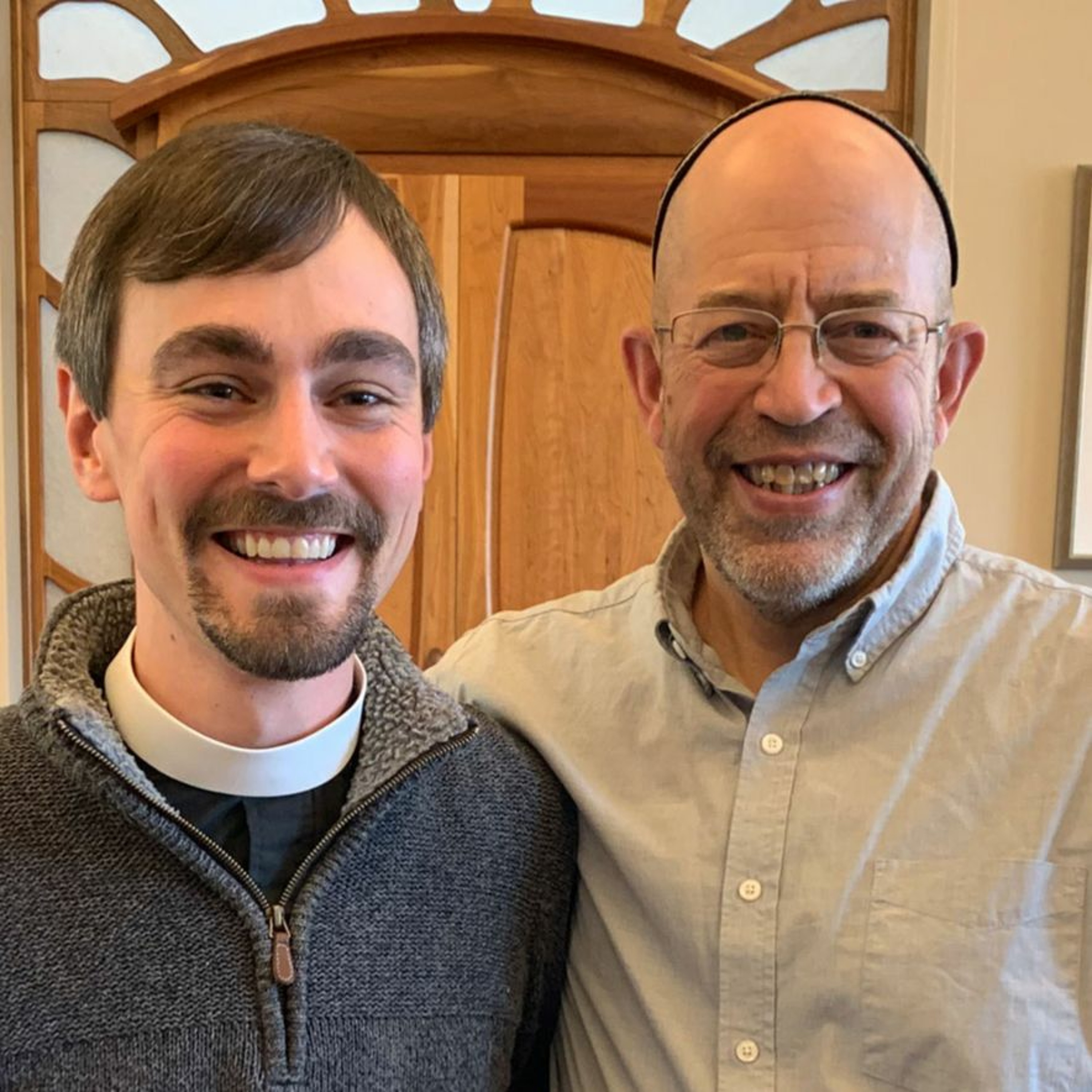
A Rabbi and a Priest Study the Gospels 9 011620.MP3
We explore the last days of Jesus' life, including the Last Supper, his trial and crucifixion, and the stories of his resurrection. As always, we place these accounts in the context of Jewish life, history and thought of the 1st century. We discuss varying theories about the actual historicity of these events, and what they are meant to teach.
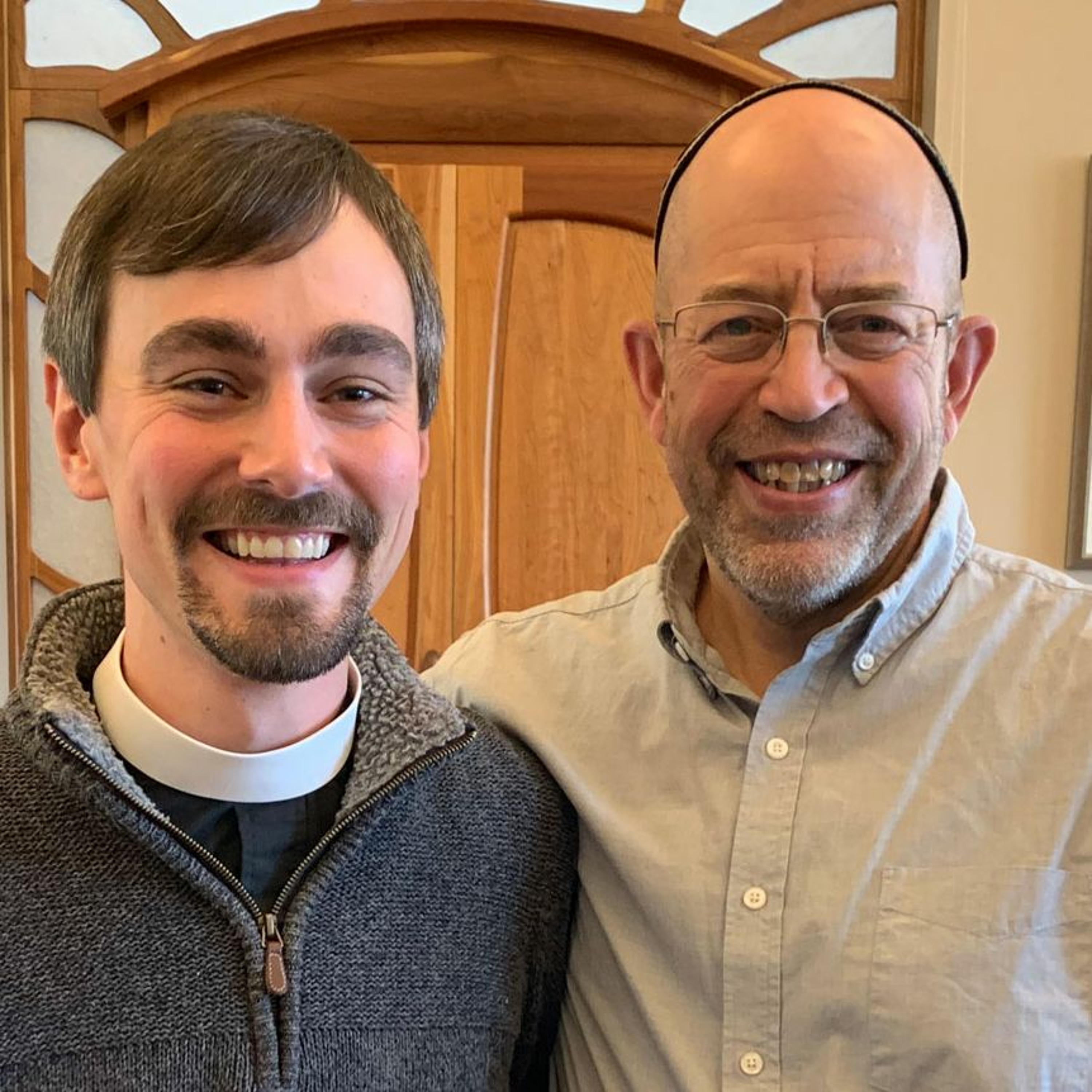
A Rabbi And A Priest Study The Gospels 8 010920.MP3
A Rabbi And A Priest Study The Gospels 8 010920.MP3 by Rabbi Jonathan Kligler
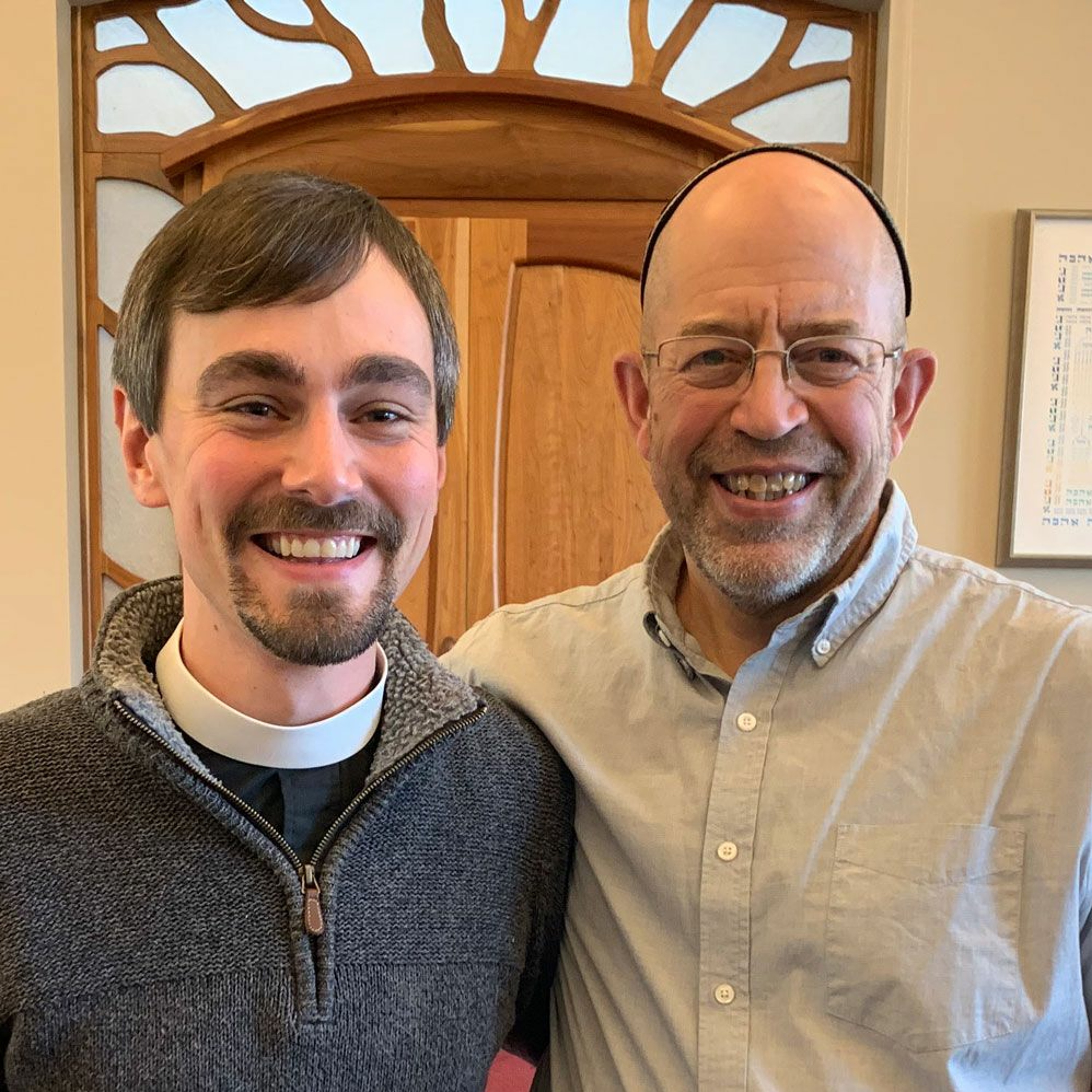
A Rabbi And A Priest Study The Gospels 7 010220.MP3
We continue studying the birth narratives in the Gospels, this session focusing on Luke and John. We explore the differing themes that each narrative highlights, and the striking differences between the various narratives. We show how each narrative is a layered midrash drawing on and weaving together earlier classic Jewish sources.
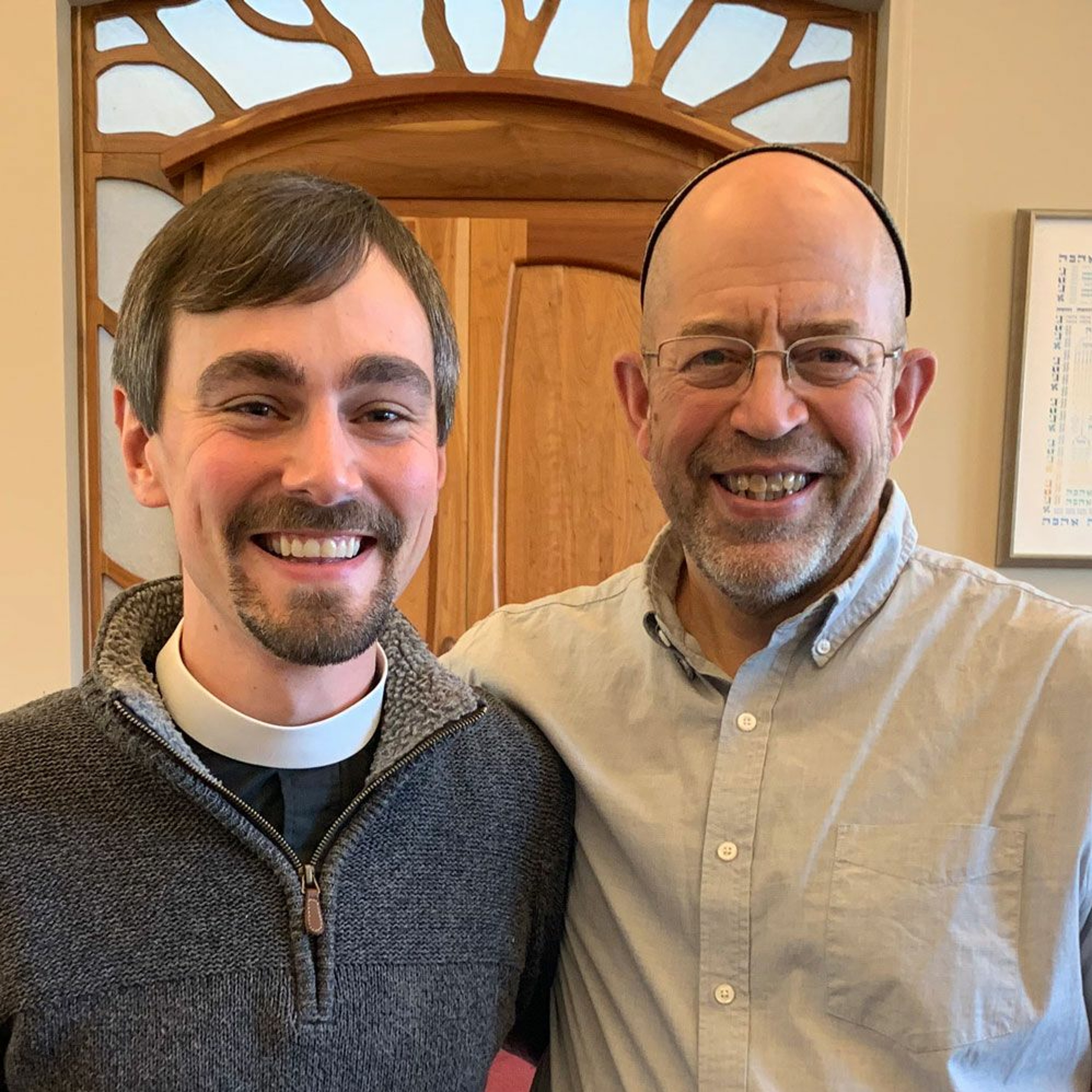
A Rabbi And A Priest Study The Gospels 6 121919.MP3
We examine the varying birth narratives in the Gospels, today beginning with Matthew. Mark contains no narrative about Jesus' birth, while Matthew and Luke each have detailed, but very different, stories. John's account is cosmic and theological. We note how these very different accounts have merged over time into a single popular telling. We also look deeply at the Biblical and literary context of Matthew's account, and are able to situate it as a 1st-century Jewish creation. Fascinating discussion!
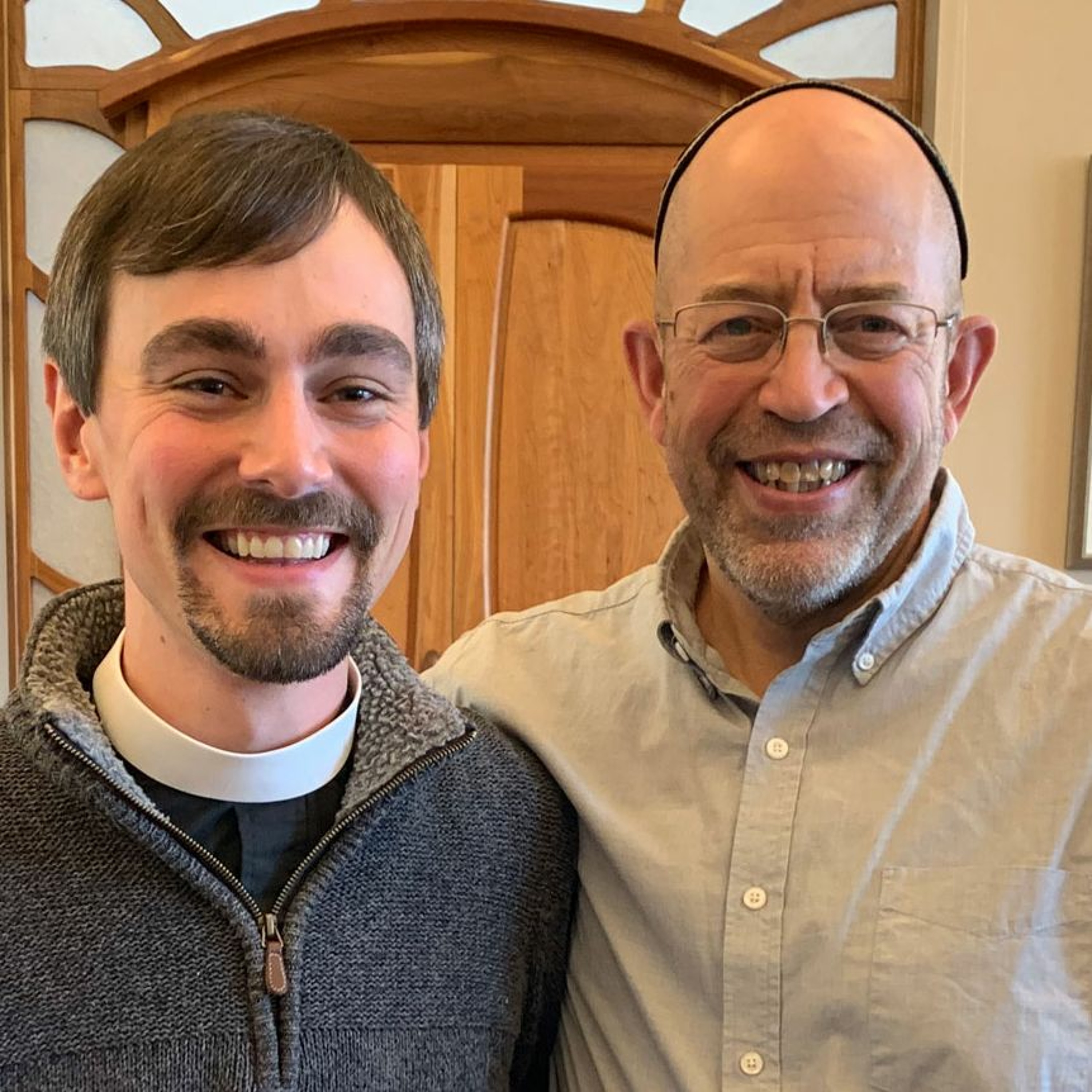
A Rabbi And A Priest Study The Gospels 5 121219.MP3
We look at the parable of the Good Samaritan through a 1st-century Jewish lens: Jesus as a Jewish teacher expounding on the central Jewish commandment "Love you neighbor as yourself." Who was one's "neighbor" according to Jewish understanding? Why choose a Samaritan to be the hero of the story? Who were the Samaritans? We address these and other questions in an illuminating session.
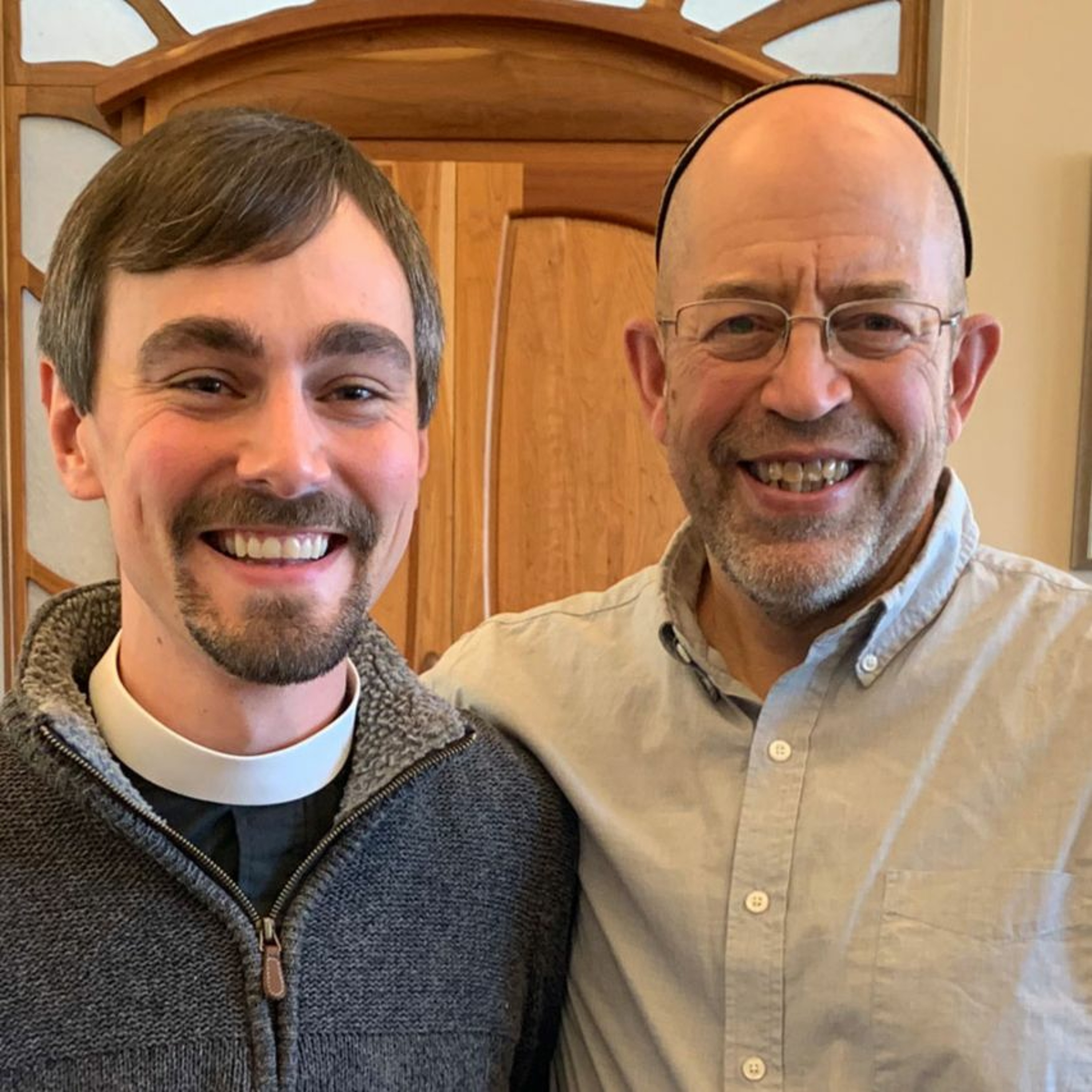
A Rabbi And A Priest Study the Gospels 4 120519.MP3
We examine the stories of John the Baptist and Jesus in an illuminating discussion that explores historical, cultural and literary context.
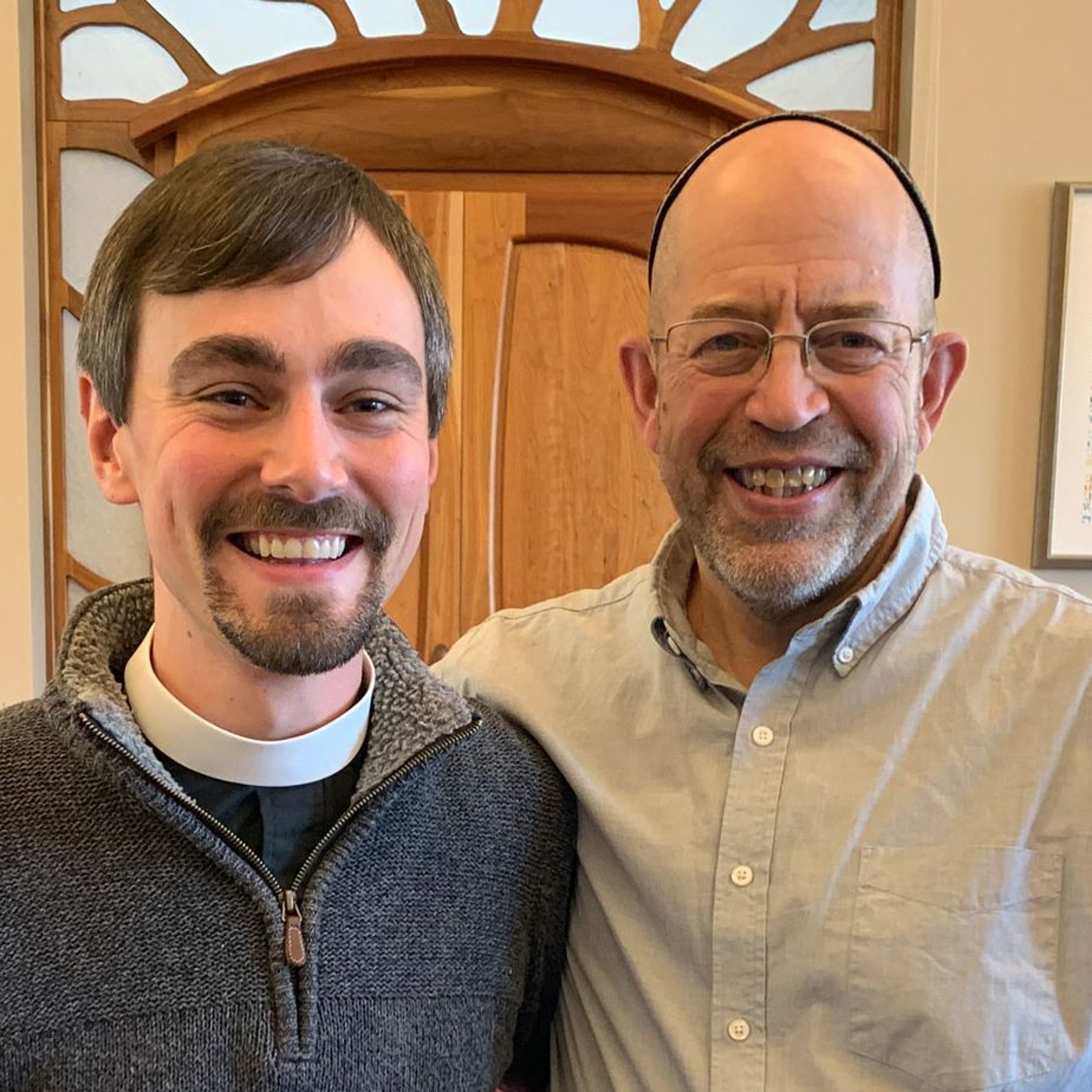
A Rabbi And A Priest Study The Gospels 3 112119.MP3
This week we turn to the text of the Gospel of Mark, and study it in the context of the Biblical texts that animate its narrative and its choice of metaphors. We also discuss a wide range of compelling questions from participants in the class.
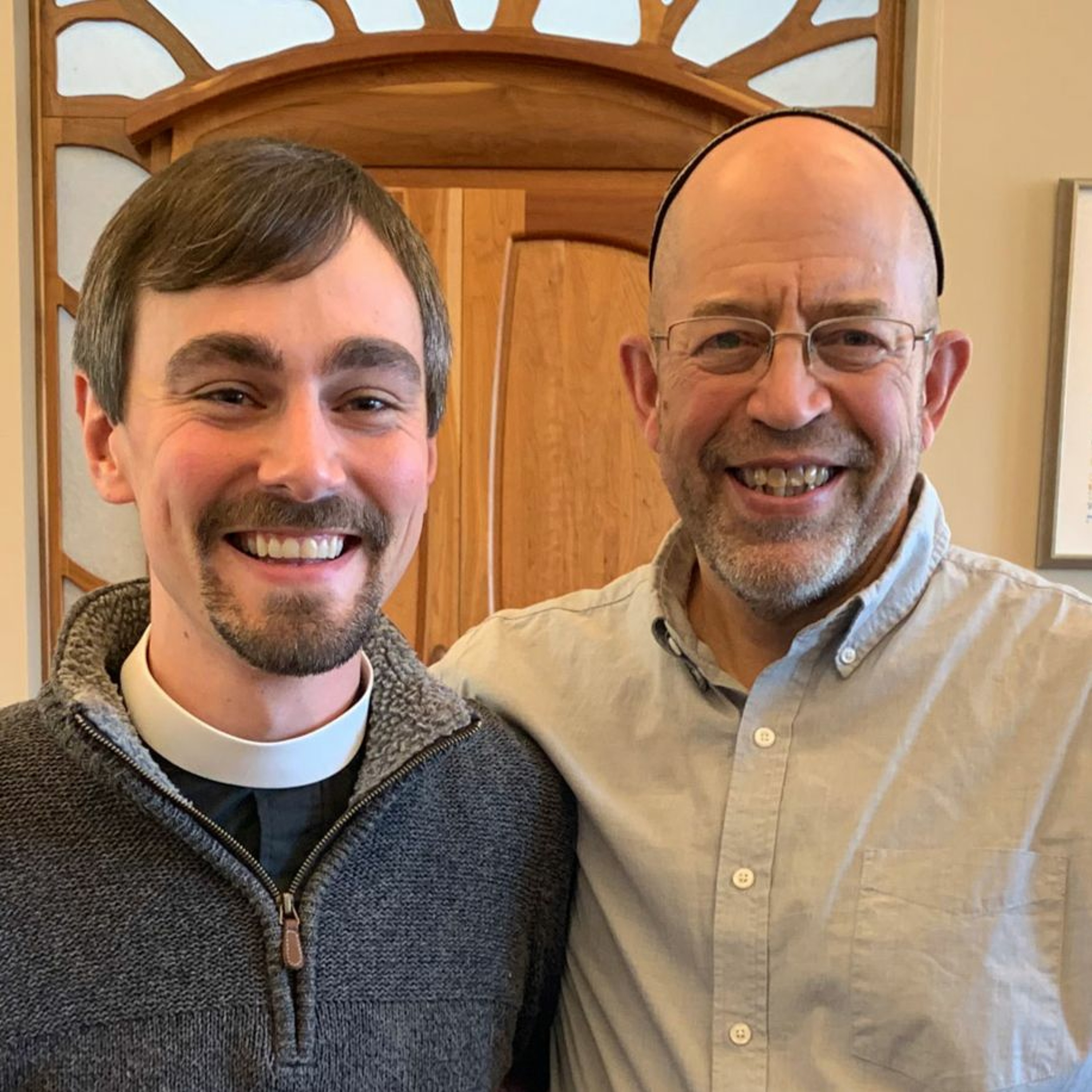
A Rabbi And A Priest Study The Gospels 2 111419.MP3
In the context of 1st century Judaism, what did Jesus mean when he spoke of the Kingdom of God? And what did the term "Messiah" mean to Jews of that era? In this week's class we explore these and many other questions.