
Q&A
410 episodes — Page 5 of 9

Glory Liu "Adam Smith's America"
Adam Smith, the author of the 1776 book, Wealth of Nations, is called the father of economics. He's often cited as a champion of free markets, an interpretation widely advanced by Nobel prize winning economist Milton Friedman in the 20th century. Harvard University lecturer Glory Liu says Smith's work is more nuanced. This week, we talk about her research on Smith as detailed in her new book, "Adam Smith's America"." She argues that while the 18th-century Scottish philosopher is widely known in the U.S. for his association with free markets, he was also a social philosopher concerned with worker rights and economic inequality. Learn more about your ad choices. Visit megaphone.fm/adchoices
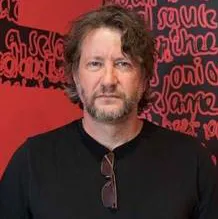
Chris Arnade, "Dignity"
Former Wall Street trader turned photojournalist Chris Arnade discusses his book "Dignity," in which he documents the plight of those living on the margins of society in America. He talks about his photos and shares stories about some of the people he befriended during his travels. This program originally aired in October 2019. Learn more about your ad choices. Visit megaphone.fm/adchoices

Douglas Brinkley "Silent Spring Revolution"
Historian Douglas Brinkley, author of "Silent Spring Revolution," discusses American biologist Rachel Carson's work on environmental pollution and the impact her 1962 book "Silent Spring" had on the conservationist movement in the United States during the following decade. He also talks about the leadership of Presidents Kennedy, Johnson, and Nixon on environmental issues and the landmark legislation dealing with conservation that was passed during the 1960s and early 1970s. Learn more about your ad choices. Visit megaphone.fm/adchoices

John Farrell "Ted Kennedy: A Life"
Former Boston Globe reporter and biographer John Farrell, author of "Ted Kennedy: A Life," discusses the life and political career of the late Democratic senator from Massachusetts. He talks about the Kennedy political dynasty and the tragedies surrounding Ted Kennedy's life, including the killing of his brothers and the 1969 car accident at Chappaquiddick that resulted in the drowning of 28-year-old Mary Jo Kopechne. Learn more about your ad choices. Visit megaphone.fm/adchoices

Elliott Morris, "Strength in Numbers"
Data journalist Elliott Morris, a U.S. correspondent for The Economist, discusses the history of public opinion polling in the United States going back to the 19th century and the development and use of polling since then. He also talks about the accuracy of polls today and the often criticized predictions made by forecasters during the 2016 and 2020 presidential elections. Learn more about your ad choices. Visit megaphone.fm/adchoices

Amy Gajda, "Seek and Hide"
Amy Gajda, professor of law at Tulane University in New Orleans and author of “Seek and Hide,” discusses the historic struggle in the United States between an individual’s right to privacy and the public’s right to know newsworthy information. This conversation was originally published on May 15h, 2022. Learn more about your ad choices. Visit megaphone.fm/adchoices

William Doyle on the Life and Legislative Achievements of U.S. Senator Orrin Hatch of Utah
Writer and filmmaker William Doyle joins us to talk about his new book "Titan of the Senate." It tells the story of the longest-serving Republican Senator, Orrin Hatch of Utah. Sen. Hatch served from 1977-2019 and passed away at the age of 88 in April of 2022. Mr. Doyle argues that Senator Hatch's legislative achievements earn him the nod as the greatest U.S. Senator in modern times. Senator Hatch authored nearly 800 bills, including bipartisan efforts on HIV/AIDS, generic drugs, civil rights, and the Americans with Disabilities Act. He often teamed up with his political opposite, the late Massachusetts Senator Ted Kennedy. Learn more about your ad choices. Visit megaphone.fm/adchoices

Margaret Burnham, "By Hands Now Known"
In 2007 Civil Rights Legal Scholar Margaret Burnham launched Northeastern University's Civil Rights and Restorative Justice Project to document the largely unknown Black victims of racial violence in the South between the 1930s and the 1950s and the Jim Crow legal system that supported it. In her new book, "By Hands Now Known" Professor Burnham describes the systemic support for Jim Crow relates to a few of the more than one thousand murders during this period in which the perpetrators were never brought to justice. Learn more about your ad choices. Visit megaphone.fm/adchoices
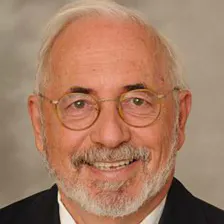
John Agresto, "The Death of Learning"
Former college president and longtime educator John Agresto discusses his newest book "The Death of Learning: How American education has failed our Students and What to Do about it." Dr. Agresto is a passionate champion of liberal arts education at both the high school and college level. He makes the case that political correctness and an emphasis on skills-based degrees has devalued the liberal arts. He asks how we can build contemporary liberal arts programs that educate students and benefit our society. Learn more about your ad choices. Visit megaphone.fm/adchoices

Javier Zamora on Migrating from El Salvador to the United States as a Nine-Year-Old
This week, writer Javier Zamora describes the treacherous, three-thousand-mile journey he made from El Salvador to the United States when he was just nine years old. Led by coyotes, he and a group of strangers made three perilous attempts to cross into the US. Javier's parents, who had earlier migrated to California to escape the violence at home, had no idea for weeks if their only child was still alive. In his debut poetry collection, Unaccompanied, and now in his bestselling memoir Solito, Javier Zamora explains that his goal is to personalize the immigration story. Learn more about your ad choices. Visit megaphone.fm/adchoices

Alan Maimon, "Twilight in Hazard"
The Appalachian Region of Eastern Kentucky has been ravaged by coal mine closings, opioid overdoses, floods, and public corruption. In this episode, Alan Maimon, a former reporter for the Lousiville Courier-Journal, talks about his book "Twilight in Hazard" which explores the impacts on the city of Hazard, Kentucky. He also talks about "Hillbilly Elegy," J.D. Vance's bestselling book about Appalachia, and Donald Trump's popularity in the region. Learn more about your ad choices. Visit megaphone.fm/adchoices
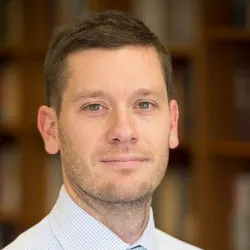
Hal Brands, "Danger Zone"
Hal Brands, professor of global affairs at Johns Hopkins School of Advanced International Studies and co-author of "Danger Zone," argues that the superpower competition between the U.S. and China will reach its most dangerous point during this decade. He talks about the strategy that the Chinese government is pursuing to achieve global dominance and what the U.S. and other global powers are doing, or should be doing, to curb China's influence. Learn more about your ad choices. Visit megaphone.fm/adchoices

Douglas Frantz & Catherine Collins, "Salmon Wars"
Investigative reporters Douglas Frantz and Catherine Collins, co-authors of "Salmon Wars," take a critical look at the commercial salmon farming industry, which now provides 90 percent of the salmon consumed by North Americans. They argue that these large-scale salmon hatcheries threaten the environment and produce fish that are unhealthy for humans to eat. Learn more about your ad choices. Visit megaphone.fm/adchoices
C-SPAN in the Classroom Trailer: Season 2
Hey all you teachers and all you parents, and all you professors and all you students: Season #2 of the C-SPAN in the Classroom podcast drops this fall! Whether you're mowing the yard, on a peaceful weekend drive, or just relaxing on the couch with your favorite blanket, make sure to tune in to the first episode of Season #2 of C-SPAN in the Classroom on September 10th, available at c-span.org, on the free C-SPAN Now app, or wherever you listen to podcasts. Make sure to like, subscribe, and share, and visit us at www.c-span.org/classroom. Learn more about your ad choices. Visit megaphone.fm/adchoices

The Weekly Podcast: At The Movies With Boris Johnson
With Q&A on a short break, we're sampling a few of C-SPAN's other podcasts...this week an episode of "The Weekly" podcast. C-SPAN says farewell to colorful British Prime Minster Boris Johnson by joining him at the movies. The American movies. We remember how he mixed policy and politics with references to American cinema classics such as The Terminator, The Godfather, Star Wars, Scarface, and many more Hollywood offerings -- not least of which, the Muppet Movie. Learn more about your ad choices. Visit megaphone.fm/adchoices

Booknotes + Beverley Eddy, "Ritchie Boy Secrets"
With Q&A on a short break, we're sampling a few of C-SPAN's other podcasts...this week Booknotes+...According to Beverley Driver Eddy, little has been written about Camp Ritchie, Maryland. Dickinson College retired professor Eddy says in her book "Ritchie Boy Secrets" that on June 19, 1942, the U.S. Army opened a secret military intelligence training center. Over the next four years, it produced some 20,000 graduates, intelligence and language specialists, for service in World War Two. Some of the famous names of men who were Ritchie Boys include J.D. Salinger, former senators John Chafee and Frank Church, David Rockefeller, and Reverend William Sloan Coffin. Learn more about your ad choices. Visit megaphone.fm/adchoices

Presidential Recordings: All Politics Are Local: The Pentagon Papers & Conversations with Members of Congress
With Q&A on a short break, we're sampling a few of C-SPAN's other podcasts...this week...you'll hear an episode of Presidential Recordings. In this episode, we hear calls between the POTUS members of Congress. Topics include the publication of The Pentagon Papers, and The War in Vietnam. Learn more about your ad choices. Visit megaphone.fm/adchoices

After Words: Kellyanne Conway, "Here's the Deal"
With Q&A on a short break, we're sampling a few of C-SPAN's other podcasts...this week, political consultant Kellyanne Conway was the first woman to manage a winning presidential campaign. She shared insights into the 2016 campaign and her time in the Trump administration and offered her thoughts on the media and the political climate in America. She was interviewed by former Democratic Party interim chair and author Donna Brazile. Learn more about your ad choices. Visit megaphone.fm/adchoices

After Words: Sen. Raphael Warnock (D-GA), "A Way Out of No Way"
With Q&A on a short break, we're sampling a few of C-SPAN's other podcasts...this week, Senator Raphael Warnock (D-GA) talks about his life, faith and journey in politics. He was interviewed by Congressman James Clyburn (D-SC), Democratic Whip of the U.S. House of Representatives. Learn more about your ad choices. Visit megaphone.fm/adchoices

Kathy Kleiman, "Proving Ground"
Kathy Kleiman, an expert on internet governance at American University College of Law and the author of "Proving Ground," talks about the six American women who programmed the ENIAC, the world's first general-purpose electronic computer. The ENIAC (Electric Numerical Integrator and Computer), which weighed over 30 tons and took up 1,800 square feet, was a top-secret project designed by the U.S. Army during World War II to calculate artillery trajectories. The six women who programmed the ENIAC to carry out these calculations did so without a manual, relying solely on their study of the blueprints and wiring diagrams of the computer. Learn more about your ad choices. Visit megaphone.fm/adchoices

Michael Smith & Jonathan Franklin, "Cabin Fever"
Journalists Michael Smith and Jonathan Franklin talk about the COVID-19 outbreak on Holland America's cruise ship Zaandam in March 2020 while sailing around South America. Prevented from docking anywhere, the 1,200 mostly elderly passengers from the U.S., Europe and South America, along with 600 crew members, were stranded at sea as the virus spread on the ship. Michael Smith and Jonathan Franklin discuss what happened aboard the Zaandam during those days, the actions taken by Holland America after learning about the outbreak, and the eventual safe harbor given to the Zaandam in South Florida. Learn more about your ad choices. Visit megaphone.fm/adchoices
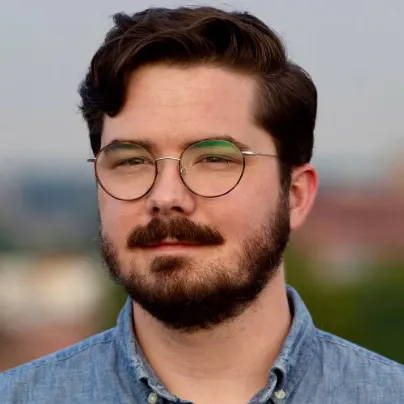
Elliott Morris, "Strength in Numbers"
Data journalist Elliott Morris, a U.S. correspondent for The Economist, discusses the history of public opinion polling in the United States going back to the 19th century and the development and use of polling since then. He also talks about the accuracy of polls today and the often criticized predictions made by forecasters during the 2016 and 2020 presidential elections. Learn more about your ad choices. Visit megaphone.fm/adchoices

Lindsey Fitzharris, "The Facemaker"
Medical historian Lindsey Fitzharris, author of "The Facemaker," talks about the life and career of Dr. Harold Gillies, a New Zealand plastic surgeon who reconstructed the faces of thousands of injured soldiers during and after World War One. The techniques developed by Dr. Gillies, many of which are still used today, revolutionized the field of reconstructive surgery. Learn more about your ad choices. Visit megaphone.fm/adchoices

Presidential Recordings: Ep. 1 Bad Moon Rising - Watergate Calls from April 1973 Part 1
Season Two begins with a sampling of calls about Watergate between President Richard Nixon and his administration from April 1973 while the investigation intensified. Conversations include John Ehrlichman, Assistant Attorney General Henry Peterson, FBI Director L. Patrick Gray, Henry Kissinger, and White House Counsel John Dean. Learn more about your ad choices. Visit megaphone.fm/adchoices

Presidential Recordings Trailer: Season 2 President Richard Nixon
At least 6 U.S. Presidents recorded conversations while in office. Hear those conversations on this C-SPAN podcast. Season 2 focuses on President Richard Nixon's secretly-recorded private telephone conversations. Through eight episodes, hear Richard Nixon talk with key aides about Watergate strategy, potential Supreme Court Nominees, and hear his reaction to the leaked publication of the Pentagon Papers. Learn more about your ad choices. Visit megaphone.fm/adchoices
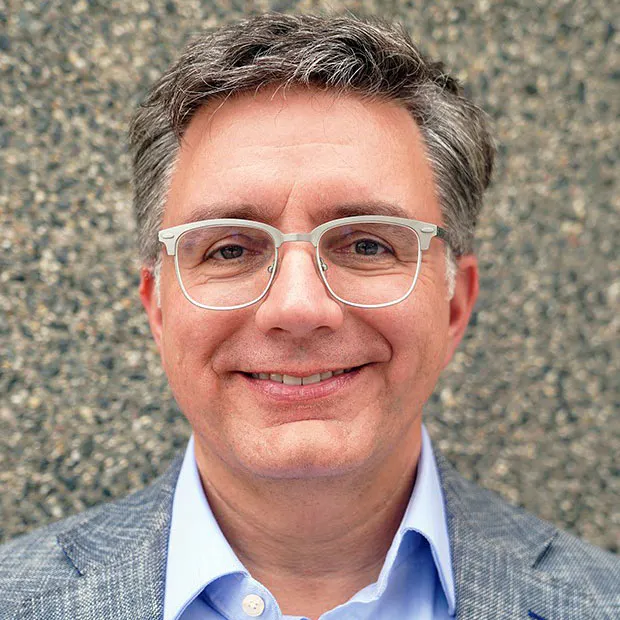
Mark Clague, "O Say Can You Hear?"
University of Michigan musicology and American culture professor Mark Clague discusses his book, "O Say Can You Hear?," about the history and cultural impact of the Star-Spangled Banner, written by Francis Scott Key in 1814. He talks about how it became the U.S. national anthem, its widespread use today at sporting events, and renditions of the song performed by Jimi Hendrix, Whitney Houston, Roseanne Barr, and others. Learn more about your ad choices. Visit megaphone.fm/adchoices

Author John Bainbridge, Jr., on the Weapons That Transformed America and the Men Who Invented Them
Former Baltimore Sun reporter John Bainbridge, Jr., author of “Gun Barons,” talks about the inventors who started Colt, Smith & Wesson, Winchester, and Remington, and the role their firearms played in U.S. westward expansion and the Civil War. Learn more about your ad choices. Visit megaphone.fm/adchoices

Janna Levin on Black Holes/Sagittarius A* & Jessica Whiteside on the Mars Perseverance Rover
This week we look at two space-related stories in the news recently: the release of an image of Sagittarius A star, a supermassive black hole at the center of the Milky Way, and the progress made by NASA's Perseverance Rover in its search for life on Mars. We are joined by two guests, Barnard College astrophysicist and author Janna Levin and University of Southampton geochemistry professor Jessica Whiteside. Learn more about your ad choices. Visit megaphone.fm/adchoices

Phil Klay, "Uncertain Ground"
Iraq War veteran and National Book Award winning-author Phil Klay discusses his book of essays, titled "Uncertain Ground," about the impact of the wars in Afghanistan and Iraq on American society and the chasm between the less than one percent of citizens who serve in the military and the rest of the nation. He also talks about the withdrawal of U.S. troops from Afghanistan, the mass shootings in Buffalo and Uvalde, and other topics. Learn more about your ad choices. Visit megaphone.fm/adchoices

Booknotes+ Mark Vonnegut, "The Heart of Caring"
We're taking a break for Memorial Day, and thought we'd use this opportunity to share an episode of our Booknotes+ podcast, where you'll meet Dr. Mark Vonnegut, who reflects on 40 years as a pediatrician in his book, "The Heart of Caring." In the dedication of his book, "The Heart of Caring," Dr. Mark Vonnegut tells his patients, teachers, and parents everywhere, "Thank you for letting me have such a good time when I go to work." Dr. Vonnegut is a pediatrician who graduated from Harvard Medical School in 1979. This was after he had been diagnosed, at age 25, with severe schizophrenia. He's had four psychotic breakdowns in his life, but has managed to successfully practice pediatrics for close to forty years. Mark Vonnegut, in his newest book, writes about patients, parents, insurance companies, and his late father, the novelist Kurt Vonnegut. Learn more about your ad choices. Visit megaphone.fm/adchoices

Louisa Lim, "Indelible City"
In 1997, sovereignty over Hong Kong was passed from the United Kingdom to the People's Republic of China. Large demonstrations opposing China's authority began in the early 2000s in the port city, culminating with the 2019 protests and subsequent crackdowns by the Chinese government that made headlines around the world. Louisa Lim, author of "Indelible City," who grew up in Hong Kong and covered Hong Kong and China as a reporter for the BBC and NPR, talks about the history of British rule in Hong Kong and the relationship between Hong Kong and China since the 1997 handover. Learn more about your ad choices. Visit megaphone.fm/adchoices

Amy Gajda, "Seek and Hide"
Amy Gajda, professor of law at Tulane University in New Orleans and author of “Seek and Hide,” discusses the historic struggle in the United States between an individual’s right to privacy and the public’s right to know newsworthy information. Learn more about your ad choices. Visit megaphone.fm/adchoices

Darlene Superville, "Jill"
Darlene Superville, White House reporter for the Associated Press and co-author of "Jill," talks about the life and career of First Lady Jill Biden. Ms. Superville discusses Jill Biden's involvement in Joe Biden's political career, her role as a teacher, and the causes – including working with military families – that she took up in the Obama and Biden administrations. Learn more about your ad choices. Visit megaphone.fm/adchoices
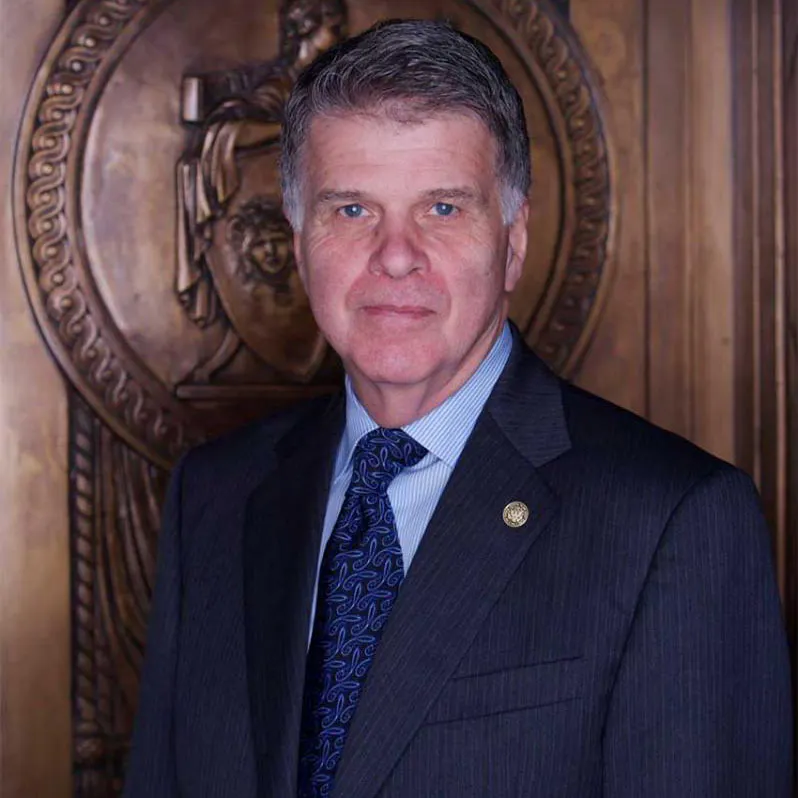
David Ferriero, Archivist of the United States
Archivist of the United States David Ferriero is retiring this spring after nearly 13 years in office. Appointed by President Barack Obama and confirmed in 2009, he is the 10th archivist to oversee the National Archives as well as the nation's now 15 presidential libraries. During his tenure, Mr. Ferriero presided over a digital transformation of how archival material is collected and preserved. And it was under his leadership that the Archives debuted "Remembering Vietnam," its first-ever exhibit on that divisive conflict. Mr. Ferriero, a veteran of that war, served as a U.S. Navy hospital corpsman. He talks about his accomplishments and challenges at the Archives and the work that remains for his successor. Learn more about your ad choices. Visit megaphone.fm/adchoices

Matthew Continetti, "The Right"
Author & journalist Matthew Continetti talks about the history of the American right-wing since the early 20th century. He says that a populist strain challenged mainstream conservatism several times over that period, ultimately triumphing with the election of Donald Trump in 2016. Mr. Continetti is also a senior fellow at the American Enterprise Institute and founding editor at the Washington Free Beacon. Learn more about your ad choices. Visit megaphone.fm/adchoices

Mary Sarotte, "Not One Inch"
During discussions over the reunification of Germany in 1990, U.S. Secretary of State James Baker told Soviet leader Mikhail Gorbachev that NATO would not expand eastward. "Not one inch," Baker assured Gorbachev. In the lead-up to the Russian invasion of Ukraine, Vladimir Putin used those words to suggest that the U.S. and NATO were not interested in peace and could not be trusted. Mary Sarotte, professor of history at Johns Hopkins School of Advanced International Studies and author of "Not One Inch," talks about the 1990 comment and the impact that NATO expansion since then has had on U.S.-Russia relations. Learn more about your ad choices. Visit megaphone.fm/adchoices

Kostya Kennedy, "True: The Four Seasons of Jackie Robinson"
April 15th, 2022, marks the 75th anniversary of the day that Jackie Robinson broke the color barrier in Major League Baseball. Since 2004, April 15th has been known in the baseball world as "Jackie Robinson Day," in honor of the Brooklyn Dodgers player. We talked with Kostya Kennedy, former senior writer for Sports Illustrated, about Jackie Robinson's life and career. In his new book "True," Mr. Kennedy writes about four significant years in Robinson's life: 1946, when he started in the minor leagues; 1949, when he was named National League MVP; 1956, his final year playing baseball; and 1972, the year of his untimely death. Learn more about your ad choices. Visit megaphone.fm/adchoices
Michael Meyer, "Benjamin Franklin's Last Bet"
In his will, Benjamin Franklin left 1000 pounds sterling each to the cities of Boston and Philadelphia. The money was to be loaned out, in small increments and at low-interest rates, to tradesmen who wanted to start their own businesses. Franklin estimated that even with a small rate of return, the trust fund would grow over the years and both cities would end up with large windfalls by the end of the twentieth century. University of Pittsburgh professor Michael Meyer, author of "Benjamin Franklin's Last Bet," discusses Franklin's micro-lending scheme and assesses its legacy. Learn more about your ad choices. Visit megaphone.fm/adchoices

Benjamin Barton, "The Credentialed Court"
If Judge Ketanji Brown Jackson is confirmed by the Senate, we will have the most diverse Supreme Court in U.S. history. University of Tennessee law professor Benjamin Barton, author of "The Credentialed Court," argues that while this is true on the surface, a closer look suggests that there is a "radical similarity" among the justices – especially when considering their educational and career paths after graduating high school. He has spent the past 12 years studying the backgrounds of Supreme Court justices throughout history and says that the justices today come from more elite circles and have much narrower experiences than their predecessors did, leading to a kind of group-think that is often overlooked when examining the court. Learn more about your ad choices. Visit megaphone.fm/adchoices

Andrew Rice, "The Year That Broke America"
The title of the book "The Year That Broke America" refers to the year 2000, when an immigration crisis captured the headlines, Donald Trump ran for president, and Al Qaeda operatives arrived in the U.S. to learn to fly. Author Andrew Rice, a contributing editor at New York magazine, discusses the events of that year, which started with the fear of a global computer meltdown and ended with a fight over one of the closest presidential elections in U.S. history. Learn more about your ad choices. Visit megaphone.fm/adchoices

Renee Knake Jefferson, “Shortlisted”
Law professor Renee Knake Jefferson, co-author of “Shortlisted” discusses the nomination of Judge Ketanji Brown Jackson to the Supreme Court and talks about some of the women who were considered for the court in the past, but were passed over. Learn more about your ad choices. Visit megaphone.fm/adchoices

Dana Rubin, Speaking While Female Speech Bank
Speechwriter and consultant Dana Rubin discusses her Speaking While Female Speech Bank, an online archive of speeches made by women throughout history that she says have been unjustly overlooked or forgotten. She talks about the archive and speeches by Queen Elizabeth II, Barbara Jordan, Phyllis Schlafly and others. Learn more about your ad choices. Visit megaphone.fm/adchoices

V. P. Franklin, "The Young Crusaders"
Hundreds of thousands of children and teenagers were active participants in the Civil Rights Movement. They took part in boycotts, strikes, marches, and demonstrations and faced many of the same risks as their adult counterparts. Professor of history emeritus V. P. Franklin, author of "The Young Crusaders," joins us to talk about the stories of these sometimes overlooked contributors to social justice in the United States. Learn more about your ad choices. Visit megaphone.fm/adchoices

Ryan Walters, "The Jazz Age President"
On almost all presidential rankings lists, you will find Warren Harding's name at or near the bottom. On C-SPAN's 2021 survey of presidential historians, he was 37 out of 44. Historian Ryan Walters argues that while Harding had his faults, his accomplishments – including bringing the country back to normalcy after WWI and setting out an economic plan that led to the Roaring Twenties – are often overlooked when assessing his presidency. In his book "The Jazz Age President," Mr. Walters lays out his case for why President Harding should rank higher. Learn more about your ad choices. Visit megaphone.fm/adchoices

Erin Thompson, "Smashing Statues"
Since the summer of 2020, roughly 214 public monuments have been taken down across the United States, either through official processes or by force. Erin Thompson, professor of art crime at the City University of New York and the author of "Smashing Statues," talks about the history of American monuments, the motivations for putting them up, and the current debates over which ones should be taken down. Learn more about your ad choices. Visit megaphone.fm/adchoices
Amy Zegart, "Spies, Lies, and Algorithms"
Hoover Institution senior fellow Amy Zegart talked about the espionage threats facing the United States from China, Russia, Iran and North Korea and assessed whether our intelligence agencies are prepared to deal with them. Learn more about your ad choices. Visit megaphone.fm/adchoices

Ben Raines, "The Last Slave Ship"
The last slave ship carrying captives from Africa to America arrived in Alabama in 1860, more than fifty years after the transatlantic slave trade was outlawed in the United States. The 110 slaves aboard the ship were brought to U.S. shores as the result of a bet made by a wealthy Alabama slaveholder who bragged that he could circumvent the prohibition. To cover his tracks he burned and scuttled the ship, named Clotilda, in a swamp just north of Mobile, where it remained until it was discovered by reporter Ben Raines in 2019. Mr. Raines tells the story of Clotilda and its descendants in his book "The Last Slave Ship." Learn more about your ad choices. Visit megaphone.fm/adchoices

Robert Sutton, "Nazis on the Potomac"
Robert Sutton, the former Chief Historian of the National Park Service, tells the story of a secret military intelligence facility near Washington, DC, where 3,000 high-value Nazis were interrogated by U.S. servicemen during World War Two. Learn more about your ad choices. Visit megaphone.fm/adchoices
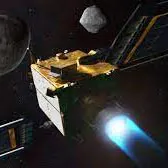
NASA's DART Mission & James Webb Space Telescope
2022 is a big year for space science. NASA has two major missions underway. The first – DART (Double Asteroid Redirection Test) – will test the agency's ability to defend Earth against asteroids. The second – the James Webb Space Telescope (the successor to Hubble) – will be used to study the origins of the universe and search for possible life in the universe beyond Earth. We talked about these missions with Nancy Chabot, Planetary Chief Scientist at Johns Hopkins University's Applied Physics Laboratory and Coordination Lead on the DART mission, and Meredith MacGregor, assistant professor of Astrophysical and Planetary Sciences at the University of Colorado Boulder. Learn more about your ad choices. Visit megaphone.fm/adchoices

Jorge Contreras, "The Genome Defense"
Can human genes be patented and owned? That's the question behind Jorge Contreras' book "The Genome Defense." The author and professor of law at the University of Utah tells the story of the 2013 Supreme Court case Association for Molecular Pathology v. Myriad Genetics. The longshot case, brought by the ACLU, challenged the right to patent human genes, a practice that had been used by biotech companies for decades. Learn more about your ad choices. Visit megaphone.fm/adchoices