Show overview
Purdue Commercial AgCast has been publishing since 2020, and across the 6 years since has built a catalogue of 223 episodes. That works out to roughly 120 hours of audio in total. Releases follow a fortnightly cadence.
Episodes typically run twenty to thirty-five minutes — most land between 20 min and 40 min — though episode length varies meaningfully from one episode to the next. None of the episodes are flagged explicit by the publisher. It is catalogued as a EN-language Business show.
The show is actively publishing — the most recent episode landed 2 weeks ago, with 20 episodes already out so far this year. Published by Purdue Center for Commercial Agriculture.
From the publisher
Farm management news and advice for top agricultural producers from ag economists at Purdue University’s Center for Commercial Agriculture.
Latest Episodes
View all 223 episodesCan AI Actually Help Me Make Smarter Farm Decisions?
From the Farm to Purdue: What Josh Strine Wants to Understand About Farm Decisions
What TractorZoom's Data Says About the Future of Farm Equipment
Phosphate, Supply Chains & the 2027 Fertilizer Shock
Why Profitable Farms Still Run Out of Cash
Farmer Sentiment Is Falling Amid Higher Input Costs
Lessons From the Delta, Part 8: Why Ducks Are More Valuable Than Crops in the Delta
Lessons From the Delta, Part 7: How Rice Farmers Cut $31/Acre Water Costs
Ep 215Farm Sentiment Is Up… So Why Are Farmers Still Worried?
Farmer sentiment improved in March—but the underlying pressures in the farm economy haven’t gone away. In this episode of the Purdue Commercial AgCast, Joana Colussi and Michael Langemeier break down the March 2026 Purdue University/CME Group Ag Economy Barometer. Despite rising input costs and global uncertainty tied to geopolitical conflict, farmer sentiment moved higher—driven in part by stronger crop prices and government payments. But the improvement comes with important caveats. Tight margins, rising breakeven costs, and shifting risk priorities are shaping how farmers approach investment, production, and long-term strategy. More importantly, these signals highlight how producers are balancing short-term optimism with longer-term uncertainty. In this episode, we discuss: • What’s driving the recent increase in farmer sentiment • How $35/acre payments and higher corn prices are influencing outlook • Why only 4% of farmers plan to increase machinery purchases • How rising input costs are impacting breakeven prices and profitability • Why financial risk has overtaken marketing risk for many farms • What farmers expect for inflation and interest rates in the year ahead • How solar leasing is evolving across regions and land markets • What’s driving farmland value expectations in 2026 📊 Read the full Ag Economy Barometer report: https://purdue.ag/barometer126 — For more farm management resources, visit: 👉 https://purdue.ag/commercialag Subscribe to the podcast: 👉 https://purdue.ag/agcast Follow us: X: https://twitter.com/PUCommercialAg Facebook: https://www.facebook.com/PUCommercialAg LinkedIn: https://www.linkedin.com/company/center-for-commercial-agriculture
Ep 214Lessons From the Delta, Part 6: Farming with No Margin for Error
Lessons From the Delta continues — this time from the perspective of farmers managing one of the most intensive production systems in U.S. agriculture. In Episode 6 of the Purdue Commercial AgCast mini-series, Chad Fiechter and Todd Kuethe visit with Terry and Trent Dabs of LTD Farms near Stuttgart, Arkansas, to discuss what it takes to operate a rice-based farming system in the Mississippi Delta. What emerges is a detailed look at a production environment shaped by water management, labor demands, and capital intensity—where daily decisions around irrigation, equipment, and timing carry significant economic consequences. The conversation also discusses: • Why rice production requires constant water management and monitoring • How labor constraints shape daily operations and long-term strategy • The impact of intensive field conditions on machinery and capital decisions • How rice is marketed and how payment differs from corn and soybeans • The role of global markets in determining profitability As Delta farmers navigate a system defined by irrigation dependence and production intensity, the discussion raises important questions: What does it take to manage risk in a high-cost production system? How do labor and water constraints shape farm structure? And what lessons apply beyond the Delta? This episode builds on earlier conversations about production systems and farmland economics, and brings the focus directly to the farm level. We’ll also continue sharing video clips and behind-the-scenes footage from the Arkansas trip on our YouTube channel throughout the series. Subscribe to the Purdue Commercial AgCast so you don’t miss upcoming episodes in the Lessons From the Delta series. For more farm management resources, visit: 👉 https://purdue.ag/commercialag Subscribe to the podcast: 👉 https://purdue.ag/agcast Follow us: X: https://twitter.com/PUCommercialAg Facebook: https://www.facebook.com/PUCommercialAg LinkedIn: https://www.linkedin.com/company/center-for-commercial-agriculture
Ep 213Lessons From the Delta, Part 5: Farm Robotics, Labor, and the Future of Field Work
Lessons From the Delta continues — this time with an unexpected conversation about farm robotics. In Episode 5 of the Purdue Commercial AgCast mini-series, Chad Fiechter and Todd Kuethe meet Sarah Hinkley, CEO and co-founder of Barn Owl Precision Ag, during a chance stop at a farm in Arkansas. What begins as a serendipitous encounter turns into a discussion about labor shortages, farm profitability, and how automation is being applied in real-world field conditions. The conversation also discusses: • The economic pressure driving labor-saving technologies • How autonomous “nano tractors” are designed for precision tasks • The shift from large equipment to networks of smaller machines • Challenges in scaling robotics across different environments • Opportunities to reduce chemical inputs through precision weeding As labor constraints and cost pressures continue to shape farm decisions, technologies like this raise important questions: What does practical automation look like on the farm? How quickly can these tools scale? And where do they fit in existing production systems? This episode builds on earlier discussions of production systems and research infrastructure, and sets up a return to the farm level in the next episode. We’ll also continue sharing video clips and behind-the-scenes footage from the Arkansas trip on our YouTube channel throughout the series. Subscribe to the Purdue Commercial AgCast so you don’t miss upcoming episodes in the Lessons From the Delta series. For more farm management resources, visit: 👉 https://purdue.ag/commercialag Subscribe to the podcast: 👉 https://purdue.ag/agcast Follow us: X: https://twitter.com/PUCommercialAg Facebook: https://www.facebook.com/PUCommercialAg LinkedIn: https://www.linkedin.com/company/center-for-commercial-agriculture
Ep 212Lessons From the Delta, Part 4: Inside the Research Center Driving U.S. Rice Production
Lessons From the Delta continues — this time with a look at the research and infrastructure behind rice production. In Episode 4 of the Purdue Commercial AgCast mini-series, Chad Fiechter and Todd Kuethe visit the Northeast Rice Research and Extension Center in Arkansas to understand how research, water management, and production systems come together in one of the most concentrated rice-growing regions in the United States. Arkansas produces nearly half of U.S. long grain rice — and a significant share of that production comes from just a few counties surrounding this station. That makes decisions around irrigation, variety selection, and weed control especially important. The conversation also discusses: • Why rice production is highly location-dependent • How groundwater constraints are shaping irrigation strategies • The role of research centers in testing varieties and production systems • Differences between flooded rice and row rice systems • Why weed pressure in rice is fundamentally different from corn and soybeans • The labor and management intensity required to grow rice While the crops may differ, the underlying questions remain familiar: How do you manage risk in a highly specialized system? How do resource constraints shape production decisions? And how does research translate into on-farm profitability? This episode builds on earlier discussions of rice economics and processing, and sets up upcoming conversations on automation and farm-level decision-making in the Delta. We’ll also continue sharing video clips and behind-the-scenes footage from the Arkansas trip on our YouTube channel throughout the series. Subscribe to the Purdue Commercial AgCast so you don’t miss upcoming episodes in the Lessons From the Delta series. For more farm management resources, visit: 👉 https://purdue.ag/commercialag Subscribe to the podcast: 👉 https://purdue.ag/agcast Follow us: X: https://twitter.com/PUCommercialAg Facebook: https://www.facebook.com/PUCommercialAg LinkedIn: https://www.linkedin.com/company/center-for-commercial-agriculture
Ep 211Lessons From the Delta, Part 3: How Investors Are Buying Farmland
Lessons From the Delta continues — this time focusing on how farmland moves from farmers to investors and back again. In Episode 3 of the Purdue Commercial AgCast mini-series, Chad Fiechter and Todd Kuethe speak with Colson Tester of AcreTrader about how farmland investment platforms identify properties, evaluate land values, and structure investments for accredited investors. While farmland has long attracted institutional capital, platforms like AcreTrader are opening the door for retail investors to participate in agricultural land ownership. But farmland investing works differently than most asset classes — deals are often sourced locally, data can be limited, and success depends heavily on working with the farmers operating the land. The conversation explores: • How farmland investment platforms source and evaluate farms • Why buying land at or below market value is critical for long-term returns • How farms are structured as investment offerings for retail investors • Typical hold periods and expected return targets for farmland investments • Why many farmland acquisitions involve sale-leaseback arrangements with operators During the trip, the group also visited one of the first farms AcreTrader acquired in the Mississippi Delta and discussed how leasing structures, irrigation systems, and local production practices influence farmland values in the region. As previous episodes in the series have shown, Delta agriculture operates within a different production system — one heavily dependent on irrigation infrastructure and specialized crop rotations. Those same factors also influence how farmland is evaluated as an investment asset. While the production systems may differ from the Midwest, the strategic questions remain familiar: How should farmland be valued? What drives long-term land appreciation? And how does capital access shape farm growth and business decisions? This episode builds on the earlier conversations in the series and sets up upcoming discussions on irrigation systems, water management, and how those investments influence farm productivity and land values. We’ll also continue sharing video clips and behind-the-scenes footage from the Arkansas trip on our YouTube channel throughout the series. Subscribe to the Purdue Commercial AgCast so you don’t miss upcoming episodes in the Lessons From the Delta series. For more farm management resources, visit: 👉 https://purdue.ag/commercialag Subscribe to the podcast: 👉 https://purdue.ag/agcast Follow us: X: https://twitter.com/PUCommercialAg Facebook: https://www.facebook.com/PUCommercialAg LinkedIn: https://www.linkedin.com/company/center-for-commercial-agriculture

Ep 210Producer Sentiment Stabilizes, But Future Expectations Slip | February 2026 Ag Economy Barometer
In this episode of the Purdue Commercial AgCast, Joana Colussi and Michael Langemeier break down results from the February 2026 Purdue University–CME Group Ag Economy Barometer. The overall barometer rose modestly to 116, driven by improved current conditions. However, the Index of Future Expectations slipped, reflecting continued caution among producers. Crop producers remain under financial pressure, while livestock producers—especially cattle operations—report stronger optimism. In this episode, we discuss: Why 63% of producers expect bad financial times ahead for crops Continued strength in cattle and livestock sentiment Why nearly 70% say it’s a bad time to invest in machinery How producers plan to use Farmer Bridge Assistance Payments Rising importance of trade policy in farm decision-making Farmland value expectations and what they signal for balance sheets Farm growth, consolidation, and generational transition trends What do these shifts in sentiment mean for 2026 decision-making? Listen in for insights and implications for commercial farms. Full Ag Economy Barometer report: 👉 https://purdue.ag/agbarometer The Ag Economy Barometer sentiment index is calculated each month from 400 U.S. agricultural producers’ responses to a telephone survey. For more farm management content, visit: 👉 https://purdue.ag/commercialag Subscribe to the podcast: 👉 https://purdue.ag/agcast Follow us X: https://twitter.com/PUCommercialAg Facebook: https://www.facebook.com/PUCommercialAg LinkedIn: https://www.linkedin.com/company/center-for-commercial-agriculture #Purdue #AgBarometer #FarmManagement #FarmEconomy #AgOutlook #AgEconomy #Agriculture
Ep 209Lessons From the Delta, Part 2: Land Values, Capital Markets, and the Business of Rice
Lessons From the Delta continues — but this time, the focus shifts from fields to finance. In Episode 2 of the Purdue Commercial AgCast mini-series, Chad Fiechter and Todd Kuethe sit down with Aaron Shew of Acres to explore how farmland is valued, how capital moves through the Delta, and why agricultural land markets are more complex than most producers realize. Unlike residential real estate, there is no “Zestimate” for farmland. In many counties, fewer than 10 land transactions occur each year — yet prices can shift 5–10% annually. That creates real challenges for lenders, brokers, investors, and farmers trying to make long-term capital decisions. The conversation also discusses: • Why agricultural land data is fragmented and difficult to combine • How lenders and investment firms evaluate farmland purchases • The role of mortgage data and transaction history • What rice farmers are actually paid for — and why it’s different from corn and soybeans • How milling yield introduces another layer of risk As the Delta’s irrigation-dependent system shows, land values, water access, and milling economics stack together to create a very different capital structure than what most Midwest producers experience. While the crops may differ, the business questions are familiar: How do you value long-term assets in volatile markets? How does capital flow shape farm strategy? And how does payment structure influence risk? This episode builds on Part 1 and sets up upcoming conversations on irrigation automation and capital investment decisions in the Delta. We’ll also be sharing additional video clips and behind-the-scenes content from the trip on our YouTube channel throughout the series. Subscribe to the Purdue Commercial AgCast so you don’t miss upcoming episodes in the Lessons From the Delta series. For more farm management resources, visit: 👉 https://purdue.ag/commercialag Subscribe to the podcast: 👉 https://purdue.ag/agcast Follow us: X: https://twitter.com/PUCommercialAg Facebook: https://www.facebook.com/PUCommercialAg LinkedIn: https://www.linkedin.com/company/center-for-commercial-agriculture
Ep 208Lessons From the Delta, Part 1: What Midwestern Farmers Can Learn From Southern Agriculture
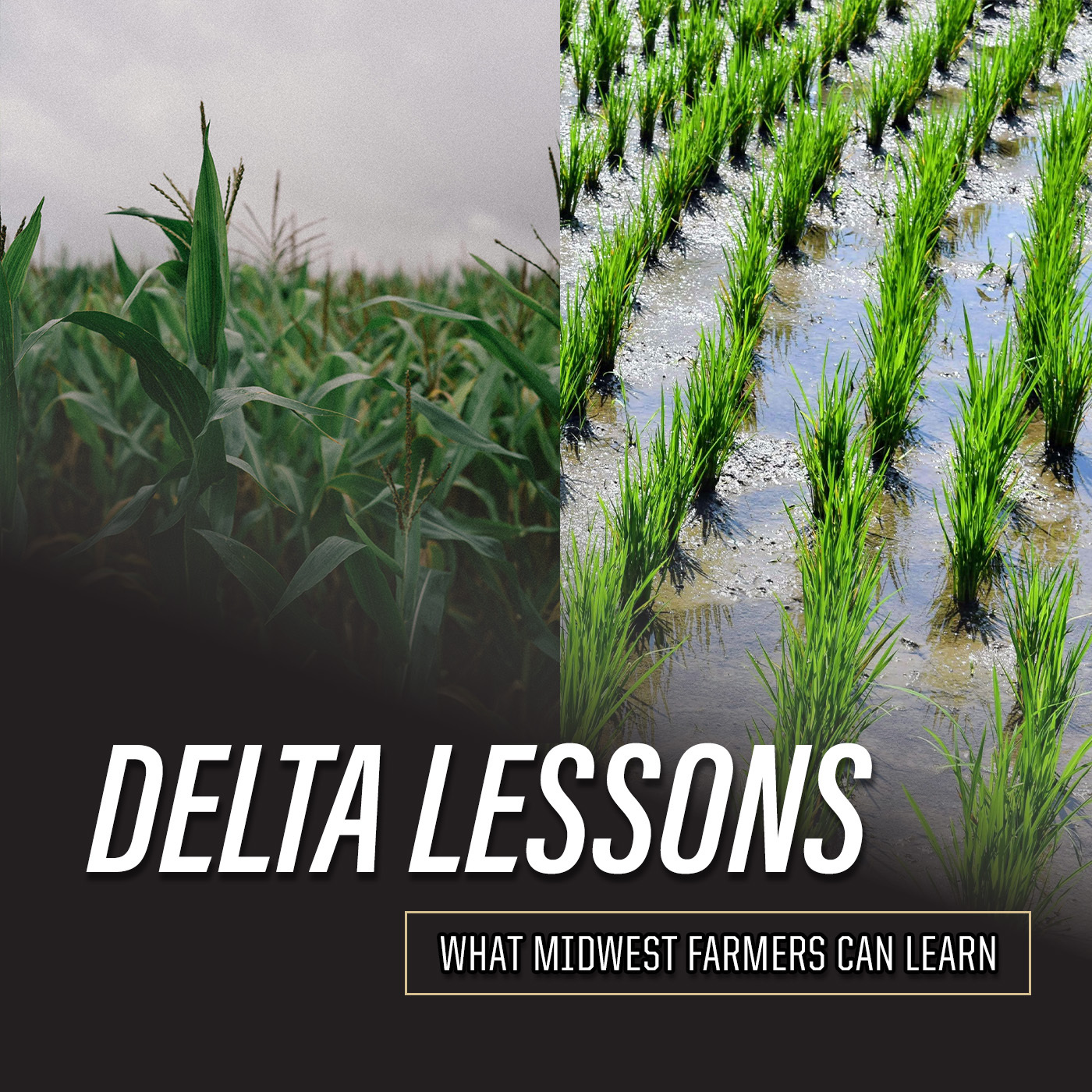
Southern agriculture operates in a very different environment than the Midwest — different crops, different water management systems, different land structures, and different production risks. But there are powerful lessons for commercial grain producers everywhere. In this episode of the Purdue Commercial AgCast, we launch a new mini-series: Lessons From the Delta. After traveling to Arkansas and the Mississippi Delta region, Chad Fiechter and Todd Kuethe share what stood out most about crop diversity, irrigation intensity, farm structure, and regional economics. From rice and cotton production to groundwater dependence and large-scale irrigation systems, this discussion explores how southern farmers manage risk differently than Midwest corn and soybean producers. The episode also highlights how climate, infrastructure, export access, and conservation programs shape long-term farm strategy in the Delta. While production practices may differ, the business questions are familiar: • How do you manage tight margins? • How do you think about long-term water access? • What does scale look like in a different production system? • And what can Midwest farmers learn from a region built around irrigation? This episode sets the stage for upcoming interviews with producers, researchers, Extension leaders, and conservation organizations across the Delta region. We’ll also be sharing additional video clips and behind-the-scenes content from the trip on our YouTube channel throughout the series. Subscribe to the Purdue Commercial AgCast so you don’t miss upcoming episodes in the Lessons From the Delta series. For more farm management resources, visit: 👉 https://purdue.ag/commercialag Subscribe to the podcast: 👉 https://purdue.ag/agcast Follow us: X: https://twitter.com/PUCommercialAg Facebook: https://www.facebook.com/PUCommercialAg LinkedIn: https://www.linkedin.com/company/center-for-commercial-agriculture #Purdue #FarmManagement #AgEconomy #Agriculture #Irrigation #Rice #Cotton

Ep 207Farmer Sentiment Drops Sharply — What It Signals for Farm Finances in 2026
Farmer sentiment dropped sharply to start 2026, reflecting growing economic concerns across U.S. agriculture. But beyond the headline decline in the Purdue/CME Group Ag Economy Barometer, this episode focuses on what the shift signals for farm financial stress, investment decisions, and risk management in the year ahead. In this Purdue Commercial AgCast episode, Michael Langemeier reviews the January survey results and explains the forces behind the drop in producer sentiment. Financial pressure appears to be building, as more producers report tighter cash flow, increased operating loan needs, and a growing share of loans tied to unpaid carryover debt. At the same time, machinery investment plans are slowing, and more farmers expect challenging conditions for U.S. agriculture over the next five years. Export concerns—especially related to soybean competitiveness with Brazil—also weighed on expectations. While short-term farmland value expectations remain steady, strong land values are supporting balance sheets even as margins stay tight due to high input costs and lower output prices. The episode highlights the contrast between stable asset values and stressed cash flow, a key theme shaping the farm financial outlook. This discussion goes beyond the numbers to focus on the implications for farm businesses and what producers should be watching as 2026 unfolds. Full Ag Economy Barometer report: 👉 https://purdue.ag/agbarometer The Ag Economy Barometer sentiment index is calculated each month from 400 U.S. agricultural producers’ responses to a telephone survey. For farm management content, visit: https://purdue.ag/commercialag Subscribe to audio: https://purdue.ag/agcast Socials: https://twitter.com/PUCommercialAg, https://www.facebook.com/PUCommercialAg #Purdue #AgBarometer #FarmManagement #FarmEconomy #AgOutlook

Ep 206When Will Autonomous Farm Equipment Actually Pay?
Are autonomous tractors and farm automation actually cost-effective? In this episode of the Purdue Commercial AgCast, Chad Fiechter and Josh Strine discuss new research on the economics of large-scale autonomous farm machinery and what it means for machinery investment and labor strategy on commercial corn and soybean farms. The results show that under today’s performance and cost levels, most farms aren’t yet in the economic “ballpark” for autonomy — helping producers understand when it could make sense and when it likely doesn’t. The conversation covers machinery efficiency, hardware and software costs, labor wages, and equipment operating hours, along with how these factors affect profitability in whole-farm systems. It also explores where autonomous equipment might work first — including labor-constrained farms, expansion situations, and specific field operations — and how future improvements in technology could shift the outlook. 📄 Research article: https://doi.org/10.1016/j.atech.2025.101599 🌐 Article summary: https://purdue.ag/3Ze0oir 🌐 Purdue Center for Commercial Agriculture: http://purdue.edu/commercialag 📝 Transcript: https://purdue.ag/3ObvyET 🎧 Subscribe to audio: https://purdue.ag/agcast #AutonomousFarming #FarmManagement #AgTechnology #Purdue #AgriculturalEconomics #CommercialAgriculture

Ep 205Adaptation & Strong Relationships: A Conversation with Ben Brown
Adaptability and strong relationships are becoming just as important as yields and costs in today’s farm economy—and that’s the focus of this episode of the Purdue Commercial AgCast. Chad Fiechter is joined by Ben Brown of the University of Missouri’s Food and Agricultural Policy Research Institute (FAPRI), along with guest hosts, graduate students Avery Pound and Jonah Armstrong, for a conversation that builds on Brown’s recent presentation at the Purdue Top Farmer Conference. Following his talk on the long-term outlook for corn and soybean markets, Brown expands the discussion to explore how global economic conditions, energy markets, and commodity pricing trends influence farm profitability over time. While cotton is used as a case study in parts of the conversation, the focus remains on broader lessons that apply across crop and livestock operations, including long-run decision-making, strategic partnerships, and how changes in capital and land ownership are reshaping agriculture. The episode highlights why understanding market signals—and building the right relationships—matters for farmers navigating uncertainty and positioning their operations for the future.

Ep 204Ag Barometer Insights: December 2025 Survey Results
Farmer sentiment dipped slightly in December, with the Purdue University/CME Group Ag Economy Barometer dropping 3 points to 136. The decline was attributable to a softening in producers’ long-term outlook. The Future Expectations Index fell 4 points from the previous month to 140, while the Current Conditions Index remained steady at 128. Crop producers expressed increased concern about the competitiveness of U.S. soybean exports as Brazil expands its role in global markets, contributing to the more cautious outlook. The survey was conducted Dec. 1-5, 2025. Purdue ag economists James Mintert and Michael Langemeier review the results from the Ag Economy Barometer and give their insights into farmer sentiment and the farm economy. The Ag Economy Barometer sentiment index is calculated each month from 400 U.S. agricultural producers’ responses to a telephone survey. Further details on the full report is available at https://purdue.edu/agbarometer. Slides and the transcript from the discussion can be found at https://purdue.ag/agcast204. You can find the FULL video episode on our YouTube channel. Visit https://youtu.be/0Jnm3_yti_g to subscribe and watch. Podcast provided by Purdue University's Center for Commercial Agriculture. For more economic information and insights on the Ag Economy Barometer, visit us at http://purdue.edu/commercialag. Subscribe to audio: https://purdue.ag/agcast Socials: https://twitter.com/PUCommercialAg, https://www.facebook.com/PUCommercialAg