
Male Rape Scandal: The Boy Scouts of America-backed by churches and royalty-taught boys to trust their leaders while secretly keeping "perversion files". Hundreds of thousands of boys abused.
Psychopath In Your Life with Dianne Emerson · Dianne Emerson
Audio is streamed directly from the publisher (traffic.libsyn.com) as published in their RSS feed. Play Podcasts does not host this file. Rights-holders can request removal through the copyright & takedown page.
Show Notes
"When an institution knows who the predators are and moves them instead of stopping them, the cover-up becomes part of the crime."
The Boy Scouts of America Abuse Scandal: A Century of Hidden Files, Predators, and the 2022 Survivor Settlement
The Boy Scouts of America abuse scandal is one of the largest child abuse cases in U.S. history. For decades, the Boy Scouts promised parents honor, safety, and leadership for their sons. Instead, court records reveal a century-long pattern of hidden abuse and institutional silence.
This episode examines the Boy Scouts abuse scandal, the secret "ineligible volunteer" files documenting suspected predators, and how thousands of boys were harmed while the organization continued to present scouting as safe. The program also traces the Boy Scouts abuse timeline, from early warnings in the 1910s to the historic bankruptcy and 2022 survivor settlement that exposed the scale of the abuse.
Using court filings, investigative reporting, and survivor testimony, the episode explores how the Boy Scouts of America sexual abuse scandal unfolded and why the warning signs were ignored for decades.
Beyond the Boy Scouts, the episode also examines a broader and often overlooked issue: the rape and abuse of boys inside trusted institutions. From scouting programs to boarding schools and church-run youth organizations, the same pattern appears again and again—warnings ignored, victims silenced, and institutions protecting themselves first.
Music: Doctor My Eyes (Remastered)
An update on our efforts to protect minors and families - YouTube Blog
On YouTube's Digital Playground, an Open Gate for Pedophiles - The New York Times
YouTube Is A Pedophile's Paradise | HuffPost Latest News
Creative Good: Google Profits from Pedophiles
Boy Scouts Abuse Survivor Shares His SHOCKING Life Story
Survivor Stories:
A Former Man City Scout Repeatedly Abused Me As A Child | Minutes With | @LADbible TV
A new documentary tells the story of Boy Scouts sexual abuse scandal | Nightline
5 Signs That A Child Is Being Abused or Groomed
Survivor Stories: I was a male victim of sexual abuse
I was abused as a child - Sharing my story to help others
***********************************************************************************
***********************************************************************************
Excellent Examples: A Survivor Story: Guerry Glover
I was sexually abused by my step-grandad in front of my family | Perry Power
INCEST: A Family Tragedy (TW: Graphic Descriptions)
Confessions of a Predator - Full Segment - YouTube
When girls do it: an examination of female sexual predators (EXCLE)
Harrison James EP1: I was being sexually abused by my stepmother at 13, then she had my baby.
***********************************************************************************
***********************************************************************************
Baden Powell - Scouting Documentary (1984)
Family History: Lord Robert Baden Powell
What Made Robert Baden Powell the Hero of Mafeking?
Named his son Peter Lord Robert Baden-Powell
Pan is Satan – Non-Fiction – STORIES BY XPANTHER
Crowley: Night of Pan - Wikipedia
Aleister Crowley: His Story, His Elite Ties and His Legacy - The Vigilant Citizen
Aleister Crowley- The 'Great Beast' & the Gods of Greece | johnkruseblog
Peter Pan's Dark Origins: A Place Your Childs Mind Should Never Land - Little Light Studios
Peter Pan's dark side emerges with release of original manuscript | JM Barrie | The Guardian
Peter Pan (character) - Wikipedia
More Satanism... the band KILLERS
Scout's Honor: The Secret Files of the Boy Scouts of America FULL MOVIE Documentary - Watch Online
Scouting America | Prepared. For Life.™
History of Scouting America - Wikipedia
71 Years Ago Today: Hitler Youth vs. The Boy Scouts – PJ Media
FORUM FOR VICTIMS OF CHILD ABUSE: ON PEDOPHILE ORGANIZATIONS
Hitler Youth Camps in America (1935-1941)
Boy Scouts Are From Mars, Girl Scouts Are From Venus - The Atlantic
Girl Scout History | Girl Scouts
If You Like Girl Scout Cookies, Police Have a New Warning — Best Life
Boy Scouts announce name change as girls join ranks
Opus: The Cult of Dark Money, Human Trafficking, and Right-Wing Conspiracy inside the Catholic Church
Do you have a psychopath in your life? The best way to find out is read my book. BOOK *FREE* Download – Psychopath In Your Life4
Support is Appreciated: Support the Show – Psychopath In Your Life
Tune in: Podcast Links – Psychopath In Your Life
Download Pods here: TOP PODS – Psychopath In Your Life
My old discussion forum with last 10 years of victim stories, is back online. Psychopath Victim Support Community | Forums powered by UBB.threads™
Google Maps My HOME Address: 309 E. Klug Avenue, Norfolk, NE 68701 SMART Meters & Timelines – Psychopath In Your Life
1890–1910 — Elite Scandals and Boarding School Concerns
One of the first major public scandals involving elite abuse of boys was the Cleveland Street scandal.
Key facts:
- Telegraph boys were exploited in a London brothel
- Elite clients were implicated
- the scandal reached close to the royal court
Around the same period, educators began warning about:
- abuse inside boarding schools
- hazing and sexual violence among students
- predatory teachers
However, these warnings were rarely pursued publicly.
Children in clubs, church programs, and youth organizations historically received little or no sex education, and that gap is frequently cited in survivor testimony and institutional investigations.The key issue is that sex education is usually delivered through schools, while many abuse cases occur in extracurricular or religious environments where that education is not provided.
Youth Organizations Rarely Teach Sex EducationPrograms such as:
- Boy Scouts of America
- Girl Scouts of the USA
- church youth ministries
- sports leagues
generally do not teach sex education.
Instead they focus on:
- leadership
- religion or moral instruction
- outdoor activities or athletics.
Even organizations that include health badges or life-skills training typically avoid explicit sexual education topics.
Religious Programs Often Avoid Sexual TopicsMany church youth programs emphasize moral teachings rather than biological education.
For example:
- The Church of Jesus Christ of Latter-day Saints youth instruction emphasizes chastity and modesty.
- Catholic youth programs historically emphasized abstinence and purity.
- Evangelical youth ministries often focus on abstinence pledges.
In many of these settings:
- anatomical language may be avoided
- explicit sexual discussions are discouraged.
Many youth organizations rely on adult authority figures and trust-based environments.
Children are often taught:
- respect leaders
- obey adults
- trust mentors.
Psychologists studying abuse cases note that these structures can make it harder for children to recognize or report misconduct.
Abuse Prevention Education Is a Recent DevelopmentExplicit teaching about abuse recognition only became common after the late 20th century.
A major turning point in the United States was the Child Abuse Prevention and Treatment Act (1974), which led to mandatory reporting systems and increased awareness.
Even after that, many youth organizations did not adopt formal abuse-prevention training until the 1990s–2010s.
School Knowledge Doesn't Always Transfer to Institutional ContextsEven when children learn basic sex education in school, they may not connect that knowledge to abuse situations.
Researchers studying institutional abuse cases found that children often believed:
- the adult was "teaching" them something
- it was part of a game or special attention
- they would get into trouble if they told.
This confusion appears frequently in testimony from survivors connected to organizations such as the Boy Scouts of America and religious institutions.
Key TakeawayHistorically:
- schools provided limited sex education
- youth organizations provided almost none
- church settings often avoided sexual discussion entirely
It explains why churches became deeply tied to the program.
How the charter system worked
The Boy Scouts did not usually run local troops directly. Instead, they licensed the program to outside institutions called chartered organizations.
Typical charter partners included:
- The Church of Jesus Christ of Latter-day Saints
- Roman Catholic Church
- United Methodist Church
- civic groups like Rotary, Lions Clubs, and schools
By the 2000s, about 70% of Scout units were sponsored by religious institutions.
What the charter agreement actually requiredEach year the church or sponsor signed a charter agreement with the Boy Scouts. Under that agreement the church agreed to:
- Own and operate the troop
- Select the adult leaders
- Provide meeting space
- Supervise the program locally
The Boy Scouts national organization provided:
- the program materials
- training manuals
- uniforms and branding
- insurance coverage
- background check guidance (later years)
So legally, the troop was often technically run by the church, not the national organization.
Why churches agreed to sponsor troopsFor many churches the Scouts functioned as a youth ministry program.
Benefits included:
- structured activities for boys
- leadership training
- moral education
- recruitment and retention of young families
For example:
The The Church of Jesus Christ of Latter-day Saints made Scouting the official youth program for boys in the United States for decades, sponsoring tens of thousands of troops.
Why this mattered legally in abuse casesWhen abuse occurred, the legal question became:
Who was responsible?
Possible defendants included:
- the troop leader (individual offender)
- the chartered organization (church or sponsor)
- the local Boy Scout council
- the national Boy Scouts organization
- me lawsuits argued that churches shared responsibility for screening and oversight.
How this played into the bankruptcy settlement
During the bankruptcy negotiations, charter organizations sought legal protection from future lawsuits related to Scout troops they sponsored.
Different groups handled this differently:
- The United Methodist Church negotiated a $30 million settlement to help protect its congregations.
- Some Catholic dioceses contributed funds through local councils.
- The The Church of Jesus Christ of Latter-day Saints reached a separate $250 million settlement in 2022 to resolve claims connected to Mormon-sponsored troops.
These payments were part of the larger $2.46 billion survivor trust.
Why critics say the system created risk
Investigations and court records showed that the charter structure sometimes produced diffused responsibility:
- churches assumed the Boy Scouts handled safety policies
- councils assumed churches supervised leaders
- national leadership assumed local sponsors controlled the troops
In abuse cases, this blurred accountability, which became a central issue in litigation.
Many Scout leaders were church membersBecause churches sponsored a large share of troops, many adult volunteers were:
- members of the sponsoring church
- parents in the congregation
- sometimes clergy or church youth leaders
For example, troops sponsored by the The Church of Jesus Christ of Latter-day Saints were often led by adult male members of the congregation assigned by the church. Similar patterns existed in Catholic and Methodist congregations.
Some abuse cases involved those leadersCourt filings and the released "Ineligible Volunteer Files" show that some individuals accused of abuse were:
- troop leaders
- assistant scoutmasters
- merit badge instructors
- camp staff
In troops sponsored by churches, those individuals could also be members of the church that chartered the troop.
But the offenders were not limited to clergyMost of the accused individuals documented in Boy Scouts files were volunteer leaders or adults connected to the troop, not necessarily ordained clergy.
They often included:
- teachers
- community volunteers
- parents
- youth leaders
Because churches sponsored the troops, lawsuits sometimes argued that the chartered organization had responsibility for screening and supervising leaders.
At the same time, the Boy Scouts of America maintained its own internal files documenting suspected offenders.
That overlapping structure — church sponsor, local council, national organization — became central to the litigation over who was responsible.
The files often called the "perversion files" were internal records maintained by the Boy Scouts of America.
Officially they were known as the Ineligible Volunteer Files (IV Files). They documented adults who were barred from participation in scouting because of suspected misconduct, including sexual abuse.
Where the Files Were StoredFor most of their existence the files were kept at BSA national headquarters.
Key locations over time:
- early decades: New York headquarters
- later decades: Irving, Texas national office
Local councils usually sent reports to the national office, which decided whether to place a person in the IV file system.
The files were physical paper records for most of the 20th century and were later partially digitized.
Who Had Access to Them
Access was very restricted.
Typically limited to:
- national BSA executives
- legal department staff
- selected risk-management personnel
- occasionally law enforcement (if requested)
Local troop leaders or the public did not have access.
In many cases:
- councils were informed that a person was "ineligible"
- but the details of the allegations were not widely shared
This limited disclosure became one of the major criticisms in later lawsuits.
What Information Was in the FilesEntries often included:
- letters from local scout leaders reporting concerns
- internal memos about suspected misconduct
- witness statements
- correspondence with police (sometimes)
- decisions about banning the individual
However, the files did not always mean the person was reported to law enforcement.
In many cases the response was simply:
- remove the volunteer
- mark them "ineligible"
- keep the record internally.
When the Files Became Public
The existence of the files became widely known after litigation in the 1980s and 1990s.
A major moment came in 2012, when an Oregon court ordered thousands of documents released in the case of Doe v. Boy Scouts of America.
That release exposed:
- thousands of internal abuse reports
- records dating back to the 1920s.
Not exactly.
The Boy Scouts of America is only one member organization of the global scouting movement overseen by the World Organization of the Scout Movement.
Each national scouting body operates independently.
Examples:
- The Scout Association (UK)
- Scouts Canada
These organizations had their own disciplinary systems.
Some also kept internal records of banned volunteers, but there was no universal global file system like the BSA IV files.
- Historically:
- information sharing between countries was limited
- banned volunteers in one country could sometimes move elsewhere without the same restrictions.
Why the Files Became So Controversial
Critics argued the system showed the organization knew about many suspected offenders but handled them internally.
Major criticisms included:
- offenders sometimes removed quietly rather than reported
- records not shared widely enough to prevent re-entry
- lack of transparency with parents or the public
Supporters of the system argued the files were intended to prevent known offenders from volunteering again, but the debate over whether they were used effectively became central to later lawsuits.
Key point: The IV files show that the organization maintained internal records of suspected predators for decades, but the restricted access and limited reporting practices became one of the central issues examined during the later abuse litigation.
In the Ineligible Volunteer Files (IV Files) maintained by the Boy Scouts of America, relocation or quiet removal of a suspected offender usually appeared indirectly in correspondence and administrative notes, rather than in a formal category labeled "relocated."
The files were essentially case folders, and they often contained letters between local scout councils and the national office. When a person was moved, resigned, or quietly removed, it tended to show up in several recognizable patterns.
"Resigned" or "No Longer Registered"
One common notation in the files was language such as:
- "volunteer has resigned"
- "registration not renewed"
- "leader removed from position"
This meant the individual was no longer active in that troop or council. However, the record often did not clearly state why in the summary line.
The detailed letters inside the file sometimes contained the actual allegation.
Correspondence Between Councils
When a leader moved to another region, files sometimes contained letters like:
- a council asking the national office if a person was eligible
- national staff responding that the individual was "ineligible for registration."
- Example pattern in the records:
- complaint from local troop
- council informs national office
- national office adds person to IV file
- later inquiry from another council about that person
These letters sometimes reveal that the person attempted to register elsewhere.
"Confidential" Warnings
In some files the national office sent letters to councils marked:
- "confidential"
- "do not register this individual"
- The letters might say the person had been barred from scouting but often avoided explicit descriptions of the allegations.
Transfers or Moves
Relocation sometimes appeared in notes indicating:
- the person moved to another city or state
- the council lost contact
- the leader transferred to another troop
The files sometimes included follow-up letters asking whether the person had reappeared in scouting elsewhere.
Not All Files Show a Completed Ban
Another important detail historians found in the IV files:
Some folders show investigations that ended without a ban.
Reasons included:
- lack of proof
- offender leaving before action taken
- concern about defamation liability
In those cases, the file might simply state that the individual "left scouting."
How Researchers Identified Relocations
- When historians and journalists later analyzed the files, they looked for patterns such as:
- repeated registrations in different councils
- correspondence between councils about the same person
- notes showing a volunteer leaving one troop immediately after allegations
These patterns suggested that in some situations offenders left quietly rather than being publicly reported.
What the Files Were Designed For
The IV system was originally intended as a central blacklist to prevent known offenders from registering again.
If someone on the list attempted to volunteer:
- their registration should be rejected by the national office.
However, the effectiveness depended on:
- councils reporting the allegations
- accurate identification of the individual
- the offender attempting to re-register.
Key point: Relocation in the files usually appears through administrative language (resigned, moved, not re-registered) and letters between councils, rather than an explicit note saying someone was "transferred after abuse."
Researchers had to piece together those movements by reading the entire correspondence chain inside each file.
The True Story Behind Peter Pan Is Crazy & A Little Creepy
Prepare yourself — we are about to enjoy (or endure, depending on your perspective) a Peter Pan renaissance.
This coming spring, Finding Neverland (the musical version of the 2005 film) comes to Broadway, starring Matthew Morrison and Kelsey Grammer. And, next summer, Pan — a Peter Pan prequel, of sorts — hits movie theaters with Hugh Jackman as its villain, Blackbeard. But, this Thursday, NBC presents Peter Pan Live! with Allison Williams playing the legendary Boy Who Never Grew Up, along with Christopher Walken as Captain Hook.
Peter Pan was last performed live on TV in 1955 and again in 1956, starring Broadway icon Mary Martin, the originator of the theatrical role. A record 65 million viewers tuned in. Will this version break records, too? Is Allison Williams the millennial Martin? We shall see. At the very least, the show will be something the entire family can hate-watch, drink-watch, and simply just regular-watch, all at the same time.
Peter Pan has had many incarnations over the years, but the origins of the tale, as well as the fates of its author, J.M. Barrie, and the children who inspired it, turn out to be much, much more interesting. Ahead, we've put together a quick primer.
Barrie & The Boys
J.M. Barrie was born in 1860, the son of Margaret and Alexander Barrie, in the Scottish town of Kirriemuir. He had an older brother, David, who was known to be one of those beautiful golden children who everyone adored. In the winter of 1867, David was hit by a fellow ice-skater. He fell, cracked his skull, and died. Barrie's mother never recovered mentally, and was said to find small comfort in the fact that David would remain a boy forever. It was here that Barrie's lifelong obsession with boys and the preservation of their innocence became anchored in his psyche.
Barrie moved to London, and, in 1894, married an actress named Mary Ansell. As a kind of wedding present, he gave her a St. Bernard dog. The couple never had children and Barrie, evidence suggests, never consummated their marriage. He just as much declared it in his story "Tommy and Grizel," (1900) about a toxic marriage, which he wrote six years into his marriage with Ansell: "Grizel, I seem to be different from all other men; there seems to be some curse upon me…You are the only woman I ever wanted to love, but apparently I can't." The marriage between J.M. and Mary did not last, and they divorced in 1909.
In 1898, Barrie met a pair of boys in Kensington Gardens, an expanse adjacent to London's Hyde Park. George and Jack Llewelyn Davies, aged 5 and 4, were walking with their nurse. Barrie began to see them there repeatedly, and he befriended them. Soon after, he met their parents, Sylvia and Arthur. Later, three more sons were born: Peter, Michael, and Nico. The Davies clan began to let Barrie into their lives, and gradually Barrie became "Uncle Jim."
In the book, a boy named David is befriended by the narrator, who pretends to have a son of his own who died. He uses this lie to create empathy with David's parents. The narrator is particularly excited that David's mother, Mary, has been duped, which allows him to "take [David] utterly from her and make him mine."
Within the novel, the narrator invents a story about a magical boy named Peter Pan who never grows old, and who lives in Kensington Gardens.
In his biography J.M. Barrie and the Lost Boys, Andrew Birkin stresses that, despite it all, he doesn't believe Barrie was a sexual predator of children. Barrie, he says, was "a lover of childhood, but was not in any sexual sense the pedophile that some claim him to have been." It's a similar defense many provide for Michael Jackson: that his obsession with boys, deep-seated and obsessive as it was, had no physical aspect to it.
But, Piers Dudgeon, in his more damning biography Neverland: J.M. Barrie, the Du Mauriers, and the Dark Side of 'Peter Pan', thinks differently, digging up incriminating evidence that there was more to Barrie's attachment to the Davies children than simple protective friendship.
First, there are the letters he wrote to Michael Llewelyn Davies, who is often thought of as Barrie's favorite Davies child. On the eve of Michael's 8th birthday, in June 1908, Barrie wrote:
"I wish I could be with you and your candles. You can look on me as one of your candles, the one that burns badly — the greasy one that is bent in the middle. But still, hurray, I am Michael's candle. I wish I could see you putting on the redskin's clothes for the first time... Dear Michael, I am very fond of you, but don't tell anybody."
And, then there is the matter of Barrie becoming the boys' guardian. Arthur Llewelyn Davies died from cancer of the jaw in 1907, and Sylvia died of lung cancer in 1910. Sylvia had left a handwritten document that said: "What I wd like wd be if Jenny wd come to Mary & that the two together wd be looking after the boys & the house." (Mary was the boys' nanny; Jenny was Mary's sister.) Barrie transcribed the will himself and sent it to the boys' maternal grandmother, altering Jenny to Jimmy, so it appeared that Sylvia wished for him to become the boys' guardian. Intentional, or just a really convenient accident? Regardless, the children became his to care for. But, amid all these machinations, there is, as of yet, no hard evidence that Barrie ever physically abused his charges.
The Fate Of The Davies
In 1915, George, the oldest of the Davies boys, was killed in the World War I, fighting with his regiment in Flanders. The death of his brother caused Michael and Barrie to grow even closer. Michael left home to attend Eton College and had a hard time adjusting. He was troubled and antisocial, but became very close with Rupert Buxton, the son of a decorated baronet. The two reportedly became inseparable, spending time both at the university and on holiday together. In May of 1921, Davies and Buxton drowned together in Sandford Pool, a body of water a few miles from Oxford. Some reports say that the bodies were found clinging to each other. Theories of how and why they died abound, but some believe that Buxton and Davies were lovers, and this was a suicide pact. In later interviews, Michael's younger brothers Peter and Nico acknowledged suicide as a likely explanation.
Years later, Peter Llewelyn Davies became a successful publisher. Many of the letters between Michael and Barrie were destroyed by him, as he grew to dislike having his name associated with Peter Pan. (He is quoted calling Peter Pan "that terrible masterpiece.") Many, including his son Ruthven, imply that the unwanted fame drove Peter to become an alcoholic. In April 1960, Peter threw himself under a subway train in London.
Barrie died of pneumonia in 1937. He bequeathed the copyright to all of his Peter Pan work to the Great Ormond Street Hospital, a hospital for children, which still greatly benefits from owning the rights.
Peter Pan & Boyology
No writer can predict the timing of their work and how it will resonate. But, Peter Pan, coinciding with a cultural obsession with boyhood at the time, struck a powerful chord with readers of the early 20th century. Amid the upper and middle classes, there was a growing paranoia that their boys were getting "soft" and losing their virile masculinity. This culminated in Henry William Gibson's book Boyology, a pseudo-science tome that insisted parents and institutions must preserve and honor the "wildness" of boyhood. "When he starts out to be a boy, he is more a little beast," writes Gibson, "He is, though, a man in the making." A wave of efforts to protect and develop a kind of organic juvenile boyhood commenced. Robert Baden-Powell writes Scouting for Boys and sparks the Boy Scout movement (1908); Father O'Flanagan creates Boys Town in Nebraska (1917).
Yet Peter Pan's placement amid this "boyology" movement is a bit more artful and slippery. "I see Barrie as being in conversation both with and against these boyologists," says Brian Herrera, a Princeton professor who teaches a course in "Queer Boyhoods." "He shares with the boyologists the idea that there is something precious and extraordinary about boyhood, but he doesn't seem to see adult masculinity as the natural next step of boyhood wildness, but as a cruel step away from the magic of boys."
Peter and the Lost Boys are the boys who, as the story goes, "fall out of their prams when the nurse is looking the other way and if they are not claimed in seven days, they are sent far away to the Never Land" where Peter Pan is their captain. To our contemporary eyes, this can be seen as a queer allegory. "Peter Pan's defiance is read as an abdication of the responsibility of maturity and, like gays, an abdication of the responsibilities of patriarchal heterosexual masculinity," observes Herrera. "That Peter finds a non-procreative, homosocial world to be ample enough for his everlasting happiness? That's pretty darn queer."
And, still, the story of Peter Pan endures. "…in Peter Pan, Barrie achieved the rarest alchemy of all, the one that no writer can plan or predict: he invented a myth," wrote Anthony Lane in his 2004 essay about the author in The New Yorker. Peter Pan, even when reading or watching it as a child, has a rare sadness to it. It feels infused with a melancholic ache not often found in the protective, parent-friendly children's literature of today. Perhaps, like all myth, it is because of the pain and tragedy woven into its creation that makes it so timeless. Under the layers of Disney fairy dust, summer blockbuster bravado, and, now, Allison Williams's pixie-cut wig, is a deeper, more complicated story. Source: The True Story Behind Peter Pan Is Crazy And A Little Creepy
Who the God Pan Was
In Greek mythology, Pan was:
- a nature deity of forests, mountains, and shepherds
- depicted with goat legs, horns, and a flute (pan pipes)
- associated with wildness, sexuality, and untamed nature
the source of the word "panic," because his sudden appearance was said to frighten travelers.
Pan represented instinct, wilderness, and freedom from civilized rules.
Why J. M. Barrie Used the Name "Pan"
The author J. M. Barrie almost certainly drew on the classical myth intentionally.
Peter Pan shares several symbolic traits with the Greek god:
- Wild child of nature Peter lives outside civilization in Neverland, similar to Pan living in forests.
- Musical and playful spirit Pan plays pipes; Peter Pan is constantly playful and mischievous.
- Refusal of adult society Both figures represent freedom from social rules and adulthood.
- Leader of youthful followers Pan in myth leads nymphs and spirits; Peter leads the Lost Boys.
So the name "Pan" signals a wild, eternal spirit of youth and nature.
Why Some People Link It to Secret SocietiesThe speculation comes from the fact that Pan imagery appears in some occult or esoteric traditions, especially in the 19th and early-20th century when Barrie was writing.
Groups influenced by romantic mysticism sometimes used Pan as a symbol of:
- primal nature
- liberation from social constraints
- ancient pagan wisdom
However, historians generally see Barrie's use of Pan as literary symbolism, not a coded reference to secret societies.
Barrie was deeply influenced by:
- classical mythology
- Victorian fairy traditions
- children's fantasy literature
The Real Literary Meaning
In literature, Peter Pan = the spirit of childhood that refuses civilization.
The name "Pan" reinforces the idea that Peter is:
- wild
- free
- outside adult society
- closer to myth than reality.
Barrie first named the play The Boy Who Hated Mothers
The original title reflected Barrie's complex relationship with his mother, his two failed marriages, and the fact that, although he raised the Llewellyn Davies' children as their guardian, Barrie had no biological children. Some speculate Barrie never consummated his marriages
It seems J. M. Barrie based the character of Peter Pan on himself.
Barrie put these emotions into his art, creating Peter Pan, a week-old baby who runs away to play with the fairies and feels rejected when he returns to discover his window closed and his mother cuddling another baby. In "The Boy Who Wouldn't Grow Up," Peter Pan is a tween searching for a mother to bring back to Neverland, settling on Wendy and her descendants to care for him and his Lost Boys. Wendy isn't a proper mother. She is still a child, caring for other children, as his mother and sister once did.
Pan is also known for his ability to incite panic, leading this god into the realm of trickster gods. Peter's moral ambiguity and rebelliousness center him squarely in the realm of trickster figures (per Eva Valentova's essay). Peter Pan certainly embodies the archetype of one who revels in chaos. He regularly incites it by starting fights with Captain Hook, encouraging wildness in the Lost Boys, and insisting the only rule in Neverland is that you can't grow up!
Mermaids
Peter lures children like Wendy and her brothers to Neverland, much like Persephone was kidnapped and taken to the underworld by Hades. This connection brings us back to Peter Pan's connections to, and obsession with, death. Although Peter Pan is depicted as mischievous in Disney's sanitized version of the tale, in the original play and book, Peter is decidedly more sinister. His affinity with the mermaids who transform into sirens in the moonlight suggests Peter Pan himself might be prone to transformation as well.
He is sometimes associated with sexual excess in mythology, but classical sources do not portray him primarily as a god of rape or torture.
The name "Pan" was used mainly because Barrie wanted a wild, woodland, mischievous spirit.
Barrie was also known to have had friendships with other children, both before he met the Davies boys and after they had grown up. There has since been accusations that Barrie was a pedophile.
One source for the speculation is due to a scene in the novel "The Little White Bird", in which the protagonist (who resembles Barrie) helps a small boy undress for bed, and at the boy's request they sleep in the same bed.
Disney 's white washed version of the character has toned down the sexual perversion but still retains the "devil-like" attributes. Enticing the little girl to leave her parents authority and go to a place with no rules… "there is only one thing you have to do… leave home behind and you can never come back". It's the same lie Lucifer told the angels in heaven… "don't you want to go to a place where we don't ever have to follow the rules… all you have to do is leave home behind and you can never ever come back?" Pans friends, not accidentally called "the lost boys" inhabit an island called "Neverland". Where "selfishness" and "do what thou wilt" is the rule of the day. Kind of sounds like a similar story where a bunch of "pirates" or "Lost Angels" inhabit this "island in space" called planet earth.
Michael Jackson's was so obsessed with the story of Peter Pan that he ended up building his own private theme park in his backyard called "Neverland". Like Barrie, Jackson seems to have an infatuation with the sexual deviant god Pan, as depicted in the artwork hanging in his studio. The painting has jackson surrounded with naked little boys and girls while holding the Pan pipes. His ranch full of sculptures of little boys and girls. The very flag and logo for the Neverland Ranch is of a little boy. Coincidence?? You be the judge.
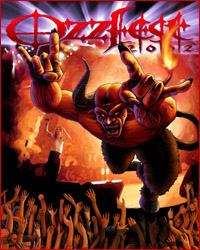
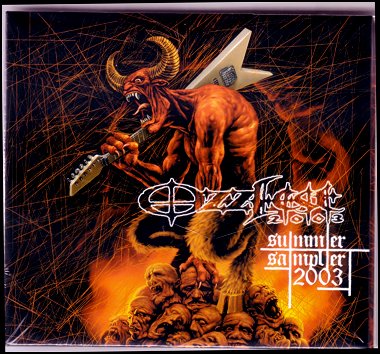
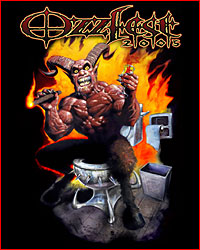
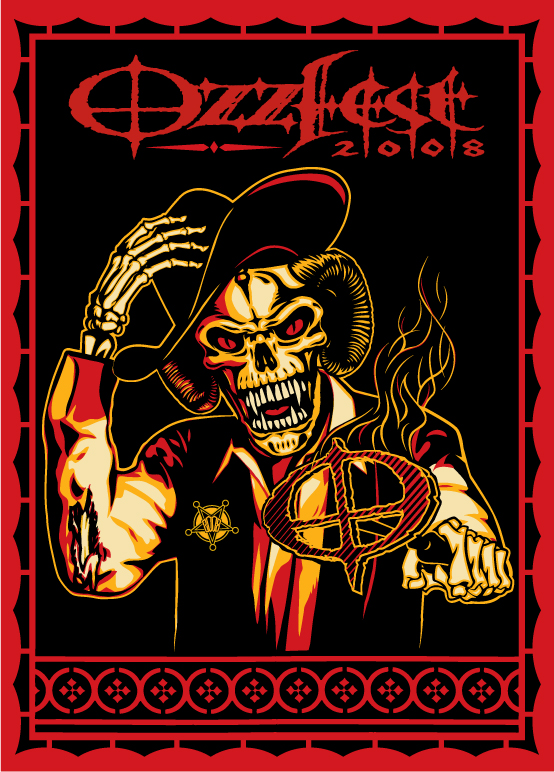
Heavy Metal rocker and known Satanist, Ozzy Osbourne, has featured Pan on all of his recent album covers (2000, 2001, 2002, 2003, 2004, 2005, 2006, 2007, 2008). Ozzy is bound for Hell. The Rock 'N' Roll industry is infamous for worshipping Pan, who is the very embodiment of Rock music. Pan represents Satan, which is what the ever-so-popular Satanic hand sign (more signs) shows, allegiance to the Beast, the coming Antichrist.





By Anthony Roe Published at Beltane 1999
As a schoolboy looking through the pages of Picture Post, I remember being curious about the reproductions of paintings from the walls of Aleister Crowley's Abbey in Sicily, uncovered by the underground filmmaker Kenneth Anger, who produced the Crowley inspired Pleasure Dome.
There was one picture taken in the Chamber of Nightmares, with the sexologist Kinsey strategically posed in the foreground. The picture of a goat was evident. In my youth I did not recognize Pan, the son of Hermes, the Arcadian god of lust and magic who seduces men and women with his pipes and wantonn