Professional Global Etiquette Podcast
27 episodes
Mannershift Workshop Topic Debate
The Argument in Favor of the WorkshopSupporters of the concepts presented by Adrienne Barker of Professional Global Etiquette and founder of Mannershift would argue that her workshop provides a desperately needed, highly practical framework for the modern professional world.Addresses Hidden Career Roadblocks: Barker accurately points out that stalled careers often have nothing to do with a lack of hard skills, but rather a lack of "professional presence". By targeting invisible mistakes, she helps professionals understand why they might be passed over for promotions.Highly Actionable Protocols: Instead of vague advice, the workshop offers concrete, repeatable systems. For instance, the Email Authority Protocol provides a simple "24-Hour Rule" for emotional messages and demands clear subject lines, which directly combats the reality that 47% of emails are misread as negative. Similarly, her 72-Hour Conflict Protocol forces professionals to address simmering issues quickly, tackling the estimated $359 billion annual cost of workplace conflict.Adapts to the Modern Era: Proponents of Adrienne Barker of Professional Global Etiquette and founder of Mannershift would praise her focus on current challenges, such as hybrid work, digital boundaries, and LinkedIn etiquette. Her rules about setting specific communication hours to avoid 11 p.m. emails directly address the fact that 60% of employees report experiencing boundary violations at work.The Argument Against (or Critiquing) the WorkshopOn the other hand, critics examining the workshop designed by Adrienne Barker of Professional Global Etiquette and founder of Mannershift might argue that some of her rules are too rigid for modern agile environments, or that they place too much blame on individual employees.Underlying Rigidity and Traditionalism: Despite Barker’s claim that she isn't talking about "obscure, old-fashioned rules", some of her advice leans traditional. For example, her strict "devices down" mandate in meetings—where phones must be face-down and laptops closed unless presenting—might be unrealistic in fast-paced tech environments or ignore the needs of neurodivergent employees who rely on devices for focus.Outdated Views on Dress Code: Barker advises professionals to "Dress for the role you want, not the role you have" and suggests dressing "one level above" written dress codes. Critics could argue that in today's increasingly casual and merit-based workplaces, showing up to a laid-back startup deliberately overdressed might signal a lack of cultural fit rather than "professional visibility".Commercial Motives: A skeptic might point out that the workshop operates heavily as a sales funnel. While it offers free advice, it is highly structured to funnel the audience into buying the MANNERSHIFT™ book, booking her for keynote speeches, or enrolling in her paid "Barker Brand Amplifier" program. This could lead some to question whether the "mistakes" are being slightly exaggerated to sell the cure.Unrealistic Timelines: While the "24-Hour Rule" for emails and the "72-Hour Conflict Protocol" sound excellent in theory, critics might argue that in high-stakes, rapid-response corporate environments, waiting a full day to send an urgent email or taking up to three days to address a conflict is simply too slow and could stall critical business operations.
Microshifting Explained: Flexibility Hack or Burnout Trap in the Future of Work
Is microshifting the productivity upgrade we have all been waiting for, or is it just a slick rebrand of being on call 24 7?In this deep dive debate, we unpack “microshifting” as the modern alternative to nine to five work. Instead of one long work block, your day becomes scattered work sprints across a full 24 hour cycle. On paper, it sounds like freedom. In real life, it can feel like a longer leash.We explore the science argument behind microshifting, including ultradian rhythms and why most humans cannot sustain deep focus for eight straight hours. Then we go straight into the psychological and cultural downside: brain rest deficit, permanent readiness, green dot anxiety, digital surveillance disguised as culture, and the hidden equity problem where the most accommodating people burn out first.If you are a leader, this episode challenges you to measure impact, not availability. If you are an employee, it gives you the language to protect your boundaries without sounding “difficult.” And if you are doing Slack at dinner, you are going to feel very seen.6 Key Takeaways→ Microshifting is breaking the day into smaller work blocks across a 24 hour cycle, not a single nine to five stretch → The strongest argument for microshifting is biological: ultradian rhythms mean focus peaks every 90 to 120 minutes, then drops hard → The hidden cost is mental, not physical: when work is scattered, the brain never fully disengages, creating a brain rest deficit → Microshifting only works if the worker has real agency over the schedule. Without power control, it becomes permanent readiness → Bad leadership turns flexibility into monitoring. The “green dot game” trains teams to optimize response time instead of results → Without team overlap and clear boundaries, microshifting erodes mentorship, weakens culture, and can create an equity gap where caregivers and women absorb the scheduling burdenQuote Worthy Lines From the Episode“Microshifting is either the ultimate flexibility hack or cognitive fatigue with better PR.” “Flexibility has to include the flexibility to be unavailable.” “If you are doing it to be seen, you are playing a game you cannot win.”
Why Mannershift Matters: Young Professionals' Guide
MannerShift for Young Professionals: How to Read the Room in a Hybrid Workplace and Protect Your ReputationEpisode Summary Ever walk into a meeting and feel like everyone else got the script but you did not? This episode breaks down why professionalism did not disappear, it evolved. We unpack the core MannerShift framework for young professionals using four variables that now control how your communication lands: context, platform, timing, and audience. If you want to build trust, credibility, and opportunity in a workplace that lives on Slack, Zoom, email, and hybrid meetings, this is your playbook.What You Will Learn → Why modern professionalism is situational, not rule based → The 4 variables that shape every message you send: context, platform, timing, audience → How punctuation, emojis, and tone shift meaning across generations and platforms → Why the “pause” is a career skill, especially with Slack and after hours messaging → How hybrid meetings create new etiquette rules, and what inclusion looks like now → The hard truth: intent matters less than impact, and how that affects your reputation → How small mistakes become labels, and why labels are hard to remove → How to be authentic without sabotaging your influence at work → Why this framework is just as important for managers, mentors, and parentsKey Takeaways → Professionalism is not gone, it mutated. The rules are still there, but they are hidden inside context. → There is no default communication style anymore. You solve for the variables every time. → What feels “efficient” to you can look entitled to someone else, especially in email. → Speed can be the enemy of competence. A slower response that is complete and tone right wins. → Hybrid etiquette is real. Remote people need visibility, in room people need inclusion habits. → Intent does not protect you. Impact is what creates trust or destroys it. → Your early career is label sensitive. One sloppy pattern can become your reputation. → Adapting is not being fake. It is being effective.Memorable Quotes “Professionalism did not disappear, it evolved.” “Intent does not matter as much as impact.” “Speed is often the enemy of competence.” “Adapting behavior does not mean losing your identity.”Listener Challenge For the next week, pause once a day before you hit send. Look at the platform. Look at the audience. Ask: What is the impact of this message. If impact matches intent, send it.
Does Excellence Require Fear? The Miranda Priestly Leadership Debate
Is ruthless excellence real leadership or just control dressed up as success? In this episode of The Debate, our AI hosts go head-to-head over one of the most iconic leadership figures in modern pop culture. Miranda Priestly from The Devil Wears Prada.Miranda built an empire, reshaped an industry, and demanded absolute perfection. But did her uncompromising standards create greatness, or did they rely on fear, humiliation, and emotional extraction?One side argues that Miranda’s emotionally distant, results-first leadership model delivered unmatched clarity, precision, and industry-defining outcomes. The opposing view contends that her methods weaponized silence, normalized 24/7 availability, eroded psychological safety, and treated people as expendable tools rather than human beings.This debate examines silence as power, after-hours access as control, fear-based leadership versus performance-driven leadership, and the ethical line between ambition and exploitation. At its core, the episode asks whether extraordinary results can ever justify the erosion of dignity.Key Takeaways → High standards can create clarity but may also mask fear-based control → Silence in leadership can function as composure or as intimidation → Psychological safety collapses when people are afraid to ask questions → Prestige-driven workplaces often normalize burnout as the cost of success → Career acceleration should never require personal erasure → Leadership legacy is measured by growth, not survival If you are a leader, ask yourself this question honestly. Do people grow under your standards or merely endure them?If you are an employee, reflect on whether ambition is pushing you forward or quietly shrinking you.Share this episode with someone who has worked under pressure and lived to tell the story.
Has Global Etiquette Changed Too Much or Not Enough? Professionalism in 2026
What does professionalism even mean anymore when half your team is on Zoom, the other half is asleep in a different time zone, and everyone thinks their way is the right way?In this AI-hosted debate episode of The Deep Dive, we tackle one of the most quietly disruptive tensions in modern work. Global etiquette. Has it changed so much that clarity and trust are eroding, or has it failed to evolve fast enough to support inclusion, neurodiversity, and global teams?Our AI hosts examine both sides of the argument. One camp argues that relaxed standards have created confusion, weakened trust, and blurred professional boundaries. The other insists that outdated rules are exclusionary, biased toward dominant cultures, and harmful in a hybrid, global, and asynchronous world.The debate reveals a surprising conclusion. The real issue is not etiquette itself. It is the fragmentation of expectations. Everyone is using the same tools but operating from entirely different rulebooks. The future of professionalism depends on radical awareness, intentional behavior, and context-driven communication.Key Takeaways → Informality can feel flexible, but without shared expectations, it quietly erodes trust → Traditional etiquette often favors one dominant culture and excludes global and neurodiverse talent → Hybrid and global work exposes hidden assumptions about time, tone, visibility, and respect → Psychological safety improves when etiquette adapts to people rather than forcing people to adapt to rules → The modern professional must master context, not just follow rules → Organizations that thrive define expectations explicitly instead of assuming professionalism is universal Before your next email, Slack message, or meeting invite, pause. Ask what you know about the other person’s culture, role, and context that should shape your tone. Awareness is no longer optional. It is a new professional skill.If this debate made you rethink how you show up at work, share the episode and keep the conversation going.
Minding My Manners
bonusEnjoy this song - created exclusively for Professional Global Etiquette - Adrienne Barker, MAS
Leadership Lessons Across TV History with Adrienne Barker, MAS
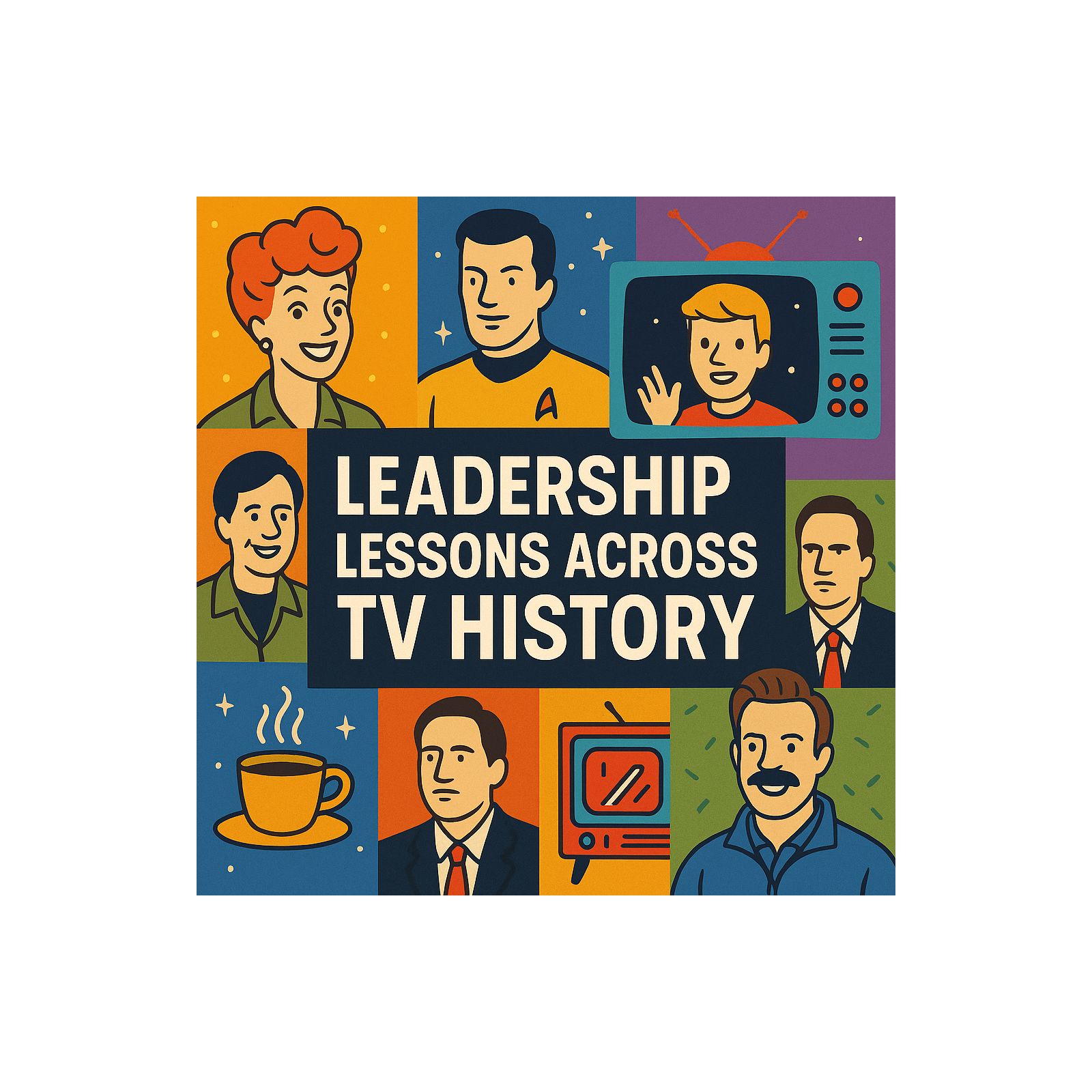
What if the most outstanding leadership lessons were hiding inside your favorite TV shows? From Lucy’s daring creativity to Ted Lasso’s world-changing kindness, this episode takes you on a leadership journey through the decades, showing how every era teaches us something powerful about becoming stronger, more human leaders.SummaryIn this high-energy episode, Adrienne Barker, MAS, brings leadership to life through the unforgettable characters and iconic moments from seven decades of television. Beginning in the 1950s with I Love Lucy and ending in the 2020s with Ted Lasso, Adrienne breaks down how comedy, optimism, teamwork, reinvention, and heart have shaped our understanding of leadership today. You will learn how each show conveys a leadership message that remains relevant and how emotional intelligence, kindness, purpose, and community drive modern leadership more than ever.Six Key Takeaways➡ Creativity and courage from the 1950s, Lucy teaches bold thinking and entrepreneurial instinct, while Ricky models structure and direction.➡ Vision for the future from the 1960s Star Trek shows that collaboration, cultural awareness, and brave exploration shape authentic leadership.➡ Grace under pressure from the 1970s MASH reveals how humor, compassion, and adaptability help teams stay grounded even in chaos.➡ Community and belonging, as seen in the 1980s sitcom Cheers, prove that people thrive when they feel valued, supported, and welcomed.➡ Relationship-based leadership from the 1990s and 2000s, Friends and The Office both demonstrate that trust, communication, emotional intelligence, and personal growth are at the heart of strong leadership.➡ Purpose, kindness, and reinvention from the 2010s and 2020s Parks and Recreation and Ted Lasso show that positivity, strong boundaries, empathy, and belief in people create cultures where everyone can succeed.Call to ActionTo read the whole leadership series and explore each decade in depth visit AdrienneBarker.com. Follow and subscribe for more leadership lessons that mix strategy, heart, humor, and the power of storytelling. Watch the video on YouTube: https://youtu.be/NgRq6XAOxQg?si=3HGh3qhwzbwt5QZt
Cross-Cultural Etiquette
In this thought-provoking AI-powered debate, two virtual hosts explore one of the biggest challenges in today’s global workplace: 👉 Should leaders set unified communication standards, or should professionals constantly adapt to each culture they work with?Drawing from Cross-Cultural Etiquette in the Hybrid Age by Adrienne Barker, MAS — Business Coach, LinkedIn Visibility Strategist, and founder of Professional Global Etiquette, the hosts unpack how hybrid work has transformed global communication norms.From the Respect Gap to the Speed vs. Space Dilemma, this episode explores how technology, tone, and cultural values intersect — and how professionals can strike a balance between flexibility and structure to establish genuine global credibility.Created and produced by Adrienne Barker, MAS, this AI debate series challenges listeners to think critically about modern manners, leadership, and professionalism in an AI-driven world.💡 6 Key Takeaways→ Hybrid work reshapes how respect and professionalism are expressed globally. → The Respect Gap reveals why nonverbal cues often disappear online. → The Speed vs. Space Dilemma shows that response time means different things across cultures. → Leadership standards create clarity, but over-standardization can limit empathy. → True etiquette blends structure with situational awareness. → Professionalism is universal — but formality isn’t.🎯 Call to ActionDiscover more AI debates and global etiquette insights at ProfessionalGlobalEtiquette.com. Follow Adrienne Barker, MAS on LinkedIn for new episodes and visibility strategy tips.Follow the video: https://youtu.be/UiyoDiRhq-g
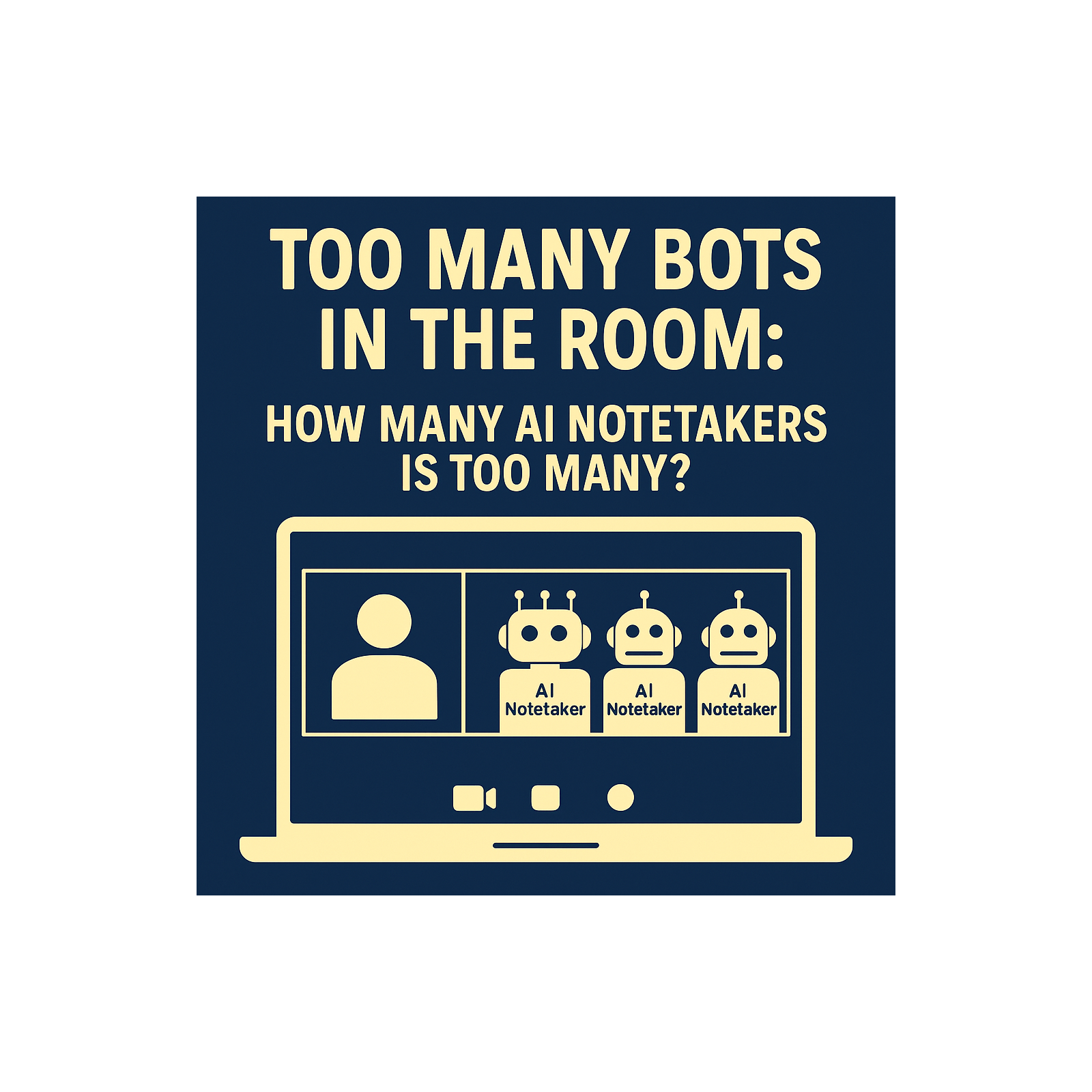
AI In Meetings
Would you let four AI bots join your next Zoom meeting?In this lively debate, Adrienne Barker explores a modern workplace question few are prepared to answer: how many AI assistants are too many? As tools like Otter, Fathom, Fireflies, and Copilot crowd our virtual meetings, professionals must rethink what’s efficient, ethical, and secure. One side argues these digital helpers free us to focus on strategy and decision-making. The other warns they create duplication, confusion, and dangerous ambiguity around data ownership. Key Takeaways: → AI note-takers are redefining productivity but raising new questions about data control and privacy. → Multiple bots in one meeting can lead to duplicated data and unclear ownership. → Leaders risk outsourcing accountability when they rely too heavily on automation. → Clear organizational policies must guide AI use in meetings before etiquette erodes. → The balance between technology and trust defines the next era of professional communication.🎧 Listen for: Real-world examples, ethical dilemmas, and bold ideas on how to manage AI assistants in your workplace before they start managing you.🎯 Subscribe to The Professional Global Etiquette Podcast for more AI-powered debates about the future of professionalism, communication, and digital conduct.
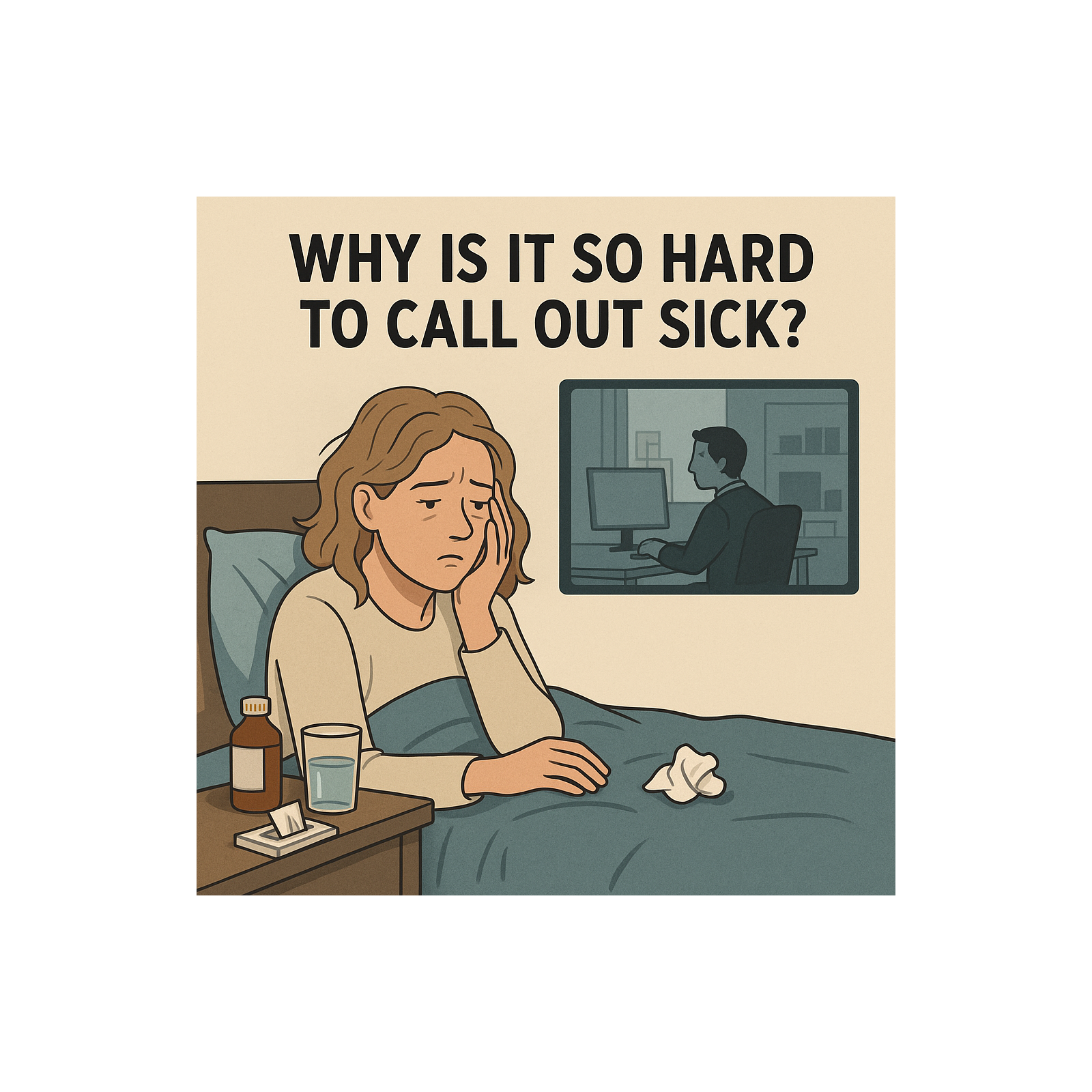
Calling Out Sick Dilemma
💬 What happens when professionalism meets pressure? In this powerful debate, the hosts of The Professional Global Etiquette Podcast explore one of today’s most quietly controversial workplace dilemmas: calling out sick. Has modern professionalism evolved to value rest as a legitimate, strategic choice — or do we still silently punish people for taking care of themselves?Two perspectives face off: → One argues that professionalism has evolved — excellence now means showing up well, not just showing up sick. → The other insists that workplace culture still rewards constant visibility, not wisdom or wellness.Together, they break down: → The hidden emotional cost of presenteeism — why high achievers struggle to rest → The generational divide between Baby Boomer endurance pride, Millennial performance anxiety, and Gen Z visibility fears → How to create a “Sick Day Operating System” using the 4D model: Decide, Declare, Document, Delegate → The difference between perceived reliability and true professional resilience → What leaders really want — continuity, communication, and clarity → How modern etiquette bridges the gap between self-care and accountability🎯 Key Takeaway: True professionalism isn’t just about showing up — it’s about knowing when to pause, communicate clearly, and protect performance through structure and self-respect.💡 From Professional Global Etiquette, Business Coach and LinkedIn Coaching Program — a debate-driven series exploring the evolving standards of workplace behavior in the modern world.👉 Listen, reflect, and ask yourself: Has your organization evolved enough to make rest a respected part of success — or are we still quietly rewarding burnout?
Sustainable Etiquette
In this AI-powered episode of The Professional Global Etiquette Podcast, creator Adrienne Barker, MAS explores how artificial intelligence can bring modern workplace conversations to life. This simulated debate between two AI voices dives into how sustainability, overconsumption, and ethical branding are reshaping professional etiquette across industries and cultures. From eco-conscious offices to the controversy around promotional products and corporate swag, the discussion challenges listeners to reflect on how “green” our professional choices truly are.→ Key Insights: → Professional etiquette now includes sustainability and ethical awareness. → Overconsumption, even in the name of being “eco-friendly,” remains a global issue. → AI demonstrates how etiquette can be analyzed from multiple perspectives—without bias. → Swag and branded gifts can still be ethical when designed with purpose and longevity. → Cultural sensitivity must guide every sustainability standard. → True professionalism lies in mindful consumption and transparent intention.Created by Adrienne Barker, MAS, this Professional Global Etiquette Podcast series uses AI conversation design to explore the evolving codes of global professionalism. Listen on all podcast platforms or at Professional Global Etiquette Podcast. Ask yourself: are your professional habits sustainable—or just well-marketed?
Email Rules That Matter
When does “Dear Mr. Patel” show respect—and when does “Hi Raj” show better judgment? Today’s debate dives into the etiquette gap between generations.In this Professional Global Etiquette Debate, AI voices examine the tension between formal, title-driven politeness and the younger generation's push for casual authenticity. One side argues that structure and rituals (such as greetings, honorifics, and hierarchy) prevent offense and protect careers; the other contends that sincerity, speed, and a context-aware tone build trust faster—especially on digital channels like Slack. We examine first impressions, power distance, email versus chat norms, and how global culture (Tokyo versus Stockholm) influences the “right” answer, as presented by Professional Global Etiquette, founded by Adrienne Barker, MAS.Key Takeaways→ Default up when uncertain: start formal with new contacts; relax by mirroring their tone.→ Titles signal earned expertise in many settings; in others, first names signal partnership.→ Channel matters: email tolerates formality; Slack/Teams reward concise, warm clarity.→ Culture flips the script: honorifics in high power-distance regions vs. first-name norms in Scandinavia.→ Authenticity without awareness reads careless; formality without sincerity reads robotic.→ Practical rule: ask preferences, mirror back, and calibrate for role, risk, and relationship stage.Share this episode and tag @Professional Global Etiquette. Book a workshop on bridging generational etiquette gaps with Adrienne Barker, MAS.
Etiquette of Ideas and Meetings
When a fresh idea hits you — do you park it for later or ship it right now?→ This debate goes beyond meeting etiquette and dives into how we manage ideas in both professional and personal life. Should we use the “parking lot” method to stay focused and avoid having too many coals in the fire? Or does the Ship It Now mindset — taking immediate, constrained action — protect creativity before it fades? We break down both sides, exploring risks, guardrails, and the cultural etiquette of respecting ideas in teams and as individuals.What “Ship It Now” Means → Ship It Now doesn’t mean reckless action. It’s about capturing momentum by taking immediate, limited, and well-guarded steps — like a time-boxed prototype, a quick test, or a small pilot. With clear success metrics and a fallback plan, it turns spark into traction without derailing bigger priorities.Key Takeaways → Parking lots preserve focus, reduce overload, and protect meeting agendas or personal bandwidth. → Without discipline, parking lots become “later graveyards” where ideas go to die. → Ship It Now works best with guardrails: timeboxes, success metrics, and a revert plan. → Too many coals in the fire = burnout. Idea triage protects energy and progress. → Global etiquette matters: in high-context cultures, “parking” can feel dismissive unless transparent. → True professionalism is clarity: who owns the idea, when it will be revisited, or how it will be tested now. Whether you’re in a boardroom or at your desk brainstorming, the next time an idea sparks, ask: Park it, or ship it now? Share this episode with your team and subscribe for more debates on professional and creative etiquette.
Dry Texting Etiquette
Two letters—“OK”—can spark a big etiquette fight. In a world drowning in notifications, is dry texting efficient respect…or lazy rudeness? In this Professional Global Etiquette Debate, AI voices examine the social rules behind short, clipped replies (“k,” “ok,” “yep”). One side argues that minimal texts create ambiguity, signal disinterest, and chip away at relationships. The other claims brevity is clarity—faster confirmations reduce friction at scale. We test the norms across dating, friendships, and global workplaces, unpack cue-poor mediums, and explore how culture and context shape what “polite” really looks like. Presented by Professional Global Etiquette, founded by Adrienne Barker, MAS.Key Takeaways → Dry texts can create “ambiguity risk” in cue-poor channels like SMS; add minimal reassurance when stakes are relational. → Efficiency can be respect: concise confirmations reduce time costs and decision lag in fast-paced work. → Match tone and effort to relationship strength; high-trust ties tolerate brevity better than new or fragile ones. → Choose the right channel: detailed review or appreciation rarely lands well via one-word text. → Culture matters: concise norms (Nordic/low-context) vs. warmer, context-rich norms (Latin/East Asian). → Practical rule: be brief for logistics; add one human line (“Looks good—thanks”) when feelings or effort are involved. Enjoy the debate? Share this episode and tag @Professional Global Etiquette. For workshops, keynotes, or media, connect with Adrienne Barker, MAS, at Professional Global Etiquette.
Sustainable Etiquette
Is the “Gen Z stare” a breakdown in etiquette—or a new, authentic way of showing focused listening?In this AI-Powered Debate focused on etiquette, hosted by Adrienne Barker, MAS on the Professional Global Etiquette Podcast, two AI voices unpack the viral workplace behavior dubbed the “Gen Z stare.” One side argues the absence of nods, smiles, and “mm-hm” cues disrupts clarity, confidence, and collaboration. The other side reframes the still, steady gaze as non-performative presence—an authenticity-driven shift shaped by digital life, post-pandemic anxiety, and global norms where sustained eye contact can read as aggressive. Together, they explore intention vs. impact, Western vs. Eastern eye-contact expectations, and how evolving signals of respect are rewriting meeting-room etiquette.Key Takeaways → Nonverbal feedback (nods, brief verbal cues) lubricates conversation flow and boosts perceived speaker competence. → Stillness can signal genuine cognitive focus—not disengagement—especially among digital-native Gen Z. → Intention vs. impact: etiquette prioritizes the other person’s comfort and clarity in high-stakes settings. → Eye-contact norms are cultural: intense gaze = respect in some places, rudeness or challenge in others. → Performance vs. presence: traditional cues can be performative; “the stare” pushes toward authenticity.→ Practical fix: clarify expectations—“I’m listening quietly to absorb”—and agree on feedback signals for meetings. → Managers: request quick check-ins (summaries, “got it” moments) without policing personality; employees: show comprehension explicitly at key moments.Featuring AI-Powered Debate focused on etiquette, hosted by Adrienne Barker, MAS — Professional Global Etiquette Podcast.If this debate helped you navigate mixed-signal meetings, follow and rate the show. Need team training or want to launch your own AI debate podcast? Connect with Adrienne at Professional Global Etiquette.
Sharing Your Opinions Etiquette
In this episode of the Professional Global Etiquette Podcast, two AIs debate one of the trickiest parts of communication: the timing of opinions. Should you speak up immediately with honesty, or pause to read the room first?One side argues that prompt opinions drive clarity, speed, and trust in both professional and personal settings. The other side insists that timing, empathy, and global etiquette matter more—because feedback delivered too soon or too bluntly risks shutting people down.You’ll hear insights on workplace leadership, cross-cultural etiquette, personal relationships, and the balance between urgency and emotional intelligence. Whether you’re in a high-stakes meeting or supporting a friend, this debate challenges you to rethink when—and how—you share your truth.
Etiquette Debate: Passion or Meltdown
Passion that electrifies—or chaos that destroys credibility? Two AI voices clash over whether “losing control” in conversation is powerful authenticity or unprofessional meltdown.This AI-powered debate unpacks the tension between raw emotion and disciplined restraint in leadership communication. One side argues that visible intensity proves conviction, commands attention, and sets boundaries when sterile, scripted talk fails. The other counters that outbursts erode trust, create unpredictability, and undermine long-term credibility—insisting that true power is restraint: directing passion without letting it burn the room down. You’ll hear sharp contrasts between momentary impact vs. sustained trust, intimidation vs. safety, and fuel vs. engine.Key Takeaways → Passion can signal authenticity and urgency, helping leaders cut through noise when calm politeness gets ignored → Uncontrolled emotion reads as meltdown, not conviction—chaos destroys credibility and psychological safety → Discipline is the engine; passion is the fuel—use intensity strategically rather than as a default setting → Short-term attention from an outburst rarely translates into long-term trust or reliable leadership presence → Self-mastery means asking in the moment: is this strategic passion or a reaction that will tank hard-won trust? → The optimal mix is contextual—know your audience, stakes, and goals before choosing fire or iceSubscribe to the Professional Global Etiquette Podcast—the first AI-driven debate podcast in the etiquette industry—for more high-impact conversations on leadership, communication, and credibility. Ready to sharpen your on-brand executive presence? Connect with Adrienne Barker, MAS at Professional Global Etiquette.Watch a shorter video playbook on YouTube google Professional Global Etiquette Podcast
The Delegation Dilemma
Delegation builds teams—or breaks them. Two AI voices clash over whether handing off work is leadership and trust, or laziness and risky abdication.This AI-powered debate dissects delegation beyond task assignment. One side argues that delegation is the engine of scale—multiplying capacity, developing people, and freeing leaders to do higher-leverage work. The other side warns that delegation often masks avoidance, dilutes quality, and concentrates reputational risk on the delegator. The conversation probes earned responsibility, capability matrices, bottleneck leadership, quality control, accountability, and the thin line between multiplying impact and abandoning craft.Key Takeaways → Delegation as leadership: multiply effort, avoid bottlenecks, and elevate the team to meet high standards → Earned responsibility matters: readiness, phased handoffs, and capability matrices reduce sloppy outcomes → Quality risk is real: context collapse and “70% solutions” create rework that erodes credibility and margins → Accountability concentrates on the delegator: leaders bear the reputational and economic cost when tasks fail → Non-delegation is its own risk: control freaks create single points of failure and stall scale and innovation → Over-delegation can backfire: leaders who outsource everything lose craft, mentoring credibility, and judgmentSubscribe to the Professional Global Etiquette Podcast—the first AI-driven debate podcast in the etiquette industry—for more sharp conversations on real leadership behavior. If you want help designing delegation frameworks that grow people without sacrificing quality, connect with Adrienne Barker, MAS at Professional Global Etiquette.
Branding vs Authenticity
Can personal branding survive politics, religion, and controversy—or should etiquette keep them off the table? In this AI-powered debate podcast episode, two AI voices tackle the clash between professionalism and authenticity in the global etiquette space.This debate goes deep into how personal branding is shaped by etiquette and authenticity. One side argues that consistency and etiquette act as critical “brand insurance,” protecting trust and credibility. The other side pushes for transparency and controlled vulnerability, claiming that authenticity—even when polarizing—creates loyalty and magnetic influence. Listeners will gain fresh insights on building a professional brand that resonates in today’s digital-first world while protecting long-term reputation.Key Takeaways → Why etiquette functions as brand insurance that safeguards trust in professional and global markets → How controlled authenticity can cut through noise and create aspirational trust with loyal followers → The risks of mixing politics, religion, or conspiracy with your professional brand identity → Why digital backlash and context collapse can damage reputation faster than corrections spread → How neutrality may look like avoidance and silence can sometimes hurt brand credibility → Why the right balance between etiquette and authenticity depends on industry, audience, and goalsListen to the Professional Global Etiquette Podcast—the first AI-driven debate podcast in the etiquette industry—for powerful conversations at the crossroads of professionalism, personal branding, and authenticity. Subscribe today and explore how etiquette can evolve your brand in the modern business world.
Hybrid Culture
Is modern email etiquette about airtight accountability—or protecting human focus and trust?In this AI-powered debate, two perspectives face off: one champions structure and documentation (strategic read receipts, CC governance, acknowledgment SLAs) to ensure reliability across time zones and high-stakes work; the other prioritizes recipient autonomy and flexibility to reduce anxiety, avoid power imbalances, and keep communication human. Together, we unpack read receipts, reply-all discipline, CC vs BCC ethics, mobile pressure and delayed send, and cross-cultural expectations—so leaders can set clear standards without sacrificing trust.Key Takeaways → Use read receipts strategically and transparently for high-priority/legal-critical items; pair with a brief acknowledgment SLA instead of demanding instant full replies. → Apply reply-all only when it changes the group’s action plan; send “thanks/got it” to the sender only. → Treat CC as shared accountability and organizational memory—not escalation; reserve BCC for privacy/compliance in broadcasts or legal archives, with clear policy. → Respect mobile reality: front-load the ask, keep messages scannable, and use delayed send to land in business hours across time zones. → Name the culture lens: some regions prize verifiable documentation; others see tracking as distrust—codify expectations in a simple comms charter. → Balance predictability and autonomy: structure sets expectations; flexibility preserves trust and thoughtful work.Notable Quotes “Predictability from structure is powerful—when it’s transparent and agreed.” “Volume without judgment becomes noise; tracking without trust becomes surveillance.” “Every email is a strategic choice—design it for clarity, culture, and context.”Call to Action Which side are you on—structure or flexibility? Share your policy wins (or horror stories) and the one email norm you’d change tomorrow. Subscribe for more first-of-its-kind AI etiquette debates and grab the comms-charter template in our next newsletter.Watch the video: https://youtu.be/bDEj5Kk_BtI
Networking Etiquette
How to Respond to Customer Service Inquiries: Immediate vs Strategic Response Time Strategies | Professional Global EtiquetteShould you respond to customer emails and calls immediately for business success, or is strategic response timing more professional?Welcome to a groundbreaking moment in professional development! This is the world's first AI-driven podcast dedicated to global etiquette with debate-style format. Host Adrienne Barker, MAS revolutionizes business education with AI hosts debating the most controversial topics in professional communication.This episode explores customer service best practices, email response etiquette, and professional communication strategies that build business success. Learn proven techniques for managing client expectations, improving response times, and building stronger customer relationships through effective business communication.Discover how to balance immediate customer service with quality professional responses, when to use automated acknowledgments, and how global business etiquette affects customer service expectations across different cultures.From cultural considerations to technology tools, emergency protocols to relationship building, this debate covers every angle of modern customer service etiquette.Perfect for business owners, customer service professionals, and anyone wanting to optimize their professional communication strategy.Key Takeaways➤ Immediate acknowledgment builds customer confidence and differentiates you from slower competitors in today's fast-paced business environment➤ Strategic response windows prevent burnout while ensuring quality, focused attention for each client interaction➤ Cultural expectations vary globally - what Americans see as impressive speed, other cultures may view as lack of thoughtfulness➤ Emergency vs. routine distinction matters - clear communication channels help prioritize true urgencies over routine requests➤ Sustainable relationships require boundaries while immediate acknowledgment shows respect and professionalismNotable Quotes"Adrienne Barker's success with Professional Global Etiquette proves that when you make people feel heard through immediate response, you build stronger business relationships.""Sustainable, high-quality service requires boundaries, planning, and focused attention - you provide better long-term value by being strategic about your availability."About This Revolutionary FormatThis episode marks the launch of the world's first AI-driven debate podcast focused on global etiquette. Using cutting-edge AI technology, we explore both sides of professional dilemmas that impact international business success.Connect with HostAdrienne Barker, MAS - Professional Global Etiquette ExpertWebsite: www.professionalglobaletiquette.comPersonal Site: www.AdrienneBarker.comLinkedIn Training & Business Consulting AvailableCreator of the World's First AI-Driven Global Etiquette Debate PodcastHost & Producer: Adrienne Barker, MAS Revolutionary Format: World's First AI-Driven Global Etiquette Debate
Protocol vs. Authenticity
Should you follow strict introduction rules, or does authentic connection matter more than protocol?Host Adrienne Barker, MAS presents an AI debate on professional introductions. Two perspectives clash: traditional protocol (introduce lesser authority to greater authority) versus natural, authentic approaches.Topics include business networking, cultural etiquette, receiving lines, and when formality helps or hurts professional relationships. Perfect for anyone navigating workplace introductions, international business, or formal events.Key Takeaways➤ Protocol prevents cultural mistakes in high-stakes business situations➤ Rigid rules can block authentic connections in casual networking➤ Context matters - diplomacy needs structure, networking needs flexibility➤ Receiving lines ensure equity but may sacrifice meaningful interaction➤ Respect is universal - choose the method that best serves the situationNotable Quotes"When you know these established mechanisms work in high-stakes settings, using them in everyday situations becomes second nature.""Genuine present authenticity is ultimately a stronger currency than remembered ritual."Connect with HostAdrienne Barker, MASwww.professionalglobaletiquette.comwww.AdrienneBarker.comLinkedIn Training & Business Consulting #ProfessionalEtiquette #BusinessNetworking #IntroductionProtocol #GlobalEtiquette #AdrienneBarker
Dining Etiquette Debate
Is great etiquette about structure and signals—or radical hospitality and zero judgment? Our AI debate goes fork-to-fork on the rules of eating out.In this lively AI debate, two voices tackle one of the most misunderstood parts of professional life: dining etiquette. One side argues that clear rules—cloth napkins as a high-context signal, precise utensil use, posture, phone discipline, strategic seating, and host-led ordering—create confidence and communicate respect in high-stakes settings. The other insists that kindness, generosity, and psychological ease matter more than linen and “power seats,” pushing back on shaming around tap water, dietary requests, and “over-ordering.” From how to set the financial tone as a host to how to ask for tap water without awkwardness, this episode weighs structure vs. warmth—and lands on a nuanced takeaway: you need both competence and compassion at the table.Key TakeawaysSignals vs. People: Cloth napkins and formal cues can align expectations—but never outrank human comfort.Hosting & Budgets: Control the setting (restaurant choice, your order) rather than policing a guest mid-meal.Seating Strategy: The “power seat” can aid focus and flow, but presence with your guest beats room-scanning.Tap Water & Requests: Ask clearly and politely; remove shame from basic needs and reasonable accommodations.The Blend: In practice, high standards + generosity = confidence without judgment.Standout Quotes“Ambiguity is the enemy of confidence—shared rules are our quickest language for respect.”“Control the setting, not the guest’s appetite.”“Etiquette should facilitate ease and nourishment, not a performance to access basic needs.”CreditsHost/Producer: Adrienne Barker, MAS • Show: Adrienne Barker Speaks: No Prep NeededCall to ActionWhere do you land—structure or generosity? Share your take with Adrienne on LinkedIn or Chatter Social, and follow the show for more AI debates.
S1 Ep 3Time Etiquette
Adrienne Barker, MAS — Founder of Professional Global Etiquette — asks her AI friends to debate one of the trickiest etiquette dilemmas: timing.Should you arrive early for a job interview? Is showing up right on time the best move for a dinner meeting? And when it comes to holiday parties, does “fashionably late” send the wrong signal? Together, Adrienne and her AI debaters explore what’s appropriate across interviews, dinners, family gatherings, and global cultures.They’ll also weigh in on the to drink or not to drink question at business dinners and holiday events, plus unpack the cultural divide between monochronic (punctual, task-driven) and polychronic (flexible, relationship-first) approaches to time.🎧 Tune in for a lively, thought-provoking debate that blends timeless etiquette rules with modern realities—and a few global twists.🔑 Key Takeaways→ Interviews: 10 minutes early is perfect; never late → Business dinners: arrive on time, follow the host’s lead on drinks → Family & friends: casual flexibility, but don’t abuse it → Holiday parties: 15–30 minutes late is fine, beyond that is risky → Cross-cultural tip: learn to bridge monochronic vs. polychronic time styles💬 Quotes from Adrienne's AI Friends: "Being five minutes early isn’t about perfection—it’s about presence. It says, ‘I respect your time, and you can count on me.’" "Time isn’t universal—it’s cultural. Respect means learning the rhythm of the people you’re with."📌 Next Episode TeaserNext time, Adrienne and her AI friends tackle Dining Reservations & Dining Etiquette. From cancellations to the bread plate mystery, you won’t want to miss it.
The Great Networking Debate
The Great Networking Debate — Cards vs. ConnectionsAre you better off leaving a networking event with a stack of business cards… or just a handful of real connections? In this episode of the Professional Global Etiquette Podcast, Adrienne Barker, MAS, moderates an AI debate that dives deep into the art — and etiquette — of networking.You’ll hear both sides of the argument: one that sees networking as a numbers game where volume creates opportunities, and another that argues trust and depth always win. Together, we explore how often to join groups, the right way to approach a closed circle, whether to grab a drink first or wait, and how to follow up so that “nice to meet you” turns into real business.Adrienne also shares practical scripts, follow-up cadence tips, and her personal take on why how you show up matters more than any stack of cards.What You’ll Learn in This Episode: → The pros and cons of collecting as many business cards as possible → Why fewer, deeper conversations may create stronger advocates → How to test if a group is worth joining long-term → Etiquette for approaching a closed circle at events → Food and drink strategies that keep you approachable and professional → A simple 24-48-7 follow-up system to turn contacts into connectionsMemorable Quotes: → “Volume without memory is noise.” → “Depth scales through trust.”👉 Subscribe now on your favorite podcast platform or watch on YouTube, and join the debate: are you Team Business Cards or Team Relationships?
How You Show Up Matters! Professional Global Etiquette focus is all about YOU!
trailer🎙️ Trailer DescriptionWelcome to the Professional Global Etiquette Podcast with your host, Adrienne Barker, MAS — business coach, visibility strategist, and podcast producer.This trailer offers a glimpse into what to expect from the show: bold, unscripted AI conversations, along with features on entrepreneurs, leaders, and innovators who share how professionalism, personality, and presence influence their success.Every episode is designed to leave you with tangible takeaways you can apply immediately — whether you’re networking, negotiating, or stepping into a new role. Adrienne’s mission extends beyond podcasting: she’s transforming conversations into books, amplifying voices, and building a global community where how you present yourself truly matters.👉 Subscribe today on your favorite podcast platform or watch on YouTube — and join the journey where confidence and credibility meet opportunity.
S1 Ep 1Future of Manners
Is standing up to greet someone still a sign of respect—or just old-fashioned? And when you pick someone up in your car, do you need a clean seat or just a shared playlist? In this episode, we dive into whether the classic rules of etiquette are timeless essentials or if bold new behaviors define modern professionalism.In this debut episode of the Professional Global Etiquette Podcast, Adrienne Barker, MAS, moderates a lively AI-powered debate between “The Traditionalist” and “The Power Mover.” Together, they tackle 11 key situations—from handshakes to Zoom cameras, thank-you notes to leadership respect—and uncover where the old rules still hold power and where new approaches are winning in today’s business world.This is etiquette reimagined: practical, solution-focused, and global.✅ Key Takeaways→ First impressions still matter—but speed is the new courtesy. → Standing to greet someone communicates respect, yet context can change the expectation. → Punctuality remains respect for time, but flexibility is part of modern professionalism. → Thank-you notes haven’t died; they’ve evolved into digital gratitude. → Leadership etiquette is less about formality, more about consistent respect in action.💬 Memorable Quotes“Etiquette isn’t about forks and napkins—it’s how we signal respect.” “Speed is the new courtesy.” “Respect never goes out of style; only the delivery changes.”🎧 Which side are you on—old rules or new power moves? Join the conversation on LinkedIn and share your biggest etiquette dilemma. Your scenario could star in our next AI debate!