
Product Startup
233 episodes — Page 2 of 5

Ep 183183: Getting a New Hardware Product into Retail Stores
Yohan Jacob is the Founder and President of RetailBound, an agency that helps emerging hardware brands get into major retail stores and sales channels. RetailBound has been around for 14 years and has worked with over 4,000 product companies. Yohan himself has spent 30 years in the industry, including being a major buyer for Sears and Office Max. The last episode we talked about scaling up when in retail stores. Today Yohan is going to explain to inventors, startups, and small manufacturers why retail is a huge sales opportunity in 2023, how to overcome objections to going the retail store route, and how to smartly begin your relationship with a retail store chain.Today you will hear us talk about: Retail stores are not dead Retail stores have got better at being omni-channel, where they also sell online and in collaboration with their physical stores There are many elements of value in selling an invention through retail stores. Leverage the presence of your product in retail stores to use that media to increase the value of your product online and with various stakeholders of your product and product business. Think about selling to distributors who then sell to retailers A basic marketing plan Start small when going into the retailers, then grow. Profitability Leveraging online sales to sell more product Don't overcomplicate things, and don’t have fear. Yohan Jacob Links:LinkedIn | RetailBoundThe Product Startup Podcast Links:https://www.ProductStartup.com/Instagram | LinkedIn | Facebook Page | Facebook Group | Pinterest | Twitter | YouTubeMako Design Links:https://www.makodesign.com/YouTube | Instagram | LinkedIn | Facebook | Pinterest | TwitterKevin Mako Links:Instagram | LinkedIn | Quora | Facebook | TwitterPartner: PTC’s best-in-class software solutions Onshape: The only cloud-native product development platform that delivers full-featured computer-aided design (CAD), integrated product data management (PDM) and enterprise analytics in a single system, and Creo: 3D CAD solution that provides designers with the most innovative tools to build better products faster, such as generative design, additive manufacturing, real-time simulation, IIoT,...

Ep 182182: Consumer Product Hardware Trends in Mid 2023
Brian Thompson is the head of CREO CAD software at PTC. He spent the first 16 years of his career doing CAD design engineering for hundreds of products, many of which are still in production today, then the last 14 years building CAD software solutions to allow designers to make better hardware products. Today Brian is going to share some valuable knowledge for inventors, startups, and small manufacturers on what the leading trends are right now for design for manufacturing so that products can be designed, engineered, prototyped, and manufactured faster, more efficiently, and at better quality.Today you will hear us talk about: Customers are re-engaging in using new technologies in design. Simulation integrated into design tools. Additive manufacturing. The markets are more competitive than ever Hardware products can’t afford to have manufacturing issues, to have quality issues, to take long to get to market, etc. Design for manufacturing in additive tools in CREO. Significant increase in model-based product development. Design is an iterative process The standard definition of model-based. Simulation, NC toolpaths, tool design, manufacturing fixture assembly, marketing. brochure development, etc. Pushing manufacturers to utilize the 3D CAD data. Brian Thompson Links:LinkedIn | CREO | PTC | OnshapeThe Product Startup Podcast Links:https://www.ProductStartup.com/Instagram | LinkedIn | Facebook Page | Facebook Group | Pinterest | Twitter | YouTubeMako Design Links:https://www.makodesign.com/YouTube | Instagram | LinkedIn | Facebook | Pinterest | TwitterKevin Mako Links:Instagram | LinkedIn | Quora | Facebook | TwitterPartner: PTC’s best-in-class software solutions Onshape: The only cloud-native product development platform that delivers full-featured computer-aided design (CAD), integrated product data management (PDM) and enterprise analytics in a single system, and <a...
Ep 181181: Digital Advertising for Selling New Hardware Products
Neha is Project Manager Lead at Meta for Ads Manager Reporting. Before this, she spent 5 years with Google in a number of roles including Google Analytics manager and Head of Merchant Growth. She also invests in a number of startups. Today Neha is going to share some valuable knowledge for inventors, startups, and small manufacturers on what direct-to-consumer digital marketing is, best practices for leveraging organic content to prepare for paid ads, and how to maximize the efficiency and effectiveness of paid digital advertising for amplifying your new hardware product’s growth.Today you will hear us talk about: What is direct-to-consumer digital advertising Direct-to-customer allows you to preserve your margins Focus on organic content to start selling units, this helps you establish product market fit. Generative AI has made the cost of organic content much less, faster, and easier. Interview experts in your area that surround your product, and that will drive organic content. Blogs are helpful, but people have changed the way they interact with them. Use both audio, video, and written blogs. Find out which customers are your fan, and get them to tell your story, get lots of reviews. Think about experimentation when you start to run ads. Most people start with one type of ad. Instead, try multiple different ads, and try different types of advertising. You can again use AI to create a lot of options for testing your ads. Customer segmentation and target audience Customer needs, preferences, and pain points. Build personas based on the job to be done or the skill level of your customer, and target that audience Branding and positioning. You don’t need a lot of money to build a brand. Word of mouth is powerful for brand building Data driven decision making. Measure the effectiveness of your spend. Influencer marketing can be much cheaper than traditional marketing. Be creative on how to drive customers to your hardware product. Ensure you set up digital tracking early on. Every customer touch point needs to be monitored. Run A/B tests, then block time in your calendar to identify the insights. Three key things for hardware sales on digital platforms are campaign objectives, audience targeting, and ad performance analysis. EPISODE LINKS:Neha Bansal Links:LinkedInThe Product Startup Podcast Links:https://www.ProductStartup.com/Instagram | LinkedIn | Facebook Page | Facebook Group | Pinterest | Twitter | YouTubeMako Design Links:https://www.makodesign.com/YouTube | Instagram | LinkedIn | Facebook | Pinterest | TwitterKevin Mako Links:Instagram | <a...

Ep 180180: Hardware Startup Tips for Non-Technical Founders
Greame Whitehead is a client of our very own Mako Design who invented the CNCT Cooler, an ultra high-end cooler that has won 3 international product awards including Indigogo, CreativePool and the NY Product Design Awards. He is a corporate Vice President that invented, designed, manufactured, and sold his product as a side-gig, still to today. Today Graeme is going to share some valuable knowledge for inventors, startups, and small manufacturers on how to design a quality consumer product, tips for getting to manufacturing and working with manufacturers, and how to leverage influencers to gain early product exposure and traction in the marketplace for your invention idea.Today you will hear us talk about: Identify what you don’t know. Focus on quality Know that you are a customer yourself Ask the right questions from your design team Manufacturing is a key stakeholder as we get into production Manufacturers push back because they don’t want to do things. Talk to multiple different manufacturers Focus on getting to production Multiple awards Manufacturing in the USA Leveraging influencers Shipped product for free to influencers and got free coverage EPISODE LINKS:Graeme Whitehead Links:LinkedIn | CNCT CoolersThe Product Startup Podcast Links:https://www.ProductStartup.com/Instagram | LinkedIn | Facebook Page | Facebook Group | Pinterest | Twitter | YouTubeMako Design Links:https://www.makodesign.com/YouTube | Instagram | LinkedIn | Facebook | Pinterest | TwitterKevin Mako Links:Instagram | LinkedIn | Quora | Facebook | TwitterPartner: PTC’s best-in-class software solutions Onshape: The only cloud-native product development platform that delivers full-featured computer-aided design (CAD), integrated product data management (PDM) and enterprise analytics in a single system, and Creo: 3D CAD solution that provides designers with the most innovative tools to build better products faster, such as generative design, additive manufacturing, real-time simulation, IIoT, and augmented reality.Producer: MAKO Design + Invent
Ep 179179: Maximize the Value of your Design Agency Partner
Nick Allen is an industrial design at MAKO Design. Nick has been designing products for 15 years, working with over 100 products and earning multiple design awards including the coveted Red Dot award. Today Nick is going to share some valuable knowledge for inventors, startups, and small manufacturers on how to start working on a project with your hardware product development partner so that you can maximize the value of the relationship, thus leading to creating a top notch product and even more important, a successful hardware startup businessToday you will hear us talk about: Focus on your vision. Know what you know, don’t worry about what you don’t know. Leverage your experience. What the product needs to do and what it needs to do. Write it down. Have a basic sketch of your idea Bullet point notes on your customer Must have, must not have. Design intent Accept pushback from the design engineers. Must have vs want to have features / MVP Work with your design team to reign in the feature creep. Team effort in original features You can always release version 2.0 EPISODE LINKS:Nick Allen Links:LinkedIn | MAKO DesignThe Product Startup Podcast Links:https://www.ProductStartup.com/Instagram | LinkedIn | Facebook Page | Facebook Group | Pinterest | Twitter | YouTubeMAKO Design Links:https://www.makodesign.com/YouTube | Instagram | LinkedIn | Facebook | Pinterest | TwitterKevin Mako Links:Instagram | LinkedIn | Quora | Facebook | TwitterPartner: PTC’s best-in-class software solutions Onshape: The only cloud-native product development platform that delivers full-featured computer-aided design (CAD), integrated product data management (PDM) and enterprise analytics in a single system, and Creo: 3D CAD solution that provides designers with the most innovative tools to build better products faster, such as generative design, additive manufacturing, real-time simulation, IIoT, and augmented reality.Producer: MAKO Design + Invent is the original firm providing world-class consumer

Ep 178178: Venture Capital Funding for Hardware Startups
Toph Day is the CEO of Elevate Ventures, a Venture Capital firm that has many hardware companies in its portfolio of over $220 million of investments under management. He has founded 8 companies with over $600 million in transactions over the past 30 years. Today Toph is going to share some valuable knowledge for inventors, startups, and small manufacturers on what venture capital funding is, if VC funding is right for you, and some advice on how to plan for and pitch your hardware startup to VC firms.Today you will hear us talk about: Venture capital is later stage, more sophisticated, and usually beyond Make your pitch and plan to be very tight. It is important understand what your venture capital firm invests. Make sure the venture capital firm invests in hardware technology. Relationship build with your investors about a year in advance. Keep your pitch to the pitch, don’t embellish Structure of Venture Capital funding When you start your company, start with a very clean legal structure. Use a convertible note for your investors When raising capital, check out all the programs and grants available Don’t include grants as revenue Hardware startups can grow to be successful slowly You can also grow hardware companies much quicker Surround yourself with partners, rely more on partners than hiring. Prototypes require multiple iterations Narrow and deep plays into hard tech, keep the product’s first version simple EPISODE LINKS:Toph Day Links:LinkedIn | Elevate Ventures | Rally ConferenceThe Product Startup Podcast Links:https://www.ProductStartup.com/Instagram | LinkedIn | Facebook Page | Facebook Group | Pinterest | Twitter | YouTubeMako Design Links:https://www.makodesign.com/YouTube | Instagram | LinkedIn | Facebook | Pinterest | TwitterKevin Mako Links:Instagram | LinkedIn | Quora | Facebook | TwitterPartner: PTC’s best-in-class software solutions Onshape: The only cloud-native product development platform that delivers full-featured computer-aided design (CAD), integrated product data management (PDM) and enterprise analytics in a single system, and <a...

Ep 177177: Package Design Tips for New Hardware Products
Justin Chen is the Co-Founder of PickFu, a platform that helps businesses survey real people about their key visual decisions. They have administered over 5 million queries over the last 12 years. Today Justin is going to share some valuable knowledge for inventors, startups, and small manufacturers on why hardware product packaging is so important, how to design great packaging, and how to use real feedback to iteratively improve and perfect your package design.Today you will hear us talk about: Friends and family feedback is okay, but Look at the competition to understand what the standards are for packaging Packaging as an afterthought is a mistake, as packaging is a big part of your Eye catching. Make sure you stand out from the competition Put badges on the packaging to attract customer Informative packaging is about what the important selling points are of a product Have people rank selling points. What are the questions that a buyer may have? Hardware packaging is essentially a digital billboard. Include your physical packaging in your digital marketing materials The more attention to detail you put on your product packaging, the more confident you are on the product. Make a few variations of your packaging design, then start with big picture creative options, then show them to people for them to pick their favorite. Then keep iterating and narrowing down the packaging over and over. Then test that package design on competitors. This method de-risks packaging. A big question to ask customers is to say, what does your new hardware product do? Hardware startups should factor in high quality packaging and more informative packaging. EPISODE LINKS:Justin Chen Links:LinkedIn | PickFuThe Product Startup Podcast Links:https://www.ProductStartup.com/Instagram | LinkedIn | Facebook Page | Facebook Group | Pinterest | Twitter | YouTubeMako Design Links:https://www.makodesign.com/YouTube | Instagram | LinkedIn | Facebook | Pinterest | TwitterKevin Mako Links:Instagram | LinkedIn | Quora | Facebook | TwitterPartner: PTC’s best-in-class software solutions Onshape: The only cloud-native product development...
Ep 176176: How Hardware Founders Should Represent Their Product
Mike Fata has done over $500M in physical product sales, launching over 25 products to over 16,000 retail stores, which thus lead to three different 9-figure exits. He is also the author of the book Grow:12 Unconventional Lessons for Becoming an Unstoppable Entrepreneur. Today Mike is going to share some valuable knowledge for inventors, startups, and small manufacturers on the importance of showcasing your passion in your invention idea to be able to best maximize success.Today you will hear us talk about: How important the founder product market fit is. People want to know why the founder behind a hardware product made this hardware product You can compete Other people like you is one of the easiest ways to sell product Be authentic, that is the foundation, everything grows from there. Tell the story of the challenges you faced along the development path Trade shows are a great way to get in front of like-minded people in a community. Non-profit organizations are a place to build communities around the problems. Don’t forget to give back. Reach out to other hardware founders on LinkedIn Be loud and proud of your story. EPISODE LINKS:Mike Fata Links:LinkedIn | Book: GrowThe Product Startup Podcast Links:https://www.ProductStartup.com/Instagram | LinkedIn | Facebook Page | Facebook Group | Pinterest | Twitter | YouTubeMako Design Links:https://www.makodesign.com/YouTube | Instagram | LinkedIn | Facebook | Pinterest | TwitterKevin Mako Links:Instagram | LinkedIn | Quora | Facebook | TwitterPartner: PTC’s best-in-class software solutions Onshape: The only cloud-native product development platform that delivers full-featured computer-aided design (CAD), integrated product data management (PDM) and enterprise analytics in a single system, and Creo: 3D CAD solution that provides designers with the most innovative tools to build better products faster, such as generative design, additive manufacturing, real-time simulation, IIoT, and augmented reality.Producer: MAKO Design + Invent is
Ep 175175: Raising Hardware Funding via an Angel Investor
Larry Richenstein has been in the hardware sales, development, and investment world for over 40 years. He is an angel investor in the New York Angels network and is currently the CEO of WePower Technologies, his latest hardware venture. Today Larry is going to share some valuable knowledge for inventors, startups, and small manufacturers on what angel investing is, what stages of development you need to get your product to in order to pitch to a professional angel investor, and how to do a good pitch once you are in the door.Today you will hear us talk about: An angel investor is usually an independent investor or a group of investors that invest in startup businesses. Angel investing are considers Angel investment is the first round, then venture capital. When it comes to products, there is a lot more that goes into them from a product development standpoint. Measure twice, cut once. You have to have all the development People that have ideas, get no funding. People that come up with a rough prototype or a rough prototype, it’s interesting but generally still too early. What investors really want to see, is a working prototype. De-risking the investment occurs the further you push the product down the road. First, find angels that invest in hardware. Angel investors for hardware are out there. Come in with a pitch that proves that you have a strong likelihood of success Hardware and software are starting to come together. Crowdfunding is a powerful way to prove market validity. You no longer have to build for the masses, you can build for niche industries. Avoid feature creep, especially for your first version. Crowdfunding is a way to avoid outside investors. EPISODE LINKS:Larry Richenstein Links:LinkedIn | WePower TechnologiesThe Product Startup Podcast Links:https://www.ProductStartup.com/Instagram | LinkedIn | Facebook Page | Facebook Group | Pinterest | Twitter | YouTubeMako Design Links:https://www.makodesign.com/YouTube | Instagram | LinkedIn | Facebook | Pinterest | TwitterKevin Mako Links:Instagram | LinkedIn | Quora | Facebook | TwitterPartner: PTC’s best-in-class software solutions <a...

Ep 174174: Agile Product Development & Additive Manufacturing
Jon Hirschtick is the co-founder of both Solidworks and OnShape. In his 42 years of building these platforms, his software has been used to design more physical consumer products than anything else on earth. OnShape alone has over 3 million designers on the CAD software platform. Today Jon is going to share some valuable knowledge for inventors, startups, and small manufacturers on why agile product development is so important for hardware startups, what additive manufacturing can do to facilitate agile development, and how modern tools are making it easier than ever to get to market faster, at higher quality, and iteratively.Today you will hear us talk about: The Story of Solidworks and Onshape Learned at an early age on how to treat customers right Agile design Build hardware the way you build software a little bit, using an agile process for produce development. Work in a series of design sprints, with the end of each sprint developing a product. Daily stand up meetings. Agile Manifesto online. Jon is publishing a whitepaper on Agile development May 15-18 is the liveworks conference. Why agile now, 4 reasons. Software is joining with hardware. The upcoming workforce is naturally agile thinkers. The world is changing constantly. The tools are now here for agile. The great products are now being made by startups, or big companies want to work like startups. Real time collaboration. Additive manufacturing is changing rapidly every year 3d Printing conventions are powerful for seeing what is possible. Software now is innovative, fast, reliable. The issue of version history and files. Cloud native is the key to modern CAD design tools. Collaboration can now happen in real time, with edit history, on any device, anywhere. Software can now have clear traceable rigor and feature logging which is very important when you are going from prototyping, to short run manufacturing, to full scale manufacturing. EPISODE LINKS:Jon Hirschtick Links:LinkedIn | LiveWorx 2023 | OnshapeThe Product Startup Podcast Links:https://www.ProductStartup.com/Instagram | LinkedIn | Facebook Page | Facebook Group | Pinterest | Twitter | YouTubeMako Design Links:https://www.makodesign.com/YouTube | Instagram | LinkedIn | Facebook | Pinterest | TwitterKevin Mako Links:Instagram | LinkedIn | <a...
Ep 173173: Augmented Reality Technology in Hardware Startups
Jonathan Bohun is the founder of Action Ship VR and Weedar, companies which are integrating the digital and physical world via augmented reality. Today Jonathan is going to share some valuable knowledge for inventors, startups, and small manufacturers on what augmented reality is, what opportunities are coming in the near future for augmented reality hardware, and different ways hardware startups can think of augmented reality integration with their physical products.Today you will hear us talk about: Virtual reality is when you are fully immersed in a digital world Augmented reality is when you are partially immersed in the digital world, and partially in the real world. Wearable devices like augmented reality devices are going to be the first version of AR. We see mass adoption of 5G and satellite internet, so now there are reliable connections to the web that are fast enough to integrate your startup hardware products in a connected way. Processing power is very heavy for AR devices, and now computing is getting strong enough either on the device or on the cloud to be able to handle complex AR calculations. Power capacity of the device, aka battery power, is now getting strong enough to handle the complex computing power Right now the average AR device is 2 hours of experience Biggest companies in the world are working hard on this AR technology AR is starting to move beyond just glasses. AR to enhance user experience with products People want to use products together with other people, AR may be able to start bringing that together in the future. You can make packaging come to life, interact with the product, learn more information about the product on display Customization to different users in selling products on physical display. Companies today can start with learning about AR technology integration to their packaging Encourage everyone to look into the augmented reality and virtual reality space to see what it can do for your hardware EPISODE LINKS:Jonathan Bohun Links:LinkedInThe Product Startup Podcast Links:https://www.ProductStartup.com/Instagram | LinkedIn | Facebook Page | Facebook Group | Pinterest | Twitter | YouTubeMako Design Links:https://www.makodesign.com/YouTube | Instagram | LinkedIn | Facebook | Pinterest | TwitterKevin Mako Links:Instagram | LinkedIn | Quora | Facebook | TwitterPartner: PTC’s best-in-class software solutions <a...
Ep 172172: Early Concept Design for a New Hardware Invention
Rob Colgan has worked for Mako Design for almost 10 years, working with well over 100 physical product startups on developing an invention idea into a real consumer product. He went to school for both mechanical design and industrial design, along with building many custom cars and motorcycles as a hobby. Today Rob is going to share some valuable knowledge on how inventors, startups, and small manufacturers can understand the key initial steps to developing a new invention idea, the product guidelines that start it all off right through to concept sketches, Computer Aided Design work, and visual renderings.Today you will hear us talk about: Features that function well Sketch products out Break down the components There are multiple different ways of sketching Quick doodles to get some ideas onto paper The problem with sketching is you lose the 3D element Start a new product on the skeletal level Figure out how that system of components works Skinning the product Ergonomics and user interaction Form follows function Don’t stress the aesthetics too much early on Think about use case. The initial view sparks a lot of questions Collaboration is core Fine-tune the initial components Transition from concept sketches into Modern design is clean and timeless Better not to follow trends, and think about cleanliness It’s not just you to appreciate the design, it’s the entire market. After concept ideation, get into serious CAD software EPISODE LINKS:Rob Colgan Links:WebsiteThe Product Startup Podcast Links:https://www.ProductStartup.com/Instagram | LinkedIn | Facebook Page | Facebook Group | Pinterest | Twitter | YouTubeMako Design Links:https://www.makodesign.com/YouTube | Instagram | LinkedIn | Facebook | Pinterest | TwitterKevin Mako Links:Instagram | LinkedIn | Quora | Facebook | TwitterPartner: PTC’s best-in-class software solutions Onshape: The only cloud-native product development platform that delivers full-featured computer-aided design (CAD), integrated product data management (PDM) and enterprise analytics in a single system, and Creo: 3D CAD solution that provides...

Ep 171171: Choosing Features and Validating Your Invention
Tony Ulwick is the CEO of Strategyn, a company that has been in business since 1991 doing strategy consulting for high-growth innovative hardware companies. He is the author of two books, and has had his articles published twice in the Harvard Business Review. He started out in the early days of his career as a design for manufacturing engineer at IBM. Today Tony is going to share some valuable knowledge for inventors, startups, and small manufacturers on how to create hardware products that people want, why people buy your consumer product, and how to validate your invention idea through additive manufacturing in the market.Today you will hear us talk about: How do you create products that people want. Figure out what your customer wants. What is the reason that someone is buying your hardware product. Define the market as a group of people that have a job that needs done via a hardware product. Define the needs of the customer to figure out what they need to complete the job. Desired outcome statements that your hardware product. Dimensions to design something better are faster, more predictably, or great result. You should learn this about your customer. You want to address the most unmet need. An outcome of a job that is highly underserved. This is the most efficient path to growth. What are the fewest number of features that we could have to hit the largest segment of customers. Features come in all over the place as a hardware startup, so you need to be very clear on what features you need. Start with the feature that you want, then figure it out with the customer. How important is the feature to the customer, and how satisfied are you with the current solutions. If you validate the opportunity, ensure that you design a great product offering to match that. Short-run manufacturing is very helpful to validate the idea, at a low cost, and learn from your customers on what will fit the market in scale. He talks about only one feature. If you can have someone improve by 15% or more, you will have an amazing product. What is that one need that is underserved in the market. EPISODE LINKS:Tony Ulwick Links:LinkedIn | WebsiteThe Product Startup Podcast Links:https://www.ProductStartup.com/Instagram | LinkedIn | Facebook Page | Facebook Group | Pinterest | Twitter | YouTubeMako Design Links:https://www.makodesign.com/YouTube | Instagram | LinkedIn | Facebook | Pinterest | TwitterKevin Mako Links:Instagram | LinkedIn | Quora | Facebook | <a...

Ep 170170: Current Trends of Modern Product Development
Paul Sagar is the Vice President of Product Management for the CREO software line at PTC. Paul started as a design engineer, then spent the last 25 years building CAD software for PTC to best match the needs of hardware design teams. Today Paul is going to share some valuable knowledge for inventors, startups, and small manufacturers on the latest trends in new product development for hardware startups, including best practices in composite materials, the electrification of products, and additive manufacturing for first manufacturing runs.Today you will hear us talk about: Composite design. Composite materials in the design. This is stuff from aerospace and racing. More consumer product brands are starting to incorporate high-cost and high-quality composite materials into a relatively simple product Composites can allow you more design flexibility while ensuring strength and quality with lightweight properties. Composites can lead to more sustainability in hardware product design. Composites have been historically very expensive to buy and manufacture; however, it is becoming more accessible. Low-volume production capital cost is low, so you can focus on quality at low volume for a new product startup brand. Electrification of everything is already happening. Fundamentally design is needing to incorporate more electronics and more electrification. Electronics need to collaborate more with mechanical engineering than ever before. Collaboration more than linear design. Production design, especially in additive manufacturing, is evolving extremely quickly. Additive manufacturing used to just be for rapid prototyping, but now additive manufacturing is being used for final part design, especially for first manufacturing runs. Short-run additive manufacturing is far cheaper in regards to up-front capital costs (tooling costs). There are some advantages to what you can actually design with additive manufacturing. Additive manufacturing gets you to production faster. Speed, quality, up front cost reduction, and increased design options. EPISODE LINKS:Paul Sagar Links:LinkedIn | Creo | PTC | OnShapeThe Product Startup Podcast Links:https://www.ProductStartup.com/Instagram | LinkedIn | Facebook Page | Facebook Group | Pinterest | Twitter | YouTubeMako Design Links:https://www.makodesign.com/YouTube | Instagram | LinkedIn | Facebook | Pinterest | TwitterKevin Mako Links:<a...

Ep 169169: Critical Testing Stages in New Product Development
Ryan Margolin is the CEO of Professional Hair Labs, a cosmetic company with dozens of products with tens of millions of dollars in sales all over the world. He has spent 25 years in the consumer product sales and marketing industry, and is also a TEDx speaker. Today Ryan is going to share some valuable knowledge for inventors, startups, and small manufacturers on what the foundation of smart consumer product testing is, what the different types of product testing are and at which stages in the development process, and how to leverage a pilot manufacturing run to ensure a strong brand alignment with your customers.Today you will hear us talk about: Marketing Brief is the scope of the product. Most products aren’t going to speak to everybody on the market, so figure out exactly what your solution is and to what specific types of people. What types of testing are required for your product. Compliance tests. These are tests the ensure your product meets the regulatory requirements. Compliance testing is generally a base line Reliability of those tests You never get a second chance to make a first impression Reliability is what the client will expect, which will be compared to best in class, which is a lot higher quality than compliant or regulatory testing. Global sales is easier than ever to achieve, so if you put yourself to a high global calibre, you can sell worldwide. The global marketplace is more accessible now than it has ever been. Pilot production, which is customer testing Get the product to be as reliable as can be, then do a pilot production run to test the customers. This is a critical phase of ensuring that a few potential customers are tested. Get paying customers to pay for the product if you can, even just a few, so that you can learn as much as possible. This is the key separator between the companies that go big and the companies that constantly struggle is those that put the effort up front to test and validate their products as opposed to going to big production runs out of the gate. The more testing you do earlier, the exponentially less expenses and headaches you have down the road. EPISODE LINKS:Paul Rowan Links:LinkedIn | CompanyThe Product Startup Podcast Links:https://www.ProductStartup.com/Instagram | LinkedIn | Facebook Page | Facebook Group | Pinterest | Twitter | YouTubePTC Links:https://www.ptc.com/OnShape | CreoMako Design Links:https://www.makodesign.com/YouTube | Instagram | LinkedIn | Facebook | <a...
Ep 168168: The Future of Hardware Product Design Thinking
Paul Rowan is the Co-Founder of Umbra, a household product company that designs, manufactures, and sells hundreds of consumer products all over the world. You likely have at least one of their products in your home right now. Paul ran Umbra for for 37 years, starting the entire company with just one product. Today Paul is going to share some valuable knowledge on how inventors, startups, and small manufacturers can use both strategic purpose and higher purpose to create a great first product and your first product business. From there, how do you leverage those principles to scale into a global product brand as he did with Umbra.Today you will hear us talk about: Sales can drive hardware ideas, what a great way to sell when you already know what your big buyers want. The culture of work in hardware product design in the future. Hardware designers are going to have a lot of options for developing work-from-home products, mental health issues, more collaborative office space environments and products, and many other emerging opportunities for the changing landscape of design. Artificial Intelligence (AI) AI cannot compete with human intelligence. AI is not a threat, it is the next tool. If you embrace the tools, this will exponentially improve the caliber of your hardware startup. Humanistic direction or robotic direction Purposeful, sustainable, human. This leads to long term. Short term vs long-term value How can you differentiate yourself by adding humanistic values to your company. If you don’t set the bar on good design, you won’t even get to market. Bad design cannot even be put on the shelves. To increase beyond great design, add humanistic values You can compete with big corporate easily on humanistic values as a startup. Sustainability, carbon footprint, sourcing, labor practices. Put your name on a product Don’t be afraid to put your name behind your brand. When you’re in the decision tree of short-term problem solve or long-term value, go for the long term value as that has become more important than ever for modern businesses. Long-term thinking will encourage significantly more success Test and test until you get it right in prototyping, use design thinking. The human behind the design EPISODE LINKS:Paul Rowan Links:LinkedIn | Umbra | PaulRowan.caThe Product Startup Podcast Links:https://www.ProductStartup.com/Instagram | LinkedIn | Facebook Page | Facebook Group | Pinterest | Twitter | YouTubePTC Links:https://www.ptc.com/OnShape | CreoMako Design Links:https://www.makodesign.com/YouTube | <a...

Ep 167167: Get Free Earned Media for a New Hardware Product
Jackson Wightman is the co-author of The Tech PR Playbook, a book that synthesizes 20 years of PR knowledge into a single resource. He is also the co-founder of Proper Propaganda, a public relations firm that primarily works with hardware startups and scale-ups. He is also an instructor at McGill University with an MBA, Masters in Poli Sci, and a BA. Today Jackson is going to share some valuable knowledge for inventors, startups, and small manufacturers on what earned media is, specifically for hardware companies, why earned media and press is so valuable, and what are the best practices for getting free coverage from major hardware journalists and publications.Today you will hear us talk about: Hardware startups generally don’t understand what earned media is, and especially how to best utilize it for your product Defining what is earned media is for a hardware startup Editorial media coverage. Why earned media can be so valuable to a hardware startup You are not paying for it, and thus it is heavily trusted by readers. Earned media is far more trusted than advertisements. Earned media can be repurposed to help sell your product or increase the visibility to your various stakeholders, not just customers and investors, but also partners, and prospective employees. There is a huge amount of power in brand equity. Articles that are earned are evergreen, meaning that they last forever. Things to stand out and differentiate to get great earned media To get in, first understand that it is competitive to get into a journalist and media outlet Then think then about how you can differentiate your product and product story from what is already out there. The second thing is to target the correct media. Pitch the correct journalist, reporters, and the correct media outlet for your specific type of hardware. Have good assets, make sure the prototype works and make sure the instructions work. Try and get someone who is new to the product to test out your samples. Feature-creeped products are the hardest to get earned media. The Tech PR Playbook EPISODE LINKS:Jackson Wightman Links:LinkedIn | Book | AgencyThe Product Startup Podcast Links:https://www.ProductStartup.com/Instagram | LinkedIn | Facebook Page | Facebook Group | Pinterest | Twitter | YouTubePTC Links:https://www.ptc.com/OnShape | CreoMako Design Links:https://www.makodesign.com/YouTube | Instagram | LinkedIn | <a...

Ep 166166: Storytelling Tips for Hardware Product Launches
Steve Multer is the author of Nothing Gets Sold Until The Story Gets Told which can be found on Amazon and all major book retailers. He has done over 20,000 presentations and worked with major hardware brands such as Cisco, Panasonic, Siemens, HP, Philips, Xerox, and over 100 more, all on crafting product and brand messaging. Today Steve is going to share some valuable knowledge on how inventors, startups, and small manufacturers can understand what corporate storytelling is, what the main components of a well-crafted sales or brand story has, and best practices around both launching a new hardware product but also maintaining the brand connection for long-term customer loyalty.Today you will hear us talk about: What is corporate storytelling Metrics of a product (what investors want to hear) vs corporate storytelling (what the public wants). Don’t tell the customer what you want to tell them, tell them what they want to hear. This requires knowing your audience. The platform / pillars of a great story: Value, passion, and connection. How do you change people’s lives, for the better, with their product. Make sure to maintain your personal passion in advertising. How connect with people by telling them a story that they recognize and that they become a part of. You can be the best advocate to your own hardware product, you are the story. Investors invest in you as a human being. Combine your product with your story. Trust yourself to sell your own story, and bring the human passion in. Stakeholders, buyers, investors will be more lenient when they believe in the story and the passion behind that story. Build a community first. How do you sell How do you keep customers What is going to sustain and grow your hardware product and thus product brand for 10 years or more. EPISODE LINKS:Steve Multer Links:LinkedIn | BookThe Product Startup Podcast Links:https://www.ProductStartup.com/Instagram | LinkedIn | Facebook Page | Facebook Group | Pinterest | Twitter | YouTubePTC Links:https://www.ptc.com/OnShape | CreoMako Design Links:https://www.makodesign.com/YouTube | Instagram | LinkedIn | Facebook | Pinterest | TwitterKevin Mako Links:Instagram | LinkedIn | <a...

Ep 165165: Iterative Design Processes & Tools for Hardware Development
Kyle Dumont spent many years as a hardware developer for iRobot, then got a Masters of Science and an MBA dual degree at Harvard, then spun out AllSpice which is a software platform for managing electronic engineering feedback and revision tracking amongst other things. Today Kyle is going to share some valuable knowledge for inventors, startups, and small manufacturers on what iterative hardware product development is between manufacturing runs, who the feedback loop stakeholders are, and how to collect, organize, prioritize, and execute on that iterative feedback information to ensure the best improvements to your physical consumer product design.Today you will hear us talk about: What iterative design in hardware is between manufacturing runs Legacy design is based on a waterfall model of design Software has done a great job of iterating very quickly. Get designs in the hands of engineers, or even better, users. Iterative design can sometimes be forced on you if you need to make changes, so better to have the processes Who are the stakeholders: Customers, the most important stakeholders (both current and potential customers) Cost reduction Engineering design, multiple different disciplines (hardware, software, firmware, PCB, visual, industrial design, etc.) Procurement, product managers, Manufacturers Get hardware product engineers in front of customers What tools can be used to collect, organize, prioritize, and implement Version control is a great way to organize version control / revision control. This is the foundation. Start to consider comparing versions. Do you have the channels and tools to be able to have the various product stakeholders to provide input on the product. Integrating tools together so that the most information Avoid silos of different departments, ideally, you have all information together. Use priority flagging to tag the importance of issues or opportunities. EPISODE LINKS:Kyle Dumont Links:LinkedIn | AllSpiceThe Product Startup Podcast Links:https://www.ProductStartup.com/Instagram | LinkedIn | Facebook Page | Facebook Group | Pinterest | Twitter | YouTubePTC Links:https://www.ptc.com/OnShape | CreoMako Design Links:https://www.makodesign.com/YouTube | Instagram | LinkedIn | Facebook | Pinterest | TwitterKevin Mako Links:<a...

Ep 164164: The 3 Prototyping Phases for New Product Development
Tim Uys has spent 25 years as a senior design, leader, and lecturer in the industrial design and mechanical design engineering world. He has worked for Nike Golf, Dell, Qualcomm, Ironman and many others while the director of design for IDOne, which was one of the top Austin design firms back in the early days before it was acquired. For the past 8 years, Tim has been the head of design for our very own Mako Design out of our Austin, Texas office. Today Tim is going to share some valuable knowledge on how inventors, startups, and small manufacturers can understand what each of the key 3 types of prototypes are, the order of those prototypes, and the importance of each of those phases of new product prototyping in order to manufacture a great and successful hardware product.Today you will hear us talk about: Mock Prototype / Rough Prototype Costs are relatively low to iterate and for parts Focus on big picture items, not the details, is key in a first prototype You can even have a series of rough prototypes or prototype parts to test a number of different things Mechanical / Functional Prototype You can do pieces of a prototype either in tandem, or linear, Mechanical test prototypes use more complex parts, so it requires more advanced prototyping parts so that you can much closer mimic the final production mechanics parts. Even if costly, in the end, you are solving the problem. You cannot go to production without going into proper prototyping. There is a tremendous amount of value in building mechanical features that closely represent the manufactured product, so that you can perfect those mechanical design elements. Refined / Presentation Prototype A final prototype is usually used by hardware startups for selling, but also for manufacturing. Manufacturers need to have the product fully vetted out in order to get a reliable manufacturer to take on the project. Iteration in produce development is very important EPISODE LINKS:Tim Uys Links:LinkedIn | MAKO DesignThe Product Startup Podcast Links:https://www.ProductStartup.com/Instagram | LinkedIn | Facebook Page | Facebook Group | Pinterest | Twitter | YouTubePTC Links:https://www.ptc.com/OnShape | CreoMako Design Links:https://www.makodesign.com/YouTube | Instagram | LinkedIn | Facebook | Pinterest | TwitterKevin Mako Links:<a...

Ep 163163: 2023 Trends in Product Development for Hardware Products
Brian Thompson is head of CREO CAD software for PTC. He spent the first 16 years of his career doing CAD design engineering for hundreds of products, many of which are still in production today, then the last 14 years building CAD software solutions to allow designers to make better hardware products. Today Brian is going to share some valuable knowledge for inventors, startups, and small manufacturers on what the 3 main product development trends are in 2023 which include using design simulations, designing earlier for manufacturing, and using additive manufacturing for a first short or medium term production run.Today you will hear us talk about: Using simulation more in the design process Advances in technology to make digital simulation in CAD Design You no longer need to be an expert to do some tests in simulations The earlier you use CAD simulations, the quicker you discover problems. You can explore more design alternatives if you can apply simulation to your designs More investment in manufacturing in the design process CAD software can be used to evaluate design and prototyping, but now there are more tools to actually evaluate in CAD. Three key design steps are idea design, prototype and functional design, and design for manufacturing, in that order. Software is now making it easier to move to the next steps and improve the quality More additive manufacturing, especially in short run Feedback from those first parts is a huge opportunity. Focus on equity. As a startup, plan on leveraging additive manufacturing to do a first production run to reduce risk. Design for additive, but with a plan to migrate those additive designs into full scale manufacturing when you scale. EPISODE LINKS:Brian Thompson Links:LinkedIn | LiveWorx 2023 | Try OnShape for Free | Creo | PTCThe Product Startup Podcast Links:https://www.ProductStartup.com/Instagram | LinkedIn | Facebook Page | Facebook Group | Pinterest | Twitter | YouTubePTC Links:https://www.ptc.com/OnShape | CreoMako Design Links:https://www.makodesign.com/YouTube | Instagram | LinkedIn | Facebook | Pinterest | <a...

Ep 162162: Product Pre Launch Strategies For Crowdfunding Success
Will Ford is the Co-Founder of LaunchBoom, the world’s largest crowdfunding platform. He also runs the Crowdfunded Summit, a virtual crowdfunding event which I am also a keynote at again, and that’s coming up in May 2023, and as a quick heads up, Will is offering free tickets for limited time to listeners of this podcast. Today, Will is going to share some valuable knowledge on how inventors, startups, and small manufacturers can use small trial marketing and sales techniques to gauge how successful a crowdfunding campaign will be, other tips and tricks along the way to a successful launch, and the story of how crowdfunding has changed over the years.Today you will hear us talk about: Get the project funded on crowdfunding on the first day Sell the world from a prototype, and then validate that idea with real users, then use that money to fund the manufacturing Prelaunch is the single most important thing to think about when launching any product on crowdfunding. Offer a better deal to your early backers, before you even launch on Kickstarter or Indiegogo. People who put a deposit down, even just a dollar, have a 30 times higher probability of converting to a paying customer on Day 1 of your crowdfunding campaign. Set a reasonable campaign goal that is much smaller, so that you hit the campaign goal quickly. Doing crowdfunding yourself, it’s far less expensive than hiring agencies for crowdfunding. Crowdfunding is just the launch, most people want to then scale the product business after that. Crowdfunding is stronger than ever. Learn from your crowdfunding sales to The LaunchBoom community. Messaging, positioning, pricing for planning a crowdfunding campaign Build lead funnels and reservation funnels A/B split testing for advertising messaging and lead offers Using data to analyze your offer options Figure out what is converting best on crowdfunding You can’t fool consumers these days, there is too much information online, so make sure you have a great product. Give the backers a discount on crowdfunding vs what your retail price will be. EPISODE LINKS:Will Ford Links:LinkedIn | Website | CrowdFunded SummitThe Product Startup Podcast Links:https://www.ProductStartup.com/Instagram | LinkedIn | Facebook Page | Facebook Group | Pinterest | Twitter | YouTubePTC Links:https://www.ptc.com/OnShape | CreoMako Design Links:https://www.makodesign.com/YouTube | Instagram | LinkedIn | <a...
Ep 161161: Build a Manufacturing Facility for Your New Product
Noah is a Vice President at Graff Pinkert, an 80-year-old manufacturing machinery dealer that buys and sells used equipment all over the world, with a central warehouse in the USA. Noah is also the host of the Swarfcast Podcast, a show all about manufacturing machinery and tool machining. Today, Noah will share some valuable knowledge on how inventors, startups, and small manufacturers can consider starting your own product facility locally to produce your product, and what to think about when buying used equipment for your production facility.Today you will hear us talk about: Manufacturing equipment for products More hardware startups have called about buying machinery than ever before. You can use machinery to manufacture other products to help reduce the cost of buying the machinery yourself, so you can use it partly for your own product, but also for Use the machine to learn how to improve both your manufacturing and the quality of your product. It’s important to know the caliber of machine that you need based on the part that you need. Look for the best support on the machinery you are buying, that is the priority when it comes to machinery suppliers Re-shoring is happening, product startups are trying to bring more products at home than ever before You have a lot of control of your product when you manufacture it yourself. EPISODE LINKS:Noah Graff Links:LinkedIn | Website | Swarfcast PodcastThe Product Startup Podcast Links:https://www.ProductStartup.com/Instagram | LinkedIn | Facebook Page | Facebook Group | Pinterest | Twitter | YouTubePTC Links:https://www.ptc.com/OnShape | CreoMako Design Links:https://www.makodesign.com/YouTube | Instagram | LinkedIn | Facebook | Pinterest | TwitterKevin Mako Links:Instagram | LinkedIn | Quora | Facebook | TwitterPartner: PTC’s best-in-class software solutions <a...
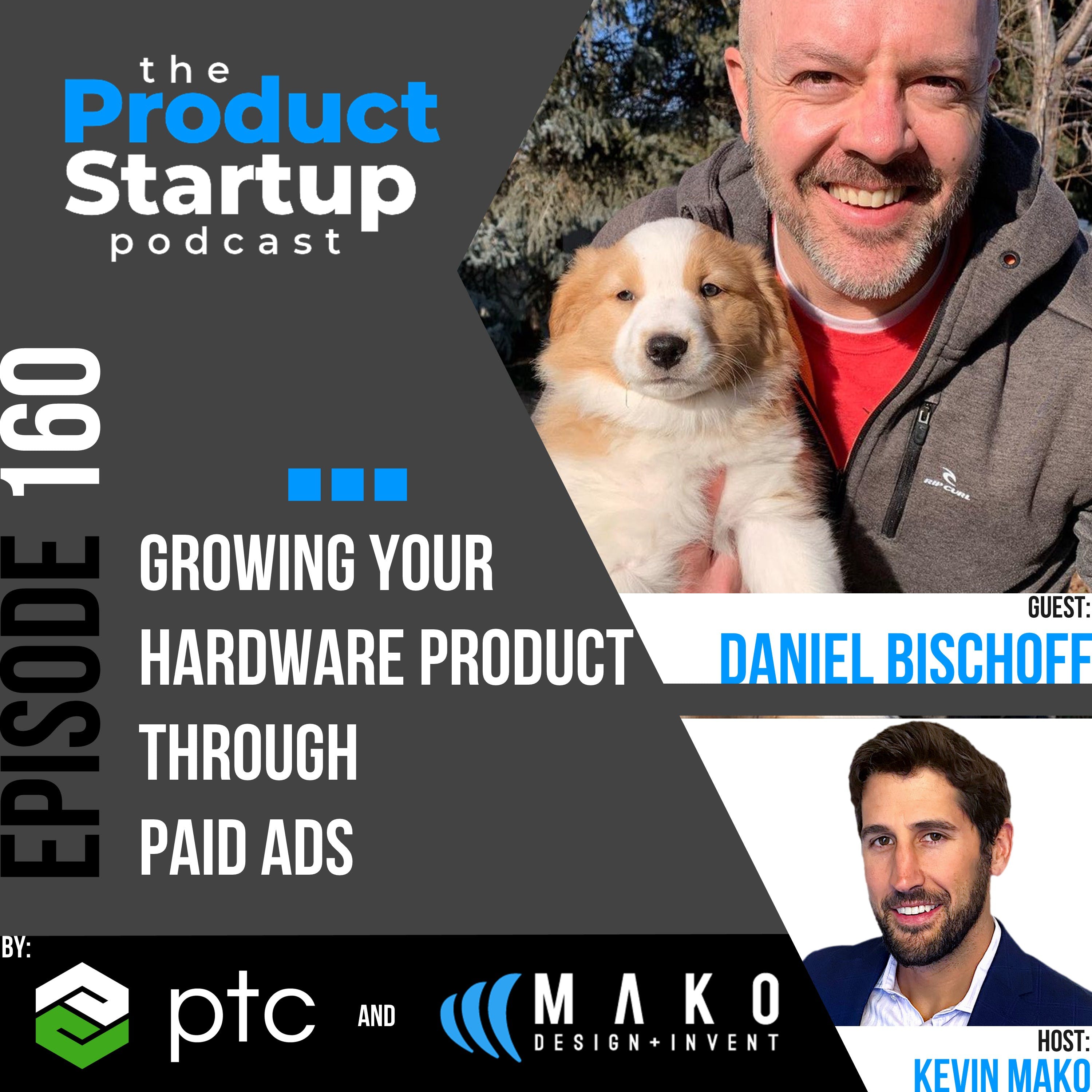
Ep 160160: Growing Your Hardware Product Through Paid Ads
Daniel Bischoff to the show. Daniel Bischoff is the former Head of Growth at Purple Mattresses. He took Purple from startup to over two hundred million dollars in sales in just its first two years on the market. He then spun out as co-founder of his own direct-to-consumer marketing agency called StoicYeti which works with both hardware startups and Fortune500 product brands. Today Daniel is going to share some valuable knowledge for inventors, startups, and small manufacturers on what direct-to-consumer advertising is, what you can learn from the Purple Mattress story about scaling a hardware brand, and how to create inexpensive yet powerful video ads to sell your new invention to the market.Today you will hear us talk about: Direct-to-consumer selling for a new hardware product in paid advertising Telling a story is key in digital marketing The Purple Story, inventors that wanted to create a mattress Copied another company’s model, just with a better product Sometimes all you need to sell a product is to be different, let alone better. Demonstrate, in video form, the value of your product, so that you can sell it online. Kickstarter was used to validate sales of Purple, and the way they wanted to sell it. You want to hook people in the first 3 seconds of the video. Try a number of hooks to see which one attracted the most people. Then make people problem-aware and then solution-aware. After someone saw their ad, they also reinforced those ads by having good reviews on Google. Get as many users as possible, in the beginning, talk to all of your customers to find out who are raving fans, and get those fans to review your product. Ask customers to send in reviews from their own cell phones using the product. List down all of the objections to buying your product, and have those responses on your website. Problem, solution, reasons to believe in the product, reduction of objections You can get videos done for cheap, but use those to test your messaging. Sometimes those videos go further. User-generated content is the most powerful advertising right now. It is cheaper today to advertise a new product, and that is contradictory to what a lot of people think. EPISODE LINKS:Daniel Bischoff Links:LinkedIn | Website The Product Startup Podcast Links:https://www.ProductStartup.com/Instagram | LinkedIn | Facebook Page | Facebook Group | Pinterest | Twitter | YouTubePTC Links:https://www.ptc.com/OnShape | CreoMako Design Links:https://www.makodesign.com/YouTube | Instagram | LinkedIn

Ep 159159: Build a Community to Sell Your New Product Invention
Ashley Black is the founder of FasciaBlaster and many other related products. Her company sells millions of dollars of products per month directly to her customers all over the world, and has built a community of over 8 million followers on social media. She is also a two-time best-selling author. Her most recent book is titled From Passion and Purpose to Product and Prosperity. Today Ashley is going to share some valuable knowledge on how inventors, startups, and small manufacturers can build customer communities around your new hardware product, how to be the personal brand behind your product, and how to ensure successful brand growth so that you can be the next hardware startup unicorn.Today you will hear us talk about: Building a brand for a hardware product startup Focused on ads that sold the products, but also getting them engaged in the actual community. Get to that point in ads where you are breakeven. Get out there and give deals to people for them to go out there and promote your product. Advocate for yourself There is magic as an inventor, the inventor themselves. Let the audience know who you are as a person, not just the product You don’t need to be pretty, you don’t need to be polished, you just need to be yourself. You don’t need to do a ton of research when you re just promoting yourself Be authentic Sell to yourself Self-funding You have to be all-in Lowering your CTA (customer acquisition cost). The bigger the community, the lower the cost per acquisition. What is Plan B, there is no Plan B. If you’re an inventor out there, and you know your product can help, then it’s only up to you and your commitment. If you want it to be a hobby, it’s just that, but if you want a legacy business. People have a lot of societal safety nets The world is huge, find the others out there that resonate with you and your product EPISODE LINKS:Ashley Black Links:LinkedIn | Website | Facebook | Twitter | InstagramThe Product Startup Podcast Links:https://www.ProductStartup.com/Instagram | LinkedIn | Facebook Page | Facebook Group | Pinterest | Twitter | YouTubePTC Links:https://www.ptc.com/OnShape | CreoMako Design Links:https://www.makodesign.com/YouTube | Instagram | LinkedIn | Facebook | <a...
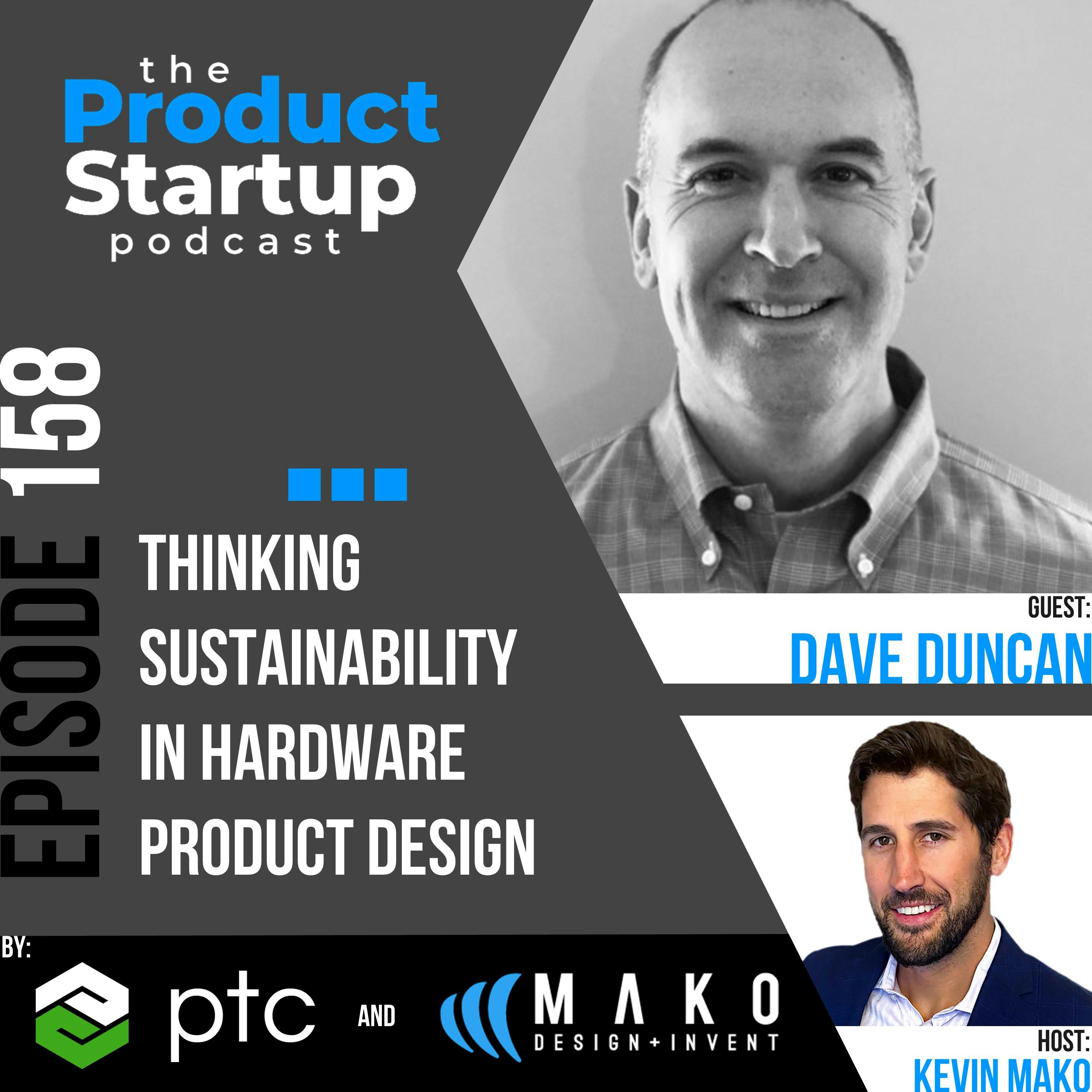
Ep 158158: Thinking Sustainability in Hardware Product Design
Dave Duncan is the Vice President Sustainability at PTC Corp, the company behind multiple product design software solutions including OnShape and CREO. He has spent over 20 years in the product design software world, and has his Bachelor of Engineering from Princeton University. Today Dave is going to share some valuable knowledge for inventors, startups, and small manufacturers on what it means to develop a sustainable product, what the 3 different types of product sustainability are, and how to use modern best practices in ensuring your product is most marketable by including sustainability as one of your key product development priorities.Today you will hear us talk about: Designing for sustainability Manufacturing for sustainability Servicing and Lifecycle management of the product Design for sustainability early The main impacts are around carbon emissions Products can be designed for sustainability What do you have to do to adhere to sustainability, and what can you do to improve sustainability beyond what the regulations are. Don’t wait too late in the product design lifecycle to start building sustainability into the product design. Software can help analyze the options. Build in sustainability to your early design. Even in B2B product sales, now there are metrics to promote the purchasing of sustainable products. It gives your product an edge. This is an advantage as a startup 80% of a product’s carbon and waste footprint is determined at design time. 20% can be done in the factory to reduce that further. Bottleneck analysis Energy management The circular economy / circular product In design, simply put, think about how your product will end, and how it can be re-used, recycled, or re-configured. Think about your commercial relationships with your customers regarding end of useful life. Generative design in OnShape can actually remove materials through AI. This is called lightweighting. With Arena, you can manage the bill of materials, and analyze EPISODE LINKS:Dave Duncan Links:LinkedIn | Try OnShape for Free | Creo | PTCThe Product Startup Podcast Links:https://www.ProductStartup.com/Instagram | LinkedIn | Facebook Page | Facebook Group | Pinterest | Twitter | YouTubePTC Links:https://www.ptc.com/OnShape | CreoMako Design Links:https://www.makodesign.com/YouTube...

Ep 157157: How Hardware Startups Compete with Big Business
Mike Stemple is the Author of Innovating Innovation, a #1 Bestseller. He has also founded multiple consumer product startups, including Skinit wraps, and since then, Original Wraps which sold to 3M. In addition to his own hardware ventures, he also consults a number of Fortune 500 product companies on how to be more entrepreneurial. Today Mike is going to share some valuable knowledge on how inventors, startups, and small manufacturers can beat the big corporations when developing a new product by being faster, more nimble, listening to customer feedback, and much more.Today you will hear us talk about: There is so much democratization of tools and techniques There are more firms, especially in product design, helping reduce risk and increase success for a new physical product startup. Innovation is being cut, doubling down on existing things that work. Time, talent, and treasure to succeed in a new hardware product. It’s faster than ever to develop a product and get to market than ever before. The next billion-dollar idea is created in a recession Smart big corporate people are leaving to create startups Focus on the primary goal of the acquisition Move from fear-based to opportunity based. Scarcity bring innovation, and recessions fuel that. Get big ideas developed well. Professionally build the idea. Licensing or white labeling can allow you to scale, once you have a product in production that at least a few customers love. Don’t be paralyzed on pitching your product to a big company. Minimum viable product is so important, and the only way of ensuring quality on your first run. The product should evolve over time, and via feedback. Don’t rob your customer of your relationship over time with your brand and product. Intellectual property creation is the only proven investment strategy that an entrepreneur can be successful at, it is within your control. Now is the time. EPISODE LINKS:Mike Stemple Links:LinkedIn | BookThe Product Startup Podcast Links:https://www.ProductStartup.com/Instagram | LinkedIn | Facebook Page | Facebook Group | Pinterest | Twitter | YouTubePTC Links:https://www.ptc.com/OnShape | CreoMako Design Links:https://www.makodesign.com/YouTube | Instagram | LinkedIn | Facebook | Pinterest | TwitterKevin Mako...

Ep 156156: The Evolution of Sales Channels for Hardware Products
Ben Drury is the Founder of Yoto, a connected hardware toy product for kids. Yoto has sold almost 500,000 units worldwide in just a few years of explosive growth. Today Ben is going to share some valuable knowledge to inventors, hardware startups, small manufacturers, and e-commerce brands on the 5 different sales channels, and how a hardware startup evolves through those channels to maximize their sales growth just like Ben did with Yoto.Today you will hear us talk about: Crowdfunding. It takes you down a great path of figuring out all the elements needed to build a successful product business. Direct via Website. The website gives you a lot more information that you can sell Amazon sales It’s easy to set up sales with Amazon. Wholesale / Retailers, Micro retailers, independent retailers, mass retailers If you go to a retailer with a buggy product, you will get hurt at retail badly There are lots of regulations with retailers, and a lot of requirements. Retailers want to see success before they bring on a new product Retailers operate on long cycles, they are looking years ahead You have to be very well prepared for dealing with big retailers. Specialty Channels Demand fuels specialty channels which are unique partnerships that want to buy your product The feedback loop from customers is very active. EPISODE LINKS:Ben Drury Links:LinkedIn | Yoto | Facebook | Instagram | TikTokThe Product Startup Podcast Links:https://www.ProductStartup.com/Instagram | LinkedIn | Facebook Page | Facebook Group | Pinterest | Twitter | YouTubePTC Links:https://www.ptc.com/OnShape | CreoMako Design Links:https://www.makodesign.com/YouTube | Instagram | LinkedIn | Facebook | Pinterest | TwitterKevin Mako Links:Instagram | LinkedIn | Quora | Facebook | TwitterPartner: PTC’s best-in-class software solutions <a...

Ep 155155: Identifying a Sourcing Partner for Overseas Manufacturing
Forde Aley is the Co-Founder of Shining Way Sourcing, an agency that has sourced manufacturing for over 1,000 products, with both founders having over 25 years of experience in the space. Today Forde is going to share some valuable knowledge on how inventors, startups, and small manufacturers can source their first manufacturer for their new hardware invention idea overseas, how to ensure quality control for that production, and why it is important to consider how that factory can scale as you grow into larger sales over time.Today you will hear us talk about: Choosing a factory. How to find the right factory. 3 key things for sourcing: Choosing a factory, quality control, and retail ready-to-scale. Find out how the factory is managed, who the players are, and how it operates as a management team. This is overlooked but very important to know. Ensure you or your factory sourcing agent has visited the factory and the factory management team. Quality control processes must ensure the output product matches all required criteria. Standard operating procedures manual of a factory. Retail logistics. Packaging, UPCs, pallets, import, export. Factory selection. The sourcing company’s in-house team. Both local and offshore. Experience. Make sure 10 years or more, the more experience, the more factories the team will have worked with and knowledge of. Why sourcing agents/sourcing companies are important to new consumer product startups and inventors. EPISODE LINKS:Forde Aley Links:LinkedIn | Shining Way SourcingThe Product Startup Podcast Links:https://www.ProductStartup.com/Instagram | LinkedIn | Facebook Page | Facebook Group | Pinterest | Twitter | YouTubePTC Links:https://www.ptc.com/OnShape | CreoMako Design Links:https://www.makodesign.com/YouTube | Instagram | LinkedIn | Facebook | Pinterest | TwitterKevin Mako Links:Instagram | LinkedIn | Quora | Facebook | TwitterPartner: PTC’s best-in-class software solutions <a...

Ep 154154: 3 Key Parts to Developing a Great New Product
Jonas Rinde is the founder of his latest product Nomono, a portable podcasting device. Prior to that, he had 3 major product exits totaling billions of dollars in acquisitions, in addition to working on over 50 hardware products over the last 20 years. Today Jonas is going to share valuable knowledge for inventors, startups, and small manufacturers on the three key elements to building a great new physical consumer product device, and how each of those has led him to achieve billion-dollar success with many hardware products.Today you will hear us talk about: 1st wow: How you get to know the product as a new potential customer Approachable design 2nd wow: What happens when you use the product 3rd wow: After you use the product, have you developed a fan Listen to your customers, but also find focus. Focus and MVP are key, limit feature creep. Don’t throw the feature creep ideas away, just store them, structure them, and prioritize them for possible future versions in the future. Nail the first product, then start building more versions of your product to make a portfolio of related products Take your product to the street. Simple design means also easy to sell, but also easy for the customers to use. EPISODE LINKS:Jonas Rinde Links:LinkedIn | NomonoThe Product Startup Podcast Links:https://www.ProductStartup.com/Instagram | LinkedIn | Facebook Page | Facebook Group | Pinterest | Twitter | YouTubePTC Links:https://www.ptc.com/OnShape | CreoMako Design Links:https://www.makodesign.com/YouTube | Instagram | LinkedIn | Facebook | Pinterest | TwitterKevin Mako Links:Instagram | LinkedIn | Quora | <a...

Ep 153153: The Evolution of CAD Product Development Software
Joe Dunne is the Director of Partnerships at PTC, the firm behind Onshape and Creo. Before this, he worked for SolidWorks since the early days of the software starting with them back in 1995, and before that, a Mechanical Engineer. Today Joe is going to share some valuable knowledge for inventors, startups, and small manufacturers on how CAD software has evolved since the 1980s, what the best-in-class software is doing today, and how the software is evolving in real-time to best support getting new hardware products to market faster, cheaper, and better than ever.Today you will hear us talk about: History of Computer-Aided Design (CAD) software 3d parametric modeling in the 1990s Going to 3D was also a huge change due to the ability to start iterative design Find guys that you want to hook your wagon to Modern CAD software has evolved by becoming based in the cloud The future of CAD is in the integrations, all allowable by being architected via the cloud hosting of the core software. This allows for products to be developed more complete, faster, with less people, and all the way through to and including production. Design software is now a community of integrated app builders to layer on top of core CAD design host technology You have to get your product to market, and you have to test it. There is a lot more flexibility in design options today than ever before. EPISODE LINKS:Joe Dunne Links:LinkedIn | OnshapeThe Product Startup Podcast Links:https://www.ProductStartup.com/Instagram | LinkedIn | Facebook Page | Facebook Group | Pinterest | Twitter | YouTubePTC Links:https://www.ptc.com/OnShape | CreoMako Design Links:https://www.makodesign.com/YouTube | Instagram | LinkedIn | Facebook | Pinterest | <a...
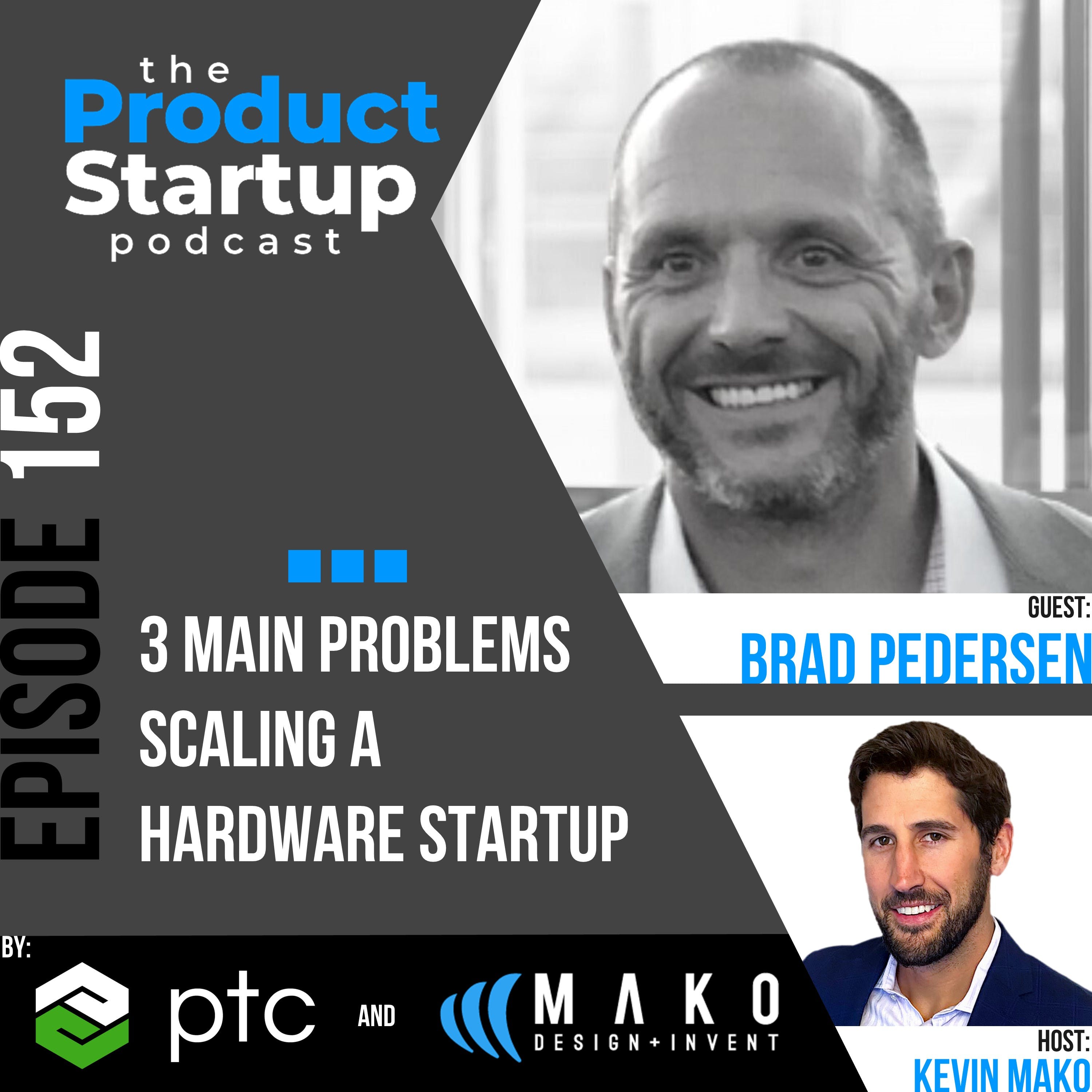
Ep 152152: Three Main Problems When Scaling a Hardware Startup
Brad Pedersen is a founder of the hardware product Lomi which raised almost ten million dollars in crowdfunding as his most recent hit success of many. In his earlier years, he developed many new products and also distributed thousands of other hardware products all over the world, mostly in the toy and sports product fields. Today Brad is going to share some valuable knowledge on how inventors, startups, and small manufacturers can learn what the 3 most important elements of an emerging hardware startup are, how to avoid key pitfalls around each of those 3 areas, and how to scale your product to become the next big hit invention success.Today you will hear us talk about: People, Systems, and Cash Growth is a double-edged sword You must constantly re-invent each of the main 3 primary scaling failure areas When you find product market fit, how do you ensure that will go the distance, and people is the biggest lever You start with generalist and move to specialist Single-digit growth is annually, double-digit is quarterly, and Don’t become the bottleneck of everything. Systems allow you to best utilize your people 4 key things to a hardware startup: Smart founder and a great idea, marketing plan that is different not better, a team (your people), and execution (the systems). Hire people that are smarter than you, even pay them more than you, especially in the early days. Get the cash you need to get to your MVP Perfection is the enemy of progress Build, measure, learn. Consider selling direct to customers EPISODE LINKS:Brad Pedersen Links:Personal Website | Lomi | LinkedInThe Product Startup Podcast Links:https://www.ProductStartup.com/Instagram | LinkedIn | Facebook Page | Facebook Group | Pinterest | Twitter | YouTubePTC Links:https://www.ptc.com/OnShape | CreoMako Design Links:https://www.makodesign.com/YouTube | Instagram | LinkedIn | Facebook | Pinterest...

Ep 151151: The AIDA Marketing Method for Hardware Startups
Michael Solomon is a Marketing Professor at Saint Joseph’s University, has written over 30 books, and teaches the Engage marketing course on Teachable. He is also a fellow writer with me at Forbes Magazine. Today Michael is going to share some valuable knowledge for inventors, startups, and small manufacturers on what the AIDA marketing method is, how to understand each step of the marketing funnel, and how to best ensure you convert potential customers into product sales.Today you will hear us talk about: AIDA Model 4 Stages of Attention, Interest, Desire, and Action It doesn’t happen overnight Marketing is a funnel Selling attributes where customers are buying benefits Focus on the problem to identify the solution Simple is better, both in product design but also in new product marketing Attention is arguably the most critical part of marketing Attention requires both Novelty and Relevance Make your hardware message clear There is a sensory overload for information, so you need to stand out with your initial messaging Having an interested physical product consumer is the holy grail, put a lot of value onto the fact that you have a person interested in your product. Consumers are always looking for ways to minimize risk in the purchase Unique Selling Proposition. What is the one thing that sets you apart from the competition? Again USP is based more on Benefits than Features. The Interest phase is primarily cognitive, Desire is the emotional phase. To create desire, show people what will happen in their lives if they use your product. Think of your ad as a makeover to that person’s life The overlooked importance of early adopter customers The 80/20 rule of revenue The call to action may be a feedback loop The number of touchpoints to make a sale Invest in the relationship to sell long term Think of the value of the customer beyond the first sale It is 7 times more expensive to attract a new customer than to re-sell to a prior customer EPISODE LINKS:Michael Solomon Links:Course | LinkedIn | Past Episode | Marketing CourseThe Product Startup Podcast Links:https://www.ProductStartup.com/Instagram | LinkedIn | Facebook Page | Facebook Group | Pinterest | Twitter | YouTubeMako Design Links:https://www.makodesign.com/YouTube | Instagram | LinkedIn | Facebook | Pinterest | TwitterKevin Mako Links:Instagram | <a...

Ep 150150: Building Product Prototypes with Your Design Team
Robert Irwin is currently the lead industrial designer for Origyn LLC, an external R&D partner of the multinational company Haier. He was the past Senior INdusdtrial Designer at Amazon for their shopping cart products. He is also a fellow lecturer in the design industry. Today Robert is going to share some valuable knowledge on how inventors, startups, and small manufacturers can first understand how to manage your product design and prototyping team, then work with them to develop physical prototypes to perfect your product for both manufacturing and the end-customer.Today you will hear us talk about: Empathy in the design process with various stakeholders Listening to your potential customer, but also to your design team and other product development stakeholders. Be careful about compartmentalizing features, they need to all come together via a hardware product prototype. Iterative loop in design, engineering, and prototyping your hardware product Good prototyping relies on great design, and design that is done right to start with. After a professionally built CAD design is done as far as you can push it, then build a physical prototype of the invention, but keep that first prototype relatively rough and simple, such as through 3D printing. You don’t need to make a fully functional prototype to start getting feedback Never skip the iterative process in developing the product, and ensure to use multiple prototypes that increase in complexity and quality as you get closer to manufacturing. You are de-risking the failure of the product by properly developing your product. Fail early and fail often EPISODE LINKSRobert Irwin Links: LinkedIn Past Episode The Product Startup Podcast Links: Website: https://www.ProductStartup.com/ Instagram: https://www.instagram.com/ProductStartup/ LinkedIn: https://www.linkedin.com/company/ProductStartup/ Facebook Page: https://www.facebook.com/ProductStartup/ Facebook Group: https://www.facebook.com/groups/ProductStartup/ Pinterest: https://www.pinterest.com/ProductStartup/ Twitter: https://twitter.com/ProductStartup YouTube: https://www.youtube.com/MakoInvent Mako Design Links: Website: https://www.makodesign.com/ YouTube: https://www.youtube.com/MakoInvent Instagram: https://www.instagram.com/MakoInvent/ LinkedIn: https://www.linkedin.com/company/MakoDesign/ Facebook: https://www.facebook.com/MakoInvent/ Pinterest: <a...

Ep 149149: How to Professionally Prototype your Invention Idea
Mike Morton was an Industrial Design Senior Principal at Dell for many years, and before that similar roles at HP and SunBeam, along with working with many physical consumer product inventors and startups along the way. He has also been a mentor at Capital Factory and Techstars, in addition to working with Mako Design too. Today Mike is going to share some valuable knowledge on how inventors, startups, and small manufacturers can understand the importance and best practices around the different types of prototypes, how important prototyping is to the product development process, and how to use prototypes to ensure a product is successful both in the market and in manufacturing.Today you will hear us talk about: The importance of physical product prototyping for an invention idea to go into production with Rough product prototype Mechanical product prototype Refined product prototype Pre-production prototype or production sample prototype Prototype early and often Test your prototypes out for both problems AND opportunities Some of the best designs and engineering ideations come out of the prototyping phases. Never skip prototyping steps, but rearrange them or do side prototypes to best suit the needs of your product. Bring in manufacturing as you start getting into the more serious mechanical prototypes, especially as you get into pre-production or refined prototypes. Manufacturers want you to be successful, it helps everybody. EPISODE LINKSMike Morton Links: LinkedIn: https://www.linkedin.com/in/michael-morton-design/ Past Episode: https://www.makodesign.com/podcast/064-preparing-and-executing-your-products-first-production-run/ The Product Startup Podcast Links: Website: https://www.ProductStartup.com/ Instagram: https://www.instagram.com/ProductStartup/ LinkedIn: https://www.linkedin.com/company/ProductStartup/ Facebook Page: https://www.facebook.com/ProductStartup/ Facebook Group: https://www.facebook.com/groups/ProductStartup/ Pinterest: https://www.pinterest.com/ProductStartup/ Twitter: https://twitter.com/ProductStartup YouTube: https://www.youtube.com/MakoInvent Mako Design Links: Website: https://www.makodesign.com/ YouTube: https://www.youtube.com/MakoInvent Instagram: https://www.instagram.com/MakoInvent/ LinkedIn: https://www.linkedin.com/company/MakoDesign/ Facebook: https://www.facebook.com/MakoInvent/ Pinterest: <a...

Ep 148148: Grow Your Hardware Product Sales Via Trade Shows
Jim Cermak has spent over 30 years helping hardware companies educate, navigate, and conquer selling their products at hardware tradeshows. He is also the Founder of Trade Show University, an organization that educates and consults small businesses on winning at trade shows, including his new video series which answers 7 key questions on how to tackle a trade show. Today Jim is going to share some valuable knowledge on how inventors, startups, and small manufacturers can plan for launching or scaling your hardware product at a hardware trade show, and how to maximize success when it comes to managing your tradeshow booth at the show.Today you will hear us talk about: Trade shows are one of the most efficient and effective ways to get your product exposure. Figure out why you want to go to a trade show Pick the right trade show to launch or scale your product Understand what you have to sell. Be clear in your messaging at the Trade Show Be big and bold Speak the hardware buyers’ language Plenty of pre-show marketing for your invention idea at the trade show Get appointments or stop-ins ahead of time Reach out to the show and see what extra showcase placements they have available. Sometimes they are even free. Ask people at the show to give a quick testimonial about your product. Tips for being on the floor of the show Have your qualifying questions ready, be very specific. As a team, find out what the top questions you are getting asked are, have your top 20 tradeshow questions for your invention idea. Do not work the tradeshow by yourself, even if you’re just an inventor. Take a video of yourself after a great tradeshow conversation EPISODE LINKSJim Cermak Links: Website: https://tradeshowu.biz/ LinkedIn: https://www.linkedin.com/in/jimcermak/ The Product Startup Podcast Links: Website: https://www.ProductStartup.com/ Instagram: https://www.instagram.com/ProductStartup/ LinkedIn: https://www.linkedin.com/company/ProductStartup/ Facebook Page: https://www.facebook.com/ProductStartup/ Facebook Group: https://www.facebook.com/groups/ProductStartup/ Pinterest: https://www.pinterest.com/ProductStartup/ Twitter: https://twitter.com/ProductStartup YouTube: https://www.youtube.com/MakoInvent Mako Design Links: Website: https://www.makodesign.com/ YouTube: https://www.youtube.com/MakoInvent Instagram: https://www.instagram.com/MakoInvent/ LinkedIn: https://www.linkedin.com/company/MakoDesign/ Facebook: <a...

Ep 147147: Transition from Hardware Product Startup to Hardware Scaleup
Morgan Teachworth was the head of Hardware at Meraki, a company that was acquired by Cisco for $1.2 billion dollars, and is now the VP of Engineering & Supply Chain there. He has been involved in the development of hundreds of physical mass-manufactured products leading to approximately 16 million units of his products being sold around the world in his 15-year tenure with the organization. Today Morgan is going to share some valuable knowledge on how inventors, startups, and small manufacturers can understand the difference between developing a product to sell as a startup to then developing products to sell as a growing scale-up brand, and what you can do to best strategize for this kind of explosive hardware company growth in the product space.Today you will hear us talk about: How the customer changes as you scale your hardware product business Your customers become your salesforce in the very early stages Your next tier of customers are the wholesalers, distributors, resellers, etc. What are some new stakeholders Think about the factory, the installers, the resellers, Micro stakeholders and macro stakeholders You can tune the product design, the packaging, the product experience, the manufacturing, all around multiple stakeholders Simplicity is an important part of design considerations, but also in all other stakeholders this should be considered too. Keep your product simple, it’s actually easier to do as a small physical product business than it is as you grow, so start now. As you grow, you become the big incumbent now that other small innovators are trying to take on. Cross-functional initiatives help as you scale. EPISODE LINKSMorgan Teachworth Links: Website: https://meraki.cisco.com/ LinkedIn: https://www.linkedin.com/in/mteachw/ The Product Startup Podcast Links: Website: https://www.ProductStartup.com/ Instagram: https://www.instagram.com/ProductStartup/ LinkedIn: https://www.linkedin.com/company/ProductStartup/ Facebook Page: https://www.facebook.com/ProductStartup/ Facebook Group: https://www.facebook.com/groups/ProductStartup/ Pinterest: https://www.pinterest.com/ProductStartup/ Twitter: https://twitter.com/ProductStartup YouTube: https://www.youtube.com/MakoInvent Mako Design Links: Website: https://www.makodesign.com/ YouTube: https://www.youtube.com/MakoInvent Instagram: https://www.instagram.com/MakoInvent/ LinkedIn: https://www.linkedin.com/company/MakoDesign/ Facebook: https://www.facebook.com/MakoInvent/...

Ep 146146: Transparency in the Design For Manufacturing Process
Michael Corr is the Co-Founder of Duro PLM, a product lifecycle management tool for centralizing the entire communication process of development to production. They have thousands of users improving their design for manufacturing process. Today Michael is going to share some valuable knowledge on how inventors, startups, and small manufacturers can understand what Design For Manufacturing is, what is required to fill the gap between product development and your first production run, and how to communicate effectively with all manufacturing stakeholders, especially on a first production run.Today you will hear us talk about: What is DFM Design for Manufacturing How do you efficiently and effectively manufacture Hand-based manufacturing vs automatic manufacturing in PCB / electronics parts Design both for functionality AND for manufacturing Think about manufacturing at the early phases of development Increase the amount of DFM work as you get closer to production The further along the manufacturing process, the more it will cost to fix the problem. Each product has its own nuances and unique elements that should be ironed out Manufacturers have your best interest in mind, but they don’t know the product nearly as well as you do. Incorporate your manufacturers into your processes, especially as you get closer to manufacturing. Make sure that communication channels are into your manufacturing process. Be sure you have transparency and trust in the failures that are occurring in manufacturing. This can be done in a social contract, or a technical contract. Communication for DFM should be in real time, and also fully disclosed. EPISODE LINKSMichael Corr Links: Website: https://www.durolabs.co/ LinkedIn: https://www.linkedin.com/in/michaelgcorr/ The Product Startup Podcast Links: Website: https://www.ProductStartup.com/ Instagram: https://www.instagram.com/ProductStartup/ LinkedIn: https://www.linkedin.com/company/ProductStartup/ Facebook Page: https://www.facebook.com/ProductStartup/ Facebook Group: https://www.facebook.com/groups/ProductStartup/ Pinterest: https://www.pinterest.com/ProductStartup/ Twitter: https://twitter.com/ProductStartup YouTube: https://www.youtube.com/MakoInvent Mako Design Links: Website: https://www.makodesign.com/ YouTube: https://www.youtube.com/MakoInvent Instagram: https://www.instagram.com/MakoInvent/ LinkedIn: https://www.linkedin.com/company/MakoDesign/ ...

Ep 145145: Expanding Your Startup Hardware Product Line
Hussain Almossawi has worked as a senior hardware director or designer at Ford, Adidas, and Apple for many of their hardware brands. He is also the author of The Innovator’s Handbook, and the Founder of the creative agency Mossawi Studios. Today Hussain is going to share some valuable knowledge on how inventors, startups, and small manufacturers can develop new hardware products beyond their first innovation, how to scale your brand beyond being a one-hit wonder, and how to best figure out what your next hardware innovation should be.Today you will hear us talk about: What options are there beyond your first invention Expand your existing innovation Create an evolution of your product Create accessories for your product Pros and cons of each category How do you decide which way to expand your hardware product Look at semi-related industries to see how they expand, this is the very realistic ways that other industries have expanded. What can you use from this? Always ask what-if questions (blue sky). These are the crazy ideas. Tips and tricks for innovating a hardware brand Intersect ideas and technology to innovate your hardware product Be a curious sponge Feedback, in combination with blue sky ideas and similar industry ideas. You don’t have to reinvent the wheel every time you evolve. Be laser-focused on your development, focus on the one key feature. First principles method of product development. Keep your product simple, and keep the next innovation of your product simple. EPISODE LINKSHussain Almossawi Links: Website: https://mossawistudios.com/ Book: https://www.amazon.com/dp/173785080X/ref=tsm_1_fb_lk LinkedIn: https://www.linkedin.com/in/hussainalmossawi/ The Product Startup Podcast Links: Website: https://www.ProductStartup.com/ Instagram: https://www.instagram.com/ProductStartup/ LinkedIn: https://www.linkedin.com/company/ProductStartup/ Facebook Page: https://www.facebook.com/ProductStartup/ Facebook Group: https://www.facebook.com/groups/ProductStartup/ Pinterest: https://www.pinterest.com/ProductStartup/ Twitter: https://twitter.com/ProductStartup YouTube: https://www.youtube.com/MakoInvent Mako Design Links: Website: https://www.makodesign.com/ YouTube: https://www.youtube.com/MakoInvent Instagram: https://www.instagram.com/MakoInvent/ LinkedIn: https://www.linkedin.com/company/MakoDesign/ Facebook: <a...
Ep 144144: How to Sell a New Invention on Amazon Marketplace
Chris Moe is the Co-Founder of Cartograph, a digital marketing agency with over 150 million dollars of client sales per year on Amazon. They have grown a number of CPG brands from zero to millions of dollars in sales, and many of them in just a few months. Today Chris is going to share some valuable knowledge on how inventors, startups, and small manufacturers can understand what Amazon Marketplace is, how to launch your new hardware product on Amazon, and how to understand the algorithms and marketing avenues to increase your Amazon sales.Today you will hear us talk about: How does Amazon work for selling a new invention hardware product? Using Amazon to sell products is very seller friendly. Make sure that you are ready to launch, and make sure that the timing is right. Have the first wave of product market fit. A lot of the time product negative feedback may just be messaging, not even in a flaw of the product. Pricing is a “triangulation exercise”. If you are cashflow constrained, make sure you price at the right price. Taking a low-price strategy likely doesn’t make sense for an inventor on Amazon. How does Amazon actually work? How to launch (pricing, competition, timing). How to scale. Amazon Marketplace for inventors, hardware startups, and small emerging manufacturing brands. Fulfillment by Amazon Network (this is how you get that Amazon Prime Badge) The difference between standard shipping size, and oversize shipping size. Invest back another 20% or so into advertising on the platform. How the Amazon algorithm works Paid ads on Amazon Amazon reviews, along with content (the Moat on Amazon). EPISODE LINKSChris Moe / Cartograph Links: Website: https://www.gocartograph.com/ LinkedIn: https://www.linkedin.com/in/chrismoe1/ The Product Startup Podcast Links: Website: https://www.ProductStartup.com/ Instagram: https://www.instagram.com/ProductStartup/ LinkedIn: https://www.linkedin.com/company/ProductStartup/ Facebook Page: https://www.facebook.com/ProductStartup/ Facebook Group: https://www.facebook.com/groups/ProductStartup/ Pinterest: https://www.pinterest.com/ProductStartup/ Twitter: https://twitter.com/ProductStartup YouTube: https://www.youtube.com/MakoInvent Mako Design Links: Website: https://www.makodesign.com/ YouTube: https://www.youtube.com/MakoInvent Instagram: https://www.instagram.com/MakoInvent/ LinkedIn: https://www.linkedin.com/company/MakoDesign/ Facebook: <a...
Ep 141143: Build Your Own Manufacturing for Your Invention
Don Skaggs founded the manufacturer US Biotex Corporation, which he started on a farm back in 1991 and grew to over 150 products in production over 22 years before being bought out. Don has also been the President of the Inventors Network Kentucky for nearly 20 years now. Today Don is going to share some valuable knowledge on how inventors, startups, and small manufacturers can start their own manufacturing facility locally for their invention idea, then how to grow and scale, and what benefits there are for taking this production path.Today you will hear us talk about: See if customers would buy samples, and learn from them. Bootstrap to find out what works. Start with a small batch so that you can test the market. It’s easier to manufacture locally than you think, just start with a basic part of the manufacturing process. Design using as many Original Equipment Manufactured parts as possible. As you scale production, there are a number of benefits from running your own manufacturing operation. Your own manufacturing gives you a lot of solutions. Find an innovation where it’s common in one industry, but not discovered in another. Stay close to R&D and close to marketing and sales, so that you can put the two together. Time, money, and wisdom. Learn from your mistakes, and from your customers. When you’re small, you can connect marketing, sales, R&D, and production. Find the intersection of what you are passionate about, and what you are good at. EPISODE LINKSDon Skaggs / KY Inventors Network Links: Website: https://www.kyinventors.org/ LinkedIn: https://www.linkedin.com/in/donskaggs/details/experience/ YouTube: https://www.youtube.com/c/EmpoweredInventing The Product Startup Podcast Links: Website: https://www.ProductStartup.com/ Instagram: https://www.instagram.com/ProductStartup/ LinkedIn: https://www.linkedin.com/company/ProductStartup/ Facebook Page: https://www.facebook.com/ProductStartup/ Facebook Group: https://www.facebook.com/groups/ProductStartup/ Pinterest: https://www.pinterest.com/ProductStartup/ Twitter: https://twitter.com/ProductStartup YouTube: https://www.youtube.com/MakoInvent Mako Design Links: Website: https://www.makodesign.com/ YouTube: https://www.youtube.com/MakoInvent Instagram: https://www.instagram.com/MakoInvent/ LinkedIn: https://www.linkedin.com/company/MakoDesign/ Facebook: <a...
Ep 142142: Preparing Your Product for Manufacturing Overseas
Mike Deigan is Vice President at Global Link Sourcing. He has been working for 10 years on sourcing products and consulting on products for 15 years before that. Global Link has helped with manufacturing well over 100 products for hardware companies, leading to tens of millions of their sourced products selling around the world. Today Mike is going to share some valuable knowledge on how inventors, startups, and small manufacturers can understand how to prepare your product’s development to get it ready to present to overseas manufacturing partners and the pros and cons of sourcing through an agency and sourcing direct with manufacturers in China and elsewhere.Today you will hear us talk about: Preparing your product to work with overseas manufacturing Concept design vs design for manufacturing A design that you can truly use to go to production with Going direct vs through a sourcing company Logistics, time, finding a real factory, financial benefits The problems with finding a manufacturing partner through Alibaba or similar Rectifying issues with a manufacturer. EPISODE LINKSMike Deigan / Global Link Sourcing Links: Website: http://www.globallinksourcing.com/ LinkedIn: https://www.linkedin.com/in/mike-deigan-25b02918/ The Product Startup Podcast Links: Website: https://www.ProductStartup.com/ Instagram: https://www.instagram.com/ProductStartup/ LinkedIn: https://www.linkedin.com/company/ProductStartup/ Facebook Page: https://www.facebook.com/ProductStartup/ Facebook Group: https://www.facebook.com/groups/ProductStartup/ Pinterest: https://www.pinterest.com/ProductStartup/ Twitter: https://twitter.com/ProductStartup YouTube: https://www.youtube.com/MakoInvent Mako Design Links: Website: https://www.makodesign.com/ YouTube: https://www.youtube.com/MakoInvent Instagram: https://www.instagram.com/MakoInvent/ LinkedIn: https://www.linkedin.com/company/MakoDesign/ Facebook: https://www.facebook.com/MakoInvent/ Pinterest: https://www.pinterest.com/MakoInvent/ Twitter: https://twitter.com/MakoInvent/ Kevin Mako Links: Instagram: https://www.instagram.com/Entrepreneurs/ LinkedIn: <a...
Ep 141141: Product Sales Process for Hardware Startups
Scott Brogan is the founder of Company Expert, a sales process consultancy that has worked with over 100 emerging brands. He has spent over 30 years in sales, including working for 7 Fortune500 companies in sales capacities. Today Scott is going to share some valuable knowledge on how inventors, startups, and small manufacturers can start to build a process around identifying partner companies to sell to, preparing how to give your pitch, and how to improve your sales process over time to rinse and repeat.Today you will hear us talk about: How do you start selling a first product to A system and a process for sales Sales is solving problems for your end-customer Leveraged sales partner play Start with a goal Figure out who specifically you want to call, then how to position yourself to that buyer. Write down your sales process and strategy Competitors are, distribution, strengths, weaknesses, threats Who within a prospective buyer company should you be calling What are the buyer’s pain points and opportunities 7 people are usually involved in a purchasing process The multiple stages of competency in sales Start the sales process by learning at the beginning Feedback loop in sales. Always write down objections that are asked, and how you respond. Enthusiasm is powerful and can help you overcome mistakes as a new seller Have the personal story of why you made this product ready Bringing the science into sales. The sales industry is not mature, there are lots of improvements you can capitalize on. EPISODE LINKSScott Brogan / Company Expert Links: Website: https://companyexpert.com/ Tools: https://companyexpert.com/product-sales/ LinkedIn: https://www.linkedin.com/in/scottpbrogan/ The Product Startup Podcast Links: Website: https://www.ProductStartup.com/ Instagram: https://www.instagram.com/ProductStartup/ LinkedIn: https://www.linkedin.com/company/ProductStartup/ Facebook Page: https://www.facebook.com/ProductStartup/ Facebook Group: https://www.facebook.com/groups/ProductStartup/ Pinterest: https://www.pinterest.com/ProductStartup/ Twitter: https://twitter.com/ProductStartup YouTube: https://www.youtube.com/MakoInvent Mako Design Links: Website: https://www.makodesign.com/ YouTube: https://www.youtube.com/MakoInvent Instagram: https://www.instagram.com/MakoInvent/ LinkedIn: https://www.linkedin.com/company/MakoDesign/ Facebook: <a...
Ep 140140: Local Manufacturing for a New Hardware Invention Idea
Nigel Southway is the author of two books, the most recent is called Take Back Manufacturing, and his original was called Lean Manufacturing. He has spent 55 years in the manufacturing space. He was the chair of a chapter of the Society of Manufacturing Engineers, which I was also a part of starting over 10 years ago. Today Nigel en is going to share some valuable knowledge on how inventors, startups, and small manufacturers can decide between offshore and onshore manufacturing, what the pros and cons are for each choice, explain short-run manufacturing for new products, and how we can bring back manufacturing to local communities.Today you will hear us talk about: Look at local vs offshore carefully Run the numbers of manufacturing Benefits of on-shore manufacturing Technology that is enabling local manufacturing for new physical products Short run manufacturing Take back manufacturing: Political, Educational, and Technology The difference, on average, is only about 10% EPISODE LINKSNigel Southway / Take Back Manufacturing Links: Website: https://nigelsouthwayauthor.com/ LinkedIn: https://www.linkedin.com/in/nigelsouthway/ The Product Startup Podcast Links: Website: https://www.ProductStartup.com/ Instagram: https://www.instagram.com/ProductStartup/ LinkedIn: https://www.linkedin.com/company/ProductStartup/ Facebook Page: https://www.facebook.com/ProductStartup/ Facebook Group: https://www.facebook.com/groups/ProductStartup/ Pinterest: https://www.pinterest.com/ProductStartup/ Twitter: https://twitter.com/ProductStartup YouTube: https://www.youtube.com/MakoInvent Mako Design Links: Website: https://www.makodesign.com/ YouTube: https://www.youtube.com/MakoInvent Instagram: https://www.instagram.com/MakoInvent/ LinkedIn: https://www.linkedin.com/company/MakoDesign/ Facebook: https://www.facebook.com/MakoInvent/ Pinterest: https://www.pinterest.com/MakoInvent/ Twitter: https://twitter.com/MakoInvent/ Kevin Mako Links: Instagram: https://www.instagram.com/Entrepreneurs/ LinkedIn: https://www.linkedin.com/in/KevMako/ Quora: <a...
Ep 139139: How to Scale Your Physical Product in Retail Stores
Marc Inkol is the President of Explorer Research, a North American shopper research consulting firm that works with emerging physical product brands and massive product companies like Walmart, Kraft, Google, Pepsi, Uniliver, and many others. Mark has spent 30 years in the retail industry including leading divisions at Kraft and Maple Leaf. Today Marc is going to share some valuable knowledge on how inventors, startups, and small manufacturers can develop and position your product for big success at retail stores, how to captivate buyers while on the shelf, and how to scale your brand via retail stores.Today you will hear us talk about: Consumers have the power now A consumer buys 200 to 300 products out of a food store per year You have to be very clear on what your selling proposition is. Products should be both unique and meaningful Features are not primary Simple design is better 15% of a shelf is viewed, package is seen for only 2 seconds 5 or 6 words max is what they see Constantly innovate on fewer than broader and more Packaging, supply chain, You only can say three things on your packaging: Who you are, what you sell, and why better Color, Shape, and Size for packaging. How do you engage people in the product. 10-15 seconds once they have actually picked up your product Clear seller proposition EPISODE LINKSMarc Inkol / Explorer Research Links: Website: https://explorerresearch.com/ LinkedIn: https://www.linkedin.com/in/marc-inkol-4944723/ The Product Startup Podcast Links: Website: https://www.ProductStartup.com/ Instagram: https://www.instagram.com/ProductStartup/ LinkedIn: https://www.linkedin.com/company/ProductStartup/ Facebook Page: https://www.facebook.com/ProductStartup/ Facebook Group: https://www.facebook.com/groups/ProductStartup/ Pinterest: https://www.pinterest.com/ProductStartup/ Twitter: https://twitter.com/ProductStartup YouTube: https://www.youtube.com/MakoInvent Mako Design Links: Website: https://www.makodesign.com/ YouTube: https://www.youtube.com/MakoInvent Instagram: https://www.instagram.com/MakoInvent/ LinkedIn: https://www.linkedin.com/company/MakoDesign/ Facebook: https://www.facebook.com/MakoInvent/ Pinterest: https://www.pinterest.com/MakoInvent/ Twitter: https://twitter.com/MakoInvent/ ...
Ep 138138: Using Audio Ads to Sell New Hardware Products
Stew Redwine is Vice President Creative Services at Oxford Road, one of the leading audio advertising agencies in the world. They ran the ads behind unicorn physical product success stories such as Quip Toothbrushes, Theragun, Tommy John, and many more. Today Stew is going to share some valuable knowledge for inventors, startups, and small manufacturers on what audio platforms are out there to advertise your product on, how to get started in the audio advertising space for hardware products, and how to make a great audio ad to make your product invention the next big success.Today you will hear us talk about: What are audio ads for hardware products? The different platforms for audio: Podcasts, radio, XM radio Crisp, clear, and clever messaging Self serve audio advertising programs (Gumball and Podcorn) True Native Media for a more concierge service The key things to have in an audio ad A person is not fully convinced until they can feelthe product has been demonstrated 9 key things for a highly successful audio ad for a new physical product invention You don’t have to stress about being perfectly clever. 180 word max for a 60 second ad. Most podcast consumption happens around the episode drop. EPISODE LINKSStew Redwine / Oxford Road Links: Website: https://www.linkedin.com/in/stewredwine/ WhitePaper: https://soundsprofitable.com/update/copywriting-ads-that-sell LinkedIn: https://www.linkedin.com/in/stewredwine/ The Product Startup Podcast Links: Website: https://www.ProductStartup.com/ Instagram: https://www.instagram.com/ProductStartup/ LinkedIn: https://www.linkedin.com/company/ProductStartup/ Facebook Page: https://www.facebook.com/ProductStartup/ Facebook Group: https://www.facebook.com/groups/ProductStartup/ Pinterest: https://www.pinterest.com/ProductStartup/ Twitter: https://twitter.com/ProductStartup YouTube: https://www.youtube.com/MakoInvent Mako Design Links: Website: https://www.makodesign.com/ YouTube: https://www.youtube.com/MakoInvent Instagram: https://www.instagram.com/MakoInvent/ LinkedIn: https://www.linkedin.com/company/MakoDesign/ Facebook: https://www.facebook.com/MakoInvent/ Pinterest: https://www.pinterest.com/MakoInvent/ Twitter: <a...
Ep 137137: Customer Feedback at Physical Product Launches
Matt Selbie is the President of Opiniator, a software platform that collects real-time feedback from product customers. He has spent over 25 years researching, strategizing, and implementing customer feedback programs. Today Matt is going to share some valuable knowledge on how inventors, startups, and small manufacturers should properly collect customer feedback, when to do it, how to do it, and the importance of it, along with breaking down clear actionable steps you can use for maximizing the right kind of feedback at your product launch.Today you will hear us talk about: Companies don’t consider feedback in their corporate strategy for their physical hardware products Ask the right people. Ask as close to the experience as you possibly can. Ask the right product feedback questions, figure out exactly what you specifically want to find out. The fallacies in customer feedback. Breaking down the feedback into clear actionable questions. It is better to focus on clearly data-driven answers rather than general intent open-ended questions. Ask two questions about one feature on your product. Vulnerability analysis. Think about feedback not just for product development, but also for how to sell. Feature creep without consulting customers Hardware product feedback at a product launch Give the respondents the eventual data Qualify the respondents. Make the feedback 2 minutes or less. Retail store camouflage of your product The one thing to make someone consider buying EPISODE LINKSMatt Selbie / Opiniator Links: Website: https://opiniator.com/ LinkedIn: https://www.linkedin.com/in/matthewselbie/ The Product Startup Podcast Links: Website: https://www.ProductStartup.com/ Instagram: https://www.instagram.com/ProductStartup/ LinkedIn: https://www.linkedin.com/company/ProductStartup/ Facebook Page: https://www.facebook.com/ProductStartup/ Facebook Group: https://www.facebook.com/groups/ProductStartup/ Pinterest: https://www.pinterest.com/ProductStartup/ Twitter: https://twitter.com/ProductStartup YouTube: https://www.youtube.com/MakoInvent Mako Design Links: Website: https://www.makodesign.com/ YouTube: https://www.youtube.com/MakoInvent Instagram: https://www.instagram.com/MakoInvent/ LinkedIn: https://www.linkedin.com/company/MakoDesign/ Facebook: https://www.facebook.com/MakoInvent/ Pinterest: <a...
Ep 136136: Selling a New Physical Product with Google Ads
Jem Bourouh is a Partner at Accelerated, one of Europe’s leading direct-to-consumer e-commerce advertising agencies. Jem has won many awards, and has had 7 products hit 7 figures in sales in just the first 30 days of their campaigns. Today Jem is going to share some valuable knowledge for inventors, startups, and small manufacturers on the different types of Google advertising for a new hardware product, the structure and tools needed to launch your first campaign, and tips for maximizing the success and growth of your Google ads campaigns to sell directly to end customers.Today you will hear us talk about: The many types of Google ads channels How can people sell things via Google ads Transactional campaign Navigational campaign Informational campaign Why Google Ads Start with keyword recommendations What do you need to sell on Google Ads Google Quality Score for hardware products Landing Page Experience Expected Click-Through Rate Ad rank for your ad Top of funnel, middle of funnel, bottom of funnel What are some trends happening today with Google adwords for physical hardware products Once you figure out these tools, you have a huge competitive advantage. Start with a low budget, experiment, and continue refining. EPISODE LINKSJem Bourouh / Accelerated Agency Links: Website: https://www.acceleratedagency.com/ LinkedIn: https://www.linkedin.com/in/jem-bourouh/ The Product Startup Podcast Links: Website: https://www.ProductStartup.com/ Instagram: https://www.instagram.com/ProductStartup/ LinkedIn: https://www.linkedin.com/company/ProductStartup/ Facebook Page: https://www.facebook.com/ProductStartup/ Facebook Group: https://www.facebook.com/groups/ProductStartup/ Pinterest: https://www.pinterest.com/ProductStartup/ Twitter: https://twitter.com/ProductStartup YouTube: https://www.youtube.com/MakoInvent Mako Design Links: Website: https://www.makodesign.com/ YouTube: https://www.youtube.com/MakoInvent Instagram: https://www.instagram.com/MakoInvent/ LinkedIn: https://www.linkedin.com/company/MakoDesign/ Facebook: https://www.facebook.com/MakoInvent/ Pinterest: https://www.pinterest.com/MakoInvent/ Twitter: https://twitter.com/MakoInvent/ Kevin Mako Links: ...
Ep 135135: Performance Marketing for New Hardware Products
Jake Schmidt has sold over five hundred million dollars in products online for customers. He is the CEO of Structured Agency, a digital marketing firm that specializes in performance marketing for hardware brands direct to consumer. In his early years, he was the online sales guy behind the fidget spinner, which they ended up leveraging to then get into major retailers like Best Buy. Today Jake is going to share some valuable knowledge on how inventors, startups, and small manufacturers can understand the different strategies to marketing online, what platforms are most successful and how that is changing, and how to spin up simple at-home ads that convert into real customers for your new physical product.Today you will hear us talk about: Performance marketing agency, which is driving revenue for your brand. Paid Media Push vs Pull marketing Retention marketing: Email and SMS Marketing Community building: Content Marketing It all starts with a quality product Social media likes unique content, meaning new invention ideas are promoted much heavier. TikTok is similar to what Instagram was 5 years ago Repurpose your content to amplify the digital creative work you are doing. Show the value proposition within 2 seconds Keep the product simple, so that you can sell it extremely quickly Authentic video ads are easy to shoot, and the market loves them right now, and that opportunity may not last. Consider coupon websites, affiliate selling programs, etc. EPISODE LINKSJake Schmidt / Structured Agency Links: Website: https://www.structured.agency/ LinkedIn: https://www.linkedin.com/in/jake-schmidt-a495b513b/ Twitter: https://twitter.com/iamjakeschmidt The Product Startup Podcast Links: Website: https://www.ProductStartup.com/ Instagram: https://www.instagram.com/ProductStartup/ LinkedIn: https://www.linkedin.com/company/ProductStartup/ Facebook Page: https://www.facebook.com/ProductStartup/ Facebook Group: https://www.facebook.com/groups/ProductStartup/ Pinterest: https://www.pinterest.com/ProductStartup/ Twitter: https://twitter.com/ProductStartup YouTube: https://www.youtube.com/MakoInvent Mako Design Links: Website: https://www.makodesign.com/ YouTube: https://www.youtube.com/MakoInvent Instagram: https://www.instagram.com/MakoInvent/ LinkedIn: https://www.linkedin.com/company/MakoDesign/ Facebook: https://www.facebook.com/MakoInvent/...
Ep 134134: How to Sell Your Hardware Product B2B
Bill Dickinson has spent over 35 years selling business to business, building sales teams, and working with CEOs on optimizing their sales processes for many hardware suppliers. From building access machines to communication equipment to IT components, Bill has helped build a number of companies to multi-millions in new sales. Today Bill is going to share some valuable knowledge on how inventors, startups, and small manufacturers should apply sales to getting your product going, start with your first sales hire or sales partner, and scale your product business through sales teams, especially when selling to other business like retailers, distributors, and wholesalers.Today you will hear us talk about: Sales is critical to any hardware start-up or scale-up, from selling yourself, selling the business, selling Hiring for personality is better than hiring for product or industry knowledge What type of product are you selling What methods are you going to use to sell Sellers need a quality product, at a fair price, that has great service and/or support. Before you start selling, first ensure you have a need. Timing, luck, and skill, in that order, when doing cold calling. Make sure you have a product that is at least a little bit different, and unique. Spend time and effort finding detailed lists. Relationship selling. Build credibility and trust early, and in a small way. If you can make the purchaser’s life simpler, they will buy a lot more, and more new products 3 sales streams - Straight sales, existing customer sales, and business development Some new, existing, and future. More connections to a buyer, the higher the probability of an eventual sale. EPISODE LINKSBill Dickinson Link: LinkedIn: https://www.linkedin.com/in/bill-dickinson-31678a67/ The Product Startup Podcast Links: Website: https://www.ProductStartup.com/ Instagram: https://www.instagram.com/ProductStartup/ LinkedIn: https://www.linkedin.com/company/ProductStartup/ Facebook Page: https://www.facebook.com/ProductStartup/ Facebook Group: https://www.facebook.com/groups/ProductStartup/ Pinterest: https://www.pinterest.com/ProductStartup/ Twitter: https://twitter.com/ProductStartup YouTube: https://www.youtube.com/MakoInvent Mako Design Links: Website: https://www.makodesign.com/ YouTube: https://www.youtube.com/MakoInvent Instagram: https://www.instagram.com/MakoInvent/ LinkedIn: https://www.linkedin.com/company/MakoDesign/ Facebook: https://www.facebook.com/MakoInvent/ Pinterest:...