Princeton UP Ideas Podcast
875 episodes — Page 5 of 18
Ep 350Kecia Ali, "The Woman Question in Islamic Studies" (Princeton UP, 2024)
In The Woman Question in Islamic Studies (Princeton UP, 2024), the Introduction of which is available at the publisher's website, Kecia Ali delves into the deeply entrenched ways sexism continues to shape the academic landscape of Islamic Studies. Despite the growing presence of women scholars in the field, Ali finds that women’s work remains marginalized, relegated to the periphery while male-authored research is treated as more authoritative. Ali tackles this issue with a mix of sharp analysis and humor, showing how gender biases persist at every level of scholarship—from course syllabi to citations to job hiring practices to editorial decisions. Through a combination of broad surveys and focused analyses, she uncovers the patterns of exclusion that, to quote her, “beget exclusion.” The issue isn’t simply of women not being cited or mentioned in indices and footnotes and bibliographies, but also of how women’s scholarship is talked about compared to how men’s scholarship is described, hyped, and promoted. Even male scholars who present themselves as gender-inclusive often overlook or fail to cite women’s scholarship, which further highlights the deep-seated nature of this problem and of the pattern that Ali is exploring. The book doesn't just highlight the problem but also provides actionable strategies for transforming the field. Ali offers a practical "Beginner’s Guide to Eradicating Sexism in Islamic Studies," addressing areas like peer reviewing, citation practices, curriculum design, invitation for lectures and talks. This guide provides scholars with tools to counteract the biases that limit women’s visibility and contribution. With a keen eye on the wider academic context, Ali situates these issues not only within Islamic Studies but as part of broader patterns of gender inequality in disciplines across the academy – such as in Economics, in Political Science, in Philosophy, in the natural sciences, in Jewish Studies, in Religious Studies broadly. The Woman Question in Islamic Studies is both a compelling critique and a roadmap for change, urging scholars to recognize the ethical and intellectual importance of equitable citation and inclusion. In our conversation today, Ali identifies some of the main points of the book, explains how the book came about and what her methodology is; we also discuss why women aren’t being cited and why their exclusion from scholarship matters, why women are more likely than men to be more equitable in their citation practices, and how the book has been received so far and how Ali hopes people will respond. Ali and Lolo Serrano have co-author an article examining gender bias across fifteen years of book reviews in the Journal of the American Academy of Religion (2006–2020), which has been published in the same journal (accessible here). The article concludes that reviewers of all gender consistently prioritize and celebrate men’s scholarship at a disproportionate rate, and male reviewers are found to cite the works of male scholars at a significantly higher rate. This book will appeal to scholars, researchers, students, and others professionals in Islamic Studies, Religious Studies, Gender Studies, and related fields, as well as anyone interested in academic equity and the dynamics of citation practices. It is an essential read for those looking to understand the persistent gender disparities in academia and for educators, researchers, and policymakers seeking practical strategies for fostering a more inclusive and equitable scholarly environment. Moreover, anyone invested in challenging systemic sexism across disciplines, from the humanities to the social sciences, will find Ali’s insights both compelling and transformative. And especially those who don’t believe gender is relevant to their research, or who don’t think there are enough women they can cite in their works, will find the book immensely useful.
Ep 60Melinda Cooper, "Counterrevolution: Extravagance and Austerity in Public Finance" (Zone Books, 2024)
At the close of the 1970s, government treasuries and central banks took a vow of perpetual self-restraint. To this day, fiscal authorities fret over soaring public debt burdens, while central bankers wring their hands at the slightest sign of rising wages. As the brief reprieve of coronavirus spending made clear, no departure from government austerity will be tolerated without a corresponding act of penance. Yet we misunderstand the scope of neoliberal public finance if we assume austerity to be its sole setting. Beyond the zero-sum game of direct claims on state budgets lies a realm of indirect government spending that escapes the naked eye. Capital gains are multiply subsidized by a tax system that reserves its greatest rewards for financial asset holders. And for all its airs of haughty asceticism, the Federal Reserve has become adept at facilitating the inflation of asset values while ruthlessly suppressing wages. Neoliberalism is as extravagant as it is austere, and this paradox needs to be grasped if we are to challenge its core modus operandi. In Counterrevolution: Extravagance and Austerity in Public Finance (Zone Books, 2024) Dr. Melinda Cooper examines the major schools of thought that have shaped neoliberal common sense around public finance. Focusing, in particular, on Virginia school public choice theory and supply-side economics, she shows how these currents produced distinct but ultimately complementary responses to the capitalist crisis of the 1970s. With its intellectual roots in the conservative Southern Democratic tradition, Virginia school public choice theory espoused an austere doctrine of budget balance. The supply-side movement, by contrast, advocated tax cuts without spending restraint and debt issuance without guilt, in an apparent repudiation of austerity. Yet, for all their differences, the two schools converged around the need to rein in the redistributive uses of public spending. Together, they drove a counterrevolution in public finance that deepened the divide between rich and poor and revived the fortunes of dynastic wealth. Far-reaching as the neoliberal counterrevolution has been, Dr. Cooper still identifies a counterfactual history of unrealized possibilities in the capitalist crisis of the 1970s. She concludes by inviting us to rethink the concept of revolution and raises the question: Is another politics of extravagance possible? This interview was conducted by Dr. Miranda Melcher whose new book focuses on post-conflict military integration, understanding treaty negotiation and implementation in civil war contexts, with qualitative analysis of the Angolan and Mozambican civil wars.
Ep 85Shane Bobrycki, "The Crowd in the Early Middle Ages" (Princeton UP, 2024)
By the fifth and sixth centuries, the bread and circuses and triumphal processions of the Roman Empire had given way to a quieter world. And yet, as Shane Bobrycki argues, the influence and importance of the crowd did not disappear in early medieval Europe. In The Crowd in the Early Middle Ages (Princeton UP, 2024), Bobrycki shows that although demographic change may have dispersed the urban multitudes of Greco-Roman civilization, collective behavior retained its social importance even when crowds were scarce. Most historians have seen early medieval Europe as a world without crowds. In fact, Bobrycki argues, early medieval European sources are full of crowds—although perhaps not the sort historians have trained themselves to look for. Harvests, markets, festivals, religious rites, and political assemblies were among the gatherings used to regulate resources and demonstrate legitimacy. Indeed, the refusal to assemble and other forms of “slantwise” assembly became a weapon of the powerless. Bobrycki investigates what happened when demographic realities shifted, but culture, religion, and politics remained bound by the past. The history of crowds during the five hundred years between the age of circuses and the age of crusades, Bobrycki shows, tells an important story—one of systemic and scalar change in economic and social life and of reorganization in the world of ideas and norms. New Books in Late Antiquity is Presented by Ancient Jew Review Shane Bobrycki is assistant professor of history at the University of Iowa Michael Motia teaches in the classics and religious studies department at UMass Boston
Ep 239Patricia Owens, "Erased: A History of International Thought Without Men" (Princeton UP, 2025)
The academic field of international relations presents its own history as largely a project of elite white men. And yet women played a prominent role in the creation of this new cross-disciplinary field. In Erased: A History of International Thought Without Men (Princeton University Press, 2025), Professor Patricia Owens shows that, since its beginnings in the early twentieth century, international relations relied on the intellectual labour of women and their expertise on such subjects as empire and colonial administration, anticolonial organising, non-Western powers, and international organisations. Indeed, women were among the leading international thinkers of the era, shaping the development of the field as scholars, journalists, and public intellectuals—and as heterosexual spouses and intimate same-sex partners. Drawing on a wide range of archival sources, and weaving together personal, institutional, and intellectual narratives, Dr. Owens documents key moments and locations in the effort to forge international relations as a separate academic discipline in Britain. She finds that women’s ideas and influence were first marginalised and later devalued, ignored, and erased. Examining the roles played by some of the most important women thinkers in the field, including Margery Perham, Merze Tate, Eileen Power, Margaret Cleeve, Coral Bell, and Susan Strange, Dr. Owens traces the intellectual and institutional legacies of misogyny and racism. She argues that the creation of international relations was a highly gendered and racialised project that failed to understand plurality on a worldwide scale. Acknowledging this intellectual failure, and recovering the history of women in the field, points to possible sources for its renewal. This interview was conducted by Dr. Miranda Melcher whose new book focuses on post-conflict military integration, understanding treaty negotiation and implementation in civil war contexts, with qualitative analysis of the Angolan and Mozambican civil wars.
Ep 510Richard Rorty, "What Can We Hope For?: Essays on Politics" (Princeton UP, 2023)
Today I talked to Chris Voparil about What Can We Hope For?: Essays on Politics (Princeton UP, 2023), a book of Richard Rorty's writings he co-edited with W. P. Malecki. Richard Rorty, one of the most influential intellectuals of recent decades, is perhaps best known today as the philosopher who, almost two decades before the 2016 U.S. presidential election, warned of the rise of a Trumpian strongman in America. What Can We Hope For? Essays on Politics (Princeton University Press, 2023) gathers nineteen of Rorty’s essays on American and global politics, including four previously unpublished and many lesser-known and hard-to-find pieces. In these provocative and compelling essays, Rorty confronts the critical challenges democracies face at home and abroad, including populism, growing economic inequality, and overpopulation and environmental devastation. In response, he offers optimistic and realistic ideas about how to address these crises. He outlines strategies for fostering social hope and building an inclusive global community of trust, and urges us to put our faith in trade unions, universities, bottom-up social campaigns, and bold political visions that thwart ideological pieties. Driven by Rorty’s sense of emergency about our collective future, What Can We Hope For? is filled with striking diagnoses of today’s political crises and creative proposals for solving them.
Ep 135Eric Cline, "After 1177 B.C.: The Survival of Civilizations" (Princeton UP, 2025)
At the end of Eric Cline's bestselling history 1177 B.C., many of the Late Bronze Age civilizations of the Aegean and Eastern Mediterranean lay in ruins, undone by invasion, revolt, natural disasters, famine, and the demise of international trade. An interconnected world that had boasted major empires and societies, relative peace, robust commerce, and monumental architecture was lost and the so-called First Dark Age had begun. Now, in After 1177 B.C.: The Survival of Civilizations (Princeton UP, 2025), Cline tells the compelling story of what happened next, over four centuries, across the Aegean and Eastern Mediterranean world. It is a story of resilience, transformation, and success, as well as failures, in an age of chaos and reconfiguration. After 1177 B.C. tells how the collapse of powerful Late Bronze Age civilizations created new circumstances to which people and societies had to adapt. Those that failed to adjust disappeared from the world stage, while others transformed themselves, resulting in a new world order that included Phoenicians, Philistines, Israelites, Neo-Hittites, Neo-Assyrians, and Neo-Babylonians. Taking the story up to the resurgence of Greece marked by the first Olympic Games in 776 B.C., the book also describes how world-changing innovations such as the use of iron and the alphabet emerged amid the chaos. Filled with lessons for today about why some societies survive massive shocks while others do not, After 1177 B.C. reveals why this period, far from being the First Dark Age, was a new age with new inventions and new opportunities.
Ep 292Sheila Fitzpatrick, "Lost Souls: Soviet Displaced Persons and the Birth of the Cold War" (Princeton UP, 2024)
When World War II ended, about one million people whom the Soviet Union claimed as its citizens were outside the borders of the USSR, mostly in the Western-occupied zones of Germany and Austria. These “displaced persons,” or DPs—Russians, prewar Soviet citizens, and people from West Ukraine and the Baltic states forcibly incorporated into the Soviet Union in 1939—refused to repatriate to the Soviet Union despite its demands. Thus began one of the first big conflicts of the Cold War. In Lost Souls: Soviet Displaced Persons and the Birth of the Cold War (2024), Sheila Fitzpatrick draws on new archival research, including Soviet interviews with hundreds of DPs, to offer a vivid account of this crisis, from the competitive maneuverings of politicians and diplomats to the everyday lives of DPs. American enthusiasm for funding the refugee organizations taking care of DPs quickly waned after the war. It was only after DPs were redefined—from “victims of war and Nazism” to “victims of Communism”—in 1947 that a solution was found: the United States would pay for the mass resettlement of DPs in America, Australia, and other countries outside Europe. The Soviet Union protested this “theft” of its citizens. But it was a coup for the United States. The choice of DPs to live a free life in the West, and the West’s welcome of them, became an important theme in America’s Cold War propaganda battle with the Soviet Union. A compelling story of the early Cold War, Lost Souls is also a rare chronicle of a refugee crisis that was solved.
Ep 114Sophia Rosenfeld, "The Age of Choice: A History of Freedom in Modern Life" (Princeton UP, 2025)
Choice touches virtually every aspect of our lives, from what to buy and where to live to whom to love, what profession to practice, and even what to believe. But the option to choose in such matters was not something we always possessed or even aspired to. At the same time, we have been warned by everybody from marketing gurus to psychologists about the negative consequences stemming from our current obsession with choice. It turns out that not only are we not very good at realizing our personal desires, we are also overwhelmed with too many possibilities and anxious about what best to select. There are social costs too. How did all this happen? The Age of Choice: A History of Freedom in Modern Life (Princeton UP, 2025) tells the long history of the invention of choice as the defining feature of modern freedom. Taking readers from the seventeenth century to today, Sophia Rosenfeld describes how the early modern world witnessed the simultaneous rise of shopping as an activity and religious freedom as a matter of being able to pick one's convictions. Similarly, she traces the history of choice in romantic life, politics, and the ideals of human rights. Throughout, she pays particular attention to the lives of women, those often with the fewest choices, who have frequently been the drivers of this change. She concludes with an exploration of how reproductive rights have become a symbolic flashpoint in our contemporary struggles over the association of liberty with choice. Drawing on a wealth of sources ranging from novels and restaurant menus to the latest scientific findings about choice in psychology and economics, The Age of Choice urges us to rethink the meaning of choice and its promise and limitations in modern life.
Ep 25Kim Pernell, "Visions of Financial Order: National Institutions and the Development of Banking Regulation" (Princeton UP, 2024)
The global financial crisis of the late 2000s was marked by the failure of regulators to rein in risk-taking by banks. And yet regulatory issues varied from country to country, with some national financial regulatory systems proving more effective than others. In Visions of Financial Order: National Institutions and the Development of Banking Regulation (Princeton University Press, 2024), Dr. Kim Pernell traces the emergence of important national differences in financial regulation in the decades leading up to the crisis. To do so, she examines the cases of the United States, Canada, and Spain—three countries that subscribed to the same transnational regulatory framework (the Basel Capital Accord) but developed different regulatory policies in areas that would directly affect bank performance during the financial crisis. In a broad historical analysis that extends from the rise of the first modern chartered banks in the 1780s through the major financial crises of the twentieth century and the Basel Capital Accord of 1988, Dr. Pernell shows how the different (and sometimes competing) principles of order embedded in each country’s regulatory and political institutions gave rise to distinctive visions of order and prosperity, which shaped subsequent financial regulatory design. Dr. Pernell argues that the different worldviews of national banking regulators reflected cultural beliefs about the ideal way to organize economic life to promote order, stability, and prosperity. Visions of Financial Order offers an innovative perspective on the persistent differences between regulatory institutions and the ways they shaped the unfolding of the 2008 global financial crisis. This interview was conducted by Dr. Miranda Melcher whose new book focuses on post-conflict military integration, understanding treaty negotiation and implementation in civil war contexts, with qualitative analysis of the Angolan and Mozambican civil wars.
Ep 121A. G. Hopkins, "Capitalism in the Colonies: African Merchants in Lagos, 1851–1931" (Princeton UP, 2024)
In Capitalism in the Colonies: African Merchants in Lagos, 1851–1931 (Princeton UP, 2024), A. G. Hopkins provides the first substantial assessment of the fortunes of African entrepreneurs under colonial rule. Examining the lives and careers of 100 merchants in Lagos, Nigeria, between 1850 and 1931, Hopkins challenges conventional views of the contribution made by indigenous entrepreneurs to the long-run economic development of Nigeria. He argues that African merchants in Lagos not only survived, but were also responsible for key innovations in trade, construction, farming, and finance that are essential for understanding the development of Nigeria’s economy. The book is based on a large, representative sample and covers a time span that traces mercantile fortunes over two and three generations. Drawing on a wide range of sources, Hopkins shows that indigenous entrepreneurs were far more adventurous than expatriate firms. African merchants in Lagos pioneered motor vehicles, sewing machines, publishing, tanneries, and new types of internal trade. They founded the construction industry that built Lagos into a major port city, moved inland to start the cocoa-farming industry, and developed the finance sector that is still vital to Nigeria’s economy. They also took the lead in changing single-owned businesses into limited liability companies, creating freehold property rights and promoting wage labour. In short, Hopkins argues, they were the capitalists who introduced the institutions of capitalism into Nigeria. The story of African merchants in Nigeria reminds us, he writes, that economic structures have no life of their own until they are animated by the actions of creative individuals. Thomas E Kingston is a Berkeley Fellow and PhD student at UC Berkeley where he works on histories of knowledge, empire and capital, in the context of colonialism in Asia. He is an Economic History Society Student Ambassador, the Editorial Director of the Association for Southeast Asian Studies and a passionate rugby player. His website can be found at www.thomasekingston.com
Ep 218Yanni Kotsonis, "The Greek Revolution and the Violent Birth of Nationalism" (Princeton UP, 2025)
Dr. Yanni Kotsonis, Professor of History and Russian & Slavic Studies at New York University, is the author of The Greek Revolution and the Violent Birth of Nationalism (Princeton University Press, 2025). This deeply researched and beautifully written history traces how something brand new – a Greek nation-state – emerged out of an Ottoman Balkan mosaic of languages, religions, and cultures. The book argues that the Greek Revolution was an event of global historical significance, ushering in an age of ethnocentric nationalism. In addition, Kotsonis' work is a major contribution to the studies of statecraft and mass violence, showcasing how new practices of mass mobilization and warfare transformed Ottomans into “Greeks” and their “Others.”
Ep 234Michael Sonenscher, "After Kant: The Romans, the Germans, and the Moderns in the History of Political Thought" (Princeton UP, 2023)
In this wide-ranging work, Michael Sonenscher traces the origins of modern political thought and ideologies to a question, raised by Immanuel Kant, about what is involved in comparing individual human lives to the whole of human history. How can we compare them, or understand the results of the comparison? Kant’s question injected a new, future-oriented dimension into existing discussions of prevailing norms, challenging their orientation toward the past. This reversal made Kant’s question a bridge between three successive sets of arguments: between the supporters of the ancients and moderns, the classics and romantics, and the Romans and the Germans. Sonenscher argues that the genealogy of modern political ideologies—from liberalism to nationalism to communism—can be connected to the resulting discussions of time, history, and values, mainly in France but also in Germany, Switzerland, and Britain, in the period straddling the French and Industrial revolutions. What is the genuinely human content of human history? Everything begins somewhere—democracy with the Greeks, or the idea of a res publica with the Romans—but these local arrangements have become vectors of values that are, apparently, universal. The intellectual upheaval that Sonenscher describes involved a struggle to close the gap, highlighted by Kant, between individual lives and human history. After Kant is an examination of that struggle’s enduring impact on the history and the historiography of political thought. Michael Sonenscher is a fellow of King’s College at the University of Cambridge. His many books include Before the Deluge (Princeton), Sans-Culottes (Princeton), and Jean-Jacques Rousseau. Morteza Hajizadeh is a Ph.D. graduate in English from the University of Auckland in New Zealand. His research interests are Cultural Studies; Critical Theory; Environmental History; Medieval (Intellectual) History; Gothic Studies; 18th and 19th Century British Literature. YouTube channel. Twitter.
Ep 233Richard Bourke, "Hegel’s World Revolutions" (Princeton UP, 2023)
G.W.F. Hegel was widely seen as the greatest philosopher of his age. Ever since, his work has shaped debates about issues as varied as religion, aesthetics and metaphysics. His most lasting contribution was his vision of history and politics. In Hegel’s World Revolutions (Princeton UP, 2023), Richard Bourke returns to Hegel’s original arguments, clarifying their true import and illuminating their relevance to contemporary society. Bourke shows that central to Hegel’s thought was his anatomy of the modern world. On the one hand he claimed that modernity was a deliverance from subjection, but on the other he saw it as having unleashed the spirit of critical reflection. Bourke explores this predicament in terms of a series of world revolutions that Hegel believed had ushered in the rise of civil society and the emergence of the constitutional state. Bourke interprets Hegel’s thought, with particular reference to his philosophy of history, placing it in the context of his own time. He then recounts the reception of Hegel’s political ideas, largely over the course of the twentieth century. Countering the postwar revolt against Hegel, Bourke argues that his disparagement by major philosophers has impoverished our approach to history and politics alike. Challenging the condescension of leading thinkers—from Heidegger and Popper to Lévi-Strauss and Foucault—the book revises prevailing views of the relationship between historical ideas and present circumstances Richard Bourke is professor of the history of political thought and a fellow of King’s College at the University of Cambridge. He is the author of a number of books, including Empire and Revolution: The Political Life of Edmund Burke (Princeton). Morteza Hajizadeh is a Ph.D. graduate in English from the University of Auckland in New Zealand. His research interests are Cultural Studies; Critical Theory; Environmental History; Medieval (Intellectual) History; Gothic Studies; 18th and 19th Century British Literature. YouTube channel. Twitter.
Ep 11Eva Payne, "Empire of Purity: The History of Americans' Global War on Prostitution" (Princeton UP, 2024)
Between the 1870s and 1930s, American social reformers, working closely with the US government, transformed sexual vice into an international political and humanitarian concern. As these activists worked to eradicate prostitution and trafficking, they promoted sexual self-control for both men and women as a cornerstone of civilization and a basis of American exceptionalism. Empire of Purity: The History of Americans' Global War on Prostitution (Princeton University Press, 2024) by Dr. Eva Payne traces the history of these efforts, showing how the policing and penalization of sexuality was used to justify American interventions around the world. Dr. Eva Payne describes how American reformers successfully pushed for international anti-trafficking agreements that mirrored US laws, calling for states to criminalize prostitution and restrict migration, and harming the very women they claimed to protect. She argues that Americans’ ambitions to reshape global sexual morality and law advanced an ideology of racial hierarchy that viewed women of color, immigrants, and sexual minorities as dangerous vectors of disease. Dr. Payne tells the stories of the sex workers themselves, revealing how these women’s experiences defy the dichotomies that have shaped American cultural and legal conceptions of prostitution and trafficking, such as choice and coercion, free and unfree labor, and white sexual innocence and the assumed depravity of nonwhites. Drawing on archives in Europe, the United States, and Latin America, Empire of Purity ties the war on sexual vice to American imperial ambitions and a politicization of sexuality that continues to govern both domestic and international policy today. This interview was conducted by Dr. Miranda Melcher whose new book focuses on post-conflict military integration, understanding treaty negotiation and implementation in civil war contexts, with qualitative analysis of the Angolan and Mozambican civil wars.
Ep 117Christina L. Davis, "Discriminatory Clubs: The Geopolitics of International Organizations" (Princeton UP, 2023)
Member selection is one of the defining elements of social organization, imposing categories on who we are and what we do. Discriminatory Clubs: The Geopolitics of International Organizations (Princeton UP, 2023) shows how international organizations are like social clubs, ones in which institutional rules and informal practices enable states to favor friends while excluding rivals. Where race or socioeconomic status may be a basis for discrimination by social clubs, geopolitical alignment determines who gets into the room to make the rules of global governance. Christina Davis brings together a wealth of data on membership provisions for more than three hundred organizations to reveal the prevalence of club-style selection on the world stage. States join organizations to deepen their association with a particular group of states—most often their allies—and for the gains from policy coordination. Even organizations that claim to be universal, to target narrow issues, or to cover geographic regions use club-style admission criteria. Davis demonstrates that when it comes to the most important decision of cooperation—who belongs to the club and who doesn’t—geopolitical alignment can matter more than the merits or policies of potential members. With illuminating case studies ranging from nineteenth-century Japan to contemporary Palestine and Taiwan, Discriminatory Clubs sheds light on how, for global and regional organizations such as the WTO and the EU, alliance ties and shared foreign-policy positions form the basis of cooperation. Christina L. Davis is the Edwin O. Reischauer Professor of Japanese Politics in the Department of Government at Harvard University. She is the author of Why Adjudicate? and Food Fights over Free Trade (both Princeton). Morteza Hajizadeh is a Ph.D. graduate in English from the University of Auckland in New Zealand. His research interests are Cultural Studies; Critical Theory; Environmental History; Medieval (Intellectual) History; Gothic Studies; 18th and 19th Century British Literature. YouTube channel. Twitter.
Ep 113Camilla Nord, "The Balanced Brain: The Science of Mental Health" (Princeton UP, 2024)
There are many routes to mental well-being. In this groundbreaking book, neuroscientist Camilla Nord offers a fascinating tour of the scientific developments that are revolutionising the way we think about mental health, showing why and how events--and treatments--can affect people in such different ways. In The Balanced Brain: The Science of Mental Health (Princeton UP, 2024), Nord explains how our brain constructs our sense of mental health--actively striving to maintain balance in response to our changing circumstances. While a mentally healthy brain deals well with life's turbulence, poor mental health results when the brain struggles with disruption. But just what is the brain trying to balance? Nord describes the foundations of mental health in the brain--from the neurobiology of pleasure, pain and desire to the role of mood-mediating chemicals like dopamine, serotonin and opioids. She then pivots to interventions, revealing how antidepressants, placebos and even recreational drugs work; how psychotherapy changes brain chemistry; and how the brain and body interact to make us feel physically (as well as mentally) healthy. Along the way, Nord explains how the seemingly small things we use to lift our moods--a piece of chocolate, a walk, a chat with a friend--work on the same pathways in our brains as the latest treatments for mental health disorders. Understanding the cause of poor mental health is one of the crucial questions of our time. But the answer is unique to each of us, and it requires finding what helps our brains rebalance and thrive. With so many factors at play, there are more possibilities for recovery and resilience than we might think.
Ep 39Isaac Stanley-Becker, "Europe Without Borders: A History" (Princeton UP, 2025)
Forty years ago, Schengen - a wine-making village at the tripoint border of Luxembourg, France, and Germany - made European history when diplomats from these countries, Belgium, and the Netherlands struck a deal to scale back their mutual border checks. "The event at Schengen went unnoticed by much of the European press," writes Isaac Stanley-Becker in Europe Without Borders: A History (Princeton University Press, 2025). Yet, as one of its signatories said much later, the Schengen agreement "changed everything" - accelerating the development of the European single market and currency area. Today, however, Schengen is under threat as its now-29 members struggle to balance the free movement of people against the demands of cross-border policing, immigration control, and political consent. In September 2024, the German government - rattled by surging support for the nativist AFD in the run-up to a federal election - reinstated border controls with its four Schengen founders, prompting threats of retaliation. Could Schengen face, as Stanley-Becker warns, "death by a thousand cuts"? Isaac Stanley-Becker is an investigative reporter at the Washington Post - part of the team that won a Pulitzer Prize in 2024 for a series exploring the role of the AR-15 semi-automatic rifle in American life. A graduate of Yale, he went on to complete a PhD in History at Oxford in 2019. Europe Without Borders is his first book. *The author's book recommendations were East West Street: On The Origins of Genocide and Crimes Against Humanity by Philippe Sands (Weidenfeld & Nicolson, 2016) and The Man Who Saw Everything by Deborah Levy (Hamish Hamilton, 2019). Tim Gwynn Jones is an economic and political risk analyst at Medley Advisors, who also writes and podcasts on Substack at 242.news.
Ep 400Benjamin H. Bradlow, "Urban Power: Democracy and Inequality in São Paulo and Johannesburg" (Princeton UP, 2024)
Why some cities are more effective than others at reducing inequalities in the built environment. For the first time in history, most people live in cities. One in seven are living in slums, the most excluded parts of cities, in which the basics of urban life—including adequate housing, accessible sanitation, and reliable transportation—are largely unavailable. Why are some cities more successful than others in reducing inequalities in the built environment? In Urban Power: Democracy and Inequality in São Paulo and Johannesburg (Princeton UP, 2024), Benjamin Bradlow explores this question, examining the effectiveness of urban governance in two “megacities” in young democracies: São Paulo, Brazil, and Johannesburg, South Africa. Both cities came out of periods of authoritarian rule with similarly high inequalities and similar policy priorities to lower them. And yet São Paulo has been far more successful than Johannesburg in improving access to basic urban goods. Bradlow examines the relationships between local government bureaucracies and urban social movements that have shaped these outcomes. Drawing on sixteen months of fieldwork in both cities, including interviews with informants from government agencies, political leadership, social movements, private developers, bus companies, and water and sanitation companies, Bradlow details the political and professional conflicts between and within movements, governments, private corporations, and political parties. He proposes a bold theoretical approach for a new global urban sociology that focuses on variations in the coordination of local governing power, arguing that the concepts of “embeddedness” and “cohesion” explain processes of change that bridge external social mobilization and the internal coordinating capacity of local government to implement policy changes.
Ep 116Fionna S. Cunningham, "Under the Nuclear Shadow: China's Information-Age Weapons in International Security" (Princeton UP, 2024)
How can states use military force to achieve their political aims without triggering a catastrophic nuclear war? Among the states facing this dilemma of fighting limited wars, only China has given information-age weapons such a prominent role. While other countries have preferred the traditional options of threatening to use nuclear weapons or fielding capabilities for decisive conventional military victories, China has instead chosen to rely on offensive cyber operations, counter-space capabilities, and precision conventional missiles to coerce its adversaries. In Under the Nuclear Shadow: China's Information-Age Weapons in International Security (Princeton UP, 2024), Fiona Cunningham examines this distinctive aspect of China’s post–Cold War deterrence strategy, developing an original theory of “strategic substitution.” When crises with the United States highlighted the inadequacy of China’s existing military capabilities, Cunningham argues, China pursued information-age weapons that promised to provide credible leverage against adversaries rapidly. Drawing on hundreds of original Chinese-language sources and interviews with security experts in China, Cunningham provides a rare and candid glimpse from Beijing into the information-age technologies that are reshaping how states gain leverage in the twenty-first century. She offers unprecedented insights into China’s military modernization trajectory as she details the strengths and weaknesses of China’s strategic substitution approach. Under the Nuclear Shadow also looks ahead at the uncertain future of China’s strategic substitution approach and briefly explores too how other states might seize upon the promise of emerging technologies to address weaknesses in their own military strategies. Our guest today is Fiona S. Cunningham, an assistant professor of political science at the University of Pennsylvania. Our host is Eleonora Mattiacci, an Associate Professor of Political Science at Amherst College. She is the author of "Volatile States in International Politics" (Oxford University Press, 2023).
Ep 374Richard H. Davis, "Religions of Early India: A Cultural History" (Princeton UP, 2024)
From its earliest recorded history, India was a place of remarkable and varied religious activity, ranging from elaborate sacrificial rituals and rigorous regimes of personal austerity to psycho-spiritual experimentation and utopian visions. In Religions of Early India: A Cultural History (Princeton UP, 2024), Richard Davis offers a history of India’s myriad religious cultures that spans two thousand years, from 1300 BCE to 700 CE. Throughout, he emphasizes encounter, interaction, debate, critique, and borrowing among religious communities within a shared, changing social and political reality. The voices and visions of early India’s religions, Davis shows us, are fascinating in their multiplicity.
Ep 123Swethaa S. Ballakrishnen, "Accidental Feminism: Gender Parity and Selective Mobility Among India’s Professional Elite" (Princeton UP, 2021)
In India, elite law firms offer a surprising oasis for women within a hostile, predominantly male industry. Less than 10 percent of the country's lawyers are female, but women in the most prestigious firms are significantly represented both at entry and partnership. Elite workspaces are notorious for being unfriendly to new actors, so what allows for aberration in certain workspaces? Drawing from observations and interviews with more than 130 elite professionals, Accidental Feminism: Gender Parity and Selective Mobility Among India’s Professional Elite (Princeton UP, 2021) examines how a range of underlying mechanisms-gendered socialization and essentialism, family structures and dynamics, and firm and regulatory histories-afford certain professionals egalitarian outcomes that are not available to their local and global peers. Juxtaposing findings on the legal profession with those on elite consulting firms, Swethaa Ballakrishnen reveals that parity arises not from a commitment to create feminist organizations, but from structural factors that incidentally come together to do gender differently. Simultaneously, their research offers notes of caution: while conditional convergence may create equality in ways that more targeted endeavors fail to achieve, "accidental" developments are hard to replicate, and are, in this case, buttressed by embedded inequalities. Ballakrishnen examines whether gender parity produced without institutional sanction should still be considered feminist. In offering new ways to think about equality movements and outcomes, Accidental Feminism forces readers to critically consider the work of intention in progress narratives. Noopur Raval is a postdoctoral researcher working at the intersection of Information Studies, STS, Media Studies and Anthropology.
Ep 38Shannon Mattern, "A City Is Not a Computer: Other Urban Intelligences" (Princeton UP, 2021)
Computational models of urbanism—smart cities that use data-driven planning and algorithmic administration—promise to deliver new urban efficiencies and conveniences. Yet these models limit our understanding of what we can know about a city. A City Is Not a Computer: Other Urban Intelligences (Princeton UP, 2021) reveals how cities encompass myriad forms of local and indigenous intelligences and knowledge institutions, arguing that these resources are a vital supplement and corrective to increasingly prevalent algorithmic models. Shannon Mattern begins by examining the ethical and ontological implications of urban technologies and computational models, discussing how they shape and in many cases profoundly limit our engagement with cities. She looks at the methods and underlying assumptions of data-driven urbanism, and demonstrates how the “city-as-computer” metaphor, which undergirds much of today’s urban policy and design, reduces place-based knowledge to information processing. Mattern then imagines how we might sustain institutions and infrastructures that constitute more diverse, open, inclusive urban forms. She shows how the public library functions as a steward of urban intelligence, and describes the scales of upkeep needed to sustain a city’s many moving parts, from spinning hard drives to bridge repairs. Incorporating insights from urban studies, data science, and media and information studies, A City Is Not a Computer offers a visionary new approach to urban planning and design. Shannon Mattern is professor of anthropology at the New School for Social Research. Her books include Code and Clay, Data and Dirt: Five Thousand Years of Urban Media and The New Downtown Library: Designing with Communities. She lives in New York City. Website wordsinspace.net Instagram @atlas.sounds Twitter @shannonmattern Alize Arıcan is a Postdoctoral Associate at Rutgers University's Center for Cultural Analysis. She is an anthropologist whose research focuses on urban renewal, futurity, care, and migration in Istanbul, Turkey. Her work has been featured in Current Anthropology, City & Society, Radical Housing Journal, and entanglements: experiments in multimodal ethnography.
Ep 112Eric Storm, "Nationalism: A World History" (Princeton UP, 2024)
The current rise of nationalism across the globe is a reminder that we are not, after all, living in a borderless world of virtual connectivity. In Nationalism: A World History (Princeton UP, 2024), historian Eric Storm sheds light on contemporary nationalist movements by exploring the global evolution of nationalism, beginning with the rise of the nation-state in the eighteenth century through the revival of nationalist ideas in the present day. Storm traces the emergence of the unitary nation-state--which brought citizenship rights to some while excluding a multitude of "others"--and the pervasive spread of nationalist ideas through politics and culture. Storm shows how nationalism influences the arts and humanities, mapping its dissemination through newspapers, television, and social media. Sports and tourism, too, have helped fashion a world of discrete nations, each with its own character, heroes, and highlights. Nationalism saturates the physical environment, not only in the form of national museums and patriotic statues but also in efforts to preserve cultural heritage, create national parks, invent ethnic dishes and beverages, promote traditional building practices, and cultivate native plants. Nationalism has even been used for selling cars, furniture, and fashion. By tracing these tendencies across countries, Storm shows that nationalism's watershed moments were global. He argues that the rise of new nation-states was largely determined by shifts in the international context, that the relationships between nation-states and their citizens largely developed according to global patterns, and that worldwide intellectual trends influenced the nationalization of both culture and environment. Over the centuries, nationalism has transformed both geopolitics and the everyday life of ordinary people.
Ep 199Peter Singer, "Consider the Turkey" (Princeton UP, 2024)
A turkey is the centerpiece of countless Thanksgiving and Christmas dinners. Yet most of us know almost nothing about today’s specially bred, commercially produced birds. In this brief book, bestselling author Peter Singer tells their story—and, unfortunately, it’s not a happy one. Along the way, he also offers a brief history of the turkey and its consumption, ridicules the annual U.S. presidential “pardon” of a Thanksgiving turkey, and introduces us to “a tremendously handsome, outgoing, and intelligent turkey” named Cornelius. Above all, Singer explains how we can improve our holiday tables—for turkeys, people, and the planet—by liberating ourselves from the traditional turkey feast. In its place, he encourages us to consider trying a vegetarian alternative—or just serving the side dishes that many people already enjoy far more than turkey. Complete with some delicious recipes for turkey-free holiday feasting, Consider the Turkey (Princeton University Press, 2024) will make you reconsider what you serve for your next holiday meal—or even tomorrow’s dinner. Peter Singer is a professor of bioethics, with a background in philosophy. He works mostly in practical ethics and is best known for Animal Liberation and for his writings about global poverty.
Ep 111Leah Downey, "Our Money: Monetary Policy as If Democracy Matters" (Princeton UP, 2024)
How the creation of money and monetary policy can be more democratic. The power to create money is foundational to the state. In the United States, that power has been largely delegated to private banks governed by an independent central bank. Putting monetary policy in the hands of a set of insulated, nonelected experts has fueled the popular rejection of expertise as well as a widespread dissatisfaction with democratically elected officials. In Our Money: Monetary Policy as If Democracy Matters (Princeton UP, 2024), Leah Downey makes a principled case against central bank independence (CBI) by both challenging the economic theory behind it and developing a democratic rationale for sustaining the power of the legislature to determine who can create money and on what terms. How states govern money creation has an impact on the capacity of the people and their elected officials to steer policy over time. In a healthy democracy, Downey argues, the balance of power over money creation matters. Downey applies and develops democratic theory through an exploration of monetary policy. In so doing, she develops a novel theory of independent agencies in the context of democratic government, arguing that states can employ expertise without being ruled by experts. Downey argues that it is through iterative governance, the legislature knowing and regularly showing its power over policy, that the people can retain their democratic power to guide policy in the modern state. As for contemporary macroeconomic arguments in defense of central bank independence, Downey suggests that the purported economic benefits do not outweigh the democratic costs.
Ep 226Christine M. Larson, "Love in the Time of Self-Publishing: How Romance Writers Changed the Rules of Writing and Success" (Princeton UP, 2024)
As writers, musicians, online content creators, and other independent workers fight for better labor terms, romance authors offer a powerful example—and a cautionary tale—about self-organization and mutual aid in the digital economy. In Love in the Time of Self-Publishing: How Romance Writers Changed the Rules of Writing and Success (Princeton University Press, 2024), Dr. Christine Larson traces the forty-year history of Romancelandia, a sprawling network of romance authors, readers, editors, and others, who formed a unique community based on openness and collective support. Empowered by solidarity, American romance writers—once disparaged literary outcasts—became digital publishing’s most innovative and successful authors. Meanwhile, a new surge of social media activism called attention to Romancelandia’s historic exclusion of romance authors of color and LGBTQ+ writers, forcing a long-overdue cultural reckoning. Drawing on the largest-known survey of any literary genre as well as interviews and archival research, Dr. Larson shows how romance writers became the only authors in America to make money from the rise of ebooks—increasing their median income by 73 percent while other authors’ plunged by 40 percent. The success of romance writers, Larson argues, demonstrates the power of alternative forms of organizing influenced by gendered working patterns. It also shows how networks of relationships can amplify—or mute—certain voices. Romancelandia’s experience, Dr. Larson says, offers crucial lessons about solidarity for creators and other isolated workers in an increasingly risky employment world. Romancelandia’s rise and near-meltdown shows that gaining fair treatment from platforms depends on creator solidarity—but creator solidarity, in turn, depends on fair treatment of all members. This interview was conducted by Dr. Miranda Melcher whose new book focuses on post-conflict military integration, understanding treaty negotiation and implementation in civil war contexts, with qualitative analysis of the Angolan and Mozambican civil wars.
Ep 255Priyasha Mukhopadhyay, "Required Reading: The Life of Everyday Texts in the British Empire" (Princeton UP, 2024)
In Required Reading: The Life of Everyday Texts in the British Empire (Princeton UP, 2024), Priyasha Mukhopadhyay offers a new and provocative history of reading that centers archives of everyday writing from the British empire. Mukhopadhyay rummages in the drawers of bureaucratic offices and the cupboards of publishers in search of how historical readers in colonial South Asia responded to texts ranging from licenses to manuals, how they made sense of them, and what this can tell us about their experiences living in the shadow of a vast imperial power. Taking these engagements seriously, she argues, is the first step to challenging conventional notions of what it means to read. Mukhopadhyay's account is populated by a cast of characters that spans the ranks of colonial society, from bored soldiers to frustrated bureaucrats. These readers formed close, even intimate relationships with everyday texts. She presents four case studies: a soldier's manual, a cache of bureaucratic documents, a collection of astrological almanacs, and a women's literary magazine. Tracking moments in which readers refused to read, were unable to read, and read in part, she uncovers the dizzying array of material, textual, and aural practices these texts elicited. Even selectively read almanacs and impenetrable account books, she finds, were springboards for personal, world-shaping readerly relationships. Untethered from the constraints of conventional literacy, Required Reading reimagines how texts work in the world and how we understand the very idea of reading.
Ep 1526Paula Fredriksen, "Ancient Christianities: The First Five Hundred Years" (Princeton UP, 2024)
The ancient Mediterranean teemed with gods. For centuries, a practical religious pluralism prevailed. How, then, did one particular god come to dominate the politics and piety of the late Roman Empire? In Ancient Christianities: The First Five Hundred Years (Princeton University Press, 2024), Dr. Paula Fredriksen traces the evolution of early Christianity—or rather, of early Christianities—through five centuries of Empire, mapping its pathways from the hills of Judea to the halls of Rome and Constantinople. It is a story with a sprawling cast of characters: not only theologians, bishops, and emperors, but also gods and demons, angels and magicians, astrologers and ascetics, saints and heretics, aristocratic patrons and millenarian enthusiasts. All played their part in the development of what became and remains an energetically diverse biblical religion. The New Testament, as we know it, represents only a small selection of the many gospels, letters, acts of apostles, and revelations that circulated before the establishment of the imperial church. It tells how the gospel passed from Jesus, to the apostles, thence to Paul. But by using our peripheral vision, by looking to noncanonical and paracanonical texts, by availing ourselves of information derived from papyri, inscriptions, and archaeology, we can see a different, richer, much less linear story emerging. Dr. Fredriksen brings together these many sources to reconstruct the lively interactions of pagans, Jews, and Christians, tracing the conversions of Christianity from an energetic form of Jewish messianism to an arm of the late Roman state. This interview was conducted by Dr. Miranda Melcher whose new book focuses on post-conflict military integration, understanding treaty negotiation and implementation in civil war contexts, with qualitative analysis of the Angolan and Mozambican civil wars.
Ep 1520Renée Bergland, "Natural Magic: Emily Dickinson, Charles Darwin, and the Dawn of Modern Science" (Princeton UP, 2024)
Emily Dickinson and Charles Darwin were born at a time when the science of studying the natural world was known as natural philosophy, a pastime for poets, priests, and schoolgirls. The world began to change in the 1830s, while Darwin was exploring the Pacific aboard the Beagle and Dickinson was a student in Amherst, Massachusetts. Poetry and science started to grow apart, and modern thinkers challenged the old orthodoxies, offering thrilling new perspectives that suddenly felt radical—and too dangerous for women. Natural Magic: Emily Dickinson, Charles Darwin, and the Dawn of Modern Science (Princeton University Press, 2024) intertwines the stories of these two luminary nineteenth-century minds whose thought and writings captured the awesome possibilities of the new sciences and at the same time strove to preserve the magic of nature. Just as Darwin’s work was informed by his roots in natural philosophy and his belief in the interconnectedness of all life, Dickinson’s poetry was shaped by her education in botany, astronomy, and chemistry, and by her fascination with the enchanting possibilities of Darwinian science. Casting their two very different careers in an entirely fresh light, Renée Bergland brings to life a time when ideas about science were rapidly evolving, reshaped by poets, scientists, philosophers, and theologians alike. She paints a colorful portrait of a remarkable century that transformed how we see the natural world. Illuminating and insightful, Natural Magic explores how Dickinson and Darwin refused to accept the separation of art and science. Today, more than ever, we need to reclaim their shared sense of ecological wonder. Renée Bergland is professor of literature and creative writing at Simmons University. She is the author of Maria Mitchell and the Sexing of Science: An Astronomer among the American Romantics and The National Uncanny: Indian Ghosts and American Subjects. Morteza Hajizadeh is a Ph.D. graduate in English from the University of Auckland in New Zealand. His research interests are Cultural Studies; Critical Theory; Environmental History; Medieval (Intellectual) History; Gothic Studies; 18th and 19th Century British Literature.
Ep 31Caroline Winterer, "How the New World Became Old: The Deep Time Revolution in America" (Princeton UP, 2024)
In How the New World Became Old: The Deep Time Revolution in America (Princeton UP, 2024), Caroline Winterer, William Robertson Coe Professor of History and American Studies at Stanford University, takes her reader on a journey through the historical strata of the United States’ relationship with deep time. From the early days of the republic to the first half of the twentieth century, Winterer retraces how the study of the continent’s geological past provided Americans with “a vocabulary with which to frame their nation’s place in the cosmic order.” If the bones of dinosaurs found in the West play an expected part in this history, the book highlights the forgotten roles of less conspicuous, yet just as fascinating, fossils, such as the remains of Silurian trilobites and Carboniferous ferns. The book shows how fossil finds throughout history helped re-imagine, many times over, the past, present, and future of the United States. Far from simply ennobling the “New World” with an antiquity that could compete with the depth of Europe’s past, the study of American fossils influenced how Americans thought about the origins, landscapes, resources, and the many peoples of the continent. Indeed, if the author makes room for the intriguing developments of paleontological discoveries and the riveting story of how “Americans crafted a virtual deep time” made of paintings, magic lanterns, and other models, she also addresses the violence, both toward ecosystems and people, often justified by deep time imaginaries. Through its historical investigation, How the New World Became Old reminds the reader that today’s responses to intertwined ecological and social challenges will inevitably be informed by our conceptions of deep time.
Ep 395George Steinmetz, "The Colonial Origins of Modern Social Thought: French Sociology and the Overseas Empire" (Princeton UP, 2024)
It is only in recent years that sociologists and historians of the social sciences have given empire the attention it deserves in histories of the discipline. In this context, George Steinmetz’s The Colonial Origins of Modern Social Thought: French Sociology and the Overseas Empire (Princeton University Press) is likely to be a touchstone text in these debates. Providing a new history of the French national discipline inspired by a ‘Neo-Bourdieusian Historical Sociology of Science’, Steinmetz highlights the centrality of ‘colonial sociology’, work centered on and/or created in the French overseas colonies and protectorates to the discipline’s development. The French state, eager to consolidate its empire after World War II, were eager to draw on the expertise of sociologists in pursuing this goal; as Steinmetz shows therefore, during this period, a focus on ‘the colonial’ became central to French sociology to the extent that roughly half the French sociological field could be considered ‘colonial sociologists’. Despite this entanglement with the French state these colonial sociologists became strong critics of imperialism. Alongside the many stories he uncovers Steinmetz explores in depth the case of four such colonial sociologists: Raymond Aron, Jacque Berque, Georges Balandier and Pierre Bourdieu, seeking to show not just the centrality of colonialism to each writer but how their experiences of empire formed their basis for their future work; for example, how Bourdieu’s concepts of habitus, capital and field can be traced to his experiences in colonial Algeria. In our discussion, which also marks the imminent release of the text in paperback, George takes us through this hugely enlightening text, including reflections on why there may have been some ‘disciplinary amnesia’ in sociology’s unwillingness to confront empire, the relations between sociology and other imperial disciplines, how sociologists from the colonies developed their own work, the lessons from his text about how we should confront colonial sociologists and whether Durkheim had an ‘imperial gaze’. Your host, Matt Dawson is Professor of Sociology at the University of Glasgow and is the author of G.D.H. Cole and British Sociology: A Study in Semi-Alienation (2024, Palgrave Macmillan), among other books.
Ep 110Andrew Hui, "The Study: The Inner Life of Renaissance Libraries" (Princeton UP, 2024)
With the advent of print in the fifteenth century, Europe's cultural elite assembled personal libraries as refuges from persecutions and pandemics. Andrew Hui tells the remarkable story of the Renaissance studiolo--a "little studio"--and reveals how these spaces dedicated to self-cultivation became both a remedy and a poison for the soul. Blending fresh, insightful readings of literary and visual works with engaging accounts of his life as an insatiable bookworm, Hui traces how humanists from Petrarch to Machiavelli to Montaigne created their own intimate studies. He looks at imaginary libraries in Rabelais, Cervantes, Shakespeare, and Marlowe, and discusses how Renaissance painters depicted the Virgin Mary and St. Jerome as saintly bibliophiles. Yet writers of the period also saw a dark side to solitary reading. It drove Don Quixote to madness, Prospero to exile, and Faustus to perdition. Hui draws parallels with our own age of information surplus and charts the studiolo's influence on bibliographic fabulists like Jorge Luis Borges and Umberto Eco. Beautifully illustrated, The Study: The Inner Life of Renaissance Libraries (Princeton UP, 2024) is at once a celebration of bibliophilia and a critique of bibliomania. Incorporating perspectives on Islamic, Mughal, and Chinese book cultures, it offers a timely and eloquent meditation on the ways we read and misread today.
Ep 147Required Reading
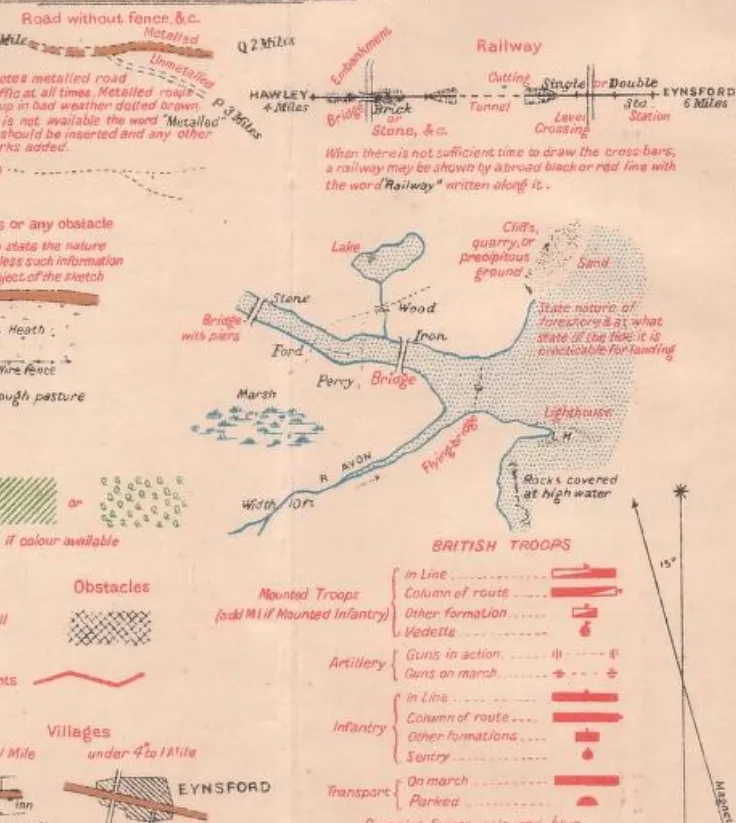
Priyasha Mukhopadhyay develops the concept of the functional archive of empire, consisting of texts ranging from licenses and other bureaucratic documents to manuals and almanacs. She describes how historical readers in colonial South Asia made sense of them, and what this can tell us about their experiences living in the shadow of a vast imperial power. She illustrates this with the example of a manual used by soldiers which despite being widely used, also created complex relationships with its users - soldiers in the field - which often entailed in their not actually reading the book and complaining about being required to read them. Priyasha Mukhopadhyay is an Assistant Professor of English at Yale University. Her first book, Required Reading: The Life of Everyday Texts in the British Empire, was published by Princeton University Press in August 2024. Image: “Plate XII”, Field Service Pocket Book Part II - India, Calcutta: Government of India Central Publication Branch, 1928
Ep 72Peter Singer, "Consider the Turkey" (Princeton UP, 2024)
A turkey is the centerpiece of countless Thanksgiving and Christmas dinners. Yet most of us know almost nothing about today’s specially bred, commercially produced birds. In this brief book, bestselling author Peter Singer tells their story—and, unfortunately, it’s not a happy one. Along the way, he also offers a brief history of the turkey and its consumption, ridicules the annual U.S. presidential “pardon” of a Thanksgiving turkey, and introduces us to “a tremendously handsome, outgoing, and intelligent turkey” named Cornelius. Above all, Singer explains how we can improve our holiday tables—for turkeys, people, and the planet—by liberating ourselves from the traditional turkey feast. In its place, he encourages us to consider trying a vegetarian alternative—or just serving the side dishes that many people already enjoy far more than turkey. Complete with some delicious recipes for turkey-free holiday feasting, Consider the Turkey (Princeton University Press, 2024) will make you reconsider what you serve for your next holiday meal—or even tomorrow’s dinner. Peter Singer is a professor of bioethics, with a background in philosophy. He works mostly in practical ethics and is best known for Animal Liberation and for his writings about global poverty. Kyle Johannsen is Sessional Faculty Member in the Department of Philosophy at Trent University. His most recent authored book is Wild Animal Ethics: The Moral and Political Problem of Wild Animal Suffering (Routledge, 2021).
Ep 127S4E15 To the Success of Our Hopeless Cause: A Conversation with Dr. Benjamin Nathans
In this episode of Madison’s Notes, host Laura Laurent sits down with historian Benjamin Nathans to explore his groundbreaking new book, To the Success of Our Hopeless Cause: The Many Lives of the Soviet Dissident Movement. Nathans offers a deep dive into the history of Soviet dissent, tracing the courageous efforts of Soviet citizens who risked everything to challenge the system from within, spanning from Stalin’s death to the collapse of communism. By invoking the very laws of the Kremlin, these dissidents exposed the regime’s internal contradictions, playing a pivotal role in its eventual downfall. The discussion focuses on key figures in this movement, from well-known Nobel laureates like Andrei Sakharov and Alexander Solzhenitsyn to lesser-known but equally vital contributors. Nathans also touches on the broader implications of their struggles for modern authoritarian societies today. Benjamin Nathans, a professor at the University of Pennsylvania, is a distinguished expert in Imperial Russia, the Soviet Union, Jewish history, and the history of human rights. His previous acclaimed works include Beyond the Pale: The Jewish Encounter With Late Imperial Russia. Nathans is a regular contributor to the New York Review of Books and is recognized for his expertise on Russian and Eastern European history. Madison’s Notes is the podcast of Princeton University’s James Madison Program in American Ideals and Institutions. Contributions to and/or sponsorship of any speaker does not constitute departmental or institutional endorsement of the specific program, speakers or views presented.
Ep 163Lizhi Liu, "From Click to Boom: The Political Economy of E-Commerce in China" (Princeton UP, 2024)
How do states build vital institutions for market development? Too often, governments confront technical or political barriers to providing the rule of law, contract enforcement, and loan access. In From Click to Boom: The Political Economy of E-Commerce in China (Princeton, 2024) Lizhi Liu suggests a digital solution: governments strategically outsourcing tasks of institutional development and enforcement to digital platforms—a process she calls “institutional outsourcing.” China’s e-commerce boom showcases this digital path to development. In merely two decades, China built from scratch a two-trillion-dollar e-commerce market, with 800 million users, seventy million jobs, and nearly fifty percent of global online retail sales. Contrary to conventional wisdom, Liu argues, this market boom occurred because of weak government institutions, not despite them. Gaps in government institutions compelled e-commerce platforms to build powerful private institutions for contract enforcement, fraud detection, and dispute resolution. For a surprisingly long period, the authoritarian government acquiesced, endorsed, and even partnered with this private institutional building despite its disruptive nature. Drawing on a plethora of interviews, original surveys, proprietary data, and a field experiment, Liu shows that the resulting e-commerce boom had far-reaching effects on China. Institutional outsourcing nonetheless harbors its own challenges. With inadequate regulation, platforms may abuse market power, while excessive regulation stifles institutional innovation. China’s regulatory oscillations toward platforms—from laissez-faire to crackdown and back to support—underscore the struggle to strike the right balance. Lizhi Liu is assistant professor at the McDonough School of Business at Georgetown University, where she is also a faculty affiliate of the Department of Government. Her work has been published by American Economic Review: Insights, Studies in Comparative International Development, Minnesota Law Review, Oxford University Press, and Princeton University Press. She was also listed as a Poets&Quants Top 50 Undergraduate Business Professor of 2021. She holds degrees in Political Science (PhD), Statistics (MS), and International Policy Studies (MA) from Stanford University and in International Relations (LLB) from Renmin University of China. Interviewer Peter Lorentzen is an Associate Professor of Economics at the University of San Francisco, a nonresident scholar at the UCSD 21st Century China Center, an alumnus of the Public Intellectuals Program of the National Committee on US-China Relations, and is currently a visiting scholar at the Stanford Center on China’s Economy and Institutions. His research focuses on the economics of information, incentives, and institutions, primarily as applied to the development and governance of China. He created the unique Master’s of Science in Applied Economics at the University of San Francisco, which teaches the conceptual frameworks and practical data analytics skills needed to succeed in the digital economy. Lorentzen’s other NBN interviews relating to China’s tech sector include Trafficking Data, on how Chinese and American firms exploit user data, The Tao of Alibaba, on Alibaba’s business model and organizational culture, Surveillance State, on China’s digital surveillance, Prototype Nation, on the culture and politics of China’s innovation economy.
Ep 92Vishaan Chakrabarti, "The Architecture of Urbanity: Designing for Nature, Culture, and Joy" (Princeton UP, 2024)
From one of today's most inspired architects and urban advocates, a manifesto for architecture as a force for addressing our biggest social challenges. The world is facing unprecedented challenges, from climate change and population growth, to political division and technological dislocation, to declining mental health and fraying cultural fabric. With most of the planet's population now living in urban environments, cities are the spaces where we have the greatest potential to confront and address these problems. In this visionary book, Vishaan Chakrabarti argues for an "architecture of urbanity," showing how the design of our communities can create a more equitable, sustainable, and joyous future for us all. Taking readers from the great cities of antiquity to the worldwide exurban sprawl of our postindustrial age, Chakrabarti examines architecture's relationship to history's greatest social, technological, and environmental dilemmas. He then presents a rich selection of work by a global array of practicing architects, demonstrating how innovative design can dramatically improve life in big cities and small settlements around the world, from campuses and refugee camps to mega-cities like São Paulo, Lima, Los Angeles, New York, Paris, and Tokyo. Lavishly illustrated with a wealth of original graphics, data visualizations, photographs, and drawings, The Architecture of Urbanity: Designing for Nature, Culture, and Joy (Princeton UP, 2024) eloquently explains why cities are the last, best hope for humanity, and why designers must, alongside political, business, community, and cultural leaders, steward the healing of our planet.
Ep 109Agustina Paglayan, "Raised to Obey: The Rise and Spread of Mass Education" (Princeton UP, 2024)
How the expansion of primary education in the West emerged not from democratic ideals but from the state's desire to control its citizens. Nearly every country today has universal primary education. But why did governments in the West decide to provide education to all children in the first place? In Raised to Obey: The Rise and Spread of Mass Education (Princeton UP, 2024), Agustina Paglayan offers an unsettling answer. The introduction of broadly accessible primary education was not mainly a response to industrialization, or fueled by democratic ideals, or even aimed at eradicating illiteracy or improving skills. It was motivated instead by elites' fear of the masses--and the desire to turn the "savage," "unruly," and "morally flawed" children of the lower classes into well-behaved future citizens who would obey the state and its laws. Drawing on unparalleled evidence from two centuries of education provision in Europe and the Americas, and deploying rich data that capture the expansion of primary education and its characteristics, this sweeping book offers a political history of primary schools that is both broad and deep. Paglayan shows that governments invested in primary schools when internal threats heightened political elites' anxiety around mass violence and the breakdown of social order. Two hundred years later, the original objective of disciplining children remains at the core of how most public schools around the world operate. The future of education systems--and their ability to reduce poverty and inequality--hinges on our ability to understand and come to terms with this troubling history.
Ep 126The Impeachment Power: A Conversation with Keith Whittington
In this week’s episode we step into conversation with Keith Whittington about his new book, The Impeachment Power: The Law, Politics, and Purpose of an Extraordinary Constitutional Tool (Princeton UP, 2024), we explored the historical and constitutional dimensions of impeachment in American politics. Whittington provided a detailed account of how the Founders intended impeachment to function as a safeguard against executive overreach. We discussed the evolution of impeachment cases, from Andrew Johnson to more recent examples, examining how political partisanship and public opinion have shaped its application over time. Whittington also reflected on the implications of impeachment for the health of democratic institutions and constitutional governance today. It was an enlightening discussion on one of the most important, yet often misunderstood, mechanisms in the U.S. Constitution. Keith E. Whittington is the David Boies Professor of Law at Yale Law School. Whittington’s teaching and scholarship span American constitutional theory, American political and constitutional history, judicial politics, the presidency, and free speech and the law. He is the author of You Can't Teach That! The Battle Over University Classrooms (2024), Repugnant Laws: Judicial Review of Acts of Congress from the Founding to the Present (2019), and Speak Freely: Why Universities Must Defend Free Speech (2018), as well as Constitutional Interpretation (1999), Political Foundations of Judicial Supremacy (2007), and other works on constitutional theory and law and politics. Whittington has spent most of his career at Princeton University, where he served as the William Nelson Cromwell Professor of Politics from 2006 to 2024. He has also held visiting appointments at Georgetown University Law Center, Harvard Law School, and the University of Texas School of Law. Madison’s Notes is the podcast of Princeton University’s James Madison Program in American Ideals and Institutions. Contributions to and/or sponsorship of any speaker does not constitute departmental or institutional endorsement of the specific program, speakers or views presented.
Ep 116Melissa Teixeira, "A Third Path: Corporatism in Brazil and Portugal" (Princeton UP, 2024)
Following the Great Depression, as the world searched for new economic models, Brazil and Portugal experimented with corporatism as a “third path” between laissez-faire capitalism and communism. In a corporatist society, the government vertically integrates economic and social groups into the state so that it can manage labor and economic production. In the 1930s, the dictatorships of Getúlio Vargas in Brazil and António de Oliveira Salazar in the Portuguese Empire seized upon corporatist ideas to jump-start state-led economic development. In A Third Path: Corporatism in Brazil and Portugal (Princeton University Press, 2024), Dr. Melissa Teixeira examines these pivotal but still understudied initiatives. What distinguished Portuguese and Brazilian corporatism from other countries’ experiments with the mixed economy was how Vargas and Salazar dismantled liberal democratic institutions, celebrating their efforts to limit individual freedoms and property in pursuit of economic recovery and social peace. By tracing the movement of people and ideas across the South Atlantic, Teixeira vividly shows how two countries not often studied for their economic creativity became major centers for policy experimentation. Portuguese and Brazilian officials created laws and agencies to control pricing and production, which in turn generated new social frictions and economic problems, as individuals and firms tried to evade the rules. And yet, Teixeira argues, despite the failings and frustrations of Brazil’s and Portugal’s corporatist experiments, the ideas and institutions tested in the 1930s and 1940s constituted a new legal and technical tool kit for the rise of economic planning, shaping how governments regulate labor and market relations to the present day. This interview was conducted by Dr. Miranda Melcher whose new book focuses on post-conflict military integration, understanding treaty negotiation and implementation in civil war contexts, with qualitative analysis of the Angolan and Mozambican civil wars.
Ep 160Freya Gowrley, "Fragmentary Forms: A New History of Collage" (Princeton UP, 2024)
Fragmentary Forms: A New History of Collage (Princeton UP, 2024) is a beautifully illustrated global history of collage from the origins of paper to today While the emergence of collage is frequently placed in the twentieth century when it was a favored medium of modern artists, its earliest beginnings are tied to the invention of paper in China around 200 BCE. Subsequent forms occurred in twelfth-century Japan with illuminated manuscripts that combined calligraphic poetry with torn colored papers. In early modern Europe, collage was used to document and organize herbaria, plant specimens, and other systems of knowledge. In the eighteenth and nineteenth centuries, collage became firmly associated with the expression of intimate relations and familial affections. Fragmentary Forms offers a new, global perspective on one of the world's oldest and most enduring means of cultural expression, tracing the rich history of collage from its ancient origins to its uses today as a powerful tool for storytelling and explorations of identity. Presenting an expansive approach to collage and the history of art, Freya Gowrley explores what happens when overlapping fragmentary forms are in conversation with one another. She looks at everything from volumes of pilgrims' religious relics and Victorian seaweed albums to modernist papiers collés by Pablo Picasso and Georges Braque and quilts by Faith Ringgold exploring African-American identity. Gowrley examines the work of anonymous and unknown artists whose names have been lost to history, either by accident or through exclusion. Featuring hundreds of beautiful images, Fragmentary Forms demonstrates how the use of found objects is an important characteristic of this unique art form and shows how collage is an inclusive medium that has given voice to marginalized communities and artists across centuries and cultures.
Ep 108Ben Yagoda, "Gobsmacked!: The British Invasion of American English" (Princeton UP, 2024)
The British love to complain that words and phrases imported from America--from French fries to Awesome, man!--are destroying the English language. But what about the influence going the other way? Britishisms have been making their way into the American lexicon for more than 150 years, but the process has accelerated since the turn of the twenty-first century. From acclaimed writer and language commentator Ben Yagoda, Gobsmacked! is a witty, entertaining, and enlightening account of how and why scores of British words and phrases--such as one-off, go missing, curate, early days, kerfuffle, easy peasy, and cheeky--have been enthusiastically taken up by Yanks. After tracing Britishisms that entered the American vocabulary in the nineteenth century and during the world wars, Gobsmacked!: The British Invasion of American English (Princeton UP, 2024) discusses the most-used British terms in America today. It features chapters on the American embrace of British insults and curses, sports terms, and words about food and drinks. The book also explores the American adoption of British spellings, pronunciations, and grammar, and cases where Americans have misconstrued British expressions (for example, changing can't be arsed to can't be asked) or adopted faux-British usages, like pronouncing divisive as "divissive." Finally, the book offers some guidance on just how many Britishisms an American can safely adopt without coming off like an arse. Rigorously researched and documented but written in a light, conversational style, this is a book that general readers and language obsessives will love. Its revealing account of a surprising and underrecognized language revolution might even leave them, well, gobsmacked.
Ep 238When We Prioritize Data and Metrics, What Happens to Human Connections?
Today’s book is: The Last Human Job: The Work of Connecting in a Disconnected World (Princeton University Press, 2024), by Dr. Allison Pugh, which explores the human connections that underlie our work, arguing that what people do for each other is valuable and worth preserving. Drawing on in-depth interviews and observations with people in a broad range of professions—from physicians, teachers, and coaches to chaplains, therapists, caregivers, and hairdressers—Dr. Pugh develops the concept of “connective labor,” a kind of work that relies on empathy, the spontaneity of human contact, and a mutual recognition of each other’s humanity. The threats to connective labor are not only those posed by advances in AI or apps; Dr. Pugh demonstrates how profit-driven campaigns imposing industrial logic shrink the time for workers to connect, enforce new priorities of data and metrics, and introduce standardized practices that hinder our ability to truly see each other. She concludes with profiles of organizations where connective labor thrives, offering practical steps for building a social architecture that works. Vividly illustrating how connective labor enriches the lives of individuals and binds our communities together, The Last Human Job is a compelling argument for us to recognize, value, and protect humane work in an increasingly automated and disconnected world. Our guest is: Dr. Allison Pugh, who is Professor of Sociology at Johns Hopkins University, and the 2024-25 Vice President of the American Sociological Association. She writes about how people forge connections and find meaning and dignity at work and at home. She is the author of The Tumbleweed Society: Working and Caring in an Age of Insecurity and Longing and Belonging: Parents, Children, and Consumer Culture. Her writing has appeared in leading publications such as The New Yorker, the New York Times, and the New Republic. Our host is: Dr. Christina Gessler, the producer of the Academic Life podcast. She holds a PhD in history, which she uses to explore what stories we tell and what happens to those we never tell. Playlist for listeners: Talking To Strangers Making A Meaningful Life How to Human Artificial Unintelligence: How Computers Misunderstand the World More Than A Glitch Meditation and the Academic Life Belonging: The Science of Creating Connection and Bridging Divides Welcome to Academic Life, the podcast for your academic journey—and beyond! You can support the show by posting, assigning or sharing episodes. Join us again to learn from more experts inside and outside the academy, and around the world. Missed any of the 225+ Academic Life episodes? You’ll find them all archived here.
Ep 137David Peña-Guzmán: Animals Dream and that Makes Them Morally Considerable (JP)
In his marvelous new book, When Animals Dream: The Hidden World of Animal Consciousness (Princeton UP, 2023), David Peña-Guzmán (SF State as well as the lovely philosophical podcast Overthink) offers up something new in animal studies--"a philosophical interpretation of biological subjectivity." Although we share no linguistic schema with animals there is lots more evidence than just YouTube (octopuses, dogs, signing chimpanzees, brain scans of dreaming birds etc) to suggest oneiric behaviors and underlying mental states occur all over the animal kingdom. So, David discusses with John his interest in using dreaming as a window into consciousness. Here is what it means that we are not alone in our dreams... David details the "flattening and impoverishing effect on the natural sciences" wrought by 20th century behaviorist paradigms. He also expresses skepticism about the likelihood of AI ever achieving more than a "zombie" state; it now and perhaps always will profoundly differ from animals' varied experiences of our shared world. The biological commonality that most strikes David is the idea it is logically inconceivable that there might be a dreamer devoid of consciousness or sentience. Dreaming, he argues may be the key to acknowledging animal's "moral considerability"--the right to have their consciousness, sentience and in the deepest sense their standing taken into account. . Finally David admits to a feeling of tragedy in writing this book: he has had to engage with experimentation that crosses boundaries in animal treatment in order to make the case for those boundaries. He understands his decision as tragic because either way--to engage or to ignore the science--would be to lose something. Mentioned in the episode: New Wave of "inner space" SF authors who focus on the alien nature of humanity itself: J. G. Ballard, Philip K. Dick, and John's hero Ursula Le Guin. Recallable Books: Susana Monso, Playing Possum a newly translated book on the ways that animals mourn their beloveds. Charles Darwin, Descent of Man and The expression of the emotions in man and animals (both 1872) are two of the crucial 19th century texts begin to think of animals as complete subjects. Charles Darwin as an early theorist of biosemiosis who deserves, Jain and David agree, to be reactivated. Listen and Read here.
Ep 276Toni Alimi, "Slaves of God: Augustine and Other Romans on Religion and Politics" (Princeton UP, 2024)
Augustine believed that slavery is permissible, but to understand why, we must situate him in his late antique Roman intellectual context. Slaves of God: Augustine and Other Romans on Religion and Politics (Princeton UP, 2024) provides a major reassessment of this monumental figure in the Western religious and political tradition, tracing the remarkably close connections between Augustine’s understanding of slavery and his broader thought. Augustine is most often read through the lens of Greek philosophy and the theology of Christian writers such as Paul and Ambrose, yet his debt to Roman thought is seldom appreciated. Toni Alimi reminds us that the author of Confessions and City of God was also a Roman citizen and argues that some of the thinkers who most significantly shaped his intellectual development were Romans such as Cicero, Seneca, Lactantius, and Varro—Romans who had much to say about slavery and its relationship to civic life. Alimi shows how Augustine, a keen and influential student of these figures, related chattel slavery and slavery to God, and sheds light on Augustinianism’s complicity in Christianity’s long entanglement with slavery. An illuminating work of scholarship, Slaves of God reveals how slavery was integral to Augustine’s views about law, rule, accountability, and citizenship, and breaks new ground on the topic of slavery in late antique and medieval political thought. New Books in Late Antiquity is presented by Ancient Jew Review Toni Alimi is Assistant Professor at the Sage School of Philosophy at Cornell University Michael Motia teaches in Classics and Religious Studies at UMass Boston
Ep 1491Corey Ross, "Liquid Empire: Water and Power in the Colonial World" (Princeton UP, 2024)
In the nineteenth and twentieth centuries, a handful of powerful European states controlled more than a third of the land surface of the planet. These sprawling empires encompassed not only rainforests, deserts, and savannahs but also some of the world’s most magnificent rivers, lakes, marshes, and seas. Liquid Empire: Water and Power in the Colonial World (Princeton University Press, 2024) by Dr. Corey Ross tells the story of how the waters of the colonial world shaped the history of imperialism, and how this imperial past still haunts us today. Spanning the major European empires of the period, Dr. Ross describes how new ideas, technologies, and institutions transformed human engagements with water and how the natural world was reshaped in the process. Water was a realm of imperial power whose control and distribution were closely bound up with colonial hierarchies and inequalities—but this vital natural resource could never be fully tamed. Ross vividly portrays the efforts of officials, engineers, fisherfolk, and farmers to exploit water, and highlights its crucial role in the making and unmaking of the colonial order. Revealing how the legacies of empire have persisted long after colonialism ebbed away, Liquid Empire provides needed historical perspective on the crises engulfing the world’s waters, particularly in the Global South, where billions of people are faced with mounting water shortages, rising flood risks, and the relentless depletion of sea life. This interview was conducted by Dr. Miranda Melcher whose new book focuses on post-conflict military integration, understanding treaty negotiation and implementation in civil war contexts, with qualitative analysis of the Angolan and Mozambican civil wars.
Ep 107Marietje Schaake, "The Tech Coup: How to Save Democracy from Silicon Valley" (Princeton UP, 2024)
Over the past decades, under the cover of "innovation," technology companies have successfully resisted regulation and have even begun to seize power from governments themselves. Facial recognition firms track citizens for police surveillance. Cryptocurrency has wiped out the personal savings of millions and threatens the stability of the global financial system. Spyware companies sell digital intelligence tools to anyone who can afford them. This new reality--where unregulated technology has become a forceful instrument for autocrats around the world--is terrible news for democracies and citizens. In The Tech Coup: How to Save Democracy from Silicon Valley (Princeton UP, 2024), Marietje Schaake offers a behind-the-scenes account of how technology companies crept into nearly every corner of our lives and our governments. She takes us beyond the headlines to high-stakes meetings with human rights defenders, business leaders, computer scientists, and politicians to show how technologies--from social media to artificial intelligence--have gone from being heralded as utopian to undermining the pillars of our democracies. To reverse this existential power imbalance, Schaake outlines game-changing solutions to empower elected officials and citizens alike. Democratic leaders can--and must--resist the influence of corporate lobbying and reinvent themselves as dynamic, flexible guardians of our digital world. Drawing on her experiences in the halls of the European Parliament and among Silicon Valley insiders, Schaake offers a frightening look at our modern tech-obsessed world--and a clear-eyed view of how democracies can build a better future before it is too late.
Ep 125Norman Naimark, “Stalin’s Genocides” (Princeton UP, 2010)
Absolutely no one doubts that Stalin murdered millions of people in the 1920s, 1930s and 1940s. His ruthless campaign of “dekulakization,” his pitiless deportation of “unreliable” ethnic groups, his senseless starvation of Ukrainian peasants, his cruel attempt to “cleanse” the Communist Party of supposed “enemies of the people”–all of these...
Ep 107Jeffrey Ding, "Technology and the Rise of Great Powers: How Diffusion Shapes Economic Competition" (Princeton UP, 2024)
When scholars and policymakers consider how technological advances affect the rise and fall of great powers, they draw on theories that center the moment of innovation—the eureka moment that sparks astonishing technological feats. In Technology and the Rise of Great Powers: How Diffusion Shapes Economic Competition (Princeton UP, 2024), Jeffrey Ding offers a different explanation of how technological revolutions affect competition among great powers. Rather than focusing on which state first introduced major innovations, he investigates why some states were more successful than others at adapting and embracing new technologies at scale. Drawing on historical case studies of past industrial revolutions as well as statistical analysis, Ding develops a theory that emphasizes institutional adaptations oriented around diffusing technological advances throughout the entire economy. Examining Britain’s rise to preeminence in the First Industrial Revolution, America and Germany’s overtaking of Britain in the Second Industrial Revolution, and Japan’s challenge to America’s technological dominance in the Third Industrial Revolution (also known as the “information revolution”), Ding illuminates the pathway by which these technological revolutions influenced the global distribution of power and explores the generalizability of his theory beyond the given set of great powers. His findings bear directly on current concerns about how emerging technologies such as AI could influence the US-China power balance. Our guest today is: Jeffrey Ding, an Assistant Professor of Political Science at Georgetown University. Our host is Eleonora Mattiacci, an Associate Professor of Political Science at Amherst College. She is the author of "Volatile States in International Politics" (Oxford University Press, 2023).
Ep 741Alexandre Lefebvre, "Liberalism as a Way of Life" (Princeton UP, 2024)
Why liberalism is all you need to lead a good, fun, worthy, and rewarding life—and how you can become a better and happier person by taking your liberal beliefs more seriously Where do you get your values and sensibilities from? If you grew up in a Western democracy, the answer is probably liberalism. Conservatives are right about one thing: liberalism is the ideology of our times, as omnipresent as religion once was. Yet, as Alexandre Lefebvre argues in Liberalism as a Way of Life (Princeton UP, 2024), many of us are liberal without fully realizing it—or grasping what it means. Misled into thinking that liberalism is confined to politics, we fail to recognize that it’s the water we swim in, saturating every area of public and private life, shaping our psychological and spiritual outlooks, and influencing our moral and aesthetic values—our sense of what is right, wrong, good, bad, funny, worthwhile, and more. This eye-opening book shows how so many of us are liberal to the core, why liberalism provides the basis for a good life, and how we can make our lives better and happier by becoming more aware of, and more committed to, the beliefs we already hold. A lively, engaging, and uplifting guide to living well, the liberal way, Liberalism as a Way of Life is filled with examples from television, movies, stand-up comedy, and social media—from Parks and Recreation and The Good Place to the Borat movies and Hannah Gadsby. Along the way, you’ll also learn about seventeen benefits of being a liberal—including generosity, humor, cheer, gratitude, tolerance, and peace of mind—and practical exercises to increase these rewards. Alexandre Lefebvre is Professor of Politics and Philosophy at The University of Sydney. He teaches and researches in political theory, the history of political thought Morteza Hajizadeh is a Ph.D. graduate in English from the University of Auckland in New Zealand. His research interests are Cultural Studies; Critical Theory; Environmental History; Medieval (Intellectual) History; Gothic Studies; 18th and 19th Century British Literature. YouTube channel. Twitter.