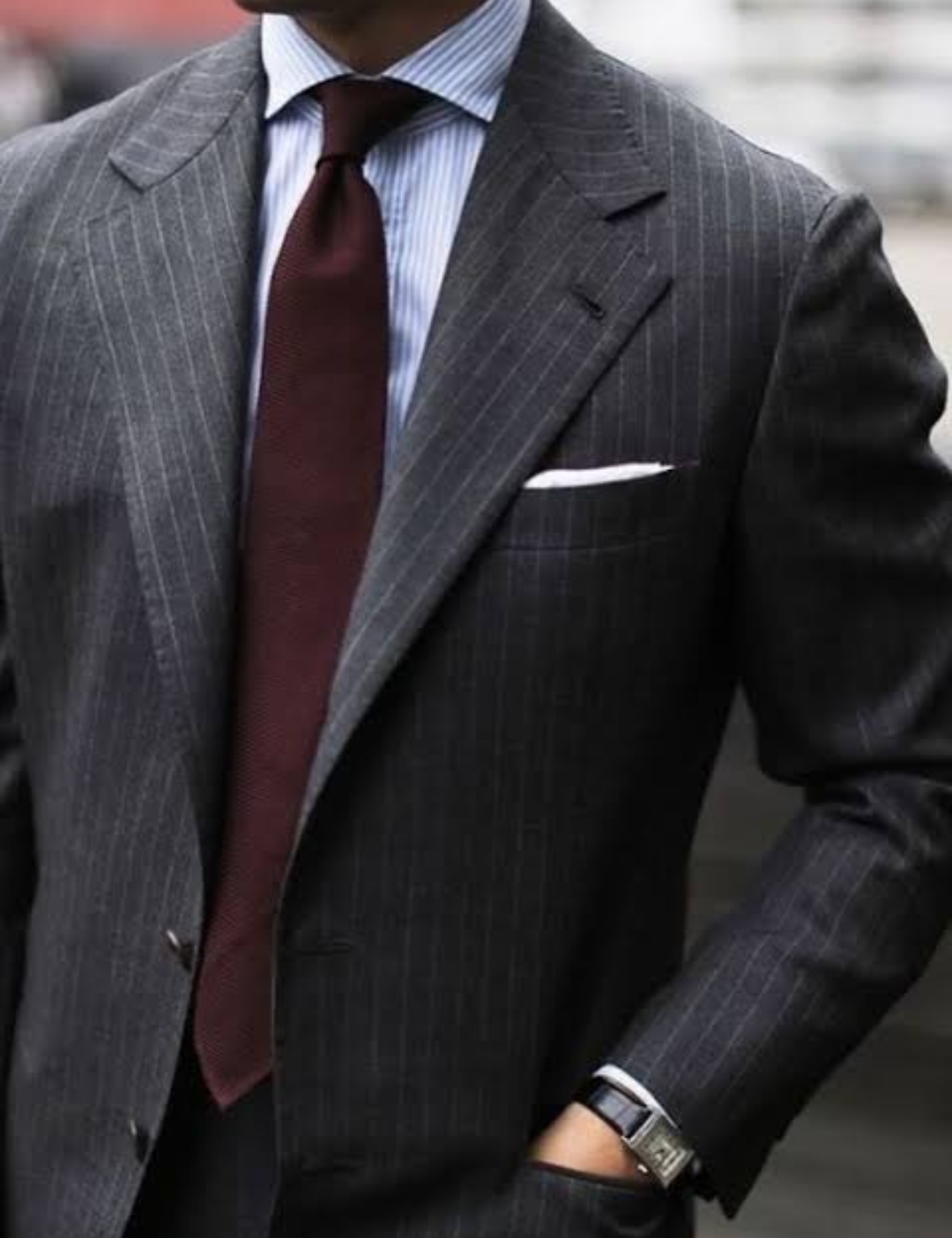
From Battlefield to Boardroom: The Surprising Military Origins of That Double-Breasted Jacket in Your Closet
The double-breasted jacket hanging in your closet carries battle-tested DNA. Its overlapping front panels, peaked lapels, and structured shoulders didnt emerge from fashion designers imaginations but from military necessity, evolving through centuries of
Press Release · Jonathan Reed
Audio is streamed directly from the publisher (itsvelly.com) as published in their RSS feed. Play Podcasts does not host this file. Rights-holders can request removal through the copyright & takedown page.
Show Notes
The double-breasted jacket hanging in your closet carries battle-tested DNA. Its overlapping front panels, peaked lapels, and structured shoulders didn't emerge from fashion designers' imaginations but from military necessity, evolving through centuries of warfare before civilians adopted them as symbols of authority and style. Understanding this martial heritage reveals why certain design elements persist and what they still communicate today.
Naval Origins and Practical Design
The double-breasted jacket traces its lineage to 18th-century naval uniforms, where sailors needed garments that provided extra protection against harsh maritime conditions. The overlapping front created a double layer of fabric across the chest and torso, crucial for warmth when spending hours on deck in Atlantic storms. The high button stance allowed sailors to fasten jackets completely, sealing out wind and spray.
Naval officers' uniforms featured peaked lapels that could be raised and buttoned across the throat for additional weather protection, though this functionality gradually became purely decorative. The six-button configuration, still standard on many double-breasted jackets, originally served practical purposes: buttons arranged in two parallel columns of three distributed stress across multiple closure points, reducing the likelihood of buttons tearing free during physical work.
These functional origins explain why double-breasted jackets maintain such structured, almost architectural construction. They weren't designed for comfort in climate-controlled offices. They were engineered for durability and protection in genuinely harsh conditions.
The design also provided adaptability. Sailors could fasten the jacket left over right or right over left depending on wind direction, keeping the opening away from prevailing weather. This reversibility influenced the symmetrical button arrangement we see in modern suits for men today.
Military Rank and Visual Hierarchy
By the 19th century, double-breasted designs became closely associated with military rank and authority. Officers across European armies adopted double-breasted coats as part of dress uniforms, the overlapping front providing a canvas for displaying medals, ribbons, and insignia. The symmetrical button arrangement created visual formality that single-breasted designs couldn't match.
This association between double-breasted garments and authority transferred directly to civilian contexts. When men wanted to project power, confidence, and leadership, they adopted military-inspired tailoring. The double-breasted suit became the uniform of bankers, industrialists, and political leaders throughout the early 20th century, not coincidentally during an era when military service was nearly universal among elite men.
Peak lapels, another military holdover, further emphasized this authority connection. While notch lapels create a break in the line from collar to hem, peak lapels point upward, drawing the eye toward the face and creating a more aggressive, commanding silhouette.
World War Influence on Civilian Fashion
Both World Wars profoundly influenced men's tailoring, accelerating the transfer of military design elements into civilian wardrobes. Men returning from service brought comfort with structured, authoritative clothing. Tailors responded by adapting military cuts for civilian contexts, softening extreme structure while maintaining the powerful silhouette.
The 1940s saw peak popularity for double-breasted suits, when virtually every professional man owned at least one. Wartime fabric rationing actually enhanced the double-breasted jacket's appeal because its overlapping