
Show overview
Preferred Shares Podcast has been publishing since 2023, and across the 3 years since has built a catalogue of 37 episodes. That works out to roughly 35 hours of audio in total. Releases follow a monthly cadence.
Episodes typically run thirty-five to sixty minutes — most land between 47 min and 1h 5m — and the run-time is fairly consistent across the catalogue. None of the episodes are flagged explicit by the publisher. It is catalogued as a EN-language Business show.
The show is actively publishing — the most recent episode landed 4 weeks ago, with 9 episodes already out so far this year.
From the publisher
Exploring the rabbit holes of business, history, and business history. www.preferredsharespodcast.com
Latest Episodes
View all 37 episodesCorning in Today’s Data-Driven World
Corning: The Glass That Built America
Duke Dynasty: The Legacy of the American Tobacco Monopoly, Part Two
Duke Dynasty: The Legacy of the American Tobacco Monopoly
Class 1 Railroads with Matt Reustle of Business Breakdowns
The Ferguson Water Thesis with Todd Wenning
Veteran Analyst Mark Purdy on Nestlé
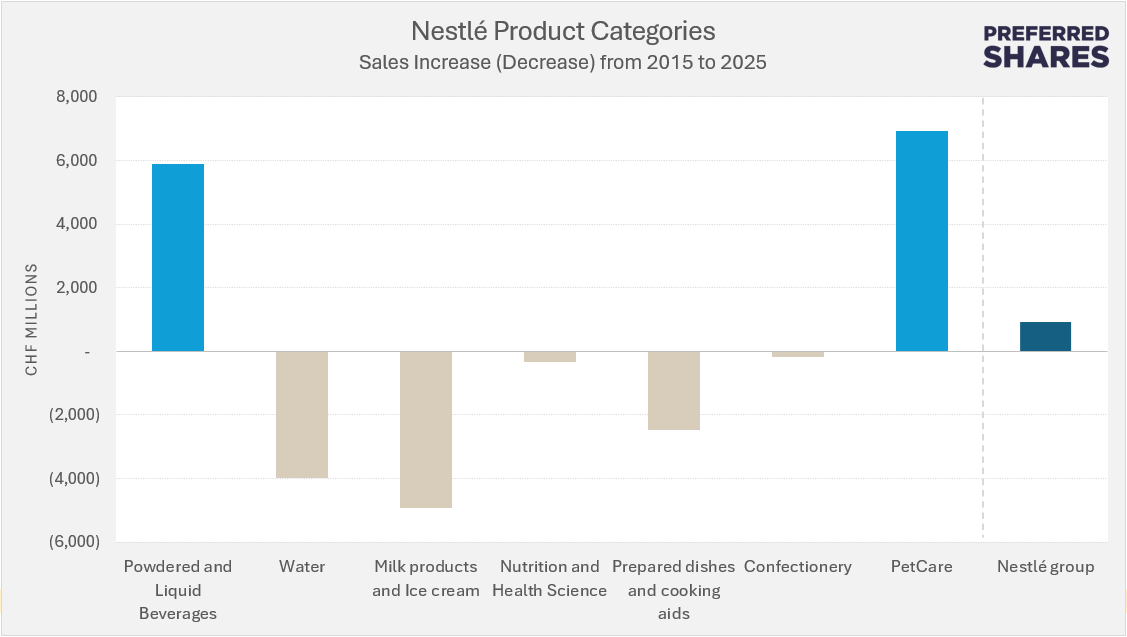
Welcome to Episode 31 of the Preferred Shares Podcast.In this episode, we continue our short series on Nestlé. We brought back our guest Mark Purdy (whom we interviewed about Lindt & Sprüngli) to chat about the company’s more recent history and its current set of challenges and opportunities. Mark is a veteran investment analyst with 40 years of experience with a particular focus on consumer brands. He’s now retired from full-time research and portfolio management, and he has set up Calabria Park Advisors, a boutique consultancy.In This Episode* Setting the Stage: Consumer Staples Under Pressure — Mark frames the last six years for the sector, covering the COVID distortion between in-home and out-of-home consumption, and the wave of inflation that followed.* Nestle’s Perfect Storm: Cocoa & Coffee Costs — Commodity prices hit Nestlé especially hard, with cocoa at one point nearly 5x its pre-spike level, squeezing margins.* CEO Carousel: Three Leaders in 18 Months — The show examines the transition from Paul Bulcke to Mark Schneider to Laurent Freixe and now Philippe Navratil, and how leadership instability can create internal distraction even at a resilient company.* The Case for Insider CEOs in Consumer Staples — Mark argues that the long-cycle nature of brand stewardship favors internal promotions, and why Navratil’s 20-year tenure and track record make him a credible candidate.* Brand Portfolio Sprawl — A discussion of how consumer goods giants naturally accumulate thousands of brands despite every CEO promising “fewer, bigger, better,” and what Nestlé should actually do about it.* M&A Winners and Losers: Ralston Purina vs. Health Science — Mark contrasts Nestlé’s successful acquisitions (Purina, the Starbucks licensing deal) against its costly failures in vitamins, wellness, and Jenny Craig, and explains why working capital mismatches can doom category expansions.* The KitKat Exception and Confectionery Regrets — Despite owning iconic Rowntree’s brands, Nestlé largely squandered its confectionery position — with KitKat the lone standout — while watching Lindt thrive on its doorstep.* Capital Allocation Priorities: Dividends, Debt, and RIG — Mark digs into Nestlé’s current financial constraints, a stretched ~70% dividend payout ratio, rising net debt, and why CEO Navratil’s new focus on Real Internal Growth (RIG) — a metric Nestlé itself invented — is the only viable path forward.* The L’Oreal Stake: Financial Asset or Get-Out-of-Jail Card? — Mark walks through the 50-year history of Nestlé’s ~20% stake in L’Oreal and the logic (and politics) of gradually selling it down.* Closing Advice to the Board — Mark’s prescription: Nestlé must recognize its genuine strengths (emerging market reach, scale, R&D); stop chasing growth through ill-fitting acquisitions; and be patient. A steady 3% real sales growth rate has historically been more than enough to create a very attractive shareholder return.[Charts and Pictures]The two charts below show the total increase decrease of Nestlé’s seven product categories over the last ten years. The two growth categories have been Powdered and Liquid Beverages and PetCare, while the others have been down or flat. The result has been total sales not increasing by much for Nestlé over the prior decade.Additional Reading & ListeningCurious to see what else we’ve been working on? Check out some of the interesting things we’ve done recently:* Douglas Ott (Andvari Associates and @yesandnotyes)* 📖 An AI Skeptic’s Primer* 📖 Tyler Technologies Investment Report* Lawrence Hamtil (Fortune Financial and @lhamtil)* 📖 The Traits of an Ideal Industry* Devin LaSarre (Invariant and @DevinLaSarre)* 📖 Edgar M. Cullman’s Brilliance* 📖 Edgar M. Cullman’s Brilliance, Part TwoEnjoy this episode? Share it with someone who loves business history as much as you do!You can also follow Preferred Shares, Devin, Doug, and Lawrence on Twitter.DisclaimerAll opinions expressed by Preferred Shares hosts and guests are solely their own opinions and do not reflect the opinions of their respective employers. This podcast is for informational and entertainment purposes only and should not be relied upon as a basis for investment decisions. None of the information contained in the podcast or this web site constitutes a recommendation that any particular security, portfolio of securities, transaction, or investment strategy is suitable for any specific person.Clients of Andvari and Fortune Financial may maintain positions in the securities discussed in this podcast. Furthermore, from time to time, the Hosts may hold positions or other interests in securities mentioned in the Podcast and may trade for their own accounts based on the information presented. The Hosts may also take positions inconsistent with the views expressed in its messages on the Podcast. This is a public episode. If you would like to discuss this with other subscribers or get access to bonus episodes, visit www.preferredsharespodcast.com
Nestlé: The Building of a Global Behemoth
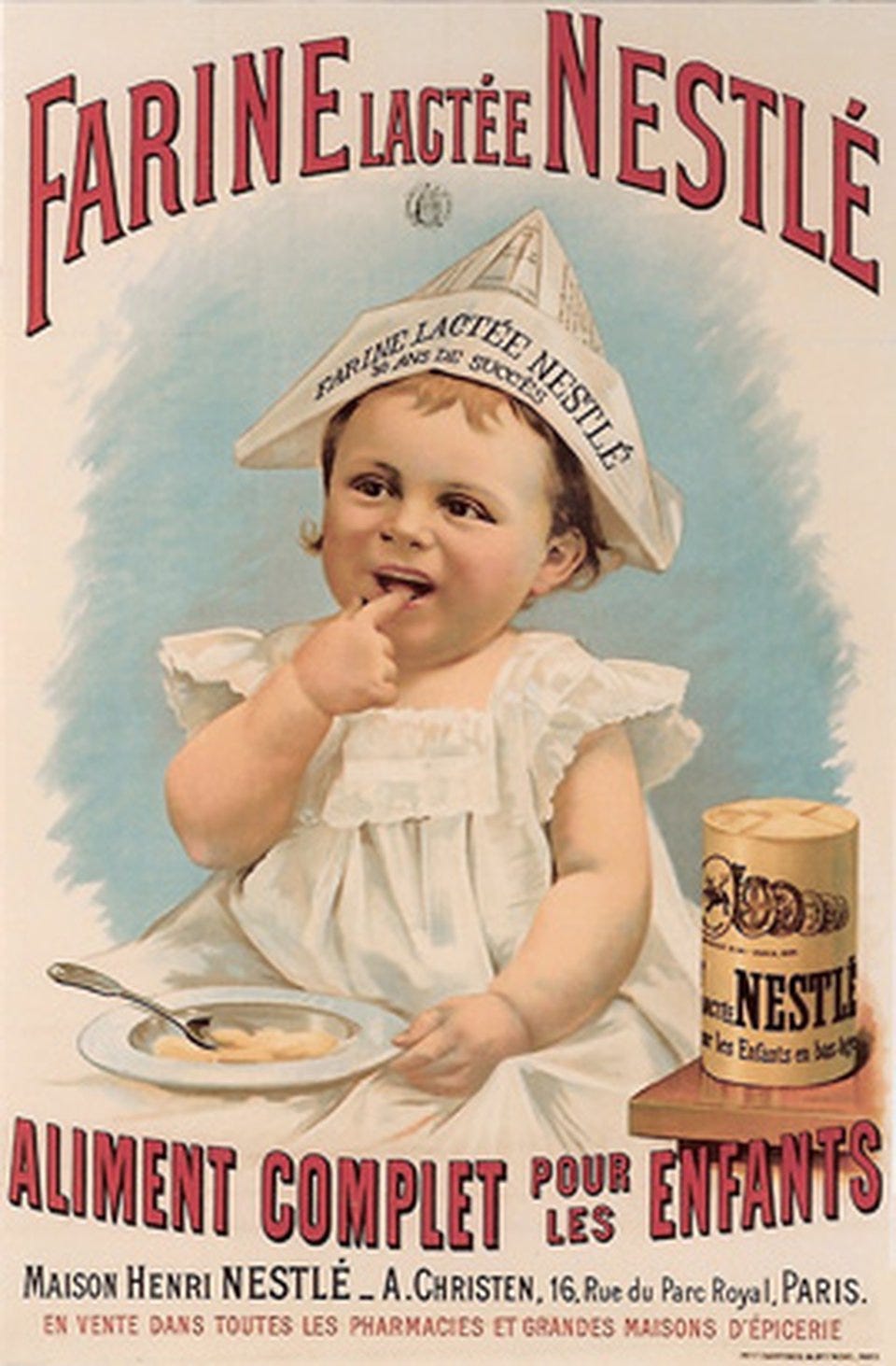
Welcome to Episode 30 of the Preferred Shares Podcast.In this episode, we discussed the history and founding of Nestlé.* Origins of the company in 1867* The strategic 1905 merger with Anglo-Swiss Condensed Milk Company* Nestlé’s exceptional resilience and growing scale* Nestlé’s global dominance in the coffee market* The success of its Maggi brand* The organic and inorganic growth behind its Health Science and Medical Nutrition segmentAdditional Reading & ListeningCurious to see what else we’ve been working on? Check out some of the interesting things we’ve done recently:* Douglas Ott (Andvari Associates and @yesandnotyes)* 📖 An AI Skeptic’s Primer* 📖 Tyler Technologies Investment Report* Lawrence Hamtil (Fortune Financial and @lhamtil)* 📖 The Traits of an Ideal Industry* Devin LaSarre (Invariant and @DevinLaSarre)* 📖 Edgar M. Cullman’s Brilliance* 📖 Edgar M. Cullman’s Brilliance, Part TwoEnjoy this episode? Share it with someone who loves business history as much as you do!You can also follow Preferred Shares, Devin, Doug, and Lawrence on X.DisclaimerAll opinions expressed by Preferred Shares Hosts and guests are solely their own opinions and do not reflect the opinions of their current or former employers. This podcast is for informational and entertainment purposes only and should not be relied upon as a basis for investment decisions. None of the information contained in the podcast or this web site constitutes a recommendation that any particular security, portfolio of securities, transaction, or investment strategy is suitable for any specific person.Clients of Andvari Associates and Fortune Financial may maintain positions in the securities discussed in this podcast. As of the date of this podcast, Andvari and Fortune Financial clients owned shares of Nestle. Furthermore, from time to time, the Hosts may hold positions or other interests in securities mentioned in the Podcast and may trade for their own accounts based on the information presented. The Hosts may also take positions inconsistent with the views expressed in its messages on the Podcast. This is a public episode. If you would like to discuss this with other subscribers or get access to bonus episodes, visit www.preferredsharespodcast.com

Forging a Family-Owned Legacy: The Story of Thompson Traders
Welcome to Episode 29 of the Preferred Shares Podcast.In this episode, we interviewed Clifford Thompson of Thompson Traders, a family-owned business founded in 2002. Since then, Thompson Traders has carved out a niche in the high-end home fixture market with a focus on luxury copper and brass sinks, range hoods, innovative designs, and strong customer relationships.We discussed a variety of topics:* Cliff shares his journey in founding Thompson Traders;* The importance of cash flow in small businesses;* Thompson Traders evolving from importing to designing their own products;* The intricacies of product design;* The impact material choices have on customer preferences and product durability;* How customer relationships are key to business success;* How Thompson Traders has navigated a competitive marketplace; and* The WSJ article in which Thompson Traders was featured and how tariffs have impacted small businesses like Thompson.To see Thompson Trader’s products in all their glory, please take a look at their most recent “Look Books” for 2025:Thompson Traders PhotosAdditional Reading & ListeningCurious to see what else we’ve been working on? Check out some of the interesting things we’ve done recently:* Douglas Ott (Andvari Associates and @yesandnotyes)* 📖 Cranberries & Ocean Spray: Part I* 📖 Constellation Software: A People Business* Devin LaSarre (Invariant and @DevinLaSarre)* 📖 2026 Nicotine Basket Snapshot* Lawrence Hamtil (Fortune Financial and @lhamtil)* 📖 Aerospace: After A Century of Growth; A Bright Future AheadEnjoy this episode? Share it with someone who loves business history as much as you do!You can also follow Preferred Shares, Devin, Doug, and Lawrence on X.DisclaimerAll opinions expressed by Preferred Shares Hosts and guests are solely their own opinions and do not reflect the opinions of their current or former employers. This podcast is for informational and entertainment purposes only and should not be relied upon as a basis for investment decisions. None of the information contained in the podcast or this web site constitutes a recommendation that any particular security, portfolio of securities, transaction, or investment strategy is suitable for any specific person.Clients of Andvari Associates and Fortune Financial may maintain positions in the securities discussed in this podcast. Furthermore, from time to time, the Hosts may hold positions or other interests in securities mentioned in the Podcast and may trade for their own accounts based on the information presented. The Hosts may also take positions inconsistent with the views expressed in its messages on the Podcast. This is a public episode. If you would like to discuss this with other subscribers or get access to bonus episodes, visit www.preferredsharespodcast.com
David Gearhart's Journey in Building a Private Insurance Holding Company
Welcome to Episode 28 of the Preferred Shares Podcast.In this episode, we interview David Gearhart, CEO and Chairman of Wilmington Holdings Corporation, a private holding company of several insurance businesses. David tells the story of how he decided to try to find and acquire a small insurance business. In 2017, he successfully acquired Wilmington Insurance Company. After eight years of growth, both organic and by acquisition, Wilmington Holdings now controls about $50 million of annual premiums and has $100 million of assets on its balance sheet.We discussed a variety of topics: * David Gearhart’s background and how the business bug bit him;* What the process was like to search for and acquire a private insurance company;* David’s search criteria;* The importance of disciplined underwriting and staying within their circle of competence;* The importance of people in the insurance business;* How David thinks about the trade-offs between investing in Wilmington’s insurance businesses versus investing the insurance float;* Key lessons David learned when he studied the history of National Indemnity Company;* David shared one of the mistakes he made and his takeaway;* David’s goals for Wilmington going forward.Enjoy this episode? Share it with someone who loves business history as much as you do!You can also follow Preferred Shares, Devin, Doug, and Lawrence on Twitter.Other SourcesDavid Gearhart also did an interview with At Home With Roby which was released on October 6, 2024.Additional Reading & ListeningCurious to see what else we’ve been working on? Check out some of the interesting things we’ve done recently:* Douglas Ott (Andvari Associates and @yesandnotyes)* 📖 Cranberries & Ocean Spray: Part I* 📖 Constellation Software: A People Business* Devin LaSarre (Invariant and @DevinLaSarre)* 📖 Nicotine Certainty* 📖 Philip Morris International: ZYNsn’t It?* Lawrence Hamtil (Fortune Financial and @lhamtil)* 📖 Aerospace: After A Century of Growth; A Bright Future AheadEnjoy this episode? Share it with someone who loves business history as much as you do!You can also follow Preferred Shares, Devin, Doug, and Lawrence on Twitter.DisclaimerAll opinions expressed by Preferred Shares Hosts and guests are solely their own opinions and do not reflect the opinions of their current or former employers. This podcast is for informational and entertainment purposes only and should not be relied upon as a basis for investment decisions. None of the information contained in the podcast or this web site constitutes a recommendation that any particular security, portfolio of securities, transaction, or investment strategy is suitable for any specific person.Clients of Andvari Associates and Fortune Financial may maintain positions in the securities discussed in this podcast. Furthermore, from time to time, the Hosts may hold positions or other interests in securities mentioned in the Podcast and may trade for their own accounts based on the information presented. The Hosts may also take positions inconsistent with the views expressed in its messages on the Podcast. This is a public episode. If you would like to discuss this with other subscribers or get access to bonus episodes, visit www.preferredsharespodcast.com

A Primer on Salmon Farming with Nick Longhurst of Marathon Asset Management
Welcome to Episode 27 of the Preferred Shares Podcast.In this episode, Nick Longhurst, portfolio manager at London’s famed Marathon Asset Management, gives us an overview of the incredibly interesting salmon farming industry.We discussed a variety of topics: * Nick’s background;* Marathon’s investment philosophy;* A brief history of the evolution of the salmon farming industry;* Why salmon over other types of fish?;* The various barriers to entry that exist in the industry;* The size and structure of the salmon farming industry;* Comparing and contrasting some of the large publicly traded salmon farming businesses; and* The headwinds and potential risks for the current participants of the industry. Enjoy this episode? Share it with someone who loves business history as much as you do!You can also follow Preferred Shares, Devin, Doug, and Lawrence on Twitter.Other Sources* “Fish Tales”, The Capital Cycle Podcast, March 31, 2025.* “Searching for Resilience”, Edelweiss Journal, July 7, 2021.* 2025 Salmon Farming Industry Handbook by MOWI.* Norwegian Seafood Council.* Bakkafrost Reports and Presentations.Additional Reading & ListeningCurious to see what else we’ve been working on? Check out some of the interesting things we’ve done recently:* Devin LaSarre (Invariant and @DevinLaSarre)* 📖 Nicotine Certainty* 📖 Philip Morris International: ZYNsn’t It?* Douglas Ott (Andvari Associates and @yesandnotyes)* 📖 Cranberries & Ocean Spray: Part I* 📖 Constellation Software: A People Business* Lawrence Hamtil (Fortune Financial and @lhamtil)* 📖 Aerospace: After A Century of Growth; A Bright Future AheadEnjoy this episode? Share it with someone who loves business history as much as you do!You can also follow Preferred Shares, Devin, Doug, and Lawrence on Twitter.DisclaimerAll opinions expressed by Preferred Shares Hosts and guests are solely their own opinions and do not reflect the opinions of their current or former employers. This podcast is for informational and entertainment purposes only and should not be relied upon as a basis for investment decisions. None of the information contained in the podcast or this web site constitutes a recommendation that any particular security, portfolio of securities, transaction, or investment strategy is suitable for any specific person.Clients of Andvari Associates and Fortune Financial may maintain positions in the securities discussed in this podcast. Furthermore, from time to time, the Hosts may hold positions or other interests in securities mentioned in the Podcast and may trade for their own accounts based on the information presented. The Hosts may also take positions inconsistent with the views expressed in its messages on the Podcast. This is a public episode. If you would like to discuss this with other subscribers or get access to bonus episodes, visit www.preferredsharespodcast.com

Endurance: From the Track to the Cockpit, a B-2 Pilot's Story
Welcome to Episode 26 of the Preferred Shares Podcast.Fewer people have flown the Northrop Grumman B-2 stealth bomber than have traveled to space, which is why it was a great honor for Preferred Shares to interview Lt. Col. Todd Moenster, USAF, Retired, a former B-2 pilot.We discussed a variety of topics: * Why Todd became interested in becoming a pilot;* Air Force pilot selection and the training program;* Bomber aircraft characteristics and how the bomber training program differed from the programs for other aircraft;* The challenges of long missions and managing fatigue and discomfort;* Todd’s personal stories of operational incidents and the importance of technical redundancy; and* Todd’s transition to the private sector and his role as a leader in Garmin’s Government and Defense Aviation Business Development.Additional Reading & ListeningCurious to see what else we’ve been working on? Check out some of the interesting things we’ve done recently:* Devin LaSarre (Invariant and @DevinLaSarre)* 📖 Nicotine Certainty* 📖 Philip Morris International: ZYNsn’t It?* Douglas Ott (Andvari Associates and @yesandnotyes)* 📖 The Story of Amphenol: 1987-1992* 📖 Constellation Software: A People Business* Lawrence Hamtil (Fortune Financial and @lhamtil)* 📖 Aerospace: After A Century of Growth; A Bright Future AheadEnjoy this episode? Share it with someone who loves business history as much as you do!You can also follow Preferred Shares, Devin, Doug, and Lawrence on Twitter.DisclaimerAll opinions expressed by Preferred Shares Hosts and guests are solely their own opinions and do not reflect the opinions of their current or former employers. This podcast is for informational and entertainment purposes only and should not be relied upon as a basis for investment decisions. None of the information contained in the podcast or this web site constitutes a recommendation that any particular security, portfolio of securities, transaction, or investment strategy is suitable for any specific person.Clients of Andvari Associates and Fortune Financial may maintain positions in the securities discussed in this podcast. Furthermore, from time to time, the Hosts may hold positions or other interests in securities mentioned in the Podcast and may trade for their own accounts based on the information presented. The Hosts may also take positions inconsistent with the views expressed in its messages on the Podcast. This is a public episode. If you would like to discuss this with other subscribers or get access to bonus episodes, visit www.preferredsharespodcast.com
Ep 25Pool Corp. (POOL)
Welcome to Episode 25 of the Preferred Shares Podcast.In this episode of the Preferred Shares podcast, Doug provides a brief history of Pool Corp. and an overview of the current business. The co-hosts discuss the pros and cons of the business and why it might be a “high quality cyclical” enterprise.In This Episode[01:11] Early History and Founding[06:22] Current Market Position and Business Model of Pool Corp[10:25] Growth Trends and Market Dynamics[13:39] Financial Performance and Revenue Breakdown[17:46] Management Structure and Company Culture[20:13] Competitive Landscape and Market Challenges[22:20] Investment Considerations and Future Outlook[26:31] Doug Gives His Elevator PitchAdditional Reading & ListeningDid you miss our series on Amphenol? Check it out below.Curious to see what else we’ve been working on? Check out some of the interesting things we’ve done recently:* Douglas Ott (Andvari Associates and @yesandnotyes) * Doug provides even more details, anecdotes, and financials on the early history of Amphenol.* 📖 The Story of Amphenol: 1932-1958* 📖 The Story of Amphenol: 1958-1971* 📖 The Story of Amphenol: 1971-1981* Lawrence Hamtil (Fortune Financial and @lhamtil)* 📖 Aerospace: After A Century of Growth; A Bright Future Ahead* Devin LaSarre (Invariant and @DevinLaSarre)* 📖 Per-Pouch Price Premium - Devin writes about the current state of the nicotine pouch market. Enjoy this episode? Share it with someone who loves business history as much as you do!You can also follow Preferred Shares, Devin, Doug, and Lawrence on Twitter.DisclaimerAll opinions expressed by Preferred Shares hosts and guests are solely their own opinions and do not reflect the opinions of their respective employers. This podcast is for informational and entertainment purposes only and should not be relied upon as a basis for investment decisions. None of the information contained in the podcast or this web site constitutes a recommendation that any particular security, portfolio of securities, transaction, or investment strategy is suitable for any specific person.Clients of Andvari and Fortune Financial may maintain positions in the securities discussed in this podcast. Furthermore, from time to time, the Hosts may hold positions or other interests in securities mentioned in the Podcast and may trade for their own accounts based on the information presented. The Hosts may also take positions inconsistent with the views expressed in its messages on the Podcast. This is a public episode. If you would like to discuss this with other subscribers or get access to bonus episodes, visit www.preferredsharespodcast.com

The Untold Story of Amphenol: Part II
Welcome to Episode 24 of the Preferred Shares Podcast.In this episode of the Preferred Shares podcast, hosts Devin, Doug, and Lawrence interview Will Kerwin, a senior equity analyst for Morningstar, to provide a current overview of Amphenol. In This Episode[01:17] Guest Introduction and Background[02:29] Exploring Amphenol’s History and Industry[04:27] Amphenol’s Market Position and Competitors[10:06] Amphenol’s Diverse End Markets[11:59] Aerospace and Defense Opportunities[14:05] Amphenol’s Unique Corporate Culture[16:31] Capital Allocation Strategies[17:53] Acquisition Strategies and Market Dynamics[20:16] Product Diversity and Co-Designing with Customers[25:55] Innovation and R&D Approaches[30:26] Pricing Power and Competitive Advantages[30:47] Talent Retention and Company Culture[32:43] Identifying Headwinds and Market Challenges[34:47] Long-Term Trends and Future Opportunities[38:46] Profitability and Margin Analysis[42:27] Supplier Relationships and Material Inputs[43:29] Future Risks and Succession Planning[47:11] Conclusion and Final ThoughtsAdditional Reading & ListeningWilliam Kerwin, CFA. Current coverage:Did you miss Part 1 of our series on Amphenol? Check it out below.Curious to see what else we’ve been working on? Check out some of the interesting things we’ve done recently:* Douglas Ott (Andvari Associates and @yesandnotyes)* 📖 The Story of Amphenol: 1932-1958 - Doug provides even more details, anecdotes, and financials on the early history of Amphenol.* Lawrence Hamtil (Fortune Financial and @lhamtil)* 📖 Aerospace: After A Century of Growth; A Bright Future Ahead* Devin LaSarre (Invariant and @DevinLaSarre)* 📖 The Nicotine Horizon Enjoy this episode? Share it with someone who loves business history as much as you do!You can also follow Preferred Shares, Devin, Doug, and Lawrence on Twitter.DisclaimerAll opinions expressed by Preferred Shares hosts and guests are solely their own opinions and do not reflect the opinions of their respective employers. This podcast is for informational and entertainment purposes only and should not be relied upon as a basis for investment decisions. None of the information contained in the podcast or this web site constitutes a recommendation that any particular security, portfolio of securities, transaction, or investment strategy is suitable for any specific person.Clients of Andvari and Fortune Financial may maintain positions in the securities discussed in this podcast. Furthermore, from time to time, the Hosts may hold positions or other interests in securities mentioned in the Podcast and may trade for their own accounts based on the information presented. The Hosts may also take positions inconsistent with the views expressed in its messages on the Podcast. This is a public episode. If you would like to discuss this with other subscribers or get access to bonus episodes, visit www.preferredsharespodcast.com

The Untold Story of Amphenol: Part I
Welcome to Episode 23 of the Preferred Shares Podcast.In this episode of the Preferred Shares podcast, hosts Devin, Doug, and Lawrence delve into the history and significance of Amphenol, a leading manufacturer of connectors. They explore the company’s evolution from its founding in the 1930s, its pivotal role during World War II, and its transition into the consumer electronics market. The discussion covers Amphenol’s IPO journey, acquisitions, and the influence of private equity firm KKR on its growth strategy. The episode concludes with insights into the company’s culture and the legacy of its founder, Arthur J. Schmidt, highlighting the importance of innovation and adaptability.In This Episode[01:15] Exploring Amphenol: A Company of Significance[01:57] The Fascinating History of Amphenol[03:22] Amphenol’s Role in World War II[08:00] Post-War Transition and Consumer Electronics[09:01] The IPO Journey of Amphenol[16:17] Acquisition by LPL and Challenges Ahead[20:12] KKR’s Influence and Growth Strategy[22:56] Amphenol’s Market Position and Strategy[26:45] Cultural Insights and Leadership at Amphenol[30:05] Legacy of Arthur J. Schmidt and Future OutlookImagesSourcesBooksSchaefer, Arthur J. Quest for Leadership: The Arthur J. Schmitt Story. Cathedral Publishing Company: Chicago, IL, 1985.Videos & PodcastsAdditional Reading & ListeningCurious to see what else we’ve been working on? Check out some of the interesting things we’ve done recently:* Douglas Ott (Andvari Associates and @yesandnotyes)* 📖 An even more detailed history of Amphenol* 📖 TransDigm: The Early Years* Lawrence Hamtil (Fortune Financial and @lhamtil)* 🎙️ The Future of Defense — The History, Advances, And Outlook* Devin LaSarre (Invariant and @DevinLaSarre)* 📖 Foiled: A thesis on a company facing a confluence of headwindsEnjoy this episode? Share it with someone who loves business history as much as you do!You can also follow Preferred Shares, Devin, Doug, and Lawrence on Twitter.DisclaimerAll opinions expressed by Preferred Shares hosts and guests are solely their own opinions and do not reflect the opinions of their respective employers. This podcast is for informational and entertainment purposes only and should not be relied upon as a basis for investment decisions. None of the information contained in the podcast or this web site constitutes a recommendation that any particular security, portfolio of securities, transaction, or investment strategy is suitable for any specific person.Clients of Andvari and Fortune Financial may maintain positions in the securities discussed in this podcast. Furthermore, from time to time, the Hosts may hold positions or other interests in securities mentioned in the Podcast and may trade for their own accounts based on the information presented. The Hosts may also take positions inconsistent with the views expressed in its messages on the Podcast. This is a public episode. If you would like to discuss this with other subscribers or get access to bonus episodes, visit www.preferredsharespodcast.com
The Evolution of Dry Cleaning with GreenEarth Cleaning's Tim Maxwell
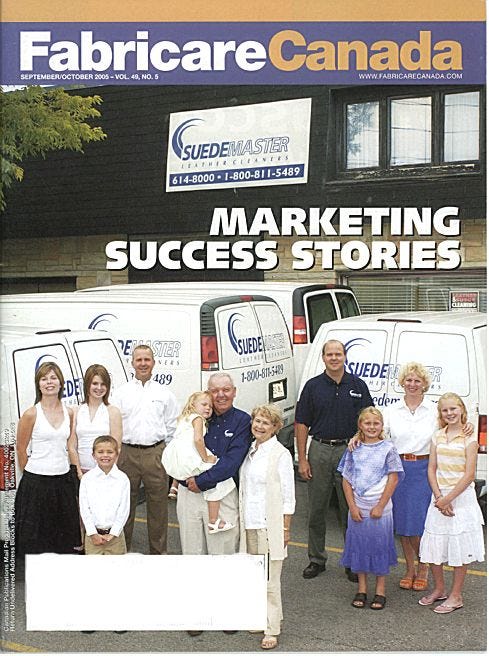
Welcome to Episode 22 of the Preferred Shares Podcast.In this episode, we explore the evolution of the dry cleaning industry. To guide us, we are joined by Tim Maxwell. Tim is an industry veteran, having started working at his parent’s wholesale suede and leather cleaning business at age twelve and eventually founding a company that would ultimately disrupt the dry cleaning space; GreenEarth Cleaning.In This Episode[02:12] Tim’s background, the family business, education, and partnering[03:05] The idea behind GreenEarth Cleaning[03:45] Exiting the family business to pursue the new opportunity in 1999[08:25] The dynamics of a durable, multi-generation family business[14:40] Changing technologies in the dry cleaning space[19:00] Industry headwinds, trends, and adaptation[27:30] Additional margin pressures[30:40] The rise of green cleaning methods[44:20] Production, logistics, and the idea of being a partner rather than a vendor[52:00] The ultimate winners and losers of industry evolutionBelow, the Maxwell family is featured on the cover of FabricareCanada in 2005 celebrating 30 years of the family’s ownership of SuedeMaster. Tim had already left the family business in 1999 for the GreenEarth Cleaning opportunity.Below is Tim Maxwell (center in green shirt) with a handful of GreenEarth Cleaning teammates.DataSources* GreenEarth Cleaning website* 2025 State of the Dry Cleaning Industry ReportArticles* “Clean and Green”, Washington Post, Nov. 9, 2000.* “Tim Maxwell is GreenEarth's Man in Canada”, Fabricare Canada, Sept/Oct 2000: 24.* “New Formulas and Machines are Sprucing Up Dry Cleaning”, CityBusiness, The Business Journal, February 4, 2002.* “How Kimco is helping dry cleaners replace perc with environmentally safe alternative”, Kimco Blog, April 2012.* “How Well Do You Know Jim Douglas?”, Cleaner and Launderer, July 26, 2019.* GreenEarth co-founder, Jim Douglas, was inducted into the Drycleaning & Laundry Institute Hall of Fame in 2024.Additional Reading & ListeningCurious to see what else we’ve been working on? Check out some of the interesting things we’ve done recently:* Douglas Ott (Andvari Associates and @yesandnotyes)* 📖 The Long Road From Metro-Tel to EVI Industries* Lawrence Hamtil (Fortune Financial and @lhamtil)* 🎙️ The Future of Defense — The History, Advances, And Outlook* Devin LaSarre (Invariant and @DevinLaSarre)* 📖 Nicotine in JapanEnjoy this episode? Share it with someone who loves business history as much as you do!You can also follow Preferred Shares, Devin, Doug, and Lawrence on Twitter.DisclaimerAll opinions expressed by Preferred Shares hosts and guests are solely their own opinions and do not reflect the opinions of their respective employers. This podcast is for informational and entertainment purposes only and should not be relied upon as a basis for investment decisions. None of the information contained in the podcast or this web site constitutes a recommendation that any particular security, portfolio of securities, transaction, or investment strategy is suitable for any specific person.Clients of Andvari and Fortune Financial may maintain positions in the securities discussed in this podcast. Furthermore, from time to time, the Hosts may hold positions or other interests in securities mentioned in the Podcast and may trade for their own accounts based on the information presented. The Hosts may also take positions inconsistent with the views expressed in its messages on the Podcast. This is a public episode. If you would like to discuss this with other subscribers or get access to bonus episodes, visit www.preferredsharespodcast.com
Beretta: 500 Years of Italian Exceptionalism
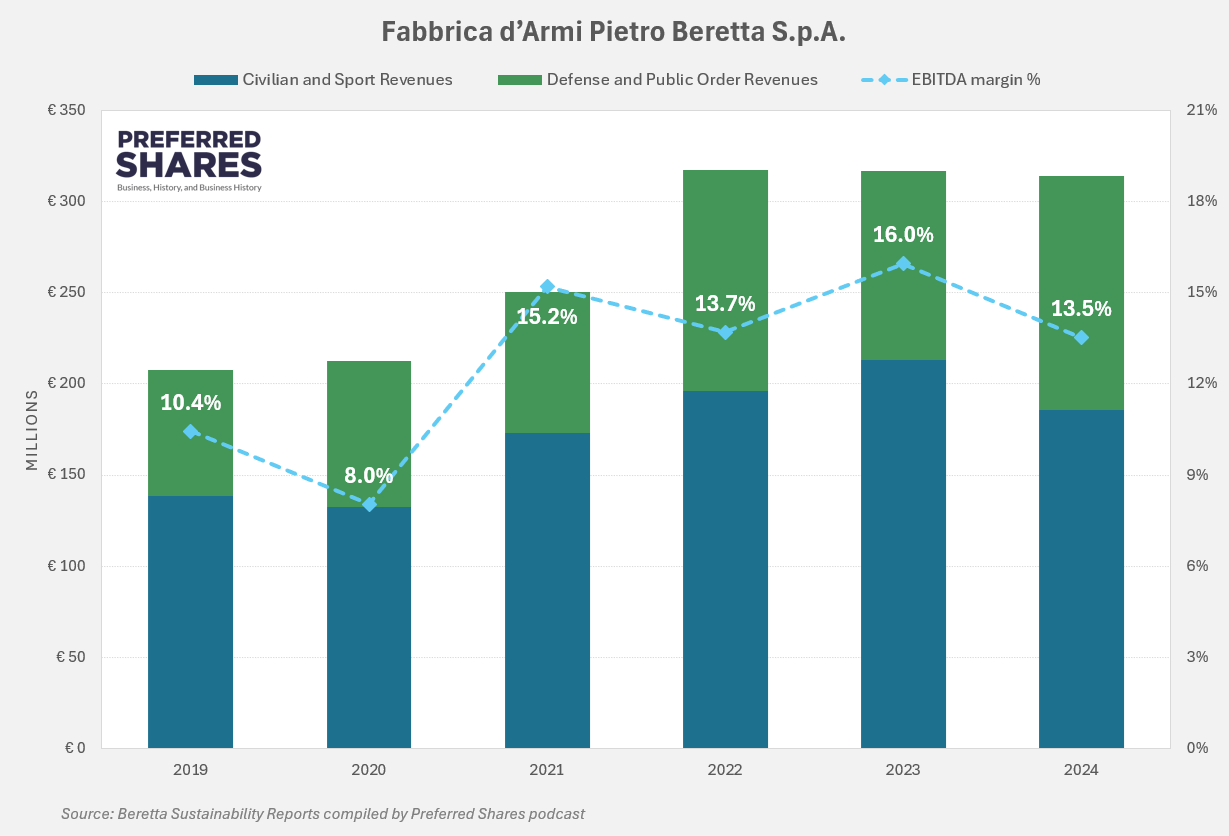
Welcome to Episode 21 of the Preferred Shares Podcast.This episode of the Preferred Shares podcast delves into the rich history of Beretta, a company that has been a significant player in the firearms industry for over 500 years. The hosts explore Beretta’s origins in Italy, its evolution through various historical conflicts, and its adaptation to changing markets. We discuss the company’s commitment to quality, innovation, and the dynamics of being a family-run business. Beretta’s resilience makes it one of the most fascinating case studies in all of business history.In This Episode[01:10] The Legacy of Beretta: A 500-Year Journey[03:30] The Rise of Gun Manufacturing in Italy[09:46] The Evolution of the Arms Industry[11:31] Beretta's Role in Historical Conflicts[17:45] The Impact of War and Plague on Beretta[22:07] Beretta's Growth and Adaptation in the 1700s[25:30] Modernization and Expansion in the 19th Century[29:49] Beretta in the 20th Century: War and Innovation[34:05] Beretta's Rise in the U.S. Market[38:44] The Shift in Revenue Sources[42:25] Quality Control and Artistry in Firearms[48:41] The Future of Beretta: Challenges and Innovations[56:07] Family Business Dynamics and LongevityPhotos, Ads and ChartsBelow is an advertisement for Beretta in the January 1893 issue of Folchetto. It translates as: “Hunters! If you want excellent weapons at very favorable prices, contact the Award-Winning Factory of PIETRO BERETTA in Gardone Valle Trompia…”SourcesBooks* Morin, Marco. Beretta: The World’s Oldest Industrial Dynasty. Acquafresca Editrice, 1980.* O’Hara, William T. Centuries of Success: Lessons from the World's Most Enduring Family Businesses. Avon, Mass.: Adams Media, 2004.* Wilson, R.L. World of Beretta: An International Legend. Chartwell Books, 2006.TGS Outdoors VideosA big shout out to Johnny Carter of TGS Outdoors for the fantastic videos of his tours of the Beretta factories.* “The Beretta Factory Tour”, TGS Outdoors, Dec. 4, 2022.* “Inside the Beretta Custom Shop - Beretta Due Factory Tour”, TGS Outdoors, Dec. 26. 2022.* “I was wrong about Beretta…”, TGS Outdoors, Aug. 31, 2023.* “Building my New Gun at the Beretta Custom Shop”, TGS Outdoors, Nov. 3, 2024.Other Videos* “Interviewing Franco Beretta: The President of Fabbrica d’Armi Beretta”, TFB TV, Jan. 1, 2023.Articles* Friedman, Alan. “Italian Engineering 2: Borrowing climate improves”, Financial Times, July 29, 1985.* Suro, Roberto. “In Italy, Business Is a Family Affair”, International Herald Tribune, June 8, 1987.* Muson, Howard. “How To Build a Dynasty”, Family Business, May 20, 1993.* Klebnikov, Paul and Morais, Richard. “Italy’s second Risorgimento”, Forbes, April 22, 1996.* “Italian designed, American made, Iraq deployed”, American Machinist, December 12, 2005.* Martin, Guy. “The House of Beretta”, Garden & Gun, December/January 2014.* “In the Field with Beretta”, International Institute for Management Development, 2020.* Lichtman, Sam. “Last Line of Defense: A History of the Beretta M9”, Marine Corps Association, March 15, 2023.* Bernet, Luzi. “The oldest company in the world: How does a company survive 500 years?”, NZZ, May 3, 2024.* Tognini, Giacomo. “How This 16th Century Gunmaker Keeps Reinventing Itself”, Forbes, March 25, 2025.Additional Reading & ListeningCurious to see what else we’ve been working on? Check out some of the interesting things we’ve done recently:* Douglas Ott (Andvari Associates and @yesandnotyes)* 📖 TransDigm: The Early Years* Lawrence Hamtil (Fortune Financial and @lhamtil)* 🎙️ The Future of Defense — The History, Advances, And Outlook* Devin LaSarre (Invariant and @DevinLaSarre)* 📖 Foiled: A thesis on a company facing a confluence of headwindsEnjoy this episode? Share it with someone who loves business history as much as you do!You can also follow Preferred Shares, Devin, Doug, and Lawrence on Twitter.DisclaimerAll opinions expressed by Preferred Shares hosts and guests are solely their own opinions and do not reflect the opinions of their respective employers. This podcast is for informational and entertainment purposes only and should not be relied upon as a basis for investment decisions. None of the information contained in the podcast or this web site constitutes a recommendation that any particular security, portfolio of securities, transaction, or investment strategy is suitable for any specific person.Clients of Andvari and Fortune Financial may maintain positions in the securities discussed in this podcast. Furthermore, from time to time, the Hosts may hold positions or other interests in securities mentioned in the Podcast and may trade for their own accounts based on the information presented. The Hosts may also take positions inconsistent with the views expressed in its messages on the Podcast. This is a public episode. If you would like to discuss this with other subscribers or get access to bonus episodes, visit www.preferredsharespodcast.com

The Sweet, Storied Success of Lindt & Sprüngli
Welcome to Episode 20 of the Preferred Shares Podcast.We interviewed a special guest, Mark Purdy, about Lindt & Sprüngli, a Swiss chocolatier founded 180 years ago in 1845. Mark is a veteran investment analyst with a focus on consumer brands for the last forty years and is currently Portfolio Manager at Chelverton Asset Management’s Select Consumer Staples Fund.In This EpisodeHere are some highlights from the interview with Mark Purdy about Lindt:* 01:27 - Mark Purdy’s Background in Consumer Staples* 05:01 - Investment Metrics for Consumer Staples* 06:47 - Lindt’s Historical Success and Sales Growth* 10:37 - Lindt’s Premium Positioning and Market Strategy* 13:18 - Market Share Potential in the U.S. and Europe* 16:23 - Lindt’s Unique Retail Strategy and Store Performance* 19:12 - Sales Distribution Channels and Profitability* 22:30 - Acquisition Strategy and Capital Allocation* 25:22 - Buybacks and Dividend Policy* 29:37 - Long-Term Value and Consumer Staples Resilience* 33:31 - Economic Sensitivity and Market Performance* 36:22 - Navigating Economic Challenges: A Long-Term Perspective* 41:30 - Quality Over Short-Termism: The Lindt Philosophy* 44:20 - Cocoa Prices and Market Dynamics* 49:59 - Consumer Behavior and Premium Chocolate* 57:31 - Future Risks and Growth Opportunities for LindtAdditional Reading & ListeningCurious to see what else we’ve been working on? Check out some of the interesting things we’ve done recently:* Douglas Ott (Andvari Associates and @yesandnotyes) has been writing about the history of Booz Allen Hamilton as well as the recent board shake-up at CoStar Group* 📖 Patience Wanes with CoStar’s Residential Foray: A Continuing State of “Show Me the Money”* 📖 History of Booz Allen Hamilton: Part I* Lawrence Hamtil (Fortune Financial and @lhamtil) * 📖 Lessons from The Chocolate Wars* Devin LaSarre (Invariant and @DevinLaSarre) continues his coverage of several tobacco businesses and also wrote a retrospective on the brand mismanagement of Schlitz beer* 📖 Philip Morris International: Blasphemy* 📖 Schlitz’s SouringEnjoy this episode? Share it with someone who loves business history as much as you do!You can also follow Preferred Shares, Devin, Doug, and Lawrence on Twitter.DisclaimerAll opinions expressed by Preferred Shares hosts and guests are solely their own opinions and do not reflect the opinions of their respective employers. This podcast is for informational and entertainment purposes only and should not be relied upon as a basis for investment decisions. None of the information contained in the podcast or this web site constitutes a recommendation that any particular security, portfolio of securities, transaction, or investment strategy is suitable for any specific person.Clients of Andvari and Fortune Financial may maintain positions in the securities discussed in this podcast. Furthermore, from time to time, the Hosts may hold positions or other interests in securities mentioned in the Podcast and may trade for their own accounts based on the information presented. The Hosts may also take positions inconsistent with the views expressed in its messages on the Podcast. This is a public episode. If you would like to discuss this with other subscribers or get access to bonus episodes, visit www.preferredsharespodcast.com

Ep 19Texas Pacific Land Corporation: The Riches of Royalties
Welcome to Episode 19 of the Preferred Shares Podcast.We interviewed a special guest, Chadd Garcia, about Texas Pacific Land Corporation (TPL). Chadd is a veteran investment analyst, has worked in private equity, and is currently Vice President & Portfolio Manager at Ave Maria Mutual Funds.In This EpisodeHere are some highlights from the podcast episode about Texas Pacific Land Corporation (TPL):* [1:52] – Chadd explains how he became interested in TPL.* [2:53] – TPL’s early history* [4:48] – Oil was discovered in West Texas in the 1920s, but fracking in the 2010s significantly increased the value of the land.* [6:17] – TPL’s decision to get in the water business to support fracking.* [11:12] – TPL’s unique shareholder base, comprised of long-term investors and Texas families.* [14:11] – The reasons for internally handling the water business.* [16:54] – The best way to assess TPL’s valuation, considering its unique advantages and potential call options.* [18:07] – Discussion about the potential of data centers in the Permian Basin.* [23:00] – Chadd shares his view that management would be better off allocating capital to share repurchases.* [31:04] – Chadd is generally not a fan of TPL acquiring royalties.* [36:14] – Discussion of how and why TPL recently became a corporation after being a trust for over 130 years.* [38:09] – Chadd shares some concerns with management’s compensation structure.* [40:22] – Appropriate incentive schemes for royalty companies.Additional Reading & ListeningCurious to see what else we’ve been working on? Check out some of the interesting things we’ve done recently:* Lawrence Hamtil (Fortune Financial and @lhamtil) was recently interviewed by Paul Cerro of Cedar Grove Capital. They discussed military history and the defense industry.* 🎙️ IC #4: The Future of Defense — The History, Advances, And Outlook* Douglas Ott (Andvari Associates and @yesandnotyes) wrote about the recent results of Mettler-Toledo and CoStar Group * 📖 The Mighty Florance — CoStar Group FY2024 Results: Margins Up, Growth Continues* 📖 Mettler-Toledo FY2024 Results — A Return to Positive Revenue Growth with Highest Gross Margins Ever* Devin LaSarre (Invariant and @DevinLaSarre) was interviewed recently about Haypp Group and has written about the results of Philip Morris International* 🎙️ Planet MicroCap — Cleaning Up Unclean Stories, Numbers, Narratives, Nicotine Industry + Haypp Group with Devin LaSarre, Founder & Editor of Invariant* 📖 Philip Morris International: ConquestEnjoy this episode? Share it with someone who loves business history as much as you do!You can also follow Preferred Shares, Devin, Doug, and Lawrence on Twitter.DisclaimerAll opinions expressed by Preferred Shares hosts and guests are solely their own opinions and do not reflect the opinions of their respective employers. This podcast is for informational and entertainment purposes only and should not be relied upon as a basis for investment decisions. None of the information contained in the podcast or this web site constitutes a recommendation that any particular security, portfolio of securities, transaction, or investment strategy is suitable for any specific person.Clients of Andvari and Fortune Financial may maintain positions in the securities discussed in this podcast. Furthermore, from time to time, the Hosts may hold positions or other interests in securities mentioned in the Podcast and may trade for their own accounts based on the information presented. The Hosts may also take positions inconsistent with the views expressed in its messages on the Podcast. This is a public episode. If you would like to discuss this with other subscribers or get access to bonus episodes, visit www.preferredsharespodcast.com

Convair: The Rise and Fall of an Aerospace Titan - Part 2
Welcome to Episode 18.In this episode, Doug picks up the story from where we left off in Part 1: its November 1941, when Consolidated Aircraft founder Reuben Fleet decides to sell his personal stake in the company. Doug then shares how Consolidated became Convair, was then acquired by General Dynamics, its disastrous foray into the commercial jetliner market, and its eventual demise in the mid-1990s.In This Episode* (01:26) Reuben Fleet and his decision to sell Consolidated Aircraft.* (03:43) Fleet sells his entire personal stake in 1941.* (07:53) In 1943, Consolidated merges with Vultee Aircraft and becomes Convair.* (09:51) Reasons behind the sale.* (13:01) Rapid growth and decline of the aviation industry during and after World War II.* (14:50) Floyd Odlum and Atlas Corporation acquire a significant stake in Convair.* (16:04) Convair’s success in the 1950s.* (17:40) The B-36 bomber's development during World War II and its features, including its long-range capabilities and large crew, are described.* (20:01) General Dynamics acquires Convair in a two-step process.* (25:56) Convair gambles with Howard Hughes and the development of the Convair 880 jetliner.* Hughes runs into financial trouble and causes delays.* Convair eventually declares the largest losses in business history in the early 1960s due to its failed efforts in the commercial jetliner business. * (37:51) Henry Crown takes charge of General Dynamics to address losses from the Convair program.* (38:35) Convair shifts focus and becomes a subcontractor for the big commercial jetliners and also concentrates on its rocket and missile businesses.* (39:56) The defense industry consolidation in the post-Cold War era.* (42:21) General Dynamics sells off pieces of its Convair business and eventually shuts it all down.* (53:06) Reflection on Convair’s decline.* (57:42) The difficulty for defense companies trying to venture into the commercial space.* (65:14) Upcoming episodes.ResourcesPeriodicals* Convairiety - 1950s* General Dynamics News - 1960s* General Dynamics World* Volume 21, Number 2, February 1991* Volume 22, Number 1, April 1992Articles* “So They Named It General Dynamics”, Fortune, April 1953.* “BOARDS APPROVE CONVAIR MERGER; General Dynamics to Step Up as Vast Defense Complex if Stockholders Concur”, NYT, March 2, 1954.* “Intercontinental Rocket Reported Being Built”, NYT, Dec. 16, 1954.* “SUPERSONIC B-58 FLIES FIRST TIME”, NYT, Nov. 12, 1956.* “American Raises Jet order by 50”, NYT, 7/31/1958.* “New Jet Passes Operation Tests; Convair 880 to Begin Flying Commercial Routes for Delta Line on May 15”, NYT, May 2, 1960.* “Jet Purchase Plan of TWA Approved”, NYT, June 25, 1960.* “CONVAIRS SLATED FOR T.W.A. LEASED; Northeast to Use Six Jets Idle Because of Hughes' Financial Problems”, NYT, Nov. 23, 1960.* “The Plane Makers Under Stress”, Forbes, June 1960.* “Defense Supplier Posts Loss for ‘60”, NYT, March 24, 1961.* Smith, Richard Austin. “How a Great Corporation Got Out of Control: Part 1”, Fortune, January 1962.* Smith, Richard Austin. “How a Great Corporation Got Out of Control: Part 2”, Fortune, February 1962.* “Lewis of Dynamics”, Fortune, March 1962.Books* Sweetman, William. A History of Passenger Aircraft. London: Hamlyn Publishing, 1979.* Steele, James B. Howard Hughes: His Life and Madness. New York: W.W. Norton, 1979Videos and Podcasts* “The Story of Willow Run” — Building the B-24 bomber during WWII* Convair CV-440 Metropolitan Promo Film - 1955* CONVAIR B-36 - Story of the Strategic Air Command's Masive Cold War Peacemaker!* “ON TARGET: THE ATLAS ICBM” — 1958 Convair Astronautics SM-65B Missile Launch documentaryAdditional Reading* Doug (Andvari’s Substack) writes more about Reuben Fleet in his post “Quality Over Quantity”, published December 2024.* Doug (Andvari’s Substack) also wrote Victor Emanuel of Aviation Corporation in his post “Victor Emanuel: Part 1, From Gilded Age Dealmaker to Turnaround Artist”, published January 26, 2025.* Devin (Invariant Substack) writes about the FY2024 results of Philip Morris in “Philip Morris International: Conquest”.* Lawrence (Fortune Financial) writes about “Exploring the Surprising Resilience of the Defense Industry”.Enjoy this episode? Share it with someone who loves business history as much as you do!You can also follow Preferred Shares, Devin, Doug, and Lawrence on Twitter.DisclaimerAll opinions expressed by Preferred Shares hosts and guests are solely their own opinions and do not reflect the opinions of their respective employers. This podcast is for informational and entertainment purposes only and should not be relied upon as a basis for investment decisions. None of the information contained in the podcast or this web site constitutes a recommendation that any particular security, portfolio of securities, transaction, or investment strategy is suitable for any specific person.Clients of Andvari and Fortune Financial may maintain positions in the securities discussed in this podcast. La