Practically on Purpose
35 episodes
The Resume Game vs. Real Life
What does it actually cost to take the road less traveled — and what do you get back?In this episode, I sit down with my Amherst classmate Blake Murphey: liberal arts kid, former finance intern, and US Navy intelligence officer of 13 years. Blake's career reads like something out of a novel — aircraft carrier Intel cells in the Persian Gulf, supporting a SEAL Team deployment in East Africa, NATO in Sicily (yes, on the slopes of Mount Etna), the Pentagon, and now working alongside the people who literally defuse bombs for a living.But what strikes me most isn't the résumé. It's how Blake thinks about time — not as a backdrop to ambition, but as the whole point.We wander through the invisible curriculum of elite college culture: why so many brilliant people funnel into finance (spoiler: it's not just the money), what it actually felt like to leave that path, and what 13 years of high-pressure intelligence work teaches you about staying present when your amygdala is running the show.We also talk about the song Blake sings in his head when everything goes blank under pressure. It's Bob Seger. It works. And honestly, it makes complete sense.This is a conversation about the stories we inherit about success and the courage it takes to write a different one.In this episode:The "default path" trap at elite colleges — and why it's gotten more extremeFinance to the Navy: what a quarter-life crisis in London actually looks likeLife as a Navy Intel officer: aircraft carriers, SEAL teams, East Africa, NATO, the PentagonWorking with EOD (the bomb defusal community) — and what extreme stress teaches you about your own mindBreath work, sports psychologists, and the Bob Seger method for resetting under pressureWhy time — not titles, not money — is the only non-renewable resource"Do it now. You don't know what life looks like down the road." This is a public episode. If you would like to discuss this with other subscribers or get access to bonus episodes, visit alliecanton.substack.com
Law Is For Smart People Who Don't Know What Else To Do
Jordan Nahmias didn’t grow up dreaming of being an entertainment lawyer. He wanted to be an artist. But a professor suggested he write the LSAT, he did well, and suddenly he was on a track.Once you’re on the track, it’s easy to mistake momentum for destiny.“It is a well-worn groove,” he told me. “Once you’ve made the choice… the blinders are on.” He continued, “Law is the thing that smart people do when they don’t know what to do.” OOFFor Jordan, there wasn’t one clean “I’m done” moment. It was more like epistemological dissonance, in his words. He knew for a long time, even going back to law school, but couldn't make himself act on that knowing.But then in 2021, he got into a fight with a long-term client and he was treated poorly in a way he could not shrug off.“I ended up firing them,” he said. “And that was really hard for me… but then I was like, whoa, wait a minute, you can fire people? You don’t have to do this. You don’t have to continually expose yourself to this.”And he realized that i you can fire one client, you can fire them all. This is a public episode. If you would like to discuss this with other subscribers or get access to bonus episodes, visit alliecanton.substack.com
Start Being Heard
A Harvard Law grad, negotiation expert, and author of Unlearning Silence, Elaine has spent the last decade teaching people how to have difficult conversations. But it wasn’t until she confronted her own self-silencing that the real work began.We talk about how silence gets rewarded, how it gets internalized, and what it really means to reclaim voice.BioElaine Lin Hering is a speaker, facilitator, and former Lecturer on Law at Harvard Law School. She works with organizations and individuals to build skills in communication, collaboration, and conflict management. She has worked on six continents and facilitated executive education at Harvard, Dartmouth, Tufts, UC Berkeley, and UCLA. She has served as the Advanced Training Director for the Harvard Mediation Program and a Managing Partner for a global leadership development firm. She has worked with coal miners at BHP Billiton, micro-finance organizers in East Africa, mental health professionals in China, and senior leadership at the US Department of Commerce. Her clients include American Express, Chevron, Google, Nike, Novartis, PayPal, Pixar, and the Red Cross. She was named a Thinkers50 global management thinker to watch and is the author of the USA Today Bestselling book Unlearning Silence: How to Speak Your Mind, Unleash Talent, and Live More Fully (Penguin).* Free Newsletter: https://hello.elainelinhering.com/newsletter* Book: https://www.penguinrandomhouse.com/books/720975/unlearning-silence-by-elaine-lin-hering/ This is a public episode. If you would like to discuss this with other subscribers or get access to bonus episodes, visit alliecanton.substack.com

Where Is My Mind?
On motherhood, meditation, science, psychedelics and spirituality. My brain used to be a steel trap. I negotiated multi-million dollar deals and tracked complex legal roadmaps in my head.These days, I can’t remember if I’ve put coffee in the coffee maker.At first I thought I was just “losing it.”But the more I learn about matrescence, psychedelics and the default mode network, the more I wonder if I’m not losing my mind so much as losing the illusion that it was ever mine. This is a public episode. If you would like to discuss this with other subscribers or get access to bonus episodes, visit alliecanton.substack.com
Work Is a Prism (Not a Cage)
What if your job were less a grind and more a mirror, one that reflects your strengths, triggers, and patterns so you can grow on purpose? In this conversation with Erin Hinkle Robertson (fractional Chief People Officer; culture builder), we explore work as a practice of becoming. Erin discusses when she first she saw that work is a prism for self-knowledge.We also get honest about America’s ruthless work culture, the “cult of Steve Jobs,” and how easy it is to lose yourself when identity fuses with output. Then we talk about how to step off the hamster wheel without burning it all down.You’ll hear:* Why many of us were taught to become our jobs—and how to rewrite that script.* Erin’s line in the sand: “I’m not living depleting days.” What changes when you choose ease over depletion.* Chimp Empire ≈ evolutionary Succession: status games at work and how to stop letting them run you.* Practical support: coaches, therapy, and a simple “team of you” to keep your humanity intact.Bio: Erin is an HR strategist and leadership coach who works with managing partners of law firms as well as founders and leadership teams at VC-backed startups, helping them keep pace with rapid growth and change. She helps leaders build high-performing cultures by getting out of the weeds and into the work that actually matters: defining values that stick, developing leadership capacity, and creating teams people actually want to be on. After years leading people strategy inside organizations, she recently re-launched her own practice, BuildRiseHR to partner more deeply with the leaders shaping what's next across legal, AI, and B2B SaaS. This is a public episode. If you would like to discuss this with other subscribers or get access to bonus episodes, visit alliecanton.substack.com
From NYC Grind to Full-Body Freedom: Catherine Boyko’s Wake-Up Call
My next guest is someone who used to speed-walk through Manhattan like it was an Olympic sport, turn a six-month project around in twenty-eight days, and secretly love the chaos because it proved she could do the impossible. Sound familiar?Meet Catherine Boyko, a former executive producer at one of the world’s top ad agencies, whose life was all grind and no sleep… until COVID, a breakup, and a deep dive into somatic and polarity work exposed the cracks that had been there all along.We talk about her shift from living in constant “Iron Man suit” mode to discovering softness, embodiment, and what it means to move at her own speed. Catherine shares the science and soul behind somatic work, the price we pay for running on adrenaline, and the power we reclaim when we finally allow ourselves to slow down.I also share some uncomfortable truths I uncovered about myself during my own session with Catherine, and she guides us through a five-minute grounding practice you can use anytime life feels like it’s moving too fast.TimestampsIntroduction - 00:00:00Catherine’s Career Transition - 00:03:00Discovering Somatic Work - 00:09:00Impact of Societal Expectations - 00:15:00Embracing Authenticity and Balance - 00:21:00Practical Somatic Exercises - 00:27:00About Catherine Boyko:Catherine Boyko is a Somatic Coach based in Austin, Texas. After a decade producing global advertising campaigns in New York City, she left the high-pressure world of “achievement at all costs” to help women reconnect with themselves in a deeper way.Through somatic practices, Catherine guides high-achieving women out of anxiety, perfectionism, and self-abandonment and back into joy, presence, and power.Catherine is trained through The Embody Lab and weaves trauma-informed somatics, nervous system regulation, and feminine leadership into her work. She believes that when we find presence in our everyday lives and have the right support along the way, real change becomes not only possible, but sustainable.Website: www.embodiedboss.comIG: https://www.instagram.com/theembodiedboss/ This is a public episode. If you would like to discuss this with other subscribers or get access to bonus episodes, visit alliecanton.substack.com

The Parable of the Pillow People
Guys, it finally happened.The sleep, I mean. Knock on wood, but I’m sleeping again.I was getting to the point where my brain resembled the crumbling ruins of some once-majestic estate, like whatever moldy manor was in Great Expectations or Wuthering Heights. I don’t actually remember much about either book, just the feeling-tone of gray skies and decaying Victorian grandeur.Chunks of my sanity, logic, and clarity of thought were shedding daily. (My hair too, but that’s a separate postpartum battle.) The locals were starting to whisper to each other, “Tread very carefully. She’s unsound.”On a recent trip to NYC, I was unable to determine when, where, or how to feed myself lunch, despite being extremely hungry. I was spending the day between Tribeca and Chelsea, and yet I booked a hotel near Grand Central “to be in the heart of it all” like a grade A jabroni. And then… salvation arrived, tenderly enclosed in wrapping paper stamped with indeterminate constellations, tucked in a brown paper bag.“You might not want to open this here,” V whispered. We were seated in Grey Dog, contemplating whether to buy the completely rationally priced $20 avocado toast or the $18 egg-and-cheese croissant. “Maybe just tear a little corner,” she suggested.Images raced through my mind. What scandalous object had my beloved childhood friend bought me? A banned book? An adult toy?As it turns out, the second guess wasn’t so far off.It only took a tiny tear to reveal a shock of yellow yarn. I gasped.There she was, only decades delayed. My very own Pillow Person: a rectangular pillow with a giant cartoon face and stubby fabric arms and legs — the pinnacle of 80s comfort and consumerism and the object of five year old me’s most fervent obsession.We rode home together that afternoon on the Metro-North. My Pillow Person was indeed the platonic ideal of an extremely low-maintenance friend as I mentally reviewed my insecurity du jour: At the previous night’s events did I come off as tired yet thoughtful or as a standoffish b***h?If only I’d had her for the past 35 years. What would be different? Would anything be the same?My 5 year old son cackled as he fully unwrapped her from the star-strewn paper.“What even is this, bruh??”A few nights later, he chucked the Pillow Person into my daughter’s crib, unbeknownst to me. And like a face-printed polyester seed planted in the fertile soil of her star-printed muslin sheet, we found my daughter playing with her joyfully the next morning, watered only by one hour of tears from our fourth attempt at sleep training.Much like psychedelics, my Pillow Person worked on multiple timelines at once - giving both my inner 5 year old the object of her inexplicable longing and my actual 11 month old a friend so she wouldn’t feel so lonely in her room.Is there a moral to the story? I’m still working that out:Perhaps something about the uncanny wisdom of the people who know us best? Or that the object I was deprived of as a child is what my child most needed?Maybe we all just need our (pillow) person?Regardless, I’m sleeping, and it’s magic, and I’m so grateful for that damn Pillow Person. This is a public episode. If you would like to discuss this with other subscribers or get access to bonus episodes, visit alliecanton.substack.com
10-Minute Reiki Meditation to Receive & Release
Feeling wired, tense, or caught in a loop of overthinking?This 10-minute Reiki-infused meditation is designed to help you receive exactly what you need and release what you’re ready to let go of.In this gentle practice, we’ll:Take three grounding breaths to land in the present momentTune into the natural rhythm of your breathWork with the simple mantra: “Breathing in, receiving. Breathing out, releasing.”Explore how even your exhale is an offering to the earth, a way your “waste” becomes nourishment for the world around youYou don’t need any Reiki training or prior meditation experience. Just a quiet-ish spot, a comfortable seat, and a willingness to notice what is happening inside you, right now. This is a public episode. If you would like to discuss this with other subscribers or get access to bonus episodes, visit alliecanton.substack.com

Dance Out Your Demons
Now that we’re in the throes of the holiday season, I’ve been thinking about what it actually means to be festive.This contemplation started for me a few months ago when I was listening to The Emerald (a must-listen podcast on myth & meaning, btw). Josh Schrei was talking about festivals, wildness, and how earlier cultures created intentional spaces for rupture. It sent me down a little rabbit hole on what “festive” really means.The word festive comes from festival, which in turn traces back to the Latin festum and festivus. These words referred to feasts, holy days and occasions set apart from ordinary time. A festival wasn’t just a “holiday party.” It was a pocket of time where regular rules softened or flipped, and people stepped out of their everyday roles into something stranger and more alive. Going further back, festive is connected to a Proto-Indo-European word for “God.”In ancient and medieval life, there was much more structure in our shared cultural rhythms, especially around holidays. For most of the year, people lived inside fairly narrow bands of “appropriate” behavior. You knew your role. It was clear what was expected of you. You knew where your body was supposed to be, and what it was supposed to do.Festivals were the sanctioned rupture. Take Saturnalia in Rome, where social hierarchies inverted and masters served their slaves. Or the Dionysian rites in ancient Greece, with ecstatic dancing and masks and wine. Think of medieval Carnival, when the church calendar itself made room for chaos before Lent’s austerity. Or maybe the Egyptian festivals of drunkenness are more your style, with their mass intoxication and erotic excess, all undertaken to appease the lion goddess Hathor/Sekhmet.Anthropologists sometimes talk about festivals as “safety valves” for a tightly ordered society. These were the days when you could completely let loose, when the container of normal life intentionally cracked. People drank, feasted, danced, wore costumes, broke taboos. It looked like societal collapse from the outside. Yet somehow, that wild release helped the “default order” hold together the rest of the year.After the orgiastic peak, after all the shouting and laughing and fighting and f*****g and dancing and crying, people went back to their homes, their fields and their workshops. They may even have been a little relieved to return to structure. The same rules that felt restrictive before might have suddenly felt comforting. Order was restored. The people (mostly) rejoiced.I was recently reminded of this older meaning of festivity. Of being in the “festive spirit.” Of “making merry” not as performing consumer obligations but as a regularly-scheduled opportunity to reclaim our collective wildness.I don’t know about you, but it seems like our holidays and our lives have become a lot less festive in that sense. We pore over gift guides, chase sales, pack our schedules with events and post carefully staged photos. There are fewer shared rituals where we actually get to let go together. To move, wail, howl, laugh until we’re snotty and red-faced and unpresentable.Then again, I don’t know your family. You might be doing just fine on the snotty ritual howling front.What really brought this home for me was a recent ecstatic dance experience on a random Thursday morning. Six of us gathered at a friend’s house to move through some s**t.The experience, called Excermotive Dance, was inspired by Gabrielle Roth’s 5Rhythms. If you don’t know it, 5Rhythms is a kind of moving meditation that guides you through waves of energy — flowing, staccato, chaos, lyrical, stillness — without choreography. Each phase is an invitation to let your body experience and express.My friend Indira is at least 1/4 fairy, so it should be no surprise that gatherings at her home tend to take on an otherworldly quality. This one was no exception.From the moment I walked in, something felt different. She approached me with a small bowl of incense and began wafting the smoke around my body. I know I’m pretty weird these days, but I don’t usually feel the “spirit of the incense.” Do you? Anyway, that should have been my first hint.A profound awkwardness can infiltrate these kinds of gatherings. Many of us are not just awkward moving our bodies, we’re awkward being in our bodies. Suddenly we feel very material, almost icky. Our minds start to race:What should I do?Was that just cool or cringe?Do I smell?For some people, the weight of that awkwardness is too much to bear. I get it.But if you can move through the awkwardness, really blast on past it, maybe with the help of an egg shaker or a drum or a maraca or a tambourine, something shifts. First you are moving your body, maybe rotating in flowing rave-y spirals, experimenting with high and low, erratically folding and unfolding elbows and knees, soaring around the room like a red-tailed hawk. Over time, it’s as if something else is moving through your body. You are being moved.Over the course of tha
Illuminate & Release: Clear Mental Clutter in 26 Minutes (Guided Meditation)
Feeling mentally cluttered or stuck in rumination? This guided practice blends a soothing body scan with a simple “golden light” breath visualization to clear the fog fast.We’ll begin with a gentle body scan: softening your forehead, relaxing your shoulders, and inviting your whole body to release stored tension. From there, I’ll guide you into a visualization practice drawing on Reiki and Qigong, two energy healing traditions that work with life force to restore balance and flow. You’ll imagine inhaling golden light, storing it in your belly, letting it rise to illuminate your mind, and exhaling dark smoke to release what no longer serves you.This guided meditation is designed to help you move stagnant energy, clear mental clutter, and reconnect with your natural vitality. It’s simple, grounding, and leaves you feeling light, clear, and more fully present. This is a public episode. If you would like to discuss this with other subscribers or get access to bonus episodes, visit alliecanton.substack.com
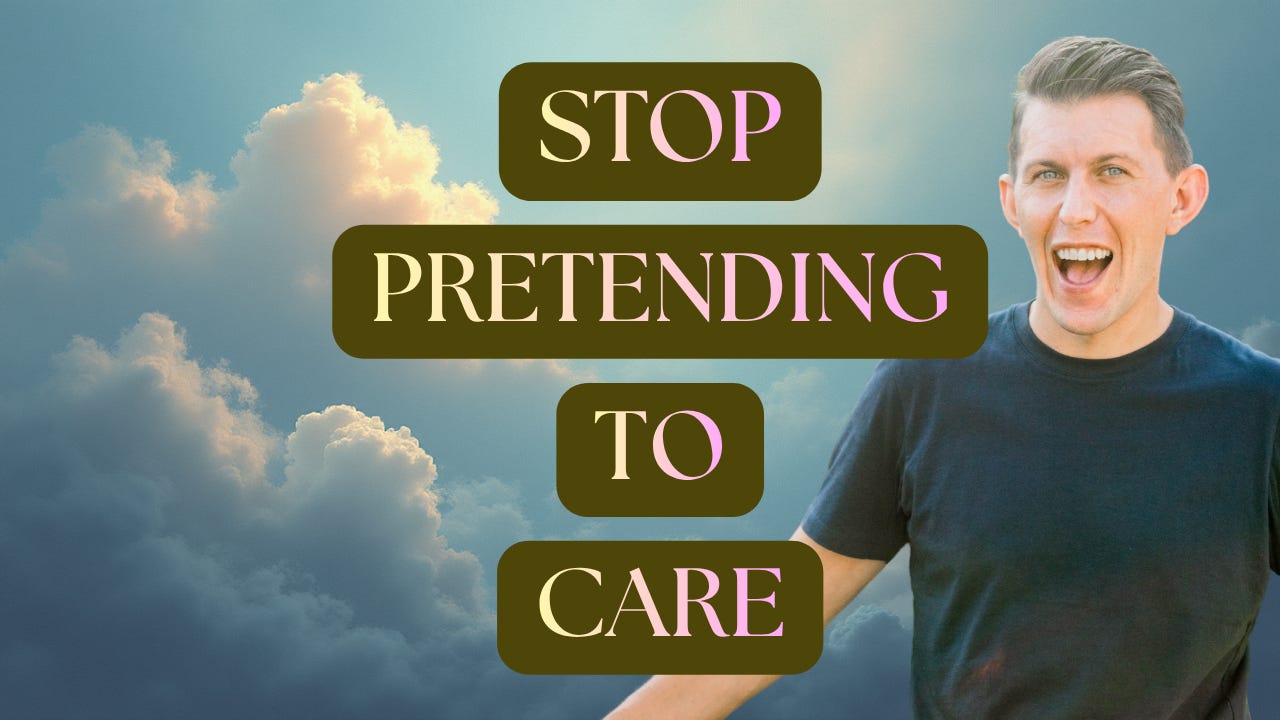
Stop Pretending to Care: How to Drop the Grind and Claim Your Own "Pathless Path" with Paul Millerd
Paul Millerd and his book the Pathless Path found me in a moment where I was deeply lost, professionally and personally. Through his writing, I went from believing that work had to be tedious misery on an established path to prestige (hence being a grindy lawyer) to viewing it as a series of experiments that could look whatever way I wanted. It was deeply liberating. Because of his writing, I was reassured that I wasn’t totally losing my mind, or if I was, I was in good company, and I finally got the courage to try out a bunch of cool stuff to build a life that lights me up (a work in progress!).In this conversation, Paul and I talk about the “Pathless Path”: what it is (and isn’t), why “you can’t do it wrong, but you do have to do it yourself,” and how to design days that feel good. We get into money anxiety, choosing principles over playbooks, nomadic parenting, education vs. school, and Paul’s “Ship, Quit & Learn” approach.Paul is such a sharp, humble, and generous dude, and this conversation was so much fun. He just reissued an absolutely gorgeous hardcover version of his classic book The Pathless Path. There’s even a limited number of handsigned versions available, plus some cool early launch bonuses. Pick up your copy at https://shop.pathlesspath.com/products/pathless-path-hardcoverTimestamps* 0:00 – Intro* 02:49 — How Paul’s writing found me when I was lost* 04:56 — Quitting, loneliness, and posting your real income* 08:15 — Defining the Pathless Path: embrace uncertainty, keep your sense of humor* 11:28 — Money stress, past-self gifts, and choosing priorities out loud* 14:07 — “Why are you doing this?” Because it feels right (and that’s enough)* 20:30 — A real Tuesday in the life of Paul* 24:22 — Traveling Village: 20 families, three countries, open questions* 28:05 — School vs. education; raising curious humans, not resumes* 32:33 — Ship, Quit & Learn: how to start things without a playbook* 35:56 — Optimizing for aliveness* 37:55 — Tradeoffs on cars, houses, and a year of travel for $40K* 41:03 — Partnership alignment, and writing your shared story* 45:51 — The Accidental Meaning Hypothesis: why “the package” became the point* 52:24 — Capitalism, private equity, and systems that keep evolving* 54:06 — The “secure the bag” economy and caring about work* 56:18 — A week with miserable lawyers? Hard pass (but we kid… mostly)* 58:19 — New season: fatherhood, fewer hours, more intention* 1:01:34 — Good hard vs. bad hard; writing as the edge worth pushing* 1:04:09 — You don’t have to feel bad while working (really!!)* 1:05:32 — The gorgeous hardcover of The Pathless Path is coming* 1:07:21 — “Find the others”: community, WhatsApp, and global meetupsAbout Paul: Paul Millerd is an independent writer and creator who explores themes of ambition, meaning, and the tension between freedom and security in the modern working world. He is the author of The Pathless Path, a bestselling book translated into multiple languages that dares readers to reimagine success and dream bigger about the possibilities of a life beyond the traditional career track. He also published a second book, Good Work, in 2024 and continues to write and explore his curiosity through his newsletter, podcast, and conversations with fellow curious humans around the world. Before being self-employed, Paul spent ten years working in strategy consulting, with experience leading organizational change and operations excellence research at McKinsey & Company and Boston Consulting Group, among other firms. Paul has a B.S. in Industrial Engineering and Management from the University of Connecticut and an MBA and M.S. in Systems Engineering from the Massachusetts Institute of Technology. You can follow Paul Millerd on Substack at https://substack.com/@paulmillerd This is a public episode. If you would like to discuss this with other subscribers or get access to bonus episodes, visit alliecanton.substack.com

Revenge of the Pillow People
I’m able to provide my children with food, shelter, and clothing. So I consider myself lucky that the first hunger I noticed in my five-year-old son was material, not physical.He came home the other day asking if I’d buy him a Labubu. Naturally, I had no idea what that was. (If you’re living under a rock like me, it’s an extraordinarily overpriced keychain/stuffed animal/gremlin hybrid.) He told me that all the kids had one. His friend even offered to ask his babysitter to drive them 40 minutes to Target to buy one if I wouldn’t. I refused, but every few days, he still asks.Watching my son pine for his Labubu, I recognized that same longing.I’m transported back to 1991, when I was about his age and had my own first taste of desperately wanting something I absolutely didn’t need. We were down in Nags Head, North Carolina, for a big family trip — my cousins, aunts, uncles, everyone under one roof.I remember my older cousins, Laurie and Danielle, sauntering into the faux-wood-paneled TV room one afternoon — tanned, sun-bleached hair, wearing neon geometric printed bathing suits. They were a few years older than me and the very coolest people in my tiny world.Each was clutching a braided blonde-haired Pillow Person. Now, looking back, those things were garish, borderline terrifying. But at the time, I had to have one. Nothing else would do.I begged my mom: “Can I have one? Please? Please? I just have to have a Pillow Person.”In her divine wisdom and deep-seated frugality, she said no. And to her credit, she held the line.So I kept coveting those darn Pillow People. Every time I slept over at my cousins’ house, I saw those ridiculous, rosy-cheeked smiling pillows propped up on their beds, the useless stubby legs flipped out on the comforter. And even as Laurie and Danielle grew older, their Pillow People survived multiple rounds of old-toy donations, perched on window seats or arranged into artful but ironic stuffed animal piles. I’m not sure what I thought would happen if I finally got one.Scenes that I now recognize as brainwashing from ‘90s afterschool TV shows flicker through my mind — walking down a hallway full of lockers, backpack slung over one shoulder, elbow hugging a Pillow Person to my body, the most popular girl in my class giving me a knowing nod, now flash forward to a sleepover — me, the coolest girls in the class, surrounded by our Pillow People, everyone laughing. Or maybe my Pillow Person would help me sort out my parents’ recent divorce. My new blonde protector, a trusted confidante, us against the world. We’d bravely navigate the very confusing new normal as the ground of my home life liquified beneath our feet in the wake of familial rupture.Looking back, that Pillow Person was my first brush with the hungry ghost.In Buddhism, the “hungry ghost” is a symbol of endless craving. These beings have huge, empty bellies and thin, narrow throats. So they’re endlessly hungry but never satisfied. Know anyone else like that?Materialism is just one manifestation of this hunger. I don’t think of myself as hugely into things, though my husband and the steady stream of FedEx deliveries to our home would likely disagree. But if you’ve been here for more than a minute, you’ll know that I’ve sorta perfected this cool habit of outsourcing my happiness.I wish I could tell you that I perched my son on my knee, gave him a hug, and then looked him in the eyes and told him, “Sweetheart, you don’t need a Labubu to belong. You’re already enough.” But in reality, I said something like, “Dude, you’re not getting one and if I have to hear about this Labubu thing one more time, Mommy’s gonna lose her cool.”I eventually circled back with a more Dr. Becky-approved response. But the truth is, I’m not sure that reaffirming his basic okayness will protect him against the pull of comparative mind. I want to protect him from those first tiny roots of craving before they burrow too deep.And yet, I know I can’t. Just like I couldn’t bubble-wrap him to protect him from breaking his arm falling off a slide. Maybe that’s the real parent trap: we try to save our kids from the hungers that still control us (🎵 hello projection my old friend!🎵). Isn’t craving for spiritual attainment just another flavor of craving? Just one more place where I’m swearing up and down that this time, finally, “once [fill in the blank] happens, then I’ll be happy”?So, yeah, it seems we’re both working with our hungry ghost energies. I want him enlightened in kindergarten. And he still wants a Labubu. This is a public episode. If you would like to discuss this with other subscribers or get access to bonus episodes, visit alliecanton.substack.com
Are the Dollars Really Worth the Days? – Kate Kruizenga on Measuring What Matters Most
Fractional CPO Kate Kruizenga joins me to swap 9:9:6 math for a more human ledger, one a mentor summed up as “dollars and days.” We trace her arc from Kaiser and Dropbox to startup whiplash, a deliberate pause, and the “recklessly generous” strategy that reoriented her business (and doubled her income) without sacrificing faith, family, or integrity.We get practical about her approach to fractional People Ops (why early-stage teams need strategy, not just HR triage), motherhood as a leadership lab, and the Hebrew idea of avodah – work as worship – that helps Kate design days she actually wants to live and help companies build teams that bless people instead of burning them out.Timestamps00:00 Intro04:42 Kates’s career in 60 seconds: “chasing challenge and impact” → people-first operator.06:00 Kaiser leap: designing people strategy for 14k06:57 Dropbox era: learning the business, then a BD tour to understand revenue engines.07:46 Startups & the first layoff: loving the mission… and putting her own name on the list.10:02 Hard-won lessons from misaligned roles: believe the org chart (and the soft signals).15:35 The retreat + the reset: “All we have is dollars and days.”18:28 The fractional “aha”: early-stage founders need strategic People Ops, not just HR.19:27 Avodah: work as worship; designing days that make room for faith and family.22:09 The pause in practice: unlearning the compulsion to “check Slack” before saying yes.23:33 First fractional turnaround: testing the thesis in part-time hours.25:00 “Let’s try fractional on for size” + why a willing partner matters.36:07 Redemptive vs. exploitative frames: building cultures people choose to give to.43:48 Belief fuels effort: why people once slept on factory floors (and what leaders miss).45:21 The Recklessly Generous playbook (theology → philosophy → tactics).52:28 Find your sweet spot: joy × purpose × what others say you’re great at.54:01 Seasons & grace: wholeness over perfection as the operating system.54:47 Sign-off + where to find Kate (Phero Collective).Follow Practically on PurposeInstagram: https://www.instagram.com/practically_on_purposeFollow Kate KruizengaInstagram: https://www.instagram.com/katekruizengaLinkedIn: https://www.linkedin.com/in/katekruizengaLearn more about Phero Collective: https://www.withphero.co/About Kate: Kate Kruizenga is a Fractional Chief People Officer passionate about solving thorny problems, exploring the outdoors, and building community. She lives in Oakland, California with her husband and son. Before launching her fractional practice, Kate worked in operating roles at Parallel Domain, Dropbox, Kaiser Permanente, and Teach For America. Kate now leads Phero Collective, a group of fractional people and operations professionals who partner with founding teams to cultivate thriving People and Operations practices that unleash businesses. This is a public episode. If you would like to discuss this with other subscribers or get access to bonus episodes, visit alliecanton.substack.com
The Direct Path to Happiness: Scott Britton on Turning Achievement into Spiritual Growth
Scott Britton did all the things our culture promises will deliver joy – Princeton athlete, hot-shot founder, splashy lists, big outcomes – and still found himself tightening, agitated, and wondering why the summit felt so empty. Scott became a consciousness explorer, first through a doorway of altered states, then through daily unglamorous dedication to inner work.In this conversation, we walk the arc from achievement to unraveling to integration. We talk about the “outside-in” happiness trap and the practice that changed his life: tracking micro-triggers in a Freedom Log and using them as invitations home. We explore the difference between hustle energy and creative flow, what it means to let trust lead, and how to keep your heart open while building things that actually ship.Fortunately for all of us, Scott has also chronicled his path and the practices that changed his life in his new book, Conscious Accomplishment: How to Use Personal Achievement for Spiritual Growth.And because I know so many of you are asking how to bring consciousness into the places you spend most of your waking hours, we get practical. Scott’s new venture, Conscious Talent, is reimagining company-building: what it looks like to interview for energetic alignment (without throwing rigor out the window), and why growing awareness can increase effectiveness, not dilute it.Scott Britton is an entrepreneur, content creator and consciousness explorer. He is currently the CEO of Conscious Talent. He also hosts the EvolutionFM podcast and is the creator of Founder Satsang - a community of over 250+ entrepreneurs committed to supporting each other on the consciousness journey. Prior to this, his last startup Troops was acquired by Salesforce in 2022.https://www.linkedin.com/in/jscottbritton/Timestamps00:00 - Scott’s Upbringing: The “I Will Outwork Everyone” Vibe and Perfectionism01:05 - The Misery of Achievement: Why Success Can Feel So Bad01:34 - The Core Idea: What is “Conscious Accomplishment”?03:22 - Host Introduction: Allie’s admiration for Scott’s path and “Fan Girl” moment04:50 - Scott’s Origin Story: Hitting the Outside-In Happiness Trap05:37 - Host Perspective: Allie’s experience with the empty feeling at the “top of the game”07:29 - Growing Up: Scott’s two fundamental childhood messages09:36 - The Two Pillars: Achievement & Unraveling—Why you need both12:20 - The Illusion of Control: What happens when we try to force spiritual growth?15:00 - The Freedom Log: How tracking micro-triggers became a life-changing practice19:00 - The Simple Mechanics of a Trigger: How to use it as an invitation “Home”23:09 - Moving from Hustle Energy to Creative Flow: A fundamental shift in energy26:15 - The Difference Between Hustle and Flow Energy in building things29:10 - How to “Let Trust Lead”: Trusting your internal nudges32:15 - Allie’s Shift: Why chasing flow can still be a distraction33:04 - Conscious Talent: Reimagining company building and hiring for energetic alignment37:50 - Scott’s new practice: Interviewing for a candidate’s Inner Story41:25 - The Ultimate Practice: The “Is This True?” Framework for quieting the inner critic44:00 - How this framework changes decisions about the “next box to check”50:30 - Practical Steps: How to start doing this inner work right now53:00 - The one-minute tool for checking in with your body58:00 - The most surprising part of the inner work journey01:04:50 - The real problem we’re all trying to solve with achievement01:05:20 - Outro/Conclusion: Where to Find Scott Britton’s Work (Book, Podcast, Substack) This is a public episode. If you would like to discuss this with other subscribers or get access to bonus episodes, visit alliecanton.substack.com
Follow Your Side Quests: Errol King on Living with Infinite Purpose
In today’s episode, I sit down with a bona-fide modern Renaissance man: Errol King—ex-Google creative technologist, game designer, Tai Chi devotee, and co-founder of the world-building studio Innergalactic.xyz.We explore:* how growing up the son of a Bronx corrections officer turned him into an “extreme hobbyist” who’s determined to get paid to do what he loves, even as that love keeps changing* why he treats purpose like a series of side-quests instead of a single grand mission* the spiritual precepts that keep him grounded while he prototypes with AI, and why anything built for healing can just as easily be weaponized* “altar-building,” basketball-sore knees, ten years of secret haiku, and other practices that tether him to joy* his vision for tech-enabled myth-making: using storytelling, comics, and collaborative design to seed new, less dystopian futuresTimestamps00:00 Claiming identities before they’re “real”03:01 Understanding and reinvention06:01 Getting paid to do what you love09:02 Wanting to move and make a change12:01 Early bosses and proving yourself15:01 First pivots and experiments18:02 Dinner conversations that spark game ideas21:04 Practices and playful prototypes24:02 When your ideas start to cost you27:01 Enjoying regular creative practice30:02 Writing and rewriting the “rules of the game”33:02 Staying open and trying new things36:00 Curiosity about new tools and mediums39:04 Short interjection / reaction42:01 Counterweights to fear and risk45:02 AI, Tai Chi training and Zen practice48:02 Becoming more cautious with new tech51:07 Cracking the “code” in creative work54:02 Following nudges and subtle signals This is a public episode. If you would like to discuss this with other subscribers or get access to bonus episodes, visit alliecanton.substack.com
Whole Body Listening in Nature: A 35 Minute Meditation
Sometimes all we need to do is take a pause and remember that we have bodies. This episode is a guided meditation practice, recorded live outside in the Hudson Valley with birdsong and natural sounds as your backdrop. We begin with three simple breaths, then move through a body scan to release tension. From there, we explore quieter anchors of awareness, skin, breath, taste, sound, until the whole body becomes a listening post for the present moment. The gentle chorus of the wind, the birds and the shifting sounds of nature become part of the meditation itself, reminding us that we’re held by our environment. This is a public episode. If you would like to discuss this with other subscribers or get access to bonus episodes, visit alliecanton.substack.com
Build a Village Where You Live: Sami Packard on Designing Thriving Families
What happens when you bring design thinking, off-sites, sticky notes and strategy maps into your marriage and parenting life? Meet Sami Packard — designer, organizational change pro, and founder of Coupledom.Sami grew up without a roadmap for partnership. When she married in 2016 and became a parent the very next year, she reached for the tools she knew best: facilitation, Post-its, and long-range planning. In this conversation she and Allie talk about turning marriage into a living system, creating a “relationship off-site,” surviving the support cliff parents hit when kids are 2–5, and why sturdy parenting starts with re-connecting to yourself.With a little structure, a lot of honesty, and the courage to ask “what am I feeling?” your relationship can grow right alongside you.About Sami: Sami Packard is a coach for couples navigating change and parents seeking more joy and connection. After years leading design-thinking and change in organizations, she turned those tools inward — transforming her own marriage and launching her company, Coupledom. As a certified coach, Sami brings both structure and soul to her work, blending thoughtful strategy with compassionate inquiry and a belief in each person’s inner wisdom. She sees change not just as something to manage, but as a sacred invitation to grow.In today’s episode* Sami’s unconventional approach to marriage and parenting* How to run a “relationship off-site” for clarity and alignment* Making big family decisions with intention* The hidden “support cliff” for parents of toddlers and preschoolers* Gentle vs. sturdy parenting and why mothers’ needs matter too* How co-housing, toy libraries, and neighborhood networks make family life sane* Keeping the spark alive by first coming home to yourself* Why boundaries and self-connection are the foundation of empathyTimestamps00:00 – Intro 00:47 – Sami’s background & marrying without a roadmap 01:50 – How marriage and relationships have evolved 04:18 – Allie welcomes Sami & her “Parent Change Journey Map” 05:24 – Growing up without role models + inventing her own tools 07:11 – Viral post leads to first clients & launch of Coupledom 08:05 – Backstory of Coupledom.me and interviewing couples 10:15 – Prioritizing marriage & handshake deal to have kids 11:12 – Running the first relationship off-site & its effects 12:44 – Deciding where to live + learning to slow decision-making 16:04 – Redefining maternal instinct & naming the hard parts 17:16 – Anxiety, boredom & guilt in early motherhood 19:48 – Bringing honesty about impact of parenting into marriage 21:28 – Negotiating finances & “being paid” for maternity leave 23:15 – Surrogate cost calculation & compensating motherhood 26:18 – Gentle vs. sturdy parenting & Dr. Becky’s ideas 27:09 – Rising costs, job ambiguity & parental expectations 28:50 – Stages of the parent journey & the “support cliff” 30:36 – Choosing schools for lifestyle & community 34:14 – Community-based parenting & group camping trips 36:50 – Living in co-housing & distributing the load 39:12 – Friend Jen, overnight trips & continuing communal life 40:38 – Building a toy library & Mr. Rogers vibe in San Francisco 42:27 – Neighborhood microcosms & block-level community 43:33 – Keeping the spark alive amid logistics 45:25 – Taking solo time, hermit stages & reconnecting with self 47:01 – Supporting each other’s aliveness & big projects 48:37 – Individual vs. shared activities & open communication 49:19 – Loch Kelly & a book that changed Sami’s view of connection 49:54 – Rituals Sami loves & myths about love she’d retire 51:16 – The question Sami always returns to: “What am I feeling?” 53:08 – Where to find Sami & her current offerings 53:56 – Closing gratitude This is a public episode. If you would like to discuss this with other subscribers or get access to bonus episodes, visit alliecanton.substack.com
Melt Into Presence: a 37 Minute Grounding Meditation
This gentle, grounding meditation invites you to release tension, reconnect with your body, and rest in the awareness of being breathed. We begin with three deep breaths to soften the mind and melt away surface stress, then move slowly through a body scan. We’ll pause to notice and relax each part of the body, from forehead to feet. Along the way, you’ll explore gratitude for your body’s ordinary miracles, shift into the felt sense of your breath as an effortless wave, and expand awareness to the collective energy we share. Whether you’re seeking to unwind, reconnect to your senses, or deepen your mindfulness practice, this meditation will help you inhabit your body with curiosity, reverence, and ease. No experience needed. Just find a comfortable seat, press play, and let yourself be guided back to presence. This is a public episode. If you would like to discuss this with other subscribers or get access to bonus episodes, visit alliecanton.substack.com
Leave Before You’re Ready: Sravanti Balaji on What Tech, Twins, and Protein Bars Teach About Purpose
What happens when you follow all the “right steps” — study hard, land your dream tech jobs at Uber and Loom, rise into leadership — and then realize the ladder you’re climbing starts to feel like a trap?That’s exactly where my guest today, Sravanti Balaji, found herself. She had done everything “right” — earned a computer science degree, software engineer at Uber, engineering management at Loom — only to discover that the role she worked so hard for wasn’t actually the life she wanted. So she did the bravest thing: she stepped away, without a plan B.In our conversation, Sravanti shares what it felt like to walk away from a prestigious tech role, to sit in the discomfort of not knowing, and how pregnancy with twins forced her into a deeper surrender than any career pivot ever could. We talk about ambition, identity, and the strange guilt of “doing nothing” when, in fact, your body is creating two entire human beings.What followed during her post-partum period was a pivot from shipping code to whipping up mango-chai protein bars (yum!) during her kids’ 2-hour nap window under her new brand, Samsara Nutrition, an Indian-inspired healthy snack brand. Along the way she discovered that A/B testing is great for app funnels and recipes, but “move fast and break things” doesn’t quite work when the FDA is involved.Timestamps 00:00 – Introduction to Sravanti’s story 02:16 – Leaving the “gold star” tech path 05:26 – Why engineering management wasn’t the dream 08:10 – The courage to quit without a plan B 09:16 – A detour into San Francisco politics 15:27 – Pregnancy with twins and forced rest 21:14 – Redefining success through motherhood 24:37 – Identity beyond titles and prestige 25:07 – The spark behind Samsara Nutrition 29:31 – Joy, ambition, and building a CPG brand solo 33:38 – Skills from tech that help (and those left behind) 37:22 – Building with intentionality vs “move fast and break things” 39:28 – Finding community in entrepreneurship and motherhood 43:52 – Surprising connections through Substack and TikTok 44:05 – Rapid reflections: home, skills, and proud moments 47:00 – What she’s trying to do less of 48:05 – Advice for anyone ready to pivot 49:14 – Where to find Sravanti onlineAbout the Guest – Sravanti Balaji Sravanti Balaji is the founder of Samsara Nutrition, a wellness snack brand inspired by the flavors and rituals of her Indian heritage. Before launching Samsara, she worked as a software engineer at Uber and in growth at Loom, building products for millions of users. Her biggest pivot came after becoming a twin mom in 2024, when she traded debugging code for recipe testing, blending her love of food, health, and design into a new chapter of entrepreneurship. She now writes and speaks about the messy, magical overlap of motherhood, ambition, and building something from scratch. This is a public episode. If you would like to discuss this with other subscribers or get access to bonus episodes, visit alliecanton.substack.com

The Statusless Life: Jordan Call on Fatherhood, Faith and Life Beyond Gold Stars
As a kid, Jordan Call wasn’t measuring himself against classmates, he was aiming at history. At ten, he was composing. By fourteen, he was semi-horrified he wasn’t already Mozart.He eventually pointed that restless ambition toward the law: University of Chicago Law School. Elite clerkships. Coveted roles in the conservative legal world. His worth now calculated in six-minute billing increments and punctuated by holiday-wrecking “Are you online?” emails. Are we having fun yet, friends?Then he and his wife flipped the script. She leaned into her career. He became, in his words, “a statusless full-time dad of three.” Five years in, he’ll tell you it’s demanding, sometimes mind-numbing, but undeniably meaningful.Jordan and I are walking parallel paths – both trading high-status law careers for a slower (and, somehow, more chaotic) life centered on family, spirituality, and the daily practice of not obsessing over our Substack follower counts. We get into all of it: law, parenthood, Mormonism, creativity, and even his one-time quest to make friends with local crows.Bio: Jordan Call is a writer, musician, former lawyer, and current full-time parent of three based in Baltimore. He is shockingly fast at decoding "magic eye" images, and would likely hold the world record in that category, if such a thing existed.You can follow Jordan’s work over at The Fare Well Files at farewellfiles.substack.comThree ideas I’m still thinking about from this episode:* How often the “pressure” we feel is self-created, and how freeing it can be to realize most people aren’t keeping score* Why the daily, unglamorous work of parenting can be a deeper form of legacy than our LinkedIn bio* The tension many of us feel between worldly status and spiritualityTimestamps00:00 – Introduction & Jordan’s shift from law to full-time dad02:11 – How Allison and Jordan first connected03:38 – Growing up with an obsession for status and recognition05:00 – Musical ambitions, Mozart comparisons, and “Jazz Boy” identity07:12 – Balancing spiritual success with worldly ambition09:36 – When music dreams cracked & lessons from failure12:07 – Choosing English over music and pivoting to law13:00 – Why business school didn’t happen and law school did16:36 – Clerkships, the conservative legal network, and Amy Barrett18:39 – Supreme Court litigation and hating law firm life19:30 – Struggles with six-minute billing and process-driven work21:14 – Anxiety, unpredictability, and misaligned measures of value24:16 – The career exit made easier by a partner who loves her work25:49 – Community and family reactions to being a stay-at-home dad27:08 – Identity shifts and letting go of the lawyer label29:39 – Lessons fatherhood taught about meaning and status32:29 – Parenting’s clear impact vs. legal work’s abstract impact35:13 – Putting values into action & the real sacrifice conversation37:00 – Longest job ever and truly believing the “most important work” line39:24 – Advice from older women and shifting priorities with age41:33 – Why some people never hear “prioritize your family” advice44:08 – Feminism, career, and a robust life beyond work45:06 – More options, less stigma: rethinking gender roles at home46:40 – The value in “unsexy” family contributions (and doing the dishes)47:10 – Creativity and finding Substack50:24 – ChatGPT, YouTube essays, and failed experiments52:11 – Finally embracing Substack and why it works53:55 – Writing without a niche and resisting reductionism56:40 – Choosing joy over growth hacks in writing58:23 – Crows, fleeting fascinations, and low-urgency goals59:55 – How writing changed his life and outlook1:02:26 – Advice for anyone afraid to step into their creative expression1:06:17 – Closing thoughts This is a public episode. If you would like to discuss this with other subscribers or get access to bonus episodes, visit alliecanton.substack.com

Mothering Spirit
It’s 2 a.m. and the baby monitor crackles to life.Ugh.In the stillness of the night, I’m jerked out of sleep into the chaos of early motherhood: feeding, rocking, holding, breathing. Every moment is permeated with exhaustion, yet glows with something deeper; a love so vast it reshapes me.In this episode of Practically On Purpose, I share an unfiltered reflection on those middle-of-the-night feeds, the shifting tides of identity that accompany motherhood, and the deeper lessons hidden in diapers, naps, and sleepless nights.. This is a public episode. If you would like to discuss this with other subscribers or get access to bonus episodes, visit alliecanton.substack.com
Rooted & Radiant: A 30 Min Meditation for Grounding & Expansion
This 30-minute guided meditation is part body scan, part visualization, and part energetic grounding ritual, all inspired by the beautiful physical environment and soundscape of the Hudson Valley. We’ll cultivate a gentle flow of energy that will help you: * Release tension from head to toe * Reconnect with your own power and joy* Feel calm, centered, and uplifted If you try this, I’d love to know how you feel after. Please drop me a comment below! Wishing you radiance and ease, Allie This is a public episode. If you would like to discuss this with other subscribers or get access to bonus episodes, visit alliecanton.substack.com
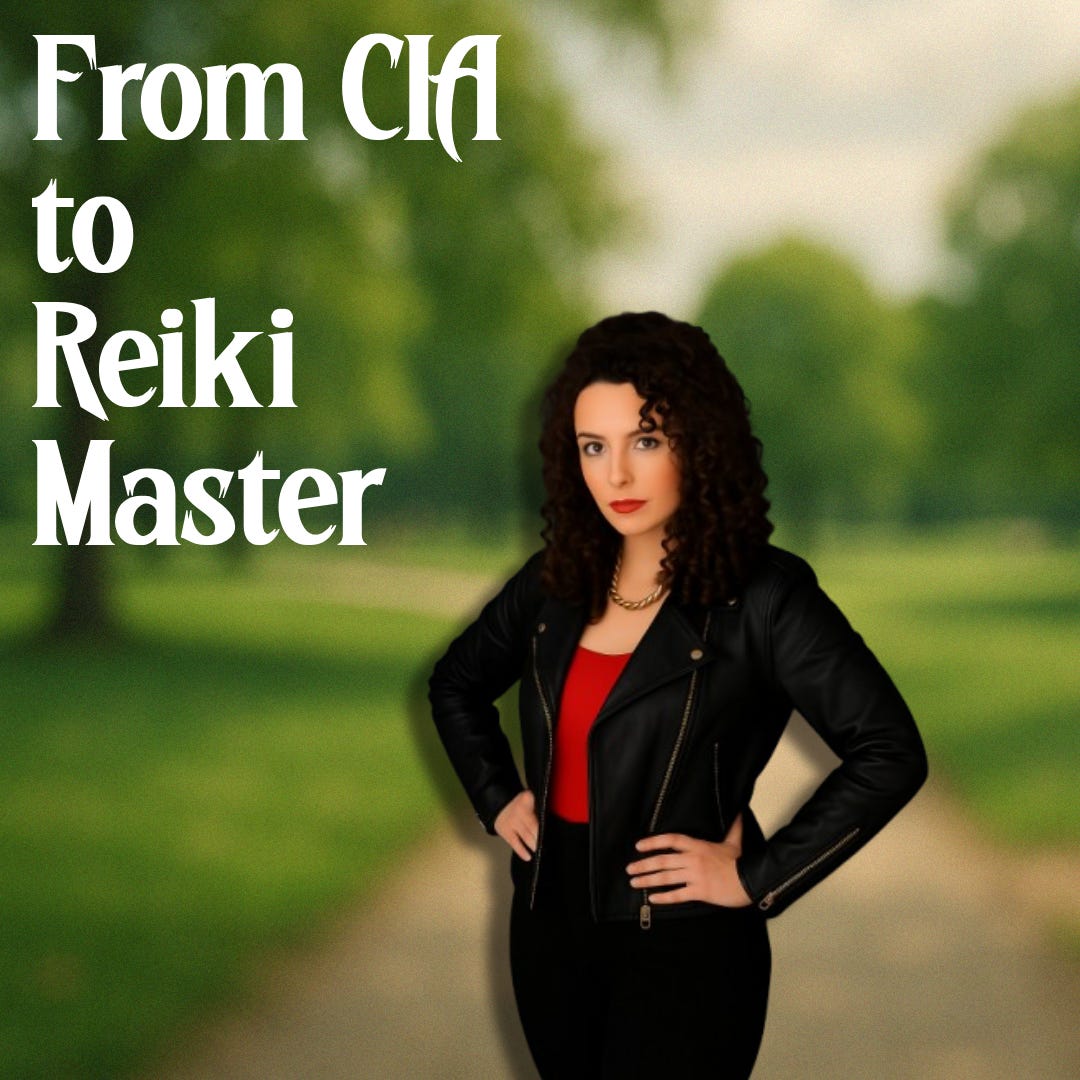
From Classified Intel to Cosmic Healing: Jessica Brodkin on Trusting Your Weird
Jessica’s life is a masterclass in breadcrumb-following: from MIT → CIA weapons of mass destruction analyst → stand-up comedy → full-time energy healer and Reiki teacherShe shares how debilitating migraines ultimately pointed her toward Reiki, complex PTSD healing, mediumship, and a life guided by intuition. Along the way we talk about attunements that feel like psychedelics, babies who show up as “little stars” before they incarnate, why Reiki is “the jazz of healing,” and how to tell the difference between intuition and fear.I’ve known Jessica for nearly a decade, and her story still makes my jaw drop. She’s been an inspiration to me as I step into my weirdness. I’m so excited to share her magic with you.In today’s episode:1. Jessica’s unconventional path: from the CIA to comedy to Reiki2. How a health crisis cracked her open to a new way of being3. What a Reiki session really feels like — and why it’s been called a “sober psychedelic”4. Developing intuition (even if you were trained to ignore it)5. The link between trauma, sensitivity, and spiritual gifts6. Surrender vs. control: the spiritual practice no one warns you about7. Parenting, purpose, and healing intergenerational pain with humor and grace8. Why integrating all your parts — even the weird ones — is the real workThree nuggets I’m still chewing on1. Critical thinking belongs in the healing room. Woo and logic were never meant to live in separate zip codes.2. Intuition feels calm, even when the message isn’t. It’s direction and a built-in safety check.3. Surrender isn’t the same thing as passivity. And loosening the grip often moves us faster than white‑knuckling our way to “results”.Connect with JessicaSessions & trainings: http://www.loveandlightservices.com/Instagram: @jessicabrodkinTimestamps00:00 – Intro02:50 – Opening Blessing & Spiritual Invocation03:58 – How Jessica and Allison Met05:30 – Jessica’s Wild Career: CIA, Comedy, Energy Work07:06 – How Jessica Got Recruited to the CIA09:14 – WMDs, Iraq War Era & Early Agency Life11:15 – Physical and Mental Breakdowns at the CIA13:00 – Discovering Reiki After Debilitating Health Crisis14:23 – Jessica’s Mystical Family Roots & Alternative Medicine16:00 – Two Major Life Collapses & Seeing Spirits18:00 – Misdiagnosis, PTSD & Awakening as a Medium20:05 – Jessica’s Lifelong Relationship with Comedy22:00 – Launching Her Stand-Up Career in a Tough Industry24:00 – Becoming a Healer: From Spirit Messages to Self-Taught Reiki25:45 – What a Reiki Healing Session Feels Like28:00 – Sober Psychedelic: Energy Shifts Without Medicine29:20 – Predicting Allison’s Children in Early Sessions31:00 – Feeling Future Baby Souls & Energetic Attachments33:00 – Spirit Guides, Ancestors & Energies That Join Sessions35:00 – Drumming with Guides & Teaching Reiki Experiences37:00 – The Power & Disruption of Reiki Attunements38:15 – Psychedelics, Shadow Work & Letting Go of Control39:20 – Intuition vs. Fear: How to Tell the Difference41:00 – Building a Relationship with Your Intuition43:30 – Developing Intuition Through Play, Nature & Stillness45:00 – What Jessica Is Still Unlearning & Healing46:50 – Advice for Seekers on the Path of Meaning & Purpose48:15 – Accepting Duality: Joy, Darkness & the Monstrosity of the World50:00 – Spirituality & Critical Thinking: Why We Need Both51:10 – Where to Find Jessica & Her Current Offerings52:03 – Roasting Tech Bros at Comedy Shows52:26 – Closing Gratitude This is a public episode. If you would like to discuss this with other subscribers or get access to bonus episodes, visit alliecanton.substack.com
Bet on Yourself: Building a Values-Aligned Business with Laurice Rutledge Lambert
After making partner in Big Law, Laurice Rutledge Lambert found herself asking, “Is this it?” Laurice joins me for a conversation about leaving behind external markers of success to build a life, and a law firm, Aligned Health Law, grounded in people-first values. They explore the dark night of the soul that followed her decision to walk away, the spiritual practices that anchored her through fear, and the kind of leader she’s becoming now: one who protects her team, fires clients who cross the line and puts integrity above ego. Along the way, they talk about motherhood, coaching lacrosse, spiritual surrender, and the difference between chasing success and defining it for yourself.Key Themes:* Leaving Big Law and reclaiming autonomy* Building a values-driven business from scratch* Coaching, motherhood, and leadership as spiritual practice* Moving from scarcity mindset to abundance* The quiet power of journaling, surrender, and getting stillResources Mentioned:* Wishes Fulfilled by Wayne Dyer* Dying to Be Me by Anita Moorjani* Jessica Joines (spiritual executive coach)Timestamps0:00 - Laurice's "Is This It?" Moment After Making Partner0:39 - Introduction to Practically On Purpose and Allie Canton0:50 - Introducing Laurice Rutledge Lambert1:19 - Laurice's Journey from Big Law to Aligned Health Law3:10 - Redefining Leadership Beyond Traditional Big Law4:09 - Laurice Describes Her Approach to Leadership and Mentorship4:57 - Inspiring Others to "Bet on Themselves"5:44 - The Contrast Between Aligned Health Law and Big Law Culture6:44 - A Full Circle Moment: From Painful Exit to Supportive Connection9:55 - The Genesis of Aligned Health Law: Identifying a Market Need13:30 - Overcoming Fear and Taking the Leap into Entrepreneurship14:48 - The "Dark Night of the Soul" in Entrepreneurship16:10 - Transformational Practices: Limiting Beliefs and Reconnecting with a Higher Power18:47 - Shifting from Scarcity to Abundance Mindset20:00 - Recognizing and Navigating Fear Spirals21:05 - Embracing Periods of Calm and Presence22:38 - Stepping into a New Identity as a Leader and Inspirer25:09 - Practicing Law with Principle: Humility and Gratitude in Action25:59 - A Real-World Example of Valuing the Team Over Personal Gain29:59 - Terminating Client Relationships Based on Values33:57 - Finding Flow and Happiness Beyond Work: Coaching and Family37:17 - Rapid Reflection: Books, Teachers, and Ideas That Changed Laurice's World38:18 - What Laurice Used to Think Mattered But Doesn't Anymore39:09 - Laurice's Guiding Mantra: "I Am Enough"39:41 - Overcoming Workaholism and Embracing Exhale40:48 - Advice for Those Questioning Their Path This is a public episode. If you would like to discuss this with other subscribers or get access to bonus episodes, visit alliecanton.substack.com

Just Do Your Dang Job
A few years ago, I skipped a family funeral to attend a client pitch.I was a third-year associate at a BigLaw firm. Someone said my background was “indispensable” to the meeting. No one blinked when I said I couldn’t go. I told myself it was the right thing—important, even.But deep down, I knew it wasn’t.Lately, I’ve been thinking about that version of me. And about a new friend who casually mentioned she was going to “phone it in” at work until it was time to make a big leap.At first, I laughed. Then I realized: her “phoning it in” still looks like doing her job. Well.In a world that teaches us to overachieve as proof we belong, simply meeting expectations can feel like rebellion.My latest piece is about ambition, boundaries, and the esteem-shaped holes we try to fill with gold stars. This is a public episode. If you would like to discuss this with other subscribers or get access to bonus episodes, visit alliecanton.substack.com
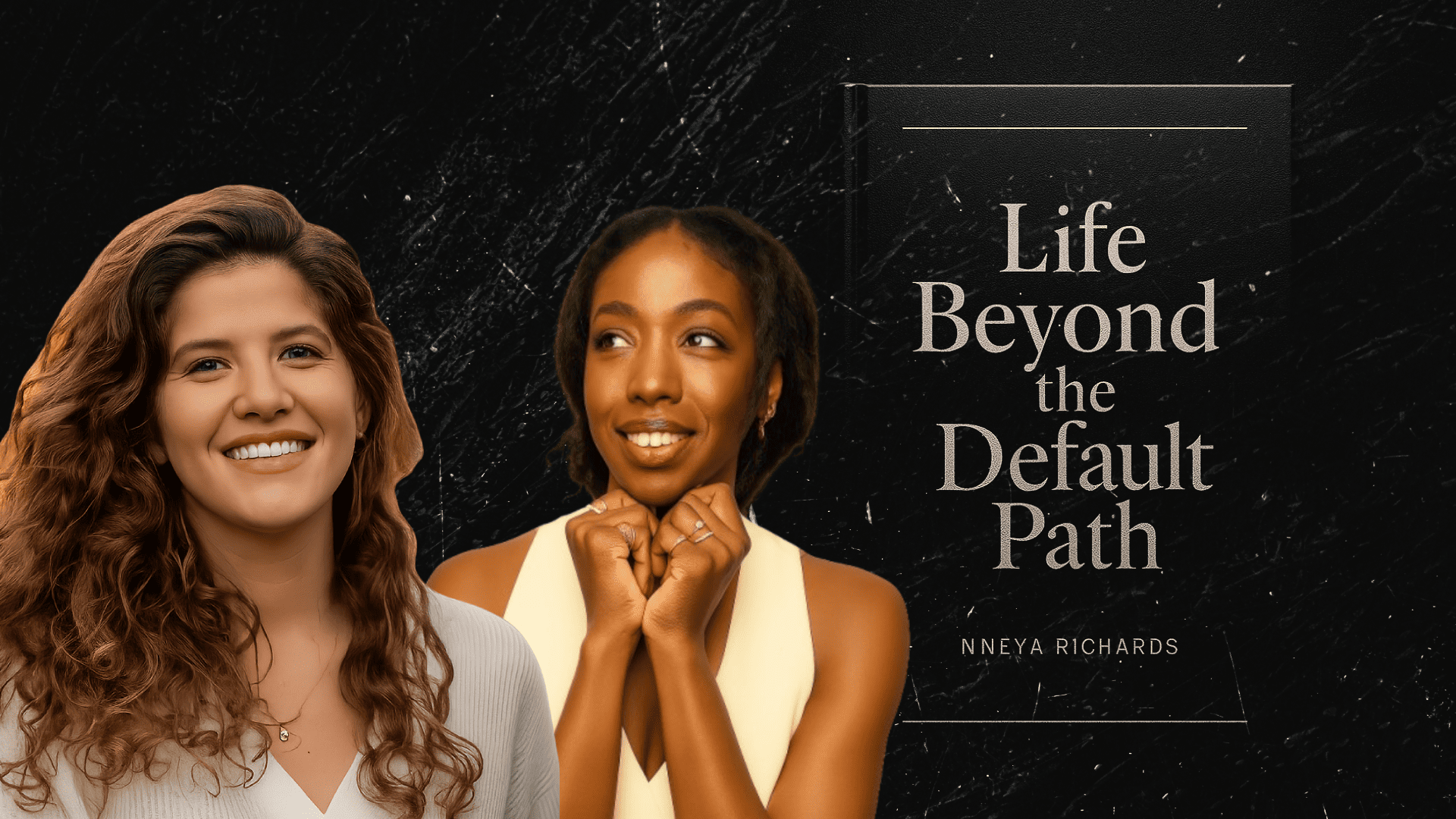
Off Script: Life Beyond the Default Path with Nneya Richards
In this episode, Nneya Richards joins me to talk about what it means to walk away from the “default path” and build a life that may not be “legible” (h/t Paul Millerd) but is deeply aligned, creatively, personally, and spiritually. Nneya is a writer, speaker, travel expert, and true multi-hyphenate who’s been ahead of the curve for years. From early bylines at Teen Vogue to building a life across New York, London, and now Italy, she shares how she’s crafted a career that doesn’t fit into a neat box—and why that’s her biggest strength. We talk about the unspoken pressures of elite schools, the privilege baked into creative industries, and the courage it takes to live outside the lines. Nneya opens up about motherhood, identity, rest, and the surprising magic of discomfort. This one’s for anyone questioning the script they were handed and wondering what else might be possible.Thanks to Mutual Benefit for the outro music! This is a public episode. If you would like to discuss this with other subscribers or get access to bonus episodes, visit alliecanton.substack.com

The High-Achiever’s Trap: Amanda on Burnout & Inner Peace
She did everything right. Harvard trained lawyer, federal prosecutor. But inside, Amanda was unraveling. Raised in a tight-knit Arab American immigrant community, she was taught that success meant stability. A job, a title, a marriage. But the path that promised security left her burnt out, disconnected, and questioning everything.In this deeply personal conversation, Amanda shares how trauma, identity, faith, and cultural expectations shaped her life and how breaking away from it all led her to meditation, spiritual healing, and a return to her roots in Islam. This is a story for anyone who has ever looked around at a “successful” life and thought: Why do I still feel so lost? This is a public episode. If you would like to discuss this with other subscribers or get access to bonus episodes, visit alliecanton.substack.com
Reclaiming the Golden Rule (Video Version)
In this episode, Allie reads her recent essay "Reclaiming the Golden Rule" about why the Golden Rule isn't child's play but instead is an urgent message for our time.She also leads a 10 minute guided meditation practice based on the essay to help us cultivate an open heart.Many thanks to Mutual Benefit for the rad intro/outro music. This is a public episode. If you would like to discuss this with other subscribers or get access to bonus episodes, visit alliecanton.substack.com
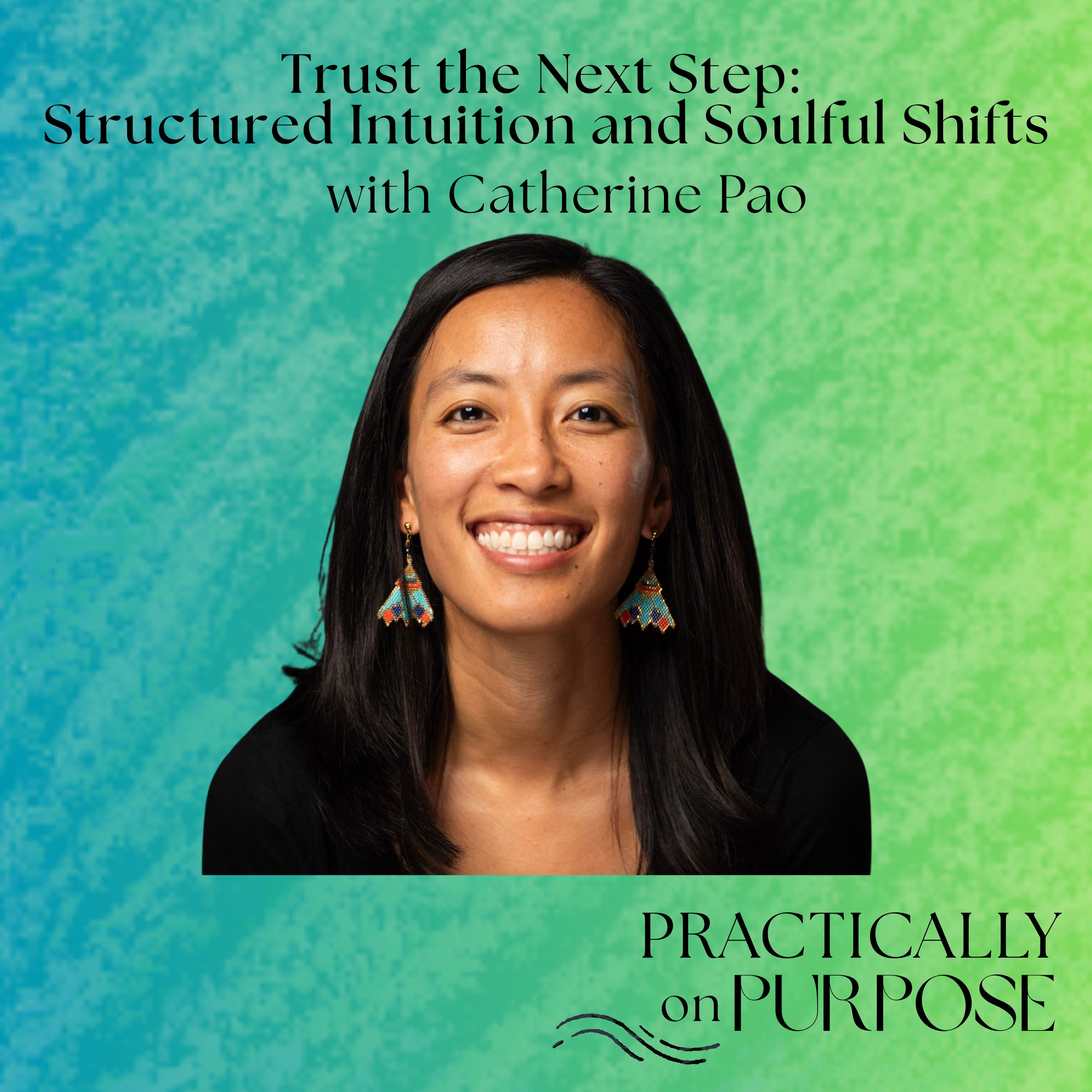
Trust the Next Step
What if letting go of the five-year plan is the first step toward actually feeling like yourself?In this soul-forward conversation, I sit down with Catherine Pao, a former tech exec turned holistic leadership coach who helps high-functioning humans make friends with their intuition. She’s also the incredible human who supported me last year through some of the most challenging parts of stepping into my next chapter (working title “former lawyer & spiritual weirdo overshares on the internet”). Together, we wandered through:* the moment she walked away from startup life and into a fog of uncertainty (and possibility)* how structure, when it’s not weaponized by your inner overachiever, can actually support your creativity* why “wintering” isn’t laziness, it’s preparation* the unexpected creative project that quietly re-lit her business (and her spirit)This episode is a must-listen for anyone navigating a transition or craving a life that feels more like them.Chapters00:00 Nature's Influence and Personal Reflection01:58 Career Transitions and Self-Discovery04:01 Navigating Uncertainty and Trusting the Process06:52 The Journey of Self-Discovery and Intuition11:00 Balancing Intuition and Structure18:51 Embracing Seasons of Life and Transition28:13 Trusting Yourself in Times of ChangeGuest Info:Catherine Pao is a holistic leadership coach and creativity mentor who helps people integrate their intuitive, creative intelligence with their strategic, intellectual power. She works with ambitious creative spirits, executives, and leaders who desire living life from deeper alignment with their unique soul blueprint.Her work supports clients in reconnecting with their inner wisdom, unlocking creative flow, feeling a deep sense of thriving and trust in life, and experiencing life as effortlessly abundant—both in their work and within themselves.Catherine has coached founders, leaders, and teams at Google, Facebook, Pinterest, Twitter, Nextdoor, GitHub, Rippling, and numerous startups through executive coaching, group programs, and leadership development trainings.Formerly, Catherine led digital marketing and growth product teams at Blue Apron, DigitalOcean, Fab.com, and Microsoft. She holds a degree in Computer Science Engineering and Marketing from the University of Pennsylvania, is a certified Co-Active Coach (CPCC), and a 300-hour registered yoga teacher (RYT-300).Her current creative delights include: crafting collage mandalas, curating immersive Spotify playlists, dancing 5Rhythms, and exploring the ASTAR creative process.Learn more at www.catherinepao.com or follow her on Instagram @catherinepao.Music thanks to Mutual Benefit! This is a public episode. If you would like to discuss this with other subscribers or get access to bonus episodes, visit alliecanton.substack.com

BLESSINGS ON THE WAY
An essay on learning to honor intuition. This is a public episode. If you would like to discuss this with other subscribers or get access to bonus episodes, visit alliecanton.substack.com
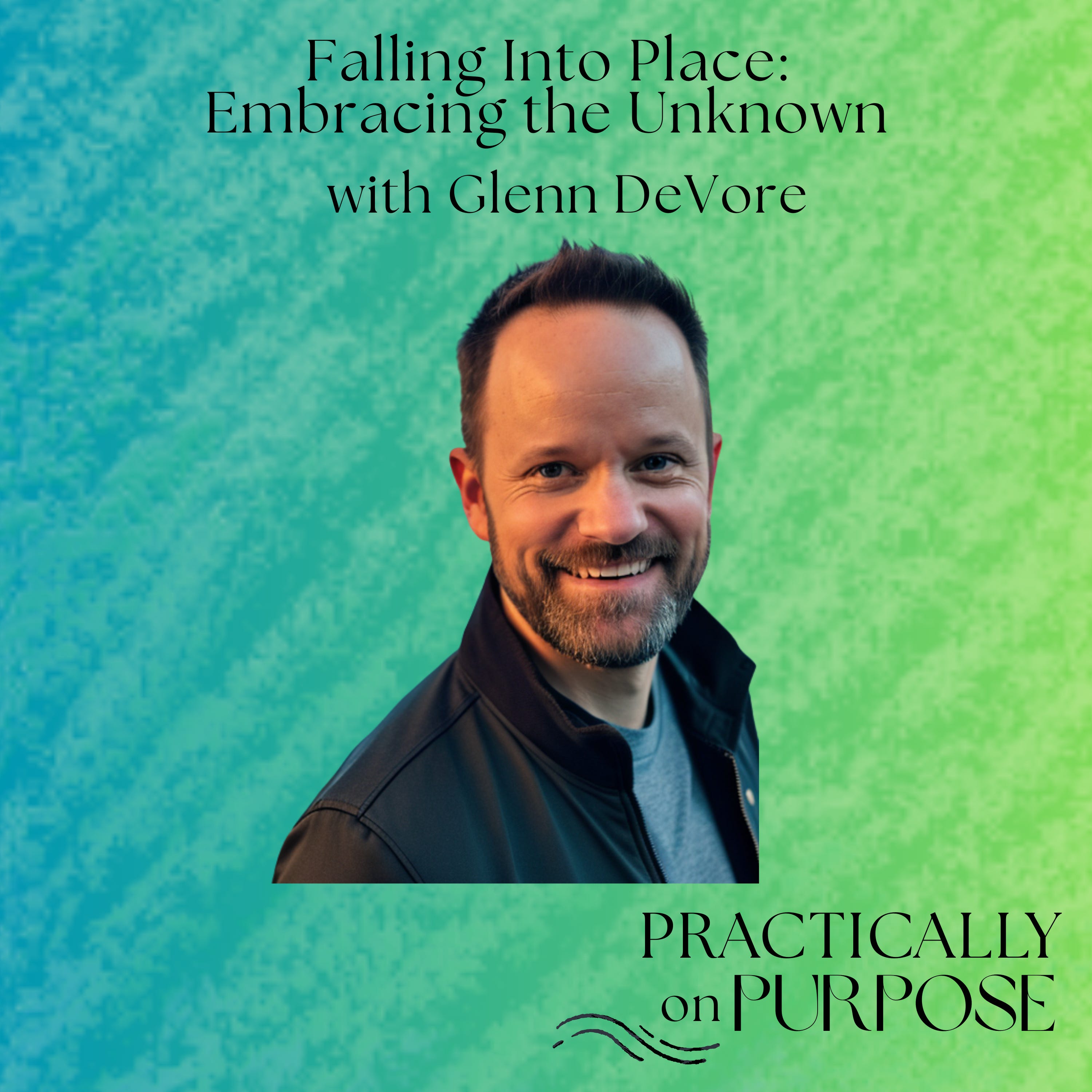
S1 Ep 2Falling Into Place
Episode SummaryWhat happens when a top strategist at some of the world’s largest tech companies walks away from the known? In this reflective episode, Glenn DeVore joins Allie to talk about the slow unraveling of his corporate identity, the radical power of not knowing, and the healing that emerged from silence.From strategy decks to Vipassana retreats, Glenn shares the moments that cracked him open and the writing practice that helped him reassemble with greater presence and purpose. Along the way, they explore the tension between agency and acceptance, the healing power of inner child work, and the life-changing practice of learning how to pause.Key Themes:* Leaving a high-level corporate role to pursue a life of greater meaning* Vipassana meditation, inner child work, and identity reformation* Writing as a spiritual and psychological practice* Moving from external validation to inner fulfillment* Embracing uncertainty without collapsing into fearBooks & Thinkers Mentioned:* Transitions by William Bridges* Comfortable with Uncertainty by Pema Chödrön* Constellations by David Whyte* Determined by Robert Sapolsky & Free Agents by Kevin Mitchell* Teachings by Joseph Goldstein and Kamala Masters* The concept of cetana (Pāli for volition/intention)Where to Find Glenn:Newsletter: Falling Into PlaceBook project: Light: A 5-Day Memoir Into Stillness (coming soon)BioFor over 25 years, Glenn DeVore shaped strategy at some of the world’s largest tech companies – work that unfolded alongside a growing inquiry into self, consciousness, and agency. A lifelong student of philosophy, systems thinking, quantum physics, psychology, and theology, his most recent inquiries have turned inward, toward the patterns and perceptions that shape how we make meaning of our lives. Today, Glenn is a writer and poet whose work explores transition, identity, and the emotional architecture of becoming. Drawing from Eastern mindfulness practices, Western philosophy, and both cognitive and physical sciences, his writing invites readers to slow down and attend more fully to what arises. He writes regularly at Falling Into Place, and is currently serializing his first book, Light: A 5-Day Memoir Into Stillness, along with other forthcoming books. Glenn believes that attention, when paired with awareness, discernment, and presence, becomes our most sacred form of agency. It is how we shape experience, choose meaning, and meet the world with intention. We may not always choose what arises, but we do choose how we attend to it – and the story we make of what remains.Music thanks to Mutual Benefit! This is a public episode. If you would like to discuss this with other subscribers or get access to bonus episodes, visit alliecanton.substack.com
S1 Ep 4Just Breathe: A 19-Minute Grounding Meditation
In this grounding meditation, Allie leads you through a gentle body scan and breath-focused practice designed to soothe your nervous system and reconnect you to the present moment. Whether you’re feeling scattered, tense, or simply want to re-center, this practice invites you to drop into the body, release what you’re holding, and remember the simple rhythm of breath in and breath out.Using simple tools like counting, and compassionate awareness, Allie helps you soften areas of tension and return to a state of calm clarity. No experience necessary. Just bring your breath and your willingness to be here, now.Try This Meditation When You…* Need a reset during your day* Feel tension in your body and want to unwind* Want a soothing introduction to mindfulness* Are short on time but crave presenceMusic thanks to Mutual Benefit! This is a public episode. If you would like to discuss this with other subscribers or get access to bonus episodes, visit alliecanton.substack.com
S2 Ep 3Feeling Good Is the Foundation
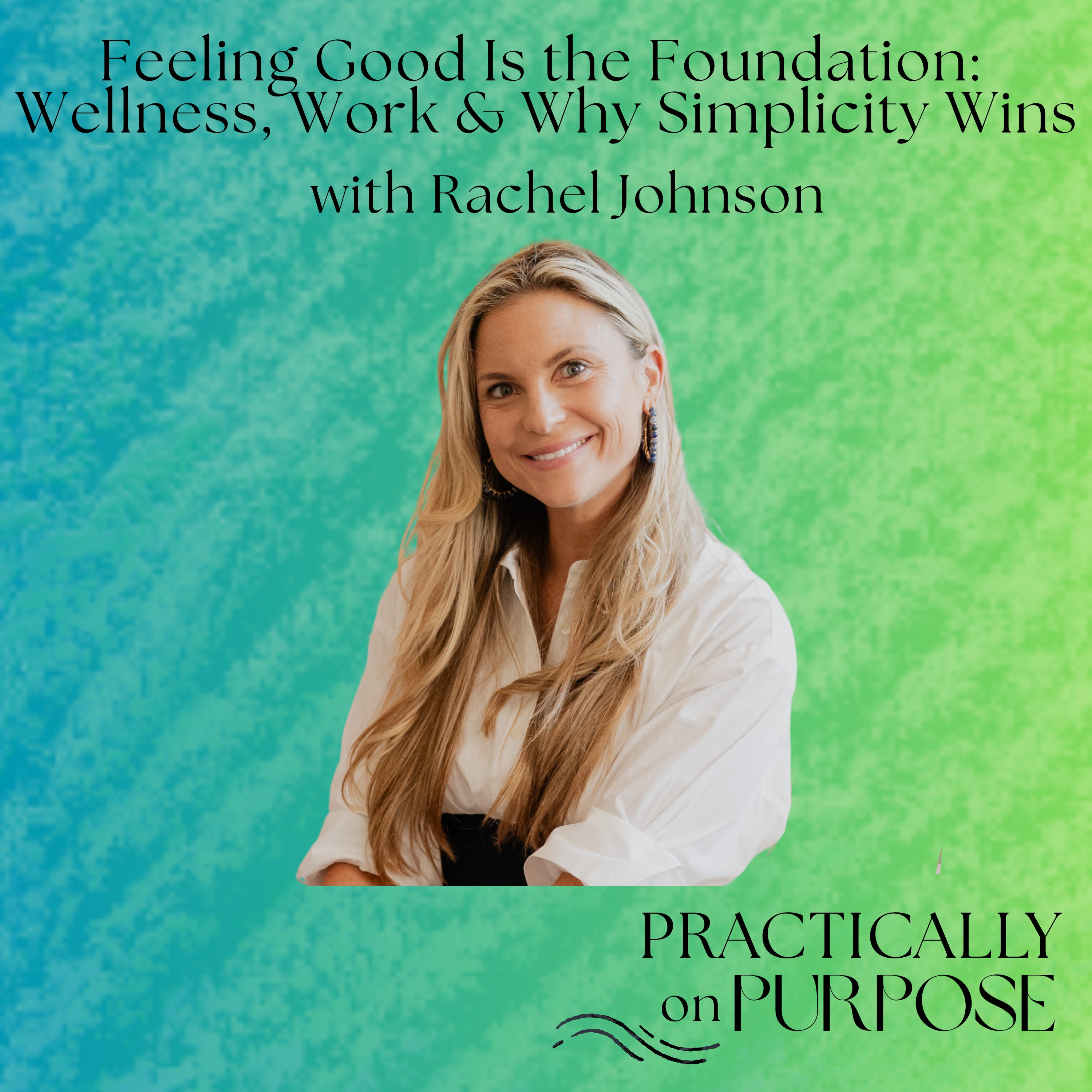
What if the key to lasting wellness wasn’t about overhauling your entire life, but returning to simple truths? In this episode, Allie is joined by Rachel Johnson—lawyer, founder of J&O Law and Ah.mi Health, and mom of three—for an honest conversation about ambition, burnout, wellness, and building a life that feels as good as it looks.Rachel shares how she transitioned from Big Law to entrepreneurship, how a group text about postpartum health blossomed into a community of 2,000+ women, and what she’s learned about honoring your true self even in high-pressure careers. Together, they explore postpartum depression, the joy of doing things just for you, and how to stop chasing someone else’s version of success.Key Themes:* Entrepreneurship and life after Big Law* From burnout to sustainable wellness* Postpartum depression and recovery* Letting go of narrow identities and embracing multiplicity* Starting small and building community without overwhelmMantras and Tools:* Greens. Water. Move. Repeat. (And sleep!)* Start with the basics, not biohacks* It’s okay to do something just because you love itResources Mentioned:* Sam Harris’s Waking Up app* ah.mi health on Substack* Instagram: @ahmi.healthBioRachel Johnson is a mom of three and the founder of two companies: J&O Law, a boutique firm for high-growth startups and VC funds, and ah.mi health, a wellness community giving modern women tools and content that inspire healthy habits without the overwhelm. What began as a group text has grown into a 2,000+ member community with bi-weekly newsletters, expert-led small groups, and simple wellness mantras. Music thanks to Mutual Benefit! This is a public episode. If you would like to discuss this with other subscribers or get access to bonus episodes, visit alliecanton.substack.com
S1 Ep 1Start Here: Why I Created Practically on Purpose
Practically On Purpose is a podcast hosted by Allie Canton, aimed at high achievers seeking deeper meaning and purpose in their lives. Through honest reflections and soulful conversations, the podcast explores the journey of self-discovery, navigating transitions, and the importance of living authentically. Allie shares her personal experiences and invites listeners to join her in exploring what it means to come home to oneself and cultivate a life that feels good on the inside.Chapters00:00 Introduction to Practically On Purpose03:18 The Journey of Self-Discovery04:30 Navigating Transitions and Finding Meaning09:13 Expectations and Community Engagement11:14 Conclusion This is a public episode. If you would like to discuss this with other subscribers or get access to bonus episodes, visit alliecanton.substack.com
From Practicing Law to Practicing Peace
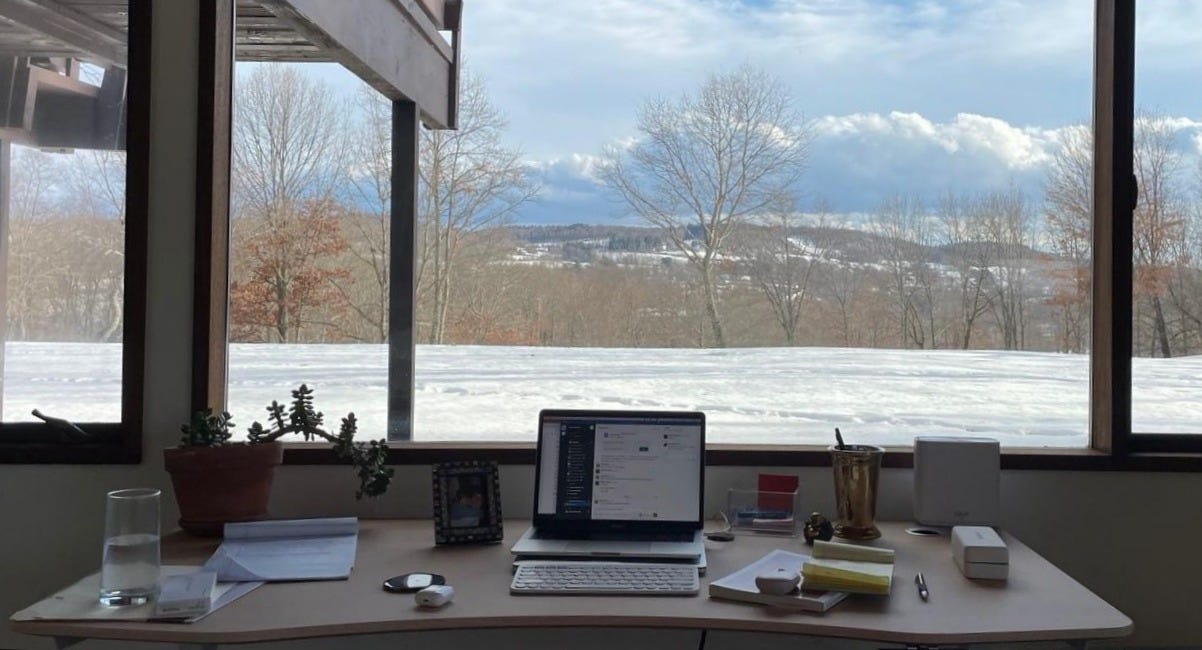
Welcome to my creativity origin story for this phase :)It's been just over a year since my professional high met my personal low. I left my job as Senior Exec and General Counsel of a healthcare startup, completely burnt out after decades of grinding, people-pleasing, and misadventures. My mind buzzed with to-dos, I snapped at my son, neglected friends and family, and my meditation practice sputtered. More than once, I woke up to a voice screaming in my head that I needed to quit. I was addicted to feeling needed and being the consummate team player.My bosses wisely told me to take a two-week vacation, and a few days in, I knew I couldn't go back. The truth was, beyond focusing on family and community, I wanted to focus on spirituality and joy. These words felt too idealistic to say out loud in my polished, high-achieving circles. I'd reached a personal inflection point, and no title or raise could satisfy the deeper questions tugging at me: Who am I when I strip away the armor of achievement? How do I want to be in the world? What actually sets my soul on fire?For nearly 20 years, I'd lived with a personality split, the polished "Allison" and the spiritual "Allie" who danced on tables. It was time to shed an old identity and integrate all parts of me. This podcast is a place to reclaim the full spectrum of who I am, exploring facets like being a mother, a meditator, a student of non-dualism, a Reiki master, a bookworm, a UAP nerd, an occasional poet, and yes, still a healthcare and startup lawyer.I'm fighting the urge to narrow down my focus, hoping to honor my various pieces and the process of becoming. As Kelly Wilde Miller writes, "authentic creation doesn't start with strategy. It starts with something quieter, a pull." Let's begin. This is a public episode. If you would like to discuss this with other subscribers or get access to bonus episodes, visit alliecanton.substack.com