
Power Up Recovery with Nutrition Podcast
Academy for Addiction and Mental Health Nutrition · Christina Veselak
Show overview
Power Up Recovery with Nutrition Podcast launched in 2025 and has put out 51 episodes in the time since. That works out to roughly 45 hours of audio in total. Releases follow a fortnightly cadence, with the show now in its 2nd season.
Episodes typically run thirty-five to sixty minutes — most land between 45 min and 58 min — and the run-time is fairly consistent across the catalogue. None of the episodes are flagged explicit by the publisher. It is catalogued as a EN-language Health & Fitness show.
The show is actively publishing — the most recent episode landed 2 weeks ago, with 16 episodes already out so far this year. Published by Christina Veselak.
From the publisher
Explore the powerful connection between nutrition, mental health, and addiction recovery with Christina Veselak, a trailblazer in nutritional mental health and founder of the Academy for Addiction and Mental Health Nutrition. This interview-based podcast, "Power Up Recovery with Nutrition," dives deep into how amino acids and targeted nutritional strategies can transform brain chemistry, build resilience, and support sustainable recovery. Christina's expertise is showcased through engaging interviews with leading experts, practitioners, and inspiring voices from the recovery community, as well as solo episodes addressing key topics in the field. Whether you're on a personal recovery journey, a functional nutritionist seeking advanced tools, or a healthcare professional eager to expand your knowledge, this podcast offers practical advice, compelling stories, and the latest innovations. Academy members will find it an invaluable resource for deeper learning and staying connected to cutting-edge practices. Explore how Christina Veselak bridges the gap between nutrition and mental well-being, one conversation at a time. Fuel your recovery, elevate your practice, and empower transformation. It's time to make nutrition part of the conversation. Tune in to "Power Up Recovery with Nutrition" and join us as we unlock the potential of targeted nutrition to support mental health and addiction recovery.
Latest Episodes
View all 51 episodesFrom Cravings to Recovery: Understanding Processed Food Addiction with Dr. Joan Ifland S02E38
Neurofeedback for Addiction Recovery: How Brain Training Supports Healing with John Mekrut S02E37
The NAD Connection: Brain Health, Energy, and Addiction Recovery with Dr. Jin-Xiong She S02E36
How Nutrition Supports the Brain, Mood, and Addiction Recovery with Dr. Cindy Howard S02E35
Beyond Diagnosis: Restoring the Mind-Body Connection with Dr. Saeid Mushtagh S02E34
The Mom Who Refused to Give Up: A Journey from Addiction to Hope with Dr. Shelly Jo Wahlstrom S02E33
The Autoimmune Protocol Explained: Food, Inflammation, and Recovery with Mickey Trescott S02E32
Healing the Addicted Brain: Nutrition, Cravings, and Recovery Science with Dr. Brooke Scheller S02E31
Omega-3 Index, Brain Health & Depression: EPA vs DHA Explained with Dr. William S. Harris

S2 Ep 29How Nutrition, Detox & Gut Healing Rebuild Your Brain with Suzanne Roth-Paul S02E29
In this episode of Power Up Recovery with Nutrition, Christina Veselak sits down with Suzanne Roth Paul, a Primal Health Coach and wellness educator who transformed her life after decades of chronic illness, brain fog, and emotional instability. Suzanne shares her deeply personal journey of navigating autoimmune challenges, toxin exposure, gut dysfunction, and nutrient depletion — and how discovering root-cause healing through nutrition, detoxification, and lifestyle changes helped her reclaim her health and mental clarity. Together, Christina and Suzanne explore how brain fog, anxiety, and emotional overwhelm are often driven by hidden imbalances such as pyroluria, poor gut health, environmental toxins, and nutrient deficiencies. They also highlight the powerful role of food, hydration, sleep, and daily detox practices in restoring the brain and body. This conversation brings together real-life experience, practical strategies, and hope — showing that you are not broken, and that true healing begins with what you put into your body. Key Topics Covered Suzanne's journey from lifelong illness to radiant health Pyroluria and how it depletes zinc and B6, impacting mental health The connection between gut health, leaky gut, and brain function How environmental toxins and heavy metals affect emotional stability Why brain fog, anxiety, and memory issues are often not psychological The role of nutrition in restoring clarity, energy, and resilience Eliminating gluten, sugar, and processed foods for healing The importance of organic food and reducing toxic exposure Daily detox strategies: sleep, hydration, and reducing toxic load The impact of stress and trauma on physical and mental health How food choices directly influence mood, cognition, and recovery Why healing starts in your kitchen and pantry Meet Our Guest Suzanne Roth Paul is a Primal Health Coach, wellness educator, and Independent Brand Partner with LifeWave Global, a cutting-edge company focused on cellular health and detoxification. After silently battling an autoimmune condition since birth, Suzanne spent over two decades learning how to heal her body naturally. Her journey led her to uncover the deep connection between emotional pain, physical symptoms, and environmental toxins. Today, she helps individuals break free from confusion, chronic symptoms, and unhealthy cycles through her simple yet powerful 3-step protocol. Her work focuses on restoring autonomy and confidence — empowering people to take control of their health and rebuild their lives from the inside out. Through her Power in Your Pantry eGuide and eBook, Suzanne teaches that true healing begins with what we eat and how we live. She believes that many chronic symptoms are not simply signs of aging, but the result of accumulated toxins — and that by supporting cellular health through nutrition and detox, lasting vitality is possible. Her mission is clear: help others avoid the struggles she endured and guide them toward clarity, balance, and radiant health. To Connect with Suzanne Website: https://secretstoradianthealth.com LifeWave website: Lifewave.com/Suzannerothpaul Youtube Channel: Suzannerothpaul-phototherapy IG: @radianthealthwithsuzanne LI: Suzannerothpaul FB: Suzannerothpaul Practical Takeaways You are not broken — your body may simply be depleted or overwhelmed Brain fog and anxiety often stem from nutrient deficiencies and toxins Removing inflammatory foods can dramatically improve mental clarity Healing the gut is essential for healing the brain Daily detox habits like sleep and hydration are non-negotiable Organic, whole foods are foundational to long-term health Emotional and physical healing are deeply connected True health starts in your kitchen — and in your daily choices Christina also joins Suzanne as a featured speaker in the upcoming Detox for Longevity Summit 2026, happening April 1 to 4. This free event reveals how toxins, stress, and imbalances impact your health and what you can do to fix them. Register here: summit.secretstoradianthealth.com Discover More Unlock a world of resources at https://aminoacidtherapy.com/ where you'll find expert insights, transformative training, and actionable tools to support your recovery journey. Whether you're looking for professional courses like our Level 1 Core Training Learn more at https://feedtherecoveringbrain.com Support Our Mission Check out our nonprofit initiative, Eating Protein Saves Lives, at https://eatingproteinsaveslives.org/ Learn how we're improving lives and communities through better nutrition, the science of amino acid therapy, and our simple yet powerful message: Eat protein every 4 hours. Also, if you're just starting out or want a solid foundation, check out Eat: A Guide to Radiant Recovery Using Food and Amino Acids to Repair the Addicted Brain and Reduce Cravings by Christina Veselak. It's a clear, powerful intro to the core concepts. Grab your copy here: https://www.eatforrecovery.com/ Disclaimer: This

S2 Ep 28Inside a Methadone Clinic: Using Nutrition to Support Addiction Recovery with Patrick Zerwas S02E28
In this episode of Power Up Recovery with Nutrition, Christina Veselak sits down with addiction counselor Patrick Zerwas to explore a powerful but often overlooked dimension of addiction treatment: nutrition and amino acid therapy inside a methadone clinic. Patrick shares his remarkable journey from more than two decades of active addiction to over 26 years in long term recovery and a career dedicated to helping others rebuild their lives. Now working as a Licensed Alcohol and Drug Counselor in a medication assisted treatment setting, Patrick brings a rare combination of lived experience, academic training, and clinical practice to the conversation. Together, Christina and Patrick discuss how targeted nutrition, amino acid therapy, and stable blood sugar can help restore brain chemistry during recovery. They explore how neurotransmitter depletion contributes to cravings, mood instability, and relapse vulnerability, and why feeding the brain with protein, essential nutrients, and specific amino acids can dramatically improve treatment outcomes. Patrick also shares real world examples from his work in a methadone clinic, including how nutrients such as tyrosine, glutamine, magnesium, and vitamin C can support withdrawal, reduce cravings, and stabilize mood. Through telehealth counseling and practical coaching, he is helping patients begin to understand how nutrition can complement medication assisted treatment and strengthen recovery. This episode offers an honest look inside addiction treatment and highlights how nutrition, neuroscience, and compassionate counseling can work together to support lasting recovery. Key Topics Covered How Patrick's personal recovery journey led him into addiction counseling What life inside a methadone clinic looks like for patients and clinicians Why nutrition is often the missing piece in addiction recovery programs How neurotransmitter depletion drives cravings, anxiety, and relapse risk The role of amino acid therapy in supporting dopamine, serotonin, and endorphin balance Using tyrosine to help reduce stimulant cravings and support motivation Glutamine for stabilizing blood sugar and reducing sugar cravings Vitamin C and magnesium to support withdrawal and improve medication response Why many patients in recovery are severely protein deficient How food insecurity and limited access to healthy food affect recovery outcomes Teaching practical nutrition skills within addiction treatment settings Why feeding the brain can dramatically improve therapy engagement and emotional stability The role of harm reduction and medication assisted treatment in modern recovery models How nutrition can help people gradually stabilize and rebuild brain chemistry Meet Our Guest Patrick Zerwas, LADC, brings over two decades of professional experience in addiction counseling, supported by long term personal recovery and a lived understanding of substance use disorder. Before entering the profession, Patrick spent 22 years in active addiction, an experience he often describes as being on the "research committee." His journey took him from high school dropout and homelessness to sustained recovery and academic achievement. He graduated Cum Laude from Saint Cloud State University, earning dual Bachelor of Science degrees in Alcohol and Chemical Dependency Counseling and Psychology. This combination of formal education and lived experience informs his direct, pragmatic, and client centered clinical approach. Patrick is currently employed as a Licensed Alcohol and Drug Counselor at STS Specialized Treatment Services in Minneapolis, where he works within a Medication Assisted Treatment setting. He also owns and operates Evolution Counseling Services, providing counseling services focused on recovery stabilization, nutrition, behavioral health, and long term change. In addition to his clinical credentials, Patrick is a Level One Certified Recovery Nutrition Coach. He is particularly interested in the intersection of addiction recovery, mental health, neurobiology, and nutrition, and how metabolic health influences relapse risk, mood regulation, and cognitive function. Patrick brings a grounded, evidence informed, and experience tested perspective to conversations about addiction, recovery systems, medication assisted treatment, and the evolving role of nutrition in addiction and mental health treatment. Practical Takeaways Addiction recovery requires rebuilding brain chemistry, not just stopping substances. Many people entering recovery are severely depleted in nutrients and protein. Targeted amino acids can help restore neurotransmitter balance and reduce cravings. Stable blood sugar and regular protein intake are foundational for emotional stability. Vitamin C, magnesium, and amino acids may support withdrawal and medication assisted treatment. Nutrition education can empower people in recovery to rebuild their health and resilience. Feeding the brain is a powerful tool for improving mood, engagement

S2 Ep 27Burnout to Brain Vitality: A Functional Medicine Approach to Mental Health with Cynthia Libert, MD S02E27
In this episode of Power Up Recovery with Nutrition, Christina Veselak sits down with Cynthia Libert, a functional and integrative physician specializing in metabolic psychiatry, brain health optimization, and cognitive decline prevention. Drawing from her own experience with professional burnout, Dr. Libert shares how she transitioned from conventional family medicine into a root-cause, nutrition-centered model of care that restores emotional and neurological resilience. Together, Christina and Dr. Libert explore the powerful intersection of nutrient status, inflammation, blood sugar regulation, and mental health. They discuss how targeted lab testing can reveal hidden drivers of anxiety, depression, cognitive changes, and burnout — and how precision nutrition can often restore balance faster than many expect. Throughout the conversation, they reference the work of pioneers in functional and integrative medicine, including James Greenblatt, Dale Bredesen, William Walsh, and Dr. John Wilson, whose clinical insights into nutrient deficiencies and individualized care helped shape modern integrative psychiatry. This episode bridges functional psychiatry, preventive brain health, and real-world clinical experience — offering both science and hope. Key Topics Covered How professional burnout can signal deeper metabolic and nutrient imbalances Why omega-3 deficiency is common — and how quickly replenishment can shift mood The role of magnesium in anxiety, migraines, muscle tension, blood pressure, and emotional regulation Why zinc and copper balance matters for mood, cognition, and postpartum mental health Low ferritin, B12, and magnesium as hidden contributors to depression and fatigue Inflammation markers (CRP) and homocysteine as early warning signs for cognitive decline Blood sugar instability and reactive hypoglycemia as drivers of irritability, anxiety, and relapse vulnerability Creatine, mitochondrial support, and sparing methylation pathways to reduce homocysteine Midlife as a critical window for preventing neurodegeneration Emerging research from Dr. Dale Bredesen's team showing potential reversal of early Alzheimer's through precision medicine Meet Our Guest Cynthia Libert, MD, is a board-certified family physician and functional medicine practitioner with over 20 years of clinical experience. She is the Founder and Medical Director of Caring for the Body, PLLC – Center for Functional Medicine in Asheville, North Carolina, where she specializes in brain health, burnout prevention, mood disorders, and the root-cause treatment and prevention of cognitive decline. Dr. Libert integrates evidence-based nutrition, lifestyle medicine, functional psychiatry, and compassionate whole-person care to help patients restore metabolic, emotional, and neurological resilience. With advanced training influenced by leaders such as James Greenblatt in integrative psychiatry and Dale Bredesen in cognitive decline research, she brings a precision, lab-guided approach to mental health care. She is passionate about the connection between nutrition, mental health, addiction recovery, and long-term brain vitality. Through her clinical work, teaching, and media platforms, Dr. Libert empowers individuals to understand their biology, nourish their brains, and step into lives marked by clarity, resilience, and lasting vitality. To Connect LinkTree: https://linktr.ee/drcindylibert References, Experts & Concept Mentioned James Greenblatt – Functional and integrative psychiatry fellowship training Dale Bredesen – Precision medicine approach to cognitive decline and Alzheimer's prevention William Walsh – Zinc, copper, methylation, and postpartum mental health research Dr. John Wilson – Environmental and integrative medicine mentor emphasizing individualized nutrient deficiencies Functional psychiatry and precision medicine approaches to cognitive decline Homocysteine as a risk marker for neurodegeneration C-reactive protein (CRP) as a measure of systemic inflammation Omega-3 fatty acid testing (EPA/DHA status) Zinc–copper balance in mood and cognitive function Magnesium threonate vs. magnesium glycinate for brain support Continuous glucose monitoring for metabolic stability Creatine for mitochondrial energy and brain resilience Reactive hypoglycemia research linking blood sugar instability to mood and behavioral disorders Practical Takeaways Burnout is often metabolic — not simply emotional. Testing nutrient status can reveal treatable drivers of anxiety, depression, and fatigue. Omega-3 replenishment can produce noticeable mood shifts in a relatively short time. Stable blood sugar and adequate protein intake are foundational for emotional stability. Magnesium, zinc, B12, ferritin, and vitamin D are frequently overlooked in conventional mental health care. Midlife is a powerful opportunity to prevent future cognitive decline through targeted lifestyle changes. Prevention of neurodegeneration begins decades before symptoms appear. Discov

S2 Ep 26ADHD Recovery Through Nutrition: Fueling the Brain for Stability with Annika Angelo S02E26
Protein, Omega-3s, Gut Health and Brain-Based Strategies for Focus, Mood and Long-Term Recovery In this episode of Power Up Recovery with Nutrition, host Christina Veselak sits down with Annika Angelo, MS, one of the leading experts on the research between ADHD and nutrition, to explore how targeted nutritional strategies can support ADHD symptoms, emotional regulation, and long-term recovery. Together, they unpack the powerful connection between ADHD, brain chemistry, blood sugar stability, gut health, and omega-3 fatty acids—and why recovery outcomes improve when we address the biological needs of the brain. This conversation bridges cutting-edge research with real-life practicality, offering compassionate, achievable steps for individuals in recovery who also struggle with ADHD. From amino acids like L-theanine and tyrosine, to high-dose omega-3 research, to the importance of protein, fiber, and nervous system safety, this episode emphasizes a core truth: ADHD is not a character flaw—it is a brain-based condition that requires biological support. Whether you are navigating ADHD personally, supporting a child, or working in the recovery field, this episode offers science-backed tools and hope. Key Topics Discussed ADHD as a brain-based, metabolic condition The connection between ADHD and addiction vulnerability Why omega-3 fatty acids may be critical for ADHD brains High-dose fish oil research and brain inflammation Protein intake and stabilizing blood sugar for focus The 30-30-30 framework (30g protein, 30g fiber, 30 plants per week) The 1-2-3 rhythm (1 probiotic daily, 2 seafood meals weekly, 3 meals daily) Amino acids for ADHD support (L-theanine, tyrosine, glutamine) Gut health, microbiome differences, and nutrient metabolism in ADHD Why nervous system safety must come before dietary perfection Personalization in recovery nutrition Reducing black-and-white thinking around food Practical strategies for ADHD meal prep and habit building Meet Our Guest Annika Angelo, MS is one of the leading experts on the research between ADHD and nutrition. Her mission is to empower individuals with ADHD to reconnect with their bodies and understand how food directly impacts brain function, focus, and emotional regulation. Through her research, educational programs, ADHD nutrition manual, and Eat to Focus Cookbook, Annika translates complex science into accessible, actionable strategies. She also offers a monthly membership providing research updates and practical food guidance for ADHD support. To Connect with Annika: Website: https://neutramindlab.com Instagram/Threads: @thenutrimindlab Facebook page: The Nutrimind Lab Youtube, Tiktok: @nutrimindlab References and People Mentioned Dr. John C. Umhau – Researcher on omega-3 fatty acids and mental health outcomes. Dr. Michael Lewis – Author of When Brains Collide and researcher on high-dose omega-3 fatty acids for traumatic brain injury. Hardy Nutritionals – Maker of Daily Essential Nutrients, a broad-spectrum high-dose micronutrient formula discussed in relation to ADHD brain support. Nordic Naturals – Referenced in discussion of concentrated DHA/EPA research formulations used in clinical research. Discover More Unlock a world of resources at https://aminoacidtherapy.com/ where you'll find expert insights, transformative training, and actionable tools to support your recovery journey. Whether you're looking for professional courses like our Level 1 Core Training Learn more at https://feedtherecoveringbrain.com Support Our Mission Check out our nonprofit initiative, Eating Protein Saves Lives, at https://eatingproteinsaveslives.org/ Learn how we're improving lives and communities through better nutrition, the science of amino acid therapy, and our simple yet powerful message: Eat protein every 4 hours. Also, if you're just starting out or want a solid foundation, check out Eat: A Guide to Radiant Recovery Using Food and Amino Acids to Repair the Addicted Brain and Reduce Cravings by Christina Veselak. It's a clear, powerful intro to the core concepts. Grab your copy here: https://www.eatforrecovery.com/ Disclaimer: This podcast is for educational purposes only and is not intended to diagnose, treat, cure, or prevent any disease. The information shared is meant to inform and empower listeners but should not replace professional medical advice. Always consult with a qualified healthcare provider for personalized care and treatment. Music by: Bensound License code: GFZAESIUP3ZUNGXM Like this episode? Subscribe, rate, and share it with a friend or colleague who needs this information. Let's make nutrition part of the conversation for lasting recovery.

S2 Ep 25Low Stomach Acid, Trauma & Addiction Recovery | The Hidden Gut–Brain Connection with Mary Travostino S02E25
Why GERD, Anxiety, and Cravings Are Often Caused by Too Little Acid—Not Too Much In this episode of Power Up Recovery with Nutrition, host Christina Veselak sits down with Mary Travostino, a Certified Functional Nutrition Counselor and long-time integrative health educator, to explore the overlooked connection between low stomach acid, trauma, digestive health, and addiction recovery. Mary shares her deeply personal recovery journey—from childhood loss, substance use, and decades of unprocessed grief to chronic digestive illness and long-term proton pump inhibitor (PPI) use—and how functional nutrition helped her uncover the real root causes behind symptoms that conventional medicine often misses. Together, Christina and Mary unpack why acid reflux and GERD are frequently caused by too little stomach acid, not too much, how trauma and chronic stress suppress digestion, and how blood chemistry markers can reveal hidden nutrient deficiencies, malabsorption, and impaired gut–brain signaling. This conversation sheds light on how digestion, protein intake, amino acids, and mineral absorption directly influence mood, cravings, anxiety, and relapse risk. This episode highlights why digestive dysfunction is not just a gut issue, but a full-body inflammatory and mental health issue, and why healing requires addressing biology, trauma, lifestyle, and nourishment together. Key Topics Discussed Low stomach acid (hypochlorhydria) and acid reflux Proton pump inhibitors (PPIs) and long-term health risks Trauma, ACEs, and suppressed digestion The gut–brain connection in addiction recovery Blood work interpretation and missed digestive markers Protein digestion, amino acids, and neurotransmitter health Gallbladder removal, bile flow, and fat malabsorption GERD, bloating, anxiety, and chronic inflammation Stress, cortisol, and impaired stomach acid production Root-cause, functional nutrition approaches to recovery Meet Our Guest Mary Travostino is a Certified Functional Nutrition Counselor, IIN Health Coach, and community health educator with 30 years of experience in integrative healthcare. She has worked alongside functional medicine physicians and educated doctors, clinical teams, and patients on nutrition, supplements, and real-world application. For the past 18 years, Mary has specialized in weight loss, digestive health, and blood work interpretation, supporting individuals navigating addiction recovery and helping clients understand what their lab results are truly revealing. She has completed Level One training with the Academy for Addiction & Mental Health Nutrition and brings a grounded, root-cause approach to health education. Her work centers on helping people slow down, see the full picture, and recognize that healing begins with understanding—guided by her mission to Educate • Empower • Evolve. To Connect:Website: https://www.mindshifttransformations.com/LinkedIn: https://www.linkedin.com/in/mary-travostino/ Facebook: https://www.facebook.com/mary.ehrhardt Facebook Page: https://www.facebook.com/MindShiftTransformations/ Instagram: https://www.instagram.com/mindshift_mary/ Discover More Unlock a world of resources at https://aminoacidtherapy.com/ where you'll find expert insights, transformative training, and actionable tools to support your recovery journey. Whether you're looking for professional courses like our Level 1 Core Training Learn more at https://feedtherecoveringbrain.com Support Our Mission Check out our nonprofit initiative, Eating Protein Saves Lives, at https://eatingproteinsaveslives.org/ Learn how we're improving lives and communities through better nutrition, the science of amino acid therapy, and our simple yet powerful message: Eat protein every 4 hours. Also, if you're just starting out or want a solid foundation, check out Eat: A Guide to Radiant Recovery Using Food and Amino Acids to Repair the Addicted Brain and Reduce Cravings by Christina Veselak. It's a clear, powerful intro to the core concepts. Grab your copy here: https://www.eatforrecovery.com/ Disclaimer: This podcast is for educational purposes only and is not intended to diagnose, treat, cure, or prevent any disease. The information shared is meant to inform and empower listeners but should not replace professional medical advice. Always consult with a qualified healthcare provider for personalized care and treatment. Music by: Bensound License code: GFZAESIUP3ZUNGXM Like this episode? Subscribe, rate, and share it with a friend or colleague who needs this information. Let's make nutrition part of the conversation for lasting recovery.

S2 Ep 24Detoxing the Mind & Body: Addiction Recovery Through Nutrition, Connection & Humanity with Dr. Fred Moss S02E24
Why Nutrition, Connection, and Compassion Matter in Addiction Recovery In this episode of Power Up Recovery with Nutrition, host Christina Veselak speaks with Fred Moss, psychiatrist, mental health advocate, author, and founder of the Welcome to Humanity movement. Dr. Fred Moss brings a radically human perspective to addiction, mental health, and recovery. Rather than viewing emotional pain or addictive behaviors as signs that something is "wrong," he reframes them as part of the shared human condition. This conversation invites listeners to release shame, labels, and pathology, and instead explore healing through nutrition, detoxing from toxic inputs, authentic communication, and human connection. Together, Christina and Dr. Fred explore the concept of the three-legged stool of recovery—biochemistry and nutrition, connection with others, and meaning or spirituality—and how imbalance in any of these areas can contribute to suffering, addiction, and disconnection. Dr. Fred explains why the opposite of addiction is not sobriety, but connection, and why healing does not require diagnosis, medication, or permission. This episode highlights the critical role of nutrition in emotional wellness, while expanding the definition of detox to include not just food, but also relationships, media, environments, and internal narratives that shape how we experience ourselves and the world. Key Topics Covered in This Episode Addiction as a response to pain and disconnection, not moral failure Why emotional suffering does not mean something is wrong with you The three-legged stool of recovery: nutrition, connection, and meaning Detoxing the mind and body beyond food alone How ultra-processed foods and poor nourishment impact cravings The role of protein and whole foods in brain and emotional health Why labeling and pathologizing human pain increases isolation Healing through authentic communication and finding your true voice Why connection is the true antidote to addiction Meet Our Guest Dr. Fred Moss is a renowned mental health advocate, keynote speaker, and psychiatrist with a passion for helping people find their authentic selves. He is the founder of the Welcome to Humanity movement and the True Voice Mastermind, where his work centers on the power of communication, connection, creativity, and self-expression as primary forces for healing. Dr. Fred is the author of Creative 8: Healing Through Creativity and Self-Expression and Find Your True Voice!, and a longtime contributor to Psychology Today. His recent work includes the True Voice Course, which helps people rediscover their voice and share their message with the world, and Healing the Healer, a virtual course and mastermind designed to support transitioning healers. Through his work, Dr. Fred challenges conventional psychiatric models and invites a more humane, relational, and nutrition-aware approach to mental health and recovery. Quotes from This Episode "Communication, connection, being with others, creativity, self-expression, and listening are at the core of all healing—not just in mental health, but in all healing." – Dr. Fred Moss "There's a decision the user has to make… the agreement that something is wrong with them. It's in the agreement, not in the substance." – Dr. Fred Moss "The essence is, as things are, you and I are whole and complete right now." – Dr. Fred Moss "All you have is what you have—and you, as you are, are whole and perfect." – Dr. Fred Moss "Mental health is subject to the conversations we use to describe it." – Dr. Fred Moss To Connect with Dr. Fred Moss Website: https://drfred360.com Welcome to Humanity: https://welcometohumanity.net The Undoctored Reset: https://undoctoredreset.com Social Media: @drfredmoss Key Takeaway Addiction is not a failure or a defect—it is a response to disconnection, unmet needs, and biochemical imbalance. Healing begins with nourishment, human connection, and compassion. Discover More Unlock a world of resources at https://aminoacidtherapy.com/ where you'll find expert insights, transformative training, and actionable tools to support your recovery journey. Whether you're looking for professional courses like our Level 1 Core Training Learn more at https://feedtherecoveringbrain.com Support Our Mission Check out our nonprofit initiative, Eating Protein Saves Lives, at https://eatingproteinsaveslives.org/ Learn how we're improving lives and communities through better nutrition, the science of amino acid therapy, and our simple yet powerful message: Eat protein every 4 hours. Also, if you're just starting out or want a solid foundation, check out Eat: A Guide to Radiant Recovery Using Food and Amino Acids to Repair the Addicted Brain and Reduce Cravings by Christina Veselak. It's a clear, powerful intro to the core concepts. Grab your copy here: https://www.eatforrecovery.com/ Disclaimer: This podcast is for educational purposes only and is not intended to diagnose, treat, cure, or prevent any disease. The in
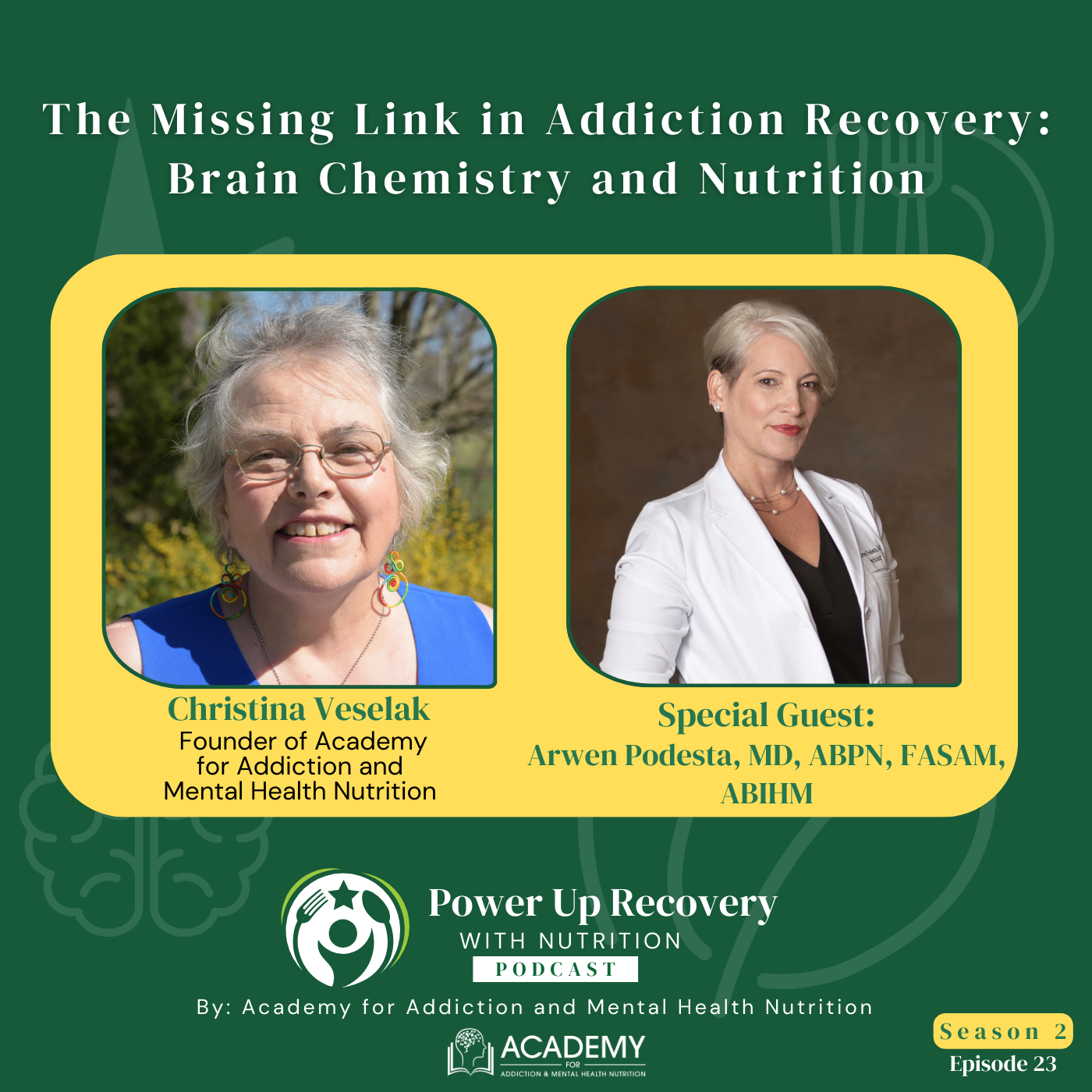
S2 Ep 23The Missing Link in Addiction Recovery: Brain Chemistry and Nutrition with Dr. Arwen Podesta S02E23
Why Feeding the Brain Is Essential for Lasting Recovery In this episode of Power Up Recovery with Nutrition, Christina Veselak, MS, LMFT, CN sits down with Dr. Arwen Podesta, a New Orleans–based psychiatrist board-certified in adult psychiatry, addiction medicine, forensic psychiatry, and integrative medicine. Dr. Podesta is the author of Hooked: A Concise Guide to the Underlying Mechanics of Addiction and Treatment and a nationally recognized speaker, educator, and consultant. She is a Distinguished Fellow of both the American Psychiatric Association and the American Society of Addiction Medicine and a former president of the Louisiana Psychiatric Medical Association. In this powerful conversation, Dr. Podesta explains why addiction recovery must address brain chemistry, nutrient depletion, and metabolic health—not just the removal of substances. She shares how food, amino acids, vitamins, minerals, and targeted nutritional support help rebuild neurotransmitters, stabilize mood, reduce cravings, and lower relapse risk. Together, Christina and Dr. Podesta explore the biological drivers of addiction, the role of genetics and methylation, the impact of blood sugar instability, and why feeding the brain is essential for sustainable recovery and mental health stability. Meet Our Guest New Orleans based psychiatrist, Arwen Podesta MD is boarded in adult Psychiatry, Addiction Medicine, Forensic Psychiatry, and Holistic & Integrative Medicine. She is the author of HOOKED: A Concise Guide to the Underlying Mechanics of Addiction and Treatment (available on Amazon; more at www.podestawellness.com). Dr. Podesta was recently honored as a Distinguished Fellow of both the American Psychiatric Association and the American Society of Addiction Medicine, and she is the immediate past President of the Louisiana Psychiatric Medical Association. A nationally recognized speaker, educator, and consultant, she champions integrative best practices for treating addiction and psychiatric conditions. Dr. Podesta also offers a comprehensive online Masterclass in Addiction—designed for professionals and the public alike To Connect: Website: www.DrArwen.com https://podestawellness.com/ Social Media: www.linkedin.com/in/arwen-podesta-md-8a396042 https://www.facebook.com/profile.php?id=61572730410015 https://www.instagram.com/doctor.arwen/ Key Topics Covered Why addiction recovery fails when brain nutrition is ignored The three drivers of addiction: biology, stress, and substances Nutrient depletion and weakened brain resilience in addiction Amino acids as building blocks for neurotransmitter repair The role of blood sugar instability in cravings and relapse MTHFR gene variants, methylation, and dopamine deficiency Why sugar becomes a substitute addiction in recovery Recovery capital and resilience at the cellular level Supplements as "purified food," not pharmaceuticals Zinc, magnesium, B vitamins, omega-3s, and mental health Supporting early recovery and reducing post-acute withdrawal Why food is a treatment modality, not an afterthought People & Experts Mentioned David Best, Ph.D. Researcher known for developing the concept of recovery capital, highlighting the resources required to sustain long-term recovery. Dr. John Umhau Psychiatrist and researcher recognized for work on nutrition, omega-3 fatty acids, vitamin D, and mental health. References & Concepts Discussed Nutritional psychiatry Addiction as a brain-based condition Recovery capital and resilience capital Amino acid therapy for neurotransmitter support Methylation and MTHFR gene variants Dopamine deficiency and reward-seeking behavior Reactive hypoglycemia and relapse risk Omega-3 fatty acids and brain health Zinc–copper balance and mood regulation Supplements as medical foods / purified nutrition Key Takeaway Addiction recovery is not a failure of willpower—it is often the result of a starved, depleted brain. When the brain is properly nourished, people gain the clarity, stability, and resilience needed to engage in therapy, avoid relapse, and sustain long-term recovery. Discover More Unlock a world of resources at https://aminoacidtherapy.com/ where you'll find expert insights, transformative training, and actionable tools to support your recovery journey. Whether you're looking for professional courses like our Level 1 Core Training Learn more at https://feedtherecoveringbrain.com Support Our Mission Check out our nonprofit initiative, Eating Protein Saves Lives, at https://eatingproteinsaveslives.org/ Learn how we're improving lives and communities through better nutrition, the science of amino acid therapy, and our simple yet powerful message: Eat protein every 4 hours. Also, if you're just starting out or want a solid foundation, check out Eat: A Guide to Radiant Recovery Using Food and Amino Acids to Repair the Addicted Brain and Reduce Cravings by Christina Veselak. It's a clear, powerful intro to the core concepts. Grab your copy here: https://www.eatforrecovery.com

S2 Ep 22Modern Psychiatry and Addiction Recovery: Feeding the Brain with Umar Latif, MD S02E22
A Root-Cause, Nutrition-Informed Approach to Mental Health and Recovery In this episode of Power Up Recovery with Nutrition, host Christina Veselak sits down with Umar Latif, MD, a triple board-certified psychiatrist in general psychiatry, geriatric psychiatry, and addiction medicine, to explore a modern, evidence-informed approach to mental health and addiction recovery. Dr. Latif shares how his work with veterans, first responders, and individuals with dual diagnoses led him beyond symptom-based psychiatry toward a whole-person, root-cause model that integrates neuroscience, nutrition, functional psychiatry, psychotherapy, and lifestyle medicine. Together, they discuss why feeding the brain with the nutrients it requires is foundational to recovery, resilience, and long-term prevention. This conversation highlights why addiction is not a moral failing but a brain-based condition influenced by biology, blood sugar, micronutrients, neurotransmitters, trauma, and environment—and how addressing these factors restores hope, agency, and lasting healing. Key Topics Discussed Modern psychiatry and addiction recovery Addiction as a brain-based condition Feeding the brain with nutrients for recovery Blood sugar instability and cravings Amino acids in early recovery and post-acute withdrawal Root-cause and functional psychiatry approaches Micronutrients and neurotransmitter balance Trauma, ADHD, and relapse risk Integrating nutrition, psychotherapy, and neuroscience Empowerment, hope, and long-term prevention Meet our Guest Umar Latif, MD is a Distinguished Fellow of the American Psychiatric Association and a Diplomate of the American Board of Psychiatry & Neurology with triple board certification in General Psychiatry, Geriatric Psychiatry, and Addiction Medicine. He was selected as a George W. Bush Institute Scholar as part of the 2021 Stand-To Veteran Leadership program in service of improving veteran outcomes. Dr. Latif currently serves as the Chief Medical Officer of Enterhealth as well as Medical Director of his private practice: The Noesis Clinic, an adult and geriatric outpatient private practice that specializes in early detection of Alzheimer's dementia and TMS (Transcranial Magnetic Stimulation). In addition, Dr. Latif teaches medical students as an Affiliate Clinical Associate Professor at the Texas A&M College of Medicine. To Connect:LinkedIn: https://www.linkedin.com/in/umarlatifmd/ Blog: https://blog.noesisclinic.com Website: https://www.enterhealth.com/ Website: https://noesisclinic.com References and People Mentioned Umar Latif, MD – Triple board-certified psychiatrist in general psychiatry, geriatric psychiatry, and addiction medicine; Chief Medical Officer at Enterhealth. Christina Veselak – Host of Power Up Recovery with Nutrition and educator in Academy for Addiction & Mental Health Nutrition James Greenblatt, MD – Psychiatrist and educator in functional and nutritional psychiatry whose work influenced Dr. Latif's training. Bill Wilson – Co-founder of Alcoholics Anonymous, who emphasized vitamin therapy, particularly niacin, in recovery. Enterhealth – Dual-diagnosis treatment center integrating psychiatry, nutrition, neuroscience, and addiction recovery. Key concepts referenced include nutritional psychiatry, amino acid therapy, reactive hypoglycemia in early recovery, root-cause and functional psychiatry, trauma-informed care, and prevention through nutrition and lifestyle medicine. Discover More Unlock a world of resources at https://aminoacidtherapy.com/ where you'll find expert insights, transformative training, and actionable tools to support your recovery journey. Whether you're looking for professional courses like our Level 1 Core Training Learn more at https://feedtherecoveringbrain.com Support Our Mission Check out our nonprofit initiative, Eating Protein Saves Lives, at https://eatingproteinsaveslives.org/ Learn how we're improving lives and communities through better nutrition, the science of amino acid therapy, and our simple yet powerful message: Eat protein every 4 hours. Also, if you're just starting out or want a solid foundation, check out Eat: A Guide to Radiant Recovery Using Food and Amino Acids to Repair the Addicted Brain and Reduce Cravings by Christina Veselak. It's a clear, powerful intro to the core concepts. Grab your copy here: https://www.eatforrecovery.com/ Disclaimer: This podcast is for educational purposes only and is not intended to diagnose, treat, cure, or prevent any disease. The information shared is meant to inform and empower listeners but should not replace professional medical advice. Always consult with a qualified healthcare provider for personalized care and treatment. Music by: Bensound License code: GFZAESIUP3ZUNGXM Like this episode? Subscribe, rate, and share it with a friend or colleague who needs this information. Let's make nutrition part of the conversation for lasting recovery.

S2 Ep 21Bipolar Disorder Explained: Genetics, Oxidative Stress, and Nutrition with Dr. William J. Walsh S02E21
Dr. William J. Walsh on the Root Causes of Bipolar Disorder and Nutrient Based Strategies to Reduce Risk In this episode of Power Up Recovery with Nutrition, host Christina Veselak speaks with Dr. William J. Walsh, internationally recognized pioneer of nutrient based psychiatry and founder of the Walsh Research Institute. Dr. Walsh shares insights from decades of research and clinical experience, including findings from his recent work on bipolar disorder. He explains why bipolar disorder is best understood as a genetic ion channel disorder driven by accelerated oxidative DNA damage, and why symptoms often worsen with age without early and targeted intervention. This conversation explores the role of oxidative stress, particularly damage caused by superoxide free radicals, and how nutrient based and epigenetic approaches may help stabilize brain chemistry, slow disease progression, and reduce risk in genetically vulnerable individuals, including children of parents with bipolar disorder. Dr. Walsh also discusses how these same biochemical mechanisms intersect with addiction, neurotransmitter imbalance, and recovery, highlighting why nutrition must be part of the mental health conversation. Key Topics Covered in This Episode Bipolar disorder as a genetic ion channel disorder Oxidative stress and DNA damage in bipolar disorder Why bipolar symptoms often worsen over time Nutrient based psychiatry vs trial and error medication approaches The overlap between bipolar disorder and addiction Early identification and prevention in high risk families Why nutrition and epigenetics matter in recovery Meet our Guest Dr. William J. Walsh, PhD, FACN is an internationally recognized pioneer in nutrient based psychiatry and president of the non profit Walsh Research Institute. A former nuclear scientist at Argonne National Laboratory, his early work included groundbreaking research in lithium battery technology before he shifted his focus to mental health and human behavior. Over the past three decades, Dr. Walsh has developed biochemical and nutrient based treatment approaches for behavioral and mental health disorders including ADHD, autism, depression, bipolar disorder, schizophrenia, and Alzheimer's disease. He founded the Pfeiffer Treatment Center, which treated more than 30,000 patients, and helped build some of the world's largest biochemical databases in mental health. Dr. Walsh is the author of Nutrient Power: Heal Your Biochemistry and Heal Your Brain and has trained more than 1,200 clinicians worldwide in evidence based, non drug nutrient therapies. His research has been published in peer reviewed journals, presented at international conferences, and continues to influence modern approaches to mental health care. To Connect:Website: https://www.walshinstitute.org Facebook: https://www.facebook.com/walshresearchinstitute LinkedIn: https://www.linkedin.com/company/walsh-research-institute/ Youtube: @WalshResearchInstitute Dr. Walsh will be hosting a live webinar in January titled: Recent Advances in Bipolar Disorder Information for Families, Patients, and Caregivers This live webinar will cover recent advances in bipolar disorder science, with a focus on early intervention, oxidative stress, lifestyle and nutrition considerations, and prevention strategies for high risk individuals. Date: January 2026 (exact date and time to be announced)Format: Live webinar Register HERE For more details: https://www.walshinstitute.org/bipolardisorderwebinars Discover More Unlock a world of resources at https://aminoacidtherapy.com/ where you'll find expert insights, transformative training, and actionable tools to support your recovery journey. Whether you're looking for professional courses like our Level 1 Core Training Learn more at https://feedtherecoveringbrain.com Support Our Mission Check out our nonprofit initiative, Eating Protein Saves Lives, at https://eatingproteinsaveslives.org/ Learn how we're improving lives and communities through better nutrition, the science of amino acid therapy, and our simple yet powerful message: Eat protein every 4 hours. Also, if you're just starting out or want a solid foundation, check out Eat: A Guide to Radiant Recovery Using Food and Amino Acids to Repair the Addicted Brain and Reduce Cravings by Christina Veselak. It's a clear, powerful intro to the core concepts. Grab your copy here: https://www.eatforrecovery.com/ Disclaimer: This podcast is for educational purposes only and is not intended to diagnose, treat, cure, or prevent any disease. The information shared is meant to inform and empower listeners but should not replace professional medical advice. Always consult with a qualified healthcare provider for personalized care and treatment. Music by: Bensound License code: GFZAESIUP3ZUNGXM Like this episode? Subscribe, rate, and share it with a friend or colleague who needs this information. Let's make nutrition part of the conversation for lasting recovery.

S2 Ep 20Can Omega-3s Help You Recover? The Neuroscience of DHA and Sobriety with Dr. John C. Umhau S02E20
In this episode of Power Up Recovery with Nutrition, Christina Veselak sits down with Dr. John C. Umhau, a physician, researcher, and former senior clinical investigator at the National Institute on Alcohol Abuse and Alcoholism. With decades of experience leading neuroscience research teams and developing nutritional and medical strategies for alcohol recovery, Dr. Umhau brings a wealth of groundbreaking information to this conversation. Together, Christina and Dr. Umhau dive deep into the critical role of omega-3 fatty acids—especially DHA and EPA—in brain health, addiction recovery, emotional regulation, and even societal wellbeing. Dr. Umhau explains how chronic alcohol use depletes the brain of DHA, why the brain's demand for omega-3 skyrockets during recovery, and how high-dose fish oil can help rebuild neural tissue, reduce inflammation, improve impulse control, and dramatically support healing. Key Topics Covered How chronic alcohol use depletes DHA and leads to structural brain changes PET scan research showing increased DHA uptake during early recovery Why high-dose omega-3s (EPA/DHA) may support mood stability, reduce cravings, and improve impulse control Links between reactive hypoglycemia, irritability, and violent behavior The effects of modern omega-6 heavy diets vs. traditional omega-3 rich diets How nutritional interventions can reduce domestic violence, improve emotional stability, and strengthen communities Discussion of medications like naltrexone, acamprosate, ondansetron, and baclofen for reducing alcohol cravings Practical recommendations for obtaining therapeutic levels of omega-3s through fish or supplementation Meet our Guest Dr. John C. Umhau is a physician and researcher whose career has been dedicated to helping people stay healthy through evidence-based medical and nutritional strategies. With decades of experience in addiction medicine, his private practice focuses on supporting individuals who struggle to control their alcohol use—offering science-driven, compassionate care that does not rely on willpower-based treatment methods. He provides highly confidential, off-the-grid telemedicine services designed to protect patient privacy while delivering effective, personalized care. Dr. Umhau previously spent twenty years as a Senior Clinical Investigator at the National Institute on Alcohol Abuse and Alcoholism (NIAAA), where he led neuroscience research teams, advanced early drug development, and contributed to the study of nutritional therapies for addiction. He also served as a medical officer at the FDA reviewing psychiatric medications and held clinical leadership roles across diverse healthcare systems. With extensive experience treating alcohol use disorder and a residency in Clinical Preventive Medicine from Johns Hopkins University, Dr. Umhau brings a unique blend of scientific expertise, clinical insight, and compassionate patient care to the field of recovery medicine. To Connect Website: https://www.alcoholrecoverymedicine.com/ LinkedIn: https://www.linkedin.com/in/john-umhau-md-mph-cpe-5506496/ References Mentioned Andrew Stoll's Bipolar Disorder Study (Harvard, 1998) Demonstrated that high-dose fish oil (approx. 9–10 g/day) significantly reduced relapse in patients with severe bipolar disorder. Allspach Study (ALSPAC, 14,000+ mothers & children) Found that maternal fish consumption predicted better child behavior, emotional regulation, and social development. World Health Organization (1980s) Recommended omega-3 supplementation for pregnant and lactating women due to its critical role in fetal brain development. DHA Half-Life Research Highlighted a roughly 2.5-year half-life of DHA in the brain, revealing how long-term dietary patterns shape brain structure and function. Domestic Violence & Blood Sugar Connection Discussion on reactive hypoglycemia triggering adrenaline surges, irritability, and violence—and how stable blood sugar can dramatically reduce aggressive behavior. Practical Takeaways Many people in recovery are significantly deficient in DHA due to diet and alcohol-related depletion. High-dose omega-3s may help the brain regrow volume lost from chronic alcohol use. Eating fish multiple times a day—or supplementing strategically—may provide therapeutic benefits. Stable blood sugar and adequate protein intake can drastically reduce irritability and improve emotional stability. Combining targeted medication with nutritional support can enhance recovery outcomes. Discover More Unlock a world of resources at https://aminoacidtherapy.com/ where you'll find expert insights, transformative training, and actionable tools to support your recovery journey. Whether you're looking for professional courses like our Level 1 Core Training Learn more at https://feedtherecoveringbrain.com Support Our Mission Check out our nonprofit initiative, Eating Protein Saves Lives, at https://eatingproteinsaveslives.org/ Learn how we're improving lives and communities through better n

S2 Ep 19Protein for All: Fueling Better Decisions in Recovery & Beyond with Dr. Kristen Allott S02E19
In this Episode of Power Up Recovery with Nutrition Christina Veselak sits down with Dr. Kristen Allott, a naturopathic doctor and mental health advocate, to explore the crucial role of stable blood sugar and protein intake in supporting mental wellness, addiction recovery, and decision-making. Dr. Allott shares groundbreaking insights from her work with the Protein for All Project, which brings protein-rich foods into court systems to help parents in crisis think clearly, collaborate, and regain custody of their children. Together, Christina and Kristen discuss why nutrition must be part of treatment for addiction and trauma — and how small, accessible changes can create profound life-changing results. If you've ever wondered how food impacts mood, cravings, relapse risk, and executive function… this is a must-listen. Meet our Guest Dr. Kristen Allott is a Naturopathic Doctor with extensive experience in utilizing a holistic approach to mental health, addictions, and traumatic brain injuries. Since 2004, she has been helping individuals understand the vital role nutrition, laboratory testing for nutrient and hormonal imbalances, and mindfulness play in mental wellness. Kristen believes in addressing the root causes of mental health challenges and working collaboratively with individuals to create personalized plans for lasting well-being. Her passion for making complex health information accessible and empowering individuals to take control of their mental and physical health has led her to be a motivational speaker for mental health professionals and judicial officers. In 2014, she helped develop the Protein for All project, which provides protein-rich foods to individuals entering the high-stakes events of the Family Court. In 2021, Dr. Allott authored the workbook Fuel Your Brain, Not Your Anxiety: Stop the Cycle of Worry, Fatigue, and Sugar Cravings with Simple Protein-Rich Foods, published by New Harbinger. Website: https://www.kristenallott.com/ Instagram: @KristenAllott Facebook: https://www.facebook.com/DynamicPaths Resources Mentioned Protein for All Project — training, tools & guidance https://www.kristenallott.com/proteinforall Book: Fuel Your Brain, Not Your Anxiety by Dr. Kristen Allott https://www.kristenallott.com/workbook Eating Protein Saves Lives (Christina's nonprofit) — Nourish & Thrive Kit 🌐 https://www.eatingproteinsaveslives.org Research reference mentioned: Parole decisions differ drastically before vs. after a meal (judicial decision-making study) Washington State's Parent Allies Program — peer support for parents in dependency court Discover More Unlock a world of resources at https://aminoacidtherapy.com/ where you'll find expert insights, transformative training, and actionable tools to support your recovery journey. Whether you're looking for professional courses like our Level 1 Core Training Learn more at https://feedtherecoveringbrain.com Support Our Mission Check out our nonprofit initiative, Eating Protein Saves Lives, at https://eatingproteinsaveslives.org/ Learn how we're improving lives and communities through better nutrition, the science of amino acid therapy, and our simple yet powerful message: Eat protein every 4 hours. Also, if you're just starting out or want a solid foundation, check out Eat: A Guide to Radiant Recovery Using Food and Amino Acids to Repair the Addicted Brain and Reduce Cravings by Christina Veselak. It's a clear, powerful intro to the core concepts. Grab your copy here: https://www.eatforrecovery.com/ Disclaimer: This podcast is for educational purposes only and is not intended to diagnose, treat, cure, or prevent any disease. The information shared is meant to inform and empower listeners but should not replace professional medical advice. Always consult with a qualified healthcare provider for personalized care and treatment. Music by: Bensound License code: GFZAESIUP3ZUNGXM Like this episode? Subscribe, rate, and share it with a friend or colleague who needs this information. Let's make nutrition part of the conversation for lasting recovery.