
Post Reports
1,940 episodes — Page 13 of 39
A famine looms in Gaza
As Israel continues to wage its military campaign against Hamas, we break down why it has blocked humanitarian aid — including food — into Gaza. Hunger and disease now threaten hundreds of thousands of people in Gaza. Read more:More than 100 days into the Israeli military campaign in the Gaza Strip, the humanitarian crisis there continues to worsen. As Israel continues to block food and basic supplies from entering Gaza, the World Food Program estimates that 93 percent of people in Gaza are facing crisis levels of hunger. The World Health Organization warns that more Palestinian civilians could die from disease and starvation in the coming months than from Israeli military attacks. Washington Post Cairo bureau chief Claire Parker, who has reported extensively on the Israel-Gaza war, joins “Post Reports” to talk about why it has been so difficult to get supplies into Gaza, whether more aid is forthcoming and how a lack of aid has left Gazans on the brink of famine. Today’s show was produced by Rennie Svirnovskiy, with help from Peter Bresnan. It was mixed by Sean Carter and edited by Monica Campbell. Thanks to Jesse Mesner-Hage. Subscribe to The Washington Post here.
Coronavirus, mpox and rabies: A tale of three viruses
Today, we dissect three recent public health responses to learn about the world’s ability to prevent outbreaks – covid and beyond – in 2024.Viruses are having a moment. Outbreaks around the world are on the rise, thanks to such factors as climate change, war and instability, and increased animal-to-human contact.Covid-19 is still here. Even though fewer people are winding up in the hospital compared with last year, some health facilities are requiring masks again as a new variant appears better at infecting people, even those who are vaccinated. Meanwhile, across the globe, a deadlier strain of mpox is threatening the Democratic Republic of Congo, where lifesaving vaccines are difficult to obtain. In Nebraska, a kitten with rabies triggered an all-hands-on-deck public health response. Post national health reporter Lena Sun has spent a lot of time trying to better understand pathogens and how they spread. She joins “Post Reports” to examine what lessons we have and haven’t learned from these three recent outbreaks, and what that means for preventing future ones.Read more: Another covid wave hits U.S. as JN.1 becomes dominant variantIs this covid surge really the second largest?Mpox surge in Congo raises concerns world will ignore warnings againHow one rabid kitten triggered intensive effort to contain deadly virusToday’s show was produced by Elana Gordon and hosted by Elahe Izadi and guest host Arjun Singh. It was mixed by Sean Carter and edited by Lucy Perkins. Thanks to Tracy Jan and Fenit Nirappil. Subscribe to The Washington Post here.
The U.S., Yemen and the risk of regional escalation
After the Biden administration launched airstrikes against Houthi fighters in Yemen, the group attacked a U.S. cargo carrier. U.S. officials say that their operations are limited and that they do not want to be drawn into a wider conflict – but is that possible?Read more:In the wake of Israel’s invasion of the Gaza Strip, Houthi rebels based in Yemen have been carrying out attacks on U.S. and British commercial ships. Last week, President Biden authorized airstrikes on Houthi targets in Yemen. In response, Houthi fighters targeted more ships on Monday. On Tuesday, the United States launched more airstrikes against the Houthis.U.S. officials defended last week’s strikes, calling them self-defense against the ship attacks, but the strikes have also raised questions about whether the fighting will evolve into a broader regional conflict, given the Houthis’ alliance with the Iranian government. National security reporter Missy Ryan joins us today to explain the latest developments in the conflict. Today's show was produced by Peter Bresnan, with help from Rennie Svirnovskiy, and guest hosted by Arjun Singh. It was mixed by Sam Bair and edited by Monica Campbell. Subscribe to The Washington Post here.
Why a Trump win in Iowa may not mean victory later
Despite Donald Trump leading in the polls, victory in the GOP presidential primaries isn’t certain. Ahead of the Iowa caucuses, Trump hopes to extinguish his opponents. But history has shown that not every winner in Iowa goes on to become the nominee. Read more:Donald Trump has consistently led his opponents in polling for the Republican nomination, often by a wide margin. But victory isn’t certain. In Iowa, the first state in the Republican primaries, Trump wants to fully knock out his competitors, but that may be easier said than done. Support for former U.N ambassador Nikki Haley appears to be growing, and even if Haley loses in Iowa, a strong performance could give her campaign enough momentum to win in New Hampshire later this month. Meryl Kornfield, Michael Scherer and Hannah Knowles join us from the campaign trail to explain everything ahead of the caucuses in Iowa on Monday.
The global stakes of Taiwan’s election
Voters across Taiwan head to the polls Saturday in an election that could reverberate around the world. As pressure tactics increase from Beijing, the island of 23 million faces existential questions about how to preserve its identity and fend off war. With Beijing military planes at times looming, Taiwan’s ruling party’s candidate, Lai Ching-te, contends democracy itself is on the ballot this weekend. Opposition candidate Hou Yu-ih warns that voters face a choice between war and peace. And a new third party candidate, Ko Wen-je, has been drawing a younger, anti-establishment base. Today, “Post Reports” speaks with Christian Shepherd, based in Taipei, about Taiwan’s unusual three-party presidential race, and how it could shape regional and international security in the years to come.Read more: The Taiwan party toughest on China has a strong lead as election nears4 ways China is trying to interfere in Taiwan’s presidential electionThese three men are vying to lead Taiwan — and fend off threats from China2024 brings wave of elections with global democracy on the ballotHow Chinese aggression is increasing the risk of war in the Taiwan StraitToday’s show was produced by Elana Gordon and guest hosted by Arjun Singh. It was mixed by Sam Bair and edited by Monica Campbell, with help from Lucy Perkins. Thanks to Vic Chiang, Pei-Lin Wu and Anna Fifield. Subscribe to The Washington Post here.
What we know about Alaska Airlines Flight 1282
A terrifying accident on an Alaskan Airlines flight has put renewed scrutiny on Boeing, the airline industry titan, which has seen a series of accidents and mechanical failures in recent yearsRead more:On Friday, a side panel on an Alaska Airlines flight popped out of place as the plane was ascending, sending air whistling through the cabin and terrifying passengers. The plane landed safely — but this was the latest in a series of mechanical issues on Boeing planes, some of which have ended in fatal crashes.Washington Post transportation reporter Ian Duncan has followed the troubled history of the Boeing 737 Max jet. He joins us to break down the federal and industry response to last week’s accident and the guardrails meant to keep air travel safe.Today’s show was produced by Emma Talkoff. It was mixed by Rennie Svirnovskiy. And edited by Monica Campbell. Thanks to Sabby Robinson, Silvia Foster-Frau and Sandhya Somashekhar.Subscribe to The Washington Post here.
Trump wants revenge in 2024
If he wins reelection, former president Donald Trump will probably seek revenge on his political enemies. Less than a week before the Iowa caucuses, Trump remains the front-runner, but it’s unclear how that message of retribution will play with the general electorate. Read more:On the third anniversary of the Jan. 6, 2021, attack on the U.S. Capitol, former president Donald Trump stood at a lectern in Iowa and applauded those who have been charged with participating in the riot and called on President Biden to release the rioters who are incarcerated, who Trump said were “hostages.”And that message may be resonating with Republicans. A recent poll conducted by The Washington Post and the University of Maryland found that over the past two years, Republican voters seemed to have softened their perspective on Jan. 6, and particularly whether Trump had any responsibility for the attack. National political reporter Isaac Arnsdorf joins us today to explain how Republicans’ feelings about Trump have shifted and the Trump campaign’s strategy to secure a victory in the primaries. Today’s show was produced by Arjun Singh. It was mixed by Rennie Svirnovskiy and edited by Lucy Perkins. Thank you to Emma Talkoff. Subscribe to The Washington Post here.Pre-order Isaac Arnsdorf’s upcoming book “Finish What We Started: The MAGA Movement’s Ground War to End Democracy” here.

Is Florida cracking the push for cheaper medicine?
After a years-long push, the Food and Drug Administration just allowed Florida to import cheaper prescription drugs from Canada. This decision follows decades of frustration over U.S. drug prices and could open the doors for other states to do the same.Read more:While a number of logistical and legal hurdles remain, Florida has been cleared to import prescription drugs from Canada. The path for Florida started years ago, along with efforts by Congress and pushes from the White House, including from the Trump and Biden administrations. Daniel Gilbert joins us to discuss the decision, the history and the hurdles that lie ahead for importing Canadian drugs. Today’s show was produced by Bishop Sand. It was mixed by Rennie Svirnovskiy. It was edited by Monica Campbell. Thanks to Elana Gordon and Sandhya Somashekhar. Subscribe to The Washington Post here.Correction: A previous version of the show notes for this episode referred to the Food and Drug Administration as the Federal Drug Administration. This version has been corrected.
Harvard and the growing battle over DEI in America
Harvard’s first Black president, Claudine Gay, resigned this week amid pressure over plagiarism allegations and her comments about antisemitism on campus. For conservative activists, though, her downfall was a victory over diversity initiatives.Read more:The conservative victory laps began moments after Harvard University President Claudine Gay announced her resignation.Gay has faced growing pressure since her much-criticized comments about antisemitism on campus during testimony on Capitol Hill. Then came allegations of plagiarism.For conservative activists, however, her fall was first and foremost a victory over diversity, equity and inclusion (DEI) policies, a battleground where such activists have recently seen wins against universities, private companies and federal programs. Business reporter Julian Mark explains. Today’s show was produced by Ariel Plotnick, with help from Sabby Robinson. It was mixed by Rennie Svirnovskiy. It was edited by Maggie Penman.Subscribe to The Washington Post here.
Attacks in Beirut and Baghdad, and fears of a wider war
A Hamas leader killed in Beirut. U.S. strikes in Baghdad. This week, tensions in the Middle East have been rising – and with them, the specter of a widening Israel-Gaza war. Our correspondent in Beirut joins us to explain what happened this week.Read more:On Tuesday, senior Hamas leader Saleh Arouri was killed in a suspected Israeli drone strike in a Beirut suburb called Dahieh. Hezbollah, an Iran-aligned Lebanese militant and political group, holds sway in the densely packed neighborhood.In an anxiously anticipated speech the next day, Hasan Nasrallah, the leader of Hezbollah, promised there would be a “response and punishment” to the assassination of Arouri and warned Israel against a wider war in Lebanon. Also on Wednesday, at least 95 people were killed in two blasts that struck the central Iranian city of Kerman, where thousands of mourners had gathered to commemorate Maj. Gen. Qasem Soleimani on the fourth anniversary of his assassination in a U.S. drone strike in 2020. The Islamic State has since taken credit for the blasts. Then on Thursday, the U.S. killed an Iran-linked militia commander with an airstrike Baghdad. All of these attacks have raised questions about the conflict in Gaza expanding into the kind of wider war that Israel, Iran and its allies have so far avoided. Sarah Dadouch reports from Beirut.Today’s show was produced by Rennie Svirnovskiy. It was edited by Maggie Penman. It was mixed by Sam Bair. Thank you to Jesse Mesner-Hage, Monica Campbell and Sabby Robinson.Subscribe to The Washington Post here.
How record migration is testing Biden
A record number of migrants have arrived at the U.S.-Mexico border, as war and poverty push people from their homes worldwide. The Post’s Nick Miroff reported from the border and saw how the Biden administration is grappling with migration as we enter a pivotal election year. Read more:In recent weeks, a historic number of people have arrived at the U.S.-Mexico border. It’s a rise happening as Democratic lawmakers push for aid to Ukraine and Israel, while Republican negotiators want a border crackdown tied to foreign funding.The Post’s Nick Miroff recently spent time in southern Arizona, now one of the busiest places for unauthorized crossings. He saw how migrants hike along the border for miles, hoping to find U.S. officials to take them in. Often, they are brought to facilities that are already maxed out. “The last six months have shown, as the numbers continue to rise higher and higher, that the administration's approach is really kind of nearing a point of exhaustion,” Miroff said. Today’s show was produced by Sabby Robinson, mixed by Rennie Svirnovskiy and edited by Monica Campbell. Thanks to Debbi Wilgoren. Subscribe to The Washington Post here.
The recession that wasn't
It’s a new year and the economic forecast for 2024 is looking strong – but that doesn’t quite align with how many Americans feel. What does that mean for the president heading into an election year? Read more:After years of historic inflation, price hikes are finally getting back under control and wages are catching up. Unemployment is low. The looming recession that was threatened hasn’t materialized, and the Fed has signaled it’s done raising interest rates — and it might even lower them. But for many Americans, things still don’t feel great. Rent, groceries, and other basic necessities still haven’t fallen back to pre-pandemic prices, and consumer confidence doesn’t match the sunny economic outlook for 2024. Washington Post economics reporter Rachel Siegel breaks down how we got to this place of mismatched feelings and indicators, and what it could mean in this election year.Today’s show was produced by Ariel Plotnick with help from Emma Talkoff. It was mixed by Rennie Svirnovskiy. It was edited by Maggie Penman.Subscribe to The Washington Post here.
‘Field Trip’: Gates of the Arctic National Park
Today we join Lillian Cunningham on a “Field Trip” to one of the most remote and least-visited national parks as she confronts the question facing its future: whether a portion of this untouched wilderness will soon include a path for industry.Read more:Established in 1980, Gates of the Arctic marked a radically different way of thinking about what a national park should be. Compared to previously established parks, it’s hard for the public to access. This park is truly undeveloped — there are no roads or infrastructure. And it’s immense. You could fit Yosemite, Glacier, Everglades, White Sands, Death Valley and the Grand Canyon within its borders and still have room to spare.But even here, in one of the most remote and least-visited of the national parks, the outside world is finding its way in. Ten miles west of the park, mining companies are drilling for copper. The metal is necessary for a number of green technologies, including electric vehicles, solar panels and wind turbines. The mines could support President Biden’s goals to reduce the use of fossil fuels and beef up domestic sources of critical minerals. To access these mines, the state has proposed an access road that would cut through 211 miles of Arctic tundra. Twenty-six miles of the road would cross through Gates of the Arctic. Biden has pledged to conserve nearly a third of U.S. land and water by 2030, and his administration has stopped similar mining projects. Environmentalists and some Native American groups are also fighting to have the wilderness preserved.Subscribe to “Field Trip” here or wherever you're listening to this podcast.
Can’t sleep? ‘Try This.’
“Try This” from The Washington Post is a series of audio courses designed to jump-start the parts of life where we can all use a few pointers — with pithy, snackable solutions you can easily use. The first course is about how to get better sleep.Read more:In the first class of our course on how to sleep better, learn why worrying about not falling asleep can make things worse. There are steps you can take during the day that can help lessen the anxiety at night.To hear more, check out “Try This” wherever you listen to podcasts.
‘Throughline’: There Will Be Bananas
The banana is a staple of the American diet and has been for generations. But how did this exotic tropical fruit become so commonplace? Today on “Post Reports,” Martine Powers shares an episode of one of her favorite podcasts, “Throughline.”Find “Throughline” here, or wherever you’re listening to this podcast. Subscribe to The Washington Post here.
Applying for college after the end of affirmative action
The Supreme Court’s decision to end race-based affirmative action in college admissions sent counselors scrambling and students worrying about their chances. For two seniors, it made them totally rethink their applications – in very different ways. Read more:When high school senior Demar Goodman found out that the Supreme Court had struck down race-based affirmative action, he immediately called his best friend. “So,” Demar said. “Safe to say Harvard is out, right?”Thousands of miles away in Tennessee, another high school senior, Cole Clemmons, was at an international summer program. When he heard the news, the opposite crossed his mind – that the decision may help his chances. Education reporter Hannah Natanson followed both teens over the following months as they rethought where to apply and reworked their essays. Today’s show was produced by Sabby Robinson. It was mixed by Rennie Svirnovsky. It was edited by Maggie Penman. Subscribe to The Washington Post here.
Ava DuVernay on making a film her way
Some people said Isabel Wilkerson’s book “Caste” was unadaptable. The subject matter was too heavy and too academic. But Ava DuVernay had a vision – and she pursued an unusual funding model to get her new film “Origin” made. Read more:When filmmaker Ava DuVernay couldn’t get traditional financing to film “Origin,” the Ford Foundation, Melinda Gates and other philanthropists stepped in. National arts reporter Geoff Edgers says it might be cinema’s new business model.Today’s show was produced by Peter Bresnan. It was mixed by Rennie Svirnovskiy. It was edited by Maggie Penman. Subscribe to The Washington Post here.
A murdered peace activist and a war in her name
Canadian Israeli activist Vivian Silver dedicated her life to peace. When she was killed in the Oct. 7 attacks, her sons faced an impossible question: Is peace still worth fighting for? Read more:Vivian Silver grew up in Winnipeg, Canada, and moved to Israel in 1974 to start a new kibbutz and devote her life to peace. She arranged a solidarity bike ride on both sides of the Gaza border fence. Her friends from Gaza called her on Jewish holidays. Her politics had been unwavering.But then, Silver was missing after the Hamas attack on Oct. 7 that left more than 1,200 people dead and nearly 250 kidnapped, and sparked a war that still rages more than two months later. More than 20,000 people have been killed in Gaza so far.In the weeks that followed the attack, Silver’s sons, Yonatan and Chen Zeigen, tried to square their mother’s moral crusade with their desire for justice.International investigative correspondent Kevin Sieff was there, too, following the brothers as they asked an impossible question: In the wake of their mother’s murder, is peace still worth fighting for?
What you don’t know about assisted living in America
Patients with memory problems walk away from assisted-living facilities just about every day in America; many die. The Post examines a pattern of neglect in America’s booming assisted-living industry. Read more:Since 2018, more than 2,000 people have wandered away from assisted-living and memory-care facilities unattended or unsupervised. These are facilities that charge families thousands of dollars a month to care for families’ loved ones. It’s a phenomenon known in the industry as an “elopement.” A team of Post reporters looked into why and how this happens, the dire consequences and who is responsible when something goes wrong.Subscribe to The Washington Post here.
Colorado kicked Trump off the ballot. What’s next for 2024?
In a momentous ruling that may shape U.S. political history, the Colorado Supreme Court has ruled that former president Donald Trump engaged in insurrection and is therefore disqualified from the presidency.Read more:The decision by Colorado’s highest court, the first of its kind involving Trump, would keep him off the 2024 primary ballot in the state over his role in the Jan. 6, 2021, insurrection. A state district court previously ruled that Trump had engaged in insurrection but that the relevant section of the 14th Amendment did not apply to presidents. The state Supreme Court upheld the former finding and reversed the latter, in a 4-3 decision.The Post’s Patrick Marley, who reports on voting rights and democracy, explains the historical roots of the ruling and how it may have a broader political impact for Trump.
Is Israel running out of goodwill?
U.S. support of Israel’s war in Gaza has been unwavering – but as the civilian death toll climbs, international calls for a ceasefire are growing. Today, the mounting concern over Israel’s tactics and how the Biden administration is responding.Read more:Nearly 20,000 Palestinians have been killed and millions displaced since Israel declared war on Hamas in Gaza. Conditions for people in Gaza are incredibly hard. Food is scarce, the health infrastructure is collapsing, and the death toll continues to climb – which some arms experts say is due in part to the Israeli government’s use of “unguided ‘dumb bombs.’”Today, foreign correspondent Louisa Loveluck talks with host Martine Powers about a shift in U.S. rhetoric and whether it could make an impact on the conflict. Today’s show was produced by Jordan-Marie Smith and edited by Ted Muldoon. Thanks to Monica Campbell, Rennie Svirnovskiy, Sabby Robinson and Jesse Mesner-Hage.Subscribe to The Washington Post here. Stay up-to-date with the live update feed on Israel and Gaza here.
Harvard, big-tech money, and the whistleblower
As social media disinformation grows, academics are studying its harms. But big-tech funding at universities is creating a fraught power dynamic that recently erupted at Harvard, where a researcher claimed Meta forced her ouster amid critical research.Read more:Silicon Valley tech giants, including Google and Facebook parent Meta, are increasingly influential at universities across the United States, with ramped-up charitable giving. The donations can give the companies influence over academics studying critical topics such as artificial intelligence, social media and disinformation.But as technology reporter Joseph Menn explains, some researchers are raising concerns that increasing dependence on tech companies’ funding can create a troubling power dynamic. Recently, a disinformation researcher, Joan Donovan, filed complaints with state and federal officials against Harvard University. Donovan claims that the personal connections of Meta executives — along with a $500 million grant for research — were behind her ouster this year from the Harvard Kennedy School. Harvard has denied that it was improperly influenced. Today’s show was produced by Arjun Singh. It was mixed by Sean Carter. It was edited by Monica Campbell. Thank you to Mark Seibel. Subscribe to The Washington Post here.
Deep Reads: Their sons’ lives ended in gunfire. In grief, they found a second act.
After about 10 weeks of coaching this summer, six women turned their experiences of motherhood, loss and empowerment into their biggest display yet: a play called “Turning Pain Into Purpose: Say My Son’s Name.” They had hoped if a broader audience could hear their stories, something in the community might change — no more mothers crying over dying sons.–This story is part of a collection of new, occasional bonus episodes you’ll be hearing from “Post Reports.” We’re calling these stories “Deep Reads” and they’re part of The Post’s commitment to immersive and narrative journalism.Today’s story was written and read by Jasmine Hilton.
The last endangered whale in captivity
After half-a-century in a tank, a beloved orca named Tokitae was about to be freed. Then her life ended, and a moment of reckoning began.Read more:Most of the nearly 50 southern resident orcas taken from the Pacific Northwest during the 1960s and ’70s died within the first years after their capture. One endured. Tokitae spent more than 50 years performing in the Miami Seaquarium’s “whale bowl” – the smallest orca tank in North America. In March, a plan was announced to move her to a 10-acre netted sanctuary in the San Juan Islands, where she could live out her life in her natal waters. But months before she was due to return home, Tokitae died. What followed was a moment of reckoning.Today on “Post Reports,” feature writer Caitlin Gibson shares Tokitae’s story and what it reveals about us.
The climate clues buried under Greenland’s ice sheet
Scientists came to Greenland on an unprecedented mission to drill for rocks that would reveal the fate of the country’s fast-melting ice sheet. A sudden crack in the ice threatened their experiment. Read more:The Greenland Ice Sheet contributes more to sea level rise than any other ice mass. If it disappeared, it would raise global sea levels by 24 feet, devastating coastlines home to about half the world’s population. Computer simulations and modern observations alone can’t precisely predict how Greenland might melt. Greenland’s bedrock holds clues. It was present the last time the ice sheet melted completely and contains chemical signatures of how that melt unfolded. It could help scientists predict how drastically Greenland might change in the face of today’s rising temperatures. But scientists have less material from under the ice sheet than they do from the surface of the moon. So this spring, a team from Columbia University’s Lamont-Doherty Earth Observatory made an unprecedented effort to drill through more than 1,600 feet of ice and uncover the bedrock below.Climate reporter Sarah Kaplan was there too. She arrived just after a thin crack appeared in the ice around the drill, threatening the project and its ability to unearth the future.
The woman who took on the Texas abortion ban
Kate Cox caught the attention of the nation last week when she asked a Texas judge for permission to end her pregnancy. Today on “Post Reports,” we talk to Caroline Kitchener about the new legal battles over abortion access. Read more:Kate Cox caught the attention of the nation last week when she asked a Texas judge for permission to end her pregnancy.Three days later, a pregnant woman filed suit anonymously in Kentucky, arguing that the state’s near-total abortion ban violates her constitutional right to privacy and self-determination.And across Texas, Tennessee and Idaho, several dozen women who had previously experienced pregnancy complications are awaiting decisions in a string of cases that could expand the health exceptions in their state abortion bans.Today, Caroline Kitchener unpacks the legal battles of testing state abortion bans, and what Cox’s story can tell us about the future of abortion care in America.Today’s show was produced by Rennie Svirnovskiy. It was mixed by Ted Muldoon. It was edited by Maggie Penman. Thank you to Reena Flores and Ariel Plotnick. Subscribe to The Washington Post here.
Does the GOP race for second even matter?
Nikki Haley is up, Ron DeSantis is down and Trump is still trouncing both of them. Today, we’re debriefing on the Republican presidential primary and how Trump’s legal battles are shaping the race.Read more:Politics reporters Dylan Wells, Isaac Arnsdorf and Ashley Parker sit down for a roundtable about the current state of the Republican primary race. Right now, it’s a competition for second place, with all the candidates trailing behind former president Donald Trump in polls. But is there actually a path to victory for them? And what happens if Trump gets convicted before November of next year?Subscribe to The Washington Post here. And if you want to see what kind of Washington Post reader you are, check out your Newsprint at washingtonpost.com/newsprint.
Free speech, antisemitism, and the university fallout
College campuses across the United States are embroiled in conflict over free speech amid the Israel-Gaza war. The stakes are so high that the University of Pennsylvania’s president resigned after a congressional hearing on antisemitism.Read more:Last week, a Republican-led House committee summoned the leaders of Harvard University, the University of Pennsylvania and MIT to Capitol Hill for a scalding critique of their efforts to address antisemitism on their campuses since the eruption of the Israel-Gaza war.During the hearing, Penn’s president Liz Magill – and the other university presidents – declined to state plainly that a call for genocide against Jews would violate the university’s code of conduct. Magill told Rep. Elise Stefanik (R-N.Y.) it would violate the school’s code of conduct “if the speech turns into conduct, it can be harassment. Yes.” When pressed by Stefanik, Magill said: “It is a context-dependent decision, congresswoman.”Then, over the weekend, Magill resigned. Education reporter Hannah Natanson joins “Post Reports” to discuss what the questions raised in the committee hearing and the push for Magill’s removal mean for campuses across the nation, and why the stakes are so high.
How a neuroscientist beats winter depression
Each year, millions of people experience seasonal affective disorder or SAD. Today we talk to neuroscientist-turned-journalist Richard Sima about how to get ready for the change in season and beat the winter depression.Read more:Susceptible people — an estimated 5 percent of Americans — already are feeling the effects of winter SAD: lower moods, lethargy and excessive sleep. Today on “Post Reports,” we talk about strategies that can help you cope.Subscribe to The Washington Post here.
How to keep junk mail out of your mailbox
Americans are inundated with junk mail in their physical mailboxes. Climate coach Michael Coren tried to manage the flood – and his techniques actually worked. Read more:The typical American gets about 41 pounds of junk mail every year delivered to their door. And for some, it’s even worse during the holiday season, as catalogs and coupon booklets come flooding in. The Post’s climate coach Michael Coren looked at this junk mail as a challenge and started asking: How do I get it all to stop? Today, Coren explains the origins of the snail mail you never wanted – and he shares tips on how he succeeded in stopping it in its tracks. Subscribe to The Washington Post here.
Why Ukraine’s counteroffensive failed to deliver
The war in Ukraine has reached a critical point. Ukrainian President Volodymyr Zelensky hoped for victory in 2023, but a lagging counteroffensive put Ukraine’s ability to defend itself in doubt – and has raised questions about the U.S.’s role in the war. Read more:In January, Ukrainian President Volodymyr Zelensky told Ukranians that he expected 2023 to be a victorious year for the country. With support from the United States and other Western allies, Ukraine had planned a counteroffensive in the spring against Russian troops, which ultimately proved unsuccessful. The foundering counteroffensive has raised questions about Ukraine’s decision-making and America’s deep involvement in the military planning behind the counteroffensive. President Biden has asked Congress to authorize more aid for Ukraine, but he faces stiff resistance from some Republicans in Congress who have tied the aid to negotiations over U.S.-Mexico border policy changes. Missy Ryan, who covers diplomacy and national security for The Post, joins us to explain.
Who will run Gaza after the war?
The Israel-Gaza war escalated this week with Israel’s military forces beginning their invasion into southern Gaza. But what happens when the fighting stops? Today, we tackle the question of who runs Gaza post-war.Read more:As Israel’s assault on Gaza rages on, the United States and Arab nations are wondering who will control the area after the fighting stops.Michael Birnbaum covers the State Department for The Post and traveled with U.S. Secretary of State Antony Blinken last week. He’s been reporting on the unpopular governing options and how the decision about who rules will ultimately be made.Subscribe to The Washington Post here.
Biden and the tale of the $16 McDonald's meal
An irregular $16 McDonald’s order, a viral TikTok, and a growing conundrum for President Biden’s economic platform. The internet has been awash with social media rants lately about the high cost of fast-food. One video in particular keeps making the rounds, nearly a year on. Jeff Stein, The Post’s White House economics reporter – and self-proclaimed fast-food connoisseur – joins “Post Reports” to break down what these reactions do and don’t tell us about the actual state of the economy, and what it may foreshadow for President Biden’s 2024 reelection bid. Read more:Biden turns up the pressure on corporate ‘price gouging’ as 2024 nears.Inflation eased in October in the latest sign of cooling economy.The viral $16 McDonald’s meal that may explain voter anger at Biden.
The N.Y. law behind high-profile sexual assault cases
Today, how a New York law briefly changed how survivors of sexual assault found justice, and the impact it’s had on the legal system.Read more:Over the past month, several sexual assault lawsuits have been filed in New York against high-profile celebrities such as hip-hop mogul Sean P. Diddy Combs, musician Axl Rose and actor Jamie Foxx. Some of the alleged abuse dates back decades, and survivors were only able to file these claims because of the Adult Survivors Act – a New York law that expired last week. Style reporter Anne Branigin has been following the fallout from these cases and how this law briefly changed what justice looks like for survivors of sexual assault.Subscribe to The Washington Post here.
Does America have a drinking problem?
Many Americans drink more than usual this time of year – as much as double, according to some studies. But drinking more isn’t just happening around the holidays. Today, why alcohol consumption has gone up in recent years, and the deadly consequences.Read more:U.S. consumption of alcohol, which had been increasing in recent years, spiked during the pandemic as Americans grappled with stress and isolation.At the same time, the number of deaths caused by alcohol skyrocketed nationwide, rising more than 45 percent. In 2021, alcohol was the main cause of death for more than 54,000 Americans, according to data from the Centers for Disease Control and Prevention.Today on “Post Reports,” reporters David Ovalle and Caitlin Gilbert join us to talk about this trend – and the policies that could reverse it. If you’re interested in reassessing your own drinking habits, check out our reporting on “Dry January” and the health benefits of drinking less. Subscribe to The Washington Post here.
The oil executive leading this year’s climate summit
Dozens of world leaders will gather in the UAE Thursday for the start of COP28, the biggest climate summit of the year. But this year’s host country has drawn scrutiny for putting the head of its national oil company in charge of the event.Read more:The stakes are high for this year’s U.N. Climate Change Conference: Many countries have exceeded emissions targets set to try to limit global warming to 1.5 degrees C above pre-industrial levels, with time running out to change course. As global climate correspondent Chico Harlan reports, it’s not uncommon for COP conferences to be held in countries that rely heavily on the oil industry, like this year’s host, the United Arab Emirates. But the UAE has already drawn scrutiny for placing Sultan Ahmed Al Jaber, the head of its national oil company, in charge of the conference. It’s just one of the contradictions in the petro-state’s approach to climate change.As world leaders make their way to Dubai, Chico breaks down what they’re hoping to achieve at this year’s conference – and how the controversial president of this year’s event is shaping the agenda.
How a strike transformed the auto industry
What the end of the UAW strike says about the future of the auto industry. Read more:After six weeks on strike, the United Auto Workers reached a deal this month with the Big 3 automakers: GM, Ford and Stellantis. The union successfully negotiated for major improvements, including wage increases, cost of living adjustments, and larger contributions to retirement plans. Jeanne Whalen, The Post’s global business reporter, says the wins are already changing the wider auto industry. Today, we break down how the UAW managed to make such large gains and how their strike fits into a strong year for organized labor.Subscribe to The Washington Post here.
Freed hostages and a fragile pause
After nearly seven weeks, Israel and Hamas reached a temporary deal: Hamas freed dozens of hostages in exchange for the release of Palestinian prisoners held in Israel. And Israel paused its bombardment of Gaza. Read more:Over the weekend, Israeli families celebrated the return of dozens of the hostages taken by Hamas, after the militant group’s attack on Israel on Oct. 7. In exchange, Israel released more than 100 imprisoned Palestinian women and teenagers. The exchange is part of a fragile deal brokered between Israel and Hamas, with Egypt and Qatar serving as mediators. Under the terms of the agreement, Israel paused its assault on Gaza. Now the sides have agreed to extend the pause for two more days as more hostages and prisoners are exchanged.Claire Parker is The Washington Post’s Cairo bureau chief reporting from Israel. She tells us what it took for this deal to take shape – and what could happen next.Subscribe to The Washington Post here.
Deep Reads: Football bonded them. Then it tore them apart.
They were roommates and teammates at Harvard, bound by their love of football and each other. Then the game — and the debate over its safety — took its toll. This Deep Reads episode is part of a collection of occasional bonus stories from “Post Reports.”Read more:This story is part of a collection of occasional bonus episodes you’ll be hearing from “Post Reports.” We’re calling these stories “Deep Reads,” and they’re part of The Post’s commitment to immersive and narrative journalism.Today’s story was written by sports writer Kent Babb, and read by Michael Satow for Noa: News Over Audio, an app offering curated audio articles.Subscribe to The Washington Post via Apple podcasts here.
A holiday message from ‘Post Reports’
A surprise in our studio – and a thank you to our listeners.Read more:Our sincerest thanks to our listeners this holiday season! We don’t have a show this Thanksgiving, but we do have a message with some good news. And while you’re here, you can subscribe to The Washington Post via Apple podcasts and get our latest Black Friday deal.
How to be a financially savvy holiday shopper
Today on “Post Reports,” personal finance columnist Michelle Singletary gives advice on how to avoid overspending on gifts this holiday season.Read more: Last year, retail sales during the November to December holiday season were $936.3 billion, according to the National Retail Federation. Americans are predicted to spend even more this year. Adobe Analytics projects the best discounts will land on Black Friday and Cyber Monday. But a flashy red sale sign doesn’t always mean you’re getting a bargain.Personal finance columnist Michelle Singletary says we can avoid overspending on gifts by cutting down on our list, shopping earlier, and sticking to a budget. She also shares ideas for meaningful gifts from the heart that won’t break the bank. You can also sign up for her free SMS course, “How to be a financially savvy holiday shopper.” Michelle will send you a short text message every day for five days to make sure you’re spending with purpose this holiday season. You can sign up by following this link. And subscribe to The Washington Post via Apple podcasts here.
Sam Altman and the chaos at OpenAI
When the board of the world’s leading artificial intelligence company abruptly ousted its popular CEO, it threw the entire tech industry into flux. Today, the rise and removal of Sam Altman and what OpenAI’s shake-up means for the future of AI technology.Read more:Just weeks ago, Sam Altman was on top of the world, the star of the artificial intelligence community and the leader of the company behind the popular chatbot ChatGPT. Then, without notice last week, the board of OpenAI voted him out.The hasty decision triggered mounting uncertainty at the company and beyond. Was it fraud? Workplace misconduct? Washington Post technology reporter Gerrit De Vynck reports on what we know — or don’t — about the industry upheaval and its ripple effects on the future of AI.Subscribe to The Washington Post via Apple podcasts here.
Trapped in Gaza
An American family who visited Gaza for a reunion found themselves trapped in the territory for nearly a month as Israeli rockets rained down. How they got out - and the desperate situation for the vast majority of civilians who cannot escape Gaza.Read more:In September, a Boston-area couple traveled to Gaza, hoping to introduce their 1-year-old son to his grandparents. War shattered their plans: For almost a month, the family was trapped in Gaza as Israel ratcheted up its air and ground assault. Now back in Massachusetts, Abood Okal shares the story of escaping through Egypt with his wife and child – and his worries about the family they left behind. Okal’s family is just one of many trying to survive a brutal war. More than 11,000 Palestinians – at least 4,600 of them children – have been killed in Gaza since the Israel-Gaza war began, according to the Gaza Health Ministry. Louisa Loveluck, who covers global crises for The Post, reports on rising civilian casualties in Gaza and whether there could be a cease-fire.
Deep Reads: The librarian who couldn’t take it anymore
Tania Galiñanes had planned to spend the rest of her career in the Osceola County School District. She was 51. She could have stayed for years at Tohopekaliga, a school she loved that had only just opened in 2018.That was before the school board meeting on April 5, 2022, when Tania watched parents read aloud from books they described as a danger to kids. It was before she received a phone call from the district, the day after that, instructing her to remove four books from her shelves. It was before a member of the conservative group Moms for Liberty told her on Facebook, a few days later, that she shouldn’t be allowed anywhere near students. It had been 18 months since then. Tania still showed up every weekday at 7 a.m. and tried to focus on the job she had signed up for, which was, she thought, to help students discover a book to love. But she could feel something shifting.–This story is part of a new collection of occasional bonus episodes you’ll be hearing from “Post Reports.” We’re calling these stories “Deep Reads,” and they’re part of The Post’s commitment to immersive and narrative journalism.Today’s story was written and read by national political enterprise reporter Ruby Cramer.
Surviving to graduation, Part 3
In Part 3 of our series on schools and gun violence, audio producer Sabby Robinson chronicles the tragic outcome of Huguenot High School’s graduation – which was supposed to mark a moment of cathartic celebration for the school but ended in gunfire.Read more:Graduation was supposed to be a sweet moment of celebration after a difficult year. Instead, gunfire broke out just after the ceremony, killing a graduate and his stepfather and wounding five others. A former Richmond public school student was charged in the death of the graduate, Shawn Jackson. The shooting forced the school, its staff and its students, to heal and adapt yet again. Some educators reassessed how they try to keep kids safe. For others, it was too much: They had to walk away. Today on “Post Reports,” audio producer Sabby Robinson examines what happened at graduation and how it left a mark on everyone involved.Subscribe to The Washington Post via Apple podcasts here.
Surviving to graduation, Part 2
In Part 2 of our series on how schools address gun violence, reporter Moriah Balingit dives into the life and death of Huguenot student Jaden Carter and how school officials in Richmond try to save students like him. Read more:It took months to find out more about what happened the night Jaden Carter was fatally shot behind Huguenot High School’s baseball fields. In that time, The Post learned how and why school officials, from his teacher to a Huguenot police officer, tried to intervene and set Jaden on a better path. It’s part of a district-wide program in Richmond Public Schools: an ambitious bid to build a safer community. But sometimes students stray into danger anyway. Today on “Post Reports,” education reporter Moriah Balingit explores what’s working – and what’s not.
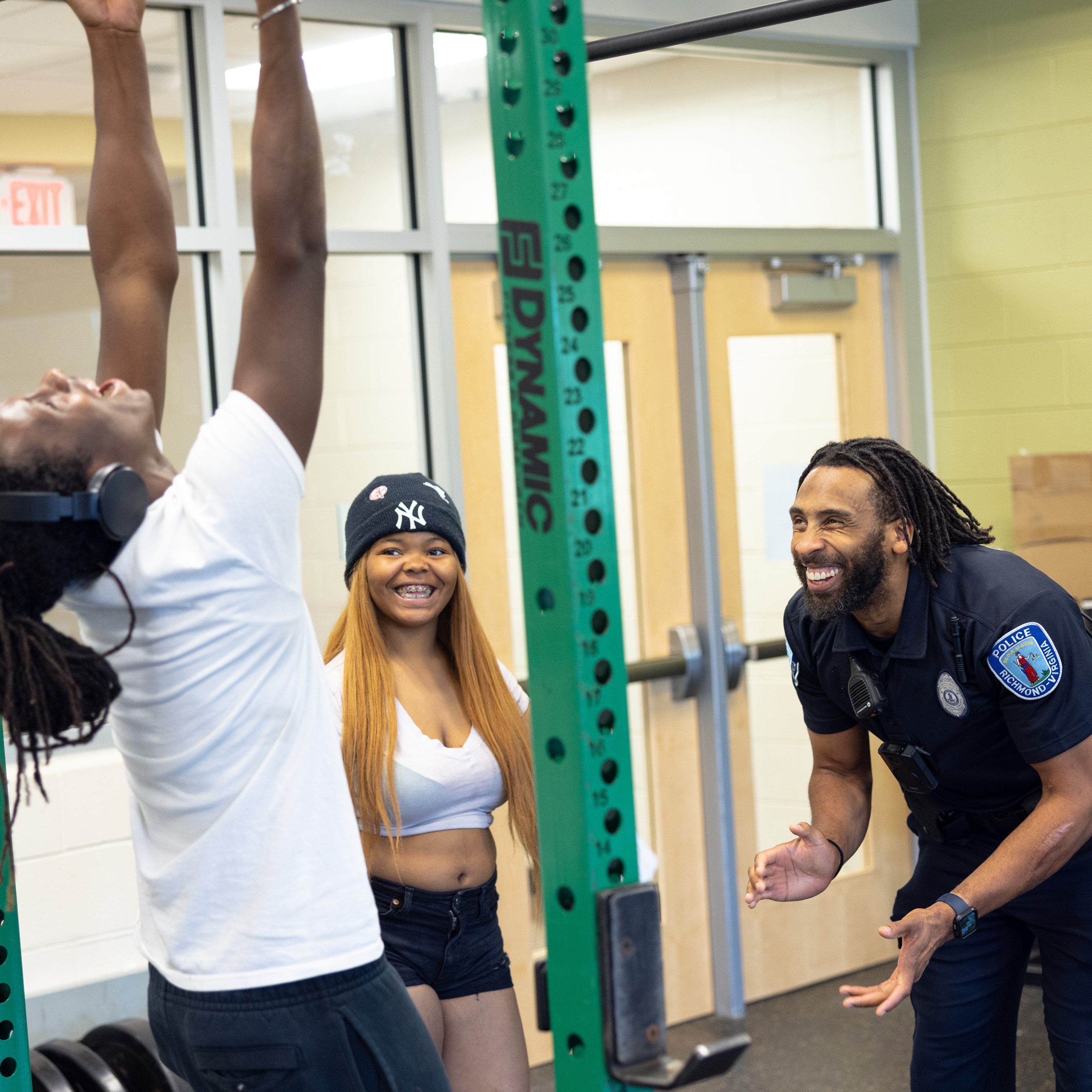
Surviving to graduation, Part 1
Gun violence is reshaping U.S. education. The Washington Post spent a year inside a Richmond high school facing a surge in shootings and deaths to learn what schools are doing to stop students from dying – and whether their efforts are working.Read more:Youth gun violence is soaring nationwide, and schools are on the front lines dealing with the fallout. Three Washington Post reporters were embedded inside Richmond's Huguenot High School for one year to find out what that looks like. During The Post's first visit to Huguenot, a student, Jaden Carter, was shot and killed behind the baseball fields. The Post was inside the school the next day as administrators grappled with the death – and spent the following months tracing how the tragedy affected Jaden's school, friends and family.Today on “Post Reports,” education reporter Hannah Natanson explains what happened.Subscribe to The Washington Post via Apple podcasts here.
Why it took so long to get a postpartum depression pill
How the first-ever postpartum depression pill could change the landscape of maternal health. Read more:In August, the Food and Drug Administration approved Zurzuvae, the first pill to treat postpartum depression. This is a huge milestone for the serious and potentially life-threatening condition, which can afflict about 1 in 7 women following childbirth.Unlike other commonly recommended treatments such as talk therapy and antidepressants, the drug is meant to act quickly, working to ease symptoms including mood swings, loss of interest or pleasure, feelings of worthlessness, and severe anxiety. Health reporter Sabrina Malhi explains how this new drug works, and why it took so long to develop this medication in the first place. Subscribe to The Washington Post via Apple podcasts here.
Netanyahu: The man leading Israel's war against Hamas
Benjamin Netanyahu is Israel’s longest-serving prime minister – and one of its most scrutinized. Now, with Israel at war with Hamas, The Washington Post’s Griff Witte breaks down Netanyahu’s political history and his fragile future.Read more: It’s been over a month since Hamas militants attacked Israel, leaving at least 1,200 people dead and 239 people kidnapped. In response, Israeli Prime Minister Benjamin Netanyahu has declared war on Hamas, the militant group that controls the Gaza Strip. An estimated 11,000 people in the territory have been killed since. Most of the dead are women and children. Though the Israeli government has agreed to military pauses to allow humanitarian aid into Gaza, Netanyahu has rejected calls for a total cease-fire – a stance that is testing his support worldwide. Netanyahu’s leadership was already scrutinized before the war, rooted in corruption charges and his government’s judicial overhaul that sparked historic protests across Israel. Today on “Post Reports,” Griff Witte, a former Jerusalem bureau chief for The Post, unpacks Netanyahu’s rise and his chances of political survival.
The soft power of China’s pandas
Today, why the United States is saying goodbye to its pandas. And how the bears became a powerful diplomatic symbol of U.S.-China relations.Read more:For decades, China has deployed its giant pandas as a diplomatic tool to shore up alliances and woo new partners, including the United States. In 1972, China first gifted the United Statestwo pandas. Since then, it has leased pandas to zoos across the country. Now, after American zoogoers have come to adore the bears, China is taking all of its pandas back. This week, under police escort and accompanied by their longtime keepers, Washington’s three giant pandas boarded a FedEx cargo jet at Dulles International Airport headed for Chengdu, China. The only remaining pandas in the nation will be in Atlanta, and they are scheduled to depart for China next year. The pandas’ exit comes at a moment of strained U.S.-China relations. Enterprise reporter William Wan explains the hidden diplomatic power of China’s pandas, and how these black-and-white bears are beloved by Americans across the country.