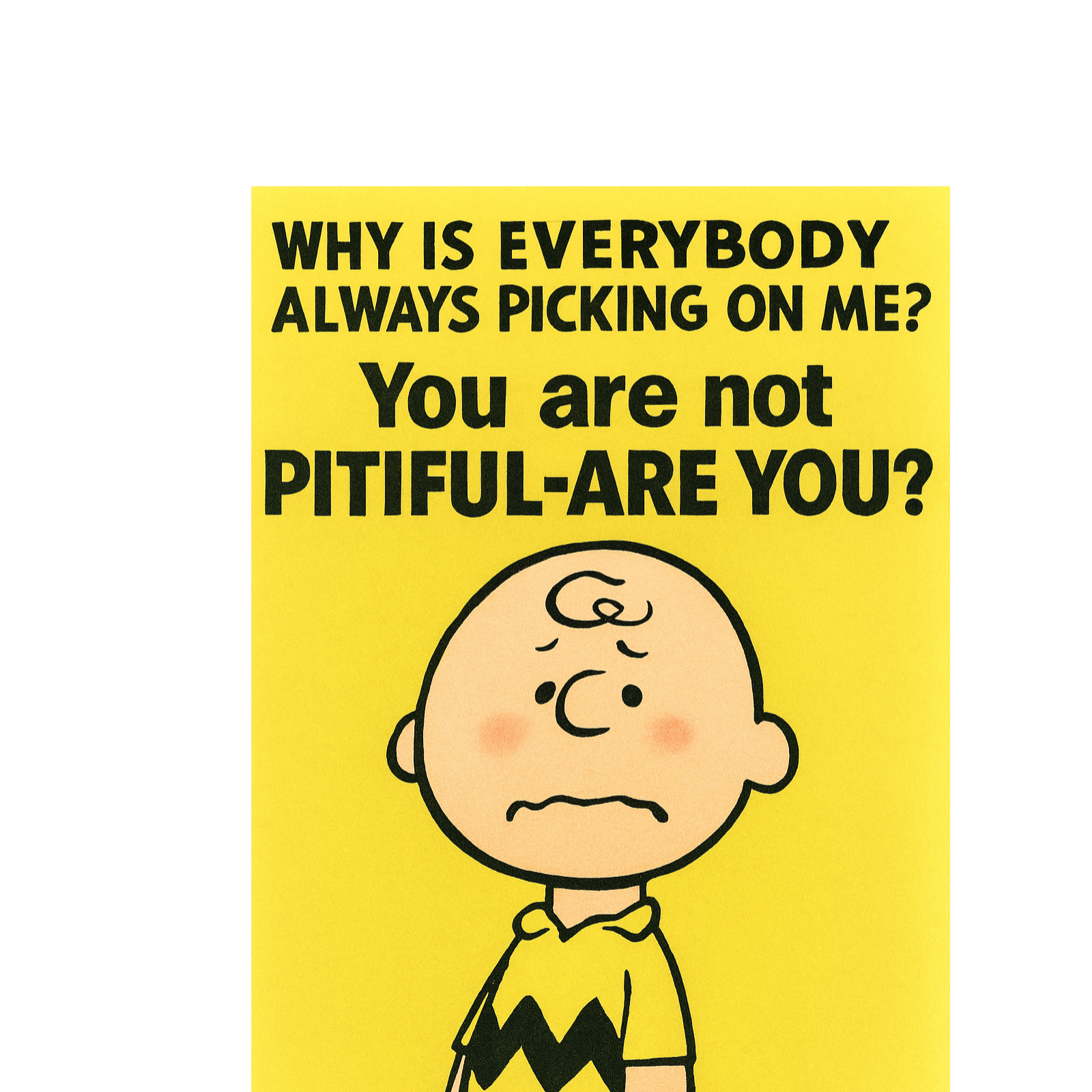
Register: Charlie's Pity Me Class
Positive People USA · Mr. Postive, M.A., MAPL — Graduate Student, M.S. Education
Audio is streamed directly from the publisher (content.rss.com) as published in their RSS feed. Play Podcasts does not host this file. Rights-holders can request removal through the copyright & takedown page.
Show Notes
Charlie Brown Always Picking on Me Lesson Plan
📘 Lesson Plan: Blame‑Shift Course 101
🎯 Learning Objectives
- Recognize blame‑shifting language and how it keeps people stuck. Example: Spot phrases like “They’re always picking on me” and explain how they reinforce helplessness.
- Practice turning blame‑shift statements into ownership statements. Example: Transform “It’s not my fault” into “I take responsibility for my choices and my response.”
🌟 Learning Outcomes
- Group Outcome: Participants can identify blame‑shift patterns and join in chants that reject them. Example: Leader: “Blame‑Shift 101?” Crowd: “Not today — we own our choices!”
- Individual Outcome: Participants show they can rewrite at least one personal example into a statement of responsibility. Example: A participant rewrites “My boss is unfair” as “I will clarify expectations and take responsibility for my role.”
🌀 5E Instructional Model with Single Assessments
1. Engage
- Activity: Perform a satirical skit: one person repeatedly says, “It’s not my fault, everyone’s against me!”
- Assessment: Quick poll — participants raise hands if they recognize the phrase as blame‑shifting.
2. Explore
- Activity: Small groups brainstorm common blame‑shift phrases (“They set me up,” “Why me?”).
- Assessment: Each group shares one phrase aloud that the class identifies as blame‑shifting.
3. Explain
- Activity: Mini‑lecture defining the chain: Blame‑Shift → Victim Script → Loss of Responsibility.
- Assessment: Exit ticket — participants write one sentence explaining how blame‑shifting keeps people stuck.
4. Elaborate
- Activity: Role‑play reframing:
- “They’re always picking on me” → “I choose how I respond, I own my choices.”
- Assessment: Each participant speaks one rewritten statement beginning with “I” to the group.
5. Evaluate
- Activity: Reflection card — participants write one original blame‑shift phrase and their rewritten ownership statement.
- Assessment: Instructor reviews cards to confirm each includes both the original phrase and the rewrite.
You can drop it into a workshop, classroom, or communal ritual without needing extra scaffolding "You are not Charlie Brown, and you are not helpless unless you accept that role. The labels others throw at you only stick if you let them, and the voices behind your back are behind you for a reason — far behind you. When someone tries to put you down, remember they are only revealing their own weakness, not yours. Look in the mirror and tell yourself that your worth is not defined by their negativity. Be bold, refuse to let others write your story, and be prepared to ask the powerful defense: “What is your reason for saying that? There must be a better way to make yourself feel worthy than trying to put me down.” This is how you rise, reclaim agency, and live beyond the victim script." Mr. Positive
Comments: [email protected]