Political Theory 101
96 episodes — Page 2 of 2
Aquinas and De Regno
Alex and Benjamin read Thomas Aquinas' De Regno, focusing on what Aquinas does with Aristotle's regime typology.
Iamblichus and the Politics of Theurgy
Alex and Benjamin talk about Iamblichus, and the strand of neo-Platonism that gets interested in theurgy. They compare Iamblichus with Plotinus. Is part of the soul in the realm of the intelligibles, or has all of it descended? The answer matters, politically. There's also some discussion of the religious politics of Emperor Julian, whose philosophical views were heavily influenced by Iamblichan ideas.
James Harrington with Edmund Wilson
Edmund Wilson joins Alex and Benjamin to discuss James Harrington. They compare Harrington with Hobbes, discuss Harrington's influence on Marxism, and think about how Harrington is positioned in various accounts of the history of thought.
Marsilius of Padua
Alex and Benjamin discuss Marsilius of Padua's argument for the supremacy of the Holy Roman Emperor over the church. They get into the Fraticelli, disputes about whether priests can own property, and ideas of imperial consensus and collective knowledge.
Skinner and the State
Alex and Benjamin discuss a couple Quentin Skinner lectures, focusing mainly on his genealogies of the state and liberty.
Dante's De Monarchia
Alex and Benjamin discuss Dante's political thought. They delve into divine right of kings theory, comparing it with other monarchical legitimation stories. There's Pope Boniface VIII, the Byzantines, and more.
Plato's Timaeus
In Alex's inaugural episode, we discuss the Timaeus and the relationship between Plato's metaphysics and his politics.
G.A. Cohen and the September Group
In Edmund's farewell episode, we discuss the September Group, including G.A. Cohen, Jon Elster, and Philippe Van Parijs. We discuss theories of history, the influence of Darwinian evolution on Marx, the differences between analytic and continental political theory, and the possibility of bridging that divide. Edmund and Benjamin will do one last Patron Q&A episode, and then Political Theory 101 will continue with a new student co-host.
Alexis de Tocqueville
Edmund and Benjamin discuss Tocqueville. They discuss his thoughts on both America and France, his contributions on civic education, civil society, equality, liberty, and so much more.
The Concept of Representation
Andrew Osipov joins Benjamin and Edmund to discuss his thesis on the concept of representation. They discuss the many ways representation has been understood in recent decades.
Sieyes and the French Revolution
Andrew Osipov returns to discuss Abbé Sieyès and the French Revolution. There's discussion of the evolution of the concept of representation and the nation, as well as comparisons with the American project.
Montesquieu: Honor, Monarchy, and the Prologue to the French Revolution
Andrew Osipov joins Benjamin and Edmund to discuss Montesquieu's political thought. They focus on virtue & honor, monarchy and republicanism, and discuss some of the factors that led to the French Revolution.
States of all Sizes & Polarity
Edmund and Benjamin discuss states of different sizes and different distributions of power among states. There's lots of discussion of polarity, hegemony, and other big ticket international relations ideas.

Politics and Morality
Edmund and Benjamin discuss more recent discussions of the relationship between politics and morality, positioning them in relation to some of the historical theories they've previously discussed.
Concepts of Currency
Edmund and Benjamin discuss the changing understanding of currency, from the gold standard to Bretton Woods and even quantitative easing. They also spend some time debunking myths about Roman money in the 4th century...
Aesthetics and Politics
Edmund and Benjamin discuss aesthetic theory and how it intersects with the political. Many Germans feature in this episode--Kant, Harder, Fichte, and so on.
Meditation and Buddhism with Charlotte Newman
Edmund and Benjamin are joined by Charlotte Newman for a discussion of the political potential of meditation and Buddhism. Charlotte has a YouTube Channel, 'Talking Calm', which you can find here: https://youtube.com/channel/UCeYZB54YTxPmDslkeMIg0xA
Concepts of Liberty
Edmund and Benjamin discuss different conceptions of liberty. They go beyond Isaiah Berlin's positive/negative distinction, examining republicans ways of thinking about the concept, its relationship to 'freedom', and some of the reasons why the emphasis has shifted over the centuries.
Concepts of Equality
Edmund and Benjamin discuss the very different ways equality can be understood, including different units of comparison, currencies of justice, and distributive principles. They also discuss the advantages and disadvantages of equality as a radical paradigm.
The Late Frankfurt School and the Cultural Turn
Edmund and Benjamin return to the Frankfurt School, discussing the evolution of the theory of history as theorists incorporated more and more thoughts from Weber, Freud, and Heidegger. In the hands of the Americans, this process culminates in Habermas-influenced liberal accounts of deliberative democracy...
Weber on Maturity, Capitalism, and Protestantism
Edmund & Benjamin return to Max Weber! This time, we're discussing Weber's thoughts on the "immaturity" of the German bourgeoisie, along with the way Weber connected capitalism to religion.
Durkheim and Lukacs on Alienation, Anomie, and Reification
Edmund and Benjamin put Marx's theory of alienation into conversation with Durkheim's theory of anomie, examining how we can't live with social roles or without them. This leads to a discussion of how social roles are reified, via Lukacs.
Bentham, Mill, and the Utilitarians
Edmund and Benjamin run through the history of utilitarianism, focusing both on its radical and conservative aspects and running through some of the problems utilitarians have grappled with. Featuring Sidgwick, Moore, Singer, and Parfit, among others...
Fenelon, Mandeville, and 18th Century Thoughts on Commerce & Luxury
We discuss reactions to economic change in the 18th century, conflicts with traditional understandings of virtue, and how theorists thought about the problem before Smith & Bentham came on the scene. To skip the full reading of Fable of the Bees, go to 25:30
Hobbes, Hume, Spinoza, and the Politics of Human Nature
We discuss the influence of theories of human nature on political theory, comparing and contrasting Hobbes, Hume, and Spinoza.
The Frankfurt School and the Rise of the Interventionist State
Edmund and Benjamin delve into Marxist reactions to the rise of the interventionist state, both in the interwar and postwar periods. Featuring Adorno, Fraenkel, Habermas, Horkheimer, Kirchheimer, Marcuse, Pollock, Neumann
Marxism After Marx
Edmund and Benjamin discuss the trajectory of Marxism during the decades following Marx's death. They focus on the limitations of both democratic and revolutionary approaches, attempts to find a golden mean between the two, and why this mean was so elusive.
Nietzsche, Arendt, and Aesthetic Struggle
Edmund and Benjamin discuss what happens when political theorists make struggling their primary objective, comparing Nietzsche and Arendt to the theorists who prioritise unity, order, or truth.
Marx and Materialism
Edmund and Benjamin discuss Marx's theory of history, positioning Marx in relation to his German predecessors and to some of the Marxists that follow him. The Greeks make an appearance, too.
Hegel and the German Conception of Freedom
Edmund and Benjamin discuss Hegel's effort to bridge the gap between the individual and the collective with mediating institutions. They position Hegel in relation to the German theorists who came before and after him and discuss his critique of the Greeks.
Kant, Fichte, and the Liberal Origins of Nationalism
Edmund and Benjamin discuss Kant's autonomy-heavy moral theory, emphasising Kant's reluctance to apply his moral theory to politics. This, however, did not stop Fichte, who called for a "self-sufficient" German nation-state. By shifting the autonomous subject from the individual person to the individual nation, Fichte is able to turn Kant's liberal moral theory into a nationalist political theory. Featuring Machiavelli, Hobbes, and Schmitt
Machiavelli, Smith, and the Separation of Politics and Morality
To escape the subordination of politics to theology under the church, Machiavelli creates a new kind of strictly political normativity, leaving morality behind. We examine why Machiavelli had to do this, and how this leads to new liberal moral theories, like the one Adam Smith describes in his Theory of Moral Sentiments. Featuring Augustine, Dante, and Kant
Hirschman, Goodin, and the End of the Chronic Legitimacy Crisis
Edmund and Benjamin combine the last two episodes together to talk about "chronic legitimacy crises". They discuss how these crises work and how they end--through solving, settling, and sinking.
Williams, Rawls, and Legitimation Stories
In our follow-up to our previous episode on "crisis", Edmund and Benjamin talk about how legitimacy works. They start with the disagreement between Bernard Williams and John Rawls over whether legitimacy is an "internal" or "external" concept. Then they use Benjamin's PhD thesis to delve into the different kinds of legitimation stories states tell.
Gamble, Streeck, and Theories of Crisis
Edmund and Benjamin discuss theories of crisis, comparing Reinhart Koselleck's old-school theory to more recent contributions from Andrew Gamble and Wolfgang Streeck. They also chat about 20th century crises and how our crisis today is a bit different. This is the first in a three part series on "Legitimacy Crises". https://www.patreon.com/politicaltheory101
Mearsheimer, Wendt, and International Relations Theory
Edmund and Benjamin discuss the four schools of international relations theory--realism, liberalism, Marxism, and constructivism. They consider the influence of materialism and idealism on the schools, along with the role of domestic politics and international institutions. Featuring Benjamin's John Mearsheimer impression. https://www.patreon.com/politicaltheory101
Cicero, Seneca, and the Transition from Republic to Empire
Edmund and Benjamin dig into Roman history, focusing on shifts in the legitimation stories as the republic becomes an empire. They discuss the evolution of the Platonic academy in the Roman period and spend some time with Stoicism. https://www.patreon.com/politicaltheory101
Isocrates, Thucydides, and the Relationship between Rhetoric and Knowledge
Edmund and Benjamin explore rhetoric, drawing on a variety of Greek thinkers. The Greek theorists' attitudes to rhetoric stem from their attitudes to knowledge. Is the crowd wise? Can rhetoric share wisdom with the crowd? Or is rhetoric where wisdom comes to die? https://www.patreon.com/politicaltheory101
Fanon, Burke, and Theories of Change
Edmund and Benjamin compare and contrast Edmund Burke and Frantz Fanon. Both theorists were critical of commercial society, but adopted very different strategies for opposing it based on entirely different theories of change.
Rawls, Hayek, and Liberalism's Relationship with the Market
Edmund and Benjamin return from the winter vac to talk about what happens when markets are depoliticised.

MacKinnon, Rousseau, and the Origins of Inequality
Edmund and Benjamin discuss the many different origin stories of inequality, drawing on Catharine MacKinnon and Jean-Jacques Rousseau. Edmund on power: https://edmundjwilson.com/2019/11/01/on-power-tech-the-state-and-class/ Benjamin on Yang: https://benjaminstudebaker.com/2019/08/14/andrew-yang-is-playing-hide-and-seek-with-the-left-press/
Augustine, Schmitt, and Political Theology (w/Raeffe Gibson)
Raeffe Gibson joins Benjamin and Edmund to discuss the idea that states need to be unified around common values.
Caesar, Weber, and the Power of Charisma
Edmund and Benjamin discuss the role of charismatic leaders in politics in the Roman Empire, interwar Germany, and more recently.
Aristotle, Constant, and the Distribution of Time
Benjamin and Edmund discuss the ancient zero-sum conception of liberty, attempts by later political theorists to universalise it, and some of the ways understandings of liberty have changed to accommodate that. Draws most heavily on Aristotle's "Politics" and Constant's "The Liberty of the Ancients Compared With That of the Moderns" and "Adolphe".
Hobbes, Plato, and the Rise of the State
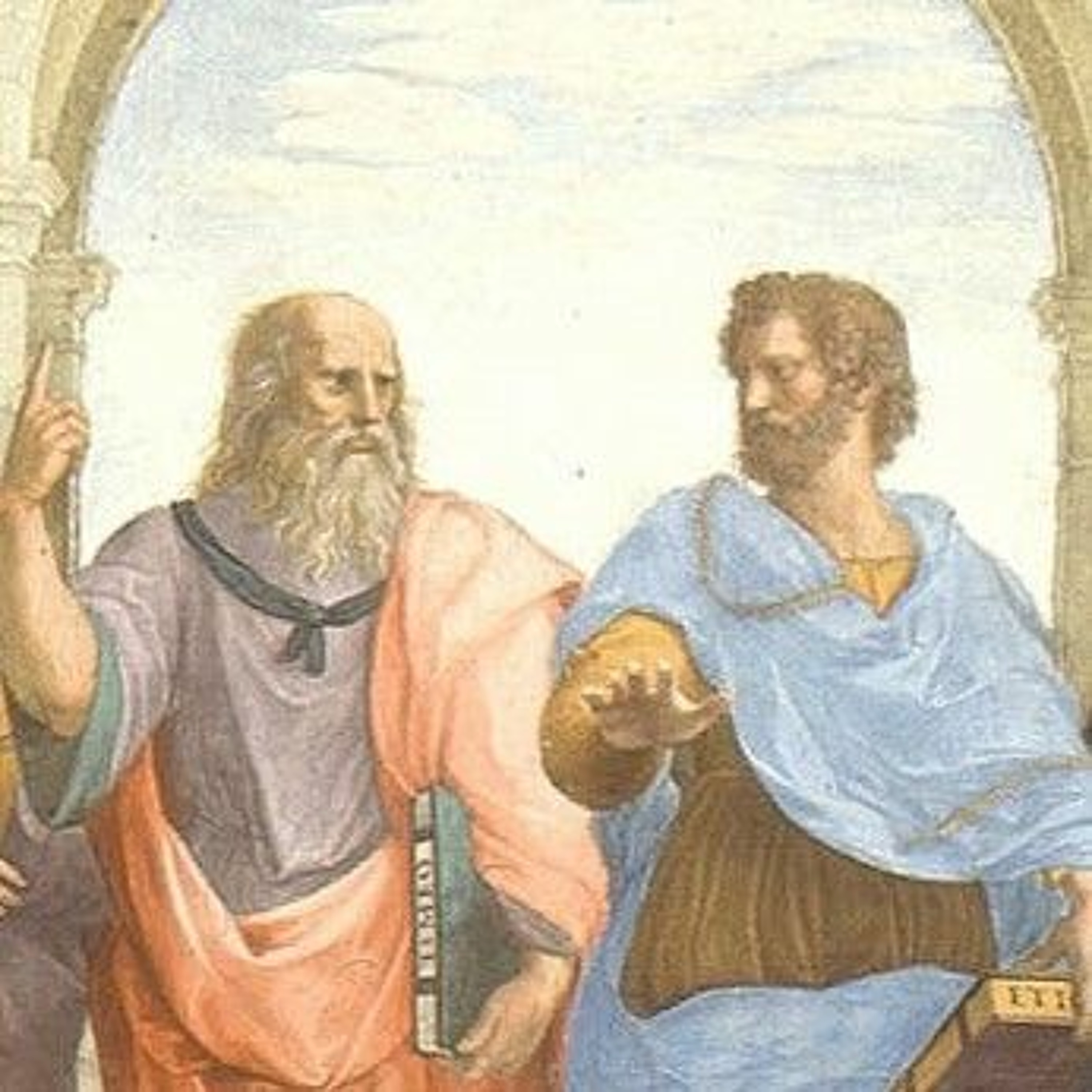
Benjamin and Edmund discuss why both Hobbes and Plato think the state is necessary, comparing and contrasting the two along the way.
Welcome to Political Theory 101
Benjamin Studebaker and Edmund Wilson welcome you to a new series about the history of political thought and some of the people who have contributed to it.