
Point of Inquiry
663 episodes — Page 5 of 14

The Misinterpretations of the Supreme Court, with Ian Millhiser
Our guest this week says that the U.S. Supreme Court’s power to interpret the Constitution is so great that they can use it to justify nearly anything they please. Even the American founders who forged the Constitution often had differing ideas of how its words should be interpreted. But one thing they did not foresee was the Supreme Court having the final say over all constitutional interpretation. Ironically, the most unconstitutional practice that we have may be the Supreme Court’s absolute power to determine what is and is not considered constitutional. This week Point of Inquiry’s Lindsay Beyerstein chats with Ian Millhiser, the author of Injustices: The Supreme Court’s History of Comforting the Comfortable and Afflicting the Afflicted. Millhiser takes a close look at how the various Justices of the Supreme Court have behaved throughout history, and rather than being champions of equality and justice, he concludes that the Court has largely served to perpetuate inequality and hinder progress. Millhiser argues that the only positive contributions the Supreme Court has made were a result of historical accidents, and that the most productive times of legislation in America’s history were during periods in which the Supreme Court was relatively inactive. 0 0 1 205 1174 Center For Inquiry 9 2 1377 14.0 Normal 0 false false false EN-US JA X-NONE /* Style Definitions */ table.MsoNormalTable {mso-style-name:"Table Normal"; mso-tstyle-rowband-size:0; mso-tstyle-colband-size:0; mso-style-noshow:yes; mso-style-priority:99; mso-style-parent:""; mso-padding-alt:0in 5.4pt 0in 5.4pt; mso-para-margin:0in; mso-para-margin-bottom:.0001pt; mso-pagination:widow-orphan; font-size:12.0pt; font-family:Cambria; mso-ascii-font-family:Cambria; mso-ascii-theme-font:minor-latin; mso-hansi-font-family:Cambria; mso-hansi-theme-font:minor-latin;} It’s a sobering and critical look at the role of the Supreme Court, this week on Point of Inquiry.

Bassem Youssef and Ahmed Ahmed: The Risk and Rewards of Satire
While Bassem Youssef’s satirical voice has made him widely known as the Egyptian Jon Stewart, merely five years ago Youssef was a heart surgeon broadcasting humorous political commentary on YouTube from his laundry room. His videos soon exploded in popularity, and by 2011 he had moved his satirical show to television. In 2012 Jon Stewart invited Youssef to join him on The Daily Show, and shortly thereafter in 2013 Time Magazine named Bassem Youssef one of the “100 most influential people in the world.” Unfortunately, some would like to see his influence muted, and the political climate in Egypt has made it too dangerous for Youssef to continue producing his show. On Point of Inquiry this week, Youssef is joined by international comedian Ahmed Ahmed and host Josh Zepps, and the three of them discuss the the role of satire in provoking real political change. Ahmed, like Yousself, has had to learn the hard way that satirists walk a fine line between pushing boundaries while trying not to break them. Youssef is currently working with a senior producer at The Daily Show to create a documentary about Youssef’s journey of standing up to an entire regime with his fearless comedy, entitled Tickling Giants.

Phil Zuckerman: Those Normal, Upstanding Nonbelievers
Phil Zuckerman is a professor of sociology at Pitzer College, and among the world's leading experts in the growing field of secular studies, with a deep understanding of how people's lives are lived without religion. He’s the author of the books Living the Secular Life: New Answers to Old Questions, Society without God, and Faith No More: Why People Reject Religion. There is wide range of secular people, from hardcore atheists and secular humanists to those for whom religion is simply unimportant, and Zuckerman distinguishes between the vast majority of nonbelievers who live normal, upstanding lives, and the small minority for whom secularism is an organizing force. He discusses with Point of Inquiry host Lindsay Beyerstein how empathy, rather than belief in the watchful eye of a deity, is the guiding force of secular morality, and how religion can actually hinder society’s larger moral understanding. It’s a fascinating inward look at our own community of skeptics and humanists, and you can learn even more from Zuckerman about his ideas and research at the http://reasonforchange.centerforinquiry.net/"> Reason for Change conference, where he’ll be among the many brilliant and provocative speakers. Reason for Change takes place July 11-15 in Buffalo, New York. Visit http://reasonforchange.centerforinquiry.net/"> reasonforchange.org for more!

Realpolitik and America's Conflict with Iran, with Joint Chiefs of Staff Advisor David Crist
Negotiations between Iran and the U.S. in concert with Germany and the United Nations Security Council are set to result in an agreement on March 31, 2015 regarding Iran’s nuclear program, potentially restricting Iran’s nuclear ambitions. Senior Historian for the Chairman of the Joint Chiefs of Staff and adviser to senior government officials on Iranian issues, David Crist, joins host Josh Zepps to discuss how the past several decades have lead up to this decision, and what it will mean for the future. Though no one can say for certain what will be decided on March 31, Crist is uniquely qualified to offer his insight as author of the book The Twilight War: The Secret History of America's Thirty-Year Conflict with Iran. While he does not hesitate to explain the ruthlessness of the Islamic regime, he also does not fail to criticize America’s shortcomings and missed opportunities. This is a fascinating and rare look into the realpolitik of one of the most consequential international challenges of our time.

Johann Hari: The Falsehoods of Addiction and The War on Drugs
Billions of dollars are funneled into federal drug programs to keep our children away from drugs and our cities safe from crime and economic turmoil. Our guest this week, journalist and author Johann Hari, has spent the last several years traveling and researching the war on drugs for his new book Chasing The Scream: The First and Last Days of the War on Drugs, to find out if federal programs are as effective and righteous as we are often led to believe. Hari talks to host Josh Zepps about how he discovered a the troubling beginnings of drug war riddled with corruption and ulterior motives, and argues that everything we thought we understood about drug addiction appears to be wrong.

The World Human Extinction Will Leave Behind, with Michael Tennesen
As climate change progresses and takes its toll on the planet, the life forms we share it with continue to evolve and adapt. Some species thrive while many face imminent extinction. What we often fail to realize as humans is that the world will continue to exist long after we’re unable to live on it. Our guest this week is science journalist Michael Tennesen, author of The Next Species: The Future of Evolution in the Aftermath of Man. Tennesen explores the environmental impact climate change is having on the ecosystem, and discusses how its impact on the planet’s surviving species will be felt long, long after we’re gone.

Eli Lake: How Islamic is 'Islamic Extremism'?
This week on Point of Inquiry, Josh Zepps talks to Eli Lake, a journalist with extensive experience covering international intelligence, diplomacy, and the recent conflicts in the Muslim world. With the Islamic State now eclipsing Al Qaeda as a prime flashpoint for terrorism, discussing and defining the ideology behind the violence is fraught with tension, as evidenced by the uproar over President Obama's recent refusal to characterize "violent extremism" as "Islamic." Why do new recruits flock to the Islamic State? What are its real-world political goals? What are the dividing lines between the various strains of Islamic extremism? Lake, whose reporting has been featured in outlets such as The Daily Beast, Newsweek, Bloomberg View, and the Washington Times, lends badly-needed clarity to what are difficult and murky topics.

False Memories Creating False Criminals, with Dr. Julia Shaw
Memory is remarkably fallible, as we often frustrate ourselves with how certain we are about where we left our car keys only to realize how entirely wrong we were. But could it be that our memories are so easily corrupted that we could be led to believe we’ve committed crimes that never happened? (And while we’re at it, could Brian Williams have sincerely believed that he had been under attack in that helicopter?) 0 0 1 174 996 Center For Inquiry 8 2 1168 14.0 Normal 0 false false false EN-US JA X-NONE /* Style Definitions */ table.MsoNormalTable {mso-style-name:"Table Normal"; mso-tstyle-rowband-size:0; mso-tstyle-colband-size:0; mso-style-noshow:yes; mso-style-priority:99; mso-style-parent:""; mso-padding-alt:0in 5.4pt 0in 5.4pt; mso-para-margin:0in; mso-para-margin-bottom:.0001pt; mso-pagination:widow-orphan; font-size:12.0pt; font-family:Cambria; mso-ascii-font-family:Cambria; mso-ascii-theme-font:minor-latin; mso-hansi-font-family:Cambria; mso-hansi-theme-font:minor-latin;} This week on Point of Inquiry, Lindsay Beyerstein talks to Dr. Julia Shaw, a forensic psychology lecturer and false memory researcher. Dr. Shaw recently conducted a study in which she found that 70 percent of college-age students were convinced that they had committed a crime that never actually took place. By mixing actual facts with misinformation, in as little as 3 hours of friendly conversation, students not only admitted to committing these fictional crimes, they went as far as to recall details of their manufactured experience. Shaw suggests that these results have alarming implications for the way we conduct criminal investigations. It seems as though our own imaginations may be working against us more than we ever thought possible.

Leighann Lord: Courageous Comedy as a Safe Space
This week on a special episode highlighting the upcoming Reason for Change conference, Point of Inquiry welcomes stand up comedian Leighann Lord. Talking with show producer Nora Hurley, they discuss how the worlds of comedy and skepticism are not as distant as they seem. They explore the unique dynamic comedy creates for critical thinking, and how a good joke may just be the gateway to discourse and discussion. Leighann will be preforming at the Reason For Change conference June 11th - 15th 2015. Learn more about seeing her live this summer at http://reasonforchange.org. 0 0 1 95 542 Center For Inquiry 4 1 636 14.0 Normal 0 false false false EN-US JA X-NONE /* Style Definitions */ table.MsoNormalTable {mso-style-name:"Table Normal"; mso-tstyle-rowband-size:0; mso-tstyle-colband-size:0; mso-style-noshow:yes; mso-style-priority:99; mso-style-parent:""; mso-padding-alt:0in 5.4pt 0in 5.4pt; mso-para-margin:0in; mso-para-margin-bottom:.0001pt; mso-pagination:widow-orphan; font-size:12.0pt; font-family:Cambria; mso-ascii-font-family:Cambria; mso-ascii-theme-font:minor-latin; mso-hansi-font-family:Cambria; mso-hansi-theme-font:minor-latin;}

Laci Green: Truths and Myths about Sex and Love
This week Point of Inquiry welcomes Laci Green for a special tell-all Valentine's Day episode. Green is a popular Youtube video blogger, sex education activist and feminist. In a time when sex pervades popular culture and marketing, and yet rarely discussed, her videos have managed to shed light on a plethora of minefield topics concerning sex, love, and gender issues. This Valentine's Day enhance your own carnal education as Laci Green has a frank and funny conversation with host Lindsay Beyerstein about the do's, don'ts, and wow-I-didn't-know-that's of sex.

Letting Go of the Soul, with Julien Musolino
Intuitively, it can feel as though the essence of our thoughts and feelings exists separate from the body and brain, and that essence is what is normally referred to as the soul. Empirical evidence, however, forces us to reconcile our intuitions with reality. As the science of the brain and consciousness advances, the case for the existence of a soul deteriorates. This week on Point of Inquiry, Josh Zepps talks to Julien Musolino, psychology professor and author of The Soul Fallacy: What Science shows We Gain From Letting Go of Our Soul Beliefs. Musolino discusses why there isn’t room for belief in the soul in modern science, and how moving past that belief might make the world a better place.
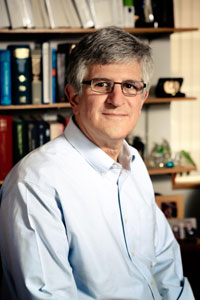
Paul Offit, MD, on Measles in the Magic Kingdom and the Anti-Vaccine Movement
Measles are the newest attraction at Disneyland this season, and unfortunately the only thing magical about them is how quickly they’ve begun to spread throughout California and Arizona. Although measles were eliminated in the U.S. by 2000, the misinformation of the anti-vaccine movement has caused a return of a full-fledged outbreak. Here to discuss the severity of the problem is Paul Offit. He is a Professor in the Division of Infectious Diseases and the Director of the Vaccine Education Center at the Children Hospital of Philadelphia. Offit is the author of the bookDo You Believe in Magic?: The Sense and Nonsense of Alternative Medicine, for which he won the Committee for Skeptical Inquiry’s 2013 Balles Prize in Critical Thinking.

The Women Spies of the Civil War, with Karen Abbott
This week on Point of inquiry, New York Times bestselling author Karen Abbott talks to Lindsay Beyerstein about her newest book, Liar, Temptress, Soldier, Spy, which tells the true story of four women who served as spies during the U.S. Civil War. In a time when women had few of the rights they would later win for themselves, the need for espionage turned out to be an early and important step in the fight for women’s suffrage. These bold women went to extraordinary lengths to fight for their respective sides, taking on various roles to gain information, even posing as men. The risk of being discovered was as much a concern during a military medical exam as it was when they were simply attempting to wear men’s pants properly.

Before Charlie Hebdo: The Danish Cartoons that Shook the world, with Jytte Klausen
The terrorist attack on Charlie Hebdo was a human atrocity, as well as an assault on free expression. Yet numerous prominent news publications are still refusing to show the very Hebdo cartoons at the center of the story. Last year, in the midst of nebulous threats, Sony had removed their satirical film from theaters. How can we avoid yielding control to terrorism with censorship without putting ourselves in danger and subjecting groups to ethnic or religious discrimination? Our guest this week is Jytte Klausen, a political scholar and professor at Brandeis University. In 2009 she published The Cartoons that Shook the World, a book about the publication of the 2005 "Danish cartoons" cartoons depicting the Prophet Muhammed, and the outcry of anger and protest they sparked in some corners of the Muslim world. Much to Klausen’s surprise, Yale University Press refused to include the very cartoons she was discussing. Klausen joins us to talk about the precariousness of the struggle for free expression, and the balance we strike between security and freedom.

Penalizing Pregnancy: Lynn Paltrow on the Fight for Reproductive Justice
The effort to overturn Roe v. Wade and criminalize abortion has spiraled into challenging not only women’s right to abortion, but a women’s right to carry her baby to term. Across the country, women who seek medical help for pregnancy complications are being met with incarceration and outrageous sentences, all without proper representation. According to this week’s guest, if a woman would like to give birth in America, she needs to be prepared to surrender her basic liberties. Here to discuss the fight for women’s pregnancy rights is, Lynn M. Paltrow, founder of National Advocates for Pregnant Women (NAPW), a nonprofit civil rights group that advocates for pregnant and parenting women. Paltrow has also served as a senior staff attorney at the ACLU’s Reproductive Freedom Project, as Director of Special Litigation at the Center of Reproductive Law and Policy and as Vice President for Public Affairs for Planned Parenthood of New York City. Paltrow has not only done extensive work in challenging the restrictions placed on the right to choose abortion, but also fights the prosecution and punishment of pregnant women seeking to continue their pregnancies to term.

Christmas Extra: Tom Flynn's 30th Year of Anti-ClausingTom Flynn is Executive Director of The Council for Secular Humanism, Editor of Free Inquiry magazine, Director of Inquiry Media Productions, as well as professional anti-Christmas advocate and au
Tom Flynn is Executive Director of The Council for Secular Humanism, Editor of Free Inquiry magazine, as well as professional anti-Christmas advocate and author of “The Trouble with Christmas.” Tom is on his 30th year of being completely Yule free and he’s here to talk about why the rest of us should join him in protesting the holidays.

Greta Christina on Coping with Death, No Afterlife Required
Our Guest this week is Greta Christina, popular atheist blogger, speaker and author of several books on atheism including her newest, “Comforting Thoughts About Death That Have Nothing to Do With God.” Christina discusses with Lindsay Beyerstein the tendencies we have to avoid and deny death and how it affects our abilities to cope. Christina explains how the concept of an afterlife may actually be failing to prepare people for the end of their lives, and how we can use our humanism and skepticism to find comfort in the midst of mortality and grief.

Frank Schaeffer on Cynicism and Paranoia in the "War on Christmas"
Fox News’ "War on Christmas" is already in full swing, as Bill O’Reilly wasted no time jumping into battle this year to defend the holiday from the great secular menace. However, it looks like Bill might be able to leave the trenches a little early this year; according to a new Pew survey, just over 70 percent of Americans believe that Jesus was literally birthed from the womb of a virgin (a staggering percentage considering that only one third of Americans report interpreting the Bible as the literal word of god). The question is why are conservative Christians so afraid of losing a fight that in so many ways they’ve already won? This week on Point of Inquiry, former Evangelical fundamentalist Frank Schaeffer joins us to bring first-hand insight into the irrational fear within fundamentalism, and what it says about their belief system. Schaeffer grew up in a strict Evangelical household in which he was expected to follow in the footsteps of his father, Francis August Schaeffer, a founder of what we know today as the Religious Right. Instead, he came to reject the beliefs of his father, but still maintains a place for “the divine.” He has sense spent his life talking about his journey away from the church and has written extensively about belief and religion as a New York Times bestselling author.

Ronald A. Lindsay: Why God Can't Tell Us What to Do
Despite the fact that the United States was founded as a secular state, government neutrality toward religion remains a tumultuous and controversial issue -- a conversation-stopper in most public policy discussions. This week on the show, Lindsay Beyerstein welcomes Ronald A. Lindsay, president and CEO of the Center for Inquiry, the organization responsible for Point of Inquiry. Ron joins us to discuss his just-released book, The Necessity of Secularism: Why God Can’t Tell Us What to Do, in which he explains how the language of secularism is the most ethical and productive language for believers and nonbelievers alike, the missing puzzle piece to fair public policy. Ron Lindsay is both a lawyer and philosopher, as well as a veteran freethought activist, with several books and articles on ethics, philosophy, and secularism to his name. His particular background provides him with a unique understanding of how crucial the separation of church and state is for equality and stability, as well as how people can be persuaded that a society built on secularism is in everyone’s best interests.

Deciphering Alan Turing, with Andrew Hodges
Alan Turing was a true visionary. Founding what we understand today as computer science, he was also a mathematician, a philosopher, and an early trailblazer for gay equality. Without his genius for codebreaking, the Second World War might have gone in a much darker direction. He saved millions of lives and potentially the world as we know it, yet his efforts for humanity were not enough to spare him the inhuman treatment he received for his sexual orientation. Andrew Hodges was one of the first people to realize the multifaceted brilliance of Alan Turing, which eventually led him to write the renowned biography, Alan Turing: The Enigma, which was recently adapted into the film The Imitation Game starring Benedict Cumberbatch. Like Turing, Hodges is a mathematician and gay rights activist, and understands first hand the impact Turing’s life has had on our world today. 0 0 1 156 894 Center For Inquiry 7 2 1048 14.0 Normal 0 false false false EN-US JA X-NONE /* Style Definitions */ table.MsoNormalTable {mso-style-name:"Table Normal"; mso-tstyle-rowband-size:0; mso-tstyle-colband-size:0; mso-style-noshow:yes; mso-style-priority:99; mso-style-parent:""; mso-padding-alt:0in 5.4pt 0in 5.4pt; mso-para-margin:0in; mso-para-margin-bottom:.0001pt; mso-pagination:widow-orphan; font-size:12.0pt; font-family:Cambria; mso-ascii-font-family:Cambria; mso-ascii-theme-font:minor-latin; mso-hansi-font-family:Cambria; mso-hansi-theme-font:minor-latin;} This week on Point of Inquiry, Hodges explains how Turing became so influential in so many different fields, and how his genius was so far ahead of his time.

Getting Over Racial Anxiety, with Rachel D. Godsil
As a nation, the U.S. prides itself on at least aspiring to the ideal of equality, even if it often falls short. The educational, health care, and legal systems, are plagued by institutional biases against racial minorities. The good news is that these disparities are likely not due to hateful intent, but caused by a combination of factors that include implicit bias, racial anxiety, and stereotype threat. To make sense of this, Point of Inquiry welcomes Rachel D. Godsil, research director of the Perception Institute, who explains how the unconscious associations and attitudes that we have towards people of different racial groups can affect the way we behave and, more importantly, what we can do to relieve some of the racial anxiety that may be inadvertently causing many of us to behave in ways that are less than enlightened.

Surviving Saddam and Confronting Islam, with Faisal Saeed Al Mutar
As the threat posed by radical Islamists like those of ISIS grows in popular awareness, Islam itself becomes more of a target for criticism; some of it fair, and some of it based in ignorance or bigotry. Can efforts to defend Islam and Muslims from discrimination and racism go too far, and keep us from having an honest discussion about something of such critical importance? This week, Point of Inquiry welcomes Faisal Saeed Al Mutar, an Iraqi refugee turned activist, and founder of the Global Secular Humanist Movement. Al Mutar talks about growing up in Iraq under the tyranny of Saddam Hussein, and his belief that Islam needs to be more vigorously criticized, and that its adherents must be held to a higher moral standard.

Steven Pinker: Using Grammar as a Tool, Not as a Weapon
The English language is often treated as delicate and precious, and disagreements about what is “proper English” go back as far as the 18th century. Then as now, style manuals and grammar books placed innumerable restrictions on what is and isn’t “correct,” as "Language Mavens" continue to delight in pointing out the unforgivable errors of others. To bring some fresh perspective to this remarkably heated topic (and to let some of us who are less than perfect, grammatically speaking, off the hook), Point of Inquirywelcomes Harvard psychology professor Steven Pinker, author the new book The Sense of Style: The Thinking Person’s Guide to Writing in the 21st Century. Pinker’s previous works include such award-winning books as The Language Instinct, How the Mind Works, The Blank Slate, The Stuff of Thought, and The Better Angels of Our Nature. He’s been honored by such institutions as the National Academy of Sciences, the Royal Institution of Great Britain, and the American Psychological Association, as well as having been named named Humanist of the Year and one of Time magazine’s “The 100 Most Influential People in the World Today.” And most appropriate to this episode, he is currently the chair of the Usage Panel of the American Heritage dictionary.

Ebola in the Age of Epidemics - Special Live Episode
There’s no doubt that Ebola is an incredibly dangerous and genuinely lethal virus, but it’s also a highly manageable one, though you’d be forgiven for thinking otherwise given the kind of hyperbolic coverage we’ve seen of the epidemic. In order to sort fact from fiction about the real threat posed by Ebola, and to better understand its origins and wider implications, Point of Inquiry presents a special episode, recorded before a live audience in New York. We begin with a presentation by Dr. Jon Epstein, a veterinarian and epidemiologist who specializes in emerging pandemic threats in the developing world. Then Point of Inquiry host Josh Zepps goes more in depth, in a conversation with Dr. Epstein and Dr. Kevin Olival, a disease ecologist and evolutionary biologist. Both are world-leading experts on Ebola and disease prevention with a great deal of insight as to what governments and aid workers need to do to prevent Ebola from becoming a pandemic. Recorded live at the Brooklyn Brewery, this event was organized by Eco Health Alliance, an international biodiversity organization.

Halloween Extra: 18th Annual Houdini Séance with Joe Nickell
Harry Houdini, the most famous illusionist the world has ever known, spent the later part of his career fascinated with spiritualists and mediums. This led him to become a dedicated skeptic and investigator. In this special Halloween episode for 2014, Point of Inquiry’s new producer Nora Hurley chats with Joe Nickell, the world’s leading paranormal investigator, and a former professional magician himself. Together, they conduct the Center for Inquiry’s 18th Annual Houdini Séance. Listen in as Nickell follows traditional séance protocol to call upon the spirit of Houdini to communicate with us beyond the grave. While summoning the dead, Nickell explains how Houdini’s background as a magician allowed him to expose fraudulent mediums and spiritualists, who were using illusions and trickery to profit off the grief of innocent people. Joe Nickell continues to honor Harry Houdini, not just with annual séances, but more importantly by carrying on his investigative work.

Pro-Choice Without Apology, with Katha Pollitt
Given the divisive nature of the debates over abortion, the subject is understandably not the best table-talk material. But despite the fact that abortion is a normal and often necessary (one in three women will have an abortion before menopause), even those who are staunchly pro-choice feel compelled to hedge their support by making sounds about how abortions are "horrible" and "unfortunate." When both sides of the controversy associate abortions as immoral and shameful, much of the conversation ground is yielded to anti-abortion advocates. This week on Point of Inquiry, columnist and activist Katha Pollitt discusses her new book, Pro: Reclaiming Reproductive Rights. With clinics closing at record high rates, unapologetically reclaiming women's reproductive rights may be the best way to keep the conversation - and the clinics - open.

The Human Impact of Discovering Alien Life, with Astrobiologist Steven J. Dick
Our universe is made up of billions of galaxies. The cosmos is so mind-bogglingly vast, that it’s hard not to suppose that we aren’t alone, that life must exist somewhere else besides our own planet. Last month, some of the world’s leading scientists gathered at an Astrobiology Symposium run by NASA and the Library of Congress to discuss where we stand in our search for extraterrestrial life. This week on Point of Inquiry, Steven J. Dick, the Baruch S. Blumberg NASA/Library of Congress Chair in Astrobiology, discusses the progress that has been made in the search for extraterrestrial life, and what the potential ramifications may be if and when we make this most monumental of discoveries — that we are indeed not alone.

The Theology of ISIS, with Dr. Adam Silverman
The rise of ISIS, the self proclaimed Islamic State in Iraq and Syria, has sparked debate about the role of religion — specifically Islam — in violent extremism. This week, Dr. Adam Silverman offers us a glimpse into the theology of ISIS, and tackled some difficult questions; What does ISIS believe and how do its religious beliefs shape its political choices? What about the notorious video-taped beheadings and reports of rape as weapons of war? How does ISIS want the United States to react, and how should we? Dr. Silverman has just completed a four-year stint as Cultural Advisor to the U.S. Army War College. He holds a doctorate in Political Science and Criminology from the University of Florida and he deployed in Iraq in 2008 to interview Iraqi religious and political leaders to better understand their culture and values.

Austin Dacey
Josh Zepps is off, and since this week is the 5th International Blasphemy Rights Day, we're rebroadcasting this interview by Chris Mooney with Austin Dacey, CFI's former UN representative and an expert on the subject of blasphemy laws. *** This week, our guest is a return one: Austin Dacey. He's a philosopher, a writer, a human rights activist, and the creator of the Impossible Music Sessions, which we featured in a past show. Austin's books include The Secular Conscience: Why Belief Belongs in Public Life and, just out, The Future of Blasphemy: Speaking of the Sacred in an Age of Human Rights. This show focused on Austin's new book on blasphemy. But he helped enhance the discussion with a few pieces of music that have been called blasphemous—which is why we wanted to distribute them as widely as possible.

Mark Oppenheimer on Misogyny in the Freethought Community
This week Point of Inquiry welcomes journalist Mark Oppenheimer. Mark writes the Beliefs column for the New York Times, and is the author of the e-book The Zen Predator of The Upper East Side. He is an expert on how religious and philosophical communities deal--or refuse to deal--with allegations of abuse in their ranks. Mark joins host Lindsay Beyerstein to talk about a feature he wrote for BuzzFeed entitled "Will Misogyny Bring Down The Atheist Movement?", a discussion (as he puts it, "from an outsiders' perspective") about sexism and sexual coercion in organized secularism and skepticism, a phenomenon that he concludes is a threat to the movement's potential to grow and achieve mainstream acceptance. They explore this tumultuous topic both in terms of current debates, as well as in context of the freethought movement's broader history.

Factory Farming and the Meat Racket: Christopher Leonard on our Irrational Meat Industry
It’s National Chicken Month! But rather than celebrating the consumption of fowl, Point of Inquiry is asking what exactly is going on in America's meat industry? Is the way we consume meat at all rational? Joining us this week is Christopher Leonard, investigative journalist whose work has appeared in Fortune, Slate, and The New York Times. He is a fellow with The New America Foundation, a nonpartisan public policy institute in Washington, DC., and the author of The Meat Racket: The Secret Takeover of America’s Food Business. Leonard and host Josh Zepps explore the morality of super-industrialized meat production, the iron grip of certain large corporations, and how the centralized system of factory farming is, to Leonard, “Soviet-esque.”

Ask a Mortician: Caitlin Doughty on the Death Industry's Dirty Secrets
Point of Inquiry welcomes Caitlin Doughty, creator of the cult classic web series Ask A Mortician, which gives unvarnished answers to questions about dead bodies and the death industry. Caitlin has tackled topics ranging from "What to say to a grieving person?" to "How could my titanium hip implant end up as part of a road sign in the Midwest?" Caitlin is the author of the new book Smoke Gets in Your Eyes: and Other Lessons from the Crematory, the story of her stint as a crematory operator in Los Angeles. She went on to become a licensed mortician to launch a one-woman crusade to change our culture's attitudes about death.

Sam Harris: Seeking Transcendence Without Religion
It’s been ten years since the publication of Sam Harris’s book The End of Faith kicked off the cultural phenomenon of “new atheism,” bringing frank criticism of religion into mainstream conversation. In the decade since, Harris has emerged as something of a maverick among nonbelievers and progressives, frequently at the center of controversy with his opinions on Islam and extremism, science’s role in morality, and his embrace of a kind of “spiritualism” grounded in science. It is this last item that is the subject of his latest book, Waking Up: A Guide to Spirituality Without Religion, in which he seeks a rational approach to transcendence; one that puts the supernatural aside in favor of an honest, scientific exploration of the mind, altered states of consciousness, and other (as he puts it) “spooky phenomena.” On this special episode of Point of Inquiry, Harris talks to host Josh Zepps about his foray into the mystical. In this fascinating interview, Harris asserts that experiences such as bliss and transcendence must be removed from the realm of sectarianism, but that “one of the great holes in secularism” is that “we don’t have a ready answer for someone who wakes up tomorrow morning with an extraordinary change in their conscious life which they deem positive.” Harris talks about the search for this answer, as well as the illusion of the self, expanding our moral circle to include other creatures, and an evaluation of the progress secularism has made since the time “new atheism” was still new.

Dr. Adia Benton on The West African Ebola Outbreak
This week Point Of Inquiry welcomes Dr. Adia Benton, a professor of medical anthropology at Brown University. She joins host Lindsay Beyerstein to talk about the Ebola outbreak in West Africa.Medical anthropologists bring a unique expertise to epidemics because they study both the physiology of illness and the cultural factors that influence its transmission. That's why the World Health Organization has deployed med anthros to combat prior Ebloa outbreaks. They ask questions like: "How do people think a disease is spread?," "What role do traditional healers play in this culture?," and "Do people trust Western medicine?" The answers can be used to craft more effective public health messages. These are urgent questions for the current Ebola outbreak, where some are resisting quarantine, attacking hospitals, and blaming the outbreak on doctors and nurses. In a crisis, culturally competent care can be a matter of life and death.

Paul Offit, MD - Do You Believe in Magic?: The Sense and Nonsense of Alternative Medicine
Point of Inquiry's hosts are off this week, so we're running Lindsay Beyerstein's excellent interview from earlier this year with Dr. Paul Offit. Dr. Offit will be the Center for Inquiry's special guest on September 6th in Amherst, NY, as he is awarded the Robert P. Balles Prize in Critical Thinking. * * * Paul A. Offit, MD is best known as a co-inventor of the rotavirus vaccine and a staunch, public supporter of vaccination and opponent of pseudoscientific alternative medicine. His most recent book, Do you Believe in Magic?: The Sense and Nonsense of Alternative Medicinepoints a critical eye at the alt-med industry, one than takes in 34 billion dollars a year with little to no regulation. Are patients being harmed, and is it any worse or better than so-called “Big Pharma”? Dr. Offit talks with our host, Lindsay Beyerstein, about all of this and much more on this week’s Point of Inquiry. Dr. Offit has published over 130 scholarly articles on the rotavirus vaccine and vaccine safety and efficacy in general. He has also authored or co-authored many books on pediatric medicine, childhood vaccination and opposing pseudoscience in Medicine. He is also the Maurice R. Hilleman Professor of Vaccinology, Professor of Pediatrics at the University of Pennsylvania, Chief of the Division of Infectious Diseases, and the Director of the Vaccine Education Center at The Children's Hospital of Philadelphia as well as a member of the Centers for Disease Control (CDC) Advisory Committee on Immunization Practices. Offit is also a Founding Board Member of the Autism Science Foundation (ASF).

Christopher Capozzola: 100 Years After the Great War, Lessons in Reason
One hundred years ago, Great Britain declared war on Germany, joining in what we now refer to as World War I, a conflict which cost more than 9 million combatants and 7 million civilians their lives, and shaped the the world we know today. How did reasonable people let "The Great War" begin, and what can reasonable people today learn from it? Joining us this week is Christopher Capozzola, an MIT professor in political and legal history, war, and the military, and author of Uncle Sam Wants You: World War I and the Making of the Modern American Citizen. How did rational people plummet themselves into the irrationalism and chaos that tore apart the continent of Europe along with the rest of the world while sowing the seeds of much of the 20th Century's subsequent horrors? Dr. Capozzola and host Josh Zepps examine the kind of day-to-day rationality which can spiral off into madness.

Laurel Braitman on Animals and Mental Illness
This week, Point of Inquiry welcomes Laurel Braitman, a TED fellow with a PhD in History and Anthropology of Science from MIT, and the author of Animal Madness: How Anxious Dogs, Compulsive Parrots, and Elephants in Recovery Help Us Understand Ourselves. It might sound strange to say that animals suffer from mental illness but the brain systems that regulate anxiety, attachment, and arousal are evolutionarily ancient. If faulty neurochemistry compounded by stress can lead to mental illness in humans, is it such a stretch to imagine it in other animals as well? Today we look into the minds of our fellow animals. What do their minds and mental illnesses teach us about sanity, insanity and the concept of consciousness?

David Ropeik: Airplane Disasters and the Psychology of Risk
How do we rationally assess risk? Following a terrible series of horrifying air travel disasters, reasonable people begin to question what we consider to be "safe." But should we? To answer this question, our host Josh Zepps is joined by David Ropeik, an international consultant and expert on the subject of risk perception and communication, and author of Risk: A Practical Guide for Deciding Whats Really Safe and Whats Really Dangerous in the World Around You and How Risky Is It, Really?: Why Our Fears Don't Always Match the Facts. Ropeik discusses how human beings perceive danger versus mathematical probabilities, how fear and optimism affect our perception, and how it might be a good idea to be "gentle" with the word "rational" when it comes to the subject risk.

Jason Horowitz: Protecting the Whales from the U.S. Navy
On March 15, 2000, over a dozen whales beached themselves in the Bahamas in one of the largest multi-species strandings in history. Suspicion turned to U.S. Navy sonar, but at first there was no proof. This revelation brings us into the detective story told in War of the Whales: A True Story. Point of Inquiry welcomes the author, Joshua Horowitz. We discuss the history of the U.S. Navy’s use of high-intensity active sonar; the cover-up of sonar in the Bahamas; and the titanic struggle between the Navy and an unlikely team of conservationists: marine biologist and ex-Navy sonar man Ken Balcomb, and environmental lawyer Joel Reynolds of the Natural Resources Defense Council. Host, Lindsay Beyerstein and Horowitz also delve into the history of sonar, the militarization of dolphins, and the sordid history of whales in captivity.

Austin Dacey - The U.N. and Defamation of Religions
Point of Inquiry is taking a week off and filling in with a classic episode. After Saudi Arabia recently tried to silence the Center For Inquiry's UN representative, Josephine Macintosh, as she delivered a statement critical of their repeated assaults on freedom of religion, belief and expression, we felt that our Austin Dacey episode was fitting to fill in during our week off. Austin Dacey serves as a respresentative to the United Nations for CFI, and is also on the editorial staff of Skeptical Inquirer and Free Inquiry magazines. His writings have appeared in numerous publications including the New York Times and USA Today. His new book is The Secular Conscience: Why Belief Belongs in Public Life. In this discussion with D.J. Grothe, Austin Dacey details his trip to Geneva, Switzerland on behalf of the Center for Inquiry's UN mission. He describes the UN lobbying efforts of the Center and its response to the United Nations Human Rights Council's resolution "Combatting the Defamation of Religions." He explains that despite legitimate concerns about stereotyping Muslims or racial profiling, this resolution equates any criticism or satire of religious beliefs with bigotry. He contrasts Europe's position on free speech with the United States' and how it is used by Islamic countries to justify their blasphemy laws, which often carry mandatory sentences of death or life in prison. He talks about how the Organization of the Islamic Conference at the United Nations aims to build into international human rights such legal standards that actually outlaw offensive speech against religions. And he argues that what should be protected under international human rights laws are individuals, and not ideas — that persons should be protected from harm and discrimination, as opposed to ideologies being protected from being criticized or satirized.

The Gospel According to Hobby Lobby--With Brian Leiter
Normal 0 false false false EN-US X-NONE X-NONE MicrosoftInternetExplorer4 To discuss last week's Supreme Court decision in Burwell v. Hobby Lobby, Point of Inquiry welcomes Dr. Brian Leiter, law professor and philosopher at the University of Chicago. He's the author of several books including Why Tolerate Religion?. He blogs at Leiter Reports: A Philosophy Blog. Leiter and host Lindsay Beyerstein discuss what the Hobby Lobby decision means for women's health, corporate personhood, and the separation of church and state. In 2013, Leiter headlined a daylong symposium with the Center for Inquiry (the organization that produces Point of Inquiry), and you can watch the video here. /* Style Definitions */ table.MsoNormalTable {mso-style-name:"Table Normal"; mso-tstyle-rowband-size:0; mso-tstyle-colband-size:0; mso-style-noshow:yes; mso-style-priority:99; mso-style-qformat:yes; mso-style-parent:""; mso-padding-alt:0in 5.4pt 0in 5.4pt; mso-para-margin-top:0in; mso-para-margin-right:0in; mso-para-margin-bottom:10.0pt; mso-para-margin-left:0in; line-height:115%; mso-pagination:widow-orphan; font-size:11.0pt; font-family:"Calibri","sans-serif"; mso-ascii-font-family:Calibri; mso-ascii-theme-font:minor-latin; mso-fareast-font-family:"Times New Roman"; mso-fareast-theme-font:minor-fareast; mso-hansi-font-family:Calibri; mso-hansi-theme-font:minor-latin;}

Montel Williams: Leading a Surge on the Veterans Administration
Best known for his 17 years as a talk show host, Montel Williams is now bringing his name and dynamic personality to activism on behalf of U.S. servicemen and women. Raised during the height of the Civil Rights Movement and into the tumultuous sixties, he joined the Marines as a young man and enrolled at the U.S. Naval Academy, earning a Bachelor of Science in Engineering. After spending years as a motivational speaker and talk show host he returns to his roots in supporting U.S. military men and women after their return home. Williams has put his weight behind a petition to the White House and a campaign known as #VASURGE in an effort to push the federal government to reform and improve the Veterans Administration, a crisis that has reached its boiling point after years of overlapping American wars.

Marlene Zuk: The Paleo Delusion
We evolved to eat berries rather than bagels, to live in caves rather than condos, to sprint barefoot rather than wear sneakers—or did we? These, along with many other questions about what is or is not "natural" for humans from an evolutionary perspective and is the subject of the new book by biologist, Dr. Marlene Zuk, Paleofantasies: What Evolution Really Tells Us about Sex, Diet, and How We Live. The book was recently long-listed for the Royal Society's Winton Prize, one of the most book prizes in science writing. Dr. Zuk is an evolutionary biologist and behavioral ecologist at the University of Minnesota, where she heads the Zuk Lab. She has published many papers and books on evolution and evolutionary biology. Lindsay interviews her about the book with a view to the "Paleo" craze in health and nutrition, asking if we really know what some claim we do about our paleolithic ancestors and what impact, if any, that knowledge should have on our lives.

Howard Fineman on Eric Cantor's Defeat and the Battle for the Soul of the GOP
Few intra-party political battles have been as astonishing and unexpected as last week's primary loss by House Majority Leader Eric Cantor to religious-conservative challenger David Brat, who was quickly embraced by the Tea Party after his victory. To discuss what this means for the future of the GOP, and how religion has waxed and waned as a factor in American politics, Point of Inquiry welcomes the great political analyst Howard Fineman. Howard Fineman is the editorial director of The Huffington Post Media Group, an analyst for NBC News and MSNBC, former senior editor and columnist for Newsweek, and author of a best-selling book about political history called The Thirteen American Arguments.

Janet Mock, Redefining Realness, Biology, Sex and Gender
This week POI welcomes bestselling author and trans rights activist, Janet Mock. Janet is the author of the new memoir Redefining Realness: My Path to Womanhood, Identity, Love and So Much More, which recounts her emotional and physical transition from an infant sexed male at birth in Hawaii in 1983, to a young woman in New York City. Some traditionalists accuse trans activists of playing games with language when they insist on the right of trans people to be called by their preferred pronouns and to be treated as real members of their self-identified gender. Traditionalists claim that anatomy at birth is the only "real" litmus test of gender, despite the empirical evidence calling that simplistic formulation into question. Trans activists and allies are throwing the burden of proof back on the claimant. Why should the traditional ideology of gender take precedence over the lived experience of trans people? It's great to be skeptical of ideas that are obviously dubious, like astrology or Bigfoot. But skeptics should also use their critical thinking skills to scrutinize divisions that seem intuitive and natural, especially in face of evidence that old social norms aren't working, or are causing unnecessary suffering. We still live in a culture that would rather discard trans people than grapple with the challenge they pose to the traditional conception of gender, but activists like Janet Mock are trying to change that.

Negin Farsad: Red States and Muslim Comedy
This week, we welcome Negin Farsad, a groundbreaking Iranian American comedian. A TED speaker and TED Fellow, she was named one of the Huffington Post's 50 Funniest Women. She's been seen on Comedy Central, MTV, CNN, MSNBC, and in her movie The Muslims are Coming!, a documentary following some of the funniest Muslim comedians as they travel America's Red States, cracking people up and demolishing stereotypes. Host Josh Zepps and Farsad discuss everything from the gray areas in religious identification, to the situation for Muslims in post-9/11 America, and the theocracy in Iran. How does one of the best educated and culturally Western populations in the Middle East coexist with the theocratic totalitarianism of Iran's regime? What can Western liberals do to help moderates in these countries lessen the influence of Islam's radicals? Does any cultural action on the part of the West do more harm than good? And just what can you do with two masters degrees from Columbia? Apparently, comedy!

Capital Punishment in Crisis with Dahlia Lithwick
This week, Point of Inquiry welcomes Dahlia Lithwick, Senior Editor and Legal Correspondent for Slate, where she writes the "Supreme Court Dispatches" and "Jurisprudence" columns. Her legal commentary won her a National Magazine Award in 2013. She is a graduate of Stanford Law School and she joins Lindsay Beyerstein to talk about the crisis facing capital punishment in the United States. Almost all executions in the United States are performed by lethal Injection but America's go-to lethal injection drug cocktail is rapidly becoming obsolete because a key component is no longer readily available. States have been reduced to scrounging drugs from unregulated bulk pharmacies and experimenting with secret and untested mixtures of medications, a practice that may amount to cruel and unusual punishment. On May 21, the U.S. Supreme Court stayed the execution of Russell Bucklew of Missouri, just two hours before he was scheduled to be executed for the murder of Michael Sanders. Bucklew suffers from a condition called cavernous hemangioma, which means that his brain is a swamp of blood-vessel based tumors where drugs could pool or leak during a lethal injection. Bucklew's lawyers argued that Missouri's secret lethal execution protocol risked causing their client an agonizing death. They cited the example of Clayton Lockett, an Oklahoma inmate who took 43 minutes to die last month, during a botched execution, a death so horrific that the State of Oklahoma suspended executions pending an investigation. Lithwick and Beyerstein discuss immediate practical crisis of capital punishment, as well as the larger moral and legal issues surrounding the death penalty.

Farzana Hassan on Islamic Extremism and the Boko Haram
Our guest this week is Farzana Hassan, a Pakistani-Canadian political scientist, a columnist for the Toronto Sun, whose new book is Prophecy and the Fundamentalist Quest: An Integrative Study of Christian and Muslim Apocalyptic Religion. Hassan joins Point of Inquiry's Josh Zepps to talk about issues surrounding Islam, in particular the difficulty in honestly dealing with terrorism and extremism and their relation to Islam, and the fine line between legitimate criticism and Islamophobia. Hassan, herself a Muslim, suggests that there exists doctrinal support within Islam for many of the terrible acts we see today done in its name. Hassan and Josh discuss whether moderate Muslims are serving as a cover for the extremists, or whether bridges should be built for moderate Muslims as the means to limiting the influence of radicals. Hear all this and more on this week's Point of Inquiry.

Science Denialism with Donald Prothero
Our guest this week is Donald Prothero, paleontologist, geologist, and author of the new book Reality Check: How Science Deniers Threaten our Future. He's an expert on the effect of past climate change on the fossil record, as well as the co-author of Abominable Science, a skeptical look at cryptozoology and cryptozoologists with Daniel Loxton. Science Denialism is a many-headed hydra that rears up when people don't want to believe what science tells us. In this day and age, science has enough cache that educated people don't openly reject it when it tells them things they don't want to hear. Instead, they imitate the trappings of science to advance a political agenda. There was "Big Tobacco" making up fake science and slandering critics to convince the world that smoking is good for you, then there were the apologists for nuclear proliferation, spreading bunk science about the survivability of nuclear war. When the courts decided that teaching Genesis in science class was unconstitutional, fundamentalists got busy manufacturing pseudoscience in the form of Young Earth Creationism and later Intelligent Design. Vaccines have slashed childhood death rates worldwide but some people still aren't prepared to accept this fact, and prefer to fixate on pseudo-scientific conspiracy theories. Perhaps the most dangerous example of science denialism is the fossil fuel industry funded campaign to convince the public that climate change isn't real. Host Lindsay Beyerstein discusses all this and more with Donald Prothero.

Talking Nerdy (And Ethically) with Cara Santa Maria
Our guest this week is Cara Santa Maria, contributor to Al Jazeera America's science show TechKnow, and the host of the podcast Talk Nerdy. This neuroscientist, science educator, producer, writer, and television personality has brought her intelligence and insights to the Huffington Post as its former senior science editor, was the co-host and producer of TakePart Live on Pivot TV, and has appeared countless times on CNN, FOX, BBC, among many others. Point of Inquiry’s Josh Zepps sat down with Santa Maria for a conversation about growing up Mormon in Texas (and the associated postmortem planetary inheritance), the scourge of false equivalency in modern journalism, and the appeal of “woo” from the metaphysical to the pseudoscientific. And just what are our prospects for scientific advancement, and who will benefit most? This is an episode full of fun and eye-opening insights.