
Podcast Notes Playlist: Latest Episodes
103 episodes — Page 2 of 3
Terence Tao – Kepler, Newton, and the true nature of mathematical discovery
The Lunar Society: Read the notes at at podcastnotes.org. Don't forget to subscribe for free to our newsletter, the top 10 ideas of the week, every Monday --------- We begin the episode with the absolutely ingenious and surprising way in which Kepler discovered the laws of planetary motion.People sometimes say that AI will make especially fast progress at scientific discovery because of tight verification loops.But the story of how we discovered the shape of our solar system shows how the verification loop for correct ideas can be decades (or even millennia) long.During this time, what we know today as the better theory can actually make worse predictions.And the reasons it survives this epistemic hell is some mixture of judgment and heuristics that we don’t even understand well enough to actually articulate, much less codify into an RL loop. Hope you enjoy!Watch on YouTube; read the transcript.Sponsors- Jane Street loves challenging my audience with different creative puzzles. One of my listeners, Shawn, solved Jane Street’s ResNet challenge and posted a great walk-through on X. If you want to try one of these puzzles yourself, there’s one live now at janestreet.com/dwarkesh.- Labelbox can get you rubric-based evals, no matter your domain. These rubrics allow you to give your model feedback on all the dimensions you care about, so you can train how it thinks, not just what it thinks. Whatever you’re focused on—math, physics, finance, psychology or something else—Labelbox can help. Learn more at labelbox.com/dwarkesh.- Mercury just released a new feature called Insights. Insights summarizes your money in and out, showing you your biggest transactions and calling out anything worth paying attention to. It’s a super low-friction way to stay on top of your business. Learn more at mercury.com/insights.Timestamps(00:00:00) – Kepler was a high temperature LLM(00:11:44) – How would we know if there’s a new unifying concept within heaps of AI slop?(00:26:10) – The deductive overhang(00:30:31) – Selection bias in reported AI discoveries(00:46:43) – AI makes papers richer and broader, but not deeper(00:53:00) – If AI solves a problem, can humans get understanding out of it?(00:59:20) – We need a semi-formal language for the way that scientists actually talk to each other(01:09:48) – How Terry uses his time(01:17:05) – Human-AI hybrids will dominate math for a lot longer Get full access to Dwarkesh Podcast at www.dwarkesh.com/subscribe
1297: Iran | Out of the Loop
Jordan Harbinger Show: Read the notes at at podcastnotes.org. Don't forget to subscribe for free to our newsletter, the top 10 ideas of the week, every Monday --------- Protests, missiles, and a regime on the ropes — Iran is at a turning point. Ryan McBeth explains the forces driving one of the world's most complex crises.Welcome to what we're calling our "Out of the Loop" episodes, where we dig a little deeper into fascinating current events that may only register as a blip on the media's news cycle and have conversations with the people who find themselves immersed in them.Full show notes and resources can be found here: jordanharbinger.com/1297On This Episode of Out of the Loop:Iran is an ancient civilization stretching back 5,000 years — but most Americans only know the post-1979 version, which is like judging Rome entirely by the fall of its empire and missing the aqueducts, art, and architecture that came before.The 1953 CIA-backed coup that toppled Iran's democratically elected government planted the seeds for the 1979 Islamic Revolution — a theocratic regime that crushed dissent, built a proxy empire through Hezbollah, Hamas, and the Houthis, and turned the IRGC into its enforcer.Iran's proxy strategy is devastatingly cheap and effective — rather than build a navy, they fund groups like the Houthis to launch missiles based on Iranian targeting intel, giving Tehran plausible deniability while disrupting global shipping and oil markets.AI-generated war footage and disinformation are rapidly becoming a frontline weapon — fake videos of captured soldiers and fabricated attacks spread faster than fact-checkers can respond, and producing convincing deepfakes now costs as little as $12 per video.Despite decades of repression, Iranian citizens continue to protest and push for change — and experts suggest that if the regime falls, Iran's strong collective national identity makes a Libya-style collapse unlikely, offering real hope for a democratic future.And much more!Connect with Jordan on Twitter, on Instagram, and on YouTube. If you have something you'd like us to tackle here on an Out of the Loop episode, drop Jordan a line at [email protected] and let him know!Connect with Ryan McBeth at his website, Twitter, Instagram, and on YouTube. If you’d like to stay on top of what’s happening in the world, subscribe to Ryan’s Substack!And if you're still game to support us, please leave a review here — even one sentence helps! Sign up for Six-Minute Networking — our free networking and relationship development mini course — at jordanharbinger.com/course!Subscribe to our once-a-week Wee Bit Wiser newsletter today and start filling your Wednesdays with wisdom!Do you even Reddit, bro? Join us at r/JordanHarbinger!This Episode Is Brought To You By Our Fine Sponsors: Bombas: Go to bombas.com/jordan to get 20% off your first orderGusto: Three months of free payroll: gusto.com/jordanSimpliSafe Home Security: 50% off + 1st month free: simplisafe.com/jordanThe President's Daily Brief: Listen here or wherever you find fine podcasts!See Privacy Policy at https://art19.com/privacy and California Privacy Notice at https://art19.com/privacy#do-not-sell-my-info.
#414 How SpaceX Works
Founders ✓ Claim : Read the notes at at podcastnotes.org. Don't forget to subscribe for free to our newsletter, the top 10 ideas of the week, every Monday --------- SpaceX is one of the most dominant companies on the planet and their performance gap just keeps getting bigger. In 2025, SpaceX launched more mass to orbit than every other provider on Earth combined. MUCH MORE: every payload from China, Russia, Europe, and all American launchers wasn’t even a fifth of what SpaceX put into orbit. They’re the only company producing rockets at an industrial scale. The practices that made SpaceX dominant aren’t unique to rockets. They’re a blueprint for building anything hard. This episode — and the essay it is based on — explores How SpaceX Works. Read the full essay here. Make sure you add your email so you are notified when the book —SpaceX Foundation— is released. Episode sponsors: Ramp gives you everything you need to control spend, watch your costs, and optimize your financial operations —all on a single platform. Make history's greatest entrepreneurs proud by going to Ramp.com to learn how they can help your business save time and money. Automate compliance, security, and trust with Vanta. Vanta helps you win trust, close deals, and stay secure—faster and with less effort. Find out how increased security leads to more customers by going to Vanta. Tell them David from Founders sent you and you'll get $1000 off.
Andrew Huberman: Peptides, Sleep Tech, and the End of Obesity
A16z Podcast: Read the notes at at podcastnotes.org. Don't forget to subscribe for free to our newsletter, the top 10 ideas of the week, every Monday --------- Daisy Wolf speaks with Dr. Andrew Huberman, professor of neurobiology and ophthalmology at Stanford University and host of the Huberman Lab podcast. They discuss how the pandemic sparked a consumer health revolution, the emerging peptide and GLP landscape, what the science actually says about focus drugs, and the neurotechnologies Huberman believes will let us write to our own biology within the next five years. Resources: Follow Andrew Huberman on X: https://twitter.com/hubermanlab Follow Daisy Wolf on X: https://twitter.com/daisydwolf Stay Updated:Find a16z on YouTube: YouTubeFind a16z on XFind a16z on LinkedInListen to the a16z Show on SpotifyListen to the a16z Show on Apple PodcastsFollow our host: https://twitter.com/eriktorenberg Please note that the content here is for informational purposes only; should NOT be taken as legal, business, tax, or investment advice or be used to evaluate any investment or security; and is not directed at any investors or potential investors in any a16z fund. a16z and its affiliates may maintain investments in the companies discussed. For more details please see a16z.com/disclosures. Hosted by Simplecast, an AdsWizz company. See pcm.adswizz.com for information about our collection and use of personal data for advertising.
John Arnold - China, Energy Markets and Fixing America's Systems - [Invest Like the Best, EP.461]
Invest Like the Best: Read the notes at at podcastnotes.org. Don't forget to subscribe for free to our newsletter, the top 10 ideas of the week, every Monday --------- My guest today is John Arnold. John is probably the most famous energy trader of all time and certainly the most successful. One of the things John talks about is cultivating the best seat in your industry – the seat with the best perspective, the most information, the best systems.. John has been closely watching China's convergence in robotics, AI, and EVs, and shares his perspective from his recent trip to the country. We talk about the state of energy markets today – the misaligned goals and incentives, the NIMBYism that prevents building in America, and what he actually thinks about the wave of nuclear energy startups that everyone seems excited about. John is also one of the most innovative philanthropists working today, applying that same analytical rigor to diagnosing structural failures across America — in healthcare, criminal justice, education, and beyond For the full show notes, transcript, and links to mentioned content, check out the episode page here. ----- Become a Colossus member to get our quarterly print magazine and private audio experience, including exclusive profiles and early access to select episodes. Subscribe at colossus.com/subscribe. ----- Ramp’s mission is to help companies manage their spend in a way that reduces expenses and frees up time for teams to work on more valuable projects. Go to ramp.com/invest to sign up for free and get a $250 welcome bonus. ----- Trusted by thousands of businesses, Vanta continuously monitors your security posture and streamlines audits so you can win enterprise deals and build customer trust without the traditional overhead. Visit vanta.com/invest. ----- WorkOS is a developer platform that enables SaaS companies to quickly add enterprise features to their applications. Visit WorkOS.com to transform your application into an enterprise-ready solution in minutes, not months. ----- Rogo is the AI platform for finance. They're building agents for Wall Street that are trained to understand how bankers and investors actually do work: from diligence and modeling, to turning analysis into deliverables. To learn more, visit rogo.ai/invest. ----- Ridgeline has built a complete, real-time, modern operating system for investment managers. It handles trading, portfolio management, compliance, customer reporting, and much more through an all-in-one real-time cloud platform. Visit ridgeline.ai. ----- Editing and post-production work for this episode was provided by The Podcast Consultant (https://thepodcastconsultant.com). Timestamps (00:00:00) Welcome to Invest Like The Best (00:02:43) Episode Intro (00:03:43) Learnings from John’s Trip to China (00:06:28) The EV Industry in China (00:08:43) How Subsidies Create Intense Competition (00:10:54) US-China Relationship (00:12:42) The Cost of Greatness (00:14:52) Creating the Best Seat in the Market (00:19:30) Baseball Card Arbitrage (00:23:03) Trading Natural Gas Futures (00:24:59) Energy Market Making Explained (00:27:11) Why Energy is Exciting Again (00:31:14) Meeting the Increased Demand for Energy (00:32:53) Why Policy is the Biggest Threat to Progress (00:36:28) Fixing Energy Infrastructure in the US (00:39:29) Advanced Nuclear Technology (00:42:05) The Prospects of Energy Startups (00:43:44) Input Costs in Solar & Batteries (00:47:54) Geothermal Energy: The Most Exciting Sector (00:50:57) Housing Reform in the US (00:53:39) The Role of Philanthropic Foundations (00:57:00) Reforming the Criminal Justice System (01:03:48) Social Outcomes Downstream of Education (01:07:20) Misaligned Incentives in the Healthcare System (01:12:08) Journalism as a Public Good (01:14:17) The Kindest Thing
The Power of Introverts (with Susan Cain)
Econtalk: Read the notes at at podcastnotes.org. Don't forget to subscribe for free to our newsletter, the top 10 ideas of the week, every Monday --------- Introverts are underrated. So says Susan Cain in her conversation with EconTalk's Russ Roberts about her book, Quiet. She explains why introversion isn't the same thing as shyness and she speaks of the many benefits of solitude and silent contemplation. They also discuss why modern schools and workplaces' obsession with extroversion is problematic, and the reasons for the shift from a culture of character to our current culture of personality. Cain concludes by sharing how the book has changed her own life and helped other introverts navigate a world that can't seem to stop talking.
Martin Shkreli: From Most Hated Man to Optical Computing Visionary – Curiosity & Defiance
James Altucher Show: Read the notes at at podcastnotes.org. Don't forget to subscribe for free to our newsletter, the top 10 ideas of the week, every Monday --------- A Note from James:Is he the most hated man in America? I don’t think so.Martin Shkreli was notorious for various reasons that you’ll hear about in this episode—there are some crazy stories—but I’ve come to know Martin over the past few months as both a friend and business partner.Let’s just hear his stories and explanations. I think you’ll agree with me that this is one of the smartest people I’ve ever had on the podcast.Episode Description:Martin Shkreli became one of the most controversial figures in business history—labeled “the most hated man in America,” prosecuted, imprisoned, and publicly vilified.In this conversation, he tells his side of the story.Part 1 focuses on how media narratives form, why conviction and risk-taking matter in entrepreneurship, and the deeper mechanics behind the pharmaceutical controversy that made him famous. He explains the economics of drug pricing, insurance systems, neglected medications, and why public perception diverged so dramatically from what patients actually experienced.The episode also explores learning across disciplines, intellectual courage, prosecutors’ incentives, and how public scandals evolve into legal consequences.Whether you agree with him or not, the discussion raises uncomfortable questions about business, regulation, media, and reputation.What You’ll Learn:Why media narratives can shape public opinion more than factsThe real economics behind pharmaceutical pricing and insurance coverageHow entrepreneurs learn complex industries without formal trainingWhy conviction and risk tolerance are essential in investing and businessHow incentives within legal and political systems influence outcomesTimestamped Chapters:[00:02:00] “Most Hated Man in America” — Media Narratives & Reputation[00:03:11] A Note from James[00:03:45] Humor vs. Backlash: Handling Public Criticism[00:06:39] Conviction, Investing & Standing Your Ground[00:09:00] Optimism, Forgiveness & Business Relationships[00:12:08] The Pharma Controversy Begins[00:14:52] From Hedge Funds to Biotech CEO[00:17:40] Learning New Industries from Scratch[00:19:00] Staying Curious & Avoiding Fear of Complexity[00:21:00] Borrowing Knowledge Across Domains[00:23:06] How People Actually Learn Complex Skills[00:29:00] Entrepreneurship, Ego & Motivation[00:31:20] The Daraprim Pricing Decision Explained[00:34:00] Neglected Drugs & Pharma Economics[00:37:00] Profit Motive vs. Public Good[00:41:13] Why He Became the Target[00:45:00] Prosecutors, Incentives & Legal Strategy[00:47:00] Hedge Funds, Technical Violations & Trials[00:50:00] High-Profile Cases & Selective Enforcement[00:53:00] Media Attention & Personal DecisionsSee Privacy Policy at https://art19.com/privacy and California Privacy Notice at https://art19.com/privacy#do-not-sell-my-info.
Dan Sundheim - The Art of Public and Private Market Investing - [Invest Like the Best, EP.460]
Invest Like the Best: Read the notes at at podcastnotes.org. Don't forget to subscribe for free to our newsletter, the top 10 ideas of the week, every Monday --------- My guest today is Dan Sundheim. Dan is the founder and CIO of D1 Capital Partners. He thinks about markets and businesses constantly, and has built a career entirely around that obsession. He manages over $30B across both public and private markets, with investments in SpaceX, OpenAI and Anthropic, and a public portfolio of names you may never have heard of. Dan shares the story of the short case he wrote on Orthodontic Centers of America and posted on Value Investors Club, which crashed the stock, and helped him land his first job. He shares why he backed Anthropic at a moment when many people told him it was the Lyft to OpenAI’s Uber, what reading Dario Amodei’s essays reminded him of Jeff Bezos, and how he thinks about LLM business models through the lens of Netflix and Spotify. We spend time on the extraordinarily stressful moment in early 2021 when GameStop hit the firm, and what Dan believes is the single biggest tail risk facing the global economy right now. For the full show notes, transcript, and links to mentioned content, check out the episode page here. ----- Become a Colossus member to get our quarterly print magazine and private audio experience, including exclusive profiles and early access to select episodes. Subscribe at colossus.com/subscribe. ----- Ramp’s mission is to help companies manage their spend in a way that reduces expenses and frees up time for teams to work on more valuable projects. Go to ramp.com/invest to sign up for free and get a $250 welcome bonus. ----- Trusted by thousands of businesses, Vanta continuously monitors your security posture and streamlines audits so you can win enterprise deals and build customer trust without the traditional overhead. Visit vanta.com/invest. ----- WorkOS is a developer platform that enables SaaS companies to quickly add enterprise features to their applications. Visit WorkOS.com to transform your application into an enterprise-ready solution in minutes, not months. ----- Rogo is the AI platform for finance. They're building agents for Wall Street that are trained to understand how bankers and investors actually do work: from diligence and modeling, to turning analysis into deliverables. To learn more, visit rogo.ai/invest. ----- Ridgeline has built a complete, real-time, modern operating system for investment managers. It handles trading, portfolio management, compliance, customer reporting, and much more through an all-in-one real-time cloud platform. Visit ridgeline.ai. ----- Editing and post-production work for this episode was provided by The Podcast Consultant (https://thepodcastconsultant.com). Timestamps: (00:00:00) Welcome to Invest Like the Best (00:02:43) Intro: Dan Sundheim (00:03:58) The State of Public & Private Investing (00:07:32) Investing in OpenAI and Anthropic (00:10:22) LLMs Business Model (00:14:13) How LLMs are like Netflix and Spotify (00:17:08) Focus v. Scope (00:22:43) The Bear Case for Hyperscalers (00:26:36) The Software Sell-Off (00:31:08) If Scaling Laws Stopped (00:32:18) Advice to a 12-Year-Old Investor (00:33:54) GameStop: D1’s Darkest Hour (00:37:14) The Pivotal Dinner with LPs (00:40:56) Staying Calm and Confident (00:42:08) Economic Optimism vs. Societal Uncertainty (00:44:26) Investing on SpaceX and Rivian (00:48:09) Why Dan Loves Shorting (00:48:51) Sources of Inefficiency in Today’s Markets (00:51:45) The Importance of Loyalty (00:53:11) Dan’s Group Chat for Founders (00:55:39) What Motivates Dan (00:57:28) Posting on Value Investors Club (01:01:46) What Dan Learned at Viking (01:04:22) The Beauty of Art (01:06:49) Under-appreciated Parts of the Global Economy (01:08:00) The US-China-Taiwan Collision Course (01:12:10) Good Leaders vs. Good Businesses (01:13:15) The Kindest Thing
The Future is Rural: Reclaiming Food Sovereignty through Farming Clubs? with Jason Bradford
The Great Simplification with Nate Hagens ✓ Claim : Read the notes at at podcastnotes.org. Don't forget to subscribe for free to our newsletter, the top 10 ideas of the week, every Monday --------- With grocery prices skyrocketing and supply chain disruptions becoming more frequent, the average person has more and more incentive to get involved in growing their own food – but how does one even get started? For most people, the time, money, knowledge, and land remain out of reach in order to learn even the basics of agriculture. What kind of options are available for individuals who want to reclaim their food sovereignty – and subsequently become more connected with the Earth and like-minded people? In this episode, Nate is joined by biologist and farmer Jason Bradford, to discuss his 'Farming Club,' which offers hands-on learning for ecologically based agriculture, where members also get to take home food and build a relationship with the land. Jason explains why industrial agriculture, optimized for financial returns and machine efficiency while ignoring ecological costs, makes it almost impossible to become a successful small-scale farmer in today's economy. The Farming Club's model provides a way for people to maintain their jobs while building the knowledge, skills, and community connections needed for a lower-throughput future. How could reinvigorating farming culture provide an avenue to real skills and purpose to the next generation, especially for young men? How could the farming club model be replicated across the country, sparking small rural movements everywhere? And how could thousands of ideas and initiatives like these act as safety nets for individuals and communities as we transition to a more simplified society? (Conversation recorded on December 4th, 2025) About Jason Bradford: Jason co-manages a Community Supported Agriculture program with the Organic Growers Club at Oregon State University, where he practices land stewardship methods and cultivates community rooted in ecologically-based agricultural practices. Prior to his switch to agriculture, he was a research biologist studying evolution, ecology, and global change. Additionally, Jason has been affiliated with the Post Carbon Institute since 2004, first as a Fellow and then as Board President. He is currently a co-host of the Crazy Town podcast, as well as a writer for Resilience.org. Additionally, in 2019, he authored The Future is Rural: Food System Adaptations to the Great Simplification. Show Notes and More Watch this video episode on YouTube Want to learn the broad overview of The Great Simplification in 30 minutes? Watch our Animated Movie. --- Support The Institute for the Study of Energy and Our Future Join our Substack newsletter Join our Hylo channel and connect with other listeners
Sequoia CEO coach: Why it’s never been easier to start a company, and never been harder to scale one | Brian Halligan (co-founder, HubSpot)
Lenny's Podcast: Product | Growth | Career ✓ Claim : Read the notes at at podcastnotes.org. Don't forget to subscribe for free to our newsletter, the top 10 ideas of the week, every Monday --------- Brian Halligan co-founded HubSpot, ran it as CEO for about 15 years, and now coaches Sequoia’s fastest-growing founders as their in-house CEO coach.We discuss:1. His LOCKS framework for evaluating founders2. Why you should build your team like the 2004 Red Sox3. Why hiring “spicy” candidates beats consensus picks4. Why enterprise sales will be the last white-collar job AI replaces5. Some of my favorite “Halliganisms”—Brought to you by:Sentry—Code breaks, fix it faster: http://sentry.io/lennyDatadog—Now home to Eppo, the leading experimentation and feature flagging platform: https://www.datadoghq.com/lennyWorkOS—Modern identity platform for B2B SaaS, free up to 1 million MAUs: https://workos.com/lenny—Episode transcript: https://www.lennysnewsletter.com/p/sequoia-ceo-coach-why-its-never-been—Archive of all Lenny's Podcast transcripts: https://www.dropbox.com/scl/fo/yxi4s2w998p1gvtpu4193/AMdNPR8AOw0lMklwtnC0TrQ?rlkey=j06x0nipoti519e0xgm23zsn9&st=ahz0fj11&dl=0—Where to find Brian Halligan• X: https://x.com/bhalligan• LinkedIn: linkedin.com/in/brianhalligan• Delphi: https://www.delphi.ai/bhalligan• Podcast: https://sequoiacap.com/series/long-strange-trip—Where to find Lenny:• Newsletter: https://www.lennysnewsletter.com• X: https://twitter.com/lennysan• LinkedIn: https://www.linkedin.com/in/lennyrachitsky/—In this episode, we cover:(00:00) Introduction to Brian Halligan(03:56) The perpetual state of constructive dissatisfaction(05:25) Coaching CEOs(07:49) The art of interviewing and hiring(11:21) Getting the most out of reference calls(13:10) Homegrown talent vs. big company hires(16:31) Traits of successful CEOs(19:40) Brian’s LOCKS framework for evaluating founders(21:34) Are great CEO’s born or made?(23:41) Giving effective feedback(25:54) The future of go-to-market strategies(31:56) Understanding forward deployed engineers(34:17) How the CEO role has evolved over the last 20 years(38:10) Halliganisms(01:01:18) The CEO’s role in scaling a company(01:02:41) Lightning round and final thoughts—Referenced:• Dev Ittycheria on LinkedIn: https://www.linkedin.com/in/dittycheria• HubSpot: https://www.hubspot.com• Parker Conrad on LinkedIn: https://www.linkedin.com/in/parkerconrad• McKinsey & Company: https://www.mckinsey.com• Brian Chesky’s new playbook: https://www.lennysnewsletter.com/p/brian-cheskys-contrarian-approach• Jensen Huang on LinkedIn: https://www.linkedin.com/in/jenhsunhuang• Winston Weinberg on LinkedIn: https://www.linkedin.com/in/winston-weinberg• James Cadwallader on LinkedIn: https://www.linkedin.com/in/jsca• Gabriel Stengel on LinkedIn: https://www.linkedin.com/in/gabestengel• He saved OpenAI, invented the “Like” button, and built Google Maps: Bret Taylor on the future of careers, coding, agents, and more: https://www.lennysnewsletter.com/p/he-saved-openai-bret-taylor• Scaling Entrepreneurial Ventures: https://orbit.mit.edu/classes/scaling-entrepreneurial-ventures-15.392• OpenClaw: https://openclaw.ai• Ruth Porat on LinkedIn: https://www.linkedin.com/in/ruth-porat• Mike Krzyzewski: https://goduke.com/sports/mens-basketball/roster/coaches/mike-krzyzewski/4159• Dalai Lama’s 18 Rules for Living: https://www.prm.nau.edu/prm205/Dalai-Lama-18-rules-for-living.htm• Zigging vs. zagging: How HubSpot built a $30B company | Dharmesh Shah (co-founder/CTO): https://www.lennysnewsletter.com/p/lessons-from-30-years-of-building• Kareem Amin on LinkedIn: https://www.linkedin.com/in/kareemamin• Glassdoor: https://www.glassdoor.com• Tobi Lütke’s leadership playbook: Playing infinite games, operating from first principles, and maximizing human potential (founder and CEO of Shopify): https://www.lennysnewsletter.com/p/tobi-lutkes-leadership-playbook• Katie Burke on LinkedIn: https://www.linkedin.com/in/katie-burke-965767a• Jerry Garcia: https://en.wikipedia.org/wiki/Jerry_Garcia• Bob Weir: https://en.wikipedia.org/wiki/Bob_Weir• Phil Lesh: https://en.wikipedia.org/wiki/Phil_Lesh• Ron “Pigpen” McKernan: https://en.wikipedia.org/wiki/Ron_%22Pigpen%22_McKernan• Marc Andreessen: The real AI boom hasn’t even started yet: https://www.lennysnewsletter.com/p/marc-andreessen-the-real-ai-boom• The American Revolution: https://www.pbs.org/kenburns/the-american-revolution• Delphi: https://www.delphi.ai• Sonos: https://www.sonos.com• Yamini Rangan on LinkedIn: https://www.linkedin.com/in/yaminirangan• The Boston Red Sox: https://www.mlb.com/redsox—Recommended book:• Marketing Lessons from the Grateful Dead: What Every Business Can Learn from the Most Iconic Band in History: https://www.amazon.com/Marketing-Lessons-Grateful-Dead-Business/dp/0470900520—Production and marketing by https://penname.co/. For inquiries about sponsoring the podcast, email [email protected].—Lenny may be an investor in the companies discussed. To hear
#411 Tortured Into Greatness: The Life of Andre Agassi
Founders ✓ Claim : Read the notes at at podcastnotes.org. Don't forget to subscribe for free to our newsletter, the top 10 ideas of the week, every Monday --------- Andre Agassi's autobiography is a brutally honest story about a tennis legend who hated the game that made him famous. Agassi traces his journey from a harsh, obsessive childhood training regimen to superstardom, burnout, rebellion, and eventual redemption—revealing the psychological cost of greatness, the search for identity beyond winning, and how he ultimately found purpose on his own terms. This book was as good as everyone says it is. You should read it. Episode sponsors: Ramp gives you everything you need to control spend, watch your costs, and optimize your financial operations —all on a single platform. Make history's greatest entrepreneurs proud by going to Ramp and learning how they can help your business save time and money. Automate compliance, security, and trust with Vanta. Vanta helps you win trust, close deals, and stay secure—faster and with less effort. Make sure you go to VANTA.COM/FOUNDERS and you'll get $1000 off. Collateral transforms your complex ideas into compelling narratives. Collateral crafts institutional grade marketing collateral for private equity, private credit, real estate, venture capital, family offices, hedge funds, oil & gas companies, and all kinds of corporations. Storytelling is one of the highest forms of leverage and you should invest heavily in it.
Elon Musk on Space GPUs, AI, Optimus, and his manufacturing method
Cheeky Pint: Read the notes at at podcastnotes.org. Don't forget to subscribe for free to our newsletter, the top 10 ideas of the week, every Monday --------- John Collison and Dwarkesh Patel sit down with Elon Musk to discuss why the future of AI isn’t on Earth, but in the "always sunny" vacuum of space. Between pints, they discuss the brutal physics of scaling—from the "farcically cheap" solar cells coming out of China to switching Starship from carbon fiber to stainless steel—as well as the “infinite money glitch” of humanoid robots, China, and DOGE.Timestamps00:00:23 Space GPUs00:35:39 Alignment00:58:48 xAI01:15:01 Optimus01:28:03 China01:40:46 Management02:16:38 DOGE02:34:58 Space GPUs redux
1280: Cory Doctorow | Why Everything Got Worse and What to Do About It
Jordan Harbinger Show: Read the notes at at podcastnotes.org. Don't forget to subscribe for free to our newsletter, the top 10 ideas of the week, every Monday --------- Remember when Facebook was fun and Google actually worked? Cory Doctorow coined a term for what went wrong, and he's here to explain how we fight back.Full show notes and resources can be found here: jordanharbinger.com/1280What We Discuss with Cory Doctorow:"Enshittification" is Cory Doctorow's term for how platforms decay. First they're good to users, then they abuse users to serve business customers, then they abuse everyone to claw back value for themselves. Facebook, Amazon, and Google all followed this playbook — and policy makers let it happen."Switching costs" are a deliberate policy choice, not an inevitability. Companies jack up the friction of leaving their platforms through design and lobbying, but regulations like phone number portability prove we can legislate friction down when we choose to.The Digital Millennium Copyright Act criminalizes fixing things you own. Security researchers who expose corporate sabotage — like the Polish train company bricking locomotives to extort customers — face harsher legal consequences than actual pirates."Algorithmic wage discrimination" is surveillance capitalism's newest trick. Apps like Uber track how desperate workers are and pay them less accordingly — the more rides you accept, the lower your future offers, turning desperation into a permanent wage ceiling.You can fight back by supporting interoperability and making strategic choices. Use alternative services (like Kagi for search), follow advocates like the Electronic Frontier Foundation (eff.org), and remember: every time you demand the right to own what you buy, you're pushing back against enshittification.And much more...And if you're still game to support us, please leave a review here — even one sentence helps! Sign up for Six-Minute Networking — our free networking and relationship development mini course — at jordanharbinger.com/course!Subscribe to our once-a-week Wee Bit Wiser newsletter today and start filling your Wednesdays with wisdom!Do you even Reddit, bro? Join us at r/JordanHarbinger!This Episode Is Brought To You By Our Fine Sponsors: Article: Visit article.com/jordan for $50 off your first purchase of $100 or moreBetterHelp: 10% off first month: betterhelp.com/jordanBombas: Go to bombas.com/jordan to get 20% off your first orderButcherBox: Free protein for a year + $20 off first box: butcherbox.com/jordanHomes.com: Find your home: homes.comSee Privacy Policy at https://art19.com/privacy and California Privacy Notice at https://art19.com/privacy#do-not-sell-my-info.
#1053 - Richard Shotton - 11 Psychology Tricks From the World’s Best Brands
Modern Wisdom: Read the notes at at podcastnotes.org. Don't forget to subscribe for free to our newsletter, the top 10 ideas of the week, every Monday --------- Richard Shotton is a behavioural scientist, founder of Astroten and an author. How do billion-dollar brands actually do it? From genius marketing tactics that make them instantly memorable to some of the funniest mistakes you’ve ever seen, there’s a psychology behind why certain brands stick. What are the principles top brands use, and how do they create content that people remember long after they’ve seen it? Sponsors: See discounts for all the products I use and recommend: https://chriswillx.com/deals Get a free sample or 30% off a one-month supply of Timeline at https://timeline.com/modernwisdom30 Get 15% off your first order of my favourite Non-Alcoholic Brew at https://athleticbrewing.com/modernwisdom New pricing since recording: Function is now just $365, plus get $25 off at https://functionhealth.com/modernwisdom Get up to $50 off the RP Hypertrophy App at https://rpstrength.com/modernwisdom Extra Stuff: Get my free reading list of 100 books to read before you die: https://chriswillx.com/books Try my productivity energy drink Neutonic: https://neutonic.com/modernwisdom Episodes You Might Enjoy: #577 - David Goggins - This Is How To Master Your Life: https://tinyurl.com/43hv6y59 #712 - Dr Jordan Peterson - How To Destroy Your Negative Beliefs: https://tinyurl.com/2rtz7avf #700 - Dr Andrew Huberman - The Secret Tools To Hack Your Brain: https://tinyurl.com/3ccn5vkp - Get In Touch: Instagram: https://www.instagram.com/chriswillx Twitter: https://www.twitter.com/chriswillx YouTube: https://www.youtube.com/modernwisdompodcast Email: https://chriswillx.com/contact - Learn more about your ad choices. Visit megaphone.fm/adchoices
Jimmy Iovine, Interscope Records & Beats by Dre
David Senra: Read the notes at at podcastnotes.org. Don't forget to subscribe for free to our newsletter, the top 10 ideas of the week, every Monday --------- Jimmy Iovine is the co-founder of Interscope Records, Beats by Dre, and the USC Jimmy Iovine and Andre Young Academy. Iovine is widely regarded as one of the most influential figures in the modern music industry. Growing up in the Red Hook neighborhood of Brooklyn, New York, Iovine was raised in an Italian working-class family. He began working as a recording engineer in the early 1970s, and went on to engineer landmark albums including Bruce Springsteen's Born to Run and John Lennon's Rock 'n' Roll and Walls and Bridges, before transitioning into production with Patti Smith's Easter, Tom Petty's Damn the Torpedoes, Stevie Nicks' Bella Donna, and U2's Rattle and Hum. In 1990, Iovine co-founded Interscope Records with Ted Field. Under his leadership, the label became one of the most dominant forces in popular music, launching or elevating the careers of Dr. Dre, Tupac Shakur, Nine Inch Nails, No Doubt, Eminem, 50 Cent, Lady Gaga, and Kendrick Lamar. He rose to become chairman of Interscope Geffen A&M Records. In 2006, he and Dr. Dre co-founded Beats by Dre, which Apple acquired in 2014 for $3 billion — the largest acquisition in Apple's history at the time. Iovine subsequently helped launch Apple Music in 2015 before departing Apple in 2018. His accomplishments include being inducted into the Rock & Roll Hall of Fame in 2022 with the Ahmet Ertegun Award, being honored by the Recording Academy's Producers & Engineers Wing during Grammy Week 2012, co-founding the USC Jimmy Iovine and Andre Young Academy in 2013 with a $70 million donation alongside Dr. Dre, launching the Iovine and Young Center high school program in Los Angeles in 2022 with additional locations in Atlanta and Inglewood, and donating to the city of Compton during the COVID-19 pandemic to fund medical supplies, testing, and meals for residents. https://davidsenra.com/episode/jimmy-iovine Made possible by Ramp: https://ramp.com Eight Sleep: https://eightsleep.com/senra Function: https://functionhealth.com/senra Chapters (00:00:00) Introduction: The Corny World of Fame (00:00:54) The Impact of Social Media on Fame (00:01:27) Chasing Greatness: Personal Reflections (00:02:10) Technological Shifts in the Music Industry (00:03:24) The Streaming Service Dilemma (00:05:34) The Artist's Perspective on Streaming (00:06:39) Early Career and Influences (00:09:40) The Importance of Humility (00:11:19) Working with the Best: A Career Retrospective (00:13:07) The Role of Brutal Honesty (00:15:00) Navigating the Music Industry (00:33:50) The Birth of Beats by Dre (00:46:14) The Music Industry's Customer Problem (00:46:44) Vertically Integrating Culture and Fashion (00:47:13) Building Beats: From Music Videos to Headphones (00:48:03) Marketing is Empathy (00:50:28) The Journey of Beats Music (00:59:09) The Future of the Music Industry with AI (01:14:40) The Bend in the Pipe: Harnessing Fear and Obsession (01:29:12) Comparing Work Approaches with Dr. Dre (01:30:50) The Tortured Path to Success (01:32:41) Balancing Happiness and Ambition (01:35:22) The Importance of Peace and Therapy (01:49:30) Learning from Legends (01:55:57) The Influence of Bono and Dre (02:00:15) California Dreams and Career Milestones (02:07:20) Final Thoughts and Reflections Learn more about your ad choices. Visit megaphone.fm/adchoices
Morgan Housel: Wealth is What You Have Minus What You Want
Knowledge Project: Read the notes at at podcastnotes.org. Don't forget to subscribe for free to our newsletter, the top 10 ideas of the week, every Monday --------- Morgan Housel breaks down the exact framework he uses to build wealth, minimize financial stress, and buy freedom. While most financial advice focuses on how to get rich, Morgan explains why the skills needed to stay rich are completely different. You will learn why "boring" investing beats complex strategies, how to avoid the social traps that destroy wealth, and the specific equation for finding contentment. Morgan Housel is a partner at Collaborative Fund and the bestselling author of The Psychology of Money. Enjoy! ----- Approximate Timestamps: (00:00) Trailer/Introduction (00:58) What Drives You? (04:50) What Can Money Do For Us? (07:22) Happiness vs. Satisfaction (11:45) Becoming Financially Independent (14:40) Survival and Contrast (20:16) Ad Break (21:05) Investing: Can You Beat the Market? (22:32) When Is The Right Time To Buy a House? (26:45) Housing Affordability and Equity (28:39) Step by Step Investing (35:08) Eras of Life and Spending In Those Eras (43:50) Raising Kids With Money (48:46) Social Media: Expectations and Comparison (55:46) Lessons From the Vanderbilts (01:01:21) Learning From Others Spending Habits (01:07:51) Lessons From History: Depressions, Panics, Downturns (01:11:40) Net Worth in Cash (01:14:20) Passive Income and Financial Independence (01:25:58) Massive Success: Doing It All Again (01:32:27) What Should You Optimize For? (01:38:24) What Do You Splurge On? (01:40:38) What Can History Teach Us About Inflation? (01:47:46) Index Funds Allocation (01:53:36) What Is Success For You? ----- This episode of the Knowledge Project is for informational purposes only. The views and opinions expressed by Shane Parrish or our guests are solely their own. Nothing in this conversation should be considered investment advice, financial guidance, or a recommendation to buy or sell any security. Always do your own due diligence or consult with a qualified financial advisor before making investment decisions. It's time to listen and learn. ----- Psychology of Money: https://geni.us/my3K Morgan Housel X: https://x.com/morganhousel Website: https://www.morganhousel.com/ ----- Upgrade: Get a hand edited transcripts and ad free experiences along with my thoughts and reflections at the end of every conversation. Learn more @ fs.blog/membership ------ Newsletter: The Brain Food newsletter delivers actionable insights and thoughtful ideas every Sunday. It takes 5 minutes to read, and it’s completely free. Learn more and sign up at fs.blog/newsletter------ Follow Shane Parrish: X: https://x.com/shaneparrish Insta: https://www.instagram.com/farnamstreet/ LinkedIn: https://www.linkedin.com/in/shane-parrish-050a2183/ ------ Thank you to the sponsors for this episode: Granola AI, The AI notepad for people in back-to-back meetings: https://www.granola.ai/shane Check out the Granola Notes here. Learn more about your ad choices. Visit megaphone.fm/adchoices
Story Of The Most Important Founder You've Never Heard Of
My First Million: Read the notes at at podcastnotes.org. Don't forget to subscribe for free to our newsletter, the top 10 ideas of the week, every Monday --------- Get our Resource Vault - a curated collection of pro-level business resources (tools, guides, databases): https://clickhubspot.com/jbg Episode 786: Sam Parr ( https://x.com/theSamParr ) and Shaan Puri ( https://x.com/ShaanVP ) tell the story Demis Hassabis ( https://x.com/demishassabis ) and the creation of Deepmind. Show Notes: (0:00) Demis the Menace (22:05) The only resource you need is resourcefulness (2457) Move 37 (29:38) The olympics of protein folding (4639) We are the gorillas — Links: • The Thinking Game - https://www.youtube.com/watch?v=d95J8yzvjbQ • Why We Do What We Do - https://www.youtube.com/watch?v=BwFOwyoH-3g • Fierce Nerds - https://paulgraham.com/fn.html • Isomorphic Labs - https://www.isomorphiclabs.com/ • If Anyone Builds It, Everyone Dies - https://ifanyonebuildsit.com/ — Check Out Shaan's Stuff: • Shaan's weekly email - https://www.shaanpuri.com • Visit https://www.somewhere.com/mfm to hire worldwide talent like Shaan and get $500 off for being an MFM listener. Hire developers, assistants, marketing pros, sales teams and more for 80% less than US equivalents. • Mercury - Need a bank for your company? Go check out Mercury (mercury.com). Shaan uses it for all of his companies! Mercury is a financial technology company, not an FDIC-insured bank. Banking services provided by Choice Financial Group, Column, N.A., and Evolve Bank & Trust, Members FDIC • I run all my newsletters on Beehiiv and you should too + we're giving away $10k to our favorite newsletter, check it out: beehiiv.com/mfm-challenge — Check Out Sam's Stuff: • Hampton - https://www.joinhampton.com/ • Ideation Bootcamp - https://www.ideationbootcamp.co/ • Copy That - https://copythat.com • Hampton Wealth Survey - https://joinhampton.com/wealth • Sam’s List - http://samslist.co/ My First Million is a HubSpot Original Podcast // Brought to you by HubSpot Media // Production by Arie Desormeaux // Editing by Ezra Bakker Trupiano /
#1050 - Donald Robertson - Practical Tools for a Less Anxious Life
Modern Wisdom: Read the notes at at podcastnotes.org. Don't forget to subscribe for free to our newsletter, the top 10 ideas of the week, every Monday --------- Donald Robertson is a cognitive-behavioral psychotherapist, an author and an expert on ancient philosophy. Why are we so anxious in the safest time in human history? Our brains evolved for real danger, predators, hunger, survival, not notifications and deadlines. So what are the modern tools for calming our primitive nervous system in a modern world? And is the answer something our ancestors already knew? Expect to learn what Donald wishes more people knew about anxiety, how it works and what causes it, how CBT might be the best therapy to combat chronic anxiety, what the main problem with the major psychoanalytic theorists is, why CBT is just a modern extension of Stoicism, why modern American culture has become extraordinarily passive aggressive, how people can keep their life in alignment with their values and much more… Sponsors: See discounts for all the products I use and recommend: https://chriswillx.com/deals Get 10% discount on all Gymshark products at https://gym.sh/modernwisdom (use code MODERNWISDOM10) Get up to $50 off the RP Hypertrophy App at https://rpstrength.com/modernwisdom Get the brand new Whoop 5.0 and your first month for free at https://join.whoop.com/modernwisdom Get 35% off your first subscription on the best supplements from Momentous at https://livemomentous.com/modernwisdom Extra Stuff: Get my free reading list of 100 books to read before you die: https://chriswillx.com/books Try my productivity energy drink Neutonic: https://neutonic.com/modernwisdom Episodes You Might Enjoy: #577 - David Goggins - This Is How To Master Your Life: https://tinyurl.com/43hv6y59 #712 - Dr Jordan Peterson - How To Destroy Your Negative Beliefs: https://tinyurl.com/2rtz7avf #700 - Dr Andrew Huberman - The Secret Tools To Hack Your Brain: https://tinyurl.com/3ccn5vkp - Get In Touch: Instagram: https://www.instagram.com/chriswillx Twitter: https://www.twitter.com/chriswillx YouTube: https://www.youtube.com/modernwisdompodcast Email: https://chriswillx.com/contact - Learn more about your ad choices. Visit megaphone.fm/adchoices
Supercharging a New FDA: Marty Makary on Science, Power & Patients
All-In with Chamath, Jason, Sacks & Friedberg: Read the notes at at podcastnotes.org. Don't forget to subscribe for free to our newsletter, the top 10 ideas of the week, every Monday --------- (0:00) Friedberg intros FDA Commissioner Marty Makary (3:21) Inside the 42 major FDA reforms in 10 months (7:51) The China Race: Winning back biotech leadership (13:14) Accelerating drug approvals safely, how to cut down on clinical trial timelines (33:13) Reshaping the failed Food Pyramid (41:29) GLP-1s and America's Obesity Epidemic (49:54) Rethinking vaccines from first principles (59:40) Lowering drug prices, the power of AI for healthcare (1:18:57) What causes autism? Follow Marty Makary: https://x.com/DrMakaryFDA Follow the besties: https://x.com/chamath https://x.com/Jason https://x.com/DavidSacks https://x.com/friedberg Follow on X: https://x.com/theallinpod Follow on Instagram: https://www.instagram.com/theallinpod Follow on TikTok: https://www.tiktok.com/@theallinpod Follow on LinkedIn: https://www.linkedin.com/company/allinpod Intro Music Credit: https://rb.gy/tppkzl https://x.com/yung_spielburg Intro Video Credit: https://x.com/TheZachEffect
Jonathan Haidt Strikes Again + What You Vibecoded + An Update on the Forkiverse
Sway: Read the notes at at podcastnotes.org. Don't forget to subscribe for free to our newsletter, the top 10 ideas of the week, every Monday --------- This week, Jonathan Haidt, author of “The Anxious Generation,” returns to the show to discuss new research about how social media is harming teens and what it’s been like to become the face of a global movement against the platforms. Then, we asked what you were building with Claude Code, and you blew us away. We’ll share some of our favorite projects that you sent us. And finally, we’re joined by PJ Vogt, the host of “Search Engine,” to talk about our early adventures in the Forkiverse and what we’ve learned so far about running a social media network. Guests:Jonathan Haidt, social psychologist and author of “The Anxious Generation"PJ Vogt, host of “Search Engine” Additional Reading: Mountains of Evidence Meta’s Internal ResearchAn NYT Event in LA - Trump: The First Year of His Second Term We want to hear from you. Email us at [email protected]. Find “Hard Fork” on YouTube and TikTok. Subscribe today at nytimes.com/podcasts or on Apple Podcasts and Spotify. You can also subscribe via your favorite podcast app here https://www.nytimes.com/activate-access/audio?source=podcatcher. For more podcasts and narrated articles, download The New York Times app at nytimes.com/app. Hosted by Simplecast, an AdsWizz company. See pcm.adswizz.com for information about our collection and use of personal data for advertising.
The Singular Life of Rick Rubin
Founders ✓ Claim : Read the notes at at podcastnotes.org. Don't forget to subscribe for free to our newsletter, the top 10 ideas of the week, every Monday --------- There's no one like Rick Rubin. He's a legendary music producer known for his minimalist approach and relentless pursuit of greatness. This episode is what I learned from reading Rick Rubin: In The Studio by Jake Brown. Episode sponsors: Ramp gives you everything you need to control spend, watch your costs, and optimize your financial operations —all on a single platform. Make history's greatest entrepreneurs proud by going to Ramp and learning how they can help your business control your costs and save time and money. Go to Ramp.com to learn how they can help your business save time and money. Automate compliance, security, and trust with Vanta. Vanta helps you win trust, close deals, and stay secure—faster and with less effort. Find out how increased security leads to more customers by going to Vanta. Tell Vanta David from Founders sent you and you'll get $1000 off. Collateral transforms your complex ideas into compelling narratives. Collateral crafts institutional grade marketing collateral for private equity, private credit, real estate, venture capital, family offices, hedge funds, oil & gas companies, and all kinds of corporations. Storytelling is one of the highest forms of leverage and you should invest heavily in it. You can do that by going to Collateral.com Some of my favorite quotes from the episode: Less is more but you have to do more to get less. Designing a product is keeping 5,000 things in your brain and fitting them all together in new and different ways. (Steve Jobs) Rubin's most valuable quality is his own confidence. If we're going to do this, let's aim for greatness. You have to believe what you're doing is the most important thing in the world. Everybody engaged in complicated work needs colleagues. Just the discipline of having to put your thoughts in order with somebody else is a very useful thing. (Charlie Munger) The key to it is doing what you believe in, as opposed to what you think is going to work. There were never any plans to make anything happen. I just did what I liked and believed in it, and luckily it all worked out. These things that we don't understand and cannot explain happen regularly. The amateur mind possesses a valuable lack of knowledge about rules when matched with passion and gumption gravity ceases to exist and new things take flight. To be ignorant of what occurred before you were born is to remain always a child. (Cicero) I believe in you so much, I'm going to make you believe in you. I try to make records that have a timeless quality.
10 contrarian leadership truths every leader needs to hear | Matt MacInnis (Rippling)
Lenny's Podcast: Product | Growth | Career ✓ Claim : Read the notes at at podcastnotes.org. Don't forget to subscribe for free to our newsletter, the top 10 ideas of the week, every Monday --------- Matt MacInnis is the chief product officer and former longtime COO at Rippling, a unified workforce management platform valued at over $16 billion.We discuss:1. Why “extraordinary results demand extraordinary efforts”2. Why you should deliberately understaff projects, and how to know when you’ve gone too far3. Matt’s transition from COO to CPO and what surprised him about leading product4. The “high alpha, low beta” framework for evaluating people, processes, and products5. When founders should quit their startups (hint: much earlier than VCs want you to)6. How to fight entropy in your organization through relentless energy and intensity—Brought to you by:Google Gemini—Your everyday AI assistant: https://ai.dev/Datadog—Now home to Eppo, the leading experimentation and feature flagging platform: https://www.datadoghq.com/lennyGoFundMe Giving Funds—Make year-end giving easy: http://gofundme.com/lenny—Transcript: https://www.lennysnewsletter.com/p/10-contrarian-leadership-truths—My biggest takeaways (for paid newsletter subscribers): https://www.lennysnewsletter.com/i/181916584/my-biggest-takeaways-from-this-conversation—Where to find Matt MacInnis:• X: https://x.com/stanine• LinkedIn: https://www.linkedin.com/in/macinnis• Email: [email protected]—Where to find Lenny:• Newsletter: https://www.lennysnewsletter.com• X: https://twitter.com/lennysan• LinkedIn: https://www.linkedin.com/in/lennyrachitsky/—In this episode, we cover:(00:00) Introduction to Matt MacInnis and Rippling(04:38) The importance of extraordinary efforts(08:37) The challenges and rewards of relentless effort(10:11) Your job as a leader is to preserve intensity(12:39) You learn far more from success than failure(16:34) Transitioning to chief product officer(19:54) Fixing product management at Rippling(25:27) The “high alpha, low beta” framework(28:55) The PQL framework(35:16) Hiring frameworks and team dynamics(36:52) A helpful interview tactic(40:00) Leading as a COO vs. a CPO(42:34) The reality of product-market fit(46:38) The problem with venture capital(49:29) When founders should quit their startups(41:48) The immutable market(54:13) Lessons from Notion’s success(57:43) Investment strategies and narrative violations(01:00:42) The power of compounding, power law, and entropy(01:07:02) Maintaining intensity and fighting entropy(01:11:33) The importance of feedback and escalations(01:14:31) Rippling’s vision and success(01:17:48) AI’s impact on SaaS and business software(01:23:42) AI corner(01:26:23) Final thoughts and lightning round—Referenced:• Rippling: https://www.rippling.com• Sunil Raman on LinkedIn: https://www.linkedin.com/in/sunilraman• Dan Gill on LinkedIn: https://www.linkedin.com/in/dangill• Carvana: https://www.carvana.com• Brian Chesky’s new playbook: https://www.lennysnewsletter.com/p/brian-cheskys-contrarian-approach• Parker Conrad on LinkedIn: https://www.linkedin.com/in/parkerconrad• Inkling: https://www.inkling.com• Akshay Kothari on LinkedIn: https://www.linkedin.com/in/akothari• Notion: https://www.notion.com• Conway’s law: https://en.wikipedia.org/wiki/Conway%27s_law• Seeking Alpha: https://seekingalpha.com• Dennis Rodman’s website: https://dennisrodman.com• Dancing pickle emoji: https://slackmojis.com/emojis/456-dancing_pickle• Pickle Rick: https://en.wikipedia.org/wiki/Pickle_Rick• SPOTAK: The Six Traits I Look for When I’m Hiring: https://finance.yahoo.com/news/spotak-six-traits-look-m-181335267.html• Geoff Lewis on LinkedIn: https://www.linkedin.com/in/geofflewis1• Zenefits: https://en.wikipedia.org/wiki/TriNet_Zenefits• New banking records prove Deel paid thief who stole trade secrets from Rippling: https://www.rippling.com/blog/new-banking-records-prove-deel-paid-thief-who-stole-trade-secrets-from-rippling• Workday: https://www.workday.com• Matic robots: https://maticrobots.com• Wall-E: https://www.imdb.com/title/tt0910970• Conviction: https://www.conviction.com• Mike Vernal on X: https://x.com/mvernal• Sarah Guo on X: https://x.com/saranormous• No Priors: https://linktr.ee/nopriors• Gemini: https://gemini.google.com• ChatGPT: https://chatgpt.com• Claude: https://claude.ai• Bryan Schreier on LinkedIn: https://www.linkedin.com/in/bryanschreier• Heated Rivalry on HBO Max: https://www.hbomax.com/shows/heated-rivalry/50cd4e99-04ee-427b-a3b4-da721ed05d9c• Fellow coffee maker: https://fellowproducts.com/products/aiden-precision-coffee-maker—Recommended books:• Pale Blue Dot: A Vision of the Human Future in Space: https://www.amazon.com/Pale-Blue-Dot-Vision-Future/dp/0345376595• Conscious Business: How to Build Value Through Values: https://www.amazon.com/Conscious-Business-Build-through-Values/dp/1622032020• Thinking in Systems: https://www.amazon.com/Thinking-Systems-Donella-H-Meadows/dp/1603580557• The Effective Execut
2754: Stress is Making You Fat! Here's how and how to fix it.
MInd Pump: Read the notes at at podcastnotes.org. Don't forget to subscribe for free to our newsletter, the top 10 ideas of the week, every Monday --------- Mind Pump Fit Tip: Stress is Making You Fat! Here's how and how to fix it. (2:28) The most effective anti-inflammatory. (26:04) Hip thrust king! (28:19) Baby sumo. (31:27) Kids do the darndest things. (34:13) The delicate dance of getting your kids to do things they don't want to do. (36:48) Carnival genetics. (39:24) Effects of ultra-processed foods on kids. (41:32) American culture and consumption. (43:18) The importance of having a healthy microbiome on your skin. (49:42) #ListenerCoaching call #1 – How to structure the workout when hitting two or more muscle groups in the same workout. (55:38) #ListenerCoaching call #2 – How do you know when a low HRV score means you actually need to back off training, versus when it's just reflecting daily stress, hormones, or life chaos? (1:04:46) #ListenerCoaching call #3 – How to balance work/life, while trying to be an inspiring entrepreneur. (1:12:15) #ListenerCoaching call #4 – How can I continue to incorporate all of the things I love without losing muscle and strength gains, while also seeking optimal overall health outside of aesthetics (I deal with quite a bit of body dysmorphia)? (1:24:26) Related Links/Products Mentioned Get Coached by Mind Pump, live! Visit https://www.mplivecaller.com Visit Fatty15 for an exclusive offer for Mind Pump listeners! ** You can get an additional 15% off their 90-day subscription Starter Kit with code MINDPUMP ** Visit Caldera Lab for an exclusive offer for Mind Pump listeners! **Code MINDPUMP20 for 20% off your first order of their best products. ** MAPS 15 FORTY PLUS 50% half from Dec. 14-20th. Code DECEMBER50 at checkout. Mind Pump Store Purpose in life and stress: An individual-participant meta-analysis of 16 samples Gratitude enhances health, brings happiness - Harvard Health The importance of friendships in reducing brain responses to stress in adolescents exposed to childhood adversity: a preregistered systematic review Ultra-processed foods threaten brain health in kids and teens, review warns Australia's social media ban for kids under 16 goes into effect 'We fear people will end up in financial trouble.' Americans will spend a record $20 billion via buy-now-pay-later during the holidays. Visit Seed for an exclusive offer for Mind Pump listeners! ** Code 20MINDPUMP for 20% off your first month of Seed's DS-01® Daily Synbiotic. ** Mind Pump #2469: Compound Before Isolation Lifts are the Best, Except When They're Not (Listener Live Coaching) Online Personal Training Course | Mind Pump Fitness Coaching ** Approved provider by NASM/AFAA (1.9 CEUs)! Grow your business and succeed in 2025. ** Mind Pump #2560: How to Break Free from Destructive Body Image Issues Mind Pump Podcast – YouTube Mind Pump Free Resources People Mentioned Bret Contreras PhD (@bretcontreras1) Instagram Christopher M. Naghibi (@chrisnaghibi) Instagram Kyle P (@mindpumpkyle) Instagram
John Mackey, Whole Foods Market
David Senra: Read the notes at at podcastnotes.org. Don't forget to subscribe for free to our newsletter, the top 10 ideas of the week, every Monday --------- John Mackey is the co-founder of Whole Foods Market, where he also served as the company's CEO for 44 years (1980–2022). More recently, Mackey is the co-founder of Love.Life, a wellness company focused on a holistic approach to health. He is an entrepreneur, author and advocate for conscious capitalism who spent over four decades building the natural foods industry. Under his leadership, Whole Foods grew from a single store in Austin, Texas, in 1980 to the world's largest natural and organic foods retailer, with over 500 stores across North America and the United Kingdom before its acquisition by Amazon in 2017 for $13.7 billion. After dropping out of the University of Texas at Austin, Mackey opened SaferWay Natural Foods in 1978 with Renee Lawson Hardy. He merged SaferWay with Clarksville Natural Grocery in 1980 to create Whole Foods Market. He became known for pioneering high-quality natural foods retail, championing stakeholder-oriented business philosophy and popularizing the concept of conscious capitalism. His accomplishments include building Whole Foods into a Fortune 500 company, co-founding the Conscious Capitalism movement with Raj Sisodia, serving as CEO of Whole Foods for 44 years until his retirement in 2022, co-authoring "Conscious Capitalism: Liberating the Heroic Spirit of Business" in 2013 and "The Whole Foods Diet" in 2017 and launching Love.Life in 2023 to focus on longevity and integrative medicine. Episode show notes: https://www.davidsenra.com/episode/john-mackey Made possible by Ramp: https://ramp.com Function Health: https://functionhealth.com/senra Eight Sleep: https://eightsleep.com/senra Chapters (00:00:00) Fanatical Entrepreneurs: Why Work Feels Like Play (00:02:18) The Missionary vs. Mercenary Co-Founder Conflict (00:06:16) The Shirtless Hitchhiking Hippie and Johnny Rockefeller (00:08:12) Entrepreneur Confidence: Solving Puzzles and Cracking the Code (00:10:19) Flying Under the Radar: How Supermarkets Ignored Whole Foods (00:10:52) Venture Capitalists Are Hitchhikers With Credit Cards (00:14:03) Builder Entrepreneurs vs. Serial Entrepreneurs (00:16:31) Time Is the Only Filter I Trust (00:20:52) How Walmart Accidentally Fueled Whole Foods' Success (00:24:01) The Jaw-Drop Effect: When Customers First Walked In (00:27:17) Growth Through Acquisition: Building Geographic Platforms (00:29:19) Secret Allies: The Natural Foods Network (00:33:17) Mrs. Gooch's and the Revelation of Scale (00:34:52) Missionaries Sharing Financial Statements and Building Friendships (00:38:10) Never Competing Head-On With Friends (00:41:22) Going Public and Creating Liquidity for the Network (00:42:00) Continuous Learning: The Michael Dell Principle (00:44:10) Steve Jobs and Spotting Markets With Second-Rate Products (00:46:50) The Joy of Watching Team Members Become Millionaires (00:48:09) Capitalism: The Greatest Thing Humans Ever Invented (00:55:59) Cult Brands Are Built by Evangelists (00:58:01) Passion Is Infectious: The Reality Distortion Field (01:00:08) From Busboy to CEO: The Resume of an Entrepreneur (01:02:57) Learning From Near-Death Experiences (01:04:05) Money Means Freedom: Early Work Ethic (01:05:25) Shoe Dog as the Benchmark: Belief Is Irresistible (01:09:16) Documenting Time: Why Chronology Matters in Memoirs (01:11:14) Rockefeller, Bezos, and Musk: The Master Strategists (01:14:39) Using Doubt as Fuel: The Slow Burn of Proving People Wrong (01:20:04) Daniel Ek and Having No Ceilings (01:23:09) How His Father Shaped His Ambition (01:25:52) Firing His Father From the Board: The Hardest Decision (01:28:01) His Mother's Deathbed Wish and Lasting Regret (01:34:47) The Ceremony of Forgiveness (01:36:17) MDMA Therapy and Breathwork: Accessing Deeper Consciousness (01:38:54) The Entrepreneurial Journey as a Spiritual Journey (01:40:45) Conclusion Learn more about your ad choices. Visit megaphone.fm/adchoices
Top 10 Lessons from 2025
How to Take Over the World: Read the notes at at podcastnotes.org. Don't forget to subscribe for free to our newsletter, the top 10 ideas of the week, every Monday --------- In this episode of How to Take Over the World, I do something a little different. Instead of breaking down one life, I share my top 10 leadership lessons drawn from every episode I released in 2025. 00:00 Introduction and Overview 02:19 Communicate Clearly at Scale 06:17 Define Your Myth 10:12 Seize Your Moment 13:28 Be Alone to Think, Collaborate to Build 16:33 Antis Inspiration 18:58 Make Extreme Decisions Quickly 24:31 Decision-Making Frameworks 28:06 Going a Little Too Far 31:20 The Power of Knowing What You Want 34:58 Being Competitively Playful --- Sponsors: David Senra Podcast Zashi Wallet Speechify The Classical Society Premium Version
The Life of Jesus
Founders ✓ Claim : Read the notes at at podcastnotes.org. Don't forget to subscribe for free to our newsletter, the top 10 ideas of the week, every Monday --------- The Life of Jesus as told in the book Jesus: A Biography of a Believer by Paul Johnson. This episode was originally published on Christmas Eve 2023.
Selects: MC Escher and His Trippy Art
Stuff You Should Know✓Claim: Read the notes at at podcastnotes.org. Don't forget to subscribe for free to our newsletter, the top 10 ideas of the week, every Monday --------- We love us some MC Escher. Turns out his story is pretty fascinating too. Tune in to this classic episode and find out all about it with Josh and Chuck.See omnystudio.com/listener for privacy information.
Unlocking Jaw Health: Mewing, Bioesthetic Dentistry, and Tongue Posture for Total Wellness LIFE Network: RAW Podcast #6
Ben Greenfield Fitness: Read the notes at at podcastnotes.org. Don't forget to subscribe for free to our newsletter, the top 10 ideas of the week, every Monday --------- Full Show Notes: https://bengreenfieldlife.com/lnraw06/ Welcome to RAW—my unfiltered solo podcast (hosted on LIFE Network), where you get the real, behind-the-scenes version of my life: the biohacking experiments I’m running on myself, the protocols I’m building and breaking, the tools and tech I’m stress-testing before anyone hears about them, the ideas in physiology, performance, and longevity I’m diving into, the beliefs I’m questioning, the routines I’m refining, and the unconventional stuff I’m actually doing day to day—no gloss, no script, just a direct line into what I’m thinking, testing, discovering, and living in real time. In this episode, we go deep into the “RAW” terrain of jaw mechanics—think controversial, awkward, and a tad nerdy, but game-changing for health. It all starts at a cocktail party when a Sherlock Holmes-style dentist spots red flags just by looking at his mouth. Cue a year-plus journey into bioesthetic dentistry, mindfully chewing food, and mastering “mewing” (tongue and jaw posture that even changes your face shape). What’s the big actionable win? Stop ignoring your mouth! Rethink your mechanics, posture, and oral hygiene—ditch the fluoride, embrace hydroxyapatite toothpaste, train your tongue to suction to your palate, and breathe through your nose like a pro. Bonus: mouth taping is not just for sleep geeks. Episode Sponsors: Just Thrive: Take the Just Thrive FEEL BETTER challenge today, and save 20% on your first Gut Essentials Bundle. Just Thrive Probiotic is the only probiotic clinically proven to arrive 100% alive in your gut, wrestling in less bloat, better energy, and even clear skin. Digestive Bitters packs 12 science-backed herbs in one tasteless capsule that jumpstarts your digestion and supports GLP-1 production so cravings don’t control you. Visit justthrivehealth.com/BEN and save 20% with promo code BEN. See the difference for yourself or get a full product refund, no questions asked. Fatty15: Fatty15 is on a mission to optimize your C15:0 levels and help you live healthier, longer. You can get an additional 15% off their 90-day subscription Starter Kit by going to fatty15.com/BEN and using code BEN at checkout. BIOptimizers Magnesium Breakthrough: The 7 essential forms of magnesium included in this full spectrum serving help you relax, unwind, and turn off your active brain after a long and stressful day so you can rest peacefully and wake up feeling refreshed, vibrant, and alert. Go to bioptimizers.com/ben and use code ben15 for 15% off any order. Muse: Muse S Athena combines clinical-grade EEG and fNIRS technology to train your brain in real time while tracking sleep with 86% expert-level accuracy. Get 15% off at choosemuse.com/BENGREENFIELD or use code BENGREENFIELD at checkout. Truvaga: Balance your nervous system naturally with Truvaga's vagus nerve stimulator. Visit Truvaga.com/Greenfield and use code GREENFIELD30 to save $30 off any Truvaga device. Calm your mind, focus better, and recover faster in just two minutes.See omnystudio.com/listener for privacy information.

PN Deep Dive: 📝 Secrets to Public Speaking Mastery, Hubervision, Peter Thiel, Exercise Science, Rich Barton - Zillow, HuberAddiction, True History of Native Americans
Get more notes at https://podcastnotes.org Get the full notes at Podcastnotes.org Thank you for subscribing. Leave a comment or share this episode.

PN Deep Dive: Japan Trip Day 1
Get more notes at https://podcastnotes.org Thank you for subscribing. Leave a comment or share this episode.

PN Deep Dive: Podcast Notes Newsletter: Feb. 24, 2024
Get more notes at https://podcastnotes.org Thank you for subscribing. Leave a comment or share this episode.

PN Deep Dive: Alain de Botton, Huberman on Hormones, Elon on Future War, Pavel Tsatsouline w/ Hubs, Dostoevsky, All-In on DOGE, How to Take Over the World, and Graham Duncan
Get more notes at https://podcastnotes.org Thank you for subscribing. Leave a comment or share this episode.
PN Deep Dive: A Guide to Mental Models: A Podcast Notes Collection
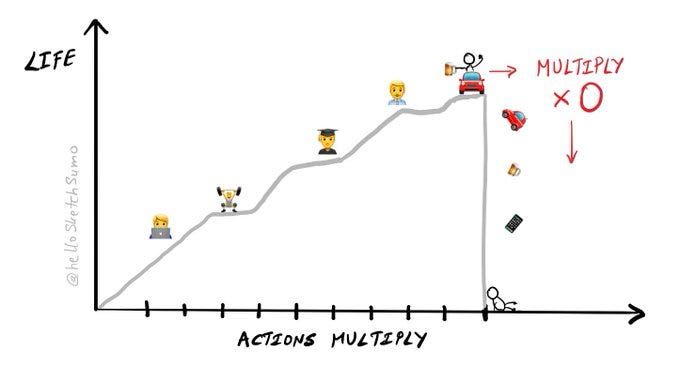
Get more notes at https://podcastnotes.org This member’s only content is a compilation of several podcasts that will teach you about the importance of mental models and how they can help you improve your decision-making process.Get the FULL COLLECTIONKey Takeaways:* Mental Model: Direction Over Speed* If you’re pointed in the wrong direction, it doesn’t matter how fast you’re traveling* Mental Model: Availability Bias* Design your environment to the best of your availability to limit your temptation to perform unwise actions* Mental Model: Hanlon’s Razor* Don’t attribute to malice what can be attributed to stupidity. Don’t assume someone did something because they’re a bad person, assume they did it out of stupidity.* Mental Model: George Mack’s Razor* When presented with two options, choose the one that brings a greater amount of luck.* Mental Model: Zeitheimer’s* Every generation tends to assume their problems are the absolute worst – we forget about the daily struggles of our ancestors* Our generation is complaining about social media addiction – people less than a hundred years ago were dying on battlefields during world wars* Mental Model: Signal vs. Noise* This mental model is all about how to distinguish the high-intensity/useful information (the stuff that actually matters) from the noise* If a book has been around for 100 years, you can assume it’ll be around for 100 additional years (this is also known as the Lindy Effect)Defining Mental Models* A mental model is ways of taking principles from different disciplines and applying them to make better decisions* Helpful mental models:* Be careful of actions that would multiple your life by 0* Don’t take any risk that might make your life go to zero* E.g: It’s great if you exercise and don’t smoke, but if you drive drunk you could go to jail or end up deadMental Model: The Map is Not the Territory* Check out Shane’s blog post on the topic* A few examples:* A balance sheet is the map of a business, but it doesn’t fully represent the company* An employee satisfaction survey (a map) is only a glimpse of the entire terrain (everything going on within the company)* “If you become exclusive to one map, you’re less likely to identify when the terrain changes” – Shane Parrish* “There’s always an imperfect relationship between reality and the models we use to represent and understand them, but it’s necessary in order to simplify things because we can’t deal with the world in all of its complexity” – Shane Parrish* Like online dating* The “map” (someone’s profile) doesn’t match the overall person – they’ll often be completely different* The size of your email list is a map, but it doesn’t tell you about the territory* It doesn’t tell you about the open rates, the engagements, or whether people care if they receive the emails* Business targets/projections are another example* For one, they’re often pulled out of thin air* The growth target doesn’t, in fact, indicate what’s possible* “If you could 10x something, why would you be happy with 5x, and if 5x’ing something is, in fact, impossible, why would you be disappointed with 4x?” – SamMental Model: The Unforced Error* This mental model comes from Super Thinking: The Big Book of Mental Models by Gabriel Weinberg* The concept: do all you can to prepare to avoid bad outcomes* Ex: Dress well to avoid making a bad first impression* Ex: Don’t text while driving to avoid getting in a car crash* “An unforced error is the most basic way you can be wrong. Independent of all other circumstances, you done f**ked up.” – ChrisMental Model: Anti-fragility* This one originates from Nassim Taleb, author of Antifragile, and a few other classics – The Black Swan, Fooled by Randomness, and Skin in the Game* The main idea – Become someone who thrives and improves from disorder* Think of a glass cup: if you drop it on the floor (disorder), it breaks (AKA it’s fragile)* How can you do this? – There are quite a few ways:* Have multiple sources of income – this way, if you lose your job (disorder), you’ll be fine* Exercise and build strength – if you stumble and lose your balance, you’re more likely not to hurt yourself* Look for business opportunities where no matter what happens, you’ll experience an upsideMental Model: Finding Good in the Bad* This one originates from Josh Waitzkin in his first appearance on The Tim Ferriss Show* It’s very easy to get bummed out when it rains and let it affect your mood* Josh realized parents instill this in their kids by encouraging them to stay inside when it’s raining rather going out to actually enjoy the “bad” weather* So, he flipped it. Josh taught his son to look at rain and think: “Oh, look at how beautiful it is! Let’s go outside and enjoy it!”* George adds – “When everything’s going bad, I say ‘good.’ When everything’s going good, I say ‘bad.’”* When times are good, it’s quite easy to take your foot off the gas* When times are bad, it’s an opportunity to thriveMental Model: Surround Yourself

PN Deep Dive: Huberman Lab Sleep Collection: Protocols & Science
Get more notes at https://podcastnotes.org Podcast Notes Premium Collection: Huberman and SleepGet the FULL NOTESIntro to Sleep* Sleep cycles & Architecture: non-REM and REM play for brain domination throughout the night in 90-minute cycles – this is the standard architecture of sleep* Ratio of non-REM and REM throughout the night: the first half of the night is dominated by non-REM deep sleep; the second half of our sleep is dominated by REM sleep* Not everyone’s sleep cycles are 90 minutes: sleep architecture is fairly consistent within a person, but can be different across people* Non-REM Sleep: Non-REM deep sleep is divided into four stages, increasing in the depth of sleep: stages 1 and 2 are light stages of non-REM deep sleep; stages 3 and 4 are deep stages of non-REM deep sleep* In stages 1 and 2: the heart rate begins to drop, and brain wave activity slows down* In stages 3 and 4: the heart rate is low, cells in the cortex fire together then go silent* During non-REM deep sleep, we get autonomic restoration and regulation of heart rate and blood pressure* Hypnogogic Jerks: during stage 1 you experience mini dreams s you’re starting to drift off and can almost wake yourself up in this stage – sometimes you experience a jerk in your body as a result of loss of proprioceptive feedback* Don’t miss these notes about how Salvador Dali used the hypnogogic state to be creative (Slumber with a Key)* …Quantity, Quality, Regularity, and Timing (QQRT): The macros of sleep* Quantity: the average adult needs between 7-9 hours of sleep per night – but the reality is more complex* Quantity alone doesn’t tell the full story* …Carbs, Caffeine and THC* Carbs in AM vs. PM: research does seem to support that your body is better able to metabolize carbohydrates in the morning versus evening if you’re concerned about your blood sugar and metabolic health* Eating Before Bed: In gener…Sleep Supplements* Magnesium Threonate or Glycinate, 145mg, 30-60 minutes before sleep* Magnesium chloride can be effective for bioavailability by way of muscle relaxation* Apigenin: 50mg, 30-60 minutes before sleep* Theanine: 100-400mg, 30-60 minutes before sleep (Do NOT take Theanine if you are prone to night terrors or sleepwalking)* Inositol* Glycine: 1.5-2gPhosphatidylserine will dampen cortisol response* Check out the full Momentous Huberman sleep stack & use promo code PODCASTNOTES for 15% off at checkout!Sleep Tips* 1. Do Nothing! If you are struggling with sleep and had a bad night of sleep, do not sleep in later, do not go to bed earlier, do not increase caffeine intake, do not compensate with a nap* 2. Time rescheduling/sleep restriction therapy: if you are spending too much time in bed, your brain is not efficient; it’s like being in the gym for hours a day but spending most of the time scrolling on your phone – you’re not really getting a good workout like if you know you only have 45 minutes to workout* 3. Don’t underestimate the importance of a winddown routine: whatever you enjoy for relaxation, build it into your regimen to help you decelerate* 4. Do NOT count sheep, instead take yourself on a mental walk: counting sheep actually makes you stay awake longer; instead, get your mind off itself by going through a rudimentary walk with hyper-detail – imagine putting your shoes on, opening the door, crossing the street, imagine the signs you see, look at the flowers, etc.* 5. Remove …* Monophasic sleep: Single bout of sleep in 24 hour period* Biphasic sleep: Two bouts of sleep in 24 hour period* Polyphasic sleep: …Napping* Naps are a Double-Edged Sword: If you struggle with sleep at night, do not nap during the day in order to build up sleepiness and hopefully sleep at night* Cons of Napping: Naps remove sleep pressure (adenosine) so if you struggle with sleep, you are setting yourself up for worse sleep because you’ve removed some of the sleepiness you need* Pros of Napping: If napping does not disrupt your sleep and leaves you feeling better, go ahead and nap but be cautious of napping too late which can disrupt sleep* Are Naps Right F…* Super Charged Nap: Swig espresso right before napping + nap 20 minutes + cold water to hands and face upon waking + immediate daylight 5-10 minutes outside3 Ways Sleep is Essential for Learning:* 1: We need sleep before learning to start the initial imprint and laying the tracks; sleep before learning is critical* 2: We also need sleep after learning to cement the information in our brain* 3: We need sleep to integrate the new information with previously learned information we have stored* Exactly How Much an All-Nighter Impacts Memory: Pulling an all-nighter leads to deficits of up to 40% in making new memories* …* Symptoms of REM Sleep Deprivation: Paranoia, hallucination, aspects of psychosis (with enough time)* Bad Sleep, And Then: When sleep deprived, you’re excessively reactive and hypersensitive, particularly to reward-based activities – dopamine circuits are overactive when yo

PN Deep Dive: 📝 David Deutsch, Scott Galloway, _Mike Cernovich, _Jensen Huang, 2X Huberman, and Tyler Cowen
Get more notes at https://podcastnotes.org Time Saved This Week: 8 Hours, 53 MinutesNEW Premium NotesDavid Deutsch: Chemical Scum that Dream of Distant Quasars | TED In this TEDTalk from 2005, David Deutsch (@DavidDeutschOxf) was tasked with going out on a limb and saying something surprising. The result? A profound exploration titled Chemical Scum That Dream of Distant Quasars where he redefines humanity’s place in the universe and celebrates the limitless potential of human knowledge. Though the title might sound nerdy or even a bit intimidating, these Premium Podcast Notes break down every element of this groundbreaking TED Talk, revealing powerful principles of problem-solving that could transform how you see your role in fostering the endless growth of knowledge and shaping a better future.Scott Galloway on How Stoicism Can Benefit Young Men | Daily Stoic with Ryan HolidayScott Galloway on "Intergenerational Theft" and why Stoicism can help young men who are struggling now more than ever. Go Premium to learn why young men are struggling, how to protect the middle class, the value of being a Nation, how to be successful, truths about money and more.Mike Cernovich – Escaping Sam Altman’s Techno-Slavery | Zero Hour with James PoulosMike Cernovich discusses Sam Altman's Techno-Gnostic archetype, secular fatalism, Greco-Roman principles, consciousness, and more. This is not your average podcast and not to be missed.Upgrade to Premium to Get 3 Premium Notes Every Week, the Full Newsletter, Playable Timestamps, AI Powered Answers, Unlock 500+ Premium Posts, No Ads and MOREGo PREMIUMTop Premium Takeaways Of The WeekDavid Deutsch: Chemical Scum that Dream of Distant Quasars | TED Is Earth Special? Two Possible Theories…* Theory #1: Earth is very untypical and uniquely suited...* “Spaceship Earth” = ...* If we destroy the ...* Theory #2: Earth is typical and human beings are not ...* “The human race is just a chemical scum on a moderate-sized planet, orbiting around a very average star in the outer suburb of ...” – Stephen Hawking* Key Takeaway: “So, especially if you regard them as deep truths to form cornerstones of your world view and inform your life-decisions, they appear somewhat in ...” – David DeutschEarth is Very Not Typical: “Deep, intergalactic space is completely dark. It is so dark that if you were to look at the nearest star to you, and that star were to explode as a supernova, and you were staring directly at it at the moment when its light reached you, then ...”– David DeutschHumans are Very Special Chemical Scum: “Therefore we are chemical scum that’s different. This chemical scum has universality. Its structure contains, with ever-increasing ...” – David Deutsch* “The fact that the laws of physics permit – and even mandate – ...” – David Deutsch3 pre-requisite resources for the open-ended creation of knowledge:* Matter: the growth of knowledge is a ...* Energy: the inputs required to ...* Evidence: the laws of physics saturate the ...Resources are abundant, knowledge is scarce: If something isn’t forbidden by the ...Our Sacred Responsibility as Humans: “Species go extinct. All the time. Civilizations end. The vast majority of all species and all civilizations that have ever existed are now history. If we want to be exceptions ...” – David DeutschScott Galloway on How Stoicism Can Benefit Young Men | Daily Stoic with Ryan HolidayThe Epicenter of Today’s Problem: For the first time in the nation’s three-century history, a thirty-year-old person today is doing worse than ...* “When the majority of kids aren’t doing as ...” – Scott GallowayThe nation is a feature, not a bug: The most successful people in tech should have more ...Understanding Power Laws and the Pareto Principle: A very small percentage of people will ...Advice for young people on how to be successful: Put yourself in rooms of ...The trope “money can’t buy happiness” is a myth: Studies show that middle-income people are ...Young Men Are In Trouble: Young men in America are ...* 4x more likely to kill themselves* Four out of five suicides involve men* There is a certain amount of resentment and ...Understanding Stoicism: Stoicism is a philosophy that teaches ...Why Billionaires Become Billionaires (narrative violation): Generally, billionaires are good high-character people; one of ...Emotional advice from Scott: * If something moves you, lean into that emotion and learn how to cry* Figure out a way to ...* Lean into feeling your ...* To not lean into ...* You will get to know ...Mike Cernovich – Escaping Sam Altman’s Techno-Slavery | Zero Hour with James PoulosThe Fallacy of Pendulum Theory: There is no law of the universe that says things have to swing back and forth between ...* The political right tends to have a certain ...America has submitted to its base-lower impulses * Book recommendation: Nicomachean Ethics by Aristotle* Many Americans have lost touch with what ...* It

PN Deep Dive: Peter Thiel, Marc Andreessen, Tim Cook, Huberman on Pain and Parenting, Hetty Green and Mark Zuckerberg
Get more notes at https://podcastnotes.org Time Saved This Week: 13 Hours, 45 MinutesNEW Premium NotesPeter Thiel | Tetragrammaton with Rick Rubin Peter Thiel (@peterthiel) is an entrepreneur, investor, and philanthropist who has appeared in many Podcast Notes over the years. However, legendary producer Rick Rubin still somehow managed to peel back new layers of Peter’s life, revealing how he flipped the script from ordinary Stanford law school graduate to one of the most prominent entrepreneurs of his generation. These two titans of industry also discuss the student debt crisis, the progression of AI relative to the dot-com bubble, the current state of Silicon Valley, and much more!Marc Andreessen: It’s Morning Again In America | Uncommon Knowledge with Peter RobinsonIt’s time for another podcast episode with the chief ideologist of the Silicon Valley elite, Marc Andreessen (@pmarca)! In this episode, Marc talks about how technology and politics have changed in Silicon Valley, his shift from left to right, and how he believes innovation can solve big issues like energy, border security, and defenseTim Cook: What It Takes to Run Apple, the World’s Largest Company | Dua Lipa: At Your ServiceA wild Tim Cook appeared! The Apple CEO sat down with Dua Lipa for a rare podcast interview to answer about his daily routine, favorite national parks, and books, Apple’s climate goals, leadership philosophy, and even tackling the big question: does Apple use child labor for cobalt?Upgrade to Premium to Get 3 Premium Notes Every Week, the Full Newsletter, Playable Timestamps, AI Powered Answers, Unlock 500+ Premium Posts, No Ads and MOREGo PREMIUMTop Premium Takeaways Of The WeekPeter Thiel | Tetragrammaton with Rick Rubin Peter's Quarter Life Crisis: “I ended up at a top New York law firm. It was one of these very strange places where from the outside ....” – Peter ThielStudent Loan Nightmare: Of 1997 graduates, almost all of them paid off their debt within XX years. Of 2009 graduates, the median student after 12 years has ,,,* “If you make the colleges even partially responsible, ...” – Peter ThielYou Can Just Buy Users Instead of Ads: Paypal gave $10 to create an account, another $10 ...Competition is for Losers: Capitalism and competition are opposites...IPO's Are Awful: Taking a company public is in part a government takeover* The accountants and lawyers get...Peak Insanity to Peak Clarity: “Maybe AI is like the internet in 1999, where ...The Origin of the Name Palantir and Its Goal: Palantíri in Lord of the Rings were ...* Palantir = more security without...Contrarian: A controversial idea isn’t automatically correct, but ...Marc Andreessen: It’s Morning Again In America | Uncommon Knowledge with Peter Robinson3 Targets of DOGE:* Headcount (like, how many people work in the government)* ....* ...Afuera: Did you know? There are XXX federal agencies* “There’s a rumor going around that nobody actually knows the number of federal agencies.” – MarcAbandoned Offices: A lot of these federal buildings in D.C. are empty* Occupancy is around...* Some only work ...Techno Optimism: “We are told that technology takes our jobs, reduces our wages, increases inequality, and is ever on the verge of ruining everything. But our ...” – MarcTrump and Systems Thinking: And when you’re good at real estate, you learn what’s called ...Project Independence: The idea? Build ...* But then, Nixon created the EPA and the Nuclear Regulatory Commission, and they ...* Marc’s devious plan: Bring back Project Independence and have someone like ...Small Nuclear is a Solved Problem: The U.S. has been building small nuclear reactors for ...Wide Open Border: Out of those, 2.5 million people were released into the U.S. while waiting for their cases* Another 2 million crossed without being caught* Total? At least 4.5 million illegal entries during Biden’s termIs Technology Bad for Jobs? Lower costs give consumers and businesses more spending power to ...* The enemy isn’t technology-driven unemployment; it’s ...No Growth Stagnation: UK, Germany, and Canada have fallen into a “no growth” trap, resulting in ...Tim Cook: What It Takes to Run Apple, the World’s Largest Company | Dua Lipa: At Your Service3 qualities Apple looks for in employees: * Collaboration: The ability to...* Curiosity: A passion for ....* ....Tim shares 5 books that have shaped him:* To Kill a Mockingbird – A formative read for young students and everyone* Shoe Dog by Phil Knight – A book on business and life* ...1+1=3? Your idea + my idea is ...Tim Cook on leadership: “I try to be a leader that deeply believes in collaboration because ...”About that Cobalt: Tim Cook 100% guarantees that the cobalt ...Tim's Daily Routine:* He wakes up very early, typically around 4 to 5 a.m.* He spends the first hour of the day ...* After emails, he spends an hour ...* After that, he goes to ....Top 5 National Parks:* Yosemite (his local park)* Grand

PN Deep Dive: The Naval Podcast | How to Get Rich: Episodes 20-39 (Lessons in Life, Entrepreneurship, and Building Wealth from Naval Ravikant)
Get more notes at https://podcastnotes.org Product and Media are the Leverage of the New Wealth (Listen) | Episode 21* The most important form of leverage is the idea of products which have no marginal cost of replication (aka product leverage)* You can replicate your efforts without having to involve other humans* Ex. – A podcast* Long ago, to get similar reach, you would have had to give a public lecture* 30-40 years ago – you would have had to get on TV* But today, thanks to the internet, anyone can launch a podcast* Product leverage is how fortunes will be made in the digital age – using things like code or media* Ex. of people who utilized code-based product leverage – Mark Zuckerberg, Jeff Bezos, Sergey Brin* Ex. of media-based product leverage – Joe Rogan, PewDiePie* Combining labor leverage, capital leverage, and product leverage is a magic combination for tech startups (for more on labor and capital leverage, check out these Podcast Notes)* You use the minimum, highest output labor – engineers and product developers* You add capital which you can use for marketing, advertising, and scaling* You then add lots of code, media, and content to get everything out there* Product and media leverage are permisionless – they don’t require someone else’s permission for you to use them or succeed* For labor leverage – someone has to decide to follow you* For capital leverage – someone has to give you money* But coding, writing tweets, making podcasts, YouTubing – these are permissionless* The robot revolution has already arrived – we just keep them in data centers/servers* Think – every great software developer has an army of robots working for him/her at night, while they sleep, after they’ve written the code and they’re just cranking away* Robots do web searching for you* Robots handle customer service inquiries* Over time, this will progress to autonomous vehicles/planes/trucks* Coding is a superpower because it allows you to speak the language of the robots and tell them what to doProduct Leverage is Egalitarian in its Outputs (Listen) | Episode 22* Product (both code-based and media-based) leverage is egalitarian in its outputs* Compare this to labor and capital leverage – which are much less egalitarian* In general – the more of a human element there is in providing a service, the less egalitarian it is* “It’s the nature of code and media output that the same product is accessible to everybody…The best products tend to be at the center, at the sweet spot of the middle class, rather than being targeted to the upper class.” – Naval Ravikant* For example:* Things like Netflix and Facebook – everybody can use* Compare this to Rolex watches or a Lamborghini – using/owning them is much more related to status-seeking* As the forms of leverage have gone from being labor-based and capital-based to being more product/code/media-based – “Most of the goods and services that we consume are becoming much more egalitarian in their consumption”* Things like food – rich people don’t eat better food* Technology and media products have amazing scale economies* “If you care about ethics in wealth creation, it’s better to create your wealth using code and media as leverage. Then those products are equally available to everybody as opposed to trying to create your wealth through labor or capital.” – Naval Ravikant* “If you’re wealthy today, for large classes of things, you tend to spend your money on signaling goods to show other people that you are wealthy, and you try and convert them to status as opposed to actually consuming the goods for their own sake” – Naval RavikantBusiness Models Have Their Own Leverage (Listen) | Episode 23* Some business models give you “free leverage” – Examples:* Scale economies = the more you produce of something, the cheaper it gets to make* Technology and media products have this great quality where they have zero marginal cost of reproduction* Thinks like podcasts and YouTube videos* Ex. – Joe Rogan is working no harder now than he was on podcast #1, but it’s now generating millions more* Then there are network effects businesses* A network effect is when each additional user adds value to the existing user base* Like language – The language becomes more valuable the more people who speak it* “Long-term, the entire world is probably going to end up speaking English and Chinese” – Naval Ravikant* It’s thought that the value of a network is proportional to the square of the number of nodes of the network* A network of size 10 would have a value of 100, while a network of size 100 would have a value of 10,000* “You want to be in a network effects business” – Naval Ravikant* Things like Facebook, Uber, Twitter, YouTube, Google* “You should always be thinking about how your users or customers can add value to each other because that is the ultimate form of leverage” – Naval Ravikant* When you’re picking a business model, aim to pick one where you can benefit from network effects, low marginal cos

PN Deep Dive: 📝Thomas Sowell, Mark Sisson on Longevity, $$$ Tips for Couples, Ibogaine, Alex Karp - Palantir, Huberlearning, Lex Snagged Zelenskyy, Crime and Punishment (Free)
Get more notes at https://podcastnotes.org Top Premium Takeaways Of The WeekThomas Sowell on the Myths of Economic Inequality | Uncommon Knowledge with Peter Robinson (2018) Results, Not Intentions: Poor people, including African Americans in the United States, were living increasingly better lives throughout the 20th century until the government decided to help (through the welfare state)* “Despite the grand myth that black economic progress began or accelerated with the passage of the Civil Rights laws and the ‘War on Poverty’ programs of the 1960s, the fact is that the poverty rate among blacks fell from 87% in 1940 to 47% in 1960, but over the next 20 years the poverty rate among blacks fell another 18% points. This was just the continuation of a previous economic trend but at a slower rate of progress. It was not some grand deliverance.” – Thomas SowellAffirmative Action Hurts: “There’s a lot of evidence that there are black kids who have all the qualifications to be successors in college, who nevertheless ...” – Thomas Sowell* Thomas states that black students in the 75th percentile — who would have been successful at a majority of universities — were getting into ...Smart Idiots Are in Charge: “There are so many people, among the intelligentsia especially, who are...”– Thomas Sowell* Human beings have an enormous capacity to rationalize, we become ...Longevity Protocols, Fat Loss Secrets, & Anti-Aging Tips | Mark Sisson on The Genius Life with Max LugavereThe Original Primal Blueprint: * Move around a lot and do ...* Lift heavy things at ...* Sprint max-effort ...The United States of Pharma: The average baby boomer takes XX prescription drugs everyday just to get by* About 6.1% take YY+ prescription drugs per day* Can any doctor know how all of these drugs interact with each other?The 3 Defining Characteristics of Longevity: Mobility, ...Stop Run Maxxing: “Running” is not the panacea for health as it has been advertised; in fact, marathon training is ...* Running is not the best way to ...* Today, about 50% of runners get injured at ...The Fat Runner's Trap: If you go for a run as an overweight person, but have not reset your ...The skinny-fat runner physique: Runners who never learned how to ...The major benefits of walking: * Walking, either barefoot or in minimalist shoes, passively trains our ability to support and orchestrate our unique kinetic chain* Walking helps to ...* The majority of cardio exercise should be in Zone 2: the max heart rate in which you burn the most amount of fat without needing to tap glycogen stores for fuelHow to roughly calculate your Zone 2 heart rate: Subtract your age from 180How to know if you are training in Zone 2: You can have a conversation with someone while you are doing the activity, but it is a little uncomfortableThe Power of Consistency: Mediocre workouts performed consistently are better than “perfect” workouts performed inconsistencyA pre-workout mix: Collagen, LMNT electrolytes, and creatine* Ingest collagen before a workout so that ...Book recommendation: Deep Nutrition by Catherine Shanahan 56 Minutes of Money Wisdom for High-Earning Couples | My First Million4 key numbers you need to know in your financial infrastructure:* Fixed costs (rent, mortgage, groceries, debt, auto): XX% of take-home pay* Investments: XX% (that’s where real wealth is created so the higher the better)* Savings (emergency fund, saving for a down payment, or even for a kid’s activity or vacation): XX%* Guilt-free spending (eating out, travel): XX%4 money types: avoiders, optimizers, worriers, dreamers* Avoiders (most common): ...* Optimizers: ...* Worriers: ...* Dreamers: ...The Business of Marriage: “When you are married, you are running a business—it is the business of ...Half of Couples NEVER Talk Money: “XXX% of couples who talk to me do not know their household income.” – RamitHow to address disagreements:* Define your rich life as a couple: Ask, “What do we ...* Avoid “$3 conversations”: If your household income is ...Set up a proper account system:* Use a joint account for ...* Have some money flow into ...* Each partner can spend their allocated money guilt-free on whatever they want, whether it’s $5 iced tea or a $20 tip4 Step Annual Review:* Step 1: Look through photos from the year. What were your most memorable moments?* Step 2: Ask questions like, ...* Step 3: Review what you loved ...* Step 4: Review the numbers: ...Upgrade to Premium to Read the Full Newsletter, Playable Timestamps, AI Powered Answers, Unlock 300+ Premium Posts, No Ads and MOREGo PREMIUMRick Perry & W. Bryan Hubbard: The Most Sophisticated Medication on the Planet | Joe Rogan Experience (#2251) The Magic of Ibogaine: Ibogaine can fully resolve physiological opioid dependence with a single administration for 80% of people the first time, and 97% with a second dose!How ibogaine works: “Ibogaine has this incredible ability to reset

PN Deep Dive: Naval Ravikant: How to Get Rich, Episodes 6-20
Get more notes at https://podcastnotes.org Live Below Your Means For Freedom (Listen) Episode 6* “People who are living far below their means enjoy a freedom that people busy upgrading their lifestyle just can’t fathom” – Naval Ravikant* Once you start making money, keep living like your old/poorer self* When you upgrade your life as you make more money, you just stay in the “wage slave trap”* Nassim Taleb has said – “The most dangerous things are heroin and a monthly salary”* They’re both highly addictive* One reason the very high marginal tax rates for the so-called wealthy are flawed:* For many people, they toil/work extremely hard for decades, and then it finally pays off with a massive payday* “Then of course Uncle Sam shows up, and basically says, ‘Hey, you know what, you just made a lot of money this year. Therefore, you’re rich. Therefore, you’re evil and you’ve got to hand it all over to us.’ So, it just destroys those kinds of creative risk-taking professions.” – Naval RavikantGive Society What it Doesn’t Know How to Get (Listen) | Episode 7* Get rich by giving society what it doesn’t yet know how to get – at scale* Money is like an IOU from society for something you did good in the past, that you can use in the future* “Society always wants new things and if you want to be wealthy, figure out which one of those things you can provide for society that it does not yet know how to get, but it will want, that’s natural to you and within your capabilities. And then you have to figure out how to scale it.” – Naval Ravikant* Creations start as just an act of creativity* Then, for a little while, only rich people have it (like a chauffeur)* Then it makes its way to everyone (like Uber)* “Entrepreneurship is essentially an act of creating something new from scratch, predicting that society will want it, and then figuring out how to scale it and get it to everybody in a profitable and self-sustaining way.” – Naval RavikantThe Internet Has Massively Broadened Career Possibilities (Listen) | Episode 8* “The internet has massively broadened the possible space of careers. Most people haven’t figured this out yet.” – Naval Ravikant* The internet connects everyone on the planet* This means that you can find an audience for your product/service no matter how far away they are* “The internet allows any niche obsession…from people who collect snakes to people who like to ride hot air balloons to people who like to sail around the world by themselves…whatever nice obsession you have, the internet allows you to scale.” – Naval Ravikant* “If you want to reach 50,000 passionate people like you, there’s an audience out there for you”* “Each person on Earth has different interests and obsessions, and it’s that diversity that becomes a creative superpower” – Naval Ravikant* Before the internet – this didn’t really matter* Your town/village didn’t necessarily need your unique creative skill* But now – you can go out on the internet and find your audience and utilize that to build wealth* The space of careers has been broadened -Examples:* People are now able to upload videos to Youtube to make a living – this wasn’t possible 50 years ago* Professional bloggers* Podcasters – Joe Rogan makes about $100 million per year from his podcast alone* “The internet enables any niche interest, as long as you’re the best at it, to scale-out” – Naval Ravikant* Because every human is different, everyone is the best at something* “Escape competition through authenticity” – Naval Ravikant* Just do your own thing – “No one can compete with you on being you”* “The more authentic you are, the less competition you’re gonna have”Play Long-term Games With Long-term People (Listen) | Episode 9* “All the benefits in life come from compound interest” – Naval Ravikant* Whether it’s in relationships, life, your career, health, or learning* Long-term games are good for both compound interest AND trust* If you want to be successful, more likely than not, you’ll need to work with other people* You’ll need to figure out who you can trust over a long period of time, so you can keep working with them so that eventually compound interest will let you collect the major rewards* If you keep switching careers/networks – compound interest can’t take effect* Add to that – you won’t know who to trust and your new network won’t know to trust you* “It’s important to pick an industry where you can play long-term games with long-term people” – Naval Ravikant* A good analogy:* In a long-term game, everyone is making each other rich* It’s positive-sum* In a short-term game, everyone is making themselves richPick Partners With Intelligence, Energy and Integrity (Listen) | Episode 10* Pick people to work with who have high intelligence, high energy, and high integrity – you CANNOT compromise on this* The world is full of smart/lazy people – this is why high energy is important* But high integrity is the most important* Otherwise, you just have a smart/hardworking crook w

PN Deep Dive: HuberLearning, Esther Perel, Top Modern Wisdom of 2024, The Evil if PBMs, Jordan Peterson, Jared Kushner, and Notes from the Underground
Get more notes at https://podcastnotes.org Essentials: How To Learn Faster By Using Failures, Movement & Balance | Huberman Lab To enhance neuroplasticity as an adult:* 1: Pay attention to how you’re arriving at the learning bout – too alert? Too tired?* 2: Make errors* 3: Vestibular-motor sensory relationship is key – our bodies are designed to refocus if we’re off balance (literally, move in different planes)* 4: Set a continency – learning will be accelerated if there’s an important reason why we’re learning* 5: Try smaller bouts of learning for smaller bits of information – don’t try to learn a lot of information in one bout as an adultRepresentational plasticity: Internal representation of the outside world – our maps of the motor and sensory world are merged* “The way to create plasticity is to send signals to the brain that something is wrong, something is different, and something isn’t being achieved.” – Andrew HubermanLimbic friction: The nuanced …Reignite Your Relationship: Esther Perel On Desire, Intimacy, Sex, & Long-Term Love | The Rich Roll Podcast The four horsemen of apocalypse and relationships: indifference, criticism, defensiveness, and contemptEmotional Capitalism: “We are constantly urged to maximize and optimize our choices. We sometimes end up evaluating ourselves as products where we have to deal with comparison as the thief of joy. We partake in a frenzy of romantic consumerism where we are sometimes afraid to commit to the good for the fear of missing out on the perfect.”– Esther Perel* We have unrealistic expectations that our romantic partner can check every box… “an over-burdened system with an under-resourced reality”* This includes traditional expectations, like offering companionship, economic support, stable family life, and social status* Also includes more modern expectations, such as being your best friend, trusted confidant, intellectual equal, efficient co-parent, fitness buddy, professional coach, and personal development guru* Oh, and last but not least, being a passionate lover for the long haulRelationship Ecosystems: Relationships are not stories of two, they are an ecosystem* Family, friends, and mentors are all part of your relationship ecosystemShadow People: People who are no longer alive or no longer in your life that affect your future emotions and behaviors, both positively and negatively* “I wish my mother was here to see this…”* “I let my ex get away with that, not this time…”* Self-awareness of shadow people is essentialBeing Stuck: You’re stuck in increasingly rapid cycles of blame and defense* Confirmation Bias: only regarding evidence that reinforces your belief* Fundamental Attribution Error: believing you are more complex than your partner* SOLUTION: write down everything your partner does that is for the good of the relationship….Best Moments of Modern Wisdom In 2024 – Weinstein, Huberman, Tim Ferriss, Hormozi, Rhonda Patrick, & More with Chris WilliamsonLeave the Kids Alone: “Get away from our sons and away from our daughters. It’s not left or right. I don’t have a Republican bone in my body. Get the crazy people who do not understand human development away from our children.” – Eric WeinsteinHard Choices, Easy Life: “Everything worth doing is hard – and the more worth doing it is, the harder it is. The greater the payoff, the greater the hardship. If it’s hard, good. It means no one else will do it. More for you.” – Alex HormoziThe Selection Effect of Competition: If you are on a clear path toward a goal, you should get excited when things get harder because you know that no one else will followTension Over All: Focus on getting tension in the muscle that you are targeting; getting tension in the muscle you are trying to grow is more significant than focusing on which exercise movement is best…Brigham Buhler – UnitedHealthcare CEO Assassination & The Mass Monetization of Chronic Disease | The Tucker Carlson ShowPBM Scam: Roughly 30% of the cost of every prescription drug is because of the kickback that goes to a PBM; the drugmaker pays the Pharmacy Benefit Manager (PBM) the kickback in order to be placed on the preferred contract with the insurance companyMoney Before Health: The drugs that get put on formulary do not have to do with efficacy or what is best for the patient; instead, it is about which drugs have the biggest kickbacks for PBMsThe three pillars of the chronic disease crisis: (1) Big Pharma (2) The food industry and (3) The insurance industry….Jordan Peterson: How to Best Guide Your Life Decisions & Path | Huberman LabPorn is Not Natural: “We have a situation where any 13-year-old boy can see more hyper attractive super stimulus women in one day than the most successful man who lived 100 years ago would have ever seen in his whole life.”– PetersonReal Food Makes Sense to Your Brain: One big thing you learn from following a clean diet is the relationship between the taste of the food, volume, macronu

PN Deep Dive: Naval Ravikant's Guide to Wealth - Episodes 1-5
Get more notes at https://podcastnotes.org This podcast consists of a conversation between Naval Ravikant and Babak Nivi going over Naval’s famous How to Get Rich tweetstorm.Key Takeaways* Wealth buys you freedom* EVERYONE can be rich* Aim to become so good at something, that luck eventually finds you* Over time, it isn’t luck – it’s destiny* You’re not going to get rich renting out your time* Aim to have a job, career, or profession where your inputs don’t match your outputs* People who are living far below their means enjoy a freedom that people busy upgrading their lifestyle just can’t fathom* Get rich by giving society what it doesn’t yet know how to get – at scale* The internet has massively broadened the space of possible careers* Whatever nice obsession you have, the internet allows you to scale it* Escape competition through authenticity* All the benefits in life come from compound interest* Whether it’s in relationships, life, your career, health, or learning* Pick people to work with who have high intelligence, high energy, and high integrity – you CANNOT compromise on this* Really successful people have an action bias* Arm yourself with specific knowledge* Specific knowledge is the stuff that feels like play to you but looks like work to others. It’s found by pursuing your innate talents, your genuine curiosity, and your passion.* Learning to build AND sell products is a superpower* Read what you love until you love to read* The 5 most important skills are reading, writing, arithmetic, persuasion, and computer programming* The number of iterations drives the learning curve* Get comfortable with frequent, small failures* If you’re willing to bleed a little bit every day, but in exchange, you win big later, you’ll be better off* Embrace accountability and take business risks under your own name. Society will reward you with responsibility, equity, and leverage* Product leverage is how fortunes will be made in the digital age – using things like code or media* Product and media leverage are permisionless – they don’t require someone else’s permission for you to use them or succeed* Wisdom is knowing the long-term consequences of your actions* Judgment is wisdom on a personal domain (wisdom applied to external problems)* The people with the best judgment are actually among the least emotional* Set and enforce an aspirational hourly rate* If you can outsource something for less than your hourly rate, outsource it* The hierarchy of importance:* What you work on* Picking the right people to work with* How hard you work* A busy calendar and a busy mind will destroy your ability to do great things in this world* Become the best in the world at what you do. Keep redefining what you do until this is true.* Reject most advice, but remember you have to listen to/read enough of it to know what to reject and what to accept* Your physical health, your mental health, and your relationships will most likely bring you more peace and happiness than any amount of money ever will* Productize yourself* Create a product out of whatever it is you do naturally and uniquely well* Being honest leaves you with a clear mind* “A lot of wisdom is just realizing the long-term consequences of your actions. The longer-term you’re willing to look, the wiser you’re going to seem to everybody around you.” – Naval Ravikant* Negotiations are won by whoever cares lessBooks Mentioned* Warren Buffet once went to Benjamin Graham, author of The Intelligent Investor, and offered to work for him for free so he could learn about investing* It’s important that you read foundational things (the original books in a given field which are scientific in nature)* Instead of reading a random business book, read The Wealth of Nations by Adam Smith* Instead of reading a recent book on biology or evolution, read Darwin’s On The Origin of Species* Instead of reading a recent biotech book, read The Eighth Day of Creation* Another recommendation – Richard Feynman’s Six Easy Pieces* Naval highly recommends Skin in the Game by Nassim Taleb* When Naval was younger, one of his favorite books was How to Get Rich by Felix Dennis* To learn more about randomness, check out the highly recommended book – Fooled By Randomness by Nassim Taleb* The Almanac of Naval RavikantSeek Wealth, Not Money or Status (Listen) | Episode 1* Having wealth means having assets that earn while you sleep* “The reason you want wealth is because it buys you freedom, so you don’t have to wear a tie like a collar around your neck, so you don’t have to wake up at 7 AM and rush to work in traffic, so you don’t have to waste away your entire life grinding all your productive hours away to a soulless job that doesn’t fulfill you.” – Naval Ravikant* Money is how we transfer wealth* “Money won’t solve all your problems, but it will solve all your money problems” – Naval Ravikant* Wealth is a positive-sum game and status is a zero-sum gameEthical Wealth Creation Makes Abundance for the World (Listen

PN Deep Dive: Happy New Year! The Magic of Stem Cells, The Emperors of Rome, Huberman on Happiness, Micky Malka, David Senra and Danny Hillis
Get more notes at https://podcastnotes.org NEW Premium Notes5 Ways Stem Cells Will TRANSFORM What It Means To Be Healthy | The Gabby Reece Show Christian Drapeau (@stemcellchristian) is a pioneer in stem cell research. And the first to propose stem cells as the body’s innate repair system. Christian Drapeau discusses the transformative potential of stem cells in health and healing. They explore the basics of stem cells, their role in the body, the evolution of stem cell research, and the impact of aging on stem cell efficacy.The Roman Caesars’ Guide to Ruling | Barry Strauss on The Art of Manliness with Brett McKay (#1047) How often do you think about the Roman Empire? Lately, this question has gone viral, leaving many women wondering why their husband or boyfriend is reflecting on Roman history so often. The truth lies in the Empire’s enduring allure: its epic tales of power, war, ambition, innovation, and dramatic leadership. In these Premium Podcast Notes, we turn to historian Barry Strauss who gives a detailed overview of his book, Ten Caesars: Roman Emperors from Augustus to Constantine, unpacking the themes that make Rome’s legacy a timeless source of fascination.Podcast Notes Book Collection: 2024 Edition (UPDATED AND COMPLETE with 200+ Books)After reviewing all 400+ Podcast Notes we wrote in 2024, we selected a comprehensive reading list of over 200 books. Whether you’re a new parent, hopeful entrepreneur, tech geek, history buff, or just a general bookworm, there’s truly something for everyone!Top Takeaways Of The Week5 Ways Stem Cells Will TRANSFORM What It Means To Be Healthy | The Gabby Reece Show Stem Cells With Age: By age 30, you’ve lost 90% of red marrow stem cells; as stem cells disappear from the body, the loss becomes increasingly apparent over timeStem cell sources: Bone marrow, fat tissue, blood, umbilical cordYamanaka factor: Take old cells and turn them into cells with characteristics of young cellsWhy We Lose Them: “Over the past 150 years, we’ve gained an extra 50 years of lifespan. I don’t think we have the biology to have an extra 50 years naturally with full blossoming health. We need to kind of hack and tap and leverage things in our body.” – Christian DrapeauStem cells from blood (like PRP) are very potent; they’re dormant so need to be ‘awakened’. This is likely the future of stem cells and relatively new to use; the task now is to learn how to isolate and grow them for use Stem cells from the umbilical cord: The most potent – but not as mainstream because of three notable concerns:* (1) Risk of contaminated stem cells is high which can lead to sepsis;* (2) They’re difficult to isolate cleanly;* (3) You can obtain genetic material from a donor who may have been a carrier for a disease that you may develop in the futureTips to Supported Stem Cells:* Red lights might help with bodily repair, possibly by aiding blood circulation* Pulsed magnetic frequency (PMF) has been well-documents to boost stem cell frequency* Exercise releases stem cells – but this might be because if you trigger tissue damage, your body will trigger a response* Quality sleep supports the proliferation of brain stem cells* Meditation has a healing component – 20 minutes of meditation has been shown to encourage stem cell release* Plants for health: Shilajit, black seed (periodically), natto, kava (hard to source)The Roman Caesars’ Guide to Ruling | Barry Strauss on The Art of Manliness with Brett McKay (#1047) The Rise of Octavian/Augustus Caesar: Octavian, born Gaius Octavius, was Julius Caesar’s grand-nephew and was adopted posthumously as part of Caesar’s will — which was technically illegal, but law was pretty loose during civil warHow to Win the Game of Thrones: Augustus simply killed off a lot of his enemies, between several civil wars and the execution of about 100 Roman senatorsAugustus' Expansion: Octavian added Egypt, northwestern Spain, and Switzerland to the Roman EmpireThe Infamy of Nero: Nero was less interested in the empire itself and more interested in the celebrity of being Emperor* He was egotistical and also very vain about his singing and chariot racing ability* He competed in the Panhellenic Games and “won” every eventThe Truth About Nero's Fiddling While Rome Burned: There’s a rumor that Nero fiddled while Rome burned, but the fiddle technically hadn’t been invented yet. However, he may have played a lyre, which is a harp-like instrument.* There are even rumors that claim Nero started the fire, with the intent to engage in a massive urban renewal projectMarcus Aurelius, the Ivory Tower Emperor: Marcus Aurelius was a great philosopher but not a great emperor* Marcus Aurelius had no military experience or experience outside Italy, he was completely unprepared to become empowered — a common theme in the Roman Empire system* He let is son Commodus follow him as emperorCommodus, The Villain: The first man born to be emperor* Commodus was arroga

PN Deep Dive: All the Best Books of 2024, Naval is Back, The Silk Road, Daddy Huberman Came to Chat, Huberman on Focus, Dr. Mark Hyman, Satya Nadella, Ben Greenfield
Get more notes at https://podcastnotes.org Top Takeaways Of The WeekPodcast Notes Book Collection: 2024 Edition (150+ books and counting…)Business: When Helping Hurts by Steve Corbett and Brian Fikkert* One of the best books about philanthropy* Source: Brent Beshore’s recommendation to Shane Parrish (PN)Economics: The Great Wave: Price Revolutions and the Rhythm of History by David Hacket Fischer* Explores the recurring cycles of price inflation throughout history, connecting economic trends to broader social and cultural changes* Source: Rudyard Lynch’s recommendation to Tom Bilyeu (PN)Entrepreneurship: Mastery by Robert Greene* The value of mastering a skill set* Source: Sam Parr’s recommendation to Andrew Wilkinson (PN)Investing: Poor Charlie’s Almanack by Charlie Munger* Charlie Munger understood incentives and human psychology, but never used that knowledge to manipulate others* Source: Warren Buffett’s recommendation to shareholders (PN)Productivity: The Effective Executive: The Definitive Guide to Getting The Right Things Done by Peter Drucker, The 7 Habits of Highly Effective People by Stephen Covey, and Getting Things Done: The Art of Stress-Free Productivity by David Allen* Three books that embody the evolution of productivity* Source: Cal Newport recommendation to Chris Williamson (PN)Leadership: The Hard Thing About Hard Things by Ben Horowitz* Great lessons about running a business and being a leader* Source: Marc Andreessen’s recommendation to Rick Rubin (PN)Motivation: Michael Jordan: The Life by Roland Lazenby* The key insights into Michael Jordan’s competitive spirit and how it made him the greatest basketball player of all time* Source: Ben Wilson book review (PN)Seeking Truth: The Beginning of Infinity and The Fabric of Reality by David Deutsch* Naval Ravikant praises David’s work, considering him the smartest human alive* Source: Naval Ravikant and Niklas Anzinger in discussion (PN)Psychology: …Naval Ravikant: How To Know What’s True, Are We Destroying the Earth, Collectivism vs. Individualism, The Biggest Threats to Western Civilization, and More | Arjun Khemani Podcast Top 7 @naval quotes:* “how to know what’s true” edition: “Free markets are also a source of truth-seeking. For example, if I think Alphabet is a great stock and I buy it, but I turn out to be wrong, then the truth of the market will punish me as the feedback comes in, and I will lose my money.”* A group is not a truth-seeking entity: “Individuals can seek truth and then, based on that, they can choose to cooperate with others for limited periods of time to effectuate that truth or to have something come out of it.”* Are we running out of resources? Nope. “There’s not a single resource you could point to that was a resource in the classic commodity sense that had any real value where we ran out in some harmful way.”* “If climate change is an issue—and it’s hard to discuss because it’s become so politicized—we can carbon capture out of the environment.”* “Whether it’s nuclear fusion, rocketry, immortality, fighting viruses, or computing, almost all the innovation of the last 50 years has come in the unregulated industries.”* This is what AGI people get wrong: “There’s no intelligence that can fundamentally understand something humans can’t understand.”* Everybody wants the latest and greatest of everything: “Would you even go back 10 years and lose out on all the medicines, computing, knowledge, and travel we’ve invented? Absolutely not. I wouldn’t even go back to the iPhone 14.”Why You Have Advantages Over Elon and Bezos: * You probably have more time to go to the gym than they do* They have the same iPhone you do* They might eat slightly better food, but it’s basically the samePopper’s concept of falsifiability is key: Statements that can’t be disproven are meaningless, e.g., “we live in a simulation.”* The free will debate is similarly non-falsifiable and unproductiveThere’s no such thing as misinformation: “Your information is my misinformation; my information is your misinformation.”Explaining The Silk Road – History102 With Rudyard Lynch and Erik Torenberg “Totalitarianism is a very feminine attempt to gain total order over your life. It’s basically asking for daddy state to peg you harder.” – Rudyard Lynch* “The state is at best a dildo. It can never be a real penis, and thus it will never really satisfy you.” – RudyardWhat Woke Really Is: Wokeness is one of six different types of totalitarian movements in history and it perfectly fits the definition of totalitarianismWhat Was the Silk Road: The Silk Road was an emergent phenomenon that developed over thousands of years due to discrete connections between the four major Eurasian civilizations, which were Europe, the Middle East (Islam), India, and ChinaThe 3 Peaks of the Silk Road:* First peak: Roman-Han Dynasty Golden Age* Second peak: The Islamic Golden Age* Third peak: The Mongol EmpireA paradox of the Silk Road: As the system integrates clos

PN Deep Dive: Podcast Notes Book Collection: 2024 Edition
Get more notes at https://podcastnotes.org Business* Active Listening by Carl R. Rogers* Key reading for getting better at negotiations* Source: Chris Voss’s recommendation to Jordan B. Peterson (PN)* When Helping Hurts by Steve Corbett and Brian Fikkert* One of the best books about philanthropy* Source: Brent Beshore’s recommendation to Shane Parrish (PN)* Hey, Whipple, Squeeze This by Luke Sullivan* A simple guide to creating great advertisements* Source: Chris Beresford-Hill and Tim Ferriss in discussion (PN)* Words That Work by Frank Luntz* Mastering the art of words* Source: Chris Beresford-Hill and Tim Ferriss in discussion (PN)Economics* The Creature From Jekyll Island by G. Edward Griffin* Analysis of bank bailouts* Source: Michael Saylor and Peter McCormack in discussion (PN)* Broken Money by Lyn Alden* “Money” is the biggest total addressable market in the world, and the money now is currently broken* Source: Dylan LeClair recommendation (PN)* The Great Wave: Price Revolutions and the Rhythm of History by David Hacket Fischer* Explores the recurring cycles of price inflation throughout history, connecting economic trends to broader social and cultural changes* Source: Rudyard Lynch’s recommendation to Tom Bilyeu (PN)* Fiat Food: How Government, Industry, and Science Manufacture the Foods We Eat by Matthew Lysiak* Why inflation has destroyed our health and how Bitcoin may fix it* Source: Matthew Lysiak’s appearance on We Study Billionaires (PN)Entrepreneurship* Zero to One by Peter Thiel* One of the most commonly recommended books for entrepreneurs* Source: Multiple* Only The Paranoid Survive by Andrew Grove* Must read for all entrepreneurs* Source: Morgan Housel and Chris Williamson in discussion (PN)* Million Dollar Weekend: The Surprisingly Simple Way to Launch a 7-Figure Business in 48 Hours by Noah Kagan* The idea of starting a business is often so overly romanticized that people never make the jump into entrepreneurship* Source: Noah Kagen’s appearance on Deep Questions with Cal Newport (PN)* Mastery by Robert Greene* The value of mastering a skill set* Source: Sam Parr’s recommendation to Andrew Wilkinson (PN)* Bird by Bird by Anne Lamott* How to overcome creative roadblocks* Source: Chris Beresford-Hill and Tim Ferriss in discussion (PN)* Chase, Chance, and Creativity by James Austin* Talks about how certain people attract luck and how luck can be created* Source: Mike Maples, Jr. recommendation to Lenny Rachitsky (PN)* Fooled by Randomness by Nassim Taleb* The impact of randomness and luck on success* Source: Cyrus Yari and Iman Olya book review (PN)* Skin in the Game by Nassim Taleb* “You cannot separate knowledge from contact with the ground. Actually, you cannot separate anything from contact with the ground.” – Nassim Taleb* Source: Cyrus Yari and Iman Olya book review (PN)* Andrew Carnegie by David Nasaw* “I got married at Carnegie Hall because of my love for Andrew Carnegie… He did a lot of bad things, but he was mostly amazing” – Sam Parr* Source: Sam Parr’s recommendation to Andrew Wilkinson (PN)* Tycoon’s War by Stephen Dando-Collins* Cornelius Vanderbilt: How his mind worked and why you wouldn’t want to compete against him* Source: David Senra book review (PN)* Titan: The Life of John D. Rockefeller, Sr. by Ron Chernow* Most successful entrepreneurs can be honest family men, too* Source: Sam Parr’s recommendation to Andrew Wilkinson (PN)* The Presentation Secrets of Steve Jobs: How To Be Insanely Great in Front of Any Audience by Carmine Gallo* Nobody had more compelling presentations than Steve Jobs* Source: David Senra book review (PN)* How To Be Rich by J. Paul Getty* “I would like to convince young businessmen that there are no surefire, quick, and easy formulas for success in business” – J. Paul Getty* Source: David Senra book review (PN)* Sam Walton: The Inside Story of America’s Richest Man by Vance H. Trimble* Discover the rags-to-riches tale of billionaire Sam Walton, founder of the discount chain Wal-Mart and America’s richest man, in this study of old-fashioned values like honesty and hard work* Source: David Senra book review (PN)Investing* What I Learned About Investing From Darwin by Pulak Prasad* How to beat the market, the biggest mistakes investors make, why history is more important than projections, and how natural selection applies to investing* Source: Kyle Grieve book review (PN)* The Intelligent Investor by Benjamin Graham* Understanding the difference between price and value* Source: Bill Ackman’s recommendation to Lex Fridman (PN)* The Algebra of Wealth by Scott Galloway* “America is a loving, generous place if you have money. It is a rapacious, violent place if you don’t.” – Scott Galloway* Source: Scott Galloway’s appearance on The Rich Roll Podcast (PN)* A Mathematician Plays The Stock Market by John Paulos* Source: John Paulos appearance on Infinite Loops with Jim O’Shaughnessy (PN)* Poor Charlie’s Almanack by Charlie Munger* Charlie Munger understood

PN Deep Dive: The Secretive Man Behind Zara, Writing What People Want, Huberman Essentials - REM/Slow Wave Sleep, Huberman and Dr. Kelly Starett, AI Scaling/Compute, Ferriss/David Whyte, Next Head of NIH Jay Bhatta
Get more notes at https://podcastnotes.org Thank you for subscribing. Leave a comment or share this episode.

PN Deep Dive: Ultimate Sleep Podcast, collection of the best ideas from Huberman, Matthew Walker, Tim Ferriss and More
Get more notes at https://podcastnotes.org Thank you for subscribing. Leave a comment or share this episode.

PN Deep Dive: How to Retire Early, Making Viral Apps, The Nobels, Huberman/Cynicism, Layne Norton, Stratechery, Gurwinder, RFK and Jesse Pujji
Get more notes at https://podcastnotes.org Thank you for subscribing. Leave a comment or share this episode.

PN Deep Dive: Howard Marks on Risk, Money + Happiness, Life Saving Lab Tests, Lex/Peterson, Sam Zell, Huberman - Future, Bruno Leoni, Glyphosate and Corruption
Get more notes at https://podcastnotes.org Thank you for subscribing. Leave a comment or share this episode.

PN Deep Dive: The Wild History of Tetris, Huberman Essentials: Sleep, Learning, Metabolism, Jet Lag, Huberman/Morgan Housel on the Psych of Money, 2x Rogan - Benz and Ancient Mysteries, Parmita Mishra
Get more notes at https://podcastnotes.org Thank you for subscribing. Leave a comment or share this episode.

PN Deep Dive: Last Week of November in Review
Get more notes at https://podcastnotes.org Thank you for subscribing. Leave a comment or share this episode.