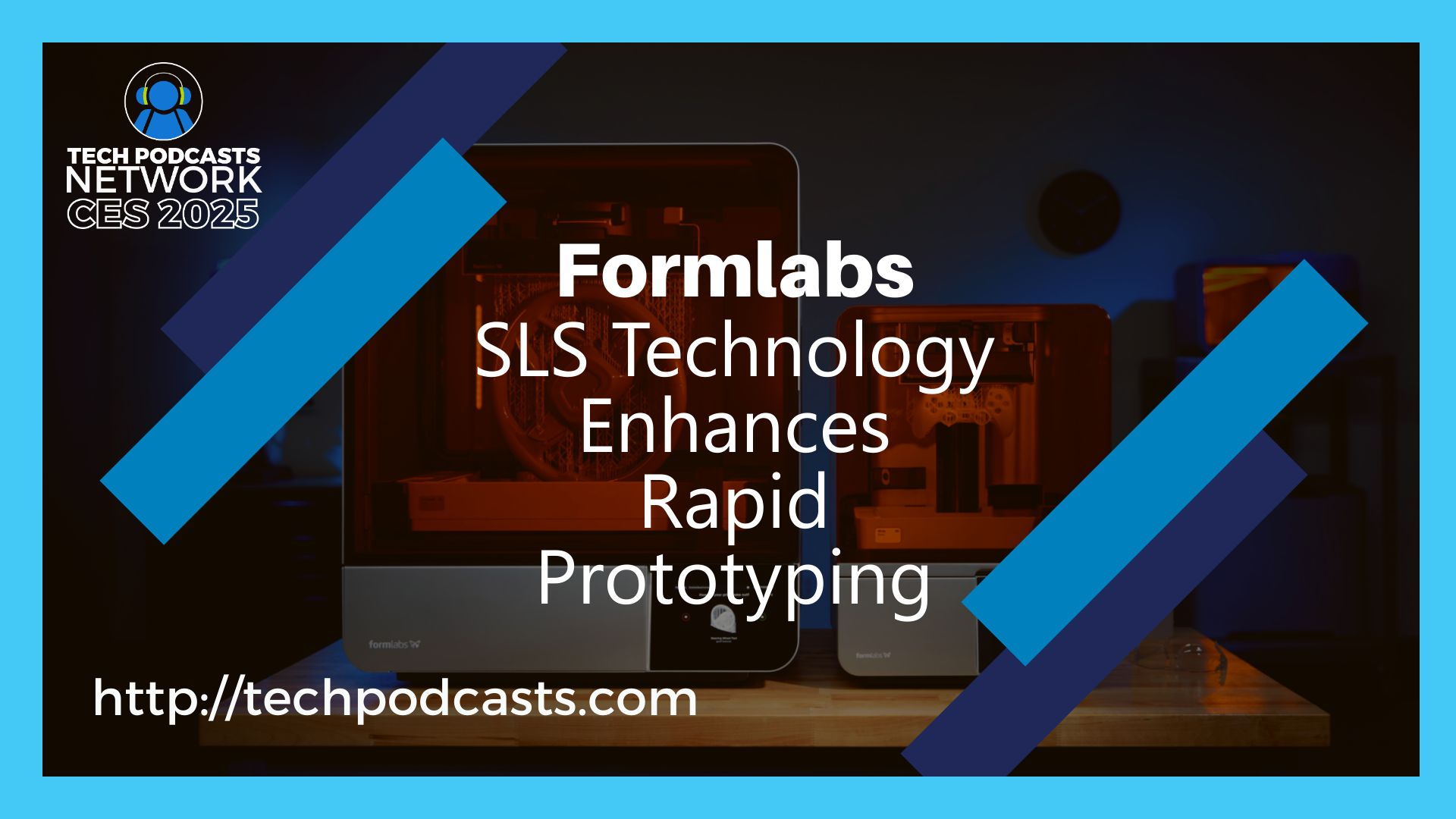
The world of 3D printing is continuously evolving, showcasing innovative technologies that redefine manufacturing and prototyping. Mike Baker from Formlabs, a leader in professional 3D printing, unveiled two cutting-edge printing technologies: Stereolithography (SLA) and Selective Laser Sintering (SLS). These technologies not only enhance the capabilities of 3D printing but also expand its applications across various industries.
Stereolithography (SLA) Printing
SLA printing is a resin-based technology that has gained significant traction in both professional and hobbyist circles. Unlike traditional filament-based 3D printing, which utilizes thermoplastic filaments, SLA begins with a liquid vat of resin. This resin is cured layer by layer using ultraviolet light, resulting in highly detailed and intricate designs. Baker demonstrated this process by showcasing a helmet that was printed in a single piece, highlighting the impressive detail and smooth finish achievable with SLA technology.
The advantages of SLA printing are manifold. The ability to produce complex geometries with fine details makes it ideal for prototyping, especially in industries such as jewelry design, dental applications, and product development. The versatility of resin materials also allows for the creation of parts with various properties, including flexibility and durability. As Baker noted, the SLA process enables creators to build prototypes or unique parts in a fraction of the time it would take using traditional manufacturing methods.
Selective Laser Sintering (SLS) Printing
In contrast to SLA, Formlabs showed off SLS technology, which employs a different approach by using nylon powder as its primary material. The process involves a large build volume filled with powder, where a laser selectively sinters or melts the powder to create solid parts. Baker showcased a complex model featuring moving hinges and functional locks, which exemplified the capabilities of SLS technology. The absence of support structures in SLS printing is a significant advantage, as it allows for the creation of intricate designs without the need for additional assembly. This feature not only saves time but also reduces the risk of errors that can occur during the assembly process.
SLS printing is particularly beneficial for producing durable, functional prototypes and end-use parts. Its ability to create intricate designs with moving components opens up new possibilities for industries such as automotive, aerospace, and consumer products. The robustness of SLS-printed parts makes them suitable for real-world applications, further establishing 3D printing as a viable manufacturing solution. Formlabs' SLS printers are able to produce models in a fraction of the time of other methods, speeding up the design process.
Take, for example, the case of Black Diamond, a company known for its ergonomic climbing helmets. With the ability to produce 30 iterations of a helmet design in just one month, Black Diamond exemplifies how rapid prototyping can lead to superior product outcomes. The iterative process allows designers to gather user feedback, refine their designs, and ultimately create a product that resonates with consumers. This agility in design is crucial in today's fast-paced market, where the ability to adapt and innovate can mean the difference between success and failure.
Conclusion
The innovations in 3D printing technologies, as highlighted by Mike Baker from Formlabs, demonstrate the transformative potential of SLA and SLS printing. These technologies not only enhance the quality and complexity of printed parts but also streamline the production process, making it more efficient and cost-effective. As industries continue to embrace 3D printing, the possibilities for design and manufacturing are virtually limitless. The remarkable capabilities of these technologies signify a new era in production, where creativity and functionality converge to meet the demands of modern design and engineering.
Interview by Marlo Anderson of The Tech Ranch.