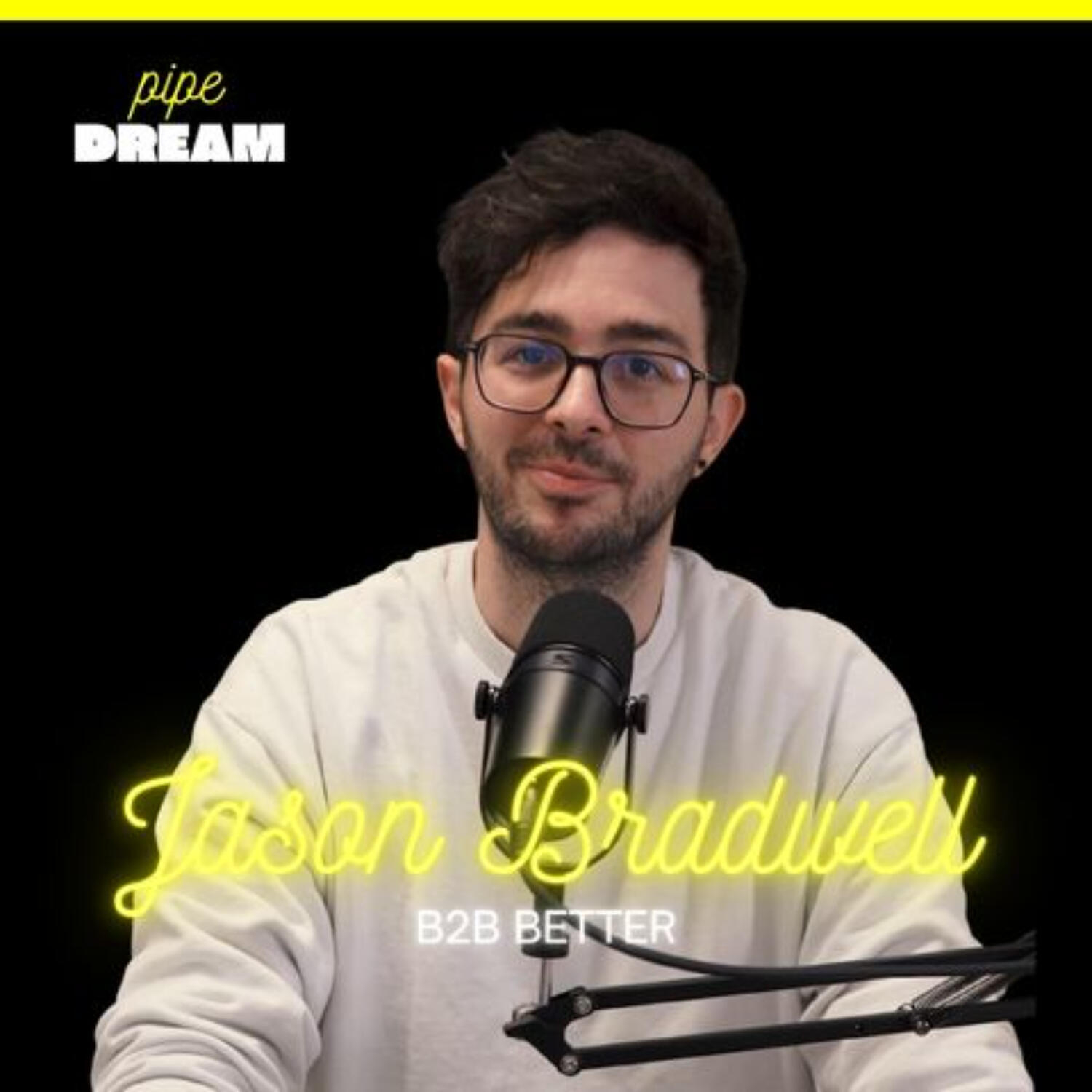
How to Book Dream Podcast Guests Without Being Salesy | Jason Bradwell, Founder of B2B Better and Host of Pipe Dream Podcast
Pipe Dream | A B2B Marketing Podcast
Audio is streamed directly from the publisher (chrt.fm) as published in their RSS feed. Play Podcasts does not host this file. Rights-holders can request removal through the copyright & takedown page.
Show Notes
Want to book amazing podcast guests that actually match your ICP? In this solo episode of Pipe Dream, host Jason Bradwell shares his playbook for finding and booking ideal guests without turning the interview into a thinly veiled sales pitch.
Jason starts with the elephant in the room: yes, you can invite guests who are also potential customers, but you cannot Trojan horse them. If you bring someone on the show and pitch them live, you create a bad experience for the guest, your audience, and your reputation. The rule is simple: content-first, always. Focus on a great conversation and a genuine value exchange, then let the relationship deepen naturally over time.
Next, he breaks down where to find great guests. First: your immediate network. Start with executives, employees, customers, partners, and trusted connections, people who already know you and will say yes faster. Those first few episodes build credibility and social proof, which makes outreach to strangers dramatically easier.
Second: your CRM. Jason recommends targeting lapsed prospects accounts you haven’t engaged with in weeks or months and using the podcast as a re-engagement mechanism. If you run an ABM strategy, this is especially powerful: you can target high-fit accounts, invite the right people, and start meaningful conversations without a sales agenda.
From there, Jason walks through prospecting tools. LinkedIn Sales Navigator helps with demographic and firmographic targeting, and tools like Apollo and Clay can help you build precise guest lists at scale. But the sleeper channels are Slack communities and conference speaker lists. In industry-specific Slack groups, people don’t ignore direct notifications the way they do email or LinkedIn DMs. Jason notes content-first outreach can reach 60–70% response rates in the right communities. And conference speakers are already primed to share expertise, so their speaking topic becomes an easy hook to start the conversation.
Once you’ve built your target list, Jason outlines a two-step outreach sequence. Message one is intentionally short: introduce the show, explain why you’re reaching out to them, and ask if they’d like more details, no episode pitch, no long explanation. Message two comes after they’ve shown interest: reinforce why it’s worth their time (downloads, guest lineup, maybe even payment) and share a personalised episode angle based on their experience, proving it’s a real content opportunity, not random outreach.
00:00 - Introduction: Finding and booking dream guests
01:00 - The Trojan horse trap: content-first always
02:30 - Where to find guests: start with your network
04:00 - Mining your CRM for lapsed prospects
05:30 - Using LinkedIn, Apollo, and Clay for targeting
07:00 - Sleeper channels: Slack communities and speaker lists
09:00 - The two-message outreach sequence
11:30 - Message one: gauge interest only
12:30 - Message two: personalise and reinforce value
14:00 - How to get 60-70% response rates
Connect with Jason Bradwell on LinkedIn
Check out several tools in building guest lists:
Explore B2B Better website and the Pipe Dream podcast