PhDivas
123 episodes — Page 2 of 3
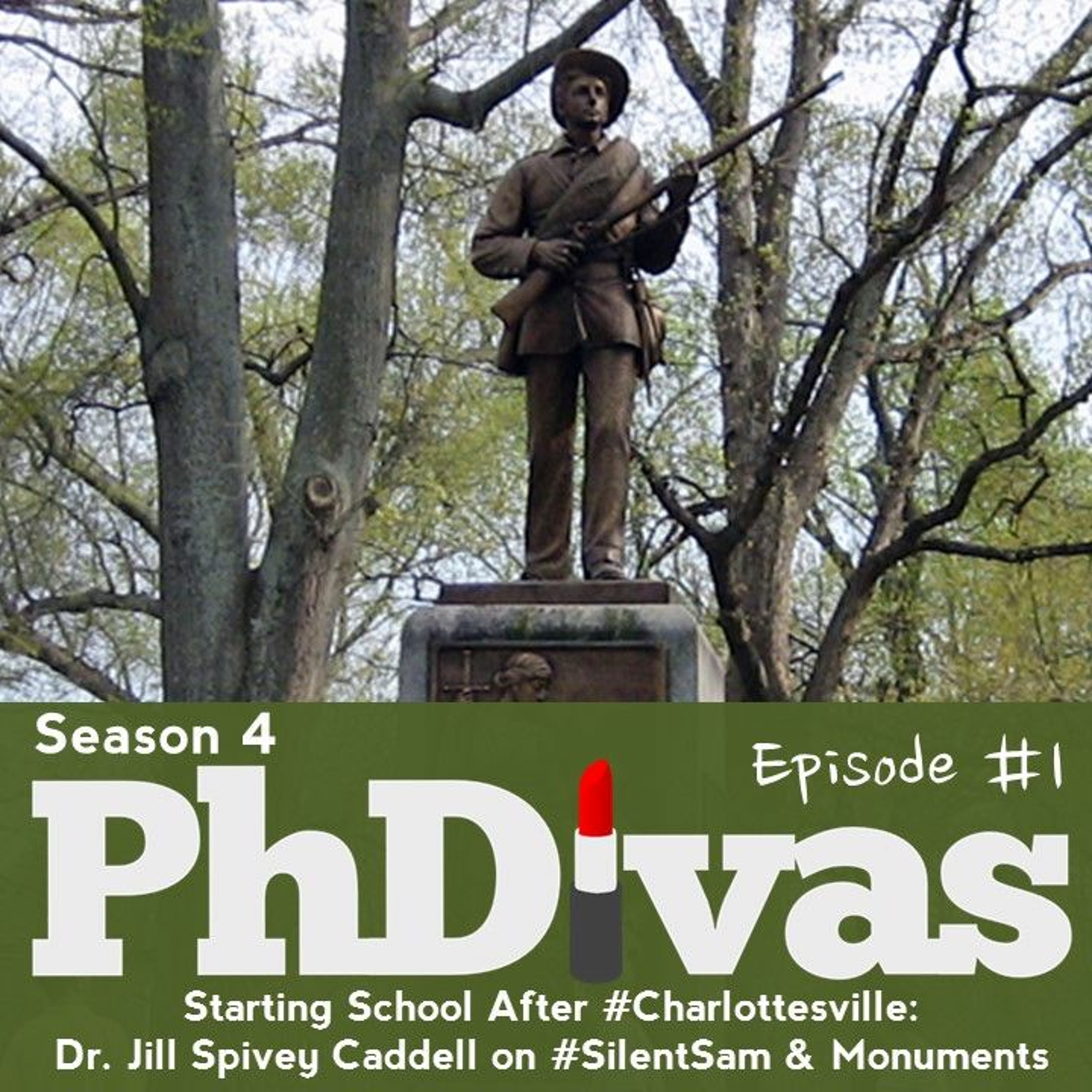
S04E01 | Starting School After #Charlottesville: Dr. Jill Spivey Caddell on #SilentSam & Monuments
After the events of Charlottesville what has changed or SHOULD change for the start of the school year? How do we navigate family legacies if you're descended from the enslaved or have Confederate ancestors? What if these issues are in your face on campus? These debates hit close to home for PhDiva Liz and Dr. Jill Spivey Caddell at UNC Chapel Hill where the Confederate statue Silent Sam stands. Topics include Jill's research on Civil War monuments, revisionist histories, #NoConfederate, and the problems with teaching and representing the Civil War. How do you navigate being a Southerner in the North? Do monuments reflect the past, the present, or the hopes of the future? (Check out Charles Chesnutt's short stories and novels!) PhDiva Liz's essay "Are Universities Prepared?": https://medium.com/@liz.wayne/are-universities-prepared-eb01d3c1bd0 Dr. Jill Spivey Caddell's article on Melville and Civil War monuments: http://www.mitpressjournals.org/doi/pdf/10.1162/TNEQ_a_00370 More on Dr. Jill: https://jspiveycaddell.com/ Charles. W. Chesnutt: https://en.wikipedia.org/wiki/Charles_W._Chesnutt
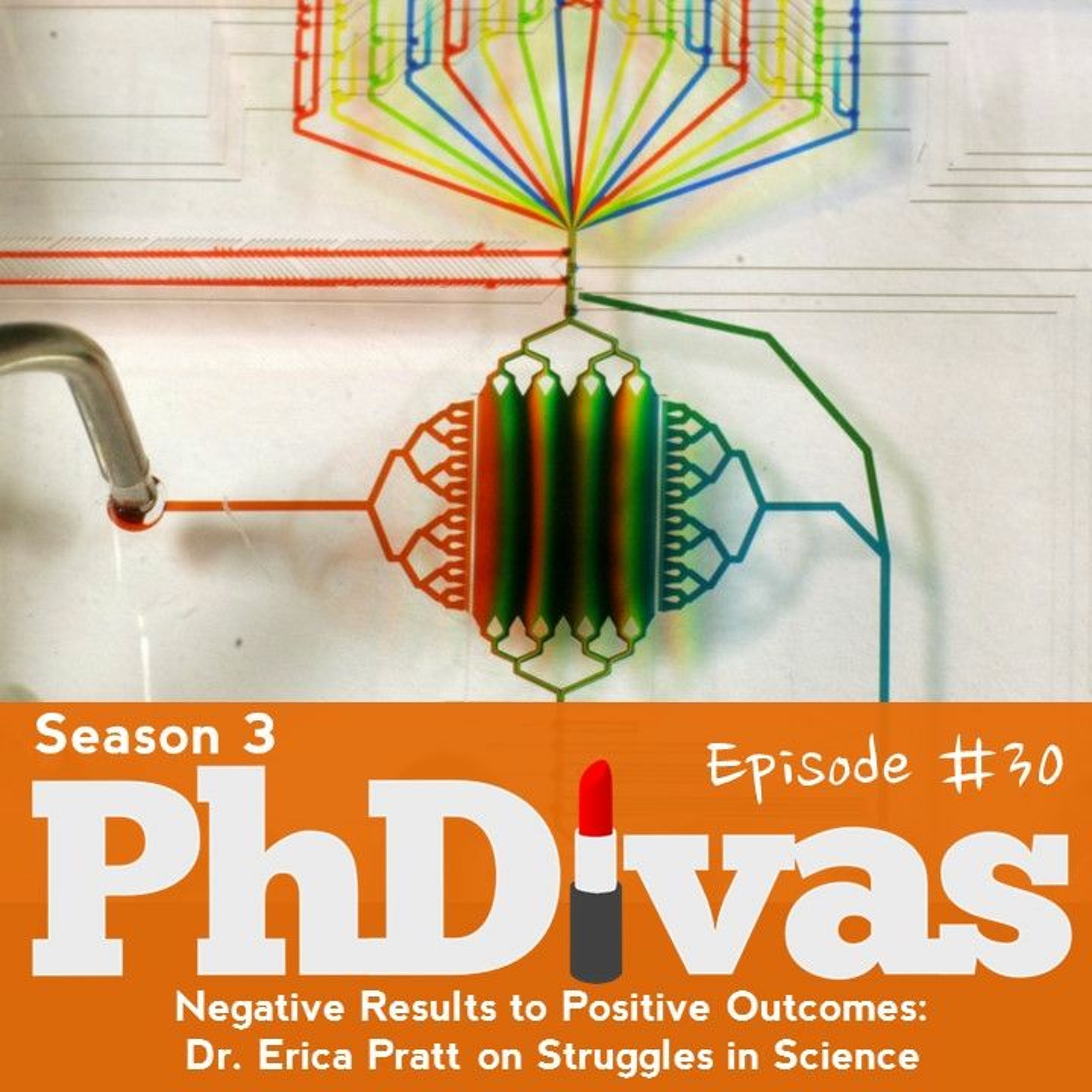
S03E30 | Negative Results to Positive Outcomes: Dr. Erica Pratt on Struggles in Science
What happens when your project fails? Dr. Erica Pratt, researcher at University of Texas MD Cancer Medical Center, talks about the bias against discussing negative results in science and the struggle to succeed as a nontraditional student. If you aren't what people expect a scientist to look like AND are rather modest, you need mentors to go the extra mile as coaches. We discuss Erica's trajectory from her undergrad at Carnegie Mellon, which required all undergrads in the new biomedical engineering to have a second engineering major *just to be safe*, to her current postdoc work on liquid biopsy in pancreatic cancer. Liz, Xine, and Erica talk about evaluation beyond traditional metrics, morbid humor, depression, perfectionism, and pet peeves about science in popular media. Learn more about Erica's work here: https://pratted.wordpress.com/ Follow her on Twitter: @pratt_ed
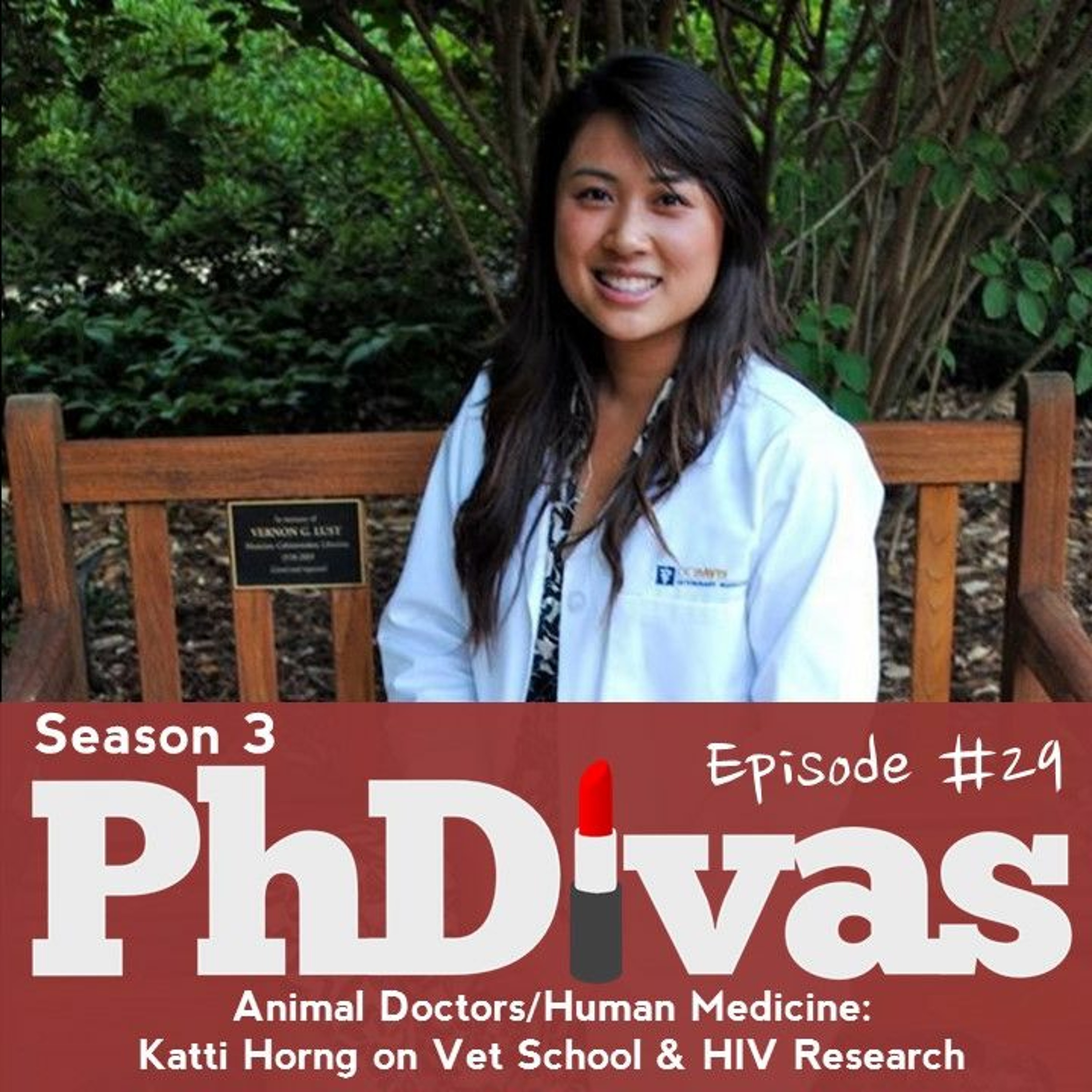
S03E29 | Animal Doctors/Human Medicine: Katti Horng on Vet School & HIV Research
Katti Horng's path to studying HIV in the combined DVM/PhD degree at UC Davis began with a Chinese tradition for babies: infants are presented with objects symbolizing different professions to see what their futures will hold. PhDivas Xine and Liz talk to Katti about cow rectums, animal rights vs. animal welfare, and the difference between the cultures of professional and graduate degrees. We get a new perspective on sexism: even though women are now the majority in veterinary medicine, we learn that the gender gap is not so easily overcome. What does interdisciplinary medical research look like? Katti and Liz talk about the unexpected connections between their research on HIV, cancer, and chronic inflammation. More on Katti Horng's research: http://www.vetmed.ucdavis.edu/whatsnew/article.cfm?id=3631
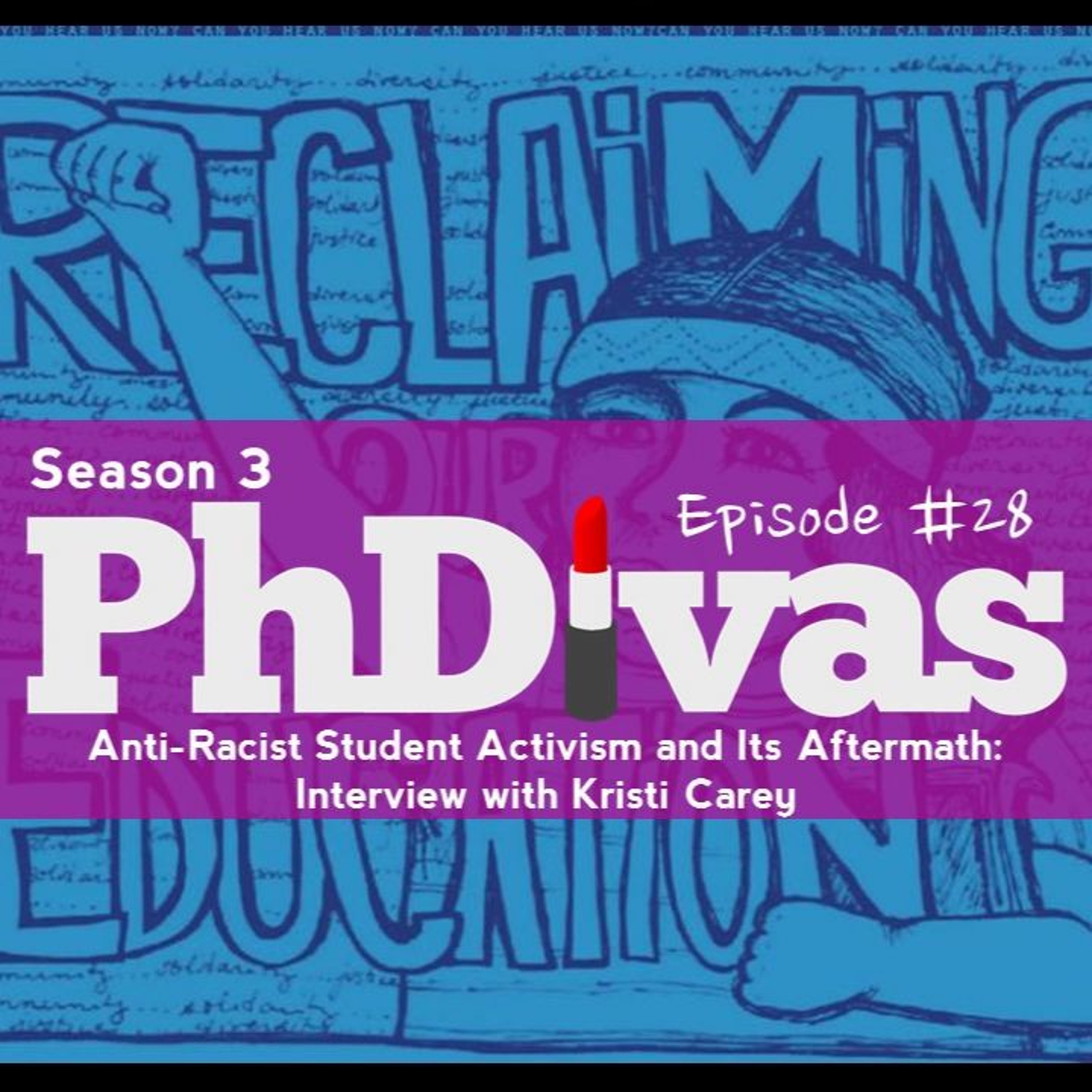
S03E28 | Anti-Racist Student Activism and Its Aftermath: Interview with Kristi Carey
Student protests inspired by Black Lives Matter have swept across American universities. What did these undergraduate activists want? PhDiva Dr. Xine Yao interviews Kristi Carey, one of the leaders of the 2014-5 protests at Colgate University. Kristi and her fellow women of color activists organized in the wake of Michael Brown's killing to draw attention to systemic problems on campus and to demand real change from the university. Sit-ins, death threats, candle light vigils -- what has happened since this momentous unsettling in the name of making the corporate university a safer, more livable space for marginalized students? Kristi talks about the aftermath having just finished a scholarly article and thesis reflecting on the extent of protest and change in the neoliberal higher education as part of her MA in Gender, Race, and Social Justice at UBC. What inspires a student to change from a major in math to one in education? Kristi Carey's article "On Cleaning: Student Activism in the Corporate and Imperial University": https://olh.openlibhums.org/articles/10.16995/olh.92/ Image: a poster from the Colgate protests depicting a person with a raised fist and "RECLAIMING OUR EDUCATION" in the background. Drawing by Anna Ríos-Rojas and design by Natasha Torres.
S03E27 | Can We Ever Take a Break?
Summer vacation: when academics look forward to spending quality time... working on their research. Over the "holiday" weekend Liz and Xine talk about structuring their time and the unexpected emotional labour that comes when you do take a "break" only to frantically play catch-up on your personal life. We discuss the idea of breaks in a wider sense as well: figuring out strategic vulnerability, burning out because of social media, allowing ourselves to ask for help. How can we take a break from high expectations and over-achievement?
S03E26 | Decolonizing or Indigenizing the University? Interview with Sereana Naepi
To decolonize or Indigenize the university? Sereana Naepi, an Indigenous Pacific Islander, takes on this question through her doctoral studies in Education at UBC on the traditional, ancestral, and unceded territory of the Musqueam people. PhDiva Xine interviews Sereana about Education as a discipline unto itself and how she brings Indigenous methodologies into her work on Indigenous women's experiences as higher ed staff. As a Fijian scholar from New Zealand, Sereana explains how her community and family inform her work: the PhD gives you a right to serve, not a right not to lead. In this episode, we discuss the various erasures of Pacific Islanders in culture, climate change, the category of Asian American and Pacific Islander, and Peter Jackson's Lord of the Rings. And we had to talk about Disney's Moana! More on Sereana Naepi's work: https://www.grad.ubc.ca/campus-community/meet-our-students/naepi-sereana Watch the Pasifika Samoan movie Three Wise Cousins: https://www.threewisecousins.com/ Free West Papua: https://www.freewestpapua.org/ Eve Tuck and K. Wayne Yang's essay "Decolonization is Not a Metaphor": http://decolonization.org/index.php/des/article/view/18630
S03E25 | Surviving the Job Market, Setting Up a Lab: Interview with Dr. Nadia Chernyak
If you survived the academic job market, what comes next? Xine catches up with Dr. Nadia Chernyak who will be tenure-track at UC Irvine in the Cognitive Science department. Nadia does amazing research on cognitive and moral development in children, but as it turns out, nothing truly prepares you to be a #newprof. What is involved in setting up a lab, which could be described as running your own small startup?
S03E24 | #SavetheNEH
We want YOU to help #SavetheNEH. If Congress passes this budget, the National Endowment for the Humanities will be eliminated in 2018. What do we, as a society, stand to lose for savings of a mere .006% of the federal budget? Liz interviews Xine about the devastating impact this would have on the cultural, historical, artistic, and ethical lives of communities of every size everywhere in the US. The PhDivas share the specifics of the "human" in the "humanities." Xine put out a call for stories from academics who received funding from the NEH -- and in less than 24 hours, received an overwhelming response. We try to do justice to these stories from scholars from every rank and institution who wrote in about their innovative NEH-funded research, teaching, and archival projects. This work has directly and indirectly contributed to mentoring and training, the lives and concerns of local and international communities, and the public understanding of everything from historical and present sciences to media to immigration to personal artistic practices. We end with recommendations on how to TAKE ACTION. National Humanities Alliance on what you can do: http://www.nhalliance.org/take_action Interactive visualization of NEH impact created by CUNY Digital Fellows: https://digitalfellows.commons.gc.cuny.edu/2017/04/04/visualizing-neh-open-data/ Many thanks to those who responded to our call on social media and on the C19 Americanists listserv. We did our best to represent your work and to pronounce names properly! In no particular order, thanks to Jonathan Senchyne, Rose Casey, Catherine Gouge, Kevin Modestino, Sandra Petrulionus, Edlie Wong, Anne Boyd Rioux, Lucinda Damon-Bach, Stephanie Ann Smith, Ellen Gruber Garvey, Phyllis Weliver, Hsuan Hsu, Michelle Tong, Linda Luu, Seth Perlow, Dana Luciano, Katy Chiles, Michele Currie Navakas, Peter Reed, Evan Cortens, Matt Fellion. And special thanks to Jennie Row and Brittany Pladek who first brought Xine's attention to the NEH Appropriations report.
S03E23 | The Secret Life of Academic Conferences
Conferences are like icebergs: there's a lot going on below the surface. We give you insight on the secret life of academic conferences. First, Liz and Xine cover the obvious considerations about STEM and humanities conferences. But in the majority of this episode we discuss the hidden dynamics: institutional privilege, social ecosystems, and how cliques make visible professional power dynamics. In some ways, academic conferences can be like a teen movie! You enter as an overwhelmed junior person trying to break into the scene and you hope to eventually become prom queen. Who do you eat your meals with? Can you make connections with the "cool kids," the superstars in your field? What do you do about the pressure to drink? Does social media change the game? What do you wear? What are the very real financial costs to conferences, not to mention the toll it can take on introverts, the chronically ill, or those who can't get childcare? Senior scholars, please take conferences as an opportunity to help junior and contingent scholars! Just buying someone a coffee and chatting with them can go a long way.
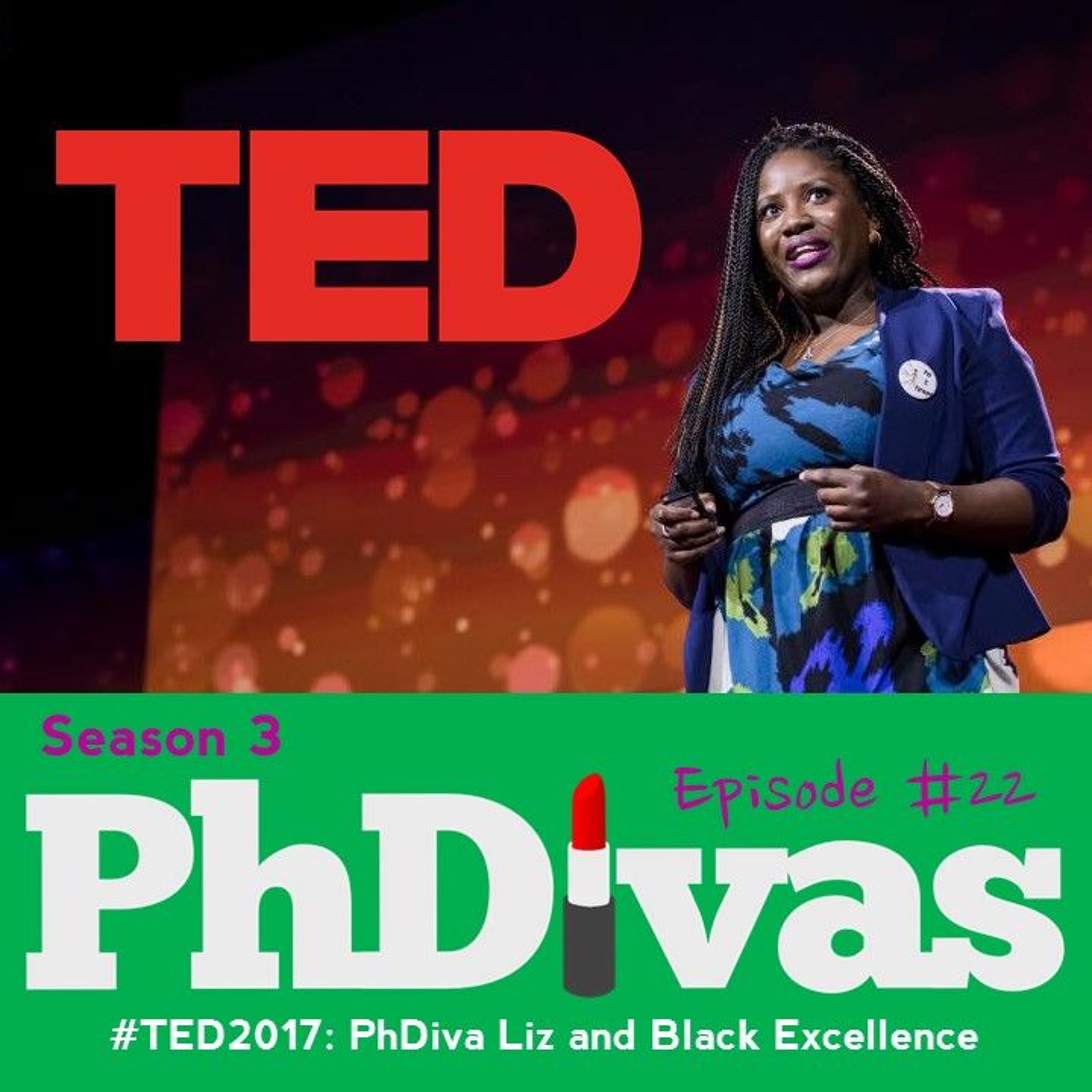
S03E22 | #TED2017: PhDiva Liz and Black Excellence
Here's the inside scoop on #TED2017 in Vancouver from TED Fellow and PhDiva Dr. Liz Wayne who delivered a TED Talk about her research on cancer drug delivery. Xine interviews Liz about the application process, preparation process, and life-changing experience of the TED Conference. What is it like to take science communication to the next level? What entrepreneurs and creatives did Liz rub shoulders with? Congratulations to Liz on continuing to develop her black excellence! Liz's TED Talk was highlighted as one of the Big Ideas of the first day of #TED2017: http://blog.ted.com/in-case-you-missed-it-the-big-ideas-from-day-1-of-ted2017/
S03E21 | April Showers: End of Semester Stress
April is the cruelest month! It's a rough time in higher ed: originally our theme for this episode was just "being tired." Work, travel, bills, dying houseplants. We push through our exhaustion to talk about the musical Hamilton, Get Out, Ghost in the Shell, and that awful Pepsi commercial with Kendall Jenner. The PhDivas just came back from their visit to Earlham College where they gave talks on their individual research and on bridging the STEM/humanities divide. Connecting with students and our listeners helps to give us energy! ...but we still need to get enough sleep. You can view our joint talk at Earlham College on Facebook Live: https://www.facebook.com/EarlhamPsychology/videos/1090781751068369/
S03E20 | Coming-of-Age in Academia: Interview with Brianda Beverley of Flyy Science
Our latest guest Brianda is at a turning point: pursue a PhD in STEM or follow her dream of growing Flyy Science, which combines science communication with hip hop and style. This is a coming-of-age in academia episode that everyone can relate to! Liz and Xine chat with Brianda about her current work as a certified Medical Laboratory Scientist, the gap between STEM degrees and jobs, and the journey from realizing you love something to what it means to develop a career. Why don't kidneys get the same attention as hearts in popular culture? Brianda asks the PhDivas for advice on the next steps as a possible pre-PhDiva and what the best path might be for someone who describes herself as a mix of Bill Nye the Science Guy, Aaliyah, and Left Eye. Brianda on Twitter: @flyyscience1 On Tumblr: http://flyyscience.tumblr.com/ On Youtube: https://www.youtube.com/channel/UCKzUwVctzKHV6_VGB8cp1KQ
S03E19 | Black Child Joy: Black History Month Recap with Prof Danielle Morgan
Black child joy is a fundamental reason Black History Month needs to exist. We recap Black History Month 2017 with Danielle Morgan, Assistant Professor of English at Santa Clara University, from Beyonce's pregnancy with twins to Moonlight, Fences, and Hidden Figures at the Oscars. The figure of the Black child is important to address beyond sentimentality: Danielle and Liz explain to Xine what celebrating Black History Month meant to them as children. How do we make space for respecting all forms of black excellence? Danielle's piece on Black History Month for Al-Jazeera: http://www.aljazeera.com/indepth/opinion/2017/02/black-history-month-criticism-170210113100632.html
S03E18 | Not Just in February: Black History Month Interview with Prof Mari Crabtree
This week we have a double episode release for Black History Month! Historian Mari N. Crabtree is Assistant Professor of African American Studies at the College of Charleston and works on lynching, narrativity, and memory in the South. She researches and teaches Black history not far from Emanuel AME Church, the site of the massacre committed by Dylann Roof, and in South Carolina, where Bree Newsome took down the Confederate flag from the state capitol grounds. We talk with Professor Crabtree about how the past collapses into the present amidst the protests against and counter-protests for Bree Newsome's talk at the College for Black History Month. Mari, Liz Wayne, and Xine Yao discuss Dr Martin Luther King Jr, the institution of Black History Month, the North/South dichotomy -- and how Mari is teaching a class based on our episode about Asian American and African American crosscultural influences! Mari Crabtree's reflections on Black History Month: http://blogs.cofc.edu/aast/2017/02/21/reflections-on-black-history-month/ More on Professor Crabtree: http://african-american-studies.cofc.edu/program/faculty-pages/crabtree-mari.php
S03E17 | Intersectionality in Science: Interview with Prof Sarah Richardson
What do power, society, and ideology have to do with science? PhDiva Liz Wayne interviews Associate Professor Sarah Richardson, speaker at the 2017 Conference for Undergraduate Women in Physics at Harvard. Professor Richardson's research uses a multidisciplinary approach to analyze how scientists understand sex and gender. In this episode, she discusses her interdisciplinary journey through history, philosophy, genetics, and feminism. Richardson challenges us to go beyond the 'Women in STEM" pipeline inclusion model. What if biology doesn't determine gender, but gender -- and other forms of difference -- can change biology? In this conversation Liz and Professor Richardson talk about making science and the teaching of science better. More on Sarah Richardson here: http://scholar.harvard.edu/srichard/home
S03E16 | Muslim Fictions: Interview with Dr. Noor Hashem
Muslim fictions and fictions about Muslims: we talk politics, stereotypes, and histories with Dr. Noor Hashem, expert on Muslim American literature. What are the ordinary, everyday, boring lives of Muslims in the United States? What is it like to be a person of faith in the academy and how does it inform one's work? Noor, Xine and Liz discuss points of intersection, activism, and ethical emotions. If tough love isn't doing it, what do we need? We end with a more recent interview with Dr. Noor to discuss the #MuslimBan and the heartening support for activism in Boston. Council on American-Islamic Relations: https://www.cair.com/ Massachusetts Chapter: http://www.cairma.org/
S03E15 | Whose Science? Conference for Undergraduate Women in Physics at Harvard
Preparations for the Science March on Washington are underway! Whose science is it anyway? Liz brings us a group interview with aspiring physicists from the 2017 Conference for Undergraduate Women in Physics at Harvard. We get insight into how these young women are inspired to study different aspects of physics: from Instagram selfies to engineering to parental guidance to the thrill of knowing the wonders of the universe. How do you transition from a childhood love to your professional path? Xine and Liz frame this interview with questions about politics and intersectionality as part of the plans of the upcoming Science March on Washington and around the US. CUWIP: http://www.aps.org/programs/women/workshops/cuwip.cfm SPIN UP: https://sites.google.com/site/harvardcuwip/application/spin-up-application
S03E13 | Hip Hop Scholarship: Interview with Dr. Shahara'Tova V. Dente
Crystal Springs, Mississippi: two girls graduated from their small town high school and grew up to be Dr. Shahara'Tova "Shaye" Dente, English PhD, and our own Dr. Liz Wayne, TED Fellow. Shaye gives us insight into the research and teaching of hip hop, social movements, and hip hop literature. Xine and Liz interview Shaye about pipeline programs for underrepresented minorities to the question of what makes good literature. We talk Jay-Z, Drake, Meek Mill, Nicki Minaj, Lil' Kim, Iggy Azalea -- and whether the vampires of Twilight suck. What does it mean to teach African American literature in the South, passing by cotton fields and former plantations, if you're Black?
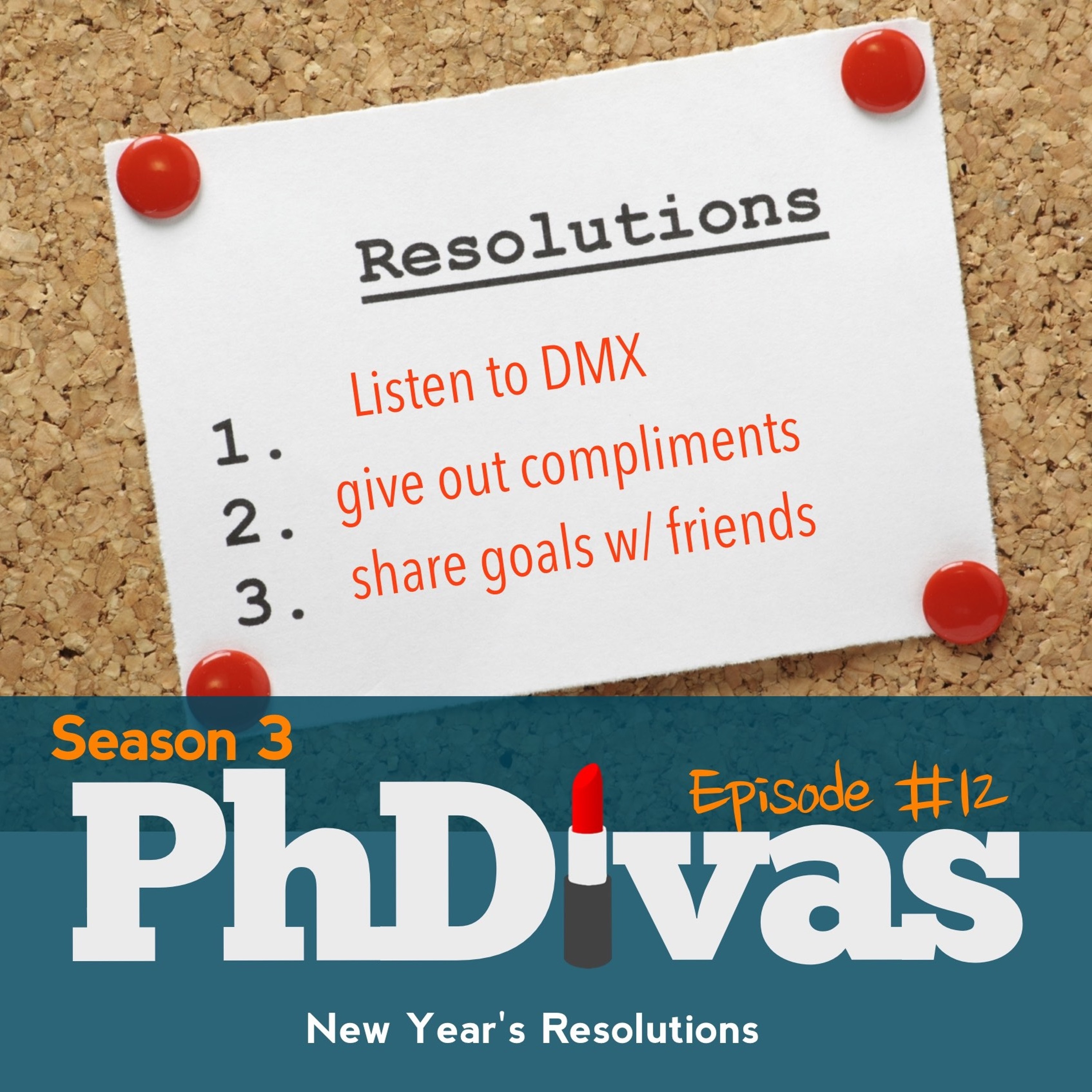
S03E12 | New Year's Resolutions 2017
Think positive, not punitive. How can we make resolutions that are not just individually-oriented? Make resolutions shared with friends, nominate good people for awards, buy a coffee/tea/drink/lunch for someone junior. We are trained in critique and then forget how compliments feed the human self. Xine and Liz are committed to making sure they lift others as they climb! The PhDivas are also dedicated to their own different approaches to body positivity -- but they're both aiming for unassisted pull-ups. Oh, and Xine's theme song for the year is DMX's "X Gon' Give It to Ya." (Get it, X? We amuse ourselves...)
S03E11 | End of 2016 Review
On New Year's Eve we go meta and reflect on our best moments, interviews, behind-the-scenes production, and the melanin contrast between us in our promo photos thanks to the inadequacies of phototechnology. We discuss what it means for us to be in public while academics are under attack in this post-Steven Salaita moment. How do we talk to each other in seminar, in question period, in our citations? As we climb, let's not forget to lift each other. Thank you to our amazing interviewees and the support of our listeners!
S03E10 | Dark Matter: Axions Cosmology & Being a Black Scientist; Dr. Chanda Prescod-Weinstein
Would a Black physicist have called it "dark matter"? Dr. Chanda Prescod-Weinstein is the 63rd Black American woman to earn a PhD in physics and works on early universe cosmology and the dark matter problem. Xine and Liz talk to Chanda about the mysteries of the universe and the differing conundrums of being Black in the United States versus Canada. Literature emerges as a necessary form of education and survival -- shout out to the writings of Lawrence Hill and Langston Hughes! We discuss Star Trek, dissertation dedications, Janelle Monae, and the ambiguous worth of "diversity" in science and academia. What does it mean to decolonize science? Enjoy this special, extra-long episode! Dr. Chanda Prescod-Weinstein's work: http://www.cprescodweinstein.com/ Follow her for her wit, activism, and research on Twitter @IBJIYONGI Decolonizing Science List: https://medium.com/@chanda/decolonising-science-reading-list-339fb773d51f#.om5w2ivfq Lawrence Hill's The Book of Negroes: http://www.lawrencehill.com/the-book-of-negroes/
S03E09 | Data is Us: Interview with Rumman Chowdhury
Blaming biased data and bad algorithms? Stop moral outsourcing to machines because data is a reflection of us! Liz and Xine interview Rumman Chowdhury, PhD candidate in political science and a full-time data scientist. We talk about how ethics, diversity, and social justice play an integral part in data, dubious robots, and the uneven development of data science through industry and academia. Beyond tin foil hats, we discuss everything from racist redlining in Chicago, philosopher Hannah Arendt's concept of the banality of evil, Netflix's Luke Cage, and menstruation apps. How can we approach data in a way that is not reductive? How can the quantitative not come at the cost of the qualitative? Rumman works at Metis, an organization dedicated to data science training that has scholarships for women, people of color, veterans, and LGBTQ+ people. (www.thisismetis.com) Check out more about her work and for job postings in data scientist at www.rummanchowdhury.com and follow her on Twitter @ruchowdh
S03E08 | Nasty Women: Hillary Clinton and the Question of Critique
Nasty, sassy, bossy -- how do we criticize women? And how can we articulate valid criticisms without being accused of misogyny? In this pre-election conversation, Liz and Xine discuss Hillary Clinton, gender, and the politics of representation and, well, politics! Is it just about Hillary, or also a post-Obama moment that has transformed our ideas about hope and change? We talk political compromise, respectability, US imperialism, histories of suffrage and race, and the power of memes. Since recording this conversation, we've been in a difficult place: trying to look after ourselves and others we care about on top of our usual work in academia. Love and solidarity to our listeners from the PhDivas!
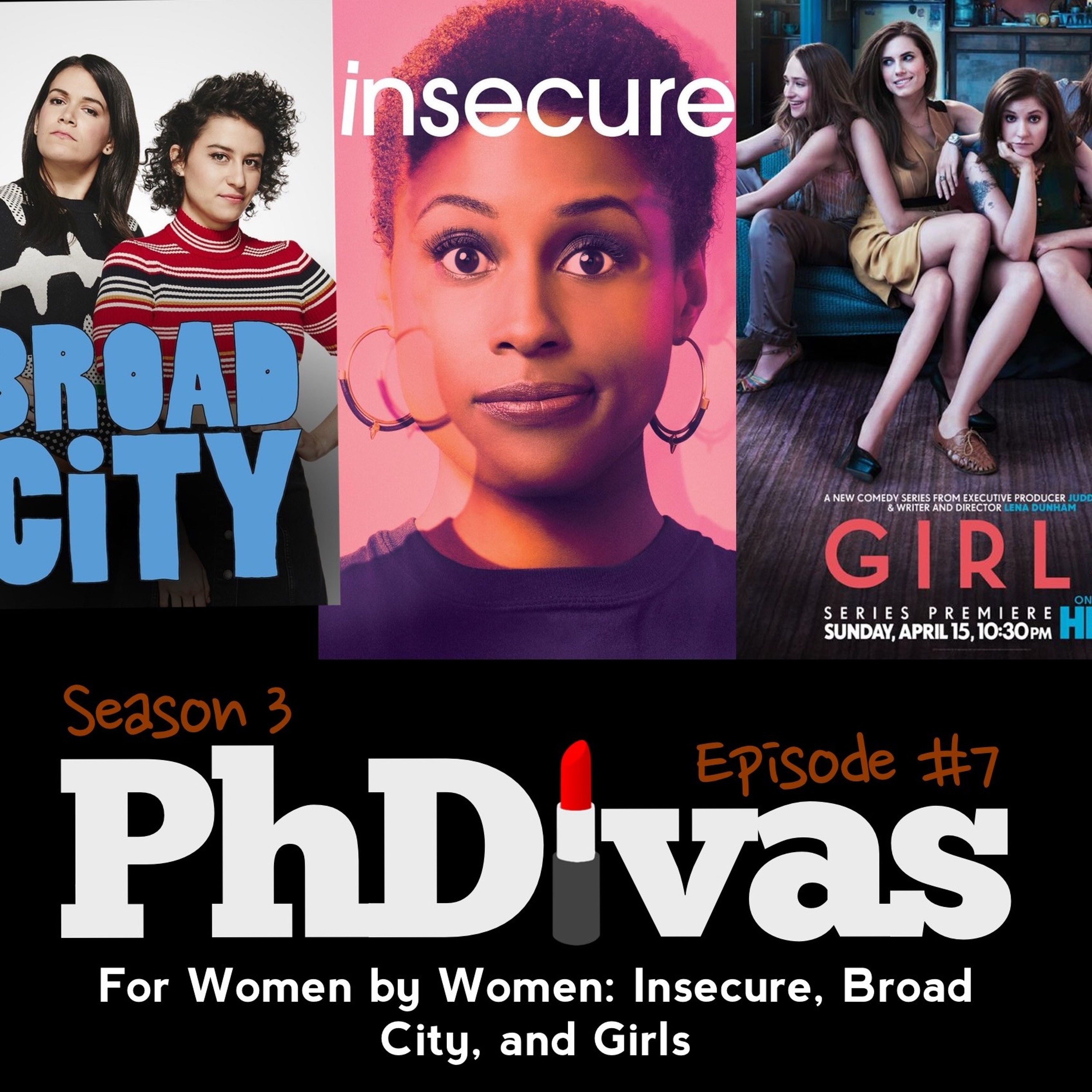
S03E07 | For Women, By Women: Insecure, Broad City, and Girls
Insecure, Broad City, and Girls: shows for and by women! These are shows that Liz and Xine watch as part of their lives as *serious* academics and researchers. What is the appeal? Well, we are still part of the much maligned Millennial generation. The PhDivas discuss how these female creators explore the trials and tribulations of work and love as Millennial women. What racial and gender barriers still exist despite the DIY innovations of Issa Rae, Lena Dunham, and Abbi and Ilana? We evaluate the first episode of Insecure, 5 seasons of Girls, and 3 seasons of Broad City -- talking about relatability, catharsis, humor, and ambivalence.
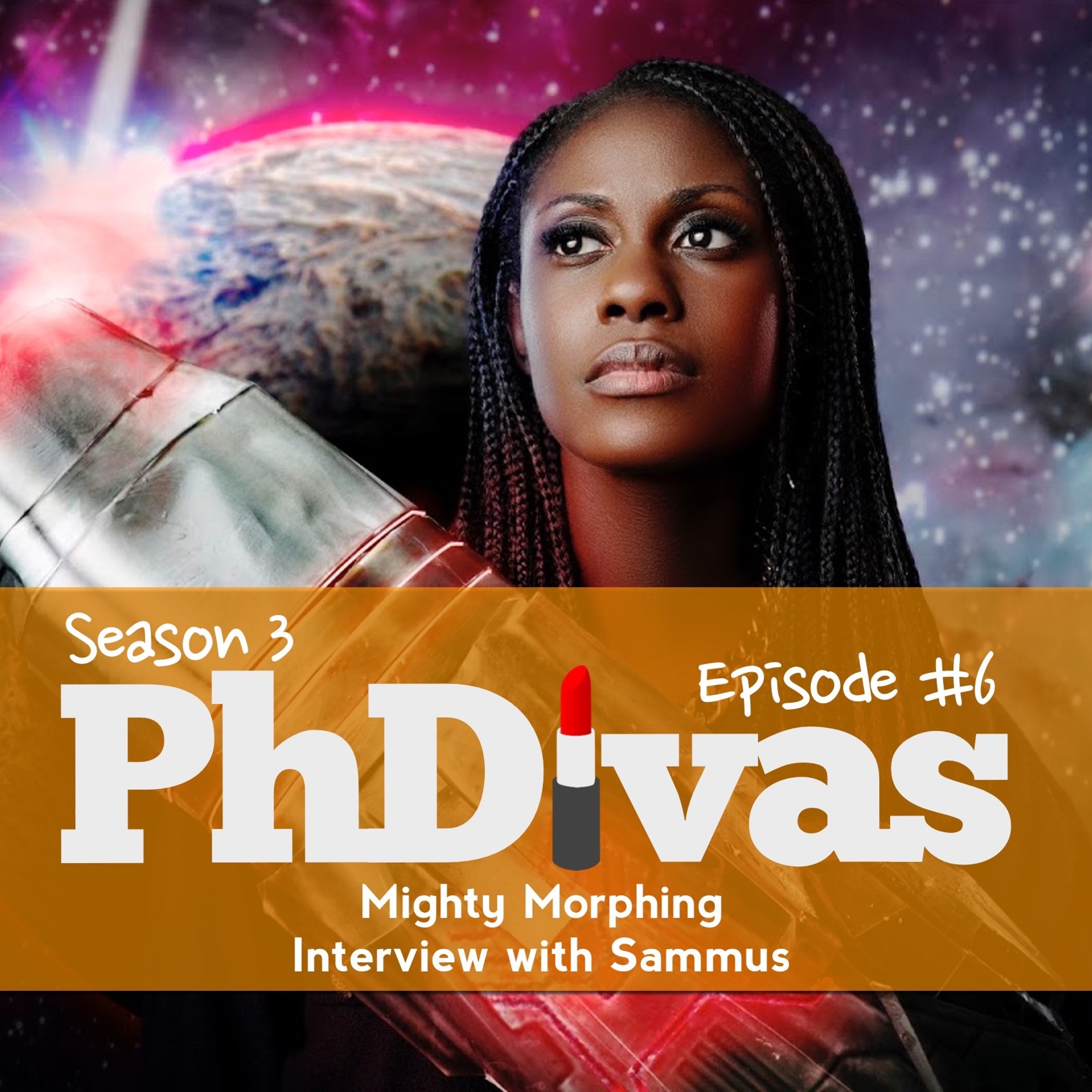
S03E06 | Mighty Morphing: Interview with Sammus
Hip hop artist and producer, video game heroine, PhD candidate -- how cool and brilliant can one person be? We talk to Enongo Lumumba-Kasongo who performs under the stage name Sammus, a reference to Samus Aran of Metroid who is the first woman game protagonist. She studies gender and music production through Science and Technology Studies and is also a noted nerdcore rapper who has performed at SXSW, Geek Girl Con, PAX East. We talk about Kanye West, Nintendo, questions of representation, in geekdom and the intersection of humanities and STEM. Sammus has also been a great champion for Black Lives Matter in Ithaca and an advocate for mental health. Pieces in Space, her new album is out October 28! "I’m kind of scared of the academy/ I think my parents are proud of me/ I just wish I knew how to be comfortable here/ I never feel like I’m allowed to breathe/Rubbing shoulders with these old nerds/ Rockin’ sweater vests in they office hours/ Eating hors d’oeuvres while I soul search/ Tryna make some sense of the ivory tower" Sammus, "1080p" Order: http://dongiovannirecords.11spot.com/sammus-pieces-in-space-pre-order.html Sammus's Facebook Page: https://www.facebook.com/sammusmusic/?fref=ts L.J. Alonge's Blacktop series: https://www.amazon.ca/Justin-1-Blacktop-LJ-Alonge-ebook/dp/B015DLURQC/ref=sr_1_3?s=digital-text&ie=UTF8&qid=1476986820&sr=1-3
S03E05 | Adjunct Life with Dr. Shyla Saltzman
Wait, isn't getting a PhD supposed to set you up with a cushy professor job? We talk to Dr. Shyla Saltzman about the increasing phenomenon of PhDs ending up in adjunct positions -- temporary, underpaid, underresourced teaching positions. This episode is about the stresses of the adjunct life, the corporatization of the university, as well as a unglamorous side of alt-ac jobs. After fun and laughter as we commiserate about shared experiences as people of color, Shyla gives us a deeply personal, honest account of her struggles after graduation. Together we discuss the conditions of precarity that threatens higher ed as well as the world around us, strikes and the #LIUlockout, and small victories.
S03E04 | The Final Countdown: Getting Ready for the Final PhD Years
How does one complete a doctorate? Xine and Liz dispel myths about individual "grit" and "productivity" to talk about structural and psychological barriers to finishing the degree. Lack of resources, social norms, and administrative pressures on time-to-degree can all exacerbate the final years as a graduate student -- and we can internalize these problems as personal failures. While it's true that the best dissertation is a done dissertation -- and there's no such thing as a perfect one -- we also discuss how much can depend on your adviser. It's about managing relationships, where committee members are in their careers, their experiences of the job market, and their personalities. And sometimes it isn't writer's block, sometimes it's depression: don't hesitate to ask for help! Make sure you are surrounded by people who can support you as you dissertate but also when you need to take breaks. We share tips but also criticize how idealized advice can come off as prescriptive and add its own stresses. It may also be that finishing the degree is not for you -- and that's fine as well. Doubt is healthy. Be kind to yourself!
S03E03 | Science + Art = Super Cool Scientists! Interview with Sara MacSorley
Art meets science = promoting women in science! Sara MacSorley of Wesleyan University is the creator of Super Cool Scientists, a Kickstarter project to create a coloring book featuring a diverse group of current women scientists. (Our own Liz Wayne is one of them!) We talk with Sara about what it means to support science as a non-scientist as well as community engagement and outreach through higher education. We are also excited about Hidden Figures and other media promoting histories of women in science -- Super Cool Scientists is about supporting current women in science and the coloring book medium is geared to both children and adults alike. We also talk about the personal trials of public promotion and supporting marginalized people in higher ed. What does it mean to address anxiety? How do we make safe spaces? How do we make our identities or allyship visible and effective? Sara takes us into her personal experience taking part in an It Gets Better campaign during her undergrad -- and that's how she met her wife! Support the Kickstarter! Get a chance to color in Liz! Kickstarter campaign: https://www.kickstarter.com/projects/saramacsorley/super-cool-scientists-a-women-in-science-coloring
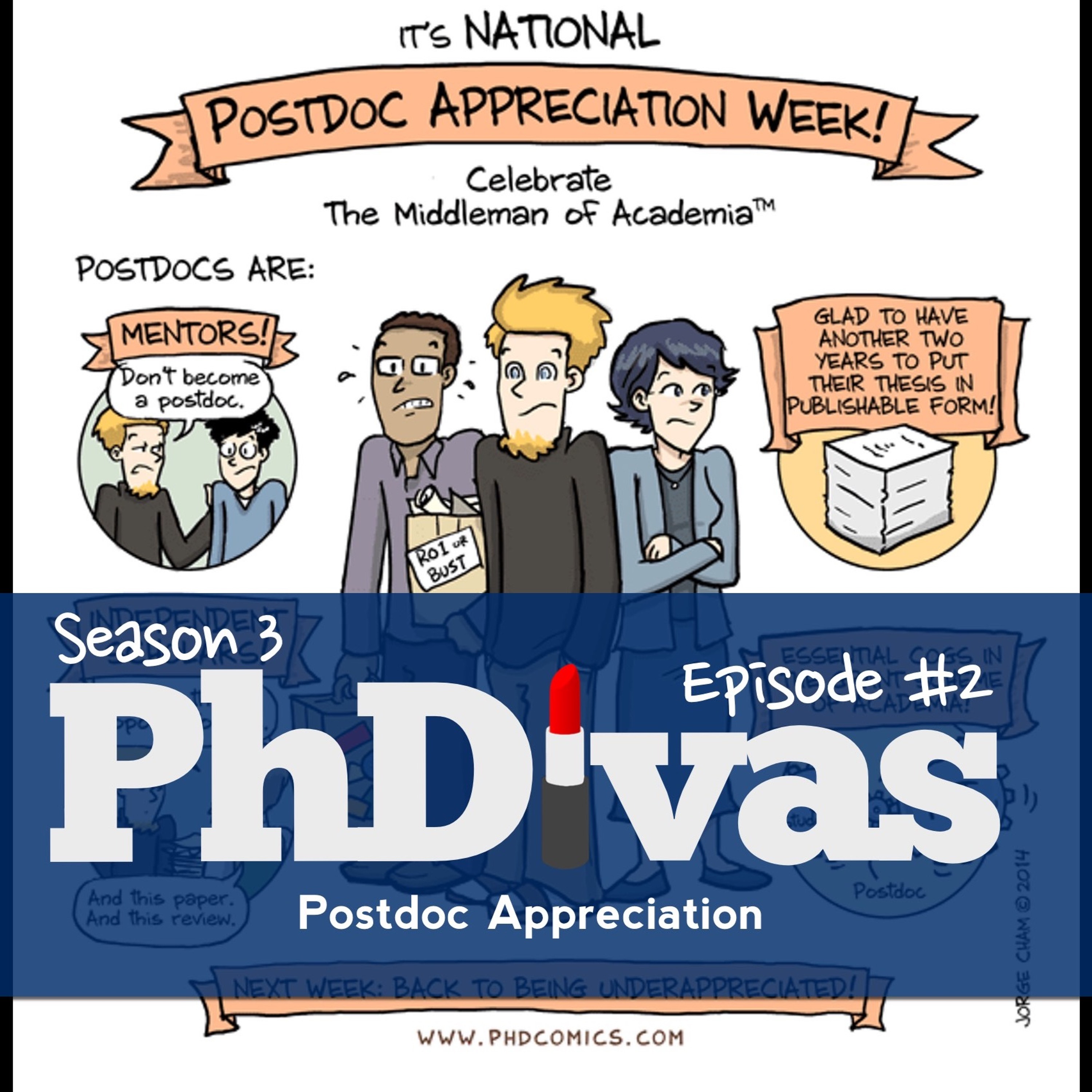
S03E02 | Postdoc Appreciation
It's Postdoc Appreciation Week! But what are postdocs anyway and how do they differ between STEM and the humanities? What comes after the dissertation? Liz is now an NIH postdoc at the University of North Carolina-Chapel Hill, while Xine is a SSHRC postdoc in Vancouver at the University of British Columbia. In this episode we talk about our new postdoc lives on different sides of the continent. We break down the differences between postdocs in different disciplines and the role that postdocs play in the current structure of academia. Increasingly, people are having to go through not just one, but two or more postdocs before getting to tenure-track professor positions. It can feel like we are in a strange liminal space between graduate student and faculty. How do we make the most of this time for our personal and professional lives?
S03E01 | Why You Should Postdoc: Interview with Dr. Catharine Young
Wait, getting your PhD is not enough?! From scientist to science policy -- Liz Wayne talks to Dr. Catharine Young about alt-ac from the STEM side, developing skills from a postdoc in biomedical sciences to her current position as the Science and Innovation Policy Adviser for the British Embassy. Our different experiences in academia open us to new possibilities and equally legitimate ways to love the subject we study. Turns out that having a PhD is not enough for a job in 2016, even after all we've accomplished! Through the American Association for the Advancement of Science fellowship, Dr. Young traveled internationally to work on addressing Ebola and other biological threats for the US and other countries. How do we put our work into broader context for the betterment of society? Grad students need to be exposed to more opportunities beyond academia during their degree. From science benchwork to science communication, Liz and Dr. Young chat about taking science out of the ivory tower. You can get in touch with Catharine Young through LinkedIn: https://www.linkedin.com/in/catharine-young-25959148
S02E13 | Writing for the Public: Alt-Ac Interview with Meredith Talusan
From seminar papers to pieces for The Guardian -- how do we write for the public and how can our graduate training prepare us for non-academic work? Meredith Talusan is BuzzFeed's first openly trans LGBT staff writer and was a PhD in comparative literature. We interview Meredith about what it means to be a professional trans woman in the media and writing for different audiences. How do we balance the complexity of our expertise with the necessity for simplicity in communication? If we're at the "tipping point" of trans issues, what battles must be fought against transmisogyny? How do we represent ourselves but also our communities? Meredith chats about everything from colorism to taking criticism online to relative privilege to (lack of) support for LGBT students in the academy. As of this writing, Meredith has moved on from BuzzFeed and is working on a few books! Good luck, Meredith! You can follow her on Facebook (https://www.facebook.com/demerith?fref=ts) and Twitter @1demerith
S02E12 | The Adviser's Point-of-View: Interview with Professor Shirley Samuels
"YOU'RE the professor?!" What happens after the first day of teaching through to tenure and full professorship on top of positions as a program director and department chair? We talk to Xine Yao's Cornell PhD adviser Shirley Samuels about her 30+ year career journey as an acclaimed scholar of American literature, feminism, and visual culture. Shirley gives us her view of changes in the profession as a whole as well as the continued relevance of American studies as politics and education come together. Liz and Xine ask how do you advise graduate students given the current academic job market? How do we make our disciplines matter in the neoliberal university and translate our work into public visibility? How do we approach the power of America's founding myths? Topics include class differences, fostering community, and students asking "YOU'RE the professor?!" The work-life balance question is a cliche for professional women, so what about imbalance? Choose your battles! Survive and try to be happy. Many thanks to Shirley Samuels for her generosity and time! She is active on Twitter as @SRSamuels and you can learn more about her work here: http://www.arts.cornell.edu/srs8/
S02E11 | Being a Woke White Guy: Interview with Phil Burnham
If you have every kind of privilege, how do you #staywoke? The PhDivas talk to their physicist friend Philip Smith Burnham III, a white upper-middle class straight cisman who is a staunch ally. How do you offer support without being a self-important savior? We discuss how to listen, the long, slow process of awareness, and how privilege should be leveraged as an asset for change and not just a source of guilt. An aspiring astronaut who is sometimes mistaken for a frat guy, Phil talks about the relationship between Indigenous ways of knowing, Cherokee basket weaving, and developing better scientific access and education for underprivileged communities. This episode is for all our listeners -- or our listeners's friends! -- who have wondered what the next step is after checking their privilege. Note: when talking about American Indian blood quantum laws, Phil mentions that Cherokee people need a grandparent who is Cherokee. This applies to one specific band of Cherokee called United Keetoowah www.philipburnham.com Cornell CCMR Outreach: http://www.ccmr.cornell.edu/education/ Cornell O-stem: https://www.facebook.com/oSTEMatCornell/ http://ostematcornell.weebly.com/ American Indian & Alaska Native Genetics Resource Center (talks not only about the science but about the ethics): http://genetics.ncai.org/ Science Museum of Minnesota: https://www.smm.org/ One Laptop per Child: http://one.laptop.org/ Other stuff: Cherokee baskets - http://www.cherokee.org/AboutTheNation/Culture/CherokeeArts/CherokeeBaskets.aspx A piece on Phil's stepdad's basket weaving - http://indigeval.aihec.org/Shared%20Documents/2-WeavingTheBasket.pdf Phil's lab's website: http://devlaminck.bme.cornell.edu/ Wikipedia for blood quantum laws in case people want some background: https://en.wikipedia.org/wiki/Blood_quantum_laws Book Phil likes about an innovative kid from Malawi who fell in love with physics: https://www.amazon.com/Boy-Who-Harnessed-Wind-Electricity/dp/0061730335 And his TED talk: https://www.ted.com/talks/william_kamkwamba_how_i_harnessed_the_wind?language=en
S02E10 | Inside Higher Education: Interview with Erica Ostermann
Meet the real-life Leslie Knope: Erica Ostermann is an Assistant Dean plus a full-time graduate student in Information Science. From Bowdoin, to Stanford, to Cornell, Erica is former boss to Liz and Xine (as well as activist Deray McKesson of #BlackLivesMatter!) She is possibly the most organized, driven person we know. But accidents are still important -- how do we take moments of randomness or even injury and make them into learning experiences? How do we find balance between our Type A tendencies and need for self-care? Get a new perspective on student life, accessibility, and building a healthy team in higher ed -- and juicy details on new aspects of Liz and Xine!
S02 Special Episode | Graduation!
Graduation! PhDiva Xine Yao was chosen as the baton-wielding degree marshal representing all graduating PhDs at Cornell for the 2016 Commencement. As a gesture of solidarity, she raised her fist when entering the stadium and on stage where it would be projected on the Jumbotron and recorded for posterity. Is Xine the "modelliest model minority ever" and can she try to use her visibility for good causes? Drs. Liz and Xine talk about struggle, success, privilege, and vulnerability amidst the pomp and circumstance of graduation. Xine met the amazing Paula Vogel who was kicked out of her PhD in the 70s for writing a feminist dissertation -- and who went onto positions at Brown and Yale. We also pay homage to some of the amazing undergrads we know. Farewell and may we meet again!
S02E09 | Teaching While Women of Color: Part 2
How can we teach and care for our students in ways we are still learning to do for ourselves? It's not just about content, lessons, and assignments -- it's also about vulnerability and emotional labor. Join us for the laughter, tips, and anecdotes in the second part of a two-part series where Xine brings together Mariana Alarcon, Elizabeth Alexander, Aurora Masum-Javed, and Renia White from the Cornell English PhD and MFA programs for a lively conversation about teaching while WOC. We talk about the rewards of teaching, negotiating our authorities in the classroom, and developing our teaching personae. How do we teach #BlackLivesMatter and "let the world into our classrooms"? Hope you find this episode as generative as we did!
S03E08 | Teaching While Women of Color: Part 1
Grades are in, teaching evaluations are in! Who is being judged and how? Women, people of color, and especially women of color (WOC) have the most to fear about how their teaching and authority are evaluated. In the first of a two-part series, Xine brings together Mariana Alarcon, Elizabeth Alexander, Aurora Masum-Javed, and Renia White from the Cornell English PhD and MFA programs for a lively conversation about teaching while WOC. Join these women as they discuss topics from being seen as "too racially affliated" to whether our students should be "baby revolutionaries" to teaching microaggressions and Serena Williams in Claudia Rankine's Citizen. How do we as teachers learn from our teaching? We reflect on the biases, successes, and failures of our students and ourselves as we continue to develop our pedagogical practices.
S02E07 | Imposter Syndrome & Other Anxieties
Do you ever feel like you don't belong? Imposter syndrome names the feeling of being out of place that even successful people can experience -- and this is widespread in all levels of the academy. But when can we have anxieties as women of color that might not be about being an imposter? There's so much about power and structural inequality, from the brand power of schools to academic credentials to how performances of intelligence are recognized according to norms of race and gender. Liz was the only black person -- not to mention black woman -- doing her undergrad in physics at Penn, while Xine is one of a few scholars of Asian descent in early and 19th century Americanist literature. How can we recognize our own experiences without invalidating those of others? We talk about vulnerability, self-doubt, coping strategies, and infiltrating the system to change it from within. email: [email protected] twitter: @phdivaspodcast facebook: Phdivas Podcast
S02E06 | Imposter Syndrome - Teaser
End of the semester struggle is so real! This is a teaser for our upcoming discussion about imposter syndrome in academia. Good luck to all of you! Thrive and survive! <3
S02E05 | International Students: The Silent Majority (Interview with Dr. Michelle Tong)
International grad students are the majority, but why don't we hear from them? We chat with Dr. Michelle Tong about visas, labor precarity, culture shock, and stereotypes about the model minority and alienness. This ep includes discussions of the dynamics of scientific methods. Michelle just earned her PhD in psychology working on smells and memory; in her words, she can't diagnose you but "would have to take out your brain and slice it." Together we reflect on the blurred lines between our research and ourselves.
S02E04 | Black Girl Humor: Interview with Dr. Danielle Morgan
Join us in laughing at the absurdity of a so-called postracial world! We sip some tea with Danielle Morgan and chat about race and humor, #BlackGirlMagic, and navigating graduate school as a women of color with a family. Danielle just earned her PhD in English with a project about comedy and satire in African American culture and literature (congrats!). We talk about race, intent, and audience in Hamilton the musical and the work of Dave Chappelle and Aziz Ansari. There's also the #BlackGirlMagic of women like Ava DuVernay, Michelle Obama, Beyonce, and so many others. What considerations go into finding a supportive partner and having children when you're a woman in academia? (Subsidized child care at conferences!) Danielle is one of the co-hosts of the Black Girl Magic podcast which highlights amazing black women. Check them out! https://soundcloud.com/blackgirlmagicpod
S02E03 | The Trap Of Overachievement
So you're used to being "the smart one." How does our pursuit of success have its pitfalls? In a guest lecture for a Cornell course on "A Life Worth Living," we talk about how we define success and how that drive feeds into problematic ideas about meritocracy and respectability. Competition can become an all-consuming mentality: it's not just about our worth as individuals but our relationship to communities and our burdens of representation. Liz addresses the pressures surrounding her identity as a proud Black woman from Mississippi with a passion for physics, while Xine reflects on her love of literature and its connections to the perception of Asians as the "model minority." Beyond chasing professional accolades, how can we give ourselves the time and space to be happy?
S02E02 | Spring Renewal -- and Rejection
Spring is a time of renewal -- and also rejection according to the academic calendar. So. Much. Rejection: grad schools, fellowships, postdocs, jobs, publications -- all come rolling in, sometimes with a little bit of success thrown in. Track records of academic success obscure every level of academia is filled with what feels like different forms of failure. It's damn hard not to internalize. Liz and Xine try to balance celebrating individual successes for ourselves and others, allowing space for pity parties, and building community solidarity. How do we accept ourselves in the face of rejection? We help pick each other up, dust off, and try again. (And we're not fans of catchphrases like "grit" and "resilience.")
S02E01 | It Happens Here: Sexual Assault in Academia
It happens here: we start our second season by helping the whisper network speak up about sexual harassment and assault in academia. The Hunting Ground documentary has brought attention to sexual assault on US campuses and there are now high profile cases about sexual harassment experienced by grads in astronomy and philosophy. We interview Anna Waymack, grad student and advocate, about issues with the current system of academia writ large. Please support institutional and cultural change! We are using the nightingale as our image for this episode in reference to the horrific ancient myth about Philomela who was silenced by her rapist -- support survivors and speak out! For more information, to give anonymous testimony, and to help create change, please check out Sexual Assault Network for Grads: www.ixgrads.org/
S01E28 | Friendship as Activism: Keynote
"But my best friend is ____!" What if this common phrase was treated as more than an excuse for bigotry, but as an ethical imperative for allyship and activism? Liz and Xine were invited to give their first keynote, "Friendship as Activism," for the Agency and Solidarity Conference at Cornell. We talk respectability politics; our studies, ourselves; diversity, activism, and service in the academy; and self-care and survival. Oh, and the keynote was covered by The Cornell Daily Sun and we were called "race, gender, and sexuality activists." Ha! We wouldn't really describe ourselves that way. Your thoughts? "Graduate Students Urge Activism, Public Service on Campus": http://cornellsun.com/2016/03/15/graduate-students-urge-activism-public-service-on-campus/?platform=hootsuite
S01E27 | Are Grad Students Workers? Interview with Jack Frost
Are graduate students workers? Liz and Xine explore this debate by interviewing Jackqueline Frost from Cornell Graduate Students United. We discuss issues of graduate student labor at Cornell and higher education in general -- power dynamics, fear, funding, and differences between humanities and STEM in approaches to work and work dynamics. Should graduate students of the world unite? Do we have nothing to lose but our chains?
S01E26 | Xine Does the Vagina Monologues
"BANG" -- Xine fired her confetti gun and then sauntered off-stage to applause of a thousand people. The Vagina Monologues are a perennial cultural touchstone on many college campuses for women's advocacy. Xine and Liz talk about the power and problems of the play. How can we affirm bodies and womanhood without excluding issues of race or trans women from the conversation? What kind of responses do we get from cis men and how can we encourage them to be supportive allies? Xine is proud to be a part of Cornell's student-run cast. All proceeds went to the Advocacy Center of Tompkins County to help with their work against sexual violence. Meredith Talusan's essay "Performing in The Vagina Monologues as a Transgender Woman." http://www.buzzfeed.com/1demerith/performing-in-the-vagina-monologues-as-a-transgender-woman
S01E25 | Leave Of Absence: On Loss and Healing
What happens when we experience loss in grad school? How do we find ways to heal and to remember when our time is so structured by quantifiable successes and milestones? The leave of absence disrupts this timeline and people will judge you for taking it and others will condemn you for not doing it. Liz and Xine take this episode to discuss mental health and to mourn their loved ones through both intangible memories and tangible mementos. From jade necklaces to laundry to an extra winter coat, what do we keep or let go when we lose someone?
S01E24 | Alternate Realities
What if? With every BA/PhD/postdoc/job application we open so many possibilities for our academic journeys and lives in different places and even fields of interest. Xine and Liz speculate about some of these alternate realities, from family histories to career paths. How do we imagine our pasts and futures in this uncertain world? Who are these other Lizes and Xines?
S01E23 | Savvy Mentoring
Let's build the academia and the world we want to live in! January is National Mentoring Month (US) so Xine and Liz talk about how much success in academia is owed to mentors and the importance of paying it forward by mentoring. We discuss this emotional and gendered labor and, of course, the disproportionate (but important) burden placed on marginalized peoples in the academy. What should you know about being a mentor and about being a mentee? Thank you to all our wonderful mentors and support to all our mentees!