
Paisa Vaisa with Anupam Gupta
601 episodes — Page 1 of 13
Inside the Stockbroking Business | Nithin Kamath | Paisa Vaisa (Archive)
2. The Real Playbook for Building Serious Wealth in India | Srikanth Subramanian | Paisa Vaisa
Marketing Spend, ROI & Sales: What Actually Works? | Aakanksha Gupta | Anuraag Gupta | Paisa Vaisa
Fear, Greed & FOMO: Why Your Brain Controls Your Money | Kumaar Bagrodia | Paisa Vaisa
Why Gold Loans Are Booming in India | Shripad Jadhav | Paisa Vaisa
Beyond Stocks: Alternatives, Global Investing & GIFT City | Sachin Sawrikar | Paisa Vaisa
India’s Growth Story Is Intact But the Market Leaders Are Changing | Jitendra Gohil | Paisa Vaisa
India’s REIT Opportunity with Amit Shetty on Commercial Real Estate and GCC Growth | Paisa Vaisa
Why Chasing Returns Hurts Serious Investors in PMS and AIFs | Vaibhav Agrawal | Paisa Vaisa
Why Investors Switch Mutual Funds Despite Good Returns | Mitu Samar | Paisa Vaisa
Managing India’s Crorepatis with Sandeep Jethwani on Wealth Management for HNIs | Paisa Vaisa
How Gajendra Kothari Stayed Invested Through 10 Years of Negative Returns | Paisa Vaisa
Inside a Hedge Fund Manager’s Mind: Risk, Shorts and Absolute Returns | Paisa Vaisa
How India Moved From Saving to Investing According to a Mutual Fund CEO | Paisa Vaisa
What Indians Get Wrong About Life Insurance | Paisa Vaisa
What Does It Take To Invest In Indian Art Today? | Paisa Vaisa
Starting From Scratch? Here’s How To Build A Serious Equity Portfolio
How do NBFCs approve loans with zero current income?
The Hidden Economics Of Entertainment (Bollywood)
AI Could Soon Handle Payments For You | Paisa Vaisa
What India Needs to Fix for the Next Decade
The Dangerous Side of Easy Credit ft. Sashank Rishyasringa, AXIO
The Middle Class Is Breaking - Here’s Why | Ft. Saurabh Mukherjea
How Regulation Is Building India’s Next Big Investment Market
Bad Vastu = Bad Income? Here's What a Celebrity Astro Architect Says About Your Money
The Flexibility in Repayment That Banks Quietly Killed Years Ago | Paisa Vaisa
The Long-Term Thinking Behind One of India’s Greatest Investors | Paisa Vaisa | Anupam Gupta
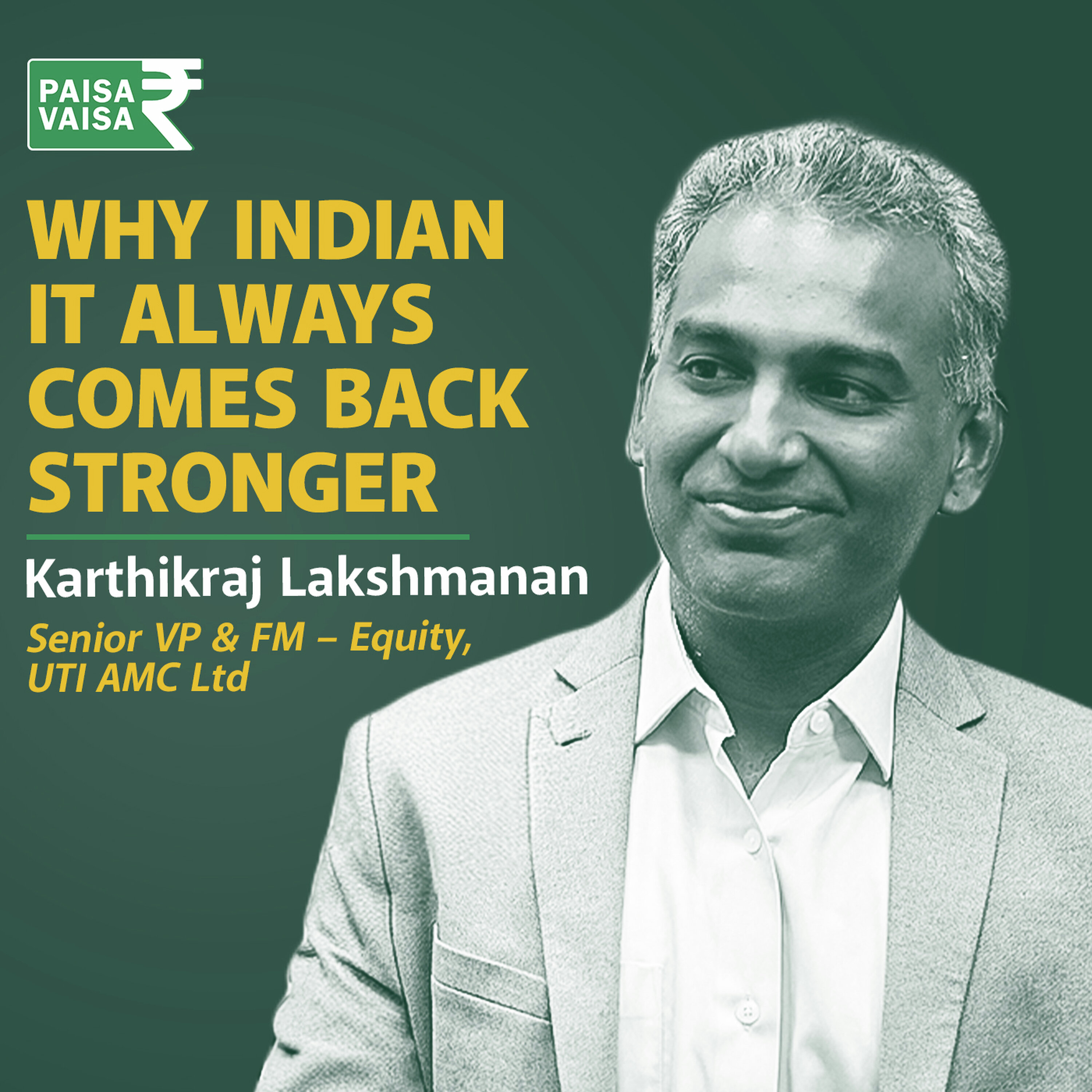
S1 Ep 560Investing Mistakes Senior Vice President - Equity With 20 Years Experience Still Sees Every Single Day | Paisa Vaisa | Anupam Gupta
In this episode of Paisa Vaisa, host Anupam Gupta sits down with Karthikraj Lakshmanan, Senior Vice President - Equity at UTI Asset Management Company, one of India's most experienced equity fund managers with over two decades in the markets. Karthik manages the UTI Large Cap Fund (formerly UTI Master Share, one of India's oldest mutual funds with a 40-year history), the UTI MNC Fund, and the recently launched UTI Multicap Fund. This is a masterclass in how professional fund managers think about Indian equities, sectors, valuations, and long-term wealth creation. We cover India's macroeconomic outlook for FY26, why large cap stocks are better positioned than small and mid caps right now, the state of the Indian banking sector (private vs PSU banks), the future of Indian IT in an AI-disrupted world, and how UTI uses its proprietary 'Score Alpha' framework a 3x3 ROC and operating cash flow matrix to evaluate and rank stocks across the entire investable universe. Karthik also breaks down the difference between flexi cap and multicap funds, explains how MNC funds are evolving with Indian exporters now included, and shares his honest views on gold and silver inflows chasing momentum. Whether you are a first-time investor or a seasoned market participant, this episode is packed with actionable insights on asset allocation, position sizing, behavioral investing mistakes, and what it really takes to outperform over the long term. If you have ever wondered why your mutual fund returns are consistently lower than the fund's actual returns, or why patience and behavioral discipline matter far more than stock-picking skill in today's information-equal world, this conversation will change how you think about your portfolio.Subscribe to Paisa Vaisa for India's best personal finance and investing conversations with top fund managers, economists, and market experts.Hit the bell icon so you never miss an episode. 6 Key TakeawaysPatience Beats Analysis: Behavioral discipline and staying invested through market cycles will consistently deliver better investor returns than even the best stock analysis, because markets reward patience over perfection. Large Cap Advantage: Revenue growth between large, mid, and small cap companies has been broadly similar over the last five years, but large caps remain less expensive on valuations today, making them structurally preferable in the current market environment. The Moat Framework: UTI's equity strategy centers on identifying companies with durable competitive advantages brands in FMCG, distribution networks in retail, and technology advantages in MNC industrials to build a portfolio with long-term earnings visibility. Private Banks Still Win: The top four to five private sector banks continue to gain market share every year, carry healthy balance sheets and return ratios, and are likely to grow faster than both the banking industry and the overall economy over the long run. IT Sector Is Adaptive: Indian IT companies have successfully navigated every major technology disruption from Y2K to ERP to cloud and are now positioned to lead AI implementation for global clients, making the current pessimism potentially an opportunity for long-term investors. Score Alpha Is The Edge: UTI's proprietary 3x3 scoring framework evaluates every stock in their universe on ROC and operating cash flow over five years companies that upgrade from lower to higher scores on both metrics are the ones that consistently outperform in the long run.From decoding your personal finances to demystifying business models, Paisa Vaisa delivers candid, insightful, and jargon-free conversations.Listen on Spotify, Apple Podcasts, Amazon Music, JioSaavn, Gaana & more Watch full episodes right here on YouTubeExplore more at ivmpodcasts.comConnect with Anupam Gupta: Twitter: @b50Instagram: @b_50 LinkedIn: Anupam Gupta Follow IVM PodcastsWe’re @ivmpodcasts on Facebook, Twitter & Instagram#PaisaVaisa #UTIMutualFund #MutualFunds #IndianStockMarket #EquityInvesting #LargeCapFund #KarthikRajLakshmanSee omnystudio.com/listener for privacy information.

S1 Ep 559STOP Investing Only in India: Why US Stocks Belong in Every Indian Portfolio | Vasanth Kamath | Paisa Vaisa | Anupam Gupta
In 10 years, Smallcase went from a simple idea in a Bengaluru garage to a platform managing ₹1.8 Lakh Crore across 20 million+ investors. And its founder, Vasanth Kamath, has never spoken this openly about where it's all heading next. In this episode, we sit down with Vasanth to unpack the full Smallcase story the origin, the failures, the breakthroughs, and the bold bets being placed on India's financial future. From investing in US stocks starting at just $1, to a game-changing joint venture with Zerodha, to an AI-powered Wealth Office that tracks your entire financial life this is the most comprehensive deep-dive on Smallcase ever recorded. If you're an investor, a founder, or someone trying to build real wealth in India this episode is for you. key takeaways10-Year Journey- Smallcase spent 10 years building a platform that now serves 20 million customers and processes ₹1.8 lakh crore annually. The Bridge- Smallcase bridges the gap between mutual fund investors and stock market investors through curated, research-backed model portfolios. Beyond An App- With 250+ brands, 140 research analysts, and 20 top brokers Smallcase is an ecosystem, not just an investing app. Passive Costs Less- Zerodha Fund House offers index funds and ETFs at just 15–20 basis points among the cheapest investment products in India. Invest Globally- Indians can now access 7,000+ US stocks and ETFs through Smallcase's fractional investing feature starting from just $1. AI Is Next- Smallcase's upcoming Wealth Office feature will use AI to aggregate your entire financial life stocks, funds, assets in one dashboard.From decoding your personal finances to demystifying business models, Paisa Vaisa delivers candid, insightful, and jargon-free conversations.Listen on Spotify, Apple Podcasts, Amazon Music, JioSaavn, Gaana & more Watch full episodes right here on YouTubeExplore more at ivmpodcasts.comConnect with Anupam Gupta: Twitter: @b50Instagram: @b_50 LinkedIn: Anupam Gupta Follow IVM PodcastsWe’re @ivmpodcasts on Facebook, Twitter & InstagramSee omnystudio.com/listener for privacy information.

S1 Ep 558Don't Touch Property Until You Watch This: REITs, Hidden Costs & 14% Returns | Paisa Vaisa | Anupam Gupta
In this episode of Paisa Vaisa, host Anupam Gupta sits down with Preeti Chheda CFO of Mindspace Business Park, Executive Committee Member of the Indian REITS Association, and a finance professional with 25 years of experience for the most comprehensive conversation on Real Estate Investment Trusts (REITs) in India. Preeti brings an extraordinary academic and professional pedigree CA, CS, CFA, CPA and has spent the last 19 years with the K. Raheja Corp group heading finance for Mindspace, one of India's largest commercial real estate platforms. She is uniquely positioned to explain exactly how REITs work, why SEBI built one of the world's most robust regulatory frameworks around them, and why ₹2.5 lakh crore in assets are now held within REITs and InvITs combined all within just eight years of the first REIT launch in India. The episode begins with the formation of the Indian REITs Association (IRA), launched in September 2023 at SEBI's nudging, with three clear goals: creating product awareness, driving policy changes to grow the instrument, and improving governance standards. Preeti then explains the fundamental structure of REITs pooled investment vehicles, structured as trusts (mirroring Singapore's regulation), that hold bundles of commercial real estate assets and provide investors with a combination of recurring income (yield) and capital growth. She breaks down the three income streams unit holders receive: tax-free dividends, taxable interest, and return of capital (which reduces cost of acquisition and is taxed only on exit as capital gains). REITs are mandated to distribute at least 90% of their net distributable cash flows (NDCF), and every unit holder receives a Form 64B detailing their income breakdown. The performance discussion is eye-opening. Indicative yields range from 6-8%, but total returns combining yield and growth have historically averaged 14-16%. Mindspace REIT itself has gone from a listing price of ₹275 in August 2020 to over ₹490 in February 2026, delivering over 50% price appreciation in six years on top of continuous distributions. Growth comes from three engines: inbuilt contract escalations of around 5% annually, rent reversions of 7-8% when leases renew at market rates, and acquisitions plus development (up to 20% of portfolio value can be under development within existing parks). A standout section of the episode compares REITs to physical real estate investment. REITs offer a starting ticket size as low as ₹500, instant liquidity via exchange trading, professional management, and diversification across cities and properties. Physical real estate, by contrast, requires massive capital, is illiquid (2-3 months minimum to sell), demands active management, and carries transaction costs of 10-11% of the purchase price in brokerage, stamp duty, registration, and maintenance. As Anupam points out, your property needs to appreciate by 10% just to break even a bar that most residential real estate in India fails to clear. The regulatory deep-dive reveals why institutional investors starting with FPIs trusted Indian REITs from day one. SEBI mandates that 80% of REIT assets must be completed and rent-generating, leverage is capped at 49% (with credit rating and unit holder approval required beyond 25%), all related-party transactions pass through multiple governance layers, reporting is half-yearly (double the typical listed company frequency), and NAV per unit is disclosed regularly so investors can compare market price against intrinsic asset value at any time. During COVID, Indian REITs collected 99% of contracted rental income possible because tenants are overwhelmingly MNCs and large corporates on 9-10 year leases with 3-5 year lock-ins. The conversation also covers major recent developments. From July 1, 2026, REITs will be classified as equity for mutual fund purposes a landmark reform that opens the door to index inclusion, passive fund flows, and dramatically improved liquidity. Office absorption has surpassed pre-COVID levels at 55 million square feet of net absorption, with Global Capability Centers (GCCs) accounting for over 50% of each REIT's leasing. RBI now allows borrowing at the REIT level, enabling fixed-cost debt that reduces cash flow volatility. And the potential for government asset monetization through REITs including CPSU land banks could unlock massive new supply. For first-time REIT investors, Preeti outlines the key evaluation parameters: NOI growth, NDCF and distribution track record, portfolio quality and tenant profile, city-wise diversification, occupancy rates, and WALE (Weighted Average Lease Expiry). She also points investors to the IRA website, individual REIT websites, and SEBI-authorized benchmarking platforms like Kay Fintech and NRTA for side-by-side REIT comparison. Whether you're a first-time investor exploring alternatives to fixed deposits and physical property, an experienced investor building a diversified portfolio, or simply curious abou
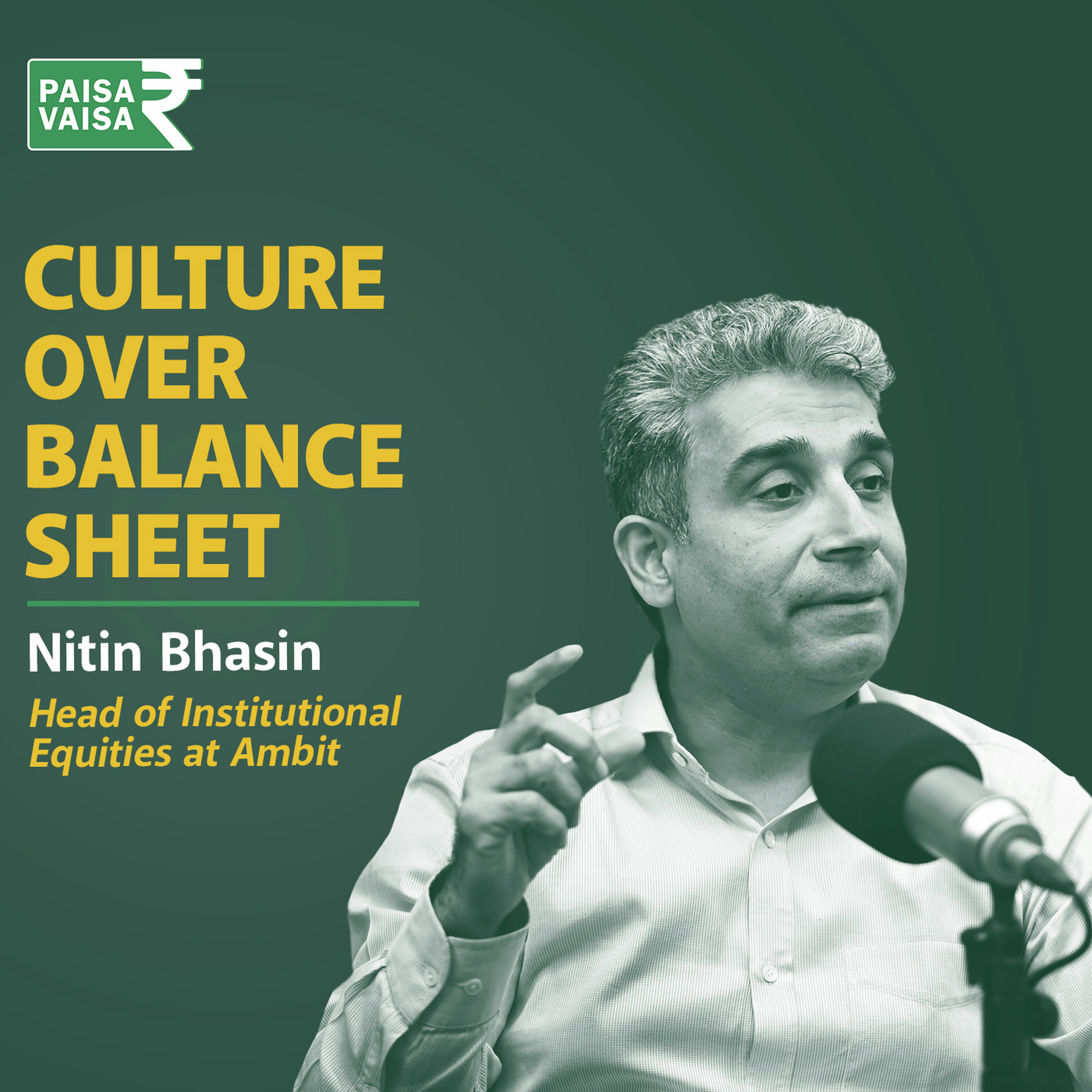
S1 Ep 557Why Culture Is the Most Underrated Factor in Quality Investing | Paisa Vaisa | Anupam Gupta
In this episode of Paisa Vaisa, Anupam Gupta sits down with Nitin Bhasin, Head of Institutional Equities at Ambit Capital, for one of the most grounded and honest market conversations of the year. Nitin brings over 25 years of experience to the table and covers everything from India's position in the global economy, why FIIs have been selling Indian equities, what the Nifty is likely to do over the next 15 to 18 months, and why the Indian IT sector faces its biggest challenge yet in the age of agentic AI. Whether you are a retail SIP investor trying to make sense of a confusing market or a finance professional building a career in equity research, this conversation has something genuinely valuable for you. The discussion goes deep on India versus China, and Nitin's take is refreshingly blunt. He does not believe India and China are even competing in the same league anymore. China is competing with the United States, and India is still figuring out its manufacturing pivot while sitting on a 30 year asset light services mindset that will take a generation to change. He also shares his public market view of a sideways Nifty for another 15 to 18 months, explains why this is a concentration cycle favouring only the top 10 to 15 large cap stocks, and breaks down exactly what SIP investors should do in this environment. The second half of the episode is a masterclass for young analysts and investors, covering what separates good companies from great ones, why culture is the most underrated competitive moat in investing, how to read annual reports the right way, and why communication and imagination are the two skills that will define careers in the AI era. Nitin also shares three book recommendations including Apple in China, Breakneck, and Investing as the Last Liberal Art by Robert Hagstrom. This is essential viewing for anyone serious about Indian markets, long term investing and building a career in finance. Key Takeaways • Alpha Shift — Imagination now drives returns, not information or analysis.• Macro Divergence — China competes with USA, India is in a different league.• Watch Cycle — Nifty sideways, concentration favours only top large caps.• Intangible Moat — Culture is the one competitive advantage nobody can replicate.• Forensic Lens — Tiny expense lines reveal the real character of management.• Human Edge — AI kills analysis, communication becomes your only differentiator.From decoding your personal finances to demystifying business models, Paisa Vaisa delivers candid, insightful, and jargon-free conversations.Listen on Spotify, Apple Podcasts, Amazon Music, JioSaavn, Gaana & more Watch full episodes right here on YouTubeExplore more at ivmpodcasts.comConnect with Anupam Gupta: Twitter: @b50Instagram: @b_50 LinkedIn: Anupam Gupta Follow IVM PodcastsWe’re @ivmpodcasts on Facebook, Twitter & InstagramSee omnystudio.com/listener for privacy information.

S1 Ep 556PMS vs Mutual Funds: The Hidden Tax Truth | Deepak Shenoy | Paisa Vaisa | Anupam Gupta
In this episode of Paisa Vaisa, Anupam Gupta sits down with Deepak Shenoy, CEO of Capitalmind, to discuss a major shift in the investment landscape: The transition from Portfolio Management Services (PMS) to Mutual Funds. If you are an investor confused about where to park your money for long-term growth with tax efficiency, this conversation is a goldmine. Deepak breaks down exactly why Capitalmind launched a Multi-Asset Fund and the massive tax disadvantages that come with traditional PMS structures. We deep dive into how asset allocation across equity, debt, and commodities can protect your downside volatility while ensuring steady wealth creation. Whether you are a beginner looking to invest in mutual funds or an HNI considering PMS, this episode reveals the math behind smarter investing. Key Takeaways (Crisp & Clear) Tax Efficiency: Mutual funds offer superior tax benefits over PMS by avoiding capital gains tax on internal portfolio churning. Volatility Management: Multi-asset allocation dynamically smoothes returns, significantly reducing drawdowns compared to pure equity portfolios. Global Diversification: Adding international equities provides a necessary hedge against domestic market risks and currency fluctuations. Portfolio Accessibility: Mutual funds lower the entry barrier compared to the high ticket size (₹50L+) required for PMS investments. Behavioral Edge: The strategy focuses on "sleep well" investing, prioritizing peace of mind over chasing the highest risky returns. Economic Outlook: Strong credit growth and GST data signal robust underlying health in the Indian economy despite short-term noise.From decoding your personal finances to demystifying business models, Paisa Vaisa delivers candid, insightful, and jargon-free conversations.Listen on Spotify, Apple Podcasts, Amazon Music, JioSaavn, Gaana & more Watch full episodes right here on YouTubeExplore more at ivmpodcasts.comConnect with Anupam Gupta: Twitter: @b50Instagram: @b_50 LinkedIn: Anupam Gupta Follow IVM PodcastsWe’re @ivmpodcasts on Facebook, Twitter & Instagram See omnystudio.com/listener for privacy information.

S1 Ep 555How much money do you actually need to retire at 50? | Paisa Vaisa | Anupam Gupta |
Are you blindly trusting your SIPs to fund your life 20 years from now? In this deep-dive episode of Paisa Vaisa, Anupam Gupta (@b50) welcomes Sameep Singh, Business Unit Head at Policybazaar , to solve the "Final Boss" of personal finance: Retirement. We tackle a question every Indian professional is asking: "How do I generate a ₹1 Lakh post-tax monthly pension?" Using a 40-year-old in Mumbai as a case study, we break down the brutal reality of 7% inflation and why a simple savings account won't cut it. We explore the "Young India" bias why our demographic is obsessed with picking the next multibagger stock but completely ignores the 30-year period after their last salary. Sameep explains the critical "Humbling Years" of the stock market and why your withdrawal strategy is more important than your investment returns. We also introduce the 3% Withdrawal Rule and how it ensures you never outlive your money. From understanding medical inflation (which is growing at 14%!) to why your parents’ FD interest is shrinking due to "Reinvestment Risk," this episode is a masterclass in long-term survival. If you want to stop guessing your future and start building a bulletproof retirement pot, this conversation is for you. Don't forget to stick around for the "Don't Touch the Pot" rule the single habit that separates wealthy retirees from the rest. Key Takeaways - Early Start: Compounding works best over 30 years, transforming even small amounts into massive wealth. Tax Efficiency: Low-cost ULIPs under ₹2.5L premium offer tax-free returns, avoiding the 12.5% LTCG tax on Mutual Funds. Health Priority: Buy health insurance young to fight medical inflation and ensure premiums don't skyrocket later. Safety Net: A safe withdrawal rate is ideally 3%, supplemented by guaranteed income in bad market years. Adequate Cover: A ₹1 Crore term plan is often insufficient for long-term family goals like education and retirement. Lock-in Gains: Annuity plans protect seniors from "Reinvestment Risk" when bank FD rates drop over time. From decoding your personal finances to demystifying business models, Paisa Vaisa delivers candid, insightful, and jargon-free conversations.Listen on Spotify, Apple Podcasts, Amazon Music, JioSaavn, Gaana & more Watch full episodes right here on YouTubeExplore more at ivmpodcasts.comConnect with Anupam Gupta: Twitter: @b50Instagram: @b_50 LinkedIn: Anupam Gupta Follow IVM PodcastsWe’re @ivmpodcasts on Facebook, Twitter & InstagramSee omnystudio.com/listener for privacy information.

S1 Ep 554From Engineering to CareEdge Ratings CRO: Sachin Gupta’s Masterclass | Paisa Vaisa | Anupam Gupta
On this episode of Paisa Vaisa, Sachin Gupta, the Executive Director and Chief Ratings Officer at CareEdge Ratings, sits down with Anupam Gupta on the Paisa Vaisa podcast to discuss the ticking time bomb of the $1 trillion global private credit market. While the US and Europe are grappling with opaque, unrated debt bubbles, Sachin argues that India’s strict regulatory culture might be our greatest economic superpower in 2026. We break down the "Modified Credit Ratio," a leading indicator that currently shows 2.5 upgrades for every single downgrade in the Indian economy. This episode is a deep dive into the sectors that are actually winning, from the ironclad asset quality of gold loan companies to the resilient banking sector that has moved from 12% NPAs to a state of unprecedented health. If you are an investor looking to navigate the current high-interest-rate cycle, Sachin’s macro insights on the RBI’s data-driven approach will change how you view your portfolio’s safety. Key Takeaways The Math of Trust: A credit rating is not a general "vibe check" on a company; it is a cold, mathematical probability of default calculated on a 20-point scale from AAA to D. The Integrity Filter: Management risk is the most critical pillar of analysis because promoter integrity and project execution track records determine survival better than any balance sheet. Regulatory Fortress: India’s strict AIF rules prevent the kind of "debt-on-debt" systemic risk currently threatening the $1 trillion opaque private credit markets in the US. The Gold Standard: Gold loan companies maintain the highest asset quality in the NBFC space because physical collateral and rising gold prices provide an automatic safety buffer for lenders. Recovery Revolution: The implementation of IBC and NCLT has fundamentally fixed India’s credit culture by instilling a genuine fear in promoters that they will lose their business if they default.From decoding your personal finances to demystifying business models, Paisa Vaisa delivers candid, insightful, and jargon-free conversations.Listen on Spotify, Apple Podcasts, Amazon Music, JioSaavn, Gaana & more Watch full episodes right here on YouTubeExplore more at ivmpodcasts.comConnect with Anupam Gupta: Twitter: @b50Instagram: @b_50 LinkedIn: Anupam Gupta Follow IVM PodcastsWe’re @ivmpodcasts on Facebook, Twitter & Instagram See omnystudio.com/listener for privacy information.

S1 Ep 553The Moonlighting Reality Check: Can You Get Fired? | CA Isha | Paisa Vaisa | Anupam Gupta
On this episode of Paisa Vaisa, CA Isha Jaiswal sits down with Anupam Gupta for a deep dive into the changing rules of money, parenting, and privacy in the digital age. As a new mother and a seasoned CA, Isha shares her controversial take on "Financial Parenting"—explaining why she plans to hire her own toddler for odd jobs rather than handing out a traditional allowance. We discuss the death of the old-school tax regime and the rise of a system that rewards cash flow over traditional saving. From the technicalities of the Annual Information Statement (AIS) to the legal ways you can pay rent to your parents to maximize your HRA, we cover the hacks that your CA likely hasn't told you yet. This is a masterclass for anyone who wants to stop being a passive earner and start being a strategic wealth builder, ensuring that their family is protected from both inflation and corporate overreach. Key Takeaways The 5/50 Success Rule: Sacrificing 5 years of intense grind in your 20s secures 50 years of a "Queen-Sized" life; choose your "hard" early. The Variable Pay Trap: HRs often inflate CTCs with variable pay that is hard to earn; always negotiate to convert variable into fixed salary. Joint Taxation Proposal: The new shift toward "One Family, One ITR" could allow husbands to use their homemaker wives' exemptions to save massive tax. The Privacy Shield: Your boss cannot track your private income through your PAN or AIS portal unless you give them access; your data is safer than you think. Employ Your Kids: To teach kids the value of money, hire them for "odd jobs" and pay them, instilling a "work-for-money" mindset instead of "allowance" entitlement.From decoding your personal finances to demystifying business models, Paisa Vaisa delivers candid, insightful, and jargon-free conversations.Listen on Spotify, Apple Podcasts, Amazon Music, JioSaavn, Gaana & more Watch full episodes right here on YouTubeExplore more at ivmpodcasts.comConnect with Anupam Gupta: Twitter: @b50Instagram: @b_50 LinkedIn: Anupam Gupta Follow IVM PodcastsWe’re @ivmpodcasts on Facebook, Twitter & Instagram See omnystudio.com/listener for privacy information.

S1 Ep 552Story of Society Tea: From 1924 Tea Traders to Iconic Indian Brand | Paisa Vaisa | IVM | Anupam Gupta
In this episode of Paisa Vaisa, Anupam Gupta sits down with Karan Shah, Director of Society Tea, to decode the century-long journey of one of India's most beloved brands. Starting as tea traders in 1924 under the name Hasmukhrai & Co., the family successfully transitioned into the packaged tea market in the late 1980s. Karan discusses how they avoid the "third-generation curse" by maintaining a lean, agile family structure and a relentless focus on quality over complacency. We dive deep into their vertical integration strategy—including building their own state-of-the-art milk factory—to ensure their "One Minute Tea" remains true to the authentic Indian palate. Whether you are a business enthusiast or a chai lover, this conversation offers a masterclass in brand longevity and fighting off multinational competition TAKEAWAYS- Legacy Meets Agility: Society Tea blends a 100-year heritage with agile, family-led leadership to outperform global multinational competition. Gut-Driven Brand Identity: Their iconic blue packaging was a "gut feel" decision that successfully defied negative market research and surveys. Control Through Integration: The company built a dedicated milk factory to ensure their "One Minute Tea" premix remains true to authentic chai. Convenience Without Compromise: Their innovation focuses on delivering speed without sacrificing quality by using real ingredients like hand-crushed cardamom. The Sensory Comeback: Society is expanding physical "Tea Terminals" to revive the traditional, sensory ceremony of chai for modern consumers.From decoding your personal finances to demystifying business models, Paisa Vaisa delivers candid, insightful, and jargon-free conversations.Listen on Spotify, Apple Podcasts, Amazon Music, JioSaavn, Gaana & more Watch full episodes right here on YouTubeExplore more at ivmpodcasts.comConnect with Anupam Gupta: Twitter: @b50Instagram: @b_50 LinkedIn: Anupam Gupta Follow IVM PodcastsWe’re @ivmpodcasts on Facebook, Twitter & Instagram See omnystudio.com/listener for privacy information.

S1 Ep 551Nifty Outlook 2026: Why Arbitrageurs are Betting on High Volatility This Year
Are you tired of watching your Fixed Deposit returns get eaten away by high taxes and inflation? In this deep-dive episode of Paisa Vaisa, Anupam Gupta sits down with Sailesh Jain, Fund Manager at Tata Asset Management, to unlock the mechanics of Arbitrage Funds. Many investors overlook this category, yet it remains one of the most efficient ways to park your spare cash while enjoying the tax benefits of equity. Sailesh Jain explains the concept of "riskless profit" through a simple mango market analogy, showing how buying in the cash market and simultaneously selling in the futures market locks in a predictable spread. Unlike traditional equity funds, arbitrage funds thrive on market volatility. When the market swings, the price mismatches between cash and futures expand, allowing seasoned fund managers like Sailesh Jain to "harvest" higher returns for their investors. We explore why these funds have become a staple for HNIs and retail investors alike, especially with the 2026 tax regulations offering a significant edge through 12.5% Long-Term Capital Gains (LTCG). Sailesh Jain provides a rare look into the "special situations" that drive Tata’s consistent outperformance, including dividend arbitrage and corporate actions. Whether you are managing corporate treasury or just looking for a better alternative to your savings account, this episode provides a clear roadmap. We also look ahead to the 2026 Budget and the broader Indian economic outlook, with Sailesh Jain projecting why India remains a superior market for both debt and equity investors despite global geopolitical tensions. By the end of this conversation, you will understand how to build a "linear" and steady portfolio that lets you sleep peacefully even during market turbulence. Key Take away Understanding Arbitrage Mechanics: Sailesh Jain explains how to generate profit by exploiting price gaps between cash and future markets. Volatility as a Tool: Discover why market swings during major events actually increase the earning potential of arbitrage strategies. Taxation Advantage in 2026: A breakdown of how the 12.5% LTCG rate makes arbitrage funds more profitable than FDs on a post-tax basis. Risk Management and Safety: Insights into how Tata AMC protects capital during extreme market crises like COVID and GFC. Economic Outlook for 2026: Sailesh Jain shares his projections for 15% earnings growth and India's position in the global economy.From decoding your personal finances to demystifying business models, Paisa Vaisa delivers candid, insightful, and jargon-free conversations.Listen on Spotify, Apple Podcasts, Amazon Music, JioSaavn, Gaana & more Watch full episodes right here on YouTubeExplore more at ivmpodcasts.comConnect with Anupam Gupta: Twitter: @b50Instagram: @b_50 LinkedIn: Anupam Gupta Follow IVM PodcastsWe’re @ivmpodcasts on Facebook, Twitter & Instagram See omnystudio.com/listener for privacy information.

S1 Ep 550Why Your Insurance Claim Might Be Rejected (And How to Ensure 100% Payout) | Paisa Vaisa
Is your health insurance actually working for you, or are you just paying premiums? In this episode of Paisa Vaisa, host Anupam Gupta sits down with Mayank Bathwal, CEO of Aditya Birla Health Insurance, to demystify the complex world of Indian health insurance. From the "Missing Middle" population to the rise of wellness-linked policies, we explore how the industry is changing and how you can benefit. In this video, you will learn: The Reality of Claims: Why 15% to 20% of claims are linked to fraud, waste, or abuse, and how this impacts your premium costs. Reimbursement Red Flags: What a "360-degree investigation" is and why reimbursement cases invite more scrutiny than cashless ones. The Cashless Advantage: Why cashless settlement is significantly higher in some states but struggles in places like Gujarat and Maharashtra. Earning Your Premium Back: How you can literally get 100% of your premium back by maintaining a healthy lifestyle and tracking your steps. Pro-Tips for Claims: The one thing you MUST do yourself when filing an application to ensure your claim never gets rejected. Don't miss the insights on the future of Health Tech, AI, and how a personal health coach provided by your insurer can help you reverse lifestyle diseases.From decoding your personal finances to demystifying business models, Paisa Vaisa delivers candid, insightful, and jargon-free conversations.Listen on Spotify, Apple Podcasts, Amazon Music, JioSaavn, Gaana & more Watch full episodes right here on YouTubeExplore more at ivmpodcasts.comConnect with Anupam Gupta: Twitter: @b50Instagram: @b_50 LinkedIn: Anupam Gupta Follow IVM PodcastsWe’re @ivmpodcasts on Facebook, Twitter & InstagramSee omnystudio.com/listener for privacy information.

S1 Ep 5491000 Crore Secret: How NoBroker Makes Money with 0% Commission | Paisa Vaisa
This comprehensive episode of the Paisa Vaisa podcast features host Anupam Gupta in an deep-dive conversation with Amit Agarwal, the CEO and co-founder of NoBroker, to decode the complex Indian real estate market for 2026 . We begin by exploring the disruptive journey of NoBroker which started in Bombay back in 2013 to solve the massive problem of fly-by-night brokers and high commission fees that have plagued the property market for decades . Amit explains the critical math behind the rent versus buy dilemma that every Indian professional faces today, highlighting why renting often makes more financial sense because typical residential rental yields are only between two to four percent while home loan interest rates hover around eight percent . The discussion provides a detailed analysis of the Model Tenancy Act which balances the rights of both owners and tenants by capping security deposits at two months and establishing a hierarchy of rent courts for sixty-day dispute resolution . We also address the infamous bachelor tax and societal discrimination where single tenants are often charged a premium despite being high-value renters with more disposable income than traditional families . This video is a masterclass for anyone looking to understand the real estate ecosystem from property appreciation and wealth generation to navigating the strict rental processes of Mumbai versus the more casual documentation found in other major Indian cities Key Takeaways The 8% Rule: Buying a home is often financially inefficient in India because rental yields (2-4%) are far lower than home loan interest rates (8%) . Commercial Potential: Investors can achieve up to 12% rental yield by targeting small commercial shops instead of residential apartments . Deposit Laws: The Model Tenancy Act aims to stop the "Bangalore trend" of high deposits by capping them at a maximum of 2 months. Bachelor Advantage: Landlords should stop the "Bachelor Tax" as single tenants often pay more rent and have higher disposable income . The Amenity Trap: Post-COVID luxury boom has pushed many into paying high maintenance for amenities they rarely use . Investment Zones: For 2024, Pune offers "great deals" for investors while the NCR market is currently a zone to be "most careful about" From decoding your personal finances to demystifying business models, Paisa Vaisa delivers candid, insightful, and jargon-free conversations.Listen on Spotify, Apple Podcasts, Amazon Music, JioSaavn, Gaana & more Watch full episodes right here on YouTubeExplore more at ivmpodcasts.comConnect with Anupam Gupta: Twitter: @b50Instagram: @b_50 LinkedIn: Anupam Gupta Follow IVM PodcastsWe’re @ivmpodcasts on Facebook, Twitter & InstagramSee omnystudio.com/listener for privacy information.

S1 Ep 548Why ₹30,000 Cr Monthly Inflows Change Everything | Paisa Vaisa | Anupam Gupta
In this landmark episode of Paisa Vaisa, Anupam Gupta reunites with the leadership team at White Oak Capital—Founder Prashant Khemka and CEO Aashish Somaiya—to dissect the radical transformation of the Indian market over the last three years. As the Nifty has surged from 18,000 to 26,000 and SIP inflows have hit a staggering ₹30,000 crores per month, we explore whether the Indian retail investor has finally matured or if we are simply chasing the latest momentum in gold and silver. Prashant Khemka provides a rare global perspective, drawing parallels between India’s current economic cycle and the "middle-income traps" that have historically hindered countries like Brazil. He breaks down why a realistic 11% pre-tax return is the "gold standard" for the next two decades and why the "alpha potential" in India remains among the richest in the world for bottom-up investors. Aashish Somaiya addresses the "dark side" of social media and the rise of finfluencers, explaining why it is the industry's moral duty to speak to the younger generation in relatable terms. Together, they reveal the "Chemistry of Investing"—a framework showing how strategic equity allocation can actually improve risk-adjusted returns without the volatility most investors fear. Whether you are worried about the "exit" of private equity via IPOs or wondering how to stay disciplined when the market goes nowhere, this masterclass provides the roadmap for your 20-year wealth creation journeyTAKEAWAYS -Realistic Expectations: Investors should aim for roughly 11% pre-tax returns (9% post-tax) over a 20-year horizon based on GDP growth and inflation .- The Behavioral Gap: The biggest threat to wealth isn't fund fees; it’s the retail habit of getting in and out of the market at the wrong time.- Retail Maturity: Despite low recent returns, SIP flows remain strong at ₹30,000 Cr/month, signaling a structural shift in how Indians save.- Middle-Income Trap: India is currently at an early stage compared to Korea or Taiwan; the risk of a "trap" usually stems from extreme socialist policies .- IPOs are Vital: IPOs are not just "exits" for VCs; they are a funding mechanism for businesses that eventually create jobs and grow the economy.- Alpha Potential: India remains one of the richest markets for alpha globally, especially for managers using a bottom-up research approach.From decoding your personal finances to demystifying business models, Paisa Vaisa delivers candid, insightful, and jargon-free conversations.Listen on Spotify, Apple Podcasts, Amazon Music, JioSaavn, Gaana & more Watch full episodes right here on YouTubeExplore more at ivmpodcasts.comConnect with Anupam Gupta: Twitter: @b50Instagram: @b_50 LinkedIn: Anupam Gupta Follow IVM PodcastsWe’re @ivmpodcasts on Facebook, Twitter & InstagramSee omnystudio.com/listener for privacy information.

S1 Ep 547Why Most Investors Lose Money: Lessons from Financial Times’ | Jonathan Guthrie | Paisa Vaisa | Anupam Gupta
In this episode of Paisa Vaisa, host Anupam Gupta welcomes Jonathan Guthrie, a veteran award-winning journalist and the former head of the renowned Lex column at the Financial Times. With a career spanning decades at the heart of London’s financial district, Jonathan shares deep insights from his latest book, The Truth About Investing. The conversation dives into the fundamental shifts in the global investment landscape, comparing the mature UK stock market with the rapid financialization of savings in India. Jonathan breaks down the "Lex test" for evaluating deals and offers a masterclass on navigating the complexities of active vs. passive investing, the dangers of status anxiety, and the reality of risk and advice. Key Discussion Points: The Philosophy of Investing: Why managing money cautiously over long periods beats any "get rich quick" scheme. Active vs. Passive Debates: Understanding that passive funds don't entirely eliminate human error and how to choose an active manager with a "special sauce". Financial Red Flags: How to spot "juiced" sales metrics, misleading Total Addressable Market (TAM) claims, and why you should be skeptical of "star managers". The AI Revolution: Jonathan’s take on the current Artificial Intelligence bubble, potential value destruction, and the lessons learned from previous tech fads. The Concept of "Negative Compounding": How inflation and recurring fees can quietly erode your long-term spending power. Market Outlook for 2025-26: Thoughts on geopolitical volatility, the role of India as a pivotal state, and the defensive value of domestic defense stocks. Recommended Reading List from Jonathan Guthrie: The Truth About Investing by Jonathan Guthrie The Intelligent Investor by Benjamin Graham (with notes by Jason Zweig) The Great Crash 1929 by J.K. Galbraith Capitalism by John Plender Whether you are a DIY investor managing your own portfolio or just starting your journey in the Indian equity markets, this episode provides a professional framework to help you think like a seasoned financial analyst.From decoding your personal finances to demystifying business models, Paisa Vaisa delivers candid, insightful, and jargon-free conversations.Listen on Spotify, Apple Podcasts, Amazon Music, JioSaavn, Gaana & more Watch full episodes right here on YouTubeExplore more at ivmpodcasts.comConnect with Anupam Gupta: Twitter: @b50Instagram: @b_50 LinkedIn: Anupam Gupta Follow IVM PodcastsWe’re @ivmpodcasts on Facebook, Twitter & InstagramSee omnystudio.com/listener for privacy information.

S1 Ep 546Is your Portfolio a Time Bomb? George Joseph on Market Bubbles & Value Traps.
"Popularity is the biggest risk in investing." George Joseph of ASK Investment Managers has seen the 1991 scam, the 2000 tech bubble, and the 2008 crash. In this episode, he explains why the "hype" around certain sectors today is a massive red flag. If you think you can "time the market," George shares a sobering lesson from his own 30-year career. This episode is a reality check on Investor Temperament. We discuss why "boring" asset allocation is the only "magic wand" in wealth management and why Indians need to stop acting like traders and start acting like owners. Don't miss: The 3 books every serious investor must read to fix their mental models. KEY TAKEAWAYS The "5 Crore" Reality: You don't need a 100x multibagger. You need 12% returns and 25 years. A ₹25k SIP isn't just a saving; it's a retirement machine. "Popularity is the Enemy": If your neighbor, your barber, and your Instagram feed are all talking about a sector (AI/EV/Defense), the "easy money" has already been made. Be careful. The 85% Rule: ASK filters out 85% of the market based on "Governance" alone. If the management isn't ethical, the business growth doesn't matter. Boring is Beautiful: The wealthiest people in India don't trade daily. They buy high-quality "boring" businesses and let compounding do the heavy lifting. The "Black Swan" Preparation: You can’t predict a crash, but you can prepare. George reveals why shifting to Large Caps now is like buying insurance for your portfolio. Fix Your Brain, Not Your App: The biggest risk to your wealth isn't the market—it's your own panic. Asset allocation is the only "magic wand" that actually works.From decoding your personal finances to demystifying business models, Paisa Vaisa delivers candid, insightful, and jargon-free conversations.Listen on Spotify, Apple Podcasts, Amazon Music, JioSaavn, Gaana & more Watch full episodes right here on YouTubeExplore more at ivmpodcasts.comConnect with Anupam Gupta: Twitter: @b50Instagram: @b_50 LinkedIn: Anupam Gupta Follow IVM PodcastsWe’re @ivmpodcasts on Facebook, Twitter & Instagram See omnystudio.com/listener for privacy information.
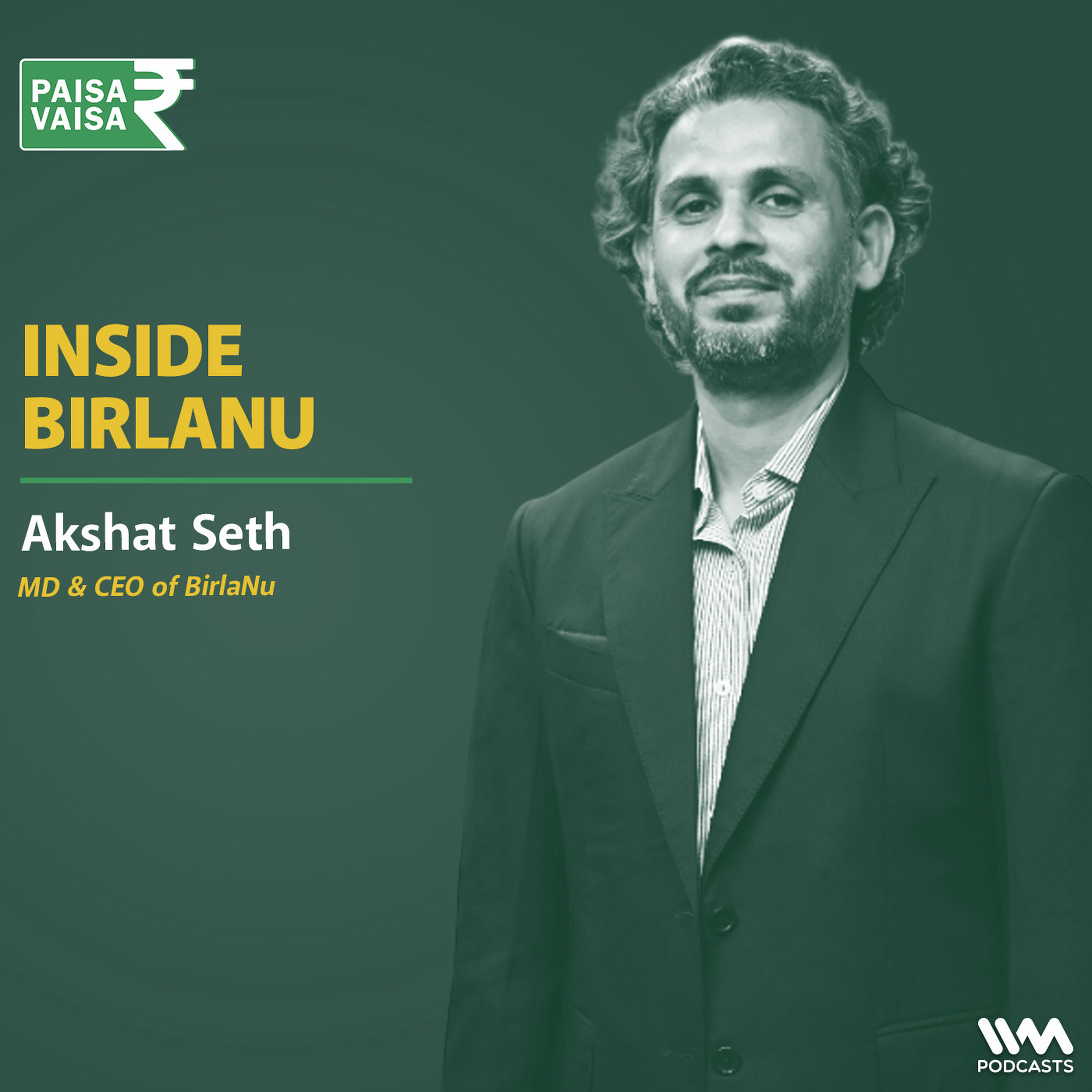
S1 Ep 545BirlaNu: People, Purpose & the CKA Birla Group Legacy | Paisa Vaisa | Anupam Gupta
In this episode of Paisa Vaisa, Anupam Gupta sits down with Akshat Seth, MD & CEO of BirlaNu. They deep dive into the 170-year legacy of the CKA Birla Group and how one of India's oldest conglomerates is transforming for the modern age. Akshat shares his personal journey from a decade in management consulting to leading major operating businesses in healthcare and manufacturing. If you are interested in business strategy, how large groups manage synergies, or want career advice on making the leap to the C-suite, this conversation is for you. We also discuss the massive rebranding of HIL to BirlaNu and the future of sustainable construction in India. Key takeaways The Quality Litmus Tests: Akshat uses the "Family Test" for healthcare (treat patients like family) and the "Home Test" for manufacturing (make products you'd use in your own home) to ensure excellence . From Consultant to CEO: The transition requires shifting from pure strategy to execution—specifically the ability to build businesses from scratch (0-100) and scale mature ones (100-1000) . Rebranding HIL to BirlaNu: The rename wasn't just cosmetic; it signals a strategic shift to connect with modern consumers who demand technology and sustainability . Conglomerate Strategy: The CKA Birla operates on professional management where individual CEOs run companies, bound together by shared values rather than micromanagement . Sustainability is Essential: Green manufacturing is no longer a differentiator but a "hygiene factor" necessary to compete in global markets like Europe and the US . Hiring Checklist: For leadership roles, Akshat prioritizes three traits: Hunger for growth, Ownership of the business, and Culture Match . See omnystudio.com/listener for privacy information.

S1 Ep 544How to Start a Food Business in 2025-26: Franchise vs. Own Brand | Ajay Mariwala | Anupam Gupta | Paisa Vaisa
Did you know that the addictive McDonald's Piri Piri mix or the Sour Cream & Onion flavor of Balaji Wafers were created by the man sitting in this chair? 🍟😲 In this episode of Paisa Vaisa, Anupam Gupta sits down with Ajay Mariwala, the visionary behind VKL Seasonings and Food Service India (FSIPL). Ajay is the "Secret Sauce" of the Indian food industry—literally! He shares the untold story of how his team beat global multinationals by a "mile and a half" to become India's #1 seasoning company. From flying to Valsad to pitch a new flavor to the owners of Balaji Wafers to turning his mother's pickle recipe into ITC Bingo’s iconic Achari Masti, Ajay reveals exactly how billion-dollar flavors are invented. We also dive deep into the brutal reality of the restaurant business. If you dream of opening a cafe, you need to hear Ajay’s "Head vs. Heart" advice , why 35% is the magic number for food costs , and the unique "Toilet Test" you must do before buying a franchise. Takeaways The Creator of Icons: Ajay’s team is responsible for creating the McDonald’s Piri Piri mix and Balaji Wafers’ Sour Cream & Onion flavor, beating global competitors. The QSR Golden Ratio: For a Quick Service Restaurant to be viable, food costs must stay between 33-35%. Rent should always be the second highest cost, not the first. Head Over Heart: Don't open a restaurant just because you love food. You need a 24-month cash runway because most restaurants fail in the first 9 months due to quality inconsistency. The "Toilet Test": The best way to judge a franchise's operational discipline isn't the food—it's the hygiene. If the toilet is clean, the kitchen is likely clean too. The Tier-2 Opportunity: Expansion in major metros (Mumbai/Delhi) is slowing due to high rents and saturation. The real ROI is now in Tier 2/3 cities where rents are 8-12% (vs. 15-20% in metros).From decoding your personal finances to demystifying business models, Paisa Vaisa delivers candid, insightful, and jargon-free conversations.Listen on Spotify, Apple Podcasts, Amazon Music, JioSaavn, Gaana & more Watch full episodes right here on YouTube Explore more at ivmpodcasts.com Connect with Anupam Gupta: Twitter: @b50 Instagram: @b_50 LinkedIn: Anupam Gupta Follow IVM Podcasts We’re @ivmpodcasts on Facebook, Twitter & Instagram See omnystudio.com/listener for privacy information.

S1 Ep 543The #1 Due Diligence Tip: Check Your Builder's Lender & Why 18% Interest is a RED FLAG
Anupam Gupta and Vishal Bhargava dive deep into selecting the right property. Vishal explains why apartments should have a minimum of 650 sq ft carpet area for a 2BHK and warns against the deceit of sample flats (no doors, small beds). They expose the Amenity Illusion (swimming pools are "item numbers") and the low quality of construction from branded developers, who often prioritize timely delivery over quality. They discuss Bombay's enduring strength (waterfront, 24/7 energy) versus the "race to the bottom" in Gurgaon, and the extreme tenant profiling happening in markets like Bangalore. Don't fall for the "inventory of choice" fear—there is always supply, so Don't Rush! #MumbaiRealEstate #PropertySelection #BuilderQuality Takeaways- 1. Rule of 35 & 5-20-30-40: Buy a house only after 35, following the 5x annual income, 20-year loan max, 30% down payment, 40% EMI limit rules. 2. Location vs. Address: Prioritize a good Location (e.g., Dharavi connectivity) over a vanity Address (Pali Hill), as location eventually becomes the address. 3. Builder Due Diligence: Check the builder's delivery history and the interest rate their lender charges to assess risk. 4. Property Specs: Aim for a minimum 650 sq ft carpet area for a 2BHK and beware of deceptive sample flat tricks (small beds, no doors). 5. Investment Strategy: For aggressive investment, bet on migration to convert a "bad address" (good location) into a "respectable address." 6. Small Ticket Investment: REITs are preferred over Fractional Ownership due to liquidity, despite REITs offering less asset-specific focus. See omnystudio.com/listener for privacy information.

S1 Ep 542Flexi-Cap vs. Multi-Cap: The SEBI Rule That Changed Everything | Anupam Gupta | Sandeep Bagla
Indian Equities gave 0% returns recently while Gold soared 40%. Should you switch? In this episode, Sandeep Bagla (CEO, Trust MF) reveals the $26 Trillion Global Mistake central banks made and why Inflation is the only indicator you need to watch. We also expose the "FD Lie"—why your fixed deposits might be losing value—and reveal the future AI-enabled strategy that could disrupt the market. Topics: Gold vs Equity, Debt Fund Secrets, The Small Cap Bubble. Takeaways The "Inflation + 2%" Rule: Bond yields simply track Expected Inflation + 1.5-2%. Master this single variable, and you understand 80% of the debt market. The "Duration" Cheat Code: Beat FDs by buying Long Duration (Gilt) Funds before rates fall. It’s about capturing capital appreciation, not just locking in rates. The "Granular" Safety Net: Why no crash despite FII selling? The ₹28,000 Cr/month SIP flow. These are sticky ₹3,000 micro-investments that don't panic-sell like institutions do. The "Small Cap" Illusion: A ₹35,000 Cr giant is still labeled "Small Cap" in India! Don't be fooled—the explosive growth is often in the actual small companies that big funds are too large to buy. The DIY Trap: Investing is a specialized job. Don't gamble your family's future on DIY stock picks. Follow Buffett’s advice: Trust professional managers with 90% of your wealth. The "Gold Signal": Gold beating Equity by 40% signals inflation fear, not a broken market. Do NOT sell your stocks—simply extend your time horizon to 5 years. See omnystudio.com/listener for privacy information.

S1 Ep 541The #1 Psychological Trap of Selling Stocks (Winners vs. Losers)
In this episode of Paisa Vaisa, host Anupam Gupta sits down with V. Srivatsa, Executive Vice President and Fund Manager at UTI AMC. He shares profound lessons from his 20-year career , discussing the psychological traps of feeling like a "hero" in a bull market and a "zero" in a bear market. Discover the single biggest mistake retail investors make with their SIPs , why avoiding mistakes is more important than finding a multi-bagger , and the two modern buckets of value investing. He also explains the "behavioral gap," referencing a UTI mid-cap fund that grew 30x, yet 80% of the original investors missed out. This is a masterclass on investor psychology, market cycles, and building long-term wealth.From decoding your personal finances to demystifying business models, Paisa Vaisa delivers candid, insightful, and jargon-free conversations.Listen on Spotify, Apple Podcasts, Amazon Music, JioSaavn, Gaana & more Watch full episodes right here on YouTube Explore more at ivmpodcasts.com Connect with Anupam Gupta: Twitter: @b50 Instagram: @b_50 LinkedIn: Anupam Gupta Follow IVM Podcasts We’re @ivmpodcasts on Facebook, Twitter & InstagramSee omnystudio.com/listener for privacy information.

S1 Ep 540Stop DIY Investing! The 3 Things the Wealthiest Families Do Differently
In this episode of Paisa Vaisa, Dr. Karthik drops a truth bomb about the Indian financial ecosystem: most traditional wealth managers are just product distributors (pharmacists), not true advisors (doctors). This episode is an investigation into the $30 Million investor mindset. We explore the Wild West of the booming wealth management industry and why SEBI regulations are crucial. The Big Mistake: Why complexity is the biggest issue for millionaires. The Correction Myth: Why those predicting a correction for 5 years have been wrong (and what assets are currently overvalued). The Red Flag: If you don't understand it, don't invest in it (specifically targeting unlisted/unregulated platforms). Don't let recency bias or a friend's startup pitch ruin your long-term plan. Watch, learn, and apply the principles of the Entrust Family Office process to your own savings. Advisor Role: Your banker is a "Pharmacist" (sells products); look for a "Doctor" (fee-based advisor) who provides a holistic financial blueprint. Invest Smart: 80% of long-term returns come from Strategic Asset Allocation (SAA). Focus on your canvas (SAA) first, not the paint (stock picks). Bucket Your Wealth: Structure your money into clear goals: Protection (for certainty), Growth (for compounding), and Philanthropy. Simplify: Avoid over-diversification. Complexity and excessive product overlap are major mistakes even for the Ultra HNI. Check Expectations: Don't let a great year create unrealistic expectations. Tune down equity return forecasts to realistic long-term averages. Cardinal Rule: Never invest in what you don't understand, especially high-risk, unlisted, or unregulated products. See omnystudio.com/listener for privacy information.
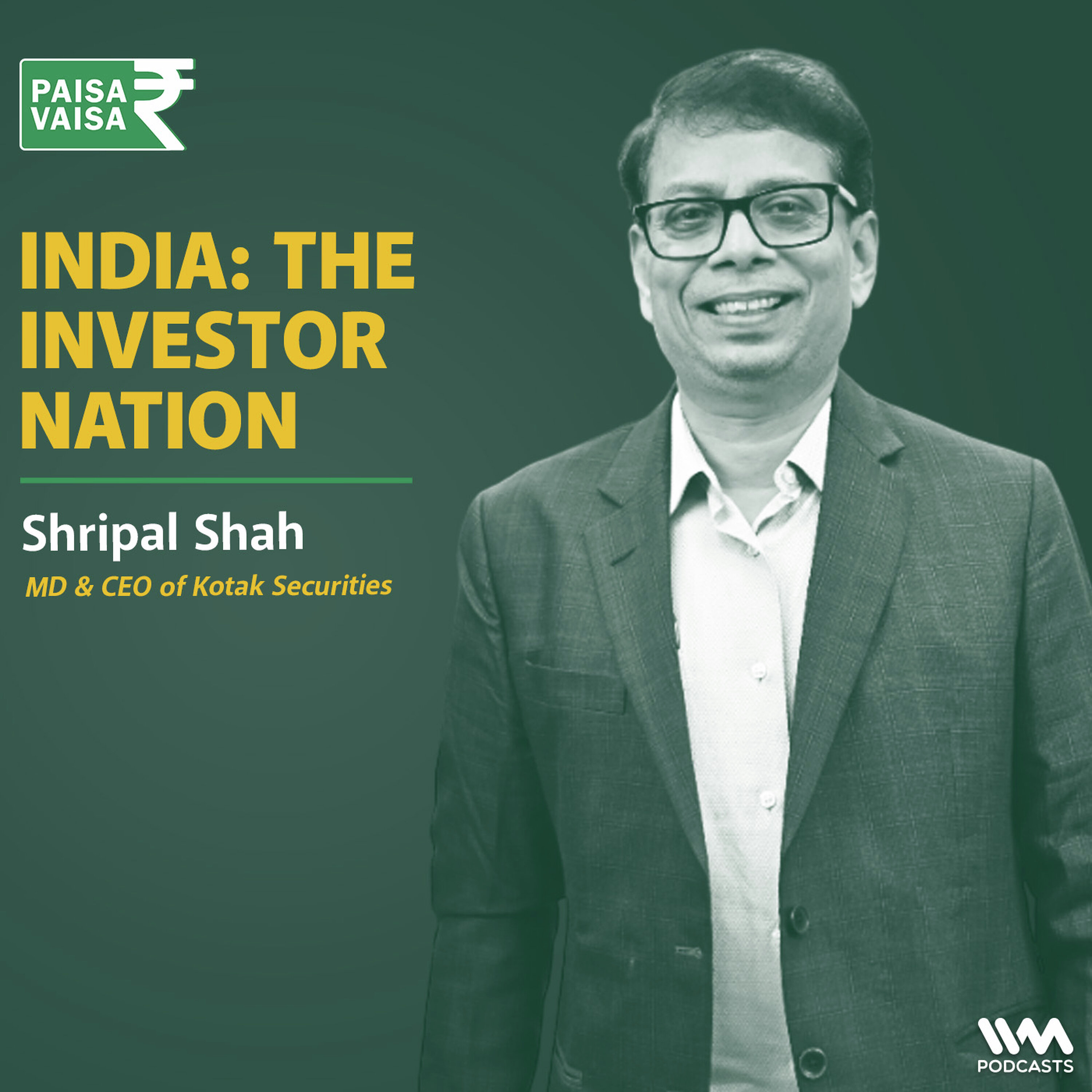
S1 Ep 539Don't Follow FRENZY, Follow FUNDAMENTALS: The Only Investment Mantra You Need to Know
In this exclusive and powerful episode of Paisa Vaisa, host Anupam Gupta sits down with Shripal Shah, the Managing Director and CEO of Kotak Securities, to decode the seismic shifts in the Indian financial market. Shah delivers a stark, data-driven warning on the Futures & Options (F&O) segment, revealing the alarming statistic that over 90% of individual traders incur losses. He also details the new investment mindset, explaining why "equity has become the new fixed deposit" and how the industry is pivoting from high-brokerage models to the digital-first, low-cost platform Kotak Neo. Shah walks through the mechanics of the powerful, yet underutilized, Margin Trade Facility (MTF), showcasing how Kotak is offering it at a disruptive 9.69% interest. This is a must-listen masterclass for anyone trading in the Indian stock market, from a beginner opening a Demat account to a seasoned derivatives trader......Listen on Spotify, Apple Podcasts, Amazon Music, JioSaavn, Gaana & moreWatch full episodes right here on YouTube Explore more at ivmpodcasts.comConnect with Anupam Gupta: Twitter: @b50 Instagram: @b_50LinkedIn: Anupam GuptaFollow IVM Podcasts We’re @ivmpodcasts on Facebook, Twitter & InstagramSee omnystudio.com/listener for privacy information.

S1 Ep 538Billion Dollar Secrets: How Global Giants Use India to Scale R&D | Planview Inc. | Paisa Vaisa
Is AI a bubble, or is it the future? Shalini Sankarshana, MD of Planview Inc. India, joins Anupam Gupta on Paisa Vaisa to discuss the most disruptive forces in business today: AI and Global Capability Centers (GCCs). Planview, a leader in strategic portfolio management, is now an AI transformation partner, and Shalini dives into how this technology will make some jobs "irrelevant" while creating new opportunities. She also shares fascinating case studies of how Planview enabled a capital markets giant and a two-wheeler manufacturer in India to accelerate their digital transformation journey. A must-watch for tech enthusiasts and business leaders! Audience Takeaways: Shalini's candid take: why the current frenzy is an AI bubble and what happens when it bursts. The transition of GCCs from cost centers to crucial innovation hubs in India. The importance of having world-class aspirations for Indian businesses. How Planview provides the "glue" that connects top-level strategy to execution in large organizations. Key career skills to focus on that will be relevant even as AI transforms the tech job market. A look at booming investment opportunities in the Indian BFSI and HealthTech sectors.From decoding your personal finances to demystifying business models, Paisa Vaisa delivers candid, insightful, and jargon-free conversations.Listen on Spotify, Apple Podcasts, Amazon Music, JioSaavn, Gaana & more Watch full episodes right here on YouTube Explore more at ivmpodcasts.comConnect with Anupam Gupta: Twitter: @b50 Instagram: @b_50 LinkedIn: Anupam Gupta Follow IVM Podcasts We’re @ivmpodcasts on Facebook, Twitter & Instagram See omnystudio.com/listener for privacy information.