324: How Jeff Found Himself in Iraq (Again and Again)
Audio is streamed directly from the publisher (media.blubrry.com) as published in their RSS feed. Play Podcasts does not host this file. Rights-holders can request removal through the copyright & takedown page.
Show Notes
Christina interviews Jeff on the years he spent going back and forth to pre-war Iraq, and about his ill-fated post-war trip. Then it’s on to product placement in The White Lotus and, of course, Grapptitude.
Sponsor
Kolide ensures only secure devices can access your cloud apps. It’s Zero Trust tailor-made for Okta. Book a demo today at Kolide.com/overtired.
Mental Chillness is a safe space that heals with the power of laughter. Join Khanh and Jules, people with mental illness that come together weekly with occasional guests to share their daily process of working towards mental chillness.
Show Links
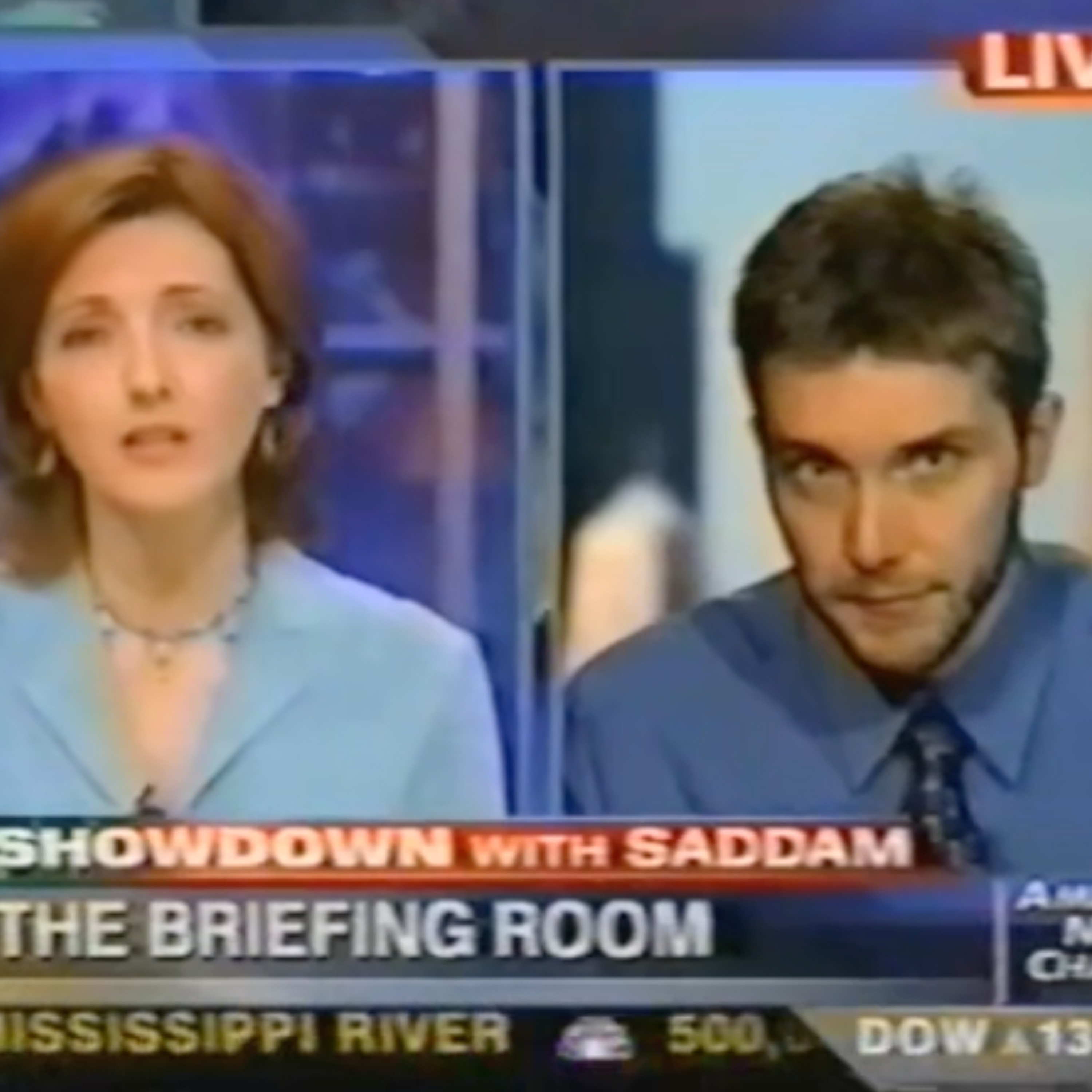
- Jeff on MSNBC in 2002 talking about a possible war with Iraq
- The Very Issue of Covert Action Quarterly that changed Jeff’s life
- Jeff reflecting on his time in Iraq eight years after the war: “The Baghdad I knew: Before and after the fall”
- Nintendo Switch Gaming Console Used by Fred Hechinger as Quinn Mossbacher in The White Lotus S01E02 “New Day”
- What game do you think Quinn played on his Switch before he stopped using electronics?
- iBinged iCarly – Quinton Reviews
- Rick Rubin’s series of interviews with John Frusciante on the Broken Record podcast
- Rick Rubin’s and Tyler, The Creator discuss Igor on the Broken Record podcast
- Grapptitude:
- Jeff: DevonThink Pro
- Christina: Typst
Join the Conversation
Thanks!
You’re downloading today’s show from CacheFly’s network
BackBeat Media Podcast Network
Check out more episodes at overtiredpod.com and subscribe on Apple Podcasts, Spotify, or your favorite podcast app. Find Brett as @ttscoff, Christina as @film_girl, Jeff as @jsguntzel, and follow Overtired at @ovrtrd on Twitter.
Transcript
How Jeff Found Himself in Iraq (Again and Again)
[00:00:00] Christina: You are
[00:00:00] Jeffrey: ready, aren’t you? Oh, I’m doing
[00:00:01] Christina: are ready. Yeah, I was gonna say, we’re already recording. So, and honestly, I don’t even want you to edit this out because this is just, this is, this is what happens when Brett isn’t here.
[00:00:10] Intro: Tired. So tired, Overtired.
[00:00:15] Christina: You’re listening to Overtired. I’m Christina Warren. Joined, joined by, uh, Jeff Severns Guntzel, former M MSNBC star, Jeff Severns Guntzel. Uh, gonna have that linked in in the show
[00:00:26] Jeffrey: They gave Chris Hayes my spot.
[00:00:28] Christina: I mean, honestly, you were robbed. Um, uh, because I, I, I really, I would’ve rather watched you with your indignant, um, like consternation at the prop wish guy.
[00:00:41] Jeff’s Punk Rock to Iraq Origin Story
[00:00:41] Jeffrey: I sent my co-hosts a video from 2003 in the lead up to the Iraq War. And I had been working with an anti-war organization and had been traveling back and forth to Iraq before that, before we knew there would ever even be any kind of war. Couldn’t even imagine. Um, and I [00:01:00] got to go on TV to be a person who has gone back and forth to Iraq and this was an MSNBC appearance that was so incredibly unsatisfying as those things I’m sure always are for anybody who truly cares about what they’re saying.
[00:01:16] Jeffrey: It isn’t just doing it cuz it’s their job, you know, which is another kind of fun. Um, but you know, the thing that I, uh, we’ll, we’ll link to this, but as I look at that younger, younger me that like baby baby me, um, the two things I noticed that I still relate to is this sort of brooding. Stare a little bit down, but not all the way down.
[00:01:41] Jeffrey: And then I’m sw, I’m swiveling back and forth in my chair.
[00:01:47] Christina: That.
[00:01:47] Jeffrey: it was so that, that stuff was so hard for me because the, you know, TV and radio wanted to talk about the politics of it and the [00:02:00] optics of it and all of that stuff. And like as someone who had been traveling back and forth to Iraq, primarily from 1998 to 2001, but then still worked for an organization that sent people to Iraq.
[00:02:11] Jeffrey: Like, it was like, you couldn’t, this wasn’t a good sound bite, but like, I don’t want this war cuz I don’t want my friends to die. You know, like,
[00:02:23] Christina: But you, but you were actually focused, you were actually concerned about the people on the ground, which is the part that people claim to care about, but it’s the thing that gets the least amount of attention. Like, you’ll have your one-off stories, you know, profiling this or that thing, and people will read it and like, oh, this is terrible, and move on.
[00:02:37] Christina: But they, but, but, but it’s, it’s always framed in like the larger geopolitical terms, which on the one hand makes sense because I think if you had to focus on those smaller things, a, it would just be impossible to watch and, and impossible to even kind of grapple with who we are as humanity when we do these things, right.
[00:02:58] Christina: So you have to, I think, take a big picture [00:03:00] approach if you’re going to talk about it at all, but, but B would also just be, is like, you know, If you’re not there, it, it, you know, it, it’s, it’s really hard to get those individual things out, but that is the price we pay. And now we are, um, the 20th anniversary was what, like two weeks ago.
[00:03:21] Jeffrey: yeah.
[00:03:23] Christina: Um,
[00:03:24] Jeffrey: And we’re almost on the 20th anniversary of when I, when I arrived there after the invasion for my final trip there. I.
[00:03:31] Christina: um, we might have talked about this before and if we did, I totally, I, I apologize for asking you again, but what was it like, how did you get into doing the work where you were going there?
[00:03:42] Jeffrey: It’s a really. It’s a really funny, weird story. Um, so I had been in a punk rock band called The Freedom Fighters, which was not a terribly political band. Um, but our one political song we played in LA to a very small audience, and Zach de [00:04:00] Laco was in the audience from Rage Against the Machine. And we had this one kind of obtuse political song.
[00:04:05] Jeffrey: And when it was over, it was a great song. When it was over, he screamed out in approval and it sounded just like a scream from the record. And I was just like, that’s pretty cool. That was kind of neat. It was like we sampled him. Um, anyway, so I was on this, I was in this punk rock band and I was, I had been sort of having like a political awakening since like age eight and.
[00:04:31] Jeffrey: Somehow the years of being in bands and I, I, I worked in a lot of warehouses and dish washed and all this stuff. Like, I was starting to really feel the absence of something that felt truly meaningful to me as like how I spent my time. Um, and, and I was starting to think about leaving the band and just, I don’t know what, I didn’t know what, but the one thing it seemed like you could do is like, travel to places that have political relevance.
[00:04:59] Jeffrey: And, [00:05:00] um, I had that kind of in my mind, but I didn’t have a high school diploma. I hadn’t gone to college at all. It was just like I had a good head on my shoulders, but like, I had to find ways of demonstrating that, which I didn’t really know. I was super shy. I barely looked adults in the eye in, in this period of time.
[00:05:14] Jeffrey: But anyway, so we’re touring and we went to a news stand. Remember those lots of
[00:05:19] Christina: vaguely, yeah.
[00:05:21] Jeffrey: many magazines.
[00:05:22] Christina: I love them so much.
[00:05:24] Jeffrey: I bought a magazine called Covert Action Quarterly, which is an awesome name. It’s like a lefty magazine that’s traditionally looked at the covert work of United States agents, but also globally.
[00:05:37] Jeffrey: I’d never heard of it. I was like, this is a badass title. And that’s the What was so great about newsstands, right, is you could just be like, what is that? I’m
[00:05:45] Christina: Well, I was gonna say, you could like discover all these things. Like I, I, for me, um, I missed like a lot of, I guess, I mean there was like the, the news section of like the supermarket, but it wasn’t until I first went into like a Barnes and Noble that I got kind of like the equivalent,
[00:05:59] Jeffrey: Right,[00:06:00]
[00:06:00] Christina: know?
[00:06:00] Jeffrey: right. Totally. Yeah, that’s, I mean, they still do that. Like I was in a Barnes Noble for the first time in a while, the other day, and there was a long run of magazines. The problem is magazines, the ones that have survived are they survived cuz they’re ad-based. And so you get these like just a million glossy magazines where every single, you know, headline and sub-headline is meant to serve the advertisers and it’s boring.
[00:06:24] Jeffrey: And whereas in the olden days you would be like, what the fuck is Covert Action quarterly? So,
[00:06:30] Christina: because you could have all kinds of classified ads and other things, like it didn’t just have to be the big glossies. You could, you know, like they were still advertising bases. Just the internet hadn’t, uh, completely either collapsed that form of, of revenue or, or changed it substantially,
[00:06:44] Jeffrey: Yeah, and the distributors would take your little magazine cause they had a million big magazines. It wasn’t a big deal for them. Um, but, uh, but anyhow, since also called C A Q, it had a cover story about, um, about Iraq. And it was kind of a, this was, this would’ve been like [00:07:00] 1998. And so in 19 91, 7 years earlier, there was the Gulf War.
[00:07:05] Jeffrey: I was 16 when that happened. Un unexplainable to me. I was fascinated and completely attached to that war. I would skip school to watch it on cnn and of course was like famously the first war to be broadcast. 24 hours, uh, seven days a week. Um, and I would watch it and when I couldn’t watch it, I would, you know, tape it on, set the VCR to tape it, and then I watch it later.
[00:07:26] Jeffrey: And I wasn’t at all into. It wasn’t like a war fetish, it was like, oh my God, we’re the stuff that we normally do that we can’t see, we can see. It was just fascinating. And it’ll be a theme of my career, you know, like just like light in the dark corners. Like, oh, we can go over here and see what’s over here.
[00:07:43] Jeffrey: And you could see this war and I mean, uh, highly sanitized version of the war, but you could see the war. Um, and I had been completely obsessed with it and then forgot about it. And this magazine was basically, it had a feature that was kind of telling the story of 1991 to present, and it was the [00:08:00] story of these economic sanctions that we had placed on Iraq with international support.
[00:08:04] Jeffrey: And the, the way it basically went down is in the Gulf War, we very deliberately destroyed all of Iraq’s critical infrastructure with bombs, or most of it. With the idea that when the war was over, we would put economic sanctions on Iraq and Saddam Hussein would have to, uh, you know, kind of abide by those sanctions in order for us to allow him to import things, to fix water treatment plants, uh, phone exchanges, power plants, all that stuff.
[00:08:33] Jeffrey: Um, and turned out sayings pretty stubborn. And, uh, the US is pretty stubborn. And so it just became this like, Like Cold War. Not Cold War. Cold War, but it wasn’t a hot war. Right. And people were still suffering. They, people were, I mean, what I was reading about in the, in Covert Action Quarterly was a Harvard study group that went to Iraq.
[00:08:54] Jeffrey: And, uh, and they had gone because there were all of these reports coming out of the UN that [00:09:00] especially children and young and old people were suffering from the fact that there were these decrepit, um, totally out of date water treatment facilities held together with like duct tape and wire and, um, and that that meant there was a lot of dirty water going through the system and that meant that people were drinking it.
[00:09:17] Jeffrey: And when you drinking, Bad water and you’re a kid or you’re elderly, it can really, really do damage. It can kill you. And there was a UNICEF report that came out that said 5,000 children under the age of five were dying every month that would not have otherwise been dying based on mortality statistics.
[00:09:34] Jeffrey: And that this was entirely due to the fact that Iraq’s water system was what it was on the hospital system was what it was. So like you couldn’t, I had to bring in like medical journals for doctors because, because of the sanctions they couldn’t get mailed in. Um, so it was like a really serious thing.
[00:09:49] Jeffrey: And so I’m reading this, I’m like, my God, I totally forgot about this place. And as it turns out, we’ve been doing far worse to it. In the last seven years than we did in the war itself. And, [00:10:00] um, and I learned in that magazine about an organization that was like sending delegations of activists to Iraq with bags of medicine and other things that aren’t allowed in, and doing it as an act of civil disobedience, which they could then use when they get back home as sort of a news hook and start and talk to people about the effects of the sanctions.
[00:10:20] Jeffrey: So this movement was like, it grew out of nothing. And it was mostly, um, this one organization outta Chicago that was sending activists there. And then those activists were coming home and kind of doing some lobbying, but also, you know, talking to other activists groups or whatever, trying to make it an issue, which was really hard.
[00:10:38] Jeffrey: And, uh, and so I saw the name of this organization that they, that they were in Chicago, that they sent people to Iraq. And there was this woman, Kathy Kelly, who led the organization. And I just thought, ah, I have friends in Chicago, it’d be cool to drive there and meet this woman. Um, and so I, I emailed her in the early days for me of email and said, I’d love to just meet you and [00:11:00] hear.
[00:11:00] Jeffrey: You know, the work or whatever. I read about it in the, in covert action quarterly and uh, and she invited me out to Chicago. Turns out she runs this thing out of her house, which is, or her second floor of a house that she rents in Chicago. Uh, in the back room of this house was her father who was bedridden and, and barely verbal.
[00:11:21] Jeffrey: And in the midway between the living room and where her father was in the kitchen was, was like a, a bay of like five PCs and people at each one of the PCs doing just kind of clickety, clacking away and. She invited me to sit down in the living room, and we talked for like two hours. And at the end of it, she was like, so do you wanna go to Iraq?
[00:11:42] Jeffrey: And I totally didn’t see that coming. And, but at the same time, I mean, they were just sending activists, not, I don’t mean just, but I mean like, you know, like everyone, anyone can be an activist and go like, as long as you decide you are. And, uh, I decided pretty quickly that I wanted to go. And so in 1998, [00:12:00] I, um, quit my band.
[00:12:01] Jeffrey: We had like one final show scheduled for after my trip to Iraq, but I, I went to Iraq having only ever been to Jamaica out of the country. Um, and it was the most bizarre, hard left turn I can possibly imagine. And it, and I can trace everything that’s true in my life today and good in my life today. Back to Kathy’s decision to be like, man, you seem like a good guy.
[00:12:28] Jeffrey: You wanna go to Iraq. And, uh, and so the idea was the whole like premise of these trips was like five or six people go, you bring all this stuff that’s banned by sanctions, you do a press conference. We had a letter from the Treasury department saying like, anybody who travels to Iraq, uh, risks a, it was like a million dollars and 12 years in jail.
[00:12:46] Jeffrey: That was like the, the kind of the scare letter. And so we would hold a press conference in the US and say, you know, here’s the letter, here’s what we’ve been, you know, thank you for the clarity of your warning, and we’re going anyway because we believed da da da da. And so we would go and then we’d hold another pro [00:13:00] press conference once we were in Baghdad at a hospital usually.
[00:13:03] Jeffrey: Um, and um, I came home from that trip. It was about two weeks trip. I came home and like, this is all I wanted to do. Like, it’s all I could think about. And so I, I actually ended up moving in to Kathy’s apartment. One other employee of the place was already living there. Her apartment was this amazing, just sort of like grand central station of eccentric characters.
[00:13:24] Jeffrey: Um, and so, I started working, started to help organizing these things. Then pretty soon I was like, I really wanna go back and lead a delegation and maybe I could live there and just welcome delegations. And what ended up happening was like, between that trip in October of 98 and August of 2001, so like one, I mean just days actually before the nine 11 attacks, I made like 10 or 11 trips, um, to Iraq, always through Iman Jordan.
[00:13:53] Jeffrey: In fact, in, I’ve probably said this in the podcast, but this impossible to explain how this ended up being true. [00:14:00] Um, but I, I came through Chicago O’Hare having. Ben to Iraq in August of 2001, carrying a duffle bag of Iraqi money and fireworks. And they were like, welcome back.
[00:14:17] Christina: Fun. Hope you had a good time.
[00:14:19] Jeffrey: I mean, like a duffle bag full of bound Iraqi money because the, the like economy was so shattered that I could trade a hundred dollars for a backpack full of bills, you know? Um, so yeah. I always tell people that like, you know how different it was before, like yeah, we didn’t have to date cover our shoes and all that shit, but like,
[00:14:39] Christina: But no, but, but it was really that different. No, that’s so interesting. Well, no, but, so this is amazing. So basically radio against the machine was at one of your, you know, concerts, screamed
[00:14:49] Jeffrey: tour as when I found that
[00:14:50] Christina: Yeah. Screamed out. Then like you, you see this magazine, you’re like, I wanna do that. You reach out, you wound up meeting somebody involved in this organization and it changes your whole life.[00:15:00]
[00:15:00] Jeffrey: Yeah. And I mean, so, and there’s a direct line to journalism. So like, I did that, I did that work for quite a while, but at the end of that organization’s work, at least when I was there, we started actually being able to, like, I took a journalist from Rolling Stone to Iraq, right? Like his piece ended up getting spiked from Rolling Stone and published in Mother Jones for some reason.
[00:15:20] Jeffrey: But like, anyway, this guy, Chuck Sud, who had also covered the, the Warren Yugoslavia in like the worst, most awful way. Um, I, so I took a journalist, I took editors, I took like an AP journalist, I took congress, congressional staffers, right? Like, so all of a sudden, like I’m not just rolling around with like other dirty hippies like
[00:15:41] Christina: No, no, no, no. Because at this point now, now you’re the dirty hippie who can like, show them stuff because they, because, because you know, now you can like show like the, even the Rolling Stone guy by 1998, you know, that’s, he, he’s in a suit. He’s getting paid real well, you know, got paid a nice KFI and got another nice p fee from, from, uh, from [00:16:00] Mother Jones, right?
[00:16:00] Christina: Like, you know, you, you’re take, you’re, you’re taking like, you know, these like high on the hog kind of people to show them this is what’s actually happening on the ground because you wanna help promote, like your mission of the organization, of, of, hey, this is what the sanctions have, have done. This is what the impact of, of what’s happening here is.
[00:16:17] Christina: And, and, um, and then they’re like, well, this is great that I have, uh, an American and maybe I won’t get shot now, or, or, or whatever, you know? Um, because I, because I don’t speak Farsi and I’m not gonna like, like, know where to get started on anything.
[00:16:33] Jeffrey: Yeah. No Arabic, nobody spoke Arabic like I spoke enough to order my food. The thing, and the thing is, I probably would’ve learned much more Arabic, but because um, Americans were not coming to Iraq cuz it was illegal. Um, everyone wanted to practice their English, you know? And that was cool cuz.
[00:16:53] Jeffrey: Traditionally terrible at learning languages. So it was like kind of nice actually to have that going on. But, but yeah, I [00:17:00] mean, it’s like, um, and, and the process of taking journalists started to change me because I really believe in and believed in our mission as an activist organization doing these fact-finding mis missions.
[00:17:13] Jeffrey: But what I often found with people who came along is that they came along with the story they were gonna find already in their mind.
[00:17:20] Christina: Of course.
[00:17:21] Jeffrey: And of course, you could outline what the story was, but you don’t actually know. And when you, when you come with the story in mind, you’re rigid and you’re not open, you’re not porous for new information.
[00:17:33] Christina: no. In, if anything, like you’re, you’re looking for anything that fits in with that pattern,
[00:17:36] Jeffrey: Yes. Yeah, totally. And like one of the things that started, there were two journalists that I went with that that impacted the rest of my life. So the first was Chuck Sud, who was this totally. Hard Scrabble. I mean, this guy in doing his work in Yugoslavia, in rushing to a story, had run over and killed a kid with his [00:18:00] motorcycle.
[00:18:00] Jeffrey: I mean, he just, in addition to having seen some of the worst things in the world, he, he was dealing with this shit, right, and he was, He was hard. I mean, it was like, he was awesome. He was funny. He’s the most brilliant person I’ve ever met. But he, what, what he did that was so helpful is, you know, as an activist organization basically saying, Hey, this, these sanctions are killing the vulnerable.
[00:18:23] Jeffrey: The, the thing that those, um, delegations would typically do is go from hospital to hospital to hospital. But the problem is if you haven’t really thought through how you’re going to be in those places, then you could do a lot of damage. And so people, I, I had to pull people out of hospital rooms because they would go in with the doctor and there’d be a woman in her child.
[00:18:43] Jeffrey: And her child was like emaciated. It was like dying as it looked awful. Right. And, and this is way before I was a parent, so it would’ve hit a whole different way had I been a parent. But like the doctor. Is telling you all sorts of things in English about this kid and maybe about this mom. In most cases, [00:19:00] they did not speak English and so they’re watching this doctor say all kinds of words to us and, and some people are starting to cry and shaking their head and all that stuff and it’s like, Hey, this woman doesn’t know what’s going on.
[00:19:13] Jeffrey: Like for all we know, this doctor has been a shit doctor and has not said anything about prognosis or anything like that because he doesn’t, maybe he just never developed a language for having that kind of relationship with a patient. You never know. Or maybe he’s amazing, but like let’s just assume that she is under inform, like anybody sitting in a hospital ever, right?
[00:19:31] Jeffrey: You cannot start crying and shaking your head because it is going to cause a response in her. It might be. And it might be fear and it might be sadness, it might be all kinds of things that we don’t even have the right to try to understand, cuz we’re not her. We’re not there. And, and so I went from that kind of thing where I would kind of pull people out to like then training people about
[00:19:54] Christina: So, so, so you would see people, so, so people would actually cry like in the room, like they would.
[00:19:58] Jeffrey: and shake their head. [00:20:00] That’s the part that was actually, they would look at the, the mother and just make a contact. Well-meaning, of course, but intentions as we know are not magic. Especially when there’s a language barrier in a and in a, in a fascist state where you don’t trust anything anyhow. Right.
[00:20:15] Jeffrey: Like, um, and so eventually I, I just, I really wanted to just stop going to so many hospitals cause it just felt like we know this story and I don’t know that we do, I don’t think we do more good than bad when we go, you
[00:20:28] Christina: Yeah. Yeah. I was gonna say, um, at, at, at a certain point, once you started bringing people, did you notice that like the stories all stayed the same? Was that
[00:20:37] Jeffrey: Well, yeah. And sometimes the stories
[00:20:39] Christina: but like, was that maybe what encouraged you to, to maybe, um, get into journalism?
[00:20:44] Jeffrey: sort of, I mean, the what, the, what happened that was so disturbing. I mean, actually the first press conference I was part of on my first trip, we were out in front of a hospital and a man and a woman as the, as the like AP cameras were rolling. Um, a man and a woman came out [00:21:00] of the door behind us with a, what looked like.
[00:21:03] Jeffrey: Baby covered in a blanket and they were crying and they were saying something, I don’t know what, and they got into a Jeep and just like sped off and the cameras followed it. And it was like, and, and what we came to realize as we kind of reflected on is that was very possibly not actually a, a, a dead child.
[00:21:21] Jeffrey: Like that was very possibly a, just like a medium manipulation, you know? Um, and that was like my first trip, my first day. And that, that alone, Changed me for a long time was just like trying to think about why it might have been that that happened and how they may have been made to do that. Um, you know, and they may have had no choice whatsoever, and maybe that was an actual child.
[00:21:43] Jeffrey: I mean, it’s not to get super disturbing, but like, it’s like it’s a dictatorship, right? So like, you never know what’s true. You never know what’s true. And, and so anyway, so like, so it’s, it’s like two things acting now that I think about it. On the one hand, you come with a, with a, with a predetermined story, on the other hand, [00:22:00] you don’t know what’s true.
[00:22:02] Jeffrey: And there’s this third part where you’ve gotta figure out a way to see things that might be true so that you can tell a more nuanced story. It’s a fucking mess. But like the thing that Chuck Sutich did for me that was so great is we. Couple days of just hard interviews in hard places, um, the way that a journalist like him would do.
[00:22:22] Jeffrey: And um, and then he said to me one morning we were roommates, he would sing Delia by Johnny Cash in the shower. Um, and one morning he goes, we’re not going to any hospitals today. I was like, okay, what are we doing? He’s like, we’re going to the museum. And he’s like, this place is not just victims. Like this place is a country full of living, breathing hearts, beating people.
[00:22:48] Jeffrey: It’s an incredible culture. It’s not, the story is not just one of victimhood. And we do everybody a disservice by insisting that that’s how you have to receive it. And. That [00:23:00] was huge for me and, uh, just absolutely huge. And the second thing that made a big difference for me in getting into journalism was that I traveled with an editor for a small newspaper in Kansas, and, um, he and I got along so, so well, and he, he kind of became a mentor to me even after that trip and told me like, you should be a journalist.
[00:23:21] Jeffrey: Um, that’s like, that’s how your head works. And, and so, so when the invasion happened, I called him about a weekend and I said, I can’t stand it anymore, Tom. I need to go over there and said, I know I can’t be a journalist. Exactly, but I also know that. I know a lot about what it was and am better situated to see what it is.
[00:23:50] Jeffrey: Um, and to be frank, and maybe this is the story I want to connect with the people I love and care about and, and find out what’s [00:24:00] happened for them since this war began. And this was a very different time in journalism because this editor of a small newspaper said, give me 15 minutes, and then called me back and he said, you got an interpreter.
[00:24:13] Jeffrey: And I had a friend, a Palestinian Masen, uh, Palestinian friend who lived in east Jerusalem. Um, and we had been, we’d already traveled to a Iraq together. And so I’m like, yeah, I can get Ma Hassan. And he is like, all right, get a satellite phone and buy your tickets. Um, I’m sending you to a rock, which was just like such a kindness.
[00:24:34] Jeffrey: Um, I mean, he was thinking of his paper, but it was still a kindness and he, and he knew I, yeah. Yeah. Yeah.
[00:24:41] Christina: budgets for it then, right? Like it, that, that’s, that’s, that’s the biggest difference.
[00:24:45] Jeffrey: Yeah. In 15 minutes he was like, grab an interpreter, get hurt of Baghdad, get yourself to Baghdad. Get a satellite phone, which is not cheap. I mean, you rent them, but like, oh my God, not cheap by the minute.
[00:24:57] Jeffrey: And, uh, and then go find, go [00:25:00] find a hotel, which was, I went to the hotel I had always stayed at, and there had always been this African gray parrot in the, uh, restaurant. And one of the restaurant workers who I’d come to know really well had trained. Um, to make, uh, gun sounds, but also if you made gun sounds to duck, it would duck in all these directions.
[00:25:20] Jeffrey: It was amazing. And so I, I roll out to Baghdad, there’s fucking Americans everywhere. Uh, after all of my time there being one of five Americans in the country at a time, right? Like I was definitely not novel anymore. Um, and in the lobby of the hotel, there were soldiers playing with that bird. And when I went to the desk and talked to a friend there, the prices, the hotel was full.
[00:25:44] Jeffrey: Anyhow, the prices were so high because they were rightly bulking the American military. Cause we didn’t have like a, a proper base yet. So it’s like soldiers are distinct. I mean, this is like unbelievable to think about because it became so dangerous to be a soldier there. But at this point you [00:26:00] just saw ’em walking around, they were like chilling in the restaurants, whatever.
[00:26:04] Jeffrey: In fact, the what caused me to leave. This place. Um, after st. So I did find a hotel, by the way, which was in the lobby. They had actually welded in this, um, Florida ceiling grate with a door in it, and they would lock you into the hotel at the end of each night, um, because there had been looting and other stuff.
[00:26:24] Jeffrey: And so it, it’s just like, and they had covered, they had, they had stacked bricks outside all the windows. Um, it was just, it was a trip. But anyway, um, so why I ended up leaving, cuz I intended to stay for a while, but I left only after two weeks was I went to my favorite restaurant and I was sitting in a booth with Ma Mosen and my friend Sak, who’s Iraqi and across the restaurant were three booths full of American soldiers.
[00:26:54] Jeffrey: Their two Humvees took up like six spots in the restaurant in front, in the, in the parking, [00:27:00] in the parking, uh, lot area and. I had just returned. I was there with an Iraqi and a woman soldier came to our table after staring at us for a while, extended her hand and said, welcome to Iraq. And it’s like there aren’t many better metaphors to our, the way, like where our head was at as a country and as a military.
[00:27:27] Jeffrey: When we got to Iraq, like, who are you saying welcome to me? Who’s been here a million fucking times? This guy who’s lived here his whole life, this woman who’s been here a million times, like, welcome. What the fuck are you talking about? And so I got so distracted by watching her in the soldiers that I ate a kebab of mostly raw chicken in a restaurant that had been having power outages on and off like everybody else for a week.
[00:27:52] Jeffrey: And I got salmon. And, uh, I was shitting blood for a week, maybe more two weeks [00:28:00] I think. And uh, it was best for me to go home.
[00:28:04] Christina: And so and so, so you ended up leaving right before it would’ve been very difficult for you to leave,
[00:28:11] Jeffrey: actually, yeah. Well here’s what’s really wild is, I mean, it’s awful, but in my last days there, maybe in my last day or second to last day, there was a bridge outside my window. I didn’t see this, but it was close to where I was. And at that bridge was a soldier just chilling cuz soldiers were just chilling everywhere.
[00:28:31] Jeffrey: They were just like lounging on their tanks. There weren’t a lot of them in the first place. Like I expected many more. I mean, we saw how that ended up being not a great thing, even though I was opposed to the invasion itself. They’re lounging talking to kids, talking to people, whatever. One of these days, a guy walks up to a soldier on a bridge from behind and shoots him in the back of the head.
[00:28:53] Jeffrey: And from that point on, it was a slow march to just total [00:29:00] resistance, uh, to the American occupation. But like, that was like this, like canary in the coal mine moment. And, and I’ve never been back. And, and I, that that sucks. But it’s going back means, I mean, I said this in a recent episode where it’s like, I don’t feel like I can go back without causing harm to the people I would wanna see.
[00:29:24] Jeffrey: So
[00:29:25] Christina: Which.
[00:29:26] Jeffrey: self-indulgent.
[00:29:27] Christina: Yeah. No, I mean, and, and that’s, that’s really, really hard. Um, okay. That actually, I loved that. I, I loved that entire segment. Um, there’s no good way to now go into a sponsor read, but we are at that time and we need to do a sponsor read. I will say, I think that counted as Mental health corner, but also as like
[00:29:45] Jeffrey: Yeah. Right,
[00:29:45] Christina: one another segment that was actually, I, but, but, but, but I love that whole thing.
[00:29:50] Christina: I love like, I mean, terrible to kind of hear about, you know, that the end of that experience, but to see how you taken a chance and, and how old were you? I guess you [00:30:00] were, how old were you when you, when you first started getting, get involved with this? In 98. How old were you in 98? You were like 21,
[00:30:07] Jeffrey: Uh two. Yeah.
[00:30:09] Christina: So 20, 22, 23.
[00:30:11] Christina: So just amazing. Um, all right. I did just because.
[00:30:17] Jeffrey: Let’s hit it.
[00:30:18] Sponsor: Kolide
[00:30:18] Christina: All right. Our, our, uh, show this week is brought to you by Collide. Our sponsor, collide has some big news. If you’re an Okta user, they can get your entire fleet to 100% compliance. How? Well, if a device is not compliant, the user can’t log in to your cloud apps until they fix the problem.
[00:30:37] Christina: It’s that simple. So Collide Patch is one of the major holes in zero trust architecture, which is device compliance. And without collide, it struggles to solve basic problems like keeping everyone’s OS and browser up to date. You know, like Mac OS just released an update this week and, you know, patch Tuesday for Windows and unsecured devices are logging into your company’s apps because there’s nothing there to stop them.[00:31:00]
[00:31:00] Christina: Collide is the only device trust solution that enforces compliance as part of authentication, and it’s built to work seamlessly with Okta. The moment collide agent detects a problem, it alerts the user and gives them instructions to fix it. And if they don’t fix the problem within a set time, they’re blocked.
[00:31:16] Christina: They’re blocked. Collide method means fewer support tickets, less frustration, and most importantly, 100% fleet compliance. You can visit collide.com/ Overtired to learn more or book a demo. That’s K O L I D e.com/ Overtired collide.com/ Overtired.
[00:31:38] Promo Swap: Mental Chillness
[00:31:38] Jeffrey: Boom. All right. We’ve been talking about this podcast a few episodes now, the Mental Chillness podcast. If you are looking for more mental health podcasts, can you have too many? Probably. But if you’re looking for more mental, chillness is a safe space that heals with the power of laughter. It’s led by Khan and Jules, two people with mental [00:32:00] illness that come together weekly with occasional guests to share their daily processes of working towards mental chillness.
[00:32:07] Jeffrey: Coming from childhood environments that were not open about mental wellbeing and emotional self-regulation, Khan and Jules are opening up the conversations of the everyday struggles of dealing with a d h. Depression and anxiety, epilepsy and growing into adulthood. They share tips and tricks of emotional awareness from their personal experiences and how they hold themselves accountable through personal bs.
[00:32:33] Jeffrey: Personal bs. That’d be a good book. Title.
[00:32:37] Christina: I like it.
[00:32:38] Jeffrey: bs and the way they know how to do it best is with humor, and you could keep up with them on any podcast platform and the YouTube channel. Mental Chillness for Full Video Chillness contents. Thank you. Mental Chillness.
[00:32:53] Christina: Thank you very much.
[00:32:54] Jeffrey: Mm-hmm.
[00:32:56] Christina: All right. So, um, I was just gonna say, okay, it’s [00:33:00] just to kind of back up a little bit before we kind of got into like the, the Christina and Jeff interview each other thing, and I really like that. I’m, I loved hearing
[00:33:06] Jeffrey: Yeah, it’s fun.
[00:33:07] Christina: your journey into this, and, and it’s so interesting. You should write a book.
[00:33:10] Christina: You really should. Um,
[00:33:12] Jeffrey: that and I don’t, I just don’t know how to I’ve tried. Go ahead
[00:33:18] Christina’s book title was waaaay better!
[00:33:18] Christina: well, we, we’ll, we’ll, we’ll, we’ll think on it. You might just need somebody else to help you frame it because, but there is a book in here, like, I know it, there’s a book in here. Like, I know that I have some sort of memoir at some point. Um, and, and I, I know the angles that would be sellable, but those aren’t necessarily the ones I wanna do.
[00:33:31] Christina: And then I, I, I, I don’t know, there was one that would’ve been really good. And then s I waited too long and someone else stole my title and, uh, or close enough to my title. My ti my title was slightly better. And so that sucks, uh, because the title I had was fucking perfect. Um,
[00:33:49] Jeffrey: You can’t say it Kenya, cuz you,
[00:33:50] Christina: Yeah, no, I can, I can because it’s basically been stolen and, and that book is coming out at some point.
[00:33:55] Christina: And, uh, I’m not even gonna read it because I’m so mad. I’m, I’m mad at myself to be clear, because I had [00:34:00] years to sit on this and to pitch this and I didn’t, um, how to be a woman on the internet.
[00:34:05] Jeffrey: Oh, that’s a great title.
[00:34:07] Christina: Right,
[00:34:08] Jeffrey: Yeah. Yeah. Yep. Wait, what’s the one that’s close?
[00:34:13] Christina: How to be a woman online is coming out. That’s not as good. Uh, I’m gonna be honest. It’s not as
[00:34:18] Jeffrey: Yeah. It needs the hardness of the word
[00:34:21] Christina: it does. It does. But regardless, I can’t now pitch a book called How to Be a Woman on the Internet when a book was sold called How to Be a Woman Online.
[00:34:30] Jeffrey: What about how to be a woman on the worldwide web?
[00:34:32] Christina: Ha But I wanted it to be like, I wanted to be like part