PLAY PODCASTS
Overdrive

Overdrive

Overdrive: Cars, Transport and Culture. A weekly…

David Brown · Cars Transport Culture

505 episodesEN

Show overview

Overdrive has been publishing since 2017, and across the 9 years since has built a catalogue of 505 episodes. That works out to roughly 240 hours of audio in total. Releases follow a weekly cadence.

Episodes typically run twenty to thirty-five minutes — most land between 24 min and 30 min — and the run-time is fairly consistent across the catalogue. None of the episodes are flagged explicit by the publisher. It is catalogued as a EN-language Technology show.

The show is actively publishing — the most recent episode landed 2 days ago, with 12 episodes already out so far this year. The busiest year was 2017, with 82 episodes published. Published by Cars Transport Culture.

Episodes
505
Running
2017–2026 · 9y
Median length
30 min
Cadence
Weekly

From the publisher

Overdrive: Cars, Transport and Culture. A weekly radio program featuring motoring & transport news from Australia & around the world, road tests, feature interviews & quirky stories. David Brown is a respected motoring broadcaster heard online and across Australia on commercial, public and community radio.

Latest Episodes

View all 505 episodes

Parking Policy, Warranty Risks, Reinventing Buses

Jun 7, 202659 min

Young Drivers training, EV trends, BMW i4, Jimny

Jun 5, 202649 min

Driving Thrills, EV Mining Trucks, Vitara Hybrid

Jun 5, 202650 min

AI cars, classic shooting brakes likened to Kia K4

Jun 1, 202648 min

EV surge, transport rethink, return of the 2CV
May 31, 202653 min

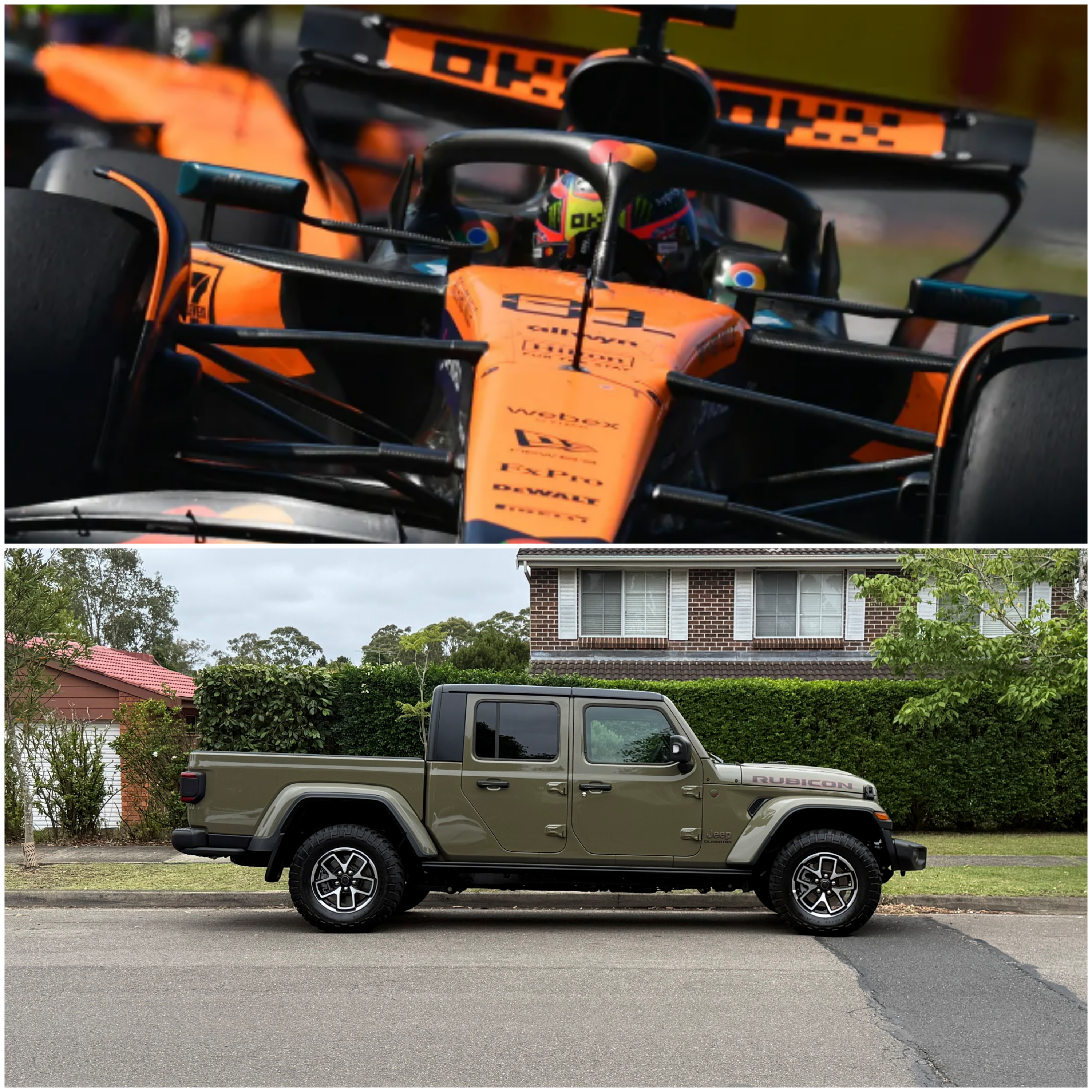
F1, reduced attention span, Jeep Wrangler Rubicon

Overdrive: F1 tech, attention drift and the Jeep Wrangler Rubicon Mercedes starts the 2026 Formula One season with a one-two in Melbourne, prompting a broader discussion about race-car complexity, driver workload and visibility. David Brown and Paul Murrell also cover cars on screen, faster EV charging, a tiny classic car selling for big money, and whether shrinking attention spans are making everyday driving worse. The episode finishes with a practical road test of the Jeep Wrangler Rubicon. Episode Breakdown F1 season opens with Mercedes — 00:01:02 Driver overload and visibility — 00:03:07 Cars in film and culture — 00:09:42 EV charging moves faster — 00:16:37 Tiny classic, huge price — 00:26:00 Are drivers losing focus? — 00:28:57 Jeep Wrangler Rubicon tested — 00:40:11 F1 season opens with Mercedes George Russell leads Kimi Antonelli home for a Mercedes one-two at the Australian Grand Prix, ahead of Charles Leclerc and Lewis Hamilton. The result opens a wider chat about how modern F1 cars load drivers with information, controls and constant feedback. Brown and Murrell reflect on Oscar Piastri’s formation-lap crash and the reality that even the world’s most advanced cars can catch drivers out. They also touch on downforce, mirrors, cameras and the old racing art of finding an edge within the rules. Driver overload and visibility From F1, the discussion moves to the limits of attention. Murrell notes how much information elite drivers process at speed, while Brown questions whether more screens and warnings always help. That leads neatly into road cars: camera mirrors, rearward vision and driver aids that can support safety but also add distraction. It is one of the episode’s strongest themes. Cars in film and culture A story about Hispano Suiza appearing in a Barcelona-set streaming drama sparks a lively detour into product placement. The pair compare movie cars that became icons with others that gained screen fame without commercial success. The DeLorean, Mad Max Falcon, Monaro, Mini and Kingswood Country all get a run. Their broader point is that cars once carried more cultural aspiration than they do for many younger people today. EV charging moves faster Polestar’s updated 3 electric SUV brings quicker charging, more computing power and stronger specs, but the hosts wonder whether the market is already moving beyond it. Public charging access remains as important as headline recharge times. That sets up BYD’s latest ultra-fast charging claims. Murrell sees the technology as a possible answer to range anxiety, while Brown notes how quickly EV development is making long product cycles look outdated. Tiny classic, huge price Murrell highlights the sale of a Peel P50 for an extraordinary figure, reviving the old question of what makes a classic valuable. Rarity, novelty and collector appeal clearly matter more than practicality. The pair enjoy the absurdity of a tiny car with no reverse gear and barely any mass. It is a light segment, but it says a lot about classic-car culture. Are drivers losing focus? This is the feature segment: a thoughtful look at whether digital life is reducing attention spans and weakening driving standards. Murrell links phone use, GPS dependence and constant information flow to poorer focus and spatial awareness. Brown broadens the issue to sleep, stress, work pressure and the design of in-car warnings. Their conclusion is clear: better driving now depends as much on managing distraction as on handling the vehicle. Jeep Wrangler Rubicon tested The Wrangler Rubicon is presented as a serious off-roader that has grown larger, dearer and more civilised, but still carries compromises. Brown finds it more usable in daily driving than expected, though wind and tyre noise remain part of the deal. Murrell agrees it is still a niche buy, but one with real off-road credibility and a loyal following willing to forgive its rough edges. It remains an adventure machine first and a commuter second.

Mar 30, 202649 min

AI in cars, CES Innovations & the Soul of Driving

Overdrive: From Smart Crossings to Smarter Cars — AI, CES Innovations and the Soul of Driving Short Summary In this episode of Overdrive, David Brown and Paul Murrell explore how artificial intelligence is changing pedestrian safety, urban mobility, and vehicle technologies. From AI-powered pedestrian crossings in Ohio to inclusive transport innovations at CES 2026, they reflect on the evolving relationship between humans and machines. They also share motoring stories, review the GWM Haval H7, and reminisce about the good (and bad) old days of car parks, rallies, and real driver training. Feature Stories Artificial Intelligence Improving Pedestrian Safety David Brown and Paul Murrell open the program with a discussion about how artificial intelligence is beginning to reshape everyday road infrastructure. A notable example is an AI-enabled pedestrian crossing system trialled in Dublin, Ohio. Known as the Securus soffit system, it uses sensors and adaptive lighting to detect pedestrians approaching a crossing and then illuminates the area to alert drivers. When no one is present, the lights dim to reduce light pollution and energy use. Beyond immediate safety benefits, the system gathers data on pedestrian movements that can help planners better understand how people use roads and crossings. David and Paul see this as an example of technology quietly improving safety without relying solely on driver behaviour. They also refer to similar monitoring technology used in coastal New South Wales to detect if fishermen are swept from rocks, illustrating how sensor systems can support safety in many environments. Mobility Innovation at CES 2026 The conversation moves to the CES 2026 technology expo, where mobility and transport solutions played a larger role than traditional consumer gadgets. David highlights how the event showcased innovations designed to improve accessibility and integrate different transport modes. Examples included AI-assisted wheelchairs, advanced e-bike systems and digital platforms designed to better link public transport with private mobility options. These developments emphasise “first-mile and last-mile” transport solutions, helping people reach public transport more easily. Paul and David welcome this focus on inclusivity but note that technology alone cannot fix poorly designed transport systems. Without coordination between planners, engineers and policymakers, even the best innovations risk becoming isolated solutions rather than part of a coherent mobility network. Engineering, Regulation and Cultural Perspectives The hosts also reflect on an idea raised in Dan Wang’s book Breakneck, which suggests that China’s rapid infrastructure development is partly driven by a culture dominated by engineers, while the United States is more influenced by legal and regulatory structures. While acknowledging that strong regulatory frameworks can slow projects, David and Paul argue that purely technocratic decision-making can ignore social consequences. They point to examples such as controversial policies in China that demonstrate the risks of pursuing efficiency without broader societal consideration. Their conclusion is that successful transport development requires a balance between engineering ambition and thoughtful governance. Recognising Contributions to Transport and Heritage The program pauses to recognise individuals who have made meaningful contributions to transport and community life. The late Brian Willoughby is remembered for helping preserve Rouse Hill House in Sydney’s west by influencing road planning decisions in the 1990s. His work demonstrated that determined individuals within government can shape infrastructure decisions in ways that protect cultural heritage. Another acknowledgement goes to Rob McInerney, appointed an Officer of the Order of Australia for his leadership in the International Road Assessment Programme (iRAP). Through data-driven road safety strategies, iRAP helps governments prioritise investments that reduce road trauma and improve infrastructure design worldwide. Driving Skills and the Changing Culture of Motoring David and Paul then reflect on the evolution of driving skills. Recalling older cars and rally driving experiences, they note how earlier vehicles demanded far more driver involvement, often with poor lighting, heavy steering and limited braking performance. These stories lead to a critique of modern driver training, which they believe often lacks practical scenario-based learning. Skills such as handling a skid, recovering from dropping a wheel off the road or performing emergency braking are rarely taught in depth. While modern driver-assistance systems improve safety, the hosts argue that awareness, judgement and real experience remain vital. Road Test: GWM Haval H7 Hybrid The episode concludes with a review of the GWM Haval H7 Hybrid, a mid-size SUV priced at around $47,000 drive-away. Positioned as a more premium alternative to the Haval H6, the

Mar 12, 202637 min

Fuel security, fast rail; living with a Deepal E07

Overdrive: Fuel security, fast rail reality and living with the Deepal E07 Fuel security, fast rail; living with a Deepal E07 Short description David Brown and Paul Murrell cut through the headlines and hype, starting with fuel security risks as Middle East tensions unsettle oil markets and sharpen the case for electrification. They look at China’s rapid rise in Australia’s new-car market, revisit Grand Prix history through the Repco Brabham BT19, and question Cadillac’s EV push. The program also highlights overlooked engineering pioneer Frederick Lanchester, the inventor behind the dashboard fuel-door arrow, tests the Deepal E07 as a day-to-day vehicle, and brings a more practical lens to the federal government’s very fast train proposal. Episode Breakdown Fuel security and EV shift — 00:00:25 China’s car surge — 00:05:32 Grand Prix history and Cadillac EVs — 00:11:05 Frederick Lanchester remembered — 00:23:41 The fuel-door arrow idea — 00:27:51 Very fast train reality check — 00:30:16 Deepal E07 living-with review — 00:43:22 Fuel security and EV shift The program opens with concern over fuel prices and supply resilience as conflict near the Strait of Hormuz rattles oil markets. David and Paul argue Australia remains too exposed because it imports most refined fuel, and they suggest the issue is not only price but availability, queues and broader economic disruption. China’s car surge They discuss February 2026 sales data showing China overtaking Japan as Australia’s biggest source of imported vehicles. The conversation links that shift to growing sales of EVs and plug-in hybrids, with both presenters arguing buyers may increasingly value energy security and reduced dependence on petrol. Grand Prix history and Cadillac EVs Paul highlights the Repco Brabham BT19, which returns to prominence at the Australian Grand Prix as a rolling tribute to Sir Jack Brabham and Ron Tauranac. They contrast its light, mechanical simplicity with modern Formula One, then turn to Cadillac’s local EV launch, questioning whether brand cachet and Formula One exposure will translate into real sales in Australia. Frederick Lanchester remembered A standout history segment profiles British engineer Frederick Lanchester, credited with pioneering ideas including four-wheel drive, turbocharging, fuel injection, disc brakes and rack-and-pinion steering. Paul presents him as one of motoring’s great forgotten innovators whose ideas arrived decades before the market was ready. The fuel-door arrow idea David notes the death of Jim Moylan, the Ford engineer credited with popularising the small dashboard triangle showing which side the fuel filler is on. It is treated as a modest but brilliant piece of user-focused design that matters even more when drivers regularly swap vehicles. Very fast train reality check The federal government’s Sydney–Newcastle very fast train plan gets a sceptical but measured review. David questions whether the project is solving the right problem, arguing that cheaper improvements to existing rail and better local transport could deliver more practical public value than a prestige megaproject. Deepal E07 living-with review Rather than focusing on raw performance, the review examines usability, controls and communication. The presenters like the E07’s refinement, features and clever touches, but they also criticise awkward translations, screen-heavy interfaces and some confusing functionality, concluding it is impressive yet still imperfect as a daily driver. Program Links and Credits Overdrive is broadcast across Australia on the Community Radio Network. For longer versions of the program, past episodes and more content, search for Cars Transport Culture on the website, podcast platforms, Facebook, Instagram and YouTube. First aired 7 March 2026.

Mar 9, 20261h 2m

NVES results, Local Car Testing, Unexpected MG Ute

Description This week on Overdrive, David Brown and Paul Murrell unpack the first results from Australia’s New Vehicle Efficiency Standard and what they really mean for car makers and buyers. They examine winners, losers and the politics of emissions averaging. Subaru returns to frontline motorsport safety, JAC fine-tunes a plug-in hybrid ute at Lang Lang, and Leapmotor updates its EV over the air. Plus, listener feedback on traffic data, marketing jargon, Bathurst memories—and a road test of the MG U9 ute that surprises in more ways than one. Episode Breakdown • NVES first results analysed – including winners, losers 00:00:39 • Subaru’s new Supercars role – 00:16:23 • JAC Hunter PHEV tested locally – 00:26:05 • Leapmotor OTA update explained – 00:30:56 • Traffic data & governance debate – 00:39:51 • Road test: MG U9 ute – 00:50:37 ________________________________________ NVES first results analysed The New Vehicle Efficiency Standard’s first six-month snapshot shows about two-thirds of suppliers beating their CO₂ targets. Passenger cars averaged 21 per cent below target, but light commercials—especially utes—lagged. The scheme works on fleet averages, not individual bans, raising questions about offsets, real-world use and whether it drives genuine change or simply mirrors market trends already underway. Winners, losers & carbon credits BYD leads on credits, with Toyota and Tesla strong thanks largely to hybrids and EVs. Mazda sits deep in deficit, with Nissan and Subaru also behind. Performance brands such as Ferrari and Rolls-Royce top the per-vehicle emissions stakes, though low volumes soften impact. The ability to trade credits adds economic pressure—but also fuels debate about “buying the right to pollute”. Subaru’s new Supercars role Subaru becomes exclusive on-track support vehicle supplier for the Repco Supercars Championship from 2026. WRX tS Spec B models will act as safety and course cars, with Outback handling medical duties. The move reinforces brand credibility in performance and safety, even as motorsport’s marketing value remains hard to quantify. JAC Hunter PHEV tested locally JAC’s Hunter plug-in hybrid ute is undergoing 50,000km of Australian validation at Lang Lang and on public roads. With dual electric motors, turbo petrol engine and V2L capability, it’s being tuned for towing, durability and local conditions. It’s another sign Chinese brands are investing seriously in market-specific engineering. Leapmotor OTA update explained Leapmotor adds Apple CarPlay and Android Auto via over-the-air update, alongside refinements to driver assistance and one-pedal driving. OTA updates promise convenience, but also raise questions about feature creep, intrusive alerts and subscription-style activations. The challenge remains clear communication without distracting drivers. Traffic data & governance debate A response from Transport for NSW on traffic counting raised broader concerns: data collection quality, calibration and governance. Measuring traffic flow is complex, but accuracy and transparency matter. Without robust oversight, even well-intentioned policy can rest on shaky foundations. Road test: MG U9 ute In 35 years of testing, David never expected to review an MG ute. Yet the U9 is wide, comfortable and thoughtfully packaged, with a practical tray and clever folding tailgate. Its 2.5-litre turbo diesel feels old-school, and the gearbox can hesitate, but ride comfort on sealed and dirt roads impresses. At around $60,000, it’s competitive—less testosterone hero, more practical family-friendly dual cab.

Mar 1, 20261h 3m

Luxury Brands, Mini Anniversary, Kona Electric

Overdrive: Luxury badges, cheap fares, Bathurst Minis and Kona EV David Brown and Paul Murrell look at BMW turning Alpina into its own luxury badge, Tesla shifting Full Self-Driving to subscription, and what Queensland's 50 cent fares really buy in patronage and politics. They celebrate Mini's Bathurst heritage, trace the story behind unique Porsche Spider artwork, and run a real-world road test of Hyundai's Kona Electric, including range, price and pressure from Chinese EVs. A mix of motoring history, design, auctions and transport policy with an everyday Australian lens. Episode Breakdown Luxury badges and brand worlds - 00:00:54 Tesla FSD subscriptions and EV value - 00:13:16 Queensland's 50c fares and behaviour - 00:16:55 Bathurst 12 Hour, Minis and small-car legends - 00:23:21 Porsche art, auctions and personal motoring history - 00:31:11 Hyundai Kona Electric road test and rivals - 00:35:11 Luxury badges and brand worlds BMW makes Alpina a marque as they unpack Lexus, Genesis, Maybach and DS, showing how service, separation and clear design matter more than chrome and brochure spin. Tesla FSD subscriptions and EV value Tesla moves FSD to subscription and trims perks. They test the maths against shrinking warranties, BYD's surge and how shifting deals can erode long term EV buyer trust. Queensland's 50c fares and behaviour Queensland's 50 cent fares lift trips, but they ask who pays, what tap on data reveals about habit and equity, and how political spin can blur good transport planning. Bathurst 12 Hour, Minis and small-car legends Mini's 1966 Bathurst win is revisited via 12 Hour tributes, with memories of tiny 10 inch shod cars beating big Falcons and why the original Mini felt revolutionary and classless. Porsche art, auctions and personal motoring history Paul chases original watercolours of his one off Porsche Spider, explaining Alan Hamilton's no expense spared build, auction tactics, costs and what these pieces mean emotionally. Hyundai Kona Electric road test and rivals Kona Electric proves punchy, comfortable and roomy on a hilly Sydney Bathurst run, but big wheels cut range and price pits it hard against cheaper Chinese EVs and well specced petrol Konas. Program Links and Credits Overdrive is broadcast across Australia on the Community Radio Network. Search for Cars, Transport, Culture to find our website, podcast and social media. Host: David Brown. Contributors: Paul Murrell, Bruce Podder, Mark Wesley

Feb 20, 202646 min

In-Car Audio, OTA Updates and Bad Traffic Data

This week on Overdrive, David Brown and Paul Murrell (SeniorDriver.au) dig into what’s changing inside cars and on our roads — from the future of in-car radio and voice control to over-the-air updates that add features after purchase. They also unpack NZ’s roadside drug testing rollout, sidewalk delivery robots, the rise of Chinese brands in the UK, a Louis Chevrolet history detour, and a major expose on why dodgy traffic data can distort real-world decisions.

Feb 20, 202652 min

Big Touchscreens Are Dangerous – Bring Back Buttons

A recent article in The Conversation on-line newsletter articles written by professional researchers titled “Yes, those big touchscreens in cars are dangerous and buttons are coming back” highlights a growing recognition that technology often moves faster than our ability to use it safely. To add perspective, we’re replaying an interview recorded four years ago with Emeritus Professor Mike Regan, who had been working in this field well before it became a popular talking point. He discusses the importance of linking engineering with psychology through his work in human factors, and why transport systems must be designed around human limits. Most striking is his reflection on predictions made nearly 30 years ago about increasing driver distraction, and whether those warnings have now come true. It’s a reminder that some of today’s “new” debates have been quietly building for decades.

Feb 17, 202630 min

Why We Must Rethink How We Design Cities - what do people actually need?

In this episode of Overdrive, host David Brown speaks with Ken Dobinson — a 95-year-old former transport leader with a career spanning government, consultancy, and groundbreaking urban planning. With a sharp mind and an unwavering commitment to public value, Ken unpacks why our cities still miss the mark in serving communities, and how infrastructure decisions must go beyond spreadsheets and silos to truly reflect how people live, move and connect.

Dec 30, 202530 min

Why Headlight Tech, Interface Design and EV Range Still Matter

In this episode of Overdrive, David Brown and Paul Murrell discuss the latest in headlight testing technology at Mercedes-Benz, the real-world usability of driver aids and infotainment systems, and the challenges of understanding electric vehicle range. Plus, a look at GWM’s new Tank 500 plug-in hybrid SUV and how China's automakers are reshaping the value equation in Australia’s large SUV market. This Overdrive episode captures the tension between technological innovation and practical execution. Whether it’s headlights that bend around corners or plug-in SUVs that can tow 3 tonnes, the industry is evolving fast. But poor user interfaces, inconsistent standards, and unclear real-world data can still frustrate even the most experienced drivers.

Oct 13, 202530 min

Toyota Prado; Xpeng enduro; classic car culture

News XPeng P7 endurance run: A 3961km record sparks scepticism about real-world EV performance and battery stress. Costco–Leapmotor partnership: Bulk-store marketing and discounts reflect new retail strategies in car sales. Skoda colouring-in promotion: A quirky family campaign illustrates the odd directions of brand engagement. Cherry’s Fortune 500 leap: Rising Chinese carmakers highlight global industry shifts and competitive pressure on Europe. Sydney Metro one-year review: Metro’s frequency and reliability are praised, but suburban design flaws limit its reach. Vehicle-to-grid challenge: Experts warn that 300,000 bi-directional EVs could strain networks without urgent upgrades. Feature Classic car culture: Enthusiasm remains strong, but younger buyers favour ‘youngtimers’ tied to pop-culture icons. Road Tests Volvo EX90 review: A tech-laden SUV proves stressful with app-based access and charging woes. Genesis G80 EV review: Luxurious and quiet but arguably over-blinged, with features of mixed practicality. Toyota Prado update: The refreshed Prado boosts Toyota’s sales, balancing rugged looks with family-friendly refinement.

Sep 2, 20251h 9m

Road charges, EV hype & Camry tested

• Road user charges: NSW confirms plans to introduce a distance-based road user charge • EV range claims: Independent testing shows significant gaps between advertised and real-world EV ranges • Zeekr 7X launch: Chinese brand Zeekr announces its 7X SUV for Australia, promising fast charging and plush interiors • Ercole Spada tribute: Celebrated designer Ercole Spada is remembered for shaping iconic cars • Hitchhiking: Once common but now rare, hitchhiking is examined as both cultural curiosity and a possible model for future ride-sharing. • Renault Dauphine EV: A quirky Canadian conversion of a Renault Dauphine in 2002 • Toyota Camry road test: The latest Camry hybrid proves refined, efficient, and more executive-like than its “dad car” reputation

Aug 27, 20251h 9m

Chinese Cars Rise, Tesla Liability, Leapmotor C10

Car sales: July Australian new car sales rose 2.9%, with Chinese brands climbing Tesla case: A US jury held Tesla partly liable for a fatal crash Idle Off program: Student-led action cut engine idling outside schools by up to 40% Mercedes program: Manufaktur Exclusive lets buyers pay over $24,000 for paint Foton Tunland ute: Chinese brand Foton launches a hybrid dual-cab ute Ross Rowland: US rail enthusiast Ross Rowland remembered for steam preservation Honda EV stance: Honda Australia promises 90% electrified sales by 2026 Sydenham Station history: Stuart Sharp highlights uneven planning and heritage tensions Leapmotor C10 test: A plush Chinese EV SUV impresses with design but frustrates with software quirks and range on hills.

Aug 23, 202548 min

From jargon busting to giant utes: EV debuts, SUV culture & Toyota Tundra road test

In this episode of Overdrive, David Brown and Brian Smith dive into the quirks, jargon, and big personalities of the motoring and transport world. We start with a NSW Government report on Sydenham Station’s upgrades—dense with transport-speak but easily translated into plain English. From there, it’s off to Sydney’s first-ever Light Commercial Vehicle Show, where vans, utes, and even cargo bikes are vying for the last-mile delivery crown. ANCAP’s latest safety results are in: Volkswagen’s Terramar aces the tests with five stars, but Peugeot’s hybrid 3008/5008 twins don’t quite make the grade. Nissan’s long-awaited Ariya EV gets its Australian specs and pricing, while Suzuki launches its first new nameplate in more than a decade—the compact hybrid Fronx, aimed at first-time buyers and downsizers. A Facebook post sparks a chat about the SUV-ification of prestige sports car brands—think Aston Martin DBXs in the wild—and the team has a laugh over car jargon quirks, from “dampeners” to “VIN numbers.” We wrap up with a full road test of Toyota’s colossal Tundra pickup. Equal parts luxury cruiser and towing workhorse, it’s a vehicle that raises the question: how big is too big for Australian roads? Topics covered: Sydenham Station report: translating jargon into plain English Sydney Light Commercial Vehicle Show: vans, utes, and cargo bikes ANCAP safety ratings: Volkswagen’s Terramar shines, Peugeot’s hybrids fall short Nissan Ariya EV: Australian specs and pricing Suzuki Fronx launch: a bold, compact hybrid SUV for new buyers SUV-ification of sports car brands Car terminology quirks and humour Toyota Tundra road test: comfort, towing, and market fit Tags: #Cars #Transport #Culture #OverdriveRadio #EV #SUV #Utes #RoadTest #ToyotaTundra #SuzukiFronx #NissanAriya #ANCAP

Aug 13, 202530 min

Touchscreens, Utes & EV Slowdown: Transport Trends on Overdrive – 26 July 2025

Welcome to Overdrive, the show that dives into the quirks, questions, and cultural shifts shaping how we move. Host David Brown is joined by Brian Smith, transport planner and original Overdrive contributor, for a jam-packed episode that blends industry news, thoughtful critique, and cheeky observations. 🎙️ This Week on Overdrive: 📊 1. J.D. Power’s 2025 Vehicle Quality Study – More Tech, More Trouble While overall vehicle quality has ticked up slightly, touchscreen systems remain the most complained-about feature in new cars. David and Brian discuss why the removal of physical buttons frustrates drivers and how infotainment failures are now a core part of early car returns. 🔌 2. Plug-in Hybrids: The Worst of Both Worlds? Despite their eco-friendly label, plug-in hybrids are proving problematic. Many owners don't plug them in, defeating their purpose and contributing to mechanical complexity without the payoff. We ask: are PHEVs just a stopgap that never lived up to their promise? 🛴 3. World’s Fastest Scooter – Innovation or PR Stunt? A British startup wants to break the 160km/h mark with a high-speed e-scooter. But is this headline-grabbing move advancing micromobility—or undermining it? We explore why promoting e-scooters with speed risks repeating the mistakes of muscle car marketing. ⚡ 4. EV Ambitions Stalling? Inside the Industry’s Electric Pause Volvo, GM, and others are hitting the brakes on US EV rollouts. We unpack the influence of changing subsidies, global tariffs, and consumer hesitancy—especially at the luxury end—and ask whether retro-styled EVs like the VW ID. Buzz are moving the market forward or clinging to outdated dreams. 🚚 5. Commercial Fleets & Carbon: Australia’s Net Zero Blind Spot With commercial vehicles making up nearly half of new car sales and one-fifth of emissions, Australia’s electrification of its fleet is lagging badly. We examine five key reasons—from infrastructure gaps to outdated procurement mindsets—and highlight smart fixes like shared depot charging. 📬 6. Feedback from France: A Hot Hatch Lives! A French listener shares his love for the Hyundai i20N—proof that the spirit of manual, high-revving hatches still has global fans. We celebrate a rare survivor in an increasingly homogenised auto market. 🎨 7. Austin-Healey Car Show: Colour, Character & Noise David attends a vintage Healey event marking Donald Healey’s birthday. From two-tone colour schemes to the visceral sound of tuned exhausts, we reflect on an era when you really had to drive the car—and feel every bump and brake fade along the way. 🛻 8. Triton Road Test & The Ute Culture Problem We take the Mitsubishi Triton GSR off-road and discuss how it stacks up against flashier competitors like the Raptor. Beyond the specs, we confront how oversized, aggressive utes are shaping driving behaviour, image, and even pedestrian safety—especially when piloted by P-platers with something to prove. 💡 Themes woven throughout: Are EVs being sold with outdated emotional appeals? How nostalgia can cloud smart design Fleet electrification as climate policy in practice Why engineering videos still miss the human story The social impact of high-performance design choices 📡 More from Overdrive: Want longer versions or to watch our reviews? Find us via: 🌐 Podcast / Website 📺 YouTube / 📸 Instagram / 👍 Facebook Just search: Cars. Transport. Culture. Overdrive is syndicated nationally on the Community Radio Network and was first broadcast on 26 July 2025. Hosted by David Brown. Special thanks to Brian Smith, Mitsubishi Australia, Bruce Potter and Mark Wesley. Let me know if you'd like the 140-character caption version or a version formatted for YouTube, Instagram, or newsletter as well.

Aug 1, 202539 min

OverDrive: Triton Road Test, EV Fire Myths, AI Cars, E-Scooter Ban & The Legend of Bizzarrini

Overdrive – Cars, Transport & Culture Originally broadcast: 14 June 2025 Host: David Brown | Guest: Paul Murrell (SeniorDriverAus.com) In this episode of Overdrive, we explore the intersection of technology, culture, and controversy in the transport world. From electric vehicle supply chains to self-driving cars and tragic consequences of urban mobility experiments, we cover it all. The show blends analysis, interviews, and a dose of humour to make sense of the evolving car and transport landscape. Key Segments and Topics Covered: 1. News Headlines and Industry Trends We begin with a look at China’s suspension of key rare earth exports, which has forced companies like Ford to pause production in the U.S. The discussion examines Australia’s opportunity and challenges in filling the gap, particularly around local skills shortages in metallurgy and refining. 2. Commercial Driver Health Reforms Paul and David unpack a new discussion paper from the National Transport Commission, aimed at improving health screening for commercial drivers. The goal is to detect high-risk conditions—like sleep apnea—before they cause accidents, using evidence-based protocols and fleet-monitoring technology. 3. Artificial Intelligence in Road Safety Two firms are pushing AI into different lanes of vehicle safety. Nauto supports human drivers with real-time warnings based on driver behaviour, while Imagry is developing fully autonomous, map-free driving. We contrast the philosophical and practical implications of both approaches. 4. Vehicle Ruggedness and Robotic Testing Ford’s Ranger undergoes brutal durability testing at Victoria’s You Yangs proving ground using robotic test drivers—highlighting the importance of consistency and safety in off-road evaluation. The discussion also references how electric powertrains could enhance off-road capability. 5. E-scooter Fatality and Policy Response in Perth A tragic incident involving a pedestrian killed by a drunk e-scooter rider has led to an indefinite suspension of Perth’s e-scooter hire program. Paul and David discuss the broader implications of poor regulation, excessive speeds, and rising injury statistics across Australia. 6. The Rapid Rise of Waymo in San Francisco Self-driving car company Waymo now accounts for 27% of San Francisco’s rideshare market. We explore why consistency, comfort, and reduced crash rates are contributing to faster-than-expected adoption of autonomous vehicles, despite their higher cost compared to traditional rideshare options. 7. Car Myths Debunked From battery longevity and fuel economy to aerodynamics and fire risk in EVs, the team breaks down popular car myths. Key points include: Car batteries can last well beyond five years with proper maintenance. Smaller engines aren’t always more fuel-efficient in real-world driving. EVs are statistically less likely to catch fire than petrol vehicles, but fires are harder to extinguish. 8. Spotlight: Giotto Bizzarrini We dive into the remarkable story of Giotto Bizzarrini, a brilliant but overlooked automotive engineer who worked with Ferrari, Lamborghini, and others before creating his own exotic car marque. The discussion includes a recent revival of his 5300 GT Strada and the challenges of branding in the automotive world. 9. Road Test: 2025 Mitsubishi Triton GLS We test the latest Mitsubishi Triton dual cab ute and assess its appeal to both tradies and families. Topics include: Toughness and payload capability Security and lockable tray cover Interior simplicity vs. tech complexity Safety features and lane assist quirks Parking challenges due to size We also touch on the marketing impact of using Russell Coight in ads, and how humour wears thin over time. Credits and Further Info: This episode was produced with thanks to Paul Murrell, Mitsubishi Australia, Bruce Potter, Mark Wesley, and mechanical engineer Fred Brain. Get more from Overdrive: For videos, longer interviews, and road test visuals, search Cars Transport Culture on YouTube, Facebook, Instagram, or your preferred podcast app. Overdrive is syndicated nationally via the Community Radio Network.

Aug 1, 202550 min
All rights reserved