
Outliers
127 episodes — Page 2 of 3
Ep 70: Sunit Singh on designing Cleartrip
Amid India’s smartphone boom and the rise of large consumer internet companies such as Flipkart, Myntra and several others, profitability and funding rounds have dominated the narratives. Designing these consumer products, creating engaging user interfaces hasn’t really made any big headlines, though. Cleartrip, with its simple, uncluttered mobile web interface, has been an outlier on the design front. When most rival travel websites were busy packing their sites with innumerable features and deals, Cleartrip chose to doggedly keep its focus on a simple user interface when it launched in 2006. “We said, 'Who is on mobile, and who are we designing for?’,” recalls Sunit Singh, design head of Cleartrip until August 2015. “That helped us with a razor-focused design approach. In terms of the complexity of the interface, we cut it down to quite a extent.” Singh adds: “That’s where I first learned the value of being razor-focused.” So, how does a product balance ease of use and user convenience with this quenchless urge to pack more features than your rivals? “You have to pick your battles. You can’t fight all of them. Designers have to pick their battles.” Is Cleartrip indeed a greatly designed product or is it just that most of its rivals have shabbily designed products? How and why does Cleartrip continue to live on? “I think about this question a lot myself. I would always tell my team that get to a level where there’s no other way to do it. There’s no better way to do it. I think that’s the secret,” says Singh.
Ep 69: Dr Gullapalli Nageswara Rao on shaping eye care with compassion, disruptive tech
“Always remember the poor who gave their bodies for you to learn medicine. You owe it to them.” Every time a new batch of ophthalmologists joins LV Prasad Eye Institute in Hyderabad, its founder Dr Gullapalli Nageswara Rao tries to instill a sense of empathy for India’s poor. “The rich didn’t even let you touch their bodies for research. It’s the poor...” Dr Rao has been able to combine world class healthcare with compassion in his career. In three decades, his institute has treated over 20 million patients, with nearly half of them availing the services for free. (The institute is named after filmmaker and producer Lakshmi Vara Prasad Rao, who contributed money and land for it.) The institute came on my radar when I read recent announcements about an “eye hackathon”. What’s an eye hospital looking to achieve from hackathon -- a contest among coders typically known to be organized by startups and large companies to hunt down the next big idea? “We’re now trying to build an institute in Amravati for the future, looking at how eyecare can be delivered in 20, 50 years from now,” Dr Rao tells me.

Outliers 68: Anu Acharya of Mapmygenome on being called a woman entrepreneur
Anu Acharya, the founder of bioinformatics startup Mapmygenome, comes from a traditional “Marwari” family but not a business household. She grew up in Bikaner in a family of academicians. “I learned the value of money early in life.” When Acharya came up with the idea to do a bioinformatics startup in 1998, there wasn’t even a Google to find out if there were more such startups existing already. “The human genome project was about to get completed, but there were no early results,” she says. “As an entrepreneur, you always say this will ultimately work and that’s despite others calling it a useless idea. We too had people telling us not to waste time on this.” Acharya also questions the startup ecosystem’s rhetoric around “women entrepreneurs”. “By calling them women entrepreneurs, you’re pointing them out as if they aren’t fighting in the same ring.”
Ep 67: Amit Bhawani of PhoneRadar on fighting fanboy temptations to stay honest with the user
How can you be a fanboy and a reviewer of the product at the same time? How can you expect consumer technology product makers to give you their latest gizmos for early reviews if you’ve called their last release “not worth the buy”? I’ve always been fascinated by the world of technology product reviewers and curious about how well can they serve the massive community relying on their recommendations before buying anything. It’s a world where the likes of Walt Mossberg and David Pogue have battled the dilemmas of fanboy versus independent reviewer. For this episode of Outliers, I travelled to Hyderabad to sit down with Amit Bhawani, the founder of PhoneRadar. After listening to him, I realised that he, too, fights the good battles of journalism. The latest being a ban imposed by Samsung after he cracked a joke in a recent review. “It’s come to a point where I don’t like any product in the absolute sense. There’s something wrong with every product,” he says. Over the next few months, we will bring you conversations with some of India’s most influential technology product reviewers to help understand their world, the battles they fight, questions of ethics, and their view of the future. Stay tuned and, meanwhile, enjoy this conversation with Bhawani as much as I did.
Why Zoho exists: Sridhar Vembu
In June this year, we broke away from the mould to bring you companies, not just people, that are outliers with How AngelList works. If there’s one thing common in most of the companies that appear outliers, it’s their founders. From Steve Jobs to Elon Musk and even Jeff Bezos, the founder’s mentality continues to shape Apple, Tesla and Amazon. These founders are almost inseparable from their companies. I first discovered Zoho, the cloud software company, in 2010 when I wrote this story about how it was hiring talent from unconventional places. Sridhar Vembu, the Zoho founder who we hosted for the 27th episode of Outliers podcast last July, is an outlier for many reasons. For instance, amid all the startup frenzy, he believes in “slow laddering” or building a company slowly, one step at a time. And to top that, he’s shunned venture capital and said “no” to an over $25 million acquisition offer from Salesforce during the early days of Zoho. Zoho, the cloud software company with estimated revenues of over half a billion dollars, is an outlier for many reasons. For over a decade, Zoho has been hiring students from government schools and colleges and turning them into software programmers. Such students will constitute nearly half of the company’s over 5,000 workforce very soon. And then, there’s a strong growing “Zoho mafia”, too, wherein former employees and leaders including Freshworks founder Girish Mathrubootham and Chargebee’s co-founders are building the next generation enterprise software companies. Why Zoho exists: Sridhar Vembu “Zoho exists because India exists. I always thought that if I were born in a different country, I may not have been an entrepreneur. I actually wanted to become a professor, to teach, publish papers. But growing up here...surrounded by what you see, at some point you ask, 'Why are we so poor?’” he tells me. “I realised you have to be building a lot of things to skip poverty. And I am the kind of person who will say, 'What am I doing about it?’” “So, in a sense Zoho exists because India exists and it continues to exist because some 27 million kids are born in India (every year), and in this state of Tamil Nadu the number is around 1 million. That’s actually the same number as all of Japan’s. And you see the number of companies, the brands from Japan….” “South Korea has around 45 million population and Tamil Nadu has about 72 million people. Which brands are popular worldwide?” “It’s not just about the brands. It all correspondingly translates into jobs, incomes, infrastructure, all of that.” “If we are not able to create world class products and world class companies here, then we will never have world class incomes, or world class healthcare. In other worlds, we cannot consume if we cannot produce.”
Inside the Zoho apps: Rajendran Dandapani
“There was a time when Zoho was talked about as an engineering company, even today it’s an engineering company. User interface design was done by engineers, too. But over time, things changed,” Dandapani says. “Today, we started realising that individual brilliance isn’t enough. … a couple of months ago, one of our customers said, 'Every one of your interface is good, but why do they look different?’” “So now we are back on the drawing boards.”
Inside Zoho University: Revathy Durairajan
“When the six of us joined, we knew where a computer keyboard is and mouse is, that’s all. Later we were taught programming here as part of 18 months training,” she says. “I come from a very poor family,” Durairajan adds. Durairajan now leads iOS development for some of Zoho’s software products including Zoho Recruit. “My professor in school used to tell us you should aim to work at Google and Yahoo. But Zoho is now competing with Google, so why to go there?”
How Zoho builds products: Shailesh Kumar Davey
“Our engineering department is like Rahul Dravid -- scores slow but steady. I even call this a Dravidian phase of development, not because we are based in south India -- I dedicate it to Rahul Dravid. The engineering is more tuned towards that approach,’ he says. “All of us agree that making products is like preparing for a movie release. So, out of the ten movies you make, two of them will be superhit and others not so successful. Success of a product is based on how many people pay for it. Each of our service teams across 40 product lines are aware of the monthly revenues.” “At the engineering level, we are now tracking usage. Over past 15 years we have been revenue focused, but now we are looking at feature usage. How many customers are using a product, and within that a particular feature, and so on.” “One of the good things about Zoho is that most of our hires are freshers, and they stay through. More than 90% of our managers are homegrown. Because we have had people working for long terms, we can do knowledge transfer just by sitting next to each other. Working together for long reduces friction.”
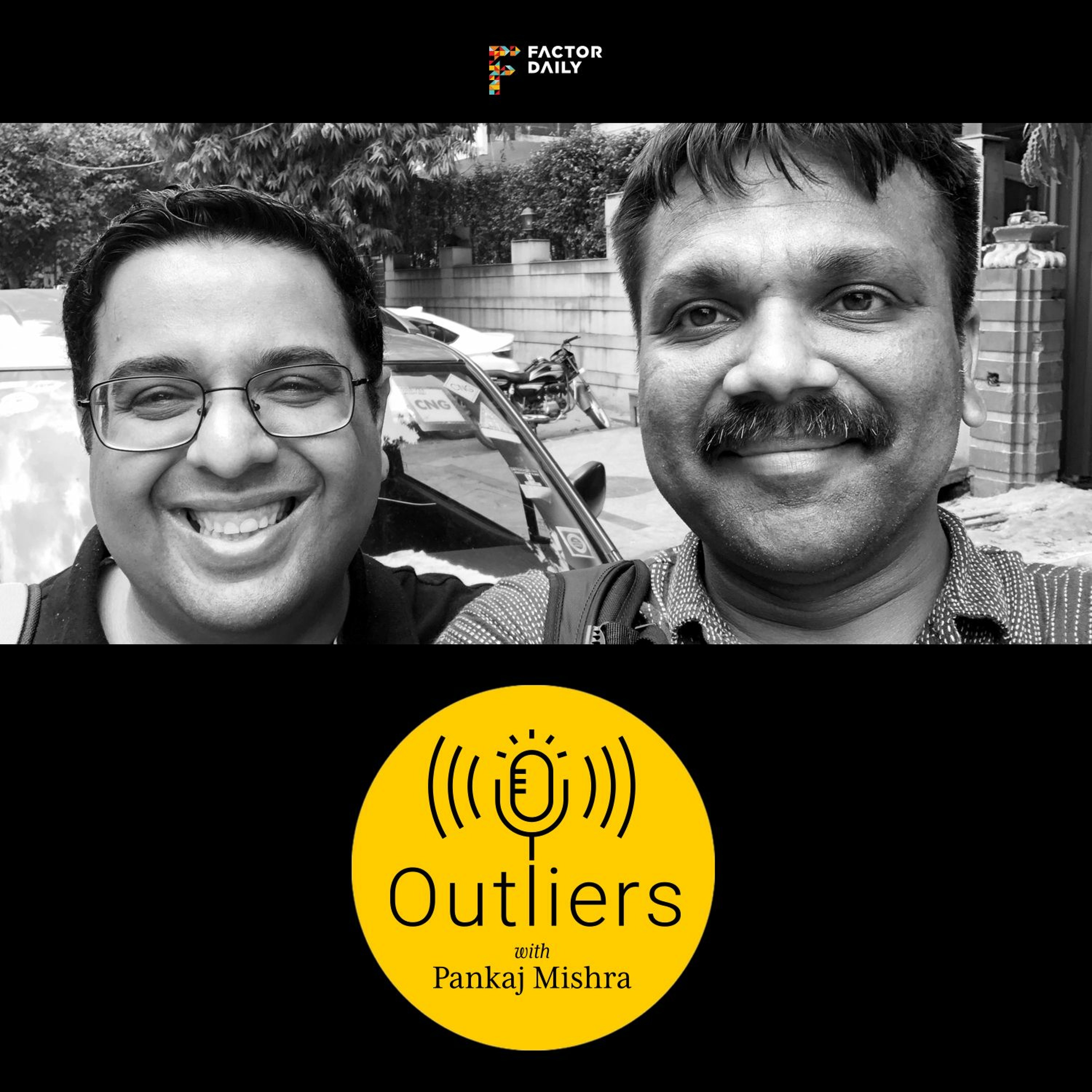
Ep 65: Nikhil Pahwa on fighting India’s internet battles, being an angry young man
Nikhil Pahwa is an angry young man. But that doesn’t make him an outlier. Pahwa, 37, channelises that anger to build and scale mainstream movements such as the net neutrality campaign against Facebook’s FreeBasics in India more than two years ago. So what’s the source of all the anger and sense of activism? It’s Pahwa’s deep need for freedom of the internet. “The need for freedom led me to activism, entrepreneurship...I don’t know where it will take me next but freedom is central to everything I do,” he says. “My mission is to build an internet ecosystem which is open, fair and competitive.” Pahwa’s journey as a media entrepreneur has been filled with existential crisis because of the battle he fights. But then, those battles are also the reason why his venture, Medianama, lives today. “I’m what I’m today because of the fact that internet is open and this freedom exists. Medianama has turned 10 today because of that. I want that for everyone.” Before he committed fully to the net neutrality campaign, he knew it could mean a near death experience for Medianama. “I told the Medianama team that we could die because of what I’m going to do, but this is worth fighting for because we wouldn’t exist if internet wasn’t free and open.” There are some great lessons in this podcast with Pahwa. These lessons aren’t just about rightful activism but also offer insights on fighting battles larger than your own, personal existence. The net neutrality campaign, for instance, had its own moments of existential crisis. “Nothing was budging, no one was participating. And Facebook simultaneously began this massive “support Free Basics” campaign, putting hoardings all over the country. And we were losing.” Pahwa is next readying for another challenge in his life: his wedding is coming up soon.
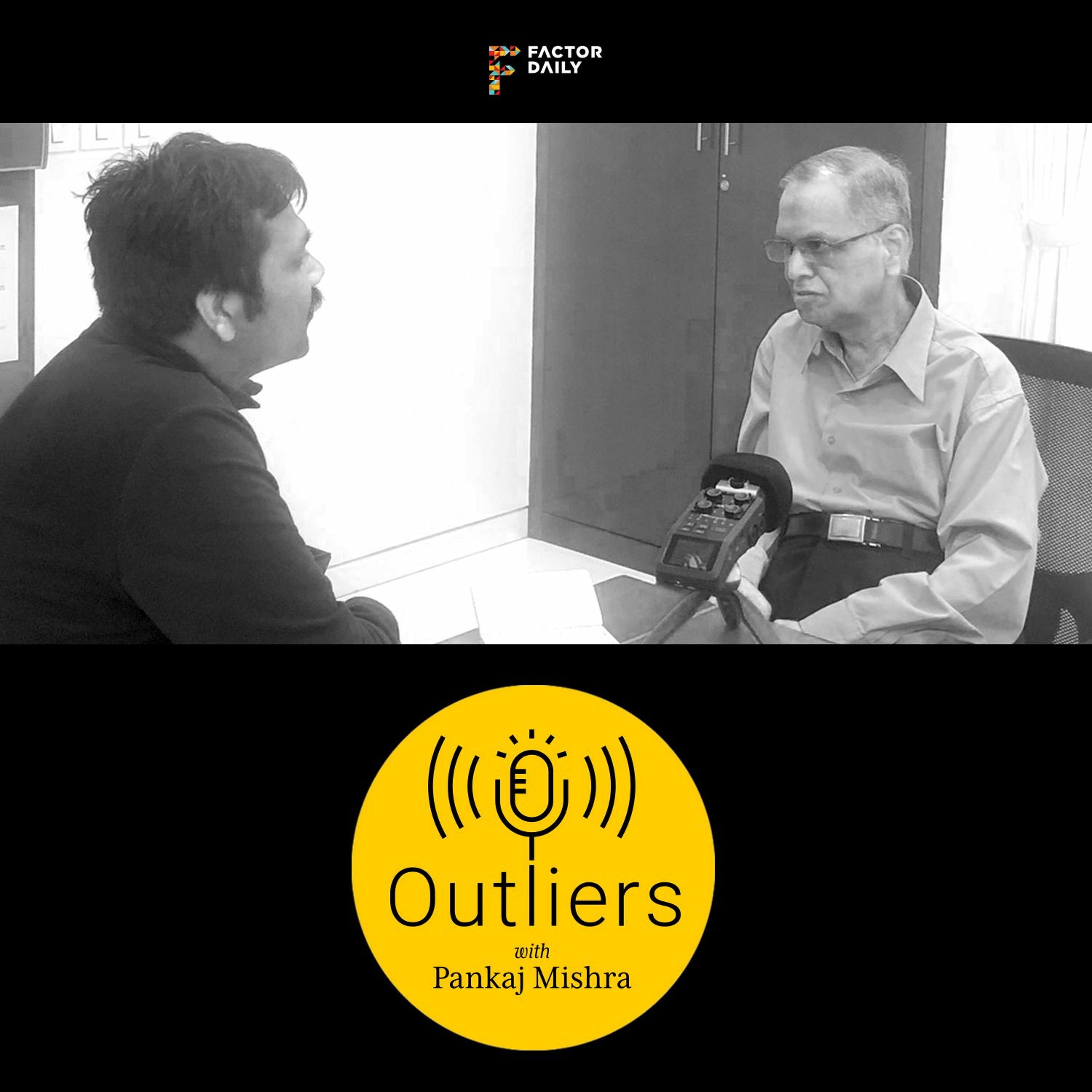
Ep 64: How Infosys founder Narayana Murthy makes decisions
Depending who, just the mention of Infosys founder N. R. Narayana Murthy’s name will evoke strong views. Ever since he co-founded Infosys in July 1981, he’s shaped the company with some strong decisions. From walking away from customers such as General Electric, which accounted for over a quarter of Infosys’ revenues in 1995, to making a comeback in June 2013 as the executive chairman --Murthy’s decisions have been bold and at times considered everything from being foolish and old-worldly to self fulfilling. If there’s one thing that even his biggest critics agree with his loyalists, it’s the issue of corporate governance and personal integrity. As I sat down with him to record this episode of Outliers, I decided to stay away from analysing all the decisions he’s taken in his career and, instead, try and understand Murthy’s decision-making framework. If there’s one thing that defines all his decisions, it’s governance and integrity. “Most organisations that have seen a downward slide have seen that it starts at the top. As they say, a fish always rots at the top. Therefore, it’s very, very important for senior people to conduct themselves with fairness, transparency, and accountability,” says Murthy. “Never look at a ticker tape and make a decision. If you enthused your employees to work hard, if you satisfied your customers with good software, if you followed the best rules and did not violate any laws of the land, and if you used a part of your profits to make a difference to the society, then your revenues will grow and you will provide better and better value to investors.” “Never focus on the ticker tape, but focus on how can you win better in the marketplace.” “Anybody who looks at stock price and takes decisions...that person is definitely going to destroy the corporation,” he adds. On his part, Murthy has always stood firm by his decisions, notwithstanding all the criticism and questions raised by others. As a journalist tracking Infosys all through my career since 2000, I’ve myself had confrontations and arguments with him on several topics. And, he has had questions about my stories too. “We should not worry about criticism from people who have no knowledge of the issue. Those are opinions… anybody can give opinion… as long as I have a mouth, as long as my voice box is working,” he says. “Before we went public in 1993, I sat down with my colleagues and I told them… from today onwards, we are going to be in a different paradigm, which consisted of the founders, their families and the employees. You’re now answerable to the entire mass of shareholders.” “And there may be a shareholder with just one share, but that person has as much right as somebody with 99% shareholding. So I impressed upon them that only if they’re ready to accept this, then we should go public.” Listen in to the man credited with creating one of India's most respected companies.
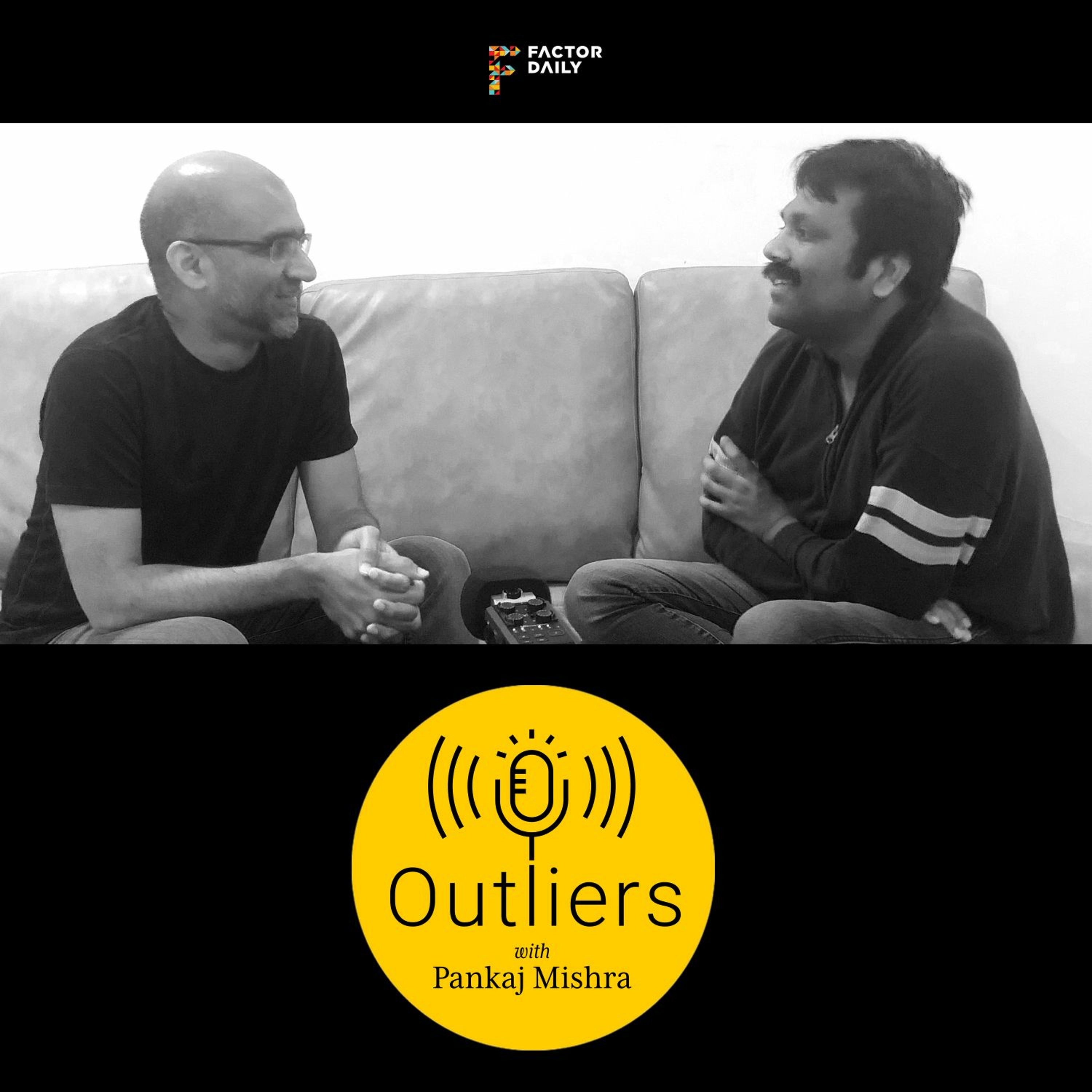
Ep 63: Sanjay Parthasarathy on how running taught him patience as an entrepreneur
Entrepreneurial journeys mean different things to different founders. For some, it’s a way of creating wealth. Many others do it to achieve their “change the world” ambitions. But at its core, entrepreneurship brings a deep personal transformation. Past Outliers episodes with Kailash Katkar, Aneesh Reddy, Manav Garg and K Vaitheeswaran are among conversations that underscore the personal transformation of entrepreneurs while building their startups. For Sanjay Parthasarathy, a Microsoft veteran who quit the company to build Indix, an AI-powered catalog for all of the world’s products available online, entrepreneurship is all about patience. And what taught him patience? Running. “I used to play cricket, squash all kinds of sports. Now, I don’t play any sport, but run. Running is the ultimate sport for patience.” “A job at a company like Microsoft or any large company is about career development, much more outward focused. Whereas a startup journey is much more about character development and is much more inwardly focused,” he says. You have to question your core principles, your character.” Parthasarathy says you can afford to be impatient when at a large company. “You can talk more than listen. When you do a startup, as a smaller company you have to be patient, you have to roll with the punches,” he says. “You don’t react to every piece of email. At Microsoft, I used to be very proud of responding to an email within few seconds. Now, I just let it lie for a bit to see if it fixes itself.” “You don’t realise until you do a startup that it takes at least seven to ten years to build something worthwhile,” he adds.
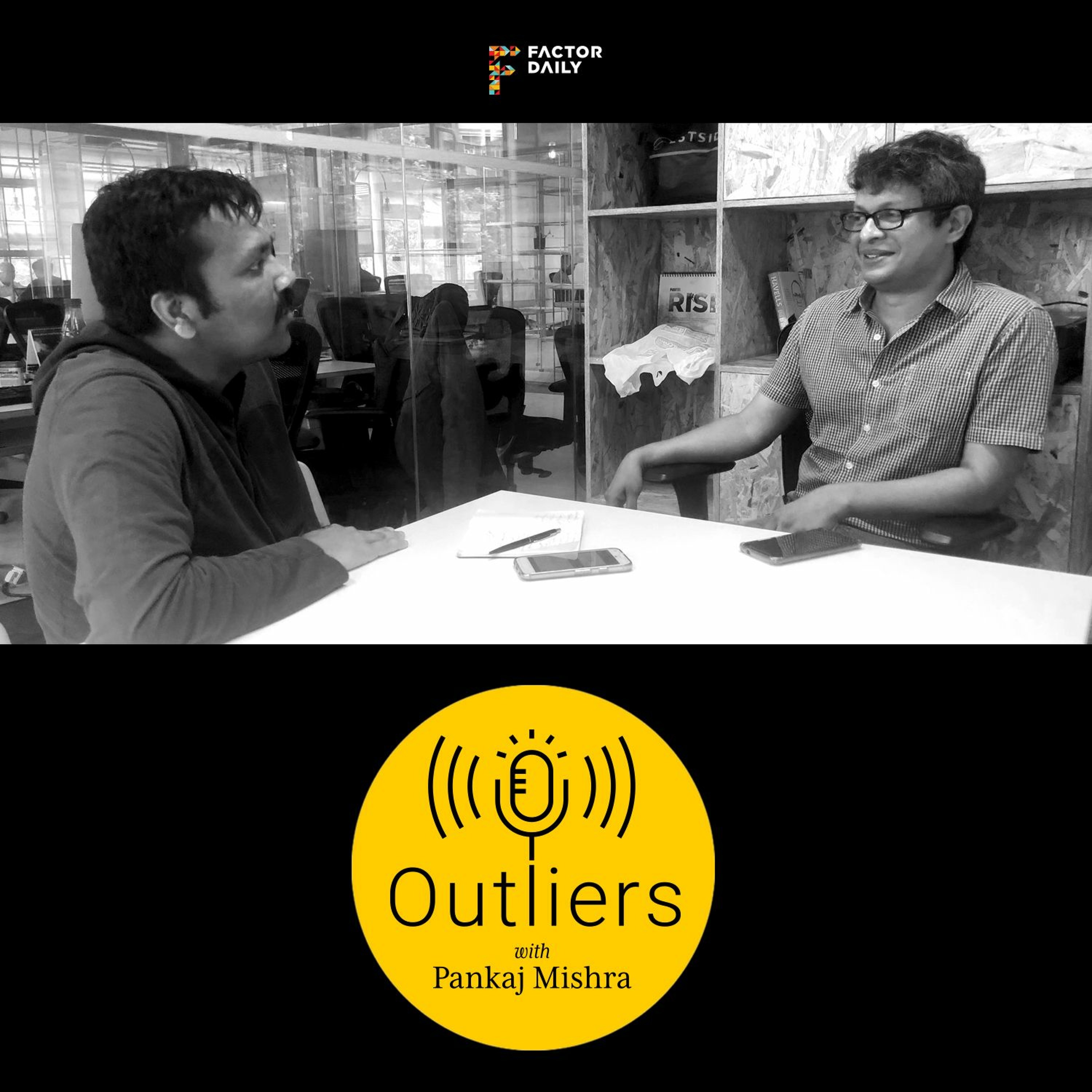
Ep 62: "CIS is like the Kamasutra... a collection of many positions," says Sunil Abraham
Sunil Abraham of the Centre for Internet and Society (CIS) has been a digital warrior much before online privacy and data security became fashionable battles to fight in India. Abraham founded CIS in 2008 and established the organization as an important voice for explaining privacy in the social, digital age in India. Over past decade, Abraham has questioned projects -- most famously, Aadhaar. Many in the country, especially those in the technology ecosystem, have found him difficult to comprehend. And that has a lot to do with the ironies he lives with. For instance, despite being a vocal critic of Aadhaar, he counts Rohini Nilekani -- wife of Nandan Nilekani, architect of the citizen ID project and a passionate backer -- among the top donors at CIS. Then, around the time there were raging battles against Facebook’s controversial Free Basics program, which many argued violated Net Neutrality, there were different views within CIS. “People would ask what’s the CIS position on net neutrality,” says Abraham. “And the answer to that question is always the same—CIS is like the Kamasutra, we don’t have one position. We’re a collection of many positions.” Abraham's journey in building CIS and keeping it alive and relevant, after coming out of a near-death experience due to paucity of funding, offers insights about doing business amid extreme polarisation. Most importantly, for anyone looking to build a career in objective research, he and CIS are great role models. Please tune in.
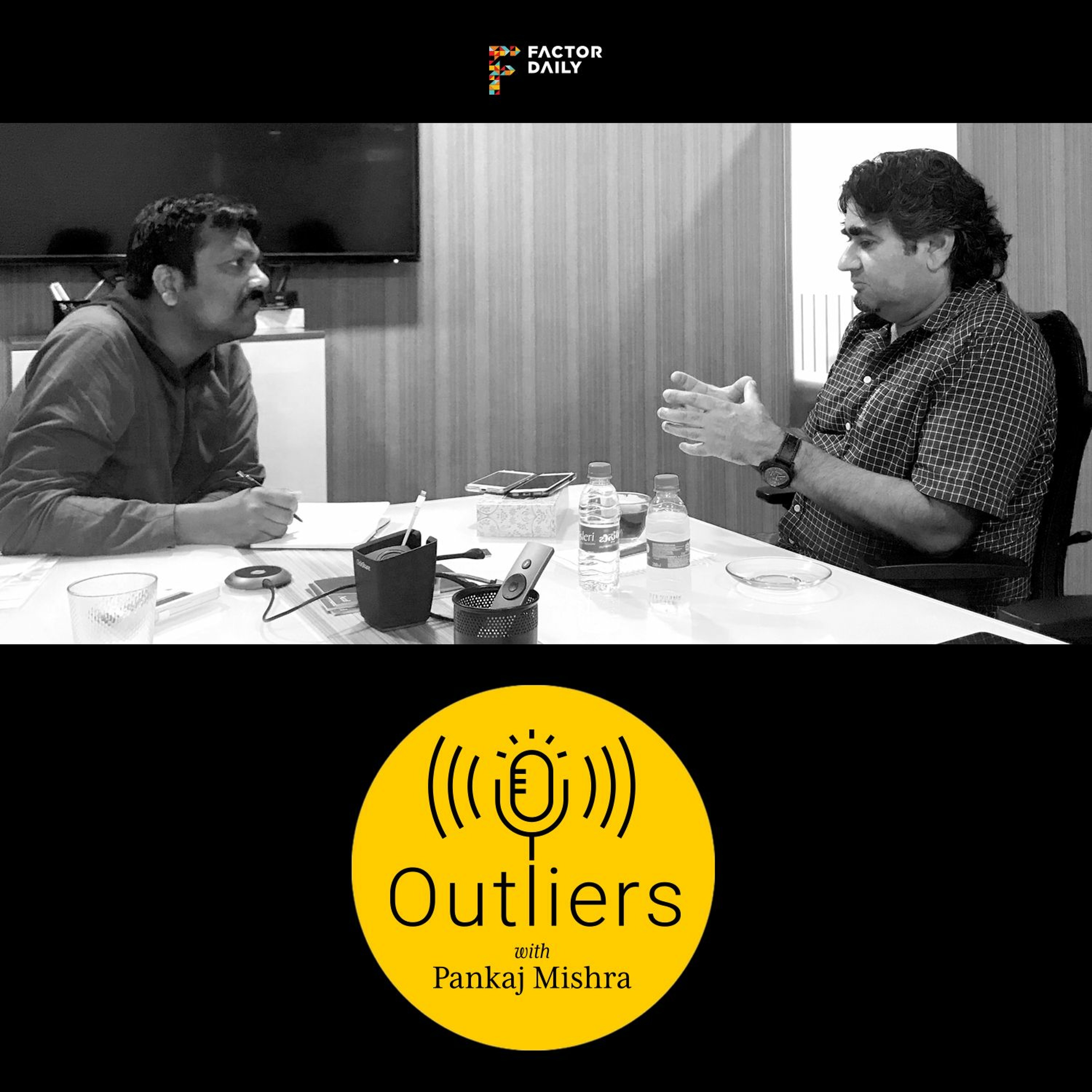
Ep 61: Sameer Gandhi shares lessons from the startup journeys of Dropbox, Spotify and DJI
What do Dropbox, Spotify and DJI have in common? Great founding teams, obsessive focus on details and, of course, their core products. Another common factor across these and several other successful companies of this decade is venture investor Sameer Gandhi who’s now a partner at Accel. (Disclosure: Accel India is the lead investor in SourceCode Media, the owner of FactorDaily). Over past two decades, Gandhi has had the front row seats in some of the most important startups. He’s also sat through “the situation room” at these companies. “Founders are the spiritual core of their startups,” he says. Successful founders aren’t afraid to go get people on board who are better than them in certain areas “I talked to one of my founders at one point in time. He was running the company as a founder—very inspirational,” he recalls. “I told him to come back as the CEO after a break and not the founder.” According to Gandhi, it’s this transition from being a founder to a great CEO that makes startups such as Dropbox, Spotify and DJI insanely successful.

Inside Product Hunt: Ryan Hoover
In March this year, we published an Outliers podcast with Ryan. it also gives you a sense of how long we’ve been working to get these conversations:). We’re sharing it again as part of “How AngelList works” story to give you a complete inside view. In many ways, Product Hunt completes AngelList’s quest to become the one-stop platform to help startups focus on their core product and not bogged down by funding, hiring needs. From a small email list launched in November 2013 by Ryan Hoover, Product Hunt has now helped discover over 100 million products with more than 100,000 new product launches on its platform.
Inside AngelList: Kevin Laws
With Naval becoming the chairman and moving away from day to day running of AngelList, Laws has perhaps the toughest job in the startup investment world. For many, it’s difficult to even think of anyone else as the face of AngelList. It’s a challenge that Naval himself recognizes. Globally, AngelList moves about $175 million every year into startups, which is about 600-700 startups annually. And more than have of them use AngelList for their hiring too, according to Laws. “There is a misperception that we make it easier for startups to raise money. Not any more likely that you will get to “yes” if as a startup you’re using AngelList. That said, the time that you spend to get to the same answer you would have got any time…..that’s a lot less,” says Laws. “Same thing for hiring. The idea is to make that time much smaller proportion of the total time spent to get to a good match.” “The biggest challenge for us is that people think AngelList is a place where if they go, suddenly the startups get funded. That’s not quite the way it works.” So how do you spend your time? What does a typical week look for you? These are among the questions I ask Kevin to understand AngelList works on a daily basis.
Inside engineering at AngelList: Sumukh Sridhara
Most organisations have separate engineering, product and business teams. At AngelList, engineers are the owners of the product too. When AngelList started building out a product for India, Sridhara led the product development. “That doesn’t mean you have to do all that (product, business, legal) all by yourself, but it’s pretty much like running your own company,”says, Sridhara, a University of California, Berkeley graduate in computer science.
Inside AngelList’s future: Naval Ravikant
Organisations, like people, can be outliers too. Since December 2016, I have had conversations with 59 individual outliers; a journey where me and hopefully you too, have learned with each episode. With this episode of Outliers podcast, we’re kind of breaking away from the mold and expanding these conversations to companies and organizations that are outliers in the way they behave, their mission, and so on. AngelList has been an outlier from the start in February 2010 when Naval Ravikant along with his co-blogger at Venture Hacks Babak Nivi, started with a group of investors. “AngelList was started to help startups with their most difficult tasks, helping them do that with internet at scale and with the matching engine that makes it possible,” says Ravikant. “AngelList can stumble, AngelList could fall, but I don’t think that will be because technology stops being interesting. It will be because of us,” he adds. So how does AngelList keep relevant? “Relevance just means you change with the times. It’s a hard problem,” says Ravikant. For its part, AngelList has been trying to stay relevant. For instance, AngelList hived off CoinList last year; a step towards shaping the future of investing, according to Ravikant. Then, in 2016, AngelList acquired Product Hunt for $20 million. Now, AngelList is looking to conquer India--a market that can be painfully slow and chaotic, especially given its unpredictable regulatory environment. For AngelList though, India is an important market not just for the narrative sake, but because Naval and his team picked signals of future growth from the country. In August 2016, AngelList hired Utsav Somani to lead its India operations. According to Somani, Indian startups raised close to $2 million in less than 5 months on AngelList India from domestic investors. “When we launched AngelList Talent, it (India) rapidly grew to be the second largest market for us. Right now we are living through the age of China ascending. I think India is going to go through a similar transition. It’s obviously slower than all of us would have liked, but it looks like the giant may be awakening,” says Ravikant. “India’s issue has always been that it’s held back because of regulations and bureaucracy, and unfortunately that doesn’t seem to be getting that much better. “ AngelList is a startup too; an 8-year-old platform born as an email list that has watched and enabled the biggest startups such as Uber and Airbnb. A lot to learn from what AngelList do Here’s Naval Ravikant on the future of AngelList.
Ep 59: Kailash Katkar on his journey from slums in Pune to India’s largest antivirus sw company
When he was 19 years old, Kailash Katkar started fixing calculators and even drew screen paintings for living. Then, one day, he saw a computer for the first time while repairing calculators at a bank. “I asked what’s inside the glass walls and why was it air conditioned. They said it was to keep the computer cool,” he recollects. That encounter changed everything for Katkar, especially after learning that the computers were soon to replace calculators among several other jobs. In the age when the ability to learn new skills is considered the most important capability for anyone seeking to build a sustainable career, Katkar’s entrepreneurial journey offers great learnings. From fixing calculators to writing code to fight computer viruses, Katkar’s hunger to learn new things has helped him navigate all career disruptions. As for education, Katkar hardly managed to pass 10th standard. That’s how far he went with formal education. Over decades, Katkar along with his brother Sanjay, has built Quick Heal Technologies into a publicly listed company with annual revenues of Rs 318 crore (FY 2018). So how did it happen? Listen in.
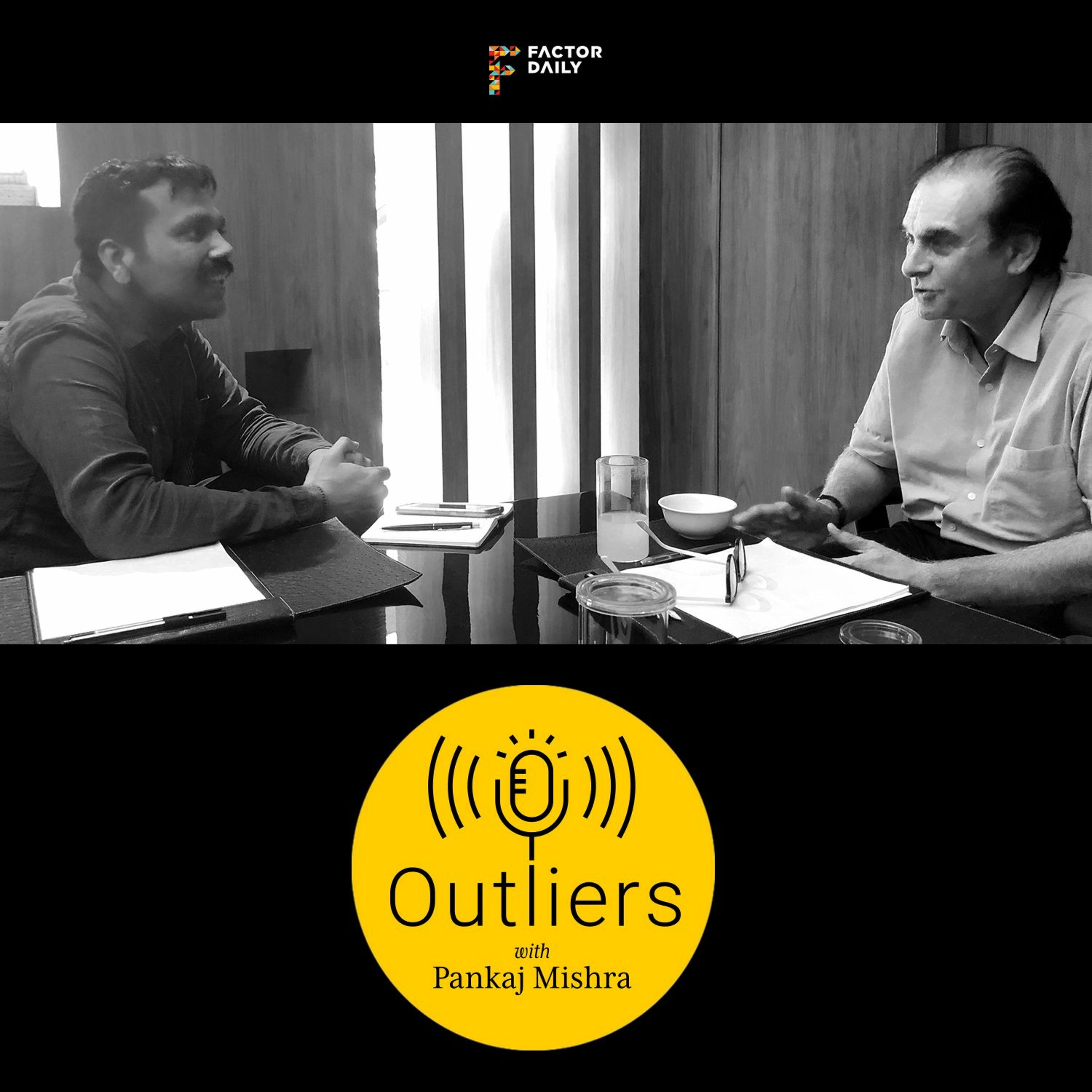
Ep 58: Harsh Mariwala of Marico on his biggest failures and what he learned from them
This isn’t the first time we’re discussing entrepreneurial journey and how it’s lonely, and filled with failures and self doubt.But unlike the do’s and don’ts in entrepreneurship dished out byexperts and mentors who have absolutely no experience in building anything. When a veteran entrepreneur such as Harsh Mariwala openly shares his biggest entrepreneurial failures and how he handles critique, the insights are far more valuable. “I can talk about my failures all this podcast,” he says. As for wealth, Mariwala calls himself a caretaker of all he’s earned in his career. “The first 25 years are about learning, the next 25 is when you earn. And the next 25 about sharing that wealth.” Please do listen in.
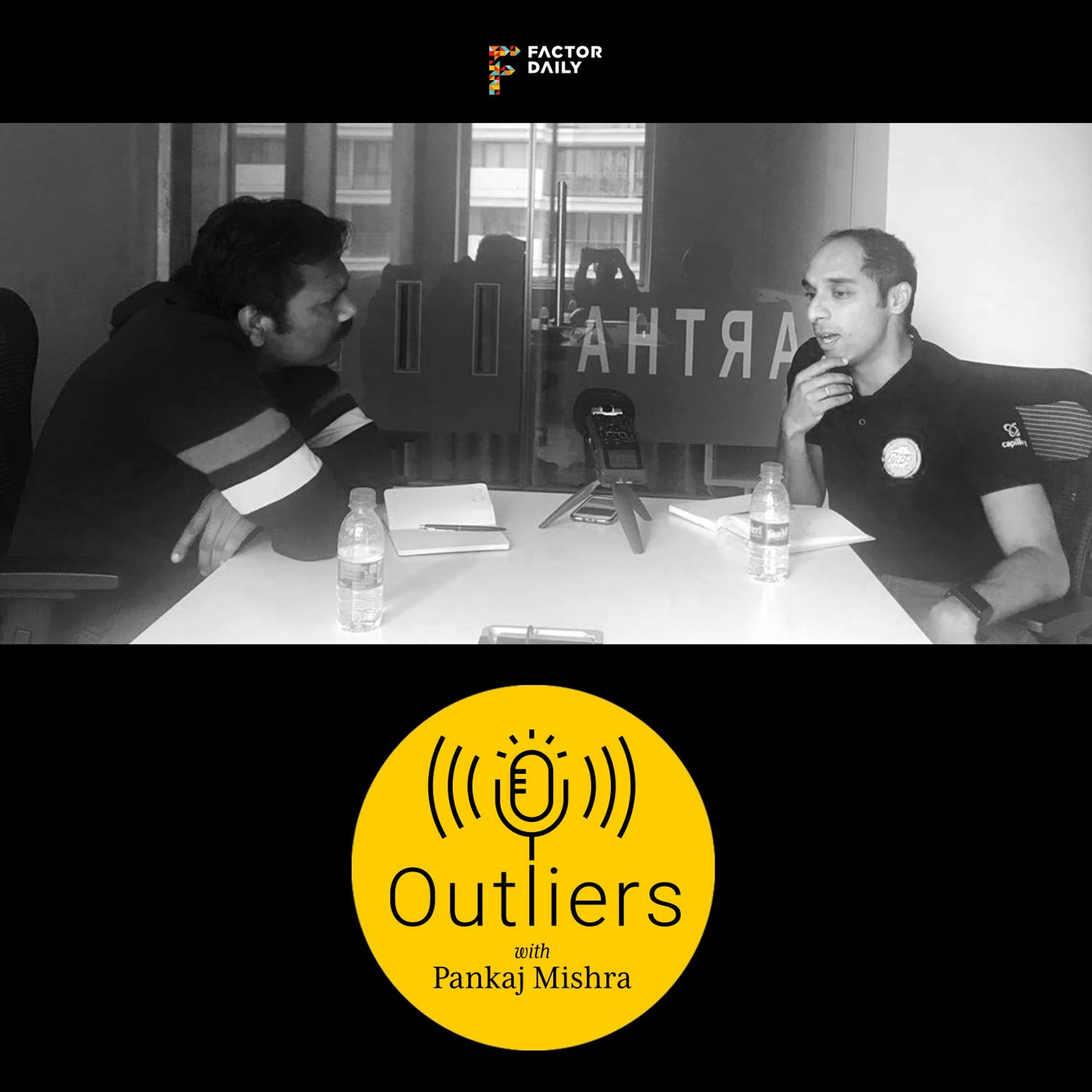
Ep 57: Aneesh Reddy of Capillary on being a bully
“Things became so bad around 2012 that one of my co-founders came to me and said I was bullying everyone around,” Aneesh Reddy, co-founder of Capillary Technologies, told me while recording this episode of Outliers podcast. With over Rs 60 crore in the bank raised from investors such as Sequoia and a secondary share sale of around $5 million (more than Rs 26 crore then), Reddy, then 25, became his own biggest enemy. “With all that, it (money and success) starts getting to your young mind,” he told me. I first heard about Aneesh’s journey at fixing his bully image over a year ago. His boldness in accepting his problems, fixing it, and sharing the story with everyone so they learn makes Aneesh an outlier. That and the growth of Capillary. Capillary now counts Walmart and other top retailers among its top customers and earning nearly $5 million in revenues a quarter currently. While Aneesh wouldn’t disclose financials himself, a person familiar with his company confirmed the numbers. Listen in to Aneesh.
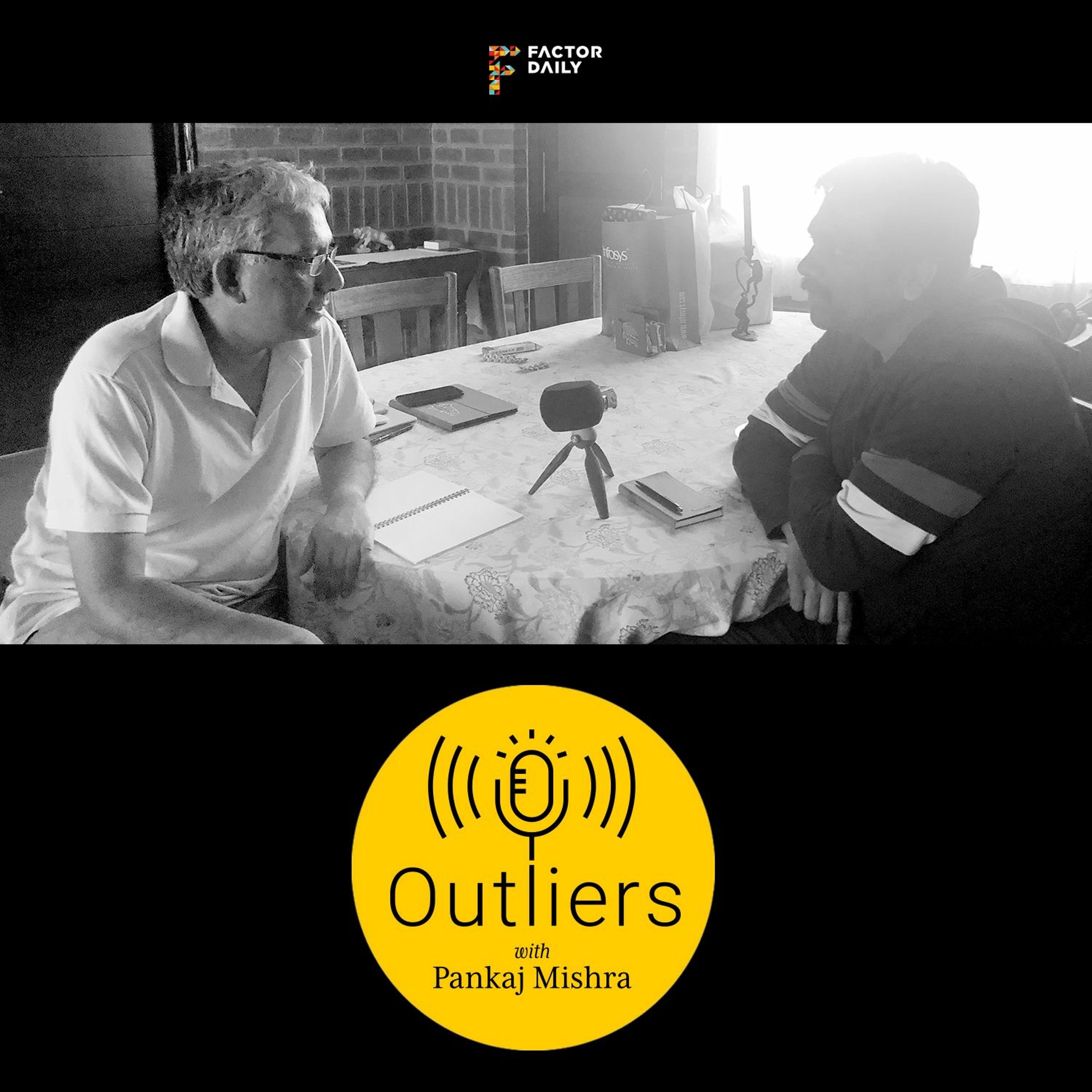
Ep 56: Ravi Venkatesan asks people to stop looking for jobs, focus on timeless skills
After quitting his job as Microsoft India chairman, Ravi Venkatesan spent few months working with a core team of former colleagues on a startup idea. Just before an investor was about to write a cheque, he realized he wasn’t passionate enough and backed out. It was the second time he was bitten by the startup bug in his career. “Let’s say I had gone ahead and flamed out, so what, what’s the big deal? In the cosmic scheme of things, these don’t matter. What matters is you live a fulfilling life, you figure out the way you’re really going to make a difference,” he says. Ability to learn new things, to lead and not just manage and the ability to manage self, are three timeless skills and traits that can help ride through the disruption, according to Venkatesan. “The biggest obstacle to your success is you. If you look at what has been happening around the world, the number of amazing people who’ve crashed and burned because they did something incredibly stupid ranging from Rajat Gupta at Mckinsey to many others.” Venkatesan is the chairman of a state-owned bank (Bank of Baroda), a philanthropist with his Social Venture Partners (SVP) and was a board member at India’s second largest software company Infosys until last week. “The reason we were born on earth is not to have a job; most of us are searching for the reason as to why we were put on the earth. The job is only a means to that bigger end.” There’s a raging debate going on in India’s intellectual networks and among those seeking employment about the future of jobs and new skills required to earn a living. With his experience across different sectors, Ravi offers some great insights that could help in navigating the disruption better. Do listen in. P.S. we will make the transcript of this podcast available next week.
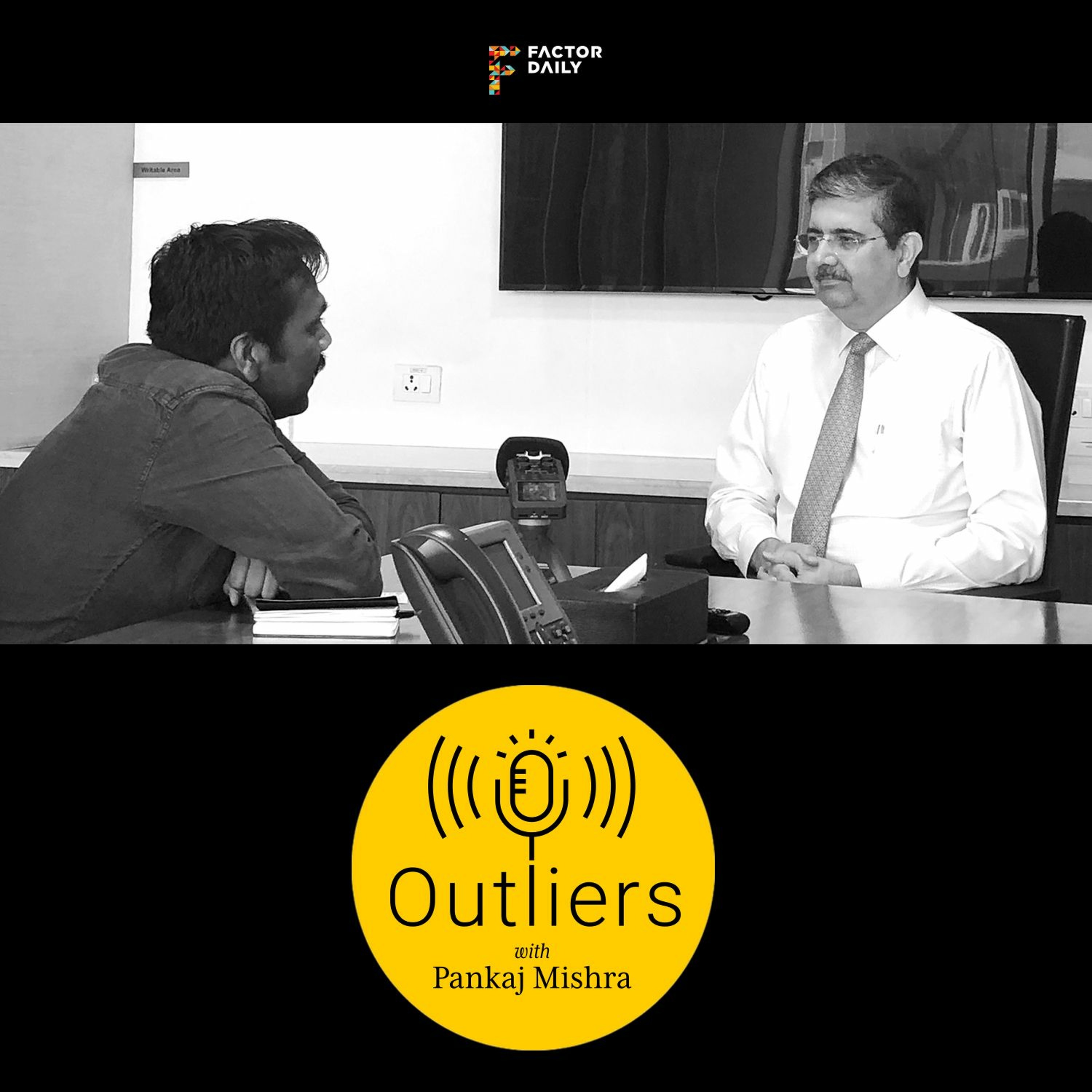
Ep 55: Uday Kotak keeps awake every night wondering whether he will have the bank next morning
At 59, Uday Kotak banks on his over three-day decades old business acumen in the financial services world for building the future, and keeps awake at night wondering if he will have his bank the next morning. For incumbent entrepreneurs such as Kotak, the forces of technology disruption are not science fiction anymore. In this episode of Outliers, i sit down with Kotak, who combines the old world business acumen with a sense of paranoia for the future in a way that very few leaders do. What makes him an outlier is his hunger to learn the new, new thing and still keep the faith in the core principles of financial services based on trust and risk management. Here are edited (and abridged) excerpts from the conversation. Please do tune in and enjoy the full podcast.
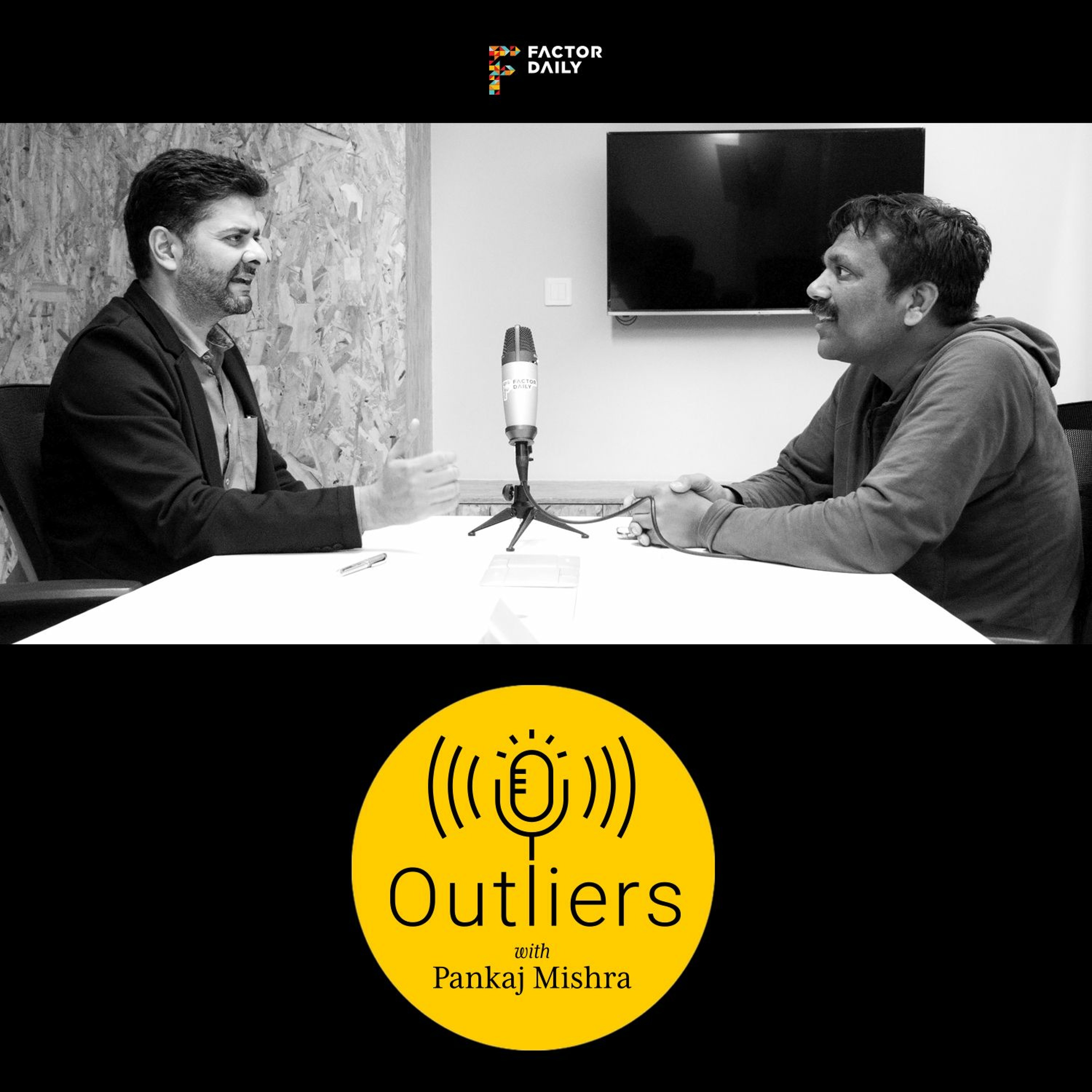
Ep 54: No to social media, meetings at 7.30 am, embracing “human and interpersonal networks”
The first time I heard about Gourav Jaswal was some time in 2003-2004 when I was early in my career and working with technology media group, Jasubhai Digital Media. “You must meet him,” Maulik Jasubhai, the group’s CEO had told me while hiring me. And then there were legends about how Jaswal would turn obscure ideas and aimless pursuits into meaningful and impactful journeys. Finally, I met him few weeks ago when he walked into FactorDaily office one afternoon. Over past few years, he’s been running Prototyze, a new age business incubator. Jaswal is not on WhatsApp, Facebook, Twitter, you name it. But he still manages to stay ahead of the information clutter, thanks to “the human and interpersonal networks” he so passionately curates. For me, I believe more of us should learn from the way Jaswal has built and evolved with his own “human networks”, far from the clutter and pretentious worlds of Twitter, Facebook and Instagram.
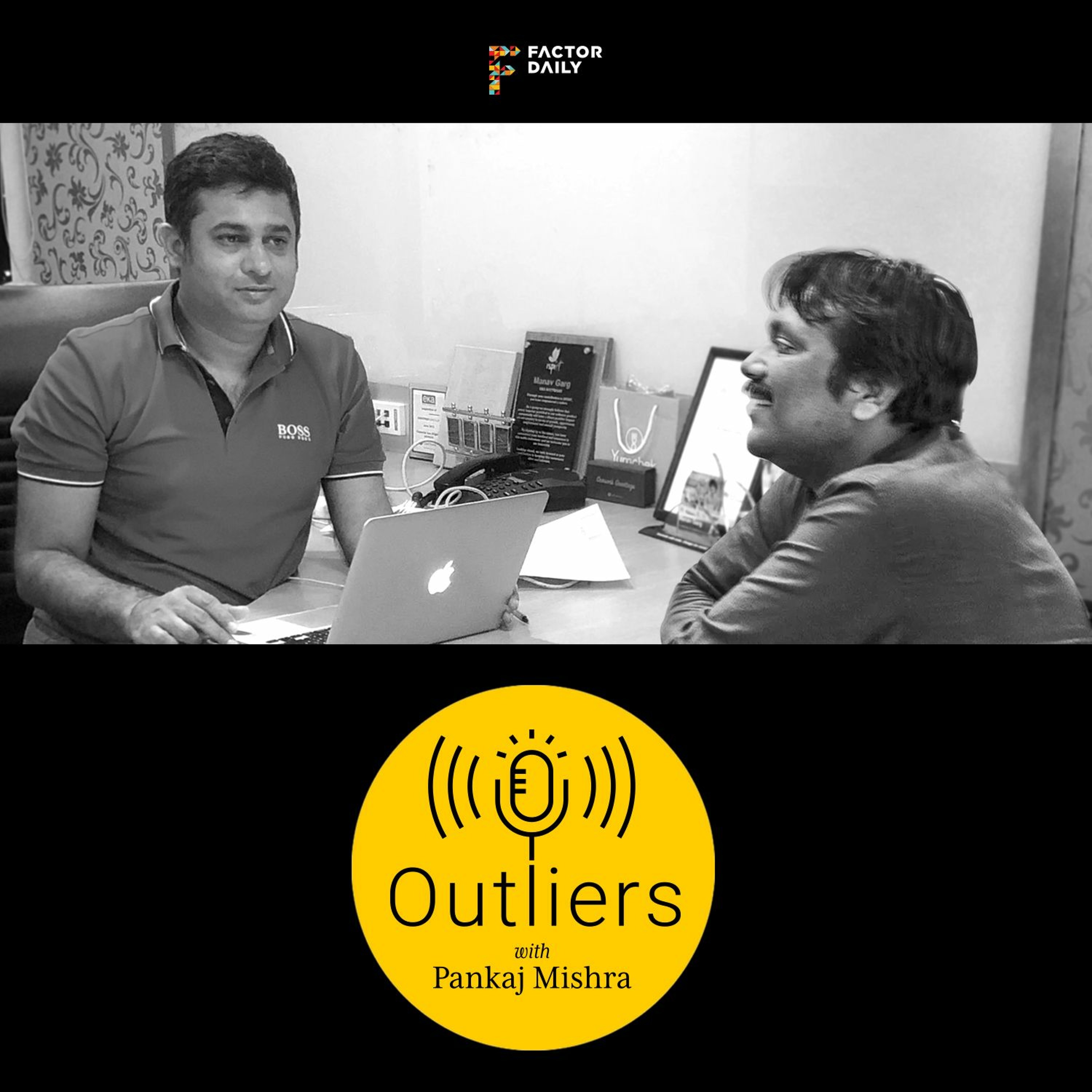
Ep 53: Manav Garg on learning from his father’s entrepreneurial failures, building Eka
Manav Garg is clearly an outlier in the Indian startup ecosystem. Coming from Moga, a town in Punjab, Garg conquered his inability to speak English and fear of failure to set a launchpad for himself. Also, he never went to an IIT. After finishing his graduation from the Indian Institute of Foreign Trade, Garg joined G Premjee Trading on its commodities desk starting with coffee in 1998. From around $50 million worth of trading, he became part of the team that scaled it to over half a billion dollars in three years. Later, in 2001, Garg started building Eka. He’s among a bunch of rare few entrepreneurs who come from core business backgrounds to build a software company. “A lot of time my wife and family ask me why I’m going to work all the time, working so hard. It’s not really about work, but it’s the mission for me,” he says. “For me, it’s a mission. You’ll always have enough to survive. I want to change the entire agricultural space in India.” Garg has also learned to use meetings over a cup of coffee as a negotiation and persuasion tool. From getting his first $1 million customer for Eka in 2001 to hiring his head of sales, Garg’s coffee meetings have delivered. “This Singapore customer called us after reading our responses to his RFP, said he will never ever work with us. I persuaded him to have a coffee with me the next day. I flew overnight to be there,” he recalls. Ditto with Rick Nelson who Manav hired as the head of sales in New York in March 2009
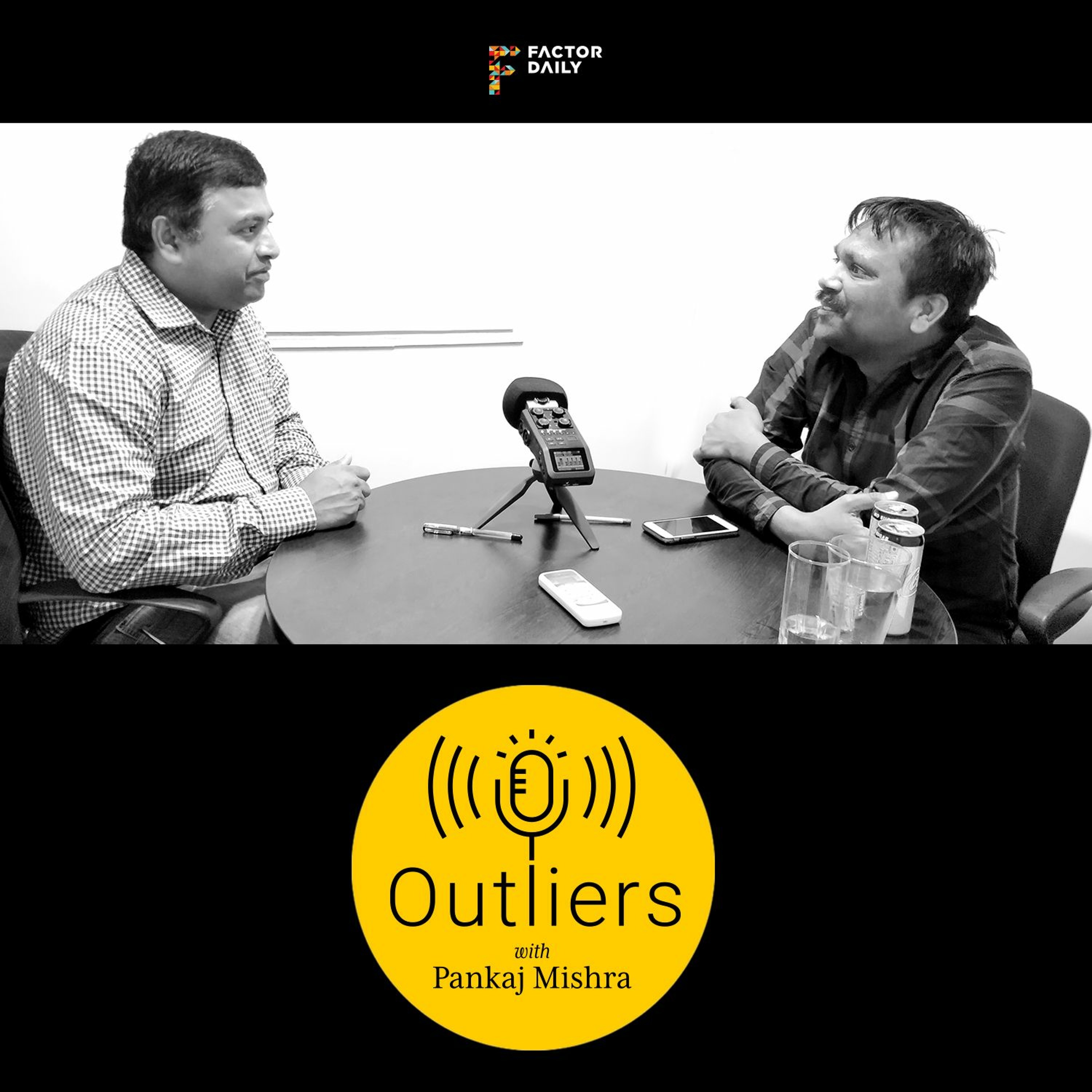
Ep 52: Deepak Shenoy on building Capitalmind, and the impending fintech bubble burst in India
Deepak Shenoy was one of the early professionals to start algorithmic trading in India, way back in 2009. It required sifting through patterns of data and using software-based decision-making systems to trade and make stock calls. While I have been following his Twitter handle @deepakshenoy for past couple of years, some of his recent writings have clearly been outliers, especially in terms of fresh perspective and incisive analysis. “How The 11,400 cr. Import Ponzi Scam at PNB Unfolded” published in February is an example of that. Shenoy, a computer science graduate from the National Institute of Technology, Karnataka, started his career as a coder maintaining mainframe computer systems during 1996-1997. Before formally launching Capitalmind in 2010, Shenoy launched two startups--Moneyoga and Agni Software. “When you are in a job, it’s difficult to harness opportunities. It’s not just being your own boss,” he says. “At some point, you start getting tempted to take up a job because of the cash flow. And around 2012, I had started getting job offers and I didn’t want that,” he adds. It’s important to have targets about how long will you give your startup before calling it quits. “I decided to work on making Capitalmind into a company and give it one year. “ “The first business I ran, we had a 4 months target. It was 1998 and we were making 15,000 every month. We actually did it. We wanted the company to make enough money to help the four of us buy Tata Safari for each of us,” says Shenoy. “If you don’t have a business vision, the danger is of becoming a zombie company. You would always have enough to survive, but without growth, nothing matters. Every company is supposed to be geared for growth. “
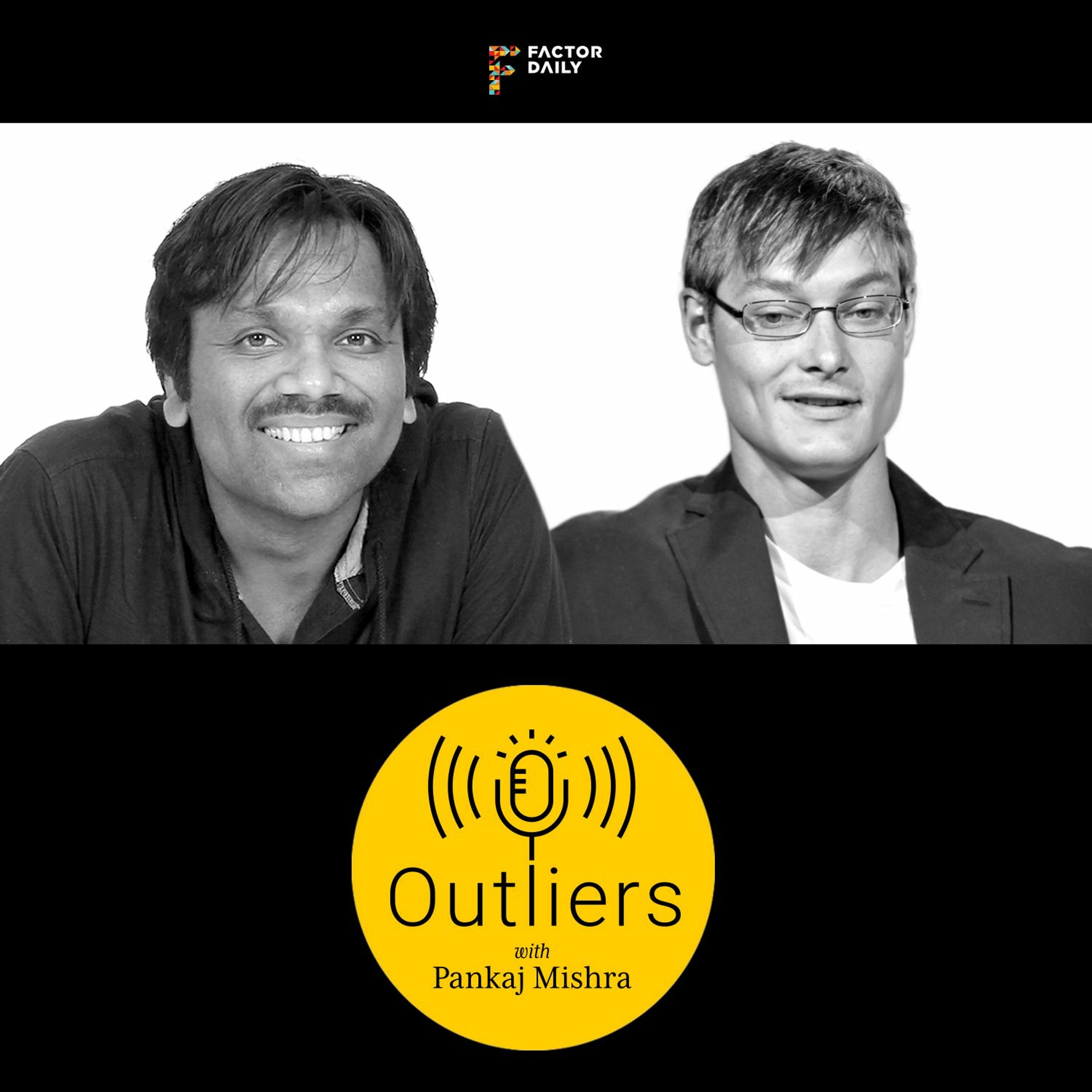
Ep 51 : ProductHunt founder Ryan Hoover on life with AngelList and lessons in building community
In the mad, mad world of tech, discovering the next big thing is a holy grail for everyone – from investors to startup founders looking for their next pivot and even large tech companies hunting for the disruption in their core markets. From a small email list launched in November 2013 by Ryan Hoover, ProductHunt has now helped discover over 100 million products with more than 100,000 new product launches on its platform. In this week’s Outliers, we have for you a conversation with Hoover who talks about the ProductHunt journey, its $20 million acquisition by AngelList in 2016, and some deep lessons in building communities and keeping them alive. Hoover, 31, eats, breathes and lives the ProductHunt community. “I still love what I am doing and I still see so many opportunities to experiment and grow,” he says. “I am really weird when I wake up in the morning, far too early like 4.45 am today. My mind starts turning on and truthfully, I want to get back to the bed, but my mind gets excited, starts working. Now, this is still stressful and I get frustrated... for me and my awesome girlfriend.” P.S. How AngelList works? Look out for a set of deep conversations with folks at AngelList to be published on FactorDaily as an audio story soon. image credit: (cc) Ken Yeung -- www.thelettertwo.com
Ep 50 : Masterclass with Jyoti Bansal
Every time we spot a hugely successful entrepreneur (either multi-billion dollar exit or an IPO), there’s a rush to analyse what went behind the success and whether there’s a playbook that can be replicated to create more successful exits for startups. Everyone from investors to existing and wannabe entrepreneurs are looking for “deep insights” that will catapult their idea into the big league. If you read some of the top learnings shared by Jyoti Bansal and even listen to the entire podcast, I bet you will get a feeling that none of this is something you haven’t heard before. However, if you can learn from Bansal’s insights by contextualising everything he says against his startup journey, the AppDynamics story, and so on, there’s a lot to learn. One of the things that stayed with me since I had this conversation with him, for instance, is what he said about the kind of people he will hire for his next startups. “I will try and avoid hiring people who have been part of big exits.” This is because exits and startup wealth creation also brings a certain comfort, risk averse nature. So whenever Bansal builds his next, he wants people with a lot more hunger than those who have already drank the nectar.
Ep 49 : K Vaitheeswaran on why a startup is the second important thing in life. First is family
K Vaitheeswaran’s entrepreneurial journey lacks all the fanfare, glory and gyaan that make some of the most visible startup journeys of today, including Flipkart and Ola. It’s a story that underscores how lonely it’s to be a startup founder and how ugly the lows in the journey can get. On the midnight of December 31, 2012, Vaitheeswaran opened the door of his house to find a bunch of drunk and abusive guys demanding monies his company Indiaplaza owed to several vendors. “One of the reasons we all enjoy December 31 and look forward to January is because we believe it’s going to start something new and great,” he tells me. “That day was the most depressing because all sorts of thoughts crossed my mind. I have no shame in saying the thoughts (of ending my life) did cross my mind. I didn’t even want to see January 2nd.” “How much can you really take after you expose your family to all the abuse?” “You realize then that perhaps becoming an entrepreneur is not worth anything,” he tells me. I’ve always wanted to sit down with Vaithee, as people around him address him, for this conversation, especially after reading this brilliant story titled “Indiaplaza.com: How an Indian e-commerce firm ran out of cash” by Ashish K. Mishra. Vaithee’s book ‘Failing to Succeed’ is equally riveting. Do listen and stay grounded, fellow entrepreneurs.
Ep 48 : Avani Parekh of SnapChat service LoveDoctor on pre-teen sex counselling
The first time I heard of LoveDoctor, a SnapChat-based counselling service for teenagers, women and even pre-teen kids seeking sex advice, I was blown away. Not just because it’s rare to find a savvy SnapChat user in my peer group, but the whole idea of serving such a real world need, unaddressed largely, fascinated me. Few days ago, I emailed Avani Parekh asking for updates about LoveDoctor and checking if she would help me explore a deeper narrative on its evolution and the road ahead. “Well, it’s not alive anymore,” she told me. Parekh who joined Sheroes last year, is now back in that discomforting zone where many startup ideas are born. She wants to revive LoveDoctor. But this podcast is not just about LoveDoctor’s future. It’s about some hard entrepreneurial lessons on building a community on a new social platform and watching it fail to take off.
Ep 47: Anand Deshpande of Persistent on employee vs founder mindset
Anand Deshpande, 55, and the founder of Pune-based Persistent Systems has been an outlier for nearly three decades. Since he founded Persistent in 1990, he has watched lucrative opportunities in low-end software services come and go across different cycles. Over years, he’s steered Persistent away from low-end outsourcing business towards high-end software product development work for the likes of IBM and so on. With revenues of nearly $500 million in 2017, it’s been a long, slow journey for Persistent and Deshpande, a former Hewlett Packard engineer. “It’s not so much about founders. What everybody needs to learn is how to delegate, and that’s a very tricky part for the founders because by mentality all of us believe we know how to do things, and we find it difficult to believe somebody else could do the same thing,” he says. “There’s a little bit of arrogance that most founders have, including me. How to delegate is the biggest challenge.” As I sat down with him for this episode of Outliers, I listened to some great insights about building a startup, failing, creating a culture of ownership, and finally, the need to let go the founder’s mentality when required. And, more importantly, the founding team keeps changing with every cycle. “Every transition is traumatic, but you have to stay on. When a company starts to taper down because of either incumbency of business model or other reasons, you must find a new model. We are in the fourth phase right now at Persistent.”
Ep 46: Bhumika Goyal on what it’s like being a top open source contributor
Welcome to the Season 2 of the Outliers Podcast. We start the year with a conversation with Bhumika Goyal, a 22-year old computer science graduate with a passion for the Free and Open Source Software movement (FOSS), and is already among the top-ranked Linux Kernel contributors. In a year when a lot of talk is going to be focused on job losses in the country’s over $100 billion IT sector, Goyal’s choice of career and passion for Open Source does appear brave. “I just love the way the open source community collaborates across different geographies and cultures, demographics,” she tells me. “While there is clearly gender bias that works against women in the sector, I am yet to experience it and I believe things are changing.” It’s tough for me to doubt her optimism, notwithstanding all the challenges faced by women in the technology and startup ecosystem that we keep flagging and chronicling at FactorDaily. Everything appears to be working fine until young, female programmers enter the ecosystem. It’s later in their careers that many of them face gender biases. One only hopes that Goyal and her generation of young, supercoders not just help build a healthy work environment with equal opportunities for everyone but also stun the software universe with their mankind-changing work. Do listen in and have a fulfilling year ahead!
Outliers Season 1 Finale: Vijay Shekhar Sharma on the life of a founder
So who is Vijay Shekhar Sharma? Depending who you ask in India’s technology and startup ecosystem, the answers will range from “that crazy guy” to “overly obsessed entrepreneur”, “trying to fight too many battles at the same time”, “a desi entrepreneur”, “rags to riches story” and so on. If you ask us at FactorDaily, we’ll perhaps point you to our Code of Conduct that names him as one of the three investors backing our media startup. But this podcast isn’t about what we think of him; it’s about who he really is. And as I sat down with him for this special episode Outliers Podcast Season 1, I realised he’s no different from many important entrepreneurs in these times — at the core, they all want to make it big, are inspired by Elon Musk or such, and are very, very lonely. “When I lost my father few weeks ago, I also lost the only one who understood what I really do. Now, I have no one who understands me, and that will remain a gap forever,” he says.
Ep 45: Kiran Mazumdar-Shaw on handling criticism and trolls
With over a million Twitter followers and hundreds of thousands on other social platforms, Kiran Mazumdar Shaw keeps a really visible and busy profile. This fan following also brings trolls and critics who can get really personal at times. As I sat down with Shaw, the founder of India’s biggest biotech company, Biocon, to record the last Outliers podcast of 2017, I asked her how she manages criticism and trolls. “From the very start I’ve faced criticism…..being a woman entrepreneur, and trying to build a startup in an area not understood by many,” she told me. “More recently, some retail investors even asked me to step aside and hand over the reins to someone else who understands the business better. There’s even been criticism about my gender, and so on.” “I believe if you’re honest about your beliefs then you’ll be able to take criticism. I don’t hesitate in apologising or retracting what I said if someone points to factual inaccuracies etc..” In this age of extreme and polarized opinions, it doesn’t matter if you have one follower or a million. Keeping a balanced view and asking for fact/evidence-based debates on Twitter and elsewhere is scoffed upon. How does Shaw manage all that? How can she critique and praise the government at different times? These are among the questions I asked. Do listen in for some bold insights from one of the most important business leaders in the country.
Ep 44: How Rohith Bhat built an app development powerhouse from small town India
“When Steve Jobs went on the stage in 2008 to announce the App Store, he showed the first 500 apps, and the five of them were built in this building, in Udupi,” Rohith Bhat, founder of Robosoft tells me as I sat down to record this episode of Outliers in Udupi, a small temple town located some 400 kilometres from Bangalore. What’s really exciting about Bhat’s journey is not just having Apple as an old, loyal customer, but how he is transforming Robosoft into a next-generation company that’s now building new gaming apps too. The Star Chef game, for instance, has been downloaded over 20 million times and has earned revenues of nearly $20 million in three years. But it’s been a long, slow and at times frustrating entrepreneurial journey too. And that’s where Bhat is inspired by the Japanese culture and its companies. If you remember the Outliers Podcast with Zoho founder Sridhar Vembu, even he talked about why Indian startups need to emulate the likes of Honda, and not get starry-eyed by looking at the Silicon Valley all the time. Listen in.
Ep 43: Santhanalakshmi Arvind on what it takes to be the family of a startup founder
Much before startup ideas find their way to colourful pitch decks, the founders, at least the ones with families, seek some kind of emotional, social approval. That approval is not make or break, but important. Who gives that approval? More often than not: the founder’s family: parents or/and spouses. They, of course, almost instantly give their approval because they see the startup dream painted all over the founder’s face — the starry-eyed look of a wannabe founder wanting to change the world. And that’s where it all starts: the long, slow, painful and lonely journey of entrepreneurship. The life of a startup and its founder(s) gets mostly captured through stories of funding, management changes, mergers and acquisitions, and so on. What gets lost is the human aspect of entrepreneurship involving the families who sacrifice their time and emotions, friends and colleagues. Conflicted at times as they are with the founders’ own dreams, bordering on the ethereal, of making a dent in the universe. My story “Death of a startup founder” in September last year was the life story of Arvindkumar Alagarswamy, co-founder and CEO of Attune Technologies, a healthcare startup. Arvind, a quintessential entrepreneur, was diagnosed of pancreatic cancer towards the end of January 2016 and was gone in about three months. Just when he and his colleagues had built it up to the crucial $10 million revenues-threshold with ambitions to grow it 10x in three-four years. As I sat down with Santhanalakshmi, the late Arvind’s wife, for this episode of Outliers Podcast, I realized how often we as entrepreneurs, overlook the sacrifices made by our loved ones. And how important it is to steal tiny moments from all the running around, to ensure we create special memories. Perhaps this is why Naval Ravikant told me why he’s ruthless about time in the sixth episode of Outliers Podcast. Lakshmi, as she is called by those close to her, has some advice to founders. What matters, she says, isn’t the amount of time a founder is able to take out for his or her family—it’s how you spend it and the quality of that time. “Because that’s what you remember the most when they aren’t around. In Arvind’s case, we remember his energy the most and that never lets us feel low,” she tells me. And, she has a contrarian tip. “It’s not a bad idea to hold back and not share the ups and downs of the startup with your family,” she says, especially “if you’ve a friend who you (can) share everything with. This podcast is about the most important investment any startup founder receives—the invaluable love and support from family. Here’s to the unsung magicians who make startups happen.
Ep 42: Viral B. Shah on why engineers need empathy about users
The American civil aviation regulator’s next-generation collision avoidance system is built on a relatively new programing language called Julia. You can thank Viral, who along with Alan Edelman, Jeff Bezanson, Stefan Karpinski, Keno Fischer and Deepak Vinchhi, built the language the next time you have a safe flight in the U.S. airspace. Like every profession, engineering is also defined by some awesome coders and architects who are known for the battles they pick and the ones they ignore. Shah, who was one of the key architects behind Aadhaar payments system, prefers to stay away from the controversies surrounding India’s biometric-based citizen identity program, as I record this episode of Outliers podcast. If you are someone who believes our future will be shaped by next-generation software and machine learning, listen to this conversation.
Ep 41: Vishwas Chitale on the dairy of the future
The first time I heard of Chitale Dairy was about eight years ago when an executive at one of the top Indian retailers asked me to check out how a dairy in Maharashtra’s Sangli village was using radio frequency tags to track cattle. Back then, most RFID deployments at retailers were bleeding and not delivering on early promises. The dairy, I was told, was using intelligent tracking among other technologies to ensure its annual milk productivity was double the national average. Earlier this month, I traveled again to Sangli to see how far has Chitale Dairy has progressed with technology. From advances in cattle genomics to use of simple, user friendly software as an underlying glue across different processes, director Vishwas Chitale continues to harness technology with precision effect in his dairy business. Listen to this podcast to learn how a 70-year-old milk dairy in Sangli keeps at the cutting edge of technology and, as importantly, steers clear of technology hype cycles.
Ep 40: Why R A Mashelkar remains “dangerously optimistic”
At 74, Raghunath Anant Mashelkar has spent decades in setting India’s innovation agenda across organizations including the National Innovation Foundation and Council of Scientific and Industrial Research. Now, he’s the chairman of Reliance Industries’ innovation council. As I sat down with Mashelkar for this week’s Outliers Podcast, I was fresh from the last episode about how India failed it’s homegrown hardware innovation such as Simputer. Mashelkar responded by saying that getting the government to become a customer for their products is indeed a challenge for smaller, disruptive startups. “It’s interesting because exactly 48 hours ago I sent a paper to the policy makers, recommending to change the government procurement policies,” he tells me. “If only the government had ordered Simputer(s) as a buyer, things could be different.” He is, in his own words, “dangerously optimistic”. So despite all the scepticism about whether Indian government will actually accept the mistakes and change, you feel inclined to believe him. In this around 40-minutes-long podcast, we discuss everything from how Mashelkar manages critics and controversies to why he remains optimistic.
Ep 39: Devi Shetty on why he’s obsessed with affordable healthcare
Dr Devi Shetty of Narayana Health is more a pioneer and a disrupter than an Outlier. Shetty, who is widely credited with disrupting India’s healthcare scene with affordable surgeries, is shaping the future of healthcare in the country, too. And while he’s doing all that, he is relentlessly exploring new technologies from 3D printing to artificial intelligence and intelligent software algorithms for delivering more efficient and intelligent healthcare services. At the core of his hospital business is an assembly line approach he has adopted across his hospitals, “In 5-10 years from now, it will become legally mandatory for doctors to get approvals from a software program before they even start a treatment,” he tells me. Few days before I sat down with him for this podcast he made this statement in an interview with The Hindu, underscoring his bold vision for the future of healthcare and the professionals of tomorrow. “Kids who are really good at playing video games will become the best surgeons.” This episode of Outliers podcast lasts only around 13 minutes, unlike the past ones that are over 40 minutes and so on. Much like an espresso shot – short, intense and sharp. Happy listening.
Ep 38: V Vinay on whether Simputer was a success or a failure
The most significant innovation in computer technology in 2001 was not Apple's gleaming titanium PowerBook G4 or Microsoft's Windows XP. It was the Simputer. This is computing as it would have looked if Gandhi had invented it, then used Steve Jobs for his ad campaign. Source: Bruce Sterling in a The New York Times article published December 2001 Was Simputer ahead of time? Was it a failure or success? Depending who you ask, the answers can be as varied as possible. To understand what happened with what the NY Times once described as the product of the year, I decided to sit down with IISc professor, scientist, and entrepreneur, V. Vinay, for this episode of the Outliers Podcast.
Ep 37:Computing pioneer Bob Frankston says algorithms are the new bureaucracy
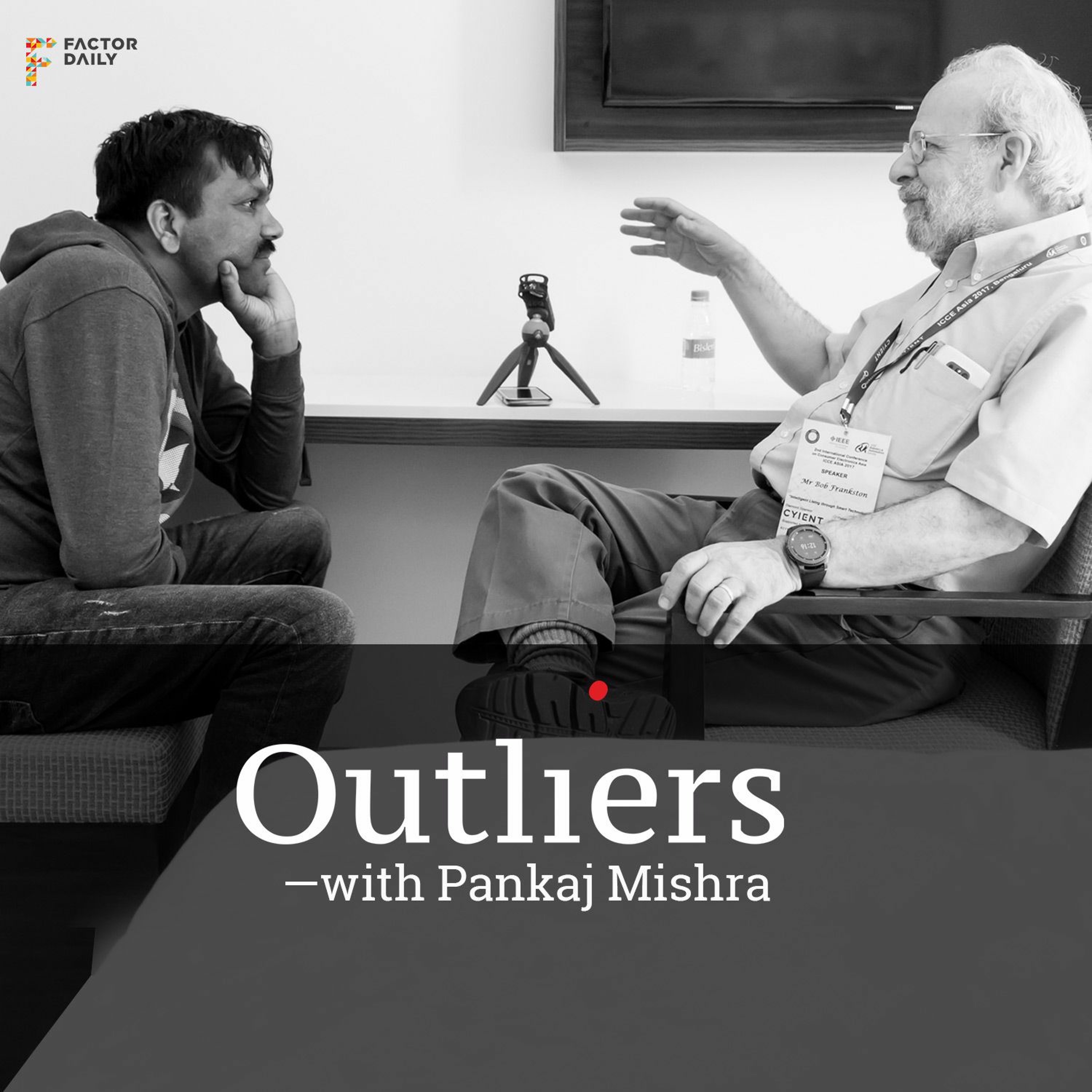
“When you see a door, you should get curious,” says Robert M. “Bob” Frankston, a computing pioneer who co-developed VisiCalc, a spreadsheet program with Dan Bricklin way back in 1979. We are discussing the engineering crisis and what should a young programmer do to stay relevant. “I hate the word coding; it’s like calling writing, typing.” As I sat with Bob for this episode of Outliers Podcast, we discussed everything from the future of computer programming to how algorithms and their masters such as Facebook, Google and Amazon are beginning to take control of our lives. “Algorithms are the new bureaucracy.”
Ep 36: Dr Anil Gupta on what entrepreneurs must learn from grassroots innovators
Many of you on the internet might know Professor Anil Gupta from his Ted Talk. But the work he does has far-reaching impact on grassroots innovation. Dr Gupta, a renowned scholar of grassroots innovations, founded Honeybee Networks many years ago with a simple mission: knowledge must benefit the people it comes from. His grouse with academics, who would often get insights from "knowledge rich and economically poor" people but fail to acknowledge or design solutions that would circle back to the poor, became the bedrock on which Honeybee Networks was founded. In this podcast, recorded in Ahmedabad in peak Navratri season (sorry about the background noise), we talked about how grassroots innovators make do with less by reusing parts of devices, designing products that are multifunctional and how some things don't need to be scaled to be successful.
Ep 35: Wingify’s Paras Chopra on bootstrapping his startup from zero to $18m revenue
There's something fascinating about the entrepreneurs who stay away from the VC funding frenzy and quietly build their startups one baby step at a time. Doing a startup overall is a crazy, bold thing to do, in the first place. The odds are stacked against you. On top of that, if the entrepreneur decides to bootstrap his or her startup, there is only one word for the journey: brutal. Aggressive, highly funded and ruthless rivals breathe down the neck. They poach your most treasured talent nurtured over long years. In this episode of Outliers, I sat down with Paras to learn more about the Wingify journey so far.
Ep 34: Ashish Sinha on Indian startups’ underbelly and going back to his product roots
Depending on who you ask in the Indian startup ecosystem, Ashish Sinha, an IIT, IIM graduate and a former Yahoo product manager, could have built an AngelList to a TechCrunch equivalent from this part of the world. For his part, he did try attempting doing these. And he failed. Not for any lack of network or the knowhow, but because he did not agree with the rules of the game. Since Sinha quit his Yahoo job in May 2009, Shradha Sharma has built and scaled startup news site www.YourStory.com to be India’s biggest media platform for entrepreneurs, and AngelList has launched its offices in the country. Over the years, I have had several disagreements with Ashish, especially with the way he paints all media with the same brush and for pooh-poohing reporters who say they are at times constrained by media ethics. He’s an Outlier nonetheless. And an admirable one at that. That’s because very few in India have the ability and the required boldness to critique a software or an Internet product, early enough, so course corrections can be made. In this episode of Outliers, I met a new Ashish with his bearded looks. We discussed the underbelly of India’s tech and startup ecosystem and more. Do listen in.
Ep 33: ThreadSol founders on what it means to not be “an Uber of anything”
“It’s a game of belief,” Manasij Ganguli tells me about getting customers, investors and employees around you. We are sitting in his living room at Noida home, east of capital New Delhi, with his wife Mausmi Ambastha. This becomes “a game of thrones” if the startup idea you’re pitching doesn’t have a global equivalent. For Ganguli and Ambastha who co-founded ThreadSol in 2012, building a network of believers meant facing over 100 rejections, both from investors and customers, in their first year. From getting early adopters of the product, to getting investors see it as a business worth backing, and even convincing early employees — everything boils down to building a network of believers, the husband-wife duo tell me. “We could not point to any proven model in China or the U.S. We weren’t an Uber of anything.” Five years since it was founded, ThreadSol now says its software touches nearly 1 billion pieces of garments produced annually, helping the brands and manufacturers save costs by identifying and plugging wastage.
Ep 32: Ashish Hemrajani of BookMyShow says he's a cockroach, and not a unicorn
Who wants to be a Unicorn? It's almost every entrepreneur's dream to build a company that crosses the $1 billion dollar valuation mark. For investors too, the starting question is whether a pitching startup can become the next Unicorn. For Ashish Hemrajani, the cofounder of BookMyShow, who started his company in 1999, the journey is all about survival. “First of all, it's (Unicorn) a mythical animal, and an ugly one at that with a horn,” he tells me in this episode of Outliers. “I'm a cockroach; we survive. You put us in the middle of a nuclear holocaust or inside a microwave oven, we survive.” “We come to the trenches everyday, rolling our sleeves, we survive,” he says.
Ep 31: Zainab Bawa on lessons in building the HasGeek community
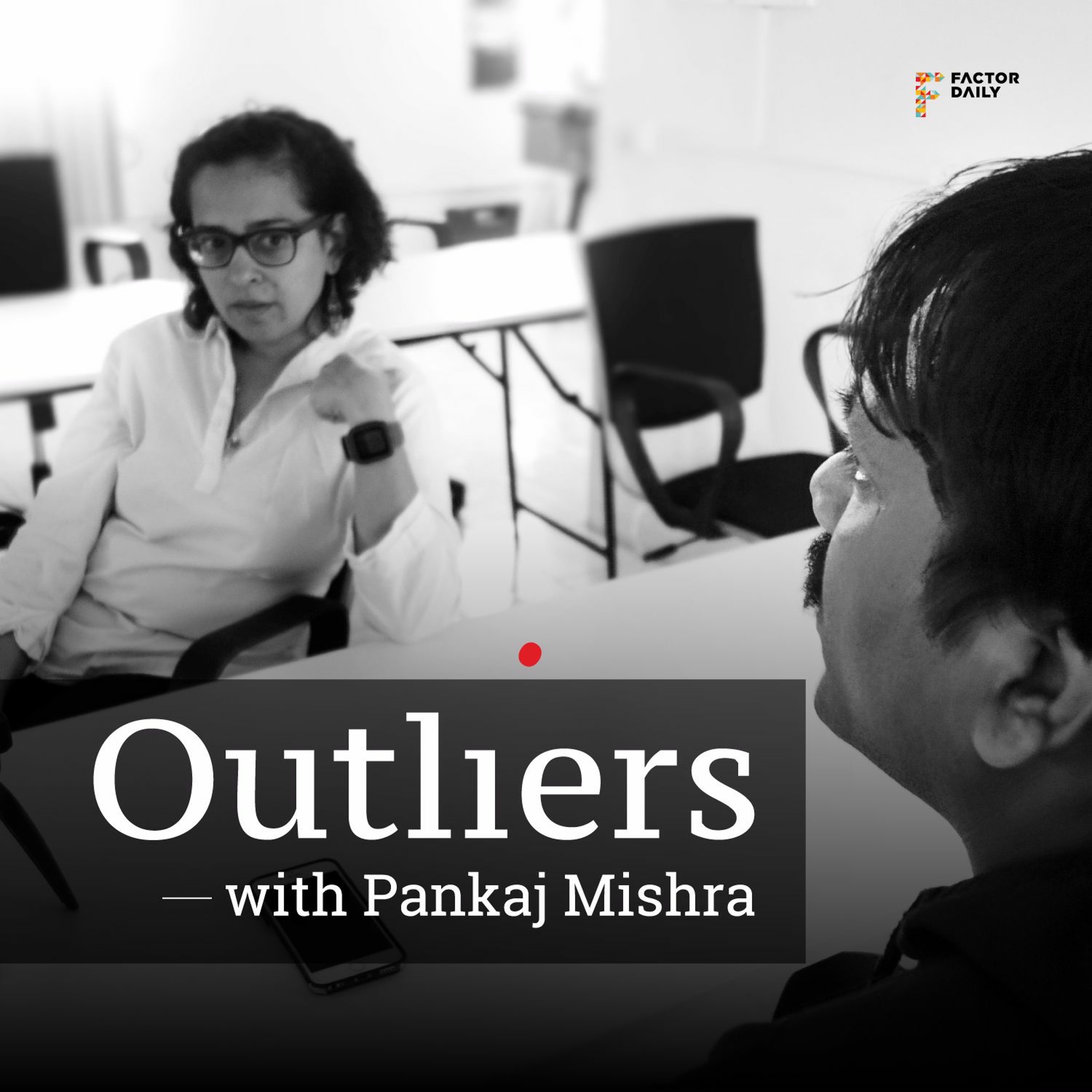
What's the best way to build communities that last? “Do nothing,” pat comes the reply from Zainab Bawa, the CEO of HasGeek. Bawa’s inspiration is Masanobu Fukuoka, a famous Japanese author of bestselling books including “The One Straw Revolution” and “The Natural Way of Farming.” Fukuoka is famous for his “do nothing” philosophy, In this episode of Outliers, I sat down with Zainab to learn about building communities and handling conflicts. She also discussed the need to take the diversity debate beyond just gender, and include the trans genders too.
Ep 30: Lessons Amit Ranjan learnt in building products for the government
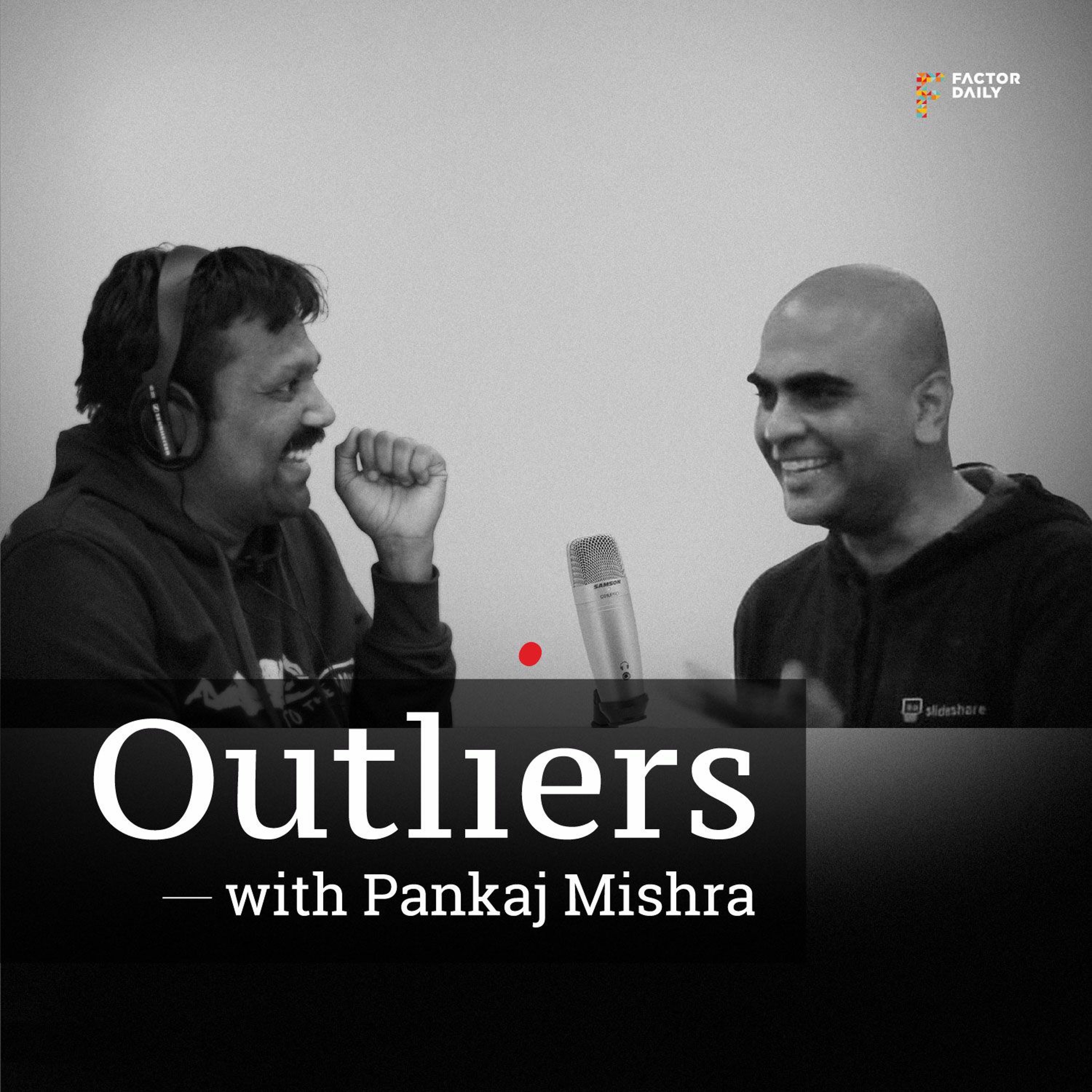
On Wednesday, we published the first part of Outliers Podcast with SlideShare cofounder Amit Ranjan in which he shared entrepreneurial lessons in building a consumer internet product. In the second part, Ranjan talks about his ongoing assignment with India's government where he's helping build next generation digital products.
Ep 29: Inside SlideShare with Amit Ranjan
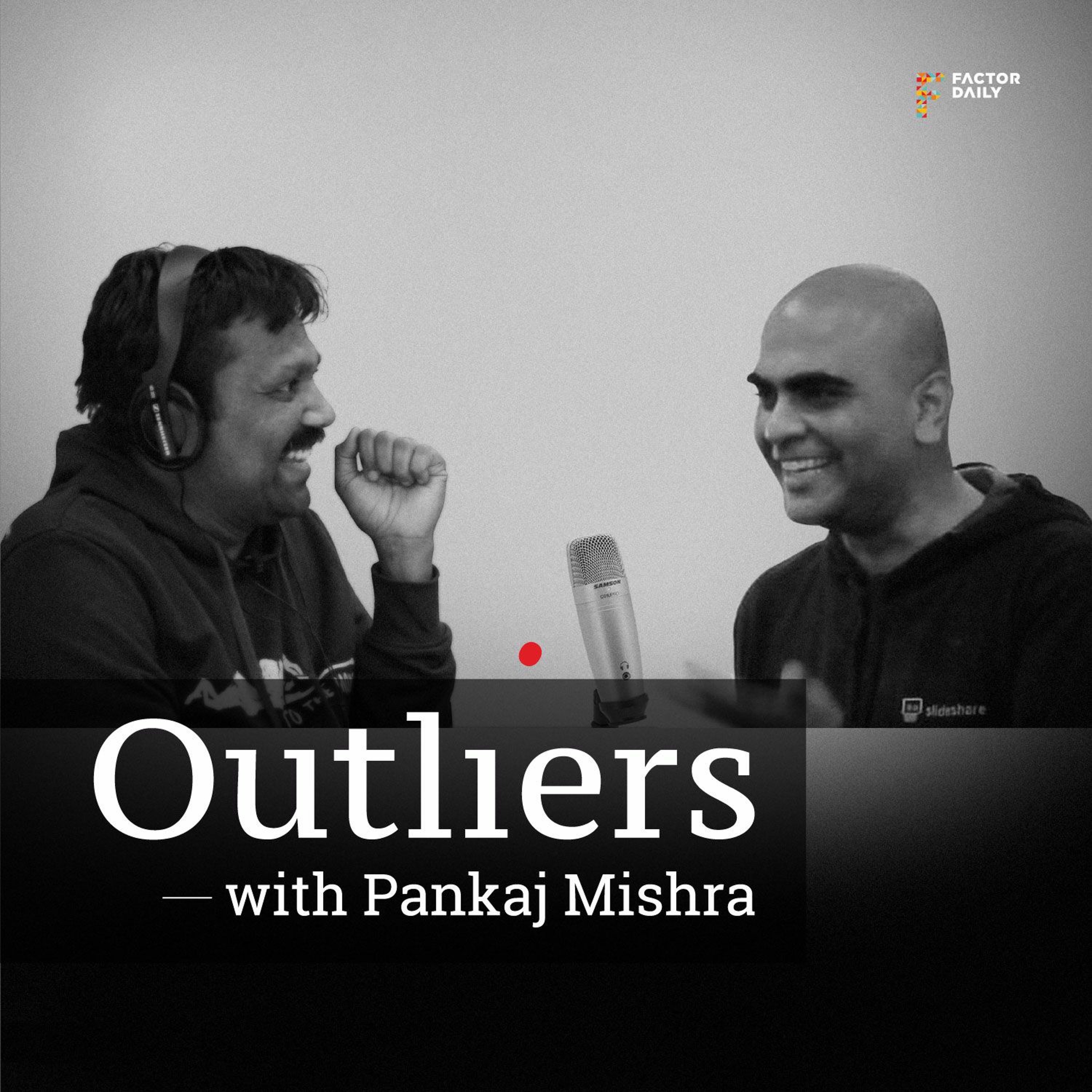
Pankaj Mishra sits down with Amit Ranjan, cofounder of SlideShare who now spends time working with the Indian government on building next generation digital products.
Ep 28: Makemytrip founder Deep Kalra shares ‘the founder’s mentality’
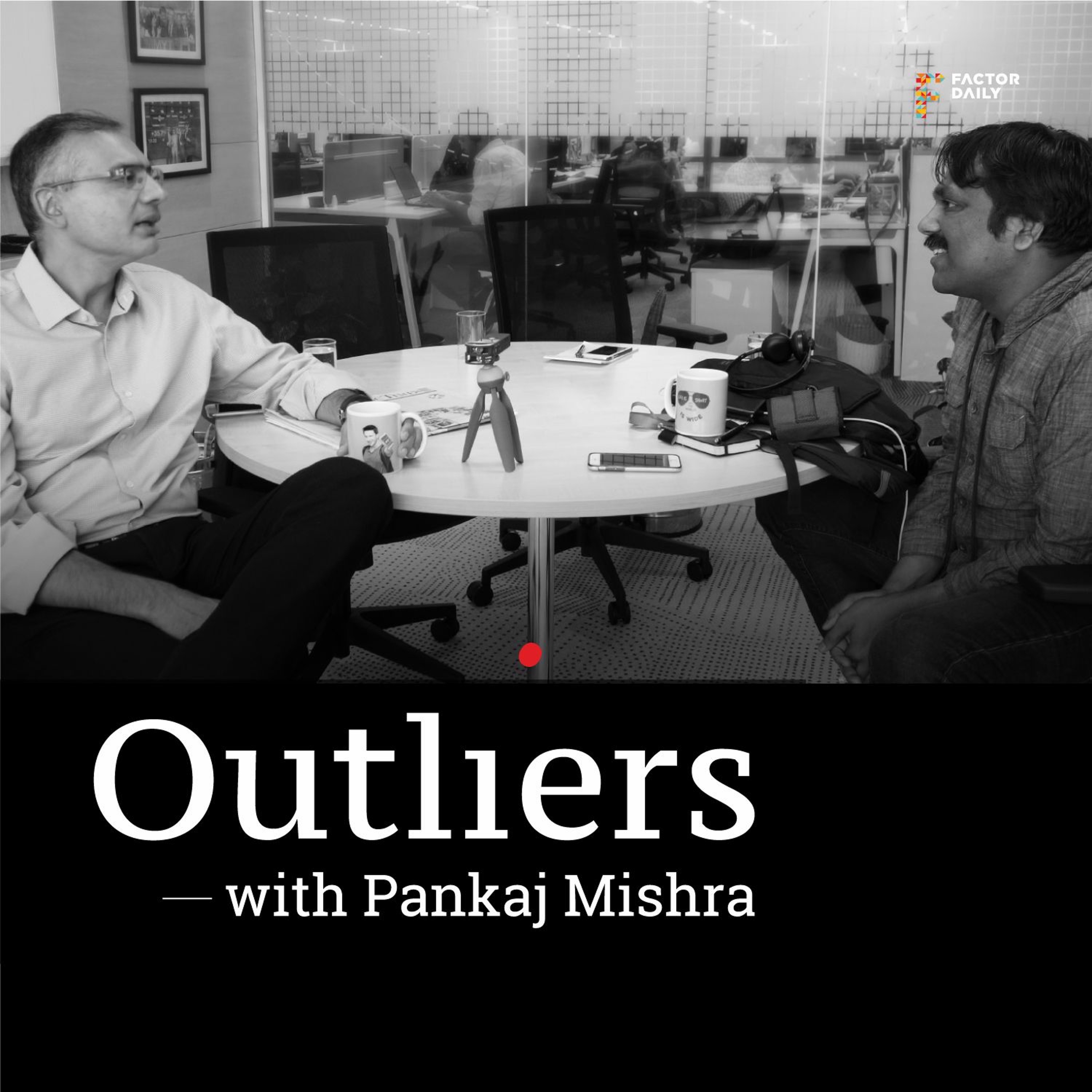
In this episode of Outliers, Deep Kalra talks about lessons in building Makemytrip and his views on letting go, and finding a successor.