Oncology for the Inquisitive Mind
229 episodes — Page 3 of 5
S2 Ep 29112. ASCO 2024 - Upper Gastrointestinal and Hepatobiliary Cancers
Some oncologists may have already started counting down to ASCO 2025. However, Michael and Josh are still digesting the interesting world of ASCO 2024, specifically upper GI and Hepatobiliary Cancers. Like the eponymous lead of the 1992 classic Aladdin, several diamonds lie in the rough.We cover perioperative FLOT in the metastatic setting, but most excitingly, it is a potentially new groundbreaking treatment for hepatocellular carcinoma.Links to studies discussed in this episode (subscription may be required)ECOG-ACRIN EA2174: https://meetings.asco.org/2024-asco-annual-meeting/15831?presentation=231157%23231157ROTG 0848: https://meetings.asco.org/2024-asco-annual-meeting/15831?presentation=231157%23231157CHECKMATE 9DW: https://meetings.asco.org/2024-asco-annual-meeting/15831?presentation=231157%23231157RENAISSANCE: https://meetings.asco.org/2024-asco-annual-meeting/15831?presentation=231157%23231157For more episodes, resources and blog posts, visit www.inquisitiveonc.comPlease find us on Twitter @InquisitiveOnc!If you want us to look at a specific trial or subject, email us at [email protected] for the Inquisitive Mind is recorded with the support of education grants from Pfizer, Gilead Pharmaceuticals and Merck Pharmaceuticals. Our partners have no editorial rights or early previews, and they have access to the episode at the same time you do.Art courtesy of Taryn SilverMusic courtesy of AlisiaBeats: https://pixabay.com/users/alisiabeats-39461785/Disclaimer: This podcast is for educational purposes only. If you are unwell, seek medical advice. Hosted on Acast. See acast.com/privacy for more information.
S2 Ep 28111. ASCO 2024 - Genitourinary Cancers (Prostate/Penile)
The second of our two GU ASCO 2024 episodes focusses on prostate and penile cancer, two diseases at different ends of the therapeutic spectrum. Prostate cancer is one of the most common cancers in men, with well established, nuanced treatment paradigms and a glut of high-quality evidence. Penile SCC is a very rare cancer that tragically is much more common in low socioeconomic countries. Treatment options are as limited as available evidence, so any new studies of this cancer are very welcome. Are there any more practice changing twists and turns from ASCO 2024? You'll have to listen to find out!Links to studies discussed in this episode (subscription may be required)Cabazitaxel with abiraterone versus abiraterone alone randomized trial for extensive disease following docetaxel: The CHAARTED2 trial of the ECOG-ACRIN Cancer Research Group (EA8153): LinkCYCLONE 2: A phase 3 study of abemaciclib with abiraterone in patients with metastatic castration-resistant prostate cancer: LinkA randomized, double-blind, placebo-controlled trial of metformin in reducing progression among men on expectant management for low-risk prostate cancer: The MAST (Metformin Active Surveillance Trial) study: LinkA phase II trial of pembrolizumab plus platinum-based chemotherapy as first-line systemic therapy in advanced penile cancer: HERCULES (LACOG 0218) trial. LinkFor more episodes, resources and blog posts, visit www.inquisitiveonc.comPlease find us on Twitter @InquisitiveOnc!If you want us to look at a specific trial or subject, email us at [email protected] for the Inquisitive Mind is recorded with the support of education grants from Pfizer, Gilead Pharmaceuticals and Merck Pharmaceuticals. Our partners have no editorial rights or early previews, and they have access to the episode at the same time you do.Art courtesy of Taryn SilverMusic courtesy of AlisiaBeats: https://pixabay.com/users/alisiabeats-39461785/Disclaimer: This podcast is for educational purposes only. If you are unwell, seek medical advice. Hosted on Acast. See acast.com/privacy for more information.
S2 Ep 27110. ASCO 2024 - Genitourinary Cancers (Bladder/Kidney)
Genitourinary Cancers dominated ASCO24 this year, and Josh and Michael's ASCO Odyssey needed two episodes to fit it all in. Join them as they board the Nautilus with Captain Nemo in search of the best trials to propel bladder and renal cancer to the forefront of your mind. This episode covers both the use of perioperative sacituzumab govitecan, avelumab as neoadjuvant therapy for bladder cancer and camrelizumab for previously treated advanced adrenocortical carcinoma. Not to be forgotten, they explore a biomarker analysis of the CLEAR trial to see whether any treasure is to be found...Links to studies discussed in this episode (subscription may be required)SURE 01/02: LinkAURA: LinkCLEAR biomarker analysis: LinkCamrelizumab plus apatinib for previously treated advanced adrenocortical carcinoma: A single-arm, open-label, phase 2 trial: LinkFor more episodes, resources and blog posts, visit www.inquisitiveonc.comPlease find us on Twitter @InquisitiveOnc!If you want us to look at a specific trial or subject, email us at [email protected] for the Inquisitive Mind is recorded with the support of education grants from Pfizer, Gilead Pharmaceuticals and Merck Pharmaceuticals. Our partners have no editorial rights or early previews, and they have access to the episode at the same time you do.Art courtesy of Taryn SilverMusic courtesy of AlisiaBeats: https://pixabay.com/users/alisiabeats-39461785/The Star Spangled Banner courtesy of Music_Unlimited: https://pixabay.com/users/music_unlimited-27600023/Disclaimer: This podcast is for educational purposes only. If you are unwell, seek medical advice. Hosted on Acast. See acast.com/privacy for more information.
S2 Ep 26109. ASCO 2024 - Early Breast Cancer
Unbeknownst to Josh, we are already at Day 5 of our ASCO Odyssey, and like Odysseus arriving at Circe's island of Aeaea, we have arrived at the episode devoted to early Breast Cancer. Today we examine four very interesting studies, looking at alternative immunotherapy strategies with adjuvant avelumab, adjuvant endocrine therapy omission in low-ER positive disease, ctDNA in predicting disease recurrence, and a study that aims to change the very bedrock of breast cancer classification. Lots to discuss, deconstruct and debate on today's episode!Links to studies discussed (subscription may be required):A-BRAVE: LinkAdjuvant ET omission in ER-low patients: Link Prognostic utility of ctDNA detection in the monarchE trial of adjuvant abemaciclib plus endocrine therapy (ET) in HR+, HER2-, node-positive, high-risk early breast cancer (EBC): Link Rates of pathologic complete response (pCR) after datopotamab deruxtecan (Dato) plus durvalumab (Durva) in the neoadjuvant setting: Results from the I-SPY2.2 trial: Link For more episodes, resources and blog posts, visit www.inquisitiveonc.comPlease find us on Twitter @InquisitiveOnc!If you want us to look at a specific trial or subject, email us at [email protected] for the Inquisitive Mind is recorded with the support of education grants from Pfizer, Gilead Pharmaceuticals and Merck Pharmaceuticals. Our partners have no editorial rights or early previews, and they have access to the episode at the same time you do.Art courtesy of Taryn SilverMusic courtesy of AlisiaBeats: https://pixabay.com/users/alisiabeats-39461785/Disclaimer: This podcast is for educational purposes only. If you are unwell, seek medical advice. Hosted on Acast. See acast.com/privacy for more information.
S2 Ep 25108. ASCO 2024 - Metastatic Breast Cancer
Today, Michael and Josh approach a singular destiny to present their take on Metastatic Breast Cancer at ASCO 2024. Long has Breast Cancer been one of the most diagnosed cancers globally; these days, it leads the herd with effective treatment options and paradigm shifts that benefit millions of people on a massive scale. With CDK4/6 inhibitors, immunotherapy and antibody-drug conjugates, the arsenal of effective treatment tools continues to grow! Nothing excites an oncologist more than a good randomised phase 3 international study. Today, they present the following:Links to studies discussed (subscription may be required):Destiny-Breast06: Link postMONARCH: Link INAVO120: Link OptiTROP-Breast01: Link For more episodes, resources and blog posts, visit www.inquisitiveonc.comPlease find us on Twitter @InquisitiveOnc!If you want us to look at a specific trial or subject, email us at [email protected] for the Inquisitive Mind is recorded with the support of education grants from Pfizer, Gilead Pharmaceuticals and Merck Pharmaceuticals. Our partners have no editorial rights or early previews, and they have access to the episode at the same time you do.Art courtesy of Taryn SilverMusic courtesy of AlisiaBeats: https://pixabay.com/users/alisiabeats-39461785/Disclaimer: This podcast is for educational purposes only. If you are unwell, seek medical advice. Hosted on Acast. See acast.com/privacy for more information.
S2 Ep 24107. ASCO 2024 - Gynaecological Cancer
Day 3 of Oncology for the Inquisitive Mind's ASCO Odyssey and our hosts show no sign of flagging under this immense pressure, although Josh has started to give up on his famous segues. In this episode, our intrepid hosts tackle gynaecological cancers, reporting on four of their favourite studies from a packed field of gynaecological cancers. Will new treatment options for cervical cancer emerge? Will the sugical approach to recurrent ovarian cancer change? Is there still a place for single agent olaparib in the management of ovarian cancers? Listen on to find out.Links to studies discussed in this episode (subscription may be required):Nimotuzumab plus concurrent chemoradiotherapy for locally advanced cervical squamous cell carcinoma: The randomized, phase 3 CC3 study: Link AXLerate-OC/GOG-3059/ENGOT OV-66: Results of a phase 3, randomized, double-blind, placebo/paclitaxel-controlled study of batiraxcept (AVB-S6-500) in combination with paclitaxel in patients with platinum-resistant recurrent ovarian cancer: Link Secondary cytoreduction followed by chemotherapy versus chemotherapy alone in platinum-sensitive relapsed ovarian cancer (SOC-1): A final overall survival analysis of a multicenter, open-label, randomized, phase 3 trial: LinkOral cyclophosphamide plus bevacizumab in recurrent ovarian, fallopian tube and primary peritoneal cancer: LinkFor more episodes, resources and blog posts, visit www.inquisitiveonc.comPlease find us on Twitter @InquisitiveOnc!If you want us to look at a specific trial or subject, email us at [email protected] for the Inquisitive Mind is recorded with the support of education grants from Pfizer, Gilead Pharmaceuticals and Merck Pharmaceuticals. Our partners have no editorial rights or early previews, and they have access to the episode at the same time you do.Art courtesy of Taryn SilverMusic courtesy of AlisiaBeats: https://pixabay.com/users/alisiabeats-39461785/The Star Spangled Banner courtesy of Music_Unlimited: https://pixabay.com/users/music_unlimited-27600023/Disclaimer: This podcast is for educational purposes only. If you are unwell, seek medical advice. Hosted on Acast. See acast.com/privacy for more information.
S2 Ep 23106. ASCO 2024 - Melanoma
As the sun rises on another day at ASCO, Michael and Josh are ready to hit the ground running to bring you the latest and greatest in all things oncology in Chicago has to offer. No greek mythology today, only a burning desire to bring you the biggest melanoma trials from ASCO24. Today, they pack a punch, tackling some intriguing phase 1 trials with tongue-twisting names where the novelty wears off pretty quickly!Links to articles discussed in this episode (subscription may be required): RELATIVITY-048: linkSX-682: linkPIVOTAL: linkBRENETAFUSP: linkFor more episodes, resources and blog posts, visit www.inquisitiveonc.comPlease find us on Twitter @InquisitiveOnc!If you want us to look at a specific trial or subject, email us at [email protected] for the Inquisitive Mind is recorded with the support of education grants from Pfizer, Gilead Pharmaceuticals and Merck Pharmaceuticals. Our partners have no editorial rights or early previews, and they have access to the episode at the same time you do.Art courtesy of Taryn SilverMusic courtesy of AlisiaBeats: https://pixabay.com/users/alisiabeats-39461785/Disclaimer: This podcast is for educational purposes only. If you are unwell, seek medical advice. Hosted on Acast. See acast.com/privacy for more information.
S2 Ep 22105. ASCO 2024 - Metastatic Non Small Cell Lung Cancer
"Tell me, Muse, the story of that resourceful man who was driven to wander far and wide after he had sacked Troy. He saw the cities of many people and he learnt their ways. Tell us this story, goddess daughter of Zeus, beginning at whatever point you will." So begins Homer's epic The Odyssey, the story of the titular hero Odysseus' long, long, LONG journey from the ruins of Troy to his home of Ithaca. Just as Odysseus set out from Troy, so do Michael and Josh begin an "odyssey" of their own. The American Society of Clinical Oncology's 2024 meeting is in full swing, bringing a veritable Charybdis of content into the world of medical oncology. The starting point for this epic journey is updates to non-small cell lung cancer, including a new contender for our hosts' favourite study of all time.Links to articles discussed in this episode (subscription may be required): EVOKE-1: LinkICARUS-LUNG01: LinkCROWN 5-year update: Link HARMONI-A: LinkFor more episodes, resources and blog posts, visit www.inquisitiveonc.comPlease find us on Twitter @InquisitiveOnc!If you want us to look at a specific trial or subject, email us at [email protected] for the Inquisitive Mind is recorded with the support of education grants from Pfizer, Gilead Pharmaceuticals and Merck Pharmaceuticals. Our partners have no editorial rights or early previews, and they have access to the episode at the same time you do.Art courtesy of Taryn SilverMusic courtesy of AlisiaBeats: https://pixabay.com/users/alisiabeats-39461785/The Star Spangled Banner courtesy of Music_Unlimited: https://pixabay.com/users/music_unlimited-27600023/Disclaimer: This podcast is for educational purposes only. If you are unwell, seek medical advice. Hosted on Acast. See acast.com/privacy for more information.
S2 Ep 21104. Metastatic Gastric and GOJ Cancer
With ASCO upon us, Michael and Josh squeeze one more episode of their regular schedule to bring you an important update on gastric cancer. For context, the 5 year survival rate for metastatic gastric cancer is 6%, similar to that of pancreatic cancer. Despite improvement in survival due to the addition of nivolumab to chemotherapy (Checkmate 64), few therapies have significantly changed it's overall prognosis.This week Michael and Josh explore the addition of a LAG-3 inhibitor (relatlimab) to the SOC nivolumab and chemotherapy to see if gastric cancers fortune may change. Synergistic evidence has been seen in melanoma, but melanoma has a completely different biology.. Michael engages with Keynote-811, the addition of trastuzumab to SOC chemotherapy for hER2 positive metastatic gastric/GOJ cancer. Is this HER2 antibody strong enough to stop this cancers march?Tune in today, and for the forseeable future and Josh and Michael go where no podcaster has gone before--->Links to articles discussed in this episode (subscription may be required): Relativity 060: Link Keynote 811: LinkFor more episodes, resources and blog posts, visit www.inquisitiveonc.comPlease find us on Twitter @InquisitiveOnc!If you want us to look at a specific trial or subject, email us at [email protected] for the Inquisitive Mind is recorded with the support of education grants from Pfizer, Gilead Pharmaceuticals and Merck Pharmaceuticals. Our partners have no editorial rights or early previews, and they have access to the episode at the same time you do.Art courtesy of Taryn SilverMusic courtesy of AlisiaBeats: https://pixabay.com/users/alisiabeats-39461785/Disclaimer: This podcast is for educational purposes only. If you are unwell, seek medical advice. Hosted on Acast. See acast.com/privacy for more information.
S2 Ep 20103. Metastatic Colorectal Cancer
Oncology research never sits still, nor does the desire for better treatment options for metastatic colorectal cancer. Fifty percent of diagnosed cases develop metastatic spread during their disease course. This week, we look for the "SUNLIGHT" and investigate the combination of Lonsurf with Bevacizumab and using Fruquintinib with refractory metastatic colorectal cancer.Links to articles discussed in this episode (subscription may be required): FRESCO-2: Link SUNLIGHT: LinkFor more episodes, resources and blog posts, visit www.inquisitiveonc.comPlease find us on Twitter @InquisitiveOnc!If you want us to look at a specific trial or subject, email us at [email protected] for the Inquisitive Mind is recorded with the support of education grants from Pfizer, Gilead Pharmaceuticals and Merck Pharmaceuticals. Our partners have no editorial rights or early previews, and they have access to the episode at the same time you do.Art courtesy of Taryn SilverMusic courtesy of AlisiaBeats: https://pixabay.com/users/alisiabeats-39461785/Disclaimer: This podcast is for educational purposes only. If you are unwell, seek medical advice. Hosted on Acast. See acast.com/privacy for more information.
S2 Ep 19102. Hepatocellular Carcinoma
Hepatocellular carcinoma (HCC) is the sixth most prevalent cancer in the world and the third or fourth leading cause of death (depending on where you do your research). Over 70% of cases are in Asian countries, predominantly due to high rates of endemic hepatitis infections.This week, we climb a mountain in search of treatment options and advancements in this orphan cancer. Two trials are discussed: The first is HIMALAYA comparing durvalumab and tremelimumab versus the old incumbent sorafenib (tyrosine kinase inhibitor). Will immunotherapy take the reigns as the preferred agents? Our second study is Compassion-08, (Michael has an abundance of this). The trial is unique as it involves a first-in-class bispecific antibody targeting PD-1 and CTLA-4 (cadonilimab in combination with lenvatinib).Interesting times ahead in the HCC spaceLinks to articles discussed in this episode (subscription may be required): HIMALAYA: Link COMPASSION-08: LinkFor more episodes, resources and blog posts, visit www.inquisitiveonc.comPlease find us on Twitter @InquisitiveOnc!If you want us to look at a specific trial or subject, email us at [email protected] for the Inquisitive Mind is recorded with the support of education grants from Pfizer, Gilead Pharmaceuticals and Merck Pharmaceuticals. Our partners have no editorial rights or early previews, and they have access to the episode at the same time you do.Art courtesy of Taryn SilverMusic courtesy of AlisiaBeats: https://pixabay.com/users/alisiabeats-39461785/Disclaimer: This podcast is for educational purposes only. If you are unwell, seek medical advice. Hosted on Acast. See acast.com/privacy for more information.
Oncosnacks 14: Bevacizumab Toxicity (Part 1)
In many parts of the world, Bevacizumab is an important component of the treatment of glioblastoma, colorectal, hepatocellular and ovarian cancers. However, with such widespread use inevitably comes toxicity. Side effects related to bevacizumab are not your garden-variety chemotherapy side effects, nor are they similar to toxicity from immunotherapy. Rather, they stand apart, unique amongst our systemic therapies.In their latest Onconack, Josh and Michael take a look at two of the most commonly described toxicities related to bevacizumab: hypertension and proteinuria. This is sure to be a valuable resource to any oncology trainee blessed (or cursed) with the unit pager!Links to useful sources for further reading (subscription may be required):Chemotherapy plus bevacizumab as an optimal first-line therapeutic treatment for patients with right-sided metastatic colon cancer: a meta-analysis of first-line clinical trials: Link Practical Management of Bevacizumab-Related Toxicities in Glioblastoma: Link Incorporation of Bevacizumab in the Primary Treatment of Ovarian Cancer. Link Bevacizumab Increases Risk for Severe Proteinuria in Cancer Patients: Link For more episodes, resources and blog posts, visit www.inquisitiveonc.comFind us on Twitter @InquisitiveOnc!If you want us to look at a specific trial or subject, email us at [email protected] courtesy of Taryn SilverMusic courtesy of Music Unlimited: https://pixabay.com/users/music_unlimited-27600023/Disclaimer: This podcast is for educational purposes only. If you are unwell, seek medical advice. Hosted on Acast. See acast.com/privacy for more information.
S2 Ep 18101. Castration-Resistant Prostate Cancer Update
As many philosophers have noted, life often travels in cycles. Almost two years and more than 100 episodes ago, on a virtual call far far away, two young oncologists started on a journey to bring the latest oncology evidence to anyone with ears and the will to listen. Now, for episode number 101, Josh and Michael return to where it all started: prostate cancer. Much has changed in the (nearly) two years since that episode, and so in this episode, our hosts provide an update on two more recent updates in the prostate cancer space: Michael discusses TALAPRO-2, the latest in a flurry of studies examining patients with homologous-repair-deficient prostate cancer examining enzalutamide and talazoparib. Josh presents a study close to his heart; ENZA-P is an Australian-led study combining novel anti-androgen agents with the even-more-novel radioactive agent Lutetium-PSMA. Both represent the crest of the new wave of targeted prostate cancer treatment, and there are many tidbits to be gobbled up in this, the start of a new 100 episode cycle for Oncology for the Inquisitive Mind!Links to articles discussed in this episode (subscription may be required): TALAPRO-2: https://www.nature.com/articles/s41591-023-02704-xENZA-P: https://www.sciencedirect.com/science/article/pii/S1470204524001359?dgcid=coauthorFor more episodes, resources and blog posts, visit www.inquisitiveonc.comPlease find us on Twitter @InquisitiveOnc!If you want us to look at a specific trial or subject, email us at [email protected] for the Inquisitive Mind is recorded with the support of education grants from Pfizer, Gilead Pharmaceuticals and Merck Pharmaceuticals. Our partners have no editorial rights or early previews, and they have access to the episode at the same time you do.Art courtesy of Taryn SilverMusic courtesy of AlisiaBeats: https://pixabay.com/users/alisiabeats-39461785/Disclaimer: This podcast is for educational purposes only. If you are unwell, seek medical advice. Hosted on Acast. See acast.com/privacy for more information.

S2 Ep 17100. 100th Episode Bonanza
For 100 episodes, Josh and Michael have brought to your ears the latest and greatest in oncology research and treatment. In this episode, we will take a trip down memory lane, speaking about our journey up to this point, our favourite guests and favourite trials, and give you a glimpse of what the future holds for Oncology for the Inquisitive Mind. If we're honest, we never expected to get this far, and we have you, our wonderful audience to thank for that. We are so grateful for your support, you are the reason we keep coming back every week to record, and we hope to continue to bring you more oncology-related goodness for many more episodes to come!For more episodes, resources and blog posts, visit www.inquisitiveonc.comPlease find us on Twitter @InquisitiveOnc!If you want us to look at a specific trial or subject, email us at [email protected] for the Inquisitive Mind is recorded with the support of education grants from Pfizer, Gilead Pharmaceuticals and Merck Pharmaceuticals. Our partners have no editorial rights or early previews, and they have access to the episode at the same time you do.Art courtesy of Taryn SilverMusic courtesy of AlisiaBeats: https://pixabay.com/users/alisiabeats-39461785/Disclaimer: This podcast is for educational purposes only. If you are unwell, seek medical advice. Hosted on Acast. See acast.com/privacy for more information.
S2 Ep 1699. Early Mutation-Driver Positive NSCLC
In this episode, Josh and Michael examine the rapidly developing world of early lung cancer treatment. An area that will hopefully only grow in importance, treatment for early NSCLC is becoming ever more sophisticated, with recent developments in neoadjuvant management and confirmation of the benefit of adjuvant driver-mutation inhibitior treatment. Today's articles cover two such topics: will osimertinib finally reach the pinnacle it was born to reach and be used in the neoadjuvant treatment of EGFR-mutant NSCLC? Will alectinib join its older, more successful cousin in being effective in resected ALK-mutant NSCLC? Listen on to find out, but we'll give you this one for free: if you have a patient with early NSCLC, it is becoming imperative that you test them for these mutations. Truly a fascinating time.Links to articles discussed in this episode (subscription may be required): NEOS: https://www.lungcancerjournal.info/article/S0169-5002(23)00072-7/fulltextALINA: https://www.nejm.org/doi/full/10.1056/NEJMoa2310532For more episodes, resources and blog posts, visit www.inquisitiveonc.comPlease find us on Twitter @InquisitiveOnc!If you want us to look at a specific trial or subject, email us at [email protected] for the Inquisitive Mind is recorded with the support of education grants from Pfizer, Gilead Pharmaceuticals and Merck Pharmaceuticals. Our partners have no editorial rights or early previews, and they have access to the episode at the same time you do.Art courtesy of Taryn SilverMusic courtesy of AlisiaBeats: https://pixabay.com/users/alisiabeats-39461785/Disclaimer: This podcast is for educational purposes only. If you are unwell, seek medical advice. Hosted on Acast. See acast.com/privacy for more information.
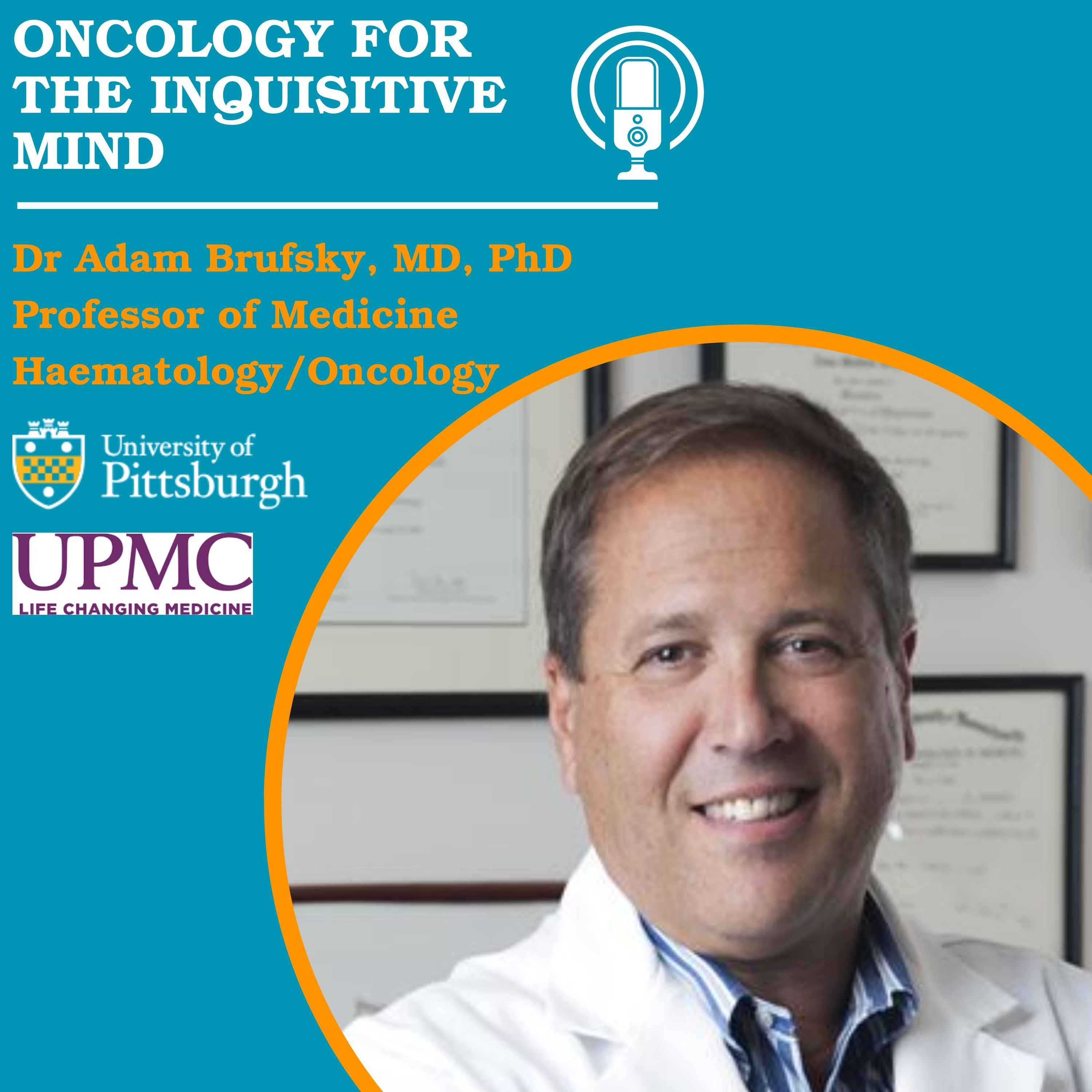
S2 Ep 1598. Breast Cancer with Dr Adam Brufsky
On this very special episode, Josh and Michael welcome Dr Adam Brufsky, a trailblazer in the world of breast cancer treatment and a titan in the frenetic development of breast cancer therapies since the mid-late 90s. Dr Brufsky is a Professor of Medicine at the University of Pittsburgh School of Medicine, Chief of the university's Division of Haematology and Oncology and co-director of its Comprehensive Cancer Centre. He received his MD and PhD from the University of Connecticut's School of Medicine in 1990 and has previously worked at Bringham and Women's Hospital and the Dana-Farber Cancer Institute. His areas of special interest include novel therapeutics and management strategies for breast cancer, bone-breast cancer interactions and therapeutics and molecular biology of metastatic breast cancer. He is a font of knowledge and we are so privileged to welcome Dr Brufsky onto the show.For more episodes, resources and blog posts, visit www.inquisitiveonc.comPlease find us on Twitter @InquisitiveOnc!If you want us to look at a specific trial or subject, email us at [email protected] for the Inquisitive Mind is recorded with the support of education grants from Gilead Pharmaceuticals and Merck Pharmaceuticals. Our partners have no editorial rights, and they have access to the episode at the same time you do. Art courtesy of Taryn SilverMusic courtesy of AlisiaBeats: https://pixabay.com/users/alisiabeats-39461785/Disclaimer: This podcast is for educational purposes only. If you are unwell, seek medical advice. Hosted on Acast. See acast.com/privacy for more information.
S2 Ep 14Fireside Chats 3: Colorectal Cancer in Young People
On today's blessedly brief episode, Josh and Michael give an overview of one of the greatest challenges for any practicing oncologist: the conundrum of cancer in young people. In recent decades, the number and proportion of young patients diagnosed with colorectal cancer has skyrocketed. This trend has been noted in news outlets across the world, reported in sources as disparate as the New York Times and the Australian Broadcasting Company. From the medical to the logistical and emotional, managing a young person with a cancer diagnosis is very difficult. While neither of our intrepid hosts has an answer to this very complex topic, there are a number of nuggets they drop that could help. Listen on for a thought provoking episode of Oncology for the Inquisitive Mind.Article discussed in this episode (subscription may be required): "‘More Young People Than Ever Will Get Colorectal Cancer This Year," by Knuvul Sheikh.Available from: https://www.nytimes.com/2024/03/27/well/colon-cancer-symptoms-treatment.html?unlocked_article_code=1.gE0.C_DO.__AnqnMB1F4M&smid=nytcore-ios-share&referringSource=articleShareArt courtesy of Taryn SilverAudio courtesy of:Olexy on pixabay: https://pixabay.com/users/olexy-25300778/JuliusH on pixabay: https://pixabay.com/users/juliush-3921568/The opinions discussed in this episode are those of the authors and should not be taken for medical advice. They exist to engender discussion, debate and thought. Hosted on Acast. See acast.com/privacy for more information.
Oncosnacks 13: Pancreatic Cancer - NAPOLI-3 Trial Update
IN BREAKING NEWS... Or not really, as we are a bit late to the party. But in honour of liposomal irinotecan's recent approval by the Federal Drugs Administration, we thought we would take another look at the NAPOLI-3 trial. The first potentially practice-changing update to the treatment of advanced pancreatic cancer arguably in more than a decade, the combination of liposomal irinotecan with 5-fluorouracil and oxaliplatin proved itself superior (spoiler alert) to the established combination of gemcitabine and nab-paclitaxel. Will this practically change practice for our patients? The answer, for Australia at least, is a resounding maybe. Listen on for all the juicy details, and the return of OftiM Newsreader "Walter Fernando-Cronkite."Links to articles discussed in this episode (subscription may be required):NAPOLI-3: https://www.thelancet.com/journals/lancet/article/PIIS0140-6736(23)01366-1/fulltextFor more episodes, resources and blog posts, visit www.inquisitiveonc.comFind us on Twitter @InquisitiveOnc!If you want us to look at a specific trial or subject, email us at [email protected] courtesy of Taryn SilverMusic courtesy of Music Unlimited: https://pixabay.com/users/music_unlimited-27600023/Disclaimer: This podcast is for educational purposes only. If you are unwell, seek medical advice. Hosted on Acast. See acast.com/privacy for more information.
S2 Ep 1397. Spotlight: Advanced Breast Cancer - Which CDK4/6 Inhibitor is Best?
It is a tale as old as time, as old as the stars, the heavens and human consciousness itself. Okay, we're exaggerating a bit, but for as long as pharmacology and capitalism have been joined at the hip, the question of "which drug is best" has been at or near the forefront of medical decision-making. With the development of standardised clinical trials and the difficulty of conducting direct head-to-head comparisons, this question has become more difficult to answer conclusively. Nowhere is this epitomised better than with the triptych of available CDK4/6 inhibitors: palbociclib, ribociclib and abemaciclib. A lot of ink and pixels have been devoted to comparing the pivotal trials of these three equally pivotal agents: PALOMA-2, MONALEESA-2 and MONARCH-3, respectively. However, Josh and Michael have brought the definitive and not-at-all rambling answer to this question. Listen on to find out!Links to studies discussed in this episode (subscription may be required):Review Article (Grinshpun et al.): https://www.nature.com/articles/s41523-023-00520-7 For more episodes, resources and blog posts, visit www.inquisitiveonc.comPlease find us on Twitter @InquisitiveOnc!If you want us to look at a specific trial or subject, email us at [email protected] courtesy of Taryn SilverMusic courtesy of AlisiaBeats: https://pixabay.com/users/alisiabeats-39461785/Disclaimer: This podcast is for educational purposes only. If you are unwell, seek medical advice. Hosted on Acast. See acast.com/privacy for more information.
S2 Ep 1296. Second Line Treatment of Melanoma
In this episode, Michael and Josh welcome a very special guest: Michael's Labrador Beans. Beans is a world-renowned expert in eating snacks, but unfortunately, had very little to offer on their topic today: the treatment of progressive or recurrent cutaneous melanoma with primary and secondary resistance to immunotherapy. So, unfortunately, the discussion was left to your regular hosts. For approximately 50% of patients, this is fortunately not a question they need to worry about, as immunotherapy and BRAF/MEK inhibitors remain effective treatments. However, that still leaves half of all patients facing an uncertain future, as treatment beyond these two agents remains uncertain. Josh and Michael examine two studies that may shine a light in this dark corner of oncology: LEAP-004, a single-arm study of lenvatinib + pembrolizumab, and an article published in the New England Journal of Medicine examining the use of tumour-infiltrating lymphocytes (TILs) as a novel weapon against immunotherapy-resistant melanoma. Links to studies discussed in this episode (subscription may be required):LEAP-004: https://ascopubs.org/doi/full/10.1200/JCO.22.00221Rohaan et al: https://www.nejm.org/doi/full/10.1056/NEJMoa2210233For more episodes, resources and blog posts, visit www.inquisitiveonc.comPlease find us on Twitter @InquisitiveOnc!If you want us to look at a specific trial or subject, email us at [email protected] courtesy of Taryn SilverMusic courtesy of AlisiaBeats: https://pixabay.com/users/alisiabeats-39461785/Disclaimer: This podcast is for educational purposes only. If you are unwell, seek medical advice. Hosted on Acast. See acast.com/privacy for more information.
S2 Ep 1195. ASCO GU 2024 Spectacular (Part 2)
While Josh and Michael enjoy a good rambling, meandering podcast as much as the next guy, we made a promise to keep our coverage of the ASCO GU 2024 conference short and sweet. So, as promised, here is the second - and final - episode of our miniseries. For a change of pace, one of our studies involves the adjuvant use of immunotherapy! Specifically, AMBASSADOR looks at pembrolizumab in patients with early urothelial cancer, a patient cohort that is crying out for more effective treatments for early-stage disease. Meanwhile, Josh tries to "BRCAAway" from our comfort zone by discussing the latest trial examining the use of PARP inhibitors in metastatic castration-resistant prostate cancer. Yes, we'll show ourselves out now. Links to studies discussed in this episode (subscription may be required):AMBASSADOR (courtesy of ASCO Daily news): https://ascopost.com/news/january-2024/ambassador-pembrolizumab-in-muscle-invasive-and-locally-advanced-urothelial-carcinoma/#:~:text=AMBASSADOR%20(A031501)%20is%20a%20randomized,and%20locally%20advanced%20urothelial%20carcinoma.BRCAAway (courtesy of urotoday.com): https://www.urotoday.com/conference-highlights/asco-2022/asco-2022-prostate-cancer/137781-asco-2022-brcaaway-a-randomized-phase-2-trial-of-abiraterone-olaparib-or-abiraterone-olaparib-in-patients-with-mcrpc-with-dna-repair-defects.htmlFor more episodes, resources and blog posts, visit www.inquisitiveonc.comPlease find us on Twitter @InquisitiveOnc!If you want us to look at a specific trial or subject, email us at [email protected] courtesy of Taryn SilverMusic courtesy of AlisiaBeats: https://pixabay.com/users/alisiabeats-39461785/Disclaimer: This podcast is for educational purposes only. If you are unwell, seek medical advice. Hosted on Acast. See acast.com/privacy for more information.
S2 Ep 1094. ASCO GU 2024 Spectacular (Part 1)
With Josh's Grand Adventure(TM) now in the books, he and Michael return to their usual programming, examining two studies presented at the not-so-recent ASCO GU conference in San Fransisco. While the conference took place in January of this year, as the old adage goes: better late than never. In this episode, our hosts examine two studies; the CONTACT-02 study examining a combination of immunotherapy + cabozantinib in patients with metastatic castration-resistant prostate cancer, and an update from the KEYNOTE-564 that examined whether pembrolizumab had any benefit in the adjuvant treatment of renal cell cancer. Will either of these studies change practice? Fear not, for our fearless oncological explorers are on hand to guide you through the hazardous ratios and nefarious p values!Links to studies discussed in this episode via ASCO Daily News(subscription may be required):CONTACT-02: https://ascopubs.org/doi/10.1200/JCO.2024.42.4_suppl.18#:~:text=CONTACT%2D02%20is%20the%20only,Clinical%20trial%20information%3A%20NCT04446117.KEYNOTE-564: https://dailynews.ascopubs.org/do/keynote-564-adjuvant-pembrolizumab-prolongs-survival-high-risk-clear-cell-renal-cell#:~:text=KEYNOTE%2D564%20is%20the%20first,at%20higher%20risk%20for%20recurrence.For more episodes, resources and blog posts, visit www.inquisitiveonc.comPlease find us on Twitter @InquisitiveOnc!If you want us to look at a specific trial or subject, email us at [email protected] courtesy of Taryn SilverMusic courtesy of AlisiaBeats: https://pixabay.com/users/alisiabeats-39461785/Disclaimer: This podcast is for educational purposes only. If you are unwell, seek medical advice. Hosted on Acast. See acast.com/privacy for more information.
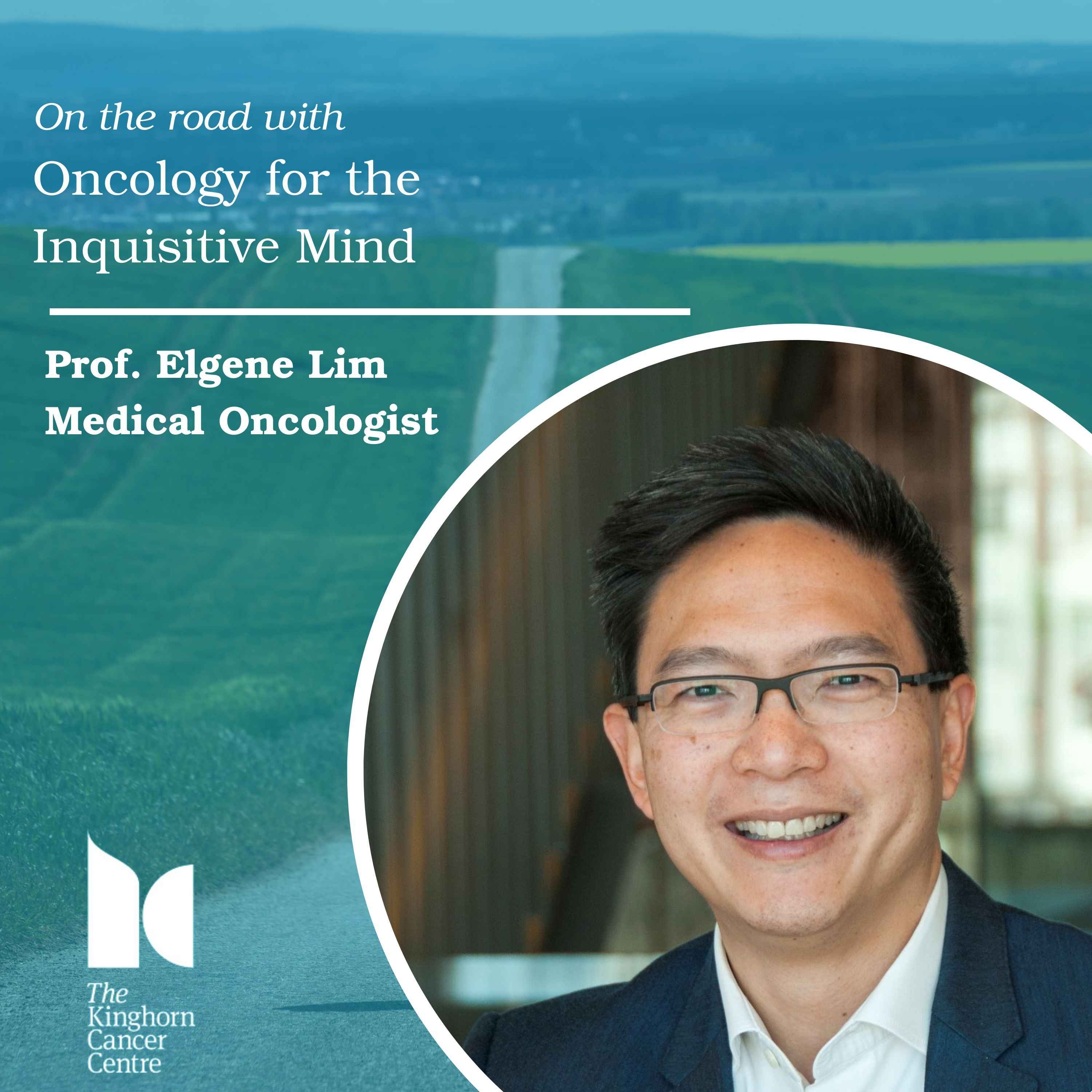
S2 Ep 993. On the Road with Prof. Elgene Lim
In this episode, Josh interviews the man who helped make this grand adventure possible, his mentor, Professor Elgene Lim of the Kinghorn Cancer Centre in Sydney. Professor Lim is a medical oncologist specialising in breast cancer research. He has previously worked at the Walter and Eliza Hall Institute, completing his PhD under the mentorship of Dr Geoffrey Lindeman and Dr Jane Visvader with research focussed on identifying culprit cells in BRCA1 mutant gene carriers. He subsequently worked with Dr Eric Winer and Dr Myles Brown at the Dana-Farber Cancer Institute and Harvard Medical School. As if this was not enough, Elgene is proud of his volunteer work with asylum seekers and his work with the Asha Kiran Hospital in Orissa, India, in a program of expertise transfer and partnership with local doctors. The Kinghorn Cancer Centre and The Beverley Alt Scholarship proudly support this mini-series.The Kinghorn Cancer Centre: https://tkcc.org.au/Dana Farber Cancer Institute: https://www.dana-farber.org/For more episodes, resources and blog posts, visit www.inquisitiveonc.comPlease find us on Twitter @InquisitiveOnc!If you want us to look at a specific trial or subject, email us at [email protected] courtesy of Taryn SilverMusic courtesy of AlisiaBeats: https://pixabay.com/users/alisiabeats-39461785/Disclaimer: This podcast is for educational purposes only. If you are unwell, seek medical advice. Minor edits have been made to the episode to improve sound quality and flow. Hosted on Acast. See acast.com/privacy for more information.
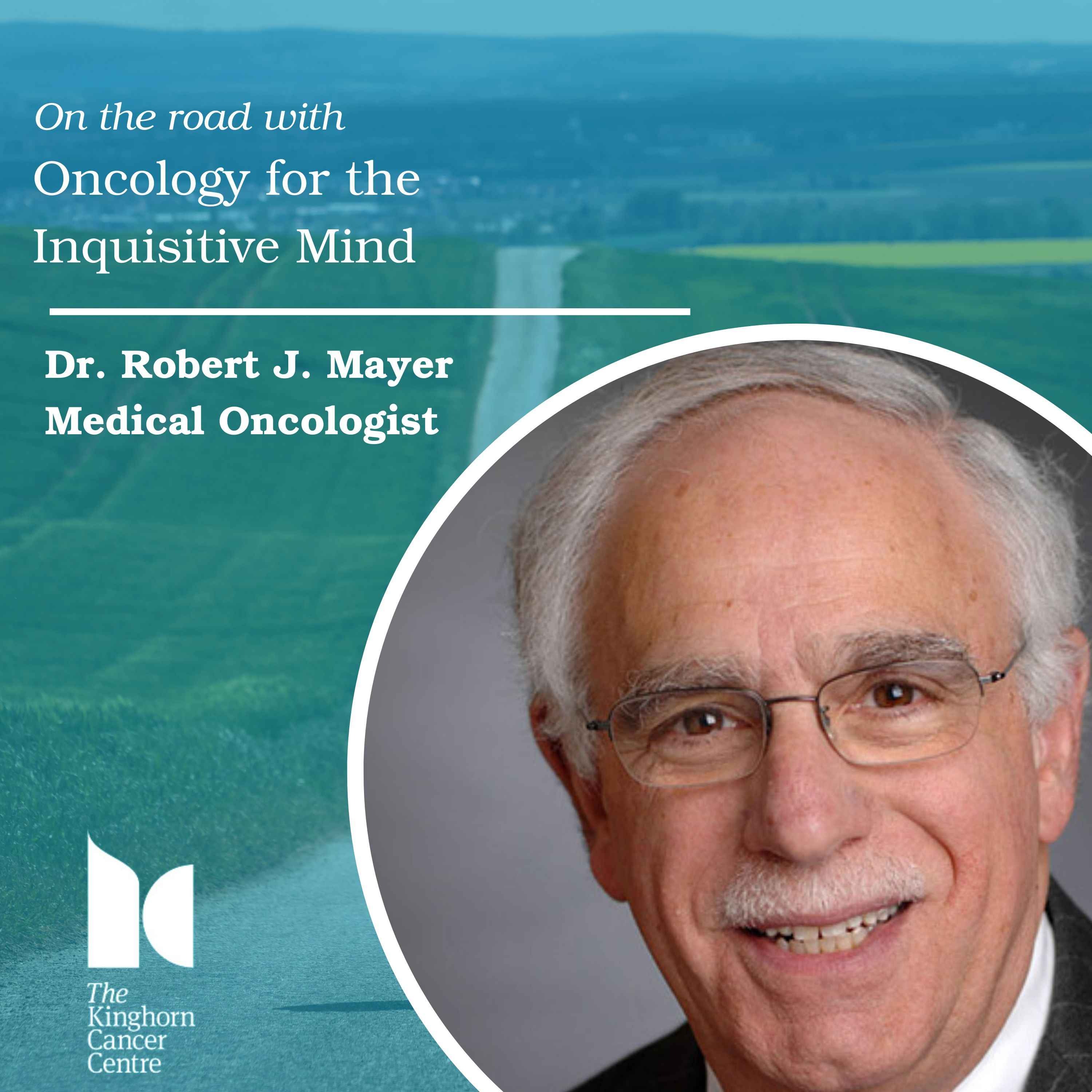
S2 Ep 892. On the Road with Dr. Robert Mayer
In this episode, Josh interviews Dr Robert Mayer, Professor of Medicine at Harvard Medical School, former director of the Dana Farber Cancer Institute’s Oncology Fellowship Program for 36 years and an expert in gastrointestinal cancer. He founded the Centre for Gastrointestinal Oncology at Dana Farber and has previously chaired the Gastrointestinal Cancer Committee of the Cancer and Leukemia Group B. Dr Mayer has also been an associate editor for both the New England Journal of Medicine and the Journal of Clinical Oncology and is a former ASCO president. Bob is the recipient of ASCO’s Distinguished Achievement Award in 2019 and as Josh likes to remind me, a living legend.The Kinghorn Cancer Centre and The Beverley Alt Scholarship proudly support this mini-series.The Kinghorn Cancer Centre: https://tkcc.org.au/Dana Farber Cancer Institute: https://www.dana-farber.org/For more episodes, resources and blog posts, visit www.inquisitiveonc.comPlease find us on Twitter @InquisitiveOnc!If you want us to look at a specific trial or subject, email us at [email protected] courtesy of Taryn SilverMusic courtesy of AlisiaBeats: https://pixabay.com/users/alisiabeats-39461785/Disclaimer: This podcast is for educational purposes only. If you are unwell, seek medical advice. Minor edits have been made to the episode to improve sound quality and flow. Hosted on Acast. See acast.com/privacy for more information.
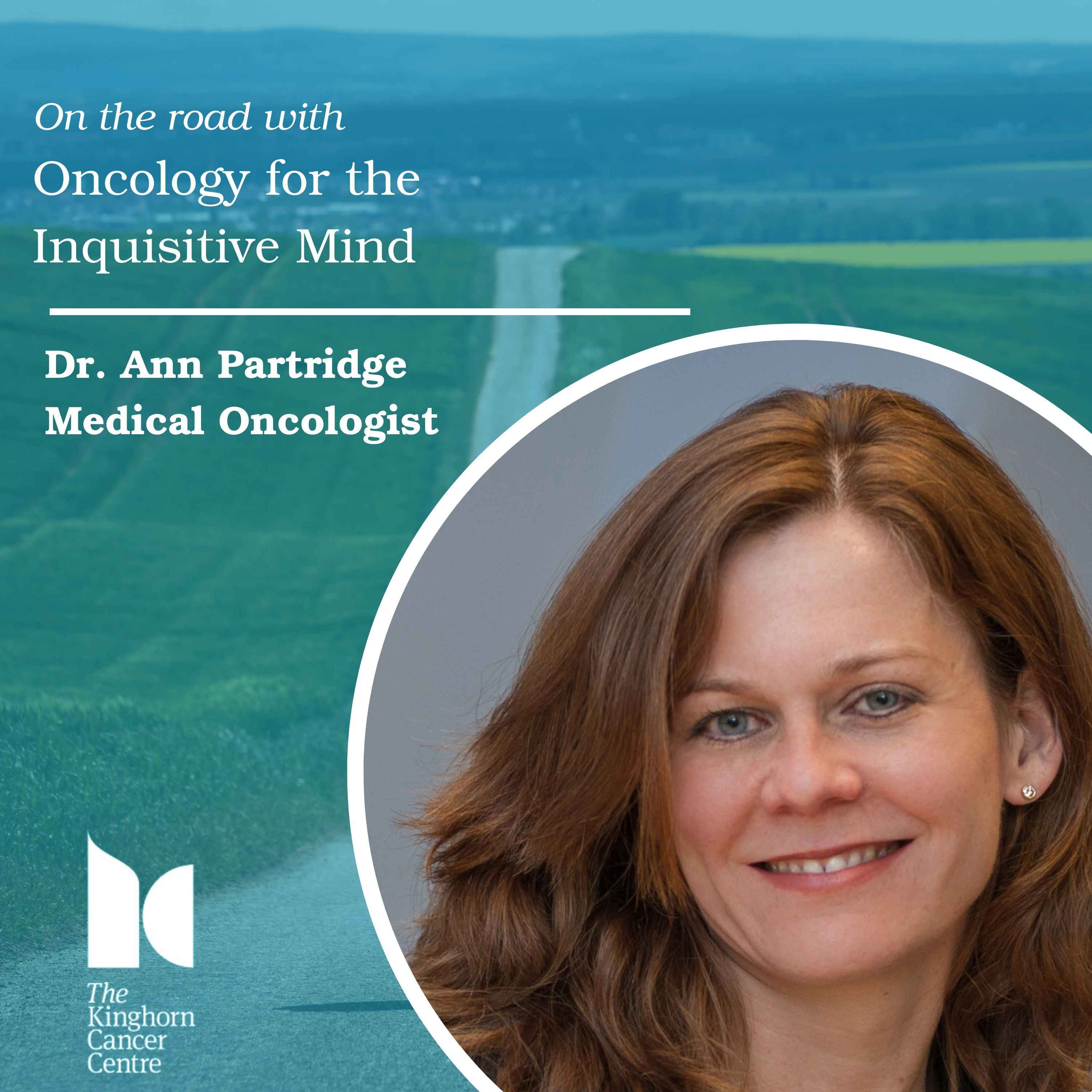
S2 Ep 791. On the Road with Dr. Ann Partridge
In this episode, Josh interviewed Dr Ann Partridge, the director of the adult survivorship program at the Dana-Farber Institute. She is the co-founder and director of the Program for Young Women with Breast Cancer and is passionate about communication, risk perception and behavioural aspects of cancer care. Dr Partridge is the principal investigator for the Young Women’s Breast Cancer study, which has currently enrolled over 1300 women throughout the United States, and has chaired both ASCO’s scientific program committee and the ESMO-sponsored Breast Cancer in Young Women Conference. In 2018, Dr Partridge was recognized with the American Association for Cancer Research's Outstanding Investigator Award for Breast Cancer Research.The Kinghorn Cancer Centre and The Beverley Alt Scholarship proudly support this mini-series.The Kinghorn Cancer Centre: https://tkcc.org.au/Dana Farber Cancer Institute: https://www.dana-farber.org/For more episodes, resources and blog posts, visit www.inquisitiveonc.comPlease find us on Twitter @InquisitiveOnc!If you want us to look at a specific trial or subject, email us at [email protected] courtesy of Taryn SilverMusic courtesy of AlisiaBeats: https://pixabay.com/users/alisiabeats-39461785/Disclaimer: This podcast is for educational purposes only. If you are unwell, seek medical advice. Minor edits have been made to the episode to improve sound quality and flow. Hosted on Acast. See acast.com/privacy for more information.
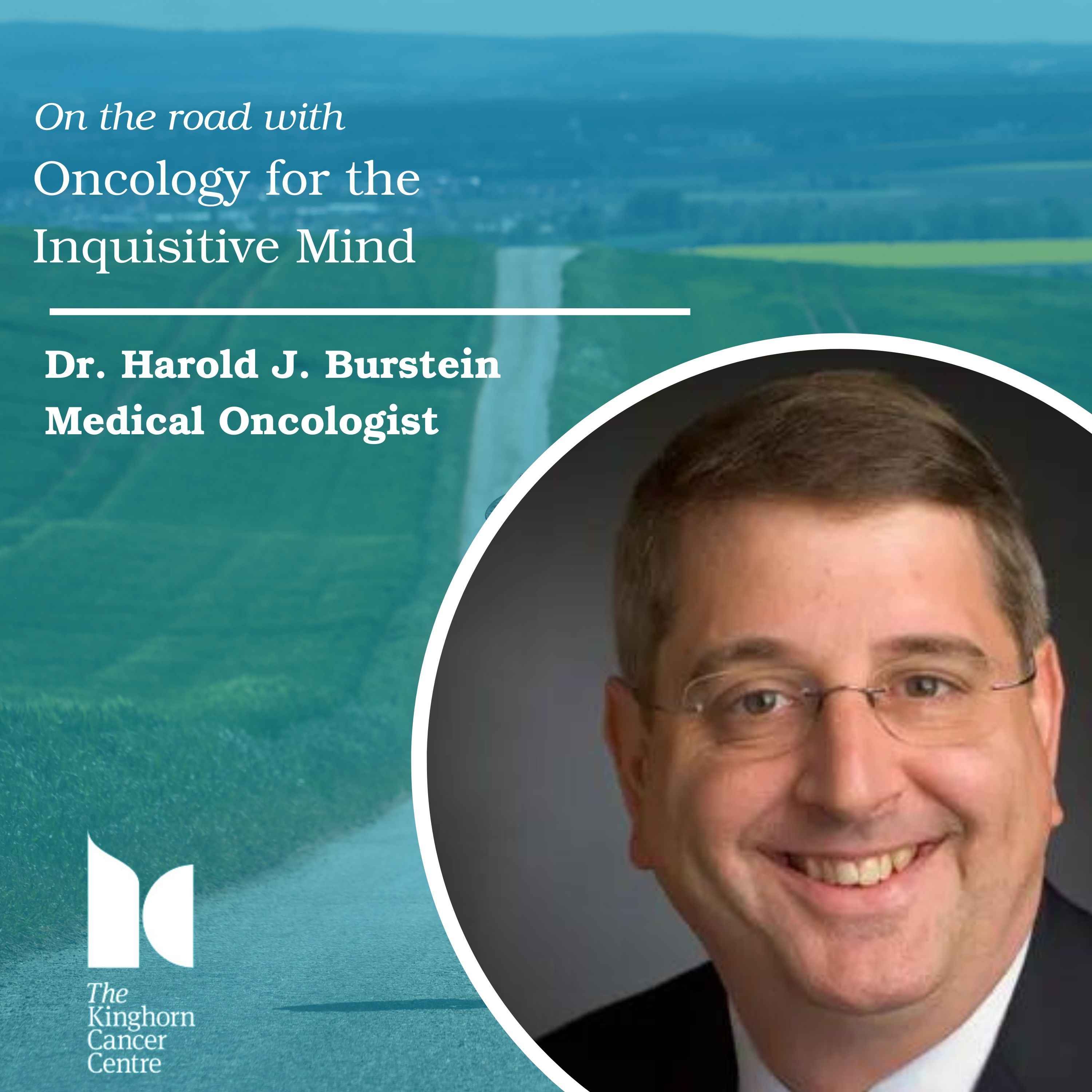
S2 Ep 690. On the Road with Dr. Harold J Burstein
In this episode, Josh interviews Dr Harold Burstein. A graduate of Harvard University and Harvard Medical School, Dr Burstein’s initial PhD was in cellular immunology. After receiving his oncology fellowship at the Dana Farber Cancer Institute, he joined the staff in 1999. Hal has a particular interest in breast cancer and has participated in national and international clinical trials while also working to develop treatment guidelines worldwide. A passionate educator, Dr. Burstein teaches medical students, residents and fellows at Harvard Medical School and the Dana Farber Cancer Institute.The Kinghorn Cancer Centre and The Beverley Alt Scholarship proudly support this mini-series.The Kinghorn Cancer Centre: https://tkcc.org.au/Dana Farber Cancer Institute: https://www.dana-farber.org/For more episodes, resources and blog posts, visit www.inquisitiveonc.comPlease find us on Twitter @InquisitiveOnc!If you want us to look at a specific trial or subject, email us at [email protected] courtesy of Taryn SilverMusic courtesy of AlisiaBeats: https://pixabay.com/users/alisiabeats-39461785/Disclaimer: This podcast is for educational purposes only. If you are unwell, seek medical advice. Minor edits have been made to the episode to improve sound quality and flow. Hosted on Acast. See acast.com/privacy for more information.
S2 Ep 589. Spotlight - Biotech: Interview with Dr Jeff Jones from Cullinan Oncology
Today, on this mid-week special, Oncology for the Inquisitive Mind is delighted to welcome Dr. Jeff Jones, a haematologist, oncologist and the Chief Medical Officer of Cullinan Oncology. Biotech companies are at the forefront of novel drug development, and it is fascinating to take a look behind the curtain and glimpse a small part of how targets are chosen and developed. This includes areas of unmet need, including Exon 20 EGFR mutant lung cancer treatment.Cullinan Oncology conducts research focused on immuno-oncology and translational cancer medicine, specifically focusing on small molecules and biologics to identify unique targets and develop transformative therapeutics across cancer indications.Many thanks to Dr Jones and the team at Cullinan for taking the time to appear on our show.For more episodes, resources and blog posts, visit www.inquisitiveonc.comPlease find us on Twitter @InquisitiveOnc!If you want us to look at a specific trial or subject, email us at [email protected] courtesy of Taryn SilverMusic courtesy of AlisiaBeats: https://pixabay.com/users/alisiabeats-39461785/Disclaimer: This podcast is for educational purposes only. If you are unwell, seek medical advice. Hosted on Acast. See acast.com/privacy for more information.
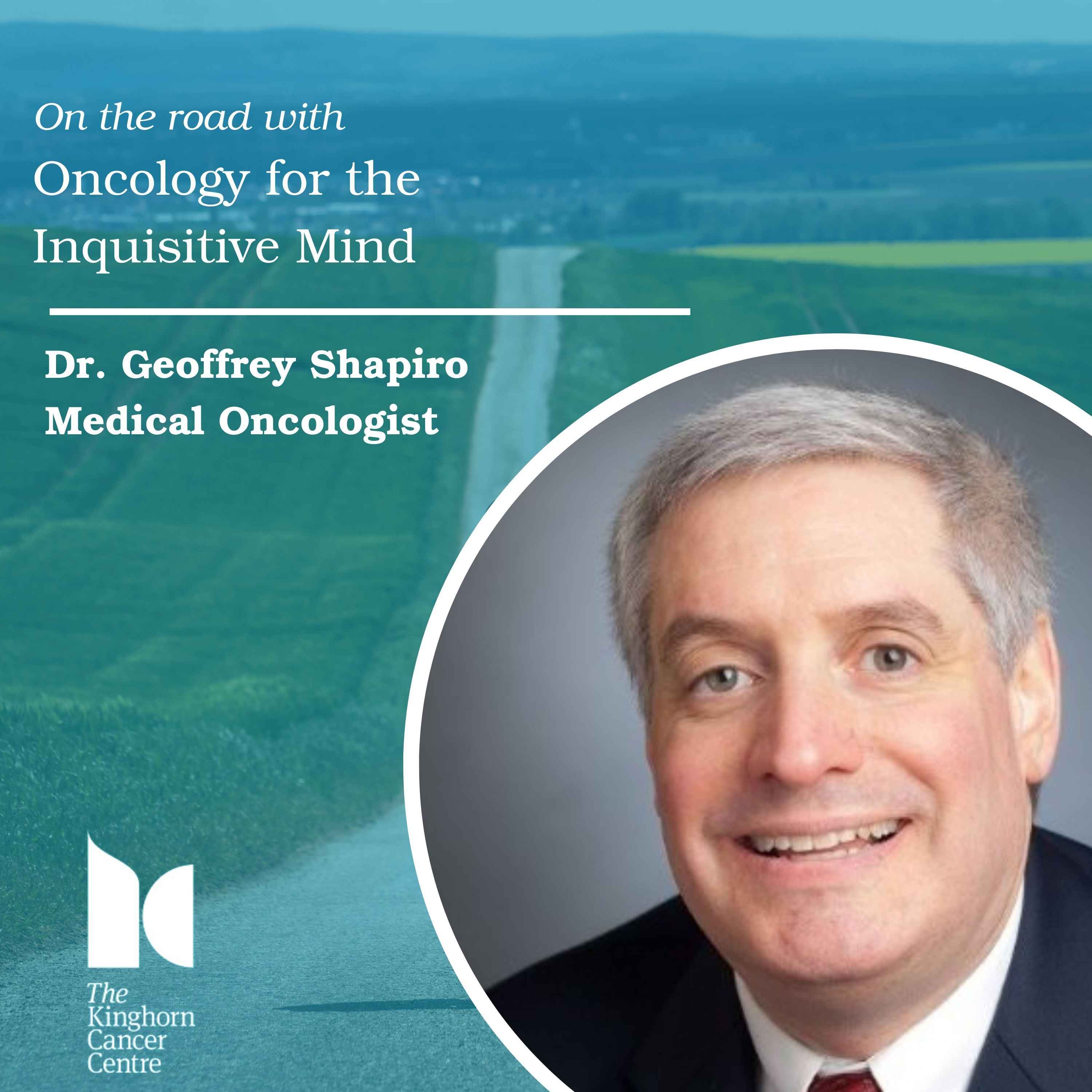
S2 Ep 488. On the Road with Dr. Geoffrey Shapiro
We return to the Dana Farber Cancer Institute this week as part of our "On the Road" series and interview the multitalented Dr. Geoffrey Shapiro. Dr Shapiro completed his medical training at Cornell University and received his PhD in 1987. His passions lie in early-phase drug development and clinical trials, with a specific flair for cell cycle and DNA repair inhibitor therapeutics. Dr. Shapiro provides an insightful take on drug development, current opportunities, challenges, the world of CDK inhibitors and the future landscape of trials, along with the role of Project Optimus (no, not Optimus Prime!)The Kinghorn Cancer Centre and The Beverley Alt Scholarship proudly support this mini-series.The Kinghorn Cancer Centre: https://tkcc.org.au/Dana Farber Cancer Institute: https://www.dana-farber.org/For more episodes, resources and blog posts, visit www.inquisitiveonc.comPlease find us on Twitter @InquisitiveOnc!If you want us to look at a specific trial or subject, email us at [email protected] courtesy of Taryn SilverMusic courtesy of AlisiaBeats: https://pixabay.com/users/alisiabeats-39461785/Disclaimer: This podcast is for educational purposes only. If you are unwell, seek medical advice. Minor edits have been made to the episode to improve sound quality and flow. Hosted on Acast. See acast.com/privacy for more information.
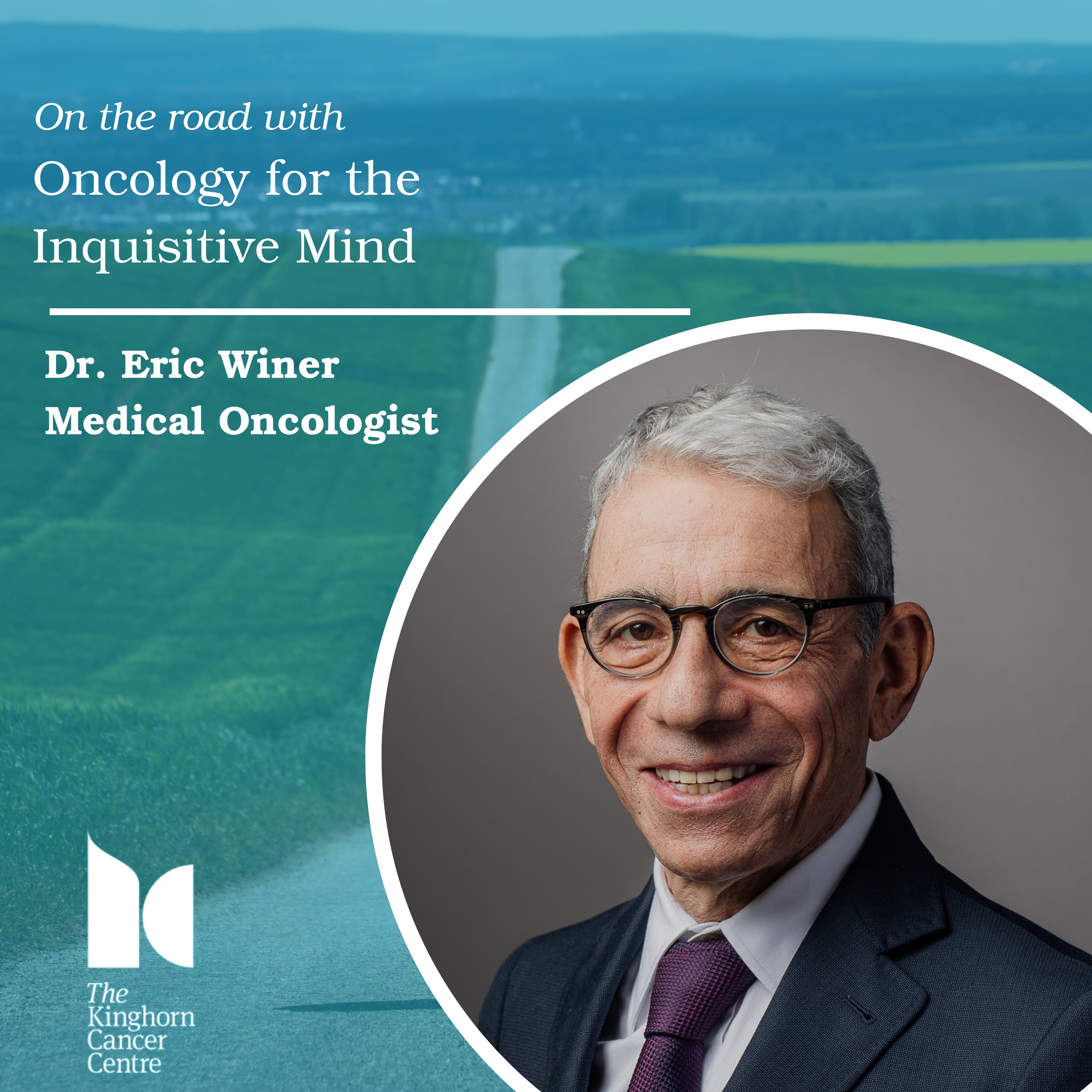
S2 Ep 387. On the Road with Dr. Eric Winer
Today, we interview Dr. Eric Winer, our second guest in our mini-series "On the Road". Dr Winer is no ordinary Oncologist; he is a prolific clinician and researcher, despite being born with haemophilia and living with the consequences of early treatment for this, including HIV. In this episode, OFTIM explores his formative years, challenges and triumphs as he provides unique insights as both a patient and a clinician. This episode was recorded live in front of a captive audience in Sydney, Australia.Eric is a decorated oncologist who graduated from Yale University School of Medicine and is currently the director of Yale Cancer Centre. He has held many prestigious positions, including the Chair of the American Society of Clinical Oncology and the Chief of the Breast Oncology Program at Dana-Farber Cancer Institute.The Kinghorn Cancer Centre and The Beverley Alt Scholarship proudly support this mini-series.The Kinghorn Cancer Centre: https://tkcc.org.au/Dana Farber Cancer Institute: https://www.dana-farber.org/For more episodes, resources and blog posts, visit www.inquisitiveonc.comPlease find us on Twitter @InquisitiveOnc!If you want us to look at a specific trial or subject, email us at [email protected] courtesy of Taryn SilverMusic courtesy of AlisiaBeats: https://pixabay.com/users/alisiabeats-39461785/Disclaimer: This podcast is for educational purposes only. If you are unwell, seek medical advice. Minor edits have been made to the episode to improve sound quality and flow. Hosted on Acast. See acast.com/privacy for more information.
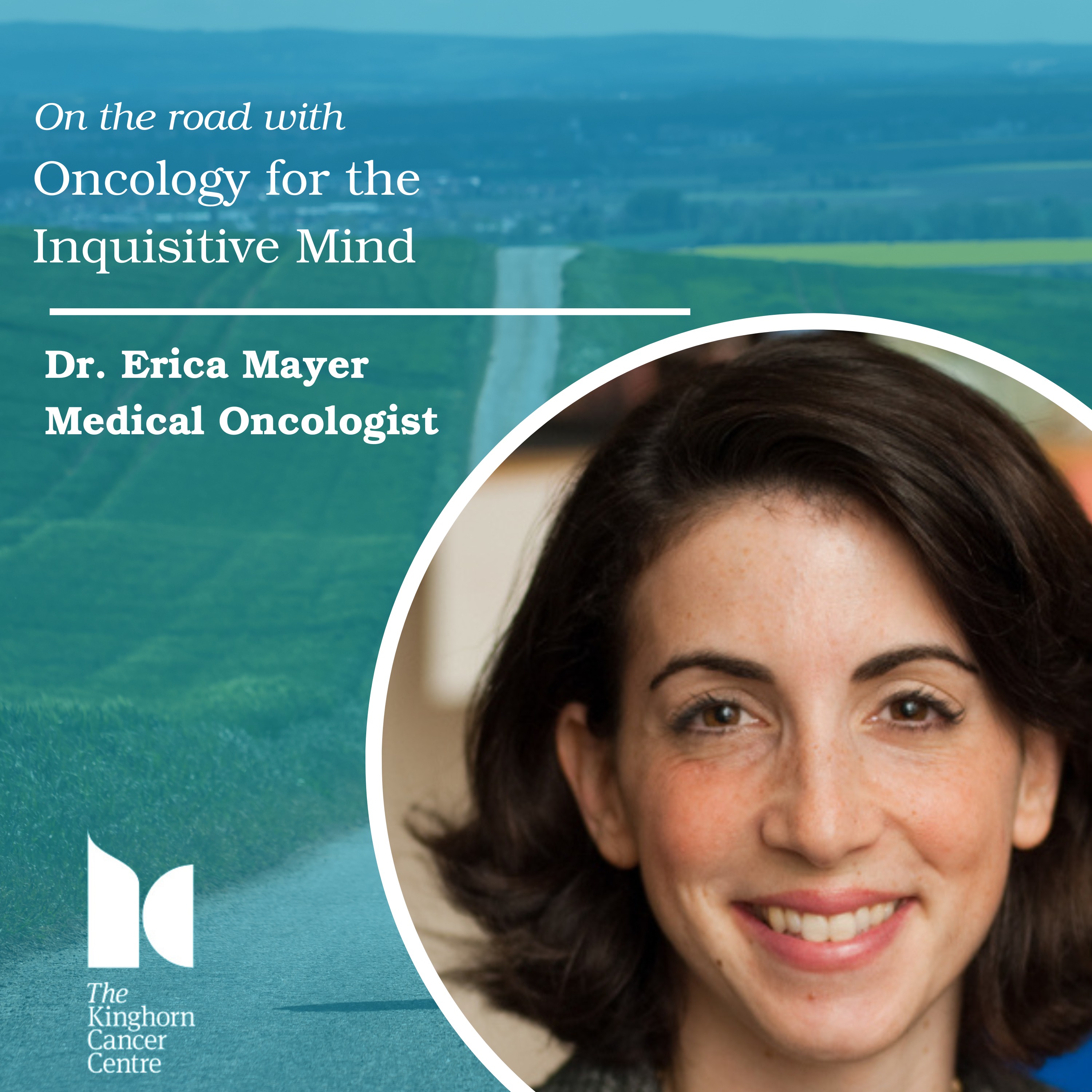
S2 Ep 286. On the Road with Dr. Erica Mayer
Today, we interview Dr. Erica Mayer as our first guest in the "On the Road" mini-series. Dr. Mayer is a renowned breast cancer oncologist at the Dana Farber Cancer Institute. Each week for the next seven weeks, Michael and Josh will introduce a new guest to share their wealth of experience, expertise and wisdom, covering all the essential topics from career development, mentorship and necessary trials and challenges in the oncology world.Dr. Mayer graduated from Harvard Medical School and completed a fellowship in Medical Oncology at the Dana-Farber Cancer Institute. Erica is the Director of Breast Cancer Clinical Research and is involved in multiple trials, which she discusses in this interview, along with the role of the PACE trial, CDK 4/6 inhibitors, CT DNA and many other important facets of the breast cancer world.The Kinghorn Cancer Centre and The Beverley Alt Scholarship proudly support this mini-series.The Kinghorn Cancer Centre: https://tkcc.org.au/Dana Farber Cancer Institute: https://www.dana-farber.org/For more episodes, resources and blog posts, visit www.inquisitiveonc.comPlease find us on Twitter @InquisitiveOnc!If you want us to look at a specific trial or subject, email us at [email protected] courtesy of Taryn SilverMusic courtesy of AlisiaBeats: https://pixabay.com/users/alisiabeats-39461785/Disclaimer: This podcast is for educational purposes only. If you are unwell, seek medical advice. Minor edits have been made to the episode to improve sound quality and flow. Hosted on Acast. See acast.com/privacy for more information.
S2 Ep 185. Spotlight: Year in Retrospect: 2023
Oncology for the Inquisitive Mind is back, and we have a blockbuster year ahead! Before we get there, we have our year in review 2023. Michael and Josh have poured over the treasure trove of pivotal trials from 2023 to bring you the best studies (in our opinion) from the last 365 days! We used various complex metrics involving no science or maths at all.Just when you thought you were free from oncology learning, we drag you back in, much like Al Pacino's character from The Godfather is famously quoted saying, "Just when I thought I was out, they pull me back in!". We hope you all have a great year ahead!Links to studies discussed in this episode (subscription may be required):5 Three-Year Overall Survival with Tebentafusp in Metastatic Uveal Melanoma4 FLAURA23 INDIGO2 MONARCH-E1 EV-302/KEYNOTE-A39For more episodes, resources and blog posts, visit www.inquisitiveonc.comPlease find us on Twitter @InquisitiveOnc!If you want us to look at a specific trial or subject, email us at [email protected] courtesy of Taryn SilverMusic courtesy of AlisiaBeats: https://pixabay.com/users/alisiabeats-39461785/Disclaimer: This podcast is for educational purposes only. If you are unwell, seek medical advice. Hosted on Acast. See acast.com/privacy for more information.
84. World Conference on Lung Cancer (part 2)
2023 has been a year of highs and lows, a calendar of peaks and troughs, an epoch of mountains and valleys (all right Michael, put the thesaurus away...). From standing ovations for enfortumab vedotin and vorasidenib, to the ongoing black hole that is effective treatments for pancreatic and hepatocellular carcinomas. However, through it all the brightest minds in the field have continued to stoke the fires of hope with the development of novel antibody-drug conjugates, immunotherapies and clever applications of established treatments.How fitting, then, that Josh and MIchael - definitely NOT amongst the brightest minds in the field, but two of the most enthusiastic - end their coverage of 2023 with a final glance into the future of lung cancer treatment. Keeping themselves to a (not so) strict five minute limit, they will look at four studies that may offer a glimpse into how lung cancer of both the small- and non-small cell variety may be managed.We wish you a very happy and safe New Year, and a happy beginning to 2024.Links to studies discussed in this episode (subscription may be required):DS-7300: https://meetingsapp.iaslc.org/event/wclc2023/planning/UGxhbm5pbmdfMTUyNDQwMw==ETER701: https://meetingsapp.iaslc.org/event/wclc2023/planning/UGxhbm5pbmdfMTUyNDgwNQ==INTELLECT: https://pubmed.ncbi.nlm.nih.gov/36829154/HERTHENA-Lung01: https://ascopubs.org/doi/full/10.1200/JCO.23.01476For more episodes, resources and blog posts, visit www.inquisitiveonc.comPlease find us on Twitter @InquisitiveOnc!If you want us to look at a specific trial or subject, email us at [email protected] courtesy of Taryn SilverMusic courtesy of Music Unlimited: https://pixabay.com/users/music_unlimited-27600023/Additional sound effects courtesy of Pixabay: https://pixabay.com/Disclaimer: This podcast is for educational purposes only. If you are unwell, seek medical advice. Hosted on Acast. See acast.com/privacy for more information.
83. World Conference on Lung Cancer (part 1)
ASCO and ESMO are done, and soon, 2023 itself will be in the rearview mirror. And yet, there are still conferences happening around the world; yes, we know the World Conference on Lung Cancer occurred before ESMO, but there is such a thing as too much of a good thing. Join Michael and Josh on their latest virtual journey abroad, this time to the equatorial island of Singapore, as they report on two of their favourite studies from WCLC 2023. For those who celebrate, have a Merry Christmas and a happy festive season.Links to studies discussed in this episode (subscription may be required):MARS-2: https://pubmed.ncbi.nlm.nih.gov/32873681/FLAURA2: https://www.nejm.org/doi/full/10.1056/NEJMoa2306434For more episodes, resources and blog posts, visit www.inquisitiveonc.comPlease find us on Twitter @InquisitiveOnc!If you want us to look at a specific trial or subject, email us at [email protected] courtesy of Taryn SilverMusic courtesy of Music Unlimited: https://pixabay.com/users/music_unlimited-27600023/Disclaimer: This podcast is for educational purposes only. If you are unwell, seek medical advice. Hosted on Acast. See acast.com/privacy for more information.
Oncosnacks 12: Enfortumab Vedotin skin toxicity management
On this episode, their final of 2023, Michael and Josh return to the world of recent fan favourite, enfortumab vedotin (EV). Not content to sing its praises from every rooftop, our intrepid hosts take the necessary step of examining the common and sometimes severe manifestations of dermatological toxicity deriving from EV. With the assistance of a recently published guideline, they examine the presentation, assessment and management of skin toxicity.From all of us at OftiM, we would like to thank you for joining us throughout 2023, and we wish you a very happy festive season.Useful Links:Guideline ( et al, 2023): https://onlinelibrary.wiley.com/doi/full/10.1111/jdv.19454 CTCAE 5.0 guidelines for skin toxicity: https://www.researchgate.net/figure/Folliculitis-example-of-an-existing-toxicity-in-CTCAE_fig3_323714281For more episodes, resources and blog posts, visit www.inquisitiveonc.comFind us on Twitter @InquisitiveOnc!If you want us to look at a specific trial or subject, email us at [email protected] courtesy of Taryn SilverMusic courtesy of Music Unlimited: https://pixabay.com/users/music_unlimited-27600023/Disclaimer: This podcast is for educational purposes only. If you are unwell, seek medical advice. Hosted on Acast. See acast.com/privacy for more information.
82. Metastatic triple negative breast cancer (TNBC)
Oncology for the Inquisitive Mind would like to issue a formal mae culpa to our listeners. You have joined us for over 12 months and over 80 episodes and listened to our ramblings and bad jokes. And it has taken 80 episodes for us to realise we have neglected the crucial and exciting subject of metastatic triple-negative breast cancer (TNBC). But fear not! We will rectify this egregious oversight with immediate effect. TNBC remains the scourge of the usually more optimistic breast cancer space. However, the fight of the world's oncologists continues across all fronts, and TNBC is no different. In today's episode, Michael and Josh will discuss the twin pillars of modern anti-cancer therapies: antibody-drug conjugates (sacituzumab govitecan) and immunotherapy (pembrolizumab). As so often the case, this is a growth area of medical oncology and one that we are very excited to (finally) address.Links to studies discussed in this episode (subscription may be required):ASCENT: https://www.nejm.org/doi/full/10.1056/NEJMoa2028485KEYNOTE-355: https://www.nejm.org/doi/full/10.1056/NEJMoa2202809For more episodes, resources and blog posts, visit www.inquisitiveonc.comPlease find us on Twitter @InquisitiveOnc!If you want us to look at a specific trial or subject, email us at [email protected] courtesy of Taryn SilverMusic courtesy of Music Unlimited: https://pixabay.com/users/music_unlimited-27600023/Disclaimer: This podcast is for educational purposes only. If you are unwell, seek medical advice. Hosted on Acast. See acast.com/privacy for more information.
Fireside Chats 2. Time Toxicity in Early Phase Trials
For patients with advanced cancer, early-phase trials may represent the last best hope of significant anticancer response. For clinicians, every early phase trial holds virtually unlimited promise and hope of becoming the next immunotherapy or hot antibody-drug conjugate. However, early-phase trials also come with significant uncertainty of efficacy, toxicity and even dosing.A recent Limbic article (link below) reported on an article published in ESMO Open that investigated the burden of "time toxicity" for patients enrolled in early-phase clinical trials, and advocated for this to be minimised. While it is essential to consider logistic factors and patient preferences, early-phase trials are frequently more inflexible compared to phase II or III studies, and are constructed as such to ensure patient safety in the face of significant unknowns.In this episode of Fireside Chats, Michael and Josh discuss the pros and cons of attempting to streamline early phase trials, if it is possible, and what can be done to minimise a trial's impact on a patient's day-to-day and quality of life.Article discussed in this episode (subscription may be required): "‘Time toxicity’ burden for patients in early phase cancer trials," by Siobhan Calafiore Available from: https://thelimbic.com/oncology/time-toxicity-burden-for-patients-in-early-phase-cancer-trials/?utm_source=sfmc&utm_medium=email&utm_campaign=Onc%201.12.23&utm_term=Read%20more&utm_id=91262&uid=12231&lk=0d144a028ccc3d800f567af6e9fa7662Art courtesy of Taryn SilverAudio courtesy of:Olexy on pixabay: https://pixabay.com/users/olexy-25300778/JuliusH on pixabay: https://pixabay.com/users/juliush-3921568/The opinions discussed in this episode are those of the authors and should not be taken for medical advice. They exist to engender discussion, debate and thought. Hosted on Acast. See acast.com/privacy for more information.
81. San Antonio Breast Cancer Symposium Update
San Antonio Breast Cancer Symposium is here, and this year, OFTIM (Oncology for the Inquisitive Mind) is bringing you the latest and greatest in all things breast cancer. With over 10000 attendees, the research and vibrant discussions did not disappoint, with updates, controversies and complexities. Taking centre stage were PIK3CA mutation treatments, updates on CDK4/6 inhibitors and the age-old question - does exercise improve outcomes for our patients?Studies discussed in today's episode (subscription may be required)MONARCH-3KATHERINEINAVO120PREFERABLE EFFECTFor more episodes, resources and blog posts, visit www.inquisitiveonc.comPlease find us on Twitter @InquisitiveOnc!If you want us to look at a specific trial or subject, email us at [email protected] courtesy of Taryn SilverMusic courtesy of Music Unlimited: https://pixabay.com/users/music_unlimited-27600023/Disclaimer: This podcast is for educational purposes only. If you are unwell, seek medical advice. Hosted on Acast. See acast.com/privacy for more information.
80. ESMO 2023 - Plenary Session
Today, OFTIM celebrates its 80th episode and presents its ESMO23 plenary session, including two practice-changing, paradigm-shifting trials. The first investigates the EGFR mutation Non-Small Cell Lung Cancer world with new drugs (amivantamab and lazertinib) to treat patients hose who progressed on osimertinib. The second trial is the EV-302/KEYNOTE-A39, which explores whether enfortumab vedotin (ADC) and pembrolizumab (immunotherapy) can best-platinum-based chemotherapy. No prior trial has ever done this, so the stakes are high. As the little engine once said, "I think I can", and, we, too, continue to see seismic shifts in cancer treatment in our quest for better therapy. For now, the OFTIM team is signing out and taking a small break after daily reporting, but we hope you loved it and can't wait to return with more from the fascinating world of Medical Oncology.StudiesEV-302/KEYNOTE-A39 - https://esmocongress.esmo.org/esmo/esmo2023/en-GB/presentation/639614MARIPOSA-2 - https://esmocongress.esmo.org/esmo/esmo2023/en-GB/presentation/639283For more episodes, resources and blog posts, visit www.inquisitiveonc.comFind us on Twitter @InquisitiveOnc!If you want us to look at a specific trial or subject, email us at [email protected] courtesy of Taryn SilverMusic courtesy of Music Unlimited: https://pixabay.com/users/music_unlimited-27600023/Disclaimer: This podcast is for educational purposes only. If you are unwell, seek medical advice. Hosted on Acast. See acast.com/privacy for more information.
79. ESMO 2023 - Gynaecological Oncology
As Oncology for the Inquisitive Mind's coverage of ESMO 2023 winds down, we bring some of the best presentations covering gynaecological cancer. An area of oncology that in many cases remains mired in the pre-immunotherapy and pre-targeted therapy ages, ESMO brought some much-needed positive trials in the areas of cervical cancer, as well as an interesting (albeit negative) study of the PARP-inhibitor olaparib that highlights some of the more practical challenges of running an international phase 3 study. As always, outcomes can always improve, but any progress in this very important area is always a welcome development.Studies discussed in this episode (subscription may be required):A randomised phase III trial of induction chemotherapy followed by chemoradiation compared with chemoradiation alone in locally advanced cervical cancer: The GCIG INTERLACE trial https://esmocongress.esmo.org/esmo/esmo2023/en-GB/presentation/639091innovaTV 301/ENGOT-cx12/GOG-3057: A global, randomized, open-label, phase III study of tisotumab vedotin vs investigator’s choice of chemotherapy in 2L or 3L recurrent or metastatic cervical cancer https://esmocongress.esmo.org/esmo/esmo2023/en-GB/presentation/639430Overall survival (OS) outcomes from NRG-GY004, a phase III study comparing single-agent olaparib or combination cediranib and olaparib to platinum (Plat) based chemotherapy in recurrent plat sensitive ovarian cancer (OvCa) https://esmocongress.esmo.org/esmo/esmo2023/en-GB/presentation/639154For more episodes, resources and blog posts, visit www.inquisitiveonc.comPlease find us on Twitter @InquisitiveOnc!If you want us to look at a specific trial or subject, email us at [email protected] courtesy of Taryn SilverMusic courtesy of Music Unlimited: https://pixabay.com/users/music_unlimited-27600023/Disclaimer: This podcast is for educational purposes only. If you are unwell, seek medical advice. Hosted on Acast. See acast.com/privacy for more information.
78. ESMO 2023 - Skin Cancer and Melanoma
Since the early development of immunotherapy, metastatic melanoma has been the golden child of medical oncology. In recent years, similar outcomes have been seen with immunotherapy in non-melanomatous skin cancers. Cemiplimab is now a standard of care for patients with locally advanced, unresectable or metastatic cSCC, and is particularly effective in patients with cancer driven by UV-induced DNA damage. However, oncologists and researchers are always looking for new and better ways to use established treatments. At ESMO 2023 two papers took this approach; one examined moving immunotherapy to the neoadjuvant space, while another added a venerable EGFR inhibitor to treatment of advanced cSCC. However, the undoubted star of this show is the long-term results of tebentafusp, the first efficacious treatment of a subtype of the notorious uveal melanoma. ESMO 2023 truly had something for everyone, and the melanoma and skin cancer areas were no exception.Studies discussed in today's episode (subscription may be required)A phase II study of neoadjuvant cemiplimab for stage II to IV cutaneous squamous cell carcinoma (CSCC): One-year follow-up. https://esmocongress.esmo.org/esmo/esmo2023/en-GB/presentation/638272 Three-year survival with tebentafusp in previously untreated metastatic uveal melanoma in a phase III trial https://esmocongress.esmo.org/esmo/esmo2023/en-GB/presentation/639251A single arm phase II, multicenter trial to evaluate the clinical activity and safety of avelumab plus cetuximab in unresectable stage III or IV cutaneous squamous cell carcinoma: First results from the AliCe study https://esmocongress.esmo.org/esmo/esmo2023/en-GB/presentation/638271For more episodes, resources and blog posts, visit www.inquisitiveonc.comPlease find us on Twitter @InquisitiveOnc!If you want us to look at a specific trial or subject, email us at [email protected] courtesy of Taryn SilverMusic courtesy of Music Unlimited: https://pixabay.com/users/music_unlimited-27600023/Disclaimer: This podcast is for educational purposes only. If you are unwell, seek medical advice. Hosted on Acast. See acast.com/privacy for more information.
77. ESMO 2023 - Non Small Cell Lung Cancer
Non-small cell lung cancer continues to show massive promise with new trials, better designs and exciting utilisation of existing therapies. Michael and Josh explore immunotherapy in a "sandwich setting" where nivolumab is given before and after surgery. Datopotamab deruxtecan, the new kid on the block, takes on the second-line champion docetaxel. Who will win, and will docetaxel finally be dethroned? And potentially the most promising and exciting addition to this lineup is AZD7789, a new bispecific antibody TIM-3 being added to existing immunotherapy to try and resensitise cancer to PD-1 inhibitors!Studies discussed in today's episode (subscription may be required)CheckMate 77T: Phase III study comparing neoadjuvant nivolumab (NIVO) plus chemotherapy (chemo) vs neoadjuvant placebo plus chemo followed by surgery and adjuvant NIVO or placebo for previously untreated, resectable stage II–IIIb NSCLChttps://esmocongress.esmo.org/esmo/esmo2023/en-GB/presentation/639610Datopotamab deruxtecan (Dato-DXd) vs docetaxel in previously treated advanced/metastatic (adv/met) non-small cell lung cancer (NSCLC): Results of the randomized phase III study TROPION-Lung01https://esmocongress.esmo.org/esmo/esmo2023/en-GB/presentation/639163Safety and preliminary efficacy of AZD7789, a bispecific antibody targeting PD-1 and TIM-3, in patients (pts) with stage IIIB–IV non-small-cell lung cancer (NSCLC) with previous anti-PD-(L)1 therapyhttps://esmocongress.esmo.org/esmo/esmo2023/en-GB/presentation/638311For more episodes, resources and blog posts, visit www.inquisitiveonc.comPlease find us on Twitter @InquisitiveOnc!If you want us to look at a specific trial or subject, email us at [email protected] courtesy of Taryn SilverMusic courtesy of Music Unlimited: https://pixabay.com/users/music_unlimited-27600023/Disclaimer: This podcast is for educational purposes only. If you are unwell, seek medical advice. Hosted on Acast. See acast.com/privacy for more information.
76. ESMO 2023 - Colorectal Cancer (Part 2)
Metastatic colorectal cancer has an average overall survival of three years. With limited treatment options as standard of care or effective targetable mutations, ESMO23 shined, providing answers to unanswered questions and a potentially brighter future for this cancer. Concerningly, we are seeing higher rates of colorectal cancer in lower and middle-income countries and those under the age of 50. We explore sotorasib in KRASG12C mutated cancers with panitumumab, the use of aspirin to reduce the risk of cancer recurrence and whether triplet therapy is better than double in potentially resectable colorectal cancer.Studies discussed in today's episode (subscription may be required)Sotorasib plus panitumumab versus standard-of-care for chemorefractory KRAS G12C-mutated metastatic colorectal cancer (mCRC): CodeBreak 300 phase III studyhttps://esmocongress.esmo.org/esmo/esmo2023/en-GB/presentation/638992First-line systemic treatment in patients with initially unresectable colorectal cancer liver metastases (CRLM): Overall survival of the phase III CAIRO5 study of the Dutch Colorectal Cancer Grouphttps://esmocongress.esmo.org/esmo/esmo2023/en-GB/presentation/639062Aspirin after standard adjuvant therapy for colorectal cancers (ASCOLT): An international, phase III, randomised, placebo-controlled trial https://esmocongress.esmo.org/esmo/esmo2023/en-GB/presentation/639177For more episodes, resources and blog posts, visit www.inquisitiveonc.comPlease find us on Twitter @InquisitiveOnc!If you want us to look at a specific trial or subject, email us at [email protected] courtesy of Taryn SilverMusic courtesy of Music Unlimited: https://pixabay.com/users/music_unlimited-27600023/Disclaimer: This podcast is for educational purposes only. If you are unwell, seek medical advice. Hosted on Acast. See acast.com/privacy for more information.
75. ESMO 2023 - Colorectal Cancer (Part 1)
Colorectal cancer remains the bread and butter of many an oncologist, but its commonality belies its complexity. In early and advanced disease alike, there remain many permutations, considerations and controversies regarding optimal treatment. What is the best way to treat potentially-resectable colorectal cancer with liver metastases (CRLM)? Is there a way to increase the responsiveness to immunotherapy in patients with proficient mismatch repair (pMMR)? And are we moving to a brighter future where patients with deficient MMR colorectal cancer could avoid surgical management through the miracle of immunotherapy? Ultimately, no one study is going to answer these questions, but with ESMO 2023, we may be starting to peel back the layers of this onion.Studies discussed in today's episode (subscription may be required)Cetuximab plus FOLFOXIRI versus cetuximab plus FOLFOX in RAS wild-type patients with initially unresectable colorectal liver metastases: The TRICE randomized clinical trial https://esmocongress.esmo.org/esmo/esmo2023/en-GB/presentation/638067Neoadjuvant nivolumab plus relatlimab (anti-LAG3) in locally advanced MMR-deficient colon cancers: The NICHE-3 study https://esmocongress.esmo.org/esmo/esmo2023/en-GB/presentation/639575A phase II clinical trial of sintilimab plus chidamide combined with or without bevacizumab in patients with MSS/pMMR metastatic colorectal cancer https://esmocongress.esmo.org/esmo/esmo2023/en-GB/presentation/638079For more episodes, resources and blog posts, visit www.inquisitiveonc.comPlease find us on Twitter @InquisitiveOnc!If you want us to look at a specific trial or subject, email us at [email protected] courtesy of Taryn SilverMusic courtesy of Music Unlimited: https://pixabay.com/users/music_unlimited-27600023/Disclaimer: This podcast is for educational purposes only. If you are unwell, seek medical advice. Hosted on Acast. See acast.com/privacy for more information.
74. ESMO 2023 - Upper GI and Hepatobiliary Cancer
Next up on the ESMO 2023 rollercoaster is an episode that is likely to be the shortest in our series: upper gastrointestinal and hepatobiliary oncology. As always, this remains a very challenging subarea of medical oncology, both in the clinical and trial spheres. However, our esteemed colleagues at ESMO remain undaunted by this challenge, and thus several studies of interest bear discussing. Will any of these studies lead to massive upheavals for clinicians and patients alike? For that answer, you'll have to listen on.Links to studies discussed in this episodes (subscription may be required):Tinengotinib in patients with advanced, fibroblast growth factor receptor (FGFR) inhibitor refractory/relapsed cholangiocarcinoma https://esmocongress.esmo.org/esmo/esmo2023/en-GB/presentation/638034GEMSTONE-303: Prespecified progression-free survival (PFS) and overall survival (OS) final analyses of a phase III study of sugemalimab plus chemotherapy vs placebo plus chemotherapy in treatment-naïve advanced gastric or gastroesophageal junction (G/GEJ) adenocarcinoma https://esmocongress.esmo.org/esmo/esmo2023/en-GB/presentation/639003Nab-paclitaxel plus gemcitabine versus modified FOLFIRINOX or S-IROX in metastatic or recurrent pancreatic cancer (JCOG1611, GENERATE): A multicentred, randomized, open-label, three-arm, phase II/III trial https://esmocongress.esmo.org/esmo/esmo2023/en-GB/presentation/637982For more episodes, resources and blog posts, visit www.inquisitiveonc.comPlease find us on Twitter @InquisitiveOnc!If you want us to look at a specific trial or subject, email us at [email protected] courtesy of Taryn SilverMusic courtesy of Music Unlimited: https://pixabay.com/users/music_unlimited-27600023/Disclaimer: This podcast is for educational purposes only. If you are unwell, seek medical advice. Hosted on Acast. See acast.com/privacy for more information.
73. ESMO 2023 - Genitourinary Cancers - Prostate and Bladder
Genitourinary cancers come in all shapes and sizes, and this year, ESMO2023 takes the research up a notch. Prostate cancer is centre stage, and you might ask why, as it boasts extraordinary overall survival and progression-free survival. The issue lies in the sequencing of therapies and how to make treatment durable and better tolerated for all. Third, immunotherapy is not ready for primetime in this cohort of patients, and the reasons are unclear. Not to be outdone, bladder cancer continues to make strides in patient care with a phase 1 study that may be lost in no-man land or could harbour a shift in trial design with antibody drug conjugates. Today, we discuss the following trials:Articles discussed in this episode. Subscription may be required:Keynote 641 (Pembrolizumab + enzalutamide in the metastatic castrate-resistant prostate cancer sphere)https://www.thelancet.com/journals/lanonc/article/PIIS1470-2045%2819%2930688-6/fulltextPSMAfore trial (LuPSMA in taxane naive patients)https://esmocongress.esmo.org/esmo/esmo2023/en-GB/presentation/639061MAGNITUDE Study (Niraparib and abiraterone)https://esmocongress.esmo.org/esmo/esmo2023/en-GB/presentation/639153The DAD study (sacituzumab govitecan (SG) plus enfortumab vedotin (EV)https://www.thelancet.com/journals/lanonc/article/PIIS1470-2045(23)00563-6/fulltextFor more episodes, resources and blog posts, visit www.inquisitiveonc.comPlease find us on Twitter @InquisitiveOnc!If you want us to look at a specific trial or subject, email us at [email protected] courtesy of Taryn SilverMusic courtesy of Music Unlimited: https://pixabay.com/users/music_unlimited-27600023/Disclaimer: This podcast is for educational purposes only. If you are unwell, seek medical advice.Hosted on Acast. See acast.com/privacy for more information. Hosted on Acast. See acast.com/privacy for more information.
72. ESMO 2023 - Early Breast Cancer (Part 2)
Welcome back to Oncology for the Inquisitive Mind's ongoing coverage of ESMO 2023. In the spirit of a worldwide oncology conference, here we present results from three very exciting trials in the early breast phase. Will immunotherapy begin to carve out a niche in early, high-risk, ER-positive breast cancer? Can atezolizumab demonstrate a benefit in early TNBC, and expand its own territory? Is abemaciclib pulling away from its rivals in the treatment of high-risk, ER-positive breast cancer? Will managing early breast cancer eventually have a similar success rate to the management of diabetes? And, most importantly, is Michelangelo a better Ninja Turtle than Donatello? The answers to all these questions, and more, lie within.Studies discussed in this episode (subscription may be required):Adjuvant abemaciclib plus endocrine therapy for HR+, HER2-, high-risk early breast cancer: Results from a preplanned monarchE overall survival interim analysis, including 5-year efficacy outcomeshttps://esmocongress.esmo.org/esmo/esmo2023/en-GB/presentation/639087Event-free survival (EFS) analysis of neoadjuvant taxane/carboplatin with or without atezolizumab followed by an adjuvant anthracycline regimen in high-risk triple negative breast cancer (TNBC): NeoTRIP Michelangelo randomized studyhttps://esmocongress.esmo.org/esmo/esmo2023/en-GB/presentation/639109A randomized, double-blind trial of nivolumab (NIVO) vs placebo (PBO) with neoadjuvant chemotherapy (NACT) followed by adjuvant endocrine therapy (ET) ± NIVO in patients (pts) with high-risk, ER+ HER2− primary breast cancer (BC)https://esmocongress.esmo.org/esmo/esmo2023/en-GB/presentation/639073For more episodes, resources and blog posts, visit www.inquisitiveonc.comPlease find us on Twitter @InquisitiveOnc!If you want us to look at a specific trial or subject, email us at [email protected] courtesy of Taryn SilverMusic courtesy of Music Unlimited: https://pixabay.com/users/music_unlimited-27600023/Disclaimer: This podcast is for educational purposes only. If you are unwell, seek medical advice. Hosted on Acast. See acast.com/privacy for more information.
71. ESMO 2023 - Early Breast Cancer (Part 1)
Every so often, an area of medical oncology has so many interesting presentations at a seminal conference that it becomes impossible to leave them out. At such times, Josh and Michael merely shrug their shoulders and say "why don't we do all of them." ESMO 2023 is one such instance. Despite their best efforts, our intrepid duo were unable to narrow down their presentation of early breast cancer highlights to one episode, so they are going to do two (for the price of one).Articles discussed in this episode. Subscription may be requiredPrognostic and predictive impact of estrogen/progesterone receptor (ER/PR), and Ki-67 expression: An exploratory analysis from the monarchE trial in patients with high-risk, HR+, HER2-, early breast cancer (EBC). https://esmocongress.esmo.org/esmo/esmo2023/en-GB/presentation/637956Association of tumor-infiltrating lymphocytes (TILs) with recurrence score (RS) in patients with hormone receptor-positive (HR+)/HER2-negative (HER2-) early breast cancer (BC): A translational analysis of four prospective multicentric studieshttps://esmocongress.esmo.org/esmo/esmo2023/en-GB/presentation/637959Omission of breast surgery after neoadjuvant systemic therapy for invasive cancer: Three-year preplanned primary-endpoint on a phase II multicentre prospective trial https://esmocongress.esmo.org/esmo/esmo2023/en-GB/presentation/637966For more episodes, resources and blog posts, visit www.inquisitiveonc.comPlease find us on Twitter @InquisitiveOnc!If you want us to look at a specific trial or subject, email us at [email protected] courtesy of Taryn SilverMusic courtesy of Music Unlimited: https://pixabay.com/users/music_unlimited-27600023/Disclaimer: This podcast is for educational purposes only. If you are unwell, seek medical advice. Hosted on Acast. See acast.com/privacy for more information.
70. ESMO 2023 - Small Cell Lung Cancer
ESMO 2023 showcased several promising trials in the small-cell lung cancer space. A cancer that continues to send shivers down the spine of budding oncologists for decades. Today, we look at several different classes of drugs, the first being a novel immunotherapy agent, the second a well-known antibody-drug conjugate and the third a synthetic alkaloid analogue. Lurbinectedin and pembrolizumab, sacitizumab govitecan or toripalimab, while all difficult to say five times fast, may change the future of small cell lung cancer. Which is your drug of choice? Tune in to find out if you chose correctly!Studies discussed in this episode. Subscription may be requiredEXTENTORCH (Toripalimab) - https://esmocongress.esmo.org/esmo/esmo2023/en-GB/presentation/639076LUPER trial (Lurbinectedin + pembrolizumab)- https://esmocongress.esmo.org/esmo/esmo2023/en-GB/presentation/638285Tropics-03 trial (sacituzumab govitecan) - https://esmocongress.esmo.org/esmo/esmo2023/en-GB/presentation/638286For more episodes, resources and blog posts, visit www.inquisitiveonc.comPlease find us on Twitter @InquisitiveOnc!If you want us to look at a specific trial or subject, email us at [email protected] courtesy of Taryn SilverMusic courtesy of Music Unlimited: https://pixabay.com/users/music_unlimited-27600023/Disclaimer: This podcast is for educational purposes only. If you are unwell, seek medical advice. Hosted on Acast. See acast.com/privacy for more information.
69. ESMO 2023 - Metastatic Breast Cancer
Michael and Josh continue their examination of the crème-de-la-crème of the European Society of Medical Oncology conference of 2023. Today they focus on metastatic breast cancer, with a particular focus on antibody-drug conjugates (ADCs). T-Dxd, Dato-Dxd and trastuzumab duocarmazine are just three of the many novel agents in this space, and likely represent part of the future (and the present) of medical oncology. How effective are these treatments? Will the final results of the TULIP study blossom like its namesake? Will T-Dxd fulfil its DESTINY and become a treatment option for HER-2 low advanced breast cancer? Will Dato-Dxd assist in making cancer BEGON(IA)? For more excellent puns and the answers to these questions and more, listen on!Studies discussed in this episode. Subscription may be requiredTrastuzumab deruxtecan (T-DXd) versus treatment of physician’s choice (TPC) in patients (pts) with HER2-low unresectable and/or metastatic breast cancer (mBC): Updated survival results of the randomized, phase III DESTINY-Breast04 study https://esmocongress.esmo.org/esmo/esmo2023/en-GB/presentation/637914Datopotamab deruxtecan (Dato-DXd) + durvalumab (D) as first-line (1L) treatment for unresectable locally advanced/metastatic triple-negative breast cancer (a/mTNBC): Updated results from BEGONIA, a phase Ib/II study https://esmocongress.esmo.org/esmo/esmo2023/en-GB/presentation/637972Trastuzumab duocarmazine versus physician's choice therapy in pre-treated HER2-positive metastatic breast cancer: Final results of the phase III TULIP trial https://esmocongress.esmo.org/esmo/esmo2023/en-GB/presentation/637983First results of the SOLTI-1903 HOPE's patient-centric molecular screening program in advanced breast cancer https://esmocongress.esmo.org/esmo/esmo2023/en-GB/presentation/637984For more episodes, resources and blog posts, visit www.inquisitiveonc.comPlease find us on Twitter @InquisitiveOnc!If you want us to look at a specific trial or subject, email us at [email protected] courtesy of Taryn SilverMusic courtesy of Music Unlimited: https://pixabay.com/users/music_unlimited-27600023/Disclaimer: This podcast is for educational purposes only. If you are unwell, seek medical advice. Hosted on Acast. See acast.com/privacy for more information.
68. ESMO 2023 - Central Nervous System Tumors
Another year, another international oncology conference in a beautiful European locale. In 2023, the world's oncology community has descended on the Spanish capital Madrid to discuss the latest and greatest scientific developments in Medical Oncology. And as always seems to be the case, Michael and Josh remain at home listening to this avalanche of information virtually. Despite a distinct lack of sun and Español, our intrepid duo will continue a grand tradition that dates back to 2022: bringing some of the best highlights from Madrid directly to your ears across a series of episodes to be released this week.In the first episode of this series, Josh and Michael start in the most difficult of tumour streams: CNS oncology, an area where outcomes continue to be incredibly poor. ESMO 2023 brought some very interesting early-phase trials and no small amount of controversy, but that silver bullet unfortunately continues to elude oncology's brightest minds. Listen on to find out more.Studies discussed in this episode. Subscription may be requiredREGOMA-OS: A large Italian multicenter, prospective, observational study analyzing regorafenib efficacy and safety in recurrent glioblastoma patients. https://esmocongress.esmo.org/esmo/esmo2023/en-GB/presentation/637999Glasdegib in combination with temozolomide and radiotherapy in patients with newly diagnosed glioblastoma: Phase Ib/II GEINO 1602 trial https://esmocongress.esmo.org/esmo/esmo2023/en-GB/presentation/637931A phase I dose-expansion cohort of SYHA1813, a vascular endothelial growth factor receptor (VEGFR) 1-3 /colony-stimulating factor 1 receptor (CSF1R) inhibitor, in patients (pts) with recurrent meningioma https://esmocongress.esmo.org/esmo/esmo2023/en-GB/presentation/637997 For more episodes, resources and blog posts, visit www.inquisitiveonc.comPlease find us on Twitter @InquisitiveOnc!If you want us to look at a specific trial or subject, email us at [email protected] courtesy of Taryn SilverMusic courtesy of Music Unlimited: https://pixabay.com/users/music_unlimited-27600023/Disclaimer: This podcast is for educational purposes only. If you are unwell, seek medical advice. Hosted on Acast. See acast.com/privacy for more information.