Episode 15
Interview: Mark Seemann on /Blindsight/ and /Thinking, Fast and Slow/
How two books influenced Danish software designer Mark Seemann to get the non-rational part of his brain working on his side.
November 7, 202240m 51s
Audio is streamed directly from the publisher (media.transistor.fm) as published in their RSS feed. Play Podcasts does not host this file. Rights-holders can request removal through the copyright & takedown page.
Show Notes
Mark Seemann
The books
- Peter Watts, Blindsight, 2006. Goodreads description. Or: free at the author's site.
- Daniel Kahneman, Thinking, Fast and Slow, 2011
Also mentioned
- Read Montague, Why Choose This Book?: How We Make Decisions, 2006
- Felienne Hermans, The Programmer's Brain, 2021
- George A. Miller, "The Magical Number Seven, Plus or Minus Two", 1956
- Rich Hickey, "Hammock-Driven Development" (video), 2010
- Peter Watts, Echopraxia, 2014
- Poincaré's 1904 essay on creativity is described (with extensive quotes) in this article. The original source for the essay is his book The Foundations of Science, starting on page 179, a chapter titled "Mathematical Creation". The book is freely available for Kindle and in other formats via the Wayback Machine.
- Jamis Buck, Mazes for Programmers: Code Your Own Twisty Little Passages, 2015
- Richard P. Gabriel, Patterns of Software, 1996. Free at the author's site.
Credits
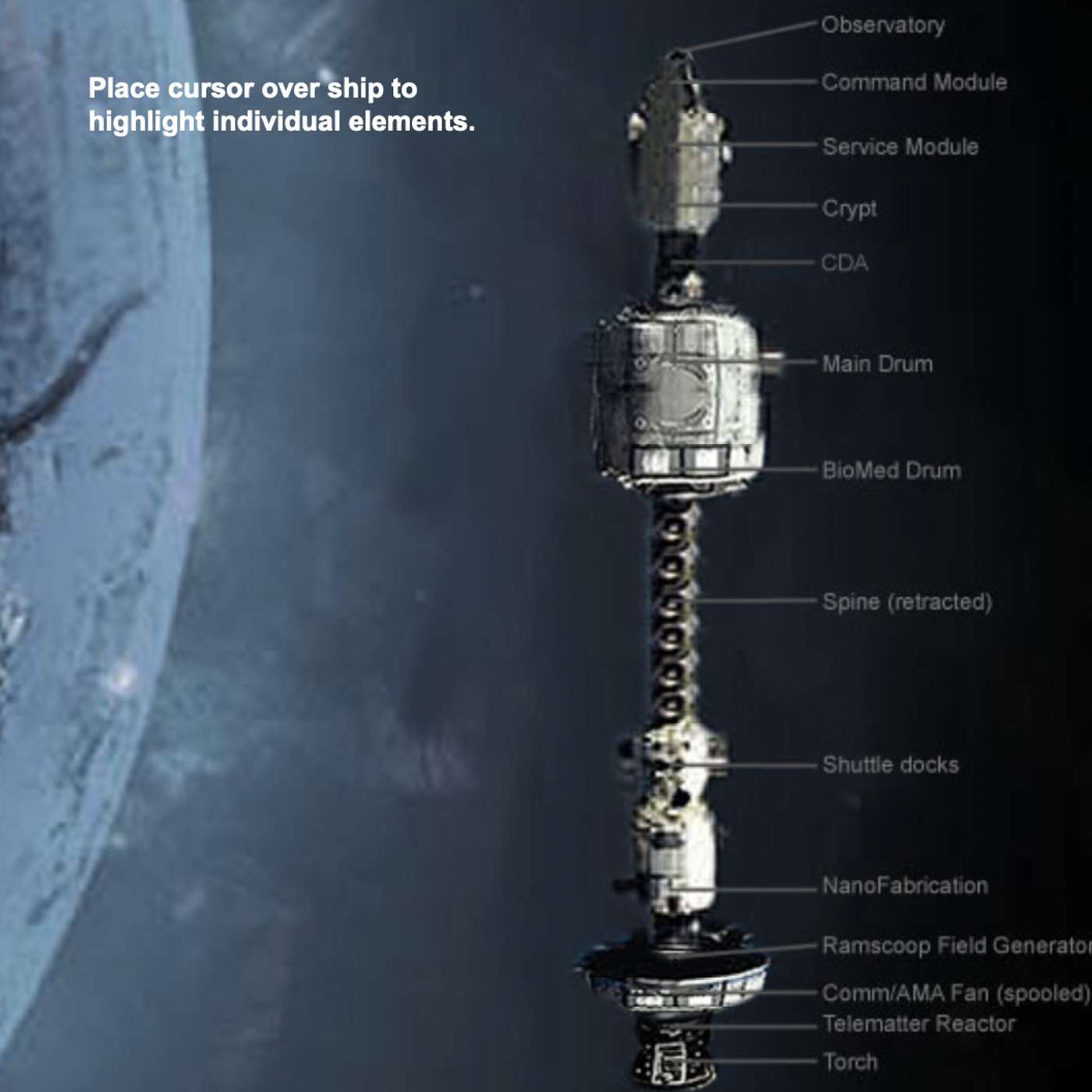
The image of Theseus, the spaceship in Blindsight, is from a page from Peter Watts' website. The image is not marked Creative Commons, though the whole novel is, so I'm hoping Mr. Watts won't mind.
Topics
cognitionprogramming