
No Such Thing: Education in the Digital Age
158 episodes — Page 2 of 4

Ep 103Teenager Therapy
Gael Aitor is the creator and a host of the “Teenager Therapy” podcast, a teen mental health podcast with over 700,000 followers. At 19 years old, he has five years of experience in the podcasting space and is an expert at growing engaged Gen Z audiences on social media. Previous guests of “Teenager Therapy” include Prince Harry and Meghan Markle, Adam Mosseri, and Loren Gray. Aitor is a fellow at On Deck, an educational and accelerator community, and was a contract community specialist at Pearpop, a creator collaboration platform. Additionally, he’s on the advisory council of the UCLA Center for Scholars & Storytellers. He has been featured in The New York Times, Teen Vogue, and the TIME100 Talks for his work at “Teenager Therapy.” He graduated from high school in 2021. From https://www.aspenideas.org/speakers/gael-aitorTeenagerTherapy on Youtube: https://www.youtube.com/channel/UCUkviaHlWmRWTICxNBMAxpA/featuredBio: https://www.aspenideas.org/speakers/gael-aitorhttps://www.nytimes.com/2020/07/29/style/teenager-therapy-podcast.htmlhttps://twitter.com/okaygaelhttps://www.forbes.com/sites/jessicagold/2020/10/20/heres-what-five-teenage-podcasters-want-parents-to-know-about-mental-health/?sh=7c95cfdb73d4https://medium.com/@pineapplelabs/gen-z-leader-gael-aitor-from-teenager-therapy-341e7ecc484d Hosted on Acast. See acast.com/privacy for more information.

Ep 102Credly: Lessons Learned After 50 Million Credentials Earned and Hosted
Jonathan Finkelstein is founder and CEO of Credly, a leading digital credential service provider which enables organizations to recognize, reward and market skills, competencies and certifications. Previously, as founder of LearningTimes, Jonathan helped mission-driven organizations produce and launch innovative online programs, products and platforms that impacted the lives of millions of learners. Previously, Jonathan was a co-founder and led product strategy at HorizonLive (acquired by Blackboard). He is author of Learning in Real Time (Wiley), co-author of a report for the US Department of Education on the potential for digital badges, and a frequent speaker on digital credentials and the future of learning and workforce development. The son of New York City public school teachers, Jonathan graduated with honors from Harvard University.Credly, a Pearson business, is helping the world speak a common language about people’s knowledge, skills, and abilities. Thousands of employers, training organizations, associations, certification programs, and workforce development initiatives use Credly to help individuals translate their learning experiences into professional opportunities using trusted, portable, digital credentials. Credly empowers organizations to attract, engage, develop, and retain talent with enterprise-class tools that generate data-driven insights to address skills gaps and highlight opportunities through an unmatched global network of credential issuers.Previously, as founder of LearningTimes and before that as co-founder of HorizonLive (acquired by Blackboard), Jonathan worked with thousands of organizations to launch online workforce development programs and learning platforms at global scale. His work helped bring about a digital transformation in how people develop skills that lead to in-demand jobs and careers that did not exist just years ago.He is author of Learning in Real Time (Wiley), a frequent contributor and speaker on HR and learning technology, a former board member of the American Alliance of Museums Media & Technology Committee, and producer or host of thousands of online events and programs for talent development, learning and HR audiences. Jonathan co-authored a report for the US Department of Education on the impact of alternative forms of credentialing. He is a frequent keynote speaker and sought-after advocate for more accessible forms of credentialing, digital transformation and up-skilling, and workforce equity. The son of two New York City public school teachers, Jonathan graduated with honors from Harvard University.Bio: https://members.educause.edu/jonathan-finkelsteinDo digital badges really provide value to businesses?IBM Case Study: Exec SummaryIBM awards its three millionth digital badge (and disrupts the labor market in five big ways)Learning During Lockdown: IBM Case Study Hosted on Acast. See acast.com/privacy for more information.

Ep 101"Redefining Geek: Bias and the Five Hidden Habits of Tech-Savvy Teens"
"Redefining Geek takes a new and surprising look at what it means to be good with technology at a time when technologies are rapidly changing. Based on empirical evidence from a decade-long study with a diverse group of students across the country, Cassidy Puckett shows that being tech-savvy in the digital age isn’t about having a natural ability, but instead is a process of continual learning that requires five simple habits."Cassidy Puckett is an Assistant Professor in the Department of Sociology at Emory University. She received her Ph.D. in Sociology from Northwestern University. She is the author of Redefining Geek: Bias and the Five Hidden Habits of Tech-Savvy Teens (University of Chicago Press, 2022). Her research has also appeared in sociological and interdisciplinary journals, including Harvard Educational Review, Qualitative Sociology, Social Science Computer Review, and Social Science & Medicine.Cassidy’s research focuses on the relationship between technological change and inequality. More specifically, she uses a mixed-methods approach to explain differences in adolescents’ ability to learn new technologies—what she calls their “digital adaptability” and measures on a 15-item Digital Adaptability Scale—and looks at how differences in digital adaptability influence educational, occupational, and health inequalities.Links from the episode:Her Website: https://cassidypuckett.com/Order: https://press.uchicago.edu/ucp/books/book/chicago/R/bo137270726.html Hosted on Acast. See acast.com/privacy for more information.
Ep 100Too Many Tabs: Learning Like Experts with Lateral Reading
Dr. Joel Breakstone directs the Stanford History Education Group (SHEG). He leads the group’s efforts to research, develop, and disseminate free curriculum and assessments. His award-winning research has been covered by outlets ranging from the Washington Post to NPR. Breakstone has conducted professional development workshops for school districts and professional organizations across the country. He received a Ph.D. from the Stanford Graduate School of Education. He previously taught high school history in Vermont.Links from the episode:Stanford History Education Group: https://sheg.stanford.edu/Students’ Civic Online Reasoning: A National Portrait, Breakstone et. al: https://journals.sagepub.com/stoken/default+domain/WNGEUNNHYYWWPAVKS37M/full#abstract or https://purl.stanford.edu/cz440cm8408Civix, Control - F: https://ctrl-f.ca/Teaching Systems Lab, MIT: https://tsl.mit.edu/ Hosted on Acast. See acast.com/privacy for more information.

Ep 99Game-based Assessment
Game-based assessments (GBAs) have been shown to be a powerful context to measure students’ 21st century skills. By eliciting evidence of skills in an embedded, authentic and playful environment, they present the potential for assessments to go beyond measuring outcomes of content knowledge to shed light on thought processes.Yoon Jeon (YJ) Kim is an Assistant Professor of Design, Creative, and Informal Education in the Department of Curriculum and Instruction at UW–Madison. Before joining UW-Madison, she was the founder and director of MIT Playful Journey Lab where she led an interdisciplinary team of game designers, developers, and researchers to create playful assessment tools. Her work centers on the topic of innovative assessment and application of playful activity design to challenge what and how we are measuring learning. YJ’s playful assessment research ranges from a computer game using evidence-centered design and analytics techniques to paper-based embedded assessment tools for making. The core of her work is close Louisa Rosenheck is a thought leader in the ed tech field, with a passion for game-based learning and playful pedagogies. She works to promote deeper learning through designing playful experiences, developing creative ways to assess learning, and building capacity in other organizations to implement innovative digital learning and curriculum in their own contexts. She is a co-author of the book Resonant Games and teaches a graduate course on ed tech design at the Harvard Graduate School of Education. She spent over a decade doing research on digital games and creative learning at MIT, and is now the Director of Pedagogy for the Kahoot! Group.Nancy Tsai is a 4th year postdoctoral research fellow at McGovern Institute for Brain Research at MIT where she collaborates with cross-functional teams to translate cognitive neuroscience research to inform the development of learning products/programs. Her expertise is on the effects of stress on prefrontal development and function (e.g. Executive Functions). She teaches graduate level coursework at Harvard Graduate School of Education and at MIT, and collaborates with outside organizations such as Accenture and UNICEF to translate cutting edge cognitive neuroscience research to real world application. Links from this episode:https://fielddaylab.wisc.edu/play/shadowspect/https://playful.mit.edu/About NSF programs including Cyberlearning: https://beta.nsf.gov/funding/opportunities/research-emerging-technologies-teaching-and-learningGame-Based Assessment: The Past Ten Years and Moving Forward: https://www.researchgate.net/publication/337038333_Game-Based_Assessment_The_Past_Ten_Years_and_Moving_Forward Hosted on Acast. See acast.com/privacy for more information.

Ep 98"Reading the Word..."
David Risher is the CEO and co-founder of Worldreader. After a career as a general manager at Microsoft and an early stage executive at Amazon, David recognized early on how e-readers and digital books could give kids in under-served parts of the world better access to the life-changing experience of reading. Since co-founding Worldreader in 2010, David and the Worldreader team have expanded the organization to have impact in more than 46 countries, delivering high-quality books in 52 languages to over 19 million children. Together, they’ve demonstrated how digital technology–combined with high-quality books, smart programming, strong partnerships–can accelerate reading around the globe and unlock the potential of the world’s next scientists, teachers, innovators, and explorers.David has degrees from Princeton University and Harvard Business School is a Schwab Foundation Social Entrepreneur of the Year Awardee, a Draper Richards Kaplan social entrepreneur, an invited member of the Clinton Global Initiative, and a Microsoft Alumni Foundation Integral Fellow. He has two daughters and lives in San Francisco, California, with his wife– author Jennifer Risher.In my conversation today I'm chatting with David Risher, a guy who helped grow Amazon from a 15 million dollar company to what it is today, and founder of the non-profit, Worldreader who as a team have opened those new doors through reading that i mentioned to more than 19 million kids globally. Since we talked I've been thinking about what a privilege it is - reading, I mean. I've been reading authors and genres that are pretty new to me lately but it all started with access and David and I talk about how, in spite of the digital age, accessing books is still an issue. According to UNESCO, in 2021 over 100 million kids and 700 million adults are non-literate.Links from this episode:Read David’s full bio here.Twitter: @davidrisherWRhttps://en.wikipedia.org/wiki/David_Risherhttps://www.worldreader.org/https://en.unesco.org/sites/default/files/ild-2021-fact-sheet.pdfUNESCO, International Literacy Day 2021 - Literacy for a human centred recovery: Narrowing thedigital divide https://en.unesco.org/sites/default/files/ild-2021-fact-sheet.pdf Hosted on Acast. See acast.com/privacy for more information.
Ep 97"Does Anyone Know a White Man?"
My favorite conversations are the ones where people whose ideas I admire get comfortable enough in a conversation to share beyond what you might've already heard from them. Jaime's a great example. If you work in or around K12 education chances are you've bumped into Jaime at some point. As a 15+ year Google'r as Chief Education Evangelist, Jaime's keynoted and shared on more stages than I can count. But at this, an important transition for Jaime from a role at Google where he had a hand in launching arguably the most consequential hardware and software for educators of the last decade, I was honored to chat with him completely free of an organizational role with Google, to pull from him some of his experience and ideas about where we're headed that you might not have heard. I hope you'll hear from our chat that, while he's moved on from the role at Google, his title as an Evangalist seems like a lot more - I think you'll hear from what he has to say that he cares deeply about this topic and talking about it isn't so much a choice as a way of being. I feel really lucky to have people like that accessible through this show, and I hope you do to. I hope you'll consider, in honor of our 100th Episode Milestone, heading back to wherever you downloaded the show and give us a rating and review. IF you really want to go above and beyond, share the show with a friend over social media and let me know so I can say thanks personally. Links from the episode:Jaime's Youtube Channel: https://www.youtube.com/c/JaimeCasapFront Lines of Justice: https://frontlinesofjustice.com/Gems Education: https://www.gemseducation.com/Follow Jaime on Twitter: https://twitter.com/jcasapAbout Jaime:Education Evangelist, Ghetto People ProductionsJaime Casap served as the Chief Education Evangelist at Google for more than 14 years and was the second member of the Google for Education team. In that time, Jaime launched Google’s GSuite tools into higher education and K12. He also launched Chromebooks into education and was the creator of the Google for Education Transformation Framework, a holistic approach to education transformation. Jaime is now partnering and collaborating with higher education institutions, school systems, and businesses around the world, helping them build transformational policies and practices to elevate education and bring equity, diversity, and inclusion into their policies and practices. Hosted on Acast. See acast.com/privacy for more information.
Ep 96My Secret EdTech Diary
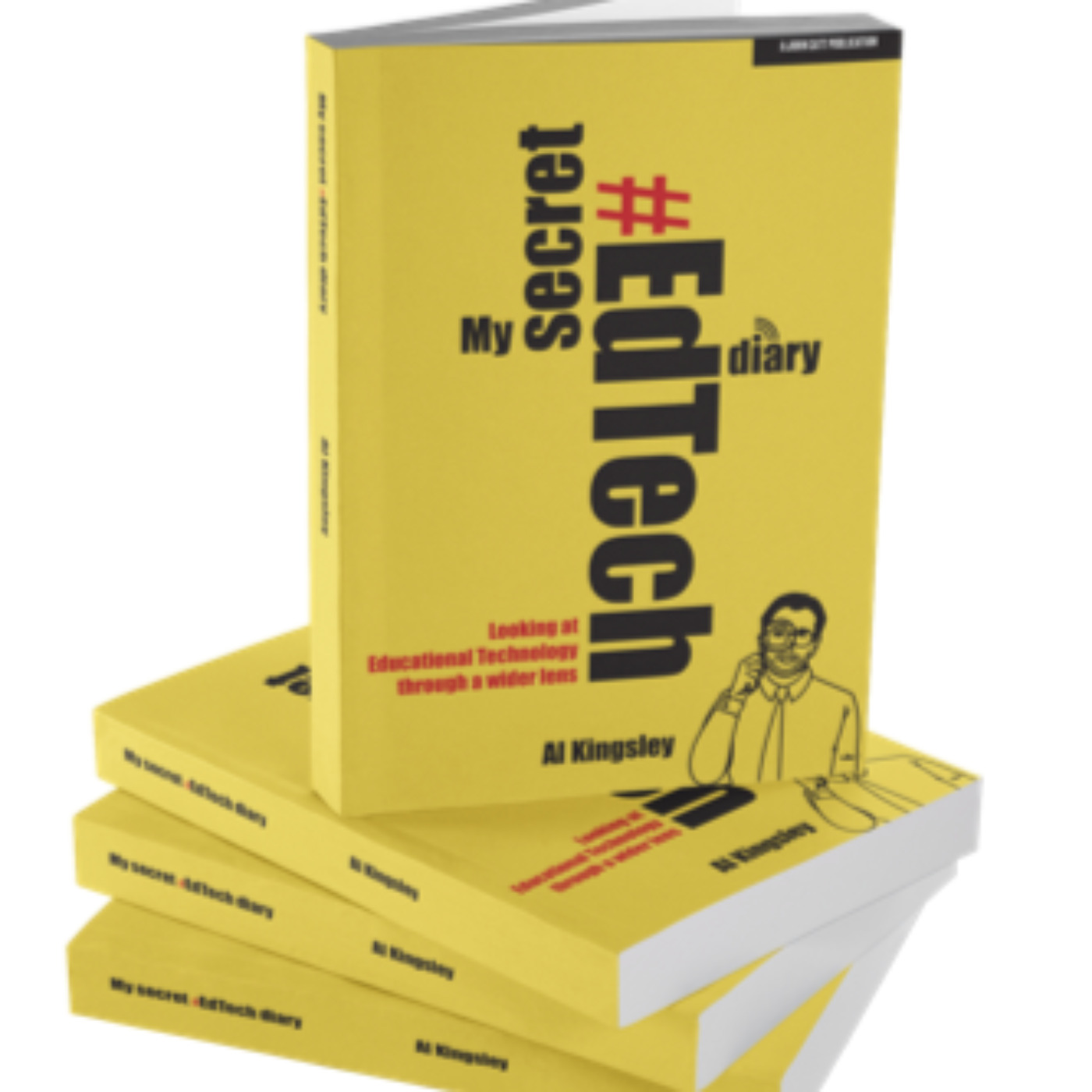
Al Kingsley has over 30 years’ experience in the technology sector predominantly with his work on IT Asset Management, educational and Instructional technology and digital safeguarding.He started his career with Barclays Bank then Unilever, working within finance and management accounting before focusing on the early adoption of new IT technologies in the early 90s.For the last 25 years Al has been the Group Managing Director of NetSupport, an international software company developing market-leading software solutions used by over 18 million customers, designed to support the effective use of instructional technology in classrooms alongside eSafety technologies to safeguard students online.Al has a broad knowledge of international business from spending time living in the US whilst establishing overseas offices. During this time Al has worked with Partners and Ministries of Education from around the world.Links: Al's website: https://alkingsley.com/My Secret EdTech Diary on Amazon.com: https://www.amazon.com/Secret-EdTech-Diary-Educational-Technology/dp/1913622630 Hosted on Acast. See acast.com/privacy for more information.

Ep 95Leg Godt at School
Dr. Jenny NashUS Head, Education Impact, Lego EducationDr. Jenny Nash serves as the Head of Education Impact Team for LEGO Education in the US, where she provides direction and leadership in delivering meaningful education opportunities for students. With previous experiences as a professional development provider and STEM teacher, Jenny is an advocate for hands-on, inquiry-based learning for students and building confidence in teachers to provide this type of learning.Links from the episode:Spike Essential: https://education.lego.com/en-us/products/lego-education-spike-essential-set/45345#spike%E2%84%A2-essentialAbout Seymour Papert: https://en.wikipedia.org/wiki/Seymour_PapertIntro reference material: https://www.bbc.com/news/uk-politics-29992974LEGO Group, History: https://www.lego.com/en-us/aboutus/lego-group/the-lego-group-history/ Hosted on Acast. See acast.com/privacy for more information.
Ep 94Is Virtual Reality...Equity?
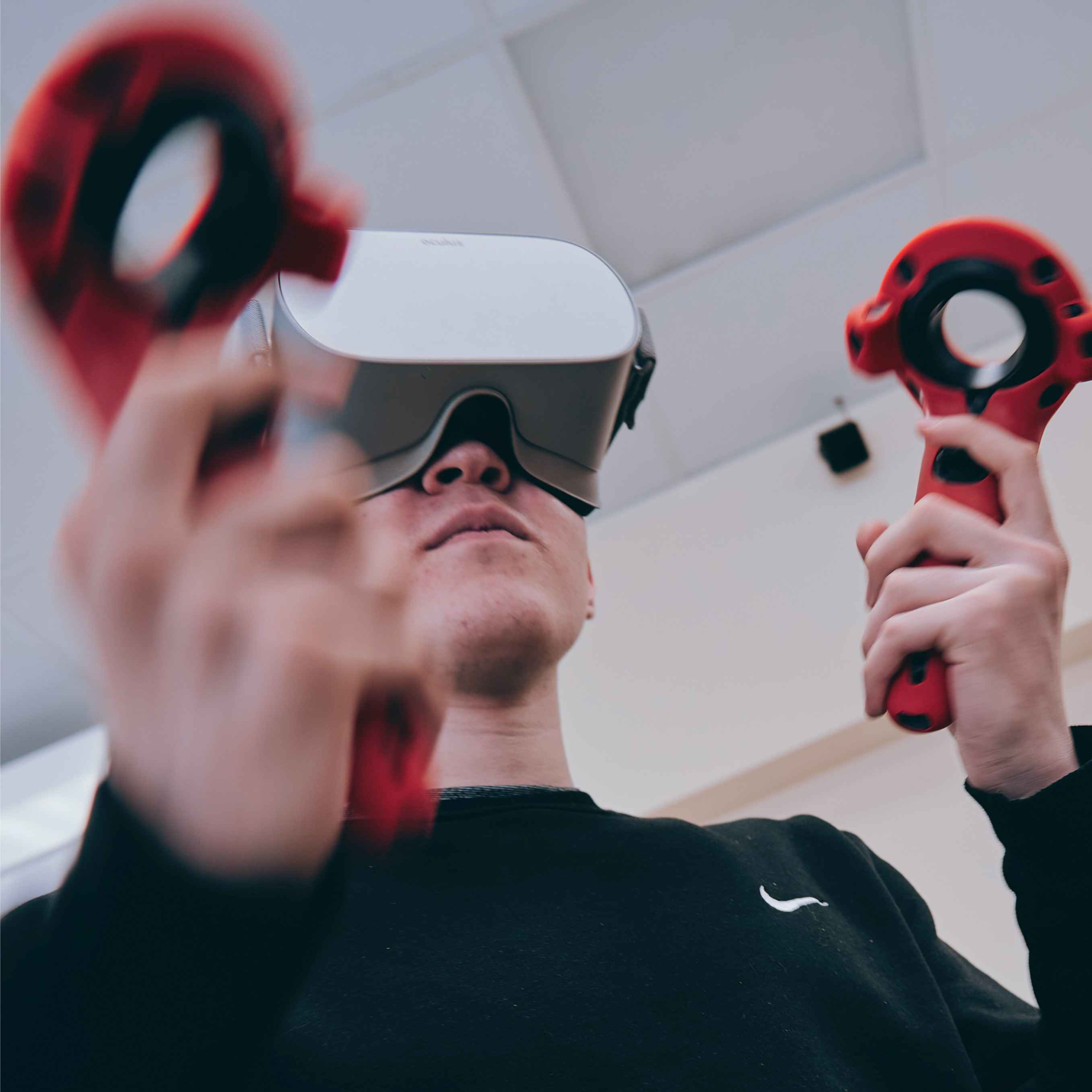
We're talking today about the bold risks that innovators in K12 education choose to make toward the goal of educational equity - this time a project from a company called Prisms VR using the tech of virtual reality to make algebra the experience it should be for learners, who when engaging with it through the right context might actually have good cause to consider themselves "math people" in a system that too often inadvertently fosters the math caste system of those who "get it" and those who don't. Dr. Luvelle BrownSuperintendent of Schools, Ithaca, NYLuvelle Brown is an experienced educator who has held positions as a teacher, assistant principal, principal, school CIO, and Superintendent of Schools. Currently, Dr. Brown is serving as the Superintendent of the Ithaca City School District (ICSD) in Ithaca, New York. During his tenure in Ithaca, the Ithaca City School District has experienced unprecedented levels of success.Dr. Brown has facilitated conversations in multiple communities that have resulted in transformative shifts in culture and achievement. Using systems thinking in schools, Dr. Brown’s leadership has led to innovative programs, redesigned learning spaces, numerous technology initiatives.Anurupa GangulyFounder and CEO, Prisms VRAnurupa's entry point to Education began as a Physics and Math teacher in the Boston Public Schools. For 10+ years since then, Anurupa has led STEM curriculum and teacher preparation across the largest educational systems in the US including the NYC DOE, Boston Public Schools and Success Academy Charter Schools. Through her experience as a district and charter administrator, she found that she did not have the learning tools to deliver the outcomes her leaders and teachers were accountable for, and the personal sense-making journeys that students deserve while developing foundational mathematical reasoning & proficiencies.She was awarded a National Science Foundation SBIR grant to build a scalable learning platform that actualizes pedagogies that we know work best, but weren't possible until recent advances in IVR and AI technologies. Her mission is to rapidly improve student performance and engagement in the mathematical sciences while crafting the instructor aids and training required to operationalize innovative technologies in the classroom. Anurupa holds a BS & M.Eng in electrical engineering from MIT and an EdM in Curriculum & Teaching from Boston University.Thumbnail image by https://unsplash.com/@shaikhuludLinks from this show:PrismsVR Home: https://www.prismsvr.com/Luvelle Brown: https://luvellebrown.com/Ithaca City School District: https://www.ithacacityschools.org/Announcements from PrismsVR: https://www.prismsvr.com/blog Hosted on Acast. See acast.com/privacy for more information.
Ep 9320 Years of Teen Filmmaking
Reel Works matches teens 1:1 with professional filmmaker mentors to tell their stories and have their voices heard. It’s a powerful combination that changes young lives and creates films that have been seen by tens of millions of viewers worldwide. Head to REELWORKS.org, that's R E E L W O R K S . O R G and learn more about how you can support a program that not only helps young people prepare for a life and career off in the future, but might also ensure - through the process of storytelling - that those of us needed to solve the future's greatest challenges, have the tools we need to survive and thrive what is.John Williams (he/him)Founder & Executive Director, is an award-winning film and television writer, producer and director whose credits include independent shorts, features, documentaries, television programming and corporate communications. Prior to founding Reel Works, John created original television for WNET/Thirteen, Oxygen, WE: Women’s Television and Metro Channels. John has produced numerous major market television commercials and independent films. John holds an MFA in Film & Television from New York University and a BA in English from Boston University. Keisha Katz (she/her)Keisha Katz, Director of Workforce and External Partnerships, is a Queens native and a graduate of the Spring 2007 lab class at Reel Works. Keisha leads their citywide workforce program, MediaMKRS, which aims to bring together industry leaders, educators, unions, and local government to provide access to careers in the media industry to individuals from marginalized communities. Keisha is particularly passionate about and uniquely qualified in her efforts to create a more diverse and inclusive in the media and entertainment industry, because of her background producing documentary film and television. Her work has aired on leading networks including NBC, Lifetime, TLC, Investigation Discovery, Animal Planet, History Channel, National Geographic Channel, and BET. Keisha holds B.A. from Temple University and is a member of Sigma Lambda Upsilon/Señoritas Latinas Unidas Sorority, Inc.Charles Reynoso (he/him)Charles Reynoso, Manager of Education and Curriculum, has been an educator, musician, and multimedia artist for over two decades. As a teacher with the Department of Education, he and his history students created short films with historical narratives in order to connect modern day injustices and inequalities to American history. As a media producer, he collaborated with several non-profit organizations to bring awareness to social issues surrounding the AfroLatino community. He has a Bachelors of Science in Multimedia Journalism from CUNY Lehman College, and a Masters of Science in Education with a concentration in Special Education within Urban Settings from Long Island University. He strives to be a vegetarian, but is often caught eating salmon. Hosted on Acast. See acast.com/privacy for more information.
Ep 92The "Virtual" Reality
One of the questions that's come up over and over in my conversations about what our country is learning from a year in quarantine is "what's being done in places where connectivity is keeping families from connecting at all?" According a 2019 report from Pew Research Center, 58% of Black adults and 57% of Hispanic adults have a laptop or desktop computer, compared with 82% of white adults, and 66% of Black adults and 61% of Hispanic adults have broadband access at home compared with 79% of white adults.The 2019 U.S. Census, showed 36 million households that do not subscribe to a wireline broadband service. 26 million of these households are in urban areas. 10 million are in rural areas. The lower a household’s income, the less likely they are to consistently subscribe to a wireline broadband service.Like many of you I've wondered all year about what's being done, what more we can do to address this issue - one that's been around long before the pandemic - and I was lucky for the chance to sit with a group fighting hard to offer balance and equity in the city of Philadelphia.Juliet Fink Yates (she/her)Digital Inclusion Fellow, Office of Innovation and Technology, City of PhiladelphiaJuliet Fink Yates has been working on addressing digital equity since 2001 when she was managing a small ISP for 10,000 low-income Philadelphians without Internet access for the Critical Path Internet Project. For many years, she worked as the Chief Learning Officer at Philadelphia FIGHT Community Health Centers at the intersection of adult education, technology and healthcare. In 2010, she wrote, in collaboration with the City of Philadelphia, the broadband stimulus grant that brought $5.4 million to low-income communities to set up computer labs (which became known as KEYSPOTS) in 77 locations, reached out to cultivate the key partners involved in that grant, and helped to design the structure of that program, overseeing a team that managed 28 of those KEYSPOTS. She was a founder of the Technology Learning Collaborative, Philadelphia’s first professional development organization dedicated to digital literacy providers and advocates and was a member of the City of Philadelphia’s Digital Literacy Alliance until she joined the City of Philadelphia’s Office of Innovation and Technology this past March as the first Digital Inclusion Fellow. In this role she is charged to build the community of those in Philadelphia interested in addressing digital inclusion and help support innovative digital equity practices in Philadelphia. She has a Master’s in Education from Harvard University Graduate School of Education with a focus on technology in education. Paolo Balboa (he/him)Programs and Data Manager, National Digital Inclusion Alliance Paolo began his career in public library education and outreach in 2013, first in Cleveland and most recently at the New York Public Library. He has worked with the Mozilla Foundation and a cohort of practitioners and advocates to develop a Web Literacy toolkit, and he has served as a panelist at the American Library Association Annual Conference to discuss digital literacy. He received his Masters in Library and Information Science with an emphasis on Data Visualization and User Experience from the Pratt Institute. He is an advocate for access equity in a variety of spheres, including transportation, housing, and of course, broadband. He lives in Brooklyn with his houseplants. Andy Stutzman (he/him)Project Director for Civic Technology, Drexel UniversityWith an MS in Computer Information Science, Andy Stutzman has over 20 years of technology experience within higher education. Through his leadership and innovation skills, Andy has strived to create programs and technologies that reach beyond traditional boundaries. Since coming to Drexel University, Andy has been involved in civic engagement and workforce development initiatives across Philadelphia. As the Program Director for Digital On-Ramps, he led a city wide digital badging initiative that included managing the MacArthur Foundation backed LRNG Philly program. Andy now works as the Project Director for Civic Technology at Drexel University’s ExCITe Center where he leads community based initiatives focused on digital equity and inclusion. He is also the chair for the Technology Learning Collaborative which has supported digital inclusion initiatives throughout Philadelphia for over eight years.Thumbnail for the episode is art by @theeastlondonphotographer, Ehimetalor Akhere UnuabonaLinks from this episode:https://www.digitalinclusion.org/https://www.digitalequityact.org/Audio included from 3rd parties:What are the benefits of digital inclusion?Digital Inclusion in the Promise Zone Workshop Series: Access to Connectivityby CSDCAhttps://archive.org/details/Digital_Inclusion_in_the_Promise_Zone_Workshop_Series_-_Access_to_ConnectivityClosing the Divides: A Plan for Digital Equity and Inclusion by The Aspen Instit

Ep 91How Many Slaps To Cook a Chicken
Upperline Code has a mission to train the next generation of computer science leaders and empower students to change their world with code. We aim to transform education by making computer science accessible to all students regardless of race, gender, or income. Above all, we value inclusiveness, curiosity, rigor, collaboration, and quality. "I think you created a culture of mutual learning and respect and demonstrated your commitment to the process over the end goal and that was very empowering. I think that it was the best PD I've engaged in so far." - Maha HasenMaha HasenMaha has an undergraduate degree in Applied Mathematics and Philosophy from The George Washington University. When she graduated in 2016, she was placed as a High School Math Teacher in her hometown, Bronx, NY, and earned her Master of Arts in Teaching from Relay Graduate School of Education. After consistently being made aware of the lack of female representation in STEM, Maha joined Upperline Code to gain the tools she needed to bring Computer Science to her school, which has a student body makeup of 71% female. She believes that all students should have access to computer science and that it is particularly imperative to empower female students to pursue a coding education!Jorge TorresJorge Torres is in the middle of his third year teaching high school Chemistry and Physics in the South Bronx. He earned his undergraduate degree at CUNY Hunter College in Biochemistry, and continued there for his Master’s Degree in Chemistry Education. Jorge’s interest in Computer Science teaching came from both the interest his students seemed to have in the subject, as well as his own early experiences taking AP Computer Science in high school. He aimed to make the material more accessible for students like himself, and began to seek out institutions with the same goals as him. Jorge is excited to continue building his Computer Science skills, and at the same time bring all the knowledge acquired back to his classroom and continue to encourage students to pursue STEM careers. Daniel FenjvesCEO Upperline CodeDanny Fenjves has spent almost 10 years living and teaching computer science. He is an alumnus of Teach for America, worked at Google, and was head of K-12 computer science instruction at Flatiron School before founding Upperline Code. In his career, he's trained over 200 teachers to lead immersive coding courses in schools across the country, built extensive coding curriculum, and taught software development to hundreds of high school students. As a former middle school science teacher, he's deeply committed to the art of instruction and discovering the best methods to recruit, train, and retain top teaching talent in the field of K-12 computer science education.Mentioned in this episode:Upperline FellowshipThe Six Flaws of “Traditional” Professional Development from Katya Rucker, Getting SmartEducation Week, Teacher PD Gets a Bad Rap. But Two Approaches Do Work, by Heather C. Hill Hosted on Acast. See acast.com/privacy for more information.
Ep 90Ethics and Artificial Intelligence
Artificial Intelligence (AI) offers immense promise to solve some of the world's biggest problems at scale. But advances come with significant challenges that perpetuate and amplify society's underlying structural inequities. To address this challenge directly, the NYU Center for Responsible AI (R/AI) is designed to be a comprehensive applied research and tool production laboratory for accelerating responsible AI practices that arise from real world collaborations.Julia StoyanovichCo-Founder & Director of R/AIJulia Stoyanovich is an Assistant Professor in the Department of Computer Science and Engineering at the Tandon School of Engineering, and the Center for Data Science at NYU. She is a recipient of an NSF CAREER award and of an NSF/CRA CI Fellowship. Julia's research focuses on responsible data management and analysis practices: on operationalizing fairness, diversity, transparency, and data protection in all stages of the data acquisition and processing lifecycle. She established the Data, Responsibly consortium, and serveds on the New York City Automated Decision Systems Task Force (by appointment by Mayor de Blasio). In addition to data ethics, Julia works on management and analysis of preference data, and on querying large evolving graphs. She holds M.S. and Ph.D. degrees in Computer Science from Columbia University, and a B.S. in Computer Science and in Mathematics and Statistics from the University of Massachusetts at Amherst.Steven KuyanCo-Founder & Director of R/AI Managing Director, at Future LabsSteven Kuyan is the director of entrepreneurship at NYU Tandon School of Engineering, co-founder/managing director of the NYU Tandon Future Labs, and co-founder/director of the NYU Center for Responsible AI. The Future Labs support entrepreneurs in technology-specific fields, such as: artificial intelligence, machine learning, augmented/virtual reality, video and virtual machines and has graduated more than 145 companies – 31 as acquisitions totaling more than $600 million – for a combined portfolio valuation of graduates exceeding $2B billion. The NYU Center for Responsible AI is a first of its kind lab designed to be a comprehensive applied research and tool production laboratory for accelerating responsible AI practices that arise from real world collaborations. Steve also oversees entrepreneurship across the campus, including programs commercializing university IP into companies, which includes dozens of success stories that have raised over $100M in venture funding, university wide curricula development, and IP collaborations amongst NYU schools.Resources from this episode:Center for Responsible AI at NYUData Responsibly, Comics: "Mirror, Mirror"Is AI Effective If It Isn't Equitable and Responsible? from Chronicle of Higher EducationNYU Future Labs Hosted on Acast. See acast.com/privacy for more information.

Ep 89Families and "Screentime" During Covid
In this episode, I’ll be speaking to three experts on youth development and screen time who also happen to be parents. First, we’ll hear, Sascha Brodsky. He’s a science and technology journalist, who recently wrote an article for Lifewire called, “Parents Say ‘Yes’ To Screen Time During the Pandemic,” where he talked to several parents and experts - letting them vent their concerns, but also justify their decisions. Two experts featured in the article are also with us for this episode. Lynette Owens, Founder & Global Director of Internet Safety for Kids and Families at Trend Micro. She dedicates a majority of her time leading workshops that educate parents and caregivers on all topics relating to children and internet use. And Dr. Mimi Ito, a cultural Anthropologist and Learning Scientist at University of California Irvine, joining us once again. Her work makes her an expert on children and youth’s changing relationships to media and technology. Cover Photo by ExpectGrain under Creative Commons https://www.flickr.com/photos/spedster/Links from this episode:Parents Say ‘Yes’ To Screen Time During the Pandemic, by Sascha BrodskyTrend Micro's Internet Safety for Kids and FamiliesAbout Mimi Ito: https://clrn.dmlhub.net/people/mimi-ito.htmlNY Times Article: Children’s Screen Time Has Soared in the Pandemic, Alarming Parents and Researchers by Matt RichtelDistance Learning and Parental Mental Health During COVID-19Two related studies:https://corp.roblox.com/2020/06/62-teens-roblox-say-online-conversations-real-life-friends-top-pandemic-priority/https://royalsocietypublishing.org/doi/10.1098/rsos.202049 Hosted on Acast. See acast.com/privacy for more information.
Ep 88Dr. Mimi Ito
EDr. Mimi Ito is a cultural anthropologist, learning scientist, entrepreneur, and an advocate for connected learning—learning that is equity-oriented, centered on youth interest, and socially connected. Her work decodes digital youth culture for parents and educators, offering ways to tap interests and digital media to fuel learning that is engaging, relevant, and socially connected. She is the director of the Connected Learning Lab and Professor in Residence and John D. and Catherine T. MacArthur Foundation Chair in Digital Media and Learning at the University of California, Irvine. She is also co-founder of Connected Camps, a non-profit providing online learning experiences for kids in all walks of life. Her co-authored books include Hanging Out, Messing Around and Geeking Out: Kids Living and Learning with New Media and Affinity Online: How Connection and Shared Interest Fuel Learning and the reports, From Good Intentions to Real Outcomes: Equity by Design in Learning Technologies, and The Connected Learning Research Network: Reflections on a Decade of Engaged Scholarship.Links from this episode:Find links to all of Dr. Ito's publications on her Wikipedia page.Follow her on Twitter @mizukoAbout Research-Practice Partnership by Cynthia E. Coburn, Northwestern UniversityWilliam R. Penuel, University of Colorado, BoulderKimberly E. Geil, Independent ResearcherAbout Dr. Michael WeschPhoto by Joi Ito at English Wikipedia., CC BY-SA 2.5 <https://creativecommons.org/licenses/by-sa/2.5>, via Wikimedia Commons Hosted on Acast. See acast.com/privacy for more information.
Ep 87Assessment, Freedom, Parody: Influential Ideas From 3 Live Recordings
This episode is something a little different. Like many of you, one of the ways I've been keeping sane over the past months has been nesting, both in my physical world and with respect to my work. I recently have been organizing previous episodes' audio, and in so doing, I have some ideas for ways I want to use the process to rekindle ideas that are part of my experience because of this show, and continue to motivate and encourage me as I look forward to new hope and exploration and learning that lies ahead. These three segments all come from live episodes. As I've been organizing, I've been thinking about all of the ways that I'd like to use my audio to produce what I'm thinking of as a kind of mix tapes. Mix tapes were awesome in part because it was always the authors discretion about what went together. Sometimes that liberty helped build new associations, new ways of thinking because, even if you've heard the song a thousand times, it's the first you've heard it sandwiched between two others in a new way. Links from this episode:A live interview with Cathy N. DavidsonChris Emdin at May 2019's NYC CS4All Teachers SummitLive with Data & Society at Techno Cultures in the 21st Century Hosted on Acast. See acast.com/privacy for more information.

Ep 86Another Reality For Teaching During Covid
My conversation today is with Jussie Kajala and Mitch Weisburgh of an AR/VR platform for education called, 3D Bear. I'm also joined by Susan Sclafani, a Library Media Specialist from Long Island, NY, who grounds our conversation in the aspects of her own practice that incorporate AR. Be sure to stick around until after Jussie and MItch, to hear my full conversation with her. Jussi Kajala has a Ph.D. in material physics and a degree from University of Cambridge, UK. Jussi was responsible for developing the immersive technologies industry in Finland in Tekes – the Finnish funding agency of Innovation for three years. Jussi is a visionary and spectacular project designer and manager. Jussi is responsible for 3DBear’s operations in the US. Mitch Weisburgh is a world-class advisor for top-end edtech startups in the US. He is the former chairman of the Education Industry association SIIA ETIN, and founder of Edchat Interactive and Academic Business Advisors. He founded and grew two companies in the education and training field. Mitch is now making a mark on education by helping and investing into companies and non-profits to become sustainable through helping students.Susan Sclafani has been a Library Media Specialist with the Patchogue-Medford School Distric for 20 years. She worked with K-5 students for her first 10 years and has spent 10 years working with students in grades 6-8. She strives to bring new and innovative ideas to her students and schools. As the Lead Librarian for her district, she has tried to make sure that libraries continue to be an integral part of the educational system. She also seeks to make sure her library is not quiet.Links from this episode:3D Bear:https://www.3dbear.io/Susan Sclafani on Twitter: https://twitter.com/suesclafani Hosted on Acast. See acast.com/privacy for more information.
Ep 85How One New Middle School Model in California Forges Ahead
You all met Theron Cosgrave and Principal Ally Rocco in episodes 67, and 77. Since October of 2019, I’ve been following this group of educators in California’s central valley as they work to build one of the most innovative middle school models I’ve heard anything about in recent decades. MAD Tech characterizes some of the most important questions in education for me. Here’s just one example in my mind: What does it mean to intersect great learning design with great design for physical spaces in this age where we've learned so much about how the two can complement one another?In this episode we’re joined by Laura Quiroz, Dean of Curriculum, Instruction, and Assessment, to hear more about how the instructional model for MadTech has been forced to flex, and more about what they're learning in relation to the core principles of their design that they've been able to carry over in spite of COVID. One of a few bright spots that the school is leveraging and that came up in our conversation is their use of VDI. We didn't get to come back to this in the conversation, though Allyson and Laura messaged me moments after it came up in our conversation to answer my question about the acronym. VDI stands for Virtual Desktop Infrastructure. I bring it up again here to ask that if you or someone you know are an expert with VDI, I'd love to hear from them on social media. Share resources you may have about case studies that have worked using VDI to extend access to software that may not run easily on a chromebook. I'll share those resources in an upcoming episode. Links:Madera Unified Schools: https://www.madera.k12.ca.us/Desktop Virtualization: https://en.wikipedia.org/wiki/Desktop_virtualization Hosted on Acast. See acast.com/privacy for more information.

Ep 84Designing Reward Systems for Digital Learners
Dr. Kevin Miklasz has worked in and around the fields of game design and education for the last 10 years. As a trained scientist, he has a PhD in Biology from Stanford University, but has spent his time gaining a smattering of diverse experiences in education: designing science curriculum, teaching after-school science programs, designing science games, running a science and cooking blog, running game jams for kids, and running professional development for teachers and professional engineers. He is currently the VP, Data and Prototyping at BrainPOP, where he leads the data team and coordinates prototyping work on new products.Join Kevin for his upcoming talk, or access a recording at: https://www.edchatinteractive.org/upcoming-seminars/how-digital-learning-can-use-game-like-rewards-to-improve-engagementLinks:The world ends with you: https://en.wikipedia.org/wiki/The_World_Ends_with_YouKevin's upcoming book: Intrinsic Rewards in Games and LearningScot Osterweil's Four Freedoms of Play: http://playfullearning.com/4freedoms/Self determination theory: https://selfdeterminationtheory.org/theory/Lee Sheldon's Multi-player Classroom: https://read.amazon.com/kp/embed?asin=B085RJ81QN&preview=newtab&linkCode=kpe&ref_=cm_sw_r_kb_dp_CT7DFb2TFHZ30Paul Darvasi's blog: http://www.ludiclearning.org/Scott Nicholson on meaningful gamification: http://scottnicholson.com/pubs/recipepreprint.pdfGo ranks and ratings: https://en.wikipedia.org/wiki/Go_ranks_and_ratings Justin Reich, Failure to Disrupt: https://www.amazon.com/Failure-Disrupt-Technology-Transform-Education/dp/0674089049 Hosted on Acast. See acast.com/privacy for more information.

Ep 83How Tech Divides the Back-To-School Experience in LA
The Fulfillment Fund works to make college a reality for students growing up in educationally and economically under-resourced communities. To this end, our services build pathways to college, help students navigate educational barriers, create life-changing support networks, and empower future leaders.Joanne ReyesJoanne Reyes is a senior non-profit development professional with more than 16 years of experience. She is currently President at the Fulfillment Fund, a college access and college success non-profit with a 40-year history of providing pathways of opportunity to young people from under-resourced communities in Los Angeles.Prior to her joining the Fulfillment Fund, initially as Chief Development Officer, she was Associate Vice President, Development at Children’s Hospital Los Angeles and focused on funding opportunities for the Children’s Center for Cancer and Blood Diseases and other medical specialties. She also oversaw the Foundation’s Special Events department, including the hospital’s signature biennial gala, which has raised more than $24 million since its inception. She first joined the hospital in 2009 as Director, Children’s Miracle Network Hospitals and was elevated to lead the hospital’s corporate philanthropy efforts, cause marketing, and special events before transitioning to major gifts fundraising for medical specialties. She raised more than $70 million during her tenure at Children’s Hospital, including the successful solicitation of two of the hospital’s largest corporate gifts in its 117-year storied history.Prior to her tenure at Children’s Hospital, she served as Marketing and Communications Administrator for Didi Hirsch Mental Health Services, where she led development communications efforts. She began her career in nonprofit development at Hillsides, where she raised funds to support services for severely emotionally and physically abused children.Joanne holds a Master of Arts from Stanford University, Cum Laude and a Bachelor of Arts, Summa Cum Laude, Phi Beta Kappa from the University of California, Los Angeles and is a native Angeleno, having been raised in the San Fernando Valley and attended Los Angeles Unified School District schools from K-12. Organizations that serve to better the lives of children, teens, and young adults have always been the focal point of Joanne’s professional and personal interests, and in addition to serving in her most important role as a mom of two bright and energetic girls, Joanne has volunteered for various local non-profit organizations and has served as a mentor to several young women achieving their Gold Awards for the Girl Scouts of America.Guest Bio:Elizabeth ZamudioVP ProgramsElizabeth is a senior education professional with more than 19 years of experience. She joined Fulfillment Fund in 2007, first as a college counselor and later as leader of the College Access Program. Elizabeth now oversees all programmatic activity at Fulfillment Fund including the delivery of Fulfillment Fund’s college access curriculum, college counseling, college success efforts including scholarships, and alumni programming.Prior to joining Fulfillment Fund, Elizabeth worked at Loyola Marymount University’s Controller’s Office supporting first-generation college-going students in navigating financial aid and scholarships. A first-generation college graduate herself, Elizabeth holds bachelor’s degrees and a master’s degree from Loyola Marymount University.Links:Fulfillment Fund: https://fulfillment.org/LA College Promise: http://lacollegepromise.org/Fulfillment Fund's Destination College: https://fulfillment.org/destinationcollege/United States Bureau of Labor Statistics: https://www.bls.gov/charts/employment-situation/unemployment-rates-for-persons-25-years-and-older-by-educational-attainment.htmCal State LA Strategic Plan: https://www.calstatela.edu/strategicplan The spreadsheet that Fulfillment Team used to rate platforms for their upcoming event: https://drive.google.com/file/d/11e_g1PDXOfOD5xzjzyRqLEvFS7Yaq2Hp/view?usp=sharing Hosted on Acast. See acast.com/privacy for more information.

Ep 82"Dwelling In the Boarderlands"
Translanguaging is the process whereby multilingual speakers use their languages as an integrated communication system.[1]Karen Silfa is an educator of nearly 20 years at IS143 in NYC. She joins Marc in this conversation along with researchers and administrators working to illuminate the practice of translanguaging starting with its role in computer science education. Translanguaging is a practice in education that returns the power of language to the learner.Dr. Sara Vogel, CUNY: https://commons.gc.cuny.edu/members/saraevogel/Dr. Christopher Hoadley, NYU: https://steinhardt.nyu.edu/people/christopher-hoadleyChristy Crawford: https://www.linkedin.com/in/christy-crawford-40066425/Dr. Ofelia Garcia, CUNY: https://ofeliagarcia.org/Dr.'s Nelson Flores & Jonathan Rosa's work:https://www.cambridge.org/core/journals/language-in-society/article/unsettling-race-and-language-toward-a-raciolinguistic-perspective/30FFC5253F465905D75CDFF1C1363AE3https://blogs.umass.edu/jdrosa/files/2015/01/HER-Undoing-Appropriateness.pdf ,mn[Episode cover photo: Adiva Koenigsberg Hosted on Acast. See acast.com/privacy for more information.
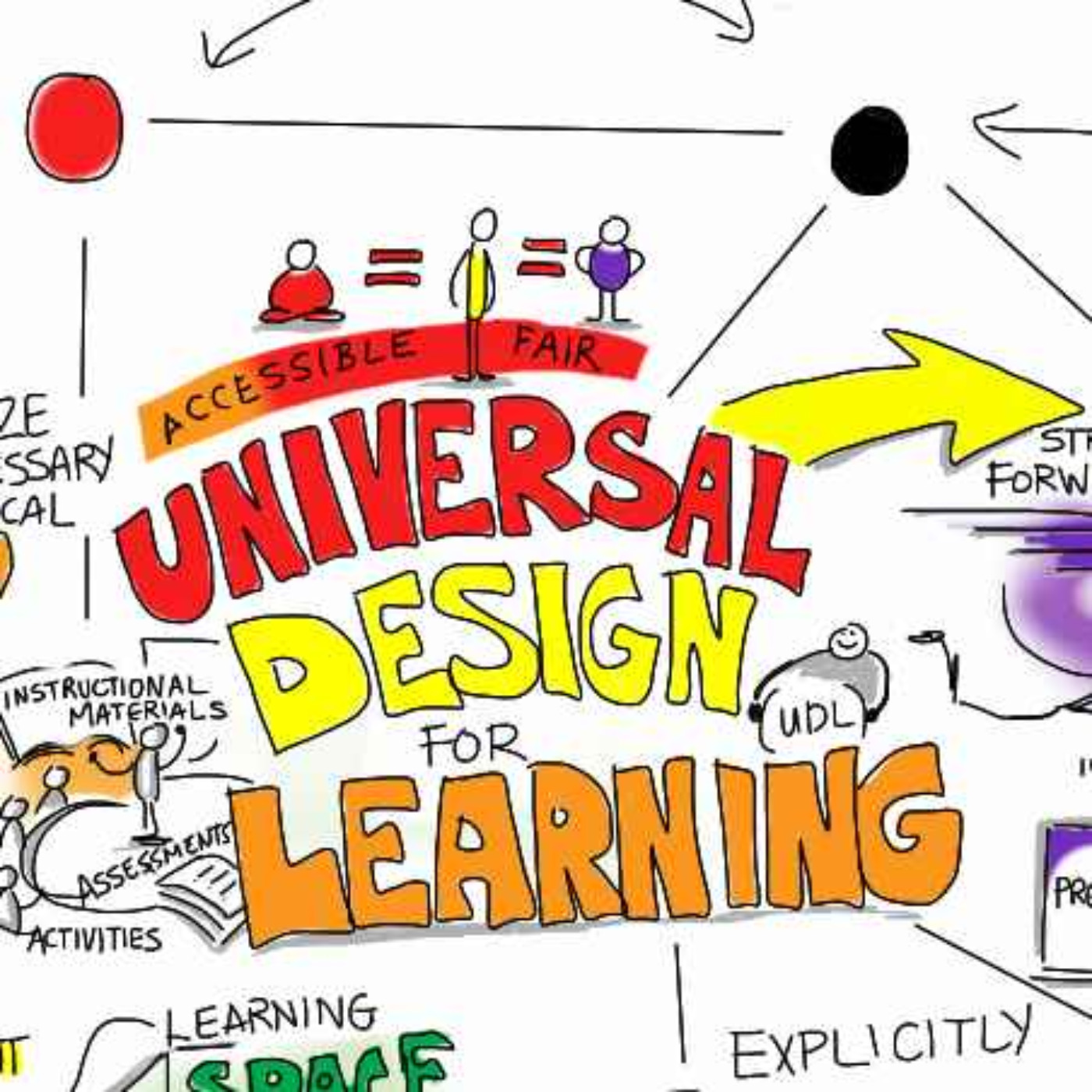
Ep 81Universal Design for Learning CS
Universal Design is a practice born out of architecture, and the late Ronald Mace, whose approach was to consider every body in the design of the built environment, not to design for some and amend or "adapt" for others. Guests in this episode discuss Universal Design for Learning, which shares this ideology as it relates to pedagogy and the design of learning environments.Maya Israel, Ph.D. is an associate professor of Educational Technology in the School of Teaching and Learning at the University of Florida. She is also the research director at the Creative Technology Research Lab. Dr. Israel’s research focuses on strategies for supporting students with disabilities and other struggling learners’ meaningful engagement in science, technology, engineering, and mathematics (STEM) with emphases on computational thinking, computer science education, and Universal Design for Learning (UDL).Meg Ray is the Teacher in Residence at Cornell Tech. She is responsible for the implementation and design of the Teacher in Residence program, a coaching program for K-8 teachers in New York City schools. An experienced middle and high school computer science teacher and special educator, Meg directed the design of the Codesters Python curricula for middle school students and served as a writer for the Computer Science Teachers’ Association K-12 CS Standards and as a special advisor to the K12 CS Framework. She lives in New York.Ron Summers is a nationally recognized educator and the Executive Director for NYC Department of Education's Computer Science 4 All. He is an expert in developing computer science and entrepreneurship programs for special project initiatives that focus on youth education using the design processes and computer science principles.Covert art for this episode: Giulia Forsythe Links from this episode:Ronald Mace: https://projects.ncsu.edu/ncsu/design/cud/about_us/usronmace.htmUniversal Design for Learning: http://www.cast.org/our-work/about-udl.htmlCreative Technology Research Lab: https://education.ufl.edu/ctrl/Direct link to the UDL and collaborative discussion framework section of the lab website: https://education.ufl.edu/ctrl/projects/tactic/UDL in CS crowdsourced document: https://education.ufl.edu/ctrl/files/2020/05/Copy-of-UDL-and-CS_CT-remix.pdfCornell Tech: www.tech.cornell.eduCAST: http://www.cast.org/Thompson Education Consulting: http://tectalksolve.com/Thompson Education Consulting on Twitter: https://twitter.com/TECtalkTECsolveThompson Education Consulting on Instagram: https://www.instagram.com/tectalktecsolve/New Event Details for the Black Women in Ed Talk: file:///C:/Users/mlesser/AppData/Local/Temp/BlackWomenEDflyerLink.pdf Hosted on Acast. See acast.com/privacy for more information.
Ep 80Boys and Girls Clubs of America During Covid
You may be having a similar experience to my own where, when I ask my kids about what they miss from their non-Covid schedule, they talk a lot about afterschool. Sometimes I make the mistake of thinking that it goes without saying at this point, but it doesn't, that out of school time, and the professionals who support learners beyond the school bell are absolutely critical in the special sauce of your kids. If you haven't yet, reach out and find out how you can support your local programs - give a high five to the education professionals, many of whom, are spending a lot more time with your kids than their teachers are.Boys and Girls Clubs of America (BGCA for short) is an iconic brand, and for good reason - it serves more than 4mm students through its federated network of clubs all over the country, and my guest is the national organization's Sr. Director of Product:Dave Crusoe is an education technology researcher, architect and producer. He loves to dream big and make big happen–especially by bringing together astute and eager teams. He is Senior Director – Youth Digital Engagement for Boys & Girls Clubs of America, a role that enables infinite imagination about how to construct youth digital visitor experience, provides focus on youth learning and life outcomes and requires engaging a curious set of resources. He holds an EdM degree from the Harvard Graduate School of Education, enjoys writing, plays the banjo poorly, explores caves and writes children’s stories.Links from the episode:Visit MyFuture.net: https://myfuture.net/ Hosted on Acast. See acast.com/privacy for more information.
Ep 79Decoding Tech & Race through Racial Literacy
Christy Crawford Christy Crawford serves as the Director of Culturally Responsive-Sustaining Education for New York City’s Computer Science for All Initiative. For more than a decade she taught K-8 classes in Harlem and the Bronx. She was also a curriculum fellow for the New York City Computer Science for All Blueprint and an adjunct lecturer for the City College of New York. She was an education consultant for companies such as Scholastic, BrainPOP, and Nickelodeon. Prior to teaching, Crawford was a television producer for several networks. She uses her experience in education and media to foster equity by all means necessary. Crawford is an advocate for communities of color in computer science.Dr. Lloyd Talley is a mixed-methods developmental psychologist and interdisciplinary social policy researcher. He focuses on the intersections of social and life course identity development as a lens for meaning-making and in the prediction of educational, behavioral, and mental health outcomes. He received his PhD in applied psychology and human development and Master of Science in Education from the University of Pennsylvania and his BA in communication and culture from Howard University. Overall, he seeks to develop complex models of human behavior which highlight the central role of identity development and socialization processes in behavioral patterns and social outcomes. Recently, Talley has focused on exploring the within-group diversity of Black populations by developing profiles of identity (racial, gender, religious) and examining their relationship to patterns in social and health outcomes.Notes from this episode:Howard C.StevensenJames Banks is the Kerry and Linda Killinger Endowed Chair in Diversity Studies Emeritus and is the founding director of the Center for Multicultural Education at the University of Washington,, which is now the Banks Center for Educational Justice.Zaretta HammondTranslanguagingAkbar Cooke’s Instagram A Pathway to Racial Literacy: Using the LETS ACT Framework to Teach Controversial Issues Hosted on Acast. See acast.com/privacy for more information.

Ep 78CodeScty: Schoolhouse Rock for Computer Science. But Lit!
This is a live concert hosted by CS For All and NYC Men Teach at 2020's first Men of Color Lunch and Learn. CodeSCTY uses original hip hop music, videos and experiential activities to teach computer science and computational thinking concepts to young people. Imagine Schoolhouse Rock for computer science – but lit!"Our suite of content includes original music, videos, and curricula that provides a foundational understanding of computational thinking and technology, laying the groundwork for grasping more advanced concepts. Our curriculum, accessible through our mobile app and website, includes our original content, as well as a facilitation guide for activating the materials in the computer science classroom. Our goal is to transform young people from passive users of technology to innovative problem solvers and visionaries that are equipped with the tools they need to reimagine society. In a soundbite, we teach how to think before learning how to code."Links from this episode:CodeScty: https://www.codescty.com/Men of Color Lunch & Learn: http://cs4all.nyc/2020/01/31/men-of-color-lunch-learn/Advertisement: Thompson Educational Consulting http://tectalksolve.com/ Hosted on Acast. See acast.com/privacy for more information.
Ep 77900 Middle Schoolers in CA Might* Have One of the Country's Most Innovative Learning Experiences This Fall
Back in Episode 67 we had our first conversation with this group. In a close community in the central valley of California, once, long ago founded by the timber industry, there lies a school district that's building one of the most important school experiences that any 12 or 13-year-old student in the country will experience this coming year. For those unfamiliar with the jargon - "Career and Technical Education" is a category of education models in the US (in parts of the country you know it as Vo-Tech or Vocational Technical education) that historically has been reserved for high schools, where, since the early 80's the federal government has been funding them through the Carl D. Perkins Vocational and Technical Education Act.I'm excited to check in with the principle designers of MAD Tech, what excites them about the year to come, and, of course, with current events, what has them worried about what should be a celebrated kickoff this coming fall for what they've built, together as a community for education.Alyson Rocco is Principal at the Madera Technical Exploration Center - “Madera TEC.” She was a Madera High School graduate and is returning to the district after fifteen years in Clovis Unified, ten as a classroom teacher and five in administration. Theron Cosgrave (aka “Cos”) is a national consultant who works with educators on a wide range of issues including project-based learning, curriculum development, school design, leadership development, and strategic planning.Kristin McKenna is the Director of College and Career Readiness. Kristin supports the teachers in Madera Unified’s 25 career pathways, and helps build industry partnerships to align with the courses. She manages all of the CTE specific funding and is responsible for writing new grants as they become available.When you're done listening - head over to facebook.com/nosuchthingpodcast and check out some of the photos that Alyson sent me of the new school. For those you who like to geek out about the architectural spaces where learning happens you might love these. Hosted on Acast. See acast.com/privacy for more information.
Ep 76My New Math Therapist, Dan Meyer
Dan Meyer taught high school math to students who didn't like high school math. He has advocated for better math instruction on CNN, Good Morning America, Everyday With Rachel Ray, and TED.com. He earned his doctorate from Stanford University in math education and is the Chief Academic Officer at Desmos where he explores the future of math textbooks. He speaks internationally and was named one of Tech & Learning's 30 Leaders of the Future. He lives in Mountain View, CA.Links from this episode:Dan Meyer: https://blog.mrmeyer.com/"Math Class Needs a Makeover" on TED, Dan Meyer: https://www.ted.com/talks/dan_meyer_math_class_needs_a_makeover?utm_campaign=tedspread&utm_medium=referral&utm_source=tedcomshareDesmos: https://www.desmos.com/Rochelle Gutierrez: https://education.illinois.edu/faculty/rochelle-gutierrezZaretta Hammond: https://crtandthebrain.com/about/ Hosted on Acast. See acast.com/privacy for more information.
Ep 75Entrepreneurship: A Key Mindset For The Digital Age?
Dr. JD LaRockDr. J.D. LaRock is President and CEO of the Network for Teaching Entrepreneurship (NFTE), a global nonprofit organization that activates the entrepreneurial mindset and builds startup skills in young people from underserved communities. Reaching more than 100,000 middle and high school students annually, NFTE works with 2,000+ schools and community partners in 10 metropolitan regions across the U.S., as well as eight countries spanning Asia, Europe, the Middle East and North America.Aaron Trinidad is a high school senior at Holy Trinity High School and is joined by teacher, Angela Miceli. He is also founder of the app Lender, which pairs nonprofits with volunteers based on interest, availability and location. This business venture led him to be the winner of the 2019 National Youth Entrepreneurship Challenge in New York City. Currently, he is doing research into what it will take to get the app developed and launched.Links from this episode:Network for Teaching Entrepreneurship (NFTE): https://www.nfte.com/Holy Trinity High School, Chicago: https://holytrinity-hs.org/RuPaul: https://en.wikipedia.org/wiki/RuPaulGreta Thunberg: https://en.wikipedia.org/wiki/Greta_Thunberg Hosted on Acast. See acast.com/privacy for more information.
Ep 74Part 2: Kamau Bobb, Google's Global Lead for Diversity Strategy
A Keynote from the 2020 To Code and Beyond event at NY's Cornell Tech.Kamau Bobb is a national authority in STEM education. He is the founding Senior Director of the Constellations Center for Equity in Computing at Georgia Tech. He is an engineer and science and technology policy scholar whose work focuses on the relationship between equity for students and communities of color in the STEM enterprise, large educational systems, and the social and structural conditions that influence contemporary American life.He brings to his current position a wealth of experience as a former Program Officer at the National Science Foundation (NSF). At NSF he was responsible for $30 million annually of investments targeted on improving computing and STEM education. In that role, Bobb worked at the highest levels of the federal government to help shape the national research agenda for effective means of delivering equitable and quality computational education to all students. He has worked with members of the Office and Science and Technology Policy in the Obama Administration to set the national strategy for STEM education at both post-secondary and secondary school levels. He was selected as a member of President Obama’s My Brother’s Keeper STEM + Entrepreneurship Taskforce to help U.S. cities craft strategies to engage young men and boys of color in the STEM landscape.Prior to his federal appointment, Bobb was the Director of the STEM Initiative for the University System of Georgia, a collaborative effort with the governor’s office to improve STEM education across the 30 public institutions serving approximately 325,000 students in the state. Bobb brings to STEM education a fierce commitment to equity as an indicator of justice. He has addressed and advised numerous leading tech sector companies, universities, and k-12 schools. His writing on STEM education and culture has been featured in The Atlantic, Black Enterprise, The Root, Edutopia and on the Obama White House Blog. His national and state leadership have contributed to a STEM education agenda that is more honest and reflective of contemporary social and cultural realities. Bobb holds a Ph.D. in Science and Technology Policy from Georgia Tech and M.S. and B.S. degrees in Mechanical Engineering from the University of California, Berkeley. He lives in Atlanta with his wife, Lisa, and daughter, Sadira.Notes from the episode:Register for CS4All NYC's Men of Color Lunch: https://cs4all.force.com/s/lt-event?id=a2af4000001BKiuAAGCornell Tech's K-12 Initiative: https://tech.cornell.edu/impact/k-12/Kamau Bobb at SXSW Edu, 2019: https://youtu.be/ghnS4k3dCfgConstellations Center for Equity in Computing at Georgia Tech: http://constellations.gatech.edu/people/kamau-bobb Hosted on Acast. See acast.com/privacy for more information.
Ep 73Kamau Bobb, Google's Global Diversity Strategy & Research Lead
A Keynote from the 2020 To Code and Beyond event at NY's Cornell Tech.Kamau Bobb is a national authority in STEM education. He is the founding Senior Director of the Constellations Center for Equity in Computing at Georgia Tech. He is an engineer and science and technology policy scholar whose work focuses on the relationship between equity for students and communities of color in the STEM enterprise, large educational systems, and the social and structural conditions that influence contemporary American life.He brings to his current position a wealth of experience as a former Program Officer at the National Science Foundation (NSF). At NSF he was responsible for $30 million annually of investments targeted on improving computing and STEM education. In that role, Bobb worked at the highest levels of the federal government to help shape the national research agenda for effective means of delivering equitable and quality computational education to all students. He has worked with members of the Office and Science and Technology Policy in the Obama Administration to set the national strategy for STEM education at both post-secondary and secondary school levels. He was selected as a member of President Obama’s My Brother’s Keeper STEM + Entrepreneurship Taskforce to help U.S. cities craft strategies to engage young men and boys of color in the STEM landscape.Prior to his federal appointment, Bobb was the Director of the STEM Initiative for the University System of Georgia, a collaborative effort with the governor’s office to improve STEM education across the 30 public institutions serving approximately 325,000 students in the state. Bobb brings to STEM education a fierce commitment to equity as an indicator of justice. He has addressed and advised numerous leading tech sector companies, universities, and k-12 schools. His writing on STEM education and culture has been featured in The Atlantic, Black Enterprise, The Root, Edutopia and on the Obama White House Blog. His national and state leadership have contributed to a STEM education agenda that is more honest and reflective of contemporary social and cultural realities. Bobb holds a Ph.D. in Science and Technology Policy from Georgia Tech and M.S. and B.S. degrees in Mechanical Engineering from the University of California, Berkeley. He lives in Atlanta with his wife, Lisa, and daughter, Sadira. Hosted on Acast. See acast.com/privacy for more information.

Ep 72Bicycle Design and Fabrication at Minnesota State College Southeast
Travis Thul is the Founder of Bicycle Design & Fabrication at MN State College Southeast. Thul was also the engineering technology program coordinator at the Community College of Baltimore County in Catonsville, Md., but he didn’t stop there – he went on to become an electronics engineer at the Federal Communications Commission in Washington, D.C., in charge of research on wireless power transfer. And, he’s a Coast Guard veteran, where he serves as lieutenant commander in the reserves. In 2017, he was honored as a “Rising Star Under 40” for the 7 Rivers Region of Minnesota, Wisconsin, and Iowa.Notes from this episode:Bicycle Design & Fab at MN State College: http://www.southeastmn.edu/academics/program.aspx?p=89Redwing, MN: https://redwing.org/State-of-the-art manufacturing lab completed at MSCS: https://www.news8000.com/state-of-the-art-manufacturing-lab-completed-at-mscs/Cover photo by: https://www.flickr.com/photos/marufish/ Hosted on Acast. See acast.com/privacy for more information.
Ep 71If Grades Were Hyperlinks, Live Update
Our conversation here takes place at the National Summit for Excel In Ed - from their website, Launched by former Florida Governor Jeb Bush in 2008, the Foundation for Excellence in Education (ExcelinEd) supports state leaders in transforming education to unlock opportunity and lifelong success for each and every child.I was grateful to join my colleagues from NAF (known widely as the National Academy Foundation) in hosting a roundtable discussion at the conference aimed at illuminating new practices in credentialing, in this case one that is local to where we gathered in San Diego, CA. My guests, Alec and Carissa, represent Del Lago academy, only 30 minutes north of where we sat together in a windowless ballroom only a hundred yards or so from the harbor. My first episode with Alec - number 28 - was titled "If Grades Were Hyperlinks" and is one of the most downloaded episodes of the show. When I found out that we'd be in San Diego to discuss credentialing, I had to reach out and see if we could get an update and hear - more than a year after the initial episode - how Del Lago is fairing with this project, which even in the most forward-thinking school district would be a scuffle to reframe the purpose and tactics with which we recognize learners' acquisition of skills. Carissa Duran is an Aurora Institute, Personalized Learning, Teacher of the Year and Guest Teacher at Del Lago AcademyCarissa Duran is a teacher and instructional coach for literacy, language development, and educational technology at Del Lago Academy in California. She is committed to educational justice and uses innovative pedagogy and assessment practices to improve the engagement, empowerment, and success of historically marginalized students.Alec Barron is the founding Principal Investigator for Competency X, and is a curriculum and professional learning specialist in the Escondido (California) Union High School District. He completed a social justice-based Education Doctorate in Leadership for Educational Equity with the University of Colorado Denver. Dr. Barron leads Competency X, an assessment practice for workforce-informed performance tasks that was developed to broaden access to college and career opportunities. The “X” is how learners choose to curate evidence of their learning and reflect on how it represents success with competencies. The idea was developed at Del Lago Academy in Escondido, California, to help students access the life science workforce. Currently, the project is using a Phase 2 award, with funding by the Bill & Melinda Gates and Hewlett foundations to pilot a competency-based articulation approach to broaden access to college credit and paid internships for high school students.Notes from this Episode:Competency X: https://www.competencyx.com/Excel In Ed: https://www.excelined.org/ Hosted on Acast. See acast.com/privacy for more information.
Ep 70Project Invent: Programs and Tools for Engineering Impact
In Project Invent, high school students invent technologies that solve real-world problems. We train mentors, publish resources, run events, and connect communities to ensure students are getting a transformative learning opportunity through inventing a change. "Inventing Change," doesn't that sound more like the class you'd envision for young learners in the digital age?Project Invent empowers students with the 21st century skills to succeed individually and impact globally. The goal is to create a generation of fearless problem solvers.Connie LiuFounder, Project InventConnie is a mechanical engineer from MIT, passionate educator, and founder of Project Invent. She most recently taught design thinking & engineering at The Nueva School. Now, she runs Project Invent to inspire high school students nationwide to invent technologies that make a difference. She is also an inventor herself, creating assistive technologies to empower those with disabilities.Justin BuysJustin Buys is a student in Apex, North Carolina, who has a passion for engineering and computer sciences. Justin has spent over 4 years learning and working with Autodesk applications. Currently he is part of a team working to create assistive products for people with ambulatory disabilities. In his spare time he enjoys mountain biking, reading, and working with his Boy Scout troop. Sambo MockbeeClaire PowellClaire Powell is studying engineering and business at Illinois Institute of Technology. During high school, Claire participated in robotics, rebuilt an engine, and customized a motorcycle. She is currently participating in a model airplane competition and works on the propulsion team. Her favorite type of music is heavy metal, and she loves the snow.Project Invent: Project Invent: https://projectinvent.org/Connie Lieu, Forbes 30-Under-30, Education: https://www.forbes.com/30-under-30/2020/education/#64c427ebe6ebThe documentary is called "Citizen Architect". Here's a link to it's website: http://citizenarchitectfilm.com/index.phpAlso its Amazon page: https://amazon.com/Citizen-Architect-Samuel-Mockbee-Spirit/dp/B07G9N2TV8/ref=sr_1_1?keywords=citizen+architect&qid=1571273935&sr=8-1POTS (postural orthostatic tachycardia syndrome): https://my.clevelandclinic.org/health/diseases/16560-postural-orthostatic-tachycardia-syndrome-pots Hosted on Acast. See acast.com/privacy for more information.
Ep 69Is 4-Year College Oldschool?
Ryan Craig is the author of The New U: Faster + Cheaper Alternatives to College, which was called one of the books of the year in 2018 by The Wall Street Journal, and College Disrupted, the Great Unbundling of Higher Education. He's a decades-in veteran to the worlds of business consulting and venture capital, and is the Co-Founder of University Ventures, which funds projects working to better source the talent needs of a modern economy. You can learn more about University Ventures at universityventures.com. Links from this episode:Talent Path: https://talentpath.com/Riipen: https://riipen.com/Ryan Craig: http://universityventures.com/team.phpOpen Campus: https://www.opencampusmedia.org/The Crush: https://www.crushpodcast.com/The New U: https://www.amazon.com/New-Faster-Cheaper-Alternatives-College/dp/1946885479Alternativestocollege.comGapletter.com Hosted on Acast. See acast.com/privacy for more information.
Ep 68Programming Languages, a Travelogue for Non-Programmers
I'm fascinated by this analogy that came up in a recent episode about being dropped in a new place without language. So I want this episode to be a travel guide. Let's drop into different places and talk about what makes the languages of code relevant in that space.Meg Ray is a computer science education consultant. Meg teaches education courses at NYU and Hunter College. She was the founding Teacher in Residence at Cornell Tech were she was responsible for the design and implementation of a coaching program for K-8 CS teachers in New York City schools. Meg is an experienced high school computer science teacher and curriculum developer. She served as a writer for the CSTA K-12 CS Standards and the CSTA/ISTE CS Educator Standards and as a special advisor to the K12 CS Framework. She conducts research related to teaching CS to students with disabilities and CS teacher preparation. Recently, the Python Software Foundation awarded her a grant to develop a user-friendly site that can serve as a hub for Python education. Meg is the author of the book Code This Game!Notes from this episode:Book, "Because Internet: https://gretchenmcculloch.com/book/AIforall.org: http://ai-4-all.org/Computer History Museum: https://computerhistory.org/Living Computer Museum in Seattle: https://livingcomputers.org/Grace Hopper: https://en.wikipedia.org/wiki/Grace_HopperChibi Clip by Chibitronics: https://chibitronics.com/shop/chibi-clip/MakeCode: https://makecode.com/aboutJi Qui: http://technolojie.com/NexMap.org: http://www.nexmap.org/Keith Zoo, artist: https://keithzoo.com/Odd Dot.com: https://www.odddot.com/ Hosted on Acast. See acast.com/privacy for more information.
Ep 67Career Prep (In Middle School?)
A discussion among a unique group of K12 leaders in CA building a brand-new middle school with future pathways at the center of their design.Kristin McKennaDirector of College and Career ReadinessMadera Unified School [email protected] McKenna is the Director of College and Career Readiness for Madera Unified and has been with Madera Unified since 2009 when she was hired as an Agriculture Teacher at Madera South High School. In 2015 Kristin became the Coordinator of College and Career Readiness and moved to the Director role in July 2018. In these roles Kristin supports the teachers in Madera Unified’s 25 career pathways, and helps build industry partnerships to align with the courses. She manages all of the CTE specific funding and is responsible for writing new grants as they become available. Kristin received her Bachelors of Science Degree and Teaching Credential at Fresno State University, her Masters in Agriculture Education from Cal Poly, San Luis Obispo and her Administration Credential through Madera County Office of Education.Alyson RoccoPrincipalMadera Technical Exploration Center (Madera TEC)Madera Unified School [email protected] Rocco is Principal at the Madera Technical Exploration Center - “Madera TEC.” She was a Madera High School graduate and is returning to the district after fifteen years in Clovis Unified, ten as a classroom teacher and five in administration. Alyson taught kindergarten, first, second and fifth grade at James S. Fugman Elementary School then moved to the Guidance Instructional Specialist (aka Vice Principal) there. She was then promoted to a Learning Director at Clovis North Educational Center which serves 7th-12th grade students. Alyson oversaw English, Academic Block, Drama, Choir, Forensics and CTE Education Pathway.Alyson received her Bachelors of Arts and Teaching Credential at San Diego State University, her Masters in Education from Fresno State University, and her Administrative Credential through Fresno County Office of Education. Theron CosgraveSenior ConsultantSwanson & Cosgrave Consulting (www.swansonandcosgrave.com)[email protected] Cosgrave (aka “Cos”) is a national consultant who works with educators on a wide range of issues including project-based learning, curriculum development, school design, leadership development, and strategic planning. His firm, Swanson & Cosgrave Consulting, works with districts across the country along with intermediaries like ConnectED, JFF, NAF, and EPIC. Prior to consulting, Theron spent a decade as a high school social studies teacher and Assistant Principal. Theron holds a B.A. in Political Science and M.A. in Education from Stanford University, and a M.A. in Education Administration from San Francisco State University.Links from this episode:Madera Unified Schools: https://www.madera.k12.ca.us/Madera California: https://en.wikipedia.org/wiki/Madera,_California Hosted on Acast. See acast.com/privacy for more information.
Ep 66"A Pedagogy of Freedom"
Dr. Christopher Emdin is an Associate Professor in the Department of Mathematics, Science and Technology at Teachers College, Columbia University; where he also serves as Director of the Science Education program and Associate Director of the Institute for Urban and Minority Education. He is the creator of the #HipHopEd social media movement, and author of the award winning book, Urban Science Education for the Hip-hop Generation and the New York Times bestseller For White Folks Who Teach In the Hood and the Rest of Ya’ll too.For a longer bio, check show notes, and if you haven't heard it, pop back to Episode 58 to listen to my first conversation with Chris and Edmund Adjapong. Links from this episode:Nipsey Hustle: https://en.wikipedia.org/wiki/Nipsey_Hussle, https://www.youtube.com/channel/UCm1s2VS9BdyXL9FU4a-W_cQDr. Chris Emdin: https://chrisemdin.com/For White Folks Who Teach in the Hood (And the rest of ya'll too): https://www.amazon.com/White-Folks-Teach-Hood-Rest/dp/0807028029Computer Science for All, NYC Department of Education: http://cs4all.nyc/ Hosted on Acast. See acast.com/privacy for more information.
Ep 65From an Unlikely CA Zipcode, A Digital Nest Emerges
Jacob Martinez is a social entrepreneur, tech educator, keynote speaker and cutting-edge community collaborator. Martinez believes technology has the potential to break down socioeconomic barriers and unlock economic growth for youth and their communities. As the founder and executive director of Digital NEST (Nurturing Entrepreneurial Skills with Technology), Martinez turned a vision into reality by creating a modern, collaborative workspace for local youth to receive high-tech training.The opening of the first Digital NEST in 2014 garnered national attention as a model for bridging the digital divide experienced by youth living in low-income, rural communities. Today the NEST continues to expand, with more than 1200 members at two regional centers; its main location in Watsonville, CA and since April 2017, a Digital NEST pilot in Salinas, CA.Martinez’s inspiration for Digital NEST is built on more than a dozen years of experience and research in teaching tech as a way to overcome economic disparities and achieve equity for Latinos and girls. His early work focused on promoting careers in STEM for youth through an award winning after-school program teaching middle-school girls to create computer games. The program serves hundreds of students in 15 Santa Cruz County schools.Martinez has presented his work and research to the National Science Foundation, to technology companies Google, Mozilla, and Infosys; to the Computer Science Collaborative Project, the University of California, and the National Girls Collaborative Project. Martinez spoke in 2015 at the first White House Tech Meetup and was named by TechCrunch as one of 2014’s Top 10 Men in the Country Supporting Women in Technology.Martinez has been widely recognized for his work as a community leader developing innovative approaches to solving social problems across diverse populations. Martinez founded the Santa Cruz County Ag-tech Meetup, co-founded the Watsonville Film festival, is a Community Advisor for Opportunity Fund and hosts a podcast focused on the intersection of agriculture and technology.He is a frequent speaker at technology and educational conferences and symposia, and has been honored by business, community, and educational institutions for his innovation and leadership. He was named the 2015 Santa Cruz County Entrepreneur of the Year, has provided thought leadership on the impact of tech and underserved student populations, and also received a recommendation letter from former United States Secretary of Defense, Leon Panetta.Martinez graduated from the University of California, Santa Cruz with a Bachelor of Science in Ecology and Evolutionary Biology, and received his Master’s in Instructional Science and Technology from California State University, Monterey Bay.Links from this episode:Digital Nest: https://digitalnest.org/Jacob Martinez: https://digitalnest.org/oldsite/?page_id=2847Better Schools Won't Fix America, Nick Hanauer, Atlantic Monthly: https://www.theatlantic.com/magazine/archive/2019/07/education-isnt-enough/590611/ Hosted on Acast. See acast.com/privacy for more information.
Ep 64Onramps to Computer Science
This conversation is with a group of founders designing novel learning experiences to engage learners. The conversation explores each approach, and what values they bring to what they design and build for learners. How does "engagement" relate to what skills, identities, and dispositions these experts hope that learners attain including but not limiting to computer science.Armando Somoza is a new media artist, technologist, social entrepreneur, and educator. He is committed to the creative application of immersive learning experiences, cultural entrepreneurship, and digital technologies as an agent of provocation and change. He holds an MFA in Emergent Digital Practice and a BA in Ethnic Studies. He is a career educator, artist, and technologist currently serving as a graduate level Adjunct Professor at NYU Steinhardt and CEO & Co-Founder of Rapport Studios, a creative agency that exists to disrupt, awaken, and reorient people’s relationship to knowledge and culture. Our product, CodeSCTY, leverages original hip hop music and youth culture to teach computational thinking and coding - like Schoolhouse Rock for coding.Chenits Pettigrew is an accomplished musician, educator, entrepreneur and creative director. Through innovative curriculum development, live performance, multimedia creation and master classes, his work aims to foster sustainable change. He has worked with arts and community organizations domestically and internationally in pursuit of this mission. He is the co-founder of Soul Science Lab, a music and multimedia production company and Chief Creative Officer of Rapport Studios, a creative education agency. At Rapport he is focused on building dynamic content for CodeScty, a product that uses original hip hop music to teach computer science concepts. Chenits holds a Bachelor of Arts in Media Studies from Pennsylvania State University and an interdisciplinary Master’s in Music Business & Tech and Art as Activism from New York University. Leandra Tejedor and her cofounder Alexandra Diracles are proving that the best way to teach teens, especially girls, computer programming is go where they live: social media videos. It's a Javascript coding curriculum that can be used as a stand-alone course or a unit within a CS course. Vidcode has reached over 150,000 students (62% girls) in 113 countries, and recently partnered with Snapchat to help enable teens to code their own snapchat filters. Tejedor holds a degree in design and interactive media from Ramapo College.We often forget how rare it is that any of us as learners truly stumbles upon a deep motivation, a love for a topic, or enthusiasm for new skills out of nowhere. And yet, so many of the approaches we take through institutional learning make the assumption that you - empty vessel awaiting relevant knowledge - are eager to dive in. Today especially, we're obsessed as a country with "readiness." For the future, for jobs, for the challenges of tomorrow, but nobody every got ready for anything by having others shove it cram it down our throat. As many of you are aware, thoughtful, well-designed onramps can be the difference between pushing through an already cracked door, and feeling around aimlessly for a secret opening in a library wall like in a scene from Harry Potter. You get what I'm saying - meet everyone...Links from this episode:Kiki Dance ChallengeVidCodeCodeSCTYMark Guzdial, University of Michigan: Hosted on Acast. See acast.com/privacy for more information.
Ep 63A Research and Tech Unboxing
Brian Sweeting is a Digital Publishing Manager and Content Strategist for New Learning Times. He manages a team of writers whose goal is to create and curate compelling digital content that deepens an understanding of forward-thinking learning, teaching, and research.This episode, Brian and I consider a sort of "unboxing." He brings us four recent articles covered by New Learning Times. It's the first I've heard anything about them, and you get to come along as we unwrap the story - my understanding of the story - as we go. As always, my thanks to Brian and the talented team at New Learning Times. I hope you'll go check them out.The New Learning Times (NLT) provides daily coverage of the transformation of learning opportunities in the information age for those shaping the future of education. NLT is produced at the EdLab at Teachers College, Columbia University.The editorial frame for NLT is governed by our understanding of three major trends, which we have termed “The New 3R’s.” Far beyond mere reform, the education sector is undergoing a major Reformation, a profound reconfiguration of the customs, institutions, and relationships that together constitute the foundations for learning opportunities around the world. Spurred by rapid developments in communications and computation, the education sector is also experiencing a Renaissance of new ideas, processes, and possibilities to support learning across the lifespan. The rapid introduction and convergence of these emerging political, technical, and artistic forces is creating the conditions for a Revolution in what is becoming the new learning sector. The New Learning Times seeks to chronicle the major transformation in learning possibilities.Links from the episode:New Learning Times: https://newlearningtimes.com/Kinful Lets Students Learn Social and Emotional Skills Through Play, by Melanie Hering: https://newlearningtimes.com/cms/article/6302/kinful-lets-students-learn-social-and-emotionalLearn Chemistry in Virtual Reality With HoloLAB Champions, by Sara Hardman: https://newlearningtimes.com/cms/article/6224/learn-chemistry-in-virtual-reality-with-hololabIdeally, I Want It Al, by Rebecca Sullivanl: https://newlearningtimes.com/cms/article/6293/ideally-i-want-it-all Hosted on Acast. See acast.com/privacy for more information.
Ep 62Human Centered Learning Experience Design
Guest Bio: Bernard BullMy work focuses upon educational innovation, learner-driven communities, futures in education, social entrepreneurship in education, and the intersection of education and digital culture.Dr. Bull most recently served as Chief Innovation Officer, Vice Provost of Curriculum and Innovation, and Professor of Education at Concordia University Wisconsin. There he led a University-wide effort to refine and expand low-residency and online learning opportunities for adult and post-traditional learners.Now President at Vermont's Goddard College, Dr. Bull is a widespread and active voice in the K-12 and higher education landscape regarding alternative and experimental education; emerging practices in grading, assessment, and credentials; self-directed learning; nurturing learner agency and ownership; and the intersection of education and digital culture.He is the author of several books, including Missional Moonshots: Insight & Inspiration in Educational Innovation, What Really Matters: Ten Critical Issues in Contemporary Education, and Adventures in Self-Directed Learning.Links from this episode:Austin Kleon: https://austinkleon.com/Martin Seligman, Flourish: https://www.amazon.com/Flourish-Visionary-Understanding-Happiness-Well-being/dp/1439190763What Is In The Air: https://whatisintheair.com/RESLE, Boise State: Chris Haskell, Boise State: https://dochaskell.com/Barry Fishman, U. Michigan: http://www.soe.umich.edu/people/profile/barry_fishman/90+ Education Documentaries to Challenge & Inspire: https://etale.org/main/2014/03/18/45-education-documentaries-to-challenge-inspire/To Know For Real, edited by Benson and Adams: https://www.amazon.com/Know-Real-Pitkin-Goddard-College/dp/0912362200 Hosted on Acast. See acast.com/privacy for more information.
Ep 61Recommended Resources for Maker Educators
Here's a cool episode for you. Before I get started let's talk about these tracks. It's easy to overlook, when we talk about Maker Ed, that a lot of the greatest maker educators I know are makers themselves. Lou Lahana is also known on the interwebs as Techbrarian, and he wrote and produced tracks at the beginning and end of this episode. He's a great inspiration to remind us all, as Tasker Smith from MIT reminds us in this episode - we need stay inspired...consider it like facing turbulence on an airplane...put the mask on ourselves first.It's a different format: in this episode I reached out and asked some of my favorite Maker Educators to send me recordings where they just jam into the mic a bit about resources that they often recommend to other educators, or folks just interested in what they do. I'm so grateful to a rockstar group of five featured in this episode, and hope that we can make it a more regular thing. My thanks (in the order that you hear from them) to:Lori Stahl-VanBrackal: linkedin.com/in/lori-stahl-van-brackleTasker Smith: linkedin.com/in/taskersmithJennifer Latimer: linkedin.com/in/jennifer-latimer-31219b6Dr. Matthew Farber: linkedin.com/in/mattfarberDr. Lou Lahana: Techbrarian.comLinks from this episode:Innovators Mindset, George Couros: https://www.amazon.com/Innovators-Mindset-Empower-Learning-Creativity-ebook/dp/B016YTBZKOLaser Cutters (Universal Systems): https://www.ulsinc.com/Make Magazine: https://makezine.com/Instructibles: https://www.instructables.com/Etsy: https://www.etsy.com/Pinterest: https://www.pinterest.com/Prototyping Library: http://prototypinglibrary.com/Epilogue Laser Sample Club: https://www.epiloglaser.com/resources/sample-club.htmInvent to Learn, Martinez and Stager: https://inventtolearn.com/Connecting Gaming, Kafai and Burke: http://www.yasminkafai.com/connected-gamingAdBusters: https://www.adbusters.org/ Hosted on Acast. See acast.com/privacy for more information.
Ep 60College Admissions - Beyond Headlines
My guests are experts in this space that you wouldn’t have seen quoted in recent coverage but maybe should’ve. Davin Sweeney is an independent college counselor with Collegwise who worked for ten years as an admissions counselor at the University of Rochester. He also hosts a podcast called “The Crush” featuring interviews with people who have interesting perspectives to share on the college and college admissions landscape. Leia Petty is a HS Guidance Counselor of ten years and social justice activist living in Brooklyn, NY. And Luke Nonas-Hunter is a high school senior in NYC's High School for Math Science and Engineering, recently released from the arduous process of college admissions - he'll be a freshman at Olin College in September.My guests are experts in this space that you wouldn’t have seen quoted in recent coverage but maybe should’ve.Links from this episode:Doug Webber on The Crush: https://www.crushpodcast.com/doug-webber-2/Mark Moody, The Myth of Fit: https://msquaredcollegecounselor.wordpress.com/What was that test in China? The Gaokao: https://www.businessinsider.com/sample-questions-from-chinas-gaokao-one-of-worlds-toughest-tests-2018-6Dr. Wayne Au: https://www.uwb.edu/education/about/faculty/wayneauFairtest.org - list of test-optional colleges: http://fairtest.org/John Bockenstedt - Higher Ed Data Stories: https://highereddatastories.blogspot.com/In the NewsLink, New York Times: Operation Varsity BluesLink: HuffPost Stanford Accepts No One: Just to be clear: Bruni’s column was satire, a jokey riff about how colleges and universities take outsize pride in trumpeting how many applicants they reject. In reality, Stanford announced last week that 2,063 high school students have been admitted to the class of 2020, giving the Bay Area school an acceptance rate of 4.69 percent — not zero percent. Hosted on Acast. See acast.com/privacy for more information.
Ep 59Discussing Women of Computer History
A discussion with Kate McGregor of Mountain View’s Computer History Museum about women we should all know from computer history.Kate McGregor: Kate is a STE(A)M advocate, museum educator, content developer and curriculum designer striving to help students, families and educators to explore concepts of problem-solving and innovation through the lenses of computer science and computer history, with activities that encourage critical thinking, collaboration, communication and creativity. At the Computer History Museum in Mountain View, California, Kate manages Family & Community guided and self-guided programming, events and activities for diverse intergenerational audiences. She leads the Museum’s efforts to expand program offerings through onsite and offsite family and community programming, in order to create meaningful points of engagement for visitors of all ages, backgrounds and knowledge bases. Kate developed and leads the Museum’s flagship Design_Code_Build program which engages middle school youth from all parts of the community.From their website:The Computer History Museum is a nonprofit organization with a four-decade history as the world’s leading institution exploring the history of computing and its ongoing impact on society. The Museum is dedicated to the preservation and celebration of computer history and is home to the largest international collection of computing artifacts in the world, encompassing computer hardware, software, documentation, ephemera, photographs, oral histories, and moving images.Links from this episode:Computer History Museum: https://www.computerhistory.org/COBAL: https://en.wikipedia.org/wiki/COBOLReshma Saujani: https://en.wikipedia.org/wiki/Reshma_SaujaniWoGrammer: https://wogrammer.org/ Hosted on Acast. See acast.com/privacy for more information.
Ep 58Dr.'s Chris Emdin and Edmund Adjapong
A conversation with Dr. Chris Emdin and Dr. Edmund Adjapong. Dr. Edmund Adjapong, a rising star of education leadership at Seton Hall University, who also coordinates #HipHopEd, is also a protege of Dr. Emdin, who was his high school physics teacher, then continued mentoring him as a professor when Dr. Adjapong went to grad school at Columbia University's Teachers College. We discuss their work in culturally responsive pedagogy, #HipHopEd, and critical views about how authenticity, agency, and voice must drive the movement to see Computer Science for All (Citizens).Register for May 4th, 2019 CS Teachers Con at: bit.ly/CSTeachersCon19and Learn more about NYC Deparment of Education's commitment to Computer Science for All: https://blueprint.cs4all.nyc/Guest Bio: Dr. Chris EmdinDr. Christopher Emdin is an Associate Professor in the Department of Mathematics, Science and Technology at Teachers College, Columbia University; where he also serves as Director of the Science Education program and Associate Director of the Institute for Urban and Minority Education. Dr. Emdin is a social critic, public intellectual and science advocate whose commentary on issues of race, culture, inequality and education have appeared in dozens of influential periodicals including the New York Times, Wall Street Journal, and Washington Post. He is the creator of the #HipHopEd social media movement, and a much sought-after public speaker on a number of topics that include hip-hop education, STEM education, politics, race, class, diversity, and youth empowerment. He is also an advisor to numerous international organizations, school districts, and schools. He is the author of the award winning book, Urban Science Education for the Hip-hop Generation and the New York Times bestseller For White Folks Who Teach In the Hood and the Rest of Ya’ll too.Guest Bio: Dr. Edmund AdjapongDr. Edmund Adjapong is an assistant professor in the Educational Studies Department at Seton Hall University. He is also a faculty fellow at The Institute for Urban and Multicultural Education at Teachers College, Columbia University and author of #HipHopEd: TheCompilation on Hip-Hop Education Volume 1. Dr. Adjapong is a former middle school science educator at a New York City public school in The Bronx. He is the director of the Science Genius Program, a program that engages urban students in the sciences through Hip-Hop, and the director of The Science Genius Academy, a program that encourages and prepares students to pursue STEM careers while providing mentoring and support. Dr. Adjapong has appeared on media outlets such as Hot 97’s radio station and is a contributing writer for Huffington Post and The Good Men Project, where he writes about issues of race, diversity, social justice and education.Links from this episode:James Harden's step back compilation on YouTube: https://youtu.be/gSDJ-HffHrUNipsey Hustle: https://en.wikipedia.org/wiki/Nipsey_Hussle, https://www.youtube.com/channel/UCm1s2VS9BdyXL9FU4a-W_cQDr. Edmund Adapong: http://www.edmundadjapong.com/Dr. Chris Emdin: https://chrisemdin.com/Three Ways Educators in the Classroom Can Continue the Legacy of Nipsy Hustle, by Dr. Edmund Adjapong: https://medium.com/@e.adjapong/3-ways-educators-can-continue-the-legacy-of-nipsey-hussle-in-the-classroom-10c54c35d0c3 Hosted on Acast. See acast.com/privacy for more information.
Ep 57PBS for the Internet Age
Erik Martin was a guest on Episode 10 of this show, and I'm pretty excited that he's back. In February this year he wrote an op-ed for the Washington Post titled, We need a PBS for the Internet Age.Erik is a graduate student at the Oxford Internet Institute, and was a policy adviser at the White House Office of Science and Technology Policy. He also worked as Sr Education Program Manager at the game engine company Unity, and was listed on Forbes 30 under 30 in 2018 in the games category. When I read his piece in The Post I immediately started bugging him to join us on the show to say more. I have the feeling that when I look back on the episodes of 2019, this one will land among a handful at the top that really pushed my thinking. Whether or not you agree with his proposal, I hope that you walk away with your own ideas about the responsibility that legislators in the US could one day take for improving the inextricably connected role that the internet plays in our lives and our democracy beyond the whack-a-mole of censorship and regulation. Episode Notes:We Need a PBS for the Internet Age, Washington Post, Op Ed, February 25, 2019: https://www.washingtonpost.com/opinions/the-internet-has-gone-bad-public-media-can-save-it/2019/02/24/024befd0-36b2-11e9-854a-7a14d7fec96a_story.html?utm_term=.05c7d6fd62e4Oxford Computational Propaganda Project: https://comprop.oii.ox.ac.uk/MIT research on false information retweets more than real news: https://www.media.mit.edu/projects/the-spread-of-false-and-true-info-online/overview/Newton Minnows 1961 speech, Television and the Public Interest: https://en.wikipedia.org/wiki/Television_and_the_Public_Interest Network Propaganda, Book, Yochai Benkler, Robert Faris, Hal Roberts: https://www.barnesandnoble.com/w/network-propaganda-yochai-benkler/1129078833?ean=9780190923631#/Shoshana Zuboff, Surveillance Capitalism: https://en.wikipedia.org/wiki/Surveillance_capitalismBerkman Klein - talk on Network Propaganda: https://cyber.harvard.edu/events/2018-10-04/network-propaganda Hosted on Acast. See acast.com/privacy for more information.
Ep 56Morton Arboretum Educators Help Bring In Spring
In addition to a ton of interesting things we discuss about the learning design that happens in a 1,700 acre arboretum, we dig into their new podcast called, "Planted: Finding your roots in STEM careers," an adorable title for an interesting show that's attempting to shed light on the professional world of an entire area of science that, previously, I honestly have no idea how people would've learned about.Meghan WiesbrockCurrently at The Morton Arboretum, Meghan Wiesbrock works with students at all places in their journey into STEM. Managing onsite curriculum-based nature programs, her and her team facilitate exposure to the natural world by providing rich, immersive learning experiences with the goal to build environmental affinity to protect trees and nature. She is co-host of the Planted: Finding Your Roots in STEM Careers Podcast. Meghan taught 7th/8th grade science for 6 years in Berwyn, IL. She earned a bachelor's degree from the University of Dayton, OH in Middle Childhood Education with endorsements in Science and Language Arts, and a Master's degree in Science Content and Process from Benedictine University in Lisle, IL.Jessica B. Turner-SkoffJessica’s doctorate studying plants took her to the heart of Appalachia and the wilds of the Alaskan Tundra, and it was during this time that she discovered her passion for telling the story of research and science. As The Morton Arboretum’s first science communicator, or ‘Treeologist,’ Jessica supports the Arboretum's mission and vision to be the leading center of tree expertise by communicating and sharing expert knowledge. While centered in the Science and Conservation Department, she works collaboratively with Education and Information to help catalyze tree champions by creatively making tree science, horticulture, and conservation relevant and accessible to target audiences. Currently, she serves as a member of the Board of Directors of The Chicago Council on Science and Technology (C2ST) and President Emeritus of the Auxiliary Board. She is on the Advisory Council of the Seed Your Future, the national movement to improve the public’s perception of horticulture. Jessica is also an adjunct professor for the Associated Colleges of the Chicago Area, teaching ‘Economic Botany’ and ‘Science Communication for Broader Impacts.’ About Morton ArboretumThe mission of The Morton Arboretum is to collect and study trees, shrubs, and other plants from around the world, to display them across naturally beautiful landscapes for people to study and enjoy, and to learn how to grow them in ways that enhance our environment. Our goal is to encourage the planting and conservation of trees and other plants for a greener, healthier, and more beautiful world. The Morton Arboretum is an internationally recognized nonprofit organization dedicated to the planting and conservation of trees. Its 1,700 acres hold more than 222,000 live plants representing nearly 4,300 species from around the world. About "Planted: Finding Your Roots in STEM Careers"Welcome to ‘Planted: Finding your roots in STEM careers,’ we are here to introduce you to some professionals that have interesting and diverse careers and the journey they took to get there. These plant professionals do everything from teaching people about the natural world, unlocking the secrets of DNA, and traveling the world to save unique species. Explore the journey, by listening to the episode that matches your interest, or mirrors your journey towards a STEM career.Links from this episode:About Planted: Finding your roots in STEM careers: https://www.mortonarb.org/learn-experience/educators/planted-finding-your-roots-stem-careersAbout Sonic Tomography: http://www.newdayarborist.com/tree-diagnostic-services/sonic-tomography/Aurelie Jacquet on Planted: https://www.mortonarb.org/learn-experience/educators/planted-finding-your-roots-stem-careers/episode-4-merging-interests Hosted on Acast. See acast.com/privacy for more information.
Ep 55In Case You Missed It
Brian Sweeting is a Digital Publishing Manager and Content Strategist for New Learning Times. He manages a team of writers whose goal is to create and curate compelling digital content that deepens an understanding of forward-thinking learning, teaching, and research.The New Learning Times (NLT) provides daily coverage of the transformation of learning opportunities in the information age for those shaping the future of education. NLT is produced at the EdLab at Teachers College, Columbia University.The editorial frame for NLT is governed by our understanding of three major trends, which we have termed “The New 3R’s.” Far beyond mere reform, the education sector is undergoing a major Reformation, a profound reconfiguration of the customs, institutions, and relationships that together constitute the foundations for learning opportunities around the world. Spurred by rapid developments in communications and computation, the education sector is also experiencing a Renaissance of new ideas, processes, and possibilities to support learning across the lifespan. The rapid introduction and convergence of these emerging political, technical, and artistic forces is creating the conditions for a Revolution in what is becoming the new learning sector. The New Learning Times seeks to chronicle the major transformation in learning possibilities.Links from the episode:New Learning Times: https://newlearningtimes.com/Walking a Mile in Another Person’s Shoes Actually Works! https://newlearningtimes.com/cms/article/5924/walking-a-mile-in-another-persons-shoes-actuallyWoebot, the Therapist You Can Trust https://newlearningtimes.com/cms/article/5290/woebot-the-therapist-you-can-trustLearning to Code, One Kitten GIF at a Time https://newlearningtimes.com/cms/article/5679/learning-to-code-one-kitten-gif-at-a-timeLearn How to Spot Fake News. . . By Creating It https://newlearningtimes.com/cms/article/5178/learn-how-to-spot-fake-news-by-creating-it Hosted on Acast. See acast.com/privacy for more information.
Ep 54Invent To Learn's Sylvia Libow Martinez
Sylvia Libow Martinez was an aerospace engineer before becoming an educational software producer and vice president of a video game company. She spent a decade as the President of Generation YES, the groundbreaking non-profit that provides educators with the tools necessary to place students in leadership roles in their schools and communities. In addition to leading workshops, Sylvia delights and challenges audiences as a keynote speaker at major conferences around the world. She brings her real-world experience in highly innovative work environments to learning organizations that wish to change STEM education to be more inclusive, effective, and engaging. Contact Sylvia at: sylvia (at) inventtolearn (dot) com.Marc and Sylvia spend time talking about the 2nd Edition of Invent To Learn, how schools can be a glorious explosion of interesting things, and what Sylvia hopes will be the lasting impact of Maker Education.Visit Sylvia’s website and blog: SylviaMartinez.comLinks from this episode:Invent to Learn: https://inventtolearn.com/Lave and Wenger, situated cognition: https://en.wikipedia.org/wiki/Situated_cognitionLawrence Maliguzzi: https://en.wikipedia.org/wiki/Reggio_Emilia_approachJean Piaget: https://en.wikipedia.org/wiki/Jean_PiagetJohn Dewey: https://en.wikipedia.org/wiki/John_DeweyMaria Montessori: https://amshq.org/About-Montessori/History-of-MontessoriDeborah Meier: https://deborahmeier.com/Ted Size: https://www.edweek.org/ew/articles/2009/10/29/10mcquillan.h29.htmlSylvia Chard, The Project Approach: https://youtu.be/jzeteh8qpD0Seymor Papert Hosted on Acast. See acast.com/privacy for more information.