
Next Question with Katie Couric
426 episodes — Page 6 of 9
Kathryn Hahn on the Marvel madness, her comedy heroines, and getting her juiciest roles post-40
Kathryn Hahn is an absolute scream, as you may have guessed from watching her in the hit Marvel TV show “WandaVision.” Or maybe you first took notice of her comedy chops in early aught blockbusters like “Step Brothers.” Or perhaps, you knew along given her propensity for all-too-relatable characters in indie films like “Private Life.” However you’ve come across Kathryn Hahn, there’s no denying the actor, at 47, has hit her stride. On this episode of Next Question with Katie Couric, Katie digs into Kathryn’s background to find out what makes her comedy’s secret weapon. They talk about her comedy role models, the unfortunate prosthetic pregnancy stage early in her career, and why the parts she’s earning now, at 47, are the best and most exciting of her career. Watch Kathryn on Wandavision on Disney+. Learn more about your ad-choices at https://www.iheartpodcastnetwork.comSee omnystudio.com/listener for privacy information.
Bonus: Colon cancer awareness: ‘I should have gotten my colonoscopy, that’s the lesson’
On this special episode of Next Question with Katie Couric, Katie dives into a subject very close to her heart: colon cancer awareness. After Katie’s first husband Jay died 23 years ago, she’s been a fierce advocate for early screening and regular colonoscopies — she even, you might recall, got one on live TV. There’s a reason Katie goes to such lengths: early screening saves lives. In this episode, we first hear from a stage 4 cancer fighter who is living that lesson. Then, Dr. Edith Mitchell of the Sidney Kimmel Medical College at Thomas Jefferson University in Philadelphia, helps to answer the question, why are Black people, Black men in particular, so much more likely to get colon cancer and also die from it (hint: it’s systemic). Finally, Katie talks with oncologist Dr. Charlie Fuchs about the state of colon cancer detection and treatment today. LEARN MORE ABOUT THIS EPISODE: Visit Stand Up To Cancer, Katie’s cancer-fighting non-profit, for reliable resources and institutions.Take the pledge to get screened for colon cancerRead more about some of the health disparities Dr. Mitchell mentioned, here and here.Watch a video on understanding healthcare disparities in colorectal cancer.GUESTS FEATURED IN THIS EPISODE:Donna Otis, CCM, CCE Chief Executive/General Manager of the Bridges at Rancho Santa Fe, California.Dr. Edith Mitchell, MD, MACP, FCPP, FRCP, is Board Certified in Internal Medicine and Medical Oncology and is Clinical Professor, Department of Medicine and Medical Oncology at Sidney Kimmel Medical College at Thomas Jefferson University and Associate Director for Diversity Programs and Director of the Center to Eliminate Cancer Disparities for the Sidney Kimmel Cancer Center at Thomas Jefferson University.Charles Fuchs, MD, MPH, Global Head of Hematology & Oncology, Product Development, Genentech. Learn more about your ad-choices at https://www.iheartpodcastnetwork.comSee omnystudio.com/listener for privacy information.
Kate Winslet on the media bullies, Hollywood’s new sisterhood and her own reckoning with Woody Allen
Twenty-six years ago, Kate Winslet sat down for her first nationally televised, American interview with none other than Katie Couric when she was co-host of the Today Show. Kate was promoting “Sense and Sensibility” and was a nervous wreck. “I was very self-conscious,” she reminisces with Katie. “I remember being physically and just very self conscious in those days.” Katie, who was pregnant at the time, admits to feeling endeared to the 20-year-old star, “It was one of my favorite interviews,” she tells Kate, “I felt very protective of you because you were so young.” In this new, wide sweeping interview, Katie and Kate reunite to talk about her pandemic life, her new murder mystery series on HBO, the delightful audio book she narrated, the upcoming Avatar films, and the toxic business of Hollywood, from Woody to Harvey, and what has and hasn’t changed. Find out more about:“The Weirdies,” an Audible Original written by New York Time Bestseller Michael Buckley and narrated by Kate WinsletMare of Easttown, coming to HBO on April 18, 2021 Learn more about your ad-choices at https://www.iheartpodcastnetwork.comSee omnystudio.com/listener for privacy information.
Bonus: Don Lemon on his new book and finding grace among the racial tumult
Don Lemon is busy! The CNN Tonight anchor has spent the year guiding and framing the public’s understanding of a deadly pandemic, George Floyd’s death, the presidential election, an insurrection. Somehow, amid all of that, he wrote a book, “This is The Fire: What I Say To My Friends About Racism.” On Next Question with Katie Couric, Katie and Don talk about his personal exploration through America’s racist past and becoming the nation’s moral compass as it reckoned with its racist’s present. To learn more, or purchase a copy of “This is the Fire: What I Say To My Friends About Racism,” go to Little Brown. Learn more about your ad-choices at https://www.iheartpodcastnetwork.comSee omnystudio.com/listener for privacy information.
Stanley Tucci does — and eats — it all
On this week’s episode of Next Question with Katie Couric, Katie chats to everyone’s favorite pandemic sauce man, Stanley Tucci. They talk about Stanley’s new travel/food series on CNN called “Searching for Italy,” as well as his new movie, “Supernova,” co-starring Colin Firth. They also talk about Stanley’s upcoming new book (“Taste: My Life Through Food”), the origin story of his foodie obsession, his enviable physique, and how those mixology videos on Instagram started. Learn more about your ad-choices at https://www.iheartpodcastnetwork.comSee omnystudio.com/listener for privacy information.
The pandemic anniversary: What we’ve learned about health care, science, and ourselves
On March 11, 2020, the World Health Organization declared the coronavirus a pandemic. And, after watching the slow tidal wave of infections, deaths, and fear consume most of Asia and Europe, Americans finally felt COVID’s impact at home. This totally unknown, novel virus took root, upending our lives. On this week’s episode of Next Question with Katie Couric, we recognize this sobering anniversary of a full year with the pandemic. Three Americans intimately involved with COVID-19 — an ER doctor, an epidemiologist, and a patient — share their experiences in those early, panic-stricken days and months of the spring 2020 to find out just how far we’ve come from and just how much we’ve learned about COVID-19, our healthcare system, science, and maybe even ourselves. Learn more about this week’s guests:Fiona Lowenstein, independent journalist and co-founder of the Body Politic Covid-19 support group. Dr. Jeremy Faust, emergency physician at Brigham and Women’s Hospital and Harvard medical school faculty and editor in chief of Brief19.Dr. Keri Althoff, associate professor of epidemiology at Johns Hopkins Bloomberg School of Public Health.Related links:Sign up for the Body Politic Covid-19 Support Group here.Body Politic Support Group shop.A guide to assessing the risks of re-opening activities amid the pandemic. Learn more about your ad-choices at https://www.iheartpodcastnetwork.comSee omnystudio.com/listener for privacy information.
Amber Ruffin and Lacey Lamar on the art of skewering everyday racism
“You’ll Never Believe What Happened to Lacey,” is the title of the very funny, if completely horrifying, new book by comedian and late-night host Amber Ruffin. The book, which Amber co-wrote with her sister Lacey Lamar, is a collection of essays about all the racist sh*t Lacey has to put up with as a Black woman living and working in Omaha, Nebraska. On this episode of Next Question with Katie Couric, Katie talks with the sisters about growing up in Omaha, their different trajectories and experiences with racism and how humor can be used to expose and talk about the hard stuff. Katie also explores Amber’s career, her new show (The Amber Ruffin Show, on Peacock) and her incredible ability to skewer the kind of everyday racism she and her siblings have always put up with. And if you haven’t seen it already, go watch Amber make the case for a White History Month. Click here for more about the book, “You’ll Never Believe What Happened to Lacey: Crazy Stories About Racism,” from Grand Central Publishing. Learn more about your ad-choices at https://www.iheartpodcastnetwork.comSee omnystudio.com/listener for privacy information.
Robin Wright on her new film ‘Land’ and the power of human resilience
On the first episode of the new season of Next Question with Katie Couric, Katie sits down with actor, director, activist Robin Wright who stars in and directs the new movie, Land. Robin plays Edee, a woman experiencing tremendous grief who decides to leave her life in the city to live in a cabin in the wilderness. “It’s about the existence you once knew, that you once lived in will never exist in the same way again,” she says, “and I just thought, wow, that’s something to explore.” And with 2021 already proving to be a standout year for women in film — with more women premiering at Sundance and more female directors nominated for Golden Globes — Robin addresses Hollywood’s glass ceiling and whether the cracks are finally making an impact on the industry. ‘Land’ is playing in select theaters now and will be available on PVOD March 5. Learn more about your ad-choices at https://www.iheartpodcastnetwork.comSee omnystudio.com/listener for privacy information.
Bonus: An Interview with Maryland Governor Larry Hogan
bonusOn this bonus episode of Next Question with Katie Couric, Katie shares a timely and important conversation with Maryland Governor Larry Hogan. As a Republican leader in a predominantly blue state, Governor Hogan offers a valuable perspective on how to effectively bridge the partisan divide in our increasingly polarized country. In this wide-ranging interview, he talks with Katie about this unprecedented moment in our nation’s history, what it means to be a “common sense conservative,” and why he thinks we’re just at the beginning of a “long and difficult battle for the soul of the Republican party.” Learn more about your ad-choices at https://www.iheartpodcastnetwork.comSee omnystudio.com/listener for privacy information.
Get ready for season 3 of Next Question with Katie Couric!
Next Question with Katie Couric is back with its third season! After taking some podcasting detours to help make sense of an unprecedented 12 months — from the outbreak of COVID-19, to America’s racial reckoning, to the presidential election — Katie returns to her intimate interview podcast with some new questions. Like, how do you create art when the world is burning? How can we heal through this trauma together? And how can we find and share joy. Join Katie as she sits down (virtually, of course) with actors, activists, scholars, and authors — people who will impress you, move you, and maybe even make you laugh … wouldn’t it be nice to laugh? It’s a whole new season: new guests, new topics, same curious Katie. Learn more about your ad-choices at https://www.iheartpodcastnetwork.comSee omnystudio.com/listener for privacy information.
Bonus: The Lincoln Project founders on the future of the GOP
Next Question with Katie Couric is gearing up for its third season, launching Feb. 25, 2021. In the meantime, Katie shares a really important and fascinating conversation she had this week. The 92nd Street Y invited Katie to moderate a talk with the founders of the Lincoln Project, the Super PAC started by former Republicans who wanted to defeat Donald Trump as well as hold accountable all those who violate their oath of the constitution regardless of party. Katie was joined remotely by former head of the New Hampshire Republican party Jennifer Horn and political strategists Reed Galen and Steve Schmidt. The conversation was recorded on Tuesday January 26. Learn more about your ad-choices at https://www.iheartpodcastnetwork.comSee omnystudio.com/listener for privacy information.
TURNOUT Episode 10: ‘If we raise our expectations we would have a better system’
This series began in the past, to better understand the origin and history of our ongoing fight for voting rights. And as Turnout comes to a close, we consider its future. Where do we go from here? What lessons can we take with us, and what impact might this election have on our ongoing push for a more inclusive democracy and a more perfect union. In this last episode of Turnout with Katie Couric, we hear from some of our previous guests — including Wendy Weiser, Gilda Daniels, and Tyler Okeke — about the biggest takeaways from the 2020 election and their impact on our democracy. But first, an interview with someone whose job it is to lay a civics foundation for the next generation of voters. Greg Cruey is a middle school social studies teacher in War, West Virginia — a one-time coal mining center that is now one of the poorest areas in the country. Because Mr. Cruey explains our voting system, our elections, and our democracy to his 6th, 7th, and 8th graders each year, we wanted to hear how he might put our 2020 experience into context.Read more about the people and organizations mentioned in this episode:What it’s like to teach children about the election, and its results, in deep-red Trump country, by Hanna Natanson (Washington Post)Wendy Weiser is the Vice President for Democracy at the Brennan Center for Justice at New York University Law SchoolGilda Daniels is an associate professor at the University of Baltimore School of Law, as well as litigation director at Advancement Project national office and author of ‘Uncounted: The Crisis of Voter Suppression in America.’Tyler Okeke is a Vote at 16 Youth Organizer with Power California and a second-year student at the University of Chicago. Learn more about your ad-choices at https://www.iheartpodcastnetwork.comSee omnystudio.com/listener for privacy information.
Bonus: Vaccines for dummies with Moderna President Dr. Stephen Hoge
For the last nine months, as the coronavirus swept across the world, devastating so many lives in its wake, scientists have been working around the clock to develop a safe and effective vaccine in record time. And now the results from all of that hard work are starting to come in and it’s good news. Like, really good news. On this bonus episode of Next Question with Katie Couric, Katie talks with Dr. Stephen Hoge, a doctor, scientist and president of Moderna, one of the biotech firms leading the COVID-19 vaccine race. Moderna is remarkable in that it is, compared to the Pfizer behemoths of the world, a tiny biotech firm. But that hasn’t stopped it from cracking the vaccine code using a novel approach. In this wide-ranging interview, Katie and Dr. Hoge talk about the company, the pandemic, and the logistics of these vaccines — who gets them and when. Let’s call it, vaccines for dummies. Enjoy! Learn more about your ad-choices at https://www.iheartpodcastnetwork.comSee omnystudio.com/listener for privacy information.
TURNOUT Episode 9: ‘Giving makes me feel like I’m living’
You’ve no doubt heard that the 2020 election welcomed historic turnout. But what do those high numbers of voters mean for our democracy, for future elections, and for the warring political parties as they conduct their post-mortems? On this episode of Turnout with Katie Couric, we hear from a data journalist who is starting to comb through the numbers. Neal Rothschild, director of audience and political data reporter for Axios, shares the four big takeaways that help explain the 2020 election. Then, Katie talks with her friend, the best-selling author Mitch Albom about the state of our divisiveness, the media’s problem, how we can find ways to reconnect and start to move forward as a country together. More about the episodes and guests featured in this episode:Four demographic trends that explain Biden’s victory (Axios)Read more from Neal Rothschild or find him on TwitterMitch Albom: The election will be meaningless if we don’t change our ways (Detroit Free Press)Find more about Mitch Albom’s books at his website. Learn more about your ad-choices at https://www.iheartpodcastnetwork.comSee omnystudio.com/listener for privacy information.
TURNOUT Episode 8: Georgia’s Secretary of State on why ‘integrity still matters’
All eyes are on Georgia this week as it wraps up its manual recount of nearly 5 million ballots. On Friday, November 13, when the recount began, several news outlets had declared Joe Biden the state’s winner. If that still holds when the recount is complete, Biden will be the first Democratic presidential candidate to win Georgia since 1992. If that weren’t enough, control of the Senate now hinges on two critical Georgia runoff elections, which will happen in early January 2021. At the center of this national political storm is Georgia’s Republican Secretary of State Brad Raffensperger. On this episode of Turnout with Katie Couric, an interview with the secretary, who gives us a peek behind the recount curtain, and talks about the high-pressure stakes of being the Republican in charge of President Trump’s recount: tweets, calls for resignation, and, yes, even death threats. For Brad Raffensperger, it’s all in a day’s work. Learn more about your ad-choices at https://www.iheartpodcastnetwork.comSee omnystudio.com/listener for privacy information.
TURNOUT Episode 7: 'Stepping out of your partisan self'
On this episode of Turnout with Katie Couric, Katie shares her hopes and the need for open-mindedness as the country welcomes in the next administration. Then, we check in with some of our previous guests to get a temperature check on the country’s democracy now that the 2020 pandemic election is (almost) behind us. Jesse Littlewood from Common Cause shares his takeaways from the election, what the big turnout means for future races, and the new potential obstacles to voter access his organization is already watching and preparing to fight down the road. Finally, we check in with Annette Scott, a volunteer from the League of Women Voters, who is also a dedicated poll worker, on how Election Day went for her in New Jersey.More about the topics and guests featured in this episode:Read: I Gave Donald Trump a Chance After He Was Elected. The President’s Supporters Should Do the Same for Joe Biden Now (TIME)Jesse Littlewood is the vice president for campaigns at Common Cause, a democracy and voting rights watchdog group.Annette Scott, a volunteer with The League of Women Voters, working primarily with the New Jersey Reentry Corporation leading voter registration education. Learn more about your ad-choices at https://www.iheartpodcastnetwork.comSee omnystudio.com/listener for privacy information.
TURNOUT Episode 6: ‘There’s going to be some soul searching in both parties’
We are finally on the other side of the 2020 presidential election and it was — as promised — unprecedented. And a big part of that is because of you! Voters from all over the country came out (and mailed in ballots) in record numbers. 2020 is projected to have the highest turnout rate of eligible voters in more than a century. In this episode of Turnout with Katie Couric, we’ll hear some of your voting stories, which capture a moment in history that will be analyzed for years to come. Then, Katie shares her conversation with political consultant Brian Goldsmith, which took place on Instagram Live starting at 6 pm EST on Nov. 6. And while the news over the next few days may change in big and small ways, Brain and Katie help put this week and the weight of what happened into context. Learn more about your ad-choices at https://www.iheartpodcastnetwork.comSee omnystudio.com/listener for privacy information.
TURNOUT Bonus: David Brooks on why ‘restoring trust in each other is the elemental task'
It's election week! And in this special bonus issue of Turnout, Katie Couric talks with New York Times columnist David Brooks about the moment when we fell through the floor of decency and what America has lost these last four years. David also shares what's at stake on Nov. 3, why this is another moment of moral convulsion for the country and how we can mend our extreme political divides. Read more about this episode:Op-Ed: Trump's presidency Smashed the 'Decency Floor'The New York Times' opinion collection, ‘What Have We Lost'Weave, the Social Fabric Project from the Aspen Institute Learn more about your ad-choices at https://www.iheartpodcastnetwork.comSee omnystudio.com/listener for privacy information.
TURNOUT Episode 5: ‘More rhetoric than reality’
We’ve always said that this series was about so much more than this election. As we’ve shown in the first four episodes, the voting issues of our past — and how we respond to them — pave the way forward, shaping future elections, including the history-making moment we are living in today. But now that we’re face-to-face with the 2020 presidential race, it’s time to start diving into it. On this episode of Turnout with Katie Couric, Katie sorts through some of the week’s big election stories. Then, an interview with newly retired top GOP election lawyer Benjamin Ginsberg about his blunt and public rebuke of President Trump’s baseless claims of voter fraud. Ginsberg talks about the inherent difference between Republican and Democratic election policy, the impact of the 2000 Florida recount, and why Democrats’ worst fears about what could happen after November 3 may be unfounded. Read Benjamin Ginsberg’s Washington Post op-eds:Republicans have insufficient evidence to call elections ‘rigged’ and ‘fraudulent’How Trump’s evidence-free attacks on elections damage the Republican partyStream Recount on Amazon Prime, HBO Max, or HULU. Learn more about your ad-choices at https://www.iheartpodcastnetwork.comSee omnystudio.com/listener for privacy information.
TURNOUT Episode 4: ‘Young people are the moral compass of the country’
This week on Turnout with Katie Couric: the power and drive of youth activism. First, 19-year-old youth activist Tyler Okeke makes the case for lowering the voting age to 16. Then, Katie talks with activist, author and podcast host DeRay Mckesson on his own youth activism and how to get this new protest generation to turnout for elections (hint: make voting easier!). We also hear advice from civil rights activists on where they find inspiration and why it’s important to keep paving the way, to make the world better and easier, for those who come after you.More about the guests and organizations mentioned in this episode:Courtland Cox, activist and veteran of the Student Nonviolent Coordinating CommitteeTyler Okeke, Vote at 16 Youth Organizer for Power CaliforniaDeRay McKesson, activist, author of the book, “On the Other Side of Freedom: The Case for Hope,” and host of the podcast “Pod Save the People” from Crooked MediaRock The Vote, youth empowerment organizationJudy Richardson, documentary filmmaker and veteran of the Student Nonviolent Coordinating Committee Learn more about your ad-choices at https://www.iheartpodcastnetwork.comSee omnystudio.com/listener for privacy information.
TURNOUT Episode 3: ‘A guerrilla act of subversion’
This week on Turnout, Katie Couric explores how disinformation is used to suppress the vote and how it’s being tackled by activists and citizens alike. While disinformation has been used to subvert the voting process for decades, long before the internet, it is now thriving online like never before. “Bad actors” are lurking behind your screen and on your social media platforms, eager to sew chaos and distrust in the election system. But, fear not! There’s hope and also something YOU can do. Jesse Littlewood from Common Cause shares tips for how to spot disinformation on the internet and what to do about it (hint: don’t engage!). And, in an effort to provide some sort of check to Facebook’s unbalanced power, British investigative journalist Carole Cadwalladr tells us how her group, the “Real Facebook Oversight Board,” plans to hold Mark Zuckerberg’s feet to the fire. More about the guests and organizations featured in this episode:Jesse Littlewood is the vice president for campaigns at Common Cause.As part of its election protection work, Common Cause has launched a Stop Cyber Suppression program, where you can report disinformation or join the Common Cause Action Team’s Social Media Monitoring program.Carole Cadwalladr is a British Pulitzer-nominated investigative journalist who broke the Cambridge Analytica story after working with whistleblower Christopher Wylie for a year.The Real Facebook Oversight Board Learn more about your ad-choices at https://www.iheartpodcastnetwork.comSee omnystudio.com/listener for privacy information.
TURNOUT Episode 2: ‘I’m coming back to Selma to start a movement’
Sheyann Webb-Christburg was eight years old when she first met Martin Luther King, Jr. It was late 1964 and Dr. King was in Selma, Alabama, to organize a voter registration campaign to draw attention to the need for legislation that would ensure Black Americans could safely and freely vote, because in the 1960s, particularly in Southern states like Alabama, that was certainly not the case. “Black folks couldn’t vote,” Sheyann’s father said when asked if he had ever cast a ballot. On this episode of Turnout with Katie Couric, Katie explores the historic struggle of Black enfranchisement — from the moments of brief political prosperity during Reconstruction, to the passage of the Voting Rights Act in 1965, the election of President Barack Obama, and the ongoing fight to restore voting rights to people with past convictions. Woven throughout the episode is Sheyann’s story of being Martin Luther King’s smallest Freedom Fighter and what she witnessed on that Bloody Sunday in Selma in 1965. Katie also interviews Desmond Meade, President and Executive Director of the Florida Rights Restoration Coalition, about his inspiring life story as a formerly homeless returned citizen who in 2018 helped restore voting rights to 1.4 million Floridians.More about the guests and organizations featured in this episode:Sheyann Webb-Christburg, civil rights activist, youth advocate and co-author of the book and movie “Selma, Lord, Selma.”Gilda Daniels, law professor at the University of Baltimore law school, litigation director at the Advancement Project, and author of “Uncounted: The Crisis of Voter Suppression in America.”Dr. Carol Anderson, the Charles Howard Candler Professor of African American Studies at Emory University, author of several books including, “One Person, No Vote: How Voter Suppression is Destroying Our Democracy.”Desmond Meade, president and executive director of the Florida Rights Restoration Coalition and author of “Let My People Vote: My Battle to Restore the Civil Rights of Returned Citizens.”Annette Scott, a volunteer with The League of Women Voters, working primarily with the New Jersey Reentry Corporation leading voter registration education.*Content warning: This episode contains descriptions of violence that some listeners might find disturbing.* Learn more about your ad-choices at https://www.iheartpodcastnetwork.comSee omnystudio.com/listener for privacy information.
TURNOUT Episode 1: ‘Democracy is a group sport’
The right to vote can sometimes be described as a “struggle,” a “fight,” even a “war.”But how did this come to be and who has been fighting to make every generation’s path to the ballot a little less arduous? On this episode of Turnout, Katie Couric goes back to the beginning, to find out what our founding can tell us about the continuing war on voting rights. Katie speaks with historian and biographer Jon Meacham about the framers’ hopes and dreams and who was left out of the more perfect union they designed. Then, Wendy Weiser, of the Brennan Center for Justice, and voting and Civil Rights expert Gilda Daniels help define voter suppression — and the many names it goes by. Finally, Oregon Gov. Kate Brown shares the ways she is helping to modernize her state’s election system — and the ways the rest of the country can and should follow suit.Guests:Jon Meacham, author “His Truth is Marching On: John Lewis and the Power of Hope”Wendy R. Weiser, director of the Democracy Program at the Brennan Center for Justice at the NYU School of LawGilda Daniels, law professor at the University of Baltimore law school, litigation director at the Advancement Project, and author of “Uncounted: The Crisis of Voter Suppression in America.”Charles Stewart III, MIT professor of political science and founder and director of the MIT Election LabOregon Gov. Kate Brown Learn more about your ad-choices at https://www.iheartpodcastnetwork.comSee omnystudio.com/listener for privacy information.
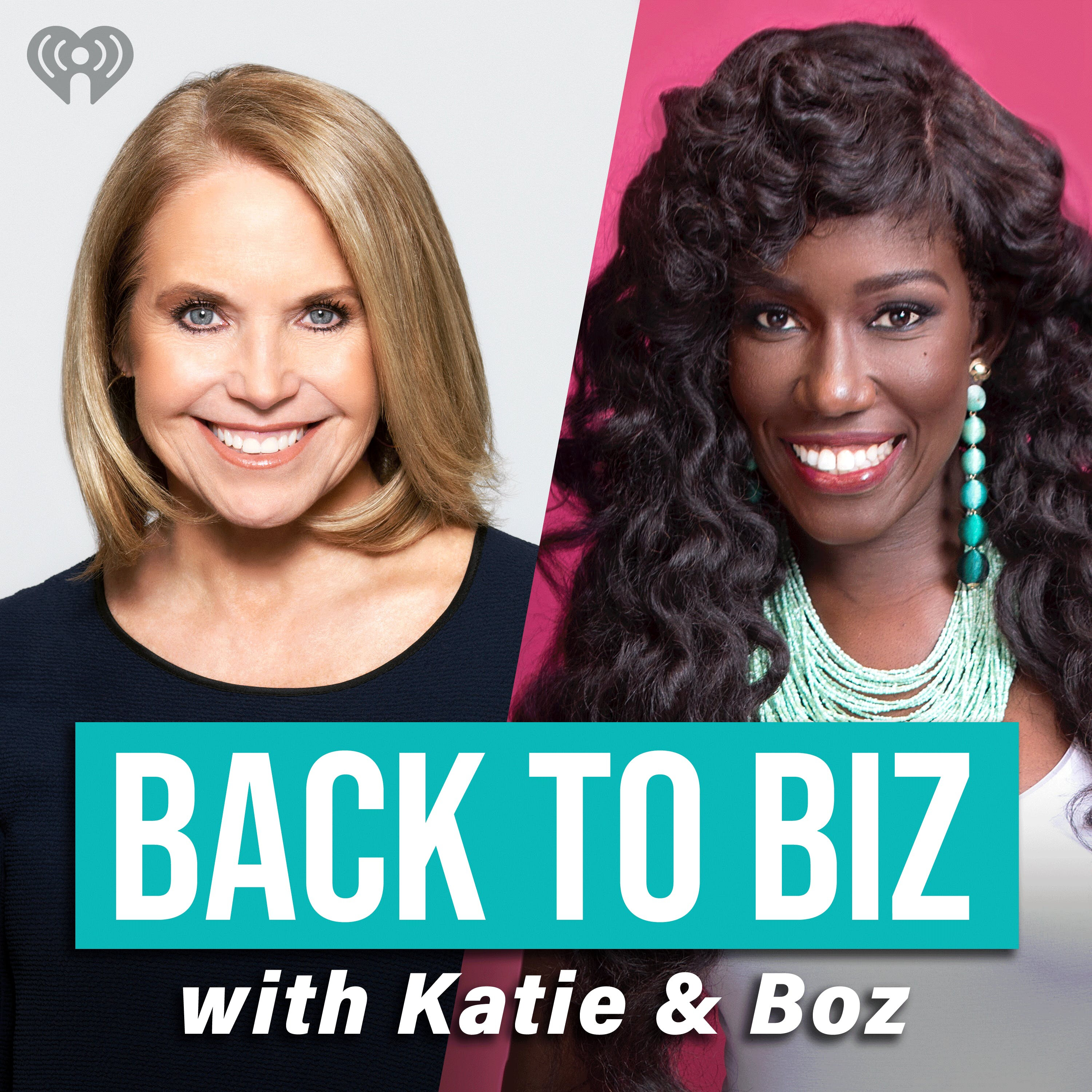
Back to Biz with Katie and Boz: Disney Executive Chairman Bob Iger
On this special episode of Back to Biz with Katie and Boz, Katie takes the mic solo and shares her conversation with Disney Executive Chairman, Bob Iger. Early on, Iger dreamed of becoming the next Walter Conkrite and landed a job as the local weatherman for a small upstate New York TV station. He soon realized he was better suited behind the camera and began working his way up the corporate ladder at ABC, eventually leading the network’s sports and entertainment divisions. In 2005, he was named Disney’s CEO, ultimately transforming the beloved brand into a global powerhouse through a series of bold acquisitions -- Pixar, Marvel, and Lucasfilm all joined the Disney family during Iger’s tenure. Along the way, he built a reputation for his kindness, integrity, and enthusiastic appreciation of creative talent. He stepped down as CEO in February of this year, assuming the role of Executive Chairman. Soon after, the pandemic hit and the world changed seemingly overnight -- particularly for Disney, a company built on in-person experiences like theme parks, movies, sports, and cruise lines. As Iger helps lead the company through perhaps the most challenging time of its nearly 100-year history, he speaks with Katie about this unprecedented moment along with all the other twists and turns of his remarkable life and career. Learn more about your ad-choices at https://www.iheartpodcastnetwork.comSee omnystudio.com/listener for privacy information.
Bonus: An interview with The Lincoln Project co-founder Steve Schmidt
On this special episode of Next Question with Katie Couric, Katie sits down with former Republican strategist Steve Schmidt. While Schmidt might not be a household name, his reputation looms large in the GOP universe -- he’s helped run campaigns for everyone from President George W. Bush to California Gov. Arnold Schwarzenegger and he was the senior campaign strategist and advisor to Sen. John McCain during his 2008 presidential bid. But then, in June 2018, he walked away from the Republican party, citing it as “fully the party of Trump” and “a danger to our democracy and our values.” Now he’s channeling.all of his energy into defeating President Trump in November as co-founder of the Lincoln Project, a political action committee formed by current and former Republicans. In this urgent and timely conversation, Schmidt shares with Katie what led him to renounce the party he had pledged loyalty to for 30 years, what to expect during this final sprint to election day, and how he thinks Trumpism will impact our political system for many years to come. Learn more about your ad-choices at https://www.iheartpodcastnetwork.comSee omnystudio.com/listener for privacy information.
Bonus: An interview with Dr. Anthony Fauci
On this special episode of Next Question with Katie Couric, Katie shares an important conversation with Dr. Anthony Fauci. As Director of the National Institute of Allergy and Infectious Diseases for nearly 40 years, Fauci has advised six presidents and led the fight against emerging diseases including H.I.V., SARS, MERS, and Ebola. Most recently, as the coronavirus pandemic unfolds, he’s taken on the crucial role of America’s explainer-in-chief, breaking down complicated science clearly and providing a trusted, calming presence as our country endures the most devastating public health crisis of our lifetimes. In this wide-ranging conversation, Katie and Dr. Fauci take a deep dive into the issues on all of our minds right now - how to protect ourselves as flu season nears, where we are in the race to find a vaccine, what we should know about sending our kids to school, whether the world has entered a “pandemic era” -- and what exactly that could mean for all us of going forward. Learn more about your ad-choices at https://www.iheartpodcastnetwork.comSee omnystudio.com/listener for privacy information.
Back to Biz with Katie and Boz: University presidents Michael Roth and James Ryan
It’s that time of the year when students typically descend upon university campuses around the country — moving into dorm rooms, filling up stadiums, cramming into classrooms and swelling small towns to capacity. Unfortunately, that is not the college scene this year. After the coronavirus forced schools to shut down last March, those same institutions are struggling to figure out how — or if — students can safely come back this fall. On this episode of Back to Biz with Katie and Boz, co-hosts Katie Couric and Bozoma Saint John tackle this thorny issue with the presidents of their alma matters, James Ryan of the University of Virginia, a public research school in Charlottesville, and Michael Roth of Wesleyan University, a private liberal arts school in Connecticut. The presidents talk about their fall plans, how much of a financial hit their institutions will take, and how the pandemic — and this moment of racial unrest — could change the higher education system for good. For more, subscribe to Katie Couric’s morning newsletter, “Wake-Up Call.” Learn more about your ad-choices at https://www.iheartpodcastnetwork.comSee omnystudio.com/listener for privacy information.
Back to Biz with Katie and Boz: The mom of mom influencers Christine
You don’t have to be a parent to recognize that parenting during COVID is a struggle. When the coronavirus shut down daycare facilities and schools across the country in March, parents became not only full time caretakers, but also teachers, coaches and playdates for their suddenly isolated kids. And working parents — those lucky enough to be able to keep their jobs or work remotely during the shutdown — have had to also find time in the day to do the job that pays the bills. For single working parents, or black or brown parents, that impossible situation, that non-existent work-life balance, is an even heavier burden to bear. But this isn’t new for Christine Michel Carter. In fact, the marketing strategist, working-mom advocate and best-selling author has been “Chicken Little” for the past five years, running around telling everyone the work-life balance sky was falling. COVID just exacerbated the reality. “The world is exposed to the fact that even in married two-income households — unlike mine — women are three times more likely to be the spouse who carries the additional burden of the mental load of just everything that’s going on,” she says. On this episode of Back to Biz with Katie and Boz, co-host Bozoma Saint John talks with Christine about about how to build a better employer-employee relationship, one that doesn’t compartmentalize mothers and fathers, but allows people to bring their whole selves — kids, school mishaps, doctor appointments, birthday parties and all — to the office (or the zoom meeting). Christine and Boz share their own struggles of being a parent in the corporate world, how communities of color are disproportionately affected, and what that so-called work-life balance could look like on the other side of this pandemic. Check out Christine Michel Carter’s book, “Mom AF.”For more, subscribe to Katie Couric’s morning newsletter, “Wake-Up Call.” Learn more about your ad-choices at https://www.iheartpodcastnetwork.comSee omnystudio.com/listener for privacy information.
Back to Biz with Katie and Boz: Ashley Graham
The multi-hyphenate talent Ashley Graham has innovated a career that has spread across fashion, beauty, television, and podcasting. Ashley started modeling when she was just 12, but it wasn’t long before she was breaking boundaries — and changing the face of — the size-obsessed industry, becoming the first curvy model to cover Vogue and the Sports Illustrated Swimsuit Issue (among others), to walk Michael Kors, and to land a major beauty contract (Revlon). On this episode of Back to Biz with Katie and Boz, the model, entrepreneur, TV host, and producer talks to her friend Bozoma Saint John about pushing for more inclusivity and fewer labels at every step of her career. “There was always a label kind of looming over me,” she tells Boz. “Nobody wants to be labeled, yet people still put you in a box for who you are and who you stand for and who you’re rooting for and who you’re not rooting for. And all I simply wanted was to just be accepted for who I was.” Boz and Ashley also talk about motherhood, the need for diversity in all industries, and what it has been like quarantining with her family in her hometown of Lincoln, Nebraska. “We must be very abnormal,” she says, “because it’s working!”For more, subscribe to Katie Couric’s morning newsletter, “Wake-Up Call,” at KatieCouric.com. Learn more about your ad-choices at https://www.iheartpodcastnetwork.comSee omnystudio.com/listener for privacy information.
Back to Biz with Katie and Boz: La La Anthony
This week on Back to Biz with Katie and Boz, Katie Couric is on book deadline! While she’s busy writing, Bozoma Saint John sits down for an intimate conversation with her good friend and all around entertainment renaissance woman La La Anthony. La La shares her career journey from radio personality to MTV VJ (hello, “Total Request Live”) to producer, actress, entrepreneur and activist. They touch upon the ups and downs of quarantine life, but also dive deep into the current state of social and racial unrest and its emotional toll. Although the country’s racial injustices are amplified now, it is a reality both women have dealt with their whole lives and now have to watch their children go through, too. La La shares how she is preparing her 13-year-old son Kiyan for the world he has to live in: “We have a 13-year-old Black son and we live in New York City,” La La says. “My son walks around with a hoodie … he plays basketball, he’s in the gyms, he’s on the courts outside. So we tell him ‘this at any moment could be you.’” It’s a deeply personal conversation about their struggles, as well as their hopes for what can change. “There’s still so much work to do,” La La says, “and you don’t stop just because a hashtag isn’t trending anymore." For more, subscribe to Katie Couric’s morning newsletter, “Wake-Up Call,” at KatieCouric.com. Learn more about your ad-choices at https://www.iheartpodcastnetwork.comSee omnystudio.com/listener for privacy information.
Bonus: H&R Block CEO Jeff Jones on leading a company with purpose
On this special surprise episode of Next Question with Katie Couric, we’re sharing an unreleased interview Katie did back in February with H&R Block CEO Jeff Jones. The interview's release was held as Katie shifted her attention to the coronavirus pandemic. But the conversation — which was done in front of a live audience in our Manhattan offices (another world, right?) — is surprisingly relevant to issues we are grappling with right now, like how to create more inclusive work environments, and the need for companies to lead with purpose. Jeff also talks about being an “unimpressive” kid, how military academy changed the course of his life, and how persistence helped him land his dream job. Jeff ends the conversation with some thoughtful career advice. And a friendly reminder to our listeners, the new, extended tax deadline is just around the corner — July 15!Subscribe to Katie’s Couric’s morning newsletter, “Wake-Up Call,” on KatieCouric.com. Learn more about your ad-choices at https://www.iheartpodcastnetwork.comSee omnystudio.com/listener for privacy information.
Back to Biz with Katie and Boz: Airbnb CEO Brian Chesky
2020 was going to be a big year for Airbnb CEO Brian Chesky: With a valuation around $31 billion, Airbnb was going to go public on March 31. And then the pandemic hit. Within weeks, Airbnb was gutted and Brian was forced to lay off 25 percent of his staff. “It would have been so easy to just spiral,” Brian Chesky says. “But every moment is a moment for us to be doing something that’s defining, to make us better.” On this episode of Back to Biz with Katie and Boz, co-hosts Katie Couric and Bozoma Saint John talk to Brian about how he quickly pivoted his company and how travel will be forever changed. In the wake of the national anti-racism protests, Airbnb has also had to reckon with its record on discrimination. Brian Chesky shares his regrets on not doing more sooner on race and the steps the company is taking now to make the platform and the company more equitable. Sign up for Katie Couric’s morning newsletter, “Wake-Up Call.” Learn more about your ad-choices at https://www.iheartpodcastnetwork.comSee omnystudio.com/listener for privacy information.
Back to Biz with Katie and Boz: Judd Apatow
Judd Apatow is a comedy powerhouse in Hollywood. From “The 40-Year-Old Virgin” to “Knocked Up” and “This is 40,” Judd has altered the comedy-making template, finding the funny in relatable and vulnerable (even cringeworthy) characters and situations. But what about the responsibility that comes with that power? In this moment of national reckoning on race, what are leaders like Judd doing to lift up black voices and stories? On this episode of “Back to Biz with Katie and Boz,” co-hosts Katie Couric and Bozoma Saint John talk to Judd about how Hollywood can bring diversity to the big screen, the future of moviemaking — and going — in a social-distanced world, as well as his new movie. “The King of Staten Island,” starring Pete Davidson, is an incredibly personal story (based on Pete’s own life) about loss, trauma, and mental health, which Judd says is perfect for this moment. The movie is available to watch on demand. Sign up for Katie Couric’s morning newsletter, “Wake-Up Call.” Learn more about your ad-choices at https://www.iheartpodcastnetwork.comSee omnystudio.com/listener for privacy information.
Back to Biz with Katie and Boz: Stacey Abrams
After Stacey Abrams narrowly lost her historic gubernatorial run in 2018, she did not contest the race. She could have, but instead the long-time activist, lawyer and politician put all of her effort to fighting a broken voting system into ensuring fair elections in the future. “This is not about one politician or one race,” she says. “This is about an infrastructure that’s supposed to serve citizens and it’s not.” On this episode of Back to Biz with Katie and Boz, Stacey Abrams talks about the work her organization “Fair Fights Action” is doing to mitigate the harm of voter suppression and how their helping voters to prepare for November. Katie and Boz also talk to Stacey about her childhood, her love of “Star Trek,” that little VP rumor, and the key difference between the protests happening today compared with the ones that broke out after the Rodney King verdict 30 years ago. Stacey Abrams new book “Our Time is Now” is available wherever you buy books. For more information, follow Katie Couric and Bozoma Saint John on Instagram and sign up for Katie Couric’s morning newsletter, “Wake-up Call,” at KatieCouric.com. Learn more about your ad-choices at https://www.iheartpodcastnetwork.comSee omnystudio.com/listener for privacy information.
Back to Biz with Katie and Boz: GM CEO Mary Barra
As the first woman to helm one of the big three Detroit automakers, GM CEO Mary Barra has learned a lot about creating a more diverse and equitable company. “The mindset people have to have is this is never done,” she says. “I look for the day when it doesn’t need special focus, but I think we’re a long way off from having leaders being very deliberate about creating diverse groups, diverse opportunities.” In this episode of Back to Biz with Katie and Boz, Mary Barra talks with co-hosts Katie Couric and Bozoma Saint John about the letter she wrote to her employees about George Floyd’s murder and the actions GM is taking to move the conversation forward. Barra also talks about the early successes of opening the GM facilities as well as the ways the pandemic has accelerated trends that may forever change the GM automobile. Click here for a detailed list of anti-racist resources.Click here to sign up for Katie Couric’s morning newsletter “Wake-Up Call.” Learn more about your ad-choices at https://www.iheartpodcastnetwork.comSee omnystudio.com/listener for privacy information.
Back to Biz with Katie and Boz: Bishop T.D. Jakes and Opal Tometi
On Monday, May 25, George Floyd, a 46-year-old African-American man, accused of using a counterfeit $20 at a deli, was killed in police custody. The next day video captured by bystanders, and spread widely on social media, revealed how brutal and inhumane Floyd’s arrest and last living moments — at the hands of a white cop — really were. Since that video’s release, protesters have taken to the streets in at least 140 cities, demanding justice not only for George Floyd, but also for Breonna Taylor, Ahmaud Arbery and all black lives. On this episode of Back to Biz with Katie and Boz, Katie Couric and Bozoma Saint John speak with Bishop T.D. Jakes, founder and senior pastor of The Potter’s House, and Black Lives Matter co-founder Opal Tometi about what that justice should look like. They discuss the desperate need to not only stop the harm against black people but also repair centuries of damage and why everyone has to step up and speak up for the benefit of all. “This is not a black people’s problem. This an American crisis,” Bishop T.D. Jakes says. “The choice you really have,” Opal Tometi says, “is to be a part of justice or know that you are impeding justice.” Click here for a detailed list of anti-racist resources.Click here for more information or to support Black Lives Matter.Click here to sign up for Katie Couric’s morning newsletter “Wake-Up Call.” Learn more about your ad-choices at https://www.iheartpodcastnetwork.comSee omnystudio.com/listener for privacy information.
Introducing “Back to Biz with Katie and Boz”
How will the pandemic change the way we work, go to school, go out, travel, and experience the world? In this new limited series, co-hosts Katie Couric and Bozoma Saint John set out to understand how this unprecedented moment will change our future. In weekly episodes, Katie and Boz interview CEOs, innovators and thought leaders in industries from tech and media to education and entertainment to fashion and sports, to find out how they are adjusting to — and innovating in —this new world order. Back to Biz with Katie and Boz releases Thursdays during the summer of 2020 right here in the Next Question feed. Learn more about your ad-choices at https://www.iheartpodcastnetwork.comSee omnystudio.com/listener for privacy information.
Back to Biz with Katie and Boz: Tech journalist Kara Swisher
EKatie Couric still has questions. But right now they're mostly focused on the future of business. Considering this unprecedented economic downturn brought on by the coronavirus pandemic, how will industries like tech, education, entertainment, travel, and fashion adjust and innovate to fit our new world order. Introducing "Back to Biz with Katie and Boz," a new interview series co-hosted by award-winning journalist Katie Couric and trailblazing marketing executive Bozoma Saint John. On the premiere episode of "Back to Biz with Katie and Boz," the co-hosts set the stage for their forward-looking series with their first guest, tech and media journalist and podcaster Kara Swisher who offers a big-picture look at the ways the shuttered economy has made Big Tech even bigger — for better and worse. "Any trends that were present have been accelerated and then helped by tech," Kara says. "You could go around from industry to industry. Look at streaming entertainment that people have been using. Look at Netflix — [it's] never had more usage." Katie, Boz and Kara discuss what it means to be an essential worker and why all businesses will have to reassess what "gig work" means. They also talk about the future of education, why TikTok is having more than a moment, and the innovations that are bubbling up in tech right now. Each episode of "Back to Biz with Katie and Boz" will run right here in the Next Question feed. For more information on this episode, subscribe to Katie Couric's morning newsletter "Wake-Up Call" at KatieCouric.com. And make sure to follow Katie Couric and Bozoma Saint John on Instagram. Learn more about your ad-choices at https://www.iheartpodcastnetwork.comSee omnystudio.com/listener for privacy information.
Can this pandemic make us better people?
On this episode of Next Question with Katie Couric, Katie interviews Bozoma Saint John, the Chief Marketing Officer at Endeavor and an all around trailblazing businesswoman who has broken glass ceiling after glass ceiling in Silicon Valley and beyond. Bozoma, who goes by Boz, and Katie talk about what makes brands and leaders authentic and how to help others during this trying time, even when you're feeling depleted yourself. Boz also shares the lessons she learned about overcoming adversity and her own personal crisis after her husband died and how she found her way back to her career and the things that bring her joy. Bozoma Saint John is someone Next Question listeners will want to get to know because Katie and Boz are cooking up something exciting to be released in the Next Question feed very soon. Stay tuned for that, but in the meantime take a moment to learn a bit from Boz about how to excel by being your true self. For more, subscribe to Katie Couric's morning newsletter "Wake-Up Call" at KatieCouric.com. Learn more about your ad-choices at https://www.iheartpodcastnetwork.comSee omnystudio.com/listener for privacy information.
Bonus: Will the pandemic forever change America's place on the world stage?
In this special bonus episode of Next Question, Katie takes a step back to consider what the bigger, global picture might look like in the wake of the coronavirus pandemic. She speaks with Richard Haass, president of the Council on Foreign Relations, who shares his belief that this crisis won’t so much change the basic direction of world history, but will “accelerate” it. He also talks about his new book, “The World: A Brief Introduction” and his hope for an informed citizenry in which all Americans are equipped with the “foundation of understanding” about our country and the larger world.For more, sign up for Katie's morning newsletter "Wake-Up Call" at KatieCouric.com. Learn more about your ad-choices at https://www.iheartpodcastnetwork.comSee omnystudio.com/listener for privacy information.
How can the restaurant industry get back to business?
Just a few months ago, restaurants were the places we chose to see friends, mark our milestones, celebrate our special occasions, or unwind after a stressful week. But today, in our social-distancing world, just imagining the typically crowded, intimate scene of a Friday night at your favorite neighborhood spot can send a shiver down your spine. Which is why the restaurant industry has been one of the hardest-hit by the pandemic so far, with more than 8 million employees laid off and a more than 80-billion sales loss. As we continue to explore what life will look like once we begin to get back to some sort of normal, Katie Couric turns to business leaders and entrepreneurs to find out how they see their industries re-emerging. On this episode of Next Question with Katie Couric, Katie speaks with restauranteur Danny Meyer and Shake Shack CEO Randy Garutti to find out how the restaurant industry can get back to business.For more, sign up for Katie Couric's morning newsletter "Wake-Up Call" at KatieCouric.dom. Learn more about your ad-choices at https://www.iheartpodcastnetwork.comSee omnystudio.com/listener for privacy information.
Bonus: An interview with California Gov. Gavin Newsom
In this special bonus episode of Next Question with Katie Couric, Katie shares her conversation with California Governor Gavin Newsom, which was recorded as part of her ongoing video series with Time Magazine — 'TIME Reports with Katie Couric' — that shines a light on the heroes and newsmakers of this COVID moment. Governor Newsom has been praised for his leadership of California, which despite being among the first to report cases of the virus, has managed to avoid the catastrophic spread we've seen in other places. He shares with Katie the guiding principles that shaped his early response and considers the way forward for his state — and all of us. For more, sign up for Katie's morning newsletter "Wake-Up Call" at KatieCouric.com. Learn more about your ad-choices at https://www.iheartpodcastnetwork.comSee omnystudio.com/listener for privacy information.
How will the pandemic change jobs — and who will be left behind?
With widespread shelter-in-place orders shutting down major cities and many states, the U.S. economy has come to an abrupt standstill. And after just five weeks, this COVID crisis has forced more than 26 million Americans to file for unemployment. On this episode of Next Question with Katie Couric, Katie talks to Victor Tan Chen, sociology professor at Virginia Commonwealth University, and author of “Cut Loose: Jobless and Hopeless in an Unfair Economy.” Chen explains what makes this unemployment crisis so unprecedented, why it’s underscoring pre-existing inequalities in the labor force and how the pandemic could change the job market — and who it could leave behind. Throughout the episode, we also hear from the people behind the unemployment statistics.Read the Atlantic article ‘The Second Phase of Unemployment Will Be Harsher,’ by Victor Tan Chen and Ofer Sharone.Sign up for Katie Couric’s morning newsletter, Wake-Up Call. Learn more about your ad-choices at https://www.iheartpodcastnetwork.comSee omnystudio.com/listener for privacy information.
Bonus: When -- and HOW -- can we return to 'normal'?
As our loyal listeners know, Next Question with Katie Couric has been devoted to covering the coronavirus crisis from the moment this unprecedented pandemic began to upend virtually every facet of our daily lives. Now, with this special bonus episode, Katie begins a new chapter, exploring something most all of us are surely wondering -- what will “life after coronavirus” look like? First up, a conversation with one of the most respected and experienced authorities in public health today, Dr. Tom Frieden. Dr. Frieden is the former Director of the U.S. Centers for Disease Control (aka the CDC) and is currently President of the non-profit, Resolve to Save Lives, which aims to make the world safe from epidemics. He shares with Katie his plan to “box in” the coronavirus, so we can safely get the country up and running -- and, hopefully, begin to find and embrace our "new normal." Learn more about your ad-choices at https://www.iheartpodcastnetwork.comSee omnystudio.com/listener for privacy information.
America’s Maternal Mortality Crisis, Part 2
Yesterday, on “Next Question with Katie Couric,” we heard the devastating story of how one mother, Kira Johnson, became a part of a shameful statistic:that between 700 and 900 American women die each year from pregnancy and childbirth-related causes. We learned that structural issues like racism as well as an increase in medical interventions during labor, have led to more women dying from pregnancy and childbirth today than they did 30 years ago. Today, in Part 2, Katie tackles her next question: What is being done to better protect American mothers, and particularly women of color? Katie talks to Olympic runner Allyson Felix who, in 2018, became one of the 50,000 women who nearly die from pregnancy-related complications. “Being a professional athlete,” Allyson says, “I just thought that will never happen to me.” Katie also hears from public health leaders like Dr. Debra Bingham and politicians like New Jersey’s First Lady Tammy Murphy who are actively trying to turn high maternal mortality rates around. Today, given the additional challenges posed by the coronavirus pandemic and the existing racial health disparities COVID-19 has only exacerbated, this kind of work is more urgent and relevant than ever. Guests and resources for this episode include: Olympic runner Allyson Felix helps March of Dimes advocate for the health and safety of moms and babies. New Jersey First Lady Tammy Murphy launched in 2019 Nurture NJ, a statewide awareness campaign committed to reducing maternal mortality and morbidity. New moms can stay on top of symptoms with the Post-Birth Warning Signs factsheet from the The Institute for Perinatal Quality Improvement To help families like the Johnsons, visit 4Kira4Moms.com For more information, sign up for Katie Couric’s newsletter Wake-Up Call at KatieCouric.com.Correction (4-27-20):The podcast incorrectly attributes the "Save Your Life" POST BIRTH warning signs handout to the Institute for Perinatal Quality Improvement. It was developed under the leadership of Debra Bingham, DrPH, RN, FAAN when she worked at the Association of Women's Health Obstetrics and Neonatal Nurses. Learn more about your ad-choices at https://www.iheartpodcastnetwork.comSee omnystudio.com/listener for privacy information.
America’s Maternal Mortality Crisis, Part 1
Long before COVID-19 hit the U.S. in early 2020, the American health system was suffering another crisis: alarmingly high — and rising — rates of maternal mortality, particularly among black women. In this country, an estimated two women die every day from pregnancy and childbirth-related causes. And 60 percent of those deaths could have been prevented. And now, the coronavirus is forcing tens of thousands of women to give birth in unprecedented circumstances — sometimes alone, and often without the support networks they need to stay healthy. In Part 1 of a special episode of “Next Question with Katie Couric,” Katie talks to Charles Johnson, whose wife Kira died in 2016 just hours after giving birth to their second son, Langston. “I thought that what happened to Kira was an isolated incident,” Charles tells Katie. “I thought, this doesn’t happen in 2016, in our country.” Why are women like Kira Johnson — healthy, prepared, and insured — dying? And how did the U.S. become one of the most dangerous places in the developed world to have a baby? Guests and resources for this episode include: Charles Johnson, founder of 4Kira4Moms, a non-profit dedicated to maternal mortality advocacy. Dr. Debra Bingham, founder and executive director of the Institute for Perinatal Quality Improvement, and associate professor at the University of Maryland Monica Rose McLemore, associate professor in the family health care nursing department at the University of California, San Francisco Nina Martin, an investigative reporter at ProPublica and co-author of the award-winning ProPublica and NPR series “Lost Mothers.” For more information, sign up for Katie Couric’s newsletter Wake-Up Call at KatieCouric.com. Learn more about your ad-choices at https://www.iheartpodcastnetwork.comSee omnystudio.com/listener for privacy information.
How do you have a baby during a pandemic?
Hospitals in hotspots like New York City may have postponed or canceling non-essential surgeries due to the coronavirus, but, you can’t postpone birth. Pregnant mothers are still entering hospitals, sometimes alone, to deliver babies to doctors and nurses in full hazmat gear. On this episode of Next Question with Katie Couric, Katie finds out what it's like — from the perspective of mothers, doctors, and doulas — to give birth in the time of coronavirus.First, Katie talks to Alicia Biggs, a mom who had to give birth alone at the end of March. Then, Katie checks in with two obstetricians, one from New York Presbyterian in Manhattan and one from the Elmhurst Hospital Center in Queens, to understand the obstacles they face in keeping pregnant and laboring moms healthy and safe. Finally, New York City doula Chantal Traub offers tips to pregnant women and their partners for how to feel safe — and empowered — during a time of uncertainty. Next Question listeners can go to ChantalTraub.com to get their free guide for how to enter birth with confidence and calm. For more, subscribe to Katie's morning newsletter Wake-Up Call at KatieCouric.com. Learn more about your ad-choices at https://www.iheartpodcastnetwork.comSee omnystudio.com/listener for privacy information.
How can we feel less alone during — and after — COVID-19?
Long before the coronavirus upended our lives and distanced ourselves from our jobs, routines, and loved ones, loneliness was already considered a widespread issue. But now, whether you're living alone or surrounded by people, that feeling of loneliness is probably more profound than ever. On this episode of Next Question with Katie Couric, Katie talks with former surgeon general Vivek Murthy about how dangerous this human condition can be, not only to our emotional health but also our mental and physical health. In a discussion around his new book, "Together: The Healing Power of Human Connection in a Sometimes Lonely World," Katie and Dr. Murthy talk about ways to mitigate our loneliness and how to use this time of isolation to appreciate and strengthen our relationships. Later in the show, massage therapist David Lobenstine shares a few techniques — to use on yourself or on one of your quarantine partners — to help relieve the effects of this longterm stress and loneliness. Sign up for Katie's morning newsletter, Wake-Up Call, at KatieCouric.com for more information on today's episode, the coronavirus, and the day's most pressing news. Learn more about your ad-choices at https://www.iheartpodcastnetwork.comSee omnystudio.com/listener for privacy information.
What can a movie about a pandemic teach us about the real thing?
In these unprecedented times, when tensions, anxieties and fears about the coronavirus are high, many people are finding comfort in a surprising source: Steven Soderbergh’s 2011 thriller “Contagion.” It’s about a mysterious and highly contagious virus that crosses continents, causes city-wide lockdowns, throws government protocols into chaos, upends daily life, and instills an almost universal state of dread across the globe. Sound familiar? Katie talks with “Contagion” screenwriter Scott Burns and one of the lead consultants on the film, Dr. Ian Lipkin, the John Snow Professor of Epidemiology at Columbia University’s Mailman School of Public Health, about why the movie is having such a moment, how they managed to create something so prescient, and ways our own pandemic nightmare might end. The pair also touch on their latest collaboration: With help from the original “Contagion” cast, Scott Burns and the Mailman School of Public Health have created PSAs to help spread the word about social distancing, hand washing, and other life-saving measures in the age of COVID-19. You can check those out at ControlTheContagion.org and spread the word on social media with #ControlTheContagion. Sign up for Katie Couric's morning newsletter, Wake-Up Call, at KatieCouric.com. Learn more about your ad-choices at https://www.iheartpodcastnetwork.comSee omnystudio.com/listener for privacy information.
Coronavirus update: Why wasn't the U.S. better prepared?
On this episode of Next Question with Katie Couric, Katie continues her special coverage of the coronavirus pandemic. First, Katie looks to New York City — now the national epicenter of this crisis — where the rate of positive COVID-19 cases is doubling ever three days. Which means the peak of coronavirus infections will be much higher and hit New York much sooner than expected, giving the city's vast network of hospitals — which are already under tremendous strain — less time to prepare for a deluge of patients. Katie talks to Dr. Robert Femia, the chair of emergency medicine at NYU Langone to find out how emergency rooms in New York City are faring now and how they are bracing for what's to come. Then, Katie speaks to Beth Cameron, the former head of the National Security Council Directorate for Global Health Security and Biodefense, about why the U.S. wasn't prepared for this pandemic. Beth Cameron is now the Vice President for Global Biological Policy and Programs at the Nuclear Threat Initiative, which has a new effort to help local officials during the COVID-19 pandemic. You can find more information about that here. Learn more about your ad-choices at https://www.iheartpodcastnetwork.comSee omnystudio.com/listener for privacy information.