
New Books in Science, Technology, and Society
2,948 episodes — Page 32 of 59
Ep 55Elena Esposito, "Artificial Communication: How Algorithms Produce Social Intelligence" (MIT Press, 2022)
Algorithms that work with deep learning and big data are getting so much better at doing so many things that it makes us uncomfortable. How can a device know what our favorite songs are, or what we should write in an email? Have machines become too smart? In Artificial Communication: How Algorithms Produce Social Intelligence (MIT Press, 2022), Elena Esposito argues that drawing this sort of analogy between algorithms and human intelligence is misleading. If machines contribute to social intelligence, it will not be because they have learned how to think like us but because we have learned how to communicate with them. Esposito proposes that we think of "smart" machines not in terms of artificial intelligence but in terms of artificial communication. To do this, we need a concept of communication that can take into account the possibility that a communication partner may be not a human being but an algorithm--which is not random and is completely controlled, although not by the processes of the human mind. Esposito investigates this by examining the use of algorithms in different areas of social life. She explores the proliferation of lists (and lists of lists) online, explaining that the web works on the basis of lists to produce further lists; the use of visualization; digital profiling and algorithmic individualization, which personalize a mass medium with playlists and recommendations; and the implications of the "right to be forgotten." Finally, she considers how photographs today seem to be used to escape the present rather than to preserve a memory. Galina Limorenko is a doctoral candidate in Neuroscience with a focus on biochemistry and molecular biology of neurodegenerative diseases at EPFL in Switzerland. Learn more about your ad choices. Visit megaphone.fm/adchoices Support our show by becoming a premium member! https://newbooksnetwork.supportingcast.fm/science-technology-and-society
Ep 119Pandemic Perspectives 11: The Covid Pandemic and Learning about Learning
In this Pandemic Perspectives Podcast, Ideas Roadshow founder and host Howard Burton talks to renowned cognitive psychologist Stephen Kosslyn about how the COVID-19 pandemic influenced, or didn't influence, our understanding of the learning process. Ideas Roadshow's Pandemic Perspectives Project consists of three distinct, reinforcing elements: a documentary film (Pandemic Perspectives), book (Pandemic Perspectives: A filmmaker's journey in 10 essays) and a series of 24 detailed podcasts with many of the film's expert participants. Visit www.ideasroadshow.com for more details. Howard Burton is the founder of Ideas Roadshow and host of the Ideas Roadshow Podcast. He can be reached at [email protected]. Learn more about your ad choices. Visit megaphone.fm/adchoices Support our show by becoming a premium member! https://newbooksnetwork.supportingcast.fm/science-technology-and-society
Ep 82Donald A. Barclay, "Disinformation: The Nature of Facts and Lies in the Post-Truth Era" (Rowman and Littlefield, 2022)
Does the idea of a world in which facts mean nothing cause anxiety? Fear? Maybe even paranoia? Disinformation: The Nature of Facts and Lies in the Post-Truth Era (Rowman and Littlefield, 2022) cannot cure all the ills of a post-truth world, but by demonstrating how the emergence of digital technology into everyday life has knitted together a number of seemingly loosely related forces–historical, psychological, economic, and culture–to create the post-truth culture, Disinformation will help you better understand how we got to where we now are, see how we can move beyond a culture in which facts are too easily dismissed, and develop a few highly practical skills for separating truth from lies. Disinformation explains: How human psychology—the very way our brains work—can leave us vulnerable to disinformation. How the early visions of what a global computer network would and should be unintentionally laid the groundwork for the current post-truth culture. The ways in which truth is twisted and misrepresented via propaganda and conspiracy theories. How new technology not only spreads disinformation but may also be changing the way we think. The ways in which the economics of information and the powerful influence of popular culture have contributed to the creation of the post-truth culture. Unlike the far-too-numerous one-sided, politically ideological treatments of the post-truth culture, Disinformation does not seek to point the finger of blame at any individuals or groups; instead, its focus is on how a number of disparate forces have influenced human behaviors during a time when all of humanity is struggling to better understand and more effectively control (for better or worse) challenging new technologies that are straining the limits of human intellectual and emotional capacity. Learn more about your ad choices. Visit megaphone.fm/adchoices Support our show by becoming a premium member! https://newbooksnetwork.supportingcast.fm/science-technology-and-society
Ep 41David M. Peña-Guzmán, "When Animals Dream: The Hidden World of Animal Consciousness" (Princeton UP, 2022)
Are humans the only dreamers on Earth? What goes on in the minds of animals when they sleep? When Animals Dream: The Hidden World of Animal Consciousness (Princeton UP, 2022) brings together behavioral and neuroscientific research on animal sleep with philosophical theories of dreaming. It shows that dreams provide an invaluable window into the cognitive and emotional lives of nonhuman animals, giving us access to a seemingly inaccessible realm of animal experience. David Peña-Guzmán uncovers evidence of animal dreaming throughout the scientific literature, suggesting that many animals run “reality simulations” while asleep, with a dream-ego moving through a dynamic and coherent dreamscape. He builds a convincing case for animals as conscious beings and examines the thorny scientific, philosophical, and ethical questions it raises. Once we accept that animals dream, we incur a host of moral obligations and have no choice but to rethink our views about who animals are and the interior lives they lead. A mesmerizing journey into the otherworldly domain of nonhuman consciousness, When Animals Dream carries profound implications for contemporary debates about animal cognition, animal ethics, and animal rights, challenging us to regard animals as beings who matter, and for whom things matter. Learn more about your ad choices. Visit megaphone.fm/adchoices Support our show by becoming a premium member! https://newbooksnetwork.supportingcast.fm/science-technology-and-society
Ep 1203Gijs Mom, "Globalizing Automobilism: Exuberance and the Emergence of Layered Mobility, 1900–1980" (Berghahn Books, 2020)
Why has "car society" proven so durable, even in the face of mounting environmental and economic crises? In Globalizing Automobilism: Exuberance and the Emergence of Layered Mobility, 1900–1980 (Berghahn Books, 2020), Gijs Mom traces the global spread of the automobile in the postwar era and investigates why adopting more sustainable forms of mobility has proven so difficult. Drawing on archival research as well as wide-ranging forays into popular culture, Mom reveals here the roots of the exuberance, excess, and danger that define modern automotive culture. Learn more about your ad choices. Visit megaphone.fm/adchoices Support our show by becoming a premium member! https://newbooksnetwork.supportingcast.fm/science-technology-and-society
Ep 116Alison Calder, "Synaptic" (U Regina Press, 2022)
This intricate, yearning work from award-winning poet Alison Calder asks us to think about the way we perceive and the ways in which we seek to know ourselves and others. In Synaptic (University of Regina Press, 2022) each section explores key themes in science, neurology, and perception. The first, Connectomics, riffs on scientific language to work with and against that language’s intentions. Attempting to map the brain’s neural connections, it raises fundamental questions about interiority and the self. The lyric considerations in these poems are juxtaposed against the scientific-like footnotes which, in turn, invoke questions undermining authority and power. The second section, Other Disasters, explores ways of seeing or and being seen, from considerations of folklore to modern art to daily life. Sine Yaganoglu trained as a neuroscientist and bioengineer (PhD, ETH Zurich). She currently works in innovation management and diagnostics. Learn more about your ad choices. Visit megaphone.fm/adchoices Support our show by becoming a premium member! https://newbooksnetwork.supportingcast.fm/science-technology-and-society
Ep 1Will Kinney, "An Infinity of Worlds: Cosmic Inflation and the Beginning of the Universe" (MIT Press, 2022)
In the beginning was the Big Bang: an unimaginably hot fire almost fourteen billion years ago in which the first elements were forged. The physical theory of the hot nascent universe--the Big Bang--was one of the most consequential developments in twentieth-century science. And yet it leaves many questions unanswered: Why is the universe so big? Why is it so old? What is the origin of structure in the cosmos? In An Infinity of Worlds: Cosmic Inflation and the Beginning of the Universe (MIT Press, 2022), physicist Will Kinney explains a more recent theory that may hold the answers to these questions and even explain the ultimate origins of the universe: cosmic inflation, before the primordial fire of the Big Bang. Kinney argues that cosmic inflation is a transformational idea in cosmology, changing our picture of the basic structure of the cosmos and raising unavoidable questions about what we mean by a scientific theory. He explains that inflation is a remarkable unification of inner space and outer space, in which the physics of the very large (the cosmos) meets the physics of the very small (elementary particles and fields), closing in a full circle at the first moment of time. With quantum uncertainty its fundamental feature, this new picture of cosmic origins introduces the possibility that the origin of the universe was of a quantum nature. Kinney considers the consequences of eternal cosmic inflation. Can we come to terms with the possibility that our entire observable universe is one of infinitely many, forever hidden from our view? Galina Limorenko is a doctoral candidate in Neuroscience with a focus on biochemistry and molecular biology of neurodegenerative diseases at EPFL in Switzerland. Learn more about your ad choices. Visit megaphone.fm/adchoices Support our show by becoming a premium member! https://newbooksnetwork.supportingcast.fm/science-technology-and-society
Ep 321Simon Peter Rowberry, "Four Shades of Gray: The Amazon Kindle Platform" (MIT Press, 2022)
Four Shades of Gray: The Amazon Kindle Platform (MIT Press, 2022) is the first book-length analysis of Amazon's Kindle explores the platform's technological, bibliographical, and social impact on publishing. Dr. Simon Peter Rowberry recounts how Amazon built the infrastructure for a new generation of digital publications, then considers the consequences of having a single company control the direction of the publishing industry. Exploring the platform from the perspectives of technology, texts, and uses, he shows how the Kindle challenges traditional notions of platforms as discrete entities. Dr. Rowberry argues that Amazon's influence extends beyond “disruptive technology” to embed itself in all aspects of the publishing trade; yet despite industry pushback, he says, the Kindle has had a positive influence on publishing. Dr. Rowberry documents the first decade of the Kindle with case studies of Kindle Popular Highlights, an account of the digitization of books published after 1922, and a discussion of how Amazon's patent filings reflect a shift in priorities. Rowberry argues that while it was initially convenient for the book trade to outsource ebook development to Amazon, doing so has had adverse consequences for publishers in the mid- and long term, limiting opportunities for developing an inclusive and forward-thinking digital platform. While it has forced publishers to embrace digital forms, the Kindle has also empowered some previously marginalized readerships. Although it is still too early to judge the long-term impact of ebooks compared with that of the older technologies of clay tablets, the printing press, and offset printing, the shockwaves of the Kindle continue to shape publishing. This interview was conducted by Dr. Miranda Melcher whose doctoral work focused on post-conflict military integration, understanding treaty negotiation and implementation in civil war contexts, with qualitative analysis of the Angolan and Mozambican civil wars. Learn more about your ad choices. Visit megaphone.fm/adchoices Support our show by becoming a premium member! https://newbooksnetwork.supportingcast.fm/science-technology-and-society
Ep 34Nigel Rothfels, "Elephant Trails: A History of Animals and Cultures" (Johns Hopkins UP, 2021)
When looking at historic records of all kinds—from prehistoric cave drawings and ancient rock art in Africa and India, from poetic narrations of travelers to hunter memoirs and press stories about zoos, from reports of mystical graveyards to museum warehouses collecting bones—notions about elephants in the West have come a long way. These ideas (their transformation; their persistence) tell perhaps more about how Western cultures have understood themselves than about the actual lives and potential histories of proboscideans. In Elephant Trails: A History of Animals and Cultures (Johns Hopkins UP, 2021), Nigel Rothfels follows the paths of concrete elephant lives, their struggles and their deaths, in order to produce a history of one particular elephant, that which inhabits Western mentalities up to the present and which is composed as much of fantasy as thick skin. In this conversation, Dr. Rothfels expands on some of the tenets of this book, as well as the trails that he himself followed in order to better understand how present notions about elephants in the West have been historically configured. This is a history of ideas about the magnificent animal we call the elephant, threaded with stories of flesh and blood. Marcela Hernández, PhD candidate in Philosophy at the Goethe University in Frankfurt, Germany, is currently writing a dissertation on animals and gestures in films. She can be reached at [email protected] Learn more about your ad choices. Visit megaphone.fm/adchoices Support our show by becoming a premium member! https://newbooksnetwork.supportingcast.fm/science-technology-and-society
Ep 98Facing Failure and the Museum Dedicated to It
Welcome to The Academic Life! In this episode you’ll hear about: Why failure is part of the hidden curriculum Why you can’t be creative or innovative without failing [sometimes a lot] How to learn from it, instead of sweeping it under the rug A failure our guest and our host each faced A discussion of the Museum of Failure Our guest is: Dr. Samuel West, a licensed psychologist (cognitive behavioral therapy) with a PhD in Organizational Psychology. His research focuses on creating climates for innovation by encouraging experimentation and exploration. In 2017 he founded the Museum of Failure showcasing over a 100 innovation failures from around the world. The aim of the museum is to stimulate productive discussions about the important role of failure for innovation and to increase organizational acceptance of failure. Our host is: Dr. Christina Gessler, the co-creator and co-producer of the Academic Life. She previously worked in Museum Education at a small museum in New York; and as a PhD student worked for a professor who was a Smithsonian curator. Listeners to this episode might also be interested in: The Museum of Failure The Museum of Broken Relationships The remote control referred to in this podcast The marshmallow candy referred to in this podcast TedTalk on Failing “Mindfully” Podcast on fear and failure Podcast on the role of failure in student success Failosophy: A Handbook for When Things Go Wrong, by Elizabeth Day Dr. Manu Kapur’s work on Productive Failure You are smart and capable, but you aren’t an island and neither are we. We reach across our mentor network to bring you experts about everything from how to finish that project, to how to take care of your beautiful mind. Wish we’d bring on an expert about something? DM us on Twitter: The Academic Life @AcademicLifeNBN. Learn more about your ad choices. Visit megaphone.fm/adchoices Support our show by becoming a premium member! https://newbooksnetwork.supportingcast.fm/science-technology-and-society
Ep 285Mark Neocleous, "The Politics of Immunity: Security and the Policing of Bodies" (Verso, 2022)
Our contemporary political condition is obsessed with immunity. The immunity of bodies and the body politic; personal immunity and herd immunity; how to immunize the social system against breakdown. The obsession intensifies with every new crisis and the mobilization of yet more powers of war and police, from quarantine to border closures and from vaccination certificates to immunological surveillance. Engaging four key concepts with enormous cultural weight – Cell, Self, System and Sovereignty – The Politics of Immunity: Security and the Policing of Bodies (Verso, 2022) moves from philosophical biology to intellectual history and from critical theory to psychoanalysis to expose the politics underpinning the way immunity is imagined. At the heart of this imagination is the way security has come to dominate the whole realm of human experience. From biological cell to political subject, and from physiological system to the social body, immunity folds into security, just as security folds into immunity. The book thus opens into a critique of the violence of security and spells out immunity’s tendency towards self-destruction and death: immunity, like security, can turn its aggression inwards, into the autoimmune disorder. Wide-ranging and polemical, this book lays down a major challenge to the ways in which the immunity of the self and the social are imagined. In this interview, I spoke with Mark Neocleous about his fascinating and wide-ranging book The Politics of Immunity. We also spent time discussing his previous work on security and police power, the personal context informing this work, and connections with the ongoing UK undercover policing controversy (discussed in my previous interview with the authors of Deep Deception). Content warning: between 43-45 minutes into the podcast, there is a brief discussion of suicide in the context of Mark's forthcoming work. Mark Neocleous is Professor of the Critique of Political Economy at Brunel University in London, and is well-known for his influential work on police power and security. His recent books include The Universal Adversary: Security, Capital and 'The Enemies of All Mankind' (2016); War Power, Police Power (2014); and the newly-reissued A Critical Theory of Police Power: The Fabrication of Social Order (2021). Catriona Gold is a PhD candidate in Geography at University College London. She is currently researching the US Passport Office's role in governing Cold War travel, and broadly interested in questions of security, surveillance and mobility. She can be reached by email or on Twitter. Learn more about your ad choices. Visit megaphone.fm/adchoices Support our show by becoming a premium member! https://newbooksnetwork.supportingcast.fm/science-technology-and-society
Ep 186Banu Subramaniam, "Holy Science: The Biopolitics of Hindu Nationalism" (U of Washington Press, 2019)
In Holy Science: The Biopolitics of Hindu Nationalism (University of Washington Press, 2019), Banu Subramaniam examines how science and religion have come together to propel a vision of the modern Indian nation, and in particular, a Hindu nationalist vision of India. Subramaniam demonstrates that the politics of gender, race, class, caste, sexuality, and indigeneity are deeply implicated in the projects and narratives of the nation. Raj Balkaran is a scholar, online educator, and life coach. For information see rajbalkaran.com. Learn more about your ad choices. Visit megaphone.fm/adchoices Support our show by becoming a premium member! https://newbooksnetwork.supportingcast.fm/science-technology-and-society
Ep 12Sam Tatam, "Evolutionary Ideas: Unlocking Ancient Innovation to Solve Tomorrow's Challenges" (Harriman House, 2022)
When faced with new challenges, it’s easy to feel our solutions need to be equally unprecedented. We think we need a revolution. But what if this is a big mistake? In Evolutionary Ideas, Sam Tatam shows how behavioral science and evolutionary psychology can help us solve tomorrow’s challenges, not by divining something the world has never seen, but by borrowing from yesterday’s solutions – often in the most unexpected ways. Just as millions of years of evolution have helped craft the wing and dorsal fin, thousands of engineers, designers, marketers, and advertisers have toiled to solve many of the problems you face today. Over time, through intent, design, social learning and sheer luck, we have found what works. Armed with an enhanced ability to see these patterns in human innovation, we can now systematically approach the creative process to develop more effective ideas more readily and rapidly. Sam Tatam's book Evolutionary Ideas: Unlocking Ancient Innovation to Solve Tomorrow's Challenges (Harriman House, 2022) explores five of the most critical challenges we face today, and we learn how to ‘breed’ more effective solutions from those that have survived. The result is a dynamic and exciting way of solving problems and supercharging creativity – for anyone in any endeavor. John Emrich has worked for decades in corporate finance, business valuation and fund management. He has a podcast about the investment advisory industry called Kick the Dogma. [email protected]. Learn more about your ad choices. Visit megaphone.fm/adchoices Support our show by becoming a premium member! https://newbooksnetwork.supportingcast.fm/science-technology-and-society
Ep 283Eve Ng, "Cancel Culture: A Critical Analysis" (Palgrave Macmillan, 2022)
Eve Ng’s new book Cancel Culture: A Critical Analysis (Palgrave Macmillan, 2022), examines the phenomenon of "cancel culture" from a critical media studies perspective, as both cancel practices (what people and institutional actors do) and cancel discourses (commentary about cancelling). Ng traces multiple lines of origins for cancel practices and discourses, in the domains of Black communicative practices (e.g. cancelling relationship to "dissing"), celebrity and fan cultures, consumer culture (especially around consumer nationalist cancellings), and national politics (U.S. conservative criticisms of cancelling, and nationalist cancelling events in mainland China). Her analysis moves beyond popular press accounts about the latest targets of cancelling or familiar free speech debates, and underscores the different configurations of power associated with “cancel culture” in specific cultural and political contexts. Louisa Hann recently attained a PhD in English and American studies from the University of Manchester, specialising in the political economy of HIV/AIDS theatres. She has published work on the memorialisation of HIV/AIDS on the contemporary stage and the use of documentary theatre as a neoliberal harm reduction tool. She is currently working on a monograph based on her doctoral thesis. You can get in touch with her at [email protected]. Learn more about your ad choices. Visit megaphone.fm/adchoices Support our show by becoming a premium member! https://newbooksnetwork.supportingcast.fm/science-technology-and-society
Ep 118Pandemic Perspectives 10: Covid and the Art of Science Communication
In this Pandemic Perspectives Podcast, Ideas Roadshow founder and host Howard Burton talks to John Tregoning, Imperial College respiratory infections researcher and author of the acclaimed book Infectious: Pathogens and How We Fight Them. Ideas Roadshow's Pandemic Perspectives Project consists of three distinct, reinforcing elements: a documentary film (Pandemic Perspectives), book (Pandemic Perspectives: A filmmaker's journey in 10 essays) and a series of 24 detailed podcasts with many of the film's expert participants. Visit www.ideasroadshow.com for more details. Howard Burton is the founder of Ideas Roadshow and host of the Ideas Roadshow Podcast. He can be reached at [email protected]. Learn more about your ad choices. Visit megaphone.fm/adchoices Support our show by becoming a premium member! https://newbooksnetwork.supportingcast.fm/science-technology-and-society
Ep 163Samuel J. Redman, "Prophets and Ghosts: The Story of Salvage Anthropology" (Harvard UP, 2021)
Prophets and Ghosts: The Story of Salvage Anthropology (Harvard UP, 2021) is a searching account of nineteenth-century salvage anthropology, an effort to preserve the culture of “vanishing” Indigenous peoples through dispossession of the very communities it was meant to protect. In the late nineteenth century, anthropologists, linguists, archaeologists, and other chroniclers began amassing Indigenous cultural objects—crafts, clothing, images, song recordings—by the millions. Convinced that Indigenous peoples were doomed to disappear, collectors donated these objects to museums and universities that would preserve and exhibit them. Samuel Redman dives into the archive to understand what the collectors deemed the tradition of the “vanishing Indian” and what we can learn from the complex legacy of salvage anthropology. The salvage catalog betrays a vision of Native cultures clouded by racist assumptions—a vision that had lasting consequences. The collecting practice became an engine of the American museum and significantly shaped public education and preservation, as well as popular ideas about Indigenous cultures. Prophets and Ghosts teases out the moral challenges inherent in the salvage project. Preservationists successfully maintained an important human inheritance, sometimes through collaboration with Indigenous people, but collectors’ methods also included outright theft. The resulting portrait of Indigenous culture reinforced the public’s confidence in the hierarchies of superiority and inferiority invented by “scientific” racism. Today the same salvaged objects are sources of invaluable knowledge for researchers and museum visitors. But the question of what should be done with such collections is nonetheless urgent. Redman interviews Indigenous artists and curators, who offer fresh perspectives on the history and impact of cultural salvage, pointing to new ideas on how we might contend with a challenging inheritance. Alex Golub is associate professor of anthropology, University of Hawai‘i at Mānoa Learn more about your ad choices. Visit megaphone.fm/adchoices Support our show by becoming a premium member! https://newbooksnetwork.supportingcast.fm/science-technology-and-society
Ep 12The Future of Opinion Polls: A Conversation with Mark Pack
As the culture wars intensify, it seems that all sources of neutral authority get challenged and that includes opinion polls. Accusations about bias and unreliability fly around and yet everyone seriously engaged in the political process studies polls closely because they think they contain important truths. So are polls becoming more reliable because of improved techniques or less so because of the increasingly fractured and perhaps, increasingly difficult to measure nature of western democracies. British polling expert Mark Pak – author of Polls Unpacked - discusses the future of opinion polls. Owen Bennett-Jones is a freelance journalist and writer. A former BBC correspondent and presenter he has been a resident foreign correspondent in Bucharest, Geneva, Islamabad, Hanoi and Beirut. He is recently wrote a history of the Bhutto dynasty which was published by Yale University Press. Learn more about your ad choices. Visit megaphone.fm/adchoices Support our show by becoming a premium member! https://newbooksnetwork.supportingcast.fm/science-technology-and-society
Ep 227Sangeet Kumar, "The Digital Frontier: Infrastructures of Control on the Global Web" (Indiana UP, 2021)
In The Digital Frontier: Infrastructures of Control on the Global Web (Indiana University Press, 2021), Sangeet Kumar interrogates the world wide web and the digital ecosystem has spawned to reveal how its conventions, protocols, standards, and algorithmic regulations represent a novel form of global power. Kumar shows the operation of this power through the web's "infrastructures of control" visible at sites where the universalizing imperatives of the web run up against local values, norms, and cultures. These include how the idea of the "global common good" is used as a ruse by digital oligopolies to expand their private enclosures, how seemingly collaborative spaces can simultaneously be exclusionary as they regulate legitimate knowledge, how selfhood is being redefined online along with Eurocentric ideals, and how the web's political challenge is felt differentially by sovereign nation-states. In analysing this new modality of cultural power in the global digital ecosystem, The Digital Frontier is an important read for scholars, activists, academics and students inspired by the utopian dream of a truly representative global digital network. Rituparna Patgiri, PhD is an Assistant Professor of Sociology at Indraprastha College for Women, University of Delhi. She has a PhD in Sociology from Jawaharlal Nehru University (JNU), New Delhi. Her research interests lie in the areas of food, media, gender and the public. She is also one of the co-founders of Doing Sociology. Patgiri can be reached at @Rituparna37 on Twitter. Learn more about your ad choices. Visit megaphone.fm/adchoices Support our show by becoming a premium member! https://newbooksnetwork.supportingcast.fm/science-technology-and-society
Ep 162Nicole Charles, "Suspicion: Vaccines, Hesitancy, and the Affective Politics of Protection in Barbados" (Duke UP, 2022)
In 2014 Barbados introduced a vaccine to prevent certain strains of the human papillomavirus (HPV) and reduce the risk of cervical cancer in young women. Despite the disproportionate burden of cervical cancer in the Caribbean, many Afro-Barbadians chose not to immunize their daughters. In Suspicion: Vaccines, Hesitancy, and the Affective Politics of Protection in Barbados (Duke University Press, 2022), Nicole Charles reframes Afro-Barbadian vaccine refusal from a question of hesitancy to one of suspicion. Drawing on ethnographic fieldwork, black feminist theory, transnational feminist studies and science and technology studies, Charles foregrounds Afro-Barbadians' gut feelings and emotions and the lingering trauma of colonial and biopolitical violence. She shows that suspicion, far from being irrational, is a fraught and generative affective orientation grounded in concrete histories of mistrust of government and coercive medical practices foisted on colonized peoples. By contextualizing suspicion within these longer cultural and political histories, Charles troubles traditional narratives of vaccine hesitancy while offering new entry points into discussions on racialized biopolitics, neocolonialism, care, affect, and biomedicine across the Black diaspora. Nicole Charles is Assistant Professor of Women and Gender Studies in Culture and Media, University of Toronto, Mississauga. Reighan Gillam is an Assistant Professor in the Department of Anthropology at the University of Southern California. Learn more about your ad choices. Visit megaphone.fm/adchoices Support our show by becoming a premium member! https://newbooksnetwork.supportingcast.fm/science-technology-and-society
Ep 32Eugenics
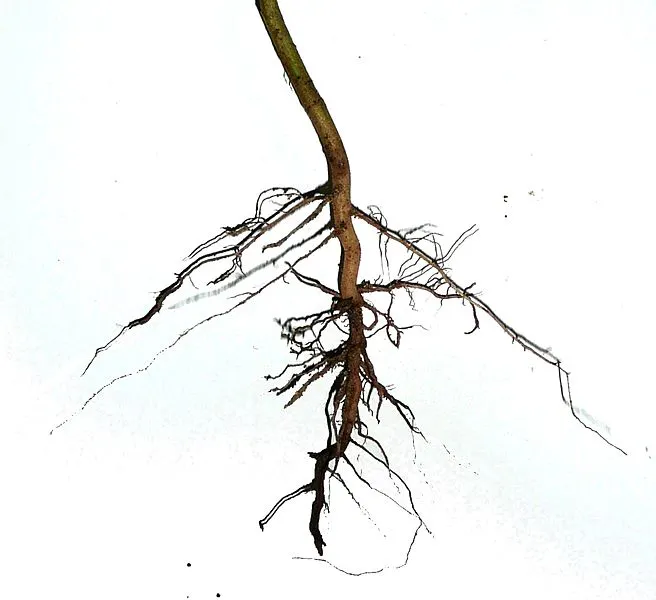
Kim talks with Mercedes Trigos about eugenics. Mercedes references Francis Galton, who coined the term, preimplantation genetic profiling, and the failures of our ordinary progress narratives. If you are interested in reading more about the subject check out: -Alexandra Minna Stern, Eugenic Nation: Faults and Frontiers of Better Breeding in Modern America, University of California Press, 2015 -Daniel Kevles, In the Name of Eugenics: Genetics and the Uses of Human Heredity, Harvard UP, 1998 -Nancy Leys Stepan, “The Hour of Eugenics” Race, Gender, and Nation in Latin America, Cornell UP, 1991 Kim and Mercedes organized an panel on “Eugenics and the Body” at the Modern Language Association Convention in January 2021. If you attended the conference and held onto your registration ID, you can watch a video of the panel on the MLA website, and learn more about the history and legacy of eugenic thought. Mercedes is a sixth-year PhD candidate at New York University’s English Department. Her work focuses on racialization, sex, and sexuality in Chicanx and Latinx studies. This week’s image is the root system of the Dicotyledoneae Asteraceae herb. For the Deleuze scholars and botanists in the room, it is an example of root phenotypic plasticity: a primary root which becomes tap root and lateral roots. This image is in the public domain. Learn more about your ad choices. Visit megaphone.fm/adchoices Support our show by becoming a premium member! https://newbooksnetwork.supportingcast.fm/science-technology-and-society
Ep 320Emily West, "Buy Now: How Amazon Branded Convenience and Normalized Monopoly" (MIT Press, 2022)
How Amazon combined branding and relationship marketing with massive distribution infrastructure to become the ultimate service brand in the digital economy. Amazon is ubiquitous in our daily lives—we stream movies and television on Amazon Prime Video, converse with Alexa, receive messages on our smartphone about the progress of our latest orders. In Buy Now: How Amazon Branded Convenience and Normalized Monopoly (MIT Press, 2022), Emily West examines Amazon's consumer-facing services to investigate how Amazon as a brand grew so quickly and inserted itself into so many aspects of our lives even as it faded into the background, becoming a sort of infrastructure that can be taken for granted. Amazon promotes the comfort and care of its customers (but not its workers) to become the ultimate service brand in the digital economy. Noopur Raval is a postdoctoral researcher working at the intersection of Information Studies, STS, Media Studies and Anthropology Learn more about your ad choices. Visit megaphone.fm/adchoices Support our show by becoming a premium member! https://newbooksnetwork.supportingcast.fm/science-technology-and-society
Ep 81Jason Steinhauer, "History, Disrupted: How Social Media and the World Wide Web Have Changed the Past" (Palgrave Macmillan, 2021)
The Internet has changed the past. Social media, Wikipedia, mobile networks, and the viral and visual nature of the Web have inundated the public sphere with historical information and misinformation, changing what we know about our history and History as a discipline. Jason Steinhauer's History, Disrupted: How Social Media and the World Wide Web Have Changed the Past (Palgrave Macmillan, 2021)is the first book to chronicle how and why it matters. Why does History matter at all? What role do history and the past play in our democracy? Our economy? Our understanding of ourselves? How do questions of history intersect with today’s most pressing debates about technology; the role of the media; journalism; tribalism; education; identity politics; the future of government, civilization, and the planet? At the start of a new decade, in the midst of growing political division around the world, this information is critical to an engaged citizenry. As we collectively grapple with the effects of technology and its capacity to destabilize our societies, scholars, educators and the general public should be aware of how the Web and social media shape what we know about ourselves - and crucially, about our past. Learn more about your ad choices. Visit megaphone.fm/adchoices Support our show by becoming a premium member! https://newbooksnetwork.supportingcast.fm/science-technology-and-society
Ep 95Gary B. Fogel, "Sky Rider: Park Van Tassel and the Rise of Ballooning in the West" (U New Mexico Press, 2021)
With a reputation as the hot-air balloon capital of the world and the home of the Albuquerque International Balloon Fiesta, the southwestern desert city of Albuquerque frequently showcases the magic and adventure of ballooning. This legacy links back to the 1880s and a man by the name of Park Van Tassel. Through his pioneering flight, Van Tassel not only opened the skies to future generations across New Mexico, but he also opened minds to the possibility of manned flight throughout the American West. A charismatic, P. T. Barnum–like showman, Van Tassel rose from obscurity to introduce the new science of ballooning and parachuting throughout the West. Van Tassel toured extensively—from California to Utah, Colorado, and Louisiana and later embarking on an international journey that took him to Hawaii, Australia, Southeast Asia, India, Africa, and beyond. Sky Rider: Park Van Tassel and the Rise of Ballooning in the West (U New Mexico Press, 2021) weaves together the many threads of Van Tassel’s extraordinary life journey, situating him at last in his rightful place among the prominent aerial exhibitionists of his time. Gary B. Fogel is an adjunct professor of aerospace engineering at San Diego State University and the CEO of Natural Selection, Inc. He is also the author or coauthor of Quest for Flight: John J. Montgomery and the Dawn of Aviation in the West and Wind and Wings: The History of Soaring in San Diego. Troy A. Hallsell is the 341st Missile Wing Historian at Malmstrom AFB, MT. The ideas expressed in this podcast do not represent the 341st Missile Wing, United States Air Force, or the Department of Defense. Learn more about your ad choices. Visit megaphone.fm/adchoices Support our show by becoming a premium member! https://newbooksnetwork.supportingcast.fm/science-technology-and-society
Ep 31Computational Creativity
Saronik talks to Tuhin Chakrabarty about the creative processes of Artificial Intelligence, what we can expect from it, and how to keep the results fair. (Saronik messes up the word GPT-3 twice!) Reading List: GPT3 Creativity When AI Falls in Love, GPT-3 Creative Fiction, Are You Ready for NaNoWriMo? Papers/Posts on Computational Creativity Generating Similes Like a Pro, Content Planning for Neural Story Generation, Reverse, Retrieve, and Rank for Sarcasm Generation , The Comedian is in the Machine Music and Art Google Magenta Creating Image from Text Dall-E, Creative Text Generation Bias in Language Models Stereoset measures Racism, Sexism, and other Forms of Bias in AI Language Models, Towards Controllable Biases in Language Generation, The Woman worked as a Babysitter, Timnit Gebru’s thread about Google firing her, RealToxicityPrompts, Measuring and Reducing Gendered Correlations in Pre-trained Models Bias in Poetry Investigating Societal Biases in a Poetry Composition System AI Poetry Google’s New AI Helps You Write Poetry like Poe, Generating Topical Poetry Academic Venues Computational Creativity, Machine Learning for Creativity and Design Image: created using Dall-E Learn more about your ad choices. Visit megaphone.fm/adchoices Support our show by becoming a premium member! https://newbooksnetwork.supportingcast.fm/science-technology-and-society
Ep 154Sarah Walsh, "The Religion of Life: Eugenics, Race, and Catholicism in Chile" (U Pittsburgh Press, 2021)
The Religion of Life: Eugenics, Race, and Catholicism in Chile (U Pittsburgh Press, 2021) examines the interconnections and relationship between Catholicism and eugenics in early twentieth-century Chile. Specifically, it demonstrates that the popularity of eugenic science was not diminished by the influence of Catholicism there. In fact, both eugenics and Catholicism worked together to construct the concept of a unique Chilean race, la raza chilena. A major factor that facilitated this conceptual overlap was a generalized belief among historical actors that male and female gender roles were biologically determined and therefore essential to a functioning society. As the first English-language study of eugenics in Chile, The Religion of Life surveys a wide variety of different materials (periodicals, newspapers, medical theses, and monographs) produced by Catholic and secular intellectuals from the first half of the twentieth century. What emerges from this examination is not only a more complex rendering of the relationship between religion and science but also the development of White supremacist logics in a Latin American context. Sarah Walsh is the Hansen Lecturer in Global History at the University of Melbourne. She specializes in the history of the human sciences in Latin America with an emphasis on race and ethnicity. Claudia Monterroza Rivera is a PhD candidate in Latin American History at Vanderbilt University. Learn more about your ad choices. Visit megaphone.fm/adchoices Support our show by becoming a premium member! https://newbooksnetwork.supportingcast.fm/science-technology-and-society
Ep 1194Christine Leuenberger and Izhak Schnell, "The Politics of Maps: Cartographic Constructions of Israel/Palestine" (Oxford UP, 2020)
The land between the Mediterranean Sea and the Jordan Valley has been one of the most disputed territories in history. Since the establishment of the state of Israel in 1948, Palestinians and Israelis have each sought to claim the national identity of the land through various martial, social, and scientific tactics, but no method has offered as much legitimacy and national controversy as that of the map. In The Politics of Maps: Cartographic Constructions of Israel/Palestine (Oxford University Press, 2020), Dr. Christine Leuenberger and Dr. Izhak Schnell delve beneath the battlefield to unearth the cartographic strife behind the Israel/Palestine conflict. Blending science and technology studies, sociology, and geography with a host of archival material, in-depth interviews and ethnographies, this book explores how the geographical sciences came to be entangled with the politics, territorial claim-making, and nation-state building of Israel/Palestine. Chapters chart the cartographic history of the region, from the introduction of Western scientific and legal paradigms that seemingly legitimized and depoliticized new land regimes to the rise of new mapping technologies and software that expanded access to cartography into the public sphere. Maps produced by various sectors like the "peace camps" or the Jewish community enhanced national belonging, while others, like that of the Green Line, served largely to divide. The stories of Israel's many boundaries reveal that there is no absolute, technocratic solution to boundary-making. As boundaries continue to be controversial and the Israeli-Palestinian conflict remains intractable and unresolved,The Politics of Maps uses nationally-based cartographic discourses to provide insight into the complexity, fissures, and frictions within internal political debates, illuminating the persistent power of the nation-state as a framework for forging identities, citizens, and alliances. Unfortunately, due to technical issues, Dr. Izhak Schnell was not able to join the audio interview about this book. His written answers to the questions are here. This interview was conducted by Dr. Miranda Melcher whose doctoral work focused on post-conflict military integration, understanding treaty negotiation and implementation in civil war contexts, with qualitative analysis of the Angolan and Mozambican civil wars. Learn more about your ad choices. Visit megaphone.fm/adchoices Support our show by becoming a premium member! https://newbooksnetwork.supportingcast.fm/science-technology-and-society
Ep 117Pandemic Perspectives 9: Covid, 'Scientism,' and the Betrayal of the Enlightenment
In this Pandemic Perspectives Podcast, Ideas Roadshow founder and host Howard Burton talks to bestselling author and University of Oxford law professor Charles Foster on how the coronavirus pandemic reveals how so many of us—including so many scientists—have replaced rigorous scientific skepticism with an alarming cult of "scientism." Ideas Roadshow's Pandemic Perspectives Project consists of three distinct, reinforcing elements: a documentary film (Pandemic Perspectives), book (Pandemic Perspectives: A filmmaker's journey in 10 essays) and a series of 24 detailed podcasts with many of the film's expert participants. Visit www.ideasroadshow.com for more details. Howard Burton is the founder of Ideas Roadshow and host of the Ideas Roadshow Podcast. He can be reached at [email protected]. Learn more about your ad choices. Visit megaphone.fm/adchoices Support our show by becoming a premium member! https://newbooksnetwork.supportingcast.fm/science-technology-and-society
Ep 319John Zerilli, "A Citizen's Guide to Artificial Intelligence" (MIT Press, 2022)
Artificial intelligence, or AI for short, has generated a staggering amount of hype in the past several years. Is it the game-changer it's been cracked up to be? If so, how is it changing the game? How is it likely to affect us as customers, tenants, aspiring homeowners, students, educators, patients, clients, prison inmates, members of ethnic and sexual minorities, and voters in liberal democracies? Authored by experts in fields ranging from computer science and law to philosophy and cognitive science, A Citizen's Guide to Artificial Intelligence (MIT Press, 2022) offers a concise overview of moral, political, legal and economic implications of AI. It covers the basics of AI's latest permutation, machine learning, and considers issues such as transparency, bias, liability, privacy, and regulation. Both business and government have integrated algorithmic decision support systems into their daily operations, and the book explores the implications for our lives as citizens. For example, do we take it on faith that a machine knows best in approving a patient's health insurance claim or a defendant's request for bail? What is the potential for manipulation by targeted political ads? How can the processes behind these technically sophisticated tools ever be transparent? The book discusses such issues as statistical definitions of fairness, legal and moral responsibility, the role of humans in machine learning decision systems, “nudging” algorithms and anonymized data, the effect of automation on the workplace, and AI as both regulatory tool and target. Dr John Zerilli is a philosopher with particular interests in cognitive science, artificial intelligence, and the law. He is currently a Leverhulme Fellow at the University of Oxford, a Research Associate in the Oxford Institute for Ethics in AI, and an Associate Fellow in the Centre for the Future of Intelligence at the University of Cambridge. Frances Sacks is a journalist and graduate of Wesleyan University where she studied in the Science and Society Program. Learn more about your ad choices. Visit megaphone.fm/adchoices Support our show by becoming a premium member! https://newbooksnetwork.supportingcast.fm/science-technology-and-society
Ep 9Daniel J. Solove and Woodrow Hartzog, "Breached!: Why Data Security Law Fails and How to Improve It" (Oxford UP, 2022)
Digital connections permeate our lives-and so do data breaches. Given that we must be online for basic communication, finance, healthcare, and more, it is alarming how difficult it is to create rules for securing our personal information. Despite the passage of many data security laws, data breaches are increasing at a record pace. In Breached!: Why Data Security Law Fails and How to Improve It (Oxford UP, 2022), Daniel Solove and Woodrow Hartzog, two of the world's leading experts on privacy and data security, argue that the law fails because, ironically, it focuses too much on the breach itself. Drawing insights from many fascinating stories about data breaches, Solove and Hartzog show how major breaches could have been prevented or mitigated through a different approach to data security rules. Current law is counterproductive. It pummels organizations that have suffered a breach but doesn't address the many other actors that contribute to the problem: software companies that create vulnerable software, device companies that make insecure devices, government policymakers who write regulations that increase security risks, organizations that train people to engage in risky behaviors, and more. Although humans are the weakest link for data security, policies and technologies are often designed with a poor understanding of human behavior. Breached! corrects this course by focusing on the human side of security. Drawing from public health theory and a nuanced understanding of risk, Solove and Hartzog set out a holistic vision for data security law-one that holds all actors accountable, understands security broadly and in relationship to privacy, looks to prevention and mitigation rather than reaction, and works by accepting human limitations rather than being in denial of them. The book closes with a roadmap for how we can reboot law and policy surrounding data security. Learn more about your ad choices. Visit megaphone.fm/adchoices Support our show by becoming a premium member! https://newbooksnetwork.supportingcast.fm/science-technology-and-society
Ep 164William F. Eadie, "When Communication Became a Discipline" (Lexington, 2021)
When Communication Became a Discipline (Lexington, 2021) argues that speech and journalism professors embraced the concept of communication between 1964 and 1982. They changed the names of their scholarly societies and journals and revised their academic curricula. Five “strands” of scholarship became and remain central to this transformation. Communication is not a traditional academic discipline, but its scholars convinced their colleagues to understand and embrace it. When Communication Became a Discipline presents an argument with historical evidence that illustrates scholarly creativity at its finest. William F. Eadie is professor emeritus of journalism and media studies and director of the School of Communication at San Diego State University. William F. Eadie was former director of the School of Communication at San Diego State University, where he was responsible for leadership of a large program that encompassed all aspects of communication, media and journalism. Tom Discenna is Professor of Communication at Oakland University whose work examines issues of academic labor and communicative labor more broadly. Learn more about your ad choices. Visit megaphone.fm/adchoices Support our show by becoming a premium member! https://newbooksnetwork.supportingcast.fm/science-technology-and-society
Ep 118Maia Weinstock, "Carbon Queen: The Remarkable Life of Nanoscience Pioneer Mildred Dresselhaus" (MIT Press, 2022)
Carbon Queen: The Remarkable Life of Nanoscience Pioneer Mildred Dresselhaus (MIT Press, 2022) follows Mildred Dresselhaus (or Millie, as everyone calls her) from her childhood in New York City to her final years in Cambridge. It focuses on her scientific achievements, but also rightfully presents her as a multi-hyphenate: being a resilient student, an adaptive researcher, a professor, an administrator, an advocate, a fundraiser, a patent owner, a book author. The accolades are plentiful and her involvement in science seemingly boundless. Maia Weinstock masterfully blends anecdotes and scientific explanations into the life story of a truly phenomenal scientist. In this episode of the podcast, we discuss Millie’s multifaceted career, as well as the process of putting the book together, and Maia’s history course on women in science. Ana Georgescu studied astrophysics and physics at Harvard University and is now a science consultant and writer based in New York City. Learn more about your ad choices. Visit megaphone.fm/adchoices Support our show by becoming a premium member! https://newbooksnetwork.supportingcast.fm/science-technology-and-society
Ep 153Rana A. Hogarth, "Medicalizing Blackness: Making Racial Difference in the Atlantic World, 1780-1840" (UNC Press, 2017)
Medicine and slavery went hand-in-hand. But what was the nature of this vile partnership? In Medicalizing Blackness: Making Racial Difference in the Atlantic World, 1780-1840 (UNC Press, 2017), Rana Hogarth shows that familiar histories, though excellent, fail to explain how and why medicine and slavery became fused in the first place. No doubt, defenders of slavery used medicine to justify the corrupt practice once it was under threat. But Hogarth shows how science and medicine grafted during times and in places where slavery was secure—where white elites had no need to justify the violent practice with medical ideas because slavery was taken for granted. How and why did medicine and slavery fuse, Hogarth asks, in the Atlantic World of the newly invented United States and ascendant imperial Britain? Understanding the answer helps us grasp the valences and impacts of racialized national and social identities, then as well as today. White physicians inflated their value—financial as well as reputational—by locating medical reasons for already existing racist tropes. Circa 1800, white physicians were a disreputable and loosely aligned lot. They had many rivals (Black healers), rich skeptics (plantation owners), and no professional organization until the mid-nineteenth century under which they could rally. Before then, a wide-spread, active white belief in an innate difference between Black and white bodies was the foregone conclusion that white physicians worked to explain in order to appear of use. White physicians in the English-speaking Caribbean developed medical theories of innate difference in the etiology, progress and experience of illness in Black and white bodies—evidence to the contrary be damned. As a consequence, they ignored immense Black suffering, exposed Black workers to deadly diseases, and policed Black people through the hospital system, all the while seeing Black people as appropriate for service in the military and as objects for teaching dissection, that is to say, in projects of imperial and professional expansion. Medicalizing Blackness broadens the story of medicine in the Atlantic World with a lens that perceives more than the institution of slavery. It also demonstrates the emergence of the Caribbean as a locus—not an outpost—of trustworthy medical knowledge circulated through an array of genres, including journals articles, plantation guides, hospital advertisements, and other media of “textual subjugation” that Hogarth reads with great insight. In short, medicine needed the racist logics of slavery in order to gain power before slavery needed racist medicine to defend its own might. July 2022 marks the fiftieth anniversary of the exposure of the abusive and unethical Tuskegee Syphilis Experiments in the US media. Engaging the roots of white supremacist ideas and practices is essential for better understanding and for stronger political action against racism, as important fifty years ago as it is in our ongoing racialized pandemic. This interview was a collaborative effort among Professor Laura Stark and students at Vanderbilt University in the course “American Medicine & the World.” Please email Laura with any feedback on the interview or questions about the collaborative interview process: [email protected]. Learn more about your ad choices. Visit megaphone.fm/adchoices Support our show by becoming a premium member! https://newbooksnetwork.supportingcast.fm/science-technology-and-society
Ep 317Anthony Hatch, "Silent Cells: The Secret Drugging of Captive America" (U Minnesota Press, 2019)
It’s no secret that the United States has the most expansive prison system of any nation in the world. And the US carceral system overwhelmingly and unjustly impacts Black and Brown individuals and communities. With postwar efforts to dismantle Jim Crow policies, our era of mass incarceration reproduced the old logics of white supremacism that uphold racist capitalism in this new setting. These are the things we know. But in his book, Silent Cells: The Secret Drugging of Captive America (U Minnesota Press, 2019), Professor Anthony Hatch observes a feature of mass incarceration essential to its everyday function that many of us had never considered: the large-scale, persistent use of psychotropic drugs, including antipsychotics and antidepressants, not for medical care but rather to control the behavior of incarcerated people. Making a persuasive claim drawn from his training in STS and sociology, Hatch observes how the drugs are used at the level of individual brain chemistry to commit “soul murder” with enormous systemic implications and political stakes. What’s more, the carceral elites’ use of psychotropic drugs for the purposes of pacification, not care, of their wards extends to other (often state-backed) settings of “captive America,” including the military, foster care, elder care, and international detention centers. “Is it possible for the US carceral state to exist without psychotropics,” Hatch asks. “I think we can say the answer is no.” Silent Cells accomplishes more than the (important) tasks of documentation and analysis. It is a work of liberatory social science. The book is of a piece with Hatch’s abolitionist agenda that he pursues through his generous and generative scholarly and activist engagements, including his work as director of the Black Box teaching laboratory and chair of the Program in Science in Society at Wesleyan University. This interview was a collaborative effort among Professor Laura Stark and students at Vanderbilt University in the course “Prison. Medicine” Please email Laura with any feedback on the interview or questions about the collaborative interview process: [email protected] . Learn more about your ad choices. Visit megaphone.fm/adchoices Support our show by becoming a premium member! https://newbooksnetwork.supportingcast.fm/science-technology-and-society
Ep 80Amanda D. Lotz, "Media Disrupted: Surviving Pirates, Cannibals, and Streaming Wars" (MIT Press, 2021)
Has the internet really been the main culprit behind the upheaval of the contemporary media industries? In Media Disrupted: Surviving Pirates, Cannibals, and Streaming Wars (MIT Press, 2021), Professor Amanda Lotz provides a rebuttal to persistent myths about disruption across the mediascape of the late 20th and early 21st Centuries. Through a granular reading of four media industries – newspapers, recorded music, film and television – Lotz demonstrates that the internet has had diffuse and divergent effects in each, none of which are adequately explained through simplistic narratives of piracy or cannibalism. Lotz suggests that the speed and scale of reconfiguration in these industries has stemmed more from built up consumer demand and business (mal)practices, often with deep historical roots, which have only then been catalysed by the advent of the internet. Alongside laying out what we often get wrong about the internet and the media industries, Lotz provides detailed analyses of those media businesses which managed to negotiate this tumultuous period successfully. Media Disruption helps us understand how the media industries got to where they are today and provides valuable lessons for those seeking to weather disruptions to come. Professor Amanda Lotz works at the Digital Media Research Centre at Queensland University of Technology. Learn more about your ad choices. Visit megaphone.fm/adchoices Support our show by becoming a premium member! https://newbooksnetwork.supportingcast.fm/science-technology-and-society
Ep 116Pandemic Perspectives 8: Covid and the Embrace of the Biological World
In this Pandemic Perspectives Podcast, Ideas Roadshow founder and host Howard Burton talks to renowned UC San Diego neurophilosopher Patricia Churchland about the importance of communicating science, the wonders of the biological world and the dangers of wishful thinking. Ideas Roadshow's Pandemic Perspectives Project consists of three distinct, reinforcing elements: a documentary film (Pandemic Perspectives), book (Pandemic Perspectives: A filmmaker's journey in 10 essays) and a series of 24 detailed podcasts with many of the film's expert participants. Visit www.ideasroadshow.com for more details. Howard Burton is the founder of Ideas Roadshow and host of the Ideas Roadshow Podcast. He can be reached at [email protected]. Learn more about your ad choices. Visit megaphone.fm/adchoices Support our show by becoming a premium member! https://newbooksnetwork.supportingcast.fm/science-technology-and-society
Ep 168Nancy L Segal, "Deliberately Divided: Inside the Controversial Study of Twins and Triplets Adopted Apart" (Rowman and Littlefield, 2021)
A lot can be learned from scientific twin studies about the relative contributions of nature versus nurture to human experience. However, when such studies do lasting harm to its participants, what does it teach us about the dangerous power of scientific zeal? This is the subject of Dr. Nancy Segal’s latest book, Deliberately Divided: Inside the Controversial Study of Twins and Triplets Adopted Apart (Rowman & Littlefield, 2021), in which she documents the controversial methods employed by the Louise Wise Services-Child Development Center Twin Study of the 1960s and 1970s. In our interview, she addresses the fallout of such methods for twins that were studied but kept unaware of each other for years and what it says about the unique bond shared by twins. This discussion of a tragic but fascinating and important moment in scientific history is relevant for anyone interested in questions about the roles of genes versus the environment or about the uniqueness of twin relationships. Nancy L. Segal, Ph.D. is professor of psychology at California State University, Fullerton and director of the Twin Studies Center. She has authored over 250 scientific articles and six books on twins and twin development. She lives in Southern California. She can be followed on Twitter at @nlsegal. Eugenio Duarte, Ph.D. is a psychoanalyst and clinical psychologist practicing in Miami. He treats individuals and couples, with specialties in gender and sexuality, eating and body image problems, and relationship issues. He is a graduate and faculty of William Alanson White Institute in Psychiatry, Psychoanalysis, and Psychology in New York City and former chair of their LGBTQ Study Group; and faculty at Florida Psychoanalytic Institute in Miami. He is also a contributing author to the book Introduction to Contemporary Psychoanalysis: Defining Terms and Building Bridges (2018, Routledge) and has published on issues of gender, sexuality, and sexual abuse. Learn more about your ad choices. Visit megaphone.fm/adchoices Support our show by becoming a premium member! https://newbooksnetwork.supportingcast.fm/science-technology-and-society
Ep 279Nicole Starosielski, "Media Hot and Cold" (Duke UP, 2021)
Media Hot and Cold (Duke UP, 2021) attunes the reader to temperature as a crucial but often overlooked terrain of control, communication and contestation. The book skilfully unpacks the complex technical operations of a vast array of heat-based communication technologies in parallel with a close analysis of the cultural and political resonances of these media, taking in early experiments in heat ray technologies, the development of the thermostat, undersea fibre optic cables and torture sweatboxes from the US plantation. Today’s thermal media are framed as politically neutral and scientifically objective technologies of personalised comfort and climate mitigation. However, Starosielski pushes back against this reading, arguing that the manipulation of temperature as a means of coercion and domination has been integral to the construction, normalization and maintenance of unequal relations of power. The book is a timely and significant call for an unflinching analysis of the sociocultural function of temperature in a period of unprecedented thermal volatility. Gummo Clare is a PhD researcher in the School of Media and Communications, University of Leeds. Learn more about your ad choices. Visit megaphone.fm/adchoices Support our show by becoming a premium member! https://newbooksnetwork.supportingcast.fm/science-technology-and-society
Ep 277Gavin Mueller, "Breaking Things at Work: The Luddites Are Right About Why You Hate Your Job" (Verso, 2021)
In Breaking Things at Work: The Luddites are Right About Why You Hate Your Job (Verso, 2021), Gavin Mueller provides a bracing and wide-ranging study of the fractious relationship between workers and technology under capitalism. Mueller traces the thought and actions of ordinary people past and present – including hackers, dockers, musicians and the titular textile workers - who have recognised that technological ‘progress’ too often comes at the expense of their autonomy and dignity. The book pushes back against visions of machine-driven utopia that have continually re-emerged on both the right and the left, arguing instead that resistance to technology is a key site of struggle throughout modernity, and that a Marxist neo-Luddism is crucial to understanding, and changing, the world today. Gummo Clare is a PhD researcher in the School of Media and Communications, University of Leeds. Learn more about your ad choices. Visit megaphone.fm/adchoices Support our show by becoming a premium member! https://newbooksnetwork.supportingcast.fm/science-technology-and-society
Ep 95Delinda Collier, "Media Primitivism: Technological Art in Africa" (Duke UP, 2020)
In Media Primitivism: Technological Art in Africa (Duke University Press, 2020) Delinda Collier provides a sweeping new understanding of technological media in African art, rethinking the assumptions that have conceptualized African art as unmediated, primary, and natural. Collier responds to these preoccupations by exploring African artworks that challenge these narratives. From one of the first works of electronic music, Halim El-Dabh’s Ta’abir Al-Zaar (1944), and Souleymane Cissé's 1987 film, Yeelen, to contemporary digital art, Collier argues that African media must be understood in relation to other modes of transfer and transmutation that have significant colonial and postcolonial histories, such as extractive mining and electricity. Collier reorients modern African art within a larger constellation of philosophies of aesthetics and technology, demonstrating how pivotal artworks transcend the distinctions between the constructed and the elemental, thereby expanding ideas about mediation and about what African art can do. Holiday Powers is Assistant Professor of Art History at VCUarts Qatar. Her research focuses on modern and contemporary art in Africa and the Arab world, postcolonial theory, and gender studies. Learn more about your ad choices. Visit megaphone.fm/adchoices Support our show by becoming a premium member! https://newbooksnetwork.supportingcast.fm/science-technology-and-society
Ep 317David Nemer, "Technology of the Oppressed: Inequity and the Digital Mundane in Favelas of Brazil" (MIT Press, 2022)
In Technology of the Oppressed: Inequity and the Digital Mundane in Favelas of Brazil (MIT Press, 2022), David Nemer draws on extensive ethnographic fieldwork to provide a rich account of how favela residents engage with technology in community technology centers and in their everyday lives. Their stories reveal the structural violence of the information age. But they also show how those oppressed by technology don’t just reject it, but consciously resist and appropriate it, and how their experiences with digital technologies enable them to navigate both digital and nondigital sources of oppression—and even, at times, to flourish. Nemer uses a decolonial and intersectional framework called Mundane Technology as an analytical tool to understand how digital technologies can simultaneously be sites of oppression and tools in the fight for freedom. Building on the work of the Brazilian educator and philosopher Paulo Freire, he shows how the favela residents appropriate everyday technologies—technological artifacts (cell phones, Facebook), operations (repair), and spaces (Telecenters and Lan Houses)—and use them to alleviate the oppression in their everyday lives. He also addresses the relationship of misinformation to radicalization and the rise of the new far right. Contrary to the simplistic techno-optimistic belief that technology will save the poor, even with access to technology these marginalized people face numerous sources of oppression, including technological biases, racism, classism, sexism, and censorship. Yet the spirit, love, community, resilience, and resistance of favela residents make possible their pursuit of freedom. David Nemer is an Assistant Professor in the Department of Media Studies and in the Latin American Studies program at the University of Virginia. He is also a Faculty Associate at Harvard University's Berkman Klein Center and Princeton University's Brazil Lab. His research and teaching interests cover the intersection of Science and Technology Studies (STS), Anthropology of Technology, ICT for Development (ICT4D), and Human-Computer Interaction (HCI). Nemer is an ethnographer whose fieldworks include the Slums of Vitória, Brazil; Havana, Cuba; Guadalajara, Mexico; and Eastern Kentucky, Appalachia. Nemer is the author of Technology of the Oppressed (MIT Press, 2022) and Favela Digital: The other side of technology (Editora GSA, 2013). Austin Clyde is a Ph.D. candidate at the University of Chicago Department of Computer Science. He researches artificial intelligence and high-performance computing for developing new scientific methods. He is also a visiting research fellow at the Harvard Kennedy School's Science, Technology, and Society program, where my research addresses the intersection of artificial intelligence, human rights, and democracy. Learn more about your ad choices. Visit megaphone.fm/adchoices Support our show by becoming a premium member! https://newbooksnetwork.supportingcast.fm/science-technology-and-society
Ep 102Deborah Gordon, "No Standard Oil: Managing Abundant Petroleum in a Warming World" (Oxford UP, 2021)
In No Standard Oil: Managing Abundant Petroleum in a Warming World (Oxford University Press, 2021), Deborah Gordon shows that no two oils or gases are environmentally alike. Each has a distinct, quantifiable climate impact. While all oils and gases pollute, some are much worse for the climate than others. In clear, accessible language, Gordon explains the results of the Oil Climate Index Plus Gas (OCI+), an innovative, open-source model that estimates global oil and gas emissions. Gordon identifies the oils and gases from every region of the globe–– along with the specific production, processing, and refining activities–– that are the most harmful to the planet, and proposes innovative solutions to reduce their climate footprints. Global climate stabilization cannot afford to wait for oil and gas to run out. No Standard Oil shows how we can take immediate, practical steps to cut greenhouse gas emissions in the crucial oil and gas sector while making sustainable progress in transitioning to a carbon-free energy future. Deborah Gordon is a senior principal in the Climate Intelligence Program at RMI where she leads the Oil and Gas Solutions Initiative. Gordon also serves as a senior fellow at the Watson Institute for International and Public Affairs at Brown University and the principal investigator for the Oil Climate Project. Caleb Zakarin is the Assistant Editor of the New Books Network (Twitter: @caleb_zakarin). Learn more about your ad choices. Visit megaphone.fm/adchoices Support our show by becoming a premium member! https://newbooksnetwork.supportingcast.fm/science-technology-and-society
Ep 316Jeff Sebo, "Saving Animals, Saving Ourselves: Why Animals Matter for Pandemics, Climate Change, and Other Catastrophes" (Oxford UP, 2022)
In 2020, COVID-19, the Australia bushfires, and other global threats served as vivid reminders that human and nonhuman fates are increasingly linked. Human use of nonhuman animals contributes to pandemics, climate change, and other global threats which, in turn, contribute to biodiversity loss, ecosystem collapse, and nonhuman suffering. Jeff Sebo argues that humans have a moral responsibility to include animals in global health and environmental policy. In particular, we should reduce our use of animals as part of our pandemic and climate change mitigation efforts and increase our support for animals as part of our adaptation efforts. Applying and extending frameworks such as One Health and the Green New Deal, Sebo calls for reducing support for factory farming, deforestation, and the wildlife trade; increasing support for humane, healthful, and sustainable alternatives; and considering human and nonhuman needs holistically. Sebo also considers connections with practical issues such as education, employment, social services, and infrastructure, as well as with theoretical issues such as well-being, moral status, political status, and population ethics. In all cases, he shows that these issues are both important and complex, and that we should neither underestimate our responsibilities because of our limitations, nor underestimate our limitations because of our responsibilities. Both an urgent call to action and a survey of what ethical and effective action requires, Saving Animals, Saving Ourselves: Why Animals Matter for Pandemics, Climate Change, and Other Catastrophes (Oxford UP, 2022) is an invaluable resource for scholars, advocates, policy-makers, and anyone interested in what kind of world we should attempt to build and how. Jeff Sebo is currently Clinical Associate Professor of Environmental Studies, Affiliated Professor of Bioethics, Medical Ethics, Philosophy, and Law, and Director of the Animal Studies M.A. Program at New York University. He is also on the executive committee at the NYU Center for Environmental and Animal Protection and the advisory board for the Animals in Context series at NYU Press. Austin Clyde is a Ph.D. candidate at the University of Chicago Department of Computer Science. He researches artificial intelligence and high-performance computing for developing new scientific methods. He is also a visiting research fellow at the Harvard Kennedy School's Science, Technology, and Society program, where my research addresses the intersection of artificial intelligence, human rights, and democracy. Learn more about your ad choices. Visit megaphone.fm/adchoices Support our show by becoming a premium member! https://newbooksnetwork.supportingcast.fm/science-technology-and-society
Ep 78Jonathan Beller, "The World Computer: Derivative Conditions of Racial Capitalism" (Duke UP, 2021)
In The World Computer: Derivative Conditions of Racial Capitalism (Duke UP, 2021) Jonathan Beller forcefully demonstrates that the history of commodification generates information itself. Out of the omnipresent calculus imposed by commodification, information emerges historically as a new money form. Investigating its subsequent financialization of daily life and colonization of semiotics, Beller situates the development of myriad systems for quantifying the value of people, objects, and affects as endemic to racial capitalism and computation. Built on oppression and genocide, capital and its technical result as computation manifest as racial formations, as do the machines and software of social mediation that feed racial capitalism and run on social difference. Algorithms, derived from for-profit management strategies, conscript all forms of expression-language, image, music, communication-into the calculus of capital such that even protest may turn a profit. Computational media function for the purpose of extraction rather than ameliorating global crises, and financialize every expressive act, converting each utterance into a wager. Repairing this ecology of exploitation, Beller contends, requires decolonizing information and money, and the scripting of futures wagered by the cultural legacies and claims of those in struggle. Marci Mazzarotto is an Assistant Professor of Digital Communication at Georgian Court University in New Jersey. Her research interests center on the interdisciplinary intersection of academic theory and artistic practice with a focus on film and television studies. Learn more about your ad choices. Visit megaphone.fm/adchoices Support our show by becoming a premium member! https://newbooksnetwork.supportingcast.fm/science-technology-and-society
Ep 99Kris Ruijgrok, "Internet Use and Protest in Malaysia and Other Authoritarian Regimes" (Palgrave Macmillan, 2021)
Internet-enabled mobilization begins long before there is a call for protest. In the book Internet Use and Protest in Malaysia and other Authoritarian Regimes (Palgrave Macmillan, 2021), Kris Ruijgrok examines the case of Bersih – an anti-corruption movement in Malaysia – to track the sequence of events that lead citizens to take part in protest action. Contrary to the impression that social media platforms like Twitter spontaneously spark protests around the world, the book takes a longer and wider view of how the internet challenges information scarcity in authoritarian regimes, which, consequently, creates conditions for citizens to carefully consider their sympathies for a protest movement and defy their fears about state control. In this podcast, Kris discusses the reasons why the Malaysian government is unable to successfully control the digital public sphere in the same way it controlled the information environment of traditional media. He makes a case for going beyond what he considers to be technologically deterministic debate between cyber-pessimists and cyber-optimists. Instead, Kris foregrounds the importance of context – how different social conditions result to different outcomes. Kris Ruijgrok is a lecturer in the Faculty of Law at the University of Amsterdam. Like this interview? You may also be interested in: Aim Sinpeng, Opposing Democracy in the Digital Age: The Yellow Shirts in Thailand (U Michigan Press, 2021) Nicole Curato is a Professor of Sociology in the Centre for Deliberative Democracy and Global Governance at the University of Canberra. She co-hosts the New Books in Southeast Asia Studies channel. This episode was produced in collaboration with Erron C. Medina of the Development Studies Program of Ateneo De Manila University. Learn more about your ad choices. Visit megaphone.fm/adchoices Support our show by becoming a premium member! https://newbooksnetwork.supportingcast.fm/science-technology-and-society
Ep 1183Susanne A. Wengle, "Black Earth, White Bread: A Technopolitical History of Russian Agriculture and Food" (U Wisconsin Press, 2022)
In Black Earth, White Bread: A Technopolitical History of Russian Agriculture and Food (University of Wisconsin Press, 2022), Dr. Susanne A. Wengle shows how agrotechnology served—and undermined—Soviet and Russian political projects. “The book emphasises a tight connection between political change, technological change in food systems, and the transformation of everyday lives - a connection that we can grasp and understand through the lens of technopolitics.” Like all facets of daily life, the food that Russian farms produced and citizens ate—or, in some years, didn’t eat—underwent radical shifts in the century between the Bolshevik Revolution and Vladimir Putin’s presidency. The modernization of agriculture during this time is usually understood in terms of advances in farming methods. Dr. Susanne A. Wengle’s important interdisciplinary history of Russia’s agriculture and food systems, however, documents a far more complex story of the interactions between political policies, daily cultural practices, and technological improvements. “A central augment of this book is that politics and technologies together drive a change in food systems and that we should think of food systems as technopolitical regimes. Technopolitics refers to the support of and reliance on agricultural technologies - from tractors to CRISPR techniques - in policy regimes that seek to realise particular political goals and utopias. A technopolitical regime is forged by privileged agents of change and the technologies they employ to grow crops and raise animals.” Examining governance, production, consumption, nature, and the ensuing vulnerabilities of the agrifood system, Dr. Wengle reveals the intended and unintended consequences of Russian agricultural policies since 1917. Ultimately, Black Earth, White Bread calls attention to Russian technopolitics and how macro systems of government impact life on a daily, quotidian level. “Food systems can be a lens to track interactions between domains of life that are too often seen as discrete and disconnected, such as rural production and urban consumption. They can also tell us about the interactions between human realms and the nonhuman realms of crops, livestock, climate and soil conditions.” This interview was conducted by Dr. Miranda Melcher whose doctoral work focused on post-conflict military integration, understanding treaty negotiation and implementation in civil war contexts, with qualitative analysis of the Angolan and Mozambican civil wars. Learn more about your ad choices. Visit megaphone.fm/adchoices Support our show by becoming a premium member! https://newbooksnetwork.supportingcast.fm/science-technology-and-society
Ep 10Tim Hwang, "Subprime Attention Crisis: Advertising and the Time Bomb at the Heart of the Internet" (FSG Originals, 2020)
In Subprime Attention Crisis: Advertising and the Time Bomb at the Heart of the Internet (FSG Originals, 2020), Tim Hwang investigates the way big tech financializes attention. In the process, he shows us how digital advertising--the beating heart of the internet--is at risk of collapsing, and that its potential demise bears an uncanny resemblance to the housing crisis of 2008. From the unreliability of advertising numbers and the unregulated automation of advertising bidding wars to the simple fact that online ads mostly fail to work, Hwang demonstrates that while consumers' attention has never been more prized, the true value of that attention itself--much like subprime mortgages--is wildly misrepresented. And if online advertising goes belly-up, the internet--and its free services--will suddenly be accessible only to those who can afford it. Tim Hwang is a writer, researcher, and currently the general counsel for Substack. He is the former director of the Harvard-MIT Ethics and Governance of AI Initiative and previously served as the global public policy lead for artificial intelligence and machine learning at Google. Caleb Zakarin is the Assistant Editor of the New Books Network (Twitter: @caleb_zakarin). Learn more about your ad choices. Visit megaphone.fm/adchoices Support our show by becoming a premium member! https://newbooksnetwork.supportingcast.fm/science-technology-and-society
Ep 315Jennifer Petersen, "How Machines Came to Speak: Media Technologies and Freedom of Speech" (Duke UP, 2022)
In How Machines Came to Speak: Media Technologies and Freedom of Speech (Duke University Press, 2022), Jennifer Petersen constructs a genealogy of how legal conceptions of “speech” have transformed over the last century in response to new media technologies. Drawing on media and legal history, Petersen shows that the legal category of speech has varied considerably, evolving from a narrow category of oratory and print publication to a broad, abstract conception encompassing expressive nonverbal actions, algorithms, and data. She examines a series of pivotal US court cases in which new media technologies—such as phonographs, radio, film, and computer code—were integral to this shift. In judicial decisions ranging from the determination that silent films were not a form of speech to the expansion of speech rights to include algorithmic outputs, courts understood speech as mediated through technology. Speech thus became disarticulated from individual speakers. By outlining how legal definitions of speech are indelibly dependent on technology, Petersen demonstrates that future innovations such as artificial intelligence will continue to restructure speech law in ways that threaten to protect corporate and institutional forms of speech over the rights and interests of citizens. Jennifer Petersen is an Associate Professor of Communication at the Annenberg School for Communication and Journalism at the University of Southern California. She is the director of the graduate certificate program in Science and Technology Studies and is affiliated with the Center for Law, History, and Culture. Before arriving at USC, she worked at the University of Virginia, where she was an affiliate with the Department of Women, Gender, and Sexuality. She is also a former Lenore Annenberg and Wallis Annenberg Fellow in Communication at the Center for Advanced Studies in the Behavioral Sciences (CASBS) at Stanford University. Austin Clyde is a Ph.D. candidate at the University of Chicago Department of Computer Science. He researches artificial intelligence and high-performance computing for developing new scientific methods. He is also a visiting research fellow at the Harvard Kennedy School's Science, Technology, and Society program. Learn more about your ad choices. Visit megaphone.fm/adchoices Support our show by becoming a premium member! https://newbooksnetwork.supportingcast.fm/science-technology-and-society
Ep 118Robert A Jacobs, "Nuclear Bodies: The Global Hibakusha" (Yale UP, 2022)
Robert Jacob’s book Nuclear Bodies: The Global Hibakusha (Yale UP, 2022) re‑envisions the history of the Cold War as a slow nuclear war, fought on remote battlegrounds against populations powerless to prevent the contamination of their lands and bodies. Jacobs’s book put these “nuclear bodies” and the legacy of our eighty years history of nuclear weapon and power use at the center of his inquiry. The contaminated bodies of the hibakusha and the contaminated grounds on which they live (or in many cases lived. As many lost their homes), Jacobs argues, are largely invisible because of the colonial and post -colonial power relations that made these communities a target to begin with. Nuclear weapon tests and power stations usually were set at remote places, and the harm was done to people with no political power. Furthermore, it is not just contemporary communities that were harmed, but also future generations. “Plutonium will remain dangerous for over two hundred thousand years, and uranium particles for more than one million years”. Eighty years of tests and nuclear power have saddled our future descendants with radiative waste, most of which is still not safely stored, “a global legacy currently sitting in spent fuel pools and dry storage casks, waiting.” The invisibility of the problem and people affected by it, Jacobs argues, is manufactured in science and politics. Furthermore, the way we study the problem historically further obscured its scope. Different sites have been studied through different national historical “silos,” Jacobs, however, takes a global approach, and look at sites from Nevada to Hiroshima and Nagasaki, Kazakhstan to Xinjian, and the various Pacific sites that were sites of nuclear tests and accidents since 1945 to make the invisible global hibakusha visible. Learn more about your ad choices. Visit megaphone.fm/adchoices Support our show by becoming a premium member! https://newbooksnetwork.supportingcast.fm/science-technology-and-society
Ep 57Dashun Wang and Albert-László Barabási, "The Science of Science" (Cambridge UP, 2021)
Listen to this interview of Dashun Wang, Professor at the Kellogg School of Management and McCormick School of Engineering at Northwestern University, and also with Albert-László Barabási, Robert Gray Dodge Professor of Network Science and Distinguished University Professor at Northeastern University. We talk about their new book The Science of Science" (Cambridge UP, 2021) and science, squared. Albert-László Barabási : "There is, of course, the need that you grow professionally. If you're a mathematician, you need to perfect your math. If you're a physicist, you need to do your physics. If you're a biologist, you need to develop your lab techniques. But no matter the magnitude of any discovery you might make, it's not impactful unless you can actually communicate it. And I think that this is where science lacks significantly. I would even go so far as to say, there is a counter-selection: People who are not necessarily the best communicators tend to prefer science because there's the impression that that is not the skill that you need — you just need to be able to solve problems in a meaningful way. But if you're not able to write your ideas down, if you're not able to share your ideas with your community, then it's really as if you didn't have the ideas at all. And you know, I have experienced this in my own career. When I got interested in network science back in 1994/95, for the first few years my papers got rejected one after the other, and not because it wasn't good science (as I would later realize) — no, my papers were getting rejected because I could not communicate to the community at large and to my referees in particular why we should care about networks. And it took me about five years to find the way into people's minds, to learn how they write papers about networks. I needed to learn the hard way about how the community of scientists appreciated and did not appreciate research on networks. And it took me so long because I'd never been offered the opportunity to study the communication of science." Watch Daniel edit your science here. Contact Daniel at [email protected]. Learn more about your ad choices. Visit megaphone.fm/adchoices Support our show by becoming a premium member! https://newbooksnetwork.supportingcast.fm/science-technology-and-society
Ep 101Laura J. Martin, "Wild by Design: The Rise of Ecological Restoration" (Harvard UP, 2022)
Environmental restoration is a global pursuit and a major political concern. Governments, nonprofits, private corporations, and other institutions spend billions of dollars each year to remove invasive species, build wetlands, and reintroduce species driven from their habitats. But restoration has not always been so intensively practiced. It began as the pastime of a few wildflower enthusiasts and the first practitioners of the new scientific discipline of ecology. Restoration has been a touchstone of United States environmentalism since the beginning of the twentieth century. Diverging from popular ideas about preservation, which romanticized nature as an Eden to be left untouched by human hands, and conservation, the managed use of natural resources, restoration emerged as a “third way.” Restorationists grappled with the deepest puzzles of human care for life on earth: How to intervene in nature for nature’s own sake? What are the natural baselines that humans should aim to restore? Is it possible to design nature without destroying wildness? In Wild by Design: The Rise of Ecological Restoration (Harvard University Press, 2022), Laura J. Martin shows how, over time, amateur and professional ecologists, interest groups, and government agencies coalesced around a mode of environmental management that sought to respect the world-making, and even the decision-making, of other species. At the same time, restoration science reshaped material environments in ways that powerfully influenced what we understand the wild to be. In Wild by Design, restoration’s past provides vital knowledge for climate change policy. But Martin also offers something more—a meditation on what it means to be wild and a call for ecological restoration that is socially just. Laura J. Martin is Assistant Professor of Environmental Studies at Williams College. She is a past fellow of the American Council of Learned Societies, the Stanford Humanities Center, and the Harvard University Center for the Environment. She has written for Scientific American, Slate, Environmental History, Environmental Humanities, Trends in Ecology and Evolution, and other publications. Kathryn B. Carpenter is a doctoral candidate in the history of science at Princeton University. She is currently researching the history of tornado science and storm chasing in the twentieth-century United States. She is also the creator and host of Drafting the Past, a podcast on the craft of writing history. You can reach her on twitter, @katebcarp. Learn more about your ad choices. Visit megaphone.fm/adchoices Support our show by becoming a premium member! https://newbooksnetwork.supportingcast.fm/science-technology-and-society