New Books in Public Policy
2,137 episodes — Page 17 of 43
Ep 132Leila Jancovich and David Stevenson, "Failures in Cultural Participation" (Palgrave Macmillan, 2022)
For the past two decades, the arts and cultural establishment in the UK has been trying to engage a broader set of audiences in their work. Countless initiatives to make the arts more accessible to the public and to make them more relevant have been advocated for in policy and funding settlements. But the dial on who participates and how much has not shifted, despite many thousands of projects trying to address the problem. And this isn’t even the punchline. Not only do the interventions not work, nobody involved in them admits that the interventions may have been a failure. Having spent many years working in cultural policy studies and in arts practice, Leila Jancovich and David Stevenson take the arts and culture sector to task over this fiction. Their book Failures in Cultural Participation (Palgrave Macmillan, 2022) puts a mirror to the industry and invites cultural policymakers, organisations, and practitioners to confront their failures. David Stevenson speaks to Pierre d’Alancaisez about the culture sector’s refusal to acknowledge failure in widening participation and moving the debate from the ‘value’ of culture to considering how policies can be designed and implemented. David argues for an honest and transparent acknowledgement of failure at individual, organisational and governmental levels. The Failspace Project tools A special issue of the Transdisciplinary Journal of Cultural Participation edited by Leila and David David’s “I hate opera” paper. Leila Jancovich is a professor of Cultural Policy and Participation at the University of Leeds. Before entering academia, she worked for many years in the arts and festivals sector as a producer, researcher, and policy maker. David Stevenson is the Dean of The School of Arts, Social Sciences, and Management at Queen Margaret University. His research focuses on relations of power and the production of value within the cultural sector. Pierre d’Alancaisez is a contemporary art curator, cultural strategist, researcher. Sometime scientist, financial services professional. Learn more about your ad choices. Visit megaphone.fm/adchoices Support our show by becoming a premium member! https://newbooksnetwork.supportingcast.fm/public-policy
Ep 180Zoe Adams, "The Legal Concept of Work" (Oxford UP, 2022)
"Why do we think about some practices as work, and not others? Why do we classify certain capacities as economically valuable skills, and others as innate characteristics? What, moreover, is the role of law in shaping our answers to these questions?" These are just some of the queries explored by Dr. Zoe Adams's analysis of the legal construction, and regulation, of work, in her book The Legal Concept of Work (Oxford University Press, 2022). Spanning from the 14th century to the present day, the book explores how the role of law and legal concepts comes to consider some forms of human labour as work, and some forms of human labour as non-work. It examines why perceptions of these activities can change over time, and how legal constitution impacts the way in which work comes to be regulated, organised, and valued. This interview was conducted by Dr. Miranda Melcher whose doctoral work focused on post-conflict military integration, understanding treaty negotiation and implementation in civil war contexts, with qualitative analysis of the Angolan and Mozambican civil wars. Learn more about your ad choices. Visit megaphone.fm/adchoices Support our show by becoming a premium member! https://newbooksnetwork.supportingcast.fm/public-policy
Ep 180Jonathan Herring, "The Right to Be Protected from Committing Suicide" (Hart Publishing, 2022)
Professor Jonathan Herring makes an argument that suicidal people have a right to be protected from committing suicide, and that the state should be under a duty to take reasonable steps to protect them from killing themselves. In The Right to Be Protected from Committing Suicide (Hart, 2022) Herring takes a deep dive into ideas surrounding autonomy and capacity, to draw out the tensions between these concepts and the legal and ethical debates which provide support for non-interventionist argument based on respect for a "right" to commit suicide. Going beyond the usual concerns of Euthanasia, this book challenges readers to examine suicide as a failing of society to offer support to those who need it, as opposed to an individual choice to end one's life. Professor Jonathan Herring is a Professor of Law at Exeter College in the Faculty of Law at the University of Oxford. He is the author of around 50 solo authored monographs. Listener note: In this interview, we discuss suicide, which may be upsetting for some listeners. However, support is available. In the UK, call Samaritans on 11 61 23; the US, Suicide and Crisis Lifeline on 988; in Australia, Lifeline on 13 11 14; and Hong Kong, call Samaritans on 2896 0000. Jane Richards is a doctoral student at the University of Hong Kong. You can find her on twitter where she follows all things related to human rights and Hong Kong politics @JaneRichardsHK Learn more about your ad choices. Visit megaphone.fm/adchoices Support our show by becoming a premium member! https://newbooksnetwork.supportingcast.fm/public-policy
Ep 101Robyn Sloggett and Marcelle Scott, "Climatic and Environmental Threats to Cultural Heritage" (Routledge, 2022)
How can cultural heritage give us the methodological tools and source material to confront climate change? How can the cultural heritage sector lead the way into a future that proactively faces the climate crisis? Who can be involved in this work—who gets to identify as a “cultural heritage expert”—and what is the work to be done? Climatic and Environmental Threats to Cultural Heritage (Routledge, 2022) examines the challenges that environmental change, both sudden and long-term, poses to the preservation of cultural material. But more than this, Robyn Sloggett and Marcelle Scott point out how our confrontation of the climate crisis relies on the cultural heritage sector, which makes records and narratives available to inform decisions now and into the future. Bringing together a diverse range of stakeholders who have an interest in—and responsibility for—the care of cultural heritage material and sites of cultural heritage value, the book explores thinking on and actions in relation to issues of climate change and environmental risk. Sloggett and Scott highlight stakeholders’ shared interest in drawing on collective expertise to meet the challenges that environmental change brings to the future of our cultural heritage and our cultural identity. Based on the understanding that this global challenge requires local, national and international co‐operation, the book also considers how local knowledge can have international application. Jen Hoyer is Technical Services and Electronic Resources Librarian at CUNY New York City College of Technology and a volunteer at Interference Archive. Jen edits for Partnership Journal and organizes with the TPS Collective. She is co-author of What Primary Sources Teach: Lessons for Every Classroom and The Social Movement Archive. Learn more about your ad choices. Visit megaphone.fm/adchoices Support our show by becoming a premium member! https://newbooksnetwork.supportingcast.fm/public-policy
Ep 65Laurent Richard and Sandrine Rigaud, "Pegasus: How a Spy in Your Pocket Threatens the End of Privacy, Dignity, and Democracy" (Henry Holt, 2023)
Pegasus: How a Spy in Your Pocket Threatens the End of Privacy, Dignity, and Democracy (Henry Holt, 2023) is the inside story of a worldwide investigation, sparked by the leak which revealed that cyber-intrusion and cyber-surveillance are happening with exponentially increasing frequency, across the globe. Pegasus, it turns out, is less a law enforcement tool than a weapon for hire and not only a threat to privacy but also to democracy, as the most notorious human-rights-violating governments and autocrat-wannabes are licensing and utilizing Pegasus spyware in the most vulnerable democracies in the world. Pegasus follows the personal stories of real victims--intrepid individuals who have spoken truth to some of the most corrupt, risible powers around the globe. Laurent Richard is a Paris-based award-winning documentary filmmaker and journalist who was named the 2018 European Journalist of the Year at the Prix Europa in Berlin. He is the founder of Forbidden Stories, a network of investigative journalists devoted continuing the unfinished work of murdered reporters to ensure the work they died for is not buried with them. Sandrine Rigaud is a French investigative journalist. As editor of Forbidden Stories since 2019, she coordinated the award-winning Pegasus Project and the Cartel Project, an international investigation of assassinated Mexican journalists. Caleb Zakarin is the Assistant Editor of the New Books Network. Learn more about your ad choices. Visit megaphone.fm/adchoices Support our show by becoming a premium member! https://newbooksnetwork.supportingcast.fm/public-policy
Ep 17John Peters and Don Wells, "Canadian Labour Policy and Politics" (UBC Press, 2022)
For many, the COVID-19 pandemic has awakened them to the dangers attendant to a lot of the working conditions in society today—for others, it has made what they already knew to be the dangers of their workplaces and of a tattered social safety net all the more perilous. In Canadian Labour Policy and Politics (UBC Press, 2022) co-editors John Peters and Don Wells bring together a number of field-leading scholars in Canadian Labour Studies to situate the social abandonment of workers in both its longue durée and in its most acute contemporary manifestations. Most importantly, though, they also highlight the growing capacities of community unionism, as a strategy for building worker power across the multiple intersections of race, gender, nationality, (dis)ability, in order to challenge corporate power and build democratic alternatives. I sit down with co-editor Don Wells to discuss this rich and deeply accessible text. Phil Henderson is a SSHRC Postdoctoral Research Fellow at Carleton University’s Institute of Political Economy where his research interests focus on the interrelations between Indigenous land/water defenders and organized labour in what’s presently known as Canada. More information can be found at his personal website. Learn more about your ad choices. Visit megaphone.fm/adchoices Support our show by becoming a premium member! https://newbooksnetwork.supportingcast.fm/public-policy
Ep 190Victor Roy, "Capitalizing a Cure: How Finance Controls the Price and Value of Medicines" (U California Press, 2023)
Capitalizing a Cure: How Finance Controls the Price and Value of Medicines (U California Press, 2023) takes readers into the struggle over a medical breakthrough to investigate the power of finance over business, biomedicine, and public health. When curative treatments for hepatitis C launched in 2013, sticker shock over their prices intensified the global debate over access to new medicines. Weaving historical research with insights from political economy and science and technology studies, Victor Roy demystifies an oft-missed dynamic in this debate: the reach of financialized capitalism into how medicines are made, priced, and valued. Roy’s account moves between public and private labs, Wall Street and corporate board rooms, and public health meetings and health centers to trace the ways in which curative medicines became financial assets dominated by strategies of speculation and extraction at the expense of access and care. Provocative and sobering, this book illuminates the harmful impact of allowing financial markets to determine who heals and who suffers and points to the necessary work of building more equitable futures. Rachel Pagones is an acupuncturist, educator, and author based in Cambridge, England. Learn more about your ad choices. Visit megaphone.fm/adchoices Support our show by becoming a premium member! https://newbooksnetwork.supportingcast.fm/public-policy
Ep 39The Politics of Bicycling
Zack Furness, an associate professor of communications at Penn State Greater Allegheny, talks about his 2010 book, One Less Car: Bicycling and the Politics of Automobility (Temple University Press), with Peoples & Things host, Lee Vinsel. One Less Car examines the history of how bicycles became a tool and object of advocacy and activism. With roots going back 1960s countercultures and growing through punk subcultures and the Critical Mass movement, bicycle activism has been an important focus of environmentalism and countering what Furness calls the “automobile-industrial complex.” Over a wide-ranging conversation, Furness and Vinsel also discuss Furness’s more recent research project on the history of Israeli punk bands. Learn more about your ad choices. Visit megaphone.fm/adchoices Support our show by becoming a premium member! https://newbooksnetwork.supportingcast.fm/public-policy
S2 Ep 37The History of Student Loans in the United States
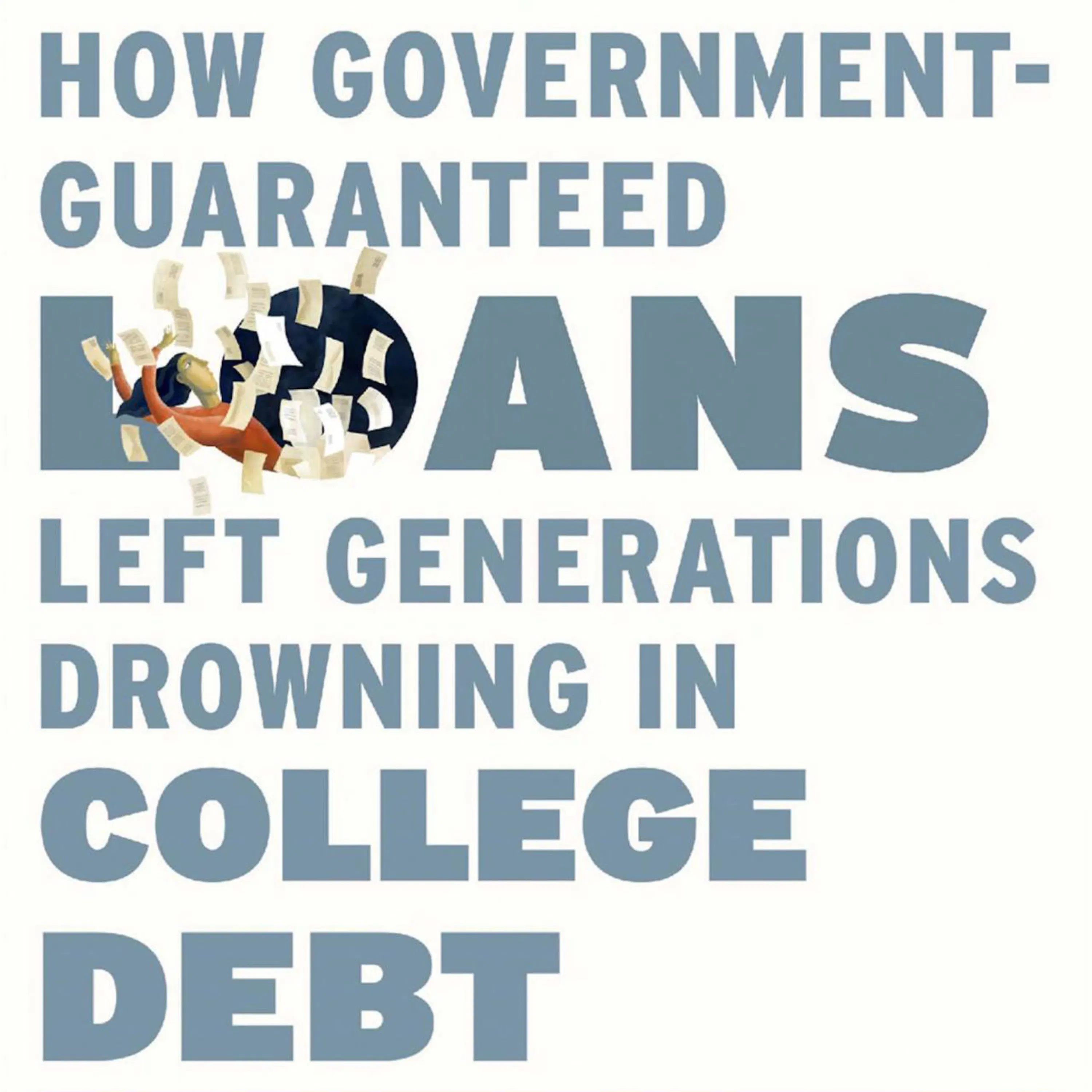
Elizabeth Tandy Shermer, an associate professor of history at Loyola University Chicago, talks about her book, Indentured Students: How Government-Guaranteed Loans Left Generations Drowning in Debt, with Peoples & Things host, Lee Vinsel. Indentured Students examines the long history of student loans in the United States, including important turning points in the 1960s. Shermer argues that elected officials have preferred student loans as an answer to an important social problem, the perceived-need for college education, over more structural solutions. Shermer and Vinsel also talk about what this legacy of debt means today as well as what recent public discussions about student debt might portend for the future. Learn more about your ad choices. Visit megaphone.fm/adchoices Support our show by becoming a premium member! https://newbooksnetwork.supportingcast.fm/public-policy
Ep 18Bioethics, Humility, and Responsibility: A Conversation with Arthur Caplan
For this episode we welcome Dr. Arthur Caplan, who is currently the Drs. William F. and Virginia Connolly Mitty Professor and founding head of the Division of Medical Ethics at NYU’s Grossman School of Medicine in New York City. Dr. Caplan is the author or editor of 35 books and more than 800 papers in peer reviewed journals. His most recent books are Vaccination Ethics and Policy (MIT Press, 2017, with Jason Schwartz) and Getting to Good: Research Integrity in Biomedicine (Springer, 2018, with Barbara Redman). Our conversation ranges from Dr. Caplan’s own experiences with polio as a child, intellectual and epistemic humility and bioethics, the shift “customerization” of patients and students, and professor watchlists. Learn more about your ad choices. Visit megaphone.fm/adchoices Support our show by becoming a premium member! https://newbooksnetwork.supportingcast.fm/public-policy
Ep 52How Do We Treat Opioid Addiction?
Mark Parrino has been involved with the delivery of health care and treatment for opioid use disorder (OUD) since 1974. As the president of the American Association for the Treatment of Opioid Dependence, Inc. (AATOD), he works with treatment providers across the country to develop and improve treatment protocols. In December 2022, AATOD worked with the National Association of State Alcohol and Drug Abuse Directors (NASADAD) to initiate a first-of-its-kind census of all patients currently receiving treatment from government-certified opioid treatment programs (OTPs). Their findings, based on responses from over 1,500 OTPs nationwide, show the breadth and distribution of addiction treatment in America, and are the product of almost fifty years of medication-assisted treatment (MAT) in the United States. I spoke with Mark about his census results, as well as the history of MAT, and specifically methadone, treatment in America. You can see the full report here. Emily Dufton is the author of Grass Roots: The Rise and Fall and Rise of Marijuana in America (Basic Books, 2017). A drug historian and writer, her second book, on the development of the opioid addiction medication industry, is under contract with the University of Chicago Press. Learn more about your ad choices. Visit megaphone.fm/adchoices Support our show by becoming a premium member! https://newbooksnetwork.supportingcast.fm/public-policy

Ep 35Gun-Detecting AI, Infrastructure, and Bureaucracy
Aaron Gordon, Senior Writer at Motherboard, Vice’s science and technology website, talks about his co-authored article, “‘The Least Safe Day’: Rollout of Gun-Detecting AI Scanners Has Been a ‘Cluster,’ Emails Show,” with Peoples & Things host, Lee Vinsel. They also discuss Gordon’s career trajectory, going from a sports reporter to a writer focused on infrastructure, maintenance, bureaucracy, and related topics. Additionally, the two chat about systematic bottlenecks around electric vehicles, a promising technology too-often cast as a cure-all. Learn more about your ad choices. Visit megaphone.fm/adchoices Support our show by becoming a premium member! https://newbooksnetwork.supportingcast.fm/public-policy
Ep 34ALICE and Economic Hardship in the United States
Stephanie Hoopes, National Director of United for ALICE, a research center founded at United Way of Northern New Jersey, talks about the ALICE program with Peoples & Thing host, Lee Vinsel. ALICE stands for Asset-Limited, Income-Constrained Employed, and describes working households who can barely afford to make ends meet. The ALICE program repeatedly finds that about 40% of American households fits its criteria. Hoopes and Vinsel also the social structures and economic factors that contribute to ALICE, and how different populations are affected unequally by these factors. Learn more about your ad choices. Visit megaphone.fm/adchoices Support our show by becoming a premium member! https://newbooksnetwork.supportingcast.fm/public-policy

Ep 32Energy Costs, Poverty, and Race
Destenie Nock, an assistant professor in the Engineering and Public Policy and Civil and Environmental Engineering Departments at Carnegie Mellon University and CEO of People’s Energy Analytics, a new startup, talks about her co-authored paper “The Energy Equity Gap: Unveiling Hidden Energy Poverty” with Peoples & Things host, Lee Vinsel. The two also talk about the arc of Nock’s career; poverty, race, and infrastructure in the United States; and how Nock’s new company can help energy utilities identify and address hidden forms of energy poverty. Learn more about your ad choices. Visit megaphone.fm/adchoices Support our show by becoming a premium member! https://newbooksnetwork.supportingcast.fm/public-policy
Ep 126Max Bazerman, "Complicit: How We Enable the Unethical and How to Stop" (Princeton UP, 2022)
Today I talked to Max Bazerman about his book Complicit: How We Enable the Unethical and How to Stop (Princeton UP, 2022). Remember Saturday Night Live’s satirical TV spot for Ivanka Trump’s perfume, Complicit? Talk about a timely topic. In what is Bazerman’s third book on ethics, the focus is on the people who surround an “evil” doer and enable or allow harmful behavior to occur. From the implosion of FTX under the funky leadership of Sam Bankman-Fried, to Elizabeth Holes at Theranos or Purdue Pharma and the Sacklers, there is always a large supporting cast of those who trade on privilege, defer to authority, or have their trust exploited. Indeed, in this interview Bazerman touches on seven different profiles in complicity that serve as a counterpoint to JFK’s book, Profiles in Courage. What solutions does Bazerman offer? Besides changing the culture of an institution or company, one particular way forward is to amass co-whistleblowers by creating “informal escrows” so that the victims of perpetrators like Harvey Weinstein don’t have to go it alone in raising what might politely be called “legitimate concerns.” Max Bazerman is the Jesse Isidor Straus Professor of Business Administration at Harvard Business School. Besides being the author of books like Blind Spots and Decision Leadership and an expert on the art of negotiations, he describes himself as a “gritty city kid from Pittsburgh.” Dan Hill, PhD, is the author of ten books and leads Sensory Logic, Inc. (https://www.sensorylogic.com). His newest book is Emotionomics 2.0: The Emotional Dynamics Underlying Key Business Goals. To check out his related “Dan Hill’s EQ Spotlight” blog, visit https://emotionswizard.com. Learn more about your ad choices. Visit megaphone.fm/adchoices Support our show by becoming a premium member! https://newbooksnetwork.supportingcast.fm/public-policy
Ep 150We Are Not Dreamers: Undocumented Scholars Theorize Undocumented Life in the United States
Today’s book is: We Are Not Dreamers: Undocumented Scholars Theorize Undocumented Life in the United States. The “Dreamer narrative” celebrates the educational and economic achievements of undocumented youth to justify a path to citizenship, and has promoted the idea that access to citizenship and rights should be granted only to a select group of “deserving” immigrants. The contributors to We Are Not Dreamers—themselves currently or formerly undocumented—counter the Dreamer narrative by grappling with the nuances of undocumented life in this country. Theorizing those excluded from the Dreamer category—academically struggling students, transgender activists, and queer undocumented parents—the contributors call for an expansive articulation of immigrant rights and justice that recognizes the full humanity of undocumented immigrants while granting full and unconditional rights. Our guest is: Dr. Genevieve Negrón-Gonzales, an Associate Professor of Leadership Studies at University of San Francisco, who is an interdisciplinary scholar of immigration and education. Her academic, activist and community work focuses on the ways undocumented young people are changing the political and legislative terrain around “illegality” and belonging in this country. Her work lies at the intersection of education, immigration, and social movements. She is the co-author of Encountering Poverty: Thinking and Acting in an Unequal World (2016, University of California Press) and co-editor of We Are Not DREAMers: Undocumented Scholars Theorize Undocumented Life in the United States (2020, Duke University Press). Our co-guest is: Dr. Leisy J. Abrego, who is Professor in Chicana/o and Central American Studies at the UCLA. She studies the intimate consequences of U.S. foreign and immigration policies for Central American migrants and Latinx families in the United States. She is the author Sacrificing Families: Navigating Laws, Labor, and Love Across Borders (Stanford University Press, 2014), and co-editor of We Are Not Dreamers: Undocumented Scholars Theorize Undocumented Life in the United States. Her scholarship analyzing legal consciousness, illegality, and legal violence has garnered numerous awards from the Latin American Studies Association and the American Sociological Association. She dedicates much of her time to supporting and advocating for refugees and immigrants by writing editorials and pro-bono expert declarations in asylum cases. Our host is: Dr. Christina Gessler, a historian of women and gender. Listeners to this episode may also be interested in: Negrón-Gonzales, G. (2017). Political possibilities: Lessons from the undocumented youth Movement for resistance to the Trump Administration. Anthropology and Education Quarterly. In press. Negrón-Gonzales, G. (2017). Constrained inclusion: Access and persistence among undocumented community college students in California’s Central Valley. Journal of Hispanic Higher Education, 16(2), 105-122. Negrón-Gonzales, G., Abrego, L., & Coll, K. (2016). Immigrant Latina/o youth and illegality: Challenging the politics of deservingness. Association of Mexican American Educators Journal, 9(3). 7-10. Gonzales, R. G., Heredia, L. L. & Negrón-Gonzales, G. (2015). Untangling Plyler's legacy: Undocumented students, schools, and citizenship. Harvard Educational Review, 85(3), 318-341. This podcast on structural inequality in higher education Welcome to The Academic Life! Join us here each week, where we learn directly from experts. We embrace the broad definition of what it means to lead an academic life, and are informed and inspired by today’s knowledge-producers working inside and outside the academy. Learn more about your ad choices. Visit megaphone.fm/adchoices Support our show by becoming a premium member! https://newbooksnetwork.supportingcast.fm/public-policy
Ep 85Sheila R. Foster and Christian Iaione, "Co-Cities: Innovative Transitions toward Just and Self-Sustaining Communities" (MIT Press, 2022)
A new model of urban governance, mapping the route to a more equitable management of a city’s infrastructure and services. The majority of the world’s inhabitants live in cities, but even with the vast wealth and resources these cities generate, their most vulnerable populations live without adequate or affordable housing, safe water, healthy food, and other essentials. And yet, cities also often harbor the solutions to the inequalities they create, as this book makes clear. With examples drawn from cities worldwide, Co-Cities: Innovative Transitions toward Just and Self-Sustaining Communities (MIT Press, 2022) outlines practices, laws, and policies that are presently fostering innovation in the provision of urban services, spurring collaborative economies as a driver of local sustainable development, and promoting inclusive and equitable regeneration of blighted urban areas. Identifying core elements of these diverse efforts, Sheila R. Foster and Christian Iaione develop a framework for understanding how certain initiatives position local communities as key actors in the production, delivery, and management of urban assets or local resources. Within this framework, they explain the forms such initiatives increasingly take, like community land trusts, new kinds of co-housing, neighborhood cooperatives, community-shared broadband and energy networks, and new local offices focused on citizen science and civic imagination. The “Co-City” framework is uniquely rooted in the authors’ own decades-long research and first-hand experience working in cities around the world. Foster and Iaione offer their observations as “design principles”—adaptable to local context—to help guide further experimentation in building just and self-sustaining urban communities. Learn more about your ad choices. Visit megaphone.fm/adchoices Support our show by becoming a premium member! https://newbooksnetwork.supportingcast.fm/public-policy
Ep 189Michael Murawski, "Museums as Agents of Change: A Guide to Becoming a Changemaker" (Rowman & Littlefield, 2021)
Museums everywhere have the potential to serve as agents of change—bringing people together, contributing to local communities, and changing people’s lives. So how can we, as individuals, radically expand the work of museums to live up to this potential? How can we more fiercely recognize the meaningful work that museums are doing to enact change around the relevant issues in our communities? How can we work together to build a stronger culture of equity and care within museums? Questions like these are increasingly vital for all museum professionals to consider, no matter what your role is within your institution. They are also important questions for all of us to be thinking about more deeply as citizens and community members. Museums as Agents of Change: A Guide to Becoming a Changemaker (Rowman & Littlefield, 2021) is about the work we need to do to become changemakers and demand that that our museums take action toward positive social change and bring people together into a more just, equitable, compassionate, and connected society. It is a journey toward tapping the energies within all of us to make change happen and proactively shape a new future. Mike Murawski is a consultant, change leader, and educator living in Portland, Oregon. After more than 20 years of work in education and museums, Mike brings his personal core values of collaboration and care along with a deeper understanding of placed-based connections into the work that he leads within organizations, non-profits, schools, and communities. Mike is the author of Museums as Agents of Change, and author of the Substack publication Agents of Change. In 2016, he co-founded Super Nature Adventures LLC, a place-based education and creative design business that partners with parks, government agencies, schools, and non-profits to expand learning in the outdoors and public spaces. When he's not working on place-based projects or supporting change in nonprofits, you can find Mike on long trail runs in the forests and mountains of the Pacific Northwest. Callie Smith is a poet and museum educator living in Louisiana. Learn more about your ad choices. Visit megaphone.fm/adchoices Support our show by becoming a premium member! https://newbooksnetwork.supportingcast.fm/public-policy
Ep 27The Internet, Inequality, and the “Digital Divide”
Information scholar Daniel Greene, an assistant professor at University of Maryland, talks about his book, The Promise of Access: Technology, Inequality, and the Political Economy of Hope, with Peoples & Things host, Lee Vinsel. The Promise of Access examines how the “digital divide” became a policy problem, and draws on fascinating ethnographies of a “tech” startup, a public library, and a charter school to examine how organizations come to chase technological solutions to social problems. Learn more about your ad choices. Visit megaphone.fm/adchoices Support our show by becoming a premium member! https://newbooksnetwork.supportingcast.fm/public-policy
Ep 174Gabrielle Kruks-Wisner, "Claiming the State: Active Citizenship and Social Welfare in Rural India" (Cambridge UP, 2018)
Citizens around the world look to the state for social welfare provision, but often struggle to access essential services in health, education, and social security. Claiming the State: Active Citizenship and Social Welfare in Rural India (Cambridge UP, 2018) investigates the everyday practices through which citizens of the world's largest democracy make claims on the state, asking whether, how, and why they engage public officials in the pursuit of social welfare. Drawing on extensive fieldwork in rural India, Kruks-Wisner demonstrates that claim-making is possible in settings (poor and remote) and among people (the lower classes and castes) where much democratic theory would be unlikely to predict it. Examining the conditions that foster and inhibit citizen action, she finds that greater social and spatial exposure - made possible when individuals traverse boundaries of caste, neighborhood, or village - builds citizens' political knowledge, expectations, and linkages to the state, and is associated with higher levels and broader repertoires of claim-making. Gabrielle Kruks-Wisner is an Associate Professor of Politics & Global Studies at the University of Virginia. Prior to joining UVA, she was an Academy Scholar at the Harvard Academy for International and Area Studies, and an Assistant Professor of Political Science at Boston College. She received a Ph.D. in Political Science and Masters in International Development Planning from the Massachusetts Institute of Technology, and a B.A. in Sociology & Anthropology from Swarthmore College Learn more about your ad choices. Visit megaphone.fm/adchoices Support our show by becoming a premium member! https://newbooksnetwork.supportingcast.fm/public-policy
Ep 131Iza Ding, "The Performative State: Public Scrutiny and Environmental Governance in China" (Cornell UP, 2022)
What does the state do when public expectations exceed its governing capacity? The Performative State: Public Scrutiny and Environmental Governance in China (Cornell, 2022) shows how the state can shape public perceptions and defuse crises through the theatrical deployment of language, symbols, and gestures of good governance—performative governance. Iza Ding unpacks the black box of street-level bureaucracy in China through ethnographic participation, in-depth interviews, and public opinion surveys. She demonstrates in vivid detail how China's environmental bureaucrats deal with intense public scrutiny over pollution when they lack the authority to actually improve the physical environment. They assuage public outrage by appearing responsive, benevolent, and humble. But performative governance is hard work. Environmental bureaucrats paradoxically work themselves to exhaustion even when they cannot effectively implement environmental policies. Instead of achieving "performance legitimacy" by delivering material improvements, the state can shape public opinion through the theatrical performance of goodwill and sincere effort. The Performative State also explains when performative governance fails at impressing its audience and when governance becomes less performative and more substantive. Ding focuses on Chinese evidence but her theory travels: comparisons with Vietnam and the United States show that all states, democratic and authoritarian alike, engage in performative governance. Iza Ding is an Assistant Professor in the Political Science Department at the University of Pittsburgh. She received her PhD from Harvard University. Her work has appeared in World Politics, the China Quarterly, Comparative Political Studies, and other academic journals. Peter Lorentzen is economics professor at the University of San Francisco. He heads USF's Applied Economics Master's program, which focuses on the digital economy. His research is mainly on China's political economy. Learn more about your ad choices. Visit megaphone.fm/adchoices Support our show by becoming a premium member! https://newbooksnetwork.supportingcast.fm/public-policy

Ep 32Border Lines: Refugees and the International Order
Climate change and war have flung millions of people on the move, who often seek safe harbor in the very countries responsible for their displacement. But despite the lofty ideals and supposed simplicity of international refugee law, it turns out borders are not really the fixed lines on a map we imagine them to be. Guests: Deborah Anker is Clinical Professor of Law and Founder of the Harvard Law School Immigration and Refugee Clinical Program (HIRC). Celeste Cantor-Stephens is a musician, interdisciplinary artist, writer, teacher and activist. Chowra Makaremi is an anthropologist and tenured research scholar at the French National Center for Scientific Research (CNRS) in Paris. Adrian Rennix is a writer and an immigration attorney practicing near the southern border. Learn more about your ad choices. Visit megaphone.fm/adchoices Support our show by becoming a premium member! https://newbooksnetwork.supportingcast.fm/public-policy
Ep 7Ross Beveridge and Philippe Koch, "How Cities Can Transform Democracy" (Polity Press, 2022)
We live in an urban age. It is well-known that urbanization is changing landscapes, built environments, social infrastructures and everyday lives across the globe. But urbanization is also changing the ways we understand and practise politics. What implications does this have for democracy? This incisive book argues that urbanization undermines established certainties of nation-state politics and calls for a profound rethinking of democracy as a project. Ross Beveridge and Philippe Koch provide a novel way of seeing democracy like a city, shifting scholarly and activist perspectives from institutions to practices, from jurisdictional scales to spaces of collective urban life, and from fixed communities to emergent political subjects. Through a discussion of examples from around the world, the book shows that distinctly urban forms of collective self-rule are already apparent. The authors reclaim the ‘city’ as a democratic idea in a context of urbanization, seeing it as instrumental to re-locate democracy in the everyday lives of urbanites. Original and hopeful, How Cities Can Transform Democracy (Polity Press, 2022) compels the reader to abandon conventional understandings of democracy and embrace new vocabularies and practices of democratic action in the struggles for our urban future. Anna Zhelnina holds a Ph.D. in Sociology and is a postdoctoral fellow at the University of Helsinki. To learn more, visit https://annazhelnina.com/ or follow Anna on Twitter: https://twitter.com/AnnaZhelnina Learn more about your ad choices. Visit megaphone.fm/adchoices Support our show by becoming a premium member! https://newbooksnetwork.supportingcast.fm/public-policy
Ep 306Derrick Darby, "A Realistic Blacktopia: Why We Must Unite to Fight" (Oxford UP, 2022)
In the United States, unjust disparities in things like income, opportunity, health, safety, and education tightly track racial categorizations of the US population. An intuitive approach to social justice calls us to look to the sites of the greatest disadvantage, and take measures aimed at relieving them. This approach favors “race specific” policies for pursuing justice. However, that kind of rationale is increasingly vulnerable in a country that’s largely convinced that it has achieved a “post-racial” condition. Hence the remaining disparities remain, but are explained away by appeals to alleged faults of those who suffer under them. In A Realistic Blacktopia: Why We Must Unite to Fight (Oxford UP, 2023), Derrick Darby defends a different approach. According to Darby, the psychological and social realities of the United States suggest that we must adopt a non-race-specific social justice agenda, explicitly tying our efforts to mitigate unjust inequalities that track racial categorization to “big tent” initiatives to broaden and deepen democratic inclusion for citizens as such. Robert Talisse is the W. Alton Jones Professor of Philosophy at Vanderbilt University. Learn more about your ad choices. Visit megaphone.fm/adchoices Support our show by becoming a premium member! https://newbooksnetwork.supportingcast.fm/public-policy
Ep 1294Alexandre I. R. White, "Epidemic Orientalism: Race, Capital, and the Governance of Infectious Disease" (Stanford UP, 2023)
For many residents of Western nations, COVID-19 was the first time they experienced the effects of an uncontrolled epidemic. This is in part due to a series of little-known regulations that have aimed to protect the global north from epidemic threats for the last two centuries, starting with International Sanitary Conferences in 1851 and culminating in the present with the International Health Regulations, which organize epidemic responses through the World Health Organization. Unlike other equity-focused global health initiatives, their mission—to establish "the maximum protections from infectious disease with the minimum effect on trade and traffic"—has remained the same since their founding. In Epidemic Orientalism: Race, Capital, and the Governance of Infectious Disease (Stanford UP, 2023), Alexandre White reveals the Western capitalist interests, racism and xenophobia, and political power plays underpinning the regulatory efforts that came out of the project to manage the international spread of infectious disease. He examines how these regulations are formatted; how their framers conceive of epidemic spread; and the types of bodies and spaces it is suggested that these regulations map onto. Proposing a modified reinterpretation of Edward Said's concept of orientalism, White invites us to consider "epidemic orientalism" as a framework within which to explore the imperial and colonial roots of modern epidemic disease control. Learn more about your ad choices. Visit megaphone.fm/adchoices Support our show by becoming a premium member! https://newbooksnetwork.supportingcast.fm/public-policy
Ep 46Peter Jones and Kristel van Ael, "Design Journeys Through Complex Systems" (Bis Publishers, 2022)
As I slowly settle into 2023 — reflecting on the blur that was 2022 — I can’t help but think about the complex problems (aka big messes!) we face at every turn: from increasingly devastating manifestations of the climate emergency, to the ubiquitous homelessness crisis, to the perplexing challenge of accessing a family physician in prosperous regions such as British Columbia, Canada. At the same time I am buoyed by the promise of Systems Thinking. Systems practices can take many forms and have the potential to inform — and guide us through — sensible, comprehensive and creative problem-solving. Here on this channel, we have explored some of the origins of systems and cybernetics by talking to knowledgeable experts from across the globe. Today’s systems thinkers and practitioners are building upon a rich tradition, and are activating systems lineages in incredibly interesting ways. I’ve recently been drawn to works that highlight the application of systems — especially those with intriguing connections to other disciplines. The book that is the subject of this episode does just that by exploring the intersection of systems and design thinking. Design Journeys for Complex Systems: Practice Tools for Systemic Design (Bis Publishers, 2022) is a designer's handbook to learn systemic design tools to engage stakeholder groups in collaborative design to address complex societal systems. Authors Peter Jones and Kristel Van Ael describe how systemic design uses systems thinking and service design to address large-scale societal contexts and complex socio-technical systems. These are contexts characterized by social and technological complexity, high uncertainty, and often problematic outcomes. They describe the function of design as “system sensemaking” and using a tour guide metaphor, the book trains people's mindsets and provides tools for dealing with hyper complexity, to enable understanding of systemic problems, and to build capacity to collaborate in teams to produce action proposals. A little bit about the authors of Design Journeys for Complex Systems: Dr. Peter Jones teaches systemic design and health service design in the MDes programs at Toronto’s OCAD University, is a co-founder of the Systemic Design Association. Kristel Van Ael is a business partner at Namahn, a humanity-centered design agency based in Brussels, and is lead author of the Service Design and Systemic Design toolkits. It was a pleasure to talk to Peter and Kristel. I hope you enjoy this episode as much as I did. Learn more about your ad choices. Visit megaphone.fm/adchoices Support our show by becoming a premium member! https://newbooksnetwork.supportingcast.fm/public-policy
Ep 57Seeing Truth in Museums
Feeling down about museums? We have so many reasons to, but Chris Newell, Tribal Community Member-in-Residence at UConn and Director of Education at the Akomawt Educational Initiative, gives a dose of optimism about the future of museums. Learn more about the Seeing Truth exhibition at our website. Follow us on Twitter @WhyArguePod and on Instagram @WhyWeArguePod Alexis L. Boylan is the director of academic affairs of the University of Connecticut Humanities Institute (UCHI) and an associate professor with a joint appointment in the Art and Art History Department and the Africana Studies Institute Learn more about your ad choices. Visit megaphone.fm/adchoices Support our show by becoming a premium member! https://newbooksnetwork.supportingcast.fm/public-policy

Ep 25Virtually Violent: Are Online Attacks "Violence?"
During the ongoing COVID-19 pandemic, vulnerable communities have been hit especially hard by disruptive online attacks. But calling these attacks "violent" could jeopardize the future of disruptive protests designed to protest those same communities. Guests: Erica Chenoweth, professor of human rights and international affairs at the Harvard Kennedy School of Government and author of Civil Resistance: What Everyone Needs To Know. Dr. Joan Donovan, research director of the Shorenstein Center on Media, Politics and Public Policy at Harvard University. Oren Segal, vice president of the Anti-Defamation League's Center on Extremism. Learn more about your ad choices. Visit megaphone.fm/adchoices Support our show by becoming a premium member! https://newbooksnetwork.supportingcast.fm/public-policy
Ep 235Sheri Brenden, "Break Point: Two Minnesota Athletes and the Road to Title IX" (U Minnesota Press, 2022)
In Break Point: Two Minnesota Athletes and the Road to Title IX (University of Minnesota Press, 2022), Sheri Brenden examines how two teenage girls in Minnesota jump-started a revolution in high school athletics Peggy Brenden, a senior, played tennis. Toni St. Pierre, a junior, was a cross country runner and skier. All these two talented teenagers wanted was a chance to compete on their high school sports teams. But in Minnesota in 1972 the only way on the field with the boys ran through a federal court--so that was where the girls went. Break Point tells the story, for the first time, of how two teenagers took on the unequal system of high school athletics, setting a legal precedent for schools nationwide before the passage of Title IX. As Peggy's younger sister, author Sheri Brenden is uniquely positioned to convey the human drama of the case, the stakes, and the consequences for two young women facing the legal machinery of the state, in court and in school. In an account that begins with Peggy painstakingly typing her appeal to the Minnesota Civil Liberties Union and concludes with a long view of what Brenden v. Independent School District 742 set in motion, Sheri Brenden summons the salient details of this landmark case as it makes its way through the courts. Peggy and Toni, coaches, administrators, and experts testify before Judge Miles Lord, whose decision, upheld in a precedent-setting appeal, would change these girls' lives and open up athletic opportunities for innumerable others. Grounded in newspaper coverage, court records, and interviews, Brenden's deeply researched, scrupulously reported book is at heart the story of two talented teenage girls whose pluck and determination--and, often, heartache--led to a victory much greater than any high school championship. Rebekah Buchanan is a Professor of English and Director of English Education at Western Illinois University. Her research focuses on feminism, activism, and literacy practices in youth culture, specifically through zines and music. Learn more about your ad choices. Visit megaphone.fm/adchoices Support our show by becoming a premium member! https://newbooksnetwork.supportingcast.fm/public-policy
Ep 16The History of Temp Work
Historian Louis Hyman, professor and director of the Institute of Workplace Studies at Cornell University’s School of Industrial and Labor Relations, talks about his book, Temp: How American Work, American Business, and American Dream Became Temporary, with Peoples & Things host Lee Vinsel. In this conversation, Hyman and Vinsel chat about how most mid-20th century secure jobs were possessed by white men, how temporary work began to rise after World War Two, and how all this led to the gig-based world we inhabit. Learn more about your ad choices. Visit megaphone.fm/adchoices Support our show by becoming a premium member! https://newbooksnetwork.supportingcast.fm/public-policy
Ep 210Elizabeth Farfán-Santos, "Undocumented Motherhood: Conversations on Love, Trauma, and Border Crossing" (U Texas Press, 2022)
Claudia Garcia crossed the border because her toddler, Natalia, could not hear. Leaving behind everything she knew in Mexico, Claudia recounts the terror of migrating alone with her toddler and the incredible challenges she faced advocating for her daughter's health in the United States. When she arrived in Texas, Claudia discovered that being undocumented would mean more than just an immigration status—it would be a way of living, of mothering, and of being discarded by even those institutions we count on to care. Elizabeth Farfán-Santos spent five years with Claudia. As she listened to Claudia's experiences, she recalled her own mother's story, another life molded by migration, the US-Mexico border, and the quest for a healthy future on either side. Witnessing Claudia's struggles with doctors and teachers, we see how the education and medical systems enforce undocumented status and perpetuate disability. At one point, in the midst of advocating for her daughter, Claudia suddenly finds herself struck by debilitating pain. Claudia is lifted up by her comadres, sent to the doctor, and reminded why she must care for herself. A braided narrative that speaks to the power of stories for creating connection, Undocumented Motherhood: Conversations on Love, Trauma, and Border Crossing (University of Texas Press, 2022) reveals what remains undocumented in the motherhood of Mexican women who find themselves making impossible decisions and multiple sacrifices as they build a future for their families. Elizabeth Farfán-Santos is a medical anthropologist and the author of Black Bodies, Black Rights: The Politics of Quilombolismo in Contemporary Brazil. Reighan Gillam is Associate Professor in the Department of Anthropology at the University of Southern California. She is the author of Visualizing Black Lives: Ownership and Control in Afro-Brazilian Media (University of Illinois Press). Learn more about your ad choices. Visit megaphone.fm/adchoices Support our show by becoming a premium member! https://newbooksnetwork.supportingcast.fm/public-policy
Ep 130Ajay Agrawal et al., "Power and Prediction: The Disruptive Economics of Artificial Intelligence" (HBR Press, 2022)
Disruption resulting from the proliferation of AI is coming. The authors of the bestselling Prediction Machines describe what you can do to prepare. Banking and finance, pharmaceuticals, automotive, medical technology, retail. Artificial intelligence (AI) has made its way into many industries around the world. But the truth is, it has just begun its odyssey toward cheaper, better, and faster predictions to drive strategic business decisions--powering and accelerating business. When prediction is taken to the max, industries transform. The disruption that comes with such transformation is yet to be felt--but it is coming. How do businesses prepare? In Prediction Machines, eminent economists Ajay Agrawal, Joshua Gans, and Avi Goldfarb explained the simple yet game-changing economics of AI. Now, in Power and Prediction: The Disruptive Economics of Artificial Intelligence (HBR Press, 2022), they go further to reveal AI as a prediction technology directly impacting decision-making and to teach businesses how to identify disruptive opportunities and threats resulting from AI. Their exhaustive study of new developments in artificial intelligence and the past history of how technologies have disrupted industries highlights the striking phase we are now in: after witnessing the power of this new technology and before its widespread adoption--what they call "the Between Times." While there continue to be important opportunities for businesses, there are also threats of disruption. As prediction machines improve, old ways of doing things will be upended. Also, the process by which AI filters into the many systems involved in application is very uneven. That process will have winners and losers. How can businesses leverage, or protect, their positions? Filled with illuminating insights, rich examples, and practical advice, Power and Prediction is the must-read guide for any business leader or policy maker on how to make the coming AI disruptions work for you rather than against you. Interviewee Avi Goldfarb is the Rotman Chair in Artificial Intelligence and Healthcare and a professor of marketing at the Rotman School of Management, University of Toronto. Avi is also Chief Data Scientist at the Creative Destruction Lab and the CDL Rapid Screening Consortium, a faculty affiliate at the Vector Institute and the Schwartz-Reisman Institute for Technology and Society, and a Research Associate at the National Bureau of Economic Research. Avi’s research focuses on the opportunities and challenges of the digital economy. He has published academic articles in marketing, statistics, law, management, medicine, political science, refugee studies, physics, computing, and economics. Avi is a former Senior Editor at Marketing Science. His work on online advertising won the INFORMS Society of Marketing Science Long Term Impact Award. He testified before the U.S. Senate Judiciary Committee on competition and privacy in digital advertising. His work has been referenced in White House reports, European Commission documents, the New York Times, the Economist, and elsewhere. Peter Lorentzen is economics professor at the University of San Francisco. He heads USF's Applied Economics Master's program, which focuses on the digital economy. His research is mainly on China's political economy. Learn more about your ad choices. Visit megaphone.fm/adchoices Support our show by becoming a premium member! https://newbooksnetwork.supportingcast.fm/public-policy
Ep 129Liran Einav et al., "Risky Business: Why Insurance Markets Fail and What to Do About It" (Yale UP, 2023)
Why is dental insurance so crummy? Why is pet insurance so expensive? Why does your auto insurer ask for your credit score? The answer to these questions lies in understanding how insurance works. Unlike the market for other goods and services—for instance, a grocer who doesn’t care who buys the store’s broccoli or carrots—insurance providers are more careful in choosing their customers, because some are more expensive than others. In Risky Business: Why Insurance Markets Fail and What to Do About It (Yale UP, 2023), Liran Einav, Amy Finkelstein, and Ray Fisman explore such issues as why insurers want to know so much about us and whether we should let them obtain this information; why insurance entrepreneurs often fail (and some tricks that may help them succeed); and whether we’d be better off with government-mandated health insurance instead of letting businesses, customers, and markets decide who gets coverage and at what price. With insurance at the center of divisive debates about privacy, equity, and the appropriate role of government, this book offers clear explanations for some of the critical business and policy issues you’ve often wondered about, as well as for others you haven’t yet considered. John Emrich has worked for decades years in corporate finance, business valuation and fund management. He has a podcast about the investment space called Kick the Dogma. Learn more about your ad choices. Visit megaphone.fm/adchoices Support our show by becoming a premium member! https://newbooksnetwork.supportingcast.fm/public-policy
Ep 17Shifting Blame: What Should You "Own" and What Shouldn't You?
We claim to judge people for what they intentionally do, but accidents often influence our judgments. In our justice systems, people can be harshly and unfairly blamed for bad luck—but in our personal lives, taking on blame isn’t always a bad thing. Guests Fiery Cushman, Professor of Psychology at Harvard University Daniel Statman, Professor of Philosophy at the University of Haifa Learn more about your ad choices. Visit megaphone.fm/adchoices Support our show by becoming a premium member! https://newbooksnetwork.supportingcast.fm/public-policy
Ep 350Steffen Mau, "Sorting Machines: The Reinvention of the Border in the 21st Century" (Polity Press, 2022)
It is commonly thought that, thanks to globalization, nation-state borders are becoming increasingly porous. In Sorting Machines: The Reinvention of the Border in the 21st Century (Polity, 2022) Steffen Mau shows that this view is misleading: borders are not getting more permeable in the era of globalization, but rather are being turned into powerful sorting machines. Today they fulfill their separation function better and more effectively than ever. While the cross-border movement of people has steadily increased in recent decades, a counter-development has taken place at the same time: in many places, new deterrent walls and militarized border crossings are being created. Borders have also become increasingly selective. Supported by digitalization, they have been upgraded to smart borders, and border control has expanded spatially on a massive scale, even becoming a global enterprise that is detached from territory. Steffen Mau shows how the new sorting machines create mobility and immobility at the same time: for some travellers, borders open like department-store doors, but for others they remain closed more firmly than ever. While a small circle of privileged people are allowed to travel almost everywhere today, the vast majority of the world’s population continues to be systematically excluded. Nowhere is the Janus face of globalization more evident than at the borders of the 21st century. Originally published in German in 2021, this new English edition was translated by Nicola Barfoot. Steffen Mau is Professor of Macrosociology at the Humboldt University of Berlin. His recent works include The Metric Society: On the Quantification of the Social (2019) and Inequality, Marketization and the Majority Class: Why Did the European Middle Classes Accept Neo-Liberalism? (2015). Catriona Gold is a PhD candidate in Geography at University College London. She is currently researching the US Passport Office's role in governing Cold War travel, and broadly interested in questions of security, surveillance and mobility. She can be reached by email, Mastodon or Twitter. Learn more about your ad choices. Visit megaphone.fm/adchoices Support our show by becoming a premium member! https://newbooksnetwork.supportingcast.fm/public-policy
Ep 108How Did the Pandemic Transform Workers and Work?
The pandemic brought to the fore a group of workers deemed “essential” – frontline healthcare workers, restaurant employees, slaughterhouse workers, and the like – who often faced a difficult choice between risking their health to work or forgoing income that they couldn’t afford to do without. Often, they had to work even though they couldn’t afford health insurance – or health care themselves if they got sick, another sign of the inadequacy of our health care arrangements. How did the pandemic transform workers and work? This week on International Horizons, Professor John Torpey talks to Jamie McCallum from sociology at Middlebury College about the shift in conditions for essential workers across the globe during the pandemic and how that affected the whole world's labor movement. McCallum discusses the variations of these effects in different regions and how exceptionally the US behaved during the pandemic in terms of labor protection. Finally, the author discusses whether labor unrest can be pushed for larger systemic change. Learn more about your ad choices. Visit megaphone.fm/adchoices Support our show by becoming a premium member! https://newbooksnetwork.supportingcast.fm/public-policy
S1 Ep 17Eternity Now: Talking about Mysticism with the Apostle to the Gangs of LA
Jesuit Father Greg Boyle is the founder of Homeboy Industries in East LA, the world’s largest and most successful gang intervention and rehabilitation program. He talks about this ministry and his “therapeutic mysticism” which has trained him to see God and God’s people. Father Greg (“Father G”) has no interest in categories and the games of exclusion that we humans often play; he says, “gang violence is about a lethal absence of hope.” His mission to the homies, therefore, is filled with faith, hope, and love and brings “the God who is tender, the God who is too busy loving us to be disappointed, the God who can’t take His eyes off of us.” That’s why it has been so effective. · Here is the website of Homeboy Industries. · Books by Fr. Greg (including New York Times bestseller, Tattoos on the Heart) are available from Amazon.com. Learn more about your ad choices. Visit megaphone.fm/adchoices Support our show by becoming a premium member! https://newbooksnetwork.supportingcast.fm/public-policy
Ep 46The Future of Inequality: A Discussion with Mike Savage
Most people in developed countries think inequality is increasing. And most would also agree that in terms of the global poor, the last 20 years have seen vast improvements with hundreds of millions living much better lives than their parents. These are some of the themes Professor Mike Savage addresses in his book The Return of Inequality: Social change and the Weight of the Past (Harvard UP, 2021). Owen Bennett-Jones is a freelance journalist and writer. A former BBC correspondent and presenter he has been a resident foreign correspondent in Bucharest, Geneva, Islamabad, Hanoi and Beirut. He is recently wrote a history of the Bhutto dynasty which was published by Yale University Press. Learn more about your ad choices. Visit megaphone.fm/adchoices Support our show by becoming a premium member! https://newbooksnetwork.supportingcast.fm/public-policy
Ep 188Matthew Smith, "The First Resort: The History of Social Psychiatry in the United States" (Columbia UP, 2022)
Social psychiatry was a mid-twentieth-century approach to mental health that stressed the prevention of mental illness rather than its treatment. Its proponents developed environmental explanations of mental health, arguing that socioeconomic problems such as poverty, inequality, and social isolation were the underlying causes of mental illness. The influence of social psychiatry contributed to the closure of psychiatric hospitals and the emergence of community mental health care during the 1960s. By the 1980s, however, social psychiatry was in decline, having lost ground to biological psychiatry and its emphasis on genetics, neurology, and psychopharmacology. The First Resort: The History of Social Psychiatry in the United States (Columbia UP, 2022) is a history of the rise and fall of social psychiatry that also explores the lessons this largely forgotten movement has to offer today. Matthew Smith examines four ambitious projects that investigated the relationship between socioeconomic factors and mental illness in Chicago, New Haven, New York City, and Nova Scotia. He contends that social psychiatry waned not because of flaws in its preventive approach to mental health but rather because the economic and political crises of the 1970s and the shift to the right during the 1980s foreclosed the social changes required to create a more mentally healthy society. Smith also argues that social psychiatry provides timely insights about how progressive social policies, such as a universal basic income, can help stem rising rates of mental illness in the present day. Claire Clark is a medical educator, historian of medicine, and associate professor in the University of Kentucky’s College of Medicine. Learn more about your ad choices. Visit megaphone.fm/adchoices Support our show by becoming a premium member! https://newbooksnetwork.supportingcast.fm/public-policy
Ep 2Poverty, Race, and Rural Sanitation
Catherine Coleman Flowers, activist, author, founder of the Center for Rural Enterprise and Environmental Justice, and MacArthur “genius prize” winner, talks about her book Waste: One Woman’s Fight Against America’s Dirty Secret with Peoples & Things host Lee Vinsel. Waste examines the brutal realities of rural sanitation issues, particularly the lack of septic tanks, and how they affect poor, often black, people. Flowers also reflects on growing up in Lowndes County, Alabama and how her family, the Civil Rights Movement, and her faith life led her to be the leader she is today. Learn more about your ad choices. Visit megaphone.fm/adchoices Support our show by becoming a premium member! https://newbooksnetwork.supportingcast.fm/public-policy
Ep 9Demeritocracy: Should We Still Believe in Meritocracy?
Total faith in meritocracy leads to the dangerous belief that all social winners and losers are wholly deserving. Instead, we need an economy of grace. Guests Victor Tan Chen, assistant professor of sociology at Virginia Commonwealth University and author of Cut Loose: Jobless and Hopeless in an Unfair Economy Thomas Frank, author of What’s the Matter with Kansas? and Listen, Liberal Learn more about your ad choices. Visit megaphone.fm/adchoices Support our show by becoming a premium member! https://newbooksnetwork.supportingcast.fm/public-policy
Ep 721st Century Citizenship: What Does It Mean to be a Citizen in America?
What does it mean to be a citizen in America in 2017? Guests Danielle Allen, Director of the Edmond J. Safra Center for Ethics and University Professor at Harvard University Erhardt Graeff, PhD candidate at the MIT Media Lab Center for Civic Media Shanelle Matthews, Director of Communications for the Black Lives Matter global network Learn more about your ad choices. Visit megaphone.fm/adchoices Support our show by becoming a premium member! https://newbooksnetwork.supportingcast.fm/public-policy
Ep 15Neoliberalism and Higher Education
This episode is a roundtable discussion on the influence of the neoliberal project on higher education. Our guests are Professor Emeritus Frank Fear from Michigan State University, Professor Claire Polster from the University of Regina, and Professor Ruben Martinez from Michigan State University. The conversation is wide-ranging across topics such as the quantification of higher education and the concept of students as customers. John Kaag is Professor and Chair of Philosophy at UMass Lowell and External Professor at the Santa Fe Institute. John W. Traphagan, Ph.D. is Professor and Mitsubishi Heavy Industries Fellow in the Department of Religious Studies at the University of Texas at Austin, where he is also a professor in the Program in Human Dimensions of Organizations. Learn more about your ad choices. Visit megaphone.fm/adchoices Support our show by becoming a premium member! https://newbooksnetwork.supportingcast.fm/public-policy
Ep 267Bin Xu, "The Culture of Democracy: A Sociological Approach to Civil Society" (Polity Press, 2022)
Against the bleak backdrop of pressing issues in today’s world, civil societies remain vibrant, animated by people’s belief that they should and can solve such issues and build a better society. Their imagination of a good society, their understanding of their engagement, and the ways they choose to act constitute the cultural aspect of civil society. Central to this cultural aspect of civil society is the “culture of democracy,” including normative values, individual interpretations, and interaction norms pertaining to features of a democratic society, such as civility, independence, and solidarity. The culture of democracy varies in different contexts and faces challenges, but it shapes civic actions, alters political and social processes, and thus is the soul of modern civil societies. The Culture of Democracy: A Sociological Approach to Civil Society (Polity Press, 2022) provides the first systematic survey of the cultural sociology of civil society and offers a committed global perspective. It shows that, as everyone is eager to have their voice heard, cultural sociology can serve as an “art of listening,” a thoroughly empirical approach that takes ideas, meanings, and opinions seriously, for people to contemplate significant theoretical and public issues. Rituparna Patgiri is an Assistant Professor of Sociology at Indraprastha College for Women, University of Delhi. She has a PhD in Sociology from Jawaharlal Nehru University (JNU), New Delhi. Her research interests lie in the areas of food, media, gender and public. She is also one of the co-founders of Doing Sociology. Patgiri can be reached at @Rituparna37 on Twitter. Learn more about your ad choices. Visit megaphone.fm/adchoices Support our show by becoming a premium member! https://newbooksnetwork.supportingcast.fm/public-policy
Ep 138Char Miller, "Natural Consequences: Intimate Essays for a Planet in Peril" (Chin Music, 2022)
A collection of 42 essays meditating on both California’s natural gifts and its natural disasters, Natural Consequences: Intimate Essays for a Planet in Peril (Chin Music, 2022) urges readers to consider their role in the environment, no matter where they live. Char Miller’s approach to his topic is intimate and immediate but also incorporates his perspective as a historian. He weaves the present dilemma of Hetch Hetchy dam in Yosemite into a reflection on the injustices wreaked upon Indigenous peoples, and a discussion of the Weeks Act of 1911 (read the essay “Upper Reaches” if you’re wondering what that is) into a tale of two environmental historians’ conferences. Organized into six sections, the book is like a meander through a broad topography, including urban areas, total wilderness, and the uneasy liminal spaces between. Throughout, Miller acknowledges his own, and our collective, role in arriving at this perilous place – and manages to strike a balance between hope and concern. His disarmingly brief essays linger after the words are gone. Rachel Pagones is an acupuncturist, educator, and author living in Cambridge, England. Long before moving to the UK, she was an Environmental Studies student at UC Santa Cruz. Learn more about your ad choices. Visit megaphone.fm/adchoices Support our show by becoming a premium member! https://newbooksnetwork.supportingcast.fm/public-policy
Ep 186Ellen Cassedy, "Working 9 to 5: A Women's Movement, a Labor Union, and the Iconic Movie" (Chicago Review Press, 2022)
Today I talked to Ellen Cassedy about her new book Working 9 to 5: A Women's Movement, a Labor Union, and the Iconic Movie (Chicago Review Press, 2022). Many people may identify 9 to 5 with the comic film starring Jane Fonda, Dolly Parton and Lily Tomlin or perhaps only know Parton’s hit song that served as its theme. But 9 to 5 wasn't just a comic film—it was a movement built by Ellen Cassedy and her friends. Ten office workers in Boston started out sitting in a circle and sharing the problems they encountered on the job. In a few short years, they had built a nationwide movement that united people of diverse races, classes, and ages. They took on the corporate titans. They leafleted and filed lawsuits and started a woman-led union. They won millions of dollars in back pay and helped make sexual harassment and pregnancy discrimination illegal. The women office workers who rose up to win rights and respect on the job transformed workplaces throughout America. And along the way came Dolly Parton's toe-tapping song and a hit movie inspired by their work. Working 9 to 5 is a lively, informative, firsthand account packed with practical organizing lore that will embolden anyone striving for fair treatment. Ellen Cassedy was a founder of the 9 to 5 organization in 1973. She is the coauthor with Karen Nussbaum of 9 to 5: The Working Woman's Guide to Office Survival and with Ellen Bravo of The 9 to 5 Guide to Combating Sexual Harassment. Ellen Cassedy is a former columnist for the Philadelphia Daily News, was a speechwriter in the Clinton administration, and has contributed to Huffington Post, Redbook, Woman's Day, Hadassah, Philadelphia Inquirer, and other publications. Learn more about your ad choices. Visit megaphone.fm/adchoices Support our show by becoming a premium member! https://newbooksnetwork.supportingcast.fm/public-policy
Ep 4(In)efficiency: Should Efficiency be a Moral Value?
Efficiency has moved from a technique for measuring machines to a widely held moral value. But at what cost? Guests Jennifer Alexander, Associate Professor at the University of Minnesota and author of The Mantra of Efficiency: From Waterwheel to Social Control Tom Hodgkinson, founder and editor of The Idler Learn more about your ad choices. Visit megaphone.fm/adchoices Support our show by becoming a premium member! https://newbooksnetwork.supportingcast.fm/public-policy
Ep 73Vanessa A. Bee, "Home Bound: An Uprooted Daughter's Reflections on Belonging" (Astra, 2022)
Vanessa A. Bee is a consumer protection lawyer with a freelancing habit. Primarily interested in inequality, corporate power, the American Left, and Washington D.C. She also loves a good meandering essay. Book Recommendations: Joshua Cohen, The Netanyahus Hernan Diaz, Trust Jonathan Escoffery, If I Survive You Knut Hamsun, Growth of the Soil Chris Holmes is Chair of Literatures in English and Associate Professor at Ithaca College. He writes criticism on contemporary global literatures. His book, Kazuo Ishiguro as World Literature, is under contract with Bloomsbury Publishing. He is the co-director of The New Voices Festival, a celebration of work in poetry, prose, and playwriting by up-and-coming young writers. Learn more about your ad choices. Visit megaphone.fm/adchoices Support our show by becoming a premium member! https://newbooksnetwork.supportingcast.fm/public-policy
Ep 53Comedies of 'Fair Use': Lewis Hyde on Owning Art and Ideas
In April 2006, The Institute held a two day symposium about copyright and intellectual property, titled Comedies of Fair Use. In this session, Lewis Hyde talks about owning art and ideas. Hyde is a cultural critic and scholar, whose work focuses on the nature of imagination, creativity, and property. He is best known for his books, The Gift: Imagination and the Erotic Life of Property, and Trickster Makes This World: Mischief, Myth and Art. Learn more about your ad choices. Visit megaphone.fm/adchoices Support our show by becoming a premium member! https://newbooksnetwork.supportingcast.fm/public-policy

Ep 106Ethical AI
In this episode of High Theory, Alex Hanna talks with Nathan Kim about Ethical AI. Their conversation is part of our High Theory in STEM series, which tackles topics in science, technology, engineering, and medicine from a highly theoretical perspective. In this episode, Alex helps us think about the complicated recipes we call “artificial intelligence” and what we mean when we ask our technologies to be ethical. In the episode Alex references an article by Emily Tucker, called “Artifice and Intelligence,” (Tech Policy Press, 17 March 2022) which suggests we should stop using terms like “artificial intelligence” and an opinion piece in the Washington Post, on a similar theme, by Timnit Gebru and Margaret Mitchell, “We warned Google that people might believe AI was sentient. Now it’s happening” (17 June 2022). She also mentions a claim by Blake Lemoine that Google’s LaMDA (Language Model for Dialogue Applications) is sentient. We’ll leave that one to your googling, if not your judgment. Dr. Alex Hanna is Director of Research at the Distributed AI Research Institute (DAIR). A sociologist by training, her work centers on the data used in new computational technologies, and the ways in which these data exacerbate racial, gender, and class inequality. You can read her recent article, “AI Ethics Are in Danger. Funding Independent Research Could Help,” co-authored with Dylan Baker in the Stanford Social Innovation Review, and learn more about her work on her website. This week’s image was produced by DALL-E 2 responding to the prompt: "generate the image of an artificial intelligence entity, deciding to protect shareholder interests over public good, in the style of Van Gogh." Learn more about your ad choices. Visit megaphone.fm/adchoices Support our show by becoming a premium member! https://newbooksnetwork.supportingcast.fm/public-policy