New Books in Law
1,897 episodes — Page 15 of 38
Ep 24James Morton, "Byzantine Religious Law in Medieval Italy" (Oxford UP, 2021)
Southern Italy was conquered by the Norman Hauteville dynasty in the late eleventh century after over five hundred years of continuous Byzantine rule. At a stroke, the region's Greek Christian inhabitants were cut off from their Orthodox compatriots in Byzantium and became subject to the spiritual and legal jurisdiction of the Roman Catholic popes. Nonetheless, they continued to follow the religious laws of the Byzantine church; out of thirty-six surviving manuscripts of Byzantine canon law produced between the tenth and fourteenth centuries, the majority date to the centuries after the Norman conquest. James Morton's Byzantine Religious Law in Medieval Italy (Oxford UP, 2021) is a historical study of these manuscripts, exploring how and why the Greek Christians of medieval southern Italy persisted in using them so long after the end of Byzantine rule. The first part of the book provides an overview of the source material and the history of Italo-Greek Christianity. The second part examines the development of Italo-Greek canon law manuscripts from the last century of Byzantine rule to the late twelfth century, arguing that the Normans' opposition to papal authority created a laissez faire atmosphere in which Greek Christians could continue to follow Byzantine religious law unchallenged. Finally, the third part analyses the papacy's successful efforts to assert its jurisdiction over southern Italy in the later Middle Ages. While this brought about the end of Byzantine canon law as an effective legal system in the region, the Italo-Greeks still drew on their legal heritage to explain and justify their distinctive religious rites to their Latin neighbors. Diki Sherpa is a PhD candidate at the Chinese university of Hong Kong, Hong Kong. Learn more about your ad choices. Visit megaphone.fm/adchoices Support our show by becoming a premium member! https://newbooksnetwork.supportingcast.fm/law
Ep 23Wolfgang P. Müller, "Marriage Litigation in the Western Church, 1215-1517" (Cambridge UP, 2021)
Wolfgang Muller, Marriage Litigation in the Western Church, 1215- 1517 (Cambridge University Press, 2021). From the establishment of a coherent doctrine on sacramental marriage to the eve of the Reformation, late medieval church courts were used for marriage cases in a variety of ways. Ranging widely across Western Europe, including the Upper and Lower Rhine regions, England, Italy, Catalonia, and Castile, this study explores the stark discrepancies in practice between the North of Europe and the South. Wolfgang P. Müller draws attention to the existence of public penitential proceedings in the North and their absence in the South, and explains the difference in demand, as well as highlighting variations in how individuals obtained written documentation of their marital status. Integrating legal and theological perspectives on marriage with late medieval social history, Müller addresses critical questions around the relationship between the church and medieval marriage, and what this reveals about both institutions. Jana Byars is the Academic Director of Netherlands: International Perspectives on Sexuality and Gender. Learn more about your ad choices. Visit megaphone.fm/adchoices Support our show by becoming a premium member! https://newbooksnetwork.supportingcast.fm/law
Ep 16Adam Lajeunesse, "Lock, Stock, and Icebergs: A History of Canada's Arctic Maritime Sovereignty" (UBC Press, 2016)
In April 1988, after years of failed negotiations over the status of the Northwest Passage, Brian Mulroney gave Ronald Reagan a globe, pointed to the Arctic, and said "Ron that's ours. We own it lock, stock, and icebergs." A simple statement, it summed up Ottawa's official policy: Canada owns the icy waters that wind their way through the Arctic Archipelago. Behind the scenes, however, successive governments have spent over a century trying to figure out how to enforce this claim and on which legal basis to assert Canadian sovereignty over Arctic waters. In Lock, Stock, and Icebergs: A History of Canada's Arctic Maritime Sovereignty (UBC Press, 2016), Adam Lajeunesse, a Professor of Public Policy and Fellow of the Brian Mulroney Institute of Government at St. Francis Xavier University, guides readers through the evolution of Canada's Arctic sovereignty, showing how the Northwest Passage and the surrounding waters became Canadian. Listen to this engaging podcast to understand what inspired Lajeunesse to write the book, what are the main points of his argument, and how its insights are still relevant today. Lavinia Stan is a professor of political science at St. Francis Xavier University in Canada. Learn more about your ad choices. Visit megaphone.fm/adchoices Support our show by becoming a premium member! https://newbooksnetwork.supportingcast.fm/law
Ep 351Viola Franziska Müller, "Escape to the City: Fugitive Slaves in the Antebellum Urban South" (UNC Press, 2022)
In Escape to the City: Fugitive Slaves in the Antebellum Urban South (UNC Press, 2022), Viola Franziska Müller examines runaways who camouflaged themselves among the free Black populations in Baltimore, Charleston, New Orleans, and Richmond. In the urban South, they found shelter, work, and other survival networks that enabled them to live in slaveholding territory, shielded and supported by their host communities in an act of collective resistance to slavery. While all fugitives risked their lives to escape slavery, those who fled to southern cities were perhaps the most vulnerable of all. Not dissimilar to modern-day refugees and illegal migrants, runaway slaves that sought refuge in the urban South were antebellum America's undocumented people, forging lives free from bondage but without the legal status of freedpeople. Spanning from the 1810s to the start of the Civil War, Müller reveals how urbanization, work opportunities, and the interconnectedness of free and enslaved Black people in each city determined how successfully runaways could remain invisible to authorities. Katrina Anderson is a doctoral candidate at the University of Delaware. Learn more about your ad choices. Visit megaphone.fm/adchoices Support our show by becoming a premium member! https://newbooksnetwork.supportingcast.fm/law
Ep 350Emily A. Owens, "Consent in the Presence of Force: Sexual Violence and Black Women's Survival in Antebellum New Orleans" (UNC Press, 2023)
In histories of enslavement and in Black women's history, coercion looms large in any discussion of sex and sexuality. At a time when sexual violence against Black women was virtually unregulated—even normalized—a vast economy developed specifically to sell the sexual labor of Black women. In Consent in the Presence of Force: Sexual Violence and Black Women's Survival in Antebellum New Orleans (UNC Press, 2023), Emily A. Owens wrestles with the question of why white men paid notoriously high prices to gain sexual access to the bodies of enslaved women to whom they already had legal and social access. Owens centers the survival strategies and intellectual labor of Black women enslaved in New Orleans to unravel the culture of violence they endured, in which slaveholders obscured "the presence of force" with arrangements that included gifts and money. Owens's storytelling highlights that the classic formulation of rape law that requires "the presence of force" and "the absence of consent" to denote a crime was in fact a key legal fixture that packaged predation as pleasure and produced, rather than prevented, violence against Black women. Owens dramatically reorients our understanding of enslaved women's lives as well as of the nature of violence in the entire venture of racial slavery in the U.S. South. Unsettling the idea that consent is necessarily incompatible with structural and interpersonal violence, this history shows that when sex is understood as a transaction, women are imagined as responsible for their own violation. Katrina Anderson is a doctoral candidate at the University of Delaware. Learn more about your ad choices. Visit megaphone.fm/adchoices Support our show by becoming a premium member! https://newbooksnetwork.supportingcast.fm/law
Ep 94Patrick Bixby, "License to Travel: A Cultural History of the Passport" (U California Press, 2022)
This surprising global history of an indispensable document reveals how the passport has shaped art, thought, and human experience while helping to define the modern world. In License to Travel: A Cultural History of the Passport (U California Press, 2022), Patrick Bixby takes the reader on a captivating journey from pharaonic Egypt and Han-dynasty China to the passport controls and crowded refugee camps of today. Along the way, you will: Peruse the passports of artists and intellectuals, writers and musicians, ancient messengers and modern migrants. See how these seemingly humble documents implicate us in larger narratives about identity, mobility, citizenship, and state authority. Encounter intimate stories of vulnerability and desire along with vivid examples drawn from world cinema, literature, art, philosophy, and politics. Witness the authority that travel documents exercise over our movements and our emotions as we circulate around the globe. With unexpected discoveries at every turn, License to Travel exposes the passport as both an instrument of personal freedom and a tool of government surveillance powerful enough to define our very humanity. Marci Mazzarotto is an Assistant Professor and Program Coordinator of Digital Communication at Georgian Court University in New Jersey. Her research interests center on the interdisciplinary intersection of academic theory and artistic practice with a focus on mass media, popular culture and avant-garde art. Learn more about your ad choices. Visit megaphone.fm/adchoices Support our show by becoming a premium member! https://newbooksnetwork.supportingcast.fm/law

Ep 17Shifting Blame: What Should You "Own" and What Shouldn't You?
We claim to judge people for what they intentionally do, but accidents often influence our judgments. In our justice systems, people can be harshly and unfairly blamed for bad luck—but in our personal lives, taking on blame isn’t always a bad thing. Guests Fiery Cushman, Professor of Psychology at Harvard University Daniel Statman, Professor of Philosophy at the University of Haifa Learn more about your ad choices. Visit megaphone.fm/adchoices Support our show by becoming a premium member! https://newbooksnetwork.supportingcast.fm/law
Ep 170Robert Ovetz, "We the Elites: Why the US Constitution Serves the Few" (Pluto Press, 2022)
We have been ruled long enough. It is time to govern ourselves. If we are to get past the Constitution and all systems based on constitutions, we need to move past the nation state as the means by which we are governed from above. – Robert Ovetz, We the Elites (2022, p. 167) Written by 55 of the richest white men of early America, and signed by only 39 of them, the constitution is the sacred text of American nationalism. Popular perceptions of it are mired in idolatry, myth, and misinformation - many Americans have opinions on the constitution but have no idea what’s in it. The misplaced faith of social movements in the constitution as a framework for achieving justice actually obstructs social change - incessant lengthy election cycles, staggered terms, and legislative sessions have kept social movements trapped in a redundant loop. This stymies progress on issues like labor rights, public health, and climate change, projecting the American people and the rest of the world towards destruction. Robert Ovetz’s reading of the constitution shows that the system isn’t broken. Far from it. It works as it was designed. From the introduction: ‘The Framers genius was in designing a virtually unchangeable system that provides the people with a semblance of participation and allows a few to select some representatives while the rest of us relinquish the power to self-govern. How and why they did that, why it still functions in that same way, and why we need to move past it is the focus of this book.’ Professor Ovetz is a senior lecturer in political science and public administration at San Jose State University and a lecturer in sociology at the University of California, Berkeley. His first book, When Workers Shot Back: Class Conflict from 1877 to 1924, was published in 2018 by Brill/Haymarket Books. His second book was an edited volume in 2020 entitled, Workers’ Inquiry and Global Class Struggle: Strategies, Tactics, Objectives also published by Pluto Press. Sydney Business School at Shanghai University - can be reached at [email protected] or [email protected] Learn more about your ad choices. Visit megaphone.fm/adchoices Support our show by becoming a premium member! https://newbooksnetwork.supportingcast.fm/law
Ep 350Steffen Mau, "Sorting Machines: The Reinvention of the Border in the 21st Century" (Polity Press, 2022)
It is commonly thought that, thanks to globalization, nation-state borders are becoming increasingly porous. In Sorting Machines: The Reinvention of the Border in the 21st Century (Polity, 2022) Steffen Mau shows that this view is misleading: borders are not getting more permeable in the era of globalization, but rather are being turned into powerful sorting machines. Today they fulfill their separation function better and more effectively than ever. While the cross-border movement of people has steadily increased in recent decades, a counter-development has taken place at the same time: in many places, new deterrent walls and militarized border crossings are being created. Borders have also become increasingly selective. Supported by digitalization, they have been upgraded to smart borders, and border control has expanded spatially on a massive scale, even becoming a global enterprise that is detached from territory. Steffen Mau shows how the new sorting machines create mobility and immobility at the same time: for some travellers, borders open like department-store doors, but for others they remain closed more firmly than ever. While a small circle of privileged people are allowed to travel almost everywhere today, the vast majority of the world’s population continues to be systematically excluded. Nowhere is the Janus face of globalization more evident than at the borders of the 21st century. Originally published in German in 2021, this new English edition was translated by Nicola Barfoot. Steffen Mau is Professor of Macrosociology at the Humboldt University of Berlin. His recent works include The Metric Society: On the Quantification of the Social (2019) and Inequality, Marketization and the Majority Class: Why Did the European Middle Classes Accept Neo-Liberalism? (2015). Catriona Gold is a PhD candidate in Geography at University College London. She is currently researching the US Passport Office's role in governing Cold War travel, and broadly interested in questions of security, surveillance and mobility. She can be reached by email, Mastodon or Twitter. Learn more about your ad choices. Visit megaphone.fm/adchoices Support our show by becoming a premium member! https://newbooksnetwork.supportingcast.fm/law
Ep 174Randle C. DeFalco, "Invisible Atrocities: The Aesthetic Biases of International Criminal Justice" (Cambridge UP, 2022)
International criminal justice is, at its core, an anti-atrocity project. Yet just what an 'atrocity' is remains undefined and undertheorized. Randle C. DeFalco's book Invisible Atrocities: The Aesthetic Biases of International Criminal Justice (Cambridge UP, 2022) examines how associations between atrocity commission and the production of horrific spectacles shape the processes through which international crimes are identified and conceptualized, leading to the foregrounding of certain forms of mass violence and the backgrounding or complete invisibilization of others. In doing so, it identifies various, seemingly banal ways through which international crimes may be committed and demonstrates how the criminality of such forms of violence and abuse tends to be obfuscated. DeFalco suggests that the failure to address these 'invisible atrocities' represents a major flaw in the current international criminal justice system, one that produces a host of problematic repercussions and undermines the legal legitimacy of international criminal law itself. Jeff Bachman is Senior Lecturer in Human Rights at American University’s School of International Service in Washington, DC. Learn more about your ad choices. Visit megaphone.fm/adchoices Support our show by becoming a premium member! https://newbooksnetwork.supportingcast.fm/law
Ep 177Vincent Phillip Muñoz, "Religious Liberty and the American Founding: Natural Rights and the Original Meanings of the First Amendment Religion Clauses" (U Chicago Press, 2022)
What is religious liberty, anyway? What are its origins? What are religious exemptions? What would a jurisprudence of religious liberty based on the idea of natural rights look like? What is distinctive about such an approach and what are some of its pluses and minuses? These are some of the questions addressed in Religious Liberty and the American Founding: Natural Rights and the Original Meanings of the First Amendment Religion Clauses (U Chicago Press, 2022) by Vincent Phillip Muñoz. The book explores the fraught legal and philosophical terrain of religious freedom. It is a meticulous study of the Founders’ common concern for the protection for our inalienable right of religious free exercise and their surprisingly divergent views on how to navigate the relationships of privilege and control between church and state. Muñoz examines the attitudes of the Founding Generation on these topics as reflected in the understudied area of constitution making between 1776 and 1791 in America at the state level. He argues that we have to go beyond the First Amendment’s text to elaborate its meanings. We must, he contends, understand the intellectual and theological milieu of the time. Muñoz provides the historical context of the creation of the Establishment and Free Exercise Clauses of the First Amendment and the intellectual underpinnings of their original meanings. He explicates in a thorough but reader-friendly manner what we can and cannot determine about the original meaning of the First Amendment’s Religion Clauses. The book is a mixture of legal, intellectual, and political history in which we learn that the Bill of Rights was in many ways an afterthought, designed by the Federalists to counter opposition to the Constitution by Anti-Federalists. Indeed, Muñoz shows that many, if not most, of the individuals who drafted the First Amendment did not even think it was necessary. His detailed examination of the drafting records illuminates the Federalists’ lack of enthusiasm for amendments and says, “the aim of many in the First Congress was to get amendments drafted, not to draft precise amendments.” He concludes the book with a discussion of the impact of natural rights constructions of those clauses. Muñoz contrasts fascinatingly, for example, his approach with those taken by recent Supreme Court justices (notably Samuel Alito) and argues that his novel church-state jurisprudence offers a way forward that could adjudicate First Amendment church-state issues in a legal, fair, coherent and, importantly, more democratic fashion. This book is an outstanding guide to the many schools of thought on religious liberty in the United States and in his argument for an inalienable natural rights understanding as the Founders’ most authoritative view, Muñoz convincingly shows that competing accounts—(e.g., “neutrality,” “accommodation,” “separation,” “non-endorsement,” “minimizing political division,” and “tradition”) do not capture the deepest understanding of the Founders’ thought. Muñoz notes that his constructions correspond to no existing approach. They do not fall into what are usually considered either the “conservative” or “liberal” positions on church-state matters. The aim of the book is to spur more robust conversations about whether we are interpreting the Founders correctly and what evidence is most relevant to develop the First Amendment Religion Clauses consistently with their original design. Let’s hear from Professor Muñoz himself. Hope J. Leman is a grants researcher. Learn more about your ad choices. Visit megaphone.fm/adchoices Support our show by becoming a premium member! https://newbooksnetwork.supportingcast.fm/law
Ep 37Ciara Breathnach, "Ordinary Lives, Death, and Social Class: Dublin City Coroner's Court, 1876-1902" (Oxford UP, 2022)
Ciara Breathnach's book Ordinary Lives, Death, and Social Class: Dublin City Coroner's Court, 1876-1902 (Oxford UP, 2022) focuses on the evolution of the Dublin City Coroner's Court and on Dr Louis A. Bryne's first two years in office. Wrapping itself around the 1901 census, the study uses gender, power, and blame as analytical frameworks to examine what inquests can tell us about the impact of urban living from lifecycle and class perspectives. Coroners' inquests are a combination of eyewitness testimony, expert medico-legal language, detailed minutiae of people, places, and occupational identities pinned to a moment in time. Thus they have a simultaneous capacity to reveal histories from both above and below. Rich in geographical, socio-economic, cultural, class, and medical detail, these records collated in a liminal setting about the hour of death bear incredible witness to what has often been termed 'ordinary lives'. The subjects of Dr Byrne's court were among the poorest in Ireland and, apart from common medical causes problems linked to lower socio-economic groups, this volume covers preventable cases of workplace accidents, neglect, domestic abuse, and homicide. Roberto Mazza is currently a Visiting Lecturer at Northwestern University. He is the host of the Jerusalem Unplugged Podcast and to discuss and propose a book for interview can be reached at [email protected]. Twitter and IG: @robbyref Learn more about your ad choices. Visit megaphone.fm/adchoices Support our show by becoming a premium member! https://newbooksnetwork.supportingcast.fm/law

Ep 721st Century Citizenship: What Does It Mean to be a Citizen in America?
What does it mean to be a citizen in America in 2017? Guests Danielle Allen, Director of the Edmond J. Safra Center for Ethics and University Professor at Harvard University Erhardt Graeff, PhD candidate at the MIT Media Lab Center for Civic Media Shanelle Matthews, Director of Communications for the Black Lives Matter global network Learn more about your ad choices. Visit megaphone.fm/adchoices Support our show by becoming a premium member! https://newbooksnetwork.supportingcast.fm/law
Ep 152Jason Isralowitz, "Nothing to Fear: Alfred Hitchcock and the Wrong Men" (Fayetteville Mafia Press, 2023)
In 1956, Alfred Hitchcock focused his lens on an issue that cuts to the heart of our criminal justice system: the risk of wrongful conviction. The result was The Wrong Man, a bracing drama based on the real-life false arrest of Queens musician Christopher “Manny” Balestrero. Manny's ordeal is part of a larger story of other miscarriages of justice in the first half of the twentieth century. In Nothing to Fear: Alfred Hitchcock and the Wrong Men (Fayetteville Mafia Press, 2023), attorney Jason Isralowitz tells this story in a revelatory book that situates both the Balestrero case and its cinematic counterpart in their historical context. Drawing from archival records, Isralowitz delivers a gripping account of Manny’ s trial and new insights into an errant prosecution. He then examines how Hitchcock’ s film bears witness to issues that animate the contemporary innocence movement. Given the hundreds of exonerations of the wrongfully convicted in recent years, this genre-bending work of true crime and film history is a must-read. Jason Isralowitz is a partner in the New York office of Hogan Lovells. A Queens native, Jason graduated from Boston University’s College of Communication with a bachelor’s in journalism and holds a J.D. from the University of Pennsylvania Law School. He has practiced law in Manhattan since 1993. Jason lives in Summit, New Jersey with his wife, Jennifer. Daniel Moran earned his B.A. and M.A. in English from Rutgers University and his Ph.D. in History from Drew University. The author of Creating Flannery O’Connor: Her Critics, Her Publishers, Her Readers, he teaches research and writing at Rutgers and co-hosts the podcast Fifteen-Minute Film Fanatics, found at https://fifteenminutefilm.podb... and on Twitter @15MinFilm. Learn more about your ad choices. Visit megaphone.fm/adchoices Support our show by becoming a premium member! https://newbooksnetwork.supportingcast.fm/law
Ep 46John P. Gluck, "Voracious Science and Vulnerable Animals: A Primate Scientist's Ethical Journey" (U Chicago Press, 2016)
The National Institute of Health recently announced its plan to retire the fifty remaining chimpanzees held in national research facilities and place them in sanctuaries. This significant decision comes after a lengthy process of examination and debate about the ethics of animal research. For decades, proponents of such research have argued that the discoveries and benefits for humans far outweigh the costs of the traumatic effects on the animals; but today, even the researchers themselves have come to question the practice. John P. Gluck has been one of the scientists at the forefront of the movement to end research on primates, and in Voracious Science and Vulnerable Animals: A Primate Scientist's Ethical Journey (U Chicago Press, 2016) he tells a vivid, heart-rending, personal story of how he became a vocal activist for animal protection. Gluck begins by taking us inside the laboratory of Harry F. Harlow at the University of Wisconsin, where Gluck worked as a graduate student in the 1960s. Harlow’s primate lab became famous for his behavioral experiments in maternal deprivation and social isolation of rhesus macaques. Though trained as a behavioral scientist, Gluck finds himself unable to overlook the intense psychological and physical damage these experiments wrought on the macaques. Gluck’s sobering and moving account reveals how in this and other labs, including his own, he came to grapple with the uncomfortable justifications that many researchers were offering for their work. As his sense of conflict grows, we’re right alongside him, developing a deep empathy for the often smart and always vulnerable animals used for these experiments. At a time of unprecedented recognition of the intellectual cognition and emotional intelligence of animals, Voracious Science and Vulnerable Animals is a powerful appeal for our respect and compassion for those creatures who have unwillingly dedicated their lives to science. Through the words of someone who has inflicted pain in the name of science and come to abhor it, it’s important to know what has led this far to progress and where further inroads in animal research ethics are needed. John P. Gluck is professor emeritus of psychology and a senior advisor to the president on animal research ethics and welfare at the University of New Mexico. He is also research professor of the Kennedy Institute of Ethics at Georgetown University and coauthor of The Human Use of Animals. Callie Smith is a poet and doctoral candidate in English at the University of Louisiana at Lafayette. Learn more about your ad choices. Visit megaphone.fm/adchoices Support our show by becoming a premium member! https://newbooksnetwork.supportingcast.fm/law
Ep 53Comedies of 'Fair Use': Lewis Hyde on Owning Art and Ideas
In April 2006, The Institute held a two day symposium about copyright and intellectual property, titled Comedies of Fair Use. In this session, Lewis Hyde talks about owning art and ideas. Hyde is a cultural critic and scholar, whose work focuses on the nature of imagination, creativity, and property. He is best known for his books, The Gift: Imagination and the Erotic Life of Property, and Trickster Makes This World: Mischief, Myth and Art. Learn more about your ad choices. Visit megaphone.fm/adchoices Support our show by becoming a premium member! https://newbooksnetwork.supportingcast.fm/law
Ep 346Felicity M. Turner, "Proving Pregnancy: Gender, Law, and Medical Knowledge in Nineteenth-Century America" (UNC Press, 2022)
Examining infanticide cases in the United States from the late eighteenth to the late nineteenth centuries, Felicity M. Turner's Proving Pregnancy: Gender, Law, and Medical Knowledge in Nineteenth-Century America (UNC Press, 2022) documents how women—Black and white, enslaved and free—gradually lost control over reproduction to male medical and legal professionals. In the first half of the nineteenth century, community-based female knowledge played a crucial role in prosecutions for infanticide: midwives, neighbors, healers, and relatives were better acquainted with an accused woman's intimate life, the circumstances of her pregnancy, and possible motives for infanticide than any man. As the century progressed, women accused of the crime were increasingly subject to the scrutiny of white male legal and medical experts educated in institutions that reinforced prevailing ideas about the inferior mental and physical capacities of women and Black people. As Reconstruction ended, the reach of the carceral state expanded, while law and medicine simultaneously privileged federal and state regulatory power over that of local institutions. These transformations placed all women's bodies at the mercy of male doctors, judges, and juries in ways they had not been before. Reframing knowledge of the body as property, Felicity M. Turner shows how, at the very moment when the federal government expanded formal civil and political rights to formerly enslaved people, the medical profession instituted new legal regulations across the nation that restricted access to knowledge of the female body to white men. Katrina Anderson is a doctoral candidate at the University of Delaware. Learn more about your ad choices. Visit megaphone.fm/adchoices Support our show by becoming a premium member! https://newbooksnetwork.supportingcast.fm/law
Ep 45Martha C. Nussbaum, "Justice for Animals: Our Collective Responsibility" (Simon & Schuster, 2022)
A revolutionary new theory and call to action on animal rights, ethics, and law from the renowned philosopher Martha C. Nussbaum. Animals are in trouble all over the world. Whether through the cruelties of the factory meat industry, poaching and game hunting, habitat destruction, or neglect of the companion animals that people purport to love, animals suffer injustice and horrors at our hands every day. The world needs an ethical awakening, a consciousness-raising movement of international proportions. In Justice for Animals (Simon & Schuster, 2023), one of the world’s most influential philosophers and humanists Martha C. Nussbaum provides a revolutionary approach to animal rights, ethics, and law. From dolphins to crows, elephants to octopuses, Nussbaum examines the entire animal kingdom, showcasing the lives of animals with wonder, awe, and compassion to understand how we can create a world in which human beings are truly friends of animals, not exploiters or users. All animals should have a shot at flourishing in their own way. Humans have a collective duty to face and solve animal harm. An urgent call to action and a manual for change, Nussbaum’s groundbreaking theory directs politics and law to help us meet our ethical responsibilities as no book has done before. Martha C. Nussbaum is currently the Ernst Freund Distinguished Service Professor of Law and Ethics at the University of Chicago, appointed in the Department of Philosophy and the Law School. Caleb Zakarin is the Assistant Editor of the New Books Network (Twitter: @caleb_zakarin). Learn more about your ad choices. Visit megaphone.fm/adchoices Support our show by becoming a premium member! https://newbooksnetwork.supportingcast.fm/law

Ep 106Ethical AI
In this episode of High Theory, Alex Hanna talks with Nathan Kim about Ethical AI. Their conversation is part of our High Theory in STEM series, which tackles topics in science, technology, engineering, and medicine from a highly theoretical perspective. In this episode, Alex helps us think about the complicated recipes we call “artificial intelligence” and what we mean when we ask our technologies to be ethical. In the episode Alex references an article by Emily Tucker, called “Artifice and Intelligence,” (Tech Policy Press, 17 March 2022) which suggests we should stop using terms like “artificial intelligence” and an opinion piece in the Washington Post, on a similar theme, by Timnit Gebru and Margaret Mitchell, “We warned Google that people might believe AI was sentient. Now it’s happening” (17 June 2022). She also mentions a claim by Blake Lemoine that Google’s LaMDA (Language Model for Dialogue Applications) is sentient. We’ll leave that one to your googling, if not your judgment. Dr. Alex Hanna is Director of Research at the Distributed AI Research Institute (DAIR). A sociologist by training, her work centers on the data used in new computational technologies, and the ways in which these data exacerbate racial, gender, and class inequality. You can read her recent article, “AI Ethics Are in Danger. Funding Independent Research Could Help,” co-authored with Dylan Baker in the Stanford Social Innovation Review, and learn more about her work on her website. This week’s image was produced by DALL-E 2 responding to the prompt: "generate the image of an artificial intelligence entity, deciding to protect shareholder interests over public good, in the style of Van Gogh." Learn more about your ad choices. Visit megaphone.fm/adchoices Support our show by becoming a premium member! https://newbooksnetwork.supportingcast.fm/law
Ep 303Tommie Shelby, "The Idea of Prison Abolition" (Princeton UP, 2022)
By any reasonable metric, prisons as they exist in the United States and in many other countries are normatively unacceptable. What is the proper moral response to this? Can prisons and the practices surrounding incarceration feasibly be reformed, or should the entire enterprise be abolished? If the latter, then what? If the former, what are the necessary reforms? In The Idea of Prison Abolition (Princeton UP, 2022), Tommie Shelby undertakes a systematic and critical examination of the arguments in favor of prison abolition. Although he ultimately rejects abolitionism as a philosophical position, he builds from the abolitionist program’s crucial insights a positive view of what it would take to create a prison and incarceration system that is consistent with justice. Robert Talisse is the W. Alton Jones Professor of Philosophy at Vanderbilt University. Learn more about your ad choices. Visit megaphone.fm/adchoices Support our show by becoming a premium member! https://newbooksnetwork.supportingcast.fm/law
Ep 168Jefferson Cowie, "Freedom's Dominion: A Saga of White Resistance to Federal Power" (Basic Books, 2022)
"History recalls Wallace’s inaugural address as a set piece in the larger drama of defending Southern segregation, which it was. But the speech was about something even more profound, more enduring, even more virulent than segregation. Aside from his infamous “Segregation Forever” slogan, Wallace mentioned “segregation” only one other time that afternoon. In contrast, he invoked “freedom” twenty-five times in his speech—more than Martin Luther King Jr. would use the term later that year in his “I Have a Dream” address at the March on Washington. “Let us rise to the call of freedom-loving blood that is in us,” Wallace told his audience, “and send our answer to the tyranny that clanks its chains upon the South.” Those rattling shackles of oppression were forged by the enemy of the people of his beloved Barbour County: the federal government." – Jefferson Cowie, Freedom's Dominion: A Saga of White Resistance to Federal Power (Basic Books, 2022). Professor Cowie titles his latest book’s introduction ‘George Wallace and American Freedom’, which frames part of the historical narrative within which he reexamines one of our most celebrated values within the purview of local history. But as The New York Times review of the book in December by author Jeff Shesol articulately summarized: ‘Freedom’s Dominion is local history, but in the way that Gettysburg was a local battle or the Montgomery bus boycott was a local protest. The book recounts four peak periods in the conflict between white Alabamians and the federal government: the wild rush, in the early 19th century, to seize and settle lands that belonged to the Creek Nation; Reconstruction; the reassertion of white supremacy under Jim Crow; and the attempts of Wallace and others to nullify the civil rights reforms of the 1950s and 1960s. Throughout, as Cowie reveals, white Southerners portrayed the oppression of Black people and Native Americans not as a repudiation of freedom, but its precondition, its very foundation.’ This book is an engrossing read and check this from Shesol’s review about Wallace and his attraction: ‘Racism was central to his appeal, yet its common note was grievance; the common enemies were elites, the press and the federal government. “Being a Southerner is no longer geographic,” he declared in 1964, during the first of his four runs for the White House. “It’s a philosophy and an attitude.” That attitude, we know, is pervasive now — a primal, animating principle of conservative politics. We hear it in conspiracy theories about the “deep state”; we see it in the actions of Republican officials like Gov. Ron DeSantis of Florida, who built a case for his re-election in 2022 by banning — in the name of “individual freedom” — classroom discussions of gender, sexuality and systemic racism.’ Some of Professor Cowie’s other books mentioned in this interview: Capital Moves: RCA’s Seventy Year Quest for Cheap Labor (1999) received the 2000 Phillip Taft Prize for the Best Book in Labor History in 2000 Stayin’ Alive: The 1970s and the Last Days of the Working Class (2010) awarded the Francis Parkman Prize for the Best Book in American History in 2011 The Great Exception: The New Deal and the Limits of American Politics (2016) Professor Cowie’s work in social and political history focuses on how class, inequality, and labor shape American politics and culture. Formerly at Cornell, he is currently the James G. Stahlman Professor of History at Vanderbilt University. Sydney Business School at Shanghai University - can be reached at [email protected] or [email protected] Learn more about your ad choices. Visit megaphone.fm/adchoices Support our show by becoming a premium member! https://newbooksnetwork.supportingcast.fm/law
Ep 48"Medical Assistance in Dying" (MAID) in Canada
Is medical assistance in dying, or MAID letting the government off the hook from providing what they should be providing? Should we respect people's choices on harm reduction grounds, even if those choices are severely constrained by an unjust social and political context? Should we give doctors this power over the mentally ill and disabled, given the racist and ableist nature of our crumbling health care system? Gordon Katic debates this and more, with perspectives from either side. Professor Trudo Lemmens argues that MAID sends a disturbing message: disabled lives aren't worth living. Next, Dr. Derryk Smith (formerly of Dying with Dignity) says just the opposite: excluding certain people from this civil liberty is tantamount to stigmatization. SUPPORT THE SHOW You can support the show for free by following or subscribing on Spotify, Apple Podcasts, or whichever app you use. This is the best way to help us out and it costs nothing so we’d really appreciate you clicking that button. If you want to do a little more we would love it if you chip in. You can find us on patreon.com/dartsandletters. Patrons get content early, and occasionally there’s bonus material on there too. ABOUT THE SHOW For a full list of credits, contact information, and more, visit our about page. Learn more about your ad choices. Visit megaphone.fm/adchoices Support our show by becoming a premium member! https://newbooksnetwork.supportingcast.fm/law
Ep 217Mariëlle Wijermars et al., "The Palgrave Handbook of Digital Russia Studies" (Palgrave MacMillan, 2020)
How has digitalisation changed Russian politics? How has Russia’s invasion of Ukraine changed Russia studies? What is special about Russia’s approach to algorithmic governance and internet control? Assistant Professor in Cyber-Security and Politics from Maastricht University, Mariëlle Wijermars, talks about her ongoing research on Russian politics, internet policy and platform governance. In a conversation with Joanne Kuai, Mariëlle Wijermars also talks about The Palgrave Handbook of Digital Russia Studies. This open-access handbook was published by Palgrave Macmillan in 2020 and was edited by Mariëlle together with Daria Gritsenko and Mikhail Kopotev. This handbook presents a multidisciplinary and multifaceted perspective on how the ‘digital’ is simultaneously changing Russia and the research methods scholars use to study Russia. It provides a critical update on how Russian society, politics, economy, and culture are reconfigured in the context of ubiquitous connectivity and accounts for the political and societal responses to digitalization. Dr. Mariëlle Wijermars is an Assistant Professor in Cyber-Security and Politics at Maastricht University in the Netherlands. She is currently a CORE Fellow at the Helsinki Collegium for Advanced Studies, where she researches internet freedom and the human rights’ implications of internet policy and platform governance, in particular in authoritarian states. You can connect with Mariëlle Wijermars on Twitter @Marielle_W_ and on Mastodon @[email protected]. Joanne Kuai is a PhD Candidate at Karlstad University, Sweden, with a research project on Artificial Intelligence in Chinese Newsrooms. Her research interests centre around data and AI for media, computational journalism, and the social implications of automation and algorithms. Find her on LinkedIn or on Twitter @JoanneKuai. Learn more about your ad choices. Visit megaphone.fm/adchoices Support our show by becoming a premium member! https://newbooksnetwork.supportingcast.fm/law
Ep 46Michael Ayers Trotti, "The End of Public Execution: Race, Religion, and Punishment in the American South" (UNC Press, 2022)
Michael Ayers Trotti's The End of Public Execution: Race, Religion and Punishment in the American South (The University of North Carolina Press, 2022) documents the complex religious and cultural textures of post-Civil War executions in the U.S. South. Before 1850, all legal executions in the South were performed before crowds that could number in the thousands; the last legal public execution was in 1936. This study focuses on the shift from public executions to ones behind barriers, situating that change within our understandings of lynching and competing visions of justice and religion. Intended to shame and intimidate, public executions after the Civil War had quite a different effect on southern Black communities. Crowds typically consisting of as many Black people as white behaved like congregations before a macabre pulpit, led in prayer and song by a Black minister on the scaffold. Black criminals often proclaimed their innocence and almost always their salvation. This turned the proceedings into public, mixed-race and mixed-gender celebrations of Black religious authority and devotion. In response, southern states rewrote their laws to eliminate these crowds and this Black authority, ultimately turning to electrocutions in the bowels of state penitentiaries. In just the same era when a wave of lynchings crested around the turn of the twentieth century, states transformed the ways that the South's white-dominated governments controlled legal capital punishment, making executions into private affairs witnessed only by white people. Lane Davis is an Instructor of Religion at Huntingdon College. Find him on Twitter @TheeLaneDavis Learn more about your ad choices. Visit megaphone.fm/adchoices Support our show by becoming a premium member! https://newbooksnetwork.supportingcast.fm/law
Ep 215Sandra Frimmel, "Art Judgements: Art on Trial in Russia After Perestroika" (Vernon Press, 2021)
Since the turn of the millennium, there has been an unusually large number of court cases against artists and curators in Russia. Focusing on prominent cases against the organizers of the exhibitions Caution, Religion! (2003) and Forbidden Art 2006 (2007), Frimmel examines the ways in which the meaning of art and its socio-political effects are argued in court. By placing these cases in a historical context, and comparing them with a number of international case studies, Art Judgements: Art on Trial in Russia After Perestroika (Vernon Press, 2021) reveals how these proceedings have intensified juridical power over artistic freedom (of speech) in Russia over the past two decades. Sandra Frimmel is Research Coordinator of the Centre of Arts and Cultural Theory (ZKK) and an affiliate of the Department for Slavic Studies at the University of Zürich. Her research interests include Russian art from 19th century through to today, as well as the concepts of art, law, justice, power, and society. Iva Glisic is a historian and art historian specialising in modern Russia and the Balkans. Learn more about your ad choices. Visit megaphone.fm/adchoices Support our show by becoming a premium member! https://newbooksnetwork.supportingcast.fm/law
Ep 87Hagai Boas, "The Political Economy of Organ Transplantation: Where Do Organs Come From?" (Routledge, 2022)
This is the story of organ transplantation, told from the organ’s point of view. Organs for transplantations come from two sources: living or post-mortem organ donations. These sources set different routes of movement from one body to another. Postmortem organ donations are mainly sourced and allocated by state agencies, while living organ donations are the result of informal relations between donor and recipient. Each route traverses different social institutions, determines discrete interaction between donor and recipient, and is charged with moral meanings that can be competing and contrasting. The political economy of organs for transplants is the gamut of these routes and their interconnections, and this book explains what such a political economy looks like: its features and contours, its negotiation of the roles of the state, market and the family in procuring organs for transplantations, and its ultimate moral justifications. Drawing on Boas’ personal experiences of waiting, searching and obtaining organs, each autobiographical section of the book sheds light on a different aspect of the political economy of organs – post-mortem donations, parental donation, and organ market – and illustrates the experience of living with the fear of rejection and the intimidation of chronic shortage. Boas combines a rigorous academic analysis of the political economy of organ supply for transplantation with autobiographical narratives that illuminate the complex experience of being an organ recipient. The author, Hagai Boas invites your comments and questions. Contact him at [email protected] Renee Garfinkel, Ph.D. is a psychologist, writer, Middle East television commentator and host of The New Books Network’s Van Leer Jerusalem Series on Ideas. Write her at [email protected]. She's on Twitter @embracingwisdom. She blogs here Learn more about your ad choices. Visit megaphone.fm/adchoices Support our show by becoming a premium member! https://newbooksnetwork.supportingcast.fm/law
Ep 43Jane Freeland, "Feminist Transformations and Domestic Violence Activism in Divided Berlin, 1968-2002" (Oxford UP, 2022)
In Feminist Transformations and Domestic Violence Activism in Divided Berlin, 1968-2002 (Oxford University Press, 2022), Jane Freeland traces the development of the shelter movement in East and West Germany. In the 1970s, feminist activists exposed the harmful gender norms and lack of legal protections that left women vulnerable to abuse in the home. Their efforts led to the founding of the first women’s shelter in West Berlin in 1976 and a broadly successful campaign that changed legal and social attitudes toward domestic abuse. Situating domestic violence activism within a broader history of feminism in post-war Germany, the book traces the evolution of this movement both across political division and reunification and from grassroots campaign to established, professionalized social service. It links histories of feminism in East and West Germany and challenges historiographies of reunification that focus on feminist failures. Feminist Transformations reflects on the tensions between the activists who founded the shelter movement and the media and bureaucratic institutions that helped build popular and political support, with important consequences for the trajectory of German feminism up to today. Rebecca Turkington is a PhD Candidate in History at Cambridge University studying transnational women’s networks. Learn more about your ad choices. Visit megaphone.fm/adchoices Support our show by becoming a premium member! https://newbooksnetwork.supportingcast.fm/law
Ep 332Danielle Keats Citron, "The Fight for Privacy: Protecting Dignity, Identity, and Love in the Digital Age" (Norton, 2022)
The boundary that once protected our intimate lives from outside interests is an artefact of the 20th century. In the 21st, we have embraced a vast array of technology that enables constant access and surveillance of the most private aspects of our lives. From non-consensual pornography, to online extortion, to the sale of our data for profit, we are vulnerable to abuse. As Citron reveals, wherever we live, laws have failed miserably to keep up with corporate or individual violators, letting our privacy wash out with the technological tide. And the erosion of intimate privacy in particular, Citron argues, holds immense toxic power to transform our lives and our societies for the worse (and already has). With vivid examples drawn from interviews with victims, activists and lawmakers from around the world, The Fight for Privacy: Protecting Dignity, Identity, and Love in the Digital Age (Norton, 2022) reveals the threat we face and argues urgently and forcefully for a reassessment of privacy as a human right. And, as a legal scholar and expert, Danielle Citron is the perfect person to show us the way to a happier, better protected future. Jake Chanenson is a computer science Ph.D. student at the University of Chicago. Broadly, Jake is interested in topics relating to HCI, privacy, and tech policy. Previously, Jake has done some research in mixed reality, human-robot interaction, and AI ethics. Learn more about your ad choices. Visit megaphone.fm/adchoices Support our show by becoming a premium member! https://newbooksnetwork.supportingcast.fm/law
Ep 41Elaine Pearson, "Chasing Wrongs and Rights: My Experience Defending Human Rights Around the World" (Simon & Schuster, 2022)
Chasing Wrongs and Rights: My Experience Defending Human Rights Around the World (Simon & Schuster, 2022) by Elaine Pearson, the Asia Director at Human Rights Watch, is an intimate account of her journey fighting for human rights across the world. Part personal journey, part insider’s peek into the work of international human rights organizations, Chasing Wrongs and Rights is also a primer on advocacy with governments, an indictment of Australia’s human rights record and foreign policy, a career guide for people who want to work in human rights, and a reflection about what it takes for human rights change to happen. Above all the book comes out as a tribute to the activists and victims that she met, worked with, and fought for over the years in Thailand, Indonesia, Cambodia, Nepal, Sri Lanka, Papua New Guinea, Australia, and many other places. In this interview, Elaine talks about the work that Human Rights Watch does, her family history in China, her early career in anti-trafficking, her run-ins with abusive or complacent governments, and why fighting for accountability always makes a difference. Nicholas Bequelin is a human rights professional with a PhD in history and a scholarly bent. He has worked about 20 years for Human Rights Watch and Amnesty International, most recently as Regional director for Asia. He’s currently a Visiting Scholar and Lecturer at Yale Law School. Learn more about your ad choices. Visit megaphone.fm/adchoices Support our show by becoming a premium member! https://newbooksnetwork.supportingcast.fm/law
Ep 342Gregory Smithsimon, "Liberty Road: Black Middle-Class Suburbs and the Battle Between Civil Rights and Neoliberalism" (NYU Press, 2022)
Half of Black Americans who live in the one hundred largest metropolitan areas are now living in suburbs, not cities. In Liberty Road: Black Middle-Class Suburbs and the Battle Between Civil Rights and Neoliberalism (NYU Press, 2022), Gregory Smithsimon shows us how this happened, and why it matters, unearthing the hidden role that suburbs played in establishing the Black middle-class. Focusing on Liberty Road, a Black middle-class suburb of Randallstown, Maryland, Smithsimon tells the remarkable story of how residents broke the color barrier, against all odds, in the face of racial discrimination, tensions with suburban Whites and urban Blacks, and economic crises like the mortgage meltdown of 2008. Drawing on interviews, census data, and archival research he shows us the unique strategies that suburban Black residents in Liberty Road employed, creating a blueprint for other Black middle-class suburbs. Brittney Edmonds is an Assistant Professor of Afro-American Studies at UW-Madison. I specialize in 20th and 21st century African American Literature and Culture with a special interest in Black Humor Studies. Read more about my work at brittneymichelleedmonds.com. Learn more about your ad choices. Visit megaphone.fm/adchoices Support our show by becoming a premium member! https://newbooksnetwork.supportingcast.fm/law
Ep 218Matthew Hall et al., "Digital Gender-Sexual Violations: Violence, Technologies, Motivations" (Routledge, 2022)
This groundbreaking book argues that the fundamental issues around how victim-survivors of digital gender-sexual violations (DGSVs) are abused can be understood in terms of gender and sexual dynamics, constructions, positioning and logics. Digital Gender-Sexual Violations: Violence, Technologies, Motivations (Routledge, 2022) builds upon Hall and Hearn's previous work, Revenge Pornography, but has been substantially reworked to examine other forms of DGSV such as upskirting and sexual deepfakes, as well as the latest research and debates in the field. Facilitated by developments in internet and mobile technologies, the non-consensual posting of real or fake sexually explicit images of others for revenge, entertainment, homosocial status or political leverage has become a global phenomenon. Using discourse and thematic analytical approaches, this text examines digital, survey and interview data on gendered sexual violences, abuses, and violations. The words of both the perpetrators and victim-survivors are presented, showing the impact on victim-survivors and the complex ways in which phallocentric power relations and existing hegemonic masculinities are reinforced and invoked by perpetrators to position girls and women as gendered and sexualised commodities to be traded, admired, violated or abused for the needs of individual men or groups of men. Hall, Hearn, and Lewis explore their research in a broader social and political context, evaluating and suggesting changes to existing legislative frameworks, education, victim support, and practical and policy interventions against DGSV, along with wider political considerations. This is a unique resource for students, academics and researchers as well as professionals dealing with issues around digital gender-sexual violations. Iqra Shagufta Cheema writes and teaches in the areas of digital cultures, postcolonial literatures, transnational digital feminisms, gender and sexuality studies, and global south film studies. Check out their latest book: The Other #MeToos. Follow them on Twitter. Learn more about your ad choices. Visit megaphone.fm/adchoices Support our show by becoming a premium member! https://newbooksnetwork.supportingcast.fm/law
Ep 53Karen Levy, "Data Driven: Truckers, Technology, and the New Workplace Surveillance" (Princeton UP, 2022)
Long-haul truckers are the backbone of the American economy, transporting goods under grueling conditions and immense economic pressure. Truckers have long valued the day-to-day independence of their work, sharing a strong occupational identity rooted in a tradition of autonomy. Yet these workers increasingly find themselves under many watchful eyes. Data Driven: Truckers, Technology, and the New Workplace Surveillance (Princeton UP, 2022) examines how digital surveillance is upending life and work on the open road, and raises crucial questions about the role of data collection in broader systems of social control. Karen Levy takes readers inside a world few ever see, painting a bracing portrait of one of the last great American frontiers. Federal regulations now require truckers to buy and install digital monitors that capture data about their locations and behaviors. Intended to address the pervasive problem of trucker fatigue by regulating the number of hours driven each day, these devices support additional surveillance by trucking firms and other companies. Traveling from industry trade shows to law offices and truck-stop bars, Levy reveals how these invasive technologies are reconfiguring industry relationships and providing new tools for managerial and legal control--and how truckers are challenging and resisting them. Data Driven contributes to an emerging conversation about how technology affects our work, institutions, and personal lives, and helps to guide our thinking about how to protect public interests and safeguard human dignity in the digital age. Learn more about your ad choices. Visit megaphone.fm/adchoices Support our show by becoming a premium member! https://newbooksnetwork.supportingcast.fm/law
Ep 632Alison L. Gash and Daniel J. Tichenor, "Democracy's Child: Young People and the Politics of Control, Leverage, and Agency" (Oxford UP, 2022)
Political Scientists Alison Gash and Dan Tichenor have a new book, Democracy's Child: Young People and the Politics of Control, Leverage, and Agency (Oxford UP, 2022), that centers children and young people within the study of democratic politics, filling in a bit of a gap in the literature, especially in political science literature. Gash and Tichenor note in their research that young people are central in so many policy areas but are often not integrated into the policy discussions or applications. As sketched out in Democracy’s Child, young people are often leveraged within our politics and our political discourse. They have been used as symbols and positioned as in need of protection—or at least some of them have been presented as being in need of protection. Tichenor and Gash dive into the idea of childhood itself, which is a more recent concept—developing over the past 150 years—and how this contextualization of young people is a significant point of political conflict. It is difficult to clearly define “young people”—since this may include children, youth, young adults, teenagers, or some constellation of each of these categories. So, while Gash and Tichenor center their research on young people, they note that who is encompassed within that term often shifts and changes depending on the political issue or policy debate. Democracy’s Child dives into three specific areas to examine the role, place, and capacity of young people. These three areas are control, leverage, and agency, as noted in the subtitle of the book itself. Control, which guides the reader through the first section of the book, explores the autonomy of young people, or the ways in which they are managed and controlled by policy, by the state, and by adults in context of policy. This section examines differing theories about young people and how autonomous or constrained they are based on different policies and political demands. The next part of the book focuses on how policies often leverage young people to reach specific outcomes. Thus, in this context, young people are often used by competing groups or policy makers to drive towards particular outcomes. The final section looks at agency, specifically how young people have advocated for outcomes on their own, or at odds with those who are working towards separate outcomes but in the name of young people. This is a fascinating study of democratic politics, policy, and an entire group of people who are both the center of political and policy outcomes and are often seen as such but rarely actually integrated into the dialogue and discussion. Lilly J. Goren is a professor of political science at Carroll University in Waukesha, WI. She is co-editor of The Politics of the Marvel Cinematic Universe (University Press of Kansas, 2022), as well as co-editor of the award winning book, Women and the White House: Gender, Popular Culture, and Presidential Politics (University Press of Kentucky, 2012), Email her comments at [email protected] or tweet to @gorenlj. Learn more about your ad choices. Visit megaphone.fm/adchoices Support our show by becoming a premium member! https://newbooksnetwork.supportingcast.fm/law
Ep 42The Future of AI in Work: A Discussion with Daniel Susskind
What exactly can artificial intelligence do? It’s an issue some of the professions are grappling with – on the face of it, law is an area that rests on fine human judgment – but in fact many of tasks it involves can be performed by AI and if that is true for law then presumably it is also true for many other areas too. Daniel Susskind of Oxford University discusses his book The Future of the Professions: How Technology Will Transform the World of Human Experts (Oxford UP, 2022), Owen Bennett-Jones is a freelance journalist and writer. A former BBC correspondent and presenter he has been a resident foreign correspondent in Bucharest, Geneva, Islamabad, Hanoi and Beirut. He is recently wrote a history of the Bhutto dynasty which was published by Yale University Press. Learn more about your ad choices. Visit megaphone.fm/adchoices Support our show by becoming a premium member! https://newbooksnetwork.supportingcast.fm/law
Ep 176Tanisha M. Fazal, "Wars of Law: Unintended Consequences in the Regulation of Armed Conflict" (Cornell UP, 2020)
In Wars of Law: Unintended Consequences in the Regulation of Armed Conflict (Cornell UP, 2020), Tanisha M. Fazal assesses the unintended consequences of the proliferation of the laws of war for the commencement, conduct, and conclusion of wars over the course of the past one hundred fifty years. Fazal outlines three main arguments: early laws of war favored belligerents, but more recent additions have constrained them; this shift may be attributable to a growing divide between lawmakers and those who must comply with international humanitarian law; and lawmakers have been consistently inattentive to how rebel groups might receive these laws. By using the laws of war strategically, Fazal suggests, belligerents in both interstate and civil wars relate those laws to their big-picture goals. Why have states stopped issuing formal declarations of war? Why have states stopped concluding formal peace treaties? Why are civil wars especially likely to end in peace treaties today? In addressing such questions, Fazal provides a lively and intriguing account of the implications of the laws of war. Learn more about your ad choices. Visit megaphone.fm/adchoices Support our show by becoming a premium member! https://newbooksnetwork.supportingcast.fm/law
Ep 175Salvador Santino F. Regilme and Irene Hadiprayitno, "Human Rights at Risk: Global Governance, American Power, and the Future of Dignity" (Rutgers UP, 2022)
Human Rights at Risk: Global Governance, American Power, and the Future of Dignity (Rutgers University Press, 2022) is a fascinating book that brings together social scientists, legal scholars, and humanities scholars from both the Global North and Global South to provide a challenge to understandings about normative and empirical claims to human rights. Salvador Santino F. Regilme Jr. and Irene Hadiprayitno's edited collection questions the effectiveness of international human rights institutions, identifying thematic blind spots and providing fresh analysis for a way forward in the Post-Trump era. I very much enjoyed having Dr. Salvador Santino F. Regilme Jr. back on the show; the discussion was enriching and will challenge human rights scholars to move beyond their comfort zone to seek ways to better protect human rights at risk. You can listen to our previous interview, about his book, Aid Imperium: United States Foreign Policy and Human Rights in Post-Cold War Southeast Asia, here. Learn more about your ad choices. Visit megaphone.fm/adchoices Support our show by becoming a premium member! https://newbooksnetwork.supportingcast.fm/law
Ep 45Virginia L. Summey, "The Life of Elreta Melton Alexander: Activism within the Courts" (U Georgia Press, 2022)
Virginia L. Summey's book The Life of Elreta Melton Alexander: Activism within the Courts (U Georgia Press, 2022) explores the life and contributions of groundbreaking attorney, Elreta Melton Alexander Ralston (1919–98). In 1945 Alexander became the first African American woman to graduate from Columbia Law School. In 1947 she was the first African American woman to practice law in the state of North Carolina, and in 1968 she became the first African American woman to become an elected district court judge. Despite her accomplishments, Alexander is little known to scholars outside of her hometown of Greensboro, North Carolina. Her life and career deserve recognition, however, not just because of her impressive lists of “firsts,” but also owing to her accomplishments during the civil rights movement in the U.S. South. While Alexander did not actively participate in civil rights marches and demonstrations, she used her professional achievements and middle-class status to advocate for individuals who lacked a voice in the southern legal system. Virginia L. Summey argues that Alexander was integral to the civil rights movement in North Carolina as she, and women like her, worked to change discriminatory laws while opening professional doors for other minority women. Using her professional status, Alexander combatted segregation by demonstrating that Black women were worthy and capable of achieving careers alongside white men, thereby creating environments in which other African Americans could succeed. Her legal expertise and ability to reach across racial boundaries made her an important figure in Greensboro history. Brandon T. Jett, professor of history at Florida SouthWestern State College, creator of the Lynching in LaBelle Digital History Project, and author of Race, Crime, and Policing in the Jim Crow South (LSU Press, 2021) and co-editor of Steeped in a Culture of Violence: Murder, Racial Injustice, and Other Violent Crimes in Texas, 1965–2020 (Texas A&M University Press, scheduled Spring 2023). Twitter: @DrBrandonJett1. Learn more about your ad choices. Visit megaphone.fm/adchoices Support our show by becoming a premium member! https://newbooksnetwork.supportingcast.fm/law
Ep 40Ruti G. Teitel, "Transitional Justice" (Oxford UP, 2000)
Societies that are throwing off the yoke of authoritarian rule and beginning to build democracies face a daunting question: should they punish the representatives of the ancien regime or let bygones be bygones? In her interview, Professor Ruti Teitel talks both about these choices and more broadly about transitional justice as a field. Her book, Transitional Justice, published in year 2000 with Oxford University Press, takes this question to a new level with an interdisciplinary approach that challenges the very terms of the contemporary debate. The book explores the recurring dilemma of how regimes should respond to evil rule, arguing against the prevailing view favoring punishment, yet contending that the law plays a profound role in periods of radical change. In her interview, Teitel also touches on the growth of transitional justice as a field, the challenges to redress the past faced by Latin America, South Africa, Central and Eastern Europe, as well as North America, the ways in which the International Criminal Court and other actors could prosecute perpetrators once the war in Ukraine is over, as well as her current and future research projects. The interview showcases her unparalleled knowledge of transitional justice scholarship and practice. Lavinia Stan is a professor of political science at St. Francis Xavier University in Canada. Learn more about your ad choices. Visit megaphone.fm/adchoices Support our show by becoming a premium member! https://newbooksnetwork.supportingcast.fm/law
Ep 174Beverley Clough, "The Spaces of Mental Capacity Law: Moving Beyond Binaries" (Routledge, 2021)
This book cuts new ground, challenging the assumption of law as an objective concept. It draws out the way that binary frameworks situate and create the notion of the individual in law, delininating responsibilities and rights between concepts such as the state / individual, public / private, care / disability and capacity / incapacity. In The Spaces of Mental Capacity Law: Moving Beyond Binaries (Routledge, 2022) Dr. Beverley Clough draws into question spatial dynamics of law and disability. While she does so through the lens of analysis of the Mental Capacity Act 2005, this liminal work will be cause for broader application in all areas of law which function on "common-sense" understandings of autonomy and law. It will be useful for lawyers, policy makers, practitioners, and any person who wishes to understand the law and the way that it constructs subjectivity. Jane Richards is a doctoral student at the University of Hong Kong. You can find her on twitter where she follows all things related to human rights and Hong Kong politics @JaneRichardsHK Learn more about your ad choices. Visit megaphone.fm/adchoices Support our show by becoming a premium member! https://newbooksnetwork.supportingcast.fm/law
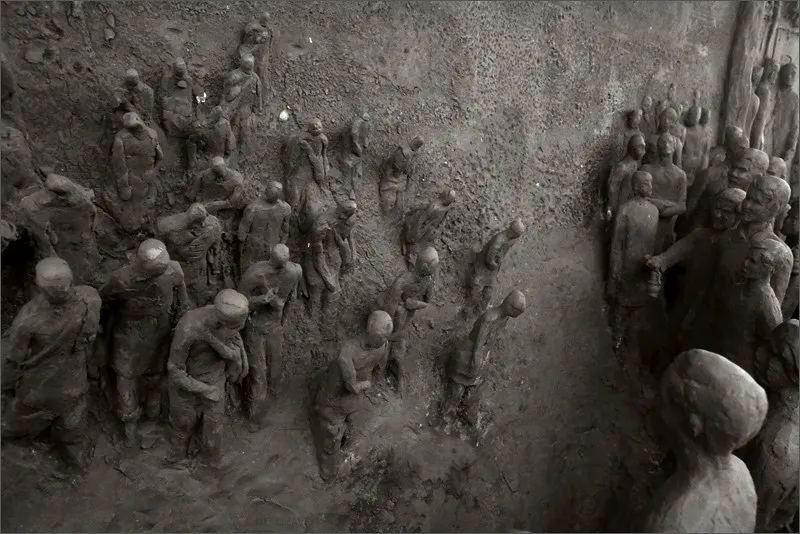
Ep 103Civil Disobedience
Eraldo Souza dos Santos talks about the invention of civil disobedience as a form of political action around the world, and the need for its redefinition to describe activism present and future. In the episode, he references John Rawls’s classic definition from A Theory of Justice (Harvard UP, 1971) and Erin Pineda’s new book, Seeing Like an Activist: Civil Disobedience and the Civil Rights Movement (Oxford UP, 2021). Eraldo Souza dos Santos is a philosopher and historian of political thought whose research explores how political concepts have come to shape political discourse and political practice, and how political actors have come to contest the meaning of these concepts in turn. In his current project, he traces the global history of the idea of civil disobedience. He is currently a Ph.D. candidate in Philosophy at Panthéon-Sorbonne University. He has been the recipient of grants and fellowships from the Académie française, the Maison française d'Oxford, the Leuven Institute for Advanced Studies, the Munich Centre for Global History, the Friedrich Nietzsche College of the Klassik Stiftung Weimar, the French-Dutch Network for Higher Education and Research, and the Coordination for the Improvement of Higher Education Personnel, among others. Image: Bas-Relief of the Salt March led by M.K. Gandhi in March-April 1930, photograph by Nevil Zaveri, available here under Creative Commons. Learn more about your ad choices. Visit megaphone.fm/adchoices Support our show by becoming a premium member! https://newbooksnetwork.supportingcast.fm/law
Ep 124Paul Belleflamme and Martin Peitz, "The Economics of Platforms: Concepts and Strategy" (Cambridge UP, 2021)
Digital platforms controlled by Alibaba, Alphabet, Amazon, Facebook, Netflix, Tencent and Uber have transformed not only the ways we do business, but also the very nature of people's everyday lives. It is of vital importance that we understand the economic principles governing how these platforms operate. Paul Belleflamme and Martin Peitz's book The Economics of Platforms: Concepts and Strategy (Cambridge UP, 2021) explains the driving forces behind any platform business with a focus on network effects. The authors use short case studies and real-world applications to explain key concepts such as how platforms manage network effects and which price and non-price strategies they choose. This self-contained text is the first to offer a systematic and formalized account of what platforms are and how they operate, concisely incorporating path-breaking insights in economics over the last twenty years. Martin Peitz is professor of economics at the University of Mannheim (since 2007), a director of the Mannheim Centre for Competition and Innovation – MaCCI (since 2009). He has been member of the economic advisory group on competition policy (EAGCP) at the European Commission (2013–2016), an academic director of the Centre on Regulation in Europe, CERRE (2012–2016) and head of the Department of Economics (2010–2013). Martin has widely published in leading economics journals. He also frequently trains and advises government agencies in Europe and abroad on competition and regulation issues. Peter Lorentzen is economics professor at the University of San Francisco. He heads USF's Applied Economics Master's program, which focuses on the digital economy. His research is mainly on China's political economy. Learn more about your ad choices. Visit megaphone.fm/adchoices Support our show by becoming a premium member! https://newbooksnetwork.supportingcast.fm/law
Ep 52Trevor Jackson, "Impunity and Capitalism: The Afterlives of European Financial Crises, 1690-1830" (Cambridge UP, 2022)
Whose fault are financial crises, and who is responsible for stopping them, or repairing the damage? Impunity and Capitalism: The Afterlives of European Financial Crises, 1690-1830 (Cambridge University Press, 2022) develops a new approach to the history of capitalism and inequality by using the concept of impunity to show how financial crises stopped being crimes and became natural disasters. Dr. Trevor Jackson examines the legal regulation of capital markets in a period of unprecedented expansion in the complexity of finance ranging from the bankruptcy of Europe's richest man in 1709, to the world's first stock market crash in 1720, to the first Latin American debt crisis in 1825. He shows how, after each crisis, popular anger and improvised policy responses resulted in efforts to create a more just financial capitalism but succeeded only in changing who could act with impunity, and how. Henceforth financial crises came to seem normal and legitimate, caused by impersonal international markets, with the costs borne by domestic populations and nobody in particular at fault. This interview was conducted by Dr. Miranda Melcher whose doctoral work focused on post-conflict military integration, understanding treaty negotiation and implementation in civil war contexts, with qualitative analysis of the Angolan and Mozambican civil wars. Learn more about your ad choices. Visit megaphone.fm/adchoices Support our show by becoming a premium member! https://newbooksnetwork.supportingcast.fm/law
Ep 40The Future of Multiculturalism: A Discussion with Patti Tamara Lenard and Peter Balint
What is the best way to achieve societal harmony in a place in which groups of people with different identities are living together. Should minority groups be given exemptions from general policies and laws or is it better to say majority privilege should be removed by finding solutions in which the law applies equally to the minority and the majority. Owen Bennett Jones was joined by co-authors Peter Balint and Patti Lenard who have discussed these issues in Debating Multiculturalism: Should There be Minority Rights? (Oxford UP, 2022). Owen Bennett-Jones is a freelance journalist and writer. A former BBC correspondent and presenter he has been a resident foreign correspondent in Bucharest, Geneva, Islamabad, Hanoi and Beirut. He is recently wrote a history of the Bhutto dynasty which was published by Yale University Press. Learn more about your ad choices. Visit megaphone.fm/adchoices Support our show by becoming a premium member! https://newbooksnetwork.supportingcast.fm/law
Ep 171Alexander Laban Hinton, "Anthropological Witness: Lessons from the Khmer Rouge Tribunal" (Cornell UP, 2022)
Anthropological Witness: Lessons from the Khmer Rouge Tribunal (Cornell UP, 2022) tells the story of Alexander Laban Hinton's encounter with an accused architect of genocide and, more broadly, Hinton's attempt to navigate the promises and perils of expert testimony. In March 2016, Hinton served as an expert witness at the Extraordinary Chambers in the Courts of Cambodia, an international tribunal established to try senior Khmer Rouge leaders for crimes committed during the 1975–79 Cambodian genocide. His testimony culminated in a direct exchange with Pol Pot's notorious right-hand man, Nuon Chea, who was engaged in genocide denial. Anthropological Witness looks at big questions about the ethical imperatives and epistemological assumptions involved in explanation and the role of the public scholar in addressing issues relating to truth, justice, social repair, and genocide. Hinton asks: Can scholars who serve as expert witnesses effectively contribute to international atrocity crimes tribunals where the focus is on legal guilt as opposed to academic explanation? What does the answer to this question say more generally about academia and the public sphere? At a time when the world faces a multitude of challenges, the answers Hinton provides to such questions about public scholarship are urgent. Jeff Bachman is Senior Lecturer in Human Rights at American University’s School of International Service in Washington, DC. Learn more about your ad choices. Visit megaphone.fm/adchoices Support our show by becoming a premium member! https://newbooksnetwork.supportingcast.fm/law
Ep 173Anna Dziedzic, "Foreign Judges in the Pacific" (Hart Publishing, 2021)
While it might ordinarily be assumed that judges who sit on constitutional courts will be local citizens, in the islands of the Pacific, more than three-quarters of judges are foreign. This is book about that unique phenomenon, but a phenomenon that has global implications. Foreign Judges in the Pacific (Hart, 2021) is a comprehensive study which brings together original empirical research, together with legal analysis and constitutional theory, and traces the impact and influence of foreign judging on nine states Pacific states: Fiji, Kiribati, Nauru, Papua New Guinea, Samoa, Solomon Islands, Tonga, Tuvalu, and Vanuatu. Dr Anna Dziedzic's study is a cutting-edge and pertinent contribution to constitutional law and jurisprudence. This work brings unique analysis of concepts such as cultural understanding, transnational knowledge sharing, and the importance of nationality in the task of judging. What really drew me to the book and kept me engaged in the work was not just the depth and richness of the study, but that practice of foreign judging in these under-studied Pacific does matter, and has broad lessons for all scholars, policy makers and lawyers who practice and research in all areas of constitutional law. There is a lot to be learnt from this study, and the quality of its analysis will arguably be found to be without parallel. Dr Anna Dziedzic is a Postdoctoral Fellow in the Laureate Program in Comparative Constitutional Law at Melbourne Law School. She researches comparative constitutional law and judicial studies, with a particular focus on the Pacific region. Jane Richards is a doctoral student at the University of Hong Kong. You can find her on twitter where she follows all things related to human rights and Hong Kong politics @JaneRichardsHK Learn more about your ad choices. Visit megaphone.fm/adchoices Support our show by becoming a premium member! https://newbooksnetwork.supportingcast.fm/law
Ep 17Frans Camphuijsen, "Scripting Justice in Late Medieval Europe: Legal Practice and Communication in the Law Courts of Utrecht, York and Paris" (Amsterdam UP, 2022)
Frans Camphuijsen explored records from the law courts of York, Paris, and Utrecht and used them as a base for Scripting Justice in Late Medieval Europe: Legal Practice and Communication in the Law Courts of Utrecht, York, and Paris (Amsterdam University Press, 2022). Late medieval societies witnessed the emergence of a particular form of socio-legal practice and logic, focused on the law court and its legal process. In a context of legal pluralism, courts tried to carve out their own position by influencing people's conception of what justice was and how one was supposed to achieve it. These "scripts of justice" took shape through a range of media, including texts, speech, embodied activities and the spaces used to perform all these. Looking beyond traditional historiographical narratives of state building or the professionalization of law, this book argues that the development of law courts was grounded in changing forms of multimedial interaction between those who sought justice and those who claimed to provide it. Through a comparative study of three markedly different types of courts, it involves both local contexts and broader developments in tracing the communication strategies of these late medieval claimants to socio-legal authority. Jana Byars is the Academic Director of Netherlands: International Perspectives on Sexuality and Gender. Learn more about your ad choices. Visit megaphone.fm/adchoices Support our show by becoming a premium member! https://newbooksnetwork.supportingcast.fm/law
Ep 206Lyndsie Bourgon, "Tree Thieves: Crime and Survival in North America's Woods" (Little, Brown Spark, 2022)
There's a strong chance that chair you are sitting on was made from stolen lumber. In Tree Thieves: Crime And Survival In North America's Woods (Little, Brown Spark, 2022), Lyndsie Bourgon takes us deep into the underbelly of the illegal timber market. As she traces three timber poaching cases, she introduces us to tree poachers, law enforcement, forensic wood specialists, the enigmatic residents of former logging communities, environmental activists, international timber cartels, and indigenous communities along the way. Old-growth trees are invaluable and irreplaceable for both humans and wildlife, and are the oldest living things on earth. But the morality of tree poaching is not as simple as we might think: stealing trees is a form of deeply rooted protest, and a side effect of environmental preservation and protection that doesn't include communities that have been uprooted or marginalized when park boundaries are drawn. As Bourgon discovers, failing to include working class and rural communities in the preservation of these awe-inducing ecosystems can lead to catastrophic results. Featuring excellent investigative reporting, fascinating characters, logging history, political analysis, and cutting-edge tree science, Tree Thieves takes readers on a thrilling journey into the intrigue, crime, and incredible complexity sheltered under the forest canopy. This interview was conducted by Dr. Miranda Melcher whose doctoral work focused on post-conflict military integration, understanding treaty negotiation and implementation in civil war contexts, with qualitative analysis of the Angolan and Mozambican civil wars. Learn more about your ad choices. Visit megaphone.fm/adchoices Support our show by becoming a premium member! https://newbooksnetwork.supportingcast.fm/law
Ep 123Aynne Kokas, "Trafficking Data: How China Is Winning the Battle for Digital Sovereignty" (Oxford UP, 2022)
On August 6, 2020, the Trump Administration issued a ban on TikTok in the United States, requiring that the owner, Beijing-based Bytedance, sell the company to American investors or shut it down. Legions of TikTokers were devastated at the possible loss of their beloved platform, and for what: a political grudge with China? American suitors like Walmart and Oracle tried to make a deal with Bytedance to keep the platform operating in the US. But then something curious happened. The Chinese government refused to let Bytedance sell TikTok on national security grounds. As it turns out, the pandemic era platform for dance challenges is a Chinese government asset. As digital technologies and social media have evolved into organizing forces for the way in which we conduct our work and social lives, the business logic that undergirds these digital platforms has become clear: we are their product. We give these businesses information about everything--from where we live and work to what we like to do for entertainment, what we consume, where we travel, what we think politically, and with whom we are friends and acquaintances. We do this willingly, but often without a full understanding of how this information is stored or used, or what happens to it when it crosses international boundaries. As Aynne Kokas argues, both corporations and governments traffic much of this data without our consent--and sometimes illegally--for political and financial gain. In Trafficking Data: How China Is Winning the Battle for Digital Sovereignty (Oxford UP, 2022), Aynne Kokas looks at how technology firms in the two largest economies in the world, the United States and China, have exploited government policy (and the lack thereof) to gather information on citizens, putting US national security at risk. Kokas argues that US government leadership failures, Silicon Valley's disruption fetish, and Wall Street's addiction to growth have fuelled China's technological goldrush. In turn, American complacency yields an unprecedented opportunity for Chinese firms to gather data in the United States and quietly send it back to China, and by extension, to the Chinese government. Drawing on years of fieldwork in the US and China and a large trove of corporate and policy documents, Trafficking Data explains how China is fast becoming the global leader in internet governance and policy, and thus of the data that defines our public and private lives. Peter Lorentzen is economics professor at the University of San Francisco. He heads USF's Applied Economics Master's program, which focuses on the digital economy. His research is mainly on China's political economy. Learn more about your ad choices. Visit megaphone.fm/adchoices Support our show by becoming a premium member! https://newbooksnetwork.supportingcast.fm/law
Ep 85Amy Gajda, "Seek and Hide: The Tangled History of the Right to Privacy" (Viking, 2022)
Should everyone have privacy in their personal lives? Can privacy exist in a public place? Is there a right to be left alone, even in the United States? The battle between an individual’s right to privacy and the public’s right to know has been fought for centuries. You may be surprised to realize that the original framers were sensitive to the importance of privacy interests relating to sexuality and intimate life, but mostly just for the powerful and the privileged. The founders demanded privacy for all the wrong press-quashing reasons. Supreme Court justice Louis Brandeis famously promoted First Amendment freedoms but argued strongly for privacy too; and presidents from Thomas Jefferson through Donald Trump confidently hid behind privacy despite the public interest in their lives. Today privacy seems simultaneously under siege and surging. And that’s doubly dangerous, as author Amy Gajda argues. Too little privacy leaves ordinary people vulnerable to those who deal in and publish soul-crushing secrets. Too much means the famous and infamous can cloak themselves in secrecy and dodge accountability. Seek and Hide: The Tangled History of the Right to Privacy (Viking, 2022) carries us from the very start, when privacy concepts first entered American law and society, to now, when the law allows a Silicon Valley titan to destroy a media site like Gawker out of spite. Muckraker Upton Sinclair, like Nellie Bly before him, pushed the envelope of privacy and propriety and then became a privacy advocate when journalists used the same techniques against him. By the early 2000s we were on our way to today’s full-blown crisis in the digital age, worrying that smartphones, webcams, basement publishers, and the forever internet had erased privacy completely. Renee Garfinkel, Ph.D. is a psychologist, writer, Middle East television commentator and host of The New Books Network’s Van Leer Jerusalem Series on Ideas. Write her at [email protected]. She's on Twitter @embracingwisdom. She blogs here. Learn more about your ad choices. Visit megaphone.fm/adchoices Support our show by becoming a premium member! https://newbooksnetwork.supportingcast.fm/law
Ep 41Anita Guerrini, "Experimenting with Humans and Animals: From Aristotle to CRISPR" (Johns Hopkins UP, 2022)
Experimentation on animals—particularly humans—is often assumed to be a uniquely modern phenomenon. But the ideas and attitudes that encourage biological and medical scientists to experiment on living creatures date from the earliest expressions of Western thought. In Experimenting with Humans and Animals: From Aristotle to CRISPR (Johns Hopkins UP, 2022) (Johns Hopkins UP), Anita Guerrini looks at the history of these practices and examines the philosophical and ethical arguments that justified them. Guerrini discusses key historical episodes in the use of living beings in science and medicine, including the discovery of blood circulation, the development of smallpox and polio vaccines, and recent research in genetics, ecology, and animal behavior. She also explores the rise of the antivivisection movement in Victorian England, the modern animal rights movement, and current debates over gene therapy and genetically engineered animals. We learn how perceptions and understandings of human and animal pain have changed; how ideas of class, race, and gender have defined the human research subject; and that the ethical values of science seldom stray far from the society in which scientists live and work. Thoroughly rewritten and updated, with new material in every chapter, the book emphasizes a broader understanding of experimentation and adds material on gene therapy, self-experimentation, and prisoners and slaves as experimental subjects. A new chapter brings the story up to the present while reflecting on the current regulatory scene, new developments in science, and emerging genomics. Experimenting with Humans and Animals offers readers a context within which to understand more fully the responsibility we all bear for the suffering inflicted on other living beings in the name of scientific knowledge. Anita Guerrini is a historian of science and medicine, recently retired as Horning Professor in the Humanities at Oregon State University, where she's been since 2008. Before that she was a professor of History and Environmental Studies at the University of California, Santa Barbara. She was educated at Connecticut College and Oxford University and received a Ph.D. in History and Philosophy of Science from Indiana University. Callie Smith is a poet and a PhD candidate in English at the University of Louisiana at Lafayette. Learn more about your ad choices. Visit megaphone.fm/adchoices Support our show by becoming a premium member! https://newbooksnetwork.supportingcast.fm/law